Author: Mary Maerz

  • Layla is ‘Moon Knight’s’ Best Upgrade From the Comics

    Layla is ‘Moon Knight’s’ Best Upgrade From the Comics

    In Moon Knight, so far, much of Moon Knight’s classic ensemble has been reduced to teases or cameos at best. Jean-Paul “Frenchie” Duchamp was a name in Marc Spector’s phone in Episode 1, and Bertrand Crawley has been making silent appearances as a human statue. Marc’s third identity from the comics, Jake Lockley, has not made an appearance or been referenced. A lot of classic elements from the Moon Knight comics are missing from Moon Knight.

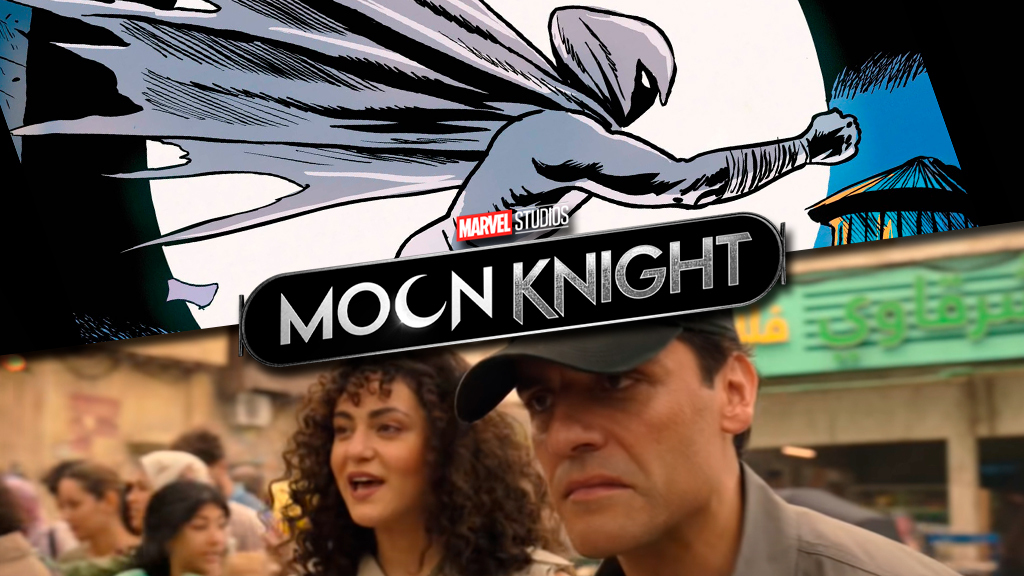
    One of the most significant characters in Moon Knight comics, other than Marc Spector and his alters, is Marlene Alarune. Marlene is Marc’s (and Steven’s) (and Jake’s) constant on-again-off-again romantic interest. She has been consistently present since Moon Knight #1 in 1980. While over 40 years of history saw plenty of changes to the character, overall, Marlene is not a great character. Moon Knight, though, apparently recognized the significance of her character and the ability for a love interest of Moon Knight to highlight Marc Spector’s dissociative identity disorder—we now have May Calamawy’s Layla El-Faouly. And Layla is great.

    Marlene and Layla have different names, but their roles and pasts suggest that Layla is more or less a majorly upgraded Marlene. Obviously, both are love interests to Marc Spector. In the comics, Marlene was aware of Marc’s three identities and Moon Knight from the beginning. She generally dealt with it well, but at other times throughout her comics history, Marc’s DID was, reasonably, a source of frustration to say the least. Still, she has had relationships specifically with Marc, Steven, and Jake over time. More recently, she and Marc share a daughter named Diatrice, who was fathered by Jake, and Marc never knew for years. In Moon Knight, Layla is introduced as Marc’s soon-to-be ex-wife who was not aware of any identity other than Marc and Moon Knight. Marlene and Marc never married in the comics, but they often also had a rocky relationship.

    Marlene met Marc almost at the same time that Marc became Moon Knight. Marlene is the daughter of an archaeologist who was killed by Bushman when the villain and his crew (including mercenary Marc Spector) raided the tomb Marlene’s father had discovered. After Bushman killed the archaeologist, Marc apparently had a moment of moral reckoning and turned against Bushman, saving Marlene and getting himself killed then revived by Khonshu in the process. We do not know much about Layla’s past in Moon Knight, but we learned in Episode 3 that her father was an archaeologist and was killed at some point. That is incredibly unlikely to be a coincidence, but whether Layla otherwise has the same general backstory as Marlene is yet to be seen. 

    Marlene, it feels like, is a constant damsel in distress in the comics. She generally feels extremely superficial and it is just a given that Marc cares about her. There are times when she is non-stop jealous or angry for every action Marc takes, there are times she is at home waiting for Moon Knight when he gets back, there are times when they have broken up and he longs for her, and there are (again) many times where her being in trouble is half the plot or motivation of an issue. She has her moments, but Marlene just feels like an outdated trope that never quite evolved.

    Layla, on the other hand, is certainly not a damsel in distress. She seems to know how to handle herself in a violent situation, sure. But she also arguably is the person leading the current plot in Moon Knight—without her knowledge and help, it is not clear how great at tracking down Ammut’s tomb Marc and Steven would be. Her knowledge of Ancient Egyptian artifacts and mythology is rivaled only by Steven, and she has connections in Egypt that seems to be able to get them anywhere. Layla seems weirdly OK with the DID thing Marc never told her about after getting to know Steven a little bit, but also is reasonably angry at Marc for several things. Of course, she mentioned early on that Marc and her fought side by side for the Scarab, only reaffirming that she can, at the very least, hold her own next to an ex-mercenary, Egyptian god avatar.

    The only thing “damsel in distress” about Layla is perhaps the fact that Marc is trying to protect her from Khonshu. It does not seem like Layla even knows that Khonshu is interested in her as his next avatar. And to be fair, if Khonshu is interested in her as is next fist of vengeance, that says a lot about what she is capable of. There is also something to be said for the fact that Calamawy and Layla are Egyptian. While the role was not necessarily written for an Egyptian actress, the fact that the character can connect to that aspect of Moon Knight is valuable considering there are no other major Egyptian presences in front of the camera.

    The first three episodes of Moon Knight are now streaming on Disney+.
  • Paul Bettany Responds to ‘Multiverse of Madness’ Rumors

    Paul Bettany Responds to ‘Multiverse of Madness’ Rumors

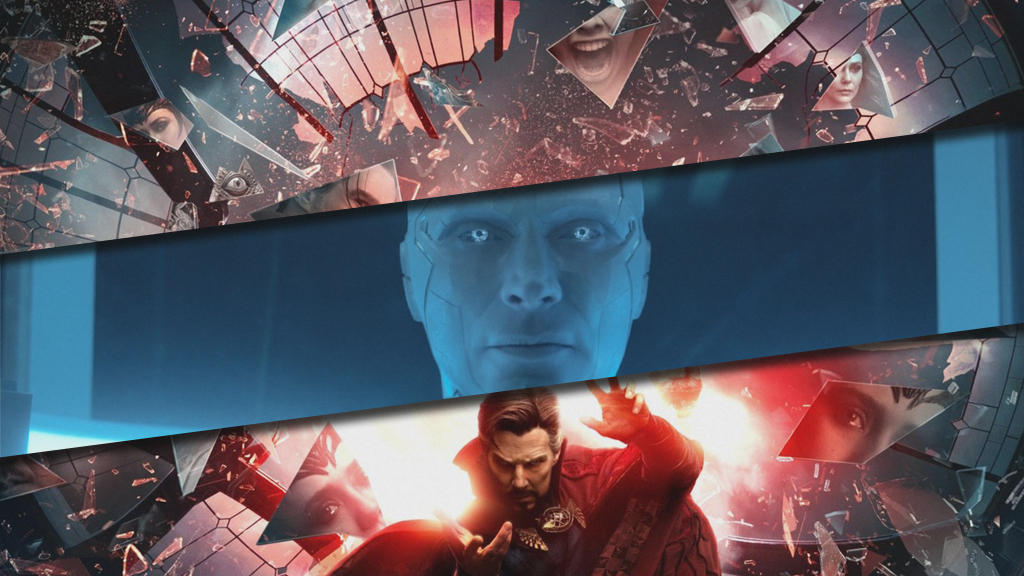
    Actor Paul Bettany has been around as long as the Marvel Cinematic Universe has existed. Initially the voice of Tony Stark’s A.I. J.A.R.V.I.S, Bettany debuted as Vision in Avengers: Age of Ultron. Most recently, we saw Bettany’s Vision in WandaVision, and the action ended the series as White Vision and he flew off to an unknown location.

    With Doctor Strange in the Multiverse of Madness quickly approaching, fans wants answers now more than ever on who exactly will make surprise appearances in the film. With Vision’s connection to Wanda—who will play a major role as the Scarlet Witch in the film—it is natural that some wonder if some version of Vision, perhaps White Vision, will show up. In an appearance on The Late Show with Stephen Colbert, host Steven Colbert asked Bettany directly whether White Vision would appear in the Doctor Strange sequel. The actor responded:

    This is a really great question. And, again, I said I was going to be entirely honest with you. You’re asking if… ‘Am I in Doctor Strange?’… Yes, no, yes, no, yes, no. I don’t know. Am I? What do you think?… I can neither confirm nor deny rumors that I am in said and aforementioned Doctor Strange.

    Paul Bettany

    It is only expected that MCU actors play coy about potential or rumored future appearances in Marvel Studios projects. Bettany may simply be teasing fans and taking advantage of all the surprise cameo fervor that has been going around for Multiverse of Madness. Still, plenty will read into the fact that he does say “yes” at some points in his answer, even if it is always followed by “no.”

    Audiences will find out if Bettany or White Vision makes an appearance in Doctor Strange in the Multiverse of Madness when the film is released on May 6, 2022.

    Source: YouTube

  • ‘Moon Knight’: The Midnight Man Cameo Explained

    ‘Moon Knight’: The Midnight Man Cameo Explained

    Moon Knight has been carving out its own story without relying on its comic book history to create a world to explore. Because of that, many classic characters from Moon Knight comics are either not present in the series or take the form of smaller cameos. Episode 3 just revealed another example of a classic Moon Knight character appearing in a subtle way. As with others, it may simply be a nod to the comics, but it might also tease the character’s return in the future.

    Marvel Studios’ ‘Moon Knight’ Episode 3

    Episode 3 introduces us to the late Gaspard Ulliel‘s Anton Mogart. Better known as the villain Midnight Man, Mogart in the comics was originally a rather corny costumed art and jewel thief who always struck at midnight. Very early on in Moon Knight lore, Mogart was seemingly killed, but actually survived but with a melted and deformed face. He returns, having been driven insane, to work with Moon Knight’s greatest villain Bushman. While he eventually dies many years later, his son Jeff Wilde (calling himself Midnight) becomes Moon Knight’s sidekick for a brief time before also becoming a villain.

    Moon Knight

    In Moon Knight, there is no mention of “Midnight Man,” but Anton Mogart is a significant figure in the episode. He is a very wealthy and connected man with an elaborate collection of black market artifacts, such as Senfu’s sarcophagus that Marc and Layla came to see. Layla notes that he keeps these things where only he can see them—in the comics, Mogart stole precious items just to own them rather than for the money. We last see Ulliel’s Mogart get hit by one of Moon Knight’s crescents. Whether that was fatal to the villain is ambiguous. There is certainly room for Mogart to return in Moon Knight or in future projects.

    The first three episodes of Moon Knight are now streaming on Disney+.

  • REVIEW: ‘Moon Knight’ Episode 3

    REVIEW: ‘Moon Knight’ Episode 3

    Throughout its first three episodes, Moon Knight has solidified that it, at the very least, feels substantially different from the vast majority of Marvel Studios’ projects. Generally speaking, this is a positive — why anyone would want the Marvel Cinematic Universe’s 33rd entry to be as similar to the rest as possible is a mystery. Moon Knight stands out with its ability to make the viewer feel as though they know just about as much as its original, in-the-dark protagonist; its heavy reliance on Egyptian mythology and imagery; and its focus on the development of its main character(s). Still, this unique take is not without its growing pains.

    For one, a lot of important background information seems to have been generally skipped over. There are a few very brief moments of dialogue that attempt to explain Marc Spector, Moon Knight, and Khonshu, but everything moves on without an actual understanding. Is this the result of the series trying to be a better origin story by avoiding the predictability of traditional origin stories? Most likely, yes. There is far too much background to remain unaddressed, and it seems entirely intentional that there are no flashbacks or long expositions. The viewer is almost kept as up-to-speed as Steven is at all times, which is a unique and potentially intricate way of exploring a nonlinear narrative. Halfway into Moon Knight, it is still too soon to tell how exactly it will pay off.

    While there is often not enough lore, at times in Episode 3 there felt like too much. The meeting-of-the-avatars scene felt out of place. While the concept of Egyptian deities and human avatars had remained sort of “small” in terms of its presence within the series, this moment really took it to a dramatic next level of complexity that the show did not feel ready for, nor that truly felt needed. It does go to show, though, that Moon Knight and Khonshu are part of a much bigger thing, and that bigger thing is not a fan of Khonshu. That leaves Marc as the odd avatar out as well, further emphasizing that the character is on the fringes of virtually any environment he is in. When Khonshu is imprisoned at the end of the episode, it leaves Marc and Steven without the ability to summon suits or hear the god. But considering how limited some of that was anyway, it does not feel like it had the type of impact it should if the viewers are meant to truly feel affected by that.

    Moon Knight definitely feels more akin to drama with supernatural elements rather than an action-adventure. That fits with the notion that the show is truly a character study, but it can be a bit hard to reconcile with the general branding and advertisement, which certainly put the suited-up Moon Knight in more of a spotlight than the series has to date. Quite frankly, the Marc Spector-level element of the character has almost always been much more interesting than the vigilante one, but there is some amount of tension between natural expectations and watching the story play out. It could certainly be guessed that the series itself doesn’t exactly know where it stands in terms of its own focus and scope. While some might find it more difficult to sink into an MCU series with different tones and narrative themes, Oscar Isaac’s performance alone should be enough to convince anyone to give it a real shot.

    In any event, the pacing of this episode remains impressively consistent in terms of how well the plot progresses. Whether one likes the story at any given moment or not, it moves at such a strong pace that keeps the puzzle building quickly enough that nothing feels stale. Everything is always moving, and even the quieter moments stay dynamic. Anything that tries to combine darker tones with humor will meet resistance, but Steven Grant’s intrinsic humor—and Mr. Knight’s by relation—are some of the highlights of this episode and the series as a whole and add to the exciting current of Moon Knight.

    Worth mentioning is how great of an addition May Calamawy’s Layla is to the series, and it was highlighted in this episode. Romantic leads have a tendency to be shallow introductions that, at best, add to the main character’s presence rather than providing anything new. While that is not necessarily always a negative thing, Layla avoids that problem completely as she both adds to Isaac’s character(s) and is a genuinely meaningful part of the story. On one hand, the character actually provides an Egyptian connection to the Isaac and Ethan Hawke-led show that extensively incorporates Egyptian mythology, symbology, and setting. Her background in stealing already-stolen relics makes her one of the most useful people around this very relic and artifact-heavy scavenger hunt of a series. She also plays into the Marc-Steven dynamic, as her interactions with newly-met Steven emphasize the differences (and similarities) between the two personalities. The fact that we’ve heard that Khonshu is interested in having her as his avatar is growing to be a much more interesting premise.

    The action scenes in this episode are relatively few, and they again do not live up to the wide expectation that this show was meant to be substantially more violent than other projects. There are some solid moments, like when Marc punches the guy licking the knife, but it continues to utilize slow motion at odd times that can take you out of the action. These scenes do imply that Marc is rather violent, as Steven stopped him from slashing that dude’s throat. Still, he often held back—and the episode teases that there may be more to Marc and Steven than we know, as both seem to blackout while their body kills several people.

    Overall the third episode of Moon Knight is on par with the tone and character-level scope of the first two but with the underlying Egyptian deity and Arthur Harrow danger getting closer and closer each minute. This episode tackles supernatural lore more than the previous two, which does cause the balance between “superhero show” and “character study” to change, though watching Steven Grant, Marc Spector, Mr. Knight, and Moon Knight all in a power struggle to both save the world and not lapse into insanity is genuinely a special treat that can only likely exist in a genre-fuzzy world. 

  • ‘Moon Knight’ Confirms the Existence of the “Overvoid” Heliopolis

    ‘Moon Knight’ Confirms the Existence of the “Overvoid” Heliopolis

    Moon Knight seems to be doing a lot of things: an exploration of mental health, dense Ancient Egyptian mythology, and a classic superhero-needing villain. While Moon Knight is notably relatively disconnected from the greater Marvel Cinematic Universe, it might be building another corner of it. While Episode 3 confirms Khonshu’s home realm, there is a twist.

    Episode 3 of the series confirmed that the realm known as the Overvoid. Also known as the Othervoid or Celestial Heliopolis, the Overvoid is the home dimension of beings known as the Ancient Egyptian gods. While in the Pyramid of Giza, Khonshu speaks through Marc Spector to the other avatars and their gods and tells them to return to Earth from the Overvoid or risk losing Earth.

    Marvel Studios’ ‘Moon Knight’ Episode 3

    This is significant in a few ways. First, the actual existence of the Overvoid expands on the MCU cosmos. The Overvoid is an Asgard-like realm. Its appearance as a large city built on a tiny planet is similar to Asgard’s. Its passage to Earth is a golden bridge through space, called the Path of the Gods, which is similar to the Asgardians’ Bifrost. The world of space gods that came to be revered by humans is expanding—with Norse gods and now Ancient Egyptian gods, beings like the Olympians could come later.

    More interesting for the potential events of Moon Knight, though, is the fact that Khonshu’s statement seems to imply that the gods can come and go willingly from the Overvoid. In the comics, that is just generally not true. In fact, the reason the gods use humans as avatars is specifically because they cannot have a physical presence on Earth. So usually, they are somewhat stuck in the Overvoid, but that may not be the case in Moon Knight. Considering Arthur Harrow is seeking out Ammit, this could have huge implications for the series.

    The first three episodes of Moon Knight are now streaming on Disney+.

  • ‘Moon Knight’ Episode 3 Just Gave Us the Strongest Evidence of Jake Lockley Yet

    ‘Moon Knight’ Episode 3 Just Gave Us the Strongest Evidence of Jake Lockley Yet

    Throughout the past few weeks, more and more evidence in Moon Knight is pointing towards a potential introduction of a third personality alongside Marc Spector and Steven Grant. If the series does introduce another alter, chances are it will be Jake Lockley, who is the third classic Moon Knight identity from the comics. We have previously explored what looked like clues in Moon Knight Episode 1 and Episode 2. Even without Oscar Isaac’s own suggestion that Marc and Steven are not the only two characters he plays in the series, Episode 3 leaves very little room to doubt that there is another personality waiting to make their appearance. 

    The Blackout

    If anything in Moon Knight has virtually confirmed that Jake Lockley exists, it is the scene in Episode 3 where Marc and Steven both blackout while fighting a group of people. Previously, we saw Steven blackout when (presumably) Marc took control of the body, but we have never before been presented with a situation where we know neither of them could have been in control. During the fight, Marc and Steven blackout and reawaken to quite the massacre–they violently killed everyone they had been fighting. They both claim they were not responsible, which means someone else was. Considering in the comics Jake is often the most violent, brutal, and remorseless personality, it makes all too much sense that Jake could have taken over to do what had to be done to get them out of that situation.

    Marvel Studios’ ‘Moon Knight’ Episode 3

    “That Wasn’t Me”

    While Marc Spector has certainly been portrayed as much more violent than Steven Grant, his actions do not align with the type of violence suggested by the blackout mentioned above. He has his moments, sure, like when Steven seemingly stops Marc before Marc slashes someone’s throat. But even in this episode, there are numerous times he specifically holds back while fighting. Another exciting tidbit for Jake Lockley searchers comes before the main blackout, where Marc encounters a group he had previously fought on the roof (and ultimately pretty brutally kicked the s*** out of).

    He wants to talk to them for information, but they try to run because they are scared of him after the fight. He yells at them, “That wasn’t me!” Well, if Marc is trying to say whatever added violence came over him during the rooftop fight was not him, who was it? We know it was not Steven. There was not a blackout on the roof, but this goes along with previous clues that perhaps Jake takes over when it appears Marc loses his emotional/anger control and gets hyper-violent as he did briefly in the last episode

    Marvel Studios’ ‘Moon Knight’ Episode 3
    Marvel Studios’ ‘Moon Knight’ Episode 3

    Arthur Harrow Definitely Seems to Know There are More Personalities

    We do not know with certainty how much Arthur Harrow knows about our protagonists. But it seems to be much more than he shows on the surface. There is very little doubt that when he used his Ammit cane to try and judge Steven in Episode 1, he learned a lot about (at least) Steven and Marc. Episode 3 confirms that he learned at least some of Marc’s past–perhaps his memories–from this. Harrow tells Layla that he knows her father was murdered and that Marc is not telling her the truth about it. From what we have seen, there is no other way Harrow could know about Marc’s involvement in something like that unless the cane process showed him.

    So why is this interesting? If he saw Marc by reading Steven, he could have seen other personalities that existed. While telling the court of avatars that Marc is unwell, he notes: “We have no idea how many personalities he might have.” This is reminiscent of the last episode as well, where he makes a similar comment that can be read as Harrow having knowledge of other personalities of Marc and Steven. If he had no reason to believe there were more than the two, it seems unlikely he would keep referencing more than the two he has met. Plus, it could be another subtle nod from the writers that more personalities are possible. 

    Marvel Studios’ ‘Moon Knight’ Episode 3

    The first three episodes of Moon Knight are now streaming on Disney+.

  • ‘Doctor Strange in the Multiverse of Madness’ Officially Rated PG-13

    ‘Doctor Strange in the Multiverse of Madness’ Officially Rated PG-13

    While it should come as no surprise, the upcoming Doctor Strange in the Multiverse of Madness has been officially given a PG-13 rating by the Motion Picture Association. While there was little question that the Doctor Strange sequel would match the rating of the rest of the current MCU, fans excited for the promised horror elements of the Sam Raimi-direct film might be pleased with the MPA’s reasoning for the rating. The MPA cites “intense sequences of violence and action, frightening images and some language.”

    The notes of “intense sequences of violence and action” and “some language” are fairly standard for MCU movies, but the mention of “frightening images” further confirms Marvel Studios’ promise that Multiverse of Madness will be the MCU’s first horror film and that Raimi’s unique style indeed remained a major part of the final cut.

    In the past, few questioned the PG-13 model of the MCU. However, as new characters start to be introduced—such as Deadpool or Blade—demands for R-rated and more mature content has increased. At the same time, the MCU is set to debut its first non-PG-13 project with Ms. Marvel, which has been given a TV-PG rating for its Disney+ residency. Director Sam Raimi is also no stranger to PG-13 horror films, such as his 2009 film Drag Me to Hell, which proved that you don’t require an R-rating to offer the right horror vibes for a story.

    Doctor Strange in the Multiverse of Madness hit theaters on May 6, 2022.

    Source: Film Ratings

  • ‘Moon Knight’ Episode 2 Cameos Connect to the Lemire-Smallwood Run

    ‘Moon Knight’ Episode 2 Cameos Connect to the Lemire-Smallwood Run

    If Moon Knight has proven anything, it is that it can hide easter eggs and cameos as well as any other MCU installment. Previously, we have seen a Frenchie reference and Crawley cameos in the first two episodes, and there are several potential hints at Marc Spector’s third alter from the comics, Jake Lockley. Another set of cameos came in Episode 2, and unlike the others, these come from one specific Moon Knight comics run. Could the cameos be a hint at what is to come in Moon Knight, or are they just nods to a very popular Moon Knight story?

    Marvel Studios’ ‘Moon Knight’

    The two police officers that come to Steven’s flat and later reveal themselves to be working for Arthur Harrow are listed in the credits and being named “Bobbi” and “Billy”. In the poplar Jeff Lemire and Greg Smallwood run, Billy and Bobby are orderlies in what appears to be a mental instutition that Marc Spector finds himself in. They work for the hospital’s Dr. Emmet, who is later revealed to be some sort of incarnation of Ammit. The Lemire-Smallwood run is very heavy on Moon Knight’s psychological instability, so it constantly jumps between different “realities” that Spector experiences, making him (and the reader) question what is or is not real. The visuals can accordingly be rather trippy, and Billy and Bobby sometimes appear with jackal heads rather than in human form.

    Does this mean anything for Moon Knight? It is always possible that the series might continue to take inspiration from the Lemire-Smallwood run, and the psychological and reality-questioning nature of the live-action series so far certainly carries some of the essence of that Moon Knight comics arc. Still, Moon Knight has so far not adopted virtually any major aspect of the run. The fact that Billi and Bobby are clear cameos from that specific story is interesting, though, as they are not characters with deep Moon Knight history like the other cameos the series has offered. Only time will tell if the writers used these cameos as a way to tease the future of Moon Knight, or if they were simply a fun way to reference the comics.

    The first two episodes of Moon Knight are now streaming on Disney+.

  • ‘Moon Knight’ From Page to Screen: Episode 2

    ‘Moon Knight’ From Page to Screen: Episode 2

    Last week’s From Page to Screen for Moon Knight Episode 1 explored the history of Marc Spector’s dissociative identity disorder in the comics, given that Steven’s revelation that another person also existed inside his body was that episode’s primary focus. Episode 2, however, introduced the major player Mr. Knight. When live-action projects diverge significantly from the comics, it always manages to create quite the discourse among fans. If you’re curious about Mr. Knight, this article compares the live-action version of the character in Moon Knight to his comics counterpart.

    Moon Knight #11 (2015)

    The Similarities

    While the live-action and comics version of Mr. Knight have major differences (see below), it is undeniable that they share significant features.

    Moon Knight #1 (2014)
    Marvel Studios’ Moon Knight Episode 2

    The Look

    Most obviously, the character’s appearance in Moon Knight looks like it was practically ripped from the pages of a Moon Knight comic. First introduced in the 2014 Warren Ellis and Declan Shalvey run, he stands out with his head-to-toe bright white attire. Unlike Moon Knight, he ditches the cape and cowl and opts for a pristine suit and a mask that gives off serial killer energy. As is obvious from Moon Knight, Oscar Isaac’s Mr. Knight looks virtually the same, other than his attire is more of a pale grey than Moon Knight artist Shalvey’s blinding white suitable for a whitening toothpaste commercial. They both also utilize their stick weapons quite often. Mr. Knight in the comics has consistently kept this nearly exact look in later runs such as the 2016 Jeff Lemire and Greg Smallwood run, and the ongoing Jed MacKay and Alessandro Cappuccio run.

    Moon Knight #14 (2017)
    Moon Knight #1 (2021)

    Just a Smidge of His Personality

    Before anyone gets up in arms over the suggestion that the two Mr. Knights have the same personality traits, the very clear differences are discussed below. However, it is worth noting that Moon Knight’s Mr. Knight still captures the essence of the comics’ character. Between his look and his more casual presence, Mr. Knight is always slightly goofier than Moon Knight. There is something odd about him, even compared to his caped Moon Knight alter. Steven Grant definitely checks off the “odd” box, but there’s something else. In the comics, Mr. Knight is much more sociable than Moon Knight. He walks the streets, visits crime scenes, works with police, interacts with ordinary people, and even goes to therapy. In Moon Knight, if anyone that we have met is going to fill that role in live-action, all bets are on Steven Grant, not Marc Spector.

    Moon Knight #4 (2014)
    Marvel Studios’ Moon Knight Episode 2
    Moon Knight #7 (2022)

    The Differences

    Mr. Knight’s introduction in Episode 2 was divisive because he is, fundamentally, sort of an entirely different character. On one hand, in the comics, Mr. Knight is generally considered another separate personality of Marc Spector’s, not one of the others in a suit. In Moon Knight, obviously, Mr. Knight is very much Steven Grant. To be fair, Mr. Knight in the comics sometimes has no problem identifying as Marc, and quite frankly his personality is not overly divergent from Marc or Moon Knight.

    Moon Knight #13 (2017)

    Still, Moon Knight’s Steven Grant—who is also a dramatic departure from the comics—is much more of an even goofier persona, so live-action Mr. Knight is the same. Mr. Knight in the comics has plenty of comic relief moments and is not constantly entirely dark or serious, but he is still much more dark and serious than Moon Knight’s version so far. Again, Mr. Knight in the comics almost operates as a more down-to-Earth Moon Knight (no pun intended), so he still functions as a nighttime vigilante who will take down a crowd of villains with the same intensity Moon Knight might.

    Moon Knight #1 (2014)

    Moon Knight, though, explains Mr. Knight’s origin. Steven Grant, as awkward and British as he is, came up with that dapper outfit while trying to summon a lunar-god-granted “suit”. The inclusion of the mental state that would end up with Mr. Knight’s attire is one of the best parts of the live-action change. In the comics, Mr. Knight just sort of appears as a new identity in the Ellis and Shalvey revival of Moon Knight, few questions asked.

    Moon Knight’s first two episodes are now streaming on Disney+.
  • Valkyrie’s Role as King of New Asgard Teased for ‘Thor: Love and Thunder’

    Valkyrie’s Role as King of New Asgard Teased for ‘Thor: Love and Thunder’

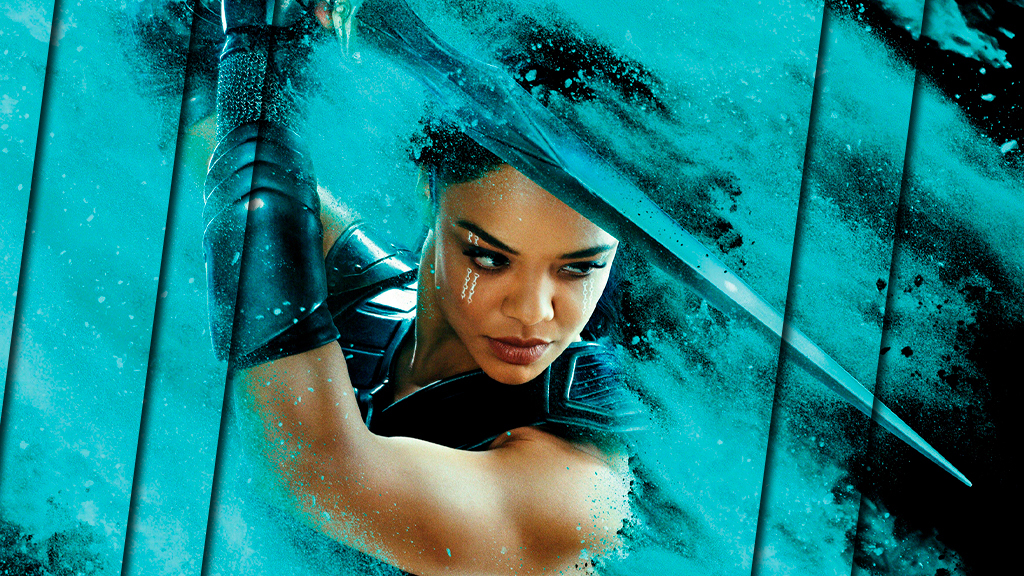
    With the release of Thor: Love and Thunder in less than three months, still little is known about the film. With no trailer, a lot of information about the fourth Thor movie has been making its way through merchandise leaks. Recently, Marvel Legends toys offered the first look at Christian Bale’s villain Gorr the God Butcher. Now, a closer look at the box of Valkyrie’s toy seems to confirm Tessa Thompson’s role in Love and Thunder. It states:

    When a dangerous new visitor threatens the livelihood of New Asgard, King Valkyrie is forced to take up her sword once more to defend her people.

    This apparently confirms Valkyrie’s role as King Valkyrie, which was hinted at the tail end of Avengers: Endgame in 2019. It also suggests that King Valkyrie is maybe reluctant to fight or maybe had attempted to live a peaceful, quiet life as leader of New Asgard only for this “dangerous new visitor“—likely Gorr—to change her plans. Check out a better look at the box below:

    Thor: Love and Thunder will release in theaters on July 8, 2022.

    Source: Twitter