Author: Mary Maerz

  • MCU Disney+ Series Ranked

    MCU Disney+ Series Ranked

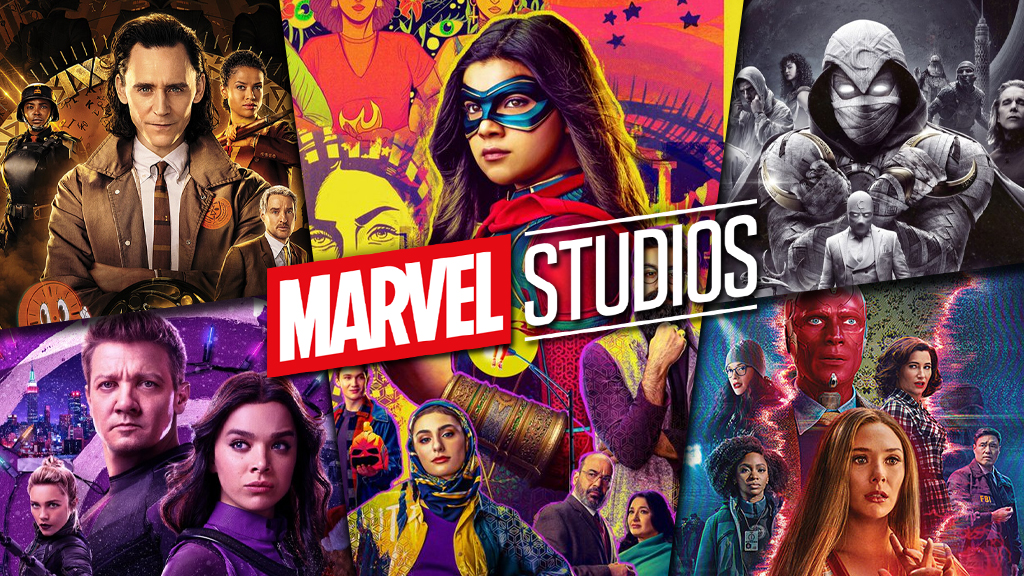
    Now that Ms. Marvel has wrapped up its run, there are seven Marvel Studios Disney+ series that have all been released within the past year and a half. Not surprisingly, many want to compare them to each other, even though some exceed in vastly different ways than others. The legacy of series on the greater MCU is slowly becoming more apparent, and the introduction of major characters and plots in them is surely a sign that Marvel Studios plans to take them seriously going forward. More series are on their way, but this article ranks the current seven MCU series from best to worst.

    1. Ms. Marvel

    Ms. Marvel did what few MCU series could do, which is have a great story and a satisfying conclusion. On top of that feat, the story was excellent and managed both small-scale and large-scale aspects of Kamala’s life with charm, wit, heart, mystery and even darkness. The overall quality of Ms. Marvel from episode to episode barely wavered, and the cast and crew were top-notch all around. While the series was never the most hyped for various reasons, the show managed to exceed all expectations despite very polarizing decisions regarding the changes from her comic book origins.

    2. WandaVision

    WandaVision is still the highlight of MCU creativity. It took the boldest creative leaps in terms of its narrative structure and style, and it remains wildly unique from everything else in the MCU. While it aired, fans were clamoring week-to-week for the next episode. Granted, it was also the first lesson for MCU fans in (mostly fan-induced) Phase 4 disappointment and rushed finales. The fact that myriads of extreme fan theories did not happen should not be a metric when evaluating any story.

    3. Loki

    Loki also took a bold route in its design and execution, but overall it was fairly inconsistent episode to episode. Some episodes were a bit dry and bland, while some came out of nowhere in the best of ways. Certain sequences could be dazzling, and the finale could practically do the legwork for the entire first season. But it was met with plenty of criticism on how Loki’s character was developed, and the Loki-Sylvie dynamic was certainly polarizing.

    4. Hawkeye

    Hawkeye was good old-fashioned MCU comfort pulled off well. It was nothing spectacular, and its big Kingpin reveal was ultimately underwhelming. But overall it had a satisfying story and ending—a rarity—that was sweet and simple. Kate Bishop was introduced but we also got to follow an original and Avenger post-Avengers: Endgame for the first time, and it gave the last of the six his first “solo” treatment. At the same time, it also felt like a constant tool for introducing new or spin-off-type projects like Echo rather than investing in its own story.

    5. Moon Knight

    Had the finale gone differently, Moon Knight may have been much higher on this list. Oscar Isaac’s performance alone was phenomenal and drove the show, while Egyptian mythology provided a new source of interest for MCU audiences. While the show could be stellar—Episode 5 is one of the best of the MCU—the overarching story was ultimately incredibly generic and a letdown to the potential that the rest of the series built up. 

    6. The Falcon and the Winter Soldier

    No one is surprised The Falcon and the Winter Soldier would be low on this list. It honestly, though, is not bad. It is maybe the best example of a comfort project in the MCU other than Hawkeye. We followed known (side) characters in a context and style that felt incredibly consistent with the Captain America franchise they came from. But it was generally lackluster and not worthy of too much praise in terms of the storyline and villains. It did touch on important topics, mostly regarding race and the notion that people would never accept a Black man as their Captain America. But alas, it could come across as dull and unoriginal most of the time.

    7. What If…?

    It feels too easy to put the only animated series at the bottom of the list, but What If… ? just belongs here. The animated style detaches it from the MCU fans want to engage in, and its anthology multiverse structure makes it feel like there are no stakes. It is a collection of interesting mini-ideas. Some could be brilliant, and the Doctor Strange episode is arguably the best episode of any MCU series. But as a whole, What If…? just isn’t on the same playing field as the rest. 
  • REVIEW: ‘Ms. Marvel’ Finale—”No Normal”

    REVIEW: ‘Ms. Marvel’ Finale—”No Normal”

    While the finales of Marvel Cinematic Universe series have generally struggled to stick the landing, the Ms. Marvel finale managed to do justice and provide closure to Kamala’s story while still setting up massive implications for the future of the MCU. It did gloss over most of the unanswered questions about Kamala’s powers, which is disappointing. Still, it seemed to “answer” them in one of the most exciting—and likely polarizing—ways possible.

    Kamala’s story in Ms. Marvel began as a relatively small-scale tale of a superhero fangirl in Jersey City. So much of the absolute charm of the early episodes of the series is centered around her family and friends in this context. The second act of the show brought forth her mysterious and eye-opening history that brought the show to new levels of depth and intrigue. While the penultimate episode left the status of her main adversary precarious, the finale skillfully but simply brought it back to where it all started—high school.

    Like any classic satisfying finale, the entire ensemble got involved in meaningful ways. The high school sequence with the Department of Damage Control was a warm reminder of the innocence and youth of the main hero and showed a glimpse of what “Ms. Marvel” could be as a hometown hero. Fans of Ms. Marvel comics will appreciate the subtle nods to the comics and the ways certain elements were rearranged in order to fit the live-action story. While much of Kamala’s reckoning with her friends and family after her reveal that she is the masked hero was too quick and smooth, it was likely the better route for the ending of such a short series. 

    Kamala finally got her “Ms. Marvel” moment(s) this episode as she donned her final costume, adopted her name, and took on her greatest challenge yet. Anyone familiar with her “embiggening” from the comics would be giddy to see the resemblance they gave her to her comic book counterpart in the finale. It was a mystery how Kamala would adopt “Ms. Marvel” as a mantle in live-action, but it was ultimately grounded in the name given to her by her parents, which nicely ties in the heavy family themes of the series into her superhero identity. 

    The main villain of the finale was set up in the post-credit scene of the first episode, though Damage Control did not play a particularly large role in the bulk of the series. So while the switch from the Clandestines back to the DODC as the adversaries is not seamless, there was enough Damage Control before the finale to require some resolution to that aspect. The organization represented a lot of Kamala’s ordinary-life struggles, so her overcoming the racist, xenophobic, and enhanced-individuals-hating villain makes the win fulfilling. The question of Damage Control still lingers, and the willingness to take the “bad apple” approach to the DODC calls into doubt how aggressive the future of that organization actually is. Similarly, Kamran ends the series in a surprising way as not quite a villain but with no real resolution.

    Of course, the moment of this finale that will gobsmack countless fans is Bruno’s reveal to Kamala that she has “a mutation” in her DNA. Considering the long-running debate over Marvel Studios not making Kamala an Inhuman, the fact that she may be the first confirmed mutant of the MCU is nothing light. It is too brief to draw any major conclusions from it yet. Are there others? How long have mutants been around? How does it actually play into her powers? It is all unclear. Part of the problem is, as mentioned, that the series declined to fully explain Kamala’s powers and ultimately left the Noor dimension a vague resource to draw from in lieu of Inhuman lore. In any event, the “mutation” drop was one exciting way to finish out the finale. Because it was mentioned so late, it did not affect, confuse, or overpower the rest of the story that came before it, and it without a doubt will keep eyes on Ms. Marvel going forward.

    Just as the mutant reveal sparked curiosity for the future of the character, the post-credit scene set up a predictable—but major—next step for Kamala. For whatever reason, Kamala’s bangle goes haywire and seemingly causes Carol Danvers and her to switch places, with Carol popping up in Kamala’s room. Brie Larson’s cameo is a fun, high-profile inclusion, but the fact that she and Kamala still never actually meet in the series leaves something wanting. Clearly, The Marvels will take on a huge role in exploring the next steps of Kamala’s story. Her powers are likely tied to something bigger that will play a role in that story. Even with that knowledge, the downside of Ms. Marvel was the eventual lack of answers on the mystery it created.

    Looking past all the implications of Kamala’s “mutation” and The Marvels tease, the finale did an expert job of tying the series in a bow with respect to Kamala’s origin as a Jersey City superhero. The transition between the threads being weaved in Episode 5 and the final episode is a tad choppy, but ultimately the right call. Ms. Marvel ends its tenure on arguably the best finale of any MCU series, and arguably as the best series itself. Iman Vellani and the rest of the stellar cast brought the charm and heart of the beloved character to the screen, and the show is one of the few to manage the 6-episode format in a satisfying and rewarding way.

  • Signs That ‘Ms. Marvel’ Will Have a Season 2

    Signs That ‘Ms. Marvel’ Will Have a Season 2

    Now that Marvel Studios has formally ventured into television, new questions arise about the future of characters and plots that debut in the Disney+ series format. While we know some series—such as WandaVision and The Falcon and the Winter Soldier—lead into feature films, the announcement of Loki’s second season has made fans interested in other series getting the same treatment. While no show besides Loki has been confirmed for a Season 2, there are many signs that Ms. Marvel could be the next. 

    To be fair, we know we will see Kamala Khan in The Marvels, so it would be easy to say that Ms. Marvel’s follow-up will be in that film. But The Marvels is a sequel to Captain Marvel and will feature, from what we know, three main leads. To think that Kamala’s individual story will be able to fully continue without her own solo project is brave. With only the finale to go, Ms. Marvel has left quite a lot of story on the table. Even a strong finale—which Marvel Studios is not known for—cannot reasonably wrap it all up. And that may very well be part of the plan to give Ms. Marvel a Season 2.

    First, Kamala’s entire high school-level plot has taken a backseat for the second act of the series. The last time we saw Nakia, she had just learned that Kamala was the masked hero and was no longer speaking to her. Bruno was jealous of Kamran and also told Kamala he was going to leave to attend CalTech. Kamran is clearly integrated into the superhero side of the plot, but the love triangle there is still up in the air. Many of these plot strings, particularly Nakia and Bruno, seem to come straight from Ms. Marvel comics and are nowhere near a resolution. Kamala’s personal life—the one she had before the bangle—has been set up for a longer journey than what the finale could handle. There is a very strong chance that the last episode will specifically leave these stories open and ready to explore in the future. And they would not make much sense in The Marvels.

    If Episode 5 of Ms. Marvel made anything clear, it is that the full extent of Kamala’s powers might not be explained in the series (or the first season). While we have come a long way since Episode 1, there are so many questions remaining about Kamala’s heritage and powers. The finale will without a doubt answer some of these. To be fair, it could answer them all. But when Kamala’s grandmother cut off the questioning as to how and why Kamala can do what she does to suggest it is all about how two people fell in love and made something bigger than themselves, it seemed like a way for the series to say, “don’t worry about it.” Regardless of what we learn in the finale, the implications of the Noor Dimension and Kamala’s bangle are surely things that cannot adequately be resolved yet. That’s where The Marvels may very well help out, but something even bigger remains elusive.

    Kamala has not yet become Ms. Marvel. She almost certainly will in the finale, but we will not have seen her be the masked hero of Jersey City in Ms. Marvel. The series has received high praise from critics, and audiences and Marvel Studios alike love Iman Vellani. The character will be part of future team-ups in the Marvel Cinematic Universe, but the idea that they would not explore her solo adventures more is both laughable and sad. Unlike Moon Knight, which does not appear to have plans for a second season, the lead character in Ms. Marvel has not actually been the titular superhero during the series. Also unlike Moon Knight, Ms. Marvel is based on much more beloved and popular comics. Kamala is relatively new to Marvel, but her stories of heroism in Jersey City have a broad audience and can likely be relatively easy to adapt into (more) series-based content. 

    MCU series have a troubled history with resolving their own stories by the end of their runs, but the many-lingering plots in Ms. Marvel might be by design. If, like Loki, a Season 2 has been part of the bigger plan, the series is free to set up ideas that will continue to be explored. The points surrounding Kamala’s teenage life and relationships are, arguably, a very clear sign that this is happening. In particular, her and Bruno’s long will-they-won’t-they romance is set up for the long haul. Kamala also deserves to spend time in the spotlight as a solo hero, Ms. Marvel, in a way that team-up films and events are suited for. So, don’t be too surprised if a Ms. Marvel Season 2 announcement comes soon. 

    The first five episodes of Ms. Marvel are now streaming on Disney+. 

  • REVIEW: ‘Ms. Marvel’ Episode 5—”Time and Again”

    REVIEW: ‘Ms. Marvel’ Episode 5—”Time and Again”

    In typical penultimate episode fashion, Ms. Marvel’s “Time and Again” spends the thrust of its runtime in 1940s India following the mysterious Aisha. On some level, the episode did what was somewhat expected of it—the viewer got to see the entire “last train to Karachi” story that the series had been hinting at since the second episode. So much of Kamala’s story and super-origin rest on Aisha and her death, so watching it play out resonated on another level than dealing with it through exposition. While every moment of the episode had the potential to reveal an answer to a major question, it was almost surprising how little the audience’s understanding has changed by the end of Episode 5. The episode is another prime example of phenomenal storytelling by the series, but it is the first time it has felt somewhat frustrating in the lack of details and foundation. The rushed Clandestine demise also opened up the door for a very uncertain and unpersuasive final adversary for Kamala. Considering Marvel Studios’ Disney+ track record, the fact that so much is seemingly left for Ms. Marvel’s finale is as nerve-wracking as it is exciting.

    And the larger flashback sequence was beautifully human, even with freckles of Najma and bangle treachery sprinkled in. It invoked pure warmth and love between Aisha and Hasan, and the family stronghold of Ms. Marvel has proven once more to be one of its most expertly crafted elements. Not only was the human element noteworthy, but Marvel Studios took a (relatively) bold step into depicting the real historical world events of Partition. While Captain America: The First Avenger certainly brought a campy, sanitized, and fantasized version of World War II to the table, Episode 5’s portrayal of Partition and the events surrounding it is a far cry from what the Marvel Cinematic Universe has been willing to acknowledge before.

    Even though “Time and Again” undoubtedly tread the path of resolving the underlying mystery of Kamala’s powers, it somehow left even more questions to be answered. Most significantly, Kamala clearly did some version of time traveling to lead Sana back to her father. Such an act has countless and far-reaching potential consequences in the MCU, yet it is not explicitly confirmed or further explained in the episode. It potentially answers the question as to where the second bangle is—Kamala brought her own into the past—but that still is far too uncertain. Sana’s comment that, while everyone would love to know what is going on, is simply just the product of two people in love making something bigger than themselves, is a bit concerning for those wanting answers. That note almost seems to signal that the finale does not intend to fully flesh out the inter-dimensional elephant in the room, which is frustrating.

    The “veil” breakdown toward the end of the episode, unfortunately, fell a bit flat for a similar reason. The Noor Dimension had been built up as the driving plot device and, in a way, adversary. It seems to have come and gone quickly with little explanation for why it opened up a portal in the first place. Moreover, Najma having the ability to close it and transfer completely out-of-nowhere powers to Kamran also invokes far more questions in a series that previously felt like it carried just the right amount of secrets.

    Still, the ups and downs of Episode 5 were genuinely entertaining. While Ms. Marvel has not reinvented the MCU wheel, the edge-of-your-seat feeling during the train station scenes and the longing for answers is a happy consequence of the series’ ability to tell a moving, gripping, and intriguing story. While this penultimate episode maybe did not provide the number of surprises expected or hoped for, the thrill of the ride thus far is, for the most part, unmatched in the MCU.

    Overall, “Time and Again,” is immensely enjoyable as its own story, but it manages to be frustrating in how much it holds back. The MCU series are notorious for rushed and forced-feeling finales, and where this episode leaves off is not particularly encouraging in that context. It is unclear if the ultimate villain is supposed to be Damage Control (which we have not seen do anything of substance or character since Episode 2), or if Kamran will keep the Clandestine adversarial line afloat. Either way, neither of those two options make much sense going into the finale, particularly since Kamran’s status has been so consistently fluffy as to have no real impact. 

    The Ms. Marvel finale certainly has a lot of work to do to wrap up what has so far been a very satisfying series. If a second season lingers, it would make sense that so much still feels unsettled. But if Kamala’s bangle and powers are not legitimately explained in the final episode, the series will be leaving itself a hole considering the gradual reveal has been the most enjoyable part of the series’ plot by far. 

  • ‘Ms. Marvel’ From Page to Screen: Episode 4

    ‘Ms. Marvel’ From Page to Screen: Episode 4

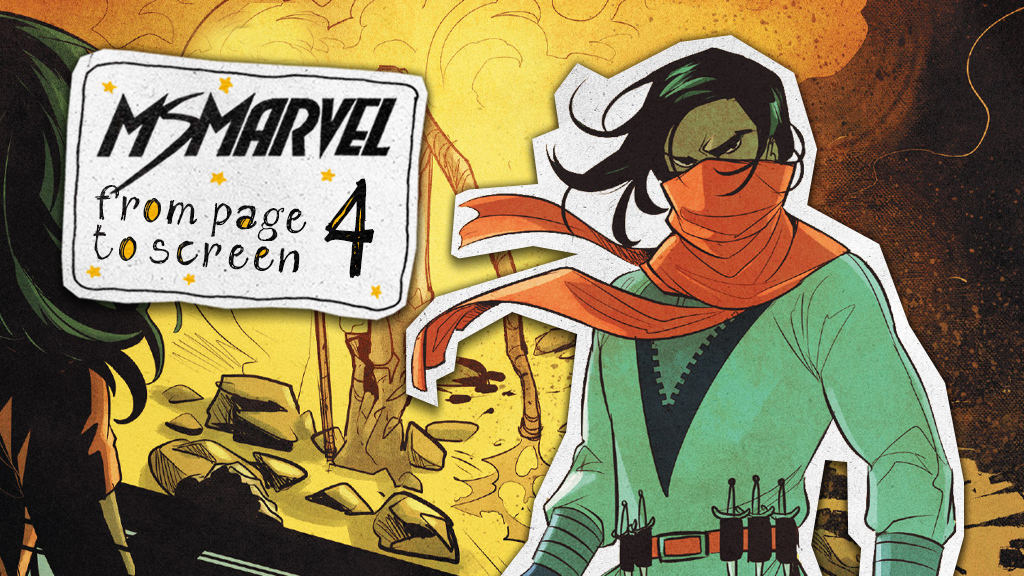
    With Ms. Marvel’s Episode 4, entitled “Seeing Red,” the series’ connection to Ms. Marvel comics is on full display. In Episode 1, we looked at how the series adapted from the comics the moment Kamala’s powers were activated; for Episode 2 we delved into the comics’ and series’ introduction and handling so far of the character Kamran; and in Episode 3 we looked at the interesting source material for the series’ villains, the Clandestines. This week, we look at the Red Dagger(s) introduced and how they compare to Red Dagger in the comics.

    Ms. Marvel #23 (2017)

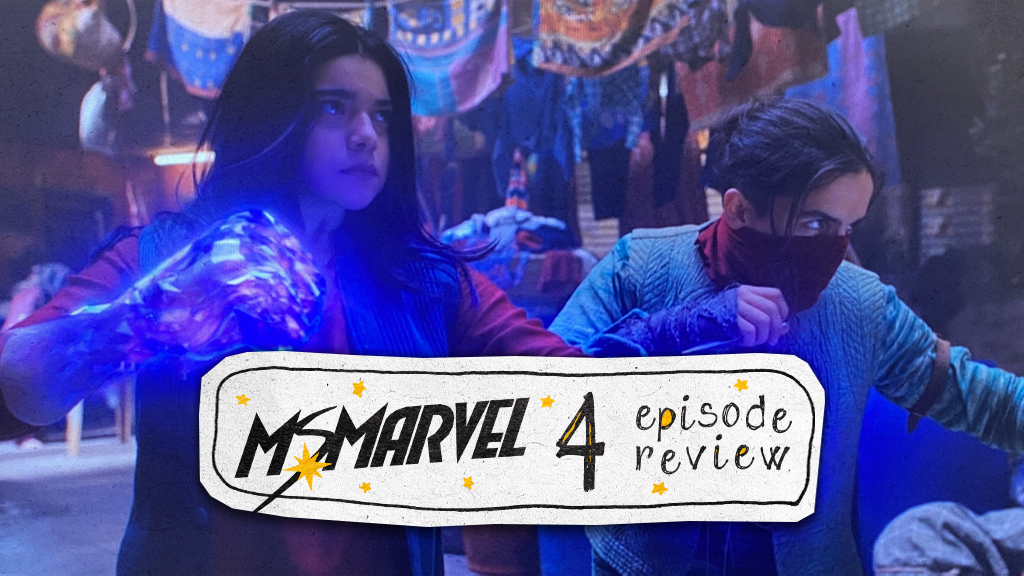
    In the show, Kamala meets the Red Dagger while in Karachi. When she is investigating the train station looking for answers about the train in her vision, she is attacked by the Red Dagger. He then reveals that he knew she was Djinn because he could sense the Noor energy she was using. When he found out she was related to Aisha, he took her to the base of the Red Daggers where she met fellow Red Dagger Waleed. He explained to her that Clandestines come from another dimension that exists all around ours, but with a veil of energy that separates the two. 

    Marvel Studios’ Ms. Marvel Episode 4
    Marvel Studios’ Ms. Marvel Episode 4

    Red Dagger and Kamala bond in civilian mode as he introduces her to his friends at a bonfire. Ultimately, by the end of Episode 4, the Clandestines had tracked down Kamala and attacked the group, seemingly killing Waleed before Kamala is transported to what appears to be a 1947 Karachi train station.

    What They Kept From the Comics

    Ms. Marvel #12 (2016)
    Ms. Marvel #12 (2016)
    Ms. Marvel #12 (2016)

    In Ms. Marvel, Kamala also meets Red Dagger while visiting Karachi. She does not know his true identity for quite some time, but his name is Kareem and he is a family friend. He acts as a vigilante in Karachi similar to how Ms. Marvel patrols Jersey City. 

    His look and skillset are incredibly comic accurate, and his role in Kamala’s life may track that seen in the comics. The two were introduced in both iterations when Kamala visited Karachi in an attempt to figure out who she was. In the comics, Kareem gave her a new and optimistic perspective on her role as a superhero in Jersey City. Here, he may ultimately be a significant spark in Kamala fully embracing her hero identity.

    Ms. Marvel #23 (2017)

    Kareem is also a romantic interest for Kamala in the comics, and subtle hints of that can be picked up in Episode 4. Kareem is an instrumental figure in advancing Kamala and Bruno’s romantic storyline—Kareem ends up living in Jersey City for some time, creating a love triangle—which is certainly a dynamic Ms. Marvel seems like it could lean into. 

    Ms. Marvel #23 (2017)
    Ms. Marvel #29 (2018)
    Ms. Marvel #29 (2018)

    What They Changed

    The most obvious difference between the live-action and the comics is that Ms. Marvel introduced the Red Daggers as a society with advanced technology working to protect people from things that cannot be seen. In Ms. Marvel comics, Red Dagger is simply Kareem, who is a solo vigilante-type hero. The dramatic expansion of Red Dagger in the live-action likely speaks to the need to aid and support Kamala’s mysterious and complex background/origin mystery. Introducing the Red Daggers certainly seems to have added to and advanced that aspect of the story, while still paying homage to the source material.

    Marvel Studios’ Ms. Marvel Episode 4
    Marvel Studios’ Ms. Marvel Episode 4

    As to other differences, in Ms. Marvel, Kamala meets Kareem/Red Dagger extremely early on in her hero journey. She does not even have the Ms. Marvel mantle yet or donned a full costume. In the comics, she meets him as a well-established hero and Avenger struggling to come to terms with her self-identity and confidence as a hero.

    In her meetings with Red Dagger, she learns humility when she botches a hero job in Karachi because she did not understand the workings of the area. In Jersey City, she struggled with feeling replaceable as Red Dagger immediately got the media’s attention after they stopped a runaway train. 

    Ms. Marvel #12 (2016)
    Ms. Marvel #24 (2017)

    The character’s story will continue throughout the rest of Ms. Marvel at least, but there is every reason to believe Red Dagger can serve as a sort of reflection point for Kamala like he does in the comics, but with more emphasis on her beginnings and growth into a superhero in the first place. 

    Marvel Studios’ Ms. Marvel Episode 4

    The first four episodes of Ms. Marvel are now streaming on Disney+.

  • Theory Thursday: Time Travel and Ms. Marvel’s Quantum Connection

    Theory Thursday: Time Travel and Ms. Marvel’s Quantum Connection

    Part of what has made Ms. Marvel so enjoyable over the past four weeks is the genuine mystery that weaves throughout each episode and keeps viewers on their toes. It all stems from the fact that Kamala Khan does not appear to bring her Inhuman ties to the live-action Marvel Cinematic Universe. So, the source of her powers has left both casual viewers and comic book experts scratching their heads as to where the series is taking the beloved character. Even by the end of Episode 4, fans still aren’t entirely clear as to what’s happening. But we first looked at Kamala’s potential connection to the Quantum Realm and time travel after the series premiere, and more evidence of this theory just keeps rolling in.

    Numerous aspects of Ms. Marvel could lean in this direction. A major theory suggests that the bangle that activated her powers is, in fact, a quantum band, which derives its powers from the Quantum Realm. There were hints of time travel via Kamala’s visions, and it could be important to remember that her comic powers operated based on constant time-traveling on a molecular level.

    What we now know about Kamala’s origins and family history in Ms. Marvel is that her great-grandmother, Aisha, was a “Clandestine” or “Djinn.” While the “Djinn” designation turned out to be more of a red herring based on what we learned in Episode 4, we also know that the Clandestines come from the Noor Dimension, which is separated from the main reality by a veil of energy. Najma and her gang want Kamala to break through that veil, but it has been made clear that if she were to do so, the Noor Dimension would overtake and destroy Kamala’s reality.

    We do not know much about the Noor Dimension other than that supernatural beings, identified in the past as “Djinn”, came from it and that Clandestines and the Red Daggers can sense the Noor energy that Kamala draws from the other dimension. In the MCU, we know about a few realms. Asgard is a great example, and it is even referenced in Episode 4 to help explain the Noor Dimension. Another “realm” we have heard of is the Quantum Realm, which is certainly creeping in as a major player in the future of the MCU.

    As we know from Avengers: Endgame, the Quantum Realm, and quantum energy were the backbones of time travel. What Episode 4 possibly re-emphasizes is Kamala’s connection to time travel. By the end of Episode 4, Kamala seems very much in the 1940s in India after her bangle was attacked and went haywire. While it is not entirely clear yet whether she is actually, physically present there, the ending shots of the episode certainly made it easy to make that conclusion. Obviously, Episode 5 will keep her in that space for the purpose of explaining and resolving Aisha’s mysterious storyline, which is profoundly connected to the exact period Kamala is now in.

    Still worth noting, Ms. Marvel has had quite the number of Ant-Man references. Obviously, Scott Lang and Hank Pym are the characters most associated with the Quantum Realm, and we next expect to see Ant-Man in Ant-Man and the Wasp: Quantumania. “Quantumania” alone should set the expectations for how important the Quantum Realm will be, but that film will also star the time-travelling villain Kang the Conquerer. Following Loki, the Kang Easter egg in Moon Knight, and Phase 4’s focus on the multiverse, Kang is very much set up to potentially be the next MCU saga’s Big Bad.

    Overall, there’s enough evidence to form the theory that Kamala is utilizing some of the same general concepts that we have already been introduced to in the MCU. If the Noor Dimension is actually the Quantum Realm, that major piece of the universe would be served by being better developed in Ms. Marvel. It also could make Kamala’s story more interesting than if the Noor Dimension was a completely original concept that gets limited to her origin story and not much else. Obviously, there is more nuance to why Kamala or Aisha can utilize the bangle while others, like the Clandestines, cannot. We will likely learn virtually all of this information in the next episode, as all MCU DIsney+ series love spending the majority of their penultimate episodes resolving every mystery or question, and ultimately setting the hero up for the final battle fully embracing their identity.

    The first four episodes of Ms. Marvel are now streaming on Disney+.

  • How ‘Ms. Marvel’ Latest Episode Sets Up ‘She-Hulk’s Supermax Prison

    How ‘Ms. Marvel’ Latest Episode Sets Up ‘She-Hulk’s Supermax Prison

    The fourth episode of Ms. Marvel just dropped and brought with it quite a lot of Kamala’s heritage and family history; not to mention some quality action sequences and Marvel Cinematic Universe world-building. But apart from the gradual exploration of what the series has dubbed the Noor Dimension, Ms. Marvel also debuted a connection to a future MCU project. In fact, it looks like a potentially major element of She-Hulk: Attorney At Law has had the foundation laid for it.

    While the Department of Damage Control’s presence has faded since the first two Ms. Marvel episodes, their role in the story has carried on in a more subtle way. At the end of Episode 3, the DODC took the Clandestines into custody after the wedding fight. In Episode 4, we see the follow-up to that, as the Clandestine escape being brought into the DODC Supermax Prison. While we do not see any main area of the prison, we do see a shot of the outside of it. As it turns out, the DODC Supermax was the prison complex seen in the She-Hulk trailer.

    Marvel Studios’ ‘Ms. Marvel’
    Marvel Studios’ ‘She-Hulk’

    By showing up in multiple projects, the Supermax has essentially been established as being a significant element in the MCU. While we got a taste of the Raft in Captain America: Civil War, that high-security prison has not been used since. The fact that the Supermax is run by the DODC is important for a few reasons. First, it means that, unlike the Raft, there is nothing secretive about it—it appears to be on land and is extremely visible and accessible.

    Second, it means that the DODC is likely here to stay as an ongoing source of law enforcement and a thorn in the sides of superpowered people. This confirms the message in the second episode of Ms. Marvel that Damage Control is on a mission to target and incarcerate enhanced people. To what extent is unclear—surely some supers are allowed to operate, but we may find out more in She-Hulk.

    Jennifer Walters, aka She-Hulk, is an attorney who specializes in superhuman law. We know from the She-Hulk trailer that she will deal with people like Emil Blonsky, otherwise known as Abomination. While we do not know for sure where Blonksy is being held, the DODC Supermax is now the top candidate. Practicing superhuman law requires either representing or suing superhumans. A great place to find clients or targets, then, would be a building where a bunch of superhumans is being held prisoner for alleged crimes.

    So what do we know about the DODC Supermax Prison so far? Not a lot, aside from the fact that it is operated by the DODC. We can assume some relatively high-profile people, like Abomination, are there. If it is a sort of catch-all prison like it seems to be, a wide variety of supervillains should pass through. Despite being a Supermax prison, it clearly has terrible security. The Clandestine essentially walked out of that place. Plus, it is almost a given that prison breaks will pop up at least every now and again.

    The first four episodes of Ms. Marvel are now streaming on Disney+.

  • REVIEW: ‘Ms. Marvel’ Episode 4—”Seeing Red”

    REVIEW: ‘Ms. Marvel’ Episode 4—”Seeing Red”

    While Ms. Marvel still has to stick the landing in its final two episodes—something that Marvel Cinematic Universe shows tend to struggle with—its Episode 4 was yet another triumph for Kamala Khan’s series. In fact, it manages to follow the MCU series template for four episodes, but yet surpasses all expectations set by previous Disney+ installments. Ultimately, the conclusion, so far, on Ms. Marvel is that from inception to execution it is the highest quality MCU series to date. And it is not particularly close.

    While the mystery of Kamala’s origin continues in Episode 4, it is still developing in more interesting ways in each episode. Quickly, we learn that there is much more depth and nuance to the “Djinn” classification we were introduced to in the previous episode, and we get a hint that the Noor connection may have stronger connections to the more traditional super-aspects of the MCU. What that connection actually is remains the driving energy of the series, and Ms. Marvel expertly stretches the reveal out much like Kamala can stretch out her own hard light energy.

    But one of the most delightfully perplexing aspects of Ms. Marvel is uncovering why exactly this is so well played out. While many substantive aspects of Ms. Marvel are certainly unique from other MCU entries, the actual structure of the series is not. For example, virtually every MCU series has a major cliff-hanging plot twist-type ending to its fourth episode. In WandavIsion’s  Episode 4, Wanda’s sentience in the Hex is formally revealed. In Loki, the titular character wakes up to different variants of himself at the end of time. In Moon Knight, Marc Spector is killed and is awakened in what appears to be a mental asylum. Here, in Ms. Marvel, Kamala seems to have been somewhat transported to the past, as she finds herself engulfed in the scene of the last train to Karachi the night her great-grandmother Aisha disappeared.

    So while this sort of ending was not a true surprise—and the structure of the penultimate episode can likely similarly be guessed to an extent—Ms. Marvel executes it on an absurdly impressive level. The final shots are breathtaking and rely mostly on a realistic reimagining of the past rather than supernatural, magical, or fantastical elements. While the knowledge of Partition and Kamala’s family history has been known to this extent since the second episode, Episode 4 fully opened the door for what Kamala’s very human origin means to the character, and frankly, the world at large. Even Kamala is completely at a loss for words at the tragedy, suffering, and pain she sees around her. 

    Much of the beauty of the series’ focus on Kamala’s mysterious origin is the fact that, as emphasized and written in stone in this episode, Kamala’s origin is as much intertwined with traditional reality as it is with whatever inter-dimensional tie-in is. All superheroes carry the weight and strengths of their non-super past, but Ms. Marvel is unique in truly expressing that Kamala’s foundation is in her family and its history. The bangle is certainly the most important force in her superpowers, but it is every bit as important to Kamala’s character as is her relationship with her mother, her mother’s relationship with her mother, and whatever happened to Aisha during Partition. 

    In the midst of the incredibly rich storyline, even the action sequences of Episode 4 stand out. In particular, the extended chase scene could without a doubt be plopped into a feature film as is and no one would question it. While often in MCU series, even Ms. Marvel, action is rushed and sparing, this scene proved that that is a choice and not a necessity for these shows. 

    So, to go back to the earlier question of why Ms. Marvel seems to be ahead of the curve, there are numerous unique things that the show brings to the table. But it would not be fair to say that the series radically upended the Disney+ MCU model. Not everyone will personally prefer the series over all others, and no one has to. But at the end of the day, in all truthfulness, Ms. Marvel has been written and executed with such quality that it truly stands out. On no level is that an attack on other MCU shows, either—Ms. Marvel is simply that good.

  • ‘Ms. Marvel’ From Page to Screen: Episode 3

    ‘Ms. Marvel’ From Page to Screen: Episode 3

    As Marvel Studios’ series Ms. Marvel reaches its halfway point, it is clear that the show borrows quite a lot from Ms. Marvel comics. With Episode 1, we looked at how the series adapted from the comics the moment Kamala’s powers were activated; and for Episode 2 we delved into the comics’ and series’ introduction and handling so far of the character Kamran. This week, we take a different approach with Episode 3. While the episode incorporates many small references to the comics, arguably its most significant and intriguing inclusion lies far outside Ms. Marvel comics. Below, we look at how and why the Clandestines in Ms. Marvel were brought to life from ClanDestine comics.

    Ms. Marvel’s Clandestines

    Marvel Studios’ Ms. Marvel Episode 3
    Marvel Studios’ Ms. Marvel Episode 3

    The beginning of Episode 3, titled “Destined”, brought forth a lot of information supposedly explaining much of Kamala’s origin and background. Najma, Kamran’s mother and the woman Kamala had visions of, tells Kamala that she and Kamala’s great-grandmother Aishia were not human. Specifically, Najma claims that she and some others she appears to live with are actually Djinn, who were exiled from their home Noor dimension. She states that they are called many names, including Clandestines.

    The explanation of who Djinn are that we get in Episode 3 of Ms. Marvel is pretty sparing. Kamala’s dad reads Bruno’s research, which says that Djinn are mythological beings of pre-Islamic folklore, sometimes referred to as genies. We also know from references throughout the series that Djinn seem to be viewed as demons to the superstitious, including Kamala.

    Marvel Studios’ Ms. Marvel Episode 3
    Marvel Studios’ Ms. Marvel Episode 3

    There are still a lot of questions about the group, but they appear to be a patchwork group of loosely-related Djinn who live together. It is unclear if anyone is closely related other than Kamran and his mother, but there is a clear theme of family and belonging within the Clandestines which Najma uses to manipulate Kamala.

    ClanDestine in the Comics

    ClanDestine #1 (2008)

    The Clandestines of Ms. Marvel are clearly influenced by the ClanDestine comics, although ClanDestine seems to provide minimal inspiration rather than being directly adapted into live-action. In the comics, ClanDestine is a large, kind of odd family comprised of the progeny of Adam Destine and a being named Elayath. All of their children inherited superhuman abilities of some kind. Adam himself is immortal and many of the children are decades or centuries apart in age.

    The family primarily sought to operate in secret rather than identifying themselves as super-powered beings or superheroes, though certain members try to follow this path. ClanDestine stories in the comics are driven by family conflict, such as when Adam killed his son Victor because he believed he had become evil.

    ClanDestine #5 (1994)
    ClanDestine #5 (1994)
    ClanDestine #5 (1994)

    The clear connection that the makers of Ms. Marvel made to ClanDestine is that the matriarch, Elayath, is a Djinn. Adam freed her from a wizard that had trapped her in a jewel around 1200 A.D. In return, she granted him his immortality and invulnerability.

    Why Would Ms. Marvel Adapt ClanDestine?

    ClanDestine #12 (1995)

    The comics’ ClanDestines and Ms. Marvel’s Clandestines seem extremely different in history, nature, and group members. The connection between the two seems to boil down simply to the name and the Djinn aspect. Even so, how the two groups incorporate Djinn is entirely different, as ClanDestine is a family descended from a single Djinn, whereas the Clandestines in the show appear to all be a type of being, known as Djinn, from another dimension.

    Why would Marvel make this connection between an extremely obscure group from the comics and a very different group in live-action? It all likely comes down to the series attempting to give Kamala’s background and origin the same type of explanation as her Inhuman heritage in the comics. Everything in the series suggests that Marvel Studios wants to mimic Kamala’s comic story without invoking Inhumans. So, in Ms. Marvel, the Clandestines are a family-like group of super-powered, or at least mystical, beings that Kamala is related to in some way, similar to her relationship to Inhumans in the comics.

    Ms. Marvel #7 (2014)

    That connection is relatively obvious, but the series clearly wanted that familial theme to be tied to Kamala’s religious and cultural heritage. This leads, of course, to using beings of pre-Islamic folklore, Djinn, as an option to explain why Kamala is more than human. There is very little comic basis for this, but ClanDestine happens to already contain those essential elements of Kamala’s story in Ms. Marvel.

    Marvel Studios’ Ms. Marvel Episode 3

    To be fair, Najma’s explanation of the Clandestines should be taken with a grain of salt given the fact that she is a clear villain and there is not much evidence yet to back up her claims. Still, Ms. Marvel certainly made a bold creative choice in adapting ClanDestine from the comics to build Kamala’s Khan’s story.

    The first three episodes of Ms. Marvel are now streaming on Disney+.

  • Theory Thursday: ‘Ms. Marvel’ Will Lead to an Incursion

    Theory Thursday: ‘Ms. Marvel’ Will Lead to an Incursion

    Episode 3 of Ms. Marvel, entitled “Destined”, made it clear that Kamala Khan will be involved in much more than street-level threats. The young hero clearly has connections to universe and multiverse-spanning abilities and those seem related heavily to her family history. In essence, Ms. Marvel may be opening a very large door into the greater Marvel Cinematic Universe storyline. In particular, Episode 3 gave hints that the events of the series could lead to an incursion and tie into a future Secret Wars adaptation. 

    Ms. Marvels third episode opened with quite the bombardment of new, cosmic-level information and stakes. Najma, Kamran’s mother, reveals to Kamala that the Clandestines are Djinn from a place they refer to as the Noor Dimension. She also tells Kamala that Kamala’s great-grandmother Aisha was also Djinn and that the group was exiled from the Noor Dimension and was trying to use Kamala’s bangle as a way to get back. While Najma is clearly an antagonist and some of the details should not be taken at full face value, the lingering implication is that Kamala has the power to create the means for inter-dimensional travel. 

    Ms. Marvel #16 (2015)

    The last time we got to explore multiple realities was in Doctor Strange in the Multiverse of Madness. There, we first learn that incursions are happening to some extent throughout the multiverse. Incursions are essentially the colliding of two realities that—as described by Earth-838’s Reed Richards—ultimately lead to the destruction of one or both. We do not know much about incursions, other than that a multiverse-traveling sorcerer can cause one by leaving too much of a footprint in another universe. In Ms. Marvel, the Clandestines are implying that inter-dimensional travel could be at play, which may implicate some of the forces behind incursions.

    Still, Kamala’s abilities are mysterious. When she confides in Bruno about the Clandestines and her plan, his research (based on scholarship by Thor’s Dr. Eric Selvig) leads him to believe that she would essentially need the power equivalent to that of the sun to actually make it happen. In other words, he warns her that “if you help them go home, some things might go boom.” The foreshadowing of destruction certainly brings to mind the idea of the demolition of a dimension or universe. To be fair, the MCU has not been overly clear as to the distinction, if any, between other “dimensions” and “universes”, but the same logic might apply. 

    Ms. Marvel #19 (2015)

    By the end of the series, the inter-dimensional and/or multiversal implications of Ms. Marvel could very well lead to this sort of “boom” Bruno warned Kamala about, and there is plenty of reason to think that the fallout could be an incursion. In the comics, the Secret Wars (2015) storyline was a major influence on Kamala’s story early on. She actually first meets Carol Danvers aka Captain Marvel in the lead-up to the final incursion between Earth-616 and Earth-1610. Considering an adaptation of Secret Wars has been hinted at in the MCU for quite some time, incursion-related consequences stemming from Ms. Marvel could easily go on to influence The Marvels and an eventual Secret Wars

    There are still numerous mysteries to be explored in Ms. Marvel, and Kamala’s family history and connection to the bangle are sure to be big reveals. Considering that Kevin Feige recently promised fans that the direction of the MCU in Phase Four and beyond will soon become clear, Ms. Marvel may very well be laying more groundwork for a Secret Wars event in a direct way, coming right off of Multiverse of Madness. Whether she directly or indirectly causes an incursion herself is yet to be seen, but her presence in the universe is definitely cosmic. 

    The first three episodes of Ms. Marvel are now streaming on Disney+.