Category: Reviews

  • REVIEW: The Season Finale of ‘The Mandalorian’ Shifts the Status Quo of the New Republic Era

    REVIEW: The Season Finale of ‘The Mandalorian’ Shifts the Status Quo of the New Republic Era

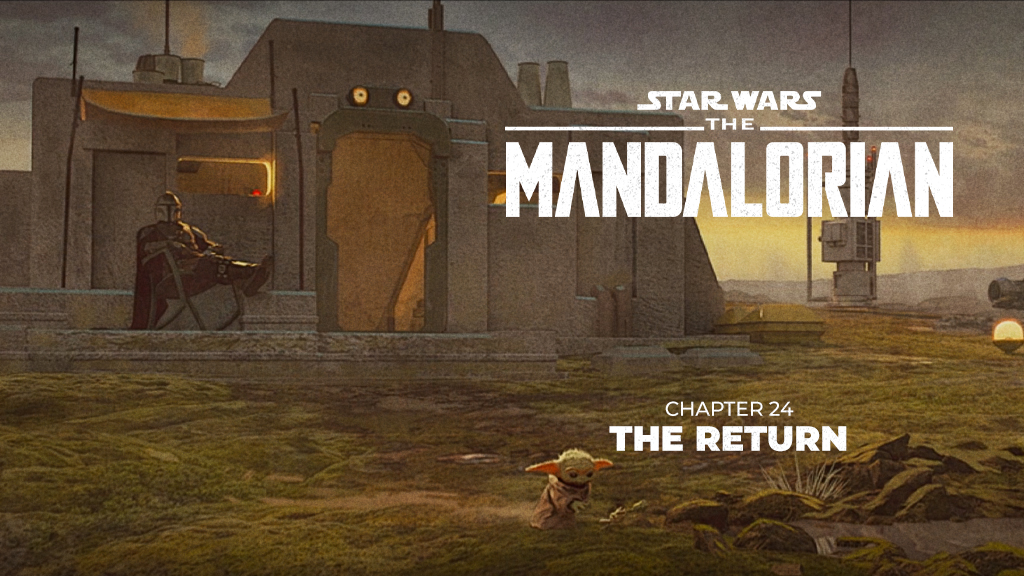
    Led quite intentionally astray by some aspects of Chapter 23, The Spies, and comments by the cast and crew of the series, fans had put together some pretty wild theories about what to expect in the Season 3 finale of The Mandalorian. Suffice it to say, by the time the title of the episode (The Return) was revealed just a touch over five minutes in, it was pretty clear where the episode was headed and that no betrayals or heart-wrenching deaths were coming; instead, Chapter 24 was a spectacle-filled finale that significantly changed the status quo of the New Republic era of the galaxy far, far away and a promise of a return to a more episodic adventure in Season 4.

    For much of the most recent season, The Mandalorian has been criticized for spending too much time on characters other than Din Djarin and Grogu. In some ways, the finale served as a very direct response to that criticism, bringing the duo back into the spotlight with an action-packed escape followed immediately by a battle with the galaxy’s biggest fanboy, Moff Gideon, and his Praetorian Guard. While many fans waited much of the season for Bo-Katan Kryze to betray Din Djarin, her well-timed intervention Din’s fight with Gideon allowed her to try to exact her revenge on the Moff while allowing for Din and Grogu to work side-by-side taking down the guard. The relationship between Bo-Katan and Din–which was developed on screen over several episodes while fans all threw their hands up and complained that nothing was happening–bore fruit when Din and Grogu joined Bo-Katan in holding off Gideon long enough for Axe Woves’ kamikaze mission to take him out. Teamwork makes the dream work.

    Mandalorians are stronger together.

    Bo-Katan Kryze

    That sentiment, shared by Bo-Katan while Din and Grogu joined her against Gideon, should have resonated strongly with the audience as a measure of the incredible growth made by the character since she first showed up in Season 3. Sitting alone in her throne room, Bo-Katan had given up on…pretty much everything. The weight of her past failures had become an anchor preventing her from moving forward and, having lost everything, she was content to pout in her big chair. Now, Bo-Katan has relit the Great Forge of Mandalore and stands ready to lead her newly reunited people into a new age of Mandalorian glory. In summation, it’s almost as if every minute of her journey over the course of Season 3 helped shape her into exactly the type of leader her people needed her to be.

    Bo-Katan Kryze (Katee Sackhoff) in Lucasfilm’s THE MANDALORIAN, season three, exclusively on Disney+. ©2023 Lucasfilm Ltd. & TM. All Rights Reserved.

    With Mandalore’s future in the best of hands, The Return also promised a return of what made fans fall in love with the series in the first place: the adventures of Din Djarin and Din Grogu. After quickly convincing Carson Teva to let them take care of some of the New Republic’s dirty work, the Dins get a storybook ending to Chapter 24. What does that mean for Season 4, which is already in pre-production with cameras slated to roll this Fall? With Ahsoka and Skeleton Crew set to bear some of the world-building weight of the New Republic era and help move things toward Dave Filoni‘s “Heir to the Empire” film, the next season of The Mandalorian might look a whole lot more like Seasons 1 and 2, with several chapters devoted to taking the Dins on new adventures each week, allowing for Grogu to continue learning and evolving as a Mandalorian.

    The Return certainly moved fast, packing a spectacular aerial battle of Mandos vs. Dark Troopers, the presumed death of Gideon and the retaking of Mandalore into 42 minutes but make no mistake, those 42 minutes changed the status quo of the New Republic era of stories. With Gideon, who was revealed only to be serving his own interests rather than that of the Shadow Council, now dispatched, there’s room for a new threat to emerge. With Bo-Katan and crew reconstructing Mandalore, a new and powerful force will continue to emerge on the other side of that threat. As far as a season finale goes, The Return seemed to deliver on just about every level: big action, resolution and the promise of what comes next. It may not have been what fans theorized but it seems to have delivered what they’ve all ben asking for all season.
  • REVIEW: The Mandos Could Have Used Admiral Ackbar in Chapter 23 of ‘The Mandalorian’

    REVIEW: The Mandos Could Have Used Admiral Ackbar in Chapter 23 of ‘The Mandalorian’

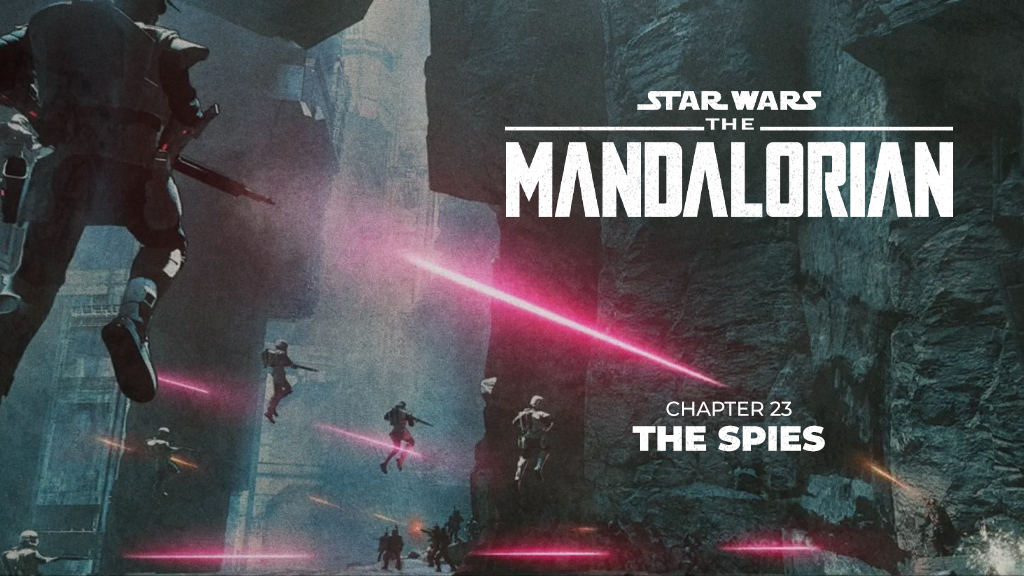
    I saw it coming. You saw it coming. We all saw it coming. Everyone saw it coming except for Bo-Katan, Din Djarin and the dozen or so other Mandos who walked right into Moff Gideon’s trap. Things were going far too well for the Mandalorians in their quest to reclaim Mandalore and in a galaxy where peace is not an acceptable status quo, things were bound to take a turn for the worse. After several episodes established Din, Bo-Katan and Grogu as a functional unit at the center of the Mandalorian Renaissance, Chapter 23, The Spies, saw it all taken away from them at the hands of Gideon, calling into question if Mandalore might not just be cursed after all.

    While Gideon’s return was already advertised, the live-action debut of the Shadow Council–a group of Imperial loyalists working behind the scenes to ensure the return to power of the Empire–serves as an interesting parallel to the work being done by the Mandalorians. Just as Bo-Katan, Din Djarin and the Armorer seek to round up and reunite Mandalorians from across the galaxy, Gideon seeks to amass the resources of the Imperial remnants from across the galaxy to stop them. Having Gideon launch his plan–and his trap–from the depths of Mandalore, indeed from the heart of their once great civilization, just adds another notch on the belt of this wonderful bastard.

    Din Djarin (Pedro Pascal, top right) and Paz Vizsla (Tait Fletcher, foreground right) in Lucasfilm’s THE MANDALORIAN, season three, exclusively on Disney+. ©2023 Lucasfilm Ltd. & TM. All Rights Reserved.

    The fallout from the events of this episode promises to be nothing short of transformational for the next arc of the series. Bo-Katan–whose desire to lead again had to be stirred extrinsically–has now led her newly formed army into a trap that cost her the life of Paz Vizsla and steadying influence of Din Djarin. How those losses will impact her next move and how an increasingly independent Grogu will respond to the capture of his father are major questions that will define not only Chapter 24, the Season 3 finale, but also next season and, ultimately, the Mandalorian-centric film set to be directed by Dave Filoni.

    While the finale of the episode feels like the beginning of a slow march to the creation of the First Order, their canonical birth is still 5 or so years away and, so far as we know, Gideon is not a part of their sequel trilogy story. So, as parallel as their paths may seem at the moment, Bo-Katan and Gideon are certain to come together again. Will that be the time that Bo-Katan’s song is finally written? As Din Djarin said, Bo-Katan is defined by honor, loyalty and character–all things Gideon knows nothing about. While their goals may seem superficially similar, Bo-Katan’s quest to reclaim Mandalore is done selflessly for the good of her people while Gideon looks to amass the resources of the Empire for his own selfish ends. While the Shadow Council was swayed to play along for now, it’s safe to say that while Thrawn may see value in eliminating the Mandalorians, Gideon won’t find him so easy to manipulate. As things move towards their inevitable end and Bo-Katan and Gideon are positioned against one another, this episode will be noteworthy for its subtle conveyance of the idea that while Gideon seems to have the upper hand, he rules from a throne of fear and manipulation while Bo-Katan has grown from her mistakes and seeks not to lead but is called to it. Short of the Darksaber, which has slowly lost its meaning, Gideon now has everything Bo-Katan, Grogu and The Mandalorians desire. Has that put him in a good place or a very bad place? Place your bets and let’s see what surprises are in store for the season finale!

  • Book Review: ‘Codex Black: A Fire Among Clouds’ by Camilo Moncada Lozano & Angel De Santiago

    Book Review: ‘Codex Black: A Fire Among Clouds’ by Camilo Moncada Lozano & Angel De Santiago

    A Fire Among Clouds, the first in the Codex Black series, is a fascinating tale of two young individuals that both embark on a journey and are forced to come to terms with who they are. The graphic novel, which hails from Camilo Moncada Lozano and colorist Michi Desantiago, is a story that takes place in fifteenth-century Mesoamerica. It tells the story of 15-year-old Donaji, and 17-year-old Itzcacalotl. Donaji is on a mission to search for her father who left eleven years ago. She knows next to nothing as to where he went or why he left, but she’s determined to find him. Along the way, she runs into the eccentric Itzcacalotl who has wings and doesn’t really belong. The two teens couldn’t be more different from one another, but together, they make a dynamite team.

    The artwork in A Fire Among Clouds is absolutely stunning. The expressions, the designs and the details are captivating, and they’re made all the better by Desantiago’s excellent colorwork. There are moments where the text can be frustrating, with a few “info-dump” moments sprinkled throughout, but the artwork helps to keep readers enticed. While it isn’t perfect, and there are some panels that feel like there’s just too much going on, the overall artwork does a phenomenal job at helping to elevate the story.

    As for the story itself, while interesting and unique, the story does have some issues. The biggest issue is that the story itself doesn’t really have a satisfying conclusion. Somehow, the adventure the main characters are on at the very beginning does not an actual conclusion. It feels like nothing really happens. There is a ton of great character development, but in the end, our characters are seemingly back where they started. We get no real answers to our questions, and it is pretty frustrating. Thankfully, the story itself is intriguing enough to want to push through.

    A Fire Among the Clouds is the perfect graphic novel for teenagers. It’s a story about self-growth, acceptance, and family that is worthy of a read.

    Disclaimer: I was lucky enough to receive a physical ARC from IDW Publishing in exchange for an honest review.

    The book is available now wherever books are sold!

  • REVIEW: ‘The Super Mario Bros. Movie’ is the Mario Film We Wanted in 1993

    REVIEW: ‘The Super Mario Bros. Movie’ is the Mario Film We Wanted in 1993

    There’s been a surprisingly big discussion online surrounding The Super Mario Bros. Movie after critics seemingly felt quite mixed about the project. Nintendo’s first real foray into producing a project based on their IP mixed with Illumination adds a lot of pressure for this film to succeed. Box office-wise the film is set to break records left and right but the question remains if the plumber’s adventure to the Mushroom Kingdom truly translated well into animation after the questionable first attempt in live-action.

    What stands out is that the film is visually stunning and the designs are certainly true to the original game franchise; a sign that Nintendo had close control over their work to stay true to the original. Part of me did wish that the minions got a Paper Mario treatment with some unique standouts outside of a Toad wearing a backpack being one of the main characters. The worlds were captivating and it definitely ranks among Illumination’s more creative works, which was something I had some concern about as their overall design work can be quite plain.

    The biggest concern for some was the voice work with the film going all-in with the modern “big name actors” casting choices. Yet, I was surprised by Chris Pratt’s overall performance with some great performances here and there. Seth Rogen could’ve put in a bit more work to give Donkey Kong a more familiar voice, as we also just get his signature laugh in this film. He had some great moments but I won’t lie it felt like a missed opportunity given how iconic his voice is in Donkey Kong 64.

    Anya Taylor-Joy was okay as Princess Peach, she gave a good performance but it didn’t really stand out either. The true scene-stealers were Jack Black as Bowser and Charlie Day as Luigi. They both perfectly brought the right energy to these characters even if I do wish Luigi, who is cutely named Lu by Mario in this rendition, was given a bigger role in this film but perhaps we get a Luigi’s Mansion spinoff film one day.

    As much as I’ll definitely say I had a blast with the film, it does overall feel a bit rushed at parts. It didn’t really have a strong plot pulled together that would build upon each other but rather just wanted to hit some vignettes with loose character motivation to keep it together. Peach wants to protect her people and is willing to give up everything for it. Mario wants to prove to his family that he isn’t dragging his brother down with him, which actually was the best part of the film’s theme.

    Bowser has a neat surprise in his overall motivation that is inspired by some of the most recent entries in the Super Mario franchise, though I wished they kept it a secret for a longer period of time. Its overall issue is that it simply tries too much and doesn’t set a clear focus. We spend time with Bowser and find out his motivation, trying to create a dynamic between him and Mario even though they never face each other to build up to an eventual climax. Yet, it would’ve been great to actually have these two compete, he actively takes his brother away adding to one of the main conflicts in the film.

    Luigi taking Peach’s role in the story as confirmed in the trailers is a good way to add something new without falling into cliché territory but it all feels rather disconnected. We spend most of the film’s runtime building up to one storyline that is squashed after a fun action sequence. Mario’s main motivation set early on was probably the best jumping-off point they could’ve given the film but it never truly comes together to become its central theme until the last few minutes.

    Yet, even with these issues and Illumination’s usual hyper-fixation on including pop songs in sequences (especially with the now-confirmed fantastic Donkey Kong-inspired song having been scrapped), the film has heart. I still got a bit teary-eyed during the final moments. Mario and Luigi make a great pairing, which I didn’t think the film would make me care about for as little screen time they share. There’s heart here and it overshadows its very easter egg showcase, as there are a lot of them.

    There are certainly a lot of Easter eggs for long-time Nintendo fans and likely one of the major draws of this film. It knows it is playing to nostalgia in a big way, which is surprisingly more dominant than what Marvel has been accused of throughout the years. It wouldn’t be too surprised if they use this film as a jumping-off point for spinoffs moving forward and there’s a chance that they could get some of these elements together in a sequel.

    Best case, they start taking some more inspiration from Paper Mario or the Mario & Luigi games, as those had some really great storytelling. The first film had to ease viewers into this world but now there’s no stopping them from going all-in. Introduce a new villain in the form of Cackletta and the super memorable Fawful. Introduce viewers to Koopa’s normal living environments that are more than just those minions we witnessed in the film. Otherwise, these films might just end up as more of the same.

    Either way, the film is a blast through and through. Yes, it falls into some usual pitfalls but there’s still a lot of fun to have. The jokes land when they land. We have a surprisingly strong cast here that brings it together. Peaches will be trapped in my head for all eternity. The heart that this film has overshadows most of its issues, and while it doesn’t offer too much depth in its story, it still does what it needs to do to keep you engaged throughout. It’s definitely worth a watch and is the Mario film we wished the 1993 film was.

  • REVIEW: ‘The Mandalorian’ Opens Old Wounds, Foreshadows a Tough Turn in Store

    REVIEW: ‘The Mandalorian’ Opens Old Wounds, Foreshadows a Tough Turn in Store

    Chapter 22 of The Mandalorian, Guns for Hire, ended exactly where most fans of the show predicted it would. Bo-Katan had reclaimed the Darksaber and reunited with her Mandalorian mercenary unit. It was a good day. However, all of that happened over the course of 4 minutes or so of the episode’s 45-minute runtime which gave director Bryce Dallas Howard plenty of time to explore some other avenues…and she did just that.

    Over the past several weeks, Bo-Katan Kryze has steadily grown into a more central role in the ongoing narrative of the series. Her status as a “true” Mandalorian–a princess from House Kryze–who can now, as the Armorer said, walk in both worlds and her experience on Mandalore has her primed to lead her people into a new age of prosperity on the planet they have long thought was lost to them. Bo-Katan has a formidable task ahead of her in reuniting the Clans and returning Mandalore to its former glory and one thing that’s being made very clear is that even if she does succeed, it’s a strange new world out there.

    (L-R): Mon Calamari Nobleman [Harry Holland (voice); David St. Pierre (performance artist)] and Quarren Captain [Christine Adams (voice); Joanna Bennett (performance artist)] in Lucasfilm’s THE MANDALORIAN, season three, exclusively on Disney+. ©2023 Lucasfilm Ltd. & TM. All Rights Reserved.

    Chapter 22 does its level best to illustrate just how different the galaxy has become since Bo-Katan last led Mandalore before the Great Purge. The episode’s opening sequence no doubt reminded fans of Star Wars: The Clone Wars of the rift that once existed between the Quarren and the Mon Calamari following the death of Yos Kolina. Kolina’s assassination set off a civil war on Mon Cala, one that saw both sides backed by larger galactic entities with the Separatists supporting the Quarren and the Republic supporting the Mon Calamari. If the opening sequence was meant as a subtle reminder of the scars of a galaxy torn apart by war for far too long, Christopher Lloyd’s cameo as Plazir-15’s still-a-Separatist-after-all-these-years Captain Helgait served as a much more coarse reminder.

    Try as the Duchess and Captain Bombardier do to establish an opulent, shining example of how incredible the opportunities provided in the New Republic can be, Helgait’s considerable experiences with war won’t let them be. It’s the Star Wars equivalent of “the North remembers.” Bo-Katan’s trip to Plazir-15–which provided a shiny second chance for many of its inhabitants–worked brilliantly to remind the series’ central characters and audience alike that nothing will come easy in the New Republic. The Mandalorian has put some heavy work into highlighting some of the obstacles that the heroes will face on their quest to restore Mandalorian glory and Howard used Plazir-15 as an overt analogy of what lies ahead for Bo-Katan as she tries to claim her shiny second chance on Mandalore. Nothing–not a fleet, not a Darksaber and not even a mythosaur–will heal all the scars from all the wars that have ripped the galaxy asunder. In the Star Wars galaxy, peace can never be the status quo. It’s awesome that today was a good day because Bo-Katan and her Mandalorians are about to come face-to-face with a lot of bad feelings and a lot of bad days.

  • REVIEW: ‘The Bad Batch’ Pays a Heavy Toll in Two-Part Season Finale

    REVIEW: ‘The Bad Batch’ Pays a Heavy Toll in Two-Part Season Finale

    Season 2 of The Bad Batch has spent a great deal of time establishing the titular team as a burgeoning family. Following the harrowing events of the Season 1 finale, the team slowly retreated from their mercenary missions and turned their focus towards building a new life for themselves in a galaxy that continues to rapidly evolve around them. In Summit and Plan 99, the two-part finale to the sophomore season, Clone Force 99 is reminded just how much they have evolved and that you can only lose what you already have.

    While the preceding episode, Tipping Point, seemed to put al the ducks in a row for the finale, writers Jennifer Corbett (Plan 99) and Matt Michnovetz (Summit) did wonderful work in subverting expectations of a predictable sequence of events–thanks almost entirely to Saw Gerrera’s interloping–in the finale even if the end result was probably on everyone’s bingo card. The dual episodes made good on quite a few of the season’s ongoing developments and left enough hanging to allow Season 3 (Lucasfilm hasn’t officially announced a third season yet but it seems extremely likely even as Disney cuts back) to get off to a strong start.

    (L-R): Wrecker and Hunter in a scene from “STAR WARS: THE BAD BATCH”, season 2 exclusively on Disney+. © 2023 Lucasfilm Ltd. & ™. All Rights Reserved.

    The sacrifice and subsequent loss of Tech is probably most emblematic of the progress the series–and Clone Force 99–made this season. Undoubtedly the most annoying member of the team over the first season, Tech’s growth into an almost identifiable human, complete with emotions and everything, is a constant reminder that these clones are all more than their special purposes. While he didn’t wear them comfortably, Tech’s father-daughter relationship with Omega along with his new, romantic relationship with Phee were evidence that there was more out there for the Batchers than running merc missions. And just as they began to realize what they had, it was taken from them by the sheisty Doctor Hemlock and a vengeful Cid.

    Speaking of Hemlock, the full scope of his and Sleepy Sheev Palpatine’s sinister plan isn’t revealed in Tipping Point, which includes a great cameo by Ben Mendelsohn’s Orson Krennic updating Tarkin on Project Stardust, or Plan 99 but Omega’s role in it is. While the easy money was on Omega’s DNA being so special that it would crack the whole cloning process wide open, the finale revealed that Hemlock simply wanted Omega as a means to further manipulate Kaminonan clone queen Nala Se to work for the Empire. For the time being, Omega’s unaltered genetic code seems of little to no interest to Hemlock. Can the same be said, however, for Emerie Karr, whose identity as a sister clone of Omega’s was revealed in Plan 99? Karr does seem to have her own agenda and revealing herself to Omega only furthers that suspicion.

    Summit and Plan 99 worked together to provide an emotional gut punch that wouldn’t have been possible without some of the groundwork laid throughout the season. With Tech seemingly dead, Omega and Crosshair in the clutches of Hemlock and Ord Mantell no longer a safe haven for the remaining members of the Bad Batch, the not-yet-announced-but-all-but-a-sure-thing two-part Season 3 premiere is set up for an emotional return to Pabu before a high stakes rescue of the imprisoned clones. Season 2, taken in its totality, feels like the second act of a three-part story which would mean Season 3 would be the end of the line for the stories of Clone Force 99. Now that they have so much to lose, Season 3 is set up to be a helluva ride.

  • REVIEW: ‘The Mandalorian’ Hits Hyperspace in “The Pirate”

    REVIEW: ‘The Mandalorian’ Hits Hyperspace in “The Pirate”

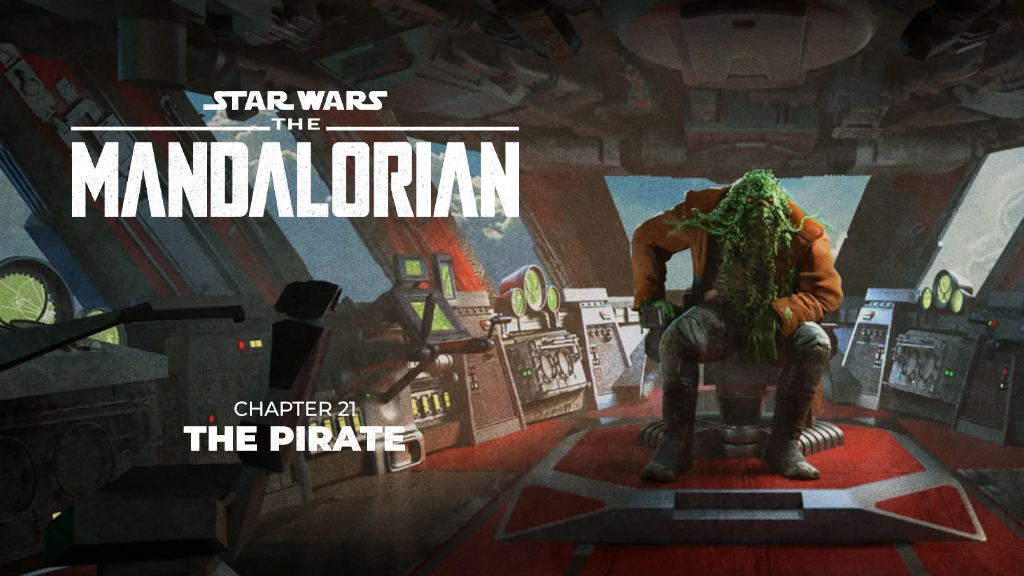
    For a show that’s often been criticized as a slow burn, The Mandalorian has indisputably picked up the pace in its third season. Showrunner Jon Favreau–perhaps in response to those criticisms; perhaps not–seems to have evolved a bit in his storytelling, adapting it to move the overarching plot along more quickly while continuing to build the world of the New Republic. Chapter 21 of The Mandalorian, The Pirate, is perhaps the most impressive display of Favreau’s new approach as it continued to establish the failings of the fledgling New Republic while allowing the increasingly exciting story of the Mandalorian covert–and its future–to push ahead.

    Now in the back half of the season, The Mandalorian is making good on some of the plot points left outstanding over the course of the first four episodes..and even the first two seasons. The bulk of the episode’s action takes place on Greef Karga’s new and improved Nevarro. That setting allows Favreau to highlight just how far the world of The Mandalorian has come over the course of three seasons while serving as a reminder that even though things seem on the upswing for these characters, there’s still a terrible evil out there that’s fated to take over. Karga’s renaissance as a man of morals who seeks to serve others in the service of himself illustrates just how fast and loose things are in the Outer Rim while also standing of a symbol of where the galaxy stands in the wake of the fall of the Empire: even though progress is being made, everything is still a work in progress.

    Paz Vizsla (Tait Fletcher) in Lucasfilm’s THE MANDALORIAN, season three, exclusively on Disney+. ©2023 Lucasfilm Ltd. & TM. All Rights Reserved.

    As the rest of the galaxy attempts to make progress, no story is as progressive as the story of the Mandalorian culvert. From Paz Vizsla’s tense and passionate speech to the culvert’s return to Nevarro–this time as heroes–to the Armorer’s delayed acknowledgment of Bo-Katan’s experience in the Living Waters, the advancement of the Mandalorians and their place in the New Republic jumped through hyperspace in The Pirate. Since joining the Children of the Watch in Chapter 19, Bo-Katan’s place within the Tribe has been the source of constant speculation by fans, many of whom still don’t quite trust the former Nite Owl despite Katee Sackhoff‘s claims that the character is content falling in line behind someone else’s command. Though it’s not crystal clear in The Pirate, it does seem that while Bo-Katan will fill an incredibly important role in uniting the many tribes and clans of Mandalore at the behest of the Armorer, she’ll do so with the full support of Din Djarin.

    However, just as things seem more promising than ever for the armored warriors of Mandalore as they forge a new path to the future…one in which they all look to put their old ways behind them…comes a reminder of their violent past. As much as the emergence of the Mythosaur moves the Armorer to begin the new age and reclaim Mandalore, the ghost of Gideon continues to haunt them. Though he’s yet to appear in Season 3, the architect of the Great Purge of Mandalore is out there and, it seems, there will be no true progress until his story comes to an end. In that regard, Favreau cleverly sows the seeds of the next arc of The Mandalorian into the closing moments of The Pirate. Was Gideon taken by a Mandalorian or were the Mandalorians set up? Given Gideon’s resourcefulness and vision, both seem equally possible and either spell trouble for the Mandalorians as look to reestablish themselves in the New Republic. It would be hard to find a better use of 43 minutes than what Favreau did with The Pirate.

  • REVIEW: ‘The Bad Batch’ Pushes Clone Force 99 to a Tipping Point

    REVIEW: ‘The Bad Batch’ Pushes Clone Force 99 to a Tipping Point

    The last several episodes of The Bad Batch have been the best of the show’s second season and really put a lot of balls in the air for the audience to keep track of as it quickly reaches its two-part finale next week. Doctor Royce Hemlock was brought in as the creepy, new big bad, Hunter, Wrecker, Tech and Omega seemed to find themselves a safe haven and Crosshair finally saw the light. Though it was all pretty by the book, Episode 14, Tipping Point, did its best to redirect all the balls in the air in the same direction ahead of the season’s end.

    The episode had the unenviable job of ensuring all the key players would make it to the stadium on time for next week’s dual episodes, The Summit and Plan 99. Rex and Echo’s mission to rescue wayward and discarded clones led them to encounter a ship transporting several clone prisoners and a commander who was in a huge hurry to delete any and all information concerning where they were headed and why. Echo recovered what he could which led him to Pabu where he needed Tech’s help to decrypt what he had which led the whole happy family to discover Crosshair was now a prisoner of Doctor Hemlock and had sent them a warning and now all the disparate threads are heading toward denouement. As I said, by the book… but it works.

    Emerie Karr in a scene from “STAR WARS: THE BAD BATCH”, season 2 exclusively on Disney+. © 2023 Lucasfilm Ltd. & ™. All Rights Reserved.

    While Hemlock’s plans for the clones are still a bit mysterious, the show overtly foreshadowed that the audience will find soon enough. During his meeting with Hemlock, Tarkin tells the doctor he expects a “full briefing at the summit.” While it’s unclear what the summit is, who will be there and where it will be held, it is clear that Episode 15 is titled The Summit which means Hemlock will likely get to monologue about his intentions for the decommissioned clones. Whatever his plans may be, Omega seems key to them and Crosshair’s warning to the rest of Clone Force 99 seems as though it will place Omega directly in harm’s way. But is Emerie Karr fully on board with Hemlock’s plans?

    Though the ending of Tipping Point does its best to make it unclear if Hunter and company will put together a rescue mission for Crosshair, it wouldn’t be The Bad Batch if Clone Force 99 didn’t band together to rescue one of their own. What is unclear, however, is just what the cost will be for the group who had begun to settle in a coalesce as a family and what they’ll find waiting for them when they go up against the sheisty and crafty Doctor Hemlock.

  • REVIEW: ‘The Mandalorian’ Manages to Do a Lot with Little Time

    REVIEW: ‘The Mandalorian’ Manages to Do a Lot with Little Time

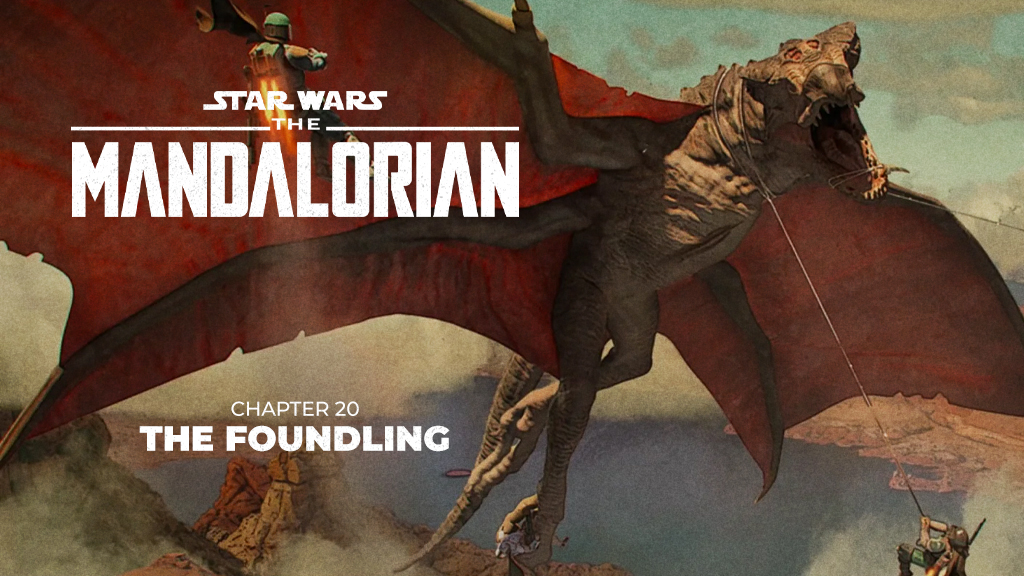
    As expected, Chapter 20 of The Mandalorian, The Foundling, did indeed continue to provide further glimpses into the tragic past of Grogu; additionally, despite its short runtime it also managed to further develop the increasingly interesting arc of Bo-Katan Kryze. The episode, written by Dave Filoni and directed by Carl Weathers, also serves as a reminder of how good fans of Star Wars have it these days. Packed with Mandalorians screaming across the sky in their jet packs while taking on a giant bird of prey, The Foundling features the kind of action fans of the original trilogy only dreamt of as children of the ’70s and ’80s.

    It’s important for the audience of the series to keep in mind that, to some extent, The Mandalorian was borne of the dreams of a pair of ’70s and ’80s children. Jon Favreau and Dave Filoni grew up fans of the original trilogy, playing with their Kenner toys and imagining all the stories that George Lucas didn’t have time to tell in those films. Those imaginings have grown and with age and practice in storytelling have become the foundations of a world unto itself–a world within the world they grew up adoring–where dozens of Mandalorians are training, unbeknownst to them at the moment, to take back their ancestral homeworld. That homeworld that feels so familiar, the cultural rifts that fractured it and that make Bo-Katan’s adoption by the Tribe feel so awkward, and all the mythology that goes along with it…for the most part, that’s Favreau and Filoni building an empire on a few bread crumbs.

    (L-R): Din Djarin (Pedro Pascal), the Armorer (Emily Swallow), Paz Vizsla (Tait Fletcher) and Bo-Katan Kryze (Katee Sackhoff) in Lucasfilm’s THE MANDALORIAN, season three, exclusively on Disney+. ©2023 Lucasfilm Ltd. & TM. All Rights Reserved.

    Now a member of the Children of the Watch and, apparently, taking that privilege very seriously, Bo-Katan’s progress is the true center of the episode. Though Katee Sackhoff recently indicated that Bo-Katan might be just fine following rather than leading, the character, by her own admission, has always been good at war. And so, Bo-Katan eagerly led a war party into battle against a massive and incredibly Star Wars-y raptor to save the life of Ragnar, a Mandalorian foundling and the son of Paz Vizsla. It shouldn’t be lost on the audience that clans Kryze and Vizsla were among the most prominent and powerful of Mandalore’s past. Though Paz and the rest of the Children of the Watch never accepted Bo-Katan’s claim as ruler of Mandalore, a potential alliance between the two–and all the different twists and turns it might provide room for–will be worth watching.

    Bo-Katan’s time in battle also allowed her to spend some one-on-one time with the Armorer as she replaced her shoulder pauldron. After seeing the mythosaur in Chapter 18, Bo-Katan had, until now, chosen to keep that information to herself. As Sackhoff explained in an interview, the character wasn’t entirely sure she believed what she saw and, therefore, was hesitant to share out.

    She doesn’t trust necessarily what she saw. She might have thought that she imagined it. There’s so many things that she’s trying to process in her head that I don’t necessarily think that it’s something that she wants to tell anyone about right now.

    Katee Sackhoff

    By choosing to reveal what she saw to the Armorer while also choosing to adorn her new pauldron with the mythosaur signet, Bo-Katan is making the choice to commit to the covert…and The Way. While there’s still likely to be plenty of awkward moments, Bo-Katan has come a long, long way since she was seen pouting on her throne as the ruler of nothing.

    (L-R): Grogu and Din Djarin (Pedro Pascal) with stone crabs in Lucasfilm’s THE MANDALORIAN, season three, exclusively on Disney+. ©2023 Lucasfilm Ltd. & TM. All Rights Reserved.

    While Bo-Katan’s journey was the meat, The Foundling also provided some potatoes by revealing a little more about how Grogu survived the massacre at the Jedi Temple following Order 66. As he’s apt to do, Filoni brought a non-canon character into the canon, this time in the form of Jedi Kelleran Beq. Played by Jar Jar Binks voice actor Ahmed Best, Beq was the host and main character of the now-canceled game show Star Wars: Jedi Temple Challenge. Beq’s rescue of Grogu gave the character a chance to show off the legendary lightsaber skills that earned him the nickname “The Sabered Hand” as he worked with some of Naboo’s finest to get youngling Gorgu off Coruscant. However, as Favreau recently indicated that he could go on making seasons of The Mandalorian forever, the episode left plenty of room to tell more of Grogu’s journey as this portion ended with him and Beq escaping into hyperspace.

    The advancements to Grogu’s plot in real time are more significant, however. Having chosen to return to Din Djarin as a Mandalorian foundling, Grogu now has to learn what it means to walk The Way of The Mand’alor. And so, the episode sees Grogu begin his training by going up against fellow foundling Ragnar. Grogu uses The Force to help him defeat Ragnar in his training exercise shortly before Ragnar is picked off by the raptor. While there wasn’t much time to explore his feelings, it’s likely that Ragnar didn’t take too kindly to the defeat. While he hasn’t been developed much, Ragnar has had quite a bit of screentime which means his story–and how it intersects with Grogu’s–is certainly not done.

    The Foundling certainly has all the earmarks of an episode that will undoubtedly pay major dividends down the road. For all the preemptive hand-wringing online about the episode’s short runtime, Chapter 20 of The Mandalorian may ultimately be remembered as a key chapter in the series.

  • REVIEW: ‘Boston Strangler’

    REVIEW: ‘Boston Strangler’

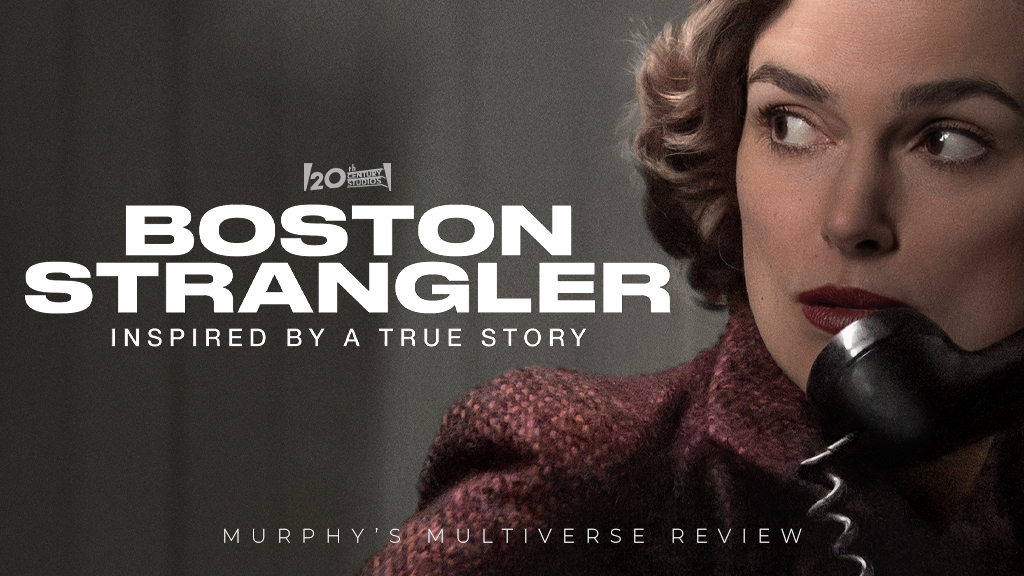
    True crime stories have captured the imagination of audiences for decades, offering dramatic retellings that allow them to indulge in their morbid curiosities. Fans often find themselves interested in the psychology of criminals and, according to a study published in Social Psychology and Personality Science by Dr. Amanda Vicary, “the consumption of true crime is likely a subconscious effort to protect and educate oneself.” Writer-director Matt Ruskin‘s Boston Strangler capitalizes on the fascination with the genre to shine a light on two journalists who sought to protect and educate the women of Boston in the early 1960s as a serial killer–or two–terrorized Boston at a time when the concept of serial killing was a decade away from beginning to make its way into the vernacular.

    Hulu’s Boston Strangler tells the story of the string of crimes from the dual perspectives of Loretta McLaughlin and Jean Cole, played by Keira Knightley and Carrie Coon, respectively. As the murders continued in and around Boston, McLaughlin and Cole’s work was instrumental in tying the murders together while police from different jurisdictions struggled to solve the stockpiling cases. McLaughlin and Cole’s instincts, perspective and persistence ultimately helped Boston PD identify and nap a suspect, Albert DeSalvo, who confessed to the murders; however, their work, done in predominantly male fields, wasn’t warmly received at the time and almost 60 years later, McLaughlin and Cole’s names are still rarely associated with the case.

    (L-R): Carrie Coon as Jean Cole and Keira Knightley as Loretta McLaughlin in 20th Century Studios’ BOSTON STRANGLER, exclusively on Hulu. Photo by Claire Folger. © 2022 20th Century Studios. All Rights Reserved.

    Ruskin looked to change that by making Boston Strangler and strong performances by Knightley and Coon will resonate with audiences, particularly those who have faced similar struggles and discrimination in their chosen fields. The role of women in the workforce had only just begun to change in the early and mid-1960s and as the film shows–sometimes subtly and other times not so subtly–not everyone was eager to accept the change. To that end, Boston Strangler‘s supporting cast, led by Chris Cooper and Alessandro Nivola, turn in solid performances as allies to McLaughlin and Cole’s cause.

    Though it’s likely to draw some eyeballs as a true crime project, Boston Strangler is fairly light on crime and violence, choosing instead to work more as a tribute to the work done by McLaughlin and Cole. It’s here where the film does its best work, rightfully identifying the deuteragonists as heroes and protectors. If not for McLaughlin’s work tying the cases together and Cole’s experience in navigating the landmines of the male-dominated fields of law enforcement and journalism, the Strangler’s (Stranglers’) body count could have been much higher. Their work, done at the great risk of career, family and personal safety, served to warn the women of Boston about the behaviors of the Strangler and certainly saved lives. Boston Strangler is a fitting celebration of two unsung heroes of their profession and a wonderful tribute to women who charged hard and stood firm against the obstacles in their way.

    Source: Social Psychology and Personality Science,