The Infinity Particle by Wendy Xu tells the tale of a young girl named Clementine, aka Clem, as she makes her way from Earth to Mars to work under the great Dr. Lin – an Artificial Intelligence pioneer. Clem has been following Lin’s work since she lived on Earth and is thrilled to finally get the chance to meet her, but her interest soon veers once she meets Lin’s personal AI, Kye.
It’s not abnormal for folks in Mars to have AIs. In fact, everyone seems to have one, including Clem. However, it is odd for someone to have a humanoid AI. But as Clem begins to learn more about both Dr. Lin and Kye, she’ll soon learn that not everything is what it appears to be.
The Infinity Particle is a stunning book. Not only is the artwork beautiful, but the story itself is also rather captivating. I’ve always been interested in the concept of what makes us human. (I wrote an entire book series based on Programs and humanity.) So, I was immediately hooked once I began reading The Infinity Particle. But what kept me reading through to the end was the way Xu handled both Clem’s story and Kye’s. This isn’t merely a story about Kye and his humanity. It’s far more complex than that. There are so many layers. So many twists. It’s a thrilling ride with a heck of a conclusion.
With that said, The Infinity Particle won’t necessarily be for everyone. Those that take issue with Marvel’s Scarlet Witch and Vision entering into a relationship will more than likely not enjoy the romantic aspect of The Infinity Particle. Which is entirely understandable, of course. But readers that are able to look beyond that will find a story that has no issue asking its readers just what it is that makes us human.
In the case of all things which have several parts and in which the totality is not, as it were, a mere heap, but the whole is something besides the parts…
Aristotle
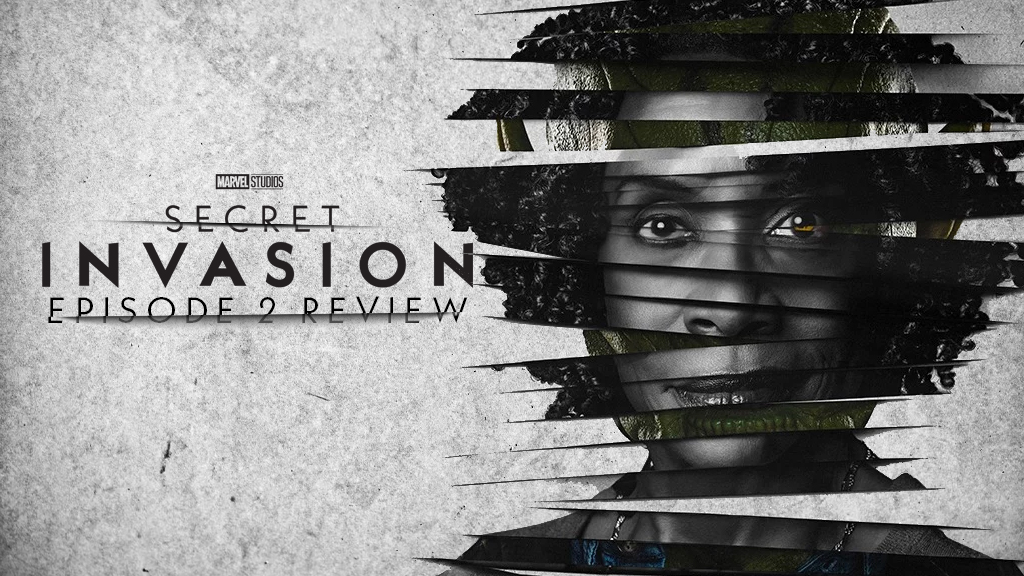
It’s safe to say Aristotle wasn’t talking about Episode 2 of Secret Invasion when he wrote those words in his principal treatise, Metaphysics, but that doesn’t mean they don’t apply. “Promises”, the second of six episodes in Disney Plus’ latest Marvel Studios streaming series, is a coruscating collection of incredibly well-written scenes, made great by a set of colossally talented actors, that when viewed holistically appear as one of the finest episodes of television from the studio to date. Bookmarked by some damn interesting retconning that gives fans a lot to chew on when it comes to what they thought they knew about Nick Fury, “Promises” delivers a perfect follow-up episode to its more slowly-paced predecessor and provides hope that Secret Invasion could be full of surprises.
Short of the awkward scene in which we learn that Maria Hill had a mother, “Promises” provides the audience with the necessary exposition to understand precisely what Gravik’s Skrulls are up to AND why Gravik is up to it. Kingsley Ben-Adir‘s air of nonchalance as the character proves a compelling choice in relaying to the audience that–in his mind–the war he wages on Earth is already won. As seen in the episode’s opening flashback, his shared history with Fury has put a chip on his shoulder that can never be repaired. And as Gravik’s impressive vibe check of the Skrull Council shows, he will find a way to get his way. As the newly minted War Time Skrull General, Gravik will now have the (almost) full support of the Council to carry out his plan to create an army of Super Skrulls. That plan, revealed via one of Marvel Studios’ coolest Easter eggy scenes since Iron Man 2‘s “map scene”, involves using the work of human scientists to bind the DNA of a collection of powerful beings, such as Groot and Cull Obsidian, to that of Skrull warriors. As promotional footage for the series has already revealed, Gravik’s plan will be successful which makes you wonder how Fury, who won’t call in The Avengers, can save the day.
The strength of “Promises”, however, lies not in the revelation of a pretty comic book-y plot by the bad guys, but in the strength of the individual performances given by the ensemble cast. One episode after some heavy-handed writing bogged down the series debut, Samuel L. Jackson and Ben Mendelsohn’s Tarantino-esque train car scene should be the gold standard for how dialogue can be enjoyable and move the story along. The two stars share such chemistry that you wish they’d had a longer train ride. Next, it’s Don Cheadle‘s turn to star, including an especially powerful conversation with Fury that makes it clear–if it somehow wasn’t already–Rhodey is nobody’s sidekick but rather a force to be reckoned with in or out of the armor. And if you didn’t enjoy Olivia Colman‘s display of her massive talent while she tortured the captive Skrull…masterful. And the episode’s final scenes provide one of the MCU’s biggest jaw-droppers to date…and jaws will drop even further before it’s over. Scene after scene after scene, “Promises” delivers a series of moments that ultimately do coalesce into a damn good episode of Marvel TV that gives the series some necessary momentum.
I’m Nick Fury. Even when I’m out I’m in.
The stage is set for the series’ second act, one that will certainly see the “old Fury” find his way back to take on his “wayward son.” Gravik may think he’s already won the War for Earth but this is Fury’s war, too, and he hasn’t even started fighting yet.
Amazon Studios rolled the dice in 2018 with what at the time was perceived as yet another, other attempt to reboot author Tom Clancy‘s Ryanverse into a successful franchise. From the start, however, it was clear that the team behind Amazon’s Tom Clancy’s Jack Ryan had no interest in putting out more page-to-screen adaptations of Clancy’s novels but rather taking the central character of those novels and creating original stories set in modern times. Then they rolled the dice again by casting John Krasinski, an actor who certainly did not have the action resume most fans associated with the role of Ryan. As the streaming series comes to an end with its fourth and final season, it’s now clear that Amazon’s gamble paid off.
While the first season of Tom Clancy’s Jack Ryan wasn’t critically beloved, it provided a template for the show’s success: drop Jack Ryan–who’s a little more Jack Bauer than previous versions–in the middle of a complex, multi-faceted problem, surround him with an interesting supporting cast and put him up against a compelling antagonist. Over the second and third seasons, that template was tweaked, adding some seedy secondary villains, introducing some nefarious conspiracies and, most interestingly, bravely taking the series to places in the world where real issues exist that might not always make the headlines. Season 4 of the show ultimately (and smartly) works as a highlight reel of what worked well across the previous three seasons only falling short by failing to find an antagonist as uniquely formidable as Season 1’s fascinating Mousa bin Suleiman.
The Problem
The final season of Jack Ryan shines the spotlight on one of Hollywood’s favorite group of faceless baddies–a Mexican cartel–but spices things up a bit by adding some more evil to the mix from a place most folks couldn’t find on a map in Myanmar. A hot bed of organized crime in the real world, the Ryanverse’s Myanmar (almost certainly influenced by real world events) is home to a Chinese triad who has made its home in the Shan State and is looking to up its game by joining forces with the cartel. That convergence requires some nasty work done in Lagos, Nigeria. That work, which has the earmarks of the CIA all over it, ultimately comes across the desk of the CIA’s new Deputy Director, Jack Ryan, the one man baddies all over the globe should know by now to fear!
The Villains
Jack Ryan Season 4 has no shortage of bad guys for Jack to take on; on the contrary, if there’s weakness to the final season it’s that there are so many that none of them get anywhere near enough screen time to be as bad as they wanna be. Not quite cannon fodder, not quite on the level of Season 3’s more memorable assemblage of baddies, the group of villains that Jack and his team work their way through over the course of the season’s six episodes has the feel of a “AAAA ball player”: too good for AAA and can’t quite cut it in The Show. And while the writers gave the old college try to throwing a surprise villain or three in the mix, you’d have to have slept through the first 3 or 4 episodes to truly be surprised.
The Supporting Cast
As it turns out, the lack of a great villain who chews up the screen works out in that it allows for the supporting cast of the series to really take off. National treasures Wendell Pierce and Mike Kelly return as tritagonists James Greer and Mike November, respectively, and do what they do best: elevate every scene they’re in. Pierce owns the role of Greer now and seems to be having a blast delivering ass kicking and mother fuckers left, right and center and Kelly, who definitely hit the gym, plays the Howling Mad Murdock to Ryan’s Hannibal Smith with all the appropriate reckless abandon. Neither seems to have a wasted moment on screen. They’re matched in that regard by newcomer Michael Pena whose Domingo Chavez provides a wonderful “Ready. Fire. Aim” foil to Krasinski‘s analytical Ryan. Betty Gabriel gives Elizabeth Wright a little more depth in her second go around and Abbie Cornish gets more to do as Cathy Mueller. A lead is only as strong as the supporting cast and Amazon has understood that–and nailed it–from the start.
If you’ve been watching all along, Season 4 of Tom Clancy’s Jack Ryan will serve as a great farewell to the characters and Krasinski’s final big speech truly captures the spirit of Clancy’s iconic character. While beyond Michael B. Jordan and Chad Stahelski’sRainbow Six film the future of the Ryanverse is largely undefined, whatever comes next will rest comfortably on a firm foundation built over four seasons of a very solid series.
Nimona is based on a graphic novel of the same name by ND Stevenson. The book was originally published as a webtoon by Stevenson in 2012, before being collected as a single graphic novel by Harpercollins in 2015. That same year, the graphic novel was optioned for film by Fox. Unfortunately, though, the film’s adaptation would take a long time to come to fruition – and following the Disney-Fox merger, the movie’s release looked rather grim. The movie was well into production, but Disney ended up shuttering the movie. Shapeshifter Films would later team up with Annapurna Pictures, though, after finishing production on the film to find a new home for the film with Netflix.
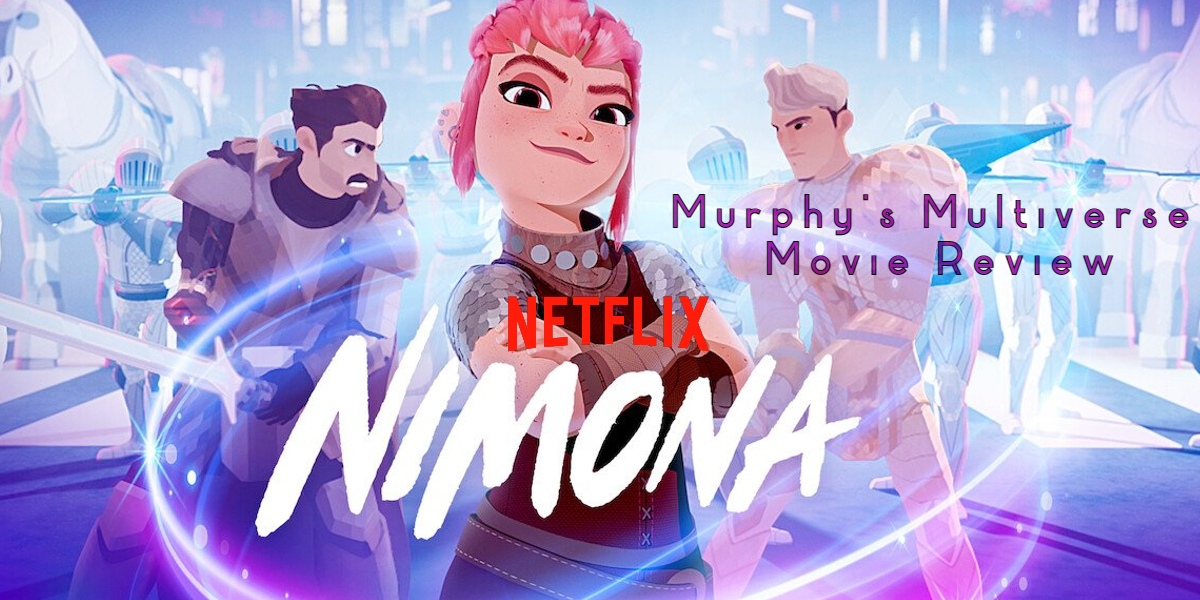
Nimona tells the story of Ballister Boldheart, voiced by Riz Ahmed, and the titular character, Nimona (Chloë Grace Moretz). Growing up as a outsider in a futuristic medieval world, Ballister is framed for the murder of Queen Valerin. Deemed a murderer, Ballister spends his days in the shadows, eager to clear his name but failing to do so… until he meets the mysterious, mischievous teen, Nimona. The duo couldn’t be more different from one another – with Nimona constantly threatening to kill and Ballister eager to do anything but kill someone. But she seems to be the only person capable of helping him, so together, the duo form an unlikely friendship that’ll force them to reevaluate everything they thought they knew.
Fans that have been eagerly awaiting the release of the Nimona film will find the wait well worth it. The road to the screen might’ve been bumpy, but the final product successfully captures the feel and tone of the comic and features a hell of a cast. Joining Ahmed and Moretz in the film are Eugene Lee Yang (The Try Guys), Frances Conroy (Six Feet Under), Beck Bennett (The Mitchells vs. the Machines), RuPaul and Indya Moore (Pose). Each actor is perfectly cast in their roles, with Yang and Conroy, specifically, both delivering noteworthy performances.
It’s hard to really find an issue with Nimona. The film is full of action, charm and humor. It’s delightful from start to finish, filled with excellent voice performances and a wonderful message. If one were to find any fault with Nimona, it would be the art style as it is very similar to Stevenson’s animated She-Ra series, which drew criticism from fans for its art style. But even if you’re not a fan of the style, the film is well-crafted and full of love.
Nimona is everything audiences can want in an animated movie. There’s humor, there’s plenty of action, there’s heart and there’s a story everyone can relate to. It’s ultimately about finding your place in the world and finding your people. That’s something we can all truly understand.
(Side Note: There is a pretty great use of Metric‘s “Gold Gun Girls” in the movie.)
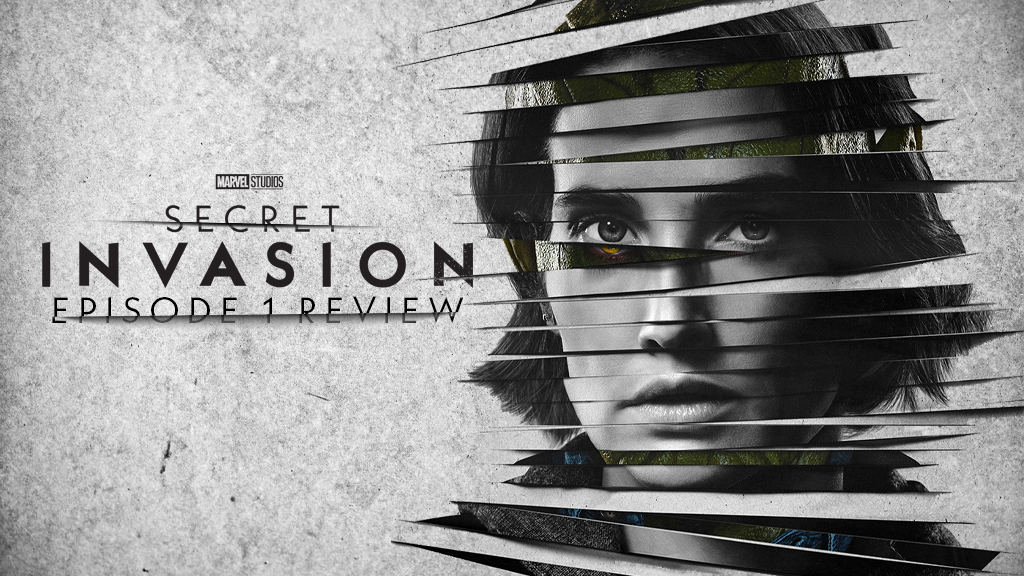
Billed as a paranoia-laced spy thriller, Marvel Studios latest Disney Plus streaming series, Secret Invasion, has been pretty hotly anticipated by MCU fans who while not at 2020 levels yet, are starting to starve for content following Disney’s decision to slow their roll. It’s been made more than clear that the series was not intended to be a superhero spectacle, like the Marvel Comics event from which it took its name but rather a dive into the world of espionage where Nick Fury has always reigned supreme. That means that Samuel L. Jackson gets to take the lead in an MCU project after 15 years of being part of the supporting cast and for an actor of Jackson’s prodigious talent, that means room to explore all the nooks and crannies that make Fury tick, promising an entertaining character study. On that promise, the first episode of Secret Invasion, “Resurrection”, delivers as Jackson’s endless well of charisma floods every scene. However, bogged down at times by exposition and filled with too few thrilling moments, “Resurrection” feels like a disappointing return to Disney Plus following a nearly year-long wait.
It’s clear Jackson is having the time of his MCU life in the space he’s given to explore Nick Fury in Secret Invasion. It’s also made clear–nearly excruciatingly painfully clear at times–that this isn’t the Fury fans remember from before because, in case you missed it, he’s just never been the same since Thanos. If you missed it the first time, no sweat, the writer’s room had you covered making sure that Ben Mendelsohn, Olivia Colman and Cobie Smulders all let the audience know that this Nick isn’t that Nick. And in case them telling him didn’t catch your ear, Killian Scott‘s Pagon–possibly the most useless character in MCU history (everything he did could have been done offscreen to no detriment to the story)–tell’s the series’ big bad Gravik all about Fury’s downfall. Obviously, this is an incredibly heavy-handed setup for the reveal, somewhere down the road, that Nick Fury is back, mother fuckers, but a little more show and a lot less tell would have been appreciated. That aside, whether he’s sharing a remorseful scene with Mendelsohn‘s Talos, trading barbs with Colman’s absolutely delightful Sonya Falsworth or reconnecting with his closest ally in Smulders‘ Maria Hill, Jackson‘s star is on its full, brilliant display throughout the episode…and he’s only just getting started.
As for the “paranoia”, it seems to be unfortunately kept at bay for most of the first episode of the series. The opening five minutes or so ahead of the credits tries its level best to get those juices flowing with Agent Prescod’s parody of Charlie Day‘s Pepe Silvia rant but it falls short of hitting those conspiratorial heights because it lacks any true intrigue. Nearly from the moment Martin Freeman‘s Everett Ross enters the room, it seems all too clear he’s been simmed by a Skrull. Lack of intrigue aside, those opening moments do nicely lay out the plan in place by Kingsley Ben-Adir‘s Gravik and make it clear that Fury isn’t just returning to Earth, he’s returning to Earth at the beginning of a war…and war means casualties.
Casualties there were in the episode’s closing moments as hundreds of innocent Russian men, women and children were killed by the bombs detonated by Gravik before he dealt Fury one more blow by killing Maria Hill…and no death has felt flatter than hers. While it’s obviously supposed to help Fury recapture his lost mojo and return him to his pre-Blip form, it has little to no impact with the audience. While Hill is a major player in the comics, she’s hardly been tertiary in the MCU with her last big action coming in Captain America: The Winter Solider and you can bet that a significant chunk of the audience tuning in to watch Secret Invasion has either never seen that 2014 film or hasn’t seen it in quite some time. That’s the increasingly unbearable weight of the massive volume of projects in Marvel’s shared cinematic universe; anyone other than the hardest of hardcore fans just doesn’t really know why Hill is supposed to matter. It’s clear that the audience is supposed to feel bad; it’s just not really clear why because there’s no deep connection to the character.
As fans will discover in Episode 2, much of Episode 1 could have ended up on the cutting room floor. The pace picks up nicely in the next episode, specifically surrounding the Skrulls’ plans to take over Earth. However, “Resurrection” does make the Skrulls threatening enough and does so in a very modern way. To be sure, there’s plenty of hatred in the real world and the alien Skrulls take full advantage of this in Secret Invasion, posing as members of any number of terrorist cells and setting off enough chaos to bring the world to the brink of World War III. The episode doesn’t reveal the entirety of their plan, which they hatch from the safety of an abandoned nuclear reactor outside of Moscow, but it provides enough of a heads-up that things are headed in a bad direction. As bad guy lairs go, an abandoned nuclear power plant is a new twist that even a Bond villain could be envious of; however, despite their explained immunity to radioactivity, couldn’t the Skrulls just be easily tracked with some sort of modified Geiger counter?
A little light on the paranoia and a lot light on the action, “Resurrection” is a less-than-thrilling Lazarus act for the MCU on Disney Plus. Fortunately, however, its cast, led by Jackson, makes it entertaining enough for one sitting despite the heavy-handedness of the writers’ room. While that feels almost inescapable at this point, especially as they continue to try to rake in new fans, it’s going to continue to be a topic of discussion and debate and a point of frustration for those who have been along for the entire ride.
When I requested Hungry Ghost off of NetGalley, I did so with quite a bit of hesitation. I knew what the subject matter was and how heavy of a topic it was, but I also appreciated that the graphic novel tackled such an important topic.
Hungry Ghost tells the story of a high school student named Valerie who suffers from an eating disorder. She suffers in silence, desperately trying to please her mother who constantly reminds her of what will happen should she ever become fat, while also trying to live life as a normal teenager. Val hates having to live a lie and wants nothing more than to be happy like her best friend, Jordan, who is overweight but doesn’t let it stop her from being happy. It all comes to a head when a tragedy occurs in Val’s life that forces her to take another look at everything — including herself. It’s a very, very hard read, however, Victoria Ying does a great job of tackling such an important topic with both her words and artwork.
Eating disorders are so common and yet not talked about nearly enough. There are so many others like Val that need to read a story like this to know they are not alone. And Ying tells this story, one she herself has lived, with such care. It doesn’t shy away from the harsh realities those suffering face. It doesn’t shy away from the pain or the toll such a disorder can take on one’s mental health.
Overall:Hungry Ghost is a hauntingly beautiful, but painful read. More importantly, though, it’s such an important read.
First things first. The Flashdoesn’t change the hierarchy of power. It’s not the best superhero movie of all time, or this year. Hell, it’s not even the best Multiverse-based superhero movie this year. But it’s good, really good, and course-corrects a lot of what DC films have been lacking in the past, and most importantly, it course-corrects a character who typifies where the now-dead DC Extended Universe went astray.
Ostensibly, the world between the frames of this film has been untouched by the chaos surrounding DC Films, its parent company Warner Brothers Discovery, the overall creative direction there, and the tumult surrounding the future of their superhero stars, including the star of this film. Quaintly, this film right out of the gates introduces us to a Flash who has undergone several upgrades at the hands of his “fancy friends” in the Justice League, one who can save hundreds of lives hundreds of miles away before his breakfast order is ready, but is still mired in a past that keeps him from living his best life. Within the text of the movie, it’s standard hero origin pathos stuff, but as subtext for the DC filmic enterprise as a whole, it reminds us that it’s important to reckon with the regrets of a past that might have been different and a road not traveled, before ultimately recognizing that not everything can be retconned, then moving forward.
And the key to unlocking this theme is in our “other” Barry Allen. It’s hard to navigate this without spoiling, but it is in this dual performance that star Ezra Miller really shines. They (as in the actor, Miller) give each Barry his own twisted freaky mirrored experience tinged with a mixture of jealousy and annoyance, as in the other, there’s some of what each wants, and some of what each wishes he’d be better without. And for people who have in the past been put off by Miller’s overly manic portrayal of the role, the movie is savvy and self-aware enough to lampshade those negative aspects and organically turn their dial down. Miller’s also doing the bulk of the emotional heavy lifting here, as they bridge that gap between the loving boy with two doting parents whose happiness was crushed by tragedy, and the young man who may be the fastest alive, but he’s nowhere close to the most invulnerable. Barry can be hurt, and it’s possible that Barry’s hurting all the time, but that’s the price of being a hero. And Miller conveys that.
But not to be undone, if it’s boyhood trauma as an impetus for heroism you want, this movie treats us to Bruce F’n Wayne, The Batman, times two, played by Ben Affleck and Michael Keaton, each a little bit too old for this shit, but in each case, damn right the old guy’s still got it. While this movie doesn’t establish the kinship of equals that makes their comics relationship so compelling — Bats is still very much the grizzled hero delivering sage wisdom to the up-and-comer — the mentorship feels more lived in and their mutual respect feels more earned. Even when the respect comes from a version of Bruce who has clearly had a long run.
Visually, the action is solid, but not groundbreaking, as we’ve seen superspeed sequences similarly rendered. (There’s even a nod or two to Quicksilver from the Fox X-Men films in there.) But it doesn’t get old seeing Bruce handle a room full of gun-toting baddies his way, and then seeing Supergirl (more on her later) handle those same baddies hers. The special effects get a little bit messy in the 3rd act, which (sadly) is to be expected nowadays with blockbusters, but it remains mostly visually coherent.
Sasha Calle‘s Kara Zor-El does a lot with a little, as she has to take us through an entire Kryptonian hero’s journey in the course of minutes. But overall, there’s a fierceness to her performance that’s balanced by the weight of what she’s experienced during her time on Earth, and what she has failed to do. She doesn’t get a ton of screen time, but what she gets makes it easy to root for her.
On the villain front, General Zod is competent and capable, but you can understand why Michael Shannon considered it unfulfilling compared to his role in Man of Steel. That film did the work of establishing his motivations and complexity. This one just wound him up and let him kill people while glowering and grimacing. But the point of the film isn’t really for The Flash & Friends to win the Battle of Metropolis — it’s for Barry to win the war within himself.
If you see only one superhero film this year, make it Across the Spider-Verse. Obviously. But on the DC side of things, this more than earns its praise while setting the stage for a bold new era of films under James Gunn and Peter Safran. It delivers heartfelt moments, humorous sequences, lively action, and says hi (and goodbye) to some old DC friends. Plus, it’s colorful and fun. If you choose to check it out (and it’s perfectly reasonable to choose not to), you’ll have a good time.
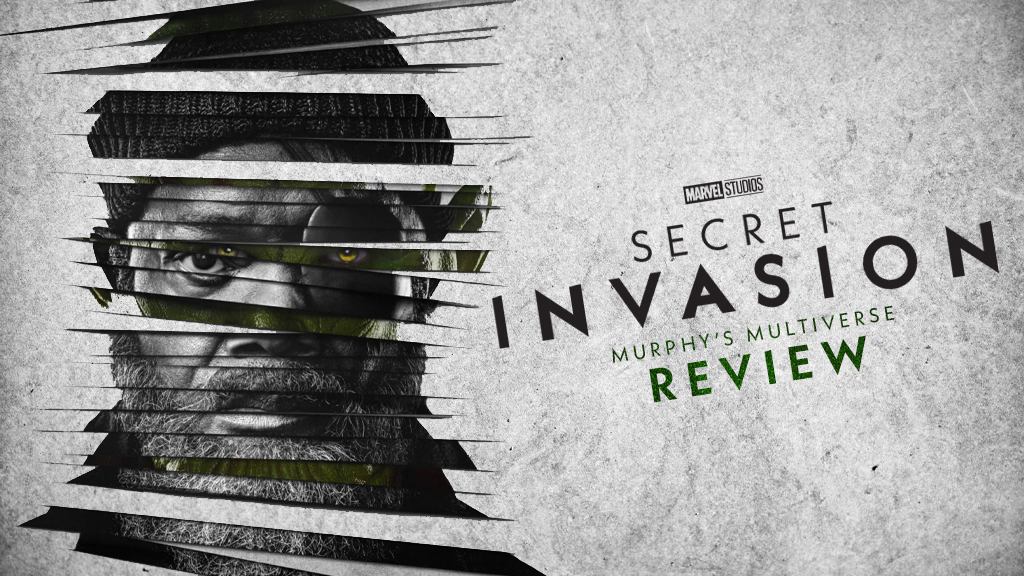
In the Fall of 2020, trade reports broke the news that Marvel Studios had hired Kyle Bradstreet to develop a Disney Plus streaming series around Nick Fury. Long having been one of the MCU’s most important supporting characters, the man who put together the Avengers finally gets the spotlight in Secret Invasion and despite some issues, there can be no doubt that giving Samuel L. Jackson this much room to work as Fury was a solid decision. And despite 15 years of appearances, Secret Invasion makes it very clear that we simply do not know Nick Fury.
Though the series boasts an impressive supporting cast bolstered by the always-brilliant Ben Mendelsohn, who returns to the MCU as Talos, and Kingsley Ben-Adir as the brooding Gravik, Secret Invasion is–as advertised–a vehicle for Jackson’s Fury. And to the surprise of nobody, given more to do as Fury, Jackson simply does more with the graceful ease of a supremely talented actor who knows how to inhabit a role. Whether it’s the playful conversation with Olivia Colman‘s absolutely fantastic Sonya Falsworth, recollecting on train rides to Detroit with his mom or sharing a powerful scene with Don Cheadle‘s James Rhodes, Jackson’s performance alone makes the series a worthy entry in the MCU. Short of headliners Robert Downey Jr. and Chris Evans work as Tony Stark and Steve Rogers, respectively, it’s hard to recall a performance like the one on display here by Jackson. Secret Invasion shows, for the first time, a vulnerable Nick Fury who becomes, for the first time, a relatable character as each of the first two episodes peels away layers of what previously appeared to be a bulletproof persona putting THE spy on the outside looking in without his usual support. Where that ultimately leaves Fury is hard to say having only screened two episodes but as he tells Rhodey, he is Nick Fury and even when he’s out, he’s in.
By the end of the second episode, the stage is set and the grand plan of Gravik–whose previously unknown connection to Fury makes him an interesting and motivated foe–and his Skrull extremists made clear. Unfortunately, it takes two episodes to get to that point and as enjoyable as the performance by Jackson is, the first episode certainly slows down considerably after an exciting cold open and, at times, spins its wheels. Part of the pacing struggle comes from the increasingly unbearable weight of the shared universe that is the MCU and the prerequisite knowledge necessary to navigate each new entry. Good, bad or otherwise, an interconnected franchise of this magnitude can’t always blaze new trails and has to retread old ground. Though they aren’t present nor expected to be present in the series, Carol Danvers and the Avengers still take up chunk of the exposition and while that might be necessary, the heavy-handedness of the writer’s room only works as an exacerbating factor. If you know anything by the end of the first episode, it’s that Nick Fury hasn’t been the same since Thanos’ snap…because everyone he knows tells him all about it…again…and again…and again. That said, navigating the first episode is manageable and though it’s attempt to shock the audience falls unfortunately flat, it provides all the necessary table setting for the second episode to be one of the better episodes of television Marvel Studios has put together on Disney Plus. There’s some fun retconning and at least one surprise that you almost certainly don’t see coming.
Despite the slow start, through two episodes, it looks like Bradstreet and company have hit the mark for which they were aiming. Cleverly, most of what the audience thinks they know about the show through promotional footage and interviews seems to have been subterfuge by the studio. Essentially, Secret Invasion is not the show fans thought they were getting. “Who Do You Trust?” is more than just a tagline related to sorting out who is or isn’t a Skrull, it’s a reflection of the fact that the studio has created as much of a false flag as the Skrull operatives in the show. For a studio that gets criticized for its formula and generic press events, Marvel Studios went pretty non-formulaic here in leading the audience astray. One place they did stay true to their word, however, was in putting Jackson in the spotlight and if he, Cheadle, Mendelsohn and Ben-Adir continue to shine through the next four episodes, Secret Invasion will become one of Marvel Studios’ finest character-driven projects to date.
The Boogeyman, at its core, gets at the most basic of premises: What if the monster in the shadows that we feared as a child was real? Our protagonist Harper Family — a recently widowed father and his two daughters — represent the stages of life where that fear goes from real to remote, and as the story progresses, we experience the foreboding and the terror of a monster lurking in the place you forgot to look.
The film is carried by its cast, as Sophie Thatcher of Yellowjacketsfame brings a certain outcast quality along with her savvy. As the teenage daughter Sadie Harper, she’s too old for monsters, but she is nonetheless no stranger to trauma, as she is still steeped in sadness about her mother’s death. She’s the big sister that is expected to be the strong one, but grief casts a pall over her ability to see what she needs to see to protect her sister Sawyer from the very real danger that stalks them.
In her portrayal of Sawyer, Vivien Lyra Blair (Young Leia from Obi-Wan Kenobi) gives us a child who is desperate not to be the monster’s next victim but is also terrified (and rightfully so). As these types of movies are wont to do, we get a lot of scenes where we’re alone with her in rooms where the monster can be anywhere, and as viewers, her paranoia becomes ours, and her frustration at no one believing her invests us in her fate.
Chris Messina, on the other hand, is in the toughest spot as Will. He’s the dad, a therapist whose patient tells him about a monster, and whose children tell him about a monster as well, but his natural response is to conclude that the answer is more therapy, because monsters couldn’t possibly be real. His own grief, as he grapples with the loss of his wife is conveyed well by Messina, so even though his decisions aren’t particularly helpful in the face of the dangers his daughters face, he never crosses the line into unsympathetic.
This is a really good script, economical and well-paced, and director Rob Savage gives us the suspense shots and jump scares at the appropriate times. Characters get the right amount of screen time and don’t outstay their welcome. I won’t spoil the final body count here, but unsurprisingly, not everyone we meet makes it. And the creature design is solid. The screams are earned. I would say that if you’re a fan of gore, it might not scratch that particular itch, as it’s less about blood and guts and more about the psychological horror of a monster that doesn’t just want to gut you, but wants you to anticipate it.
Overall, The Boogeyman is a good thriller of a horror movie. It doesn’t necessarily tread new ground or push the genre forward, but with its capable leads, a solid emotional core, and terrifying sequences that will have you reconsidering every creepy crevice in your own home, it delivers the goods.
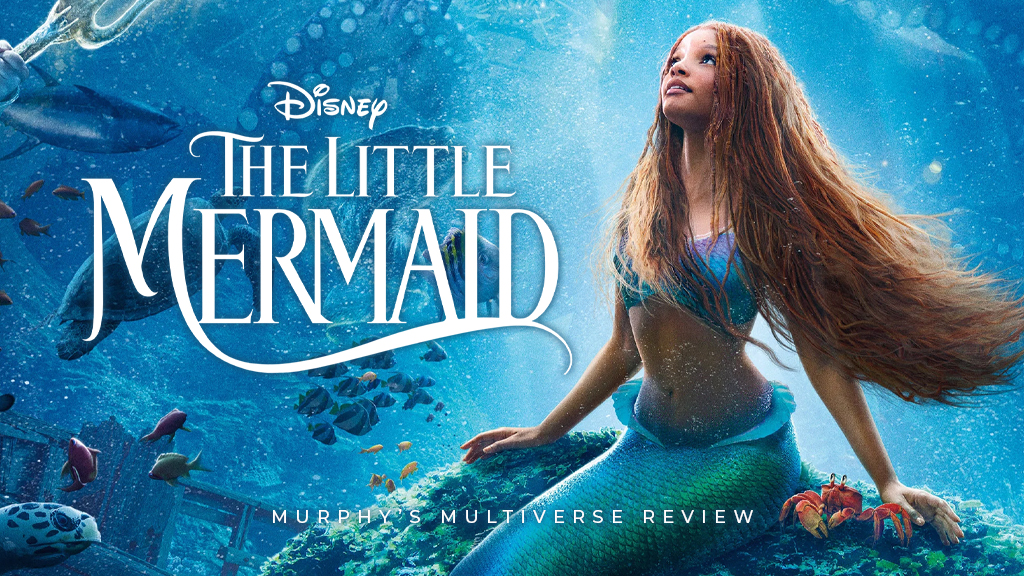
The original version of The Little Mermaid is widely regarded as the film that kicked off Disney’s animated renaissance. Back in 1989, the studio wasn’t the box office juggernaut it is today, with lucrative franchises in its grasp like Infinity Stones, so you can imagine how now, 34 years later, expectations are through the roof for the latest in a long line of mixed reviewed, but fairly reliable box office performers drawing from the creative well of that period. And charitably, one could attribute some of the negativity around this updated original to fans who cling to nostalgia amidst the tempest that is modern media criticism. It’s hard to say whether diehard fans of the original will give the 2023 version of The LittleMermaid a fair shake, but viewed through the lens of today, it’s a delightful, all-ages romp with heart, humor, and a hopeful message about seeing past our differences and forging peaceful understanding.
Off top, Halle Bailey‘s Princess Ariel brings vocal ability to the role that’s undeniable, and in her acting performance, she captures the innocence and eye for mischief that the story needs to propel its plot forward. The longing in her rendition of “Part Of Your World” helps to economically convey not only her curiosity about the surface world but the notion that her destiny lies beyond the shoreline. And when (spoiler alert) Ms. Bailey has to deliver a voiceless performance, her physical and facial acting ensures that we remain in touch with her POV.
But with Jonah Hauer-King‘s Prince Eric, however, the story forces the audience to have to work a bit harder to get to his center. Yes, we’re introduced to an almost textbook romantic lead, with an appetite for danger and a heroic heart (and of course he has an adorable pet upper!). And yes, his love for the spoils of the underwater world mirrors Ariel’s love for the surface, and he too feels restricted by responsibility. But were it not for the chemistry between the two leads that crackles whenever they’re paired, a viewer might find him a little too flimsy to be a compelling partner for our Ariel. But sometimes, part of being a heartthrob is being enough of a cipher that desirable qualities can be projected upon you…and smiling nice. So 10/10 in that respect.
Ursula the Sea Witch is one of the more iconic Disney villains, and I’d imagine that for most fans, how they feel about her will sink or sail this film for them. Melissa McCarthy chews the seaweeded scenery here, and while it certainly felt like there were additional levels of menace yet to reach, she made for an entertaining antagonist who made her rendition of “Poor Unfortunate Souls” her own, in one of the film’s standout musical numbers.
Speaking of standout musical numbers, the scene-stealers in this film were Daveed Diggs‘ Sebastian the Crab and Awkwafina‘s Scuttle the Seagull. The Grammy-winning “Under The Sea” is the original’s signature song, and Daveed puts his all into delivering a version that is worthy of comparison to Samuel E. Wright‘s classic. Awkwafina, on the other hand, performs a Lin-Manuel Miranda original that is an absolute bop. And comedically, the chemistry and banter between the two characters were great. As comic relief sidekicks go, the two were top-tier. Sign me up for a spinoff!
Alongside the winning soundtrack, the visuals of the film were also a highlight, one that unfortunately the trailers didn’t do justice. While certainly there are dark and murky moments in the early going, they’re meant to create a sense of mystery and danger that contrasts with the vibrance and wonder of the undersea. But once we’re on dry land in earnest, the bright Caribbean setting and the variety of flavors in director Rob Marshall‘s visual palette allow us to enjoy the excursion alongside Ariel and experience a different kind of wonder. And that all culminates in another amazing musical sequence, “Kiss The Girl,” where water and land life alike try to bring our leads together in romance.
Overall, everything works. King Triton, played admirably by Javier Bardem, strikes the right notes of distrustful dad who lays down the law a little too forcefully, and Norma Dumezweni‘s Queen Selina is appropriately regal, but frustrated by her son’s childish love of trifles, yet supportive of his search for true romantic love. And as the rising action puts the two figures into conflict, their respective sympathetic performances keep us buoyed long enough for a satisfying resolution.
Obviously, like many Disney movies, the ending might be a bit too tidy and the victories might feel a tad unearned. However, as family-friendly films go, that can be forgiven when it’s a fun time in the cinema that makes you smile and laugh throughout and leaves you feeling good at the end. It’s best not to compare it beat by beat to the original, and to appreciate it as a film that puts its own spin on a familiar story. On that level, it works as one of the Disney live-action retellings you can love alongside its animated counterpart.
Cookie Consent
We use cookies to improve your experience on our site. By using our site, you consent to cookies.
This website uses cookies
Websites store cookies to enhance functionality and personalise your experience. You can manage your preferences, but blocking some cookies may impact site performance and services.
Essential cookies enable basic functions and are necessary for the proper function of the website.
Name
Description
Duration
Cookie Preferences
This cookie is used to store the user's cookie consent preferences.
30 days
These cookies are needed for adding comments on this website.
Name
Description
Duration
comment_author_email
Used to track the user across multiple sessions.
Session
comment_author_url
Used to track the user across multiple sessions.
Session
comment_author
Used to track the user across multiple sessions.
Session
Statistics cookies collect information anonymously. This information helps us understand how visitors use our website.
Google Analytics is a powerful tool that tracks and analyzes website traffic for informed marketing decisions.
Contains information related to marketing campaigns of the user. These are shared with Google AdWords / Google Ads when the Google Ads and Google Analytics accounts are linked together.
90 days
__utma
ID used to identify users and sessions
2 years after last activity
__utmt
Used to monitor number of Google Analytics server requests
10 minutes
__utmb
Used to distinguish new sessions and visits. This cookie is set when the GA.js javascript library is loaded and there is no existing __utmb cookie. The cookie is updated every time data is sent to the Google Analytics server.
30 minutes after last activity
__utmc
Used only with old Urchin versions of Google Analytics and not with GA.js. Was used to distinguish between new sessions and visits at the end of a session.
End of session (browser)
__utmz
Contains information about the traffic source or campaign that directed user to the website. The cookie is set when the GA.js javascript is loaded and updated when data is sent to the Google Anaytics server
6 months after last activity
__utmv
Contains custom information set by the web developer via the _setCustomVar method in Google Analytics. This cookie is updated every time new data is sent to the Google Analytics server.
2 years after last activity
__utmx
Used to determine whether a user is included in an A / B or Multivariate test.
18 months
_ga
ID used to identify users
2 years
_gali
Used by Google Analytics to determine which links on a page are being clicked
30 seconds
_ga_
ID used to identify users
2 years
_gid
ID used to identify users for 24 hours after last activity
24 hours
_gat
Used to monitor number of Google Analytics server requests when using Google Tag Manager
1 minute
Marketing cookies are used to follow visitors to websites. The intention is to show ads that are relevant and engaging to the individual user.
Pinterest Tag is a web analytics service that tracks and reports website traffic.