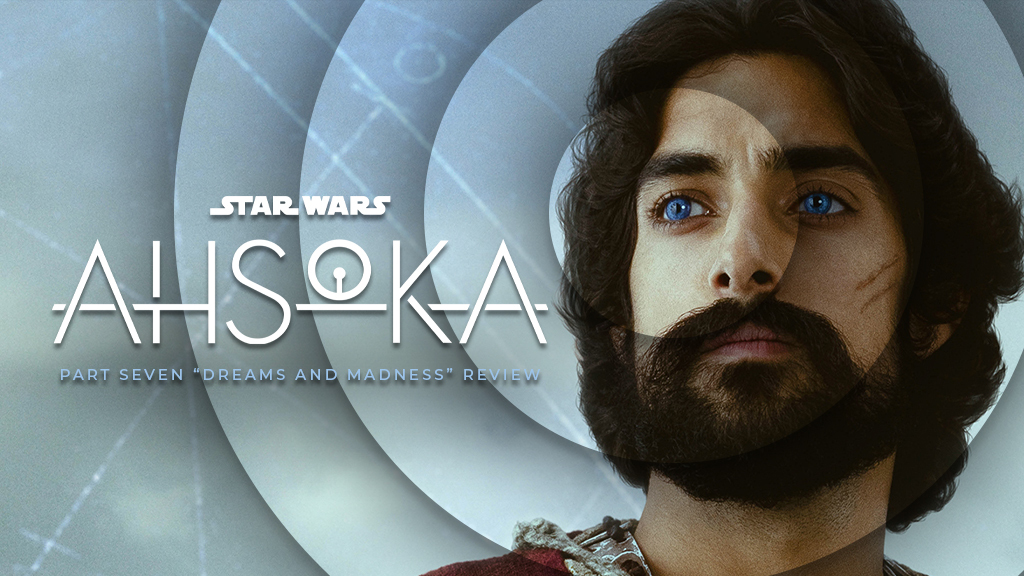
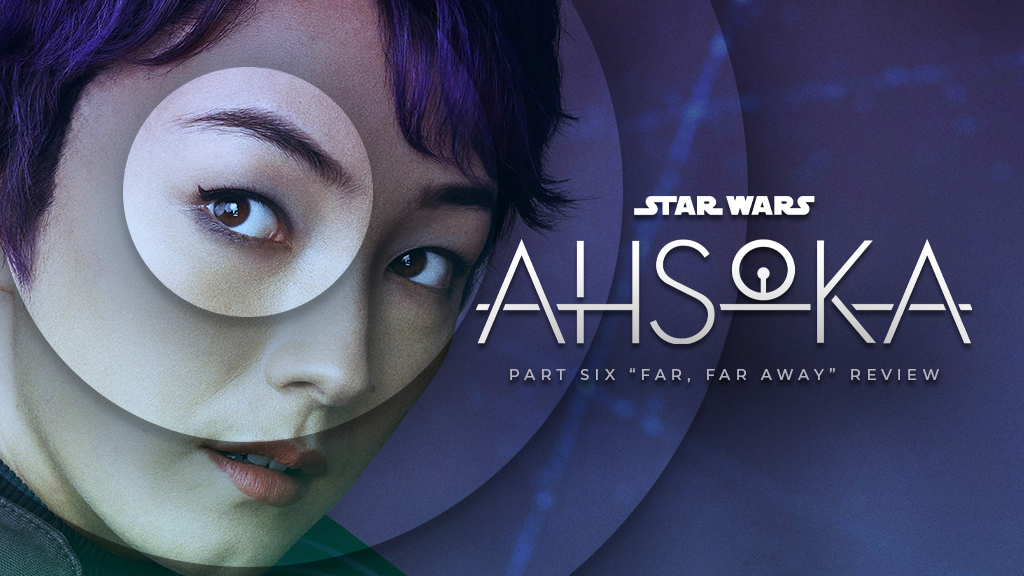
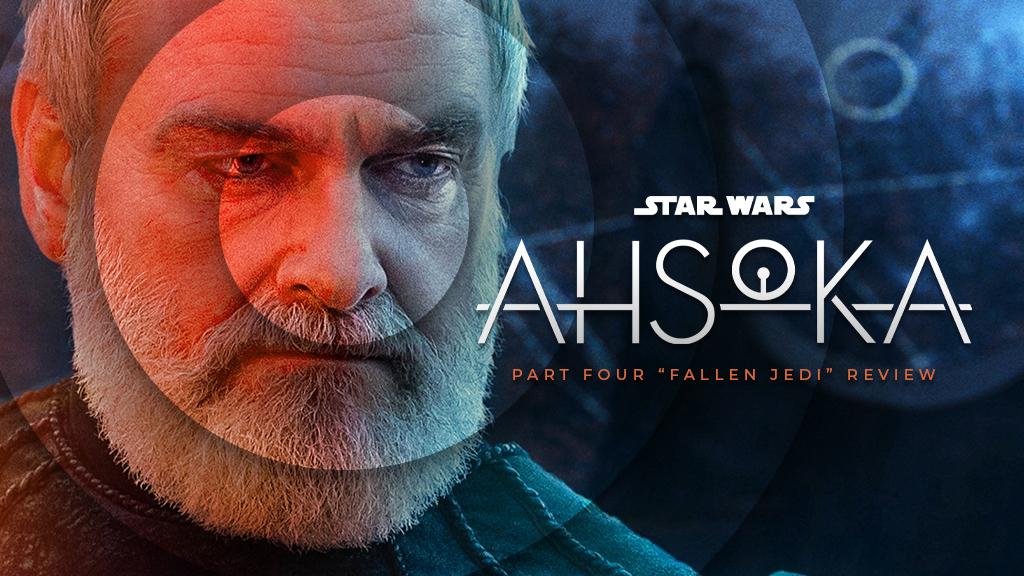
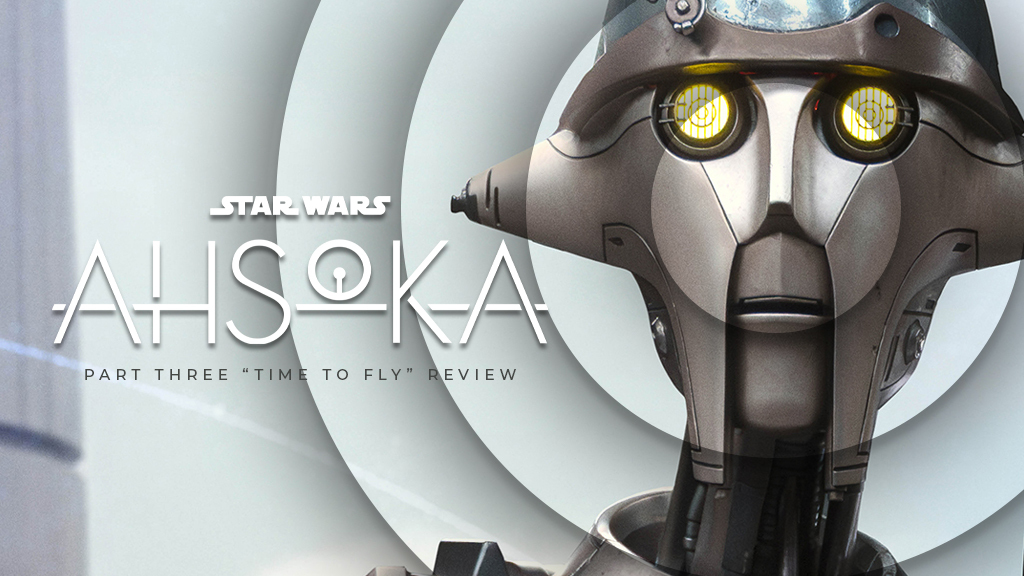
For every way that Ahsoka has felt very, very Star Wars-y, there continues to be the personal touch that creator Dave Filoni has always put on his work for Lucasfilm. And so, while Episode 7, “Dreams and Madness” has plenty of lightsaber fights, space scenes, a touching reunion between friends and even a cameo from everyone’s favorite protocol droid, it once again gives us something new to think about hope we see come to fruition at some point.
There’s no questioning that Baylan Skoll, played magnificently by the late Ray Stevenson, has quickly ascended the hierarchy of very impressive characters created and curated by Filoni. In case you missed the declaration, he’s no Jedi but as we’ve learned through his relationship with his apprentice, Shin Hati, and their ongoing mission in the service of Morgan Elsbeth, he’s no Sith either. Skoll is rather a pretty damn enlightened Force user who saw the Jedi order for what it was: a wonderful idea that fell to pieces as the galaxy changed around it. Skoll wants something “more” and he has eaten a lot of shit from some pretty evil people in order to get to the far reaches of ANOTHER galaxy to find it and now, with whatever it is he seeks just outside of his reach, he imparts one last piece of wisdom to Shin and abruptly bails on Elsbeth and Grand Admiral Thrawn. For as long as we’ve seen the Master/Apprentice relationship in Star Wars (and if you’ve watched Filoni’s animated series, that’s a lot), we’ve NEVER seen something remotely similar to what Skoll just pulled here…and it is fascinating. Is he displeased with Shin? Has he taught her everything he thinks he can? Whatever this man wants on Peridea, it was worth losing everything to find.
Balancing out the separation of Baylan and Hati is the reunion of Ahsoka with her apprentice, Sabine, and, of course, with Ezra. While it takes all of the episode’s run time to get there, Ahsoka’s warm embrace of Ezra feels incredibly authentic and wonderfully earned. It’s hard to remember sometimes that much of Star Wars has always centered around wonderful friendships and this warm and fuzzy moment reminds us just how important to their survival these friendships have been. Sooner or later, however, Ahsoka and Sabine are going to have to come clean with Ezra…
Speaking of coming clean, with–as Thrawn points out–time working against the trio of heroes how long will it be before one of more of Ezra’s secrets will come to light. As fans of Rebels may remember, Ezra has quite an interesting history with Dathomiri folks and owes a debt to the Nightsisters. His being on their ancestral home of Peridea simply cannot be a coincidence. It’s possible, no matter how terrifying, that he and Baylan could be on a collision course and Ezra’s bill may just come due.
Episode 6 of Ahsoka, “Far, Far Away” left fans feeling pretty fantastic…and we should all have a bad feeling about that. Dating back to his work on Star WarsRebels, Dave Filoni has occasionally chosen to end seasons of his series with two-part blockbusters. Those blockbusters, however, don’t typically go well for the heroes and often leave things unresolved until the two-part premiere of the next season. With only two episodes left in the first season (to be directed by Geeta Vasant and Rick Famuyiwa, respectively) of Ahsoka, things are trending in that direction again.
With most of the action taking place on Peridea, “Far, Far Away” gave us the first Star Wars story set outside of the galaxy far, far away we’ve all come to know and love and that means, to some extent, all bets are off. No matter what you think you know about Star Wars, things are likely to be a little different in this new galaxy. And indeed despite intentionally layering in some of the familiar Star Wars tropes like marauders reminiscent of Tusken Raiders and horseshoe crabs who dress like Jiminy Cricket reminiscent of Jawas, Ewoks or whichever strange species you want to compare them to, something just ain’t quite right on Peridea. Revealed to be the ancestral home of the Nightsisters of Dathomir–a group of witches who have already been well-established to view and use the Force quite differently than groups like the Jedi or Sith–Peridea, as explained by Baylan Skoll, is a place of great and terrifying power. “Far, Far Away” reveals just the tip of that iceberg as any further exploration of it takes a back seat to the reunion of Sabine and Ezra and the return of Thrawn. However, as wonderful as Ezra looks sporting a beard reminiscent of his father’s, as perfect as Lars Mikkelsen is bringing his Thrawn to live-action and as terrifying as Thrawn’s Chimaera full of some interesting-looking Stormtroopers is, Ahsoka isn’t done with Peridea just yet.
First and foremost, it’s made very clear that Ahsoka and Huyang–who may have been revealed to be the narrator of every Star Wars story we’ve ever been told–are indeed on their way to Peridea thanks to the Purrgil. Ironically enough, while Sabine and Ezra are entirely unaware that Ahsoka is on her way, Thrawn is, as Thrawn does, preparing for the possibility of her throwing a monkey wrench into his long-gestating plans. The Grand Admiral has already indicated that he’s low on troops and it now seems only a matter of time before Baylan Skoll and Shin Hati face off with the reunited, Ahsoka, Sabine and Ezra, who could do quite a bit of damage to the Heir to the Empire’s plans.
And so it seems that “Far, Far Away”, while a very neat episode of the ongoing Filoni-verse narrative in its own right, is the calm before a very nasty storm and likely the conclusion “second act” of the New Republic era of stories. Though the cavalry, in the form of Ahsoka, is coming to Peridea, there’s almost certainly nothing she can do to prevent Thrawn and his minions from making the jump back to the galaxy from whence they came. Expect, as is often the case in Filoni’s stories, for the heroes to suffer–and perhaps even die–as they fight valiantly against the evil Empire. While Filoni has done a masterful job of putting his own spin on Star Wars, specifically the Force, he still loves to follow the path laid out by George Lucas and the master storytellers from whom he drew inspiration. So, if Ahsoka is the end of the second act of a larger story–in the way that Attack of the Clones, The Empire Strikes Back and The Last Jedi were in their corresponding trilogies–the next two episodes are going to hurt.
Marrok theories be damned, Episode 4 of Lucasfilm’s latest Star Wars streaming series, Ahsoka, provided just about everything a fan of the franchise could hope to see in 40 minutes or less. Wonderfully choreographed lightsaber duels, heroes doing what’s right instead of what’s easy, an homage to the samurai films that inspired the franchise, complex villains and the sort of twists that have largely been missing from some of the more recent theatrical efforts combine to make “Fallen Jedi” a very entertaining,–and tantalizing–end to the first half of the first season of Ahsoka.
Without counting minutes, it seemed as though half or more of the episode was spent watching warriors clash their lightsabers against the beautiful backdrop of Seatos with each battle carrying its own weight. Though fairly quickly dispatched by Ahsoka, the mysterious Marrok slowed the former Jedi down and ultimately separated her from Sabine (when are these guys going to learn to listen to Huyang??). Better prepared and fully armored, Sabine was able to survive her rematch with Shin by relying on her training as a Mandalorian though the extended duel kept her from having her master’s back. It’s Ahsoka’s battle with Ray Stevenson’s fascinating Baylan Skoll, however, that deserves the attention.
Clearly deeply connected to the Force, Baylan is the type of non-traditional villain that the franchise has been missing. While he’s no Jedi, he’s a man who though he’s lost his religion still holds on to some of the tenets of the faith. He serves the will of his benefactor–for now–but harbors no ill will for neither Ahsoka nor Sabine though as indicated in his first appearance, he also won’t hesitate to take on whatever challenge is presented to him. Though his own agenda is yet to be defined, he seems far to complex of a character to simply be serving Morgan and his past seems far too interesting to simply have him killed off quickly. Though Ahsoka and Sabine are the series’ leads, creator Dave Filoni certainly hit a home run with Baylan.
And finally, no discussion of the episode would be complete without addressing Ahsoka’s surprising return to the World Between Worlds. While the nature of how she arrived there remains a mystery, her presence there–and the presence of her former master–is a promise of a whopper of a next episode. Knowing that Filoni was behind the camera for next week’s Part Five only makes the week-long wait more tantalizing. Ahsoka has been part “what happened” since Rebels and part “unfinished business” and it now seems that Ahsoka may just find herself in the same scenario she talked Ezra out of when he hoped to use the World Between Worlds to save Kanan.
Ahsoka has quickly become “must see TV” for Star Wars fans because it, like Star Wars Rebels before it, draws on what made the first three films so memorable; however, Filoni has proven capable of not just rhyming with the fun beats of the original trilogy but also adding to the mythology. While Tony Gilroy’sAndor stands as a shining example of how to make a Star Wars show that’s not very Star Wars, for fans of the original trilogy (and don’t ever forget that’s exactly who Filoni is) Ahsoka is the Star Wars you’re looking for.
It’s been seven years since One Piece was first announced to be getting a live-action adaptation. The production survived a pandemic, constant delays, a long production in South Africa, one of Netflix’s biggest marketing strategies, and so much more. On August 31st, it finally made its way to Netflix as a binge-drop. Was the wait worth it or did Tomorrow Studios repeat the same mistakes that sank Cowboy Bebop?
To get the easiest comparison out of the way fast: it’s not another Cowboy Bebop (though to be upfront, I felt it as actually decent if taken as its own thing). Showrunners Steven Maeda and Matt Owens managed to do what seemed impossible and bring a goofy but heartfelt series to live-action like One Piece in this new take on the iconic East Blue saga that started it all.
The manga series by Eiichiro Oda is somewhat special in many ways: it is a very goofy, almost childlike story that has some of the most heartfelt moments that truly tug on your heartstrings while managing to still tell the same story for over 26 years at this point. Yet, East Blue is very distinct when compared to the rest as it was the time when Oda was still figuring out the story he wanted to tell with very distinct stories that only loosely connect through the first recruits for Luffy’s journey to the Grand Line.
So, the showrunners are given quite a daunting task having to bring such an iconic series to life and stay true to the original while having to establish a more Western-style connected adaptation of the saga that has the least connective tissue. And, somehow, they managed to pull it off. The smartest move they did was to ensure that the main cast where perfect for their respective characters, which became one of its biggest selling points. Netflix was smart to make good use of pre-recorded interviews and videos of the caster interacting to further sell their dynamic as a team.
Inaki Godoy was a perfect choice for the loveable Monkey D. Luffy. He has just the right energy to play the character and also has that inspiring energy that keeps the story going. Mackenyu is a more subdued Zoro who is inspired by his later appearances but actually adds a bit more variety to the cast with his straight-man reactions and dry humor. Jacob Romero Gibson is a lot of fun and they do more with him than just being comedic relief; they also really embrace his cowardly habits.
Emily Rudd is a standout for her more emotionally-centered performance; not too surprising given the importance of this arc and her story. Lastly, Taz Skylar is a great rendition of Sanji that finds that right balance but given when he is introduced, we sadly don’t get a lot of time with him. However, they make good use of his “new guy” dynamic and want to prove himself. The Straw Hats are the selling point of this series and are definitely the highlights throughout, as you just want to spend time with them even when the show’s first season wraps.
The rest of the cast is also great and outside of maybe one or two, they are probably the most accurate castings I’ve seen in an adaptation. They also give some great and varied performances with Jeff Ward truly being the stand-out as the always loveable but terrifying Buggy. Arlong (McKinley Belcher III) is also a stand-out who has a lot more depth and wasn’t done justice in the trailers. Overall, the villains were great even if one really deserved way more screen time but at least got a slight spotlight. Vincent Regan’s Garp is also a great character who is given a bigger role inspired by a later arc.
One thing many were a bit concerned about early on was the CG and outside of maybe one or two shots, there’s some fantastic work in this show. News Coo and the Lord of the Coast are visually impressive. There’s a scene of swords falling apart that looked off later on in the series but the big surprise is just how well they pull off Luffy’s stretchy powers. They don’t shy away from it and make good use of it whenever they can. Even the Gum Gum Balloon looks convincing which is impressive given how even big-name studios avoid those kinds of powers like with Ms. Marvel.
The most impressive aspect of this series is how they keep this tight balance of having it grounded but the series still has its goofy elements. It makes it stand out from other adaptations that either go too serious or generally just replicate the original source material. There are iconic moments in here but they changed enough that allow it to connect more effectively with an overarching plot and set-up. There are a lot of changes that are here to focus more on the character dynamics and overarching thematic plotline.
Speaking of, the smartest move was to give it a strong connective tissue through the theme as a way to also explore a story that is a bit removed from our main Straw Hat’s journeys. While some of the parts with Garp and the Marines seem disconnected, the way the story comes together actually gives it a strong meaning on why it is being told here and now. The scenes are a bit slower and can break the overall pace, but don’t feel like they overstay their welcome; especially with some great moments from Garp and Helmeppo. Personally, the pay-off of these sequences gives it a lot more weight and made me like the addition to further elevate the themes.
The biggest challenge with these adaptations is the direct comparison to the original. A lot of minor and even some bigger characters were removed which is a shame, but after leaving behind the “I missed this from the original” makes sense in how the story is being told this time around. It’s a different adaptation that feels like how Oda might’ve told it given how his storytelling has evolved since he first worked on the East Blue back in the 90s. Especially in how some characters get a bit more screen time to flesh them out more. The early introduction of characters like Mr. 7 is also a clever way to establish elements that might pay off quite a bit later for new viewers and give reasons to rewatch.
I do have some gripes which are likely due to this being the first season to begin with, as the show is trying to finds its identity. They have created a variety of lenses just for this series but tend to overuse them at times, especially at the beginning of Syrup Village it feels unnecessary. However, the strong use of face close-ups feels inspired generally by Oda’s love for showing expressions that’ll get better with more time. There are also some moments that perhaps could’ve used some additional work to balance it out better as it tends to slip into being a bit goofier than necessary.
Though,t these elements don’t take away from what the team behind One Piece accomplished. With this first season, I believe that Netflix should give this show multiple seasons moving forward to allow it to grow just like the original. I would even go as far to say that this season gives us a stronger East Blue saga even if some characters could’ve used a bit more love and some iconic scenes were sadly missing to add relevance. Still, this might be one of Netflix’s strongest first seasons which makes the small issues I have just a way to truly refine it going into the next arc that is famous for doing the same for the manga.
One Piece truly stands out from most series nowadays with its style and wacky world. Small details like the cast interacting with the wanted posters that introduce them give it a lot of charm. Even if some CG looks a bit wonky, the practical sets are really impressive and it has such distinct style that makes it stand out from other projects out there. If this is the first season; I cannot wait to see a lot more in the future and hopefully spend more time with this cast for many seasons to come.
Patient storytelling is becoming a staple as Jon Favreau and Dave Filoni’s New Republic era of stories continues to unfold on the small screen. While the urge for all action all the time is undoubtedly present, the creative teams behind the Mandoverse properties continue to follow the way of the Jedi and the latest episode of Ahsoka, “Time to Fly”, is another example of their patience.
Picking up right where the two-episode premiere left off, “Time to Fly” opens with Ahsoka, Sabine and Huyang tracking the warp drive transported off of Corellia in “Toil and Trouble.” However, instead of having the heroes hop out of hyperspace and enter into battle with Morgan Elsbeth and her band of Force-wielding mercenaries, Filoni and director Steph Green (who also directed episode 2) wisely invest some time into the master and apprentice relationship between Ahsoka and Sabine. Additionally, through Huyang–voiced the wonderfully talented David Tennant–a clear picture of Sabine’s not-seen-onscreen struggles to become a Jedi is painted. Meanwhile, as Hera plays politics with Chancellor Mon Mothma and some New Republic talking heads only to get stonewalled, the stunning failures of the new system to be any better than the old system continue to pile up.
And so while it was 20 minutes into a 35-minute episode before any big action took place (and that was a very fun dogfight), seeds have been sown that will certainly pay off not only over the course of the remaining episodes of Ahsoka but also over longerform narrative taking place in the Mandoverse. Unfortunately, that’s a fairly tough sell that’s further complicated by the fact that not everyone watching Ahsoka is incredibly well-versed in the preexisting relationships between the Star Wars Rebels characters. That having been said, enough exposition and work is being done to do most of the heavy lifting for the uninitiated audience even if they don’t quite know why Jacen Syndulla is a much better candidate for being a Jedi than Sabine.
Asking the audience to be patient for the third episode of an eight-episode series shouldn’t be asking too much, especially since it seems all the pieces have been put into place for the Peter Ramsey-helmed Episode 4 to be bursting at the seams with action and lore before Filoni resumes directing duties in Episode 5. With most of the major players having converged on Seatos, it looks as though that Baylan vs. Ahsoka lightsaber duel is right around the corner…but what of Sabine’s second chance with Baylan’s Dark Padawan? The seeds were all smartly planted. Patience, you must have.
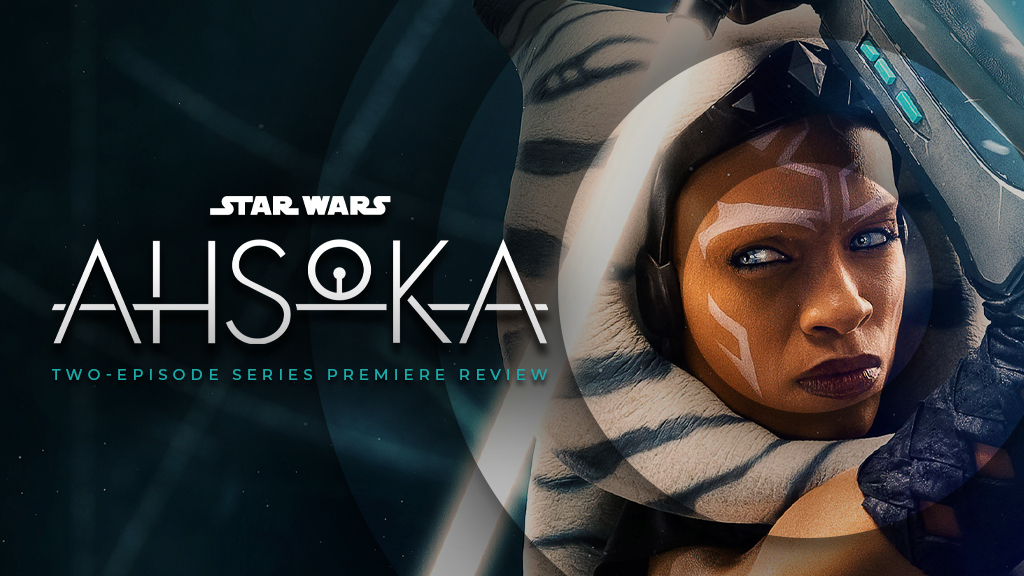
The Filoni Ascendancy has begun. Following the sequel era of Star Wars films–an era seemingly plagued by the lack of long-term planning as to how the trilogy would unfold–fans of the franchise hoped desperately that someone would come forward and take control of whatever it was that Star Wars was to become. With the debut of Ahsoka, the next installment in Dave Filoni‘s New Republic era of stories, there’s no longer any question about who should have dominion over the franchise.
The master and apprentice relationship is as foundational to Star Wars as nearly any other aspect. The Jedi and the Sith, for all their differences, are both beholden to the tradition of taking on apprentices, and, for quite some time, it’s been pretty clear that Dave Filoni was, in almost every way, the apprentice of George Lucas. Filoni worked closely with Lucas as he created two of Lucasfilm’s most widely beloved projects in Star Wars: The Clone Wars and Star Wars Rebels. And, over time, it became clear that more than maybe anyone else who had worked on Star Wars projects, Filoni truly understood what made Star Wars tick. Not EVERY episode of those series was perfect but they resonated with fans so well because they were longform narratives that more deeply explored the things fans so dearly love about Star Wars. When he made the jump to live-action with The Mandalorian, Filoni brought many of those characters with him and as he continued to dig into what Star Wars was, it started to seem as though he was coming to understand it better for himself. And again, not every choice was perfect and not every episode was for everyone but his passion for the material was built into everything he created or helped create. With Ahsoka, it seems clear that the learner has become a master.
Appropriately enough, Part One of Ahsoka is titled “Master and Apprentice.” That title is equal parts appropriate to the relationship between Ahsoka Tano and Sabine Wren, the relationship between Dark Jedi Baylan Skoll and Shin Hati and Filoni’s ascendancy from apprentice to master. There’s no small irony that Filoni has staked his claim as heir to the empire in a series that will seemingly begin an adaptation of Timothy Zahn‘s beloved Thrawn novel nor is it a coincidence that Filoni’s best work to date comes with Ahsoka Tano at its center. Ahsoka is not only Filoni’s most popular creation but also the one he seems to have taken the greatest care in curating over the years. Much like wielding the Force, directing takes not only talent, but training, and is best done when the director is calm, at peace and feel the flow. Reuniting her with the cast of StarWars Rebels has seemingly put Filoni at ease and the result–at least through the first two episodes–is peak Star Wars.
From a storytelling standpoint, Ahsoka acts and feels like a fairly straightforward continuation of the overarching plot of Star Wars Rebels. While those who haven’t watched the animated series can quickly be caught up to speed, there are enough Easter eggs, nods, references, call backs and appearances packed into the first two episodes to make devoted Rebels fans feel rewarded. Filoni’s growth within his craft as a director is evident here as he continues experimenting with shot choices and finds wonderful ways to bring familiar locations like the road to Lothal and the Communication Tower into live-action. However, it’s not only when he’s playing around with familiar characters in familiar locations that he’s at his best.
In the past, Filoni has made it clear that many of the action sequences in Star Wars Rebels took inspiration from the Indiana Jones films and he doesn’t hesitate to go to that well again in Ahsoka. One of the opening episode’s most beautiful sequences finds Rosario Dawson’s former Jedi tomb raiding during a scene wonderfully reminiscent of Indy’s Well of Souls expedition. Paired with the very A New Hope-inspired introduction to Ray Stevenson‘s Baylan Skoll and Ivanna Sakhno’s spicy Shin Hati, Filoni demonstrates an ability to by homage to what’s come before without stealing or making it too rhymey, which was a common complaint among fans during the sequel trilogy. Imitation and creation. And Filoni is getting very, very adept at pairing those two tools to great effect.
It’s not all about familiarity in Ahsoka, though, as the series–specifically in the second episode directed by Steph Green–looks as though it will continue the New Republic narrative that’s so far been spun in The Mandalorian and The Book of Boba Fett. “Toil and Trouble” calls back to The Mandalorian’s revelation that Imperial Loyalists have infiltrated all levels of the New Republic and that today’s good guys were probably just yesterday’s bad guys. Thematically, the episode examines the postulate of horror vacui that’s been building in the Filoni-verse series and–with a bit of shocking twist–reveals Morgan Elsbeth’s true nature and her plan to retrieve Grand Admiral Thrawn and install him atop the New Empire. By the end of the shorter second episode, it seems clear that Ahsoka is destined to be a convergence point of “what came before and what’s really possible” in the Star Wars universe, just as Filoni explained it would be.
And just what might really be possible moving forward as Filoni grows in confidence and ability as a director is a thrilling mix of everything we always loved about Star Wars set on a new and fertile narrative landscape. The first two episodes hint strongly at Ahsoka taking the audience on a journey not only to new places but to new interpretations of long-held beliefs about the way things work in the galaxy far, far away and that’s exactly what the franchise will require to stay alive and well.
From the time the earliest teasers for Secret Invasion rolled out online, it was clear that at some point in the show, Nick Fury wouldn’t be Nick Fury. Since writer Kyle Bradstreet left that “ace” up his sleeve, it was pretty evident from the time “Fury” infiltrated the Skrull hideout that it wasn’t really him. In fact, even in the aftermath of last week’s episode, plenty of fans had already guessed exactly what was going to happen with The Harvest; however, most of those fever dream theories were more interesting than what was delivered in “Home.”
As far as series finales go, Marvel Studios has seemed to have a hard time “sticking the landing” as everyone likes to say. To continue that analogy, the Secret Invasion finale would be more akin to a gymnast hitting the springboard and then launching headfirst into the pommel horse. For what was hyped up as a paranoia-landed spy thriller, the series as a whole lacked any sense of suspicion or mistrust as to who was or wasn’t a Skrull and despite their efforts, nobody actually believed Russia and America were going to war. Skrull Rhodey was always going to die. G’iah was always going to have her vengeance. “Who do you trust?” Certainly not the people rubber-stamping the choices made here.
Much as it had previously done with the Kree, Marvel Studios has now painted themselves into a corner with the Skrulls. Kevin Feige once proudly claimed that Marvel Comics pointed Marvel Studios in the right direction with their projects: “The answers are always in the books,” said the head man. It now seems that in their quest to avoid doing direct page-to-screen adaptations, they’ve entirely lost their way. Much like Ronan the Accuser and Mar-Vell before him, Kl’rt, the OG Super Skrull, will either be ignored entirely or greatly reduced in significance…so that the MCU could have Gravik? For decades, Marvel Comics has found ways to keep the Kree-Skrull War alive and interesting but somehow, over the course of two projects, Marvel Studios reduced it–and all its players–into minimalist impressions. What’s left? Some “peace talks” and a brand new most powerful being in the galaxy in Emilia Clarke’s G’iah and Fury’s Skrull wife. What are they going to do now? No idea. Varra’s work is apparently “important” and G’iah’s final scene reeks of the all-too-common theme among Marvel Studios’ writers that whatever comes next for the character is the next guy’s problem.
And what of the hero of the series? After pushing the people he once took under his wing and hoped to find a home for into a war against their own extinction, Nick Fury…pisses back off into space? So he can make jokes again in The Marvels? After a half-assed explanation given not by Nick but by G’iah pretending to be Nick, old Nick is back and nobody would blame anyone for wondering how–or even if–the events of Secret Invasion will have changed him when we see him again. For four episodes, the series really only worked as a showcase for Samuel L. Jackson, Ben Mendelsohn, Don Cheadle and Olivia Colman’s talents; however, once it came time for it to change gears and try to find its relevance in the ongoing shared narrative, the wheels came off entirely. Ultimately, Secret Invasion will be remembered as a series of unfortunately misapplied and wasted concepts that show Marvel Studios just doesn’t value or understand the Cosmic corner of the comics that Feige once said held all the “answers.” It might be time for the studio to course-correct and work its way back to taking more inspiration from the comics–or it might be too late already.
If you’ve been watching Marvel Studios’ latest Disney Plus streaming series, Secret Invasion, it may have come to your attention that Nick Fury just isn’t himself these days. As the audience has all too often been reminded by everyone in the show that knows him, Fury hasn’t been the same since the Blip. However, as the consequences of Fury’s secrets have continued to come back to haunt him–and potentially the entire human race–glimmers of the old spy have begun to shine through and, as of the end of the latest episode, it seems that yeah, Fury is thinking he’s back. But did Fury’s return come too late?!?!
Not to put too fine a point on it but the answer is no. And being able to answer that question ahead of the series’ finale is, as Samuel L. Jackson might certainly put it, a mother fucker. As wonderful as Jackson’s performance has been, including the unforgettable scenes he shared with Ben Mendelsohn and the chemistry he continues to share with the criminally underutilized Olivia Colman, Secret Invasion continues to be more about Fury’s past–which by proxy includes the collective past of the MCU–and the bind that puts him into in the present. However, because the Nick Fury and MCU are known to have a future beyond Secret Invasion, the audience already knows the score: despite taking heavy body blows, Fury’s going to Rocky Balboa Gravik’s “Skrull ass” and save the day. We know this because Fury is alive and well in The Marvels. We know this because there’s no way the Marvel Studios Parliament greenlit a project (Armor Wars) about Skrull Rhodey. While that doesn’t mean there might not be some surprises in the finale (after all who among us was not both completely surprised and thrilled to see that one character from Black Widow show up?), the finale pretty much writes itself and that makes anticipation for it a bit low and the buzz around it will likely be a bit dull.
I love playing him, and I love the fact that they’re opening him up to all these other possibilities and this whole life that he has. So hopefully I’m not done, and in this new phase of the MCU I’ll still be floating in and out of there somehow, some way.
Samuel L. Jackson on Nick Fury
That’s not to say that Secret Invasion hasn’t excised a pound of flesh or two from Fury. Over the course of the first five episodes, he’s lost his longest standing ally in Talos, his right hand in Maria Hill and had to come face-to-face with the idea that even he is fallible. But for Secret Invasion to truly matter, the events of it must change the man known as Nick Fury and set him on a new path just as the events of Captain America: The Winter Solider did for Steve Rogers. The good news is that it would seem Jackson has no interest in walking away from the role of Fury which means the next 4-5 years could pay off the investment fans of the MCU have put into Secret Invasion and, to be fair, that’s exactly what Marvel Studios One Above All, Kevin Feige, sold to fans when the first wave of Disney Plus series were first announced.
“These episodes will intersect with the movies in a very big way,” Feige told Variety in a 2019 inteview. “It’s a totally new form of storytelling that we get to play with and explore. It’s the first long-form narrative that Marvel Studios has done — they’ll be six episodes, eight episodes, 10 episodes with the actors from the films playing their characters. They’ll be changing, evolving, growing in those event series and then those changes will be reflected in their next film appearances,” Feige explained. So while fans continue to wait for each of these series to be “the next big thing”, Feige could easily quote Dennis Green and remind fans that “they are what we thought they were.” But therein may lie the problem with Nick Fury in Secret Invasion. If the finale simply reinstalls old Nick Fury into the MCU, which is what the whole series has been preparing fans for, then there’s been no change, no evolution and no growth. If the Nick Fury who appears in The Marvels hasn’t been irrevocably changed by the events of Secret Invasion, then it will be fair to judge the series as a failure.
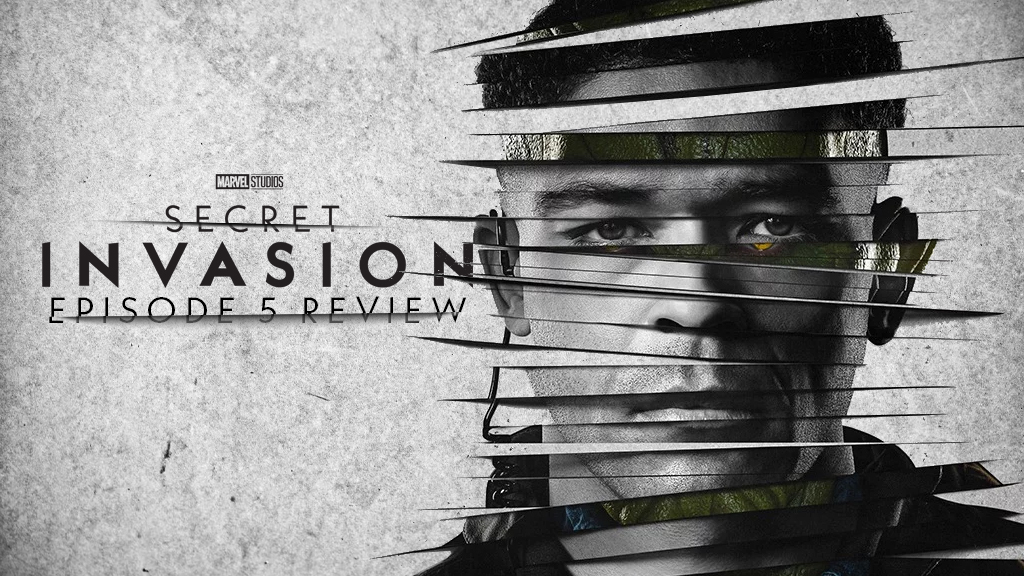
As for the rest of the episode, it’s a bit of a microcosm of the series as a whole. Like the deaths of Maria Hill and Talos before him, Pagan’s death at the hands (?) of Gravik was weightless. It’s hard to think of a supporting character in any of the MCU series that was as impotent as Pagan; seemingly every action undertaken by the character, even his death, would have had the same impact on the series if it happened off screen or didn’t happen at all. For all the razzle dazzle of G’iah becoming a Super Skrull, she participated in a good old-fashioned shootout with the meanie Skrulls rather than Super Skrulling and the same can be said of Gravik who resorted to his hand-to-hand combat skills to kill the mutinous meanies Skrulls. Given the importance of the Kl’rt in the comics, to see the idea of Super Skrulls relegated to a few cheap VFX scenes makes the entire idea feel squandered. Even the episode’s McGuffin, The Harvest–an idea that has circulated since Thor’s blood lingered around during the Battle of New York seen in The Avengers–seems stripped of any real danger around it since Fury’s plan to give it to Gravik will certainly resolve in some way other than a bunch of Avenger-powered baddie Skrulls trotting around the Earth. As far as pentultimate episodes go, “The Harvest” came up short but with one episode left to go, there’s still time before the impact of Secret Invasion can truly be judged.
Representing the 2/3 marker of their 6-episode series, the fourth episodes of Marvel Studios Disney Plus streaming series have routinely served as pivot points for the shows. Episode 4 of Marvel Studios’ latest streaming series, Secret Invasion, kept that trend alive with multiple big moments that will change the course of the show as it heads into its final act; however, none of those big moments really felt impactful as they were ultimately far too predictable. At the end of the day, though, ” Beloved” gave Samuel L. Jackson’s Nick Fury the final push he needed to bring back that Old Nick Fury we’ve heard so much about.
As was widely speculated–and indeed given away by promotional footage–Emilia Clarke‘s G’iah was not only NOT dead but also now a Super Skrull herself, powered up with Extremis at the least and who knows what else at the most. G’iah’s brief reunion with her father, Ben Mendelsohn’s Talos, didn’t really have the emotional kick the writers’ room probably intended for it to have (due in part to the lack of screen time the characters shared up to this point) but it did all too easily clue engaged fans into the fact that Talos wasn’t going to survive the episode. As a series intended to be full of twists and turns, Talos’ death was another example of a “twist” that was far too foreshadowed by a trope audiences have seen far too many times to miss. Just like Fury and his Skrull wife weren’t going to shoot one another and Rhodey was the most obvious Skrull plant well before the series ever aired, the paranoia and suspense that the audience is supposed to be feeling just isn’t there.
Outside of the less-than-impactful “twists” in Episode 4, “Beloved” also took away one of the series greatest strengths to date: the chemistry between series leads Jackson and Mendelsohn (it’s also probably one of the last times fans will be treated to the great chemistry between Don Cheadle and Jackson as well). While Jackson’s charisma and talent makes him a surefire match for any talented actor with whom he’s sharing scenes, he and Mendelsohn had something special and it’s more of a gut punch to know we won’t see that again than it is to know Talos is dead (or “dead’?). Talos’ death does, however, open the door for Fury to need a new ally in his fight against the Skrulls which may just lead him back to the absolutely wonderful Olivia Colman whose character has, to date, been greatly underused.
Whatever the case, it does seem clear that Talos’ death will be the final push needed to help Fury find his way back to the bad mother fucker that Secret Invasion has reminded us of so frequently. One of the most frequently seen clips from the promotional footage for series saw Fury putting on an eye patch and a trench coat in a cemetery and savvy fans are well aware that’s not happened yet. As Secret Invasion enters its third and final act in next week’s Episode 5, that moment is likely just around the corner and two episodes of a vengeful Fury turned loose on Gravik’s Skrulls puts the conclusion of the series in the hands of its surest bet: Jackson’s enormous talent. So while Episode 4 was a bit of a downshift, there’s plenty of hope for the series to end in high gear, letting Jackson open it up on a long straightaway.
Episode 3 of Marvel Studios Secret Invasion certainly doesn’t ascend to the heights of the previous installment but it does share the same strengths. “Betrayed” follows the same recipe for success as “Promises” by giving stars Samuel L. Jackson and Ben Mendelsohn plenty of room to riff off one another but fails to deliver the payload due in part to a fairly uninspired and less-than-surprising series of “twists.”
Billed as a paranoid spy-thriller, Secret Invasion hasn’t really been steeped in much paranoia and the outcomes of this episode’s spy games were all too predictable. The Skrull plot to blow up the UN plane didn’t work?! G’iah got caught!? Rhodey is a Skrull?! When compared to similar projects within the genre, the attempt to thrill and surprise the audience not only doesn’t live up to Mission: Impossible standards but also does not even to the MCU’s espionage goalpost, Captain America: The Winter Soldier. The good news, however, is that the series is only at the halfway point and hopefully ups its game during the second half.
Whether the series ever lives up to the billing of a high-stakes spy thriller or not, it’s clear that Kyle Bradstreet, Ali Selim and the team of creatives behind Secret Invasion knew where their bread would be buttered and gave the supremely talented duo of Jackson and Mendelsohn room to work. When watching the two playfully barb one another, it’s impossible not to think that the two veteran talents either had some input into their dialogue or did a fair amount of ad-libbing. Either way, the result continues to be some of the MCU’s best character work. And on that note, using the series to draw out the idea that Nick Fury’s reputation as “the spy” of the MCU was built on the backs of Talos and his Skrulls is a wonderful bit of retconning that truly changes the world we thought we knew. Maybe the second half of the series will allow Gravik and his extremist Skrulls the same opportunity.
As for Gravik, he’s given some real bite by Kingsley Ben-Adir despite being written into some corners. Now that his Super Skrull plan has been revealed (as well as the fact that he’s already powered himself up), that will seemingly become Fury and Talos’ primary problem. How can two non-powered folks take down an army of Super Skrulls? They certainly can’t expect help from War Machine now that we know Rhodey is a Skrull and Fury has already made it clear he’s not calling The Avengers for help. So, perhaps his best bet is a Super Skrull or two of his own? While Marvel Studios has been known to waste a talent or two over the course of its 15-year history, it’s hard to believe they just Quicksilvered Emilia Clarke, especially when promotional footage for the series has shown her character in several key scenes that haven’t made their way into the show yet…including one in which she appears to be in Gravik’s Super Skrull maker. Of course, that could all have been subterfuge by the studio but given the myriad ways Gi’ah could still be alive let’s hope it’s not.
While it’s a bit concerning that Secret Invasion only delivered one truly strong episode in the first half of the series, it does actually feel like the best is yet to come. Through visual cues, the audience can track the “return of Nick Fury” and so far, he’s not quite there yet. Once Fury resumes being Fury–and what will it take to finally push him to that point?–the series could become something else entirely as well.
Cookie Consent
We use cookies to improve your experience on our site. By using our site, you consent to cookies.
This website uses cookies
Websites store cookies to enhance functionality and personalise your experience. You can manage your preferences, but blocking some cookies may impact site performance and services.
Essential cookies enable basic functions and are necessary for the proper function of the website.
Name
Description
Duration
Cookie Preferences
This cookie is used to store the user's cookie consent preferences.
30 days
These cookies are needed for adding comments on this website.
Name
Description
Duration
comment_author_email
Used to track the user across multiple sessions.
Session
comment_author_url
Used to track the user across multiple sessions.
Session
comment_author
Used to track the user across multiple sessions.
Session
Statistics cookies collect information anonymously. This information helps us understand how visitors use our website.
Google Analytics is a powerful tool that tracks and analyzes website traffic for informed marketing decisions.
Contains information related to marketing campaigns of the user. These are shared with Google AdWords / Google Ads when the Google Ads and Google Analytics accounts are linked together.
90 days
__utma
ID used to identify users and sessions
2 years after last activity
__utmt
Used to monitor number of Google Analytics server requests
10 minutes
__utmb
Used to distinguish new sessions and visits. This cookie is set when the GA.js javascript library is loaded and there is no existing __utmb cookie. The cookie is updated every time data is sent to the Google Analytics server.
30 minutes after last activity
__utmc
Used only with old Urchin versions of Google Analytics and not with GA.js. Was used to distinguish between new sessions and visits at the end of a session.
End of session (browser)
__utmz
Contains information about the traffic source or campaign that directed user to the website. The cookie is set when the GA.js javascript is loaded and updated when data is sent to the Google Anaytics server
6 months after last activity
__utmv
Contains custom information set by the web developer via the _setCustomVar method in Google Analytics. This cookie is updated every time new data is sent to the Google Analytics server.
2 years after last activity
__utmx
Used to determine whether a user is included in an A / B or Multivariate test.
18 months
_ga
ID used to identify users
2 years
_gali
Used by Google Analytics to determine which links on a page are being clicked
30 seconds
_ga_
ID used to identify users
2 years
_gid
ID used to identify users for 24 hours after last activity
24 hours
_gat
Used to monitor number of Google Analytics server requests when using Google Tag Manager
1 minute
Marketing cookies are used to follow visitors to websites. The intention is to show ads that are relevant and engaging to the individual user.
Pinterest Tag is a web analytics service that tracks and reports website traffic.