Category: Reviews

  • REVIEW: ‘The Mandalorian’ Puts Din and Grogu in the Backseat for a Look at the Not-So-New Republic

    REVIEW: ‘The Mandalorian’ Puts Din and Grogu in the Backseat for a Look at the Not-So-New Republic

    Chapter 18 of The Mandalorian, The Mines of Mandalore, wrapped up Din Djarin’s quest to end his apostasy well enough that it didn’t need to be revisited; however, the book ends of Chapter 19, The Convert, do indeed revisit the events of the previous episode and, to some extent, cleverly revise them. Returning to Kalevala to find it under attack by Imperial remnants, Bo-Katan, Din and Grogu hotfoot it to a safe space one hyperspace away. Where they go and what happens there are left for the show’s closing moments, though an attentive audience surely guessed where they’d land. As interesting as those closing moments–and the moments they surely set up for the future–are, the episode spends 80% of its runtime (the longest of any chapter of The Mandalorian to date) putting Din and Grogu’s ongoing journey in the back seat so Doctor Pershing can take the wheel.

    Last seen on Moff Gideon’s light cruiser in the Season 2 finale, Doctor Penn Pershing’s reemergence served as a reminder of where Din and Grogu’s journey began, provided a look at the Reconstruction Era of the galaxy and seemed to put the pieces in place for Gideon’s next move. Part of the New Republic’s Reintegration Program, Doctor Pershing’s arc in The Convert serves up a heaping helping of The Who’s We Won’t Get Fooled Again. Co-writers Jon Favreau and Noah Kloor deftly take advantage of years of conditioning of the Star Wars audience to subtly say an awful lot about the New Republic without saying anything at all. Like the other members of the Reintegration Program, Pershing is now a number and not a name, ironically finding himself given the same cold, impersonal identification assigned to the Clone Troopers by the “evil Empire.” An entirely different article could be written on the episode’s commentary on the inefficiency of the New Republic’s handling of old Imperial and Alliance resources, but their handling of a resource as valuable as Pershing as nothing more than a mundane cog in the machine set the gears of his “regression” at the behest of Elia Kane, who is likely working with Gideon. Pershing’s final fate, having his brilliant mind wiped by the “good guys” of the New Republic using an Imperial Mind Flayer, might as well have been done with Roger Daltrey screaming “meet the news boss; same as the old boss” in the background. The hypnotized never lie.

    (L-R): Bo-Katan Kryze (Katee Sackhoff) and R5-D4 in Lucasfilm’s THE MANDALORIAN, season three, exclusively on Disney+. ©2023 Lucasfilm Ltd. & TM. All Rights Reserved.

    Whatever Gideon wanted Pershing to do with Grogu’s blood, it looks as though Kane will now help see it through putting Mando and The Child back in the sights of the former Imperials. However, if the closing moments of the episode are any indication, Kane, Gideon and whoever else they assemble may not like what they find the next time they cross paths. As Din returns to the Mandalorian covert to prove he’s come back to the faith, the full measure of his rescue from the Living Waters of Mandalore by Bo-Katan. Though she has never walked the Way of the Mandalore, by bathing in the Living Waters herself, Bo-Katan has been “redeemed” and may now live among the Children of the Watch. The details of Din and Bo-Katan’s experience on Mandalore (Bo-Katan is keeping one tiny detail to herself for the time being) are sure to encourage The Tribe to consider returning to Mandalore and begin the culture’s prophesied return to glory. Bo-Katan’s no dummy and these new brothers and sisters in “faith” provide her with an army of warriors who will certainly do everything they can to protect one of their own, as they’ve demonstrated in the past.

    So while the “Big Three” of the first few episodes only get a small fraction of The Convert’s runtime, the detour to the Coruscant of the New Republic is by no means a waste of minutes. The events on Coruscant serve as a reminder that while you can take the solider out of the Empire, you can’t always take the Empire out of the soldier: the threat of Gideon, in this case in the form of Kane’s ongoing loyalty to his “plan”, still looms large. Additionally, the time spent exploring the ins-and-outs of the New Republic is long overdue. Through two seasons of The Mandalorian, only bits and pieces of what was going on at the center of the galaxy could be gleaned when Mando’s Outer Rim adventures attracted their attention. The New Republic is still new story telling territory and with the rise of Mandalore drawing nearer with every episode, it’s safe to say that the hypocrisy of the New Republic will come into play. There’s nothing in the street looks any different to me…
  • REVIEW: ‘The Bad Batch’ Find A New Home

    REVIEW: ‘The Bad Batch’ Find A New Home

    The last few weeks have been some of The Bad Batch‘s best; a remarkable turnaround from a fairly lame first half of the season. Where episodes once felt flat and pointless, they are now full of life and purpose, aimed towards a clear end goal with actual substance. The latest entry, titled Pabu, continues this trend with a wonderful excursion focused on community, something the leading group of rebels has found themselves severely lacking. A perfect mix of calm and storm, the episode manages to be both a singular adventure and a catalyst for the development of its heroes in one gorgeous outing.

    Pabu sees the Bad Batch accompany their occasional business partner and not-a-pirate Phee Genoa, played by Wanda Sykes, to the episode’s titular planet for a bit of rest and relaxation. After a betrayal by their previous employer, the group needs a safe place to hide and a refresher on what it means to be alive, something Genoa believes she can supply in the form of a peaceful refugee city. Of course, things don’t go exactly as planned, and the group ends up having to protect the citizens from a massive tidal wave that wipes out half the community’s infrastructure. The resulting escapade is a lovely look into what the clones could have, and uphold, if they were willing to lay down their guns and give up the fight.

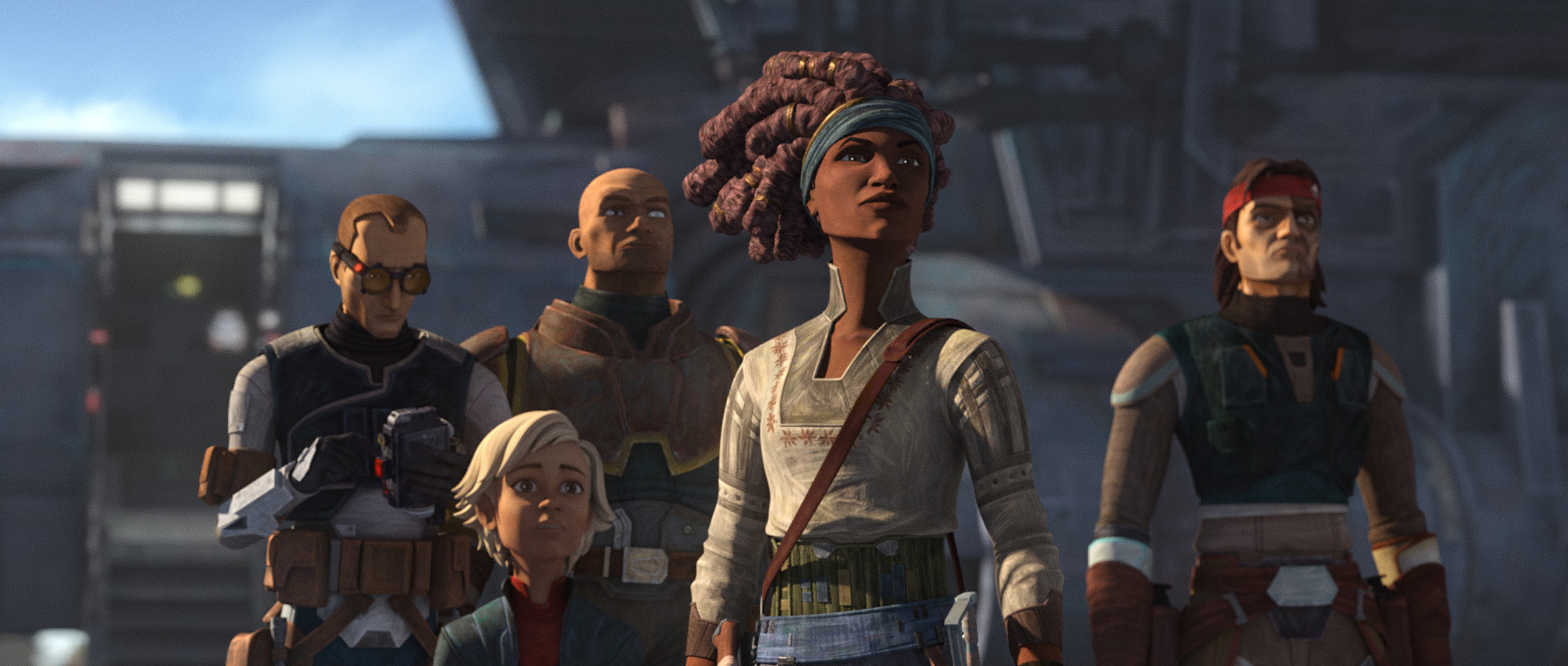
    (L-R): Hunter, Tech, and Wrecker in a scene from “STAR WARS: THE BAD BATCH”, season 2 exclusively on Disney+. © 2023 Lucasfilm Ltd. & ™. All Rights Reserved.

    It’s an excellent follow-up to last week’s installment, The Outpost, which saw Crosshair finally submit to a devastating revelation about the Empire. Similar in fashion, the Bad Batch have come to see their own allegiances in a new light, ditching Rhea Perlman‘s Cid and complimenting their former comrade’s journey in a subtly clever way. The parallel between the two storylines is likely far from accidental, with the show’s nearing finale kicking the series’ overarching plotlines into their final gears. One of the best aspects of Pabu, an episode that appears to be potentially one-off at first glance, is how effectively it pushes the narrative forward for its protagonists. Even if the Bad Batch don’t grow to call the planet home, their experience there opens up new ideas and helps both Dee Bradley Baker‘s Hunter and Michelle Ang‘s Omega consider other methods of living.

    Also of note is the ingenious bait-and-switch of Genoa’s role in the series. After several episodes of the character claiming not to be a pirate, something played as a joke every time, it turns out that she is not, in fact, a pirate. She truly is a “liberator of stolen artifacts”, as she puts it, and an advocator of the downtrodden. This reveal works in a few ways. It’s surprising and endearing, yes, but it’s also another notch in The Bad Batch‘s allegorical belt. From the start, the series has made no false pretenses about its intentions to portray the “soldiers post-war” dilemma, and refugees are a large part of that conversation. It’s truly very intriguing to see The Bad Batch manage to tie another character, one who seemed to be outside of the thematic elements of the show, into the grander image.

    Overall, Pabu is a solid half-hour of television. It’s whimsical in its ideals and thrilling in its execution. The Bad Batch has really hit its stride in the back half of this season, and it really feels as though the show is leading to something special. Hopefully, it can stick the landing.

  • REVIEW: ‘The Last of Us’ Finale Makes A Hard Call

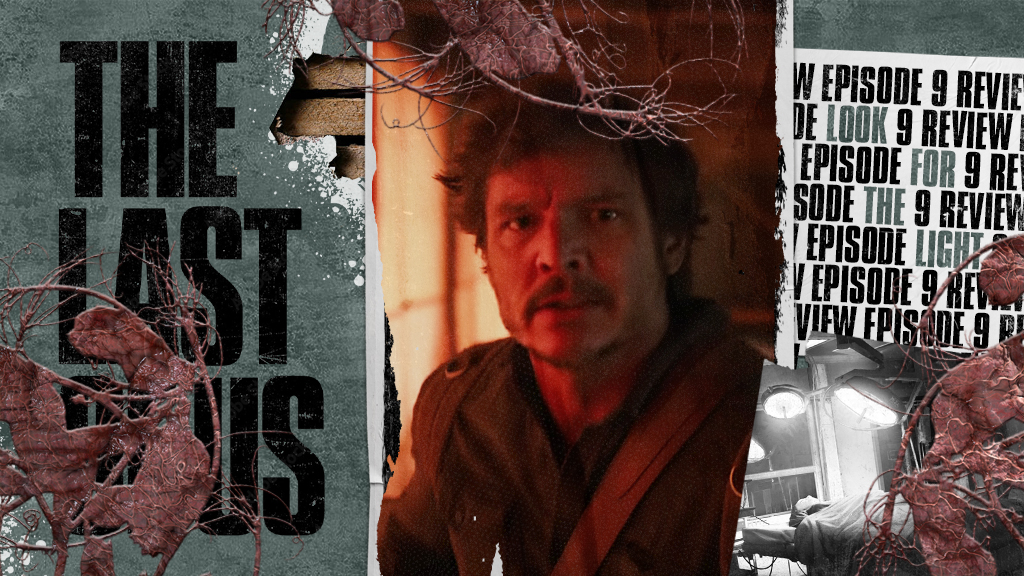
    REVIEW: ‘The Last of Us’ Finale Makes A Hard Call

    *SPOILERS*

    Christopher Nolan‘s Dark Knight films are nothing if not quotable, but there’s perhaps one line that rings truer than most. “It’s not who you are underneath, it’s what you do that defines you.” Spoken as a principle reminder to Christian Bale‘s Bruce Wayne in Batman Begins, the dialogue is just as relevant to Pedro Pascal‘s Joel Miller in the shocking finale of HBO’s The Last of Us – a series that survives on the actions of love and, more importantly, their consequences. The show spent its entirety building the relationship between Joel and Bella Ramsey‘s Ellie to substantiate a wildly controversial, yet immensely effective, ending that will come to redefine its characters and recontextualize the season for all time.

    From the very beginning of The Last of Us‘ 9-episode run, showrunner Craig Mazin and franchise creator Neil Druckmann have emphasized their desire to portray a world filled with grey areas and difficult decisions. The idea of making a hard call, specifically one that may not be morally correct, for the sake of love has been woven into the series’ DNA and made visible in nearly every installment. Whether it be Tess’ final stand, Bill’s choice to drink the wine, Henry’s sell-out for medicine, or even David’s cannibalism, viewers have been shown over and over again what people are capable of when the life of someone they care about is on the line. It’s the fabric that holds The Last of Us together, and the through line that’s pushed each episode past the point of decency. As such, it’s only fitting that the season finale, titled Look For The Light, confront the topic head-on, putting both Joel and the viewers at home in a near-impossible predicament and forcing them to sit with the outcome after it’s all said and done.

    Those who played the original game may have seen it coming, but for first-time watchers, Joel’s ultimate decision to choose Ellie over a universe was likely a heartbreaking surprise. The minds behind the show did an excellent job of seeding the climactic moment beforehand, giving the duo a collection of sweet moments as a lead-in to demonstrate how strong the connection between Joel and Ellie has become and give further evidence of Joel’s thought process. They even successfully adapted one of the game’s most iconic scenes, with the pair encountering giraffes in Salt Lake City, to make a point of Ellie’s innocence and the beauty the world stands to lose. Pascal‘s performance is exquisitely desperate throughout, at first as a wanting father and later as a wounded protector, injecting the episode with the appropriate amount of distress in an underlying, ever-present fashion.

    The true genius of Look For The Light, however, lies in the subtle way it compares two separate reactions to the same difficult decision. With Ellie unconscious for the majority of Joel’s monumental actions, the episode finds itself needing someone else to act as a foil for the protagonist. The season has spent much of its time convincing viewers of Joel and Ellie’s motives, and that’s not easy to shake. It makes people far more apt to root for Joel’s murder spree, saving a character they love, without considering the viewpoint of the other side. The magnitude of what Joel’s done cannot fully sink in unless there’s someone to present an alternative route, and for the audience to actually respect that secondary opinion, the character who vouches for it must be one with a decent amount of credibility. As she did in the original game, Merle Dandridge‘s Marlene is the one who brings that presence to the table.

    Joel and Marlene are two very different types of survivor. Joel, as has been stated countless times, is a protector. In his mind, he exists solely to keep the ones he loves alive. There is no world but his own, and anyone who challenges that is merely an obstacle. Marlene, on the other hand, is fighting for something bigger. She’s trying to revive the planet, an end goal she feels justifies the sacrifice of anyone it may require. It’s a wonderfully dramatic parallel that’s rich for dissection and gives the episode that signature extra layer fans have come to both expect and admire. While this climactic face-off has always been integral to The Last of Us, the finale episode is able to do something with it that Druckmann‘s initial version of the story simply wasn’t allowed to. After numerous references, the extent of Marlene’s ties to Ellie is revealed, and it does wonders for the final moments of the first season.

    Look For The Light opens with the first-ever glimpse at Ellie’s mother Anna, played by Ashley Johnson (who brought Ellie to life in the games), and gives Marlene’s decision to end Ellie’s life an immense added weight. Druckmann has been attempting to grant Anna’s story a space for nearly a decade, and this episode might have been the perfect place to finally place it. The sequence is haunting, further emphasizing the damage even a single Infected can do, and although probably not the full scope of what Druckmann would like to explore with Anna’s character, it’s exactly what’s needed for the hour at hand. The audience gets a peek into the relationship Marlene shared with Anna and a much better idea of what Ellie means to the former. Present for her birth and now the would-be harbinger of her death, despite a promise made to a dear friend, the difficulty behind Marlene’s decision is now clear.

    So, when Joel’s disquieting rampage through the hospital inevitably ends with a confrontation between Marlene and himself, it’s the kind of storytelling payoff that dreams are made of. An entire series focused on the survival of one girl, coming down to two powerful forces who had both been assigned to protect her. One has grown willing to take her life for the larger majority, and the other has grown willing to murder countless innocents to ensure she stays alive. Neither character is entirely in the right. It’s a problem with no real solution, the perfect final example of The Last of Us‘ cherished grey area.

    Ellie, on the other hand, is robbed of her agency. As has always been her draw in life, she is not allowed a say in her own future. A shepherd, once again sedated as a sheep. Every major plotline culminates in these closing moments, punctuated by the last idea left unaddressed – consequence. Joel makes the most dramatic decision of his life, and then to salvage what he has left, he lies. The lie, and the anxiety of what might come with it, is something Joel and the folks watching from home will be forced to sit with for the foreseeable future. It’s been a miracle of a season, and the finale is appropriately breathtaking. One can only hope it’s made the same impact it had on gamers in 2013.

    Just make sure to remember – when you’re lost in the darkness, look for the light.

  • Book Review: ‘Everything is Fine: Volume 1’

    Book Review: ‘Everything is Fine: Volume 1’

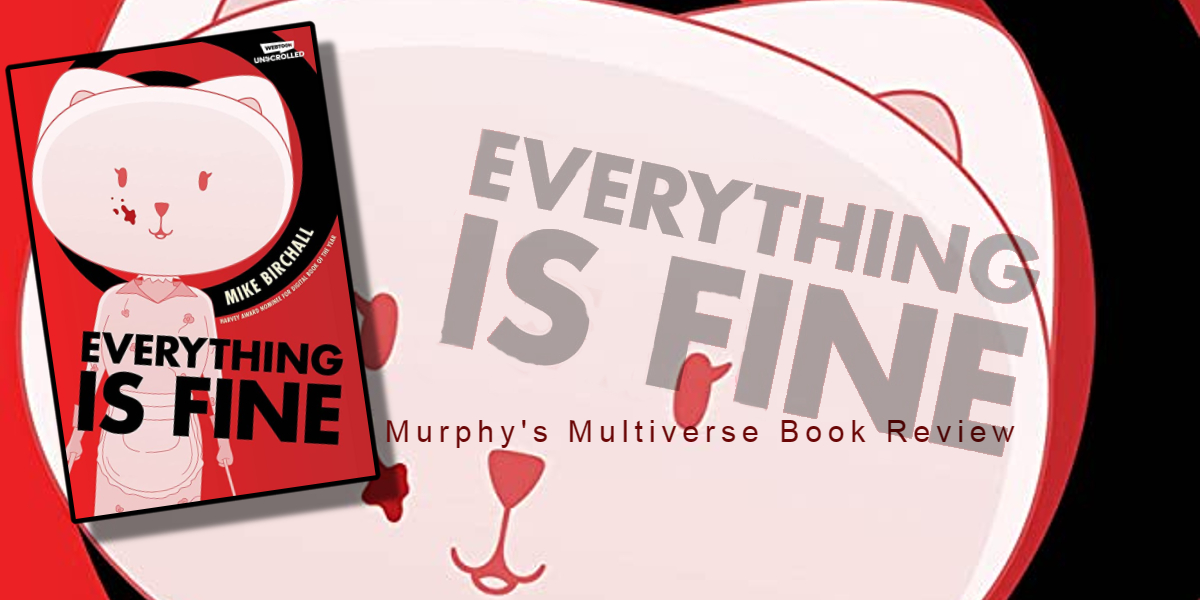
    Every now and again you’ll stumble upon a book that pleasantly surprises you. This is Everything is Fine. I admittedly requested to review the book simply because of the cover, not even bothering to read the description. I had no clue what I was about to read when I sat down to read it, and I’m grateful I knew nothing going in. This book will take readers on a strange trip and leave them eagerly awaiting the next volume with the final page.

    To keep it simple without spoiling anything, Everything is Fine takes place in an idealistic world where everything is, well, fine. Until it isn’t. While the concept of Everything is Fine isn’t necessarily anything new, author Mike Birchall manages to create a wonderfully confusing and disturbing world in such few pages… it’s hard not to be eager to see how it’ll all end. Especially as the ending is a huge cliffhanger.

    There will be plenty of questions to be asked by the end of the story and very, very few answers provided. And while that may be frustrating with most stories, when it comes to Everything is Fine, the lack of answers actually works in its favor. It helps to keep the mystery alive and allow Birchall to craft a truly disturbing story that readers are definitely not prepared for.

    As delightful as this book is, the artwork can be distracting. It’s incredibly plain. In fact, it kind of reminds me of Minecraft at times. While the simplistic art style does sometimes help to sell this world crafted by Birchall, it may be hard for the readers to truly appreciate the story being told — to make them want to keep turning the pages. It’s the only true drawback with this book.

    EVERYTHING IS FINE is a book you’ll want to go into blindly. Don’t read the description. Avoid spoilers as much as possible. Just dive right into this strangely intriguing story of this “perfect” world and enjoy the ride.

  • REVIEW: ‘Chang Can Dunk’ is Worth a Shot

    REVIEW: ‘Chang Can Dunk’ is Worth a Shot

    Chang Can Dunk is the latest Disney film that explores what it means to live in high school as an underdog and the overall challenge of somehow growing up while finding your place in the modern world. The main storyline set seems quite simple with 16-year-old Chang making a bet with the popular kid that he can slam dunk within a few weeks just to prove himself to his peers. Yet, while the story seems like your typical sports-drama, director Jingyi Shao uses it more as a template to explore some heavy-hitting themes.

    On the surface level, Chang Can Dunk seems rather superficial as its main hero portrayed by Bloom Li goes out of his way to impress a girl. As the popular basketball kid starts hitting on her, he awkwardly tries to get her attention before making a bet he can’t really back out from. It becomes a classic underdog story of a young kid proving to himself and everyone around him that he’s not worth ignoring.

    Without giving away any major spoilers, what makes this Disney+ original so interesting is that the film keeps its focus tight on Chang’s overall character arc. We don’t get this happy-go-lucky home life as his mother is overworking herself and doesn’t show any active interest in what he cares for. We don’t often see a mother and son that drifted apart as much as they did, but their acts of desperation in how they show concern for the other.

    Technically, Chang’s struggle of connecting with his mother is at the core of the story, and it’s also the strongest element at play. It’s similar to how Turning Red challenges the overprotectiveness of parents that can end up pushing them away, or simply alienating them from the high expectations put upon them. There’s also the cultural relevance of that pressure that adds to the overarching message.

    We see Chang build a rather strong support system around him with some of the highlights just being him hanging out with his best friend Bo (Ben Wan), his mentor De-Andre (Dexter Darden), and Kirsty (Zoe Renee). It’s especially sweet to see the way he connects with De-Andre, who was a former pro-basketball player that lost his dream, and the way it further strengthens the dangers of popularity and fame.

    The film has a strong focus on going viral online, and it’s not just a tool for some creative shot composition. They truly go all out with the concept, as Bo becomes this vocal point of evolving the way he films online videos that just add a few creative and unique shots to make the film stand out. Overall, the film has some really strong shots and makes good use of empty space to highlight headspace of Chang at times. Of course, it’s also carried by Bloom Li‘s performance who can sell the highs of falling into the beauty of stardom and the depression of feeling alone.

    The only real drag on the overall story is the cliché it is built around. It feels like a project that wants to subvert the usual stories we see in high school-focused sports dramas. The moment a classic trope is unveiled, the film actually surprises by pushing the story into a whole new direction focusing on the actual core narrative that was more sidelined up to that point. We don’t harp too long on the misbegotten actions, as eventually, people forgive those they care about. It’s sometimes family that has the hardest time forgiving themselves.

    The message overall is powerful and makes the film stand out. It just struggles through the clichés at times and ends up dragging out the reveal that just sticks too much to the cliché. It had me dreading the moment due to how predictable it was and it still happened exactly how it is set up. It’s saved by what happens after but it still feels like it fell into the cliché pool rather than just dipping its toes.

    The film is definitely worth a shot for those that love these types of films, especially once the story starts coming together. Jingyi Shao definitely offers an inspiring story that should not be missed out on. It may sometimes fall a little too far into clichés and isn’t the slam dunk it truly could be, there’s something special about this project that makes it worth watching. It’s a perfect watch for a young audience that may not yet know the dangers of online fame and trying to fit in.

  • REVIEW: ‘The Bad Batch’ Thanks Its Good Soldiers for Their Service

    REVIEW: ‘The Bad Batch’ Thanks Its Good Soldiers for Their Service

    Good soldiers follow orders. The motto of the Empire’s Clone Army and the basis of the rift between CT-9904 and his Bad Batch brothers, those words are as etched in the minds of fans of Star Wars animated series nearly as deeply as in the minds of the clones. Throughout the course of Star Wars: The Clone Wars and The Bad Batch, “good soldiers follow orders” has been the rote and retaliatory response given any time evil deeds were done by Clones in the name of the Empire. Of course, following orders in the service of evil is still doing evil (indeed the phrase seems to be a reference to the “superior orders” defense that Nazi war criminals attempted to use during the Nuremberg trials, continuing a long-running allegory within the Star Wars universe) and the phrase was never going to hide the evil acts.

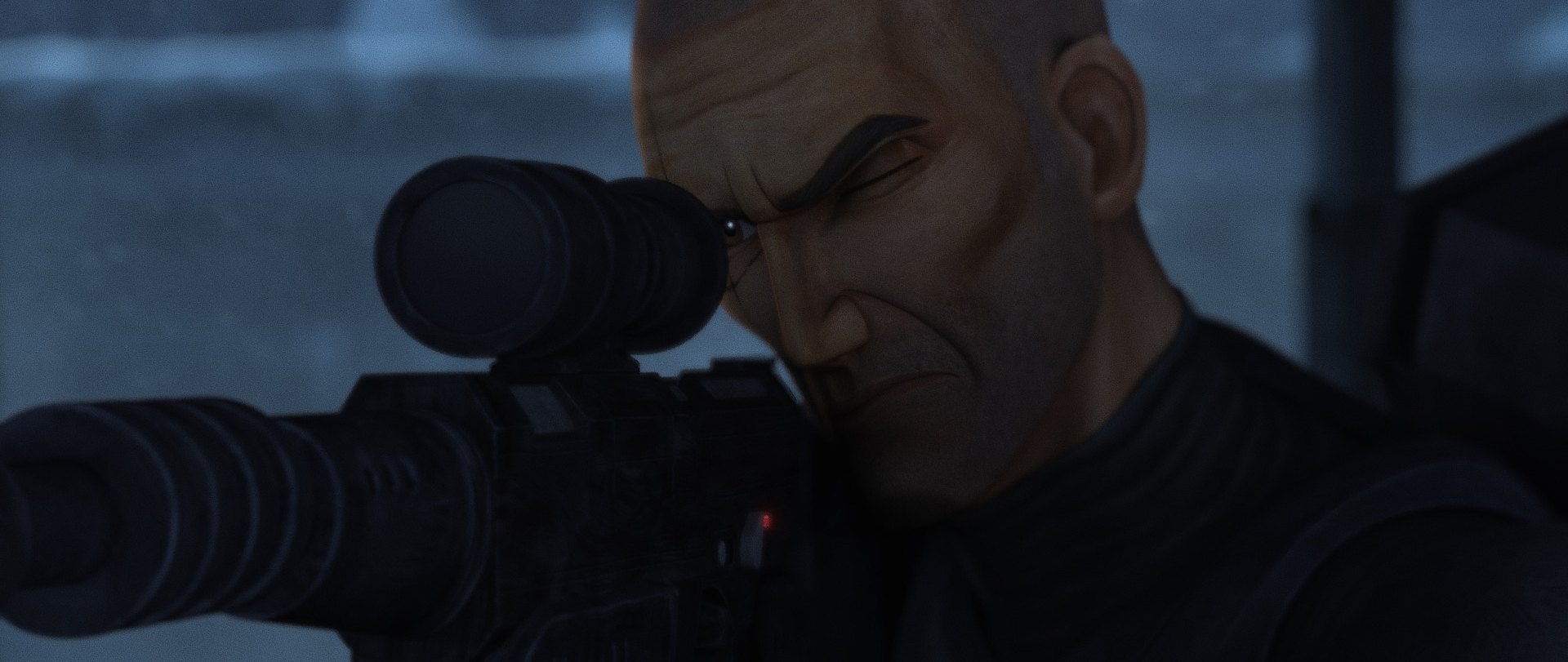
    Crosshair has always been severe and unyielding. It is his nature. You cannot change that. He cannot change that.

    Tech, The Bad Batch: Kamino Lost

    After a bit of a slow start, Season 2 of The Bad Batch has quickly gotten very interesting following Emperor Palpatine’s Defense Recruitment Bill. The bill not only ushered in the era of the Imperial Stormtrooper but also emphatically ended the era of the Clones, who for all their order following, were decommissioned. The latest episode, The Outpost, is a beginning-to-end indictment of the Empire’s dismissal of the Clones and a parabolic reminder that you reap what you sow. At the center of it all is Clone Force 99’s “do what needed to be done” loyalist Crosshair who by the end of the episode finds himself in a very bad place under the special care of the series’ new bad lad, Dr. Hemlock.

    I am a soldier of the Empire.

    Crosshair, The Bad Batch: The Solitary Clone
    Lieutenant Nolan in a scene from “STAR WARS: THE BAD BATCH”, season 2 exclusively on Disney+. © 2023 Lucasfilm Ltd. & ™. All Rights Reserved.

    Though it’s laid on pretty thick, the episode’s depiction of the dismal treatment of the Clones seems necessary as a teaching tool not for the audience but for Crosshair. From the moment the ennuyé Imperial Officer drones on to the Clones about their service to Crosshair’s mission to Barton-4 under the uber-douchey Lt. Nolan to the anticlimactic discovery of the purpose of that mission, the humdrum pacing of The Outpost lures fans into a bit of a trap: Crosshair gonna Crosshair. And then…he doesn’t.

    This is who I am.

    Crosshair, The Bad Batch: Return to Kamino

    Having a character go against his very nature, especially one whose nature has been the sole focus of nearly every interaction with the character since the show’s debut is no small thing. What’s more, having Crosshair betray that nature in order to kill Lt. Nolan over the death of a few “regs” symbolizes a near-total metamorphosis for the Bad Batch’s resident cynic. By pulling the trigger and killing Nolan, Crosshair followed his own orders and, by his own beliefs, is no longer a good soldier despite doing what he believed needed to be done. It would seem the fate of his brothers in Clone Force 99 is destined to intertwine with his once more as the new clone king, Dr. Hemlock, now has Omega in his sights. But will the reborn Crosshair soon have Hemlock in his?

  • REVIEW: ‘The Mandalorian’ Heads to the Mines of Mandalore for a Monstrous Measure of Mythos

    REVIEW: ‘The Mandalorian’ Heads to the Mines of Mandalore for a Monstrous Measure of Mythos

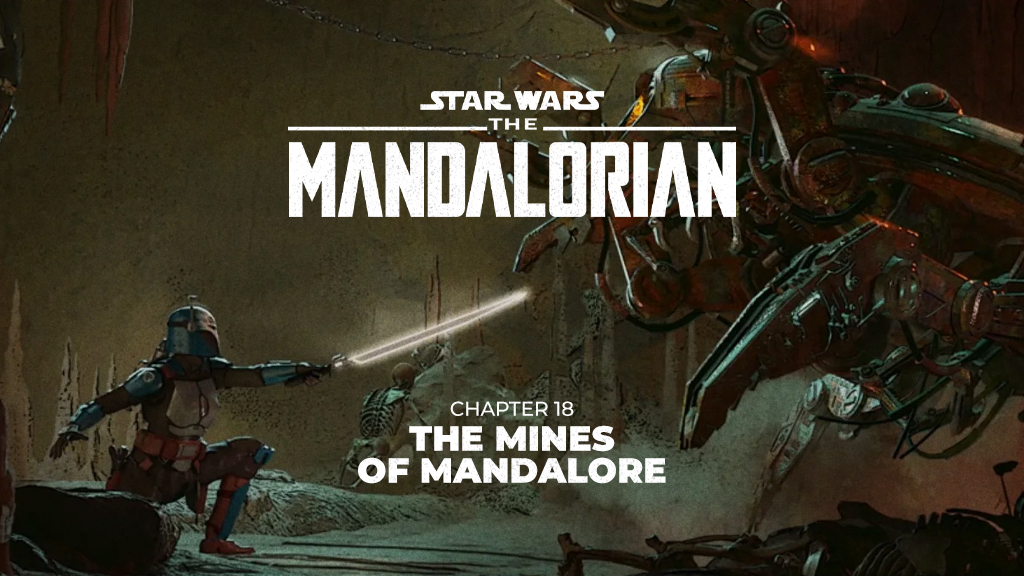
    Jon Favreau and Dave Filoni are playing the long game with The Mandalorian and an even longer one with the story of Mandalore. A location frequently visited and revisited in Star Wars: The Clone Wars and Star Wars Rebels, Mandalore–and its fascinating history, culture and politics–has always been integral to the larger goings on of the galaxy and taken a pretty bad beating along the way. Over the course of the first two seasons of The Mandalorian and the first season of The Book of Boba Fett, it’s been clear that Favreau and Filoni are building towards Mandalore’s return to glory but in Chapter 18 of The Mandalorian, The Mines of Mandalore, that return to glory begins in earnest.

    As has often been said, The Mandalorian is a slow burn; however, in retrospect, it has provided Star Wars fans, both subtly and overtly, with an incredible amount of information about Mandalorian culture. “This is the Way” doesn’t carry the same meaning it did 2.5 seasons ago (that’s counting The Book of Boba Fett as the .5) because the Way has become so well-defined to the audience through the experiences of Mando, Grogu, et al. Favreau and Filoni made a decision to let the intricacies of The Way of the Mandalore be discovered over time rather than force-fed to the audience. That decision has led to a clear understanding of the differences in culture between the Children of the Watch and the rest of Mandalorian society. No greater example of that rift exists than the relationship between Din Djarin and Bo-Katan Kryze and this Chapter exploits that rift expertly.

    Din Djarin’s visit to pouty Bo-Katan illustrates a key difference between The Children of the Watch and every other Mandalorian: faith. Against all odds, Din Djarin’s intentions to return to Mandalore and bathe in the Living Waters is an expression of the depth of his beliefs in The Way of the Mandalore; Bo-Katan’s dismissal of his quest–and her general malaise–is an expression of the lack of hers. While there’s been some controversy among fans around whether or not Din Djarin should be the one to reunite the great Houses of Mandalore and lead them to their renaissance, The Mines of Mandalore provides adequate evidence to suggest he may just be the guy. Though the depth of their zealotry seems to border on irrational, The Children of the Watch have kept the faith and Din Djarin’s experience in this Chapter rewards them for doing so.

    Chapter 5 of The Book of Boba Fett, Return of the Mandalorian, laid much of the groundwork for The Mines of Mandalore and the insane payoff within its final moments. Din Djarin’s road to redemption, as explained to him by The Armorer and Paz Vizsla, is presented as an unwalkable one. Now an apostate, his only path to being forgiven lies in the ruins of Mandalore which is believed to be uninhabitable. Moreover, the belief of the Children of the Watch is that Mandalore’s destruction is tied to a legend that points to Bo-Katan’s “undeserving” nature as the leader of the people; however, those same legends and songs, kept alive by the Children of the Watch’s adherence to The Way, prophesize a return to glory for Mandalore that will be heralded in by the rise of the Mythosaur, the heretofore unseen beasts of legend.

    2.5 seasons of The Mandalorian have partially conditioned the audience to see things much in the way they are seen by Bo-Katan. Though the Children of the Watch, exemplified by Din Djarin, continue to hold their faith as the galaxy closes in around them, how can their return to glory ever occur when it is tied to the rise of an extinct beast of myth? And Chapter 18 provides the spine-tingling answer to that question in all its glory. It’s a payoff that only works because Favreau and Filoni have let the audience slowly build their own opinions about The Way of the Mandalore and the nature of Din Djarin’s quest to redeem himself. Those who kept the faith, like Din Djarin, now see the fruits of their faith and that the future for Mandalore is bright and also probably involves Din Djarin wielding the Darksaber while riding on the back of a Mythosaur sometime very soon. It’s a story 13 years in the telling and nearly 50 years in the making and it is just getting good.

  • BOOK REVIEW: ‘Batcat’ by Meggie Ramm

    BOOK REVIEW: ‘Batcat’ by Meggie Ramm

    I wasn’t entirely sure what to make of BATCAT. Between the cover and the title, though, I was sure this would be a story I’d enjoy… and I was right. BATCAT is a story for all-ages. It follows Batcat, who as the name would suggest, is part bat and part cat. Batcat is happy to stay home, play video games and eat junk food… but when a mysterious ghost shows up and ruins Batcat’s day-to-day routine, they set out on a journey to try and get rid of the pesty ghost. But along the way, Batcat will learn that there is more to life – and the people and beings that we meet along the way – that will leave a lasting impression on them when all is said and done.

    BATCAT might seem like a silly book upon first glance. A huge marshmallow-type creature that is part cat and part cat? Sure, it can seem ridiculous. But it’s really more than a silly little story. Throughout the story, Batcat has plenty to learn. Eager to be gone of his new ghost friend, Batcat is quick to jump to conclusions about this new character that they haven’t bothered to really get to know. And rather than take the time to do just that, Batcat immediately seeks to get rid of their problem guest. But as Batcat will quickly learn, we can’t just make presumptions about people. While it is easy to do so, it’s vital to remember everyone is more than just one thing – we are all more than meets the eye. For Batcat, it’s a lesson they only learn after realizing they’re not all cat nor are they all bat.

    BATCAT is the type of book that should be stored in classrooms. Readers of all ages will devour this cute little graphic novel. Not only does it teach readers compassion, but it also includes plenty of humor with plenty of cute drawings.

    Note: The ARC I received for review was in black and white, which did make it hard to really read at times. However! The final copy of BATCAT will be in full color, and the sneak-peek at the coloration for BATCAT only seems to improve on this adorable story.

    BATCAT will be released on March 28th through Amulet Books.

  • REVIEW: ‘The Last of Us’ Separates Shepherd From Sheep

    REVIEW: ‘The Last of Us’ Separates Shepherd From Sheep

    The latest episode of HBO’s The Last of Us implies there are two types of people in the apocalypse – natural-born leaders and those that follow them. Or, as the Machiavellian cannibal preacher David explains it, fearless shepherds and their simple sheep. This week’s installment of Craig Mazin‘s acclaimed video game adaptation is almost entirely about one thing: proving Bella Ramsey‘s Ellie is among the former, and giving her the most traumatic fulfillment of the status it possibly can. Trapped for the first time without Pedro Pascal‘s Joel, a lone Ellie is forced to fight her way out of an overwhelmingly sticky situation, and the resulting hour of television is a striking look at the immense brutality of a world gone mad.

    Titled When We Are In Need, the eighth episode of The Last of Us is another incredible chapter in Ellie’s long developmental journey. Thus far, throughout her travels, Ellie has been consistently warned about the horrors of humanity, and the far more monstrous consequences their actions have when compared to the Infected. Even so, she has continually underestimated the threat of people, often willing to engage in risky interactions that Joel would not. Until this point, it’s served as a sign of her age. A childlike innocence obtained from a youth behind protected walls. When We Are In Need, however, aims to break that innocence, and it does so with sickening barbarity and some pretty bleak implications.

    If the first half of the season was about solidifying the importance of Ellie’s relationship with Joel, then the second half has been about the validation of her capabilities as an individual. She is a survivor, and she will do anything to survive. Not only that, but she’ll do anything she can to make sure the people she loves survive too. This makes her a force, and one not so easily reckoned with. It’s an attribute that almost everyone she’s come across has been able to see. FEDRA military officers, Storm Reid‘s Riley, Merle Dandridge‘s Marlene, Anna Torv‘s Tess, Rutina Wesley‘s Maria, and now Scott Shepherd‘s David have all found themselves impressed by – and afraid of – what Ellie can do. The only real question has been whether or not Ellie can see her potential herself, having always been able to mask it behind the protection of others.

    When We Are In Need does an excellent job of giving Ellie’s demons a shocking coming-out party, effectively shattering any illusions she may have had about the post-apocalyptic world and the people living in it. The slow building of tension between her and David is a masterful way of making her ultimate, violent breakdown feel more jarring and impactful. Had the episode taken the same route as the game, with Ellie slaughtering most of David’s forces before their climactic showdown, the viciousness of her eventual pyrrhic victory would have been undercut by each of the numerous preceding kills. Instead, viewers are made to watch in horror as Ellie unreservedly chops a man to pieces, tragically revealing herself to be exactly what said man thought she was. It’s a disturbing moment of triumph that promises to haunt the show, and its audience, going forward.

    On the other side of the same clever coin, allowing Joel to take the role of “resort slasher” role from Ellie helps reaffirm his dark side to the audience, who may have been growing too accustomed to his warm, paternal tendencies the last few weeks. Joel is not an altruistic person, a defining trait that the series had begun to stray away from in recent episodes. Reminding viewers of this also has the effect of mirroring his actions with Ellie’s. A man too far gone, and a daughter on the verge of joining him. Again, these characters and the relationship between them define The Last of Us in every way, and it’s rather admirable how Mazin and franchise creator Neil Druckmann can so expertly keep finding ways to make this apparent.

    Ingeniously, however, Joel is not the only character used to reflect Ellie in the episode. David, played to sadistic perfection by the aptly named Shepherd, is essentially another warning for her future. A self-proclaimed shepherd, he correctly points out that Ellie is dangerous, and is likely to one day become a leader herself. His downfall, aside from being an obviously terrible human, is not realizing the intensity of Ellie’s attachment to Joel, who she is already modeling herself after. While there are likely very few timelines in which Ellie ever joins David’s legacy, his commitment to doing whatever he deems necessary to survive and keep his followers alive – admittedly, through cannibalism – is not something foreign to Ellie. Their conflict, and his demise, is a brilliantly disgusting way for the story to tackle Ellie’s growth, and hint at where she could end up down the line.

    With only one episode left, it will be interesting to see how the themes introduced and continued in When We Are In Need play out. The established ending of the original game, on which this first season is based, seems logical when considering what’s been set up here, but there’s still time for the series to pull off a surprise and give viewers something they aren’t expecting.

  • REVIEW: ‘The Mandalorian’ Reminds Us What’s Out There in the Galaxy Far, Far Away

    REVIEW: ‘The Mandalorian’ Reminds Us What’s Out There in the Galaxy Far, Far Away

    The Mandalorian has never been in hurry. For the most part, concerns about the pacing of the series have died down a bit over the years as fans seem to be able to accept it for what it is. Part of that acceptance has likely come from the fact that “filler episodes” have often turned out to be more than filler an episode or two down the road. With Chapter 17 of the series, The Apostate, it seems as though Jon Favreau and Rick Famuyia chose to kick off the third season of The Mandalorian with what feels like a “filler episode” but also feels like something a bit more.

    From start to finish The Apostate seems hellbent on reminding us (both directly and indirectly) of what’s out there in the vastness of the galaxy. The Watch. Greef Karga. Kowakian monkey-lizards. Pirates. IG-11. A host of Anzellans. Bo-Katan. We’ve seen it all before; however, as they hopscotched around the galaxy and caught up with familiar faces from their own story, Din Djarin and Grogu’s adventures almost certainly led fans astray on more than one occasion. As they journeyed through hyperspace Grogu’s first encounter with Purrgil reminded Star Wars fans that there are other stories left to be finished in the Filoni-verse. And certainly, no Star Wars fan worth their weight in credits didn’t wonder for a beat or two when Hondo was going to walk around the corner during the dispute on Nevarro. The decision to intentionally and indirectly bring Ezra Bridger’s ongoing narrative to mind in the season opener of The Mandalorian seems a fairly clear indicator of just how central the series is to the New Republic universe that Favreau and Dave Filoni are building but it also makes the galaxy far, far away feel a bit smaller than it probably should, even if for only a few moments.

    So while it’s a little awkward to kick off a fresh new season in first gear–indeed neither The Mando nor Grogu was much changed by the events of The Apostate–and fans of the series probably feel a bit indifferent about bits and pieces of the episode (did we really really need an update on Cara Dune?), the episode does provide plenty of opportunity for contemplation about just how important the story of Din Djarin and Grogu truly is in this New Republic Era. In fact, the episode is filled with an almost overwhelming amount of small and important details buried in exposition. So while The Apostate feels familiar and sluggish as it retreads old ground, it seems to be laying the foundation for an entire suite of New Republic adventures coming to Disney Plus this year. And, if past precedent for the series is to be followed, Chapter 18 will turn on the jets anyway.