Category: Reviews

  • REVIEW: ‘The Last of Us’ Puts An Emphasis On ‘Us’ In Tender Fourth Episode

    REVIEW: ‘The Last of Us’ Puts An Emphasis On ‘Us’ In Tender Fourth Episode

    It’s worth restating every week: The Last of Us, for better or worse, is a love story. In a world full of monsters, it’s easy to forget that the series – HBO’s acclaimed adaptation of Naughty Dog’s original 2013 video game classic – lives and dies with the bond between two people. Pedro Pascal’s Joel and Bella Ramsey’s Ellie are the beating hearts of the franchise, and with the show’s intimate fourth episode, they finally take center stage as the sole beneficiaries of showrunner Craig Mazin’s genius character development plan. While previous episodes have utilized excellent supporting characters as a means of tangentially building Joel and Ellie’s relationship, Please Hold My Hand leaves them all alone for the first time and acts as a much-needed segue into the story’s brutal following chapter.

    What Mazin and franchise creator Neil Druckmann have been able to do with The Last of Us in an episodic format is nothing short of astounding, and an installment like Please Hold My Hand is a perfect example of why. As previously stated, Joel and Ellie have thus far had a string of semi-friendly faces to help move their time together along. Each one, bottled into its own episode, served a distinct purpose in constructing the series’ foundational connection between its leads. Merle Dandridge‘s Marlene brought one into the other’s life, Anna Torv‘s Tess forced them to work in conjunction, and Nick Offerman‘s Bill reminded them of their purpose. Now, four episodes into the season’s run, the duo needs some time to grow without an escort. Otherwise, when the going gets tough down the open road, their inevitable drama won’t be believable – or worse, it won’t feel earned.

    Luckily, Please Hold My Hand knows exactly what it needs to do, and spends much of its runtime fixating on the little things. At least half of the episode is composed of Joel and Ellie proving how charming they can be as a unit, and viewers are right to eat it up. It’s amazing just how far a short conversation about coffee, or a running gag with a terrible jokebook, can take the characters involved. HBO’s The Last of Us has the luxury of expanding on moments in time that the original game could not, something that has often led to a much more authentic feel on screen, and its fourth episode does so once again to great effect. By giving viewers plenty of time with Joel and Ellie on the road, simply learning to live with each other, the eventual trap door that takes the ground out from under them hits with far more velocity.

    Joel, in a surprise to nobody, very quickly begins to reenter a paternal mindset, and Ellie, looking for someone to care about her, leans into the burgeoning relationship with everything she has. At the start, neither of them wanted the other, but Please Hold My Hand expertly demonstrates the primal nature of humanity and its desperation for tribe and compassion. The episode is, for all intents and purposes, a miniature of the series as a whole. A study of people and their love for one another, as well as the consequences that come with that deeper, complex emotion. It’s genuinely beautiful to watch, and for a brief instant, it seems as though Joel and Ellie have found some sort of temporary bliss. Unfortunately, as should be apparent by now, nothing good lasts forever in a world ruled by nightmares.

    The keyword of the episode – people – has already been used multiple times. Notably, this is the first entry in the series not to feature any infected, and thematically speaking, that feels as though it must be purposeful. Please Hold My Hand introduces the show’s first real human antagonists, a violent group of Kansas City survivors led by Melanie Lynskey‘s Kathleen, not long after Joel makes it clear to Ellie that people will be the biggest threat standing between them and their goal. Thankfully, however, these characters aren’t just one-note ravagers. Instead, they appear to be a group haunted by what they perceive as wrongdoings of the past, much like the protagonists themselves. More humans were broken by their love, and are now driven to commit heinous acts because of it. The episode makes an effort to portray the “Hunters” (as they’re called in the game) parallel to Joel, blurring the line between hero and villain and hammering home the point at hand.

    Joel, as it’s shown, is someone who has done very bad things and would do them again. Ellie, as it now seems, is on her way to matching that sentiment. Please Hold My Hand does an incredible job of getting in the legwork necessary to make the next few episodes all the more impactful and ends on a note that should be familiar to longtime fans of the game. The next few weeks promise to be a non-stop, brutal ride through the apocalypse, so viewers should cherish the tender moments they receive here. They won’t be the last, but they might just be the most important.
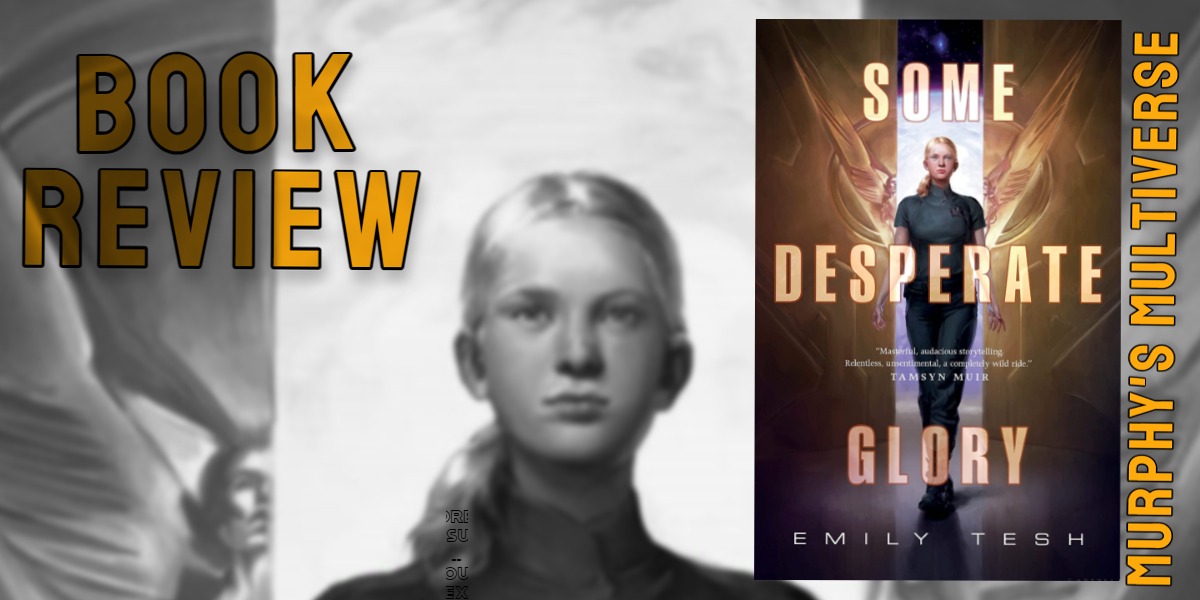
  • BOOK REVIEW: ‘Some Desperate Glory’ by Emily Tesh

    BOOK REVIEW: ‘Some Desperate Glory’ by Emily Tesh

    Some Desperate Glory is an emotional rollercoaster of a book, but it’s a ride readers will be glad they’ve taken when all is said and done. It is a fast-paced, action-packed space story. You will laugh. You will cry. You will question what you’re willing to do when the world is dependent upon you. More importantly, though, this book will break your heart and somehow put it back together at the same time.

    Some Desperate Glory by author Emily Tesh tells the story of a young girl named Valkyr, aka Kyr, and her life aboard Gaea Station. Earth as we know it is long gone, and Kyr and the rest of Gaea Station are humanity’s only hope at survival in an ongoing war against an alien race. It sounds like a simple premise, but there’s so much more to this story.

    Kyr is, admittedly, a pretty unlikable character for most of the book. She’s stubborn, unrelenting and gullible. It can be frustrating as the entire book is told from her point-of-view, but we get to see her grow and became something more. Is she likable in the end? Yes and no. She’s still an incredibly frustrating character, but there’s so much growth by the final pages, that her issues are easy to forgive. She’s a perfectly flawed character who is forced to learn how to live when faced with the possibilities of a world beyond what she knows.

    While a strong story, though, there are some hiccups in the book. The worldbuilding can be lacking occasionally, and sometimes, the way the story jumps around can make it difficult to follow. (This is an issue that happens later in the book.) But Tesh’s writing makes up for any shortcomings. She knows how to tell a fascinating story with complicated characters that you’ll both love and hate.

  • REVIEW: ‘The Bad Batch’ Brings Back The Chosen One

    REVIEW: ‘The Bad Batch’ Brings Back The Chosen One

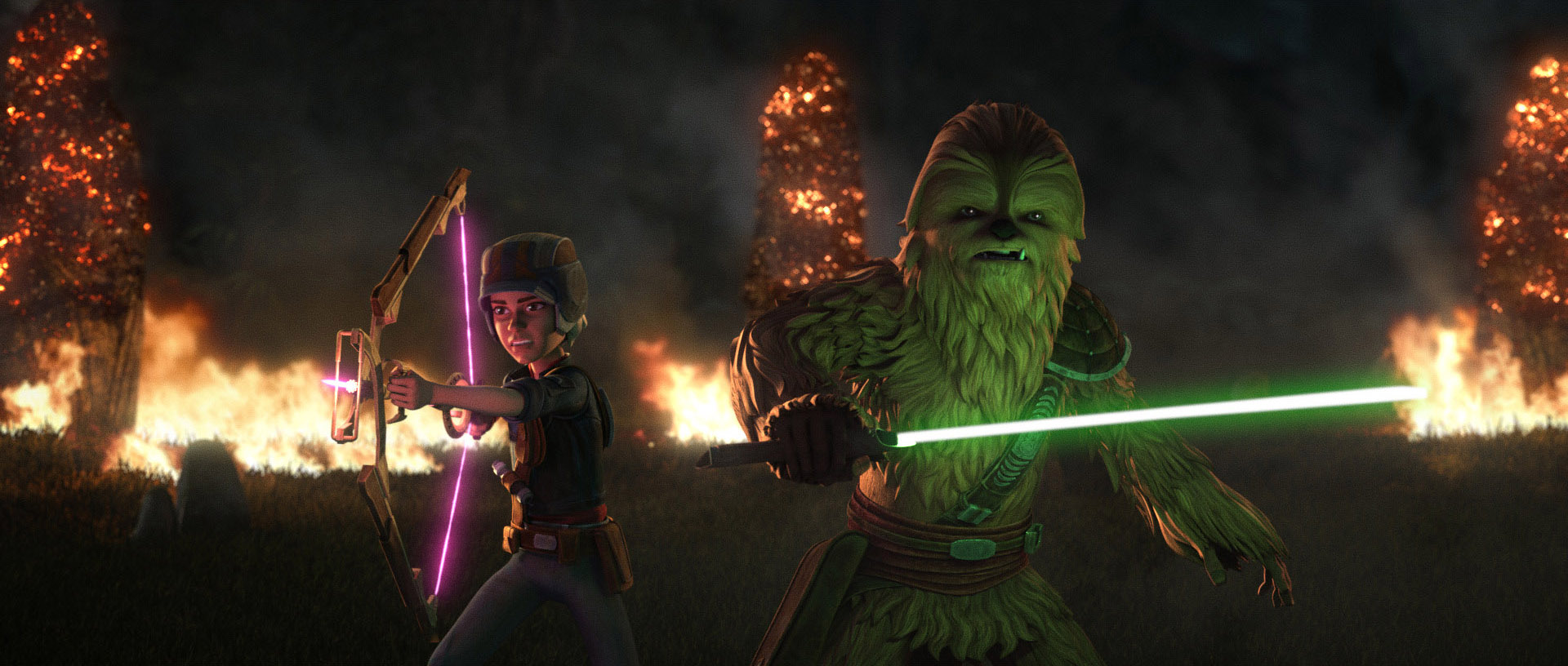
    When Star Wars: The Clone Wars was canceled abruptly in 2013, it left numerous planned storylines laying on the drawing board. One of these unused concepts, perhaps the best of the lot, was set to focus on the kindly Wookies and their homeworld of Kashyyyk. The abandoned four-episode arc would have explained Yoda’s vague Episode III – Revenge of the Sith line about having “good relations” with the planet and its people, teaming the famed Jedi Master with both the Bad Batch and the Wookies in a battle against the Separatists and their Trandoshan allies. In this week’s episode of Star Wars: The Bad Batch, this plot is revived, albeit condensed, and replaces Yoda with a far more important figure from George Lucas‘ lore – Gungi, the legendary Wookie Padawan.

    Titled Tribe, the sixth episode of The Bad Batch‘s second season is, without a doubt, one of the series’ best overall. Admittedly, the return of Gungi, who hasn’t been seen since his brief introduction in The Clone Wars‘ fifth season, plays a huge role in the amount of palpable joy felt throughout the 25-minute installment. Simply put, it’s great fun to watch him do anything, and it’s honestly sort of shocking it’s taken this long for him to pop up again. While it’s always enjoyable to see unique characters achieve worthwhile screen time, using one like the Force-sensitive Wookie, who has deep connections to multiple aspects of the universe he exists in, as a means of mixing fan service with actual thematic storytelling is just a stellar move to make.

    Tribe makes an obvious effort to compare Gungi with its own Omega, crafting a mirrored experience between the two young heroes as lost members of their respective tribes (that’s the title!), struggling to be innocent in a world rebuilt for the immoral. As unsubtle as it is, the theme works wonderfully, inserting a simple message into the midst of some pretty cool, fairly grand world-building. It’s enough to make a viewer wish The Bad Batch spent more time fleshing out arcs, as opposed to moving on so quickly between episodes. The original four-episode plan contained a multitude of details and features that could have easily transitioned from The Clone Wars era to the time of its sequel series, but instead, the writers packed as much as they could from that longer pitch into only a single entry, resulting in a somewhat rushed adaptation of a larger tale.

    (L-R): Hunter, Omega, Tech, Gungi, Wrecker, Echo, and Wookies atop Mylaya in a scene from “STAR WARS: THE BAD BATCH”, season 2 exclusively on Disney+. © 2023 Lucasfilm Ltd. & ™. All Rights Reserved.

    That being said, what actually makes it to the screen in Tribe is impeccable. Kashyyyk, which continues to be one of the Star Wars franchise’s best locations, creates a beautifully dynamic setting for the show’s protagonists to function. The Wookies’ connection to the planet’s wildlife, and its flora, help bolster the action sequences and set up some rather gratifying payoffs in the episode’s third act. Additionally, it looks pretty awesome when Wookies show up to fight Trandoshans on massive cats with bat-like ears. It’s the type of “wow factor” that Star Wars can fully lean into without betraying its defining thematic elements, and honestly, probably should happen more often. Also, Our Lord and Savior Gungi the Wookie Jedi finally coming into his own as a warrior and peacekeeper is the stuff dreams are made of and is likely to be exactly what Star Wars fans dream about after seeing the episode.

    With any luck, this will not be the last time audiences get a glimpse of Gungi and his (hopefully) soon-to-be-storied career, but if it is, it’s definitely a worthy send-off. Tribe is a solid grab bag of the action, emotion, and moralities that often compose the animated branch of Lucasfilm’s long-lived fictional galaxy, and both Gungi and the titular team of rebellious clones thrive for it.

  • REVIEW: ‘The Last of Us’ Third Episode Gives Us Bill & Frank’s Excellent Adventure

    REVIEW: ‘The Last of Us’ Third Episode Gives Us Bill & Frank’s Excellent Adventure

    *SPOILERS*

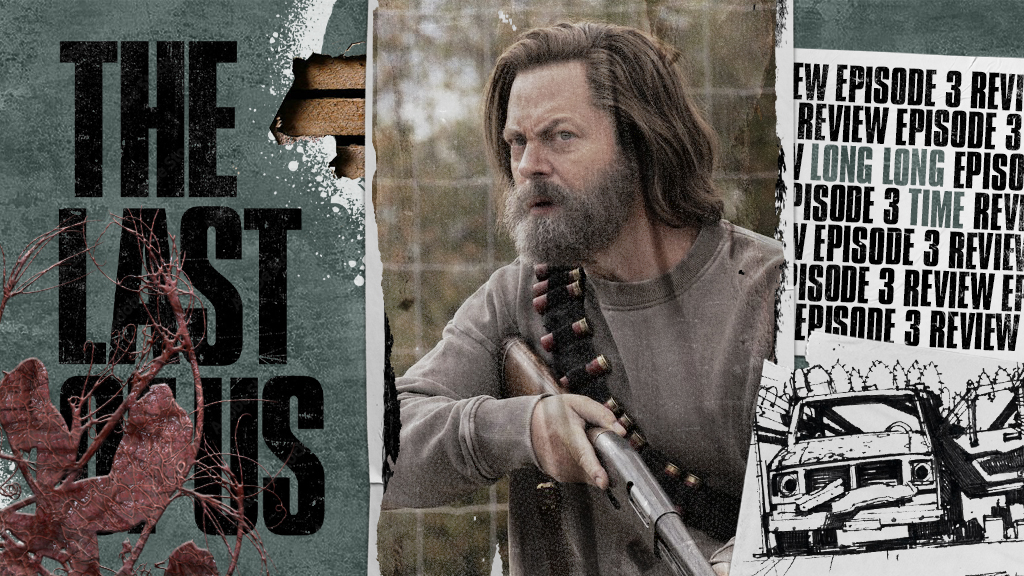
    The Last of Us is, first and foremost, a love story. HBO’s adaptation of Naughty Dog’s video game classic is ultimately a tale of finding purpose through devotion, and eventually, dealing with the grief that comes with it. In Long Long Time, the series’ latest episode, this concept is bottled into a mostly self-contained narrative about Nick Offerman‘s gruff doomsday prepper Bill and his music-loving romantic partner Frank, played by The White LotusMurray Bartlett. It’s an incredibly beautiful, sentimental hour of television, perhaps one of the best in recent memory, that leaves a truly indelible mark on the franchise and everything it stands for.

    For those that are not familiar with The Last of Us outside of the show, let it be known that Long Long Time is the first episode of the series to deviate immensely from the original source material. In the game, Joel and Ellie come upon “Bill’s Town” to find its titular resident living alone in a bitter state of self-preservation. Frank is mentioned, but never seen, as Bill’s former survival partner who moved elsewhere after a major falling out, and the game’s protagonists are forced to work with Bill alone to infiltrate a Clicker-infested high school on the other side of town for important truck parts. It’s only after this that the player discovers Frank’s decaying corpse, a note left behind revealing he was infected and consequently committed suicide, taking a lasting hatred for Bill with him to the very end.

    This works well in the game as a means of communicating to the player what danger lies in refusing to make a human connection. Through interacting with a broken Bill, and seeing what has become of his life and the town he lives in, both the player and the game’s characters begin to value companionship just a little bit more. In the way a video game functions, there is no chance for the story to flesh out Bill and Frank’s relationship further. It has to be something the player, as well as Joel and Ellie, stumble upon in the midst of gameplay. With a series, however, the creatives are not confined by the restrictions of player-controlled storytelling. They have a unique opportunity to explore the full history between lovers Bill and Frank, and in taking it, they subvert every expectation the viewer has going into the episode.

    Long Long Time is, at face value, a heartbreaking short story for The Last of Us newcomers to digest. Much will be said about its arresting nature, and rightfully so. Yet, it’s the way the episode fits into the larger narrative that’s truly striking, especially to someone who appreciates the grand scheme of character development. At first, Long Long Time seems to be a diversion from the main plotline, giving the audience a backstory for the next big name to join the show. Offerman had been advertised heavily as part of the series, and it’s intentionally made to seem like Frank will meet a tragic end to tie Bill’s arc in with the rest of the, admittedly, depressing project. However, once it becomes clear that Bill and Frank’s time together will instead end full of love and happiness before Joel or Ellie can even get to them, viewers are made to question what the idea behind the whole flashback was.

    The purpose for the entirety of Long Long Time, aside from the obvious, hits home not long after, and it’s absolutely brilliant. Although not literally, the episode – like the whole series – is still about Joel and Ellie. The Last of Us uses Bill and Frank’s story as an hour-long allegory for the show’s protagonists, and it all comes together as soon as Ellie reads Bill’s suicide note to Joel. Time exists to put the show’s leading duo on track and somehow manage to develop their own unique relationship in leaps and bounds without having them on screen for most of the runtime. On top of this, Time expertly toys with longtime fans’ preconceived notion of Bill as a resentful loner to draw them into its trap, and uses the shock of its eventual subversion to hammer home it’s point tenfold.

    Long Long Time does with its expansion of the Bill and Frank saga exactly what the game did with Joel and Ellie’s long trek through Bill’s Town and its high school, but it sends the message with far more grace and humanity. It reassures viewers that, even when HBO’s take on The Last of Us strays from what’s expected, it will get its characters where they need to be and maintain the spirit of the franchise while doing it. A masterful display of all the best storytelling techniques, and an exciting indicator of where the show can go next.

  • SLAMDANCE REVIEW: ‘Waiting for the Light to Shine’

    SLAMDANCE REVIEW: ‘Waiting for the Light to Shine’

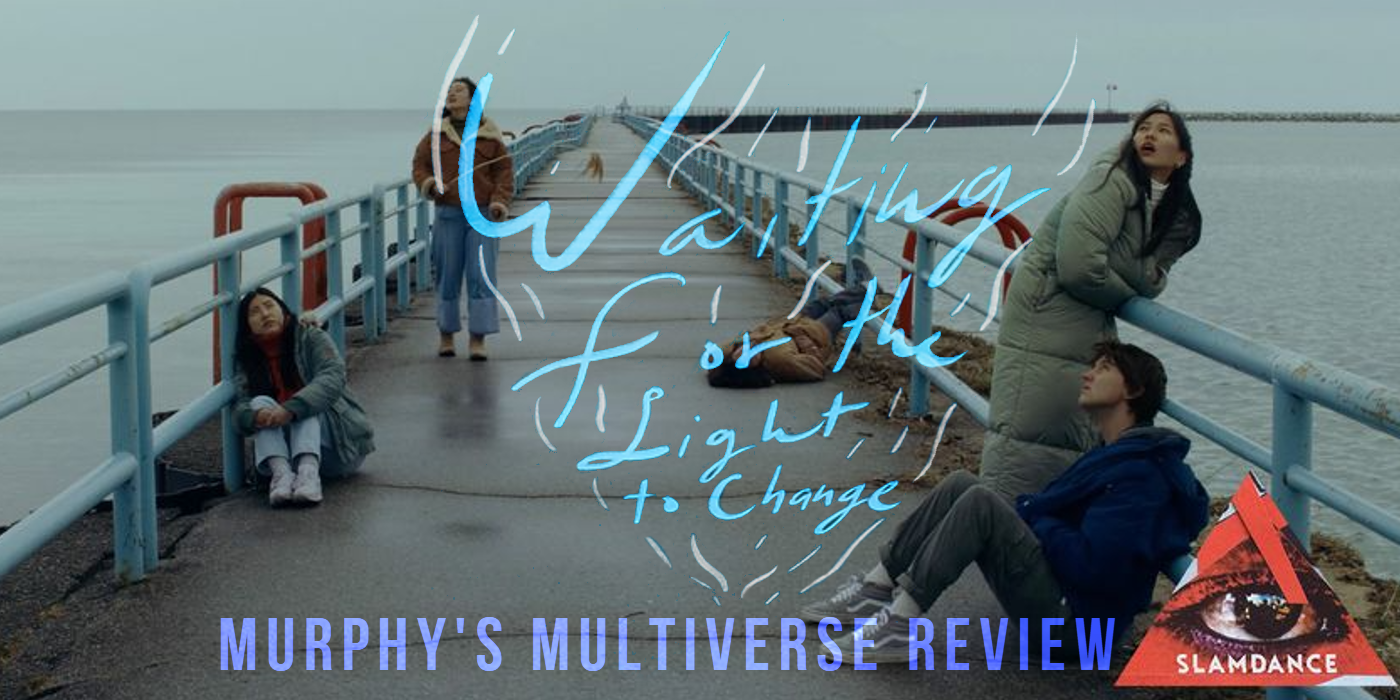
    While 2023 will be home to various marquee theatrical blockbuster-event movies, the world of independent cinema remains primed to stay strong in the new year. And one notable entry is set to provide a fresh spin that hybridizes the “coming-of-age” and “reunion” film subsections. Premiering at the 2023 Slamdance Film Festival, Waiting for the Light to Shine will serve as the directorial debut for Linh Tran. The screenplay was written by Tran, alongside Jewells Santos and Delia van Praag. And the small ensemble cast consists of Jin Park, Joyce Ha, Qun Chi, Sam Straley, and Erik Barrientos

    The film follows five friends of various connections spending a weekend at a vacation house that subtly forces some to confront their lots in life through cold winter walks and ample amounts of marijuana. While watching, audiences will likely view Waiting for the Light to Shine as a less political but more culturally diverse inversion of Return of the Secaucus 7. The deviation naturally comes from the characters making internal self-revelations that could disassemble these friendships before a future reunion.

    Linh Tran adeptly weaves a resonating and modern story about the internal struggles that plague young adults in finding their true identities. Waiting for the Light to Shine accurately and poignantly depicts the highs and lows of youthful experience. Viewers will tangibly feel the weight of the character’s sobering hangovers in the third act. Waiting for the Light to Shine is further elevated through Jin Park’s powerhouse performance as Amy, who essentially serves as the film’s protagonist. Park perfectly plays a tragic figure stuck between being internally tormented by her past and struggling to find an identity for her future. The evolution that her friendship with Joyce Ha’s Kim goes through is the crux of the weekend getaway and is the strongest narrative element to boot. In addition, the themes of depression and otherness are explored in interesting facets as ancillary plot points.

    The film ultimately isn’t a perfect take on this story in Tran’s directorial debut. The few issues predominately come from various instances of unnatural lines of dialogue present. The screenplay is generally strong but would have likely been its best version with a few more touch-ups. Though in the film’s defense, the actors play some of the lines adeptly into the nervous energy pertinent to people in the dawn of their true adulthood. As well, the concept of presenting a film through hardline vignettes partially hurts the flow of the story. This is a movie that shines in the moments when it moves past the static nature of one-on-one conversations. The faults of the film are predominately present in the first act of the film, in which it takes too long to establish the group’s character dynamics with each other. Waiting for the Light to Shine markedly improves after this point, and one could wish the film could’ve reached that point sooner.

    Though beyond these specific qualms, Waiting for the Light to Shine is a film worth seeing if one can do so. This is especially the case with a project created on an approximate $20,000 budget and with it serving as an independent film debut for many involved with the project. One can hope that the film can serve as a launching point for future stories from these young, diverse voices.

    Waiting for the Light to Shine made its Slamdance debut on Sunday, January 22.

  • REVIEW: ‘The Bad Batch’ Does Its Best ‘Uncharted’ Impression

    REVIEW: ‘The Bad Batch’ Does Its Best ‘Uncharted’ Impression

    *SPOILERS*

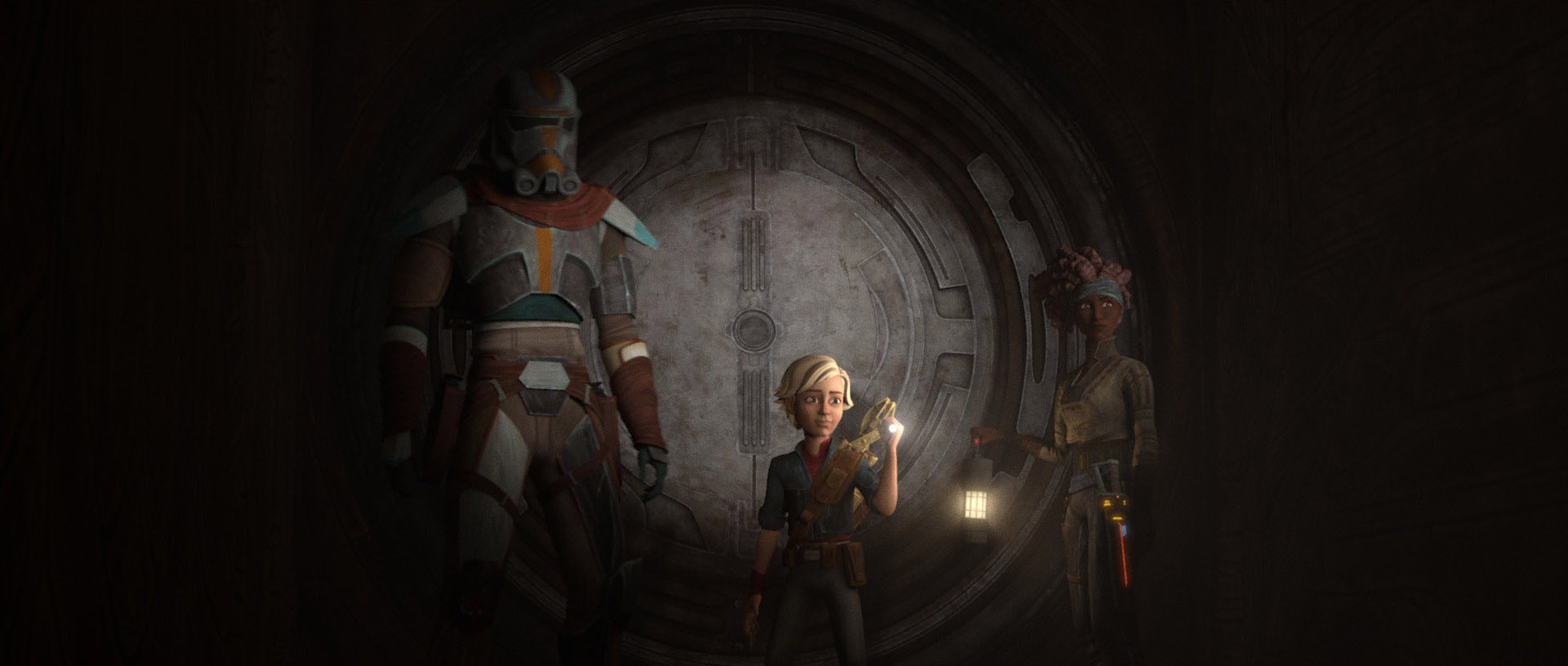
    A dangerous quest for a mythical item through unknown territory, fortune favoring the bold, complex puzzle solving, major characters splitting up in a dark tunnel system, an explosive third act, and a terrifying monster guarding valuable treasure that contains a hidden purpose. All of these elements sound like the key ingredients for a classic Uncharted adventure, but in actuality, they’re far from it. So far, far away, one might even say they’re in another galaxy. The aforementioned story traits actually come from this week’s episode of Star Wars: The Bad Batch, which does its best to replicate the intrepid wonderment of the famed video game franchise and, more specifically, its genre.

    Titled Entombed, the fifth episode of The Bad Batch‘s second season sees its titular group of rag-tag runaways searching for a lost treasure alongside Wanda Sykes‘ Phee Genoa, a pirate associate of their benefactor, Rhea Perlman‘s Cid. Their journey, and the obstacles they encounter, are obviously designed to evoke the quintessential Lucasfilm feeling of adventure, likely with Star Wars‘ sister franchise Indiana Jones in mind. However, the execution and outcome of their experience fall more in line with Naughty Dog’s aforesaid Uncharted series, specifically in how it uses its plot to convey its ultimate message. The Uncharted games, and tangentially their film adaptation, always end the same way – with the heroes giving up their newfound discoveries and riches for the benefit of the world and those they love.

    Entombed does more or less the same thing, with a wide-eyed Omega and her grumpier adult counterparts allowing a ticket to a wealthier life to slip past them in an effort to keep each other, and the galaxy, alive and well. This is something that The Bad Batch has done before, as recently as this season’s premiere episodes, but its blunt framing and straightforward narrative in Entombed work in conjunction to drive the point home with greater relative ease. Also, plainly put, it’s a lot of fun to watch Omega, Hunter, Wrecker, Tech, and Echo go treasure hunting because Star Wars has always and will always work best as a science-fiction take on pulp storytelling.

    Omega in a scene from “STAR WARS: THE BAD BATCH”, season 2 exclusively on Disney+. © 2023 Lucasfilm Ltd. & ™. All Rights Reserved.

    It’s been enjoyable to see the creatives behind the series break formula this season and apply the age-old recipe for Star Wars success to multiple different genres. The result has been a fairly entertaining early group of Bad Batch escapades, but unfortunately, the show’s biggest issue remains. Entombed, for all its likability, still does very little to progress the series or its characters as a whole. It often feels like the series is going in circles, with Omega and the crew learning the same lessons on repeat, and never truly moving forward to their next stage. It’s difficult to stay invested in characters that don’t change, and it’s frustrating when every episode comes with several opportunities to make it happen.

    Entombed might have been more exciting if, as an example, it also laid the groundwork for Omega to take a future interest in treasure hunting herself, as many of the episode’s best moments involved her growing ingenuity and childlike amazement. The potential behind this show is there and is evident in thrilling stories like this one, but The Bad Batch is still just one cohesive throughline short of living up to its predecessors’ standards. Even so, it proves itself an interesting, easily-digestible, adventure-of-the-week style project on a weekly basis. If that’s all one is looking for in this, they’ve found it in spades.

  • SLAMDANCE REVIEW: ‘Just Right’

    SLAMDANCE REVIEW: ‘Just Right’

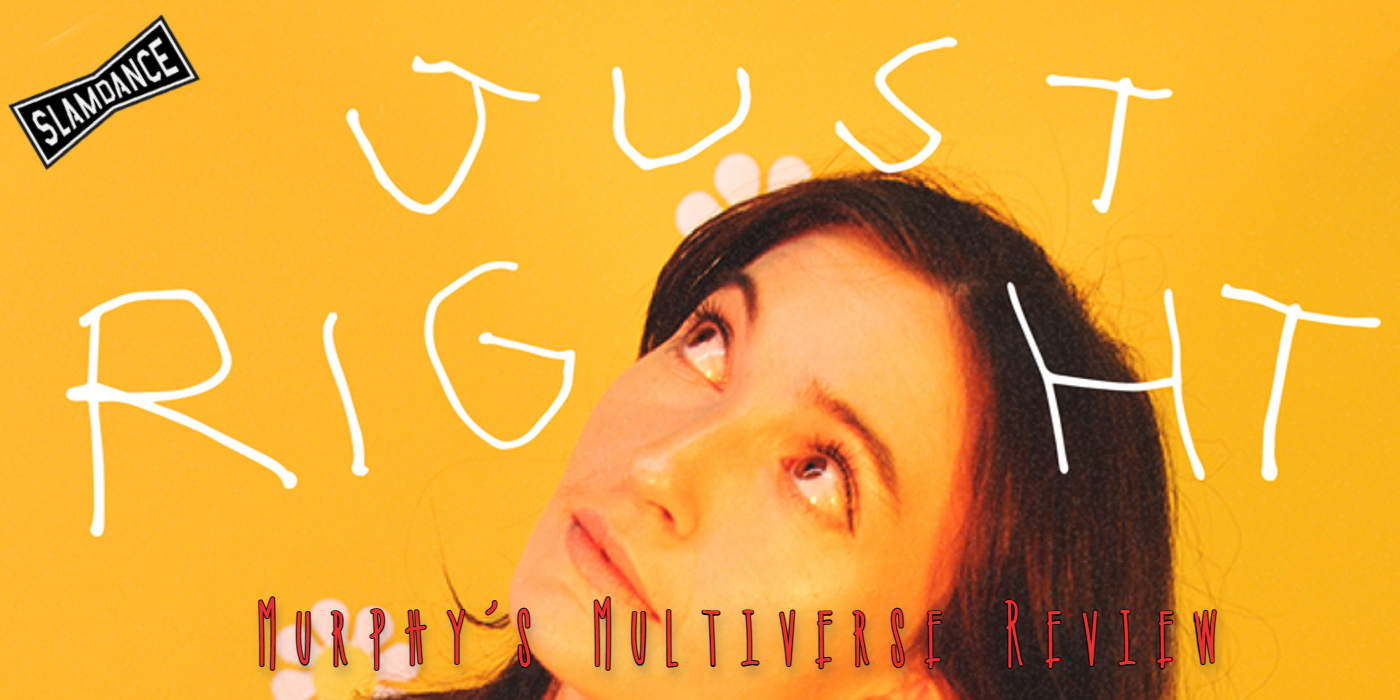
    Making a film isn’t an easy task. Trying to fit a tightly wound story within a limited timeframe is difficult even when the project is two hours long. But making a short film that tells a complete story? Well, that’s even more difficult. Just Right manages to successfully tell a story about visible and non-visible disabilities within its fifteen-minute timeframe.

    Camille Wormser, who wrote and directed Just Right, stars as a woman named Mel who suffers from severe obsessive-compulsive disorder (OCD). She’s grown accustomed to spending her life at home, unwilling to travel outside the safety of her front door. However, one morning, she decides she wants to do something different and seeks to join her friends as they go out for the day to a friend gathering that involves indoor skiing. At first, Mel seems disinterested, but she soon decides to give it a go.

    After going through her daily routines, including trying out each seat in the living room, Mel sets out on her own in search of a latte. She ends up at a place called Cookie Good, where it’s evident she’s uncomfortable and eager to disappear behind others. When another customer comes in, she tries to have them go first, but they insist she proceed, which leads to a difficult conversation between Mel and the person at the counter. It soon becomes clear that Mel is uncomfortable making eye contact with new people and that she’s not good with ordering things on her own. It’s a very, very well-done scene that depicts some of the invisible handicaps people live with on a daily basis and the negative way the public tends to react to people that are “different.”

    Upon receiving her drink, Mel sets out to meet up with her friends, Kyle (Jake Dvorsky) and Rene (Adam Turney), but soon realizes she’s running behind. Growing frantic, Mel ends up stopping to perform some of her daily rituals before sprinting off in search of her friends again. When she finally catches up to them, her entire demeanor changes. You can see the anxiety and uncertainty wash away as she becomes more comfortable within their presence. While some audience members might grow frustrated by the ending – or lack thereof – the way Wormser chooses to end the film is, well, Just Right.

    We get to see Mel go through the ringer. From her excitement to her panic, to her calming sense of achievement. It’s a rollercoaster ride, one that can be uncomfortable and hard to watch, but is so important to see displayed on screen because of its accuracy.

  • REVIEW: ‘The Last of Us’ Splits Heads and Builds Tension in Subtle Second Episode

    REVIEW: ‘The Last of Us’ Splits Heads and Builds Tension in Subtle Second Episode

    The Last of Us is a storytelling machine fueled by nuances. So much of its plot, and consequently, its character development, plays out in the form of sudden movements and stilted glances. In its original video game format, the traumatic tale of Joel and Ellie was allowed to be immersive, executed as something experienced by both the protagonists and the player controlling them. On television, this can’t be the case, so formerly passive moments of world-building become incredibly deliberate choices, and once-lively sequences of gameplay transform into subtly intense scenes on camera. It’s not an easy transition to pull off creatively, but this tight-rope act is the name of the game in Infected, the second episode of HBO’s newly acclaimed adaptation.

    Picking up where the premiere left off, Infected sees Joel, his smuggling partner Tess, and their new cargo Ellie fleeing from the Quarantine Zone and traversing a post-apocalyptic Boston. Their goal is to drop Ellie off with the Fireflies and go their separate ways, but the path to the designated meeting point is blocked by a horrifying horde of the fungally infected, and not everybody is going to survive the alternate routes. This episode is, perhaps, a slower burn than the last, but works insanely well as a masterclass in creating tension. From beginning to end, the stakes feel high, and the expert pacing leads to truly awe-inducing payoffs that firmly cement The Last of Us as a terrifying, heartbreaking new world of monsters.

    Much like the first episode, Infected begins with a cold open set before the events of Outbreak Day. A scientist in Jakarta is tasked with inspecting the body of a freshly infected person, quickly coming to the realization that society, as humanity knows it, is about to end. While striking, the scene at first feels repetitive of what was already presented in the pilot, an almost unnecessary addition to the story when Joel and Ellie’s journey is begging to continue rolling. There’s an extreme sense of foreboding, a deeper look into how the fungus began spreading, and a reminder that people won’t be able to win this battle before cutting to the opening credits. However, as the rest of the episode unfolds, it starts to become clear just how brilliant the cold open actually was.

    As its title implies, Infected does a lot of leg work when it comes to explaining how The Last of Us’ zombie-like plant baddies function. The information given to viewers in the episode’s first few minutes is expanded upon as the remaining hour ticks away, with each new detail creating a higher sense of danger than the last. As the stand-in for the audience, Ellie gives all the correct reactions, ranging from disgust to strange admiration. Like anything humans may fear in nature, there’s an innate level of respect for the fungus and its unstoppably connective nature, but it doesn’t make the simultaneous pain and destruction its growth results in hurt any less. Tendrils, for example, finally have a purpose, and the show’s manner of presenting them as both deliciously creepy and oddly beautiful makes for a wonderful mixed bag of emotions for those watching at home.

    Like the cold open itself, most of the horror in Infected comes from what the audience doesn’t see. Viewers are told what could kill them, and they’re told how dire the situation has become, and then they’re left to imagine what that might look like for the large majority of the episode. Characters peer through collapsed buildings, walk past craters in the street, hear screeches come from the distance, and see far-off, ant-sized bodies roll in a giant mass along the ground. It feels like anything could come crashing through the wall at any moment, and it causes every action the protagonists take to feel like a life-or-death decision. All this, so when the Clickers finally make their live-action debut, it’s worth every second of agonizing anticipation that came before it.

    Avid fans of The Last of Us have heard the sound of Clickers a million times in the past, yet somehow, HBO’s latest series manages to bring a fresh kind of fright to the first time that guttural noise comes around the corner. It’s not the action-packed museum fight sequence from the game, but it doesn’t have to be. The point is to experience the terror of the infected, and director Neil Druckmann only needs two of them to get the job done. Every motion of the camera while Joel and Ellie hide (in a surprisingly game-accurate way) is genius. A continued play on the phobia of the unknown. They, and the viewers, only get glimpses of a living nightmare that forces them to play by its rules. If Clickers weren’t already part of the classic horror villain lexicon, they will be now.

    This unique sense of dread extends to the episode’s closing moments, which find Anna Torv‘s Tess sacrificing herself in a bittersweet effort to save the planet. This, too, is made better by the beginning of the episode, acting as a hopeful bookend to an hour of empty loss. In Jakarta, it’s made perfectly clear that there is nothing people can do to stop the fungus. The only option, according to a tearful scientist, is to take lives away. Here, after discovering Ellie as a potential solution, Tess realizes the answer may actually be keeping a life intact. Again, after a long subtle build, the payoff comes due in a gorgeous, intimate moment of humanity, surrounded by the bizarre parallel of the fungus – now spreading into Tess – also doing what it can to stay alive.

    Of course, none of these nuances could possibly work as well as they do without the pure talent of the cast. Bella Ramsey comes to life as Ellie in this episode, and it becomes apparent by the end exactly why they were chosen for the role. A perfect blend of vulnerable and tempestuous. Specifically, a moment between Ellie and Joel in the lobby of a flooded hotel feels ripped straight from the game, with Pedro Pascal also embodying the latter character with immaculate accuracy. Somehow, The Last of Us has been reborn on HBO, and with time, it may even prove to be a better version of the story than the original model. At the very least, these first two episodes have been nothing short of amazing, and hopefully, are enough to bring viewers back for more.

  • REVIEW: ‘The Bad Batch’ Episode 4 Reminds Us All That Podracing Exists

    REVIEW: ‘The Bad Batch’ Episode 4 Reminds Us All That Podracing Exists

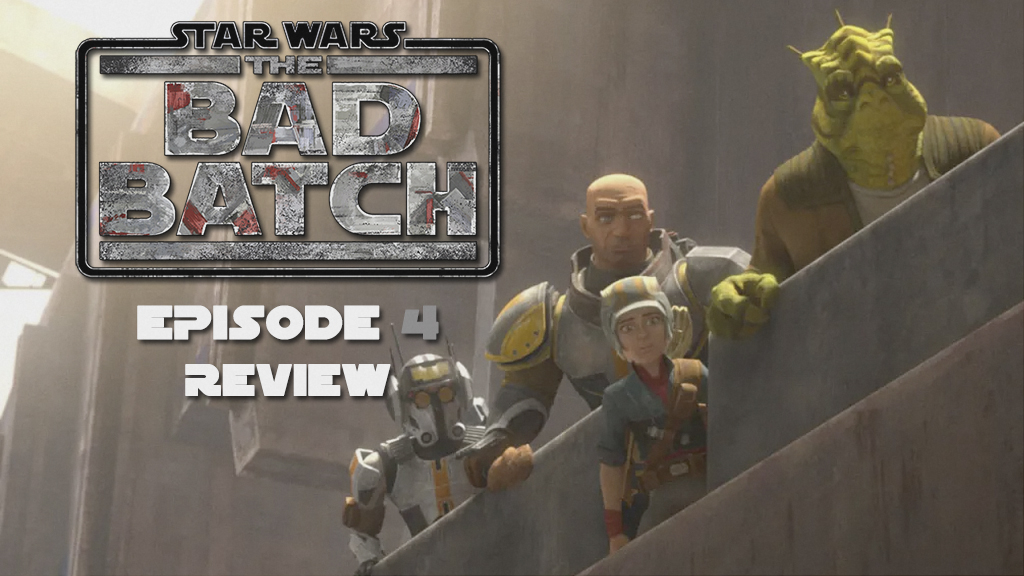
    In 1999, when Y2K was set to end us all, George Lucas came to the rescue by introducing podracing in Star Wars: Episode 1-The Phantom Menace. A high-stakes sport that was wildly popular in the Outer Rim territories, podracing (and a little sleight of hand by Qui-Gon Jinn) was the plot device that put Anakin on his highway to hell. Episode 4 of The Bad Batch, cleverly titled “Faster”, puts the win-at-all-costs sport back in the spotlight, only with much lower stakes.

    As has been the case in the show’s second season, “Faster” splits up the squad allowing the episodes to focus a bit more on the growth of individual characters. . Episode 4 sees Tech, Wrecker and Omega accompany their sleazoid boss Ciddarian Scaleback to the sordid spaceport Safa Toma. While the episode leans heavily into reminding the clones and the audience just how unsavory of a character Cid is thanks to Ernie Hudson‘s Grini Millegi, an old associate of hers, its primary focus is the continued growth of Tech. So far, no character has shown more growth than Tech and “Faster” is truly his time to shine.

    Tech in a scene from “STAR WARS: THE BAD BATCH”, season 2 exclusively on Disney+. © 2022 Lucasfilm Ltd. & ™. All Rights Reserved.

    Beginning in the season’s two-episode debut, Tech has continued to move from a nearly insufferable know-it-all and has begun showing signs of becoming sympathetic. Though it was never intentional, Tech has always displayed a tendency to talk down to others and being amazingly unaware of appropriate behavior in most social situations. Through a series of bets and contrivances that put Cid in a bad spot with Millegi, “Faster” puts Tech in a position where his mutation sets him up to save the day. And while he gets to show off his big brain and impress the masses with his calculations, it’s his selflessness in putting himself at risk to save Cid that truly earns him high marks.

    Through four episodes, Season 2 has yet to truly pull back the curtain on its main plot thread, focusing rather on making sure the audience knows that these clones are more than just their mutations and that Omega is not the only one who is still learning. While clones across the galaxy face being “decommissioned” and looking at a fate no better than the battle droids they replaced, Clone Force 99 continues carving its own way through the galaxy and growing as they go.

  • REVIEW: ‘The Last of Us’ Premiere Is Devastatingly Good

    REVIEW: ‘The Last of Us’ Premiere Is Devastatingly Good

    *SPOILERS*

    Experiencing The Last of Us never gets any easier. It’s a painful, heartbreaking story that might feel gratuitous if it wasn’t so devastatingly good. Of course, the difficulty involved with balancing so much grief with a storytelling necessity for actual payoff is a huge reason why the game was so beloved, but it’s not a task so easily accomplished. That’s why, as with any adaptation of an iconic video game, fans were likely terrified of a live-action series that would fumble the chance to convey this unicorn act to a wider audience. Luckily for them, HBO’s revamped take on Naughty Dog’s 2013 classic hits all the same marks as its predecessor in a shockingly faithful premiere episode that even manages to improve on a few key moments in the franchise’s lore.

    The series’ first 80-minutes are essentially broken up into two segments – a 20-minute prologue detailing Outbreak Day and the origins of the Cordyceps takeover, followed by a proper hour that introduces viewers to the show’s post-apocalyptic world and its grungy cast of characters. Truthfully, it’s hard to remember the last time a major adaptation converted its source material from format-to-format with such pinpoint precision. The story beats are all almost exactly the same, with the episode only straying from what previously existed in brief efforts to expand upon what fans were already expecting. Normally, a word-for-word translation could prove costly for a series of this caliber, but The Last of Us is, quite frankly, not normal.

    Perhaps it’s because the video game previously existed as a somewhat cinematic experience, but the show’s surprising method of sticking to what works is admirable for multiple reasons. The obvious positive is that The Last of Us is still The Last of Us, and not an entirely new tale riding the original’s credibility. Those who played the games and loved them will be thrilled to see certain scenes play out exactly as they did on their PlayStations nearly a decade ago; those who are witnessing this story for the first time can take comfort in the fact they’re not “missing” anything the former group has raved about for years. As mentioned before, The Last of Us is special in large part because of its emotional tight-rope act, and series creators Neil Druckmann and Craig Mazin clearly don’t want to mess with that wildly effective formula.

    Both Mazin and Druckmann stated before the series premiered that there would be new elements and expanded segments throughout the story’s retelling, and the colossal first episode wastes no time in proving this to be true. Viewers are quickly treated to a 1960s cold open explaining the science behind Cordyceps, and a much longer tenure with Nico Parker’s Sarah and the pre-apocalypse Miller family. Thankfully, neither of these bits wear out their welcome and actually end up serving the overall plot rather well. Parker is so likable in her elongated stint on the show that Sarah’s ultimate demise becomes all-the-more tear-jerking, while the eventual collapse of society is made far more upsetting after an incredibly stressful sequence involving the Miller’s neighbors that will likely qualify as one of the most tensity-filled television scenes of the year.

    Among the show’s greatest achievements, thus far, is how successful it is at conveying the brutality of The Last of Us without most of the gut-wrenching action. This is accredited mostly to the brilliance of the cast. Pedro Pascal‘s Joel and Anna Torv‘s Tess are more delicate than ever before, stripped of their near-superhuman survival abilities in a slightly more realistic version of the apocalypse than the game was allowed to portray. As such, the series is forced to show their capabilities through smaller moments, leaning heavily on the dramatic aspects of the story, and both performers are adept at meeting the challenge. Bella Ramsey, the biggest question mark leading into the series’ premiere, is outstanding. The most important part of bringing existing characters to life is capturing their essence, which they have in spades. The same goes for Gabriel Luna as Tommy, and, obviously, Merle Dandridge‘s Marlene.

    All-in-all, it would appear that HBO has a bona fide hit on their hands. The Last of Us recaptures magic in a bottle, mixing sorrowful, awe-inducing set pieces with the damaging beauty of the human condition, and finally revealing to the greater world why they should be so invested in the journey of Joel and Ellie. The premiere does an excellent job of pacing itself through its own expository chapter and leaves off on an intriguing-enough note that promises a thrill ride when viewers return next week. If the first episode is any indication, newcomers to the franchise are in for a treat, and longtime fans should be excited about what they already know comes next.