Category: Reviews

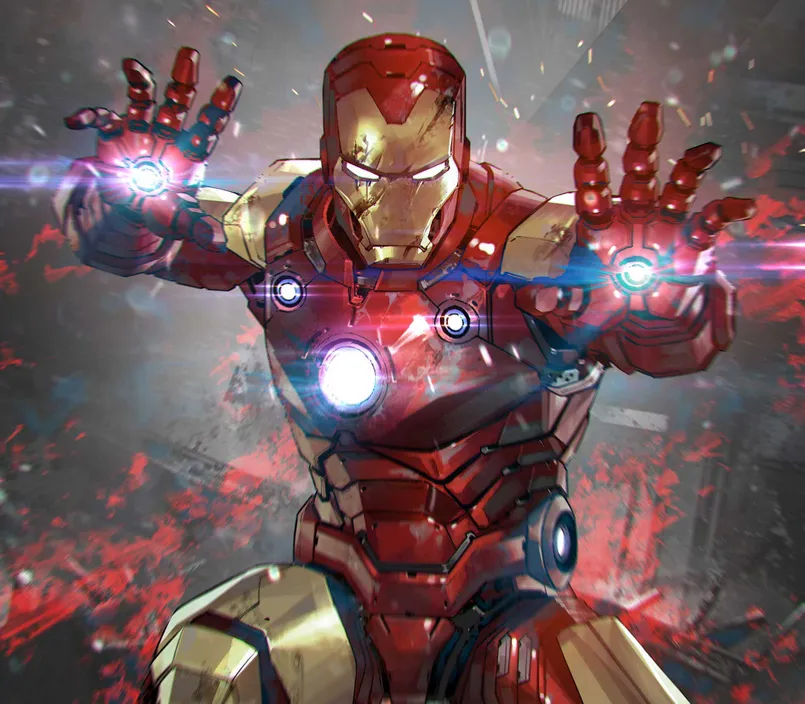
  • REVIEW: Invincible Iron Man #1 Back To Basics… Yet Again.

    REVIEW: Invincible Iron Man #1 Back To Basics… Yet Again.


    One of the most engaging elements in the Marvel line of comics has been the focus on history. Not in the sense more associated with DC, where legacy is so revered (arguably to a fault), but in the sense that character progression seemed to hold far greater priority than one might assume from a funny book. While Marvel was no better than DC in terms of their willingness to wriggle out of a set of circumstances through hokey, convoluted retcons, books like Iron Man were once celebrated for continuing a logical, building narrative across different writers and hundreds of issues.

    With Invincible Iron Man #1, Marvel heavy-hitter Gerry Duggan (who has been all over the mutant side of the MU in recent times) takes Ol’ Shellhead’s narrative to a tediously familiar stop. After a few pages recounting the basics of Stark’s 616 history (being a #1 issue, the book is undoubtedly aiming to be a starting point for the ever-elusive “new comic reader”) and the inciting incident of the story, we find Tony Stark at a point in his life where he’s feeling particularly guilty over mistakes that he’s made as a result of poor forethought, leading to other people getting caught in the crossfire. Gripping stuff. It could be argued that bemoaning an Iron Man title for focusing on what is debatably the very essence of Iron Man may be a little unfair, but the problems lie just as much in what the book doesn’t do.

    Quite a bit of the narrative weight Duggan tries to convey throughout this issue hinges on readers’ outright acceptance of the gravity of what has happened because Tony tells us it’s really affected him. This approach isn’t all that effective when the vast majority of input we get from Tony on these situations comes via first-person narration (framed as Tony working on his autobiography, from some unrevealed point in the future) that struggles to find an authentic voice. A lot of the verbiage sounds decidedly un-Stark, like Tony using the term “unhoused”, and a handful of similar instances of hyper-online wording.

    A moderately interesting mystery is competently established, and there’s certainly nothing offensively repellant about this book as it finds its footing. Juan Frigeri provides excellent visuals, and the book makes plenty of sense as a back-to-basics reset of sorts. Is it just too much to ask, after 60 years, for something a bit… fresh?

  • REVIEW: ‘Doom Patrol’ Episode 3 — “Nostalgia Patrol”

    REVIEW: ‘Doom Patrol’ Episode 3 — “Nostalgia Patrol”

    The third episode of Doom Patrol feels like a fairly self-contained, one-off outing on its surface throughout most of the episode. By the end of “Nostalgia Patrol”, though, it is clear that the episode is an integral part of the season’s moving plot. After the first two episodes’ focus on the 2042 apocalypse and the team trying to grab its footing immediately after the decision to be the Doom Patrol, the restart of the crew’s daily lives almost feels disconnected. The stuck-in-a-movie plot came across like a stand-alone bit in classic Doom Patrol side adventure charm, but it ultimately serves as a clear launching pad for a parallel overarching storyline for the season—Immortus will rise. 

    Doom Patrol is not known for answering open questions swiftly or without ambiguity. But even when the show goes to off-the-wall territory, it often stays strangely connected, and Season 4 may be no different. The concept of immortality has long tied many characters and elements together, some not as obvious as others. Immortus rising, then, is likely to bring back familiar faces and concepts from past seasons. And with a strong possibility (given the non-stop shakeups and breakups of HBO Max and the DCEU) of Season 4 being the show’s final season, bringing everything together in the end makes the most sense.

    The group’s first interaction with the adversary is passive, psychological, emotional, and successful. General Immortus promises to be a force this season that goes to the heart of the Doom Patrol, exploring the shady Immortus Initiative and Niles Caulder’s mildly disturbing actions that led to him collecting and experimenting on our main characters from the beginning. Notably, it seems likely that the fact that the main characters do not appear to age will be addressed, potentially giving viewers more opportunity to explore the cohesive force that bound such a misfit team in the first place. 

    The core plot of this episode—Rita and others being caught in her old movies—allowed it to be characteristically wacky while also giving it new color and texture that helps the series maintain its “comicbook-y” feel. But among the brevity of the concept was Doom Patrol’s defining emotional distress. Of course, Rita’s profession of love for her family despite her feeling fully rejected was the highlight, but Vic’s bittersweet and uncomfortable reunion with his old friends struck a competing, darker chord. Madam Rouge’s drunken monologue-montage of self-loathing, guilt, and desperation yet again shows this unlikely team member’s merit as a new character to get invested in. 

    At the end of the day, Doom Patrol has barely explored an actual, traditional superhero team because everything is personal in this series. The characters’ personal lives are constantly in the direct line of fire. Not many comic book or action properties take this kind of route. Instead, they opt for big world-saving heroics and ignore the detailed mechanics of the “humans” in the middle of the story. Doom Patrol, for that reason, is somehow one of the most realistic comic book shows at the same time it is easily “too weird” for many crowds.

  • REVIEW: ‘Avatar: The Way of Water’ is Cameron’s Magnum Opus (For Now)

    REVIEW: ‘Avatar: The Way of Water’ is Cameron’s Magnum Opus (For Now)

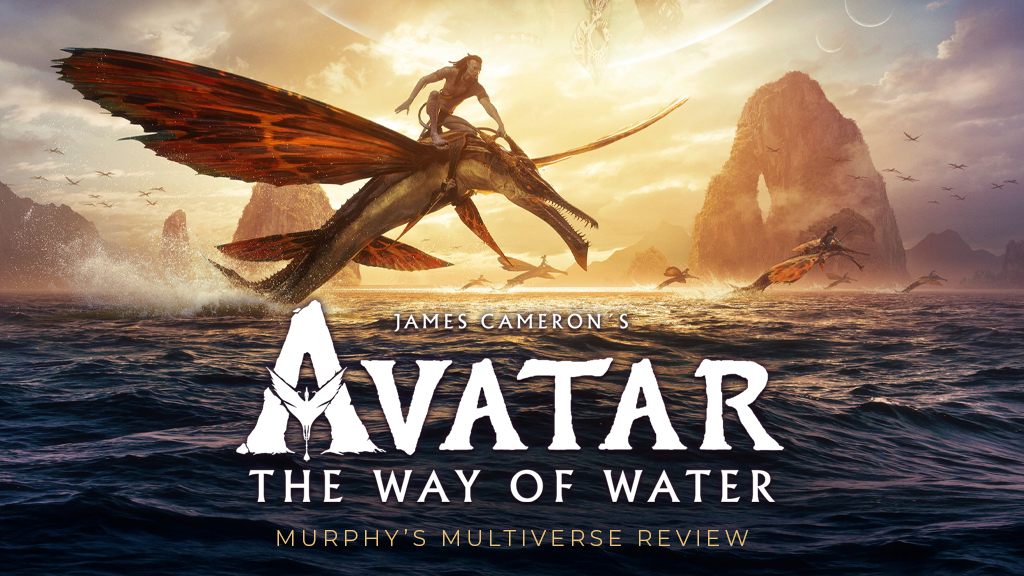
    Never bet against James Cameron. The director’s latest, Avatar: The Way of Water, was a project over ten years in the making, something that gave many people an understandable hesitation leading up to its premiere. Cameron had spent that period of time essentially boasting about the film as a singularity, or at least, something more than just a sequel. It seemed he planned on the follow-up to 2009’s Avatar being so impressive, it demanded more time to gestate than any regular movie. An unspoken promise that, upon release, The Way of Water would be unlike anything ever before seen on a theater screen. That’s a very, very big expectation to meet, and plenty of folks were convinced it would simply be impossible for Cameron pull off. As it turns out, those folks were wrong.

    From a technical standpoint, The Way of Water is an astounding achievement. Without exaggeration, the film feels like it could be the next step in blockbuster evolution. The world of Pandora is so exquisitely realized, that there are several moments that are likely to make audience members try reaching out to touch it. It cannot be accurately stated just how breathtaking the visuals are able to materialize in full Dolby 3D. Seeing the glisten of minuscule water droplets on the skin of a computer-generated alien should not feel so real. In some ways, it’s sort of unnatural just how practical it appears when a neon-colored fish glides through refracting sunbeams over rippling subaqueous sand dunes. Pure cinematic wizardry, which can only be described as real-life magic. It’s very clear how much time and money were sunk into this project, which is – if one is hoping to get what they paid for – a really good thing for Cameron and his team.

    What will be truly interesting, however, is the long-term public reaction to the sequel’s plot. The Way of Water is clearly a movie meant to capitalize on the visual medium of the theatrical experience, with special effects that push the boundary of cinema far further than its actual storytelling. Of course, this is not to say the storyline is in any way bad. It’s actually pretty darn good. There are several crowd-pleasing moments, heartbreaking developments, and sequences that remind the viewer why they love going to the movies. It’s just, at the end of the day, nothing that happens is all that surprising. Historically, Cameron is remarkably skilled at taking fairly simplistic, predictable plots and stretching them to their full potential. This doesn’t change in the second Avatar.

    The Way of Water doubles down on every trope Cameron has relied upon in the past, and even brings back a few devices the director used in the previous outing. It’s a whirlwind of cornball MacGuffins storming through a sea of undeniably cool set pieces. In fact, it might just be the most James Cameron movie to ever exist, both optically and narratively, and persists in being so at a ridiculously high level. A movie does not always need to be unique, plot-wise, to be memorable. It’s possible to stand by and revolve around the Joseph Campbell theory of a hero’s journey and do it so well that the audience leaves the theater feeling fulfilled and refreshed. In this regard, The Way of Water is Cameron‘s magnum opus. It’s everything he has produced thus far in his career, only amped to the next degree of entertainment.

    A minor gripe may be the film’s slight lack of resolve in its closing moments. While the major plot points are sufficiently wrapped up and reliably executed, there are a handful of plotlines emphasized earlier in the three-hour runtime that slowly fade away by the time of its conclusion. Assumedly, these are ideas that will be picked back up in the multiple planned sequels, but it is a little frustrating to see Cameron lean ever-so-lightly into the messiness of modern franchise-ifacation when the rest of the film is so tight. Shockingly tight, it must be said, for a movie so notably long. The pacing is excellent, and allows for quite a few ideas to be packed into one picture, but it would have been nice if all of those ideas were more efficiently packaged in the end.

    Avatar: The Way of Water is flawed, yes, but at length, it’s a force to be reckoned with. The film meets nearly every expectation set before it. A wild ride full of heart and astonishment, which sets a high bar for the next films to follow. Its inconsistencies are so few and far between that they’re often lost to the overall grandiosity of the cinematic experience. Truthfully, it’s hard to comprehend the idea of watching it on anything other than the biggest, loudest screen a person can find. $250 million went into the production of this sequel and every penny can be seen in the details. If there was a lack of hype for the Avatar franchise before The Way of Water, there absolutely will not be once it’s available to the public. Again, and this is important to remember, never bet against Cameron.
  • REVIEW: ‘Night at the Musem: Kamunrah Rises Again’

    REVIEW: ‘Night at the Musem: Kamunrah Rises Again’

    Over the course of 8 years, 20th Century Fox released a trio of Shawn Levy-helmed Night at the Museum films. While none of the films ever reached blockbuster status, 2006’s Night at the Museum sits at #100 on the all-time North American box office list and the series introduced some memorable and loveable characters to audiences. Disney acquired the franchise in its merger with Fox and decided to return the franchise to its animated roots (the film series is based on a 1993 children’s picture book written by Milan Trenc) and while the short film smartly shifts the focus to a new main character, it ultimately falls short of capitalizing on any nostalgia the audience might have for the original.

    One would assume that Disney’s decision to produce an animated follow-up was intended, at least in part, to rekindle some spark in a generation of people who found the magic in the franchise when it kicked off 16 years ago. Though it was never well-received critically, Night at the Museum has had a long shelf life and is the sort of film that audiences might find themselves sticking around to watch when they flip through the channels and find it on network television. Its first direct sequel, 2009’s Battle at the Smithsonian, did a little less business at the box office and dropped off in terms of audience engagement and by the time Secret of the Tomb debuted in 2014, audiences seemed to lose interest (indeed I did not recall a third film in the series had ever been made). In that sense, Disney had a big job to do in order to draw initiated fans back in and despite Kahmunrah Rises Again serving as essentially a highlight reel of everything fans loved about the live-action films, there’s too much missing to make fans of those films love this.

    The biggest obstacle for Kahmunrah Rises Again comes from an at times jarring replacement of the talent behind the characters. None of the original cast returns to voice their animated counterparts and the results range from heartbreaking (seeing Teddy Roosevelt and not hearing Robin Williams‘ trademark gusto hurts), to head-scratching (it took me the majority of the film to realize Zachary Levi was voicing Larry) to downright infuriating (Steve Zahn trying to imitate Owen Wilson). The final straw in this discombobulating exercise was the absence of one of the world’s preeminent and prolific voice actors as the villain of the piece; Hank Azaria, whose performance as Kahmunra stands as one of the funniest of his career, was replaced by Joseph Kamal. It’s not that the new voice actors dropped the ball; it’s simply that for fans of the original films, their presence can’t overcome the absences they mask.

    While Kahmunrah Rises Again’s reliance on the figures from the museum exhibits certainly takes familiar audience members out of the experience, the decision to shift to a new lead character does give the franchise a bit of hope. Now a high schooler, Night Guard Larry Daley’s son Nick, who has grown up aware of the magic of the museum, becomes the protagonist as he takes on the post of Night Guard for the Summer. While he mostly just stumbles through the same experiences his father has before, the new perspective does ultimately allow for a nice coming-of-age story for Nick.

    Night at the Museum probably isn’t among the major franchises Disney had in mind when they acquired some heavy assets from Fox. It’s not Alien, Predator or the boatload of Marvel characters that they’ve already put to use; rather, it’s a franchise that was already mostly abandoned by fans, making an attempt at a revival a curious choice. This animated feature film, while having no major deficiencies of its own and telling a fine story, isn’t likely to change anyone’s mind about the franchise and fans of the live-action films might find themselves feeling more cynical than anything.

    Night at the Museum: Kahmunrah Rises Again is now streaming on Disney Plus.

  • REVIEW: ‘Doom Patrol’ Season 4 Episodes 1-2

    REVIEW: ‘Doom Patrol’ Season 4 Episodes 1-2

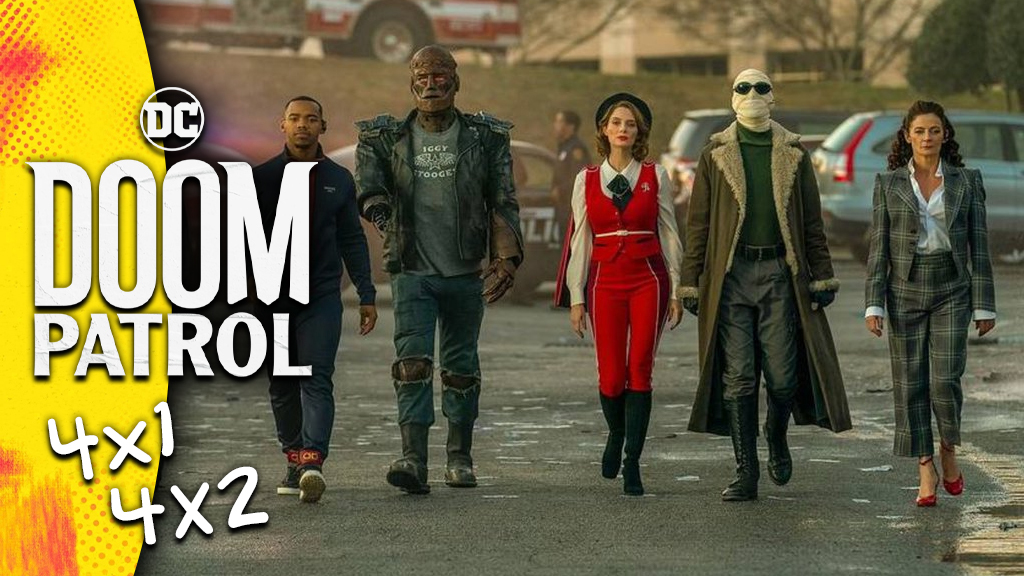
    The opening two episodes of Doom Patrol, “Doom Patrol” and “Butt Patrol”, show that the series is still the best comic book adaptation on television. Amidst the DC Entertainment turmoil, Doom Patrol is a strangely shining beacon of hope despite being wildly underrated and skewing away from the comfortable tone and subjects adopted by most other projects. Season 4 proves that there is simply something overwhelmingly unique about the HBO Max show.

    After finally ending last season as the “Doom Patrol”, we briefly see the superhero team in some classic action. The time machine introduced in Season 3 could be a key player going forward—it is used to facilitate the hero antics, but it is clear after Episode 1 that it can have a much larger role. Time travel played a large role previously, and Episodes 1 and 2 leave it questionable whether Season 4 will expand or retract it. Considering the team is trying to prevent a future apocalypse, a lingering question about a person they collided with in the time stream, and a General Immortus prophecy tease, there is a strong chance Doom Patrol will be playing with time as much as it ever has.

    HBO

    Just as time never stops, there is a never-ending theme of doom in the series. Aside from, obviously, the title, the group is relentlessly in a state of “doomed.” Not only does this season appear to revolve around the Doom Patrol stopping an apocalypse they themselves caused, but the main characters have also already met their future dead and ghostly selves and have started to dig their own graves in the aftermath. The show is a lively spectator sport where the viewer is constantly rooting for the loser. But as much as we might think we want a win in Doom Patrol, does that feel natural?

    It all naturally leads to a consideration of how Season 4 could fall short, and the answer is stagnation. The three preceding seasons all felt like they were building to a larger moment where the group of misfits become the titular Doom Patrol. They did, but we certainly do not spend much time in that mode. Instead, the group generally falls back into its dysfunctional family routine. This is the irreplaceable heart of the show, but one wonders if this season will show more movement—with the conclusion of Season 3, the forming of the Doom Patrol, and the slow buildup to an expected “superhero team show”, settling back into old territory might not be enough.

    That being said, Doom Patrol is generally the antithesis of commonality or familiarity. The current story is certainly intriguing—and ties in previous hits from last season—but only time will tell if the show can for a fourth time bring fans to a place wildly outside of any comfort zone. Still, some of the foundations laid are stronger than others.

    HBO

    Jane’s story is perhaps the trickiest one to predict here. Historically, her inner workings have been an extraordinarily strong subplot throughout all seasons, but it seemed to come to a strong peak last season. Episode 2 suggests that this aspect could be winding down, but the lingering solo subplot of Jane unraveling the depths of hers and Kay’s psyches—regardless of its quality—is starting to feel tired.

    In any event, the cast remains yards above their peers. Diane Guerrero seems impossible to beat, pulling off multiple characters effortlessly. April Bowlby and Michelle Gomez are once again humble pillars of the show, both on their own and as a duo. While Rita in particular has become the closest character there is to a lead, her and Madame Rouge’s dynamic feels both grounded in traditional storytelling technique and entirely refreshing. Jovian Wade’s Victor is in quite an interesting place as a character—Cyborg without any of the cyborg. So far, it seems like Season 4 is in no hurry to “correct” that aspect and Wade shows promise of a very strong and nuanced performance over the season. The Brendan Fraser-voiced Cliff has some of the most emotional scenes of the first two episodes, and he and fellow faceless Larry (voiced by Matt Bomer) always find their way to being some of the most emotive characters in the series.

    In sum, the first two episodes of Doom Patrol’s Season 4 capitalize on all of the series’ wonderful elements that have propelled it in the past. So far, there is a seemingly extra-cohesive plot, which may help glue the season together better than some of those in the past that felt slipperier than perhaps ideal. Of course, the first episodes raise many questions about the plot, but the biggest question may be how far the series is willing to stretch its core concept of a misfit bunch of powered-up rejects toward what its title can represent.

  • REVIEW: ‘Diary of a Wimpy Kid: Rodrick Rules’

    REVIEW: ‘Diary of a Wimpy Kid: Rodrick Rules’

    Jeff Kinney’s Diary of a Wimpy Kid series has sold over 275 million books since the original was published in 2007. Over the last 15 years, Kinney has published 17 books in the main series, including Diary of a Wimpy Kid: Diper Överlöde, which was released just this past October. The beloved series has expanded into supplemental books, a spinoff series and live-action films, and, most recently, animated films on Disney Plus. The first film, Diary of a Wimpy Kid, debuted on the streaming service in December of 2021 and now the first sequel, Diary of a Wimpy Kid: Rodrick Rules, has followed.

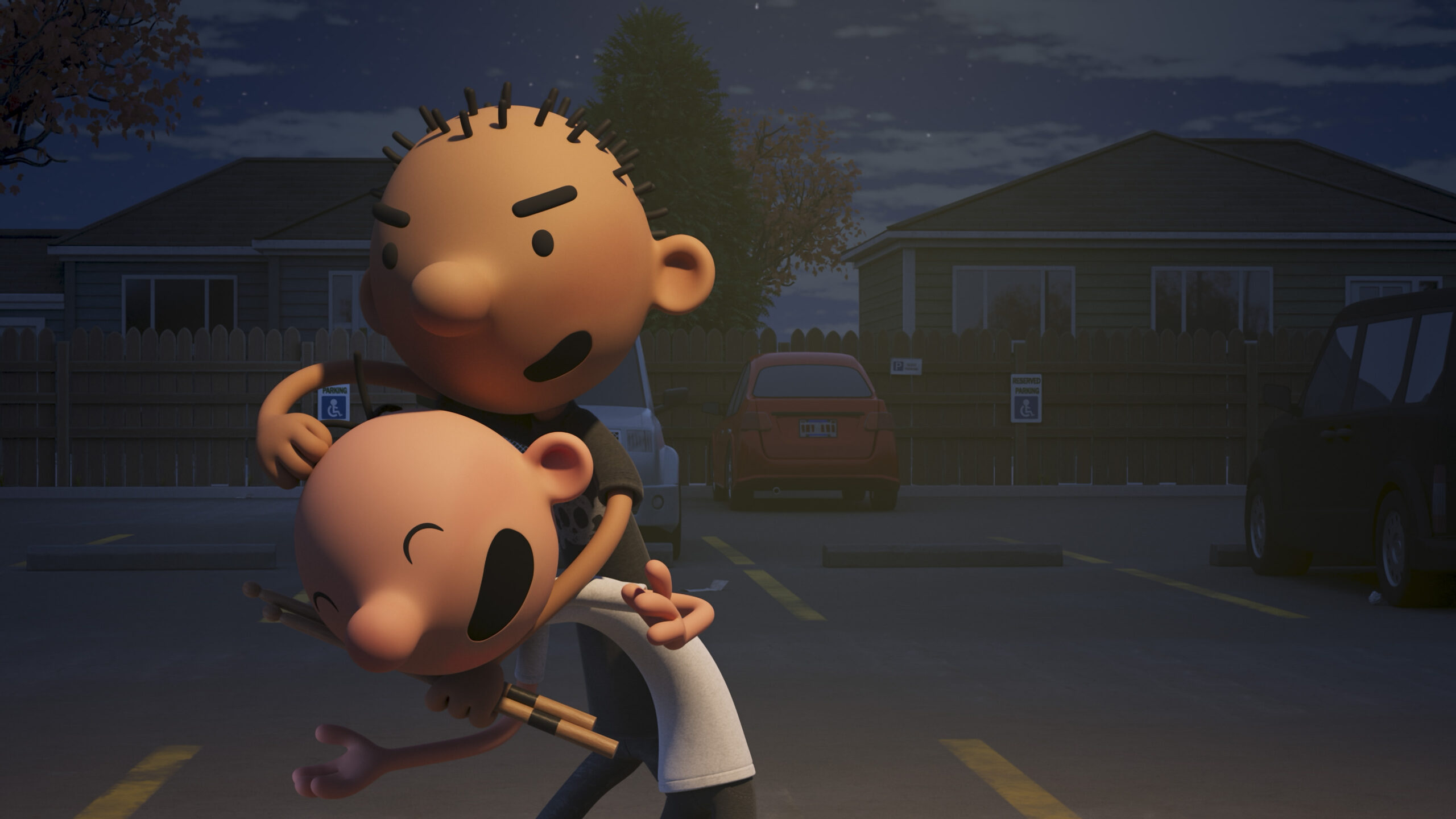
    Much like 2021’s entry into what looks to be a growing animated franchise (the third book in the series is already being developed for release on Disney Plus) plays out over an easily-digestible runtime. Also, like 2021’s entry (and presumably all future entries) Kinney has adapted his own original work into the screenplay which makes Rodrick Rules feel like a bit of a highlight reel of all the important beats from the book. At the heart of the story is the relationship between the franchise’s central character, Greg, and his older brother, notorious slacker Rodrick. Greg, voiced by a returning Brady Noon, finds himself with some leverage over Rodrick when the older brother throws a huge party when their parents are away. Over the course of the film, Greg’s relationship with Rodrick is tested and strained as a result of said leverage allowing the nature of family, specifically sibling relationships, to be explored. A visit with their grandfather, voiced by Ed Asner in his final role, sets the stage for Greg to do some tough thinking about the present and future of his relationship with Rodrick.

    (L-R): Mackie (voiced by Nathan Arenas), Bill (voiced by Jimmy Tatro), Rodrick (voiced by Hunter Dillon), and Larry (voiced by Hudson Yang) from 20th Century Studios’ DIARY OF A WIMPY KID: RODRICK RULES. © 2022 20th Century Studios.

    Though Diary of a Wimpy Kid: Rodrick Rules plays as a CliffsNotes version of either the novel or the 2011 live-action film, the theme comes across loud and clear, especially during the climax at the talent show in which Greg, following an emotional conversation with his grandfather, makes a choice about where he will stand in his relationship with Rodrick. Like 2021’s Diary of a Wimpy Kid, Rodrick Rules seems aimed at younger audiences. The animation, the short runtime, the shortened plot and the simple themes should all make this and future installments fit Kinney’s goals of telling more emotional stories on Disney Plus.

  • REVIEW: ‘Darby and the Dead’ Feels Familiar With a Strong Message

    REVIEW: ‘Darby and the Dead’ Feels Familiar With a Strong Message

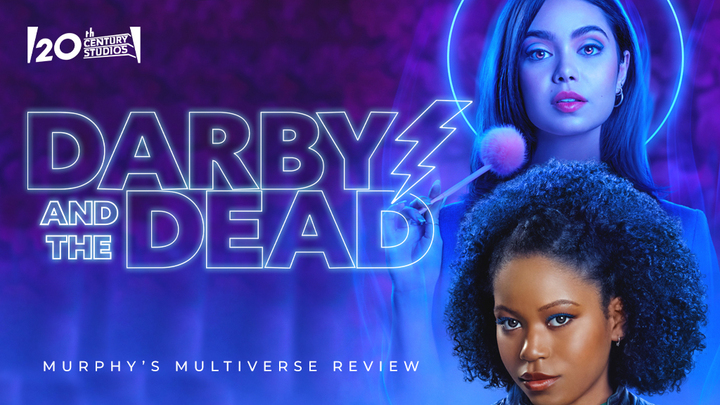
    What happens if you combine Ferris Bueller’s Day Off, Mean Girls, and add a splash of Ghost Whisperer? Well, you get Darby and the Dead. The story of Darby Harper (Riele Downs), a young teenage girl who has the ability to see the dead. After a tragic accident sees the most popular girl in school pass away (Auli’i Cravalho), Darby is forced with an unlikely tag-along as she tries to make sure her frenemy manages to pass on but gets more than she initially bargained for.

    The main concept is a fun idea to give the usual high school storylines an additional layer beyond the usual drama, but the film by Silas Howard is quite keen on trying to throw in as many ideas as possible. In addition to the “wacky” element of Darby seeing the dead, we also have her actively breaking the fourth wall throughout the story. It seems to imply we are also part of her gift, but it can sometimes be more distracting than anything else. Yet, it does also add some levity of social commentary regarding popular culture in high school. It only suffers from trying a bit too hard to replicate Ferris Bueller.

    That very element does have the advantage of living off of Downs‘ performance throughout the film. She’s definitely a highlight and even with a more clichéd direction at times, she still finds a way to balance her character’s development of not falling too much into Means Girls territory. It’s simply a shame that the story still relies mostly on familiar territory rather than taking it into a new direction with a premise of someone able to speak to the dead. Instead of exploring Cravalho‘s Capri from that perspective, we mostly follow the outcast to popular girl storyline throughout.

    One thing you can’t deny though is that the film has heart. It’s cheeky self-awareness be more a way to make use of the story’s trappings and build upon its characters. Darby is the main focus and the story doesn’t shy away from showing her as a flawed but well-meaning person. The story manages to find that balance that doesn’t turn it into a cautionary tale of popularity, but rather just showcasing that trying out new things is okay. Even with some of the usual story beats at play, the focus of this story and Darby’s development makes up for it in many ways. In times of resisting change, there’s something sweet of a story simply saying you don’t have to be popular but you shouldn’t close yourself off from the living either.

    These are elements that work quite in favor of the film’s way of riffing on the material. While it does follow similar plot beats, we get a twist on one of the usual romance storylines and another that is hinted at but never truly followed through with. So, it manages to avoid one cliché by simply being busy with other plot elements throughout its runtime. In turn, this works in favor of creating more believable reactions rather than something that feels like a forced plotline. Capri similar is able to avoid some aspects of the popular girl trope by simply being in a position that won’t let her fully fulfill that role. So, there are elements where its base premise works in favor of not completely falling into what you’d expect form this type of story.

    Even saying that, there’s still a lot of heart. Howard‘s direction adds some visually interesting shots and the way it handles her supernatural elements does make for some interesting set pieces. Even with some of my complaints, there’s still a self-awareness to the story that makes great use to it, especially when it comes to how Capri ends up passing away. It’s a light-hearted adventure that knows its mostly following in cliché territory. So, it makes great use of those story elements even if it’s not reinventing the wheel per say.

    Darby and the Dead is an enjoyable ride, but could’ve used a bit more dead and less high school. There’s an earnest attempt at using a clichéd storyline by adding a message that’s more realistic. While it didn’t always hit the mark, it’s central messaging is definitely worth praising. It’s okay to change and let go of the past while also still looking at it with fond memories. Letting go is part of the process and sometimes it’s the hardest thing to do, especially when you yourself have to embrace change.

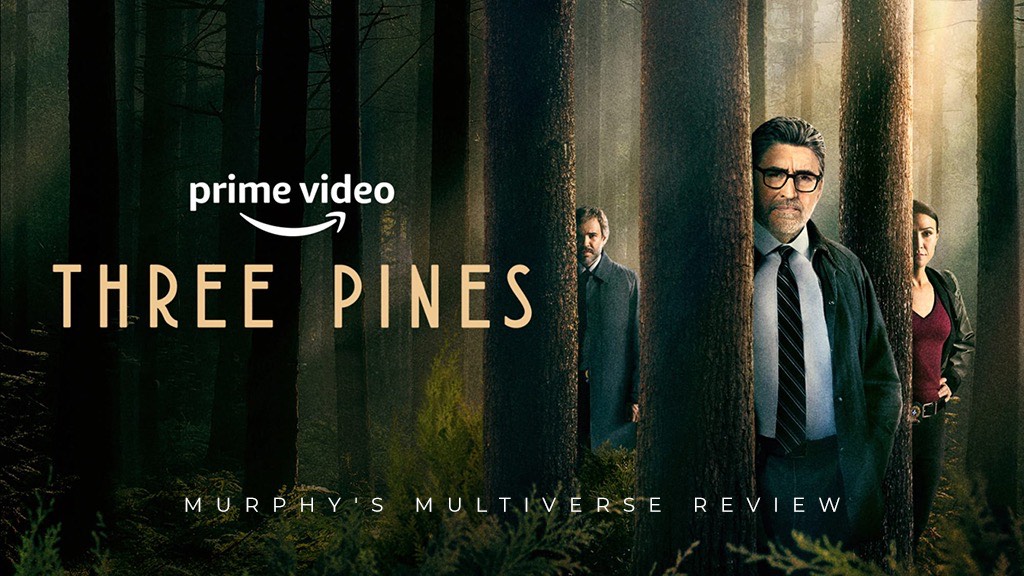
  • REVIEW: Amazon Prime’s Three Pines Should Be Your Winter TV Binge

    REVIEW: Amazon Prime’s Three Pines Should Be Your Winter TV Binge

    The New York Times bestselling Inspector Armand Gamache novel series from author Louise Penny is what I would call a perfect winter read: cozy mysteries set in the fictional village of Three Pines, inhabited by a colorful, but lovable group of people who have found both friendship and refuge in each other, away from the bustle of surrounding Quebec. Imagine a quaint, wintry village where you can just as easily ice skate on the frozen pond in the square as you can enjoy a gourmet dinner and lively book discussion in front of a roaring fire at the local bistro. It’s easy to imagine Penny took her inspiration for the Three Pines from a Thomas Kinkade painting–if his paintings just happened to be filled with a whole bunch of murderers.

    Alfred Molina as Chief Inspector Armand Gamache

    Amazon Prime Video’s adaptation of the series, The Three Pines, promises all the coziness of those charming mystery novels, sure to delight fans of Agatha Christie and Hercule Poirot. But while the novels balance a delicate line of calculating thrill and disarming charm, the show suffers from pacing that is practically rocket-speed by comparison—every two episodes tackles the plot of one novel. That said, The Three Pines is a brilliant introduction to Inspector Gamache and viewers need no prior familiarity with Penny’s books to enjoy a series that’s perfect for your wintry evenings.

    The series opens with Chief Inspector Armand Gamache (Alfred Molina), head of Homicide for the Surêté du Québec, arriving in the Three Pines to investigate the murder of the incredibly unlikable CC de Poitiers. While this is surely meant to be a sort of punishment for the Head of Homicide after a recent dispute with superiors, Gamache seems nonplussed by the slight and dives into the case with his familiar team, Jean-Guy Beauvior (Rossif Sutherland) and Isabelle Lacoste (Elle-Máijá Tailfeathers). Bumbling, accident-prone Yvette Nichol (Sarah Booth) challenges the team’s patience as the local rookie detective. Molina is particularly likable as Gamache, whose level-headedness and insightful observations require a measured approach. Molina is incredible at depicting both empathy and patience onscreen, traits so unique to Gamache that he is often called a coward for his failure to react. But in a time when both the United States and Canada are plagued by overreactive police, it’s rather understandable to see how this makes Gamache an outlier.

    Arisawe (Georgina Lynn Lightning) and Kara Two-Rivers (Isabel Deroy-Olson) with other protestors at the MMIWG protest.

    Indeed, the series tackles some rather bold societal issues head-on. Years of systemic abuse towards Indigenous Peoples by Christians and the Canadian government forms the overarching mystery spanning all eight episodes. The series opens with the shouts from a protest by First Nations people who’ve gathered outside the Police Headquarters. They are calling for intervention in the cases of hundreds of Indigenous girls who go missing each year that see no resolution. Blue Two-Rivers (Anna Lambe) is one of those girls and it’s here Gamache meets her mother, Arisawe Two-Rivers (Georgina Lightning). Gamache and Lacoste, a Native herself, are haunted by the mother’s anguish and the seeming dead-end case. Georgina Lightning is powerful in this role as a fearless mother taking on the entirety of the Surêté du Québec. While the series might have been focused on monochromatic—read: White People—problems and centered entirely on the idyllic village of Three Pines, here it lifts its head towards a larger picture, aware of its own problematic Quebecois backyard and the longstanding racial troubles plaguing it. It’s this mystery that is perhaps the most compelling and with the highest stakes, and reason enough to binge all eight episodes.

    Chief Inspector Armand Gamache (Alred Molina) and Jean-Guy Beauvoir (Rossif Sutherland) interrupt a meeting of the Three Pines book club.

    That said, it’s the quirky and delightful villagers who will endear you to Three Pines, all of whom are suspects in the rather awful CC de Poitiers’ death: psychologist-turned-bookseller Myrna, strongly opinionated and fiercely protective played by Tamara Brown; sweet and sensitive artiste Clara Marrow (Anna Tierney); Olivier and Gabri, the oddly-matched gay couple who own and operate the bistro (Frederic-Antoine Guimond and Pierre Simpson); Bea Mayer, the indigenous art gallery owner (Tantoo Cardinal); and the delightfully obscene and strange reclusive poet Ruth Zardo, brilliantly played by Clare Coulter. Louise Penny has said she yearned for a sense of belonging and an end to loneliness, and so it makes good sense that The Three Pines is a sort of safe harbor for this found family, “only ever found by people lost.” The immediacy of the murder introduced in Whiteout Part One and Part Two (episodes 1-2) is also its challenge; it’s hard to connect to a bunch of murder suspects who all appear to be hiding secrets. But by episode three Gamache (and viewers) are part of the fold and the sense of magic that envelops the village.

    Ruth Zardo (Clare Coulter) and Myrna Landers (Tamara Brown) at the annual Three Pines curling match.

    The Three Pines is a compelling watch made even more likable by its own social awareness. Indeed, the case of the missing Blue Two-Rivers is echoed throughout each episode with haunting art installations in Be Calm, Bea Mayer’s art gallery. In one, striking red dresses hang from empty tree limbs, each one representing a missing Indigenous girl or woman. It’s hard not to draw comparisons to the striking visuals in Handmaid’s Tale. But where the latter is often heavy and difficult to watch with its dystopian vision, The Three Pines manages to balance its reality with a sense of hope. It’s an easily bingeable, enjoyable mystery series with a talented cast, perfect for cozy fireplace viewing. The first two episodes are available from Amazon Prime on December 2, with two new episodes released weekly until the finale on December 23.

    Louise Penny’s latest novel in the Inspector Gamache series, A World of Curiosities, is due out November 29.

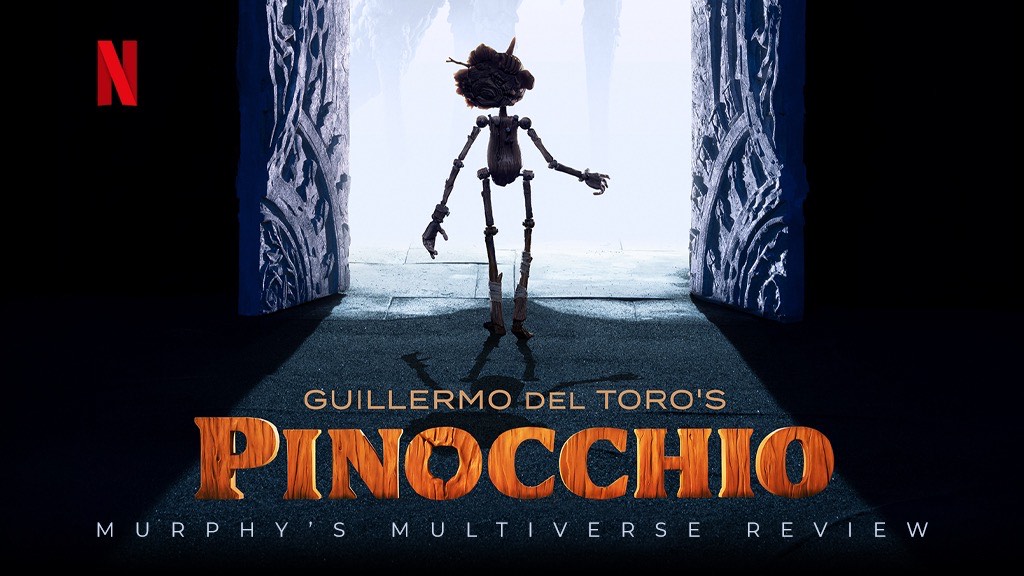
  • REVIEW: Guillermo del Toro and Mark Gustafson’s ‘Pinocchio’

    REVIEW: Guillermo del Toro and Mark Gustafson’s ‘Pinocchio’

    Pinocchio, once a beloved animated classic from Disney, was given new life this year thanks to a hybrid live-action film from Disney and director Robert Zemeckis and a stop-motion take from Guillermo del Toro and Mark Gustafson. Disney’s take, which starred Tom Hanks as Geppetto, was considered a misfire by both audiences and critics alike. While featuring an all-star cast, the movie itself often felt wooden. There was no charm to it, no spark, so it’s not entirely surprising then that many have been curious about Del Toro’s take on the legendary tale, especially given he has called the fable one close to his heart. While it’s often uneven, Del Toro and Gustafson have crafted a visually stunning adaptation that is incredibly emotional and worthy of a watch.

    When it comes to the tale of Pinocchio, the story basics of the story are well-known. A boy puppet eager to become a real boy, and who must prove himself worthy of doing so. That story is still at the center of this take, but Del Toro and Gustafson manage to craft an even more compelling tale around it. While the Disney remake suggested Geppetto had a son, we never really learned much about him or what happened to him. In this version of Pinocchio, though, we get to see Geppetto and his son, Carlo, and their relationship before a tragedy cuts their time together short. It’s an incredibly heartbreaking moment that is handled with such care. It’s this particular scene that separates this version of Pinocchio from those before it – this isn’t a sugar-coated child’s tale. The emotion radiates off the screen thanks to the beautifully done stop-motion and the agony in the voice work.

    That isn’t to say this adaptation of Pinocchio is without its flaws. This stop-motion take often feels like it drags, while somehow also managing to jump all over the place. It can be incredibly off-putting, but those able to make it beyond those moments will find that the uneven journey results in a beautifully told story. In a letter to the press, Del Toro explained that when crafting this take on Pinocchio, he wanted to showcase just how “brief and significant we are in our time with each other.” And although the film sometimes stumbles over its handling of death, it ultimately does highlight the heartbreaking reality of life and death.

    I longed to do a film full of light, that would explain how brief and significant we are in our time with each other – and I wanted to do it with heartbreaking beauty and rendered by the most human craftsmanship. So, I chose one of the most delicate, artisanal forms of our art form – stop motion animation – and pushed it as much as possible.

    Del Toro

    The classic Disney songs will, obviously, not be present in this take. And that does, unfortunately, hurt the movie as the songs introduced in their place are forgettable and don’t really add much to the film overall. In fact, most of them go on far longer than necessary. Much like the film itself. While a visual feast packed with an emotional story, the movie’s nearly two-hour runtime is definitely felt by the end.

    All in all: Pinocchio is a heartfelt movie that welcomes its viewers to reconsider what we leave in our wake upon death. It’s a heartbreaking tale meant to remind us to live.

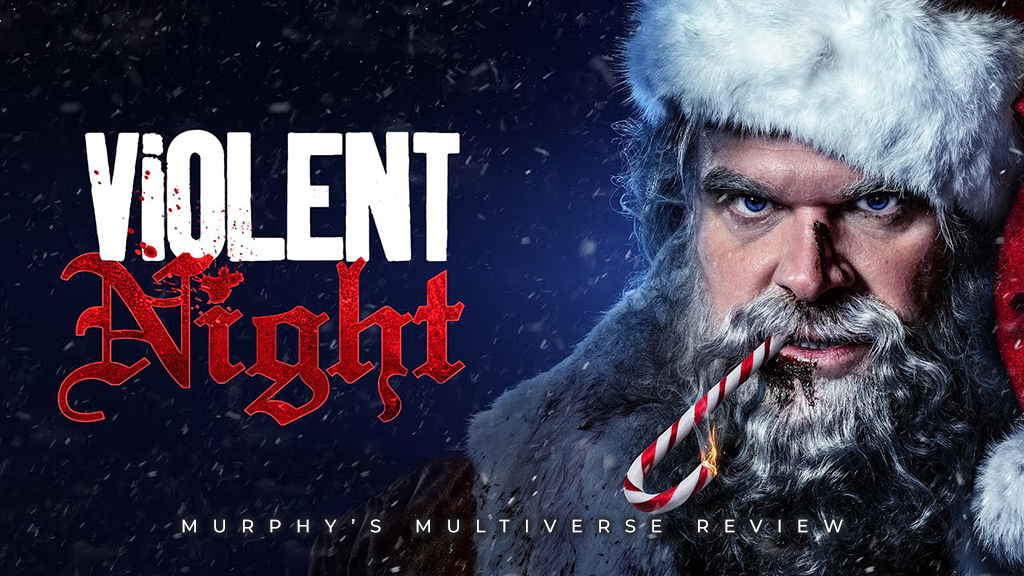
  • REVIEW: ‘Violent Night’ is the Merriest Slasher of the Year

    REVIEW: ‘Violent Night’ is the Merriest Slasher of the Year

    David Leitch and Kelly McCormick have produced their fair share of bloodthirsty action films, but none of them have been quite as fun as Violent Night. Starring David Harbour as the most kick-ass version of Santa Claus the world has ever known, the movie centers around a single Christmas Eve with more death and destruction than any one household should produce. Now an alcoholic on the verge of quitting his centuries-long commitment to gifting children toys, Santa finds himself unexpectedly trapped in the home of a wealthy family held captive by ruthless mercenaries. In order to escape and save the innocents inside, the once-jolly old St. Nicholas must tap into a part of himself long forgotten and coat the floor with as many bodies as he can.

    Yes, Violent Night is every bit the delightfully brutal slaughter-fest one might hope it would be. There’s a moment in the film when the audience can tell it’s about to kick into high gear, and when it does, it absolutely does not disappoint. Tommy Wirkola‘s twisted direction results in some of the most creative, grotesque deaths put on screen in a long time, and the movie’s clear understanding of its own audience leads to more than a few cheer-worthy moments. Violent Night is the kind of experience best had with a crowd, or at least a few gore-positive friends, as its many well-choreographed action sequences beg for loud, visceral reactions. It’s hard to impart just how satisfying some of the kills in the film are without sounding like a complete psychopath, but the giddiness with which audiences will likely be discussing them on their way out of the theater is a testament to how expertly set up and executed much of the violence is.

    That being said, the immense amount of general manslaughter encasing Violent Night is far from its greatest strength. As entertaining as it is to watch Santa Claus blast his way through villainous scum, none of it would work if there wasn’t a giant heart beating at the center of the story. It’s not the kind of film that’s vicious for the sake of being vicious, but rather an earned series of beats that aren’t afraid to indulge in a little body horror. Harbour thrives in this type of role, as the begrudging hero with a genuine soul and plenty of rough edges. His performance, though familiar, is extremely effective for what Violent Night has to offer, injecting the bouts of sadism with an authentic sense of compassion. The captive family, too, keeps the film somewhat grounded, along with providing a surprising amount of comedic relief throughout. Beverly D’Angelo, Edi Patterson, and Cam Gigandet are hilarious as the vile elite, while Alexis Louder, Alex Hassell, and, especially, the young actress who plays their daughter steal the show as good-natured people just trying to get through Christmas.

    So much of Violent Night works so well, as long as one is willing to enter its world on the terms it provides. It is precisely what it should be, if not a little better. A fierce, quick-witted, black action comedy that revels in the inhumane without feeling inhuman. Weirdly enough, it often feels more like a warm-hearted Christmas flick than most of the productions that air on Hallmark year in and year out. The film is sure to become an instant classic for many, and hopefully, it won’t be the only one of its kind for too long. Wirkola, Leitch, and McCormick have something special going for them, and if Violent Night is any indication, there doesn’t seem to be a premise they shouldn’t be allowed to tackle.