Category: Reviews

  • REVIEW: ‘Velma’ is Too Cynical and Meta for its Own Good

    REVIEW: ‘Velma’ is Too Cynical and Meta for its Own Good

    Scooby-Doo is back with an animated series that explores Mystery Inc. before they united to take on mysteries across the United States. Yet, this time around, the series will not include the iconic cartoon dog and also takes some cues from popular R-rated series. Velma is trying to be the most unique take of a classic franchise, but somehow loses its way in trying way too hard and also overcompensates with its meta-humor.

    There’s one thing worth praising about Velma and that is the animation. The character designs are surprisingly detailed and the hallucination sequences are actually quite impressive visually. Once they add some shading, the animation suddenly pushes the series to shine beyond just being Scooby-Doo meets Family Guy. There are also some surprisingly creative shot composition that make this series visually stand out from others.

    Yet, not even some of its most visually stunning moments can’t cover the series’ general issue of just trying too hard. The series opens with a sequence of supposedly 15-year-olds naked in the showers talking about clichéd plotlines. Theere’s no subtlety in this series that seems quite desperate on showcasing that it’s subverting expectations by repeating some we’ve seen with other shows.

    Many compare it to Harley Quinn, but that series has the advantage of feeling like a DC Comics adaptation first and a meta-commentary second. In the case of Velma, it feels like the series was written to subvert the storylines and expectations of these characters before looking at its characters. There’s an overarching mystery but it feels like the series is more interested in making fun of TV storylines rather than telling an actual story.

    We have a murder mystery at its core, but it seems more like an afterthought. There’s no real hint at who might actually be the murderer. So, you as a viewer have no incentive to get invested and just wait for the reveal. Plus, we have a mystery built around her mother going missing that also doesn’t really feel relevant. Velma’s big character struggle is she feels guilt over her mother leaving in the form of hallucinations when she solves “mysteries.”

    Yet, it also changes the rules of when and how they appear; something pointed out in the series. Telling the audience that a clichéd plotline is the way it is while still doing it takes away from the experience. It falls flat as a joke and the subversion isn’t as poignant as it may have seemed at first. The running gag built around Glenn Howerton‘s take on Fred Jones goes on for too long and overstays its welcome; once again taking away any commentary it was trying to make. It’s stumbling something that Be Cool, Scooby-Doo managed better back in 2015.

    Mindy Kaling gives a decent performance as Velma Dinkley, who is constantly sarcastic and not a very likable character most of the time. Her dynamic with Constanze Wu‘s Daphne is the most interesting part of the show, but they also try so hard to subvert expectations that they end up repeating old cliches, such as with Norville’s attempts to woo him. The fact they are desperately trying to avoid the character’s well-established name showcases how it takes away elements we’ve come to love without honoring them along the way.

    The diverse cast is great and could’ve been used for great effect to further explore these characters. Making good use of their backgrounds to establish what they have in common and how they differ to create a strong bond for the future members of Mystery Inc. It’s not even original in this attempt, as even the film SCOOB! that released in 2020 when Gina Rodriguez voiced the character, which added elements to the character from her new cultural background.

    Meta humor can be funny, but if used reasonably. The risk of using this kind of humor is that it comes at the cost of an interesting story arc or an abundance of cynicism. Most of the cast is extremely one-note and besides the before-mentioned duo, there’s not much development here. They took very specific character traits from the original and blew them up in a way that loses what made these characters so memorable.

    Subsequently, the humor doesn’t truly land because most of it is trying to be clever. Norville making a comment he doesn’t like drugs isn’t funny, because the whole running gag was never alluded to in the first place. Hell, the original live-action Scooby-Doo movie made a better joke around that jokey assumption back in 2002. That same film was built around the idea of subverting the clichés that developed around the series. So, the show’s core premise isn’t as original as it’s trying to be.

    It tried too hard to be clever while doing a schtick we’ve come to expect once “meta-humor” is alluded to even for a second. Outside of its animation, the series sadly falls flat even if it could’ve been so much more. There’s nothing wrong with a more adult take on Scooby-Doo and it could’ve worked with this cast of characters. Yet, the show’s cynical take on subversion is overshadowing any of that potential leaving us with an uninteresting mystery to watch.
  • FIRST IMPRESSION: ‘One Piece Odyssey’ Demo Teases Promising JRPG

    FIRST IMPRESSION: ‘One Piece Odyssey’ Demo Teases Promising JRPG

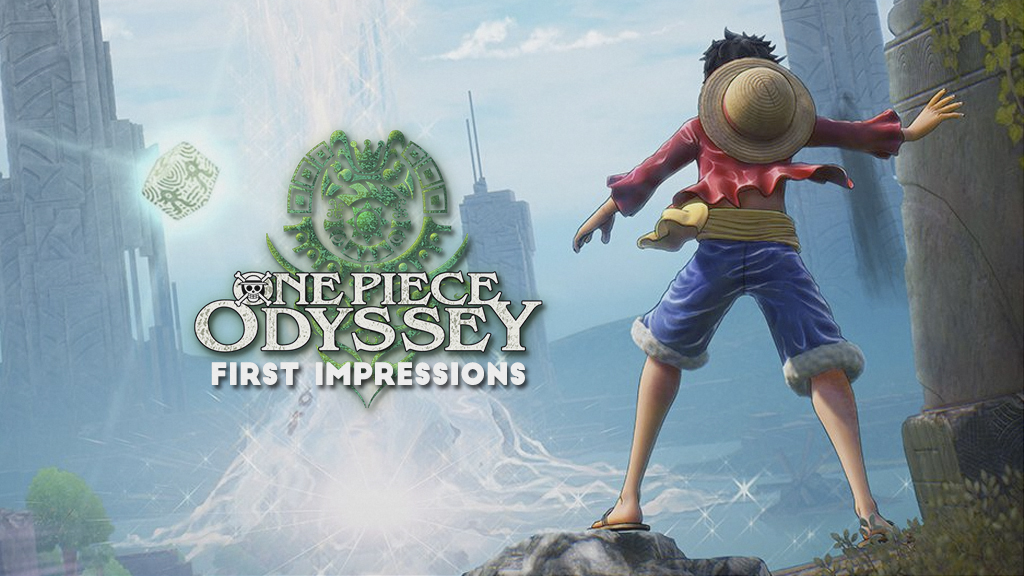
    One Piece is returning in style, as a brand new game is about to release as part of the 25th anniversary of the franchise. One Piece Odyssey was a long-rumored project and might be the franchise’s most ambitious entry into its gaming expansion. It’s the franchise’s first foray into bringing the chaotic Straw Hat crew into the world of JPRGs and trying to bring their unique energy to the normally slower-paced gaming genre. We get a demo release that offers a first look into what we can expect from the full game. As such, here are our first impressions of the game.

    The story of One Piece Odyssey is rather straightforward. The Straw Hats were sailing along the seas before a Knock-Up stream shoots them randomly into the sky. With a last attempt to escape, they end up on the mysterious island of Waford. We start the game at the moment when Luffy wakes up and his crew is scattered, which leads to us having to help them find the rest of their crew and meet some locals along the way.

    After you wake up on the shore of Waford, you’re pretty much thrown into the game. Most of your characters start off at level 40 with quite a few abilities. It lets you try out every character while getting a tutorial on how the basic combat works. The moment you enter your first encounter you’ll instantly see the basic structure of an RPG at play. Yet, there are some interesting additions that do make it stand out.

    The Straw Hats are usually very powerful on their own. So, to ensure no one is nerfed, they created a system that has multiple areas where enemies face a member of the pirate crew. You can move between these zones, but you’ll have to defeat the enemy in front of you to join another. The combat system also allows you to swap out party members per turn to make use of their abilities; though it feels a bit too powerful as theirs no penalty for switching characters on the field or that aren’t on the field.

    A lot of work went into the animations of these attacks, which are very authentic and add a lot of charm to this game. Though, sadly these aren’t always translated to the exploration as the game will fade to black with an effect when showing someone attacking a creature in the overworld. Given the work that was put into the models, it does seem like a shame they rely a bit too often on a fade to black to transition from one moment to the next.

    One drawback is that the game has not really been challenging as of now. The Straw Hats lose their abilities and reset to Level 1 through the story but you still can one-shot specific enemies. There’s not a lot of challenge and even the puzzles are quite barebones. There’s a chance that may change over the course of the story, but there was rarely a time I had to worry about anyone taking too much damage. Though, that is mostly due to abusing the party change function to just swap out a member that would do more damage.

    Still, the mechanics at play are interesting and are fun to play around with. If they start expanding on this system, it would make for a very promising JRPG, especially with the event mechanic where you’ll get a bonus if you fulfill certain requirements. There’s also a chance to use a knockback that takes care of enemies within an area fast; though not as satisfying as the knockback element in Midnight Suns. There are a lot of great elements that make these battles dynamic and interesting, which has me excited to see how they are later in the game.

    The only drawback is that the exploration is very slow, especially in the opening area. It’s not uncommon for JRPGs to take some time before they get going, but there are small elements that seem to take up more time than they should. Luffy can swing to an area by stretching his arm, but you have to wait a certain amount of time before you can move again. Once you go the wrong way during a specific sequence, the loading times take longer than they really should. You’ll even have a cutscene before you can explore only to be halted just moving forward to enter another. Pacing issues could be a problem as some aspects might drag out more than they really should.

    Still, overall, the game is very promising and the story also offers just enough intrigue to keep new and long-time One Piece fans hooked. They make some deep-cut references that feel like elements to help make Waford feel more like a part of this world. The mystery with the weird floating orb and the cubes is just the perfect amount of bizarre that’ll likely keep players guessing. Also, they nailed the dynamics of the Straw Hats with their little interactions during cutscenes, on the map, or even during cutscenes.

    The demo also gets bonus points for letting me save at the end of it, which can be used for once you purchase the full game later on. As such, you’re not forced to replay the entire opening once again and can just leisurely jump in where you left off. Still, the first impression of this game is positive even if some exploration aspects could’ve been tweaked to run longer. With many mini-worlds to visit through memories, it’ll be exciting to see what Bandai Namco has planned for this ambitious JRPG once it releases. From what the demo offers, it definitely is a recommendation for fans of One Piece and worth trying out for those new to it.

  • REVIEW: ‘The Bad Batch’ Matures With Deliciously Complex Third Episode

    REVIEW: ‘The Bad Batch’ Matures With Deliciously Complex Third Episode

    *SPOILERS*

    Everybody loves a good villain story. Whether it’s Travis Bickle in Martin Scorsese‘s Taxi Driver, or the zany cast of characters in James Gunn‘s The Suicide Squad, audiences have always flocked to plots centered around the worst of the worst. The exact draw behind these stories is up for debate, but perhaps the most common theory is that people are naturally curious about notions they don’t understand. They are obsessed with glancing into the minds of those they deem lesser, an almost demented form of escapism that allows them to say – “well, at least I’m not that.” The third episode of Star Wars: The Bad Batch‘s second season plays on this fascination, but takes an alternative, and quite frankly, more engaging route in its execution.

    After a fairly routine and unmemorable set of premiere adventures, The Bad Batch finally pushes itself forward with The Solitary Clone. The first episode of the series not to feature the main group of titular characters, Clone instead focuses on their former comrade and current rival Crosshair, giving fans a look into his side of the conflict and a better understanding of Imperial clones at large. It’s a much-needed break in the formula for a show that often falls into repetition, and one of the Star Wars franchise’s best deconstructions of the early Empire and its very mortal forces. The episode works as well as it does because it refuses to treat its protagonists as villainous, despite their usual status quo within the series. This is not a story that says “look how awful our leads are”, but one that revels in convincing its viewers of their humanity.

    There’s a dark triumph in balancing the ideals and reactions of Crosshair and his latest scene partner, the once-great Commander Cody. Both are stuck with the “Republic” after Order 66, but only one has grown to regret it. Cody, as fans might have hoped, has grown disillusioned with the Empire, and spends most of the episode struggling with his decisions. Crosshair, on the other hand, remains steadfast in his loyalty. Even after committing heinous acts in the name of “following orders”, however, Clone still manages to make Crosshair feel sympathetic. In classic Star Wars fashion, a sense of possible redemption endures, in large part due to a silent comprehension of Cody’s reasoning. A call-back to an old quote from The Clone Wars – “You know what makes us different from battle droids? We make our own choices, and we have to live with them too.”

    It’s this back-and-forth between the one-time Republic heroes that gives the episode a thriving backbone, tapping into the soul of Star Wars and hyper-focusing on the “will they, won’t they” thematic line that runs through all clone-related projects. The episode is also unafraid to demonstrate the consequences of its leads’ aforementioned choices, giving it an added layer of brutality that acts as a wildly effective visual aid in its point-making. From Clone‘s opening moments, there’s an unexpected admission that the next twenty-odd minutes will take themselves more seriously than the previous week, and the show finds itself maturing because of it.

    The Bad Batch has been in desperate need of trying something new for a long time now, and it’s refreshing to see the series embrace one of its characters and his arc so wholeheartedly in an installment that’s truly unlike the rest. One can only hope this sort of concentrated storytelling continues for the rest of the season, and that the show’s other leads receive similar treatment when they inevitably return to the forefront. Otherwise, The Solitary Clone will be forced to stand out as a diamond in the rough, a singularly delicious tale fit for consumption by any viewer.

  • REVIEW: Anne Rice’s ‘Mayfair Witches’ Worth a Short Spell

    REVIEW: Anne Rice’s ‘Mayfair Witches’ Worth a Short Spell

    A spoiler-free review of Episode 1

    Anne Rice might be best known for her Vampire Chronicles novels, amongst which the bestselling Interview with the Vampire has now seen multiple adaptations, most recently brought to life in AMC’s 2022 television series by the same name.

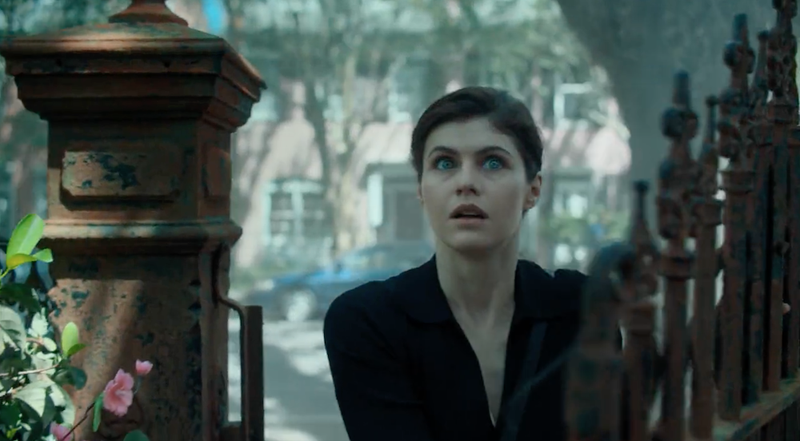
    But within Rice’s gothic horror world, which AMC has dubbed the Anne Rice Immortal Universe, there be witches, and the Mayfair Witches have a dark and compelling history taut with mystery that should lend itself well to a chilling mystery series. Based on Rice’s best-selling trilogy, Lives of the Mayfair Witches, the eight-episode series centers on Rowan Fielding (Alexandra Daddario), who discovers she is descended from a powerful family of witches haunted by a powerful spirit known as Lasher (Jack Huston). Rowan’s seemingly confident and calculated life—she’s a gifted neurosurgeon, after all—is thrown into chaos when she discovers a burgeoning power within herself that she cannot control.

    Harry Hamlin as Cortland Mayfair

    Rice’s love for New Orleans and its rich, gothic history has always made for gorgeous film and television adaptations, and Mayfair Witches is no exception. In the debut episode, “The Witching Hour,” the lush and haunting backdrop of Mayfair Manor is outshone only by the lavish mansion and decadent parties of Cortland Mayfair (Harry Hamlin). In the recent past, a young Deirdre Mayfair (Cameron Inman) escapes to the seeming freedom of Cortland’s estate, but behind the scenes it’s clear he’s manipulating events to achieve his own ends. For what purpose is unclear, but his laissez-bon-temps-rouler sort of attitude is more uncomfortable than disarming. What is clear is Lasher, the sometimes-companion of young Deirdre, is not at all welcome to the rest of the Mayfair clan.

    Jack Huston as Lasher

    Throughout the frenetic first episode, Rowan is anxious to discover her biological family history. While she has an incredibly close emotional bond with her adoptive mother, events lead to Rowan questioning her new supernatural gifts. In present-day, adult Deirdre (Annabeth Gish) is seemingly a withered invalid, kept safe and under control using antipsychotics. When her new physician decides to stop her treatment, Lasher appears again. Coincidentally, Rowan will find herself haunted as well.

    If you’re not quite following the time-hopping storyline, you’re not alone. It would presumably take an in-depth knowledge of the novels to see the connections being teased out in this first episode, they’re so ethereal. Showrunner Esta Spalding (On Becoming a God in Central Florida), Writer Michelle Ashford (Masters of Sex), and Director Michael Uppendahl (American Horror Story, Walking Dead) have delivered a turbulent first episode that, given a little more runtime, might settle into compelling television. While the series debut doesn’t quite achieve anything particularly novel or emotionally riveting, it manages to satisfy a “just-one-more-episode” sort of intrigue that confirms Mayfair Witches is more mystery/thriller than its drama/horror counterpart, Interview with the Vampire. While the plot might tug you along throughout the first half of the season, Rowan is unlikely to capture your interest beyond her immediate predicament. Her whirlwind backstory is at times both empowering and flailing. Which isn’t to say she isn’t interesting—who wouldn’t want to follow a supernaturally gifted, brilliant, and beautiful neurosurgeon around? But you’re much more likely to stick around to find out what happens to Rowan, rather than what she chooses to do.

    Episode one of Mayfair Witches debuts on AMC and AMC+ on Sunday, January 8 at 9:00 pm ET/PT. The eight-episode series then releases weekly.

  • REVIEW: ‘M3GAN’ is the Modern (and Much Improved) ‘Child’s Play’

    REVIEW: ‘M3GAN’ is the Modern (and Much Improved) ‘Child’s Play’

    M3GAN is this generation’s version of Child’s Play and is a stronger film than the 1988 cult classic horror film. It’s a boldly declarative statement, but the first major American theatrical release of 2023 is a modern black comedy that should be heralded for its innovation in the genre. This movie has the most absurdly humorous moments from the big screen since Everything Everywhere All At Once, while also being a film that plays into resonating and modern themes through a new lens. And to boot, the character of M3GAN is primed to become a cultural icon for the new year and a face of horror for years to come.

    M3GAN, directed by Gerard Johnstone, with the story by Akela Cooper and James Wan, and produced under Blumhouse Productions, follows the story of roboticist Gemma (played by Alison Williams) as she suddenly finds herself in the custody of her niece Cady (played by Violet McGraw) following the death of the latter’s parents. To help remedy a struggling home life situation, Gemma provides her niece with a prototype of her new work project to assist in looking after and providing emotional support for Cady: the Model 3 Generative Android (abbreviated to M3GAN). This of course has dire consequences as the artificial intelligence gains sentience that’s combined with a warped and everchanging moral code.

    Audiences will greatly appreciate how much this film is self-aware of its own absurdity. Following the release of M3GAN‘s first trailer, some expressed curiosity about the genre disparity of a standard horror thriller trailer followed by the iconic dance moves of the sentient doll. In what would feel like an unexpected turn from only viewing this trailer, M3GAN leans significantly harder into its comedic elements. Without getting into spoiler-filled specifics, the movie is rife with more musical moments that should receive solid laughs from audiences. The film’s decision to lean more toward a black comedy was the right call from the creative team. Because of this call, the film was able to use the absurdity of the M3GAN as the basis for a cheeky satirization of the capitalistic banality of corporate attempts to appeal to (and manipulate) impressionable children’s emotions. It’s a concept that certainly wouldn’t have played as well if M3GAN was produced as a straight horror-thriller project. And to be simply put, the more comedic iteration will appeal to a broarder audience that has an appreciation for campy films such as the aforementioned Child’s Play and its contemporaries.

    The horror genre has leaned heavily into the concept of common childhood tokens as ultimate monsters (namely Annabelle and The Boy in recent memory), but M3GAN should be commended for finally moving the trope in a way that will resonate with modern audiences. While the notion of artificial intelligence gaining evil sentience is relatively antiquated in the year 2023, thematically this film is remarkably modern. M3GAN is successful in characterizing how it depicts the themes of new-age absentee parenting through technology and the impact it has on neutering social relationships. It turns McCraw’s Cady into a tragic figure, both from the overt death of her parents and the subconscious devolution into her inner id through technology’s instant gratification. It should be noted that these themes are in no way subtle in how they’re presented or too deeply explored, though that should be expected in a standard popcorn black comedy flick.

    Amie Donald is the film’s MVP for the physical characterization of the M3GAN doll. The young actress, and the training she received from Jed Brophy and Luke Hawker, helped cement the character as an iconic figure in the pantheon of modern horror figures. Donald (with the help of the visual effects departments) helped create a captivating blend of comedic dance numbers and exhilarating chase scenes. With lesser-quality direction and visual effects work, it’d have the potential to be an unmitigated flop that takes audiences out of the movie. Instead, the physical performance of M3GAN successfully leans into the absurdity of the premise while taking itself seriously.

    Though this isn’t the perfect version of this movie by any means. M3GAN is hampered the most when the film tries to play as a basic horror film. The first act relies too heavily on the needless jump-scare attempts that have plagued the 21st century of horror films and nearly sets the expectation that M3GAN will follow this unfortunate trend, though thankfully, rudimentary jump-scares are more sparse as the film progresses. In addition, the writing for Allison Williams’ Gemma struggles to find a consistent identity for her character. She shifts intermittently between the standard horror film protagonist and a woefully ill-prepared figure to raise a child. Gemma is saved through Williams’ on-screen chemistry with Violet McCraw, especially in their final conversations with one another.

    Coming into 2023, it likely wouldn’t be expected that M3GAN would be on many people’s “best movies of the year” list. However, this year’s first major American theatrical release has all the makings of a surprise success in the horror genre and should be a promising sign for the health of theatrical films. Blumhouse Productions and Universal Pictures have their next major horror franchise in the form of a trendy tween artificial intelligence doll.

  • REVIEW: ‘The Bad Batch’ Season 2 Premiere Sets the Tone for an Even More Grim Second Season

    REVIEW: ‘The Bad Batch’ Season 2 Premiere Sets the Tone for an Even More Grim Second Season

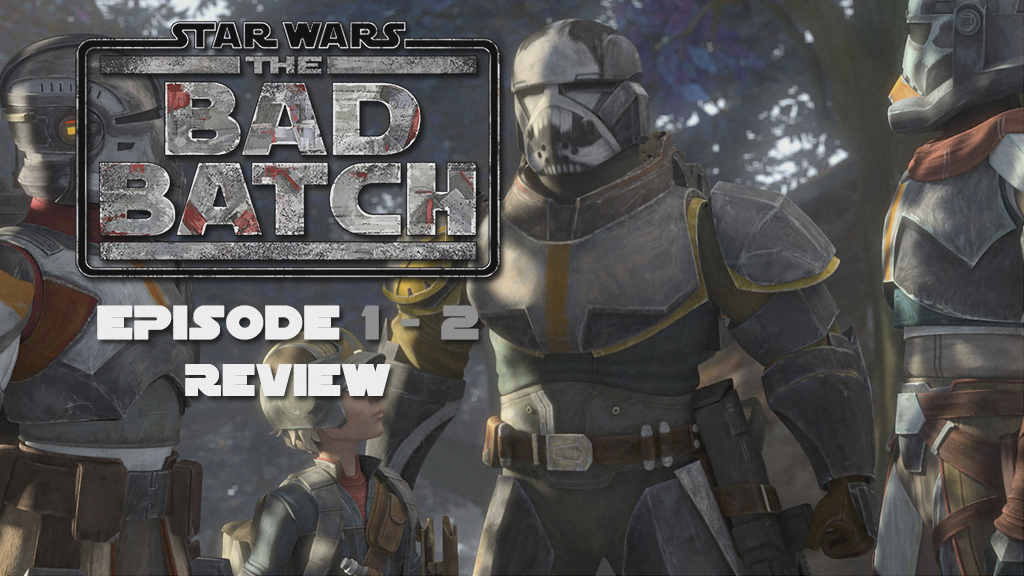
    While Rebels and Andor tell the story of how the early days of the Rebellion, The Bad Batch tells a darker, more grim story: one of the early days of the Empire. Set around 19 years before the Battle of Yavin, The Bad Batch takes place right on the heels of Order 66 and the end of The Clone Wars and puts on full display how the Empire began to grow into the type of tyrannical rule that characters like Saw Gerrera and Luthen Rael would ultimately seek to end. It’s animated, sure, but it’s no kids’ show, and Season 2 reminds the audience of that over the course of its heavy two-episode premiere.

    After escaping from a mission gone wrong that serves to remind the audience of who is who on the team (and what their personalities are), the Bad Batch head back to their de facto headquarters on Ord Mantell. It’s a short reunion with Cid, their Trandoshan “benefactor”, as acting on a tip from Cid’s pirate friend, Phee (voiced by Wanda Sykes), the Batch finds themselves sent on a mission to a location familiar to fans of The Clone Wars: Castle Serenno, the home of Count Dooku and the now defunct (thanks to Vader) Separatist movement. With Dooku having lost his head, it seems the Empire has begun to collect his war chest and Cid wants her hands on whatever Clone Force 99 can get before it’s all gone. While Hunter isn’t too keen on the gig, the rest of the group is convinced it’s a job worth doing. Ultimately, Cid convinces Hunter with a bit of logic that sets the tone for one of the big themes of Season 2: the aggressive expansion of the Empire. With the Empire’s reach growing, this job could provide a big enough payday to get the team out of the game, giving them some freedom and providing a safe future for Omega.

    Omega in a scene from “STAR WARS: THE BAD BATCH”, season 2 exclusively on Disney+. © 2022 Lucasfilm Ltd. & ™. All Rights Reserved.

    “Our Lives Are Like This Because of Omega”

    While the Batch all agrees to head to Serenno, they aren’t all doing it for the same reasons. Echo agrees it was right to save Omega, but it has fundamentally changed their lives and while Hunter wishes to use the war chest to get out of the game to give Echo a better life, Echo believes the war chest should be used for…more war, only this time with Clone Force 99 taking it to the Empire. The Bad Batch aren’t the shining example of a modern family, but they are all each of them has and that includes Omega. The decision to keep Omega with them as they continue to run missions for Cid will certainly be a big part of the core of Season 2 and little time is wasted in reminding the audience that while she’s an enhanced clone (and still a big mystery), Omega is just a kid running the galaxy with some of its most wanted. To that end, Echo makes his point to Hunter that the life he’s trying to escape only exists because of Omega. Omega overhears and that sets into motion the events that lead to her being in danger quite a bit over the course of the two-episode premiere.

    Once the headquarters for the Separatist movement under Dooku, Serenno has, like Kamino before it, been decimated by the Empire. The Batch’s mission to Serenno nicely explores the blurred lines between good and bad in a galaxy where everything has recently been upended. Echo’s desire to use the war chest to wage war confuses Omega, who can’t quite seem to understand how that’s any different than Dooku’s goals. Echo’s response of “depends on how we use it” doesn’t offer Omega the clarity she needs, but it also sets up events to come over the sophomore season of the series.

    (L-R): Tech, Hunter, Omega, and Echo in a scene from “STAR WARS: THE BAD BATCH”, season 2 exclusively on Disney+. © 2022 Lucasfilm Ltd. & ™. All Rights Reserved.

    The mission goes a bit sideways, as you might expect, and the group gets split up. Omega, Tech and Echo find themselves in the company of Romar, a native of Serenno who survived the Empire’s ariel bombardment of the planet. Despite the extraordinary odds their facing, Omega’s insistence on completing the mission, which is a clear reaction to Echo’s comments about how she’s changed their lives, causes Romar to comment that this group of clones is much more like those still working for the Empire than they think. Romar continues to add some perspective to the group when he reminds Tech that he and many other inhabitants of Serenno were among Dooku’s first victims in building his rich war chest and that being a native of the planet makes him Serennian, not Separatist. Romar is a man, who like Hunter, can’t wait to put the past behind him, but that’s not something every Batcher is willing to do.

    The two-episode premiere ends with the return of Season 1’s villain, Rampart, and a reminder of just how far the Empire is willing to go to establish its own version of order and truth to the galaxy. Rampart’s willingness to cover up the events of the Season 1 finale that saw Kamino destroyed are just a microcosm of the Empire’s “at all costs” approach and something that will certainly be an ongoing plot point in Season 2. It serves as a grim reminder of what these clones are up against as they try to make their own way in the galaxy. And ultimately “Spoils of War” and “Ruins of War” do a fine job of detailing how achieving that goal will be the Bad Batch’s toughest mission yet. The Bad Batch isn’t peddling hope; it’s building the world that almost ran out of it.

  • REVIEW: ‘Doom Patrol’ Episode 5 — Youth Patrol

    REVIEW: ‘Doom Patrol’ Episode 5 — Youth Patrol

    Doom Patrol’s fifth episode of Season 4 provided much-needed plot leverage as the series nears its mid-season break. After the disconnected previous episode, it was satisfying to be back with our main team exactly where Episode 3 had left off. In this week’s episode, we finally received more of a concrete explanation of what the season is truly about. The plot pacing paired with definingly creative character moments made this episode a very strong inclusion in Season 4 thus far.

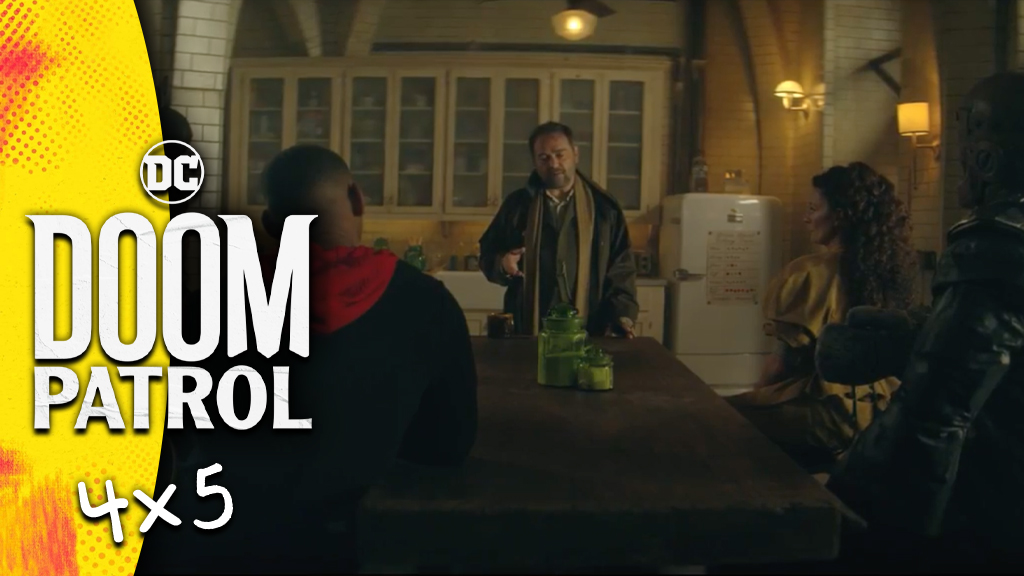
    Notably, Willoughby makes his genuine debut of the season to inform the group about what exactly “Immortus will rise” is all about. Rather than the General Immortus Doom Patrol comics fans may be more familiar with, Immortus in Doom Patrol is supposedly an interdimensional deity that can rip apart reality—and he wants to. What he needs, however, are certain shards of his that have been scattered around. Notable inclusions of these shards are Niles Caulder’s/Dorothy’s talisman and the miniature shards of it placed in Rita, Larry, Jane, and Cliff that gives them immortality. Immortus and his henchman are looking to extract immortality from them, and Dr. Janus succeeded in Episode 3 with Rita.

    In her aging panic, Rita sets free a poorly-designed de-aging spell that initially turns the team into teenagers. The gag is generally used to put the characters in the comical space of the classic dumb teenager trope, which, in the midst of trying to stop yet another apocalypse that they are somewhat responsible for, the fact that their priority becomes a pool party with other random youth is very classic Doom Patrol. It also ultimately delivered some phenomenal character moments.

    Jane’s teenagerhood is perhaps the most interesting, as she herself had never been one. Only created by Kay in young adulthood, Jane never experienced being a teenager. Prior in the episode, Jane gave in to her desire and began to masturbate, but seemingly knocked herself into the Underground subconsciously. The burden on Jane to protect Kay at all costs is extremely interesting when looking at it from the perspective of Jane as a full being. Jane, of course, was created in the aftermath of sexual abuse and trauma sustained by Kay. So naturally, it makes sense that Jane had a primary or major focus on avoiding that type of relationship. The fact that Jane struggles on her own to let herself feel any sexual pleasure is an interesting twist on the usual Jane-Kay narrative. In teenager form—perhaps the form that best symbolizes raw sexual desire and exploration—Jane has some form of hallucination where Kay tells her that Kay’s body is both hers and Jane’s body, leaving Jane with the suggestion that she may be more free to live as her own person. Considering Jane’s initial push this season was to find her purpose other than protecting Kay, this move toward autonomy certainly seems par for the course. However, the fact that Bunbury the magic rabbit appears to extract her immunity at the end feels a bit more pressing.

    The absolute standout moment of the episode, however, came from Rita and Laura. The two have been absolute masters both last season and Season 4 so far, but their bus top scene is every example of why. First, the two argue over Laura’s team leadership, but it devolves into the real issue between the two—Madame Rouge betraying Rita and having her boyfriend killed—and from there ends up at an extremely touching place. First, Laura has this important conversation with Rita’s now-child form, which amounted to a fully grown woman pleading with, apologizing to, and admitting again the extent of her shame and regret she will never be forgiven for to a child. When Rita tells her she cannot move past it, but misses her best friend, the dynamic between the innocent child who is hurt at her core and the adult who embodies all of the complexities of the relationship is remarkable. Finally, when Rogue beaks down so completely that she loses control and becomes her child form, the true level of pain, friendship, hate, love, and grief is beautifully captured in a near-perfect sequence.

    Elsewhere in the episode, Larry and Mr. 104 bond over each other’s shared traumatic pasts at the Bureau of Normalcy due to Kheeg’s role as wingman. Mr. 104’s connection to Lazarus is key to his motivation, but it is still a little unclear. However, there is no doubt this episode sets up a romantic connection that will quite possibly end up breaking many hearts. Larry’s loneliness is a constant theme for the character and the fact that there is not someone around who understands some of his hurt and can even safely be with him unwrapped is almost too good to be true. Add in the fact that Mr. 104 is a quite charming, handsome man for Larry (and the actors have that chemistry) it is just a recipe for love and warmth, but it does not feel safe in a series like Doom Patrol.

    Overall, Episode 5 is on par with the strength of the first three episodes of Season 4. It worked with its strongest elements while also pushing the boundaries of how successful that can make their character development. It is stunning that much of the development feels familiar, almost repetitive. Yet, despite the series’ best attempts to hammer a point home too many times, on the whole, each character and each line of personal development continues to consistently improve as if there is no ceiling. Next week’s Episode 6 will be the final episode of Part One of Season 4, so expect it to be action-packed with plenty of cliffhangers.

  • REVIEW: ‘Doom Patrol’ Episode 4 — “Casey Patrol”

    REVIEW: ‘Doom Patrol’ Episode 4 — “Casey Patrol”

    The latest episode of Doom Patrol was probably the weakest of Season 4 so far. After three episodes of building up the main team’s dynamic, we take a hard detour back to Dorothy who we have not seen since the pandemic-induced Season 2 finale and Season 3 premiere. While Dorothy, Danny, and now Casey Brinke are certainly some of the most unique characters in the universe — which is saying something — they just were not that interesting here.

    Alan Mino Jr.’s return as Maura Lee Karupt simply was the best of the episode. Despite his character’s default supporting role status, the episode would have been devoid of interest and energy. Abi Monterey as Dorothy Spinner puts in a strong performance, but the character is never one that truly stuck the landing. Her presence throughout the second season constantly felt like a burden, and frankly, the character’s departure at the very beginning of the third season ushered in a new, bright, and reset era for Doom Patrol. Dorothy has always had, via the series’ writers, quite a lot to contribute to the plot. In this case, it feels a bit unwanted. Granted, Dorothy’s role is rather unknown at this time, but the first three episodes set up a solid foundation for the season that now seems at risk to be thrown into disarray.

    With relatively few episodes in the season, having Episode 4 be a complete departure from what came before it was unfortunately a bit disappointing. While Dorothy and Casey could in theory have the potential to truly break out, they do not have that much time. And assuming they will meet up with our main team sooner rather than later, it would be preferable for the strength of the main team to keep shining from their own self-contained merit. Adding a(pleasantly) bizarre character to the mix will surely shake the foundation — and it is just a strong one.

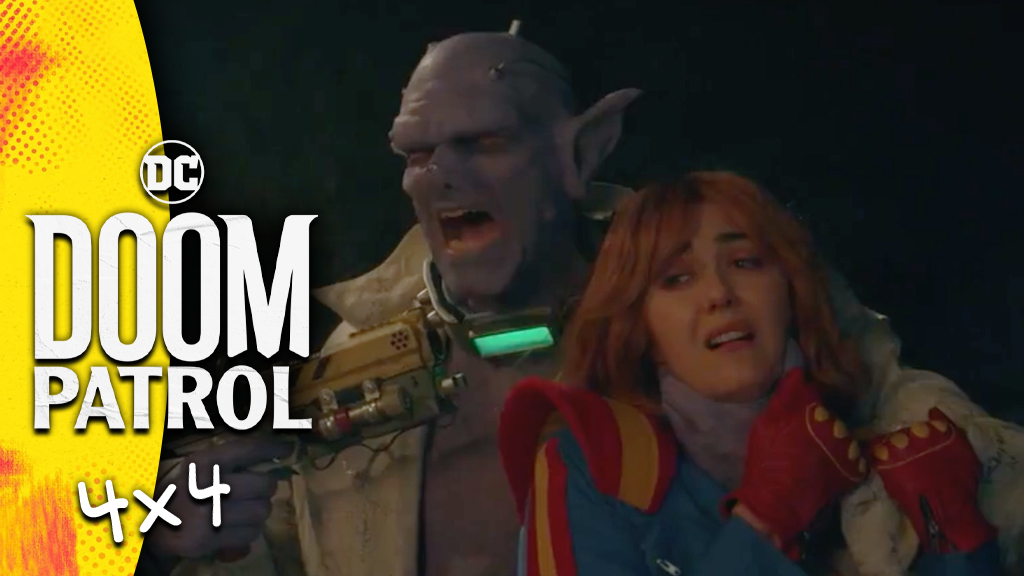
    Worries aside, Episode 4 still remained more or less a non-starter. Madeline Zima’s Casey Brinke is fine. The character clearly has the capacity to reach some more profound places personality-wise, and the innocent ignorance of many beloved Doom Patrol characters. Of course, we do not get to see her full form in just the introduction, but this episode struggled by essentially making itself an entire episode of side story exposition. It perhaps could have succeeded better by making it shorter and working it into the existing season better rather than taking a break from the strong momentum. Casey in particular seems like one who could interact well with the main group, but it can’t help but be wondered if there will be enough time and space in the remainder of the season to accomplish that, or if the character will feel like a constant distraction.

    One thing is still for sure: Immortus will rise. The fact that Casey’s comic book alien father person is somehow involved in the same scheme as Dr. Janus from the last episode is interesting. Will we see more obscure characters pop up until the mysterious man drawing comics has all the trinkets he needs to raise Immortus? Dorothy’s presence certainly teases that Niles Caulder could make some kind of an appearance yet again in the series. As discussed last time, his role in the Immortus Initiative in the first place is clearly significant. Time will tell how Episode 4 merges into Season 4, but the initial impression is that the season just got a lot messier.

  • REVIEW: ‘Jack Ryan’ Season 3, Episodes 1-4

    REVIEW: ‘Jack Ryan’ Season 3, Episodes 1-4

    The first two seasons of Amazon Studios’ Jack Ryan have been fun, binge-worthy entertainment that have, at times, felt more inspired by the Bourne novels than Tom Clancy‘s expansive Ryanverse. John Krasinski‘s CIA analyst has been called on him to be equal parts spymaster and tough guy as he was thrown into the thick of some fascinatingly complex scenarios. However, despite Clancy having published 17 Ryanverse novels, neither of the previous two seasons’ plots felt predicated on anything Clancy-esque. Familiar characters, sure; high-stakes political intrigue, check. But Seasons 1 and 2 seemed simply to be missing just a pinch of something. Season 3 seems to have found it by adding one key ingredient that helped launch Clancy’s incredibly successful career in the mid-1980s: the Russians.

    *NOTE: This review contains light spoilers for Episodes 1-4*

    While lie the previous two seasons it’s not an adaptation of any particular Clancy novel, Season 3, which feels almost uncomfortably familiar in light of current events, immediately feels like a Clancy novel come to life. Maybe a little The Cardinal of the Kremlin; maybe a little Red Rabbit; maybe it’s neither or both. Whatever the case, Season 3’s premise is built around a Russia willing to go to extremes to destabilize the region by any means necessary in order to restore the country to its former glory. The flashback used to open Episode 1, “Falcon”, establishes some key players and the central element of the season’s ongoing plot: a secret project called Sokol. In present day, many of those key players have become major movers and shakers in a part of the world that’s been greatly changed over the years, setting up arguably the series’ best work to date with the intricacies of spymasters, double agents and betrayal.

    And make no mistake, betrayal is the key theme of the first four episodes of Season 3. Who is betraying whom, who knows they are being betrayed and who doesn’t, and the ramifications of all the betrayals takes the better part of the first four episodes to start to crystalize but it makes for an intriguing enough premise. Of course, fans of the series already know that it’s more than just spygames: it’s also about big action. In that regard, the first half of Season 3 doesn’t disappoint. All the action beats you’ve come to expect from Jack Ryan are clear and present and the franchise hasn’t jumped the shark yet in terms of pushing the boundaries of reality.

    Over the course of the first two seasons of Jack Ryan, how you feel about John Krasinski‘s performance as the titular hero essentially determines your perception of the show. Whether by design or unfortunate accident, outside of Ali Suliman‘s Mousa bin Suleiman and Wendell Pierce’s grumpy James Greer, the supporting cast of characters aren’t especially memorable. Season 3 does little to change that, keeping it all Krasinski all the time. Especially wooden and boring depictions of the Eastern European characters make them easily forgettable members of a conspiracy that could otherwise cause far more suspense as the series turns the corner into the second half.

    The first half of Season 3 does shuffle the deck enough to keep fans of the franchise interested. The events of Episode 1 put Ryan in a situation that feels both familiar to the events of Season 2, but different enough that it allows for an impressive display of his resourcefulness. It’s here that creators Carlton Cuse and Graham Roland lean back into Bourne territory as they begin to establish Ryan as someone with the beginnings of a global reach. In that way, the scope of the franchise is beginning to expand in a way that will allow the fourth and final season of the series to tell a fittingly massive story while also setting up potential spinoffs that build out the universe.

    If you’re searching for a big action spy-thriller that makes you feel like the Cold War is back on, the first half of Season 3 of Jack Ryan will hit the spot. The first four episodes serve mainly as table setters for the big back half and while it’s a bit familiar, there’s just enough newness sprinkled in to make it worth a few hours of your time this holiday weekend.

  • REVIEW: ‘Letterkenny’ Season 11

    REVIEW: ‘Letterkenny’ Season 11

    After leading man Jared Keeso took some time to focus on the Letterkenny spinoff, Shoresy, he has returned for Season 11 of Letterkenny and… it’s a mixed bag. Letterkenny has always been one of those shows that wasn’t designed for everyone. The humor can be crude. The characters can be hard to relate to. And the show can often feel like there’s no real point to it. In the end, though, Letterkenny always delights, even with its faults. Unfortunately, though, Season 11 takes a bit longer to get going and the episodes themselves never really feel cohesive.

    Letterkenny is a weird show. There’s no denying as much. It’s a weird show that is packed full of humor and proves Keeso, who helped to create both Letterkenny and Shoresy, is incredibly talented. However, following the excellent first season of Shoresy, it’s hard to return to Letterkenny as it is. Keeso as Shoresy is just excellent, and there’s something special about that character and his journey not to be such an asshole. Letterkenny, which does briefly bring back Shoresy this season, feels like much of the same. The ladies remain wonderful – especially Katie and Gail – and the Skids remain the best part of the series. But while those characters continue to grow – yes, even Stewart – it never really feels like Wayne and the others do.

    That isn’t to say Letterkenny is bad. It’s not. It’s still great, but Season 11 takes a bit to get going. The “Chips” episode feels pointless and is ultimately a weird choice to kick off the season. Had it been done as a special episode? That would’ve been great, but again, as a season opener, it feels like a poor decision. There’s no real value to be gained from the episode. Is it funny? Yes. Does it serve a purpose? Absolutely not. Thankfully, by episode three, the show regains its footing for the season and begins to build out a story across the remainder of the episodes. Said story focuses on the always crude Gail, played wonderfully by Lisa Codrington, and her questionable choices. One of Letterkenny‘s biggest strengths is that it always its female characters to be realistic and that includes allowing them to be sexual beings. Gail makes some poor decisions this season, that allows the rest of the characters to explore actual issues faced by women daily, and still finds a way to make it an important topic while keeping things light-handed. It’s one thing that Letterkenny does better than most shows these days. It isn’t afraid to let its female characters exist. Flaws and all.

    Once the season finds a real starting point, it’s smooth sailing from that point forward. The show brings back the always fantastic Glen, who is as ridiculous as ever, to work with Clark Backo‘s Rosie on finding a missing dog. The hilarity that ensues from that point on, courtesy of the Dicks, is a great reminder of what makes Letterkenny so great. But then the show takes a minor stumble yet again in the final episode of the season. As always, Wayne and company continue to have each other’s backs, which is great. However, there are only so many times a season can end with a big fight that is only briefly shown before it cuts to the end credits.

    And yet, with an uneven start and a finish that literally feels like an ending used before, Letterkenny‘s eleventh season isn’t as strong as those before it. However, with a strong first (?) season of Shoresy, one has to imagine Keeso and company still have plenty more in stock for the Letterkenny crew and can easily deliver a hell of a twelfth season. Because there’s no way a Season 12 isn’t on the horizon.