Category: Reviews

  • REVIEW: ‘Willow’

    REVIEW: ‘Willow’

    NOTE: This non-spoiler review covers Episodes 1-7

    In 1972 when George Lucas first dreamt up what would eventually become the 1988 film Willow, the foundation of the story was the idea of propping up, in Lucas’ words, “a little guy against the system.” As a fantasy adventure releasing in the wake of giants such as House of the Dragon and The Lord of the Rings: The Rings of Power, Willow, the Disney Plus streaming series that serves as a legacy sequel to the film, is certainly just as Lucas conceived it. Not nearly as hotly anticipated as House of the Dragon or The Rings of Power, Willow comes to the party as an overlooked underdog that might seem to find itself facing a steep climb to success in comparison to those powerhouses. 50 years later, Willow remains exactly what Lucas envisioned it to be. While it takes a beat to prove its worth and is certainly not made to appeal to the same audience as the House of the Dragon or The Rings of Power, the elements of Willow coalesce into a fun, heavily 80’s-inspired series that finds its own way in the epic fantasy genre.

    The series navigates the familiar archetypes of a fantasy quest against a jaw-dropping array of scenery, with each episode moving from one spectacular, even if horrifying, setting to another. Shot in Wales, Willow takes full advantage of the varied geography of the country and some well-used CGI to fully realize the fantastical and familiar settings of Tir Asleen and Nockmaar while introducing some incredible (and spoilery) new places along the way. In terms of production value, Willow delivers from beginning to (almost) end. That extends beyond the settings to character designs that range from truly frightening (The Gales are going to give kids nightmares) to adorable (the mudmander that will give Falkor vibes to any 80’s kid).

    As with the settings, Willow’s cast of characters works to find a balance between familiar and new. Warwick Davis returns as High Aldin Willow Ufgood and Joanne Whalley has what amounts to an extended cameo as Sorsha, now the Queen of Tir Asleen who is without the love of her life, Val Kilmer’s Madmartigan. Madmartigan’s black hole-esque absence is central to the series’ main plot as it can be measured by the effect it has on those around it. No one feels the effects of it more than his children, Kit and Airk Tanthalos, played by Ruby Cruz and Dempsy Bryk, respectively. The children of Madmartigan feel both familiar to the character-Kit, as a restless adventurer, and Airk, as a prolific lover of ladies-but incomplete as they strive to find their own ways. They’re joined in the cast by fellow newbies Erin Kellyman as Jade, Ellie Bamber as Dove, Tony Revelori as Graydon Hastur and Amar Chada-Patel as Thraxus Boorman. Much like the audience, most of these new characters may have only an inkling of an idea of who the great sorcerer Willow is, making it easy for newcomers to the story to catch up along with them. While Davis brings so much more to the role than he did as a 17-year-old in 1988, it’s the young cast of characters that propels the plot from its center.

    (L-R): Graydon (Tony Revolori), Boorman (Amar Chadha-Patel), Dove (Ellie Bamber), Kit (Ruby Cruz), Willow Ufgood (Warwick Davis) and Jade (Erin Kellyman) in Lucasfilm’s WILLOW exclusively on Disney+. ©2022 Lucasfilm Ltd. & TM. All Rights Reserved.

    The center of that plot is, of course, a quest that not only puts the heroes in peril but also forces them to examine who they truly are. Without delving too far into spoilers, it’s fair to say that each of Willow’s new heroes questions who they are along the way and that each of them come to find out that they are not necessarily who they thought they were going to be.

    It’s no coincidence that the executive producer and head writer of a series that features people stepping out of the shadow of their father and discovering who they truly are is executive producer and writer Jonathan Kasdan. Just like the fellowship taking on the quest, the series takes time to find narrative coherence and that may be, in part, because Kasdan is undertaking a quest of his own, finding himself in the same way the new group of heroes does. Like Kit and Airk, Kasdan finds his way out from the shadow of a larger than life father (legendary screenwriter Lawrence Kasdan) over the course of the series. Like Kit and Airk, the series comes complete with echoes of the works of Kasdan the Elder (fans of Indiana Jones will find themselves reminded of some classic scenes); however, those echoes don’t define Kit and Airk nor do they define Willow. Rather like the heroes on the quest, Kasdan finds his own way while embracing the influence of the works of his father and others in the genre.

    Toth (Charlie Rawes) in Lucasfilm’s WILLOW exclusively on Disney+. ©2022 Lucasfilm Ltd. & TM. All Rights Reserved.

    It’s in respecting and understanding the genre, and the giants that built it, that Kasdan manges to build a series that while reminiscent of so many classics becomes content being its own thing. Each episode of Willow features exactly the kind of swashbuckling action fans of fantasy adventures would hope to see; each episode of Willow features some sort of dialogue of side quest that deepens the overall lore of the series; each episode of Willow features chivalry, honor and love. But the strength of the story is that in any given episode, any one of the fellowship may find himself/herself moving through the familiar tropes. Willow is not the traditional quest of one central hero surrounded by companions; in fact, the series provides enough time for each character to wear both titles.

    Willow continuously plays with the familiar tropes of the genre in ways that are both reflective of the 1988 film and imbued with a sense of modernity. Want a swashbuckling knight who falls in love with a princess? Willow has it. Want crusty trolls? Willow has them. Want terrifying Bone Reavers? Willow has them, too. However, Willow, much like the Nelwyn sorcerer for whom it is named, has plenty of tricks up its sleeve and, if given a chance, will come to surprise you. As has been shown over the past decade or so, success is not a given for a legacy sequel. Jonathan Kasdan seemed to be well-aware that any attempt at a successful sequel to 1988’s Willow, a cult classic whose charm has grown over the years, would have to be earned. He did so by cleverly balancing the series between the past and the present, putting together a series that while slow to start, will have fans anticipating the next installment by the end of Episode 3. Willow is a worthy successor to the film that, just like its delightful bunch of young heroes, carves its own path through familiar territory.

    Murphy’s Grading Scale: 8.0 (Very Fine)

    Source: The Cinema of George Lucas,

  • REVIEW: ‘The Guardians of the Galaxy Holiday Special’

    REVIEW: ‘The Guardians of the Galaxy Holiday Special’

    If you’re looking for a 40-minute Marvel Studios Special Presentation that changes the entire landscape of the Marvel Cinematic Universe, The Guardians of the Galaxy Holiday Special isn’t going to satisfy your craving. While the special does somewhat surprisingly advance a few plot points, those ultimately feel like bits that happen here to save precious minutes of screentime in Guardians of the Galaxy Vol. 3, which will almost certainly change the entire landscape of the Marvel Cinematic Universe. Director James Gunn has made it quite clear that Vol. 3 is the end for this group of Guardians and that it’s a love letter to Rocket, who he’s openly described as a character he loves more than any other he’s ever written and one who he believes deserves a “spectacular” final chapter. If Vol. 3 is a love letter to Rocket, The Guardians of the Galaxy Holiday Special is a shorter and less spectacular love letter to a pair of characters who have yet to truly have been in the spotlight in any of the Guardians’ appearances to date. If you’re looking for a 40-minute Marvel Studios Special Presentation that puts Drax and Mantis and their odd couple relationship front and center, The Guardians of the Galaxy Holiday Special is going to land just fine.

    Star-Lord and Gamora have certainly had their time in the spotlight over the course of Guardians of the Galaxy, Guardians of the Galaxy Vol. 2 and Avengers: Infinity War. Somewhat surprisingly, Nebula, who is a much less important character in the comics, has been given ample time to shine in Guardians of the Galaxy, Guardians of the Galaxy Vol. 2, Avengers: Infinity War and Avengers: Endgame. And though Rocket is going to be the star of the Guardians of the Galaxy Vol. 3 show, he and Groot have had quite a bit of attention. Despite having a very compelling arc in the Dan Abnett and Andy Lanning comics on which Gunn has based his film version of the Guardians, Drax hasn’t been much other than muscle and comic relief and Mantis has been around mostly to make funny faces and occasionally use her powers when convenient.

    To be fair, Gunn is certainly well-aware that the two characters haven’t ever really been given the time that the others have. Recognizing that and the great chemistry that exists between Dave Bautista and Pom Klementieff, Gunn once approached Marvel Studios about a Drax and Mantis spin-off film. While the director was told there would be no room on the theatrical slate for such a piece, he also said that while it might not be a movie, the pitch hadn’t been forgotten. And ultimately, as theorized here, The Guardians of the Galaxy Holiday Special turned out the be the Drax and Mantis show, complete with exactly the type of humor audiences have come to expect from the pair.

    The backdrop for the adventures of the two is truly steeped in the fact that these Guardians have been and continue to be a family. The special opens with Kraglin tells Nebula, Drax and Mantis a short story about how Yondu once ruined Christmas for Peter. Still reeling from the loss of Gamora, a rough-looking Peter Quill seems to exist as a shell of the once brash and bravado-filled Star-Lord he once was. Mantis, whose big “secret” gives her a reason to feel a bit more responsible for trying to break Peter out of his slump, hatches a plan with Drax to give Peter a great Christmas by giving him a present that he will never forget. To Drax, there’s only a Kevin Bacon will do. Drax and Mantis head to Earth where holiday shenanigans ensue.

    Of the pair, Klementieff’s Mantis truly takes the lead and is given the most to do. In the comics, the character was a highly-skilled martial artist and while she’s had a few tussles in the MCU, she’s mostly been relegated to putting characters to sleep or manipulating their emotions. Make no mistake, she does her fair share of that here too, but she also gets to show off some slick hand-to-hand moves. Bautista’s Drax has his fair share of funny moments as well, though he seems at times to be doing more belly-laughing than talking. The duo’s adventures on Earth only take up about 25% of the special’s runtime, but ultimately provide 90% of the laughs. Returning to space, they manage to give Peter-and Kevin Bacon-a Christmas they’ll never forget.

    The special is full of everything fans of Gunn’s work with the Guardians have come to expect. While it’s not essential viewing for casual fans, the story absolutely adds to the overall story and emotional core of the Guardians. Gunn’s at his best when exploring the dynamic of this misfit group and by watching the special, hardcore MCU fans will find themselves feeling even more emotionally invested in the group; in that way, it’s almost unfair to have an inkling of what Vol. 3 is set to do to them. It’s also worth noting that this project could never have been done as well as it was without Gunn behind it. His emotional investment in these characters and their family make it work. And of course, there’s the music. From the hilariously off-beat Christmas jam written by Gunn and belted out by the Old 97’s in the opening to the interesting, to Hanoi Rocks’ “Dead By Christmas” and, of course, Kevin Bacon rocking out in space, the soundtrack hits the requisite holiday beats while triggering emotions throughout.

    Marvel Studios is on to something with these short-form special presentations and are definitely 2-for-2 following Werewolf By Night with The Guardians of the Galaxy Holiday Special. While not essential viewing, this one is going to play well for hardcore and casual fans alike as it gives just enough of a narrative push to the story of the Guardians while helping us all remember how important family is this time of year.

  • REVIEW: ‘Andor’ Episode 12

    REVIEW: ‘Andor’ Episode 12

    Andor writer and executive producer Tony Gilroy has a knack for creating unnerving tension in his projects. Whether in the Bourne franchise, Armageddon or his directorial debut, Michael Clayton, Gilroy’s works often resolve under incredibly stressful circumstances that leave the audience reeling while they process. The season finale of the first season of Andor, “Rix Road”, and in fact the entire first season itself, certainly fits that pattern, slowly using every tool at the creative’s disposal to simultaneously build tension within the audience and the characters nearly right until its final moments.

    On the surface, the finale is all about the convergence of nearly all of the series’ key figures on Ferrix where they hope to find Cassian returning for Maarva’s funeral. But what makes the episode carry so much weight is that it also works as a convergence of nearly all of the series’ key themes. This thematic convergence is much more impressive both in the way it is reflected by the key parties involved and also that it was possible at all, much less done so well given the scope of Andor. Has been oft-discussed, the 12-episode season was shot as “pods” of 3 episodes and each “pod” seemed to neatly tie up the themes that pervaded each of them. To have them all thunderously return here required significant planning and craftmanship by Gilroy and his team.

    Most prominent among those thematic echoes is the recurring idea that everyone has their own rebellion. That sentiment, first spoken by Vel Sartha to Cassian in “The Axe Forgets”, and the weight it rightfully carries in a galaxy where the Empire has now made it clear that there are no limits to what they’ll do to maintain “order”, come rushing back to mind during Maarva’s funeral march down Rix Road. During the holographic speech recorded before her death, Maarva powerfully reminded the people of Ferrix that they’ve been comfortably and somewhat selfishly ignoring the truth of the Empire. Calling it both a “wound that won’t heal” and a “darkness reaching like rust into everything”, Maarva uses her final moments to tell the people of Ferrix to wake up. Indeed her “last words” before B2 stops broadcasting are “Fight the Empire!”, inciting and inspiring the Rix Road revolution. Maarva Andor goes down in history as an OG Rebel by stirring the people of Ferrix to fight.

    Maarva’s words resonate with the words of another dead character who longed to see the Rebellion move ahead. Though he had a short arc in Andor, Karis Nemik’s manifesto, which Cassian read through when he first returned to Ferrix earlier in the episode, ultimately served more as a book of prophecies. Nemik’s beliefs that “the smallest acts of insurrection” advance the cause of the Rebellion, that “the Imperial need for control is so desperate because it is so unnatural”, that “authority is brittle” and that “oppression is the mask of fear” are all fully realized during Maarva’s revolt. It’s ultimately the act of an Imperial officer to stop Maarva’s speech that becomes the tipping point of a largely unarmed group of mourners (there is, of course, the bomb) choosing to charge into battalions of troops. The Empire’s devastating response ends in mass casualties but with so many survivors, including those who escaped, word of what happened on Ferrix will spread and can almost certainly be counted on to become a key point on the timeline of the formation of the Rebellion.

    Though Cassian hasn’t been the primary protagonist of every episode, the finale goes a long way in bringing him to the end of a long character arc that started with him simply in search of his long-lost sister. Cassian’s transformation comes in part when he seemingly comes to the conclusion that the audience has had all along: despite believing his actions only ever impacted him, he’s right at the center of the series of events that have caused so many unintended consequences for those he loves and those he’s never met. Seemingly inspired by the memory of Clem Andor’s words that “people don’t look down to where they should…they don’t look past the rust”, which connect directly to his words to Luthen Rael during their first meeting, Cassian changes the course of his entire life. Though he has ample opportunity to escape, Cassian chooses to seek out Rael and fully commit himself to the Rebellion. Sure of his worth, Rael smirks as he takes Cassian back into the fold, but as awesome as that is for Cassian, it’s likely problematic for some of the others involved and a likely plot point for an early arc in Season 2.

    Ultimately, Episode 12 of Andor is a remarkable standalone episode depicting what will certainly come to be known as one of the inciting moments of the Rebellion and a remarkable season finale that embraces the massive totality of Season One. So often finales miss by only serving one of these purposes but Gilroy served both purposes masterfully by resisting previously established themes, stirring a sense of tension that had been building for 12 episodes while also putting at the center of the episode an event that built on that tension while providing a release that will carry over to Season 2 for the audience and the characters.

  • REVIEW: ‘Keepers of the Cosmos’ is Raunchy Galactic Fun

    REVIEW: ‘Keepers of the Cosmos’ is Raunchy Galactic Fun

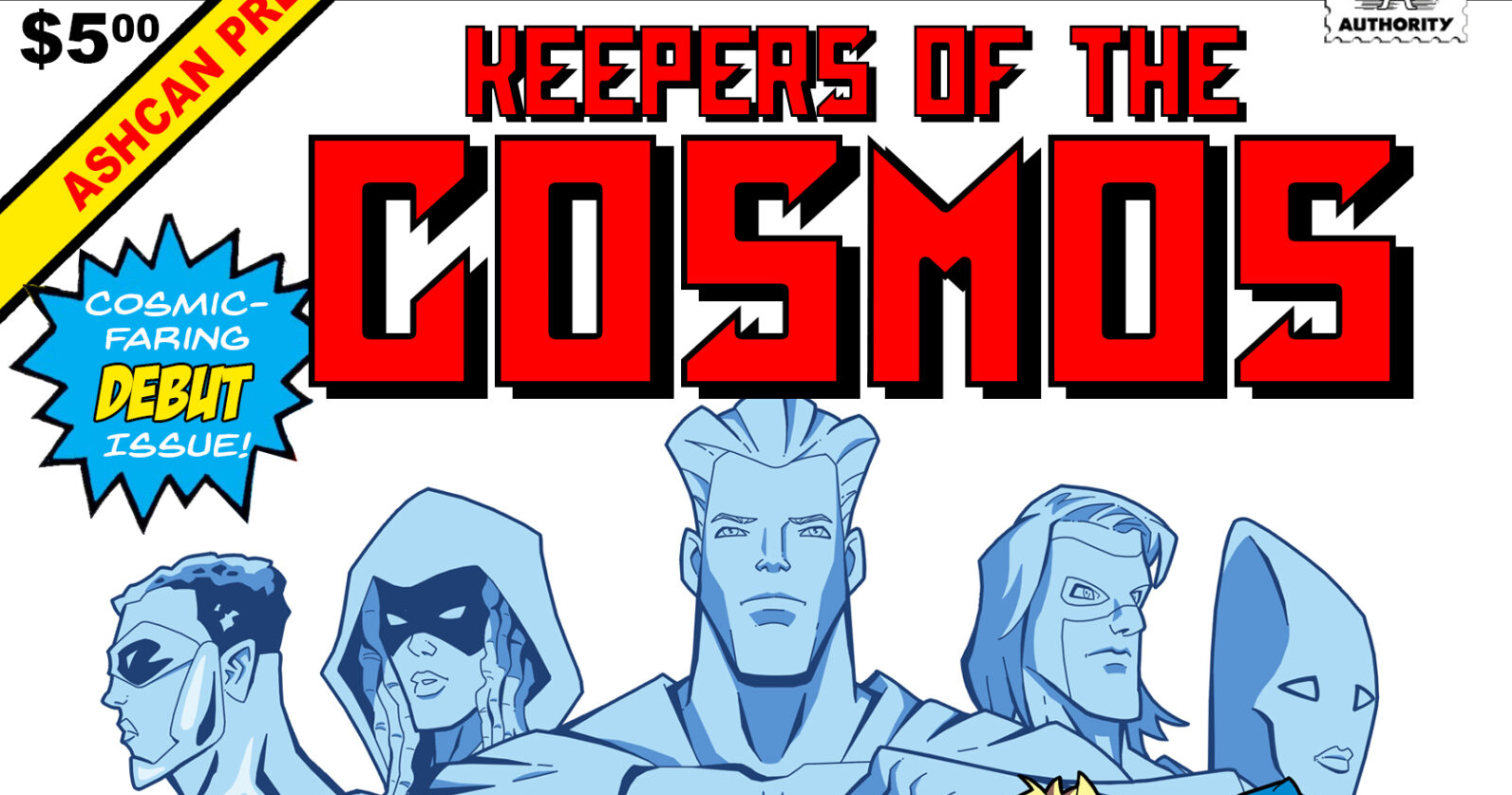
    Every generation is looking for their Star Wars. Something that transports them to another universe and sends them tumbling through a galactic adventure stuffed with fluffy, lovable characters and charmingly heroic leads. A tale made for everyone, that inspires children to be better adults and adults to unlock their inner child. On the surface, it may seem like this is the goal writer Adam Barnhardt had in mind while crafting Keepers of the Cosmos, the latest comic from publisher Scout Comics. However, after reading the series’ first two issues, this is assuredly not the case. Instead, Keepers of the Cosmos is raunchy, daring, and definitely not for kids. It refuses to be for everybody, and it’s miles better for it.

    Keepers of the Cosmos features a group of intergalactic peacekeepers traversing the galaxy’s last frontier and doling out their own unique forms of justice; so on paper, it definitely has the trappings of a typical space-bound romp. Yet, the end product is so much more than standard fare. The series is ripe with sci-fi goodness but manages to ground itself with wildly human characters. From the get-go, Keepers introduces its main cast as deeply flawed individuals, giving the story a relatable sense of humanity that draws the reader in immediately. Part of keeping with that humanity involves the use of quite a bit of debauchery, something that stamps the comic with Barnhardt’s signature comedic flair and officially brands it as Guardians of the Galaxy for full-grown adults.

    Keepers also does an impressive amount of world-building for a new book, constructing a new universe with surprising efficiency and speed. In only a few short pages, readers will meet a fairly large, merry band of misfits and likely hop on board their adventure with comfortable ease. There is action and romance aplenty, and artist Agung Prabowo proves adept at laying out exciting splash pages that jump at the reader and demand they pay attention. In fact, Prabowo’s character design is one of the book’s highlights, accurately playing on expected sci-fi tropes while remaining fresh and exciting. The colorful and vibrant universe made possible by Barnhardt and Prabowo is one readers will want to continue exploring for a long time to come.

    Ultimately, Keepers of the Cosmos is both fresh and familiar. It’s full of love for decades of intergalactic storytelling, with plenty of nods for the most die-hard fans, while still fiercely molding its own path toward originality. Barnhardt and Prabowo’s style works together seamlessly, blessing Keepers with a distinct brand of comical chaos. It’s an excellent read for those who are looking for something exciting and different and would like to support an original voice in the industry.

  • REVIEW: ‘Strange World’ is Fine and Familiar

    REVIEW: ‘Strange World’ is Fine and Familiar

    Walt Disney Animation Studios has produced, what one might call, quite a few films. When Strange World, their latest offering, hits theaters on November 23rd, it will be the 61st animated picture developed by the studio in the last 100 years. The company has been around since 1923, and they’ve made it this long for a reason. Disney has a formula for moviemaking that works, and despite existing within an industry that’s ever-changing, they don’t stray from it very often. Strange World, as fun as it proves to be, sticks firmly to those tried-and-true methods Disney has been using for, essentially, the entirety of its lifespan. It’s not a bad film by any means, but it comes up frustratingly short of greatness when it stops allowing itself to be different. Ironically, the exact point the movie spends its runtime trying to make.

    The film revolves around the Clade family, a dysfunctional clan of explorers who traverse an unknown world in hopes of finding something that might save their homeland. The premise is admittedly unique, and at the start, the movie plays on its pulpy inspirations to promise an adventure unlike anything Disney has created before. Unfortunately, after a brief flash of brilliance in the opening minutes, the film devolves into a series of tropes that cause its impact to all but vanish. What is poised to be a memorable, heart-warming family drama set against a mind-boggling backdrop instead becomes just another entry in Disney’s void of content.

    Granted, this doesn’t mean it’s not worth watching. Strange World is still a lovely little tale, and it has a blast telling its own story. The characters are well-developed and likable, the visuals are often striking, and there’s even a solid twist in the third act. It’s a perfectly fine family film that nobody will regret experiencing. It just feels like – to present a silly metaphor – a world-class restaurant bought all the ingredients to make a heaping bowl of some daring new stew, but the cooks decided to settle for chicken noodle soup instead. It’s delicious, and it reliably hits the spot, but it tastes exactly the same as it always does. There’s no excitement, just warm familiarity. Strange World is the animated film equivalent of this. It sets up a leading LGBTQ romance for the first time in Disney history, paints a wondrous image of an undiscovered landscape, tees up an emotionally complex finale, and then it all plays out like the script was formed via paint-by-numbers. It’s a movie about adventure, but it never feels all that adventurous.

    That being said, Strange World does have its fair share of strengths. Thematically, it has a lot to say, and it says it pretty well. It’s an eco-friendly story that promotes making changes for the better, and as mentioned before, it’s very much on the side of teaching kids to follow their own paths. The fictional world it presents is also fairly creative, with plenty of goopy creatures and sweeping set pieces that will, at the very least, keep audiences entertained. Jaboukie Young-White is excellent in his role, evidently having a lively time in the recording booth and bringing a much-needed sense of humor to the film. The story’s commitment to dissecting the father-son dynamic is admirable, if not played out, and may even result in the shedding of some tears. Again – a splendid, comforting bowl of chicken noodle soup.

    Strange World might not be as off-the-map as its title suggests, but it maintains the potential for a nice night out with the family. It’s a cute, classic Disney flick that tugs the heartstrings and opens the door for some important discussions. As long as one doesn’t expect anything groundbreaking, one likely won’t be disappointed. There is pulp and circumstance, just no sign of changing the game anytime soon.

  • REVIEW: ‘Disenchanted’

    REVIEW: ‘Disenchanted’

    Disney’s Enchanted, which saw Amy Adams star as the out of place princess, Giselle, was a huge hit for the studio when it was first released. The movie managed to move swiftly between animation and live action to tell its fairy tale, whether it be through dialogue or song. It was a special movie, one filled with magic and heart, that seemed to resonate with audiences given its $340 million box office haul. So, it’s not entirely surprising then that the studio gave the film a sequel – albeit fifteen years later. And while it’s a fun follow-up, Disenchanted often lacks the spark that made Enchanted so wonderful.

    Disenchanted, like Enchanted, sees Adams’ Giselle longing for her life in Andalasia. She misses the magic and the charm of her home, but also wants to remain with the family she’s created with Robert (Patrick Dempsey) and Morgan (Gabriella Baldacchino). She’s become the mother she always wanted to be to both Morgan and Sofia, the child she had with Patrick. But as she feels Morgan, who is now a teenager, start to pull away, Giselle becomes desperate to reclaim some of the magic the two shared. And so, a wish is made that she hopes will fix her relationship with Morgan and her wish to feel more at home. Unfortunately, though, Giselle’s wish might just cost her everything in the process – including herself.

    The movie as a whole is delightful. It’s fun, and it does a pretty great job at taking the evil stepmother trope from fairy tales and using it to its advantage. There are moments the story is predictable, sure, but for the most part, it’s a solid story about love and family. The main problem Disenchanted faces is that it simply can’t recapture the true magic of Enchanted. The blending of animation, live-action and music in Enchanted was one of its greatest strengths; it might’ve taken the audience a bit to get a feel for the film, but once they did, they were easily hooked. The acting was superb. The writing was fun. And the music, the music was one of the film’s biggest selling points. The same cannot be said for Disenchanted. The songs are nowhere near as memorable as True Love’s Kiss”, “That’s How You Knowor even “Happy Working Song.” This, of course, is not because the cast lacks the talent to deliver the songs properly. (As previously noted, the songs were written expertly for the actors and their strengths.) The cast absolutely nails the vocals – especially Idina Menzel – it’s just that the music is easy to forget. It doesn’t leave a lasting impression. And some of the songs simply seem to go on far too long.

    Thankfully, though, the music is admittedly the only big problem Disenchanted suffers from. Adams, as always, is fantastic as Giselle; the character is given a bigger storyline in this film, one that allows her to both grow and fail, and Adams fully commits to the role. In her scenes alongside Maya Rudolph, a great actress in her own right, Adams still manages to steal the show. It’s fascinating watching her switch between both charming and menacing, and she does it with such ease. And the supporting cast – Dempsey, Baldacchino, Menzel, and James Marsden – are all great, too, with each being far more to do this time around. Dempsey and Menzel, two characters that while good in the first film, finally feel like they’ve had time to truly develop their characters – Menzel, especially. Two actresses that are sadly wasted in their roles, though, are Yvette Nicole Brown as Rosaleen and Jayma Mays as Ruby who serve as sidekicks to Rudolph’s villainous character. While the film was trying to retain the usual stereotypes found in fairytales, both Rosaleen and Ruby felt like characters that lacked any substance. They were merely minions that, outside of a single key scene, really seemed to lack purpose which is unfortunate as both actresses are incredibly talented.

    Even with its flaws, though, Disenchanted manages to be enchanting. It’s not a perfect film by any means, and it’ll never be as good as the first film, but it’s still an enjoyable time. The music is forgettable, and the plot is rather predictable, but Disenchanted still has a special sort of charm to it. One can only hope Adams gets to return as Giselle at least one more time to craft the perfect fairytale ending once and for all.

  • REVIEW: ‘Andor’ Episode 11

    REVIEW: ‘Andor’ Episode 11

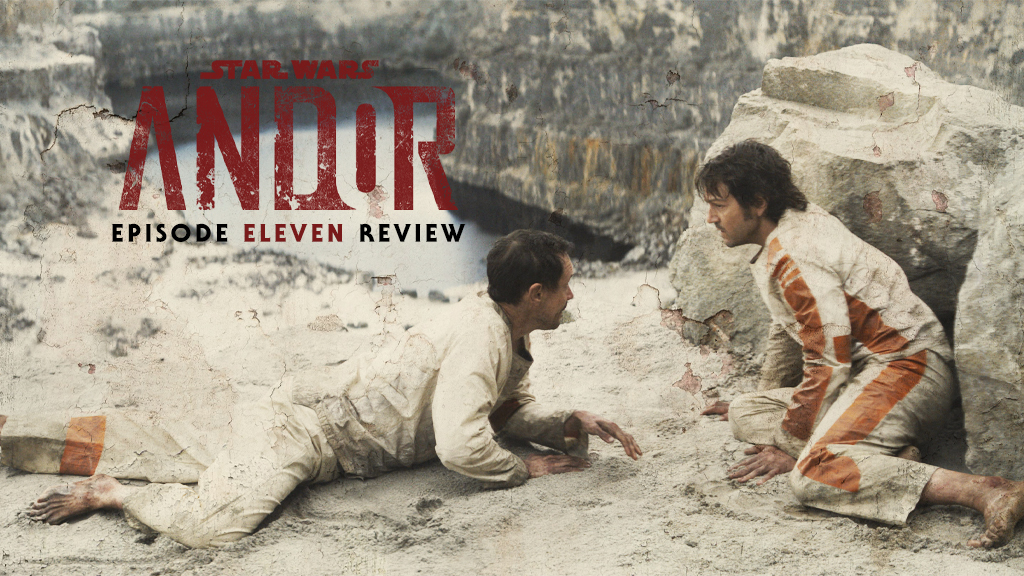
    Telling a story to which the audience already knows the ending certainly isn’t an easy task. It is, however, the task Tony Gilroy took on in Andor. Gilroy, who co-wrote the screenplay for Rogue One, which introduced Cassian Andor and followed him to his death on Scarif, found the secret formula for doing so and created a series that’s becoming increasingly integral to the history of the Star Wars universe. Episode 11, “Daughter of Ferrix”, is another stunning example of how while Andor keeps Cassian at the center of the plot, it’s not really his story at all.

    Episode 11 opens with Cassian and Melshi still working on their escape and ultimately sets Cassian on a course to return to Ferrix once he learns of Maarva’s death. Indeed the entire episode is, on the surface, about making sure anyone and everyone who has been involved in the key events of the series can come together on Ferrix in Episode 12. However, there’s no true tension surrounding Cassian’s actions. The audience knows he is meant to survive this series, though it’ll certainly be as a different man than the one that began it. The reason this episode, and the entire series, continue to grab the attention of the audience week after week is the investment by Gilroy and his writer’s room into other characters whose stories are less defined.

    While characters such as Bix and Mon Mothma have their share of tense moments in the episode, it’s Stellan Skarsgård’s Luthen Rael who, once again, finds himself at the center of the lion’s share of the best moments. Over the course of the series, Rael has gone from an unknown to unarguably one of the Rebellion’s most important figures and Episode 11 cements that status. While the Rebellion continues to exist in a less-than-perfect way, it’s clear that Rael has enough cache to put even the most radical of Rebels in his place. As such, the episode’s most intense scene involves Rael’s escape from the Empire on Segra Milo following his meeting with Saw Gerrera. It’s worth pointing out here that the escape from the tractor beam is almost certainly of the most “Star Wars” moments of the series and among one of the best-looking space sequences in recent live-action projects; it’s also worth pointing out that everything about the scene probably looks and feels the way it does because of how important of a character Rael has become not just to the series, but to the future of the galaxy.

    Ultimately, the strength of Andor (and of Rogue One) is the wealth of fascinating characters who inhabit the dark corners of the Rebellion. And so while the plot continues to revolve around Cassian and the final episode will certainly be about everyone going where he is going, Andor isn’t really Cassian’s story at all: it’s the story of the thousands of faceless, nameless people who may not have even known they were Rebels but whose otherwise insignificant lives and actions made the grand gestures of the Rebellion possible. It’s more of Rogue One in all the best ways.

  • REVIEW: ‘The English’ Tells a Bleak Story on a Beautiful Canvas

    REVIEW: ‘The English’ Tells a Bleak Story on a Beautiful Canvas

    There’s always something about the Wild West that has been turned into a more “heroic” showcase of the good Sherrif taking down the bad. Even when people are being shown at their worst, there’s generally a very specific view that is offered with these kinds of stories to not lose the audience in the depravity reflected of a time we barely can imagine the way it was lived. The English doesn’t hold back in that regard to offer the bleak view you’d expect from that time. At its center, it keeps two hopeful souls to center the story’s most bleak moments.

    There is something honest about the portrayal of that time and the people that lived through it. In this story, there’s no true right or wrong but people simply trying to find a way to survive. At its center, we have the simple story of Emily Blunt‘s Cornelia Locke and Chaske Spencer‘s Sgt. Eli Whipp. Two strangers meet at a crossroads of fate which ends up intertwining in unlikely ways throughout their journey. There’s a tough balance this story has to handle to not fall into rather questionable territory, but it manages to keep that sturdy line throughout.

    The series is on the slower side of pacing, which is surprising given the six episodes given to explore a rather simple story. At many points in time, a story is being spun beyond our leading two which works at times but also leaves you wanting more from the dynamic that was set up. A lot of time is spent in this time period with an unflinching eye that does evoke a “who do you trust” mentality in the viewer throughout. It’s the series’ most effective weapon to establish a believable world these characters live in and the challenges set given their own unique backgrounds.

    Spencer‘s performance is strong throughout, as Whipp is put into positions that ostracize him from either side of the conflict in this world. Once the safety belt is off early on, the series doesn’t waste time to showcase just how brutal this world is and it adds to the bleak outlook of this time period. He’s put to the test often, and there’s a subtlety in how he handles the character; fitting for the world he’s living through. We see how these challenges try to push him in one direction, while he tries to stay true to his own path.

    On the other side, Emily Blunt gives us the look at a person changing as a result of events unfolding around her. She starts off innocent in a world ready to devour her. It almost does if it weren’t for surprising help that would push her further down a path of change. It’s refreshing to see a character that starts off on the meeker side and see her adapt to this dangerous place. She still shows her softer side throughout and it’s not that consequences don’t affect her; she simply has to live with it for as long as possible.

    There are some moments where the story tends to take its time before suddenly rushing. Given its mostly slow pace, it feels like a suprrising rush through plotlines that seemingly are relevant before completely left behind. It also seems to set up a mystery with additional characters that sometimes get sidelined and creates this uncertainty about how exactly it’ll tie together. At times the story feels like it could’ve been told with fewer episodes, but in others, it feels just right.

    It should be highlighted that this bleak story is punctuated by the irony of its beautiful shots. Some of the beautiful shots act as a contrast to the dark world they live in. The cinematography is worth highlighting at times even if it does seem to rely mainly on dialogue. It doesn’t reinvent the wheel, but there’s no necessity to do so. Director Hugo Blick makes great use of shot composition to build up tension, which is highlighted by a great score by Federico Jusid.

    The English is a recommendation for those that enjoy something with a slower pace and more personal storytelling. It’s not quite your typical Western but doesn’t shy away from elements that are familiar to fans of the genre. What makes it stand out is how it tells a bleak story on a beautiful canvas, not shying away from the darker sides of a world long forgotten while still trying to keep that glimmer of hope alive. We all face our personal demons, but sometimes the question is if the world around us makes us confront them.

  • REVIEW: ‘Zootopia+’ Feels Unnecessary

    REVIEW: ‘Zootopia+’ Feels Unnecessary

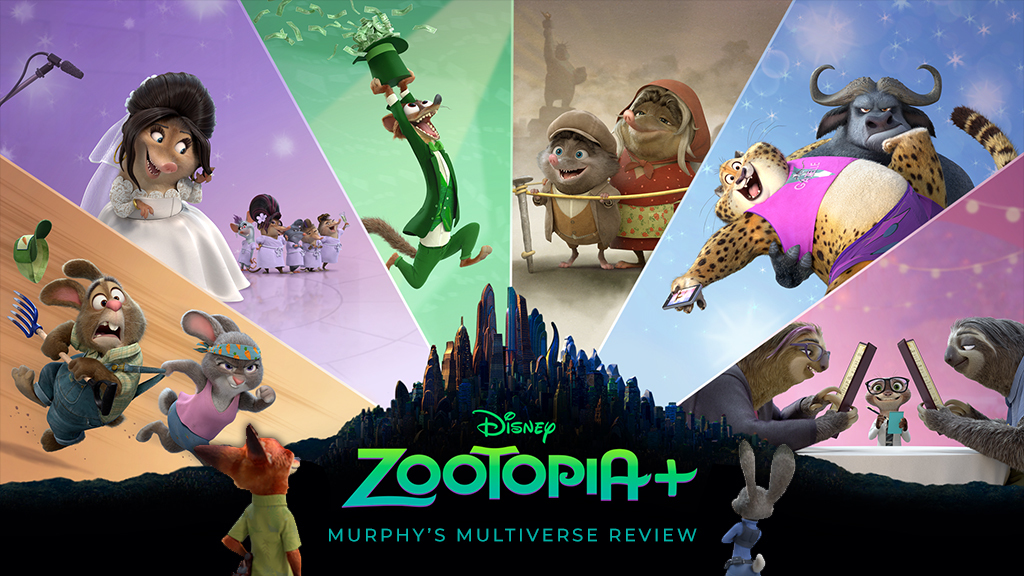
    Zootopia, the movie, proved to be a massive success for Disney when it was released back in 2016. The animated film, which centered on a rookie bunny cop and a cynical con artist fox, earned an impressive $1.024 billion at the worldwide box office during its theatrical run. Yet, despite its massive success, Disney has not officially given the greenlight to a Zootopia sequel. Instead, the studio opted to develop a series for Disney+ centered on some of the film’s most notable characters. The series delves deeper into events from the film, giving movie fans more time to enjoy these key moments, but that doesn’t necessarily mean it’s great.

    Like another Disney+ series, I Am Groot, there’s truly no real reason for Zootopia+ to exist. While the directors have previously teased wanting to explore the world further, the episodes are just too short to really be of note. There’s nothing of substance to the series, which is understandable – with six episodes, the longest of which is 8 minutes, it’s hard to really tell much story wise. That isn’t to say fans of the film – and families – won’t devour this series.

    The six episodes often feel like deleted scenes that the directors wanted to revisit in one for or another. Some are hilariously enjoyable – namely “The Real Rodents of Little Rodentia” and “Dinner Rush” – while others lack charm. The animation is fantastic, and the voice acting is stellar, per usual. The problem, though, is that despite their short length, most of these shorts feel incredibly long. These could have easily been added to a Blu-Ray or DVD release.

    Zootopia+ is far from a necessary watch, and there’s a good chance it’s arriving too late, but for a quick watch? It’s enjoyable. Children will certainly love every moment of this series, especially the musical number in “Duke the Musical,” and there’s something for adults planted throughout each short. Like the film, the humor straddles the line perfectly between adult and family friendly. Had the shorts been given a bit more time to breathe, Zootopia+ could’ve been a home run, in its current state, though, it feels underdeveloped.

    Overall: Disney expands upon the excellent Zootopia with a series that, while not necessary, is sure to delight audiences of all ages.

  • REVIEW: ‘Black Panther: Wakanda Forever’ is a Heartbreaking, Near-Perfect Sequel

    REVIEW: ‘Black Panther: Wakanda Forever’ is a Heartbreaking, Near-Perfect Sequel

    Grief is not to be trifled with. It’s a difficult, strange beast. Necessary and uncomfortable all at once. It’s hard to encounter and put into words, which is why it’s so impressive when Ryan Coogler and the incredible cast of Black Panther: Wakanda Forever manage to embody the emotion with such grace and understanding. It’s important to face the challenges of life with honesty and progression, something Wakanda Forever accepts wholeheartedly. If superhero films are to be the voice of a generation, then they should also be willing to speak in languages sometimes foreign to the genre. They should reach to tell stories that impact their viewers and move them forward. Pain, humanity, and healing flow through every crease of this project as it unfolds, and the entertainment landscape is ultimately better for it.

    One likely expected Wakanda Forever to be emotional, considering the circumstances of the past few years, and it absolutely is. Of course, the movie is rife with tears. It’s forced to deal with something nobody ever imagined it would need to. Yet, it also accomplishes something else between the moments of heartbreak and loss. It alleviates a pressure viewers might not have known was still there, and does its best to close the mourning process on a chapter most would like to have forgotten. It’s a cathartic movie in the way it allows it’s characters to react, letting their feelings guide its plot instead of the other way around. The audience feels as they do, and by the time their arcs reach a natural conclusion, the viewer might also have found some semblance of closure. Stories are beautiful because of their power to help people comprehend their own emotions, and Coogler seems to know this better than anyone. Wakanda Forever is a blockbuster film, yes, but it’s also a message about surviving and moving on.

    Astonishingly, it also works as a near-perfect sequel to its predecessor. The themes of loss, identity, and perseverance are not new to the Black Panther franchise. Although stemming from a less-than-ideal state of affairs, Wakanda Forever is able to pick up almost exactly where Black Panther left off. It’s a full, complete movie, with expertly crafted storylines and character development. Every move made by Coogler makes perfect sense in the context of both Marvel’s fictional world and the real one from which it draws inspiration. Even the film’s new characters, specifically Tenoch Huerta‘s immaculately complex antagonist Namor, fit into Black Panther‘s corner of the Marvel Cinematic Universe as though they were designed for it from the start. Namor and his people – the Talokan – are magnificent foils for Letitia Wright‘s Shuri, Angela Bassett‘s Queen Ramonda, and the people of Wakanda. Huerta‘s performance in particular is sure to stay with fans for quite some time, molding Namor into a distinguished force in the MCU going forward.

    If one were to strip the project of all its comic-based origins, it would still be a masterclass in filmmaking. It’s gorgeous from top-to-bottom, with several stunning set pieces and consistently wonderful design. Coogler has made it clear that his films mean much more than adapting stories. They exist to push the boundaries of what cinema can do. Not just visually, but at their thematic centers. Wakanda Forever has raised the bar for what Marvel Studios, and the industry at large, should be capable of producing when the occasion calls for it. Seeing this one on the biggest screen possible is highly recommended. Sobbing throughout is not required, but it will probably happen anyway.