Category: Reviews

  • REVIEW: ‘Andor’ Episode 7

    REVIEW: ‘Andor’ Episode 7

    “Wouldn’t you rather give it all at once to something real?”

    At the time they were spoken to Cassian Andor by Luthen Rael, those words seemed to be a foreshadowing of the known end of Andor’s story: his death on Scarif in service of the Rebellion as seen in Rogue One. In a story like Andor where the ultimate fate of the main character is a known quantity, an easy argument can be made that there are no stakes for that character and that everything that happens to them is irrelevant. Episode 7 of Andor goes a long way in disproving this argument as it strips Cassian of everything the series has made important to him so far, providing stakes that are a payoff of the emotional investment made through the first six episodes.

    Predictably, the heist on Aldhani has caught the attention of the Empire and their response, detailed by Colonel Wullf Yularen in a brilliant cameo, is crushing and ultimately speaks to the ruthlessness of the Empire. As terrifying as the Empire’s response sounds for the rest of the galaxy, Cassian believes himself to be relatively safe from them. However, over the course of the episode, Cassian is faced with the consequences of his choices. Returning home to Ferrix, Cassian is sequentially dismissed by Bix and Maarva while the audience learns that Luthen Rael intends to tie up the loose end Cassian created when he killed one of his crew and bailed. Now on his own, Cassian ends up on the resort planet of Niamos where he ultimately finds himself detained by an Imperial Security Droid and given a six-year prison sentence. Choices have consequences and Cassian experienced them all in rapid succession. By the end of the episode, it would appear he has given it all even though we know there’s more in store for the character.

    The strength of this episode, then, isn’t in the cliffhanger ending of Cassian’s sentence. True tension is absent given the known outcome of the character. Rather the strength lies in Diego Luna’s performance as Cassian struggles to accept that he’s created his own hell. Even in the episode’s closing moments, Cassian can’t help but try to dig himself out of a hole when it’s clear he’s only making it deeper. Luna’s performance has been strong across the board, but his understanding and care for the character are on full display in this episode.

    The episode also continues to provide a fascinating look inside the burgeoning Rebellion by focusing on the stark contrast between two of its key figures. As Mon Mothma makes a surprise appearance at Luthen Rael’s storefront, a scene plays out where Rael’s ruthlessness is shown to equal that of the Empire. Rael’s blunt words to Mothma, spoken while he displays the blunt-force Utapauan monk cudgel, serve to symbolize that there’s dirty work to do for the fledgling Rebellion, no matter the cost to those who may not even be aware it’s happening. There’s work to be done and Rael will see it through, no matter the consequences, including ordering the death of Cassian, who he seemed to hold value in so recently. Despite her horror at what Rael’s plan has wrought, Mothma continues to do her part in finding a way to financially back the Rebellion. Genevieve O’Reilly shines during Mothma’s dinner party where she demonstrates how invisible her character is to those in power by setting up plans to fund the Rebellion at her own dinner party. Seen as an “annoyance” to those in power, Mothma continues to keep up appearances (“Smile.” “Smile.”) while putting herself in a position similar to Cassian’s where she may well lose everything.

    Fascinatingly enough, even as Mothma advances her plan, Andor finds a way to make us root for the character that might ultimately prove her greatest foe: Deedra Meero. Slighted so far at every turn, Meero cleverly takes advantage of the Empire’s response to find the information she’s needed to help prove her theory of a connected Rebellion forming. Challenged at an ISB meeting, Meero boldly makes her claim about the Rebels, finally catching the attention of Major Partagaz in a positive way. Like Mothma, Meero has been seen as an “annoyance” until now. It appears Meero will become a major player in Andor’s game, and one whose investigative brilliance may find her on the opposite side of the board from Mothma.

    Though it takes its foot off the gas pedal again, Episode 7 provides a much-needed reset following the last 3 episode arc that culminated in the Aldhani heist. Perhaps in hindsight, the Aldhani heist will almost certainly prove to be a pivotal moment in the history of the Rebellion. They’ve announced their presence to the Empire and the Empire’s response, as Yularen says is to determine how tightly they will close their fist in response. Those words are almost certainly meant to cause fans to remember Princess Leia’s warning to Governor Tarkin in A New Hope: “the more you tighten your grip, Tarkin, the more star systems will slip through your fingers.” So perhaps, in hindsight, the Empire’s response to the Aldhani heist, as seemingly predicted by Rael, will also prove to be a pivotal moment in the history of the Rebellion. Episode 7 allows for think time about the repercussions of the choices made in the first six episodes, both on an individual and galactic scale. The Empire has announced its response. How will the galaxy respond in kind?

  • REVIEW: ‘Prunella & The Cursed Skull Ring’ is a Solid Matthew Loux Story

    REVIEW: ‘Prunella & The Cursed Skull Ring’ is a Solid Matthew Loux Story

    Matthew Loux has developed a solid fanbase with his Time Museum and Salt Water Taffy series, and if you happen to enjoy those two series, then you will absolutely enjoy his newest story. Prunella and the Cursed Skull Ring tells the story of a young girl who has heard the rumors about her town being a breeding ground for monsters but just doesn’t really care to believe them. That is, of course, until she discovers a ring that turns her into a skeleton that proves to be similar to everything she’s heard. 

    While Prunella isn’t really ostracized from her community, there is a sense of general disdain that she both receives and reciprocates to those around her. This is probably more likely due to the village’s desire to keep monsters out (a play on communal trauma, perhaps), and they are willing to do whatever it takes to do so even if it means they’re effectively isolated from the outside world. This plays out painfully for Prunella when she puts the ring on and the village subsequently banishes her. While reading Prunella’s story, it’s hard not to compare it to our own world and politics, and it can be uncomfortable to read at times because it does feel like a terrifying depiction of our own reality.

    However, it is on her journey to break this curse that she discovers that the ones her village has tried to keep out are actually better than the people doing the banishing. This is where an already strong story really shines, as Prunella not only learns about friendship, but she learns about love and acceptance of herself, too. We see the effect that prejudice and not only has on individuals, but on entire communities, and the artwork supports even these really deep themes well. Loux has mastered the art of letting his, well, art, speak for him: indeed, there are parts of this short read where there are no words, and it is up to the reader to decipher what is going on. It is this kind of storytelling that really forces the reader to engage with this world and all the baggage it brings. It is a lot of “show, don’t tell,” and it works really well especially as Prunella has to answer the most important question: Does she even want to break the curse?

    This is an emotional story with incredible art, and an ending that is both earned and a little too hopeful. It is a beautiful story of a young girl who realizes that her community is not as great as it has pretended to be, and that it is in our drive to be inclusionary that we really build the village we want. Stories like these make us believe in change, and growth, and in that respect, it accomplishes what it set out to do. It also pushes us to look inward, but not just at ourselves: no, it asks us to look at who we keep around us and question whether that is how we want to spend the time we have.

  • REVIEW: ‘The Rings of Power’ Finale Plays Like Emotional 3D Chess

    REVIEW: ‘The Rings of Power’ Finale Plays Like Emotional 3D Chess

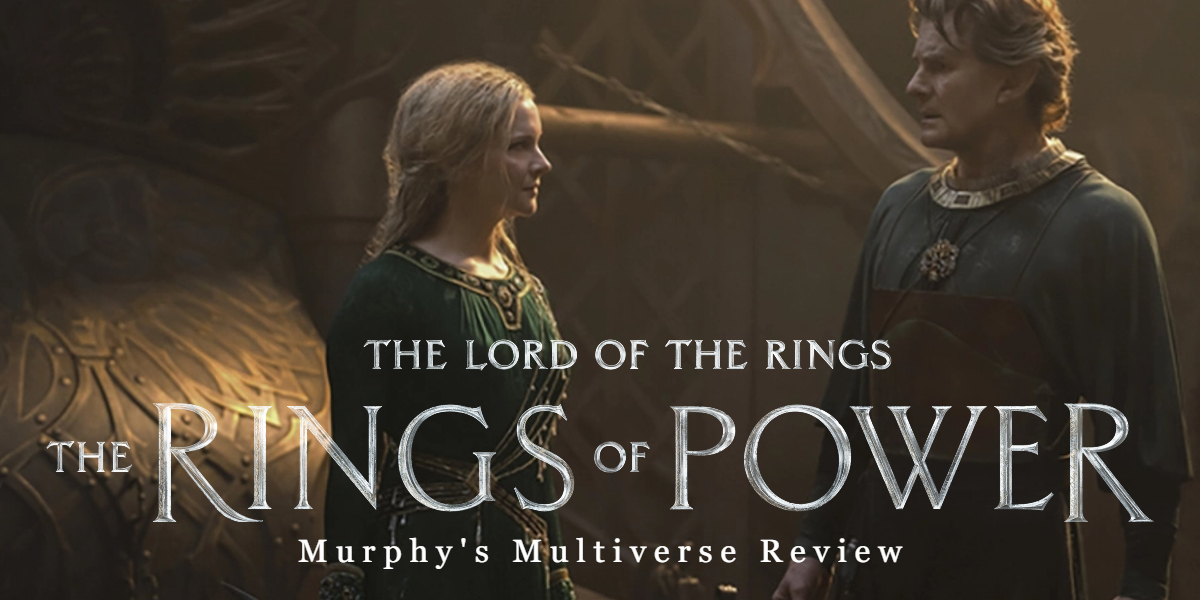
    Morfydd Clark stands solemnly by a gorgeous river, glaring at an open scroll. Her character, Galadriel, has just realized she’s made a horrible mistake. Always so surefooted, the Elven warrior exudes a guttural disbelief. It’s something so shocking that the audience feels it too, their insides twisting with hers as the literal face of evil steps from around the corner. There begins a sequence with enough impact, it may stand as one of the best scenes television has offered this year. In Alloyed, its season finale, The Rings of Power comes full circle and demands to be lauded. It’s a cerebral thrill ride from beginning to end, one designed for faithful fans of the franchise and newcomers alike.

    Alloyed plays like an emotional game of 3D chess. There are quite a few players on the board, and each one of them is wildly clever. Every time one thinks they might know what’s going to happen next, a different character unveils their hidden scheme and throws the rest of it out of whack. It makes for an insanely entertaining hour, especially for those watching without the aid of knowing extensive lore. Even if one does view the finale with years of J.R.R. Tolkien‘s works under their belt, however, they’ll likely be surprised and delighted by what the finale does with established moments in Lord of the Rings history. Alloyed takes a myriad of concepts and plotlines and spins them together until they’re fit for live-action storytelling. It’s impressively cinematic, and in the end, pretty gosh darn satisfying.

    The performances in the episode are what really bring it all to the next level. As mentioned, Clark has been a revelation all season. The nuance she brings to Galadriel has elevated the character far beyond what fans saw in Peter Jackson‘s film trilogy, and every ounce of energy she’s put into her role is on full display here. Lloyd Owen and Cynthia Addai-Robinson, too, put their best foot forward in a memorable scene as Elendil and the Queen Regent Míriel. Standing together in the belly of their ship, the two actors share a moment so genuine it threatens to become more powerful than all of Middle-earth’s mithril combined. Something similar could be said about Markella Kavenagh‘s little Harfoot, Nori, and Daniel Weyman‘s giant Stranger, who finally get some answers and set the show on a path toward its second season.

    Really, the finale’s greatest achievement is the way it’s able to move The Rings of Power forward. As wonderful of a season as it’s been, the many mysteries surrounding it’s characters and locations often left episodes running in circles and biding their time for eventual payoff. Alloyed is that payoff, and it’s executed beautifully. Now, with true allegiances revealed and a world beginning to take shape, there’s a clear map drawn for what comes next. With everything going on the past few weeks, pacing hasn’t been as much of an issue as it once was, but the seeming promise of Alloyed is that it’s all full steam ahead from this point on. Hopefully, that means the second season will be even more anticipated than the first. Either way, it has one heck of an episode to jump off from.

  • REVIEW: ‘The Curse of Bridge Hollow’

    REVIEW: ‘The Curse of Bridge Hollow’

    When Disney released Halloweentown in 1998, it’s safe to say no one imagined how believed the Disney Channel Original Movie would be over twenty years later. It wasn’t a spooky film, and sometimes the acting was subpar, but there was something charming about the film and the inclusion of the iconic Debbie Reynolds as a witch didn’t hurt, either. A town with a supernatural secret. And an evil determined to take over the world if a young girl and her family don’t do something to stop it. Simple enough plot, right? Sure, but it was a charming movie that continues to delight even now. And Netflix’s latest movie, The Curse of Bridge Hollow feels like it could become the streaming giant’s Halloweentown.

    The Curse of Bridge Hollow focuses on Sydney and her family as they move from Brooklyn to a small town called Bridge Hollow. It’s a safe small town, which Syd’s mother adores. For Sydney, though, she quickly finds herself enthralled by the town’s love of Halloween, especially as her father has always refused to let the family celebrate it. After hearing a rumor that her new house is hunted, Syd sets out to find the truth and ends up unleashing chaos upon the small little town.

    Here’s the thing, there’s nothing super special about The Curse of Bridge Hollow. The plot is simple, the acting is sometimes so-so, and the writing can leave something to be desired. But! It’s a delight that families are sure to eat up. A charming tale of a daughter and her father as they uncover supernatural secrets of their new town? Perhaps it’s not the easiest of sells, especially when that father despises Halloween, but Marlon Wayans and Priah Ferguson are a dynamic duo. The movie’s tone feels reminiscent of Halloweentown, and that’s far from a bad thing. In fact, like that Disney movie, Bridge Hollow isn’t trying to be a masterpiece, it’s simply trying to entertain, and it does so with ease. Those looking for a spooky Halloween title will be disappointed, but those in search of something more light-hearted with an occasional thrill with delight in Bridge Hollow.

    The Curse of Bridge Hollow knows what it wants to be and thrives on its willingness to let loose. It doesn’t try to take itself seriously, and it’s a refreshing change of pace. There are some legitimately creepy character designs – let’s just say Clowns – but most of the haunted decorations are family-friendly. Kids will adore this Halloween movie that feels like a classic in the making. It’s far from perfect, but the occasional hiccup is acceptable with a movie that understands how to have fun.

    Those with children should definitely give The Curse of Bridge Hollow a watch as Halloween nears.

  • REVIEW: ‘Grimcutty’ on Hulu is Absolutely Terrible

    REVIEW: ‘Grimcutty’ on Hulu is Absolutely Terrible

    Back in June 2009, the Slender Man seemed to be everywhere. Social media. The local news. Schools. It was the big thing for parents to focus on, and it unfortunately gained life outside of the internet when some students took it too far. Hollywood being Hollywood sought to turn the internet meme into a film almost nine years later, and it wasn’t the hit Screen Gems had hoped it to be earning just $51.7 million at the worldwide box office. Fast forward to 2022. While Slender Man seems to be a thing of the past, Grimcutty seems eager to take its place – for better or worse. The latest horror offering from Hulu is what happens when social media memes and YouTube fads are tossed into a blender in the hopes of making something halfway decent only to leave behind a horrible tasting mess.

    Grimcutty, like Slender Man, centers on an online story that quickly becomes a meme. There’s no real explanation as to what caused the Grimcutty, but it’s clear that the parents are terrified of it and willing to do whatever is necessary to protect their kids – even if it (up until that point) hadn’t been an actual issue. Like in real life, the story is driven by hysteria. Parents are terrified of what their kids might do themselves as part of the Grimcutty challenge, something even the kids seem to be unaware of, and quickly begin circulating the story amongst themselves and coming up with a plan to make use of a detox box thanks to a mommy blogger. Because if there’s one way to stop an internet monster, it is to stash all electronics in the detox box… but only if they belong to the kids. As ridiculous as it is, Grimcutty does a pretty bang-up job at capturing the way stories spread online can result in mass hysteria. Nonsensical? Absolutely. But believable? Oh, very much so.

    The problem is, though, is that Grimcutty fails on pretty much every other aspect. It tries to be smart; it tries to be witty, and it tries to make its monster terrifying. But Grimcutty is a CGI mess that isn’t any more terrifying than Jack Skellington. It’s hard not to laugh when there’s a computer-generated mess zombie walking toward its victims with a knife in tow. If the script is weak, at least ensure the monster is terrifying enough to make it worthwhile. At least then Grimcutty might’ve been a halfway decent horror movie about social media consumption and learning not to believe in everything posted online. The internet is where kids spend a lot of time these days thanks to school, YouTube, video games, etc. so it makes sense to use the internet as the springboard for the lore. It really does. But then it goes off course, really fast.

    Because this is a movie meant to tackle social media and the internet… it was apparently determined it wouldn’t be complete without incorporating ASMR videos into it because, well, internet. Perhaps the most frustrating part of Grimcutty is that it tries to tackle too much regarding trends instead of attempting to build a solid lore concerning its big bad. That’s one thing the film fails miserably at. Grimcutty doesn’t have a solid story foundation. It simply becomes a picture spread around online and, only after hysteria and internet searches regarding it, does the character appear with a knife. What caused it? Who created it? Why is it only visible to some? Is it only impacting a local area or is it worldwide? These are all basic questions that, had they been addressed properly on screen, would’ve made Grimcutty a far more enjoyable film. As it stands, though, Grimcutty is an utter mess that fails to scare or thrill.

    Some of the worst horror films often go on to have a cult following. Grimcutty will not be one of those films. There’s bad, but enjoyable, and then bad and unwatchable. Grimcutty falls into the latter category. Those looking for something mindless to keep on in the background might be willing to give it a shot. Otherwise, turn away. Go watch the excellent Hellraiser reboot instead.

  • REVIEW: ‘She-Hulk: Attorney at Law’ Finale

    REVIEW: ‘She-Hulk: Attorney at Law’ Finale

    We have come to an end of yet another Marvel Cinematic Universe series, but this finale stands on its own. Since WandaVision, MCU series have been rather well known for either botching or just not following through with outstanding finales. How anyone feels about the She-Hulk: Attorney at Law finale is less straightforward than usual. While the word “unique” has been thrown around a lot in Phase Four, there is no other way to start the discussion.

    Even though it did not take up the entire runtime, the massive fourth wall break in the finale has to be an instantly iconic moment in the MCU. To not only take the audience out of “the show” but to spend time with the titular character in Marvel Studios’ headquarters is beyond bonkers. Of course, the jarring transition from the regular program to She-Hulk breaking out of the Disney+ screen is incredible, and it lives up to the comic book version of her doing the same decades ago. The core potential of the character is released in the finale, and there are very few moments in the MCU that can genuinely say the same.

    The humor stemming from the fourth wall break is not only laugh-out-loud funny, but it is peak She-Hulk. Throughout the season, the show makes jabs at tropes and the incessant presence of the internet’s yelling in every single moment of the contemporary MCU. Anyone on Twitter is familiar with this, and anyone with a brain knew that She-Hulk would provoke perhaps the most attention in that regard. Instead of winking at the audience about it, the artificial intelligence replacement for Kevin Feige (a joke worthy of its own review maybe) addresses it head-on. The MCU has an internet relations struggle. She-Hulk is a strong, confident woman. The two combined were meant to be together, but the way the finale actually embraces it is almost too good to be true.

    The fourth wall break, without a doubt, is the finale. It may even be She-Hulk. Still, that does not mean the finale as a whole deserves top marks. It is somewhat hard to separate the fourth wall break from anything else, both because of the inherent difficulty of that and because they addressed very different things. The break speaks to the essence and the heart of She-Hulk, and what better place to do that than in the finale? But the rest of the story is quite limited because of it.

    Yes, it brings home the point that this is She-Hulk’s show, but it also made it clear that She-Hulk’s story—at least in Season One—did not do much more than what we already saw before this episode. That is not inherently bad, especially considering the show really wants to call itself a legal comedy. Plus, fans should have learned their lesson after WandaVision to not expect series finales to become the crossover, universe-shattering moments of their dreams. To that, She-Hulk said: here is Skaar. But plenty of plotlines arguably deserved more time and attention, and a longer version of how Jen cleared her name would have been very welcome. That in particular is the biggest loss of the finale’s choice, but at the end of the day, the fourth wall break is always the preferred option.

    She-Hulk made waves as an MCU series. As one of the few MCU projects to feature a woman in the title role, it went beyond just basic representational work on that front. Women’s real experiences were either mentioned or actually discussed, and the first project the MCU felt comfortable throwing sex in was a project where a woman led that concept on-screen. But the series will also go down as the funniest Marvel Studios project to date and in many ways one of the most grounded in reality (which is ironic in plenty of ways). Jen was an actual, believable human, and the series made that the basis of everything, even the crazier elements. She-Hulk, arguably, was what many internet fans wanted Doctor Strange in the Multiverse of Cameos to be, and yet this was just the first season of a solo series. At the end of the day, there is not much else to say except: She-Hulk smashed.

  • REVIEW: ‘Andor’ Episode 6

    REVIEW: ‘Andor’ Episode 6

    The idea that the collective nose of the Empire is so upturned that they can’t see what’s going on right beneath it has been a central theme through the first five episodes of Andor. Key members of the fledgling Rebellion, including Cassian, understand this perception and it’s become a crack in the Imperial armor that they’ve learned to exploit. Episode 6, “The Eye”, opens with a reminder of just how much disdain the Empire has for those they see as beneath them and ends with the Empire feeling for the first time just how dangerous these people they’ve regarded as inferiors can be. However, as the season progresses into its second half, the galaxy just became a much more dangerous place for those who wish to take down the Empire.

    “The Eye” was many things and chief among them was that it was the first time that Andor really leaned into being a Star Wars series while also continuing its expansion of what a Star Wars series can be. Seeing and hearing the Tie Fighters roar into action rang the Star Wars bell, but setting the familiar chase scene amidst the beauty and rarity of the natural phenomenon occurring on Aldhani continues the hot streak for this creative team. They continue to world-build in a world that’s been accused of being too small in a galaxy so large. Why does everything happen on Tattooine? Why is everyone a Skywalker or know one? Why does Luke have to be in everything? It would have been low-hanging fruit to have Palpatine cameo in the brief Senate scene. They chose to keep the focus on Mon Mothma, who will become central to the series and the growing rebellion. Andor continues to trend away from these issues and cameos, content to exist and be judged on its own merits rather than connect itself to familiar faces and places.

    Episode 6 works incredibly well as a conclusion not only to the first half of Season 1 but also to the four-episode arc that introduced Stellan Skarsgård’s Luthen Rael and to the three-episode arc that saw Rael’s scheme unfold and, ultimately be successfully completed. It works so well as a conclusion that if Episode 6 had been the end of Season 1 of Andor, it would be hard to argue that it had been anything other than a triumph. The mission is complete; Cassian did Cassian things; the Empire is now aware that there’s a stick in their eye. The closing shot of Rael, who feared he may have overreached in his efforts to attack the Empire, finally releasing the tension he expressed in the closing shot of Episode 5. So many of the storylines put into play were tied up neatly by the events of Episode 6 and that’s no easy thing to ensure. The team of director Susanna White, writer Dan Gilroy and creator Tony Gilroy could be commended for putting the finishing touches on what’s arguably the best streaming series Star Wars has released on Disney Plus. But the brilliance of the series lies in the fact that Episode 6 serves both as the end of one arc and the beginning of another.

    For all its brilliance so far, Andor is just getting off the ground. By tying up the intersecting storylines with the completion of the mission on Aldhani, the series activated other storylines that had been weaved into the first six episodes. Denise Gough’s Dedra Meero, who had warned her superior that a threat was growing, is now on the precipice of becoming a central part of the second half of the season. With Cassian now back on his own, it’s time for Kyle Soller’s Syril Karn to get off the bench and get into the action. The investment in introducing and developing so many characters made by Tony Gilroy is about to pay dividends. Cassian, Mon Mothma and Luten Rael have had their moment. It certainly feels like the Empire is about to strike back.

  • REVIEW: ‘Rosaline’ is a Delightful ‘Romeo & Juliet’ Retelling

    REVIEW: ‘Rosaline’ is a Delightful ‘Romeo & Juliet’ Retelling

    There are few stories known as worldwide as that of Romeo and Juliet. The story of star-crossed lovers has been adapted countless times and referenced even more, and yet, despite the age-old story being so familiar, Hollywood still seems keen to try and find new ways to tell it. Enter Rosaline. Inspired by the book When You Were Mine by author Rebecca Serie, Rosaline offers a new spin on the romantic classic. This time around, it’s not Romeo and Juliet that take centerstage, but rather Juliet’s cousin, Rosaline – Romeo’s former lover.

    Rosaline, which is a comedic retelling with modern influences, stars the excellent Kaitlyn Dever as the titular character. Despite their warring families, Rosaline has found herself falling for Romeo Montague, although she knows her family can never know of their love. Little does she know, though, that her love has found himself smitten with someone else: her cousin, Juliet. And it’s not just puppy love, either. Gone are Romeo’s playboy ways as he spends his days chasing after Juliet and only Juliet. Eager to win back Romeo, Rosaline seeks to ruin things between Juliet and Romeo resulting in a chaotic love story that proves love is capable of driving us all a little mad.

    When it comes to Rosaline, Dever is easily the best part of the film and it’s clear she’s having a blast as the mischievous Rosaline. And while her on-screen chemistry with Romeo (Kyle Allen) is nearly non-existent, Dever is electric alongside Sean Teale‘s Dario. Every moment the duo share on screen is captivating; their dynamic is excellent and complements the less impressive relationship between Romeo (Allen) and Juliet (Isabela Merced). It’s hard to buy these two as Romeo and Juliet; they lack any kind of spark. Thankfully, even with sometimes stilted performance, what truly sells this take on the classic story is that the cast – or rather, most of the cast – is so willing to lean into the material. It takes more than simply adding modern bits to make something unique. Without a cast committed to the material, Rosaline would not have worked.

    While set in the renaissance era, Rosaline is very modern – from the language to the behaviors of its characters and the social standards, this isn’t the Romeo and Juliet story viewers are used to. Driven by modern music and a leading lady unwilling to give into society’s expectations of her, Rosaline is a delight to watch. Even more impressive, though, is that while Romeo and Juliet are featured in the film – the story we’ve come to know isn’t the story that plays out here. It’s far more realistic and entertaining, and it ultimately helps to drive Rosaline’s story forward.

    All in all, Rosaline is a breath of fresh air. It’s emotional, romantic and simply fun. Those eager for a fresh new take on the Romeo and Juliet lore will want to check out Rosaline. Dever delivers a hell of a performance as the titular character and Karen Maine (Yes, God, Yes) is a director to watch.

  • REVIEW: ‘Interview with the Vampire’ Episode 2

    REVIEW: ‘Interview with the Vampire’ Episode 2

    If Episode 1 of Interview with the Vampire served to introduce Louis and Lestat and their immortal bond, Episode 2, “After the Phantoms of Your Former Self”, served to introduce their tempestuous relationship. The Louis who narrates his tale to Daniel Malloy isn’t much of a vampire, choosing not to hunt but rather to take small drinks from willing familiars or drink blood stored in bags. How he came to be the Louis in the present day has nearly everything to do with how his relationship with Lestat ebbed and flowed and this episode provides the earliest inklings of how things will progress.

    From Louis’ first, awkward kill in the episode’s opening half, Lestat’s nature as a killer begins to come into contrast with Louis’. Though Lestat tells his pupil that murdering his victims will get easier over time, the truth is that Louis never took to it as his mentor did. Over the course of the episode, Louis becomes appalled first with himself after finding himself tempted to drain his sister’s baby and then later with Lestat who views his kills as an expression of his inner artist. Their debate over how to properly dispatch their food ends in Lestat screaming at Louis, imploring him to embrace his new powers: “you’re a killer, Louis!” While these words are among some of the more famous from Anne Rice’s novels to be quoted in this episode, rather than put Louis on the course Lestat hopes they will, they set him instead on the one that makes him evolve into the present day version willing to tell his story to Malloy. Louis and Lestat’s love-hate relationship drives so much of Rice’s novels and it seems that the series is willing to spend time developing it, rather than rushing it, meaning the payoff down the road should be all the better.

    By spending so much time developing the relationship between the two leads, the episode left itself little time to do much else. A little world-building early on (Louis explains to Malloy that one of his paintings is by Marius de Romanus, one of the world’s oldest vampires) and a subtle hint to just how strong Louis is for having been made by Lestat (his trip into the sun, while painful does little damage) stand out, especially to those familiar with Rice’s works. But beyond that, the episode does exactly what it seems it was intended to do: put the drama between Louis and his maker on full display, setting up a season’s worth of conflict.

  • REVIEW: ‘The Rings of Power’ Explores Trauma in Heartfelt ‘The Eye’

    REVIEW: ‘The Rings of Power’ Explores Trauma in Heartfelt ‘The Eye’

    Ashes fill the air, bodies cover the ground, and even those with the strongest of will have been brought to their knees. With this week’s episode, The Rings of Power takes a deep dive into a topic it’s been dancing around since the very beginning. Trauma, and the grief that comes with it, weighs heavy on The Eye, the penultimate episode of Prime Video’s hit Lord of the Rings prequel. Last week saw Adar and his army of orcs emerge from the battle of Ostirith victorious, laying waste to the Southlands and giving rise to Mordor at the cost of countless innocent lives. Now, the heroes of Middle-earth must deal with the fallout – something they aren’t incredibly well-equipped to handle.

    The Eye is a necessary step back in energy after last week’s action-packed installment. Before the series can go full throttle into what will undoubtedly be a hectic finale, it needs to let its characters settle into the next status quo. The people of Númenor and the Southlands suffered great losses, and the episode does a wonderful job of letting them confront it honestly. Lloyd Owen‘s Elendil, especially, is the standout of this week’s entry. All season, the Captain has presented himself stone-cold and unfeeling, even if his underlying soft side was always threatening to break through the surface. In The Eye, the disappearance and presumed death of his son, Maxim Baldry‘s Isildur, finally pushes the emotion through. Owen‘s performance is heartbreaking and genuine. In an episode where the likes of Morfydd Clark‘s Galadriel and Cynthia Addai-Robinson‘s Queen Regent Míriel are faced with unthinkable challenges, it’s Elendil who forces viewers to feel the true pain of loss.

    This feeling extends to the caverns of Khazad-dûm, where Owain Arthur‘s Prince Durin painstakingly claws his way through familial relations in an attempt to help his friend, Robert Aramayo‘s Elven favorite Elrond. Probably the other best performance in the episode, and this one has a lot of great performances, Durin’s tearful commitment to chosen family and the good of Middle-earth turns out to be the centerpiece of hope for the realm’s future. While all feels lost, Durin is willing to sacrifice his own birthright for what he knows to be good in his heart. Hope has been a theme throughout The Rings of Power, and many of the characters fashion themselves as symbols of it, but it’s the little Dwarf with a golden soul who makes it all feel real.

    The writing for the show has really been kicked up a notch in the season’s back-half. The issues with pacing that were present in the first few episodes have all but vanished, with even the slower moments feeling faster and less arduous than they did before. It makes the anticipation for the finale more grand than one might have anticipated in the beginning. Even the Harfoots, who have been largely absent from the last couple weeks, have made their way into tie-in territory with the rest of the series. As it turns out, their humble encampment is not immune to the horrors of Middle-earth, and their loss – simultaneous with the events in Ostirith – hits surprisingly hard. The development of the Harfoot characters truly shines through in this sequence, as they look for ways to carry on and accept new methods of survival. After a full season of build-up, it’s nice to see how it all occurs so organically.

    As with every week, there is also the usual commentary on set design and the beauty of the show’s effects. Mordor looks haunting, as it should, and the mines of Khazad-dûm are as stunning as the look on Durin’s face suggests they’d be. Among those effects, however, are several terrifying hints toward the future of the show. It would appear that the Balrog is still alive, deep in the mountain, and there are still many questions surrounding the identities of the mysterious stranger and the group of sketchy magic-wielders who are seemingly after him. Let’s hope the cast of characters in The Rings of Power got their fill of recovery in The Eye, because they still have much to take care of when the show’s finale drops next week.