Category: Reviews

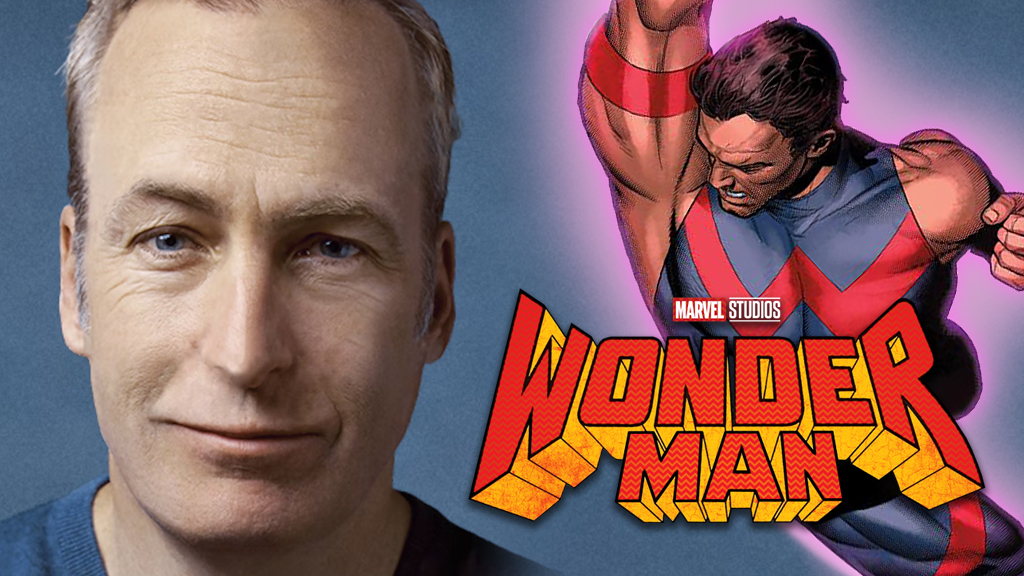
  • THEORY: Bob Odenkirk is the Main Villain in ‘Wonder Man’

    THEORY: Bob Odenkirk is the Main Villain in ‘Wonder Man’

    Casting is underway for Marvel Studios’ Wonder Man, and it’s already insanely interesting. News broke recently that Aquaman breakout Yahya Abdul-Mateen II would star as the title character Simon Williams, a stuntman and actor with incredible ionic powers, and now it would seem Breaking Bad favorite Bob Odenkirk is in talks to play his manager. If this comes to fruition, Wonder Man would be coming out of the gate with two top-tier talents on board. Yet, it is a little odd to think that Kevin Feige and the folks at Marvel would sign such massively gifted performers for minor characters. Abdul-Mateen II would, of course, be around for the long haul, likely joining the Marvel Cinematic Universe for more than a few projects. Odenkirk appearing in the role of “Wonder Man’s agent,” however, almost feels like a downgrade following an award-worthy stretch on Better Call Saul. That is unless there’s more to the character than initially meets the eye.

    While not specifically named in the article revealing Odenkirk‘s potential casting, Wonder Man did have an agent in the comics that could also fill that role in the Disney+ series. Neal Saroyan, created by Gerard Jones and Jeff Johnson for Wonder Man’s second solo run in 1991, appeared as Simon Williams’ slimy talent manager for on-and-off stints over multiple years. At first, Saroyan was used mostly as a Hollywood caricature, designed to satirize the kind of awful behavior industry veterans have long been known for. For example, not long after becoming Simon’s agent, the established sleazeball purposefully orchestrates conflicts that endanger the lives of civilians so his client can look like more of a hero when he arrives to save the day. This style of promotion originates without Simon’s knowledge, but even after he learns the truth, Saroyan sticks around as a “this-is-how-the-business-works” foil for Wonder Man’s back-and-forth ethics.

    Neal spends nearly a decade in comic book obscurity, occasionally popping into Wonder Man stories as a means of driving the plot forward with his specific brand of chaos. Whether it be hiring Simon a fake sidekick to boost his image, booking appointments with supervillains, or trying to force Simon’s love interest to write a film based on tragic Avengers-based events – Saroyan was usually the man pulling the strings. It wasn’t until 2007 that he became something a lot more sinister than just a shady businessman. In a miniseries titled My Fair Super Hero, Simon’s third solo run, Neal steps up and quietly takes the part of main antagonist.

    Writer Peter David and artist Andrew Currie concoct a story in which Saroyan convinces Williams to star in a documentary reality show called – believe it or not – “My Fair Super Hero“. The premise stems from an earlier comic when Simon created a foundation known as “Second Chances”, where, being a former villain himself, he aids in the rehabilitation of criminals who want to be better. In My Fair Super Hero, Neal persuades Simon to publicly work with a superpowered assassin known as Ladykiller. Williams’ goal would be to reshape her image into a hero, under the new name “Ladyfair,” with the process being filmed as a way of bringing attention to both Wonder Man and Second Chances. A reluctant Simon agrees, and the remainder of the story revolves around Williams’ televised, eventually-romantic, relationship with Ladyfair as the duo fight off her dangerous former employers, “The Nobility”. The plot culminates in the surprise twist that Neal is not just a talent agent, but the secret leader of The Nobility and a hidden supervillain with brainwashing abilities. Saroyan waits until Simon brings Ladyfair into the presence of the Avengers, and then busts out his powers on the assassin in an effort to kill as many of the heroes as possible. Obviously, this doesn’t work, and only results in Neal’s untimely demise.

    My Fair Super Hero was not an overly memorable comic arc when it was released, but the notable casting of Bob Odenkirk as – possibly – Saroyan could mean it’s destined for an MCU makeover in the near future. Odenkirk excels at portraying fast-talking men with a secret, so it makes sense that Marvel might want him in a similar kind of role in Wonder Man. The fact that the studio would shoot for an actor of Odenkirk‘s caliber also indicates that “Wonder Man’s agent” will likely be a bigger factor in the series than originally imagined, and if that character is actually a live-action version of Saroyan, what better story to adapt than the one where he takes center stage? Depending on how Marvel chooses to implement Simon Williams’ origin in the MCU, My Fair Super Hero could actually be their best route in bringing a Disney+ series to life. It would only take some slight adjustments to fit perfectly in the context of the world they’ve established.

    Murphy’s Multiverse has already speculated that Abdul-Mateen II‘s hero could first debut as a villain in 2024’s Thunderbolts film. If this occurs, it will give Williams a genuine reason within the MCU to have founded an organization like Second Chances before aligning himself with a rather convincing representative of Hollywood. Furthermore, early reports on Wonder Man stated it was possible the series adapts the popular “mockumentary” style of television, another concept Murphy’s Multiverse got a jump on before its time. This idea was made more realistic by the hiring of Andrew Guest, a well-regarded mockumentary-style writer, to work on the show’s scripts. A My Fair Super Hero adaptation, which, as previously stated, sees Williams starring in a documentary reality series, would work naturally with this type of television.

    As for Williams’ partner and love interest in the arc, Ladykiller, Marvel Studios could choose to keep the character for the show. Alternatively, they could go for something a little bit bigger. My Fair Super Hero, the comic, begins with a discussion between Simon and Neal about the odds of Scarlet Witch’s redemption. At the time, her public image had just taken a turn for the worst, as it has recently done in the MCU. The conversation happens because Simon, who shares brain patterns with the Vision, is the other major romantic partner for Wanda Maximoff in the Marvel universe. So, putting all the pieces together, one comes up with quite the pitch for Wonder Man on Disney+ – Abdul-Mateen II’s Simon Williams founds Second Chances and hires Odenkirk’s Neal Saroyan as his agent to build upon a burgeoning career in Hollywood. Saroyan convinces Williams to create a documentary series in which he attempts to turn around the biggest public fall from grace in history and reestablish the Scarlet Witch as an Avengers-worthy superhero. Simon and Wanda begin to fall for each other as their mockumentary leads them on comical adventures around the MCU, culminating in a moment where Saroyan reveals himself as the villain and tries to force Wanda into once again losing it.

    Odenkirk gets his moment in the Marvel spotlight as a big bad, flexing his best entertainment muscles as a smooth-talker with the power of mental manipulation, and is more satisfyingly used in his one-off appearance. Simon develops his place in the MCU and solidifies his code of morals, while Wanda returns to superhero status. All wrapped in a fun, She-Hulk-style series on Disney+. It’s a win all around, and it only takes an obscure storyline from 2007 to get it done.

  • REVIEW: ‘Cowboy Bebop: Supernova Swing’ is a Great Read

    Fans — or at least, some of them –were disappointed when Netflix decided to cancel its live-action Cowboy Bebop series starring John Cho. However, those eager for more Cowboy Bebop will find solace in an accompanying side story coming this November titled Cowboy Bebop: Supernova Swing. Set in the year 2171, this story brings together the Bebop crew to hunt down an ex-gang member who has stolen a vest that gives its wearer unparallel powers. This isn’t an altruistic hunt, mind you: Spike, Faye, and Jet are down on their luck and need both a win and a way to be financially stable for a while, and the original owner of the vest has put a bounty on it that would give them both. However, they are not the only ones after the vest, as the Syndicate is also looking for it. 

    Think of the story as a play on Jason & The Argonauts, and the hunt for the almighty fleece in that story and you have the proverbial skeleton. However, this story is told with that classic Bebop flair. There is a casino heist that does not go the way the group hopes it will, and leads them to a planet that intoxicated the whole crew. This setting gives us more of an opportunity to see how drunken thoughts reveal sober truths for Jet and Faye, and how these three ultimately need each other for more than just good times. The artwork is what you have come to expect from Cowboy Bebop, but it is really the story that brings you in and hooks you from the beginning. Dan Watters, in a way that maybe the Netflix series didn’t get a chance to, captures the tone of the Bebop universe and its need to be multi-layered perfectly. This story goes from emotional (these are three characters thrown together not because they wanted to, but almost out of necessity) to funny (there’s a ramen exchange that works really well) to philosophical (the three characters often find themselves asking each other about the meaning of life in ways that are not often found in these mediums). The humor allows us to breathe during the more emotional beats, and the art helps but does not overwhelm this story.

    Speaking of the art, Lamar Mathurin deserves a shout-out because Cowboy Bebop is not Gumbo (Mathurin’s graphic novel). As such, he is the one tasked with adapting his style to an already existing world, and he knocks it out of the park. Having to juggle so many different settings, stylistically, could have been a challenge for any other artist, but not here. The action itself, had it not been curated properly, could have looked awful on the page, but Mathurin displays both reverence for these characters and a desire to showcase them with his own style.

    If you loved the Netflix series, then you will absolutely love this and the other standalone novels that have been released. If you have been on the fence about giving Cowboy Bebop a shot, this is a quick read that could be a good springboard for you because it doesn’t require past knowledge of the characters. It, also, gives you everything the series gave you in a much more consumable medium, which may whet your appetite to try the series. Watters and Mathurin deserve so much credit for their great work here and for their love of this universe. 

  • REVIEW: ‘Armorclads’ is an Unfortunate Miss

    REVIEW: ‘Armorclads’ is an Unfortunate Miss

    As a big Pacific Rim/Gundam/build robot suits and have them beat the crap out of each other kind of guy, I quickly jumped at the chance to review Armorclads for the site. Mechs? Check. Dystopian future? Check. Legacy-spanning conspiracies? Triple check! So, imagine my disappointment in seeing that Armorclads just did not live up to the expectations I had for it. This could have expanded the Valiant universe in a very real way, but it teeters between nonsensical and lackadaisical, and that is its biggest crime.

    Let’s start with the artwork: Manuel García and Miguel Sepulveda deserve some credit in the world for making this world pop despite an overuse of dark hues. This is a joke: I am admittedly not sure what aesthetic they were going for with their artwork, but unfortunately the color choices they make did nothing to make me excited to return to this world. Their biggest mistake, in my opinion, is they did not make each character distinct enough. When you are building out a world like this, the second most important thing (beyond the actual story) is that every character you’re introducing is memorable even if their appearance is short-lived. In a comic like this, where we are being transported to a world we have very little reference for, the artists have such a responsibility to design this world so that it is both accessible and it pulls you in. They sadly did not deliver here, and that is the first misstep.

    The next misstep is the story. There is so much exposition about the world the story takes place in, which would not have been needed if the artwork was used to show the world. I would much rather have been shown this world, while the story told me about the characters living in it, than to spend half a short read like this being told why I should care about this long-forgotten war. Being told that these suits are capable of legendary fears? Also a mistake. Why were we never shown what they could do? This is where the piss-poor art decision causes the story to dovetail even more, except this time I put more blame on the writers because it is their choice to spend even more time telling us why we should even care about this story to begin with. Building out this world’s inhabitants would have made readers care about the use of these powerful entities, but instead you’re left to quickly have to care about the main characters and everything that happened to get us to this point in this universe. The writing was awful, from start to almost finish, with little redeeming qualities for most of the story.

    Here we get to the little bit of good in this, and why this is so disappointing to write: the story begins to get better around the 3/4th story point, but it is only because the story is now simplified to an extent. The complications of this destiny-like journey our main character is on rear their head at the end when we are just supposed to accept that they’re the “chosen one.” By this point, it was hard to even care that this was pre-ordained or connected to the war from eons ago. The protagonist was forgettable, as was the world, and most of the story, and it just feels like someone dropped a multitude of balls from the idea phase of this story to the implementation.

    Overall, Armorclads feels like a 1-star title. The story should’ve been fleshed out differently, so as to make the final reveal mean more. Instead, we got an exposition-heavy story with a boring protagonist and a forgettable McGuffin amidst really poor art.

  • REVIEW: ‘The Dragon Prince’ Journeys Into ‘Mystery of Aaravos’

    REVIEW: ‘The Dragon Prince’ Journeys Into ‘Mystery of Aaravos’

    After a three-year hiatus, The Dragon Prince has returned – and this time, things aren’t exactly the same. Now dubbed The Dragon Prince: Mystery of Aaravos, the fantastically animated series from creators Aaron Ehasz and Justin Richmond is shifting gears to a fresh story arc. Once about the journey of an unlikely trio through magical, foreign lands, the latest season features its protagonists settled into new roles after completing their former goal. Alas, peace can never remain for long, as a dormant threat hinted at in previous seasons finally makes itself known to the entirety of Xadia. Now, the realm’s greatest, and youngest, heroes must reembark on another adventure to stop the evil of Aaravos in a complicated social climate they’re still trying to mold.

    The Dragon Prince has always quietly been a wonderful educational tool for children, and young adults, who may have only tuned in for the dragons and magic. The series has a marked history of using its fantasy world to parallel the political strife of Earth’s own, and the Mystery of Aaravos is decidedly no different. For all the story elements that have changed in the show’s time away from air, its commitment to commenting on the ethics of governing and world war is admirably still intact. For any parent reading this, whose kids have not yet picked up The Dragon Prince – this is a gem of a project flying just under the pop culture radar. Its first three seasons are often thrilling, with genuine moments of suspense and certifiably cool action sequences, and its chock-full of characters both adorable and valiant. Its messages, a mix of subtle and on-the-nose, are also the exact kind that the youth of today should be hearing. Love and humanity are more important than anything else, and The Dragon Prince believes this wholeheartedly.

    That is what stays the same in Mystery of Aaravos, the show’s upcoming fourth season, which doubles down on its wholesomeness from the very beginning. What’s changed is the primary goal of the series’ main characters, who have successfully brought back the dragons and begun the process of uniting the realm. Now skilled in their respective crafts, the young heroes must figure out how to tackle an insurgence of dark magic with the help of other magic users, instead of on their own. It’s actually quite refreshing to see the fruits of previous season’s labors paying off, and brings a warm sense of progress to The Dragon Prince as a whole. The latest episodes do an excellent job of bringing their characters to exciting new places, developmentally speaking, without forcefully betraying anything established in prior installments. Natural development is a wildly underrated aspect of storytelling, and it’s nice to see The Dragon Prince handle it so well here.

    With its new conflict also comes a new sense of drama, and the ending to the first quarter of the season indicates the series might be headed toward darker alleys than it’s ever explored before. This is something seen in Ehasz projects in the past, as Avatar: The Last Airbender also matured with its audience. Of course, as previously stated, the lightheartedness of The Dragon Prince is still there in the latest season, it’s just packaged with moments that were surprisingly brooding. It would seem that mental health will play a larger role in Mystery of Aaravos, with multiple characters not finished reeling over the events of years past. In only the first few episodes, this topic is addressed with the same reassuring grace that continues to make The Dragon Prince a must-watch for little ones.

    Ultimately, the latest season of The Dragon Prince offers a delightful mix of old and new. It’s exactly what longtime viewers hoped they’d find upon their return, with enough differences to justify a four-season renewal. Although only four episodes were made available for review, the velocity of the season makes it easy to be confident in its continued high-quality. Fans should be excited to dive back into Xadia, because so far, it’s been worth every minute.

  • REVIEW: ‘Andor’ Episode 8

    REVIEW: ‘Andor’ Episode 8

    Lucasfilm’s latest Star Wars streaming series, Andor, has been routinely described as a “slow burn”; to date, no episode has served as a better exemplar than Episode 8. The 12-episode first season has been neatly broken up into 3-episode arcs and, so far, the second episode of those arcs has seemed to work as the table setter for the high-energy third episode of each arc. That seems to be the case again with “Narkina 5,” though setting the table doesn’t make the episode any less critical.

    Episode 8 takes the time to make the characters and the audience feel the extent of the Empire’s response to the Aldhani heist. Ironically, as three different factions search for Cassian for different reasons, he’s already found himself caught in the tightening grip of the Emprie. As Luthen Rael had hoped, the Empire’s response was swift and fierce and Cassian experiences it first-hand in the prison work camp on the planet of Narkina 5. By the end of the episode, a month has passed and while there’s no telling just how long Cassian will be in prison (we know it won’t be his entire six-year sentence), it’s worthwhile to wonder how his time there will shape him into the who we know he becomes. Director Toby Haynes makes the audience feel the mundane nature of Cassian’s time in prison, putting them through the same automated paces the prisoners experience, while also illustrating the hopelessness of the situation through the suicide of a fellow prisoner.

    Meanwhile, it’s the wrong time to be a Rebel. As the episode showcases the precision of the Imperial machine (indeed the series’ lead finds himself a cog in the very machine he hoped to take down), it does so in contrast to the fractured nature of the Rebellion. Rael’s visit with extremist leader Saw Gerrera on Segra Milo illustrates just how slipshod the fledgling Rebel Alliance is, if it’s really an alliance at all. Rael and Gerrera lie and posture and argue only to ultimately find themselves no more likely to achieve their “shared” purpose than they were before their meeting, in fact, in light of the enlightening conversation they share, they seem to be parsecs apart.

    A slow burn to be sure, but “Narkina 5,” which is another in a line of beautifully shot episodes in this series, brings the tension down a notch from previous weeks but does so simply to lay the groundwork for the next “event.” Though he tried to walk away, Cassian’s mission on Aldhani has led the ISB to Ferrix where they have begun to wrangle up any and everyone associated with him. Episode 8 begun to weave together many of the series’ ongoing, individual threads, causing the rough-and in some cases unexpected-intersection of their arcs. Karn and Meero’s meeting went about as smoothly as Rael and Gerrera’s, which certainly isn’t the way most fans had it playing out. How long does someone with Karn’s ambition stay sidelined? How will he respond to being dismissed by the Empire? These are fair questions which we didn’t even know needed answering. And that’s emblematic of what Andor has provided fans of Star Wars so far. For a series about a dead character, it’s certainly proven to be one of the most thought-provoking streaming series Lucasfilm has made to date.

  • REVIEW: First 2 Episodes of Netflix’s ‘Cabinet of Curiosities’ Offer a Promising Start

    REVIEW: First 2 Episodes of Netflix’s ‘Cabinet of Curiosities’ Offer a Promising Start

    The first two episodes have been released for Guillermo del Toro’s Cabinet of Curiosities and they offer a window into what the future of this horror anthology will bring to the table. The concept of horror anthologies is nothing new, may it be in TV form with The Twilight Zone, the V/H/S film franchise, or The ABCs of Death. There’s something special about exploring the genre from many different perspectives that explore the genre in many different ways. Luckily, Cabinet of Curiosities already teases that the series will offer exactly that.

    We are given two distinct episodes with Guillermo Navarro‘s Lot 36 and Vincenzo Natali‘s Graveyard Rats. The only true connection point is that each episode opens with Guillermo del Toro offering a small tease of what’s to come in the episodes with a trinket hinting at what the individual episodes have to offer. It’s a great little homage to classic horror anthologys where the host sets the right mood and del Toro is definitely the person you want to tell you what fears are heading your way.

    Lot 36

    Navarro‘s Lot 36 explores the story of Tim Blake Nelson‘s Nick. A man owing money to the wrong people and desperate enough to ensure he can make a quick buck off of forgotten storage units. The story is mainly carried by Nelson‘s performance as he offers us a man that is constantly on edge and just taking it out on the rest of the world. He’s definitely not meant to be likable but with the knowledge of it being a horror story, who knows what demonic things may be heading his way. Luckily, the episode offers a slow but satisfying build-up.

    The episode is best explained as a showcase of consequences. It uses an underlying mystery about a strange man performing strange rituals in front of his storage unit to make you question what may be included but doesn’t truly show all its cards. Making use of the base concept, a lot of what is hidden away in this storage unit hints at where the story is heading. The only drawback is that as great as the ending is, it goes by fast. The pay-off is definitely there in spades but it did feel like it could’ve used a bit more time to build tension.

    With a core mystery being the building blocks of the slow burn, it was a shame it didn’t build upon that some more. Just like Nelson‘s character, the ending wanted to get it done with. Even if the pathos was satisfying, there still is that feeling that it ends just as it’s getting good. It’s a very grounded story that has a great escalation, it just hit a satisfying ending a bit too early. Even so, it’s a great first episode and you can definitely see this was a passion project. Even with little scares, it’s definitely a memorable way to kick off an anthology.

    Graveyard Rats

    The second entry by Natali, Graveyard Rats, sees David Hewlett‘s Masson try his best to take care of his graveyard by stealing from the many patrons that remain buried there. The opening is actually a fun diversion as he stops two grave robbers only to turn out to be one himself. Just like Nick, we have another character down on his luck, who is desperately trying to get his hands on anything he can sell to get out of his debt. It’s a shame the general motivation for both episodes being baseline the same but the vibe is what makes this entry stand out.

    The project still isn’t as scary, it does act as a more comedic take on the genre. It doesn’t fully go Army of Darkness, but you can feel like there’s some fun with the project. Hewlett is a blast as the character and the project offers some really beautiful shots that are that perfect little “extra” to make it stand out from the previous entry. We also get to explore the character going through more of a journey, as things just continue to escalate for him.

    As the name implies, the core story is about rats, and without really spoiling anything, it does take a sudden left turn towards the end; a bit of a déjà-vu. It technically could’ve done without but it does add a bit more fun mythology to this one-off story. Who knows if perhaps they could revisit it similar to how Love, Death and Robots had a sequel episode to a previous season. Still, the main focus of the story is still prevalent, and plays around with some really great imagery and the fears that any of us.

    It still doesn’t quite scare you as much as it could, but it makes for a great little story. I do wish that the second entry would’ve been more distinct from the previous episodes but it still is tonally and visually distinct to distract from those surface-level similarities. If this is the direction they are going with this series, it’ll definite must-watch for anyone who loves the genre and wants to see some fun directions with it.

  • REVIEW: ‘Nope’ Blu-Ray

    REVIEW: ‘Nope’ Blu-Ray

    Jordan Peele’s latest film, Nope, is officially out on Blu-Ray and DVD today. To celebrate the movie’s home release, we were provided a Blu-Ray copy of Nope in advance for review. With that in mind, we take a closer look at the extras included on the Nope Blu-Ray and determine if the film is worth picking up.

    There’s no denying Peele’s talent – both as a filmmaker and actor. He has a unique vision and each of his films brings something new. While Nope isn’t as strong as his prior efforts, Get Out and Us, it’s still a hell of a ride that audiences will thoroughly enjoy. For that reason alone, Nope is surely worth picking up. Nothing will beat experiencing this one on a huge screen with an audience, but even at home, Nope is still a well-crafted film worthy of repeat viewings.

    While a good movie, the extras, unfortunately, don’t really offer much. For fans, deleted scenes are often a huge selling point, because they’re eager to see what had to be cut. Sometimes, those deleted scenes are great. In this case, though, it’s clear they were cut for a reason. Not a single one would’ve added anything special to Nope; watching them, you can understand why they were cut because they ultimately would’ve halted the story’s progression. So, in this instance, there’s no reason to pick up a physical copy of Nope for deleted scenes. And even the gag scenes are pretty boring. They’re short, and honestly, lack any real charm or humor. There’s simply not much there, and that’s not necessarily a bad thing. But the two usual things fans look forward to with home releases just lack any importance here.

    What does prove to be a selling point for Nope, however, is the inclusion of Shadows: The Making of Nope. This behind-the-scenes feature that includes Peele, as well as his leading cast, is a pretty great exploration of the film and how it was made. Getting a deep dive into Peele’s world and the movie itself is fascinating. Two other featurettes included on the Blu-Ray are Call Him Jean Jacket and Mystery Man of the Muybridge also prove to be worthy of a view. While not as intriguing as Shadows, both featurettes are entertaining in their own right.

    In the end, while the Blu-Ray doesn’t offer much in the way of bonus features, there’s still plenty of reason to pick up a copy of Nope on Blu-Ray. With stellar performances by both Keke Palmer and Daniel Kaluuya, Nope on Blu-Ray is still worth picking up. After all, it’s not often a film this ambitious, weird, and thrilling hits.

  • REVIEW: ‘Dark Sanctum’ Podcast

    REVIEW: ‘Dark Sanctum’ Podcast

    The Dark Sanctum podcast consists of seven episodes. Rather than doing an overall series review, we will review each individual episode.

    Episode 1, “Requiem for a Traveler:” When the episode starts, it’s hard to get a true sense as to what is going on. It feels as though the main character is experiencing a nightmare that is soon interrupted when he wakes up. But this story is far from the typical night terrors story. After a few moments, as the story begins to find its footing, it becomes clear there’s a more terrifying aspect to this man’s night terror. It’s wonderfully thrilling but could’ve benefited from about five to ten more minutes. The voice acting is great – when it comes to the two leads, that is – but some of the other actors are notably weak. Thankfully, a couple minor hiccups regarding the cast don’t impact the overall spookiness of the story being told.

    Episode 2, “Detour:” Perhaps one of the stronger episodes of the podcast. “Detour” feels like a story ripped from the headlines. The acting in this episode particularly is top notch. The way the voice actors perfectly showcase emotion ultimately drives the story forward and sells the horror aspect of it all. The pain and fear are evident in the actor’s voice. There’s nothing necessarily new about “Detour,” and yet, it’s hard not to keep listening. It’s almost reminiscent of an episode of Criminal Minds, just with a bit more horror injected into the story. It’s haunting and terrifying and incredibly messed up.

    Episode 3, “BESS:” The weakest episode of the bunch. It’s not that “BESS” is necessarily bad. It’s just not… good. While the episode does have creepy moments, the voice acting fails to truly capture the right emotion. Given that it’s all of twenty-three minutes in length, “BESS” feels incredibly long. Exploring the depths people will go to in order to connect with a loved one that has passed is a fascinating concept… when handled properly. In this case, though, none of the elements truly come together for anything more than a few jump scares. It’s frustrating.

    Episode 4, “Here Lies:” **Please note that this episode does include sexual assault.** It wouldn’t be a horror series if there wasn’t a zombie story. Enter “Here Lies.” Is it anything special? Absolutely not. Is it captivating? Yes, the voice acting is so well done that it’s hard not to be drawn into this horrific story. Fans of AMC’s The Walking Dead adaptation will enjoy “Here Lies” because it’s not merely a zombie story. It’s a story about survival and loss and grief. It’s one of the podcast’s better episodes and despite its short runtime of approximately twenty-three minutes, the story feels complete.

    Episode 5, “Rose:” At eleven minutes, “Rose” is one of the short episodes. It’s also one of the most heartbreaking episodes of the podcast. A story about losing a child doesn’t seem like one that could be enjoyable. And at times, it’s not. It can be a hard listen, but the writing is well done, as is the acting. The only issue with “Rose” is that just as it’s becoming interesting, the story ends. There’s so much potential here that it’s utterly frustrating that the creatives decided to cut it short. Had it not been for what feels like a rushed ending, this one could’ve been the best episode out of the seven.

    Episode 6, “Damned:” One of the more disturbing stories. Every family has secrets, sometimes those secrets can be deadly. In “Damned,” we come upon a man repenting for what he has done, although we don’t quite know exactly what crime against humanity he committed. As the story moves forward, though, and we soon meet his daughter, the story becomes a lot clearer and beyond messed up. This one is more horrifying than it is scary. There are decisions made in “Damned” that are outright disturbing, but the story itself isn’t scary. The question is… is the episode good? That remains blurry. Like with “Rose,” this story feels rushed. It has a more defined ending, of course, and it’s a tough one to swallow. Had there been maybe five more minutes, though, “Damned” could’ve truly exceled.

    Episode 7, “Extraordinary Experience:” Easily the most heartwarming episode of the lot. It’s also the most realistic of the lot. “Extraordinary Experience” is a story about a mother and her son. It’s not all that spooky. It’s more supernatural than anything, honestly. What’s surprising is that the story is far from extraordinary. It’s pretty simple overall, but it’s so well-written and the acting is great. Of the episodes, this is perhaps the easier to visualize, too. It does feel like an odd inclusion in this series, especially given its a season (?) ender, but it’s still an enjoyable listen.

    Overall: Dark Sanctum is a short podcast that, while not exactly a new spin on horror, is a Halloween treat. It’s creepy, the stories are varied, and the writing is actually pretty decent. Perhaps the only issue to note is that each story could’ve used a bit more time to be more effective. Those that fans of novellas and their short length will easily devour Dark Sanctum. Fans that enjoy horror movies or even true crime podcasts should definitely give this podcast a chance.

    All seven episodes of Dark Sanctum are not available through Wondery+.

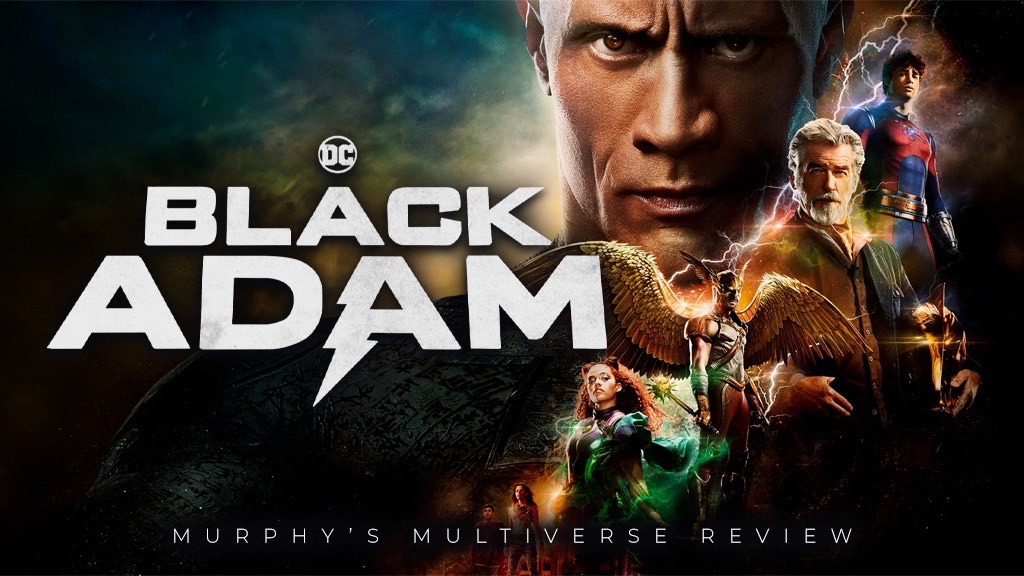
  • REVIEW: ‘Black Adam’ Brings A Lot of Lightning, But Very Little Spark

    REVIEW: ‘Black Adam’ Brings A Lot of Lightning, But Very Little Spark

    Black Adam is a movie that is trying very hard. It is perhaps the perfect artifact of the ethos of its star, who has toiled endlessly for over a decade to bring it to the big screen, and has tried through force of will alone to make the title character as ubiquitous in the comic movie landscape as he is. Dwayne “The Rock” Johnson, and his tireless work ethic, is all over the movie. But sadly, effort doesn’t equal excellence, and when it comes to the execution of filmmaking, Black Adam falls quite short of the mark.

    By now, you’re probably privy to the big spoiler, which I won’t get into here. However, it is the unstoppable nature of its hero (with a pretty massive exception that I’ll get to later) that looms large over every minute of the runtime, putting a massive drag on the film’s stakes. Even though the Justice Society of America — played with varying levels of charisma and watchability by Pierce Brosnan (Dr. Fate), Aldis Hodge (Hawkman), Quintessa Swindell (Cyclone) and Noah Centineo (Atom Smasher) — are positioned as formidable heroes in their own right, a film which tells us and shows us over and over again that Johnson’s Teth-Adam is without peer can only truly evoke one possible other, even as it ostensibly builds to giving our protagonist his equal and opposite antagonist. And indeed, the largest audience reaction by far came in the stinger, when the true payoff happens.

    But as for the “true” movie, it centers around an ancient hero imbued with the powers of SHAZAM (a multifaceted acronym, it would appear, as the god powers that comprise his set of abilities come from Egyptian deities instead of Greek ones) who defeats an ancient despot in the ancient fictitious country of Kahndaq before being lost to history. In present-day Kahndaq, a vague international group of foreign mercenaries and military occupiers repress the modern citizenry, who still look favorably to their legendary “champion” from five millennia previous, and are eager to embrace the force of destruction that is Teth-Adam as their modern-day defender, despite the fact that his methods are far more extreme than the ones traditional superheroes embrace.

    Sarah Shahi‘s Adrianna Tomaz, her son Amon (Bodhi Sabonghi), and her brother Karim (Mohammed Amer) try really hard to ground this story in something real and human, with very mixed results. On one hand, you want to root for the archeologist who wants to preserve her family’s tradition and her country’s history from the would-be colonizers who mine the land of its (definitely not a plot contrivance) natural resources and seek to use a (100% MacGuffin) ancient artifact to unleash undefinable power upon the world. But on the other hand, Shahi’s earnest likability can only do so much to hide a pretty standard and predictable plot, with such generic villains and the betrayals and life-or-death situations exactly where you’d expect them to be.

    The dynamic between Amon and Teth-Adam wants to be comparable to Edward Furlong and Arnold Schwarzenegger‘s dynamic in Terminator 2, with the plucky teenager playing off of the fairly wooden and unfeeling killing machine while teaching him how to navigate the familiar world. (There’s a recurring catchphrase gag that tries really hard to land.) It’s definitely admirable that through him, the film has a lot to say about the universal nature of superhero fandom, even in the face of superheroes who seem to favor a particular aesthetic and pursue a more narrow agenda.

    The JSA represent this idea, and it’s in the execution of this story that the flaws in the script are at their most apparent. As the movie chooses to present them, they are a quasi-covert superhero strike force who act at the behest of Amanda Waller and can go anywhere in the world to execute police actions, with little to no regard for the will of the locals. Their (super-vague) general mission is to prevent destabilization, and their specific mission is to neutralize Teth-Adam, who, according to the vagaries of the plot, cannot be permitted to exist in the modern world as a living weapon of mass destruction. Any excuses to see superheroes fight, I suppose.

    The fights, and the action overall, are solid, but they are marred by distractingly bad needle drops and overuse of slow-mo. Jaume Collet-Serra seemed almost amateurish in his employment of those techniques, as they represented the most glaring aspect of the movie that a director with a better eye and ear would have elevated. And the less said about the third-act CGI fight the better.

    Then there’s [SPOILER ALERT] the Eternium of it all. The plot required that the Kahndaqi people be forced to mine a very valuable mineral both in the past and present, but the name is almost unforgivable, as it signaled to the audience that they would have to stomach a magical metal that would figure prominently into the story. But making Eternium into essentially Teth-Adam’s kryptonite was unnecessary and misguided, especially because it was simultaneously overutilized and underutilized as a “do everything” material, in a film that already includes Nth metal.

    Overall, Black Adam, while fun, wants to be better than it is. The themes, the emotional stakes, and the desire to do DCEU world-building are admirable. And if future films wanted to build on this, I wouldn’t be opposed to it. But this film is trying too hard. There was a lot of potential – both in the cast and the story. But in its execution, Black Adam nets out at “aggressively mediocre.” The hierarchy of power in the DC Extended Universe may have changed, but the hierarchy of quality did not.

    6/10

  • REVIEW: ‘The School For Good & Evil’

    REVIEW: ‘The School For Good & Evil’

    Netflix’s The School For Good and Evil is based on the bestselling series of novels by author Soman Chainani and illustrator Iacopo Bruno. It tells the story of two young girls – Sophia and Agatha – who soon find their less-than-stellar lives changed forever once they’re transported to the School of Good and Evil. It’s a simple plot, one that isn’t exactly brand new, and yet, it was given the movie treatment by Netflix with some huge stars attached. It should’ve been incredibly exciting, right? Sadly, that wasn’t necessarily the case.

    The School For Good and Evil stars Sophia Anne Caruso as Sophie and Sofia Wylie as Agatha/Auggie. The young girls are the best of friends, having formed a bond after the death of Sophie’s mother when they were both younger. They’re both outcasts in their small town of Gavaldon; Sophie is teased because of her love of fairy tales while Auggie is deemed a witch by the folks in her town. After one bad day too many, Sophie seeks to escape to The School of Good and Evil, a school she’s heard about where she believes she’ll have a chance at the life she’s longed for. But Auggie isn’t willing to let her leave, not wanting to be left behind in Gavaldon where she’ll be tormented daily with no one to confide in without Sophie. This leads to both girls being pulled to the School of Good and Evil, but with surprising results.

    The movie isn’t entirely bad. In fact, most of the film is rather delightful, but it is quite messy. From so-so CGI work to off-putting music choices, The School For Good and Evil often feels rushed. With a cast that includes the likes of Charlize Theron, Kerry Washington and Laurence Fishburne, it’s hard not to enjoy the absurdity of it all. Theron and Washington are a delight and deserve far more screentime than they are allotted. Theron chews the scenery as the headmistress of the School of Evil, while Washington charms as the headmistress of the School of Good. And in the very limited time she’s on screen, Michelle Yeoh as Professor Anemone is fantastic. Perhaps the best surprise, though, is how great Fishburne is as the School Master. He’s charming, mysterious and can sometimes be conniving. With a stellar adult cast, it’s a shame that the younger cast is so inconsistent. Wylie’s Agatha carries the movie, and Caruso’s performance often wavers. The emotional moments the duo share, though, are great and help to sell the story of friendship at the film’s core.

    While The School For Good and Evil often feels like a poor Disney Channel Original Movie, it does pack a hell of an emotional punch. The movie is ultimately about the complexities of humanity – people are not merely good or bad, and the movie explores this with ease. All in all, The School For Good & Evil can often be uneven, but it’s still an enjoyable watch in the end. For young tweens struggling to understand themselves, The School For Good & Evil offers a positive message of friendship and learning to love ourselves. So, despite the bad, there’s plenty of good in The School For Good and Evil… but the good doesn’t come without the bad.