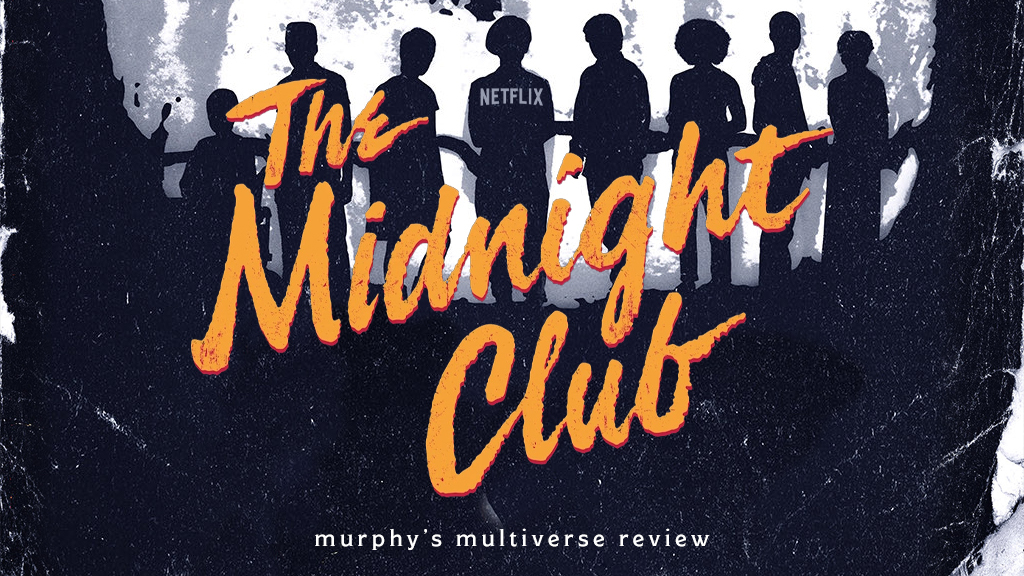
The Midnight Club is based on a series of books by author Christopher Pike. It tells the story of teenagers, all with terminal illnesses, who go to live out the rest of their lives at Brightcliffe Hospice. During their time at the hospice, the residents sneak out of their rooms late at night to take part in something called the Midnight Club. In this club, they share various stories all with the goal of trying to entertain/spook their fellow hospice patients. Simple premise, sure, and yet the series is so much more than merely a series of ghost tales.
The series adaptation stars Iman Benson as Ilonka, a young girl who was once readying to start college at Stanford University, but her plans are tossed out the door after a cancer diagnosis. After doing her best to fight it in hopes of getting her life back on track, Ilonka looks into other forms of treatment in an act of desperation. During her research, she stumbles upon Brightcliffe Hospice and a mysterious girl whose story will change her life going forward.
Those going into The Midnight Club with little knowledge of the books should know this isn’t necessarily a horror series. There will be some thrills occasionally, yes, but this is more of an emotional story than anything — and that’s a good thing. But it’s also something that works against it at times. As enjoyable as The Midnight Club is, it is often bogged down by depressing moments with very little moments of hope sewn throughout. Of course, a story about teens with terminal illnesses is unlikely to be hopeful, but sometimes the constant sense of dread can be emotionally draining. (Episode 7, in particular, packs a hell of an emotional punch.) Still, even with this, the show is worth watching, although, forgoing the usual weekend binge might provide the optimal viewing experience.
Perhaps one of the most exciting aspects of The Midnight Club is getting to see the main cast act out the spooky stories being told during the club. The young cast is incredibly talented and in the moments they get to explore these new characters, they seem to get lost in the stories. The ability to swiftly change personas is not an easy one, and yet, every single member of the Midnight Club does just that as they become the victims — and sometimes the killers — in the stories being told.
All in all, The Midnight Club is an emotional ride full of thrills and chills that will easily become a Halloween classic. It’s a “horror” series that focuses on learning to live while we’re still alive and building the families we so desperately need to survive. Just be prepared to have tissues on hand.
One of Marvel Studios’ longest-kept “secrets” turns out to be perhaps one of the most triumphant projects of the Marvel Cinematic Universe’s Phase Four, if not the MCU as a whole. Formally announced only last month, Werewolf By Nightis Marvel Studios’ first foray into the “Special Presentation” format (in this case, a one-off feature less than an hour long) and without a doubt, this project is, indeed, enormously special. Werewolf By Night shines for several reasons, but its brilliance as a standalone story is the most obvious.
The first thing the viewer notices about Werewolf By Night is its aesthetic. Through its limited marketing, it is known that the feature was inspired by classic horror films of the 1930s and 40s. While the concept elicits immediate excitement from some, it of course risks overwhelming a story with a gimmick. Fortunately, the stylistic choices of this project were almost entirely in service of the story itself, and director Michael Giacchino achieves a near-perfect cocktail of stunning imagery, blocking, and overall texture. The use of black-and-white is an easy grab for an older or spookier look, but it was far more productive in Werewolf By Night than in most modern films that use the technique. The unique and rather all-consuming style certainly takes the viewer to a place easily associated with horror and monster stores, but it also removes one from the known Marvel universe. Consequently, the natural expectations the audience might place on the feature are almost reset, allowing a completely fresh experience.
The greatest achievement of Werewolf By Night is surely its excellence as its own story, disconnected from anything else. Whether in the comic book genre or elsewhere, there is something extremely refreshing about a short story that is able to be thoroughly enjoyed and leave a memorable impact on the viewer. Despite a limited runtime and plenty of moving parts, the feature does a phenomenal job telling a full story without invoking virtually any backstory. The triumph of Werewolf By Night is captured in the feeling of simplicity and ease it executes despite clearly arising from a relatively complex technical foundation. At the end of the day, the project is a wonderful standalone think piece that invokes plenty of metaphors and themes regarding what makes a monster.
However, given its inclusion in the MCU, there is little question that Werewolf By Night will ultimately be part of a larger narrative. Lucky for Marvel Studios, the feature doubles as an exciting introduction to a future Monsterverse considering it leaves the audiences with a litany of questions about the story’s and characters’ past and futures. If anything, Werewolf By Night could have benefitted from additional runtime purely due to the fact that there is enough action and intrigue to go around. An expanded rendition of the hunt itself would almost certainly be a riot, as a prolonged bottle-episode-type suspenseful action thriller would without a doubt rival the famous Daredevil hallway fight scene.
In fact, a certain sequence in Werewolf By Night already does. The amount of violence in the feature has been a key talking point ahead of its release. The project features, objectively, some of the most violent, brutal, and gory scenes in the MCU. Where those are utilized are done so in a way that serves the story—Werewolf By Night is not filled to the brim with blood and violence, but it stands out when on display in the best way. Similarly, the feature gives off plenty of notes of horror, but it is not an overwhelmingly “scary” or frightening piece. It is, however, extremely tense, suspenseful, and even uncomfortable at times like any good horror film.
Werewolf By Night further benefitted from its cast and character ensemble. Laura Donnelly as Elsa Bloodstone is, perhaps, the surprise standout of the feature. Not the title character and not given much fanfare, Donnelly’s portrayal comes off as effortless and she easily carries scenes in a way that cements Elsa as much more than she appears. Two rather different storylines crisscross throughout the special, and Elsa is the rock that holds them together. Gael García Bernal certainly hits the sweet spot as the mild-mannered and warm Jack Russell. The heart of the project resides in him, even if he were not (ultimately) the title character. Viewers should not worry about a “nice” Jack, as Bernal can flip the switch into the titular werewolf without a problem.
The rest of the cast is stellar, and the character designs are so spectacular as to stand out in a generally visually-stunning project. Harriet Sansom Harris supplies the particular brand of sinister that Werewolf By Night needs to achieve its delicious end result. The monster at the heart of it all will surely go on to be a new fan-favorite creature of the MCU, but the special does not forget that he is, indeed, a monster.
If Marvel Studios intended for Werewolf By Night to be a surprise, it is perhaps the best surprise a viewer could hope for. The special is incredibly unique on virtually all levels, and its short story format is one of the most fulfilling MCU experiences in years. Not all Marvel projects can benefit from, or achieve, the type of creative leap required to produce this feature. This special demonstrates that Marvel Studios should continue investing in “Special Presentations,” but Werewolf By Night is special enough on its own to be a one-and-done.
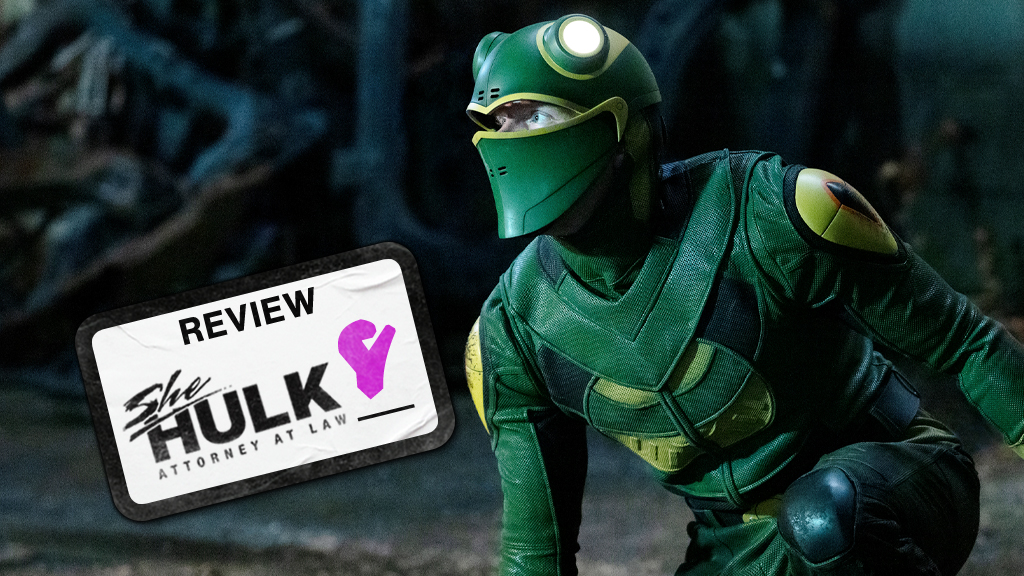
Given the fact that She-Hulk: Attorney at Law has received rather positive reviews each week, it feels somewhat monotonous to call “Ribbit and Rip It” the best episode of the series—but it cannot be avoided. Of course, the character ensemble in Episode 8 seems instantly iconic, but the episode hit every beat it could: lawyer, superhero, Daredevil, sexy hilarious, and dark. This episode can only be thoroughly enjoyed and yet it still ends on the heaviest and most cliff-hanging note of the series.
All eyes are on Charlie Cox’s return as Daredevil in the character’s first MCU appearance. While this is She-Hulk’s show—as we are reminded—anyone who tries to suggest that he was not the highlight of the episode is lying. Predictably, Jennifer Walters and Matt Murdock meet in court on opposing sides before meeting as superheroes. Cox truly embodies the role, and his love for the character and the return is incredibly palpable. Quite honestly, he came across as substantially more charismatic than the character has previously been—and that is a high compliment. Daredevil is lighter than fans of only the Daredevil Netflix show may be used to, but being funny as hell does not take away from the rest of the character which was on full display. Those that will continue to scream into the void about She-Hulk ruining Daredevil are on another planet.
While Murdock was the biggest player, Episode 8 highlights that She-Hulk works best when the titular character has a colorful cast to play around with. Leapfrog and Jacobson held their own in such a high-profile episode, and the ultimate result of all the moving pieces was sublimely paced, extremely funny, and it felt like a much bigger and more exciting show than it had been until now. Obviously, She-Hulk as a bona fide superhero is new and played a major role in that. The chemistry between Jen and Matt—presumably aided by the chemistry between Tatiana Maslany and Cox—created the best pairing of characters in a series riddled with great character interactions.
Despite being an overwhelmingly fun episode, the penultimate episode landed on a dark note with haste to lead into the finale. She-Hulk has not been shy about weaving in themes and jokes surrounding misogyny, but it felt like the darker elements that existed within the show truly hit in full force all at once. It is not easy to compete with Daredevil in an episode, but the ending managed to put up an impressive fight in that regard. Not only did Jen have her entire private life broadcast to everyone during what was perhaps the greatest moment of her career, but it came in the form of sexual shame and revenge porn—activities that tend to almost exclusively attack and cause extreme harm to women. The word “slut” is not uncommon in reality, but even in the context of She-Hulk it landed with a thud. The dark brilliance of the sequence is that She-Hulk, who is ordinarily invincible, can be a vulnerable target to destroy because she is a woman and there are dedicated ways for someone to pursue that without any kind of confrontation. We see Jen lose control of her anger—finally calling back to the first episode—becoming an enemy and a monster regardless of how justified and ordinary that level of anger would be in that situation.
At the end of the day, Episode 8 managed to do everything She-Hulk can seemingly tackle and pull off in just one episode. Daredevil’s introduction to the MCU was beautiful, and this episode does quite a lot for the character going forward. Even though the penultimate episode was almost certainly the most entertaining and witty episode of the entire series (and it is hard to see how the finale can top it), it also ended on the darkest and most emotional beat yet. Before the last few minutes, the fact that the finale was right around the corner felt rather empty. There is still a very minimal underlying HulkKing plot, but for the first time, it actually feels important to She-Hulk. It may very likely go on to set up other Hulk-related MCU projects in the future, but the damage inflicted to the main character from it is now the driving force of the remainder of the series. The finale is still a mysterious concept given the format of the show, but Episode 8 finally begins to truly define the hero She-Hulk will be in the MCU.
In an episode that feels very small in terms of scope, scale and what’s accomplished as far as advancing the plot, those words, spoken quietly to Cassian by Faye Marsay’s Vel Sartha may capture the larger essence of the Age of the Rebellion better than any spoken on screen in any Star Wars project to date. Episode 5 of Andor, brilliantly titled “The Axe Forgets” showcases some beautiful scenery and wonderful cinematography as the backdrop to Cassian’s struggle to forge bonds and build trust with his new team. In what feels like the calm before the storm, the episode’s team-building moments that make up the bulk of the runtime seem to echo classics like John McTiernan’sPredator and Peter Jackson’sLord of the Rings: The Fellowship of the Rings.
When they start their march, they are a team only in the loosest sense, united only because everyone, as it turns out, does have their own rebellion. And while they don’t initially trust nor much like one another, they are able to find common ground by understanding how each of them has been the tree on the receiving end of the Empire’s axe…and none of them have forgotten. And so while it may not feel like the larger plot of the 12-episode first season of Andor has moved along much by the end of Episode 5, for this group of people about to strike out against the Empire, nothing could have moved at all if not for the time spent together in it.
The creative duo of director Susanna White and writer Dan Gilroy teamed up to illustrate the growing tensions not only amongst the team on Aldhani but also far away on Coruscant. Kyle Soller’s Syril Karn is hen-pecked by his insufferable mother, Eedy, while holding on to his hatred for Cassian; Denise Gough’s Dedra Meero continues to sense a growing threat, too random for anyone else to see; Mon Mothma’s work for the Rebellion is coming at the cost of her family; and Luthen Rael expresses anxiety that he may have overreached in his effort to strike back at the Empire. Though each of them only get a little time to shine in the episode, White and Gilroy make the most of it, carving each of their unique concerns out of the same material: the Rebellion, which now includes Cassian. And it’s Rael’s words in the episodes final moments that truly serve to frame just how tense of a moment the entire galaxy is on the edge of, even if only a few of them know it. As he says, what comes next may just be the start of it.
In that sense, “The Axe Forgets” feels like the last bit of requisite exposition before the show switches gears. The characters have been developed, the costs to them made clear and their roles in it seemingly solidified. Episode 6 would seem to be the time for Andor to transform into the fast-paced action-adventure that fans certainly associate with the Star Wars franchise. But as the pace quickens, keep in mind that while each of the Rebels are trees who have been hit by the axe of the Empire, they’ve all been axes to the tree of the Empire and they are about to collectively take their biggest hack yet. And as the roots of the Empire extend to new parts of the galaxy, they’ll prove a tough tree to fell.
Sometimes, a piece of writing comes along at just the right time. Whether it lines up with a personal reckoning you’re having or speaks to a more significant societal issue, very few things beat that almost serendipitous alignment between whatever is going on and a good read. The upcoming release of Frizzy is one of those moments because the reckoning it is being released in has been a long time coming.
Frizzy tells the story of a young Afro-Latina named Marlene who absolutely despises going to the salon. She wants to embrace her big curls, but her mother, Paola, has been conditioned to believe that her curls are bad, and that consistently straightening them will make her appear more professional. Paola drags her daughter to the salon every Sunday, until one day, Marlene is fed up and decides she isn’t going anymore. This decision to rebel isn’t one she reaches haphazardly either, as Claribel Ortega writes the angst that we can all relate to as it comes to a pivotal moment in our development. Marlene begins by just doing what she’s told, but she’s always questioning why people have an issue with her curly hair. This line of questioning comes to a crescendo when she begins to be bullied at school.
The bullying is the usual kids-being-mean-to-other-kids stuff, but there is a tinge of racism mixed in that is deftly touched on by Ortega. It is as subtle as it is nefarious, and it very clearly starts to upset Marlene enough for her to wonder if her mother is right about her curls. It isn’t until she speaks to her Tia that she both realizes the pressure her mother has been under to be perfect and why she needs to break free from that. It is in Marlene’s support system, made up of her aforementioned Tia and her best friend Camellia, that she finds the strength to both stand up to her bullies and embrace who she is meant to be.
Ortega has written an amazing story that, as we enter a racial awakening for a lot of Afro-Latinx folks who are on their own racial journeys, will resonate with middle schoolers who see themselves in both Marlene and Camellia. Ortega captures both the rebellious streak we all possess when we are growing up, the desire to not disappoint our parents, and the need for acceptance and love at such a young age. She also does an incredible job of writing these characters with depth, and she especially deserves credit for writing Marlene’s mother Paola’s journey with the appreciation for her struggles. Paola’s growth in this story is one of my favorite things to see, as it mirrors what so many of my own friends have gone through with their natural hair and their parents.
Lastly, we can’t end this review without talking about the artwork. The decision to utilize vibrant colors mirrored that of the movie Encanto, which also dealt with similar themes about generational trauma. The graphics are vivid, and Rose Bousamra‘s color choices really made the story pop in a culturally-relevant fashion.
Frizzy is an excellent read about self-acceptance and growing pains. Give it a chance when it releases, you’ll be pleasantly surprised.
The original Hellraiser movie is easily one of the best horror movies of all time. It’s a terrifying concept that focuses on a mysterious box and sadistic creatures known as cenobites. On paper, the concept of Hellraiser is a simple one, a mysterious box that opens a portal to hell. And yet, it’s so much more than that. It’s ultimately about the sacrifices we’re willing to make in order to achieve our own hopes and desires. What made the film the excellent horror movie that it truly was, though, was Doug Bradley‘s Pinhead who managed to be hauntingly captivating. He’s terrifying, and yet, commands every second he’s on the screen. So, how does Hulu’s Hellraiser reboot stack up against the original? It’ll never be able to replace the original movie, but Hulu’s Hellraiser reboot is a reboot done right.
At a time when it has become normal to see countless reboots of classic horror movies, it’s exciting to see one done properly. From a tight and emotional story to an excellent cast, this Hellraiser delivers on all fronts, especially when it comes to the casting of Jamie Clayton. For those only familiar with Clayton from Sense 8, they might be cautious regarding her casting. Worry not, though, Clayton is absolutely terrifying as The Priest. From her tone to her movements and her expressions, Clayton stuns.
This new take on Hellraiser starts off with a meeting between an older woman and a seemingly lost male, as they meet in a private location to finalize a deal they’d made. As we soon find out, however, the male was meant to be sacrificed and the woman knowingly led him to his fate at the hands of the cenobites. (It is of note that none of this is really a spoiler.) The film then jumps forward in time and, we get to meet the film’s true protagonist, Odessa A’zion‘s Riley. Having made mistakes in her life, Riley is trying to get back on course and right her wrongs. Unfortunately for her, though, not everyone around her is so sure she’s capable of doing so. In her drive to do better, Riley will soon find herself face-to-face with a mysterious puzzle box that will change her life forever.
A’zion is a star in the making. She plays off of Clayton’s Priest perfectly. The moments they are on screen together are terrifying and will keep audience members glued to the edge of their seats. The rage, the anger, the pain — Riley goes on such an emotional journey throughout Hellraiser and A’zion rises to the challenge with ease. A’zion is an actor to keep a close eye on going forward.
Hellraiser is easily David Bruckner‘s biggest title to date, and one can only hope he earns more chances to tackle other horror stories in the future. There’s a sense of honor and appreciation of the Hellraiser films before it, which ultimately helps to sell a film that would’ve otherwise seemed unnecessary. Did Hellraiser need a reboot? Probably not. Is Hulu’s Hellraiser worth a watch? Abso-freaking-lutely.
One final note: For those unwilling to accept Clayton as Pinhead, aka The Priest, it is of note that in the books the films are based on, Pinhead is described as having a girlish voice. So, yes, while the character is mainly described as androgynous, there are bits that suggest The Priest is female. “Its voice, unlike that of its companion, was light and breathy—the voice of an excited girl. Every inch of its head had been tattooed with an intricate grid, and at every intersection of horizontal and vertical axes a jeweled pin driven through to the bone. Its tongue was similarly decorated.” Those avoiding the film simply because they’re unwilling to accept The Priest as being female? They’re only keeping themselves from enjoying a damn good reboot.
Nearly 30 years after Tom Cruise, Brad Pitt and Kirsten Dunst brought novelist Anne Rice’s incredible world of beautiful and terrifying vampires to the screen in 1994’s Interview with the Vampire, AMC, which gained the rights to adapt Rice’s works in 2020, has chosen to retell the story to launch their Immortal Universe. Despite several starts and stops, Rice’s rich universe of characters and stories was never able to live on in serial format beyond her novels. AMC seems to think they can remedy that problem, however, having ordered both a second series, Mayfair Witches, and a second season of Interview with the Vampire ahead of the latter’s series debut. If Episode 1 of Interview with the Vampire, “In Throes of Increasing Wonder…”, is any indication of what to expect from AMC’s adaptation of Rice’s works, it would seem that they have indeed found a way to bring the characters, settings and themes of those works together and lay the foundations of a shared universe as steeped in lore as the novels.
Any effort to adapt Rice’s works has to begin with capturing the essence of the two main characters: Louis de Pointe du Lac and Lestat de Lioncourt. And to this end, AMC seems to have made preternaturally acute choices in casting Jacob Anderson and Sam Reid as Louis and Lestat, respectively. Audiences will likely find themselves as captivated by Anderson’s Louis as Lestat was himself. Whether it’s the smooth delivery of his accent in early-20th century Nawlins or the ennui of an immortal man in the present day who has seen all the world has to offer, Anderson’s performance is as effortlessly brilliant as he is beautiful. Reid’s Lestat, Rice’s chosen protagonist of the bulk of her Vampire Chronicles, shows off the petulance and power that earned the character the moniker of the Brat Prince in the novels and lures Louis deeper into his game until he bestows the Dark Gift upon him. Equal parts charming and infuriating, Lestat only gives glimpses of his true nature in the pilot episode but Reid’s performance leaves the audience both wanting more and knowing there’s more there, much as Louis knows the same about his new lover.
As much as Louis and Lestat might feel like they are ripped right from the pages of the novels, creator Rolin Jones hit the sweet spot of reinventing the characters (likely in part to keep them from being carbon copies of Brad Pitt and Tom Cruise’s versions) while capturing the essentials. From cleverly making this Louis’ second go-round with journalist Daniel Malloy, played brilliantly by Eric Bogosian, to Louis’ new profession and boldly changing the location of Louis’ transformation, Jones put his stamp on this adaptation. Though the sample size is small, it looks as though those choices, as well as Jones’ willingness to embrace and explore the nuances of the nature of Louis and Lestat’s relationship, something the 1994 film avoided, have not only set it apart from the film but, so far, make it a superior effort.
While the series would never get off the ground without proper characterization of Louis and Lestat, Jones, director Alan Taylor and executive producer Christopher Rice, Anne’s son, also captured another of the elements that made the novels so powerful: Rice’s sense of the importance of history, both real and imagined. A read-through of any of Rice’s Vampire Chronicles would serve as a fascinating lesson in grounding a fictional mythology in some of history’s most interesting eras. The episode works as much as a love letter to the New Orleans of the early-20th century as it does an introduction-and a very brief introduction at that-to the incredible world of vampires and supernatural creatures that AMC is setting out to create. AMC’s burgeoning Immortal Universe won’t just be inhabited by vampires, after all, so the subtle nod to New Orleans family of witches might seem like a throwaway line, but the audience might rather think of it as equivalent to Nick Fury’s drop-in following the events of Iron Man.
Taken as a single, standalone episode, “In Throes of Increasing Wonder…” tells a compelling story of a man who deserves to be more than what he’s allowed to be; taken as the first episode of streaming series that’s already been green-lit for a second season, the pilot introduces intriguing characters, plotlines and promises in both its past and present settings; taken as the first look at AMC’s shot at developing a shared universe with a staggering number of stories to be told over the known history of humanity, the first episode of Interview with the Vampire is the adaptation fans of Rice’s novels have dreamt of for decades and one that Rice, who passed away nearly a year ago, would have proudly endorsed as capturing her love of history…and of Louis and Lestat.
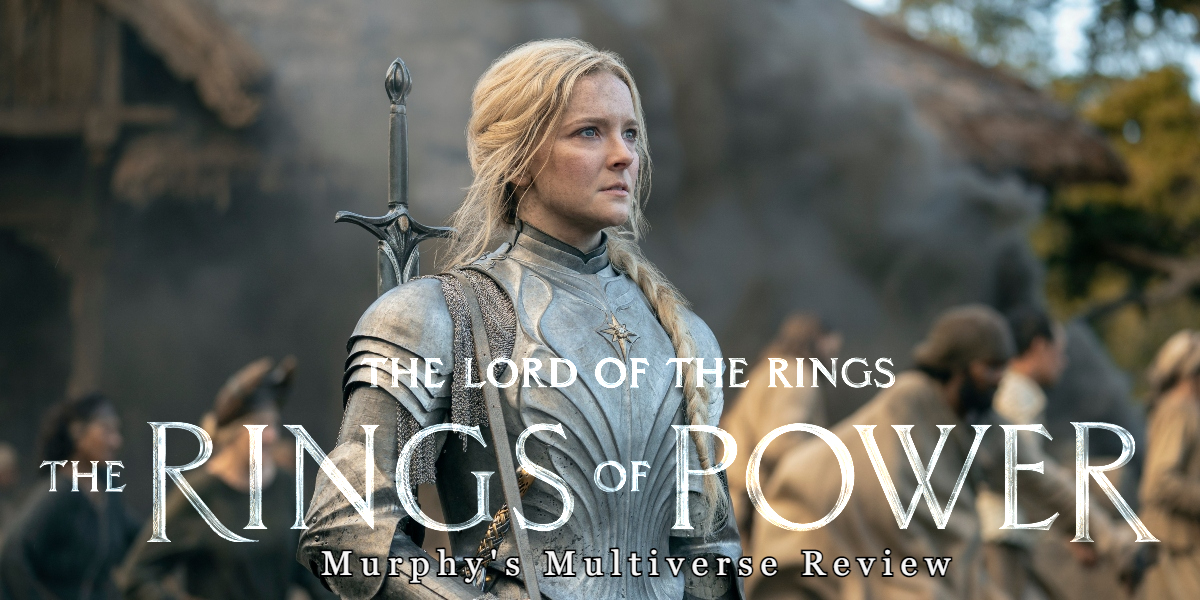
Pretty much from the very start, Amazon’s The Rings of Power has had a bit of a pacing issue. The show has been awe-inspiring in nearly every other facet of storytelling, but from episode to episode, it’s slowly become clear that this season of television was going to be a little slow. This feeling of creeping along has been due, in large in part, to multiple different plots occurring fairly separately from each other, with no immediate signs of coming together anytime soon. The lack of connectivity and variance in strength between arcs could often lead to difficulty with viewer engagement or cause the series to feel aloof despite the actual quality of the scripts being filmed. With this week’s ‘Udûn’, however, that problem vanished into thin air.
Udûn is an incredibly satisfying payoff to two of the four concurrent storylines happening on The Rings of Power. Ismael Cruz Córdova’s Arondir and Nazanin Boniadi’s Bronwyn attempt to lead the people of the Southlands in combat against Joseph Mawle’s Adar and his dastardly army of orcs, while Morfydd Clark’s Galadriel sails toward Middle-earth with the forces of Numénor in tow. The ultimate culmination of these arcs leads to the show’s most epic, emotional, action-packed hour yet, gleefully pulling from weeks of build-up and suspense to craft an episode that feels like a season finale despite having multiple installments left to air. As per usual, the visuals are glorious, and the nearly episode-long battle between man, elf, and orc appeared to be pulled from a feature length film.
The intensity of the action in Udûn was rather impressive, with stunts and fight choreography that should remind audiences they’re watching the most expensive show on television. A moment between Arondir and an especially large orc stands out for its immaculate camera work and character design. When The Walking Dead was at its peak, it seemed that anyone and everyone had dreams of putting on zombie makeup and wandering around the set. The Rings of Power, especially in this episode, is making a great case for changing that dream to raiding villages in full orc regalia. It’s amazing how much fun it can be to watch a show when its best moments happen in broad daylight, and there’s no darkness to mask the stupendous work of the costume department and set designers.
Most of the action bits work as well as they do because the character moments in-between allow the chaos to feel earned. After a few weeks in which it sometimes seemed the show’s leads were just running in circles, most everyone in Udûn took leaps and bounds toward becoming as unique and interesting as the first few episodes had promised. The series’ villains, in particular, finally have a genuine motivation for viewers to understand, something that makes Adar and his vile crew even more entertaining to watch. Charlie Vickers‘ Lord Halbrand and Maxim Baldry‘s Isildur, along with Lloyd Owen‘s Elendil, also get some much-needed backstory and character progression that will hopefully make them more intriguing to follow going forward.
The episode’s ending, which plays out in spectacular style, has also undoubtedly left fans craving more. It was the perfect ending to an episode that felt like all gas and no breaks from the word “go.” Obviously, a show can’t survive on pulse-pounding action alone, but hopefully The Rings of Power has spent enough time slowly constructing its plots that the rest of the season can be as exciting as Udûn. If it sticks that landing, there’s no telling what kind of joy the series will bring as it moves on to greater pastures.
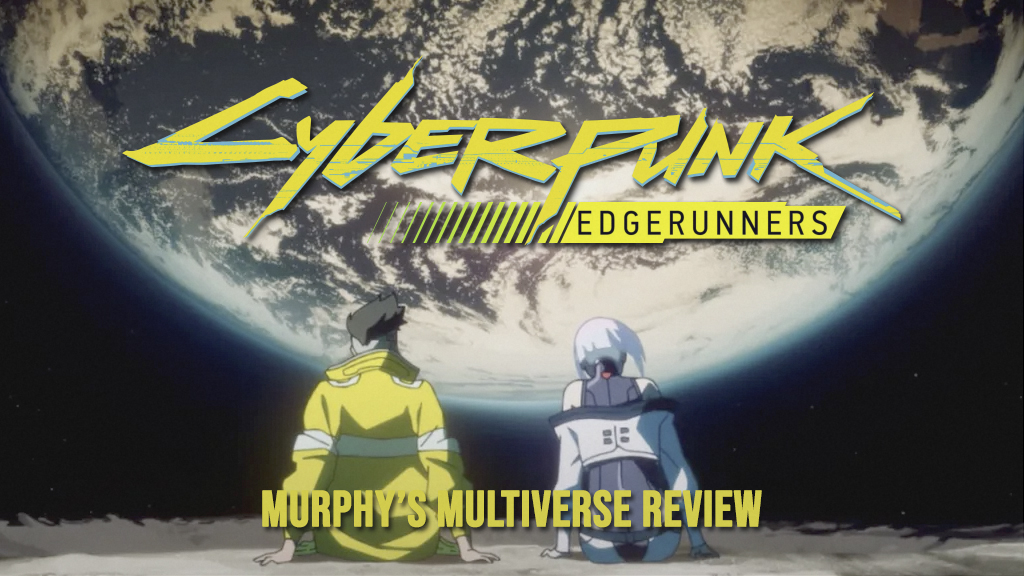
Trigger is a household name in the anime industry, and they’ve also built up quite the reputation for the kinds of projects they put out. So, many were naturally quite excited when it was announced that they are actively working on an animate adaptation of Cyberpunk 2077, which was for quite some time considered the most anticipated game release of all time. Sadly, it didn’t quite manage to stay true t that promise. A lot has happened since, but the anime under the title Cyberpunk Edgerunner revived the Cyberpunk hype. And that’s for a good reason.
From the moment Franz Ferdinand‘s “This Fffire” plays, you know you’re in for a dark tale. The opening doesn’t hide what’s about to come and sets you off perfectly for what’s about to unfold. Yet, there’s this glimmer of hope and optimism this series continues to hold throughout its run. In a way, it encompasses the game’s core philosophy better than even its original medium. Trigger’s greatest strengths are at play here bringing us their likely most “grounded” story yet.
We explore the story of David Martinez and the tragedy that unfolds his life as he finds himself in the underbelly of Night City. Even if the game wasn’t well-received, there’s definitely something beautiful and fascinating about the world they’ve created. Once you’re trapped in the nightscape of Cyberpunk, you can’t help but want to see more stories explored in this world.
It’s also very bloody and shows no restraints; just adds a little splendor to the already extremely well-animated sequences. The use of CG is also quite well-done as outside of some vehicles here or there, it was extremely well implemented into the more traditional animation. Though the highlight is the character details, something that they certainly made use of in a world filled with cybernetic enhancements.
Speaking of, they make good use of the world to tell their story and characters. We get some of the best insights into characters’ minds through the concept of cyberpsychosis. Episode 6 is a standout and heartbreaking in many ways that just adds so much to the concept of how this is familiar but also different. At the core of this story, it’s about these characters and their lives. And it does it wonderfully with the only complaint being that we don’t get more than 10 episodes.
There are some standout characters and the show knows you’ll get attached to them. Emi Lo‘s subdued Lucy offers something alluring and dangerous at the same time. You don’t blame Zach Aguilar‘s David for falling for her and taking a leap into a new world. Probably the biggest standout was Alex Cazares as the trigger-happy but delightful Rebecca, who commands the scene every time she’s around. You’ll get attached to this crew quite quickly.
There is a bit of a jump after a specific episode that feels like it could’ve used more time. While it made sense given how they were approaching the story, its 10-episode story structure felt a bit restrictive in how much time we could spend and how fast some aspects seem to pass by. You want to spend time with these characters and when the show starts taking jumps it sometimes can be distracting especially if characters go through some major overhauls in-between episodes. This isn’t House of the Dragon level of time skips but for one case it felt a bit surprising.
While CyberpunkEdgerunners tells its own self-contained story throughout this season, it would be a shame not to tell others. There’s something gripping about this world and Trigger seemed surprisingly at home here. We get a glimpse of this world and it feels like there’s just too much to explore. Yet, at the same time, this series feels perfect as a one-time release, and wouldn’t really say I#d be mad if that was the only one we get. It had me laughing, and crying throughout; what more can you ask for?
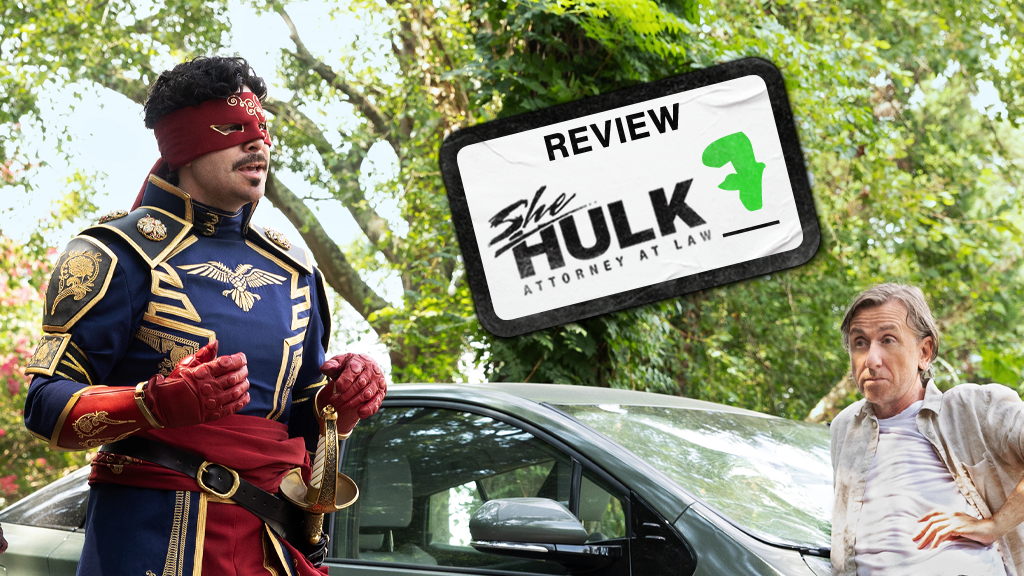
After finishing the seventh episode of She-Hulk: Attorney at Law, it is extremely natural to wonder—what is this show? For a series billed as a legal comedy, there certainly is no particular plethora of legal plotlines. In Episode 7, for example, there are none at all. For a “superhero show”, there can be a stunning lack of superheroics. So what is She-Hulk? That may not be an easy question to answer, but the series has a personality that connects everything at its core; that is not a given for most series. In any event, it is genuinely hard to care about picking apart every ounce of She-Hulk when Episode 7 was everything a reasonable person could want.
Some of the biggest, deepest laughs of She-Hulk come from this episode without a doubt. The level of comedy the series attained in some of its earlier, more legal-heavy episodes returns in a very different form. In a universe and franchise so focused on action, adventure, and high-concept stories, any person that has the capacity to feel joy can appreciate some D-list supervillains in group therapy helping out the protagonist get over a guy who did not text her back. That premise is absurd, and it can only work in a very specific context. Luckily, She-Hulk provides that context.
Nothing could be said about Episode 7 without emphasizing how amazing the supporting cast of characters is. Obviously, Tim Roth’s Emil Blonsky makes a welcome return after his last appearance in Episode 3 to continue the “Abomaste” gag. And while various legal cases brought out some interesting figures in the past, such as Donny Blaze, Mr. Immortal, or the shape-shifting light elf, Episode 7 absolutely knocks it out of the park. Man-Bull, El Águila, Porcupine, Saracen, Wrecker, and Blonksky all come through as colorful characters. The fact that such a group got to spend most of its time together and interacting with one another is simply a unique experience in the Marvel universe, which allows She-Hulk to bring out the inherent humor of corny comic book characters in a safe space both literally and figuratively.
A major theme running through She-Hulk is that Jen is constantly losing. Sure, she is a functional Hulk and landed a snazzy job, but episode after episode has emphasized that Jen the human is not enough. Her dating life is perhaps the prime example of that, and the episode’s focus on Josh building her up and then letting her down just hammered that theme more. The “twist” that Josh is actually a villain was perhaps one of the most obvious reveals, so it was smart that her emotions stemming from the rejection were in the spotlight while the dramatic reveal was only given a few seconds in the end. It was refreshing to see Jen get a personal “win” this episode when she has her emotional breakthrough at the Blonksy retreat with the friendly help of some memorable characters with their own identity struggles. In fact, self-identity seemed to be the core issue tying all of those people together in one way or another.
Since Jen now knows, apparently, that “Jen is great” alongside She-Hulk, perhaps that is the audience’s cue to prepare for less self-growth and more plot resolution going forward. Granted, there are only two episodes left in the season, so that may not be hard to guess. But it does potentially give away what kind of place Jen will be mentally when she has to eventually deal with the invisible HulkKing villain (to the extent She-Hulk itself will actually deal with a potential explosion of Hulks in the MCU), as well as when she inevitably comes across Charlie Cox’s Daredevil. Doubtless, many have suffered in agony for seven weeks with no Daredevil, but at least they can be grateful the show may combine them when Jen/She-Hulk is at her best.
Cookie Consent
We use cookies to improve your experience on our site. By using our site, you consent to cookies.
This website uses cookies
Websites store cookies to enhance functionality and personalise your experience. You can manage your preferences, but blocking some cookies may impact site performance and services.
Essential cookies enable basic functions and are necessary for the proper function of the website.
Name
Description
Duration
Cookie Preferences
This cookie is used to store the user's cookie consent preferences.
30 days
These cookies are needed for adding comments on this website.
Name
Description
Duration
comment_author_email
Used to track the user across multiple sessions.
Session
comment_author_url
Used to track the user across multiple sessions.
Session
comment_author
Used to track the user across multiple sessions.
Session
Statistics cookies collect information anonymously. This information helps us understand how visitors use our website.
Google Analytics is a powerful tool that tracks and analyzes website traffic for informed marketing decisions.
Contains information related to marketing campaigns of the user. These are shared with Google AdWords / Google Ads when the Google Ads and Google Analytics accounts are linked together.
90 days
__utma
ID used to identify users and sessions
2 years after last activity
__utmt
Used to monitor number of Google Analytics server requests
10 minutes
__utmb
Used to distinguish new sessions and visits. This cookie is set when the GA.js javascript library is loaded and there is no existing __utmb cookie. The cookie is updated every time data is sent to the Google Analytics server.
30 minutes after last activity
__utmc
Used only with old Urchin versions of Google Analytics and not with GA.js. Was used to distinguish between new sessions and visits at the end of a session.
End of session (browser)
__utmz
Contains information about the traffic source or campaign that directed user to the website. The cookie is set when the GA.js javascript is loaded and updated when data is sent to the Google Anaytics server
6 months after last activity
__utmv
Contains custom information set by the web developer via the _setCustomVar method in Google Analytics. This cookie is updated every time new data is sent to the Google Analytics server.
2 years after last activity
__utmx
Used to determine whether a user is included in an A / B or Multivariate test.
18 months
_ga
ID used to identify users
2 years
_gali
Used by Google Analytics to determine which links on a page are being clicked
30 seconds
_ga_
ID used to identify users
2 years
_gid
ID used to identify users for 24 hours after last activity
24 hours
_gat
Used to monitor number of Google Analytics server requests when using Google Tag Manager
1 minute
Marketing cookies are used to follow visitors to websites. The intention is to show ads that are relevant and engaging to the individual user.
Pinterest Tag is a web analytics service that tracks and reports website traffic.