Category: Reviews

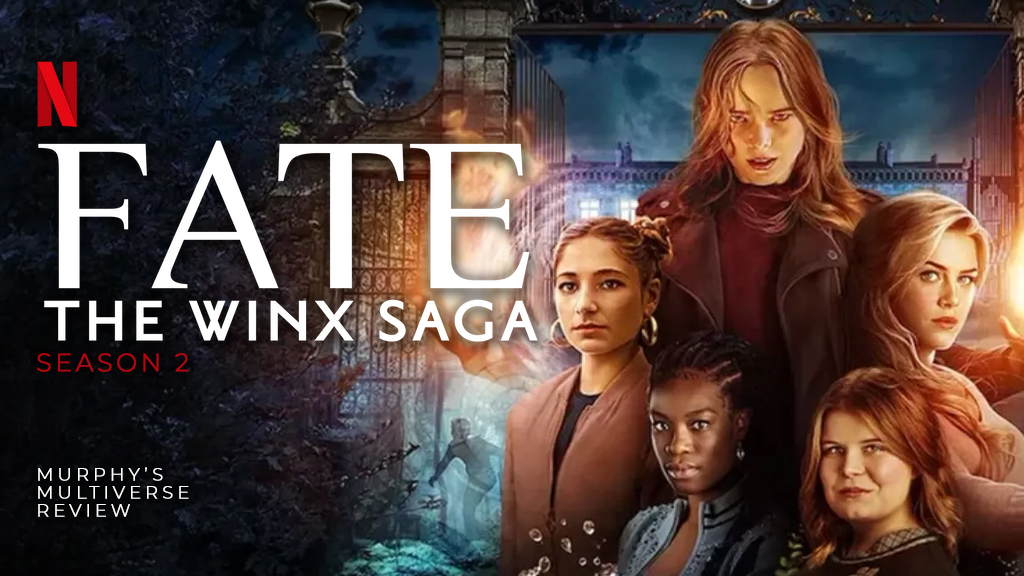
  • REVIEW: ‘Fate: The Winx Saga’ Season 2

    REVIEW: ‘Fate: The Winx Saga’ Season 2

    Fate: The Winx Saga quickly became one of Netflix’s most popular titles when Season 1 was released in January 2021. It wasn’t without controversy, though. The series is an adaptation of the animated series, The Winx Club, and fans of the original show were quick to note that the Netflix series had seemingly whitewashed some of the characters for live-action. Criticism which some of the actors took to heart. Now, with Season 2, the series seems keen to try to do better by being more inclusive, and ultimately, these decisions help to carry an otherwise uneven season.

    The second season of Fate: The Winx Saga picks up after the events of Season 1. The students of Alfea College are adjusting to life at school with headmistress Farah Dowling (Eve Best) still missing and Miranda Richardson‘s Headmistress Rosalind seeking to take back control. She’s strict, secretive and focused on Bloom because she’s the first fairy to transform at Alfea College in a long time. Sadie Soverall‘s Beatrix and Ken Duken‘s Andreas remain by her side as she seeks to right the “wrongs” of Dowling. Unfortunately for her, though, Bloom and the girls are not on board with her secrecy and the mysterious disappearance of Dowling. Eager to seek answers, Bloom and the others will have to take risks that could ultimately cost them everything.

    Fate: The Winx Saga Season 2 is a lot better than the first season. But there is one issue the writers seem to continue to struggle with. Bloom remains the least interesting character of the group, which is unfortunate given her powers and what she’s meant to be capable of doing. It’s frustrating because it’s not the actress that fails in the role. Abigail Cowen gives her all to Bloom’s story. The problem is in the writing. It feels like Bloom’s story is never going to change. She has the dragon flame, yes, but when will she be able to be more than the fairy with the dragon flame? Allow the character to grow instead of making her reckless, leaving those around her to constantly clean up her mess. Thankfully, the other girls are fascinating.

    Season 2 sees the rest of the girls spread their wings – pun intended. Aisha (Precious Mustapha), Musa (Elisha Applebaum) and Terra (Eliot Salt) all get a chance to shine. Especially Aisha, who was often used to drive the plot forward in Season 1 by “snitching.” Season 2 allows her to become a fully realized character. She’s allowed the chance to be an actual student and, more importantly, an actual teenager. The first season made Aisha out to be a goody two shoes who had no problem snitching on her friends. Her entire identity was the upstanding student who dared not to be reckless like her friends. This season, though, she’s allowed to have faults, she’s allowed to have relationships outside of the girls. It’s a much-appreciated change. The same can be said regarding the others, too. Terra and Stella, especially, feel as though they’ve grown tremendously since the first season. The only character to feel poorly conceived is Beatrix, who doesn’t change much from the first season. She’s a frustrating character who truly sees no real character development; it’s hard to decipher who she truly is as the show still remains unclear of who she is until the very last episode of the season. As for the boys? Some of them make strides this season, but honestly, they’re around more so to serve the plot than to truly become their own important characters.

    As for the story, well, this is where Fate: The Winx Saga struggles a bit. Overall, it’s a strong season, sure, but there are plenty of issues throughout that do pull it down quite a bit. The fight scenes are still incredibly short; it usually takes a matter of five minutes for someone to come out on top and it’s always rather predictable. More importantly, though, the story has not changed much since the first season. Which is frustrating because by season’s end? There’s still plenty we don’t know regarding questions brought up during the first season. Should a third season be ordered, there’s sure to be plenty of new and exciting stuff to cover judging by the ending, however, the season does often feel like filler because it doesn’t advance nearly as much as it should. With that in mind, the character moments this season make for a strong sophomore effort. The young cast gives it their all, delivering some stellar moments in an otherwise uneven season.

    Is it the best sophomore season of a Netflix series? Far from it. Is it still enjoyable? Yes.

    While there’s still plenty of things Fate could do better, it does make an effort to try to be more inclusive this season. That, of course, does not make up for the casting issues many brought up during season one, but there is an obvious effort being made this time around and it doesn’t feel forced, which is a nice change.

  • REVIEW: ‘Do Revenge’ is a Good Exploration of Female Friendships

    REVIEW: ‘Do Revenge’ is a Good Exploration of Female Friendships

    It’s hard to imagine, but before Thor: Love and Thunder, Jennifer Kaytin Robinson first made a name for herself with the MTV series, Sweet/Vicious. The short-lived series was critically acclaimed and focused on two girls named Jules and Ophelia who set out as wannabe vigilantes to make abusers on their college campus pay for what they’ve done. Robinson would then go on to direct a romantic comedy titled Somebody Great for Netflix which saw the film’s leading lady seek one last adventure with her best friends as she struggles to deal with a breakup. All of these projects have one central theme at hand: female friendships. It’s one of Robinson’s strongest abilities as a writer – it’s something that we even get to see in Love and Thunder with Jane and Valkyrie. However, Do Revenge might just be Robinson’s best effort yet.

    If one were to judge Do Revenge simply by the film’s trailer, they’d more than likely bill it as yet another teenage drama. But that isn’t necessarily the case. It’s so much more than that. The film centers on Drea (Camila Mendes) and Eleanor (Maya Hawke), two students who seemingly have nothing in common but will soon find they’re all they have. Simple concept, right? Sure, but what Robinson manages to do with said concept is impressive. Drea is an IT girl – she’s dating the most popular guy at school, she has three friends who follow her every command and she’s on track to get into Yale. Unfortunately, just as things seem to be going perfectly for Drea, everything seemingly falls apart. Enter Eleanor. She’s the complete opposite of Drea. After a traumatic event, she struggles to fit in and make friends and she’s eager to try to move beyond her past. At least, until she meets Drea.

    As the title would suggest, both girls are on a mission for revenge in the film. This is where Do Revenge begins to pull from Robinson’s work on both Sweet/Vicious and Someone Great. It shouldn’t work as well as it does, and yet, Do Revenge is a movie full of thrilling surprises. This isn’t just another teen movie. It’s about friendship, identity and growth. There are some serious issues addressed in Do Revenge, and while admittedly handled with a lighter tone than perhaps required, Robinson and Celeste Ballard (Sweet/Vicious) don’t shy away from the screwed-up way society responds to such screwed-up scenarios in the end.

    Mendes and Hawke are fantastic in Do Revenge. They have such good chemistry on screen that it helps sell the relationship with ease. For those only familiar with Mendes from Riverdale, Do Revenge is proof that she’s capable of more than the CW series has shown her to be capable of doing. She’s great in the film overall, but she truly shines when it comes to the emotional moments. While Hawke steals the show from the moment she arrives on screen. Much like her father, the young actress has a magnetic presence on screen, and she slips into the role of Eleanor with skill. Of all the characters featured in the movie, it is Hawke’s Eleanor that goes on the most rewarding journey and it’s hard to imagine another young actress that could’ve successfully tackled the role as well as Hawke. She’s fantastic.

    That isn’t to say the film isn’t without its faults. While a fun watch, sometimes, Do Revenge fails to properly handle the traumatic storylines it introduces. When the tone should be more serious, Do Revenge takes a more comedic approach. Thankfully, by the movie’s end, the film does get itself back on the right path, but those bumps in the third act? They are quite uncomfortable and hard to ignore while experiencing them.

    Overall, Do Revenge is a good story about female friendships and the many issues women face in society. It’s campy at times, but in those moments when the film is sure of itself and its characters? It shines brightly. Revenge might not always be the answer, but in this case, it is best to Do Revenge.

  • REVIEW: ‘Stargirl’ 3×03: “The Blackmail”

    REVIEW: ‘Stargirl’ 3×03: “The Blackmail”

    A period of change can be incredibly stressful for any person, whether you’re trying to find a new job or if you’re uprooting your entire life. You never know where it might lead you. Yet, what happens when that big period of change is being buried alive? Well, Sylvester Pemberton is living that very nightmare and Stargirl has certainly flipped the veteran hero’s life upside down.

    The episode dives deeper into the suspects on the board that was set in the last episode. This time around it shifts its focus onto the Crock’s, as the team finds out that they’d been blackmailed by the Gambler for months. A little more of the Crocks is never a bad thing though, one of the best choices they could’ve made was bringing back Neil Hopkins and Joy Osmanski for season 3. The two just have great chemistry together as they somehow have this perfect harmony when interacting with each other.

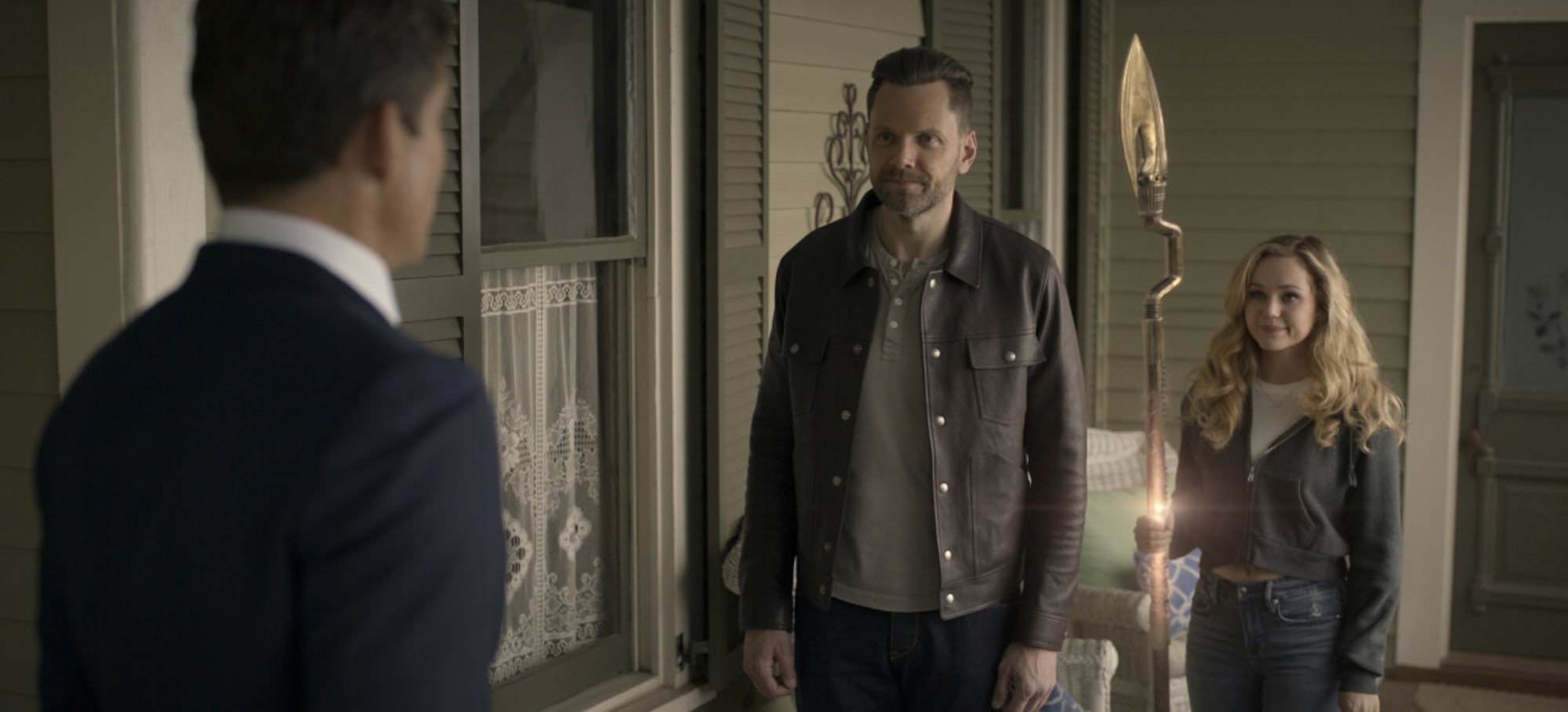
    The reintroduction of Starman has been a surprisingly classic fish out of water story. Joel McHale works incredibly well as an out-of-touch, grizzled hero who just doesn’t know what his place in the world is anymore. The parallels between him and Courtney, as well as how they choose to act with the power of the Cosmic Staff gives the show an interesting balance.

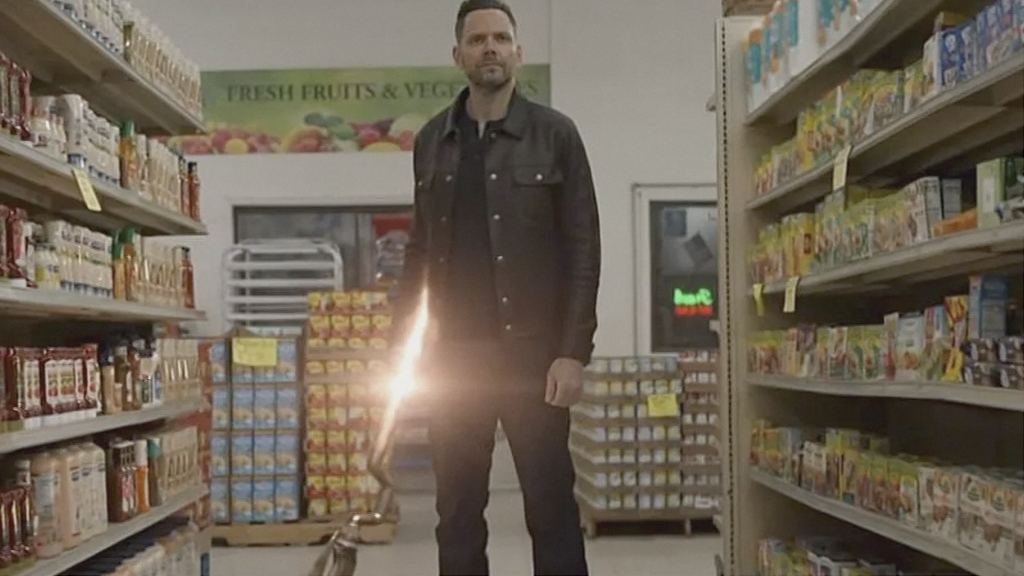
    Fans will also find some enjoyment in a perfectly choreographed fight sequence within a grocery store. With that worryingly impulsive nature, Starman takes things into his own hands to confront the Crocks, leading to an dynamic and incredibly pleasing scuffle between him and the duo of Sportsmaster and Tigress.

    The stunt team for this series deserves some insane recognition for what they managed to put together. It’s one of the best aspects of the show that they continously improve upon and push the limits of whats possible for these characters. The dual style that Sportsmaster and Tigress have mastered truly makes this sequence pop the way it does.

    The best way to watch this season is to get into the mindset as if you’re watching an experiment unfold, seeing how these characters continue to coexist as if they’re reactive materials that could easily lead to an explosion at any time. In a way, it feels like a whole new way to enjoy the veteran show on CW.

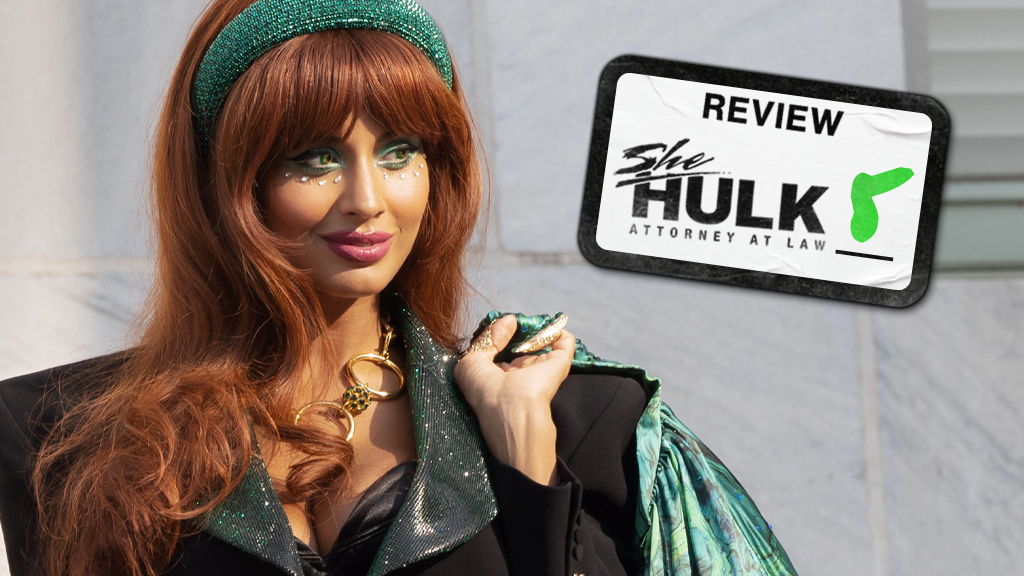
  • REVIEW: ‘She-Hulk: Attorney at Law’ Episode 5

    REVIEW: ‘She-Hulk: Attorney at Law’ Episode 5

    While Episode 5 remained satisfyingly enjoyable, much of the dazzle of previous episodes seems dimmed here. The episode uses Titania as its legal case backbone, but overall it felt as though this episode was built as a transitional point for She-Hulk: Attorney at Law. Instead of wacky paranormal antics, the story sets the stage for She-Hulk as an actual superhero. The result is fine, but of the five episodes of the series so far, Episode 5 is arguable the most skippable.

    The show’s humor is present throughout, but it feels softer and significantly much less cutting overall. The main focus of the episode, of course, is Jen’s own journey of self-identity and self-acceptance as She-Hulk. Her early moanings about the hero name given to her foreshadowed a time in She-Hulk when Jen would have to come to terms with that title for herself. Cleverly, the series framed it through a legal case. And perhaps it was more effective to present this type of narrative within a context not overpowered by the absurdity of Donny Blaze or another all-consuming joke. Still, Episode 5 feels a far cry from Episodes 3 and 4’s laughter and fun.

    The episode also clearly lays the foundation for more superhero activities in later episodes. Obviously, Jen has now embraced “She-Hulk” as a part of herself. But the costume B-plot also ends in her receiving her (unseen) super suit, as well as a teasing reveal of Daredevil’s helmet. At this point, it is not entirely clear how Jen will make the jump from sticking solely to her legal carer to actually operating as a superhero, but with a costume and a super-buddy on the horizon, it is only a matter of time.

    The use of She-Hulk’s supporting cast is highlighted in Episode 5. Nikki and Pug do get some additional adorable screen time, and the Matchr dates from the previous episodes returning was a satisfying full-circle moment for that mini-journey of Jen’s. Even cousin Ched makes a brief appearance after making a great first impression in Episode 2, but he remains fleeting.

    Some of the supporting cast are, noticeably, a bit more fleeting than the story seems to recognize. A possible explanation could be rewritten episodes that removed significant backstories or introductions for some characters that were still used in substantial roles later. The best example perhaps is Mallory Book. She appears in a blink-and-you’ll-miss-it way in Episode 3 but was just presumed to be an established character in this episode. Mallory is a major figure in Jen’s work-life at GLK&H in the comics, often portrayed as the rival successful colleague. She has been given a character poster and advertisement for the series, yet her role seems cut short. She may very likely have more time in later episodes, but it almost feels like the character was skipped over for several episodes.

    Where She-Hulk goes from here, considering it is now potentially balancing a larger and maybe more traditional superhero story, will be interesting. The series has been incredibly unique thus far, but every Marvel Cinematic Universe series flirts with destroying its own identity for the sake of a more generic superhero plot. There is a delicate balance between She-Hulk’s attempted episodic structure and having a narrative that connects the full 9-episode series. It seemed stronger in the past couple of episodes that truly delved into the wild and weird side of the Marvel Universe on its own terms. But She-Hulk is destined to be a superhero as well, so the series will have a chance to square that story with the type of stories it has been telling so far. Taking the silly and fun out of the courtroom seems completely achievable, but Episode 5 just did not deliver at the same caliber as previous She-Hulk episodes.

  • REVIEW: ‘Margaux’ is a Flawed but Terrifying Thriller

    REVIEW: ‘Margaux’ is a Flawed but Terrifying Thriller

    In 1999, the Disney Channel released a movie called Smart House that showcased how quickly artificial intelligence can become terrifying. While the film wasn’t exactly terrifying, given it was a Disney Channel original movie, it still presented a scary reality of a world driven by AI. Margaux takes the concept of Smart House and ups the ante, resulting in a terrifying thriller.

    Margaux is a film that centers on a group of college friends as they rent a smart house for a weekend of partying. Simple enough concept, right? Unfortunately, though, things soon begin to turn into a disaster for the students. The smart house, which prefers to be called Margaux, first tries to cater to the students by giving them the house of their dreams. It takes their social media information and any other easily accessible information to design their rooms to their liking. It also uses the information to know their likes and dislikes. That in itself is terrifying, but the film only continues to become horrifying from then on.

    Drew (Jedidiah Goodacre) rented the smart house to try and reconnect with his college friends after the quartet managed to become more distant over the years. However, from the get-go, things do not go as planned. His girlfriend, Lexi (Vanessa Morgan), ends up joining them and creating an uneasy tension within the group. This is where the film struggles initially, as it becomes all about tropes. Lexi is the social media influencer girlfriend, Drew is the model boyfriend, while Hannah (Madison Pettis) is the nerd of the group, Clay (Richard Harmon) is the stereotypical stoner, and Kayla (Phoebe Miu) and Devon (Jordan Buhat) are the adventurous couple. It’s frustrating how much time the film spends on these stereotypes. Lexi is made out to be an airhead and Clay seems incapable of being anything besides a stoner — the film’s two strongest actors are so poorly underused because their characters are underdeveloped.

    If viewers can get beyond these frustrating moments, they are sure to find some enjoyable moments in Margaux. Hannah isn’t the best character, but she does get to shine in the third act. It is at this point that Margaux excels. While the scenarios presented on screen are far from realistic, they are so well-written, it’s hard not to be engulfed by the chaos occurring on screen. If the film had managed to perform at this level throughout? It could’ve been something special. But it spends too much time trying to be Cabin in the Woods if that movie had been made in a smart house.

    Is Margaux a great film? No. It has plenty of faults and, honestly, some of the acting is rather subpar. However, despite all of this, it’s a terrifying thriller that takes our obsession with social media and technology and shows how easily it can destroy us. If you’re looking for a thrill ride heading into the Halloween season, Margaux is certainly worth a watch. It’s a fun ride for what it is.

    Margaux is available on digital now.

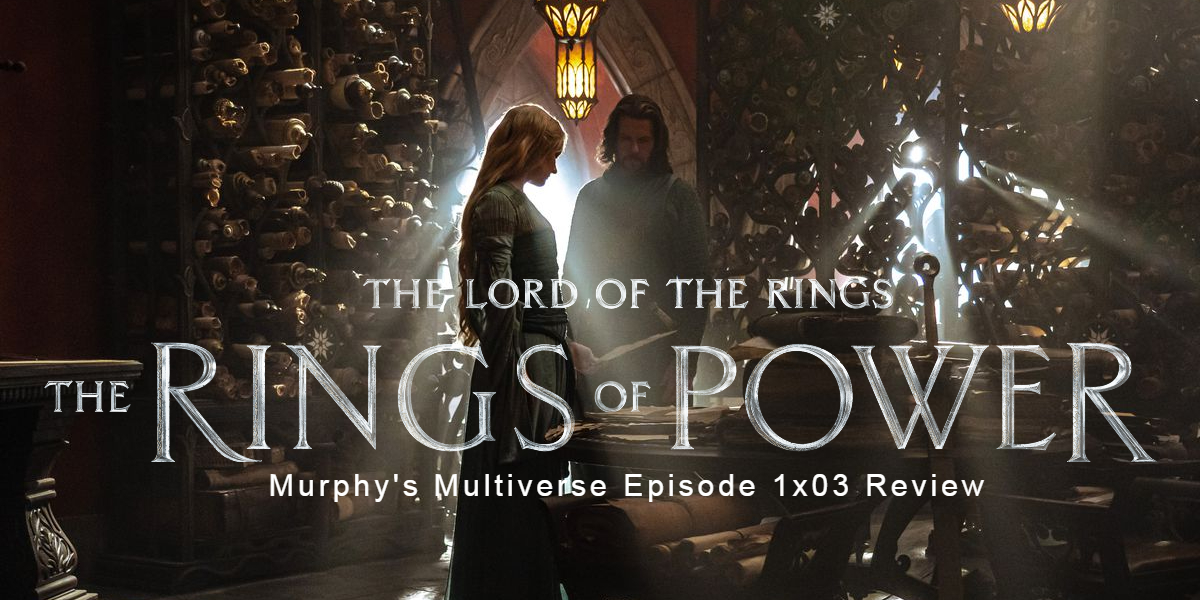
  • REVIEW: ‘The Rings of Power’ – ‘Adar’ is Great, Gosh-Darn Television

    REVIEW: ‘The Rings of Power’ – ‘Adar’ is Great, Gosh-Darn Television

    The Rings of Power is really just great, gosh-darn television. With its third episode, titled Adar after the mysterious nasty fellow, Amazon’s The Lord of the Rings series has managed to grow beyond the awe-inspiring visuals of its dual premiere. It’s not simply the visuals, however, that put it above what fans have already seen. While the latest episodic entry is, in fact, quite gorgeous, what makes Adar so much better than A Shadow of the Past and Adrift is the way it doubles down on something perhaps far more important to a show than beauty. This week, The Rings of Power doses itself with intrigue, and the series as a whole has instantly become better for it.

    Aside from one major exclusion, Adar takes the plotlines set up in the show’s premiere episodes and sprints full speed ahead with them. Seeking to gain the upper hand on Sauron and his army, Galadriel finds herself captive in the Kingdom of Men alongside a charming stranger. With the Harfoots set to begin another migration, Nori learns the hard way that she is not the only one who must face the consequences of her actions. Now a prisoner of the orcs, Arondir and his Elven compatriots devise a plan to escape and warn Middle-earth of the coming dangers. Every storyline is as engaging as the last, which is an accomplishment not many series achieve on a weekly basis. The Rings of Power had some slow moments out of the gate, made bearable by the splendor of everything around them. This no longer seems to be the case.

    The common theme of Adar is imprisonment, in both a literal and metaphorical sense. All three plots deal with the concept in some way, and in expert fashion, they all bleed into each other thematically to keep the big picture a cohesive one. In Númenor, Galadriel pleads desperately to be let go and for help against Middle-earth’s greatest threat. Having lived for much longer than most, she is aware of how evil adapts so that it may survive. She knows that, even if Sauron has truly gone, there must be something growing in his wake. Men, on the other hand, refuse to change. They keep Galadriel prisoner without realizing they’ve imprisoned themselves in a cage of their own making. Through her experiences and that of Halbrand, it’s shown that man is unwilling to change in the same way as it’s hidden enemy, and therefore, is likely headed toward its downfall.

    This sentiment is echoed in the events surrounding the Harfoots. The merry band of travelers, led by Lenny Henry‘s Sadoc Burrows, spend much of the episode restating their methods of survival and long history of sacrifice. Sadoc sits in front of his people and lists the names of those left behind due to injury or tragic circumstance, with the underlying intention of scaring the Harfoots into obeying their own laws. Like the men, prisoners of their way of life. However, when Nori’s secret is revealed and Daniel Weyman‘s nameless giant emerges from the dark, her family is not left to rot as the men might have done. Instead, they are given a chance, and ultimately, further deviate from their traditions by including the giant on their journey, if only as a means of staying alive. In direct opposition to the previous plot, the Harfoots show that change is vital for growth.

    Arondir does not need to learn about change in Adar, but rather exists to demonstrate the severity of Middle-earth’s new big bad. Where the other plot lines comment on the nature of growth and self-imprisonment, this one puts an emphasis on why the men and Harfoots should be adapting in the first place. Orcs are always fun to watch, with their grimy faces and menacing growls, but this episode might have been the most fun they’ve been in a long time. Ismael Cruz Córdova gets to show off his action chops in an impressive escape sequence that also highlights the death and destruction that will soon be wrought upon the land. The baddies have not come to play, and they even brought a really cool monster dog to prove it.

    As any third episode should, Adar leaves audiences with more questions than answers. A brilliant, thought-provoking installment in the Lord of the Rings franchise, that ticks off every box of classic television storytelling on a budget of $1 billion. Next week promises to be another good outing, with plenty of teases left hanging in the air for Tolkien fanatics to pick apart for days on end. The biggest of which is probably the identity of the titular villain, whose blurred face seemed to resemble that of Sir Christopher Lee‘s Saruman the White. Until then, viewers can think on the one word they heard more than any other – Adar.

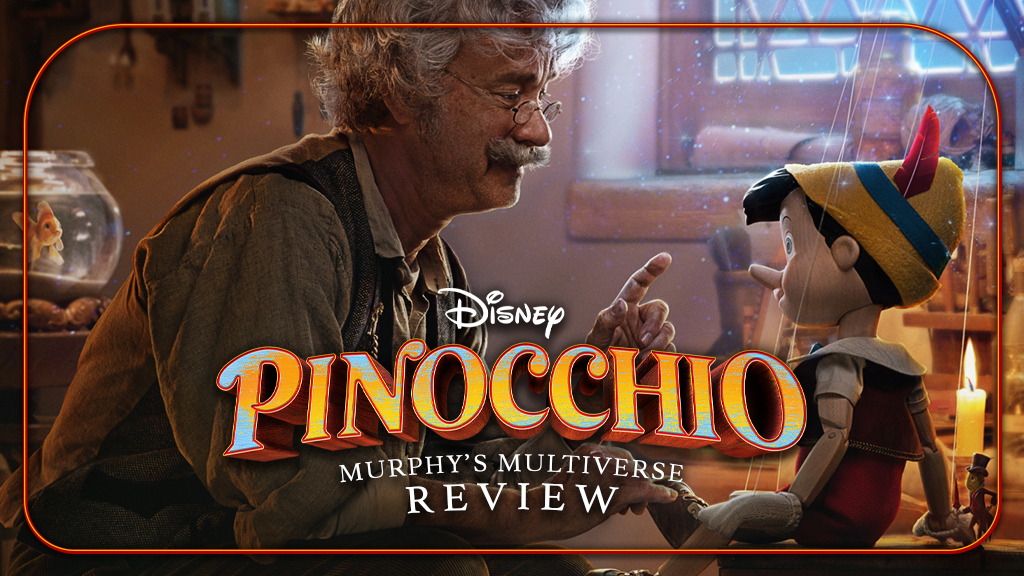
  • REVIEW: ‘Pinocchio’ is Visually Stunning but Unnecessary

    REVIEW: ‘Pinocchio’ is Visually Stunning but Unnecessary

    Over the past decade, Disney has made it a habit of remaking some of its biggest animated classics in live action. Sometimes the decision to remake these films works out well (Cinderella), but oftentimes, audiences are left feeling as though the remakes don’t live up to par (Dumbo). Unfortunately, while visually stunning, Pinocchio seems likely to fall in the latter category. It feels like a lifeless remake that does a poor job at adapting such a beloved animated classic.

    Disney’s animated Pinocchio was released on February 23, 1940, and was based on the novel The Adventures of Pinocchio by Carlo Collodi. The animated movie told the story of the living puppet, Pinocchio, and the cricket that serves as his conscience to help Pinocchio as he seeks to become a real boy. The live-action remake, of course, follows the same path. Unfortunately, though, it lacks the same charm and care as its predecessor. Sure, Tom Hanks‘ casting as Geppetto is fantastic. He captures the oddities of the character and easily steals every moment that he appears on the screen. The problem, however, is Hanks’ time as Geppetto is short, and when he isn’t around? This take on Pinocchio struggles to find its footing.

    Benjamin Evan Ainsworth does an excellent job voicing Pinocchio. He captures the emotions wonderfully, from confusion, to love and sadness – his vocal performance is up there with Hanks’ take on Geppetto. But as great as the two leads are, the secondary cast is forgettable – albeit not through any faults of their own. Giuseppe Battiston‘s Stromboli isn’t given much to work with and fails to be as imposing of a character as he should’ve been. And Honest John and Gideon feel underused despite essentially serving their purpose. It’s frustrating because, by the end of the movie, it’s hard to recall what should’ve been a noteworthy performance by Keegan-Michael Key (Honest John). And while Luke Evans does get to shine in the few moments he’s on screen as the Coachman, this is mainly due to the iconic numbers he gets to belt out. Ultimately, for such a stellar cast, the film fails to truly use any of them properly and it’s frustrating.

    The fact of the matter is this take on Pinocchio never truly feels necessary. Yes, there are good moments, and there’s no denying the visuals are stunning. Outside of that, though, there’s truly nothing new that the animated classic doesn’t already have to offer audiences. To remake something, there needs to be a good reason to do so, but that special charm and wonder provided by the animated film does not exist in this remake. The musical numbers are still catchy – and Cynthia Erivo‘s brief musical moment as the Blue Fairy is stunningly done – but outside of that? There’s nothing truly memorable here.

    That isn’t to say families won’t find joy in this film. For audiences not yet introduced to the animated film, Pinocchio will probably delight. Those that grew up on the classic, however, will struggle to find anything of note in this live action remake. Well-done visuals does not a great movie make. Pinocchio needed a bit more room to breathe. While the movie does a good job modernizing certain scenes – Pleasure Island, mainly – it often falls short elsewhere because it omits scenes that help to make the animated film the classic that it has become.

    Perhaps Netflix’s version, coming later this year, will offer an exciting new take on a beloved classic. For now, fans can check out Pinocchio only on Disney+.

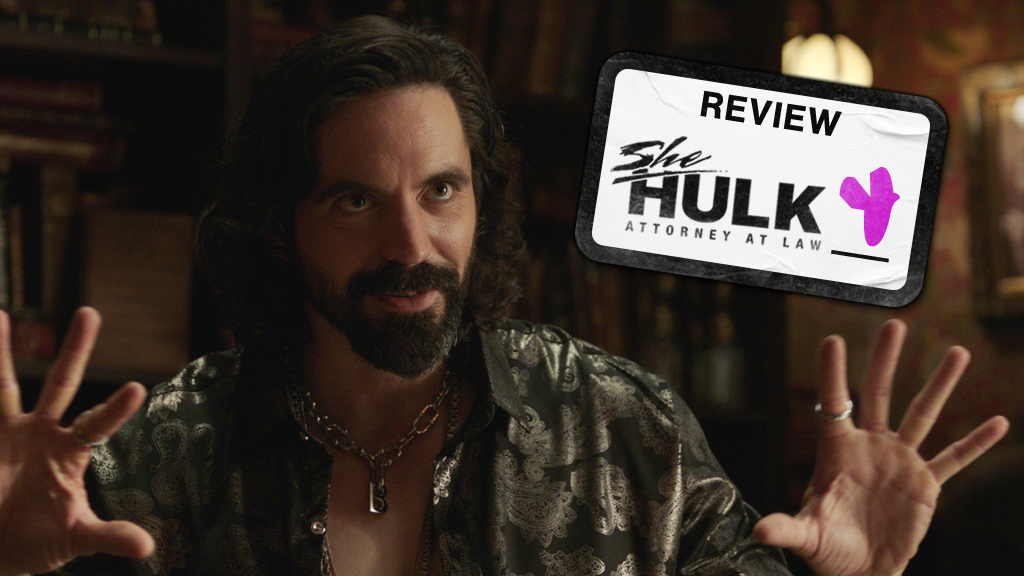
  • REVIEW: ‘She-Hulk: Attorney at Law’ Episode 4

    REVIEW: ‘She-Hulk: Attorney at Law’ Episode 4

    The fourth episode of the nine-part series of She-Hulk: Attorney at Law doubles down on its intent to embrace an episodic half-hour comedy, and it is consistent with the success of Episode 3 with this premise. Episode 4 keeps She-Hulk as funny as ever. It is perhaps the first MCU project that will get fans excited for each week, not because they want to find out what happens, but simply because it is so enjoyable.

    With certain characters and concepts (like Wong) carrying across multiple episodes, the series is avoiding a super strict “weekly” episodic structure that might forget all previous episode narratives. Still, the B story seems to act as an anchor for the structure—while certain stories span multiple episodes, the magic of Donny Blaze keeps it nicely choppy. It is a solid balance that embraces its MCU-unique style without limiting the stories and story arcs to miniature blips that exist purely within one short episode. She-Hulk is making it clear that it can do both. 

    Episode 4 continues many of the themes and tones the series has previously set out. The Donny Blaze story is small, but Wong’s inclusion gives it more weight and intrigue. The fact that Wong can be reframed in this series in such a funny way without necessarily affecting the character in the greater MCU is brilliant. She-Hulk feels like comics or comic runs where characters take on very different facets of themselves at different times, but the MCU has previously avoided treading into this territory. In fact, some fans tend to lend harsh criticism to the studio if their favorite character comes across differently than how they have in the past.

    But She-Hulk’s embrace of this strategy undoubtedly will go on to benefit how the MCU is able to tell different stories. It is especially clear at the tail end of Phase 4, a very experimental and sometimes messy phase, that the MCU wants to expand its offerings in a variety of directions. This series is a prime example of how the studio can do this successfully. Perhaps some stern fans simply need to embrace stories as they come, rather than investing themselves fully in one idea of what the MCU is. “Wongers” will certainly prove to be practice for some to take things less seriously, but Daredevil’s eventual appearance in She-Hulk will surely be a real test.

    In any event, after two episodes that fully embrace the format and structure, it seems obvious from this episode that the back half of the series is going to be even better than what we have already seen. Supporting cast, cameos, and one-off performances are all hitting at the same level, meaning the episodic and mini-story experience can thrive. If anything, She-Hulk has only had a couple of episodes to fully take advantage of that structure, and those couple of episodes were some of the MCU’s best television. With five more episodes to go, things are only looking up for the unique series.

  • REVIEW: ‘Stargirl,’ 3×02: ‘The Suspects’

    REVIEW: ‘Stargirl,’ 3×02: ‘The Suspects’

    Blue Valley is that perfect little slice of America, a town that seems as if it’s a glimpse back into the ’50s with such a vintage feel, what could ever go wrong? Ever since the Injustice Society rolled into town on Stargirl? Well, it would seem a whole lot. Since Season 1, we’ve seen the town shaken with mind-control and even a chaos demon, but this time around, a murder has hit Blue Valley, and it has taken Steven Sharpe, aka The Gambler, with it.

    When we traveled back to Blue Valley in the season premiere, tensions were already high. This was due in part to the Justice Society’s bubbling leader, Courtney, working to make the transition period between the team’s oldest members more comfortable with the welcoming of Cindy Burman, looking to turn a new leaf. However, this dynamic isn’t exclusive to just the kids, as the people all around town are looking for a fresh chance. The Shade, Tigress, and Sportsmaster are all villains who have returned to Blue Valley with better intentions but, in the end, it just results in them all being considered suspects in the murder of The Gambler.

    Burman, of course, is the team’s biggest suspect, and it could not have come at a worse time as she continues to find her spot amongst the Justice Society. Half of the team lacks trust, and it is understandable as to why. Not even Courtney’s optimistic outlook and Beth’s voice of reason can help her find a way out of the hot seat.

    While we know that there are larger plans at play, it would be a bit more beneficial to the story if they could touch on it a bit more. It’s good to let the tensions amongst the characters develop a bit more as the mystery continues, but it feels like the antagonist could be a bit stronger if he was more of a present threat. As of right now, we can only presume that Mr. Bones and Helix are the ones surveying Blue Valley through the strange network of cameras planted about town. It feels like our characters’ growing agitations and feelings towards each other will pay off much better if the upcoming villains just felt a bit more like puppet masters in an “experiment” that currently doesn’t feel like a very controlled one as much as it was led on to be.

    With Courtney, of course, already appropriately being the shining star of the series, the growing mentor and mentee relationship between her and Sylvester is still one of the series’ most interesting. It’s exciting to watch as they find this middle ground in whose turn it is to be the red, white, and blue staff wielder, and how Courtney can grow alongside Sylvester. It is even more interesting to see how Sylvester reacts to a world that he left ten years ago, to see how it has changed, how he is still caught in 2010, and that person who voted to kill Bruce Gordon still finds his way out occasionally. In a way, Courtney is teaching Sylvester just as much as he is her, sharing her compassion and softhearted nature with him to eventually lead to both being the best versions of themselves.

    With Stargirl Season 3, Episode 2, fans are quickly going to realize this is a very different season than either that have come before. It is a much more character-oriented season. So far, Season 3 looks to be testing character limits by making them question who they let into their lives and if they can be genuinely rehabilitated in order to let go of their past villainous actions.

  • REVIEW: ‘Barbarian’ is an Unexpected Delight

    REVIEW: ‘Barbarian’ is an Unexpected Delight

    Choosing what to watch is never easy. Far too often do people sit on their couches, late at night, scrolling endlessly through extensive catalogs of content, hoping to find something that might catch their eye. What they rarely consider, however, is the riskiest option available to them – just sort of clicking on something and hoping it’s good. Time is a precious commodity, and most of society would rather not waste it on a sub-par movie. Of course, this extends two-fold to the moviegoing experience. A theatrical flop means the viewer has wasted their time and their money, and not a soul goes home happy after losing out on both. Sometimes, though, the risk is totally worth it. Every once in a while, a person goes to the theater on a whim and discovers something unexpected. Something absolutely delightful. Get those tickets ready, because this year, Barbarian is that unexpected delight.

    Let it first be said that Barbarian is the type of film best experienced with little-to-no knowledge of the plot heading into it. It’s designed to take people by surprise, and it does so gloriously. As such, it’s highly recommended that anyone who plans on going to see it avoids spoilers and spoiler-filled reviews at all costs. All anyone needs to know before they seat themselves in the theater can be found in the trailers, which do an excellent job of advertising the film without giving much away. Written and directed by Zach Cregger, the movie stars Georgina Campbell as Tess, a woman who arrives at her Airbnb to find it’s already occupied by someone else. Scream king Bill Skarsgård co-stars as the mysterious stranger who opens the door and invites Tess inside – where she quickly discovers there’s a lot more going on than just a reservation mix-up.

    Cregger‘s background in comedy – he was a founding member of the famous The Whitest Kids U’Know sketch troupe – works wonders in horror as the opposite side of the same coin. The script always knows when to hold back and when to go full speed ahead, expertly setting up scares and plot twists in much the same way a stand-up might lay the path for their closing remarks. Barbarian doesn’t feel as long as its runtime either, flying by with excellent pacing that makes it easy to become engrossed in what’s on the screen. If the length of the film wasn’t already so perfect, one might even find themselves wishing there was more by the time the credits start rolling. Thankfully, however, the movie knows exactly where to stop. An excellent example of the celebrated tight 90.

    Thematically, Barbarian is also a bit of a shock. The basic premise itself, as stated above, suggests the plot will tackle some feminist topics, but the actual extent to which the movie commits to this is astounding. Cregger himself has mentioned on multiple occasions that the original idea behind the project came from reading a book about situational red flags women deal with on a daily basis. If one pays attention, they’ll notice this concept is the backbone of the entire film. The subtlety involved with seeding these moments around the story varies depending on the scenario, but it’s always present, no matter how insane the events on screen become. In this way, Barbarian competes with the recent trend of horror projects intent on delivering valuable messages on top of freaky frights, though it maintains more of a classic slasher feel than it does the artsy vibe of Jordan Peele‘s now-iconic work.

    Campbell solidifies herself as a leading performer with this movie, and hopefully, will be treated as such following its release. She stands tall alongside Skarsgård and fellow cast member Justin Long, who himself brings something unique to the big picture. Long plays a bit out-of-type, in a crucial role, but also manages to provide some comedic relief in an otherwise tense film. With him, Cregger is able to flex a bit of his comedy muscle, without compromising the intensity that is so important to making Barbarian work. In fact, it’s the intensity of Barbarian that will keep butts on the edge of their seats as the story progresses and becomes increasingly enthralling.

    Not much more can be said without starting to give away too much, but the baseline remains the same – Barbarian is a near-perfect horror film. There is little it can’t do, between screams and laughter, and is admirably unafraid to be as strange as it wants while keeping with its very real messages. Admittedly, the marketing for the movie hasn’t conjured much hype, likely due to its inability to show everything that goes on in the depths beneath the Airbnb. So, let this be the rallying cry. Go see Barbarian, and afterward, tell everyone else to head towards the theater as well. It may be flying under the radar right now, but with time, this one might just become a modern horror classic.