Category: Reviews

  • Review: ‘Hocus Pocus 2’

    Review: ‘Hocus Pocus 2’

    1993’s Hocus Pocus is a film that has unquestionably grown on people in the 29 years since its debut. Not well-received by critics at the time, audiences have come to embrace the film as an annual Halloween movie must-see. Whether its the over-the-top nature of Bette Midler’s performance, the quotability of it (“I smell children!), or simply the 90’s nostalgia dripping from the film, Millenials love it and have been pining for a sequel for the better part of three decades.

    And after several starts and stops and rumors and failed attempts, Disney found the right time and the right place to unleash the Sanderson sisters once again in Hocus Pocus 2, a sequel that’s not only worth the wait but also a stronger film than the original. Directed by Anne Fletcher (27 Dresses, The Proposal) Hocus Pocus 2 smartly retains the loveable pieces of the first film’s DNA and upgrades it by telling a more coherent story that serves as both the heart of this film and retroactively makes the plot of Hocus Pocus a little more digestible.

    Following in the footsteps of Hocus Pocus, the sequel opens in 17th-century Salem; however, in what turns out to be maybe the most important choice the creatives behind it made, the audience is introduced to Winifred, Sarah, and Mary as children, with Winifred acting as the guardian of her two sisters. And while the younger versions of the Sanderson sisters are already displaying their trademark traits, they’re not yet the monstrous, child-eating coven of witches they’ll turn out to be. Rather they are a group of young girls without parents who the town has grown to disapprove of, especially Winifred, whose family unit is threatened to be torn apart by the Reverend Traske. A distraction allows the young Sandersons to escape and leads them to the Forbidden Woods where they meet the Mother Witch who introduces them to Book and sets them on the path to becoming the witches hanged in Salem years later.

    Kathy Najimy as Mary Sanderson, Bette Midler as Winifred Sanderson, and Sarah Jessica Parker as Sarah Sanderson in Disney’s live-action HOCUS POCUS 2, exclusively on Disney+. Photo by Matt Kennedy. © 2022 Disney Enterprises, Inc. All Rights Reserved.

    For all the laughs they gave audiences in the first film, the choice to go deeper into the past of the Sanderson sisters allows the audience to empathize with them, possibly for the first time and serves as an investment into an emotional arc that pays dividends in the film’s third act. The young Sanderson’s trip into the Forbidden Woods forges a bond between them and with the audience and interestingly deepens the mythology of what now looks like it might just be primed for a run as an expanding franchise.

    The same Salem woods that serve to tell the true tale of the Sandersons also work as the primary setting of the present-day part of the tale. With the events of 1993 so far in the past, the true nature of them has been forgotten and the Sanderson sisters are looked at as a fun part of the local lore, with a Sanderson cosplay contest part of Salem’s Halloween celebration and a spooky store, run by Sam Richardson’s Gilbert, all coming into play over the course of the plot. Anchoring the events of the present are a trio of friends, Becca (Whitney Peak), Izzy (Belissa Escobedo), and Cassie (Lilia Buckingham) whose transition to high school has put a strain on their status as lifelong besties. Their struggles to stay close come to a head on Becca’s birthday, which happens to fall during a full moon on All Hallow’s Eve. Gilbert’s birthday gift to Becca sets the Sandersons free in Salem where they definitely want to hunt down more virgins and eat more kids, of course. However, the sisters also seek revenge on the Traske family who set them on their path to becoming monsters over 300 years ago.

    (L-R): Belissa Escobedo as Izzy and Whitney Peak as Becca in Disney’s live-action HOCUS POCUS 2, exclusively on Disney+. Photo by Matt Kennedy. © 2022 Disney Enterprises, Inc. All Rights Reserved.

    And so the stage is set for another Halloween adventure, much like the events of the original Hocus Pocus, but whether it’s because it’s shiny and new or because it’s a more well-developed script, Hocus Pocus 2 plays as a much more charming, magical, heartfelt and easier-to-watch film than the original. The best fun, of course, comes from seeing Bette MidlerSarah Jessica Parker and Kathy Najimy return as the Sanderson sisters, but it doesn’t come across as cheap fun and doesn’t seem to wear off as the film moves on. If fact, an argument can be made that the trio, especially Midler, bring something extra to the trio this time around. Yes, they revisit old jokes (when there aren’t enough brooms to fly, a Swiffer and some Roombas will do) and bust out a couple of musical numbers, but nothing here FEELS old or unearned. They even find enough for Doug Jones to do as Billy Butcherson to make his appearance more than just nostalgia for nostalgia’s sake 

    And ultimately, “more than just nostalgia for nostalgia’s sake” is probably the best way to describe what’s so wonderful about Hocus Pocus 2. Much like Top Gun: Maverick (settle down, I’m not comparing the quality of the movies here), Hocus Pocus 2 brings back familiar characters to a familiar setting to tell a somewhat familiar story, but also breaks new ground by choosing to spend a little more time developing the characters and drawing out what, in this case, probably should have always been the core of the story of this coven of witches: they are all each of them has. It seems that in taking its sweet time to deliver on the sequel, Disney stumbled into a Goldilocks goldmine in terms of timing: after Top Gun: Maverick and ahead of Avatar: The Way of Water. And while Hocus Pocus 2 won’t have a box office total and won’t be talked about as one of the best films of all time, its rewatchability is going to be pretty high and bring it back into the conversation every Spooky Season, just like its predecessor.

    Hocus Pocus 2 will stream on Disney Plus beginning September 30th.
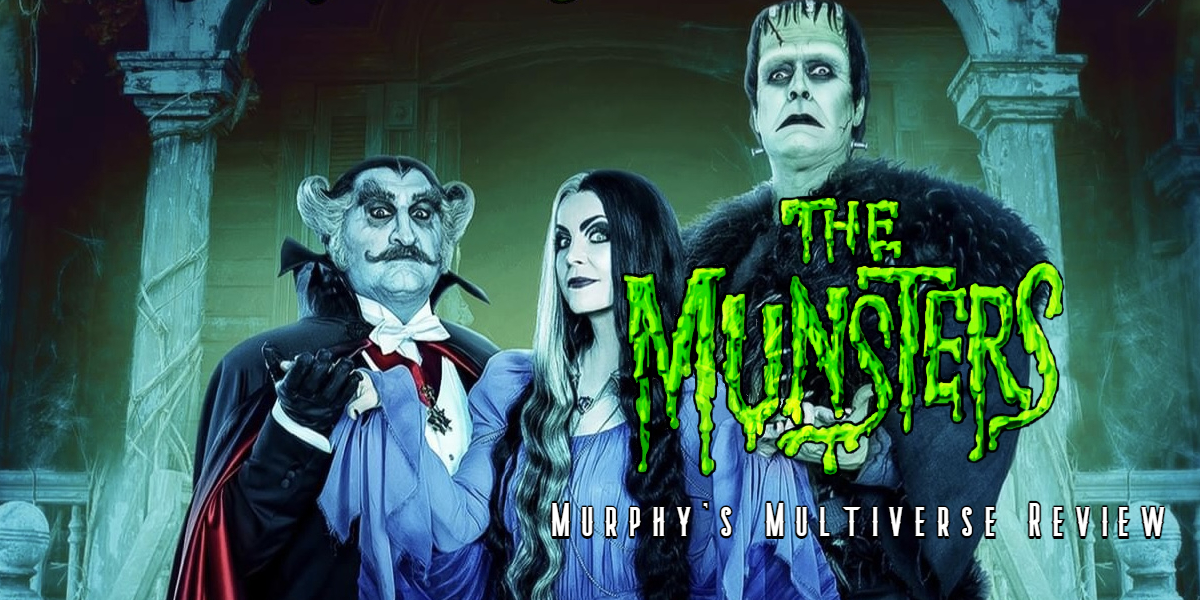
  • REVIEW: ‘The Munsters’ Blu-Ray Review

    REVIEW: ‘The Munsters’ Blu-Ray Review

    When we here at Murphy’s Multiverse exclusively revealed that Rob Zombie was working on a reboot of The Munsters, it’s safe to say hopes were high. After all, the reboot has long been a passion project for the musician and filmmaker. Unfortunately, there’s nothing redeeming regarding this reboot.

    The Munsters, of course, focuses on the Munster family. Lily, a 150-year-old vampire, is eagerly looking for the man of her nightmares. While her father, The Count, has her idea of the type of man she should go for, Lily soon finds herself drawn to Herman, a seven-foot-tall, green experiment much to her father’s dismay. As the duo get to know one another, they quickly fall in love and seek to get married, they’ll soon encounter plenty of hijinks along the way. It’s a simple enough story, but one that doesn’t warrant a reboot.

    It’s frustrating because Zombie has been trying to make The Munsters for some time now. His love of the original and his drive to make the film should’ve produced something of quality. Instead, fans are treated to a film that looks like it was crafted for television — it’s shot cheaply and there are moments when the cinematography is downright terrible. To put it in better terms: It looks like an episode of Doctor Who from ten years ago.

    There are two areas in which The Munsters kind of succeeds. The set design is pretty great. There’s no denying the set is constructed to capture the campiness of the original television series. The film also does a great job of not forgoing the absurdity of the original series. Sadly, though, that’s about as interesting as this reboot manages to get during its 110-minute runtime. It often drags, lacking any sort of charm or true purpose. It doesn’t help, either, that Zombie insists on using the same core cast for most of his films. It’s unfortunate enough that the screenplay is weak, but to make matters worse, the cast is subpar. ‎Sheri Moon Zombie and Jeff Daniel Phillips are both severely miscast.

    Moon Zombie and Phillips admittedly both try to deliver good performances. The problem is they’re both simply out of their leagues on this one. They seemed to have been cast out of convenience rather than skill. And while it does work for some of Zombie’s other films, in this case, though, the filmmaker played it too close to the chest. This take on a classic like the Munsters could’ve benefited from someone else tackling the screenplay and an A-List cast.

    The Munsters is meant to be light-hearted and campy. It’s meant to be exciting, keeping audiences on the edge of their seats. Sadly, Zombie’s The Munsters is simply a snooze fest that is best to avoid. You’ll be counting down the minutes, questioning what the purpose of this reboot truly was, all while growing frustrated you wasted the time to check it out.

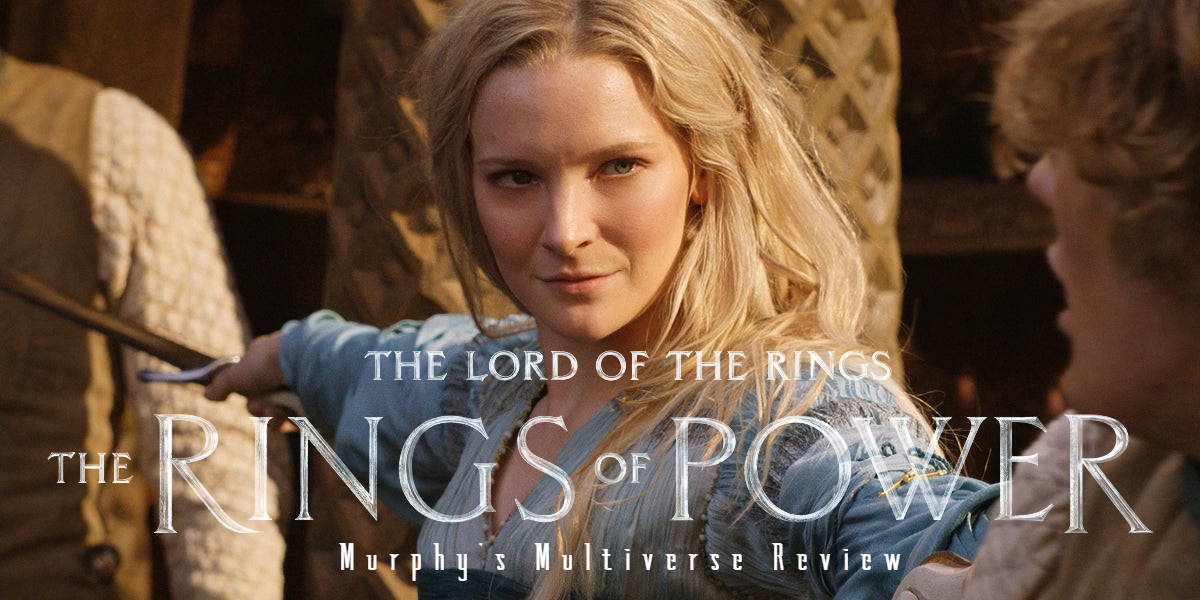
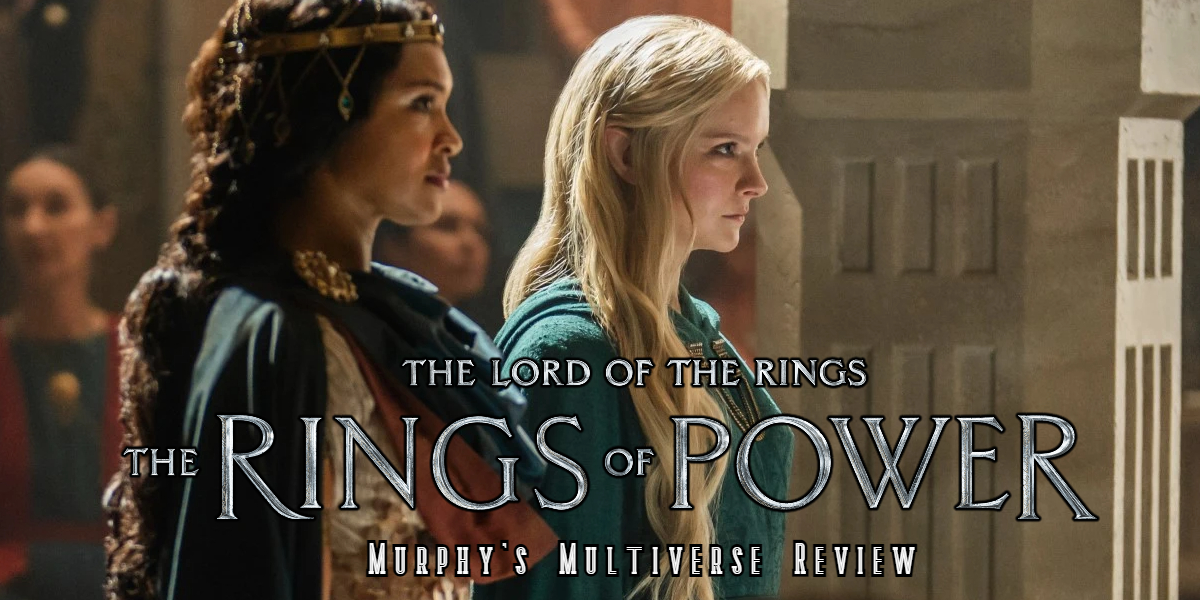
  • REVIEW: ‘The Rings of Power’ – ‘Partings’ Has Hope on the Brain

    REVIEW: ‘The Rings of Power’ – ‘Partings’ Has Hope on the Brain

    Of drink I have little
    And food I have less
    My strength tells me no
    But the path demands yes

    My legs are so short
    And the way is so long
    I’ve no rest nor comfort
    No comfort but song

    Sing to me, sing to me, lands far away
    Oh rise up and guide me this wandering day
    Please promise to find me this wandering day

    The Rings of Power begins its fifth episode, titled Partings, with a song sung by Megan Richards‘ Poppy Proudfellow. Called ‘This Wandering Day’, the tune is described in-universe as something Poppy’s mother once used to entertain herself whilst walking for days upon end with the other Harfoots. In the real world, however, the song comes across as much more than just a means of keeping the brain occupied. The lyrics, written by the maestro Bear McCreary, instead double as a metaphor for the theme of this week’s episode, and perhaps the entirety of the Lord of the Rings franchise – holding on to hope, even when all seems lost.

    The many plotlines of Partings all see their lead characters facing difficult choices. Robert Aramayo‘s Elrond must decide if he’s willing to break a personal oath for the sake of Elven kind, Nazanin Boniadi‘s Bronwyn is forced to watch as her people choose between the light and the dark, and the citizens of Númenor weigh the consequences of going to war. Yet, despite the dire stakes at hand in each story, the concept of a potentially brighter future looms larger than the tangible threats at hand. Thematically, it’s actually a welcome departure from the series’ previously doom-centric thought process. Partings feels like a lighter installment in the Rings of Power saga from the very get-go, which in turn makes it a bit easier to watch than the denser first quarter of the season.

    Of course, this doesn’t mean the episode is without it’s hardships. In a particularly action-packed sequence, Daniel Weyman‘s mysterious giant saves the Harfoots from a pack of monstrous wolves. In another, Joseph Mawle‘s Adar revels in making a villager kill a child to prove his newfound allegiance to Middle-earth’s darkest forces. This is, unfortunately, par for the course in J.R.R. Tolkien‘s land of fantasy. As Poppy’s song, and Markella Kavenagh‘s Nori Brandyfoot, explain, the path to peace is filled with perils, something true of both Middle-earth and the actual planet it was based on. Partings does a fantastic job of relaying this message to the audience. There will always be setbacks on the road to finding true happiness. A person who lets that stop them will never know the contentment they were hoping to find in the first place.

    That being said, the episode does also present a few problems for the series at large. One would think that with so much time to spend with the show’s vast collection of characters, fans would be able to care about more of them. Aside from a few standouts, many of the individuals getting screen time week-in and week-out are beginning to feel like they only exist to advance parts of the plot. The obvious leads of each arc are well-developed and fun to watch, but many of their smaller counterparts are beginning to mash together and become slightly forgettable. Hopefully, before the season ends, The Rings of Power will be able capitalize on a talented ensemble in the same way shows like Game of Thrones have done to capture audience’s attention.

    Until then, the series will likely continue to stand on its greatest strengths. As per usual, this week’s episode was gorgeous, and the effects were impeccable. A particularly memorable moment involved the origin of Middle-earth’s most precious metal, which was shown via striking slow-motion images and beautiful color contrast. Despite any problems one may have with the series, its thematic element is also undeniably riveting. It’s as rich as anything Tolkien wrote and as comforting to watch as anything Peter Jackson put to screen. For anyone who has yet to be hooked, take this week’s entry as a form of advice – the road may not be perfect, but maintain hope, and the finale might just pay everything off.

    At last comes their answer
    Through cold and through frost
    That not all who wonder or wander are lost
    No matter the sorrow
    No matter the cost
    That not all who wonder or wander are lost

  • REVIEW: ‘The Infernal Machine’

    REVIEW: ‘The Infernal Machine’

    A good psychological thriller can have audience members on the edge of their seat from the very beginning until the very end. The problem is, developing a good psychological thriller isn’t easy, especially when the story takes a bit to get going. The Infernal Machine isn’t a bad movie by any means, but it struggles to get going until well-beyond the midway point of the film.

    The Infernal Machine stars the always great Guy Pearce as author Bruce Cogburn. Following the success of his one and only novel, Cogburn becomes a recluse after a controversial event involving his novel, The Infernal Machine. He’s no longer interested in being known as the famous author, and despite pleas for a follow-up, Cogburn seems to have nothing left in his to write another title. In the beginning, it’s a bit unclear what the controversy is that surrounds his book, but that seems to take a backseat to what appears to be an obsessive fan. Day after day, packages and letters show up at Cogburn’s residence, even though only a handful of people close to him know where to find him. The obsessive fan isn’t shown, but their presence is felt throughout the film. On one hand, the decision to forgo showing the fan is a smart one. On the other hand, however, it makes the ending all the more frustrating as it becomes rushed.

    The movie is a slow burn. It’s in no rush to unravel truths and lies for audience members. Which wouldn’t be so bad, except it often feels like it is repeating itself. There are only so many times the film can focus on Cogburn in a telephone booth trying to reach the obsessive fan. It becomes tiresome after a while. It isn’t until Saul is introduced that the film seems to regain its footing. It’s frustrating because Pearce does deliver a hell of a performance. He captures the anxiety, fear and anger necessary to portray the role of Cogburn perfectly. But there’s only so much Pearce can do to carry an uneven story.

    Like most indie films, the cast of The Infernal Machine is a small one. Pearce is, per usual, a highlight. Unfortunately, the same cannot be said for Alice Eve or Alex Pettyfer. Eve isn’t necessarily bad, but her character often feels underdeveloped. While Pettyfer simply feels miscast. His scenes with Pearce are startling because Pearce manages to act circles around the young actor. He simply did not have the skills needed to play the role of Dwight Tufford. The role isn’t a large one, but the moments Pettyfer pops up on screen seem to drag the film down a notch. He’s just not captivating enough to play such a morally corrupt character.

    The ending is where The Infernal Machine shines. It’s a corrupt story that doesn’t shy away from ugly truths. Every moment of the third act is full of pulse-pounding moments. Is it perfect? No. Is it well-crafted? Yes. It’s only a shame the rest of the film couldn’t maintain this level of quality throughout.

    For those looking for an action-packed thriller, The Infernal Machine is probably not the right type of film. However, those looking for a slow-burn with a surprising twist ending? Well, The Infernal Machine is worth a watch.

  • REVIEW: ‘Lou’ Turns Allison Janney into an Action Star

    REVIEW: ‘Lou’ Turns Allison Janney into an Action Star

    Allison Janney might’ve kicked off her career back in 1989, but her star has only continued to rise in recent years thanks to roles like Bonnie in Mom and Margaret Scully in Masters of Sex. And now, Netflix’s Lou looks to let Janney shine in brand new ways, turning the usually comedic actress into an action hero in her own right.

    Lou tells the story of Janney’s Lou, a mysterious woman who spends her days with her dog, Jax, hunting in the nearby woods and renting out a nearby property to a single mom named Hannah (Jurnee Smollett). Very little is known about Lou at first. In fact, it isn’t about until the half-hour mark that the mysterious layers of Lou begin to be unraveled. She’s a tough as nails woman who doesn’t mince her words. Outside of Jax, she seems incapable of caring about anything or anyone, but when Hannah’s daughter mysteriously disappears during a major storm, Lou steps in to help without little to no questions asked. What soon unfolds is a story of troubled pasts and how far people are willing to go to right their wrongs.

    Lou is a character that, had she been written poorly, could’ve easily been one-note, but Janney excels in tackling this multi-layered character. She’s flawed and doesn’t shy away from her mistakes, but she’s also driven by guilt and love. Her actions might be unorthodox, but she always succeeds in doing what is right, no matter the cost. Janney is perfect casting and her on-screen chemistry with Smollett is fascinating. The two characters could not be more difficult from one another, and yet, the moments they share on screen are some of the best in the film. More impressive is how well the ladies work off of Logan Marshall-Green, who delivers yet another terrifying performance as the mysterious Peter. It’s such a small cast for such a massive story, and the three actors help to sell this action flick with such ease. From the emotional moments to the big action moments, Janney, Smollett and Marshall-Green are a top-notch cast that deliver a hell of a film.

    It’s honestly a bit frustrating that Lou is going straight to Netflix because this is the type of film that deserves to be seen on a large screen. It’s fast-paced and action-packed, and will surely keep viewers on the edge of their seats. Yet, despite the film being a blast, the cinematography in Lou is hit or miss. More often than not, it leaves something to be desired. While the island is meant to be dreary and dull, the imagery doesn’t always match the tone of what is occurring onscreen. Thankfully, this is a very minor problem and during the action sequences, the fights are shot with a skilled eye which makes them more enjoyable.

    Honestly, the only bad thing about Lou is the film’s name. It’s not really memorable, nor does it really offer much intrigue for those unsure whether to give the film a chance. It’s all the more frustrating because this is clearly meant to be the start of a potential franchise. Lou isn’t a catchy name compared to the likes of John Wick or even Atomic Blonde.

    All in all, Lou is a thrilling action movie that is worthy of a watch.

  • REVIEW: ‘She-Hulk: Attorney at Law’ Episode 6

    REVIEW: ‘She-Hulk: Attorney at Law’ Episode 6

    She-Hulk: Attorney at Law has now revealed two-thirds of its nine-episode season. While Episode 6 was a proclaimed “self-contained wedding episode,” it was actually one of the most significant episodes in the series’ second act in terms of moving the ball. Albeit through teases, the serious end game of She-Hulk is becoming somewhat more clear despite the insistence that each week is unique to itself. The sixth episode was strong in the same areas the show has been strong: humor, absurdity, and Tatiana Maslany. But its ending cannot help but signpost that the series’ third act may be drastically different from what we have seen.

    First, the wedding plot was enjoyable, and it managed to incorporate several different unrelated elements into one space. Of course, Jen’s delicate relationship to herself as She-Hulk is prominent, but her dating life, professional success, and feelings of not being recognized or valued enough all play a major role. On top of that, Titania manages to stay involved, fan-favorite cousin Ched gets more screentime, and Patti Harrison is just a general gift in pretty much any project.

    What was perhaps most interesting about the wedding stems from the fact that it remained noticeably vague and we have not seen it end. Of course, the mysterious guy Jen connects with seems to be a prime candidate for Thunderball, the member of the Wrecking Crew we met in Episode 3. The fact that he seems to know the wedding party raises interesting questions as to who else in Jen’s life is in on the ultimate scheme to get her blood. The actual groom of the wedding was never revealed or shown, so it seems like there is a strong chance that the reveal could be significant. Still, if it is a “self-contained” episode, that would imply the wedding plot does not have much more to it, but yet it absolutely seems as though several major villains are lurking (or, in Titania’s case, very openly present) in the event.

    Given that it seems obvious that getting Jen’s blood is the goal of the mysterious “super” villain behind the scenes of She-Hulk, Titania is shaping up to be quite the assistant for the more scientifically-associated (“Science Villain”) teased villain. Titania has her own personal grudge against Jen (and their battle was almost comics-worthy), but her presence at the suspicious wedding suggests that she may also be in on a larger plot. It is in Titania’s comic book nature to work with other villains, including the Wrecking Crew. In her comic book origin story, she was more or less created by Dr. Doom. Perhaps the Science Villain is who gave her her superstrength in the first place. And if, as the future of the Marvel Cinematic Universe seems to hint at, the Science Villain is all about hulks, what is to say Titania is not a result of related experiments?

    The speculation of who the Science Villain could be at this point is relatively mundane given the eventual return of Tim Blake Nelson as The Leader in Captain America: New World Order, but She-Hulk could always surprise. Of course, fans are still anxiously awaiting Daredevil’s arrival, and how he will fit in is still somewhat mysterious. Will he be mostly in a legal plot, or will he be a major force in helping Jen take on the final threat? It could be both, but one thing is certain—Charlie Cox is not in this episode. In any event, despite some posturing, it is hard to imagine that She-Hulk does not have significant ramifications on the wider universe after the end of the series. Even just the fact that Jen leaves a voicemail for space Bruce is making a point about other huge stories going on in this series’ orbit.

    Outside of the main agenda, the B-plot with Mr. Immortal was the type of charming that only She-Hulk can deliver. It gave Nikki and Mallory more time to shine in their own rights, and Nikki as a character seems to consistently deliver more each episode. The series is able to tap into strange, funny, and out-of-pocket concepts from the comics without having to make a major statement on the MCU. In another project, the introduction of Mr. Immortal might have had greater ramifications. Here, it was a way to send a teasing love note to the type of source material that mostly does not make it into live-action. Still, the amount of superhumans occupying Earth-616 is clearly vastly more than anyone would have guessed before She-Hulk, and that may still have at least indirect implications going into Phases 5 and 6.

    As She-Hulk finishes its second act, it is only clear that its own universe is expanding rapidly. While it still at times feels inconsistent or choppier than needed given the episodic structure, it delivers a unique charm and experience that no other MCU project has, and it does so through its overall tone but also its little details. Enjoying comicbook-y material, having multiple developed women characters, diving into humor a bit off-kilter than the MCU is used to, and taking an incredibly fun and bold swing at the series all pay off for She-Hulk. Those elements are as present in Episode 6 as ever. Still, it is a disservice to not call out the “self-contained wedding episode” as being one of the most plot-fluid episodes yet. The real villains are about to appear, and the superhero part of this MCU show is surely about to take off with it.

  • REVIEW: ‘Stargirl’ Episode 3×04, “The Evidence”

    REVIEW: ‘Stargirl’ Episode 3×04, “The Evidence”

    The previous episode of Stargirl left us with a mighty cliffhanger, as Sylvester Pemberton seemingly lay lifeless while doing some investigating of his own and being attacked by an unknown assailant. Episode 4 furthers the murder mystery in Blue Valley while throwing the spotlight onto a suspect that was thought to have perished towards the end of Season 1, leading the Justice Society to question a recent allegiance and Courtney distracted by a blossoming romance.

    ‘The Evidence” moves the story ahead in a productive way, but it can feel like it’s spending a bit more time on its b-plots rather than focusing on the premise of the episode. We’re given much more character moments, ones that have felt lacking throughout this season specifically between Pat and Sylvester. The duo had butted heads a bit and had their moments, but it never felt like they got those moments of growth until now, with the once great sidekick known as Stripesy acting as Pemberton’s anchor and helping to guide him towards a new purpose in life.

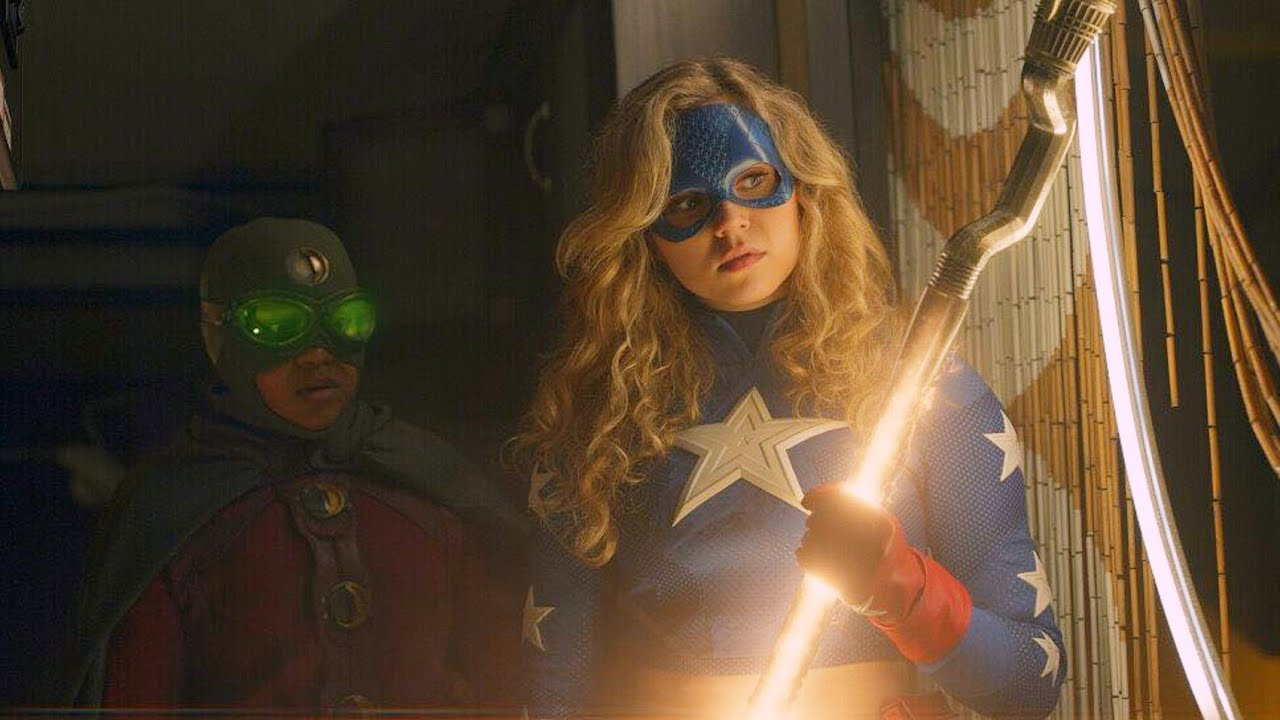
    DC’s Stargirl — “Frenemies – Chapter Four: The Evidence” — Image Number: STG304g_0007r — Pictured (L – R): Luke Wilson as Pat Dugan and Brec Bassinger as Courtney Whitmore / Stargirl, and Joel McHale as Sylvester Pemberton / Starman — Photo: The CW — © 2022 The CW Network, LLC. All Rights Reserved.

    It felt as if the biggest part of the episode was cast aside and not given attention until the final minutes of the episode. The episode title leads you to believe that they’d found something shocking that’ll push the story on forward more, when in reality, it just sets that up for presumably what is to come in the next episode. A dragon scale at the scene of the crime leads the team to believe that Dragon King could be back in play, hypothesizing that his numerous experiments on himself could’ve brought him back, with others showing their reluctance to trust and immediately throwing the blame onto the newly pardoned Cindy Burman, whom the audience themselves isn’t all that sure they should be trusting either.

    The biggest revelation of this episode would be Dr. McNiders diagnosis of just what is going on with Sylvester Pemberton and how he’s been able to return after spending ten years six feet under. McNider believes that prolonged exposure to the Cosmic Staff has energized Pemberton’s body, similar to how Jade was imbued with the power of the starheart. This reveal just feels a little murky, feeling like you should be scratching your head a little bit because… that’s it? It just felt like something so important was so casually revealed and could’ve been built up to a little bit more.

    Another bright spot of this episode is finally seeing some payoff to the relationship set up between Cameron Mahkent and Courtney Whitmore, something that’s been planted since season one. This episode reaffirms just what kind of person Courtney is because when she sees someone in need, she’s going to jump into action, no matter what else is going on. She can see Cameron struggling with his newfound cryokinesis abilities and feels the need to help him, when deep down we can feel the guilt she holds knowing the true fate of his father, feeling like she owes him while crushing on him at the same time.

    To cap it off we get a better glimpse of just what exactly is going on behind the scenes, as the Helix Institute has yet to make its presence known, we got a peek at Mister Bones within a room full of monitors, a much better look at the villain and the series seems to tease his arrival is getting closer and closer. Not a bad episode, but not necessarily the strongest episode of the season.

  • Review: ‘Andor’

    Review: ‘Andor’

    Lucasfilm played it safe with its last two live-action Star Wars projects, centering them around two of the franchise’s most well-known characters in Boba Fett and Obi-Wan Kenobi. While the responses to those were a mixed bag, the attractiveness of the characters to even the most casual of Star Wars fans can’t be questioned. The same can’t be said, however, of their next live-action project, Andor. A prequel to 2016’s Rogue One, Andor doesn’t have the luxury of banking on a beloved character. Instead, it looks to be an expansive dive into a time that has proven to be fertile ground for storytelling: the early days of the Age of Rebellion.

    Andor begins in 5 BBY and immediately immerses the audience into a galaxy where the rapid expansion of the Empire has impacted planets and people in ways that are both eerily familiar but also rarely explored in the Star Wars universe to this level of detail. The 5 BBY setting means the story of Season One of Andor takes place concurrently with the opening of Season One of Star Wars Rebels and with Jyn Erso’s mission to Tamsye Prime on which she was abandoned by Saw Gerrera, an incident that caused a rift between the two as seen in Rogue One. Unsurprisingly, the first four episodes of Andor look and feel like Rogue One while also starting to share the same sense of urgency and impending darkness that effused from many episodes of Rebels. So while the first four episodes explore a time period that isn’t entirely new, they take the audience to brand new places where they meet brand new faces with nary a cameo in sight.

    And it is the introduction of new places and new faces that will frustrate an impatient audience while no doubt drawing comparisons to another series that took its time in exposition to build a robust world in which any number of stories could be told: Game of Thrones. Creator Tony Gilroy uses the first four episodes to introduce an impressive roster of new characters that inhabit all sorts of different corners of the grimy, lived-in world already seen in Rogue One. The Game of Thrones parallels seem almost deliberate, from the heavy dose of characters with British accents of some kind or another to the time taken to explore the new characters in moments that don’t seem to steer the plot in any particular direction. Most familiar to GoT fans though will have the feeling that many of the characters seem like they’ll probably be important down the road, though through four episodes it’s not quite clear why…or on what side of things they’ll eventually fall. Imagine never having read the GoT books before watching the series. Without prior knowledge, the audience would never have known what to expect when seeing Ramsay Bolton appear for the first time. Andor puts the entire audience on common ground here, unable to know which of these new characters they’ll come to love or hate.

    Of these new characters, Stellan Skarsgård‘s Luthen Rael makes the biggest impact on Cassian and the course of the story. Rael is a major player in the earliest days of a Rebellion that is still coalescing. A man of action who believes the time for talk has long since passed, Rael brings Cassian in on what looks to be one of the Rebellion’s first major moves against the Empire. And while he strives to push Cassian to bigger and better attacks against the Empire, he does so from right under their noses on Coruscant where he puts up appearances as an antiquities dealer. It’s here where his relationship with another major character in the series, Genevieve O’Reilly‘s Mon Mothma, plays out. Rael’s duality as a man willing to get his hands dirty while also working in the gleaming center of the Empire makes him one of the series’ most interesting characters and also places him somewhere firmly between Mothma and Saw Gerrera on the spectrum of Rebel-ism.

    The series has been billed as a spy-thriller and the first four episodes serve to gradually ramp up the requisite tension for what promises to be an unnerving final 2/3 of the first season of the series. As Rael’s plan unfolds, Denise Gough’s sharp Imperial Security Bureau Leftenant, Dedra Meero, has already started to track coordinated movements and believes that the Empire should be concerned with what she sees as a growing threat of an organized rebellion. Though Meero’s efforts to dive deeper into the threat are frustratingly shot down by her superiors-and even her equals-at every turn, she’s clearly not ready to give up so readily. Meero, along with Kyle Soller’s overly-ambitious Syril Karn, whose overreaching cost him both his job as a corporate security officer on Ferrix and a great deal of embarrassment, are certainly primed to work as the series’ main antagonists. With the outcome of the story already known to audiences, it remains to be seen how Gilroy and crew make these characters matter, but the answer to that may just be in how they eventually help shape Cassian Andor into the more fully-developed character first met in Rogue One.

    To that end, Diego Luna’s efforts in the first four episodes of Andor are noteworthy. It’s no easy feat for Luna to go back and flesh out a character whose death takes up a portion of the screen time dedicated to promoting the series, but Luna does it well. When audiences first meet him in Andor, superficially he’s still the same rough-edged character, willing to pull a trigger to save his own skin. Over the course of the first four episodes, however, it’s clear that Luna is playing a different version of that same man. This version of Andor is scrambling through a life he didn’t choose for himself and is still on the path to becoming the man who, as Rael says, will “give it all at once for something real.” It’s easy to get the sense that after watching two seasons of Andor, Cassian’s death following the Battle of Scariff will hit much harder.

    In Andor, Gilroy has put together not only the most ambitious Star Wars streaming series to date, with its willingness to bank on less beloved characters to tell the story of the inciting moment of the Rebellion that changes the galaxy but also the best-looking streaming series as well. From the opening scene, it is immediately clear that this isn’t a Volume-made VFX spectacle. Gilroy’s choices here create a world more akin to Blade Runner than anything, one where the layers of the characters are developed by the layers of the society in which they live and operate. It’s incredible what can be gleaned about the Empire, the growing rebellion, and the way life in this galaxy really plays out in 40 minutes or so. In fact, there’s so much to take in that the series may play better to audiences on a second viewing.

    It’s foolish and impossible to judge the quality of a 24-episode story after viewing just one-sixth of it. However, it can be said that through four episodes, Andor dares to do something that immediately stands out among Lucasfilm’s streaming efforts. Without a single major cameo and barely a mention of anything connected to any other projects (a little Scariff here, a little Ryloth there), Andor is a series that is willing to bet on itself. It’s willing to bet that the story it has to tell is one that will add to the overall mythos of the Star Wars universe and is willing to do so on its own merit. And through four episodes, it digs its claws in deeply enough to make sure you’ll come back to see what’s next.

    Andor begins streaming on September 21st with a three-episode premiere.

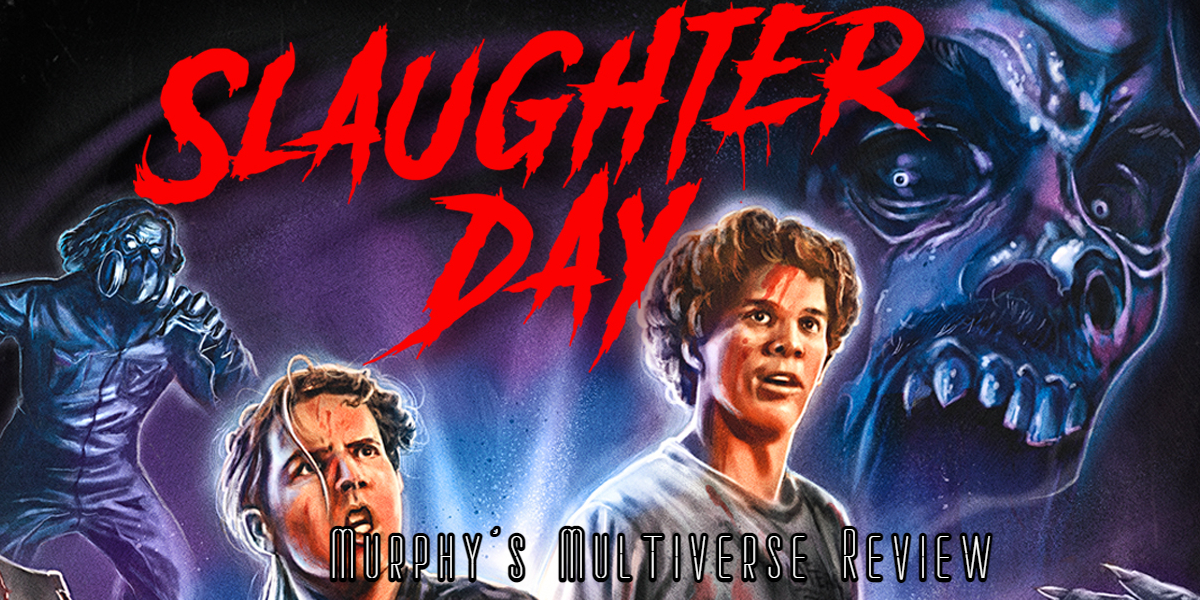
  • REVIEW: ‘Slaughter Day’ is Proof People Should Make More Movies with Their Friends

    REVIEW: ‘Slaughter Day’ is Proof People Should Make More Movies with Their Friends

    The horror genre is known to dip into low-budget territory, but 1991’s Slaughter Day is on a completely new level. Written by the brothers Blake and Brent Cousins, and directed by the latter, this insanely obscure little gem is now available on Blu-Ray disc for the very first time – even if it still looks like a home video from another world. For the uninitiated, and there are probably a lot of uninitiated, Slaughter Day is a micro-budget movie shot with consumer-grade equipment about a pair of teenagers who find themselves battling a group of murderous construction workers after they’re possessed by forces flowing from a mysterious occult book. It’s only about an hour long, and it somehow still manages to be filled with both the worst acting and craziest action sequences ever put to, what appears to be, a camcorder, in history.

    Yet, there’s something undeniably charming about the ingenuity behind Slaughter Day. There’s a sense that the cast and crew of this film had no interest in making it big or popular. Instead, it very much feels like a group of friends finding a way to have as much fun as possible over summer vacation. Whether that’s actually the case remains a mystery to most, but at the very least, it injects the project with a certain aura that makes it easier to swallow the fact it also comes off like an over-done class assignment. Like watching a child show someone something they’re proud of, Slaughter Day makes one sit back and gaze on with a smirk that says, “honestly, good for them.”

    At a certain point in the picture, the story switches gears and becomes an absolutely bonkers, balls-to-the-wall action flick. This point, maybe twenty or so minutes into the runtime, is when Slaughter Day really comes into its own, and a viewer starts to understand why it received a re-release 30 years later. Cousins and his team pull off the kind of stunts and effects most kids merely dream of doing in their backyards growing up. The amount of effort and creativity put into crafting something like, say, a man folding in half and being sucked into a magic book, is astounding. The camera work is also surprisingly impressive for the limitations of the brother’s technology at the time. Early on, most shots are clearly replicas of ones seen in grander, theatrically released films of the era, but as Slaughter Day plays out, the filming techniques appear to become more complicated and start to leave audiences wondering how two kids from Hawaii might have made them happen.

    It’s Always Sunny in Philadelphia creator Rob McElhenney has long been a champion for, quote, “making your own stuff.” He argues that, if a person has an idea of what they’d like to see and they can’t get anyone else to make it, they should just do it themselves and see what happens. That’s how Sunny began its remarkable 15-season run, with a micro-budget home video shot on a crappy camera by McElhenney and his friends. It’s a lovely story, and one that seems to be in line with the mentality the Cousins brothers had almost 15 years before Sunny ever aired. The childlike wonderment and originality of Slaughter Day is proof that one never knows what they’re capable of producing until they just do it. It’s an ode to making art with people you love, simply because you all love making art. After all, people never know where their creations might take them. Maybe one day, someone else throws together a little passion project in their backyard, and 30 years after that, it gets its very own Blu-Ray Collector’s Edition.

  • REVIEW: ‘The Rings of Power’ – ‘The Great Wave’ Plants Plenty of Seeds for the Future

    REVIEW: ‘The Rings of Power’ – ‘The Great Wave’ Plants Plenty of Seeds for the Future

    The Rings of Power has returned, and this time, it’s looking toward the future. Unlike last week’s action-packed entry, this week’s episode – The Great Wave – is focused mainly on setting up arcs that will hopefully pay off later in the season. Galadriel and Elrond anchor two very solid plotlines in wildly differing locations, while Arondir comes face-to-face with a new threat and reconvenes with cohorts in trouble. It’s another wonderous journey into the depths of Middle-earth, supported heavily by more incredible visuals and some truly powerful acting. Like previous installments, the episode leaves the viewer wanting for more, and continues to open doors without closing them on the way out. Luckily for fans, it doesn’t look like The Rings of Power is going to run out of steam anytime soon.

    Much of The Great Wave plays out with a sense of foreboding. The episode’s title is literally taken from the visions had by Cynthia Addai-Robinson‘s Queen Regent Míriel, of Númenor’s disastrous fate. The great City of Men, she sees, is destined to be consumed by a great wave and sunk beneath the ocean, if the Queen Regent does not remove Morfydd Clark‘s Galadriel from the island post-haste. This opening scenario sets the tone for the whole shebang, as viewers begin to see similar vibes present in the other two major plotlines happening concurrently. In Khazad-dûm, Robert Aramayo‘s Elrond seeks to continue the bonding process with his old pal, Owain Arthur‘s Dwarven Prince Durin IV, but no matter how chummy they’re able to get, the idea of something more in the works keeps both of them on edge. Rounding out the episode, Ismael Cruz Córdova‘s Arondir is allowed to escape his captivity by Adar himself, but only under the condition he deliver a special message to the human survivors not far from danger.

    The titular “Great Wave” quickly becomes a metaphor for the paranoia spreading throughout all corners of Middle-earth. All characters are beginning to find themselves afraid of something. That fear, and the anxiety and greed that come with it, are the fuel that keeps The Rings of Power‘s fourth episode ticking. In a fun change of pace, the Lord of the Rings universe is allowed to feel more like a political thriller than a fantasy epic. Granted, it does still look and sound like a fantasy epic. In fact, this episode contains one of the most bone-chilling sequences of the series thus far, with Sophia Nomvete‘s Disa belting a gorgeously haunting musical number as the Dwarves perform an ancient prayer. It’s the show’s ability to switch so effortlessly between moments of grace and terror that keep it so refreshing week in and week out. On an added note – the grand reveal of Adar, an Elven-looking man portrayed by Joseph Mawle, was also expertly done. The flipping of expectations as to how Adar would appear was a wonderful surprise, and one that instantly makes the villain more intriguing.

    If there was to be any concern around The Rings of Power, it would have to be for its pacing. Of course, the Lord of the Rings franchise is not exactly known for its swift storytelling, but one has to wonder how long The Rings of Power will wait before it begins answering any of the multiple questions it’s lobbed into the air. It’s not a problem at the moment, but another episode or two of set up without pay off could lead to some viewers starting to tune out. For now, though, the series remains stellar, and viewers remain excited to see new batches of orcs show up on their screens every week.