Blog

  • EXCLUSIVE: Details About Thanos’ Black Order In ‘Avengers: Infinity War’ Revealed

    EXCLUSIVE: Details About Thanos’ Black Order In ‘Avengers: Infinity War’ Revealed

    Note: This article was originally published by Charles Murphy at MCU Exchange on June 12, 2017.

    You are a disappointment sister; out of all our siblings, I hated you least.

    Brutal beatings at each other’s hands. Each loss made a permanent memory by Thanos as he rebuilt them to make them better. It’s safe to say that James Gunn has created a relationship between sisters Nebula and Gamora that went a little beyond the usual sibling rivalry, but the two daughters of Thanos seem to have come to an understanding and have chosen very different paths from the one their adoptive-father intended. However, as Nebula indicated, there are other siblings, other children of Thanos, whom we haven’t yet met and if Nebula and Gamora are any indication, they could be pretty nasty.

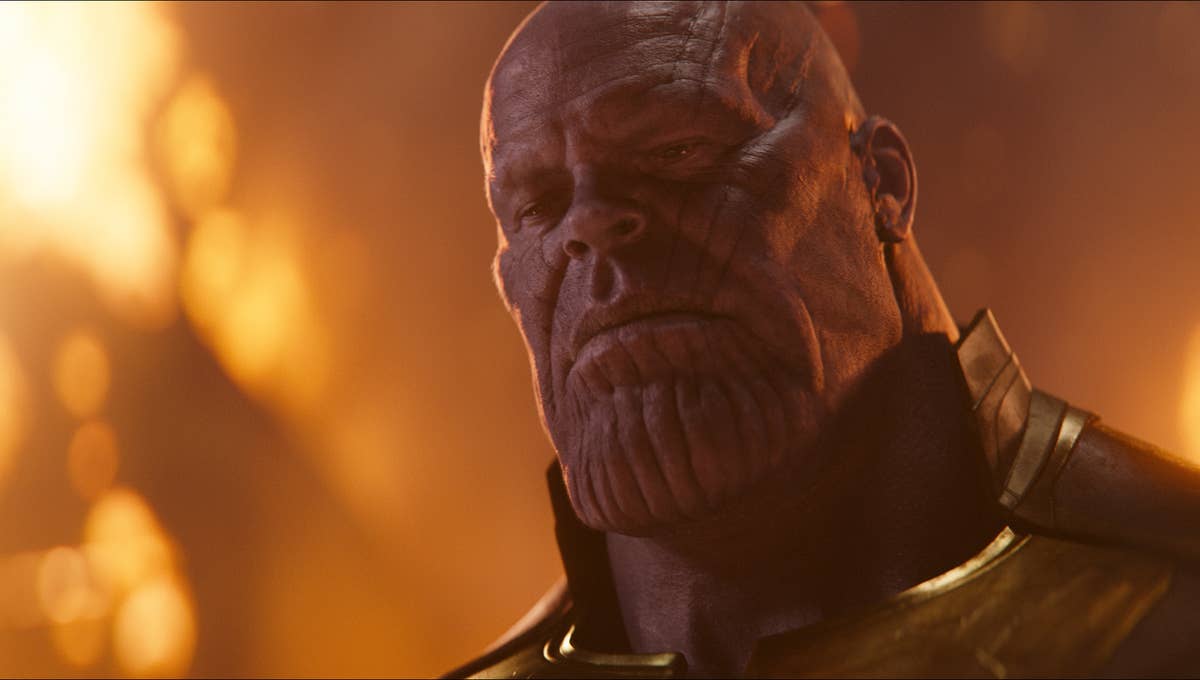
    We can tell you that when Avengers: Infinity War rolls around, we will meet the other children of Thanos and, in fact, we’ve already seen them on set!

    Earlier in the year, actor Terry Notary revealed that he was working alongside Josh Brolin and 3 other actors in Avengers: Infinity War and that his character, the “right-hand man” of Thanos, was “truly evil.” Set photos from Scotland seemed to indicate that we might be seeing some of Thanos’ generals, known in the comics as the Black Order, when Avengers: Infinity War hits theaters.

    Our source indicated to us that this iteration of the characters, first seen in Jonathan Hickman’s New Avengers #8, won’t be referred to as the Black Order, but instead will be the siblings mentioned by Nebula! When Thanos goes looking for the Infinity Stones, he’s going to send his children and they’ll be bringing bad intentions with them.

    While we can’t confirm which of the characters are being used and which is being left out, we feel confident with our previous prediction that Corvus Glaive and Proxima Midnight will be among them. We also feel pretty confident that if Nebula and Gamora are the  well-adjusted children of the Mad Titan, that the Avengers are in for some serious trouble.

    With the inspiration drawn from Hickman’s work and the recent set photos indicating Wakanda will play a role in the film, we are hoping to see something along the line of the Black Dwarf’s Wakandan invasion. In the comics, while Thanos’ other generals had defeated the Avengers around the globe, Wakanda, led by T’Challa and his sister, Shuri, turned back the army of the Black Dwarf, helping stem the tide of the invasion and give hope to Earth.

    It’s interesting to see which Infinity-related events the Russo brothers have been using for inspiration and it’s becoming very clear that we are not going to be getting a straight adaptation of any one Infinity story. It’s exciting to see the Russos pull what was a solid concept from Hickman’s recent work and fit it into an opening already established by Gunn. While we don’t know if we’ll get much background on how the Mad Titan collected his children, they will undoubtedly provide an incredible threat to the Avengers and we expect that they may even prove to be too much in some instances!

  • A ‘Blue Marvel’ Film Could Be The MCU’s Platform for High-Concept Sci-Fi

    A ‘Blue Marvel’ Film Could Be The MCU’s Platform for High-Concept Sci-Fi

    Note: This post was originally published by Charles Murphy on MCU Exchange on May 18, 2017. 

    Guardians of the Galaxy Vol. 2 is just a few weeks into its global run but it’s clear that it will be another feather in Marvel’s cap. A massive financial success and another critical success, it also, based on my conversations, seems to be trending as a Top 5 film with many MCU fans. With the success of the two Guardians films, it’s easy to forget that this was far from a sure thing when Kevin Feige gave it the green light in 2012, but James Gunn has done an incredible job of bringing his vision to the screen and given us a couple of science-fiction gems. With a highly-anticipated third film on the way in 2020, which Gunn says will conclude the story of this version of the Guardians, Gunn has a chance to direct one of the first great sci-fi trilogies of the 21st century. While there will always be room for more Guardians films, Marvel Studios would also like to expand their universe and to do so, it might be time to take another chance on a lesser known property, but one that could, like Guardians, attract a visionary director to a high-concept sci-fi film. The story of Adam Brashear, Blue Marvel, could connect the science of the MCU to the extra-dimensional adventures of Ant-ManDoctor Strange and Thor and could be the next underdog powerhouse franchise for Marvel Studios.

    Dr. Adam Brashear, the Blue Marvel, was introduced in 2008 in a 5-issue mini-series,  Adam: Legend of the Blue Marvel, written by Kevin Grevioux. You might recognize Grevioux from his work as Raze in the Underworld films, which were originally conceived by him and the first of which he also co-wrote with director Len Wiseman, but Grevioux has appeared in dozens of shows and films in addition to working on other comic book projects including New Warriors. Grevioux is also a distinguished man of science, holding a degree in Microbiology and having dabbled in chemistry, psychology and genetic engineering. Grevioux’s scientific interests clearly influenced his writing and were especially clear in his work on Adam, when he fully developed the character of the Blue Marvel which he had created during his teens.

    Grevioux’s Blue Marvel origins as a hero are rooted in classic Marvel archetypes and though written in 2008, took place in the 1960s alongside so many other Marvel characters. A former Marine and brilliant scientist, Brashear’s work on harnessing the energy of antimatter from a parallel universe went sideways, exposing him, and his best friend and colleague, Conner Sims, to an unimaginable amount of radiation when the machine keeping the spacetime boundary between the two universes stable exploded. Brashear’s exposure left him a living antimatter reactor capable of producing massive amounts of energy, flight and just about any superpower imaginable; Sims, however, was transformed into pure energy and soon found himself incapable of sustaining a human form for long. His inability to maintain a stable physical manifestation of himself contributed to a break in his psyche and he became the villain known as Anti-Man.  For a time, Brashear served as the masked hero the Blue Marvel, retiring at the request of President Kennedy after a rip in his mask during a battle with Sims revealed him as an African-American hero, something the culture of the time wasn’t ready to accept. The battle, which apparently destroyed Sims, was the end of the Blue Marvel, and Brashear went back to work as a scientist.


    Brashear married, had children and became a physics professor. Despite being retired, Brashear saved the Earth on many occasions, defeating aliens and keeping a multiversal being known as the Infinaut from creating a massive breaching reality and manifesting at such a size as would cause the complete destruction of our planet. Following the death of his wife and along side his oldest son Kevin in their undersea labs at the Marianas Trench, he continued work on antimatter and other dimensions, ultimately discovering the space between realities called the Neutral Zone. Here, matter and anti-matter co-existed leaving endless possibilities for energy. Adam and Kevin’s exploration of the vast space when on until a villain, Doctor Evald Skorpion, attempted to use the Neutral Zone to destroy reality. Skorpion sabotaged the Brashear’s portal, causing it to expand and allowing extra-dimensional energies to begin destroying everything. To save all reality, Adam had to destroy the portal with his son Kevin still in the Neutral Zone, trapping him there forever. Brashear attempted several times to bring his son home, failing at every turn. Angry at his father for sacrificing his brother, Adam’s youngest son Max began his own research, funded by terrorists, into the Neutral zone under the name Doctor Positron.

    The Blue Marvel has recently been a part of Luke Cage’s Mighty Avengers and currently serves as a member of the Ulitmates, solving multiversal (and potentially even bigger) problems. His work has brought him into contact with Galactus, reunited him with his friend Conner Sims and seen him go head-to-head with other Cosmic entities and forces. He has reconciled with and worked alongside his son Max and recently entered into a relationship with fellow Ultimate member Monica Rambeau, aka Spectrum.

    As Marvel Stuidos shifts its sights to the future of the MCU post-Infinity War, we hope that the story of Adam Brashear is one that they are ready to tell. A powerful and intelligent hero, Brashear will mesh nicely with the existing science-based heroes and help further explore the concepts of extra-dimensions and what really goes on in space. With the rights to the Fantastic Four seemingly set to remain at Fox, Brashear is the perfect character to take on the role as the explorer of the unknown. His origin story reads like so many of Marvel Studios’ best films and plays to the trope of the villain’s powers being tied to the heroes. His family ties will help create interest and tension to add some drama and his interracial relationship with Marlene Frazier, the woman who ultimately becomes his wife, would allow Marvel Studios to tackle some very real issues we’ve yet to see in one of their films. Adding Blue Marvel to the docket also allows Marvel Studios to continue to address the lack of diversity in their films, something Feige has said they intend to do well beyond Black Panther and Captain Marvel.

    Depending on how Marvel chooses to play it, a Blue Marvel film could either continue to add some depth to the history of the MCU or take place in the current day. If Marvel Studios chose to make Brashear and older, more experienced hero similar to his comic book self, they could place the origin story in the 1980s, making Brashear a contemporary of Hank Pym. In this instance, reaching out to gauge the interest of Denzel Washington would seem a no-brainer. Should Marvel choose to have the origins occur in real time and grow the story of Brashear over time, maybe we see Disney employ some more inter-company synergy and give John Boyega one of the meatiest roles in their new universe.

    Regardless of the timeline, having Brashear and Sims investigating the types of extra-dimensional energies used to create portals in Doctor Strange. Even though we’ve only recently seen them in the timeline, the existence of magic and the Ancient One in the MCU predates the film. Brashear and Sims could crack the science behind the magic and open up a portal, unprepared for the events unfolding on the other side. To some extent, you can imagine the film following some key beats from other sci-fi horror films like The Fly or Event Horizon and becoming a little introspective on the dangers of exploring the unknown. With that theme in mind, the dream director is Alfonso Cuaron, though I know that Marvel Studios often tends to look for up and comers. Perhaps someone like Jordan Peele (Get Out) or Colm McCarthy (The Girl With All the Gifts) could put something together that would catch Feige’s attention.

    Truth be told, none of us have any idea in what direction Feige intends to take the MCU. However, outside of some longtime favorites like Richard Rider, Monica Rambeau and the Squadron Supreme, I can’t think of a character I would like to see more. What are your thoughts about the possible inclusion of Dr. Adam Brashear to the MCU?

  • Connecting Imaginary Dots: Sterling K. Brown Was Just Cast as Erik Killmonger’s Dad

    Connecting Imaginary Dots: Sterling K. Brown Was Just Cast as Erik Killmonger’s Dad

    This article was originally published by Charles Murphy at MCU Exchange on January 6, 2017.

    Yesterday the already stellar cast of Black Panther grew by one with the addition of rising star Sterling K. Brown. The official press release from Marvel revealed that Brown would play N’Jobu, a character from T’Challa’s past. The character of N’Jobu wouldn’t turn up in any Google searches of the Marvel Universe, but that wouldn’t stop us from digging a little deeper and connecting some imaginary dots. After some thinking, I believe that Brown’s N’Jobu is the father of the film’s presumed primary antagonist: Michael B. Jordan’s Erik Killmonger.

    In the comics, Killmonger’s hatred for T’Challa comes from a long-held grudge against the Wakandan Royal Family. During an attack on Wakanda by Ulysses Klaw, Killmonger’s father (a native of Wakanda) was forcibly enlisted into Klaw’s invading army and forced to fight against his own country. In the conflict, Killmonger’s father was killed and when Klaw’s army was defeated, Killmonger’s remaining family was exiled from their home country. Taking up residence in America, Killmonger began his path of vengeance against the Wakandan Royals, setting his sights on T’Challa, the new king.

    killmonger-black-panther

    In a tremendous case of me really stretching some already thin fabric, I believe the beginnings of this conflict have already been seen in the MCU and that the Black Panther film will fill in the blanks with some flashbacks. How do we get there from here?

    Erik Killmonger is a native Wakandan, so, as you may have guessed, he probably wasn’t born Erik Killmonger. In fact, his birth name was N’Jadaka. I’m no expert on Wakandan naming traditions (the only experts on the subject were busy at the time of publishing and had not returned our calls), but it seems an easy thing to draw a parallel to other Wakandans and their names. T’Challa, son of T’Chaka. So, could it be N’Jadaka, son of N’Jobu? In my mind, he will be.

    I’m guessing we will see a flashback to Andy Serkis‘ Klaue’s time in Wakanda (referenced in Avengers: Age of Ultron), see the death of Brown’s N’Jobu and the subsequent exile of his son, giving us the necessary exposition for the main conflict of the film which should pit Killmonger against T’Challa. Framed in this way, you can really see Jordan in the role. In some ways, he’ll be able to channel some of the same things that made his performance in Creed so memorable and will become more than another one-note villain. Jordan’s Killmonger will be the equal of T’Challa in every way and may just make for one of the MCU’s best villains to date.

    What do you think about this entirely ridiculous speculation? Let us know in the comments and be sure to share this with your friends!

  • Things We’d Like to See in a ‘Doctor Strange’ Sequel

    Things We’d Like to See in a ‘Doctor Strange’ Sequel

    This article was originally published by Charles Murphy at MCU Exchange on November 9, 2016.

    The huge $85+ million dollar opening weekend domestic box office has made what was already a near certainty an inevitability: we will get a Doctor Strange sequel. Taking into account the global box office, the film has already recouped its production cost and the critics and fans alike have responded very well to the mind-bending action and Benedict Cumberbatch as the lead character. While it wouldn’t be surprising to see Marvel Studios announce a place-holder date for a sequel before the end of the year, we got a bit of jump start on our wishlist for future installments. Given the many years of comic back story and the richness of the character, there’s no way one sequel is enough for all this, so here’s to hoping Derrickson and company get the chance to put several more adventures together.

    Nightmare

    ddfde4ea52d214b20e178fc04cd29518

    Fortunately for us, this one may be the most likely on this list as director Scott Derrickson has said he would like to use Nightmare as the villain for his sequel. Nightmare was Doctor Strange’s first challenge and Derrickson seems to love the idea of exploring the Nightmare Realm, in fact, it was revealed that Nightmare was the original villain in the film before giving way to Dormammu. Given Derrickson’s filmography, which features several horror films, and his detail-oriented approach, exploring the impact of nightmares on the human psyche could give Marvel the type of genre-bending film they seem to try to produce and seems like something that Derrickson would love. Such a film could also allow Marvel Studios to further expand their universe by potentially also exploring the Mindscape and introducing the Sleepwalkers, characters who act as defenders of the Mindscape. My God…this movie, Doctor Strange: The Final Curtain, sounds amazing.

    More Mordo

    Marvel's DOCTOR STRANGE..Mordo (Chiwetel Ejiofor)..Photo Credit: Film Frame ..©2016 Marvel. All Rights Reserved.

    Marvel’s DOCTOR STRANGE..Mordo (Chiwetel Ejiofor)..Photo Credit: Film Frame ..©2016 Marvel. All Rights Reserved.

    The tag at the end of the film indicates that not only will we see more of Karl Mordo, but that it’s almost impossible for comic book fans to predict much of what he’ll do. This Mordo is a dangerous, damaged man who has now become disillusioned with the way of life that he thought had saved him. The revelation that the Ancient One had been using the very powers against which Mordo had been defending the world sent the Master on a different, darker path. Unlike the comic book Mordo who became jealous of Strange’s accelerated ascension, this Mordo feels he’s been duped to live a life in which only those who make the rules can bend them. When last we see him, he’s seemingly ripping the magic away from Ben Bratt’s Pangborn in an effort to begin reducing the number of sorcerers on Earth, seemingly taking on some of the characteristics of Strange’s comic book foe Silver Dagger. This obviously puts him on a collision course with Strange, but just when they’ll meet again seems uncertain. I love Ejiofor’s characterization of Mordo and I want to see it continue to develop over time. This Mordo seems like the solution to Marvel’s much talked about villain problem but only if Derrickson and crew take their time and develop him alongside Strange, perhaps saving their showdown for the end of a trilogy in Doctor Strange: Sorcerer Supreme (my title, not theirs).

    Shuma Gorath

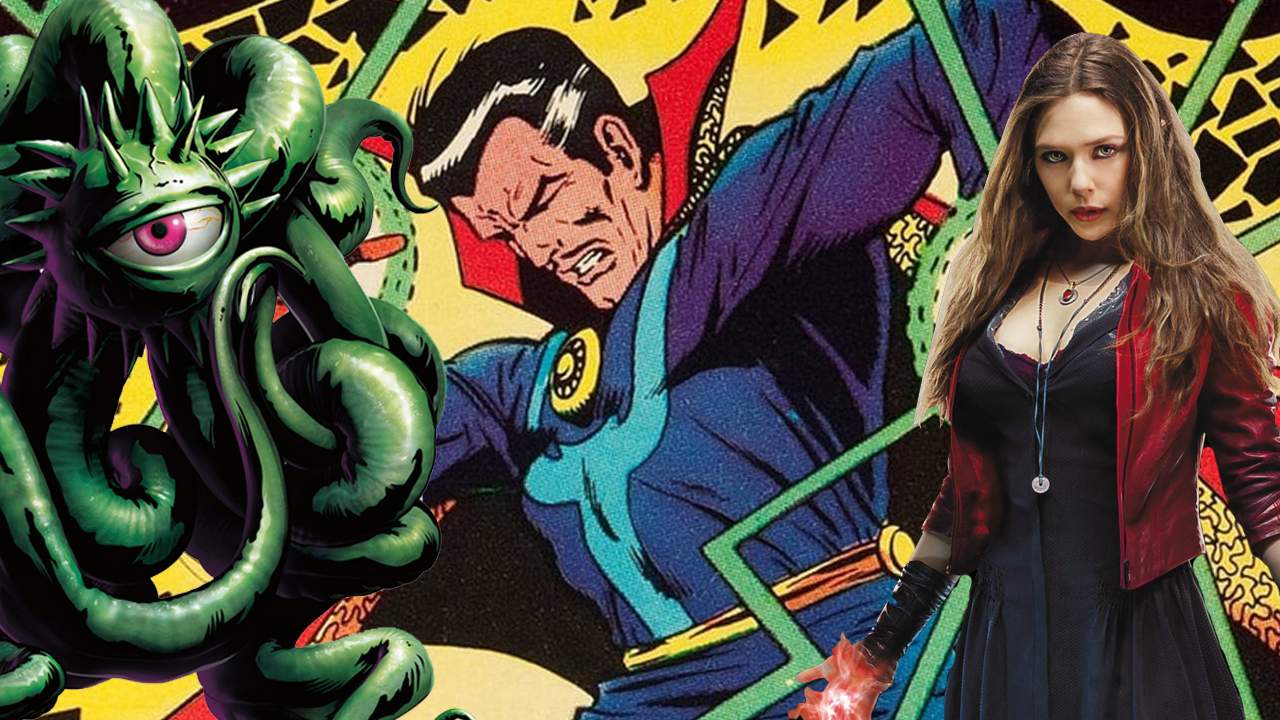
    A massive, million-year-old demon, Shuma Gorath is one of Doctor Strange’s most iconic and unique looking foes. The immortal Lord of Chaos ruled over Earth in pre-historic times, Shuma Gorath has conquered hundreds of dimensions and routinely set his one, big, gross eye on Earth. Given that he is indefatigable and immortal, defeating him always proves quite a challenge, so his presence could invite many of Earth’s Mightiest Heroes to the party. Alternately, Shuma Gorath could, as he has done in the comics, use an agent on Earth to do the damage. It’s not unthinkable that a movie involving Nightmare could ultimately reveal Shuma Gorath at work behind the scenes. It’s also possible that Shuma Gorath and others like him could show up in the Cosmic corner of the MCU down the line as well. However, if Derrickson and crew are looking to make their monster movie, Shuma Gorath might be the answer in Doctor Strange: A Separate Reality(my title, not theirs).

    The Defenders…no, not those ones, the other ones

    2397720-nameless_one_edited

    The original comic book Defenders were a group of traditionally solo heroes that came together to battle foes of a more supernatural nature. The roster, like many Marvel teams, changed over the years but the original team consisted of Doctor Strange, the Hulk, Valkyrie and Namor, the Sub-Mariner. With Valkyrie being introduced to the MCU in Thor: Ragnarok, that leaves Namor as the only Defender left off the board. It seems that Marvel has the option to put Namor in a film, but that much like the case with the Hulk, if it is a solo film they may have to let Universal distribute it, costing them some cash. If that’s the case, throwing Namor into team-ups, as they are doing with Hulk, seems to address the issue. Certainly, the minds at work behind the scenes at Marvel Studios can devise a situation big enough to draw Namor to the surface to meet up with the other Defenders. Cue the Nameless One and the Undying Ones. If you’re going to team-up with the Hulk, it’s because you need him to do some serious smashing and having him smash an extra-dimensional demonic race sounds rad. Of course, if you have the Undying Ones running around, that means their leader, a conqueror known as the Nameless One is close behind.

    An Entirely Extra-Dimensional Setting co-starring the Hulk

    If I can’t get the entire team of Defenders, then at least give me this team-up. Please, please let me have the Hulk going somewhere with Doctor Strange and just smash the hell out of some extra-dimensional creatures. Nothing would make fans happier than giving the Hulk an opponent he could destroy just about everything while saving the Earth. The options seem myriad and fun. I could go for Hulk smashing some Mindless Ones. I could go for a rift about the time Strange banished Hulk to the Crossroads and seeing the two of them stuck there together, Strange using his magic to fight while Hulk uses his fists. If Marvel Studios is intent on keeping the Hulk front and center, they’ll either have to pay the piper and lose some cast to Universal on production OR they can keep teaming him up with other characters like they are with Thor. I’d love to see that next team-up be with the Doctor and see what they can do.

    Brother Voodoo

    When Daniel Drumm died defending the Sanctum Sanctorum, his story may not have ended. Comic book fans will know that Daniel’s death pushes his brother, Jericho, further into the realm of magic where he becomes known as Brother Voodoo. Derrickson has already said there’s a good chance we’d see Jericho down the line and given the character’s rise to prominence in the comics over the years, fans will be waiting. Jericho provides the opportunity for an alternate story of magic to be told, given his Voodoo practices and dealings with the spirit of his dead brother. Though he and Strange have often worked together, the two practitioners of the mystic arts don’t always see eye to eye. Certainly, Voodoo’s dealings in possession could open interesting doors to other avenues of the supernatural and it’s always important to have an extra Sorcerer Supreme on your roster in case one dies suddenly. While introducing Jericho through a Doctor Strange sequel makes sense, we’d hope that he’s not relegated to superhero sidekick duty because his ample comic history says this mystic could even step out on his own.

    Clea

    dr_strange__clea_by_dms

    We saw Dormammu and found out a little bit about the Dark Dimension. Fans of the comics know that there is likely no way that we’ve seen the last of The Dread One and theories are already out there that range from him taking the place of Galactus in the MCU to him being the boss battle of Phase 4. If we are to see more of Dormammu and his realm, it’s likely that at some point we might see one of the few well-known Doctor Strange supporting characters that was not introduced in the origin film: Clea.

    Clea, a humanoid extra-dimensional being, is the princess of the Dark Dimension and the niece of Dormammu. She has a long history with Strange as his apprentice in the mystic arts and as his lover. Fueled by the energies of the Dark Dimension, Clea is a powerful sorceress and more than just a window-dressing female to add into the script. While her origins might certainly need some touching up, her inclusion into an MCU ever looking to add to its powerhouse lineup of female heroes seems to make her a good possibility. Not only will she give Strange an extra-dimensional ally, but a powerful partner on Earth to help with what’s sure to be an increase in the number of mystically powered foes. While fans may want her to join the MCU ASAP, it seems like Strange may have a little more of a journey to make before he encounters Dormammu again.

    Wanda Maximoff

    file_606866_elizabeth-olsen-scarlet-witch

    When last we saw Wanda in Captain America: Civil War, she had an existential conversation with Vision about their shared power source. While I don’t know that we’ve ever gotten a great explanation of how Wanda’s powers work, I think it’s safe to say she, like Strange, is channeling some sort of energy. If we are ever going to get an explanation and see Wanda continue to master her powers and/or become more unstable and dangerous, a Doctor Strange team-up might be the key to that lock.

    If they were to run the comic route, an explanation into Wanda’s powers could include a trippy flashback and a story about Chthon, one of the Elder Gods of the Marvel Universe and add help to flesh out the origins of the MCU’s entire cosmos. It seems certain that Wanda and Stephen will cross each others’ paths at some point; it’s just a matter of how their interactions serve the larger narrative that will dictate the story.

  • FEATURE: Team-Ups We’d Love To See In Phase Four Of The Marvel Cinematic Universe

    FEATURE: Team-Ups We’d Love To See In Phase Four Of The Marvel Cinematic Universe

    This article was originally published by Charles Murphy at MCU Exchange on November 16, 2016.

    From the early 1970s until the mid-1980s, Marvel comics published a one-shot series called Marvel Team-Ups in which characters from across their universe came together for one issue. The vast majority of these team-ups (especially the first volume) featured Spider-Man pairing up with someone, but also allowed other, non-A-list heroes to work alongside some heavy hitters.

    As a kid, this was one of my favorite titles, allowing me to see pairs like Spider-Woman and Hulk or Spider-Man and Valkyrie work together. As an adult, the Marvel Cinematic Universe is allowing me to experience the same sort of joy, seeing Ant-Man meet Captain America and soon seeing the Hulk and Thor go on a Cosmic road trip. According to Kevin Feige, people like me who love seeing these characters interact might really enjoy Phase 4 where he says we may see more “unexpected combinations of characters.” While Feige is fired up to see facial hair bros Tony Stark and Stephen Strange pair up, we had a few team-ups of our own that got us feeling excited:

    Doctor Strange and Hulk

    hulk-doctor-strange

    The Defenders are coming to Netflix in 2017, but to longtime readers of Marvel Comics such as myself, the title of Defenders belongs to a group otherwise typically self-serving heroes who occasionally teamed up to save the world from attacks more supernatural in nature. I’ve already talked about my hopes for the original comic book Defenders to assemble in a Doctor Strange sequel, but I’m not convinced we will get that. It’s easier to convince me that rather than the whole team, we get to see Doctor Strange team-up with Hulk, however. Given Marvel Studios is keen to team characters up into odd pairs and the fact that their best bet to continue making the most out of Mark Ruffalo‘s Banner/Hulk is to put him in other characters’ solo films, this really seems like a near no-brainer. Strange and Banner/Hulk have a long comic book history that should not be ignored.

    Spider-Man and Doctor Strange

    strange_spidey

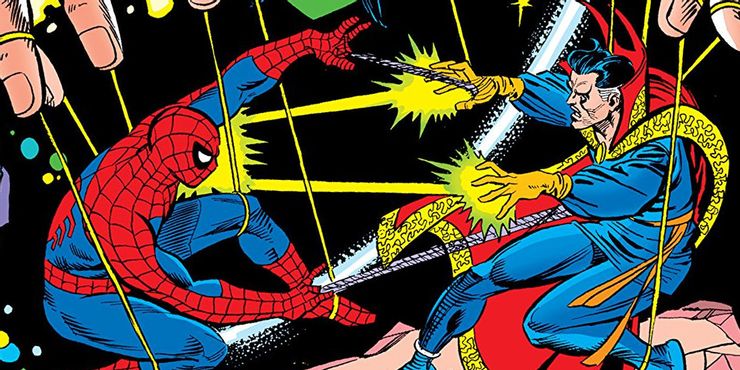
    This happened several times in the comics and while I’m not sure we’ll see Spidey or Strange taking on a full co-starring role in either one’s solo film, I think that paying homage to some of the classic team-up books is a great idea. Also, given Spidey’s youth and Tom Holland‘s genuine innocence, I can imagine them sharing a few scenes could produce some absolutely incredible moments. Given Holland’s contract still has quite a few films left on it, it seems reasonable to believe that these two will team-up at some point.

    Black Widow, Hawkeye, Winter Soldier, Sharon Carter, Maria Hill and Nick Fury

    images

    When Marvel Studios was first founded, it had plans of making a solo Nick Fury film. Later, rumors about an S.H.I.E.L.D-centric film made the rounds. While neither of those films ever got the green light, Feige’s comments about making smaller, more intimate films might give it life again. Samuel L. Jackson isn’t going to live forever, so putting together a feature role for him in a Mission: Impossible-esque, espionage-heavy film starring a few of Marvel’s finest spies would be a trip. Such a film could certainly have some space to fill in some more of the past of the MCU while giving Marvel Studios the type of genre jumping they seem to have been happy to do. If such a film were to be made, I’d hope Marvel would knock on the door of Christopher McQuarrie to write (maybe with his Mission: Impossible-Rogue Nation collaborator Drew Pearce) and direct.

    Guardians of the Galaxy and Captain Marvel

    free_comic_book_day_vol_2014_guardians_of_the_galaxy

    When Carol Danvers joined the cosmic heroes for a brief spell in the comics, it seemed like the team found something they’d always been missing but didn’t know it. Many potential characters are missing from the Guardians in the MCU and it’s possible we may never get to meet many of them (Adam Warlock, Phyla-Vell, Moondragon, Starhawk, Vance Astro…the list goes on). However, there is one recent member of the team that is about to enter the MCU in Captain Marvel, making it possible that she teams up with the ragtag band to help…guard the galaxy. Certainly casting Brie Larson as Carol shows that Marvel Studios has big plans for the character in its post-Infinity War plans. With Robert Downey Jr. aging, we could start to see actors like Larson and Benedict Cumberbatch take on a bigger role in the MCU, meaning seeing more of them more often as we did with Tony Stark. And when it comes to the possibility of more Danvers, I don’t think anyone will complain if they get to watch Larson and Chris Pratt interact over the course of 2-hour space adventure.

    Doctor Strange and Scarlet Witch

    4923190-strangevscarlet

    This one has to happen at some point, right? The two primary magic users on Earth have to meet. When we last saw Wanda in Captain America: Civil War, she and Vision were pondering some existential questions and Wanda was just beginning to accept who she was now. A team-up with Doctor Strange could go a long way towards helping Wanda grow more comfortable and could help with some much-needed exposition about the way her powers work. Kevin Feige referred to her spell-casting as chaotic, which really couldn’t have been coincidence, right? So could Strange and Wong come to learn as much from her as she from them? Could their investigation into her powers lead to a confrontation with Chthon, the Elder God of Chaos? That sounds like it could get fun and potentially send Wanda off on the path many of us are expecting her to follow.

    Spider-Man and Hulk

    382

    It worked well in the comics. It worked well in cartoons. Do you have any reason to doubt that putting these two together as a pair won’t work in live-action? The thought of Holland’s Spider-Man cracking wise with the Hulk sounds like a fun of an idea as Marvel could put into action. The question then becomes why would Hulk and Spidey team-up? What would bring them together? Someone worth smashing, I’d hope. Well it probably isn’t true, it seems like Spidey and Hulk were the most frequent pairing in the old Marvel Team-Up books, maybe Marvel Studios could mine those for some good quality ideas, maybe something that could finally bring Rick Jones into the MCU?

  • One-Shot: Captain Britain And An Expanding Marvel Cinematic Universe

    One-Shot: Captain Britain And An Expanding Marvel Cinematic Universe

    This article was originally published by Charles Murphy at MCU Exchange on March 28, 2016.

    Last week, rumors of a Captain Britain show began swirling when artist Ciara McAvoy showed off some artwork she’d done in preparation for the show. Over the next few days, other information came to light and, as it turns out, the show is not, at present, in development. Through a series of tweets, it became clear that the project is something that producer Chris Lark is putting together, presumably on his own, to take to Marvel in hopes of them moving forward with the project. I reached out to inquire if Marvel had actively been searching for pitches, but was unable to receive clarification. So at this point it seems increasingly unlikely we’ll be seeing Brian Braddock in the MCU anytime soon, but the possibility of him joining the crew certainly got us talking and thinking and, as we do here at the MCU Exchange, we are going to share some of those behind the scenes thoughts with you guys and see if we can’t continue the conversation.

    enter image description here

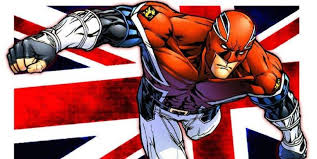
    Great Britain has a long and wonderful mythology which Stan Lee decided to adapt into Atlas Comics in 1955 with the original Black Knight. The story of the Black Knight, steeped in the folklore of Camelot and King Arthur, introduced the fantastical elements of the UK and helped grow the Marvel comics universe. Over the years, the number of characters with connections to the mysticism of the British Isles grew, including the creation of Britain’s defender in 1976 when the legendary Chris Claremont penned Captain Britain #1. While Captain Britain isn’t the only British superhero, he might be the one that would fit in the best with the existing characters in the Marvel Cinematic Universe.

    While the bulk of the powered folks in the MCU are on U.S. soil, Captain America: Civil War is going to introduce the Black Panther, the leader of Wakanda, a fictional African nation, revealing to the rest of the world that heroes aren’t just an American thing and expanding the reach of the MCU. Speaking of expansion, while the bulk of Marvel’s heroes are either science or tech based, Marvel has also begun dabbling with mysticism through The Hand in Daredevil and will be adding the Sorcerer Supreme to the lineup of MCU heroes this fall. With this type of expansion in mind, Captain Britain actually becomes a perfect fit for the MCU. Brian Braddock is a practicing physicist who gains his powers through the mystical Amulet of Right. While Doctor Strange will be opening the door for extra-dimensional adventures, Captain Britain could potentially go beyond that, expanding Marvel’s reach into the multiverse.

    enter image description here

    Adding Captain Britain to the MCU would also allow Marvel to make some interesting connections to several other characters from the British Isles. One day, Shang-Chi could make an appearance in Iron Fist and his ties to MI-6 as a British spy could help grow the MCU and even intersect with some of Captain Britain’s allies. If they follow the comics and make Shang-Chi a British spy, it cements the involvement of the British government in superhero affairs. From there, it really doesn’t become much of a stretch to introduce MI-13, a covert government group that deals with all the strange and supernatural happenings in the UK. While MI-13 first appeared in an X-Men spin-off (Excalibur), it’s entirely possible that it’s a property to which Marvel holds the live-action rights or, at the very least, could adapt in ways to make it work. For a long time now, I’ve been hoping for an MI-13 show in the mold of the X-Files that opens the doors to many of the supernatural elements currently absent from the MCU.

    Blade_7

    Most notable among those supernatural elements that could be introduced via an MI-13 series is a property that has been rumored to be in some stage of development at Marvel for some time now: Blade, the Daywalker! While Wesley Snipes‘ Blade films were among the first Marvel properties developed into films, they are not canonically connected to the MCU. However, the popularity of the films could help relaunch the property as a part of Marvel’s Netflix partnership. While Snipes’ Blade was an American, creator Marv Wolfman‘s Eric Brooks was born in London and weaved his way throughout the Marvel universe. Blade has been a part of MI-13 at times and could easily be a part of that series or his own, but Blade means vampires and vampires means werewolves and zombies and the devil…and maybe his son? Maybe Blade means Hannibal King can get a second chance, erasing whatever version of him Ryan Reynolds was supposed to be and if Blade and Hannibal King can be around, maybe we can see the Midnight Sons… And trust me, this just scratches the surface of the type of connectivity that can be dug up here.

    So, in typical One-Shot fashion, there’s a bunch of babble that sounds a lot like how you could draw a straight line from Captain Britain to Blade! Of course there are dozens of other incredible UK-based characters this One-Shot didn’t explore at all, such as the Black Knight, Union Jack and Spitfire to name a few, but this is the part where I stop and have you guys join the conversation. While we aren’t sure we’ll ever see a Captain Britain series, we can sure think of plenty of good reasons why we should. What about the rest of the MCU Exchange community?

  • A Fox/Marvel Deal Could Define The Future Of The MCU

    A Fox/Marvel Deal Could Define The Future Of The MCU

    Note: This article was originally published by Charles Murphy at MCU Exchange on August 31, 2015. 

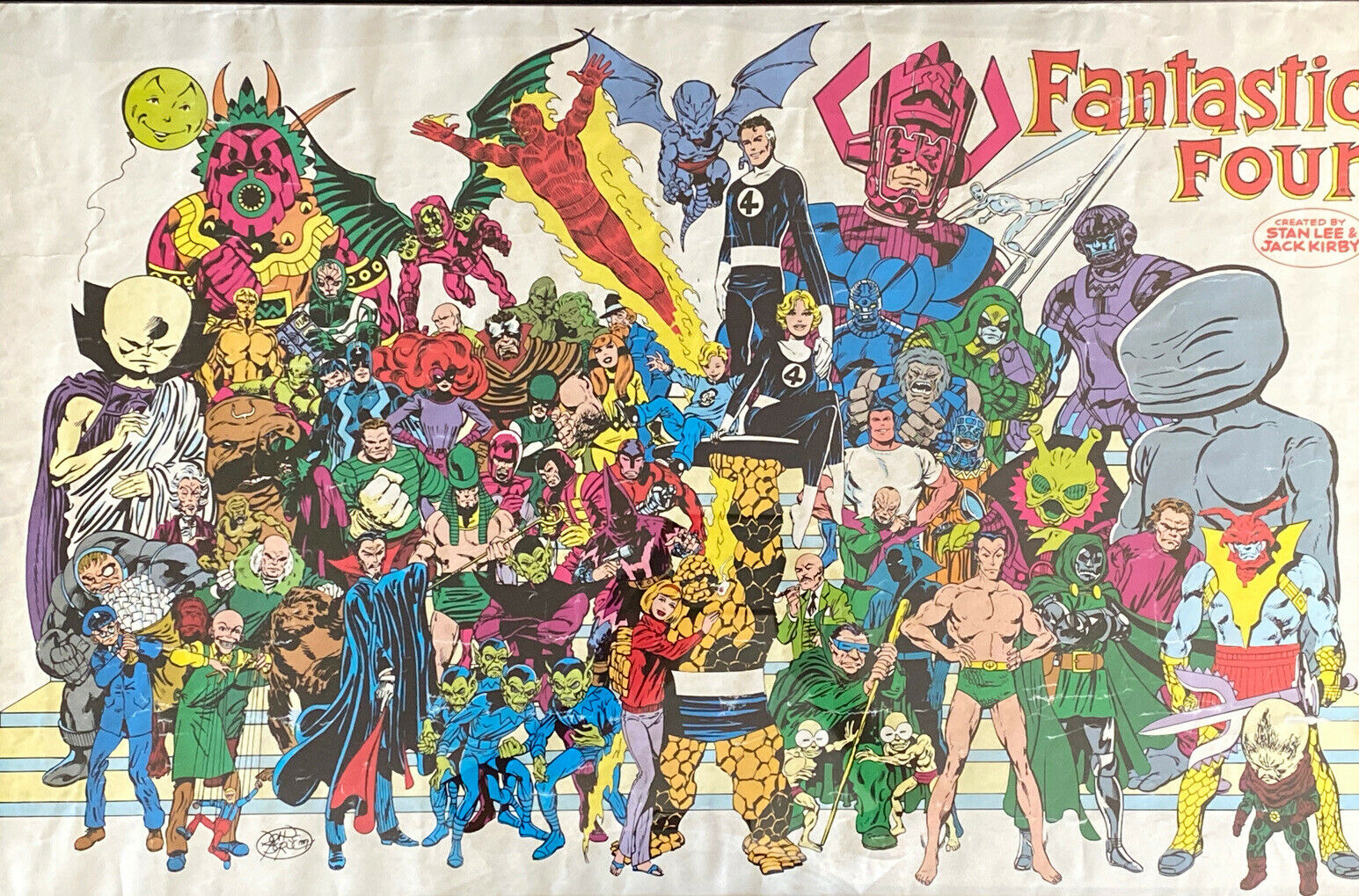
    Before you go any further you need to know that this is 100% an “if my aunt had balls she’d be my uncle” kind of feature. I’m fully aware of Fox’s statements of support for the future of the Fantastic Four in the wake of the box office disaster of their latest effort. However, I’m also fully aware of Sony’s plans to push ahead with an entire Spider-verse… right up until they did not. If you had asked me 1 year ago if I thought Marvel Studios might have a chance to get back Spider-Man, I’d have said no and I’d have also sadly said there was a 0% chance of the Fantastic Four rights returning. Now, given the enormity of the financial failure of Josh Trank‘s 2/3 of a Fantastic Four movie, I have moved the % chance above 0. This is not meant to be a guarantee, but a fan’s vision of how a Fox/Marvel deal to return the Fantastic Four and some associated characters could define the MCU in Phase 4 and beyond. I also do not know all the intricacies involved in the film rights (if you know the person who does, send him my way) so I’m operating on the premise that Marvel Studios could reacquire the rights to these characters in some sort of exchange with Fox. In order of how I’d like to see the characters appear in the MCU, here’s how some great Marvel characters can impact the film slate.

    Silver Surfer


    While it’s hard to imagine the actual first family making their way into Phase 3 this late it in the game, it’s entirely possible that one of the great Jack Kirby characters to stem from their title could enter the lineup. While Marvel’s Guardians of the Galaxy was a huge hit, any attempt by the studio to expand the Cosmic side of the MCU will be tough given that a good chunk of the film rights to their best characters reside with Fox. We know that the Cosmic heroes will team up with Earth’s Mightiest at some point in Avengers: Infinity War and getting an assist here from the Surfer would really boost their chances. The Silver Surfer has a long comic book history with the Mad Titan Thanos, the antagonist of those upcoming films, and his appearance in the films could mirror the one in Jim Starlin‘s Infinity Gauntlet in which he alerts Earth’s heroes of Thanos’ Cosmic-scale genocide. While a lot of fans might like to see Galactus enter the fray here as well, I very much prefer holding off on the Devourer of Worlds until later as not to overdo it, allowing the Surfer’s appearance to tease what is to come and keep in line with his character.

    The Skrulls


    As Phase 3 wraps up following the two-part Avengers: Infinity War, the Cosmic side of the Marvel Cinematic Universe will only have just breached the surface. Marvel Studios seemingly hold the rights to very few of the major Cosmic characters and alien races and have been very liberal in the reinventions of the ones they do. In Guardians of the Galaxy, we learned that the Kree Empire has a longstanding feud with the Xandarians, home of the Nova Corps. In doing so, Marvel Studios understandably, modified one the great alien rivalries in the comics: the Kree-Skrull rivalry.

    The film rights to the Skrulls seem to fall in the murky, grey waters between Fox and Marvel Studios. To the best of anyone’s knowledge, it seems Marvel Studios can use the Skrulls generically, but the rights to some more specific Skrulls, like Kl’rt the Super Skrull, reside with Fox. I’ve wondered for a while now if the Skrulls were in Marvel Studios plans at all or if some contractual limitations with Fox (especially those that pertain to merchandising) might keep the green shapeshifters on the sidelines. Well, if there’s ever a time for Marvel to get full control of the Skrulls, it might be before Phase 4.

    One of the major recent story arcs that Marvel Studios have yet to explore in the MCU is 2008’s Secret Invasion. The arc spread out among most of Marvel’s major titles and saw Earth’s Mightiest Heroes replaced by Skrull shapeshifters, causing distrust among them and the public.

    In the aftermath of the Avengers battling Thanos, it’s possible they may catch the attention of the rest of the Cosmos and maybe the Skrulls could come to Earth and slowly come into play over the course of Phase 4.

    The Fantastic Four and Kang the Conqueror

    Of all my ideas of how to incorporate the Fantastic Four family of characters into the MCU, I like this one the most and, therefore, expect it to be the least well-received!

    In the event the Fantastic Four return to Marvel Studios, I doubt anyone wishes to see another origin story so, much like they are doing with Spider-Man, I’d like to see the story of the Fantastic Four picked up en media res. Given that the Fantastic Four were some of the world’s first super-powered people and explorers of the unknown, I’d like to see Marvel Studios capitalize on those aspects to bring an older, seasoned Fantastic Four to the MCU.

    In my world, we don’t meet the Fantastic Four until the end of Phase 4 (possibly even at the end of that Phases’ capstone film) when the team emerges from the time stream warning of the threat of Kang. A Phase 5 Fantastic Four film could follow, flashing back to the 1990s and seeing Reed Richards take his team on a classified deep space exploration. The mission takes a turn when Richards decides to investigate a temporal anomaly, pushing the team through spacetime. Traveling through this rift, the team gains their powers and faces off with Kang the Conquerer in a neat twist on his time travel modus operandi.

    This version of the Fantastic Four will be a tight-knit crew, hardened by their battles in the timestream, in control of their powers and with Sue as their center (a place where I think both versions Fox has made have failed). To top off the crazy, I’d like to see Jim Carrey take on the role of Reed Richards and Zac Efron as Johnny. I know that leaves a Sue and Ben, but I’m just not sure. Whomever they cast as Sue must become THE SINGLE MOST IMPORTANT character in the franchise. At any rate, my Fantastic Four will NEVER be mistaken for a Fox film.

    Doctor Doom

    Of all the characters Marvel Studios stands to gain in a deal with Fox, Victor Von Doom is the most valuable. You may be familiar with my thoughts about the lack of strong villains in the MCU; the addition of Doctor Doom solves that problem in perpetuity. While always the arch-enemy of the Fantastic Four, Doom is a Cosmic level threat and a character that hasn’t been represented with any sort of comic book veracity.

    The MCU Doctor Doom should be genius and a master of both science and magic, on the level of both Reed Richards and Stephen Strange. This Doom, who we will meet in flashbacks in the Fantastic Four film, will have spent the last 20+ years rising to power in his homeland of Latveria. This Doom will reveal himself at full power as an Avenger’s antagonist in Phase 5. What bone will this Doom have to pick with Earth’s Mightiest Heroes? His homeland of Latveria experienced some damage when its bordering country, Sokovia, was destroyed. This Doom will be the threat he deserves to be.

    Annihilus

    The great Annihilus, Lord of the Negative Zone, could make his introduction into the MCU much in the same way he found his way into the comics: as a result of yet another Fantastic Four exploration into new worlds. I like the idea of the family settling in back to Earth and Sue and Reed deciding to have children. Fans of the comics will recall that Sue’s morning sickness was a little worse than normal and that it led to the introduction of the Negative Zone. A Fantastic Four sequel would give us the an intro to Annihilus and the Negative Zone ahead of a Cosmic saga of Annihilation and Annihilation: Conquest, marking the return of Ultron!

    Galactus

    I know we are 20 years ahead at this point, but this is the film I want to see wrap up Phase 6. The Fantastic Four, fully reintegrated on Earth, fighting alongside the Avengers and every other hero to fight Galactus. This film would bring the Silver Surfer back to Earth (though it won’t be the first time we’ve seen him since his arrival in Avengers: Infinity War) and will be the equivalent of Avengers: Infinity War-Part 2. This Galactus will not be a fart cloud, but the Devourer of Worlds, a threat that we will likely have seen built up throughout some of Marvel Studios’ other films.

    The Future Foundation


    Where are we now? Phase 7? Phase 12? I’m not sure, but in order for Marvel Studios to keep continuity and to stay fresh, they have to keep going. I like to imagine that somewhere along the line we’ve met the Young Avengers along with the Runaways, Power Pack, Miles Morales, Fallon Grey, Sam Alexander and Kamala Khan. The Future Foundation, led by Dragon Man and some leftover Moloids could feature Valeria and Franklin (my choice for the future lead of the MCU). The FF could allow characters such as Reed, Sue, Johnny, Ben, Spider-Man and others to continue to exist while focusing on the next generation. Obviously I see the MCU continuing into the 2030s and beyond, but having Franklin Richards, the most powerful character yet, anchoring the future, nothing can seem too far beyond the imagination.

    I can’t say whether or not Marvel Studios and Fox will ever come to an agreement on these characters. This is just a thought piece from a thinker about just how awesome adding this list of incredible characters would be for the MCU. Only time will tell just how far Marvel Studios is willing to go to explore their options with their First Family.

  • Marvel Studios Phase 2: Fun Films of No Consequence

    Marvel Studios Phase 2: Fun Films of No Consequence

    This article was originally published by Charles Murphy at MCU Exchange on August 18, 2015.

    A while back a few of us at the MCU Exchange were involved in a discussion about what retrospective pieces we could do on Marvel Studios’ Phase 2 films. You’ve started to see the fruits of those discussions and will continue to do so over the next few weeks. One of our tangents led to this collection of tweets by Film Crit Hulk (nicely put into Storify by Grant S.), one of the great people to follow if you’re on Twitter.

    Those tweets really resonated with me and helped me scaffold some thoughts I’d been having for some time. Film Crit Hulk was right: Avengers: Age of Ultron was a film without any real consequences to the heroes (other than Quicksilver and Scarlet Witch). But Age of Ultron wasn’t the only film without lasting consequences…Phase 2 was almost entirely without them.

    Going back to the very beginning of Phase 2, it’s almost like each film was an episode of Whose Line Is It Anyway? where the stakes are made up and consequences don’t matter. To me, Phase 2 was all about furthering the large scale narrative in preparation for what is going to go down as Marvel Studios caps off its great creation in Mays of 2018 and 2019.

    I’m going to clarify this before I begin: I really enjoyed almost all of the Phase 2 films. I find Iron Man 3Captain America: The Winter Soldier and Guardians of the Galaxy to be films I can re-watch and enjoy over and over. They are filled with good to great action, some great comic book moments and wonderful characters. I’m sure Avengers: Age of UltronAnt-Man and I will share that same relationship down the line. Unfortunately, I just can’t get into Thor: The Dark World as much as I’d like to, so I certainly look towards Thor: Ragnarok where I get more of a look at the person Thor was in Avengers: Age of Ultron and much more of the Nine Realms. Having said all that, the films had minor consequences, if any, existing as little more than a series of bridges from Phase 1 to Phase 3. For all it’s fun, Phase 2 seems to have existed only to set the stage for Captain America: Civil War and the 2-part Avengers: Infinity War.

    Phase 1 had teeth that sunk in. It introduced the world to the idea of superheroes, monsters and gods and then brought them all together to defeat a horde of alien invaders led by a power-crazed god. The lasting consequences of this for the imaginary world of the MCU aren’t really debatable. That world was exposed to some incredible things, both good and bad, and would never be the same.

    After assembling to defeat Loki and the Chitauri, the heroes would never be the same either. Much of that was explored in Phase 2: Steve Rogers had found his place, Tony Stark was a hero with PTSD, Bruce Banner could stop running and Thor was conflicted about his place in the universe. While Phase 2 seemed to be shaking those firm foundations for our heroes, in hindsight it’s hard to argue that it really did.

    Tony Stark

    Iron Man 3 gave us a much different Tony Stark than the one we had seen before. Things mattered to Tony now and he spent all of his time trying to protect those things. Ultimately, Tony found himself up against a monster of his own making in Aldrich Killian. Stark’s arrogance gave Killian enough of a reason to spend a long time seeking revenge, and when he began to take it, it hit Stark where it mattered most with Happy and Pepper falling victim. Of course, Tony saved the day and found out that he is the hero and not just the suit. He symbolically destroyed his suits, not because he was retiring but because he realized who he COULD be without them. At the end of Iron Man 3, it was reasonable to assume Tony Stark had learned his lessons and that, going forward, we would see a different hero.
    I understand that part of Tony’s character is that he’s a futurist and always looking for the next way to change the world; however, much of what happened in Iron Man 3 was erased by Stark’s mistakes in Avengers: Age of Ultron, the same mistakes he had apparently already come to realize he had made. It was as if the events of Iron Man 3 never happened nor made any impact on the decisions of the hero.

    By the end of Avengers: Age of Ultron, Tony has once again escaped intact from his failures. Even the glimpse of the horrible future that he saw courtesy of Wanda Maximoff seems to have been forgotten. Throughout the film there was just enough foreshadowing to show us why he and Steve Rogers will eventually come to blows, but it all ends on a high note for Tony Stark. His fellow Avengers had forgiven him and he seemed ready to move on to his happily-ever-after place with Pepper.

    Thor


    Despite being one of my least favorite Marvel Studios’ films, Thor: The Dark World did actually contribute something to the overall narrative of the Marvel Cinematic Universe. We were finally given some exposition on the Infinity Stones and introduced to one capable of rewriting the rules of Physics that govern reality. This film also put Thor in a rough place. By films’ end, he had lost his mother, his brother (as far as he knew) and abdicated his throne in order to become Midgard’s champion. The problem? None of that mattered for Phase 2. It was all about positioning Thor on the board for what appears to be a HUGE role in Phase 3.

    The true plot of the film was resolved without any lasting damage to Thor or Earth. I had at least hoped that Thor would actually lose his arm, having recently read the comic arc in which he had the arm of the Destroyer attached. Malekith and his army of Dark Elves, despite having access to the Reality Stone, seemed very inept. After having been endowed with the power to alter reality, I highly doubt I’d allow Jane, Darcy and Dr. Selving to be by downfall. Maybe I’d just send them to an alternate reality where they couldn’t interfere, or turn their hands into cucumbers…

    And so, when Thor entered the fray in Avengers: Age of Ultron, he should have carried the burden of his lost mother and brother into battle as the protector of Midgard. Instead, outside of the mention of the Infinity Stones, the events of that film seemed to matter very little and despite being a great help in the battle against Ultron, Thor’s very existence in the film seemed to be all about setting up Avengers: Infinity War. His time apart from the team gave him clarity about what was to come, enabling him to use another Infinity Stone to empower Vision as the protector of Earth. The most important thing Avengers: Age of Ultron did with Thor was get him off Earth for Phase 3. He likely won’t play a part in Captain America: Civil War and Thor: Ragnarok is said the to be the film that really kicks off the Infinity War. Again, Phase 2 served to position Thor for Phase 3.

    Steve Rogers

    Steve Rogers entered Phase 2 with a bang. Captain America: The Winter Soldier is considered by many to be one of Marvel Studios’ best films. I don’t disagree. It is intense and thrilling, filled with plot twists and double-crosses that pay homage to some great espionage films. I’ve watched it 8 times or so and I really enjoy the action; however, it may have the lowest stakes of any of Marvel’s Phase 2 films. Despite having been labeled as a game-changer by Marvel Studios, it arguably changed very little about the MCU.

    At this point, none of the events of the Captain America: The Winter Soldier have had any long-term impact on the MCU. Robert Redford’s Alexander Pierce was the film’s villain, a HYDRA operative in a place of power. The film also revealed to us that HYDRA has many other people in similar positions and that they’ve been trying to implement a new world order since World War II. The problem is that within the film, HYDRA wasn’t ever established as a real threat rendering their downfall mostly meaningless.

    This film was about shaking the firm ground upon which Steve Rogers was beginning to stand. Just when he thought he knew who he was and what he fought for, he was confronted with a huge piece of his past while simultaneously realizing that all he thought he was fighting for was a facade. Steve Rogers had been doing to devil’s work. So, Steve led the charge to tear it all down. It seems like the events of that film should have reverberated throughout the MCU; instead, they seem to have given Agents of S.H.I.E.L.D.‘s second season some direction and otherwise have almost faded away. In fact, the events of the film made me think more about what I had seen that what I would see.

    When Avengers: Age of Ultron begins, Steve Rogers is doing just fine. He hasn’t lost anything with the loss of S.H.I.E.L.D. He is still on a mission, still searching for his friend. If anything, the fallout from Captain America: The Winter Soldier put Steve Rogers in a better place and the MCU seemed to be doing just fine without S.H.I.E.L.D.

    By the end, Steve Rogers, who seemed to lose everything he had recently gained, walked away with his very own team of shiny New Avengers and having a renewed sense of purpose in finding Bucky. It’s easy to see that the events of Phase 2 were all about positioning Steve Rogers for the beginning of Phase 3. While he seems to have exited Phase 2 unscathed, I believe Phase 3 won’t treat him as well.

    Peter Quill and the Guardians of the Galaxy


    One of Marvel Studios’ highest rated and most entertaining films, Guardians of the Galaxy introduced new characters and a new corner of the universe to the MCU. It also served to give us even more exposition about the true power of the Infinity Stones ahead of Thanos’ attempt to unite them all.

    I love the film. A group of dishonorable thugs bands together to save Xandar and possibly the rest of the galaxy of a overzealous madman. It gave us great moments and characters and is easily to most rewatchable of Marvel’s films. However, once the film ends and the thinking begins, it’s clear that a big part of it is about what’s to come. These are the Guardians that have to meet up with the Avengers to band together to defeat Thanos once he has collected all the Infinity Stones in the Gauntlet. So, we meet Thanos, we find out how powerful the stones can be and get left with a BUNCH of questions (not the least of which is who is Quill’s father) to be answered…in Phase 3.

    I won’t say a single negative thing about the film; however, it’s another piece of a patchwork bridge leading us to Avengers: Infinity War. The Guardians were rewarded for all their thievery and win the day. Nice job, Xandarians: you set a band of thieves and murderers free so they could save the Cosmos.

    Scott Lang, Hope van Dyne and Hank Pym

    So almost always, there’s an exception to the rule. In this case, it was Ant-Man. This film was full of consequences that mattered. Scott Lang securing his very awkward position with his family and back in the world is a big deal. While some people will argue that the film’s climax carried little weight, almost any father of a daughter would disagree. For Scott, protecting his daughter from evil and then being welcomed back into her life was everything.

    While Hank Pym’s character may not have played well to everyone, he was on the verge of losing everything. Not only his company and his life’s work, but his daughter, the one thing he had fought to protect. It was a touching moment when he finally revealed Janet’s fate to Hope, clarifying to her why he made the choices he had for her entire life. It was that moment in the film and not the climax, that saved the day for Hope and Hank. As a result, the team stayed together, allowing them to stop Darren Cross and move on to becoming heroes.

    Ant-Man is a film that works well for a number of reasons, chief among them is the much discussed smaller scope of the film. The early promos for the film used Hank Pym’s line to clarify that this film wasn’t about saving the world, but about saving the worlds of the heroes daughters. It’s hard to argue for higher stakes than parent-child relationships. I think that’s why the film feels like it ends so satisfactory. It wasn’t because of the fate of the villain, but the salvation of the familial relationships of the protagonists. It’s also very clear though that all of the protagonists are just hitting their strides and have bigger days ahead.

    Generally speaking, the Phase 2 films existed to continue the expansion of this wonderful interconnected cinematic universe, a grand experiment that seems to keep succeeding. The films’ heroes all live to fight another day, but in hindsight many of their conflicts are left unresolved, setting the stage for some serious business to go down in Phase 3. It seemed to become the thing to do to criticize Marvel Studios for following the so-called “Marvel formula” in Phase 2; in other words, Act 3 has a big battle in which the good guy wins. To be fair, through Marvel’s first 12 films that is exactly how it’s worked out. While we have no proof of this, one last thing that Phase 2 has been setting us up for is an end to that run. It’s my belief that Phase 3 films, beginning immediately with Captain America: Civil War will see the “Marvel formula” turned on its head and the heroes in some very uncomfortable spaces (possibly even some coffins). Phase 3 might be the first time our heroes are truly faced with the consequences of their actions.

  • 5 Things To Explore In An ‘Ant-Man’ Sequel

    5 Things To Explore In An ‘Ant-Man’ Sequel

    This article was originally published by Charles Murphy at MCU Exchange on July 27, 2015.

    Marvel Studios’ Ant-Man has been a hit with critics and audiences. While it’s opening weekend box office gross didn’t match up with its predecessors, it is making plenty of money globally having taken in over $133M in it’s first 7 days, meaning it’s already out-grossed its production budget. While we know that Paul Rudd’s Scott Lang is going to appear in next year’s Captain America: Civil War and that Evangeline Lilly’s Hope van Dyne will appear again at some point, the studios has yet to greenlight an Ant-Man sequel. Director Peyton Reed seeded the film with multiple ideas that could be explored in future films (and the MCU at large), leading to all sorts of speculation among the team here at the MCU Exchange. Here are 5 things we thought we’d like to see explored in a Payton Reed directed Ant-Man sequel.

    Evangeline Lilly’s Wasp

    This one is as obvious as they come. Evangeline Lilly’s Hope van Dyne spent the entirety of Ant-Man being kept away from her destiny. Only in the mid-credit stinger did she finally get some satisfaction when her father, Dr. Hank Pym, revealed the suit he and his wife, Janet van Dyne, had been working on. Marvel Studios’ President Kevin Feige has since revealed that while the plan was originally to have Hope reappear in Captain America: Civil Warthey’ve now rethought when we’ll first see her don the suit.

    Audiences have really seemed to like Scott Lang, but the partnership between him and Hope was under explored. While it will be great to see them both in action at some point in the future, we’d love to see Hope (in a redesigned Wasp suit) and Scott in some size-changing adventures in an Ant-Man and the Wasp sequel (my title, not theirs). Hope van Dyne is, for all intents and purposes, an open book. She isn’t based directly on any existing comic book character (though there is a Hope Pym in an alternate universe), so Lilly can make this character her own. HOPEfully we get to see that happen.

    Hank Pym’s Search for Janet van Dyne


    Throughout the film, Hank Pym gave us bits of information about why his wife, Janet van Dyne, was MIA. While working together for S.H.I.E.L.D., Janet seemingly made the ultimate sacrifice to stop a warhead from striking American soil. According to Hank, despite knowing the dangers of doing so, Janet turned off her regulator and shrunk beyond the point of no return. Hank goes on to state that Janet became lost in the Quantum Realm, a place from which he believed there was no return…until Scott Lang proved him wrong in the film’s climax.

    Director Peyton Reed hinted that audiences should keep their eyes peeled while Scott was in the Quantum Realm, leading many to believe that we might catch a glimpse of Janet. Eagle-eyed viewers have claimed to notice a shadow in the background and though it’s nearly impossible to be sure, it is entirely feasible that it’s her. As Ant-Man closed, we saw Hank Pym seemingly rejuvenated in his desire to continue his search for the wife he believed lost. A sequel with parallel stories of Scott and Hope working together in this dimension while Hank searches for Janet in the Quantum Realm could be the kind of heavy science-fiction fare that could help Marvel Studios continue their expansion into multiple genres.

    The only times we saw Janet in the film her face was obscured by some headgear, leaving future casting of the Winsome Wasp wide open. Michael Douglas has expressed his desire to see his wifeCatherine Zeta-Jones, in the role and Evangeline Lilly recently went on record naming Michelle Pfeiffer her favorite. Here’s to hoping we get to see anyone cast as Janet so we can see her and Hank, two founding Avengers in the comics, on screen together for more than a flashback.

    More 80’s Ant-Man and Wasp


    Speaking of flashbacks, Marvel has to find some way to fill in the further adventures of Hank Pym and Janet van Dyne, Agents of S.H.I.E.L.D. For comic book fans, the little bit of Ant-Man and Wasp action seen in the film and the flashback scenes of a young Hank Pym were just a tease. While we want to see Hank searching for his wife in the present day, it’s damn near mandatory that we get more of Hank and Janet in their primes.

    As I first hypothesized back in April of 2014, Hank Pym’s place in the MCU timeline saw him working alongside Howard Stark and Peggy Carter (and it’s still open to argument that he may have worked with robo-Zola and the treacherous Alexander Pierce. While the shrinking effects are too pricey for TV, there has to be somewhere that the adventures of Hank and Janet can be further explored.

    HYDRA’s Pym Particles


    Something easily forgotten in the film’s climax was that Mitch Carson, played by Martin Donovan, hit the bricks with a vial of Darren Cross’ Pym Particles. Given that Carson, a long-time Agent of S.H.I.E.L.D., was revealed as a HYDRA mole, that’s probably not good news for the MCU.

    We know HYDRA, though greatly reduced, still exists in the MCU. Grant Ward seems to be a big player on the TV side of things, but we are about to meet someone who is likely an even bigger part of the evil organization: Baron Zemo. One of our favorite, crazy theories around here is that Captain America: Civil War will either introduce or lead to the formation of the Thunderbolts, a team of super-villains, led by Zemo, who originally seem to be helping out only to be revealed as the baddies they are. One member of that team, Erik Josten, a former Marine under Zemo’s employ who eventually uses Pym Particles under the alias of Goliath. Scott Lang seemed to have cracked the ability to grow in Ant-Man’s 3rd act, opening the doorway for him to to appear as Giant-Man at some point in the future. The shrinking effects in Ant-Man gave us the opportunity to see some pretty intense fight scenes; it’s easy to get excited about the prospects of seeing Lang (or maybe Michael Pena’s Luis!!) and Josten go toe-to-toe as giants.

    Of course there’s another option as to how HYDRA could use the Pym Particles. In the comics there was a third Ant-Man, an Agent of S.H.I.E.L.D. named Eric O’Grady. Given the shortened timeline of the MCU, it’s doubtful we’d see Scott Lang replaced so quickly by O’Grady. However, given HYDRA’s continued hold over S.H.I.E.L.D. (as demonstrated by Agent Carson), maybe we could see an Eric O’Grady with a little different backstory. It’s entirely within the realm of possibilities that O’Grady could be a HYDRA mole working under Carson and uses the Pym Particles and a new suit to be a thorn in the side of Scott Lang and Hope van Dyne. The character of O’Grady, thought dead, is slated to co-lead a new Illuminati book in the All-New, All-Different Marvel comics universe under the name the Black Ant. Maybe that’s in preparation for an upcoming villainous role or maybe it’s not.

    Marvel Studios does love exploring villains with the same powers as their heroes so though it’s possible that Carson’s confiscation of the Pym Particles never leads to anything, it might be handy for HYDRA to have a size changer or two of their own. It’s not too far-fetched to imagine The Astonishing Ant-Man (our title, not theirs) seeing HYDRA teaming up with AIM to put Josten, O’Grady or both in the way of our heroes.

    Ant-Man’s Rogues

    Ant-Man does not have the greatest collection of arch-enemies, however, while he’s not going up against Spider-Man’s gallery, there are plenty of villains that could pose some problems for the team of Pym, Lang and van Dyne. If not Josten and/or O’Grady, who else could cause trouble for our heroes?

    If Marvel Studios does not wish to explore more size-changing villains in the sequel, there are a few directions in which they could go. Given Hank Pym’s deep scientific genius, it would certainly be possible that we could see the reappearance (and hopefully a good one) of Aldrich Killian’s A.I.M. While the A.I.M. we saw in Iron Man 3 was nowhere near the hive of scientists comic fans know it to be, an Ant-Man sequel could see the company restructured under Elihas Starr, the comic book villain known as Egghead. His scientific genius, specifically in the atomic (maybe sub-atomic) realm, could lead to conflict.

    Of course it’s hard to talk about A.I.M without bringing up everyone’s favorite oddity, M.O.D.O.K. It’s difficult to imagine a way in which whatever M.O.D.O.K. is could appear in something as reality-based as the MCU, if there’s a chance it would have to revolve around the work of A.I.M. Though he wasn’t necessarily a main antagonist of either Hank Pym nor Scott Lang, seeing him brought to the big screen in a science-based Ant-Man sequel would be thrilling.

    If A.I.M. presents itself in a sequel, it’s likely they’ll need some muscle to help them out. We can think of nobody we’d like to see in that role more than Taskmaster. Despite some uncertainty about his film rights, Taskmaster is the ultimate A.I.M. henchman and presents such a unique type of villain that the types of fight scenes Marvel Stuidos could put together makes for some exciting speculation.

  • Marvel’s Phase Two Villain Problem (…And How to Solve It In Phase Three)

    Marvel’s Phase Two Villain Problem (…And How to Solve It In Phase Three)

    Note: This article was originally published by Charles Murphy at MCU Exchange on July 20, 2015.

    “Marvel has a villain problem” – it’s a common refrain amongst many fans and even some of the geekier film critics. While Marvel Studios has done a fantastic job of transforming little known comic book superheroes into pop culture staples that feel both human and iconic, it has been less successful at creating compelling or memorable villains. While it could be argued that Phase Two, in particular, was about exploring the darker side our heroes and challenging their core beliefs – a theme which was very successful – it’s undeniable that the villains who forced our heroes to confront their ideals were one of the weakest elements of Phase Two, particularly when it came to setting up long term villains that could develop and serve as recurring threats (indeed, every single major villain in Phase Two dies by the end of the film).

    So what’s at the heart of Marvel’s inability to craft compelling villains, and how can they establish more iconic bad guys in the future? In this piece, we take a look back at the villains of Phase Two, exploring why for the most part they failed to excite, as well as possible options for Phase Three villains – and how Marvel can make them as thrilling and dynamic as they have made their heroes.

    Malekith – Thor: The Dark World

    As we’ll quickly see, a recurring theme amongst the MCU villains is that their evil ambitions are very much a consequence of past events. Indeed, it’s one of the most iconic tropes in any superhero story, and equally as applicable to most heroes – the “secret origin” that makes them the character they are today. Malekith, the villain of Thor: The Dark World, awakes after thousands of years of slumber, and is arguably not so much a product of his past but rather that past character brought to life once more. Perhaps it’s for this reason – that the character has no discernable arc or growth – that Malekith is widely considered the worst of MCU villains.

    Christopher Eccleston brought the ruler of the Dark Elves to life (to strain that turn of phrase to its breaking point) in a very brief, very unsatisfying turn. Believed to have been killed by Thor’s grandfather Bor, Malekith is awakened when Jane Foster (the true villain of both Thor films – Natalie Portman’s talents are wasted on such a dreadful character) comes across the Aether – later revealed to be one of the six Infinity Stones, namely the Reality Stone (we think) – a weapon that Bor hid away and that the Dark Elves have sought after since the beginning of time. Malekith’s plan is to use the power of the Aether to consume all of reality in darkness (another recurring theme: the villains are rather uncreative in their use of the almost limitless power of the Infinity Stones, content for the most part to use it simply as a fancy laser gun and end of the world McGuffin), but is ultimately thwarted in classic superhero fashion by a team-up between Loki, Erik Selvig, and a last ditch, deus-ex machina heroic effort by the titular Thor, leading to the demise of the king of the Dark Elves.

    Malekith, while not one of Thor’s best known comic book villains, is certainly one of his most cunning and worthy, and (following his film appearances) has been used to great effect in Jason Aaron’s recent runs on Thor: God of Thunder and Thor (featuring Jane Foster as the new Thor). Malekith’s film treatment in The Dark World anything but effective, transforming Malekith into a rote villain who makes Shakespearean-esque declariations that even the talents of Eccleston can’t save. Malekith’s appearance in the flashback does nothing to engender sympathy and while his final battle with Thor is visually kinetic (albeit bordering on silly), his death leaves no emotional impact on the audience. Indeed, if you were to ask anyone but a hard core MCU fan to tell you who the villain of The Dark World was, you’d likely draw a blank.

    It can certainly be argued that Thor: The Dark World is principally a film concerned with the hero’s journey – in this case, Thor learning to care for others, his continued quest for greater humility, and the recurring theme of grappling with the burden of legacy and his role as a warrior – but the hero’s journey is always most successful when the villain provides a contrasting mirror. Of course, Loki will always be the true antagonist of the Thor series, and Hiddleston’s scenes with Hemsworth are easily the highlight of the film, allowing for both witty banter and real character growth for both Thor and Loki. The consequence of Loki’s machinations – he fakes his death and, as is revealed in the final scene of the film, has now taken the throne of Asgard impersonating Odin – remain to be seen, and are likely to be explored his Thor’s third solo outing, 2017’s Thor: Ragnarok. Compared to Loki, Malekith was always going to be operating at a handicap as a memorable antagonist to Thor, but his treatment in The Dark World leaves him as little more than an afterthought even in the relatively week pool of MCU villains.

    Ronan the Accuser – Guardians of the Galaxy

    While Malekith may be the worst of Phase Two’s villains, Ronan is arguably the most disappointing one. A rich and wonderful comic book character, Ronan as depicted in Guardians of the Galaxy is a bundle of tropes and mad villain stereotypes thrown in to give the Guardians a reason to unite, and represents one of the most underutilized characters in the MCU. While Lee Pace did a fine job of portraying the character he was given, Ronan falls very short of expectations both as a villain and as a comic book adaptation.

    Again, Ronan is a bad dude because of bad things in his past, in this case the violence of the long standing Kree-Xandar war – a conflict that has recently reached a peaceful resolution, but one that Ronan does not accept. Instead, he is hell bent on the destruction of Xandar, and allies with Thanos, believing that the Mad Titan can help fulfill his genocidal vision. When he learns that the Orb contains an Infinity Stone (the Power Stone), he rightly realizes that he can destroy Xandar on his own. Quite frankly, he’s little more than a power hungry goon, with the added trope of the henchman who turns on his boss and pays the price.

    Ronan is of course the reason the Guardians unite as a team, and that’s ultimately the crux of his problem as a villain – he exists merely as a something to propel the plot forward, rather than a fully developed character in his own right (an issue common amongst blockbuster films in particular). Ronan’s genocidal agenda is what inspires the Guardians to overcome their individual issues, learn to work together, and embrace their heroic potential. Indeed, it can be argued that for the first two-thirds of the film, the principal antagonist of the film is not Ronan but the Guardians themselves – their inability to get along is the central conflict. Of course, neither of these elements – the villain as the reason our heroes unite, and the tension between heroes as a driving confict – is unique to Guardians. In fact it’s precisely the same structure of The Avengers. The advantage that film had is that most of the characters, including Loki as the villain, had been previously established in prior films, while James Gunn had the challenge of introducing five new heroes – characters who only the most hardcore of Marvel nerds had ever heard of – and transform those characters from scrupulous rogues to inspiring heroes in the space of two hours. That Gunn managed to do so beyond anyone’s wildest expectations – Groot is now a household name – but didn’t also manage to introduce a truly memorable principal villain is a pretty reasonable “fault” in an otherwise superlative film. And Guardians does do a great job in its depiction of dubious allies such as Yondu and The Collector as well as supporting villains such as Korath and Nebula – the latter of whom may well be the principal antagonist in 2017’s sequel, recently confirmed to be titled Guardians of the Galaxy: Vol. 2.

    Honestly, while I was supremely disappointed by the way Ronan was depicted and discarded in the MCU (I had the highest of hopes of seeing a grand Inhumans/Kree saga unfold), his simplicity as a villain is easy to understand because of the film in which he appeared. He also was important in a number exposition related roles – providing our first proper introduction to Thanos, and effectively by establishing the long-standing feud between the Kree and Xandarian cultures, two alien races we’ve certainly not seen the last of. But as a fan of the cosmic realm of the Marvel comics – one of those few hardcore fans who knew Ronan before the film – I can’t help but be disappointed in seeing one of Marvel’s most exciting cosmic characters used so briefly and unceremoniously wiped off the map.

    Aldrich Killian – Iron Man Three

    Almost every bit of marketing for Iron Man Three served drive home a key point – that Tony would be facing off against his iconic comic nemesis The Mandarin, portrayed by Ben Kingsley. Of course, that turned out to be a ruse, and in one of Marvel’s greatest ever reveals, we learned that Ben Kingsley was in fact playing Trevor Slattery, a buffoonish British actor who had been hired to pretend to be The Mandarin. The real villain was in fact Aldrich Killian, played by Guy Pearce, and it was he that was the mastermind behind the various terrorist attacks that are the central conflict of the film. This deception is one of the reasons Iron Man Three is among the most divisive films in the MCU – the one shot All Hail to the King seemed designed in part to mollify fans by assuring them there was indeed a “real” Mandarin – but the change provided the chance for Aldrich Killian to be a truly surprising and threatening villain. Unfortunately, Killian was ultimately little more than another megalomaniacal goon, and another casualty of Phase Two’s forgettable villain pattern.

    Killian’s principal motivation for world domination is revealed to be little more than bitterness towards Tony Stark, who embarrassed him at New Year’s Eve party. His plot involves him manufacturing the threat of a terrorist organization, kidnapping the President of the United States (seemingly with help from the Vice-President), and seeking his revenge on Tony by abducting Pepper Potts. To quote Tony Stark, “it’s, well, not a great plan.”

    The kidnapping of Pepper – the one thing Tony Stark “can’t live without” – made the story embrace the familiar damsel-in-distress trope, and while Pepper ultimately disposed of Killian, nothing in the film’s third act felt as if it had any real stakes. It was great to see Tony be the hero both with and without the suit(s), but when it came down to it, it was really hard to care one way or the other about Killian’s ultimate fate – he was neither a villain who could be understood and possibly redeemed, nor was he so unbelievably evil that you couldn’t wait for him to die (a “Goldilocks” villain if you will – who the hell wants lukewarm porridge anyways?). Pearce is an incredibly good actor, far too good to have been wasted on what amounted to a throwaway role. Ultimately the story of Iron Man 3 wasn’t about contending with an external foe, but about Tony Stark fighting to become a better man for those he loves. This pretty much rendered Killian an inert sideshow, due at least in part because he was overshadowed by Kingsley’s performance both as the menacing terrorist and the drug addled loon. While Kingsley was certainly a gift to the MCU, it’s a shame that the “real” villain of Iron Man Three didn’t have more bite.

    Darren Cross/Yellowjacket – Ant-Man

    Having only seen Ant-Man once (and very recently at that), it’s hard to look at Darren Cross, (portrayed by Corey Stoll) with the same perspective as the other Phase Two villains. However, after one viewing, I found very little to complain about with Ant-Man’s antagonist. A hand-picked Hank Pym protege, Cross and his mentor grew distant over the years as he tried to dig up and solve the mystery of the Pym Particle. Eventually, Cross and Pym split ways, but the events of Ant-Man show Cross perfecting his version of the Pym particle, and Pym’s desire to stop Cross from weaponizing the Pym Particle for mass distrubition – in the form of the Yellowjacket suit – serves as the principal conflict of Ant-Man. From the opening, we can sense that something is not quite right about Darren Cross. This initial feeling is strongly reinforced when a vocal opponent to his Yellowjacket suit is turned to a puddle of pus and goo, cementing to the viewer that Cross is willing to do what he thinks is necessary to achieve his goals. At no point in the film does Cross back down from that line. His willingness to push the boundaries goes beyond scientific experimentation and into the realm of psychopathic obsession. He also serves as a nice parallel to Pym’s daughter Hope, who is also driven by her bitterness towards her father. Of course, Hope is able to reconcile with her father, while in classic villain fashion Cross’s resentment towards Pym consumes him entirely.

    Stoll is basically playing an old-school bad guy and he does it well. Stoll is coming into his own as an actor and his performance makes what in many ways is a rather hammy character threatening and compelling. The only problem I have with what Marvel Studios’ did with Cross was that his death made them a perfect 6-for-6 in the villain killing (admittedly, his death was done very theatrically and excellently) To be fair, Cross’s death was a key part of Scott Lang’s origin as Ant-Man in the comics – he first appears in Marvel Premiere #47, also featuring Lang’s first appearance as Ant-Man, and dies in the very next issue (though to coincide with the movie, he has recently returned to life). While it’s likely that, much like in the comics, Cross wouldn’t have had much to offer to the MCU in the future, Marvel is going to have a big problem on its hands if they keep killing every villain.

    Alexander PierceCaptain America: The Winter Soldier

    Captain America: The Winter Solider gives us our best principal villain in a Phase Two solo film in the form of Robert Redford‘s Alexander Pierce. Just as for Iron Man Three, his role as the central villain was disguised both within the film and film’s marketing. Though Redford accidentally let it slip he was playing a villain well before the film’s release, the major reveal – that HYDRA had long been operating as part of S.H.I.E.L.D., with Pierce as its leader – remained a secret and was arguably the most shocking and influential twist in the entirety of the MCU. For the first two-thirds of the film, we believe Pierce to be on the side of righteousness, until it is revealed that Project: Insight is in fact a HYDRA plot designed to kill over 20 million people who are deemed a threat to world stability, now or “in the future.”

    Of all the Phase Two films, Captain America: The Winter Soldier is arguably the most well-constructed, so what’s the problem with Pierce as the villain? Not much to be honest, but here’s something to chew on: though his betrayal of Nick Fury was well-done and founded in the type of 70’s espionage films that The Winter Soldier took inspiration from; though Redford was brilliantly cold and calculating; while Pierce never hesitated to wipe someone out, whether it be his “best friend” or his housekeeper; and even though, in classic espionage film fashion, he was ultimately outwitted by THE spy Nick Fury (having seemingly been prepared for just this type of thing), I’d argue that Pierce was no more the villain of this film than Nick Fury was.

    Pierce himself makes the same point, telling Fury “our enemies are your enemies Nick… I can bring order to the lives of 7 billion people, by sacrificing 20 million. It’s the next step Nick – if you have the courage to take it.” Is that really so different than when Fury tells Steve “we’re gonna neutralize a lot of threats before they even happen,” and responds to his objections by saying “S.H.I.E.L.D. takes the world as it is, not as we’d like it to be”? While their desired end games are different, the rationales they use to justify those ends are no different. Pierce, like Fury, lied and kept secrets to all those around them, and Fury’s use of the Avengers to help shape the course of events mirrors Pierce’s use of the Winter Soldier. Pierce (HYDRA) and Fury (S.H.I.E.L.D.) are opposite sides of the same coin, a theme we’ve seen repeatedly throughout Agents of S.H.I.E.L.D. and will likely see again in Captain America: Civil War.

    While Pierce was a solid villain, especially given the genre of the film, in the end he was not the one standing in the way of Steve Rogers and his team achieving their goals. Sure Bucky was the one going toe-to-toe with Steve, but when you break it down, Rogers wanted truth and freedom, his vision of the American dream. The man who stood in the way the longest of that was Nick Fury.

    UltronAvengers: Age of Ultron

    One of the great threats to the comic book Avengers, Ultron was guaranteed to show up at some point and did not disappoint when he did. James Spader’s portrayal of the rogue A.I. in the titular Avengers: Age of Ultron was incredible, giving Ultron’ cold, clear logic the voice it deserved.

    Ultron succeeded as a villain because he was terrifying. Terrifying because of what he represented and because he was RIGHT. He represents one of the basic fears of all humanity: failure. You really can’t fail much harder than building a planetary defense system that intends to destroy the things is was designed to protect. For all of Tony Stark’s good intentions, his greatest creation is his greatest failure. Ultron says a lot about Stark, who for all his protests about Nick Fury’s secrets sure has decided to keep a lot of his own.

    Even more terrifying to us than failure is being forced to think about how our place in the world might not be the comfortable one we wish it to be. Ultron has always made salient the idea that man is the biggest threat to Earth and the MCU version did not disappoint on that count. Ultron was designed to protect Earth and it didn’t take him long to see the threat that humanity, and especially the Avengers, posed to it. It’s not incidental that their battle with Ultron will serve as one straw that stirred the drink on the way to the Superhero Registration Act that will spark Civil War. While all of the Avengers always have the best of intentions, their actions are demonstrably destructive and their presence in the Cosmos will be the primary threat to Earth as it begins to attract the attention of the rest of the universe. Ultron was right: humanity is endangering the Earth.

    Just because he was right doesn’t mean we have to like him and his plan to cause a mass extinction event, but it certainly gives us a reason to stop and think. While a lot of people weren’t entirely thrilled with that plan, it played well and it was clever enough. Sure we knew the Avengers would stop it, but at a pretty high cost for all of them.

    Avengers: Age of Ultron is a film that I think people will appreciate more over time as its place in the larger picture of the MCU becomes clear. To that end, Ultron will likely become a greater villain in the minds of fans as well once it’s clear the actual lasting damage his time up against the Avengers has done. I don’t know that Joss Whedon gets enough credit for this, but in Ultron he’s created his second excellent on screen villain along with Chiwetel Ejiofor’s “The Operative” from Serentiy. Both those villains are excellent on screen because they carry out simply monstrous tasks with single-minded focus that while it makes us uncomfortable, we can understand.

    My only complaint about Ultron as a villain is that it appears he, like Ronan, is gone for good. That’s a symptom of Marvel Studios’ that I’d like to see remedied. Great comic book villains like Red Skull, Ronan and Ultron may indeed come back to haunt the Avengers again, but they may also be gone for good. My first thought about an Avengers sequel was that it needed to have Ultron in it. My next thought was that Ultron, as a consciousness, can never truly be destroyed and could be a way to unite the Avengers and the Cosmic heroes. It seems that’s not in the works.

    The Future of Villainy in the MCU

    Having taken a look at some of the weaknesses of Marvel’s Phase 2 villains, let’s reflect on arguably their best villain and why he worked so well.

    Loki is nearly universally praised as Marvel’s strongest cinematic villain. It’s hard to argue with that because we spent so much time in Kenneth Branagh’s Thor learning his past and beginning to empathize with him. It’s hard not to empathize with someone who, as a baby, was kidnapped by a power-hungry, egomaniacal warlord who murdered your father and then attempted to raise you as his own. Mix in Loki’s affection for his adoptive mother and his redemptive tendencies and you’ve got yourself a villain that’s easy to love. Everyone, at some point, thinks about Loki winning and that’s part of what makes him so great.

    Modern movie goers shouldn’t expect to see solely the classical evil villain. While a monstrous threat to all life on earth is always entertaining, sometimes good antagonists make us wonder if they are truly bad or, if looked at through on objective lens, maybe their goals aren’t so terrible. Maybe, if circumstances had been just a little different, they might have been the hero…or we might have been them. Sure it’s fun to have a guy you can just kick the hell out of, but that’s what a good, top-level henchman is for.

    In the modern world, morally ambiguous characters whose motives aren’t clearly defined can make for some pretty great villains, or heroes: in today’s world, wading through shades of grey can make for better stories than clearly defined black and white. We don’t hate Darth Vader, Magneto, Harvey Dent or Spider-Man 2‘s Doc Ock (possibly the greatest CBM villain ever) because we can see the circumstances that drove them to the places where they did what they had to do; that’s what makes them good, intriguing antagonists just like Loki. That’s not to say we couldn’t have some great, old-school villains in the MCU (and I think we will) but Marvel has some characters that could be positioned as GREAT villains going forward.

    Thanos

    An overpowered villain with a proclivity for deeply introspective monlogues, Thanos is Marvel’s most dramatic villain. Having spent his life pushing the boundaries of science and society, Thanos became one of Marvel’s most violent villains breaking both matricidal and genocidal ground before he set out to kill the entire universe.

    We have seen Thanos teased since the end of Joss Whedon’s Avengers, but have yet to see him do anything other than smile, offer threats and pick up an glove. This is, according to Kevin Feige, by design, making Thanos the shadowy figure in the background, similar to the Emperor in the Star Wars films.

    Hopefully, when we do see the full power of Thanos, it is something magnificent to behold as he has always been one of the most powerful beings in Marvel’s vast stable. However, if Thanos is to live up to his comic book reputation, he’ll have to be shown to more than just an over-powered bully. Thanos is a master of strategy, a scientific genius and one of two beings (Adam Warlock being the other) that seemingly cannot be confined by the otherwise rigid confines of the universe.

    Josh Brolin was brought in and given a chance to turn Thanos into a legendary villain. In order for that to happen, we need to know a lot more about Thanos and I think we will begin to learn more in each Phase 3 film before getting at least a partially Thanos-centric film in Avengers: Infinity War-Part 1. Thanos gives the MCU its best shot at a grand, Shakespearean villain: a monster saturated with nearly even human flaw imaginable.

    Baron Zemo

    While we are sure we are going to get Baron Zemo in the MCU, we are not sure what we are going to get out of Baron Zemo. Daniel Bruhl is a very talented actor and he may be faced with the challenge of finally bringing one of Captain America’s great villains to the screen and making him count. We’ve been given a big screen treatment of the Red Skull and Baron Strucker, but both were too quickly gone. Zemo is the kind of villain (and Bruhl the kind of actor) that could stick around and cause long-term chaos in the MCU. While a lot of focus will be on Cap vs. Stark, it’s important to remember that Zemo will be the real bad guy in Captain America: Civil War.

    We are likely going to see Bruhl portray Helmut Zemo, the second of two Baron Zemos to cause problems for Cap. While in the comics Helmut was the son of Nazi scientist Heinrich Zemo, the ever widening gap between World War II and today dictates a change in that relationship.
    It’s likely that the Zemo we see could be a grandson to the original, but one who still carries the hatred towards Captain America. While the Nazism will probably be toned down as it was in Captain America: The First Avenger, there are plenty of other despicable things to have Zemo doing.

    Zemo is a strategic mastermind and it’s likely that we’ll see the Avengers falling into one of his traps early on in Captain America: Civil War. Beyond that, I have grand imaginings for the places an interconnected MCU could go with villains like Zemo and Norman Osborn running around. I’d like to see Baron Zemo pulling strings and getting away with it while the Avengers fall apart, setting the table for a potential Thunderbolts project in the future. Having the heroes know they are chasing someone without ever figuring out who they are chasing could lead to a satisfying set of future circumstances.

    Norman Osborn

    When Marvel announced its deal with Sony to work together to bring Spider-Man into the MCU, fanboys EVERYWHERE (including this one) were overjoyed. In the moments after my initial reaction, I had another fanboy-joy moment: Marvel Studios was going to get to take a crack at getting Norman Osborn to the screen the way he should be. We’ve had two rounds of Norman Osborn so far and neither of them amounted to the man that terrorized the Marvel Universe for a good portion of the late 2000s.

    I love Willem Dafoe and his Norman Osborn was ok for me. Given the time period and the way comic book films were done at the time, Dafoe did an honorable job in the role. I have no problems with his portrayal. The issue is that in a Spider-Man only universe, such as the one in which the first five Spider-Man films were made, we can never get more than one part of who Norman Osborn really is. He can only ever be the Green Goblin, never able to fully realize his capabilities as a larger scale, universe-wide threat. It’s hard to say whether or not we’d ever have had a clearly defined role for Chris Cooper’s Norman Osborn had Marc Webb made more Amazing Spider-Man films since he was reduced to a cameo and a head in a jar.

    So we’ve seen one portrayal of Norman as the insane Green Goblin and one portrayal of him as Futurama’s Heads in Jars. In neither of those interpretation (one obviously even less than the other), do we get to see Norman Osborn utilized to his fullest. Norman Osborn is no longer JUST the Green Goblin that tormented Peter Parker. Under the watch of Brian Michael Bendis, Osborn, in the wake of Secret Invasion, became a terror to the entire Marvel Universe.

    After helping turn back the Skrull invasion, Norman Osborn was named the new director of S.H.I.E.L.D. and began using his power to assemble his own team of Dark Avengers and even brazenly (though through Loki’s manipulation) attempt to lay siege to Asgard. It is this Osborn that may be a best fit for the MCU. We know that Spider-Man has already been operating in the skyline above New York so it’s possible that his grand confrontation with the Green Goblin has already taken place. A Norman Osborn in charge of Oscorp and beginning to subtly apply his influence to become a man of great importance would be provide a fresh cinematic take on the the twice-used villain.

    Maximus the Mad

    A villain that could hit big along the lines of Loki, Maximus provides another slighted brother with whom audiences can sympathize. The brother of Black Bolt, king of the Inhumans, Maximus has long sought to overthrow his brother and take the throne, though he’s often been known to aid the Inhumans in their struggles against the outside world.

    Written with textbook Antisocial Personality Disorder, Maximus has always been manipulative, indifferent and impulsive and has hatched any number of schemes to bring down his brother. Maximus’ exposure to the Terrigen Mists gave him psionic powers which enable him to control the minds of others. In combination with his extraordinary intellect and scientific genius, his powers have made him one of the most dangerous Inhumans to date.

    They don’t, however, call him Maximus the Mad for nothing and his madness is as much a part of his character as his genius. While scheming with the Kree to take the throne as a young boy, Maximus was caught by Black Bolt. In an effort to stop the escaping Kree, Black Bolt unleashed the full power of his voice for the first time. Too near to the scene, Maximus’ brain was greatly damaged, causing the lasting “madness” that has helped define his character.

    While Marvel Studios’ Inhumans won’t be coming along until 2019 and very little is known about it, it’s hard to imagine that the film wouldn’t feature Maximus and that it wouldn’t take the opportunity to set him up as a long-term antagonist. While it’s worth noting some might think the Maximus/Black Bolt relationship is too similar to that of Loki and Thor, the characters of Maximus and Loki are different enough that the right actor could hold down the role of a big time villain throughout Phase 4.

    Simon Williams, aka Wonder Man

    Simon Williams is one Marvel character a lot of people would lay big money against ever appearing on screen. I’m sure you’ve all read Joss Whedon’s comments about never figuring out what Wonder Man was for. Cracking Wonder Man could actually prove to be very simple: to provide a very interesting, very empathetic antagonist in the next installment of the Iron Man franchise.

    His comic book origins were nicely portrayed in the gone-too-soon-series Avengers: Earth’s Mightiest Heroes and would translate very well to the big screen. In both iterations, Williams was the son of wealthy industrialist whose company was about to go under because of Tony Stark. Faced with hitting rock-bottom, Williams accepts a proposal from Baron Zemo to undergo an experimental procedure that imbues him with incredible powers which he is expected to use against Iron Man and the Avengers. A good person at his core, Williams betrays Zemo and seemingly sacrifices himself to save the Avengers. After laying catatonic for sometime, Williams’ powers helped restore him to life and he ultimately joins the Avengers.

    While Williams was originally an Avengers foe in the comics, his story could make for a wonderful onscreen adventure for Tony Stark. It could help return the story to Tony’s industrialist roots and help change the focus of the next film: I’m thinking Marvel’s There Will Be Blood with some superheroes in the mix. It would also give Daniel Bruhl’s Baron Zemo another place in which to do some damage as a scheming mastermind (I’m sure hoping he doesn’t go down with the ship in Captain America: Civil War).

    Namor, the Sub-Mariner

    Marvel’s oldest anti-hero, Namor entered into the comics as an antagonist and his entry into the MCU should be no different. While Marvel Studios have revealed they have some issues to work out with distribution before we can expect to see a solo Namor film, it’s entirely possible that they can use him in other films without paying out to Universal. If that’s the case, I know just where Namor should land when he leaves the seas.

    While Namor’s interactions with the Fantastic Four have defined much of his time in the comics, his recent clashes with T’Challa have been incredible to see unfold. With Wakanda now officially on the MCU map, a battle with the forces of Atlantis straight from the pages of the comics would be an amazing sight to behold. Two of the most powerful monarchs from two of the Earth’s most advanced civilizations going at each other would make for an incredible action epic. Namor’s hatred for mankind has always been at the core of his story. The destruction of the Earth’s marine ecosystems by man is certainly a salient point that could lead to Namor’s attack being well-founded and his cause believable.

    Similarly to Simon Williams, Namor often teamed up with the other heroes in the comics but his position was always tenuous and he often only stood alongside them while his interests were being met. Assuming nobody could possibly kill Namor, it would be intriguing to see him team up with Earth’s Mightiest Heroes under some very uncomfortable circumstances in a future cross-over event.

    With films reportedly planned through 2028, the Marvel Cinematic Universe will live on long beyond Phase 2. If they are to continue to thrive, they must adapt and part of that needs to be a treatment of their villains. DC has taken a bold step with Suicide Sqaud, a film with a group of villains as its protagonists, and may turn out to kickstart the next evolution of comic book movies. With characters like the ones mentioned above, it’s time to stop using the villains as one-offs and start developing them as the long-standing threats they have always been in the comics. This is something Kevin Feige is undoubtedly in touch with and that I expect to see happening as we go through Phase 3. Much like their great villains, Marvel Studios will have to change over time in order to stay ahead of the game.