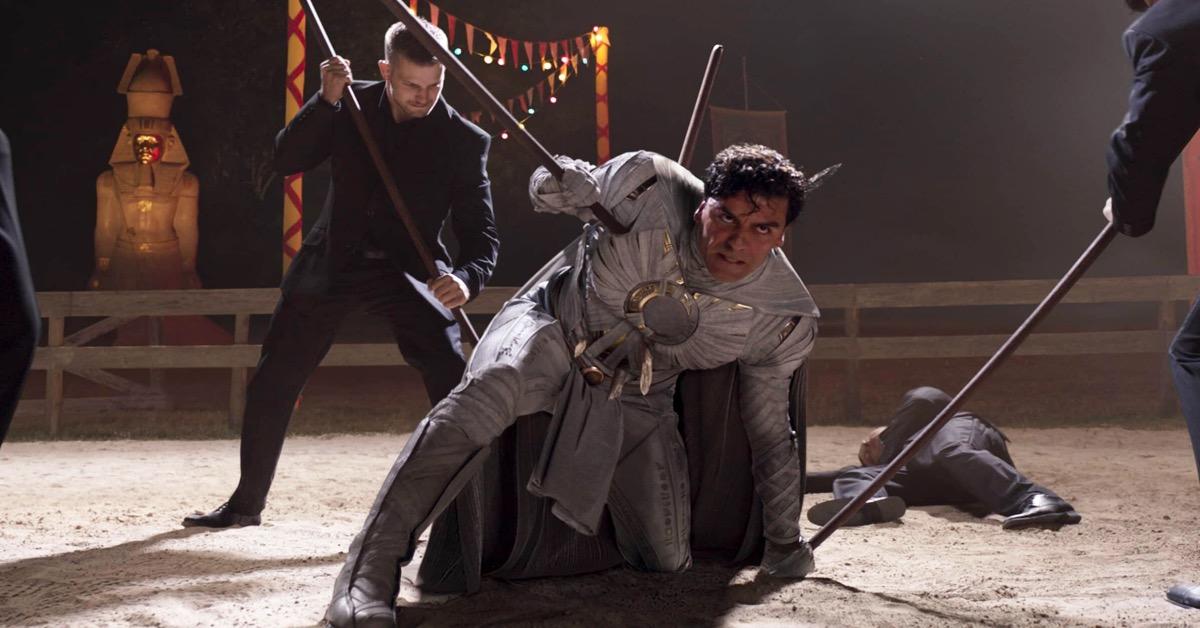
Moon Knight has only just released its final episode, and Marvel Studios is already hinting that it won’t actually be the show’s last. From the very beginning, the Oscar Isaac-led project has been marketed as a “limited series.’ The show was even submitted for Emmy’s consideration in the “limited” category. Presumably the original idea was for Moon Knight to act as a standalone entry in the Marvel Cinematic Universe, introducing Marc Spector and Steven Grant to a wider audience and then sending them on their way to larger team-ups or other spin-offs. However, a recent tweet from Marvel’s official account has cast doubt that this is still the plan.
On Monday, the account tweeted out the trailer for the conclusion of the series with a caption that read “epic series finale.” That is, of course, exactly what one might expect to see. Yet, the tweet was taken down a short time later and replaced with a new post that instead read “epic season finale.” This is far from official confirmation of another season, but the decision to change the wording of above the trailer is definitely a little suspicious. At the very least, it indicates Marvel Studios may not be as certain about the way they’ll handle the future of Moon Knight.
As a side note, this could potentially mess with the show’s chances at the Emmys. Even though the tweet might be a mistake, it still could be enough to disqualify Moon Knight from “limited series” contention. The Television Academy has reportedly been trying to crack down on shows attempting to use loopholes to win awards. They may view this as evidence of Marvel hoping to do the same.
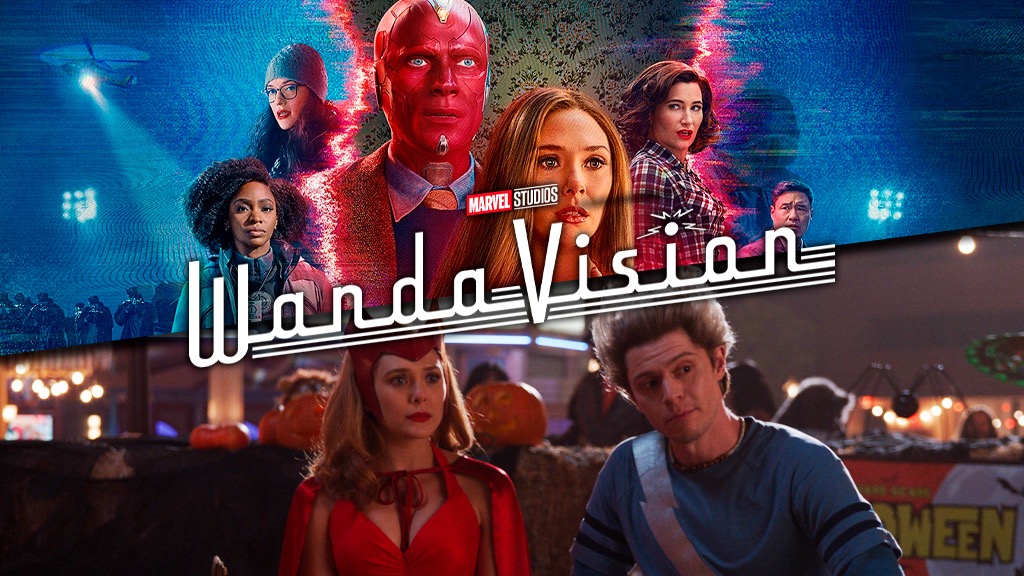
When WandaVision first debuted, fans were unsure of what to expect. Not only was it a unique series that would take Wanda across various decades, but it was the first series produced by Marvel Studios, leaving fans to theorize with each new episode. The common theory, of course, was that Mephisto would appear. However, there was one other theory that fans speculated over for weeks – whether or not Evan Peters’ Quicksilver was from the multiverse.
While we were the first to break the news that Peters would appear in the series, even we were unsure how Peters’ Quicksilver would debut within the Marvel Cinematic Universe. Would he be the new Pietro going forward? Or was his role merely a cameo? Unfortunately, though, in the end, Peters’ Quicksilver was essentially a throwaway as the actor was later revealed to be playing the role of Ralph Bohner who was under the influence of Agatha Harkness. For fans, it was a frustrating reveal. As it turns out, though, Scarlet Witch actress Elizabeth Olsen wishes they’d gone that route with the character.
In a recent interview with The Independent, Olsen noted that she found many of the fan theories surrounding WandaVision to be clever. “I love fan theories ‘cause I always think they’re very clever. There are usually ones where I’m like, ‘S***, we should have done that!”
She specifically noted the theories surrounding Peters’ Pietro. “There was one where they thought we were bringing in the Multiverse with the Pietro character, with Evan [Peters.],” she explained. “The sad thing is, when we were doing WandaVisionbefore Covid, that was not part of the docket yet, and then itkind of overlapped when we finished the show. So we could have actually gone back and fixed or adjusted that. I thought that could have been cool to make Pietro a part of the Multiverse.”
While certain fan theories regarding WandaVision didn’t come to fruition, the expansion upon the multiverse in Doctor Strange in the Multiverse of Madness is sure to open plenty of doors going forward.
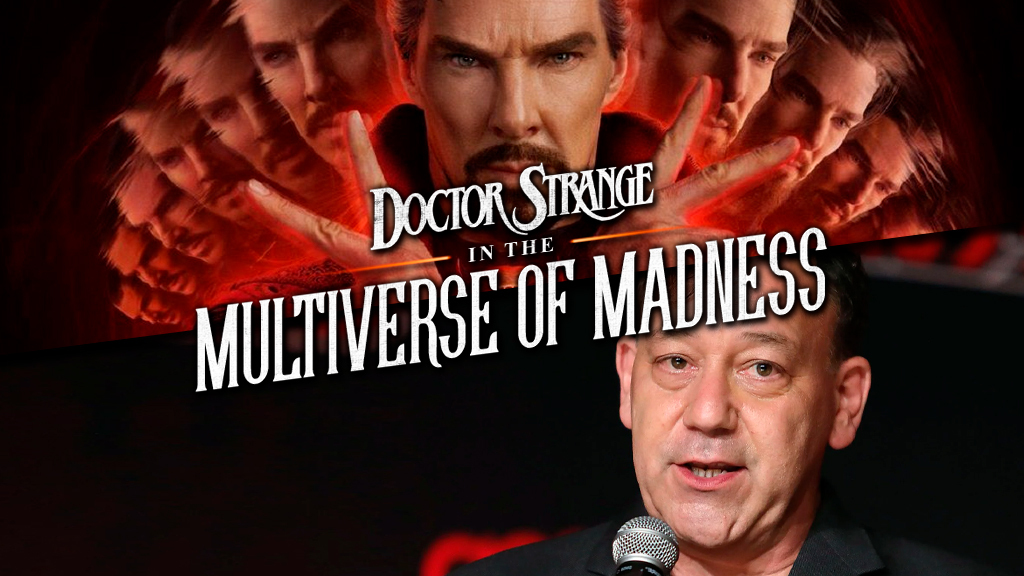
Doctor Strange in the Multiverse of Madness may be the first Marvel Cinematic Universe project with “multiverse” in the title, but it’s certainly not the first to tackle the topic. The movie is set to continue some of the plotlines established in both Wandavision and Spider-Man: No Way Home, and will utilize several elements first introduced in Loki. Keeping this in mind made things a little more complicated for director Sam Raimi, who had to juggle more than just his own project when developing plotlines. Luckily, the filmmaker is pretty sure everything turned out for the best, and even had some help from writer Michael Waldron along the way:
It was a fun challenge, and a little scary. Most of the work was done by [screenwriter] Michael Waldron, who is a really big fan of the Marvel Comics and has friends on the WandaVision writing staff, so we would communicate with each other, the WandaVision team and ours and the Spider Man: No Way Home team, and we would keep abreast of their changes. And even while we were shooting, they were shooting, and we’d be making changes based on changes that they made, because we really wanted this to be the next installment. We really wanted it to be a really good — not sequel, but a very logical next step for the fans.
Sam Raimi
This could partially explain why Multiverse of Madness underwent so many reshoots during production. The MCU seems to be an ever-changing beast, like any good comic book universe, and the next solo Doctor Strange adventure still has to fit somewhere between the lines. It also likely didn’t help that Multiverse of Madness was originally scheduled to premiere before No Way Home, which meant the way both films referenced each other would have had to be changed to accommodate the new timeline. Thankfully, it seems like this level of studio adjustment worked out better for Raimi than it did when he was making Spider-Man 3 in 2007.
Check out Multiverse of Madness when it hits theaters on May 6.
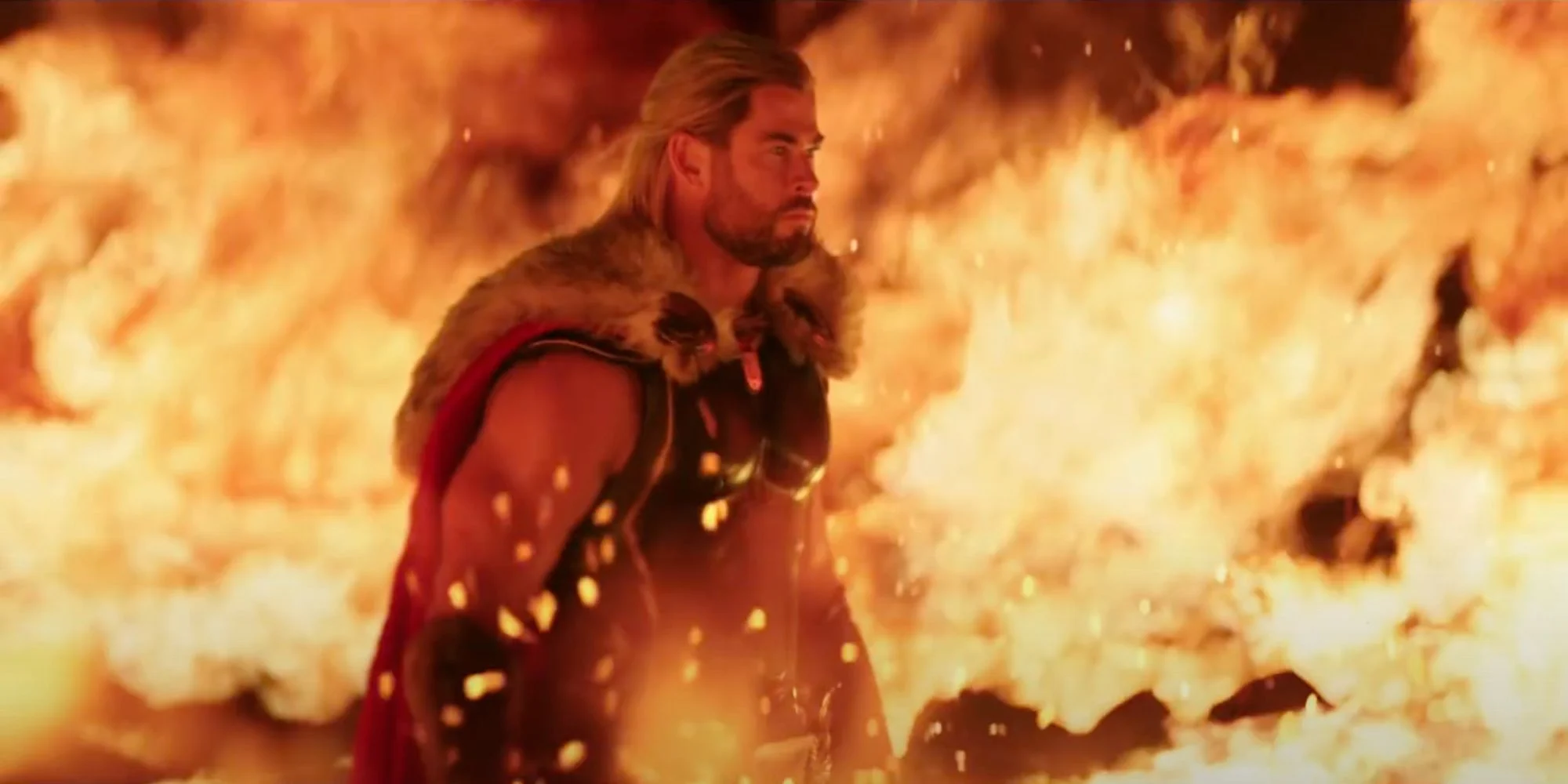
Taika Waititi wasted no time making it clear that his version of the MCU’s Thor would have little in common with the character that was introduced in 2011 and spent several years and appearances being overshadowed by his fellow Avengers. After being sidelined in 2016’s Captain America: Civil War, the God of Thunder returned in 2017’s Thor: Ragnarok in which Waititi deconstructed the hero and set him on a journey that would find him stripped bare of everything that he thought he was and all those who mattered to him. When we last saw him at the end of Avengers: Endgame, Thor was headed out into the galaxy to star over. And according to Waititi, in an interview with the Associated Press, that’s right where his story will pick up in this summer’s Thor: Love and Thunder.
Thor is just trying to figure out his purpose, trying to figure out exactly who he is and why he’s a hero or whether he should be a hero. I guess you could call it a midlife crisis.
Taikia Waititi
The recent teaser for the film gave that vibe, with Thor meditating and reflecting while searching for peace. Unfortunately for the Odinson, any peace he finds will be fleeting as he’s fated to come face-to-face with Gorr the God Butcher who was teased-not-seen in the aforementioned teaser. According to Waititi, Gorr-brought to the screen by Christian Bale-will not only provide an unprecedented threat to Thor, but is poised to find himself in high company saying, “in my humble opinion, we have probably the best villain that Marvel’s ever had in Christian Bale.”
And though Thor has lost his father, his brother, his Warriors Three and his best friend, he’s picked up a couple of new pals along the way in Valkyrie and Korg, and is set to be reunited with familiar face he thought lost in ex-flame Jane Foster. These friends, old and new, will be with him while he takes on a threat not only to him, but gods of all Pantheons. Waititi calls the squad “a great, really fun, weird little group of heroes, a new team for Thor with Korg, Valkyrie and The Mighty Thor.”
Waititi isn’t one to make promises upon which he can’t deliver. He’s often described Love and Thunder as crazier than Ragnarok and if he’s hyping it and Bale’s performance this much, there’s reason to be excited. Thor: Love and Thunder hits theaters this July.
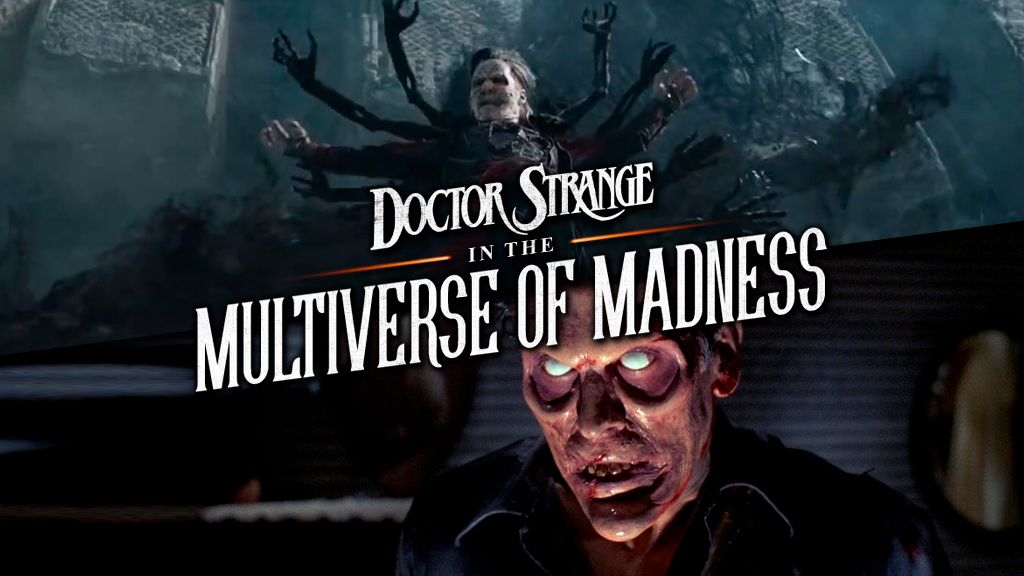
Since it’s very announcement, Marvel Studios has been describing Doctor Strange in the Multiverse of Madness as their first true foray into the horror genre. As such, it made a lot of sense when the company hired Sam Raimi to replace Scott Derrickson as the film’s director. The iconic filmmaker has experience with both comic book projects and horror movies, and has even mixed the two before in 1990’s Darkman. However, it was apparently his work on the famed Evil Dead franchise that helped him the most throughout filming of Doctor Strange. In a recent interview with Fandom, Raimi explained:
It was really nice to have the experience of having made those horror films because I could take my knowledge of building suspense and delivering scares, and when it got spooky in Multiverse of Madness, I could apply those techniques.
Sam Raimi
The latest MCU film is said to be filled with plenty of ghastly moments and jump scares. Raimi is known for his fast-paced camera work and up-close visuals, which the film’s star Rachel McAdams confirmed in her own quote:
He’s really great at describing what is happening in his mind’s eye, thank goodness, because, you can see it all sort of swirling in there. And you’re like [whispering] ‘What are we doing? What’s happening?’ And then he’s very good about taking you through the whole day and what this will look like and what’s coming towards you and the build up of a scene and how scary it’s going to be. You sort of start to understand, like, ‘Oh, this is my part in this. And this is how I can help him make it as scary as possible.’ That was kind of fun. And doing super, super tight shots – like, way up in your face! But once you know why, that’s kind of exciting.
Rachel McAdams
Fans will see just how terrifying Doctor Strange can be when Multiverse of Madness hits theaters on May 6th. News
As Doctor Strange in the Multiverse of Madness prepares to blow fans’ minds, more information is coming to light about what it was like behind the scenes. Audiences are eager to witness director Sam Raimi’s return to the Marvel movie scene and what his signature flair will add to the horror-inspired film.
One aspect of the unreleased film that has caught people’s attention is the official run time. Conversations about run times seem to have increased dramatically in the past few years, and many have questioned whether the Multiverse of Madness’stwo-hour and five-minute run time is appropriate for the perceived scope of the film.
Raimi recently told Collider that the first cut of the film was indeed significantly longer than the final cut. Apparently, the final film was cut down from a two-hour and forty-minute run time. At that length, the Doctor Strange sequel would have been one of the MCU’s longest films to date. The final cut is actually right about the average length for an MCU film.
In explaining that there are a few deleted scenes he expects to make the eventual Blu-ray, Raimi commented on the film’s runtime:
Well, the first cut…I actually don’t remember the length of it…it was probably about two hours and forty minutes and it slowly came down even though we did the reshoots. We took out material even though the reshoots went in.
Sam Raimi
While the runtime is controversial despite the fact that general audiences have yet to see Multiverse of Madness, fans should trust that the filmmakers left out material for the good of the film. You can read our review as to why no one should worry about how long the sequel is.
Doctor Strange in the Multiverse of Madness releases in theaters on May 6, 2022.
Jon Hamm never had the chance to play Mr. Sinister, but he got pretty close. The former Mad Men star revealed recently that he was almost cast as the iconic X-Men villain for a post-credits cameo in Josh Boone’s The New Mutants. If it had happened, it would have teased Hamm’s baddie playing a larger role in the future of Fox’s now-cancelled franchise. Unfortunately, this never came to pass, but the actor is still very interested in returning to the role should the character appear in Marvel Studios’ upcoming X-Men reboot.
Speaking with Comic Book, Hamm explained he’s a lifelong fan of Marvel’s merry mutants and continues to be interested in the characters:
That franchise — it’s so weird to talk about it that way — but I was a big fan of just reading the comic books when I was a kid, the X-Men of the ’80s. And it remains. I remain a fan. It’s an interesting, very cool story, for want of a better word.
Jon Hamm
Mr. Sinister, a.k.a. Nathaniel Essex, is an ageless evil scientist from the Victorian era, who is obsessed with cloning and experimenting on mutants in search of perfecting the human race. He was teased in both X-Men: Apocalypse and Logan, and was reportedly set to appear in Channing Tatum’s Gambit before that project met it’s end. Hamm continued to reveal he’d still like to play the character if given the chance:
I think that what they’ve been able to do, and what I think their plans — and I’ve talked to people that plan these kind of things — with how they are expanding these stories, and the wit and the creativity with which they are presenting these stories, really gets back to the old way that comics were presented. Something like the most recent Spider-Man, which was such a cool iteration of that idea of the Multiverse and what’s happening and how three things can exist at the same time, it’s very creative. The way that they lean into that creativity is something that, for sure, I’d be happy to be a part of.
Jon Hamm
Sinister is one of the untapped treasures gained by Marvel Studios when Disney acquired Fox in a 2019 merger. With the mutants on the horizon, it’s likely only a matter of time before Sinister, whose fascination with the Summers’ family has been a big part of the comics, makes his live-action debut.
Doctor Strange in the Multiverse of Madness is almost upon us. You can read our spoiler-free review here. The 28th Marvel Studios feature film will be the latest—and likely biggest—leap into the multiversal lore of Phase Four. The movie promises to be a bold and wild Sam Raimi-directed adventure that sees our titular character, with company from major characters like the Scarlet Witch and America Chavez, travel through the multiverse to prevent a great evil that threatens it.
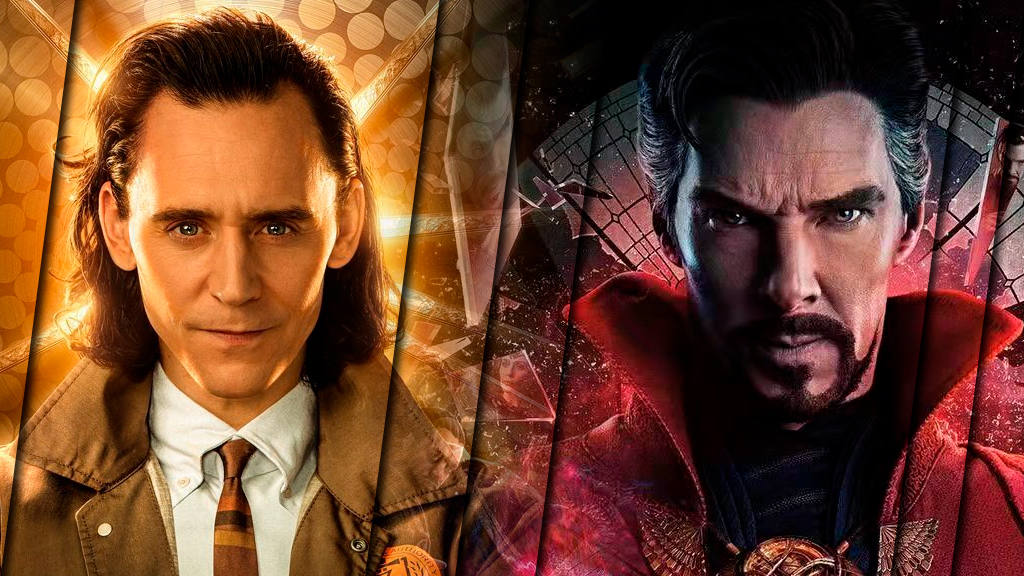
Interestingly, Waldron recently told Digital Spy that he has some regrets about how rigidly he defined some of the “rules” of the multiverse in Loki due to its potential effects on future multiverse projects:
We worked pretty hard on Loki to make it as airtight as possible. But there were times when I was like, ‘Oh, shit, I wish I hadn’t have defined that so clearly. I don’t know why I had to be so specific in my time-travel television show about the rules of the multiverse.
Michael Waldron
Even though there may be some challenges in keeping multiversal mechanics consistent in the MCU as a whole going forward, Waldron still believes that his work on Loki greatly benefitted the writing process of Multiverse of Madness. He stated:
But, I was glad that I came in with institutional knowledge of the multiverse and was able to get the creative team of DoctorStrange on the same page as me on everything. Because like with Loki, that’s the most important thing when you’re dealing with this…You have to all have a shared language of all this stuff, otherwise it can get pretty confusing.
Michael Waldron
If Loki limited some of the creative direction of Multiverse of Madness with respect to the physics and understandings of the multiverse, it seems as though it still ultimately enabled the sequel to have a coherent and consistent tone with the MCU. A “shared language” about the multiverse will undoubtedly come in handy to both filmmakers and audiences going forward.
Doctor Strange in the Multiverse of Madness releases in theaters on May 6, 2022.
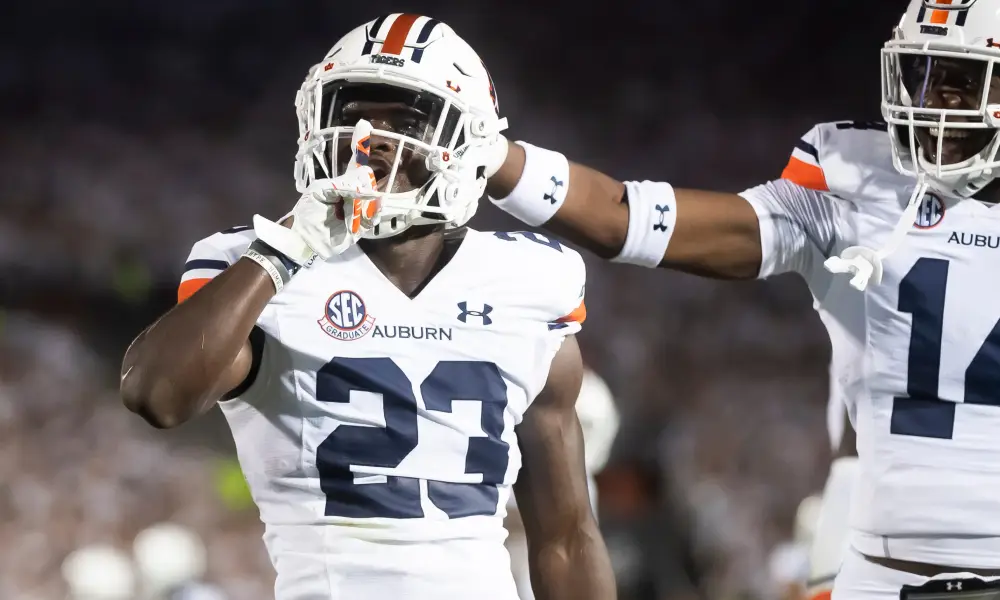
Player: As a Colts fan, it pains me to say this, but I’m banging the table for rookie Titans CB Roger McCreary. He is a STUD and if not for height, Roger likely would’ve been a first round pick. He should thrive as a slot corner. #WarEagle
Team: The Baltimore Ravens had a sneaky good draft. They were able to get great talent and not reach for players. They added quality depth and potential starters at several positions (Kyle Hamilton, David Ojabo, and Jaylyn Amour-Davis for example). Hats off to Eric Decosta and the front office staff.
Dalbin Osorio
Player: Meg went with someone from her own team, so I’ll mirror that and pick Jets rookie RB Breece Hall. Connor Rogers of Badlands compared the 2nd round pick to former Saints RB Deuce McCallister, and the measurables all line up. To run a 4.39 40 at 6’2″ is absurd, and he gives the Jets their first homerun threat out of the backfield since Chris Ivory. He’s my pick for offensive rookie of the year.
Team: The Philadelphia Eagles did absolute work in this draft. Not only did they make good use of their capital by acquiring a 2023 first round pick in a draft with better QBs than this one, but they also were able to acquire stud WR AJ Brown and they also added Georgia Bulldog leader Nakobe Dean. We don’t know if Jalen Hurts is the answer, but with a good OL, two top-end WRs, one of the better TEs in the sport, and a potent running game? We’re about to find out. If not, the Eagles have the ammo to go get their guy next season.
May 4, 2022 is a landmark day in the history of Marvel Studios as the 10 year anniversary of the release of The Avengers. While the true start of the Marvel Cinematic Universe was with 2008’s Iron Man, it wasn’t until the first true crossover that it became fully actualized and proven as a serious force in the movie industry. As the MCU has progressed into new territories since then, let’s stop down and recollect on five ways this film has changed the way major studio films have been made since.
#1: The Rise of the “Cinematic Universe”
The most obvious impact The Avengers has had on the larger film industry is major studios’ insistence on trying to follow suit of Marvel and create their own universes with characters from various connected films. Before, the concept of crossovers within major films were few and far between, and mainly predicated on passing references that’d never be followed up on. A fully interconnected cinematic universe was a concept many were skeptical of before the release of the 2012 summer blockbuster. Doubts were held over whether or not audiences would buy into the concept that a billionaire in an iron suit, a World War II hero, and a god from Norse mythology would fit in together in the same film. However in earning over $1.5 billion in the box office, Marvel Studios proved this idea to be a great success. Following this, general audiences were inundated with various attempts to copy Marvel’s formula to various levels of success. These have ranged between Warner Bros’ modestly successful MonsterVerse and Universal Pictures’ laughably ill-fated attempt with the Dark Universe. However, none have truly matched the level of success found in the Marvel Cinematic Universe and The Avengers.
#2: Relatability in Characters
While the rise in cinematic universe could be considered the most noticeable impact of The Avengers on major studio releases, the largest impact the film had was ushering in a change of the way audiences wanted to perceive their characters. In a vast majority of marquee films before 2012 (especially in relation to superhero films), central protagonists were treated as absolute godly figures. To use the then most recent popular superhero franchise as an example, Christopher Nolan’s Dark Knight trilogy presents Batman as someone with the strongest moral character once he has accepted the responsibilities of his powers and begins fighting crime. He’s not a character with much nuance to him and his struggles are presented to be more based on external threats around him than any meaningful internal pathos. Meanwhile, audiences were leaving The Avengers generally talking more about the moments of character development than the big action set pieces. Viewers made great connections to seeing the protagonists have to struggle with their internal identities to be able to work as a team. Ultimately, The Avengers made us realize we wanted our cinematic pillars to be more human and relatable.
#3: The Anticipation of Post-Credit Scenes
While focusing on essentially a solitary minute of The Avengers 143 minute runtime feels at least partially ridiculous, it can’t be denied that the end of this film changed the way major feature films optimized the coda of their projects. The ominous closing shot of Thanos looking towards the camera set the stage for the long-term destination of the Marvel Cinematic Universe. And with it, this generated large quantities of fan excitement at the thought of the road ahead and how these future films would connect. This indeed ended up becoming a strategically brilliant decision for Marvel Studios and Walt Disney Pictures both creatively and from a business stand-point at the time. Moving forward, large expectations have been made for essentially every blockbuster-type film to close with some hint of the future or how what audiences just saw connects to a bigger picture. Arguments can certainly be made for if this has now grown into more of a net-negative for the film industry and the creative process, but it’s certainly present and can be traced to Marvel Studios first major crossover project.
Reflecting on the ten years since the release of 2012’s The Avengers paints the picture of how the film not only changed the course of Marvel Studios, but the entirety of the Hollywood film industry. And it will be compelling to look further into how this landmark film maintains its impact in the decade to come and beyond.
Cookie Consent
We use cookies to improve your experience on our site. By using our site, you consent to cookies.
This website uses cookies
Websites store cookies to enhance functionality and personalise your experience. You can manage your preferences, but blocking some cookies may impact site performance and services.
Essential cookies enable basic functions and are necessary for the proper function of the website.
Name
Description
Duration
Cookie Preferences
This cookie is used to store the user's cookie consent preferences.
30 days
These cookies are needed for adding comments on this website.
Name
Description
Duration
comment_author_email
Used to track the user across multiple sessions.
Session
comment_author_url
Used to track the user across multiple sessions.
Session
comment_author
Used to track the user across multiple sessions.
Session
Statistics cookies collect information anonymously. This information helps us understand how visitors use our website.
Google Analytics is a powerful tool that tracks and analyzes website traffic for informed marketing decisions.
Contains information related to marketing campaigns of the user. These are shared with Google AdWords / Google Ads when the Google Ads and Google Analytics accounts are linked together.
90 days
__utma
ID used to identify users and sessions
2 years after last activity
__utmt
Used to monitor number of Google Analytics server requests
10 minutes
__utmb
Used to distinguish new sessions and visits. This cookie is set when the GA.js javascript library is loaded and there is no existing __utmb cookie. The cookie is updated every time data is sent to the Google Analytics server.
30 minutes after last activity
__utmc
Used only with old Urchin versions of Google Analytics and not with GA.js. Was used to distinguish between new sessions and visits at the end of a session.
End of session (browser)
__utmz
Contains information about the traffic source or campaign that directed user to the website. The cookie is set when the GA.js javascript is loaded and updated when data is sent to the Google Anaytics server
6 months after last activity
__utmv
Contains custom information set by the web developer via the _setCustomVar method in Google Analytics. This cookie is updated every time new data is sent to the Google Analytics server.
2 years after last activity
__utmx
Used to determine whether a user is included in an A / B or Multivariate test.
18 months
_ga
ID used to identify users
2 years
_gali
Used by Google Analytics to determine which links on a page are being clicked
30 seconds
_ga_
ID used to identify users
2 years
_gid
ID used to identify users for 24 hours after last activity
24 hours
_gat
Used to monitor number of Google Analytics server requests when using Google Tag Manager
1 minute
Marketing cookies are used to follow visitors to websites. The intention is to show ads that are relevant and engaging to the individual user.
Pinterest Tag is a web analytics service that tracks and reports website traffic.