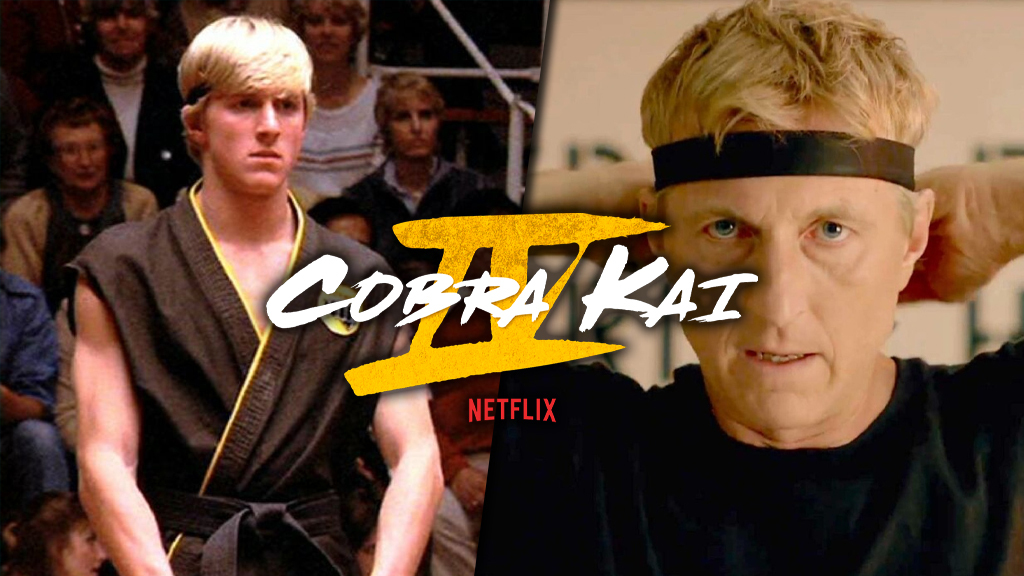
When Cobra Kaiwas first announced as a YouTube Red series in 2017, many were curious to see how the series would go about redeeming Johnny. After all, he was a huge bully as a member of Cobra Kai in the Karate Kid films – films that hadn’t exactly done a great job of making him more than a one-sided villain. Thankfully, Cobra Kai offers more of a morally gray area to explore Johnny Lawrence as a character. The series has never shied away from his faults in the past. In fact, Cobra Kai seems to embrace his mistakes, allowing him to truly grow as a character.
He’s a screw-up. There’s no denying as much. Johnny will never be Daniel LaRusso. The temper is still there, although he’s more capable of holding it back these days, and he loves his Coors. Over the course of three seasons, though, Cobra Kai has turned Johnny from a one-note villain into a fully-realized character. He’s no longer merely a combative drunk looking to pick a fight. He’s a man determined to right his wrongs, even if he ultimately goes about doing things incorrectly.
The Johnny Lawrence we meet in Season 1 of Cobra Kai is a down on his luck man who is simply trying to make ends meet. When he finds himself before LaRusso again, though, things take a turn for the worse and he ultimately decides to reopen Cobra Kai – much to LaRusso’s chagrin. Enter Season 2: Johnny and LaRusso are still bitter enemies, who unknowingly impose their issues with each other onto their students, resulting in a massive fight that nearly kills one of the show’s main characters: Miguel.
Miguel, of course, is presented as a do-over for Johnny, who failed to be there for his son, Robby. While both characters are the same age, Miguel willingly accepts Johnny’s help and cherishes the time with his Sensei as he doesn’t have a father figure to look up to. Whereas, Robby is unwilling to look beyond the past and accept that his father wants to make things right. This is something we see further explained in Season 3 when Kreese steals Cobra Kai from Johnny and seeks to turn the students into trained fighters against Johnny’s will.
Johnny doesn’t want Cobra Kai to be what it was when he was younger. He wants it to be better; he wants the students to be better than him because he knows what Kreese taught them was wrong. He tries to be the good guy, but he can’t seem to get it right, no matter what he does. Thankfully, Season 4 of Cobra Kai looks ready to let Johnny grow beyond Cobra Kai as the trailer shows him working alongside LaRusso.
While Kreese, a war hero, is unable to let go of his past, Johnny wants nothing more than a chance at a future with those he hurt in his past. He wants what is best for Robby, even if he keeps screwing up trying to make things right with everyone else. He knows he wasn’t there for Robby in the past, but he wants to be there now, if only Robby would let him. It’s also clear he’s trying to move beyond his issues with LaRusso, knowing his own personal grudge against the man has done nothing but hurt those around him.
Johnny Lawrence has shown more growth throughout three seasons, while LaRusso often feels as though he has regressed. In a franchise that once feared allowing Johnny to be more than the bad guy, Cobra Kai has allowed him to be more than his past self: he’s a mess, sure, but he’s trying to clean up his mess. After all, as he showed by cutting off his step-father, we are more than what lay behind us.
At the start of 2021, I took it upon myself to try something I’ve never done: finish as many video games as I could in a span of the year. Finish in this context meant completing a game’s campaign/story. I completed 53 games in 52 weeks, ranging from clockwork puzzlers to post-apocalyptic immersive sims (you can see the full list here).
I would generally play one game at a time; sometimes two if they’re different enough (for example, playing a light puzzle game on the PC is a nice breather from grinding bosses in Final Fantasy 7 Remake). Mind you, no speedrunning was involved in any of these playthroughs. In some games, I tried to maximize how many achievements/trophies I could get in a single playthrough.
Overall, it’s an experience worth trying but it’s one I might not try again. At least not at the pace I did it. While I didn’t rush through any of them, a lot of my time was spent just curating which game to play for the month to avoid feeling burnt out. The process of doing that ironically burnt me out.
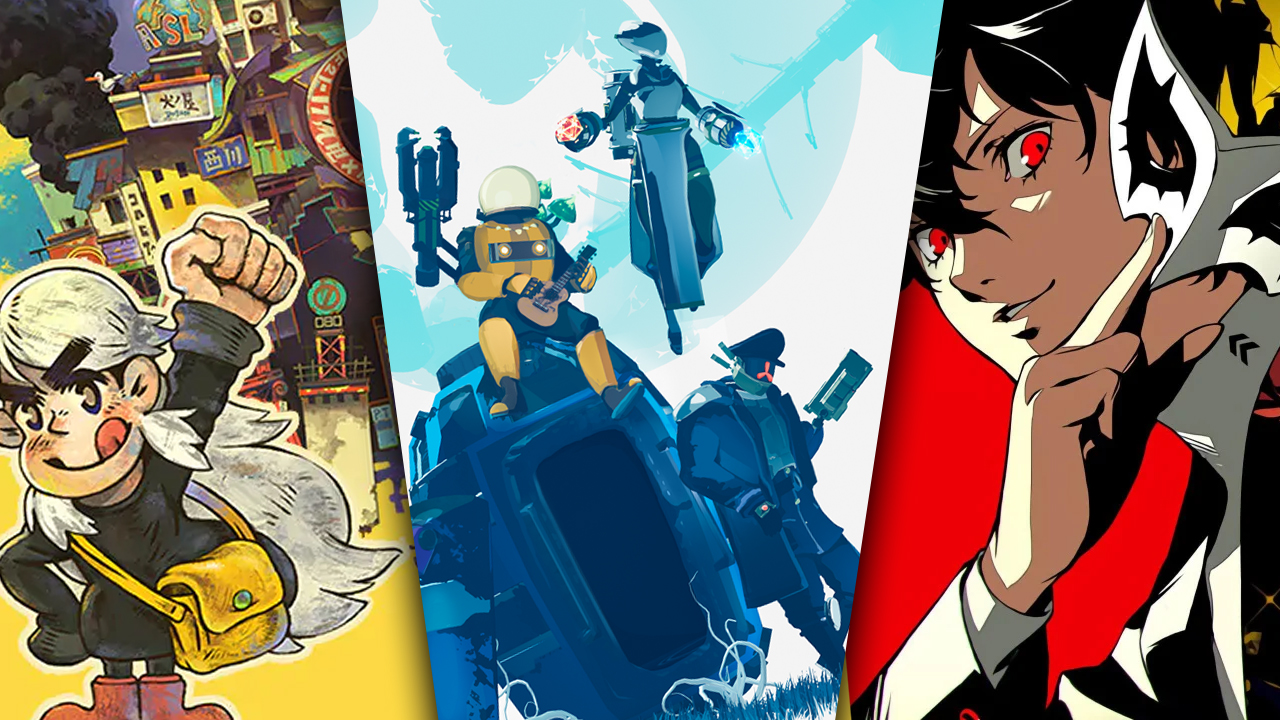
With all that out of the way, here are the ten best games that truly struck me out of the 53 I played. It should go without saying that none of these are games from the year.
Disco Elysium
Like any good hardboiled detective story, Disco Elysium opens with a detective walking up from a drunken stupor, spoken to and chastised by the black abyss of his mind. Disco Elysium seemingly plays like any other old-school CRPG yet breaks the mold with its distinct skill tree and Thought Cabinet system, representing the lead detective Harry DuBuois’ deepest thoughts and personality traits. These mechanics, partnered with the game’s elaborate vision of a dystopian continent, its lavish art style, and startlingly profound whodunnit story, makes it one of the best noir games ever made. It’s a game that sucks you in with its moral and political complexities.
Metal Gear Solid V: The Phantom Pain
The concept of an open world with sandbox gameplay has never seen better days than when Hideo Kojima released his magnum opus Metal Gear Solid V: The Phantom Pain. In true Kojima fashion, none of the game’s minutiae – narrative and mechanics – have any business working but it all ends up coming together like a perfect storm. The game is rife with truly memorable moments such as the explosive prologue and its many infiltration missions, proudly wearing its many excesses on its sleeve. Even its lackluster second half is made worthwhile just by the scope of the gameplay mechanics. I spent more than 50 hours playing this, still don’t understand a damn thing about the story and that’s okay.
The Last of Us 2
The Last of Us 2 is an oxymoron: it’s fun as hell to shoot zombies and cult members yet it’s also so heavy to play through its narrative. Ellie’s spiraling story of vengeance and isolation held against Abby’s brutal search for her own humanity makes for a gaming experience that’s harrowing as it is engaging. The Last of Us 2 pulls no punches its moment-to-moment gameplay, making every second near-unforgettable, for better or worse. It was a blessing to be able to experience this game untethered from all the vitriol and hate surrounding it as I got to appreciate it for all that it was.
Spiritfarer
2021 was the year my adult self was ever faced with the prospect of death. Earlier this year, my mom had a near-death experience with COVID-19, to the point where she had said her last goodbyes to me. My mom thankfully survived the ordeal and but I wasn’t in the clear with death yet. Not too long ago, my adopted cat passed from a terminal condition.
It’s only fitting that the last game I played this year was Spiritfarer, a management simulation that is in many ways a study on death and the afterlife. Spiritfarer has all the bells and whistles of a management sim but its soulful premise is what makes it stand out. You play as Stella, a deceased girl tasked with bringing departed souls to the afterlife. The souls you meet throughout the game are people you’ve previously known in the physical world and it’s your job to make sure their trip to the afterlife is as comfortable as it can be.
Spiritfarer is almost a transformative experience for someone going through some form of grief. It’s a study in saying goodbye while also learning to tether one’s self to the things that matter. The game frequently moved me to tears that as soon as the credits rolled, I wept my eyes out. Spiritfarer is one powerful piece of art.
Risk of Rain 2
I’m never been big on roguelikes. I dislike randomness. I don’t like RNG-based mechanics. I like structure in my games. I don’t like to start fresh every playthrough. I like the hours I spend playing to be worthwhile that I can’t afford any of my progress to be temporary. Yet Risk of Rain 2 is my most played game of the year.
It’s hard to argue against a game that offers so much replayability, from the diverse characters with unique load-outs, the builds from the items you amass to the many secrets of the planet Petrichor V. The game also has a soundtrack straight out of the 70s progressive scene. Over a hundred hours in, I still find countless reasons to play the game.
Ori and The Will of the Wisps
Ori and The Will of the Wisps began my love affair with Metroidvanias. I coasted the past 10 years without playing a single one, not knowing what riches the genre offered. Having been aware of the first game, for the most part, it wasn’t until the trailer for Will of the Wisps came out that I got interested.
From the game’s main menu alone, I knew I was in for something special. Gareth Coker‘s score instantly cradles you into this lush yet dangerous world. Much like the creatures in the game, the music is just as much a character in it, evoking a sense of added wonder to this Laika-esque tale of family and friendship. In addition to that, the controls are so precise and kinetic. The level design, dynamic and always exciting.
Hollow Knight
If Ori and the Will of the Wisps was my gateway drug into the Metroidvania genre, Hollow Knight was my “git gud” rite of passage. I’ve never been more infuriated and enamored with a game simultaneously than Hollow Knight. It’s punishing yet so rewarding. The feeling of painstakingly getting through the White Palace, the hardest video game level I have ever encountered, dying every step of the way and eventually finishing it is a feeling of relief I’ll never get to feel again.
Persona 5
If you ever wondered what it was like to live life as a student by day and as an interdimensional creature collector by night, the Persona franchise is the franchise for you. The fifth installment of the series, puzzlingly titled Persona 5, singlehandedly scratched my annual JRPG itch in a way that Final Fantasy 7 and Final Fantasy 7 Remake could not. Social simulators can’t get any better when you marry them with turn-based dungeon crawling and an anime narrative that’s one for the books. Persona 5’s scope is sprawling, as it offers players so many things to do. It also happens to feature one of the toughest last bosses I’ve ever fought in a JRPG.
Yakuza 0
If you told me that Yakuza 0, a franchise known for its silly excesses that have generated thousands of memes, would feature one of the most compelling crime stories put to a video game, I would have scoffed. But for all the insanity within Yakuza 0, writer Masayoshi Yokoyama pulls it off in a way that would make any other writer rife with envy. This is a game whose story I definitely enjoyed more than the gameplay.
Eastward
This game is memorable for being the first game I got to access early as a member of the press but that’s not the sole reason why this makes the list. Eastward is a charming pixel top-down adventure by way of the classic Zelda gems, set in a post-apocalyptic wasteland. The game is mechanically simplistic and is mostly driven by its sprawling, big-brained, sci-fi, JRPG narrative but it all comes together in a really satisfying way. The art style is so mesmerizing as well as the music.
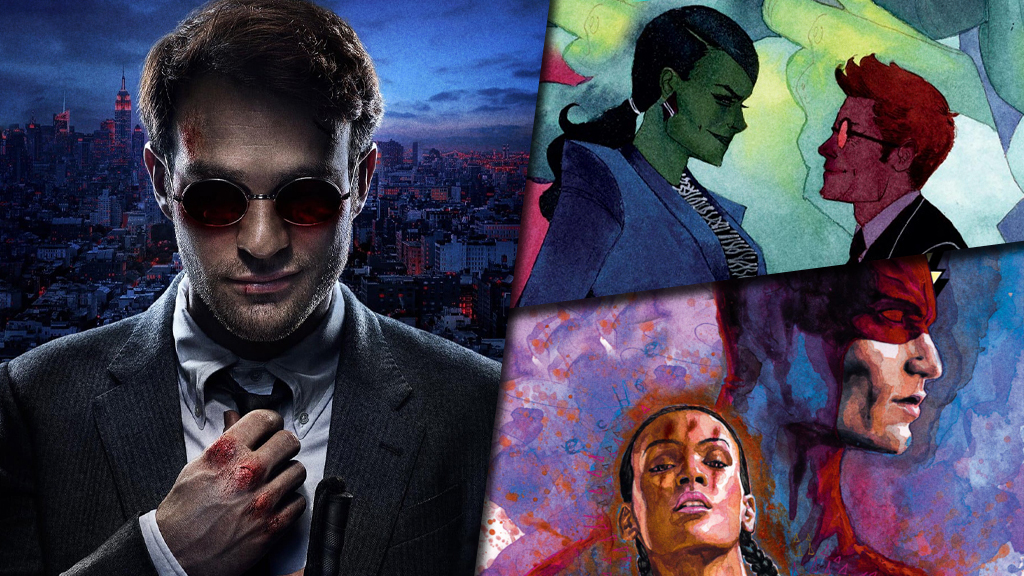
Following the cancellation of Netflix’s streaming series, Daredevil, fans united under the #SaveDaredevil movement to make it clear that Charlie Cox’s iteration of the character shouldn’t be retired. In late 2020, the first reports of Cox’s return to the role in Spider-Man: No Way Home circulated and sparked a debate among disbelievers that wasn’t truly settled until nearly a year later when Kevin Feige finally declared that Cox would be returning in the role. Though his appearance was brief, it was met with thunderous applause in theaters and has fans wild with anticipation about when they might see him again. Several months ago, a source who confirmed Cox’s return to the MCU last December shared something that should add to that anticipation. When asked where Cox might appear again, the response was, “expect to see him everywhere.” With a recent run of rumors lining up with that statement, let’s take a look at what’s next for Cox’s character.
She-Hulk
Rumors have persisted that the next place we’ll see Charlie Cox is in Marvel Studios yet-to-be-dated for 2022 streaming series, She-Hulk. This rumor (is it even still a rumor at this point) makes too much sense for it not to happen and promises that Cox will have quite a bit more to do than catch a brick. Rumblings have Cox showing up in the court room as Murdock, where he’ll probably go up against Tatiana Maslany’s Jennifer Walters. The two, of course, faced off in Charles Soule’s 2014 She-Hulk, and had quite a fun relationship. It is worth noting that while the rumor has them facing off in a court case involving a superhero tailor, issue #9 of Soule’s run found the two on opposing sides of a case involving an old, depowered Steve Rogers. With Chris Evans rumored to return for two non-Captain America projects, his presence would make for one helluva surprise.
Of course that’s only half the rumor and the other half sounds a whole lot more fun. Probably also inspired from the same Soule run, the rumor suggests that Cox, sporting a shiny, new, yellow suit and kicking some ass as Daredevil. It looks as though Cox’s reintegration into the MCU is going to be step-by-step with She-Hulk giving fans their first chance to see Daredevil hit the skyline again. So we’ll see the character at least once in 2022, though there is a rumor he has some role to play in Moon Knight as well.
Echo
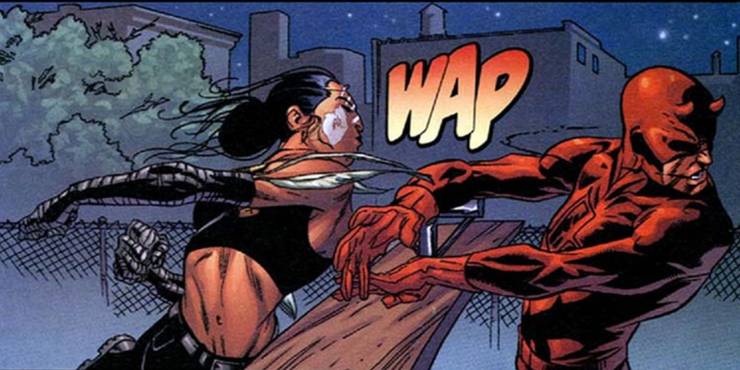
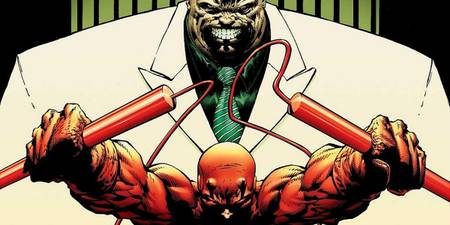
Daredevil is also rumored to be appearing in the Marvel Studios streaming series, Echo, which is currently slated to go into production in April. Echo will feature several new Native American roles and a couple of new, female villains but there’s definitely room for Daredevil. Whatever role Cox’s character plays in the series, it’ll be markedly different from the source material. Echo was first introduced in Daredevil Vol. 2 and was trained and sent out by Kingpin to take out Daredevil, who he blamed for the death of Echo’s father; along the way, she met and fell in love with Matt Murdock. While the two did battle, Murdock was able to convince her of the truth before she killed him. Echo went on to take her revenge on Kingpin by shooting him in the face, similar to the scene we saw at the end of Hawkeye.
Even though that story seems like it’s off the table (we could always see a flashback if Marvel really felt the need to tell it), there’s plenty of room for the two to run into one another. The end of Hawkeye is just the beginning of Echo’s journey. Everything she once thought to be true about her life was revealed as a facade that came crashing down. It’s likely that her journey will lead her back to New York and the Kingpin and that her path will intersect Murdock’s along the way. This should be the first of at least two 2023 appearances for Cox.
Armor Wars
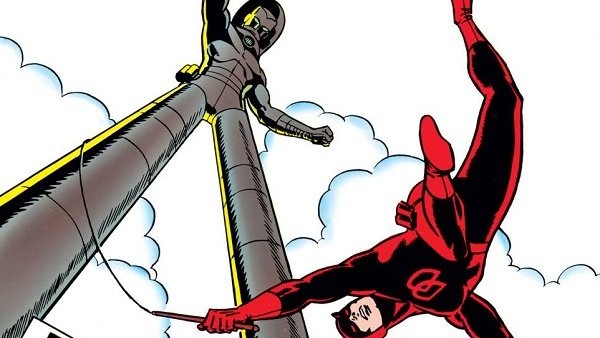
Armor Wars is still a long way off and very, very little is known about it but the premise is that a group of villains mysteriously come into possession of Stark Tech and that James Rhodes will have to deal with the fallout. One of those villains is engineer Wilbur Day who uses the tech to upgrade his original suit. It would represent a major missed opportunity not to include Stilt-Man, originally a Daredevil villain who first appeared on the page in 1965, in Armor Wars and have Rhodey enlist the help of Daredevil in taking him down. Assuming we also see Cox in Echo, this will mark at least his second 2023 appearance (there’s also a rumor he’ll appear in Ironheart, which would come out before Armor Wars).
Spider-Man 4
Spider-Man: No Way Home gave fans the first onscreen meeting of two longtime comic book friends: Spider-Man and Daredevil. Although they only met as Peter Parker and Matt Murdock, hope remains that the two will team-up again down the road to take on a shared foe: Kingpin. While he’s best known as Daredevil’s archenemy, Kingpin first entered the world of Marvel Comics in 1967’s Amazing Spider-Man #50. The stage is set up perfectly for an adaptation of that arc where Fisk united crime bosses into the international crime syndicate known as the Maggia.
Both Tom Holland and Vincent D’Onofrio have expressed their interest in their respective characters coming into conflict, making Fisk a very likely possibility to appear in the next Spider-Man film. With Spider-Man now known to be sticking close to his new NYC neighborhood and Daredevil likely patrolling the city as well, it’s only a matter of time before these two bump into one another and unite to take down the head of NYC’s organized crime. With Kevin Feige revealing that they have already begun work on the next Spider-Man film and Sony’s eagerness to have the character appear every two years, it’s possible that this film could make it into theaters for late 2024.
Daredevil
The final rumor is that a solo Daredevil project is now in development at the studio. I’ll caution (though it’ll do absolutely no good) that being “in development” never, ever means a project will get made but, given the enormity of the popularity of Cox in the role, this odds that this ends up getting a green light have to be high. It it happens, it’s probably 2 to 3 years off but given the possibilities outlined above and Cox’s other contractual obligations, it may well be that long before he can lead his own project. At this point, all we really know is that it is not currently slated to enter into production in 2022.
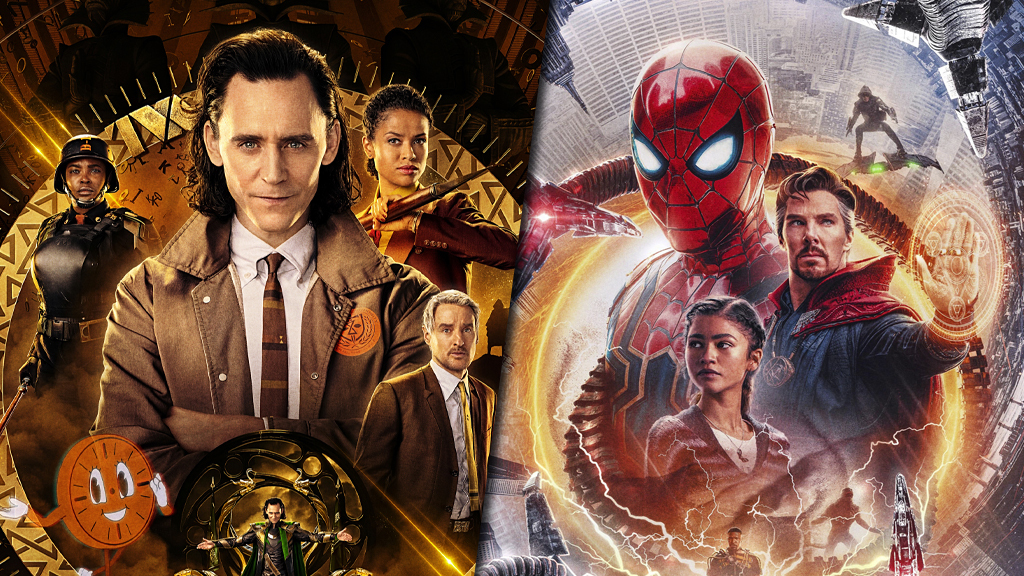
None of us expected it to be the massive gamechanger of 2020 but Loki forever changed the landscape of the MCU when it blew open the doors of the multiverse. This month’s Spider-Man: No Way Home extrapolated on the consequences of the multiverse opening as it brought several characters from previous Spider-Man franchises into the fold of the MCU. Even though it isn’t explicit, there is a connection to be made between the events of Loki and Spider-Man which the writers addressed in an interview with The Wrap.
We were already down this road when that ‘Loki’ finale happened. We all felt like, this really helps. This is great because it shows that there is trouble in the multiverse. Whether certain things that were happening in ‘Loki’ line up in terms of the timeline exploding and is that the same time that Doctor Strange is casting the spell, I don’t know. There is, I’m sure, the Marvel talking points to that. But we were aware of a lot of the different things that were going on, and could we draw on those, how it would be affected by this thing, but ultimately we had our own giant story bear to wrestle with.
The multiversal connection between the two projects may seem like one of the many happy coincidences that make the MCU so fluid and exciting. The Loki writers may not have been specifically aware of such a connection but it’s hard to imagine the stewards of the MCU, Kevin Feige and his think tank of producers, not seeing how it could all tie together. Nonetheless, it’s exciting to think about how Loki, No Way Home, and Doctor Strange in the Multiverse of Madness could make up one big multiversal trilogy.
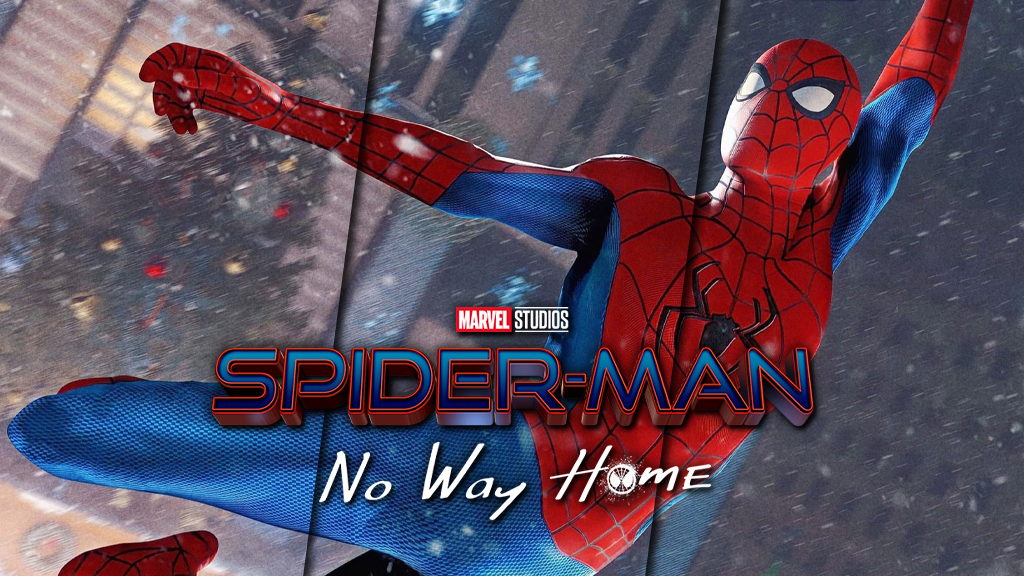
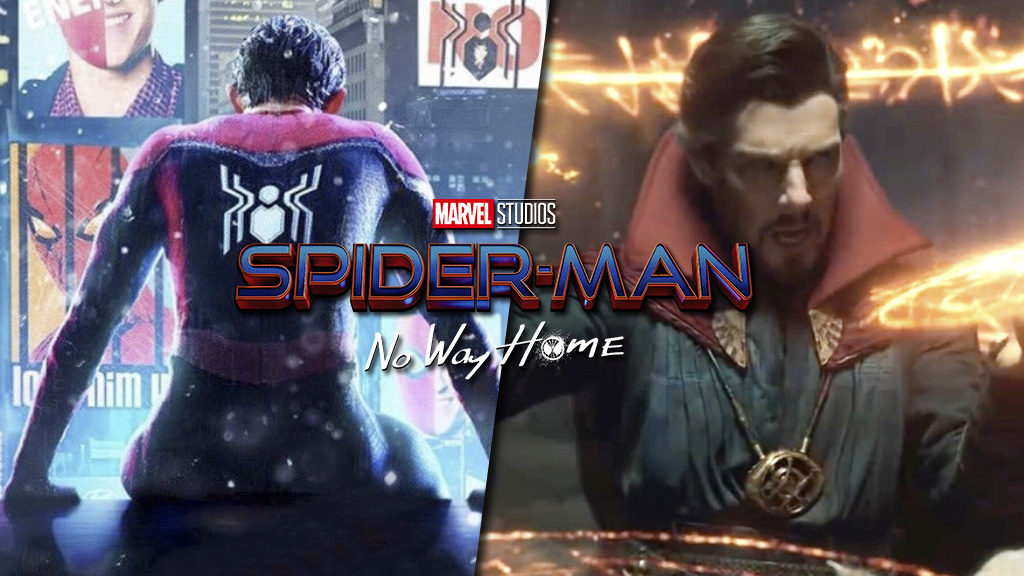
While Tom Holland’s time as Spider-Man has been full of critical and box office success, it has not been without criticisms. Among the most common is that Peter’s relationship with Tony Stark gave the young hero too much, too soon, and took him far away from his comic book origins. Fans grew tired of Parker’s dependance on Stark’s technology, calling him “Iron Boy”, and hoped, with Stark now out of the picture, that Parker would have to learn to fend for himself. Stark tech was present once again in Spider-Man: No Way, both by way of the Ion Spider suit and the fabricator that helped Parker synthesize cures for the multiversal villains. By the end of the film, however, audiences saw a Parker who more closely resembled the young hero from the comics, having learned the true cost of being Spider-Man. And according to the film’s writing duo, Erik Sommers and Chris McKenna, putting Parker in that place was part of their mission.
Fans of the long-running comic book series are used to Peter having to deal with what he’s come to call “Parker Luck.” It’s never been strictly defined by Marvel (I don’t think), but Parker Luck seems like a very specific branch of Murphy’s Law: if anything can go wrong for Peter, it will. More acutely, it seems to explore the inverse relationship between the time Peter spends doing good deeds as Spider-Man and the amount of GOOD things that happen to him. In Spider-Man: No Way Home, Peter’s acceptance of his moral mission as Spider-Man, morals defined by his Aunt May, came at the cost of those he loved most, as McKenna explained:
He was trying to do what May taught him and that made the sacrifice that much more difficult, because it blew up in his face and it got her killed. Then he started questioning that morality in a way that he never really questioned because he hasn’t been put to the test in that way.
How did Parker come to terms with those questions? As we see by the end of the film, he seems to have come to terms with the fact that in order to be the hero he wants to be, there could be no getting around the spell cast by Strange to make people forget him. Though he promised to find MJ and Ned and “make them remember” him, McKenna says he comes to the realization that making that choice would only put them in danger:
You want to have that doughnut scene be him making the last piece of the sacrifice. “I could tell them everything. I can try to get my friends back. But I’d be going right back to the place of endangering my loved ones by bringing them into my life. And I can’t have that.”
Peter makes the mature choice after MJ mentions that her cut doesn’t really hurt anymore. While her words describe the physical pain of the cut, Peter realizes that the MJ’s emotional pain of losing him has also dissipated and chooses to leave her and Ned happy and safe, making, as McKenna said, the final step in his sacrifice and choosing not to try to continue live in two worlds, as Doctor Strange warned him. As many astute fans have noticed, it’s only at the end of Spider-Man: No Way Home that we are finally getting the version of the character that made him so beloved over the years. Moving forward, Holland’s Parker is on his own without the benefit of Stark’s tech or the support of those around him, meaning the next trilogy of MCU films will look a whole lot different and, potentially, a whole lot more like the comics.
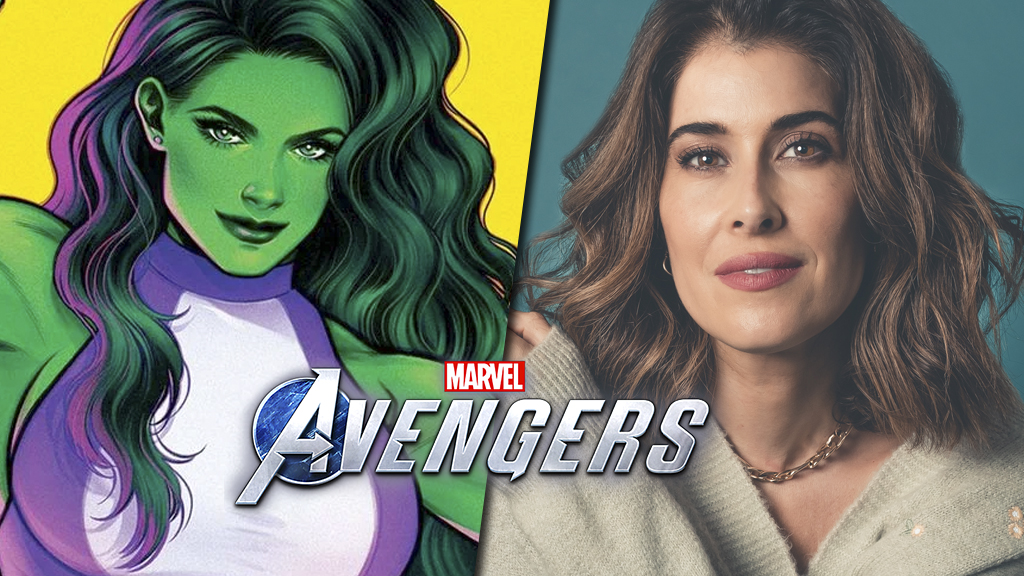
There have been many theories about what we can expect from Marvel’s Avengers in 2022. Throughout its first year, we got four additional characters, the game’s first Raid, and various events. There have been quite a few rumors about what the future has in store, especially with the leaks that hinted at the initial plans for the game. Well, leaker @mmmmmmmmiller has recently shared a new tidbit of info, as he claimed that Krizia Bajos of Arcane: League of Legends and The Loud House fame will be playing or voicing the game’s take on She-Hulk.
Of course, normally take this kind of information with a grain of salt, as there’s no clear confirmation by the developer’s Crystal Dynamics. Yet, what adds fuel to the fire is that Bajos herself to the tweet with a green heart, which may add some validity to the claim.
It still doesn’t confirm it officially, as we don’t know if or when the character might release. There has not been a new roadmap released yet, which is scheduled to arrive at some point in the new year. It might give us an indicator if She-Hulk is planned as the next character to release. There’s a chance they have other plans as things tend to shift around, but the actress reacting to the tweet does add something to the speculation.
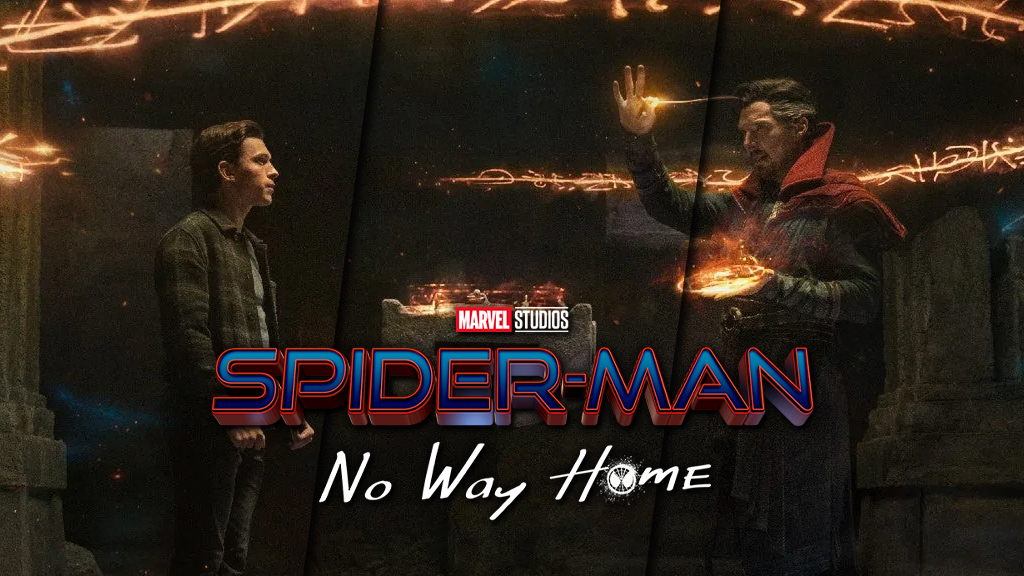
Magic. In Spider-Man: No Way Home, magic was both the problem and the solution and, because how magic works remains a mystery to us, fans were left with a lot of questions as they walked away from the theaters. Why did Doctor Strange’s original spell-gone-wrong draw Tom Hardy’s Eddie Brock into the MCU? Does Strange’s final spell mean the Guardians or Captain Marvel, who weren’t on Earth when it was cast, will forget Peter, too? In an interview with Variety, writers Erik Sommers and Chris McKenna explained their approach to magic in the year’s biggest box office hit.
The film’s central plot revolved around Peter meeting five villains from previous Spider-Man films and trying to cure them. The mid-credit scene, however, introduced a sixth: Hardy’s Eddie Brock and his alien symbiote companion, Venom. While the other five found themselves involved in a conflict with the Spider-Men, Brock chose to while away his time in Mexico, having drinks and catching up on the history of the MCU. But why was this version of Brock, who has yet to meet a Peter Parker in his own universe, brought to the MCU by the spell? According to the writers, the answer lies in a line spoken in the post-credit scene to Sony’s Venom: Let There Be Carnage, which the duo revealed was actually directed by No Way Home’sJon Watts.
In that scene, Brock and Venom are catching up on their telenovelas while hiding out in Mexico when Venom begins to explain to him that he possesses “80 billion light years of hive knowledge across universes” that would “explode” Eddie’s “tiny little brain.” And just as Venom prepares to give Eddie a “taste” of that knowledge, the pair are caught up in Strange’s spell and brought to the MCU. According to McKenna, somewhere in that hive knowledge exits the Parker/Spidey connection, as he explained, “The idea is that the symbiote has knowledge of other universes. Buried in his brain is some knowledge of that connection.” Problem solved.
The writers were a little less specific in their explanations as to exactly how Strange’s final spell, which made everyone on Earth forget about Peter Parker, would play out down the line, especially with him still actively working as Spider-Man. “Obviously, some sort of magical redaction has occurred,” McKenna explained. “At the end of all this, we didn’t want a lot of people trying to do magical math in their head.” And so, according to Sommers, they left the problems to be solved by their future selves:
We decided, let’s try to do it in the most satisfying way and just focus on the emotion of it. And then if people have questions about some of those details that didn’t get answered here, we’ll answer them hopefully in another movie somewhere down the line.
Give that the duo have worked on each of the MCU’s Spidey films so far and that there’s a fourth in development, they’ll probably have to start figuring out how to answer them sooner rather than later.
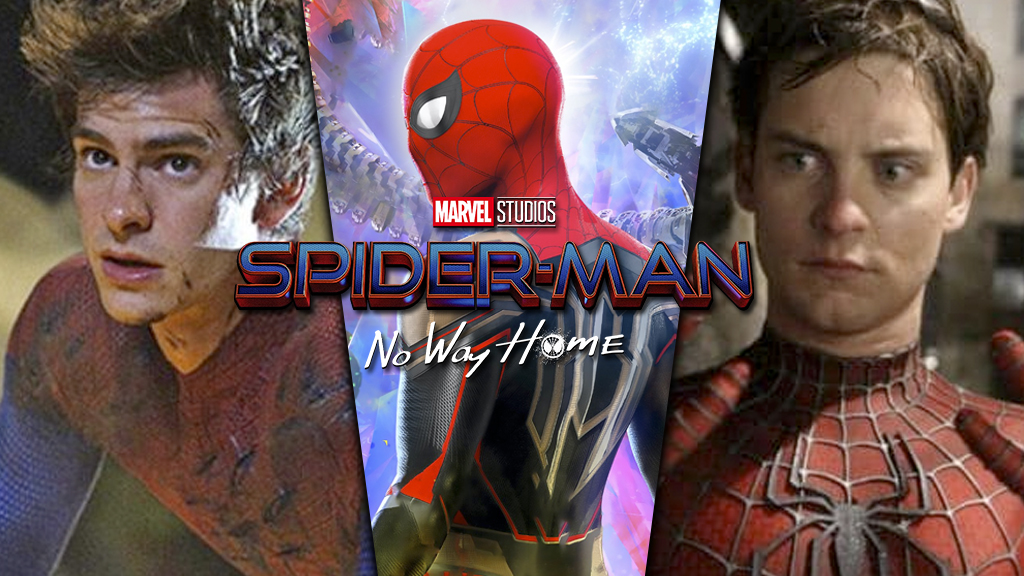
For most audiences viewing Spider-Man: No Way Home, the most exciting element of the film was the return of former Spidey actors Tobey Maguire and Andrew Garfield. In the latest installment, the duo returned so that they could aid current series star Tom Holland in fighting off a small army of their own multiversal supervillains. While it may have been reasonable to believe the actors simply popped in to perform their scenes before moving on to other projects, a recent interview with the movie’s writers Chris McKenna and Erik Sommers revealed the opposite was actually true. Maguire and Garfield had significant input on the way their characters shaped the film. Sommers begins:
They had thoughts, and it was really interesting and helpful to see their thoughts. No one knows the character as well as — or gives as much thought to the character — as someone who has to then embody it and sell it. … It definitely shaped what we did.
Erik Sommers
McKenna continues:
They had great ideas that really elevated everything we were going for and added layers and an arc and we really actually started honing into the idea that these two guys were really helping Tom’s Peter on his journey to becoming who he ends up becoming. There’s a crucial, moral moment that they help him get through in the climax of the movie. So much of that was brought by Tobey and Andrew’s ideas and shaping of what they thought their characters could bring to this story.
Chris McKenna
The film doesn’t end up delving too far into the post-franchise life of either interpretation of the character, and the writers claim this was done on purpose. McKenna states they wanted to hold back from the characters being used purely as fan service, and focus more on the ways they could help Holland’s Peter Parker emotionally We learn much more about the ongoing adventures of Garfield’s Parker than we do Maguire’s, and this was supposedly exactly what the actors wanted:
Tobey wanted to be very minimal about how much you know. Very, very minimal. Andrew really loved the idea of he’s still tortured over what happened in Amazing Spider-Man 2and where that left him, and how they could bring that to Tom.
Chris McKenna
It certainly added quite a bit to their appearance, as they felt like actual characters continuing their story arcs in meaningful ways while having all three learn from each other. The writing duo had quite the challenge ahead of them, but they managed to keep it all intact while also building upon the franchise’s overall development. It makes you wonder where they are from here on.
Spider-Man: No Way Home‘s ending might go down as one of the best in Marvel’s cinematic history and as one of the most tragic. Tom Holland’s run as Peter Parker came full circle, but at a deep cost. After a fun multiversal romp filled to the brim with familiar faces, the story still ended with Peter making an important decision. It still remained his story and while open-ended, could’ve still felt like the perfect bookend to this version of the character. Luckily, it seems that the writers had exactly that in mind.
In an interview with The Hollywood Reporter, Erik Sommers and Chris McKenna discussed the ending of the film, and that they had this in mind when tackling the project, especially as it builds upon the lessons learned from the past two entries. As Sommers points out:
We knew we were going to end up in that place. As far as what it means, whether or not there are going to be more? All we could do was try to service this story and tell what we felt was the best version of this story. It’s ended in a place where it could feel like a satisfying to this particular Spider-Man, or it definitely could keep going.
Erik Sommers
Of course, they also took this ending as a potential “end” for the entire franchise. It’s a given after the dealings already fell apart before they even entered the third film’s production. While a fourth is in development as confirmed by Marvel Studios’ Kevin Feige, they did keep that in the back of their mind while writing it.
I think it’s a fitting ending if it had to end this way. We never know. “Oh, is Tom doing another one? Will we be a part of it?” At a certain point we just got to keep our eye on the one in front of us. “Is this a satisfying story that doesn’t just feel like we are ending on a cliffhanger that is trying to trick you in to the next one?” I do feel with this ending, Peter makes a sacrifice. There are all these Marvel movies about him trying to figure out what it is to be a hero, what it is to be Spider-Man, what it is to be Peter Parker, how to balance both, how to have it all. He gets to have it all at the end of the last movie, right before that tag and then it’s all stripped away. “Oh no! What are they going to do next time?” This one feels like it’s more mature because it really is, as Doctor Strange says, “You are trying to have it all. You can’t have it all. You’ve got to make a choice.”
Chris McKenna
They certainly had to tackle quite a challenge when bringing this film to life. Some of the previous entries always end up buckling under the weight of expectation, as they juggle multiple storylines that end up distracting from the core narrative. Here’s hoping to see what the future has in store for Tom Holland‘s take on the character.
There was always one noticeable change in the MCU Spider-Man films in comparison to previous cinematic Spider-Man franchises: the noticeable lack of Uncle Ben. He tends to be the main anchor point for Peter Parker’s morality. Yet, as we learned in Spider-Man: No Way Home, it turns out that this role was taken over by Aunt May. In her last moments, she even echoes the famous “with great power” words from the comics. Well, it seems that Uncle Ben was always on the mind of writers ErikSommers and ChrisMcKenna, who worked on all three entries as revealed in a new interview with The Hollywood Reporter.
I don’t think there was much impetus to put it into the other two movies. This iteration of Spider-Man didn’t start by telling the story of losing Uncle Ben. We started at a different place with Peter. Those words are so tied to Uncle Ben, there didn’t seem to be a natural place for it. We weren’t even thinking necessarily, “Oh, we have to do it in this one.” As the story started to develop, and as we got to the scene with May, we realized, “This is going to be Peter’s Uncle Ben,” and the words are going to come out.
Erik Sommers
This arc also plays into how he develops, as McKenna reveals they’ve always played around with the absence of Uncle Ben but realized they can tell a very different origin story that adds more layers to his character, especially with a moral guide like Aunt May adding a new spin on the familiar. They also go on to say that:
Hopefully you start seeing this is a different Peter Parker. They are all different. They have had different origins. They have had different contexts and this Peter is the only one of these three who has had a Tony Stark in his life. So he chases the fame. He chases this father figure and approval from this billionaire, philanthropist playboy. Then he realizes, “I don’t want to be an Avenger. I’m chasing the wrong thing.” And the next movie was, “I can’t be Iron Man. I can only be Spider-Man.” In this one, there is a whole new way he has to get tested about what these other two guys have been tested by. By the death of a loved one at the hands of a villain. What are you going to do about that? They help him get there
Chris McKenna
While many were not happy with the initial direction and Iron Man’s role as a mentor to Spidey, it all paid off as part of a trilogy. As they highlight, the arc was about uncovering what it means to be Spider-Man, which is truly anchored in how the film ends. Here’s hoping that the future lets us explore the lesson that he took away from those events as he grows, for the first time, left to his own devices.
We use cookies to improve your experience on our site. By using our site, you consent to cookies.
This website uses cookies
Websites store cookies to enhance functionality and personalise your experience. You can manage your preferences, but blocking some cookies may impact site performance and services.
Essential cookies enable basic functions and are necessary for the proper function of the website.
Name
Description
Duration
Cookie Preferences
This cookie is used to store the user's cookie consent preferences.
30 days
These cookies are needed for adding comments on this website.
Name
Description
Duration
comment_author_email
Used to track the user across multiple sessions.
Session
comment_author_url
Used to track the user across multiple sessions.
Session
comment_author
Used to track the user across multiple sessions.
Session
Statistics cookies collect information anonymously. This information helps us understand how visitors use our website.
Google Analytics is a powerful tool that tracks and analyzes website traffic for informed marketing decisions.
Contains information related to marketing campaigns of the user. These are shared with Google AdWords / Google Ads when the Google Ads and Google Analytics accounts are linked together.
90 days
__utma
ID used to identify users and sessions
2 years after last activity
__utmt
Used to monitor number of Google Analytics server requests
10 minutes
__utmb
Used to distinguish new sessions and visits. This cookie is set when the GA.js javascript library is loaded and there is no existing __utmb cookie. The cookie is updated every time data is sent to the Google Analytics server.
30 minutes after last activity
__utmc
Used only with old Urchin versions of Google Analytics and not with GA.js. Was used to distinguish between new sessions and visits at the end of a session.
End of session (browser)
__utmz
Contains information about the traffic source or campaign that directed user to the website. The cookie is set when the GA.js javascript is loaded and updated when data is sent to the Google Anaytics server
6 months after last activity
__utmv
Contains custom information set by the web developer via the _setCustomVar method in Google Analytics. This cookie is updated every time new data is sent to the Google Analytics server.
2 years after last activity
__utmx
Used to determine whether a user is included in an A / B or Multivariate test.
18 months
_ga
ID used to identify users
2 years
_gali
Used by Google Analytics to determine which links on a page are being clicked
30 seconds
_ga_
ID used to identify users
2 years
_gid
ID used to identify users for 24 hours after last activity
24 hours
_gat
Used to monitor number of Google Analytics server requests when using Google Tag Manager
1 minute
Marketing cookies are used to follow visitors to websites. The intention is to show ads that are relevant and engaging to the individual user.
Pinterest Tag is a web analytics service that tracks and reports website traffic.