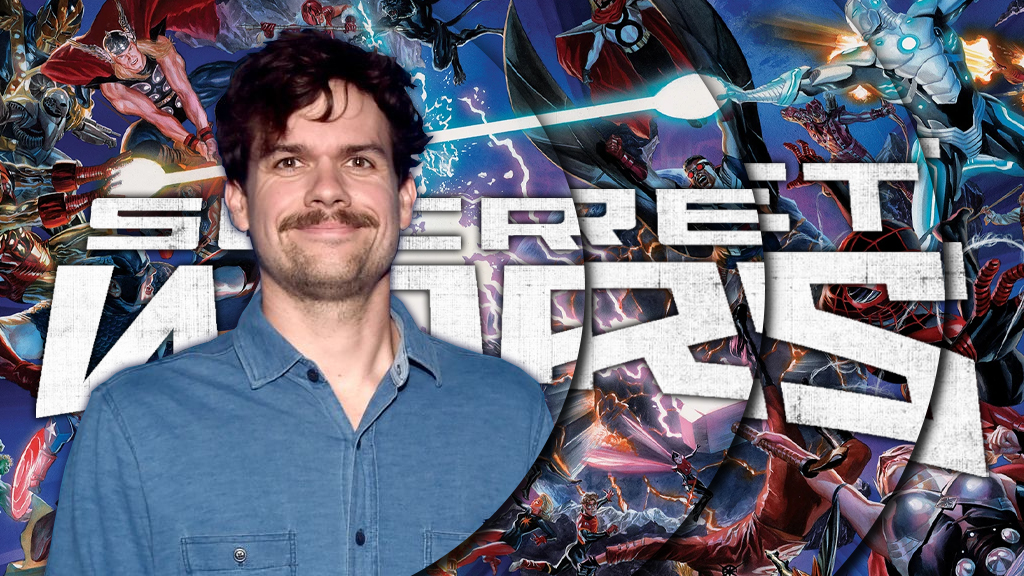
There was a time when everyone was claiming that Loki creator and Doctor Strange in the Multiverse of Madness writer Michael Waldron was no longer involved with Avengers: Secret Wars. After his work on the hit Disney+ series, it seemed like the writer could do no wrong but things quickly changed after online chatter started surrounding the Doctor Strange sequel.
Yet, it seems that Michael Waldron actually took on a new role. As rumors started spreading that fellow Rick and Morty scribe Jeff Loveness was no longer attached, it would make sense that they take a similar approach they did with Avengers: Infinity War and Endgame given the films set up each other directly.
The information comes from Loki producer Kevin Wright, who was part of an interview with the ComicBook.com Phase One podcast, where he revealed that not only where they allowed to tell the story they wanted, but Waldron is potentially involved with the other projects.
As far as where it’s all going, I can’t say and not because I am being coy, we’re not a part of those projects. What I would say is, I mean, I know Michael Waldron is working on them and he loves obviously this world as he helped create it.
Kevin Wright
Waldron‘s involvement makes sense with both films as the Loki series sets up the Secret Wars storyline and he’s set up quite a few elements that would tie the story together. We still don’t know just how involved the entire Kang the Conqueror storyline is going to be moving forward but there’s a possibility that they’ll use the opportunity to recast.
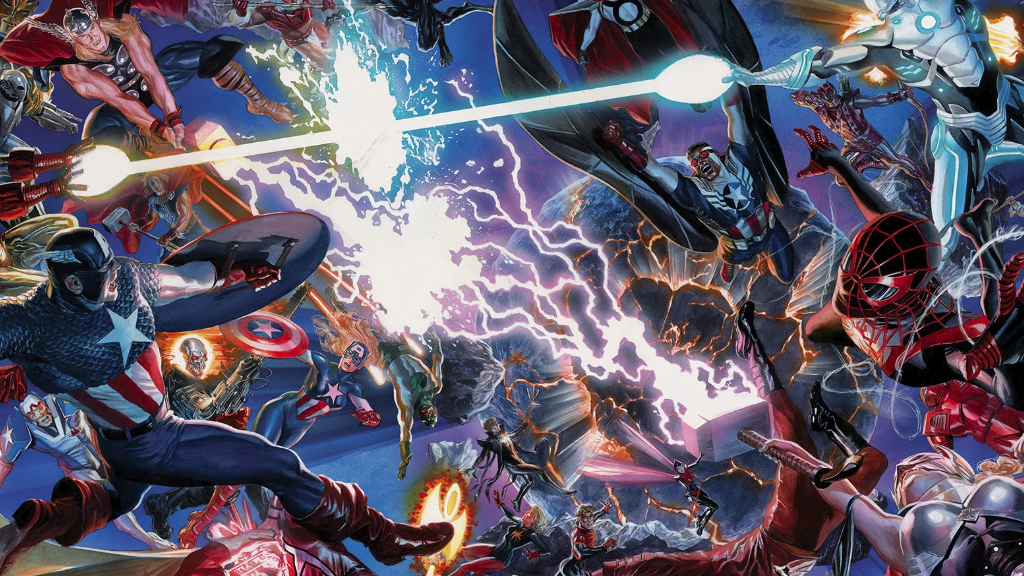
We know Marvel Studios’ new “Endgame” for the Multiverse Saga. As many could’ve predicted the moment we saw the opening and final moments of Loki, the franchise is heading to a live-action adaptation of the iconic Secret Wars storyline in a new Avengers film. It opens up many possibilities to revisit some characters from the past and it seems one actor is down to return.
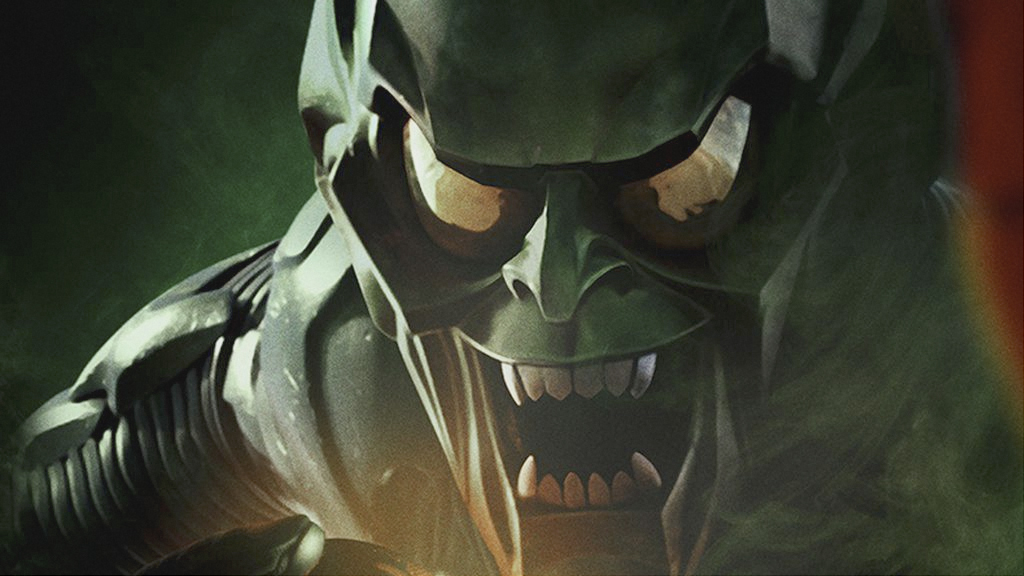
After once again reprising the role of Norman Osborne in Spider-Man: No Way Home, Willem Dafoe reveals that he’s certainly open to potentially playing the character one more time “if everything was right.” He highlights how much joy he has playing the character(s) and the depth it allows him to bring to the role.
I mean, that’s a great role. I liked the fact that it’s a double role both times. Twenty years ago, and fairly recently, both times [were] very different experiences, but I had a good time on both.
Willem Dafoe
It definitely would be great to see him return, especially with No Way Home’s focus on a recognizable version of the character. We haven’t had the chance to meet a unique take on the character in live-action as the Green Goblin. So, they could use the opportunity to introduce a good version of the character appearing in Avengers: Secret Wars joining an unlikely alliance.
There’s also the fact they could experiment with the look of the Goblin, as the previous iteration mostly re-used his Power Rangers-style suit from the original Spider-Man film. So, we could potentially ee the mechanical version that was scrapped make an appearance once again with Dafoe once again having fun in the role.
Following the news that Marvel Studios would be halting production on Blade, the Walt Disney Company has confirmed new Blade has been pushed to 2024. Unsurprisingly, this move has also resulted in shifts for other Marvel Studios titles including Deadpool 3, Avengers: Secret Wars, Fantastic Four, and two untitled Marvel films.
Blade, previously dated for Nov. 3rd, 2023, has moved to Sept. 6, 2024. While Deadpool 3, which only announced its release date a couple of weeks ago, has now moved from Sept. 6, 2024 to Nov. 8th, 2024. Fantastic Four, previously set for Nov. 8th, 2024 has now moved to Feb. 14th, 2025. Avengers: Secret Wars is now moving to May 1st, 2026 from Feb. 14th, 2025, while two other Untitled Marvel Studios films have also been bumped. One of those movies has moved from Feb. 14th, 2025 to Nov. 7th, 2025, while the other set for May 1st, 2026 has been removed from the schedule altogether.
It remains to be seen what the untitled film was that was ultimately shelved, but the massive date change is to be expected. With Secret Wars now delayed until Feb. 2025, there is no longer just six months between The Kang Dynasty and Secret Wars. While Shang-Chi director Destin Daniel Cretton is attached to helm the former, the latter is still on the hunt for a director.
With the official announcement that Michael Waldron will be writing Avengers: Secret Wars, a large swath of reactions has been formed. Fans have questions as to what this will mean for what has the potential to be Marvel Studios’ most ambitious projects. With his previous experiences working on the first season of Loki and Doctor Strange in the Multiverse of Madness, Waldron feels primed to take this next step in telling the story of the Multiverse Saga. By dissecting Michael Waldron’s previous works in the Marvel Cinematic Univers, one might be able to Inuit how they can inform the directions audiences should expect from Avengers: Secret Wars.
Centralized Focus
Arguably the most distinct aspect of Michael Waldron’s writing for Loki and Doctor Strange in the Multiverse of Madness is creating a centralized focus on the main characters and their arcs. Despite the expansive stakes and scope of the multiverse that surrounds them, the main characters are never lost within the script. One of the many praises sung about Loki was the amount of character building for the titular protagonist. As the story moved to numerous vastly different locales and settings, Loki and his interpersonal dynamics with the likes of Mobius and Sylvie remained at the forefront.
When it comes to Multiverse of Madness, both Doctor Strange and Scarlet Witch had complete arcs that were logical for where they had been prior to the film. For Strange, the narrative was crafted of him being able to not be in the driver’s seat and trusting others, such as America Chavez, to ultimately save the day. Wanda’s arc was the continuation of her themes of teetering between morally just and unjust while dealing with the grief seen in WandaVision (or at least the themes that were present for most of the series).
Writing an Avengers film, the centralized focus will of course need to expand to fit whatever the team roster will be for Secret Wars. This is certainly doable for Waldron if he follows the general style that Christopher Markus and Stephen McFeely used when writing Infinity War and Endgame. After managing to do so in the back two-thirds of the Captain America trilogy, the duo also adeptly managed to keep the focus on individual characters in the foreground of universe-shifting events in their films. Theoretically having at least a year to write Avengers: Secret Wars with the same studio behind the duology wrapping up the Infinity Saga, there shouldn’t be much doubt Michael Waldron can do the same as his predecessors.
Expansive Multiversal Background
While the foci for his two previous Marvel Cinematic Universe projects were micro-level of character studies, it shouldn’t be ignored that Michael Waldron has indeed helped create an expansive multiverse for Marvel Studios. That universe feels primed to be much further extrapolated in Avengers: Secret Wars (among other multiverse-based projects). A misunderstanding seems to have been propagated that the events of Loki and Multiverse of Madness are incongruous with the rules of the multiverse; however, there aren’t any tangible instances of the two projects contradicting themselves. If anything, the partially disparate nature of the series and film feels intentional in creating the understanding of how vast the Marvel Cinematic Multiverse is.
Waldron’s writing on Loki was focused on building the framework and the primary core of Marvel’s multiverse. Usage of the Time Variance Authority helped to introduce the general concepts and histories of the multiverse that, at points, seemed intentional to allude to the upcoming Secret Wars event. Meanwhile, the Doctor Strange sequel moved towards providing viewpoints of distinct alternate universes and how they’ve been dealing with the maddening multiverse. The threat of Incursions being introduced continues Waldron’s trend of planting seeds for one of the next two major “Avenger-level” events. There’s likely to be a combination of these writing themes in Avengers: Secret Wars. Interpersonal conflicts between the different universe fragments mixed with the chaos of quite literally everything breaking around them.
Deep Marvel Lore
Michael Waldron has also shown a penchant for including deep-cut references out of Marvel historical lore, from both on-screen and comic versions. Two distinct examples from both of Waldron’s writing credits best symbolize how he could very well implement these references. The Void in Loki is home to a vast array of references that add to the background atmosphere for casual viewers while being enjoyable treats for the more hardcore superfan (ie. Qeng Tower, the Living Tribunal, and the infamous Thanos-Copter). Though in the foreground of The Void, audiences meet characters such as Kid and Classic Loki, both of which resonate with both casual and hardcore fans at the same time. This is something that may be critical for the writing of Secret Wars to succeed. In Doctor Strange in the Multiverse of Madness, Earth-838-specifically The Illuminati-represent what to potentially expect for the second-to-next Avengers film. First and foremost, the writing of the alternate New York City and secret council quickly created the concept of a lived-in world that has a history some audience members will want to learn all about (namely, the alternate version of Infinity War including The Illuminati and various teams yet to form in the main Marvel Cinematic Universe). In addition, Waldron balances both a reverence for the alternate legacy characters involved, especially Patrick Stewart’s Professor X reprisal, while also being willing to aggressively mess with the status quo to highlight the fragility of multiversal conflict. Expect Avengers: Secret Wars to combine and expand on these different types of lore establishments for a potential Battleworld.
Inspiration From Classic Media
While his knowledge base for Marvel history has shown to be expansively deep, Waldron certainly has found additional inspiration from various classic pieces of media. For Loki, many have found the narrative and aesthetic similarities to stalwarts of science fiction such as Brazil, The Hitchhiker’s Guide to the Galaxy, and Doctor Who. Meanwhile, with Doctor Strange in the Multiverse of Madness, Waldron’s script provides Sam Raimi the semi-Lovecraftian basis for the director to create a film visually akin to his work on the Evil Dead franchise (while being accessible as a PG-13 Marvel Cinematic Universe entry). While the argument can be made that these elements are more so from the directors of said projects, filmmaking is inherently a collaborative process and it’d be errant to believe that Waldron didn’t also have a hand in establishing the visual identities of these properties. And that type of perspective can be even more beneficial for helping whoever directs the sixth Avengers film to create their vision.
When it comes to Avengers: Secret Wars, it certainly will be interesting to see where inspiration may be drawn for this type of story. Based on Jonathan Hickman-written 2015 version, and even the more basic 1984 story, there are numerous cinematic and literary epics that could be used to inspire Marvel Studios’ Secret Wars.
Conclusions
All in all, the hiring of Michael Waldron as the writer for Avengers: Secret Wars seems to indicate a massively high concept and fast-paced ride of a film. Much like the process for Christopher Markus and Stephen McFeely on Marvel films, Waldron has been writing projects with elevated stakes and scope for Marvel Studios’ central saga. If the positive momentum and seed planted from season one of Loki and Doctor Strange in the Multiverse of Madness can be followed through upon, the script of Avengers: Secret Wars has real potential to successfully culminate Phases Four through Six in a majorly impactful fashion.
After laying the groundwork for the MCU’s major multiversal event in Loki and Doctor Strange in the Multiverse of Madness, writer Michael Waldron has signed on the write the script for Avengers: Secret Wars. Waldron joins writer Jeff Loveness, who will pen Avengers:TheKang Dynasty, as writers of the tandem of Avengers films set to debut in 2025.
First officially revealed at SDCC ’22, Avengers: Secret Wars will serve as the capstone to Marvel Studios Multiverse Saga when it hits theaters on November 7th, 2025. According to a trade report, Waldron became the front runner for the job over the past month, in part because of the trust he’d built up with the studio over their past two collaborations.
As far back as Loki, Waldron teased the potentiality of a connection between that project and Secret Wars, which only lived in the minds of fans at the time. Now all that remains for the studio is to complete its search for a director to allow them time to work with Waldron on the script.
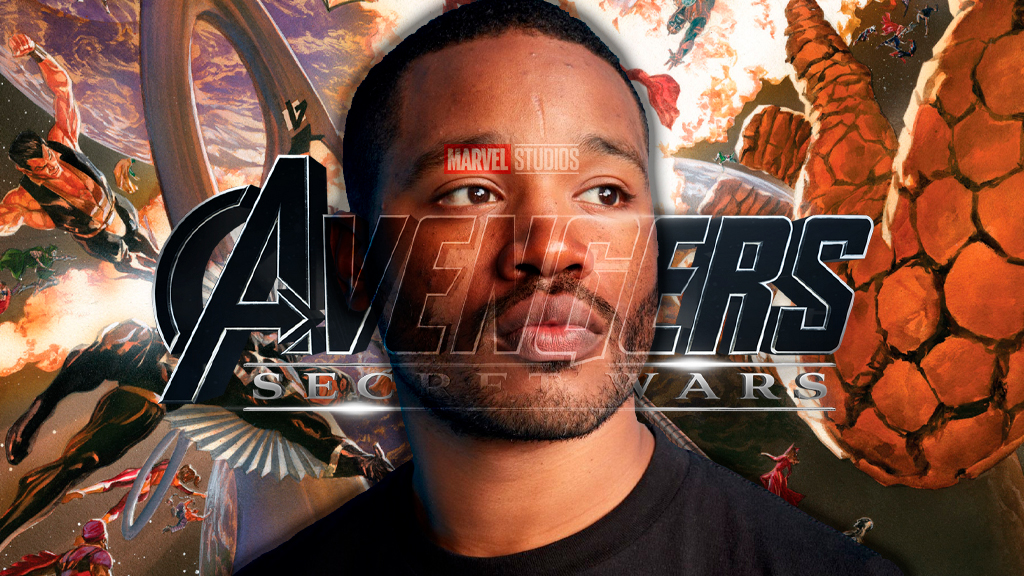
In July, shortly after Marvel Studios announced the next two Avengers films, Deadline revealed that Shang-Chi and the Legend of the Ten Rings director, Destin Daniel Cretton, had signed on for Avengers: The Kang Dynasty. It was a smart choice, following Cretton’s work on Shang-Chi, however, it also left many curious which director would step in to direct the other Avengers film — Avengers: Secret Wars. A new report from The Weekly Planet podcast suggests that Black Panther director Ryan Coogler might be in the running to direct Secret Wars.
“And Ryan Coogler, here’s another scoop, Mason, is at the very least one of the directors, is currently in talks for Secret Wars. Which makes a lot of sense and yeah, the source here says, this is a reliable source, this person says ‘a fairly obvious choice.’ And it is. That makes sense.”
The Weekly Planet Podcast
Of course, this should currently be taken as a rumor. While Coogler would be an obvious choice for the gig, the director does have a lot on his plate. Along with finishing up work on the highly-anticipated Black Panther: Wakanda Forever, Coogler also has an overall deal with Disney+. One of those projects he’s developing as part of his deal is Ironheart, which is currently in production in Atlanta. However, he’s also rumored to be developing a Dora Milaje-centric television series. It’s currently unknown if he’s developing any further television shows, but if he is, that could also prove to be a hindrance as Secret Wars is slated for release in 2025.
If Coogler were to be selected for Secret Wars, it would be a smart choice on Marvel Studios’ behalf. Like with Cretton, Coogler retained his own personal style while working on a massive superhero film. If given the chance to bring that to Secret Wars, Coogler could deliver something truly special to end Phase Six of the Marvel Cinematic Universe.
San Diego Comic-Con was quite the experience and have us a first real look at the future of Marvel Studios’ projects. Not only did they unveil Phase 5 but also confirmed that the Multiverse Saga will come to an end with Phase 6. However, what stood out for many was that we won’t be getting an Avengers film to wrap up a Phase as we used to. Many expected that to be the case with a surprise announcement to wrap up Phase 4, but it turns out that Black Panther: Wakanda Forever has the privilege of that placement.
In an interview with MTV News, Marvel Studios president Kevin Feige offered some insight into how they are tackling the new approach, especially with how Disney+ has opened up many new gateways for them to introduce other characters in new and interesting ways. He also compares to how their approach has changed from the previous Infinity Saga.
Well… it’s never about going bigger just to go bigger. Sometimes, by the nature of the number of characters that you have in the toy box to then bring into the sandbox of the story, things can get bigger. But you know, the truth is, when we were doing Phase 1, Phase 2, and Phase 3, there were less projects over more years. And they were smaller projects and individual character stories. And it felt appropriate at that point that after, you know, every two or three years that it took for a phase, we would do an Avengers film. As 4, 5, and 6 were coming together, there are more projects in less years because of all the amazing stuff we’re now allowed to do on Disney+ and getting and getting characters from Fox, for Fantastic Four and Deadpool, that it felt like… and certainly after Infinity War and Endgame that we thought, ‘Avengers movies aren’t cappers
Kevin Feige
While some have seen this as slightly controversial due to the number of projects available in less time than previously offered, they are aware of that fact and are also not trying to just rush out Avengers films as a result. They are trying to keep its place as an “event” within the build-up and have other franchises.
So many of our movies now, the Multiverse of Madness, what you’re about to see in Quantumania, are big team-up films introducing big parts of the mythology and that Avengers films really should be the capper to a saga. Which is really all we wanted to to lay the groundwork for today, is say, ‘We are currently in the midst of the Multiverse saga which will culminate in two Avengers films.
Kevin Feige
Of course,e it’s an interesting strategy to wrap up the Saga with not one but two films. It may be a showcase of what they learned with the success of Infinity War going into Endgame. Yet, it does seem curious they wouldn’t want to keep a year between these projects to build into it. Of course, there’s always the chance that is the plan and they are keeping a potential shift of their release dates just in case, as they still don’t have a director set.
We use cookies to improve your experience on our site. By using our site, you consent to cookies.
This website uses cookies
Websites store cookies to enhance functionality and personalise your experience. You can manage your preferences, but blocking some cookies may impact site performance and services.
Essential cookies enable basic functions and are necessary for the proper function of the website.
Name
Description
Duration
Cookie Preferences
This cookie is used to store the user's cookie consent preferences.
30 days
These cookies are needed for adding comments on this website.
Name
Description
Duration
comment_author_email
Used to track the user across multiple sessions.
Session
comment_author_url
Used to track the user across multiple sessions.
Session
comment_author
Used to track the user across multiple sessions.
Session
Statistics cookies collect information anonymously. This information helps us understand how visitors use our website.
Google Analytics is a powerful tool that tracks and analyzes website traffic for informed marketing decisions.
Contains information related to marketing campaigns of the user. These are shared with Google AdWords / Google Ads when the Google Ads and Google Analytics accounts are linked together.
90 days
__utma
ID used to identify users and sessions
2 years after last activity
__utmt
Used to monitor number of Google Analytics server requests
10 minutes
__utmb
Used to distinguish new sessions and visits. This cookie is set when the GA.js javascript library is loaded and there is no existing __utmb cookie. The cookie is updated every time data is sent to the Google Analytics server.
30 minutes after last activity
__utmc
Used only with old Urchin versions of Google Analytics and not with GA.js. Was used to distinguish between new sessions and visits at the end of a session.
End of session (browser)
__utmz
Contains information about the traffic source or campaign that directed user to the website. The cookie is set when the GA.js javascript is loaded and updated when data is sent to the Google Anaytics server
6 months after last activity
__utmv
Contains custom information set by the web developer via the _setCustomVar method in Google Analytics. This cookie is updated every time new data is sent to the Google Analytics server.
2 years after last activity
__utmx
Used to determine whether a user is included in an A / B or Multivariate test.
18 months
_ga
ID used to identify users
2 years
_gali
Used by Google Analytics to determine which links on a page are being clicked
30 seconds
_ga_
ID used to identify users
2 years
_gid
ID used to identify users for 24 hours after last activity
24 hours
_gat
Used to monitor number of Google Analytics server requests when using Google Tag Manager
1 minute
Marketing cookies are used to follow visitors to websites. The intention is to show ads that are relevant and engaging to the individual user.
Pinterest Tag is a web analytics service that tracks and reports website traffic.