Tag: Comics

  • Brian Michael Bendis’ MOON KNIGHT Is Still Worth A Shot

    Brian Michael Bendis’ MOON KNIGHT Is Still Worth A Shot

    Brian Michael Bendis can be a tough pill to swallow for a lot of readers. For an entire decade, his name ruled the Marvel stratosphere which a lot of fans grew tired of. He wrote an unreal amount of comics, having practically written almost all the mainline Marvel titles over the course of his tenure with the company. His work arguably served as the lynchpin for the creative direction of the company in the years that followed. It was in the Bendis era that the modern Marvel crossover event was introduced which a lot of people perceive to be one of the worst aspects of the industry. His distinct style of decompressing storylines, making them more drawn out than most, and his quippy Sorkin dialogue makes his work all the more polarizing.

    As a storyteller, his strengths were always rooted in more grounded street stories. It’s no surprise that Bendis’ big picture stories such as Secret Invasion and Age of Ultron pale in comparison to his street-level stuff. The reason why Ultimate Spider-Man, Daredevil, and Jessica Jones were huge breakout successes is that Bendis has a full grasp of that seedy world. His impeccable skill in understanding the language of crime stories is due in part to his long stint writing film noir comics. So for him to take the reins of Moon Knight seemed like a no-brainer on paper. 


    Moon Knight has always been a tough cookie to crack. The logline for the character, in my head, has always been, “Fight Club but with Marvel’s Bruce Wayne.” As a character with a multiple personality disorder, a lot of his stories have leaned towards the unconventional. Writers and artists have taken numerous creative liberties in the ways they could tell a story of a superhero with a multiple personality disorder. Some of them are really introspective and almost surreal, like Jeff Lemire and Jordie Bellaire’s take a few years back. Some barely scratch the surface of the comic’s potential and are more action-oriented like Charlie Huston’s run. Bendis’ stuff falls somewhere in between.

    This version of Moon Knight was written at a time where Bendis was riding high on his long-tenure with the Avengers. He had just finished a long run with the New Avengers and was beginning a new run under Marvel’s Heroic Age event. In this new event, Steve Rogers was running his own covert ops Avengers team called the Secret Avengers which happened to have Moon Knight on the roster. The character stepping up to the big leagues may explain why Captain America, Spider-Man, and Wolverine are all crammed into a Moon Knight book. 

    But crammed as they are, there is a twist to them appearing. You see, Moon Knight has three distinct personalities within him: Marc Spector, the main guy and mercenary, Steven Grant, the playboy millionaire, and Jake Lockley, the Taxi Driver who patrols the grimy streets of the criminal underbelly. Bendis nixes Grant and Lockley from this story and instead has Spector interacting with apparitions of Cap, Spidey, and Logan in his head. It’s a wild departure from Spector’s status quo but has its own merits. 


    For one, I think the whole thing makes the book a fine entry point for the character. As I said, he is already a fringe character, to begin with. His mythology feels far removed from the standard mythos we usually see in marquee characters (a CIA officer getting killed in Egypt but is revived by an Egyptian moon god and develops multiple personalities along the way isn’t an origin story made for normies). His rogue’s gallery is practically unrecognizable even to well-versed fans. Yet, you see this figure cloaked in ivory white cloth hanging out with the most famous Marvel characters, suddenly he’s a guy that you yourself can hang with. 

    Part of why Moon Knight gets likened to Batman is the high-tech gadgetry at his disposal. He’s got his own moon-themed vehicles, such as the appropriately named Moon Copter. This aspect of the character is on full display in Bendis’ story, albeit in a fresh utilitarian way, as his version of Moon Knight has gadgets that directly correlate with Cap, Spidey, and Logan. He has a web shooter, an energy shield, and collapsible claws on his forearms. This jack-of-all-trades approach to being an Avenger makes for some really interesting fight sequences. They can go in a slew of ways, some good and bad, but overall just makes Bendis’ core premise work on a utilitarian level. Moon Knight having imaginary Avenger friends isn’t a bug, it’s a totally new feature. 


    Like most New York-based heroes in the Marvel Universe, they’re bound to migrate to a new location at some point for a change of scenery. California seems to be the go-to for these characters. Even Moon Knight joins the fray of West Coast transplants alongside Daredevil (who made the move to San Francisco a bunch of times) and plants himself into Hollywood, where he gets an opportunity to cash in on his mercenary history by creating a TV series around it. It’s wacky as shit and a drastic departure from the character’s more grounded and serious trappings, but an undeniably interesting one. Bendis really does the job of refreshing the character for new audiences. 

    One thing that he also does in strides, he puts otherwise B-list characters into the forefront of the more popular stories. Bendis did that when he turned Luke Cage and Jessica Drew into full-fledged Avengers. He’s somewhat doing it here by bringing back long-forgotten Avengers baddie, Count Nefaria, and Echo, Daredevil characters he used during his Avengers run. Anytime an under-utilized character gets pushed into the limelight is always something I appreciate. 

    The actual plot of this 12-issue comic is, sadly, half-baked. Unfortunately, Bendis doesn’t reach the highs of his other street-level fare with Moon Knight. I think there simply just wasn’t enough meat in the story. As the story goes: Moon Knight discovers that a new crime boss is slowly making their play for Los Angeles. His investigation leads him to the McGuffin of the story: a smuggled head of Ultron. You’d think that in a span of 12-issues, Bendis would delve deep into the complexities of the underbelly of LA and give us a neo-noir hardboiled thriller disguised as a Moon Knight story, but the whole thing ends up whiffing into a plodding story.


    Bendis‘s worst habits are on full display in Moon Knight. For one, this is a very slow-paced story. During his pitch-perfect Daredevil run, Matt Murdock would have already gone to hell and back in just a handful of issues. In twelve issues, Moon Knight just kinda lumbers to solve this one case. There’s barely any intrigue to what could otherwise be a really good hardboiled detective story. There’s a fish-out-of-the-water premise to the whole thing that is interesting but doesn’t get explored in any meaningful way. It’s not outright terrible but very little happens in a story with a lot of real estate spread out. I’ve seen writers do more with so much less. It certainly doesn’t help that the story’s ending is a hamfisted tie-in to Bendis’ then-upcoming Age of Ultron event (which ended up being a hot pile of a mess too).

    Despite all this, I still think this book is still worth looking at. It’s far from the best Moon Knight run on the market. Several writers have proven that there is more to the character than the generic Fight Club logline I mentioned. But as rough as it can get, a lot of Bendis’s ideas have a cinematic flair to them. It’s no surprise that next to Stan Lee and Jack Kirby, he has the most Marvel creations to ever make it into the live-action realm. His ideas, regardless of execution, resonate well in this modern franchise-driven world we live in. I think using Echo as a foil to Marc Spector is a great choice. I don’t necessarily agree with how Bendis writes Echo at a later point in the story but anytime Echo shows up, I love it. Count Nefaria is in the annals of Avengers history as one of the team’s most vicious villains. The fact that he’s a big bad, in a Moon Knight story no less, is pretty damn fun. I’d love to see Echo and Nefaria in the Moon Knight show. 

    Lastly, I wanna talk about Alex Maleev’s art. Even the story description didn’t quite work for you, the art of this book alone makes it worth looking at. I’ve long celebrated Maleev as the greatest artist to ever draw Daredevil (sorry, Frank). So, to see him do another street character like Moon Knight is unreal. He has a full grasp of this grimy world’s visual language. His panels always feel huge and grand despite it being set intimately on the ground level. Maleev’s vision is concretely bleak and rustic and brings to life a world in the Marvel Universe unlike any other. 
  • ‘007: No Time to Die’s Cary Fukunaga Adapting Rick Remender’s ‘TOKYO GHOST’

    ‘007: No Time to Die’s Cary Fukunaga Adapting Rick Remender’s ‘TOKYO GHOST’

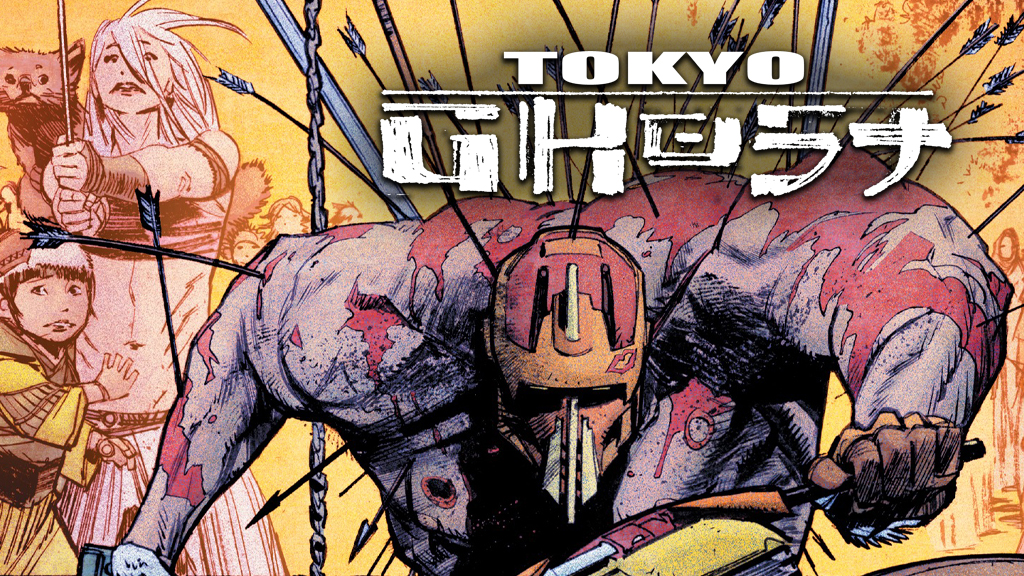
    The list of comic book adaptations in development continues to grow. Rick Remender‘s Tokyo Ghost is a classic cyberpunk comic. It takes place in a futuristic Los Angeles and in the garden nation of Tokyo. It is getting adapted to the big screen with Cary Fukunaga (007: No Time to Die) set to direct. Hollywood Reporter also confirmed that Fukunaga will serve as producer with Remender penning the script.


    The series, originally published by Image Comics, came out in 2015 and ended after its 10th issue. The story told in comic form is certainly something that, due to its structure, might allow for the development of not one but two movies. The original series ended with a massive cliffhanger. One might assume that it could go beyond the original story in subsequent chapters could become a reality. As a fan of the series, I certainly hope so.

    Remender also worked on 2018’s Deadly Class, a series adapting one of his best comic series. It got produced by the Russo Brothers that sadly got canceled after just one season. Ever since, it gathered a considerable following after being made available through Netflix, which allowed it to reach a larger audience. Fear Agent, another of Remender’s comics, is also being adapted by Seth Rogen’s production company for Amazon. He remains one of the most prolific comic book writers of the past decade. has developed several brilliant independent series (Black Science, Death or Glory, and Low, Scumbag to name a few) as well as a few books for Marvel, being one of the minds behind giving Sam Wilson the Captain America shield, something being currently developed in Disney+’s Falcon and the Winter Soldier.

    Source: Hollywood Reporter

  • FANTASTIC 1234: Grant Morrison and Jae Lee’s Vision of the First Family is a Wild Fever Dream

    FANTASTIC 1234: Grant Morrison and Jae Lee’s Vision of the First Family is a Wild Fever Dream

    Grant Morrison and Jae Lee’s take on the Fantastic Four opens with First Family going through a routine that’s all too familiar for fans. Reed Richards is locked in his lab deep in thought while Sue rants about her husband’s unwillingness to make time for their relationship. Johnny runs off to get laid while Ben tells another sob story about how no one ever likes him. Meanwhile, Doom sets in motion his plan to destroy his enemies with the help of Namor and Mole Man while they get distracted by their squabbles. It’s business as usual for the first family, so how could this story be any different from the rest? In true Grant Morrison fashion, what seems to be like your run-of-the-mill story soon descends into a fever dream of Doom’s madness.


    In the late 90s, Marvel was in the shitter. They had no money. People were getting let go. Office furniture was literally being sold to keep the lights on. The glory days of the very lucrative early 90s had clearly ended. It was the lowest of the low so there was no place left to go but up. So up they went. 

    Editors Joe Quesada and Jimmy Palmiotti were given the keys to the kingdom and created the Marvel Knights brand, an imprint where creators were given as much freedom as they could have to create a Marvel comic. They brought in the industry’s most exciting writers to do their own take on Marvel’s most iconic characters. Established names like Kevin Smith, Peter Milligan, and Grant Morrison were brought in along with burgeoning names such as Brian Michael Bendis and David Mack.

    They probably were given too much freedom at first as Grant Morrison approached their own take of Marvel’s First Family in the most insane way possible. In an interview he did before the comic even came out, Morrison said: 

    I’ve worked out this whole Freudian shit. The incest thing in The Fantastic Four. What you’ve got is a family. There’s Reed and Sue, the Mom and Dad. Johnny’s the big brother and Ben’s the little crazy baby. But in that situation you’ve got Johnny and Sue — brother and sister! So there’s an incest thing that the Fantastic Four hides.I looked at it and said, okay, Sue actually wants to fuck Johnny and Johnny wants to fuck Sue. So how do you do that? They make Namor, the Sub-Mariner who is always a linked pair with Johnny. The Human Torch and the Sub Mariner have always been together since the ’40s. Namor is the dark, seedy, watery, wet, dirty side of it. And Johnny’s bright, mercurial. So he doesn’t fuck his sister — but Namor does.”

    Thankfully, that idea never came to fruition as Morrison insisted their intention was to simply create a story out of that idea and not have Johnny literally bang his sister. Still, it’s a fucked up notion to begin but one that’s in Morrison’s wheelhouse, for better or worse. All that said, Morrison’s idea of the First Family was never going to be one that we fully recognize despite the story delving into each of the characters’ archetypes. 

    Fantastic Four 1234 is a great read for a bunch of reasons, not the least of which is how Morrison and artist Jee Lee managed to concoct this unique tale of Doom attempting to destroy the First Family. Lee’s artwork is one of the most distinct in the business. His style, what I’d describe as gracefully grotesque, beautifully coalesces with Morrison’s bizarre sensibilities. The result is stunning; a vivid portrait of Marvel’s most iconic characters that cascades into nightmarish imagery with each turn of the page.


    Morrison explores each of the family members’ pathos and desires in different ways. By far their most interesting exploration is that of The Thing. The mopey Ben Grimm is thrust into an It’s a Wonderful Life scenario where he’s freed from his monstrous form. Unfortunately, this life is wildly unrecognizable to Ben Grimm, who’s a total normie now. Reed is a rockstar scientist while Ben is thrust into obscurity. Ben’s notion of what a good life for him means is put into question.

    As for Johnny, he does the only thing he knows how to do: have a good time. A chunk of the story has him driving with a girl who likes hanging out with him for his celebrity. However, the charade of being too cool for everything quickly wears off on Johnny, who soon decides to patch things up with Ben, who he fought with earlier. 

    Sue is visiting family friend Alicia Masters to vent about her marital woes when she is interrupted by the Sub-Mariner. Namor and Sue have always had a steamy dynamic, even more so than her and Reed. The sexual tension between the two is on full-display as Namor makes an argument to leave the life she complains about daily.  Sue has always been the family’s keeper so for her to be devilishly seduced by Namor, who is essentially the antithesis of Reed (handsome, attentive, and rich), is something to see. 

    And then you have Reed. The galaxy’s smartest being doesn’t do much until the very last issue when his master plan is revealed. I don’t wanna spoil it but his fight with Doom is one of the coolest showdowns I’ve seen with these two icons. It’s a highly cerebral battle of wits that spans the warping of reality and it brilliantly showcases what these two characters can really do when up against the wall. 


    Doom is absolutely stellar in this. His plan is over-the-top that it’s almost reminiscent of the silliness of the Silver Age days of Marvel.  Morrison writes Doom’s monologues as overindulgent poetry and it fits the madman perfectly. This version of Doom is grandiose and theatrical, something that tends to get lost in depictions of him throughout the decades I think. Jonathan Hickman does it the best but Morrison’s take on the character holds up. 

    With only four issues to it, some of the story beats don’t align as smoothly as Morrison’s deft take on thematics. I wonder if Morrison personally confined themself into doing 4-issues as a ludicrous easter egg of sorts. Moments feel rushed and don’t really get to simmer. I imagine that if this was a 5 or 6-issue arc, the story would be a lot more explorative. But even with all its flaws, Fantastic 1234 is a must-read for anyone interested in learning about Marvel’s First Family. 

  • Tim Burton’s ‘Batman’ and Richard Donner’s ‘Superman’s Return Through Comic Sequels

    Tim Burton’s ‘Batman’ and Richard Donner’s ‘Superman’s Return Through Comic Sequels

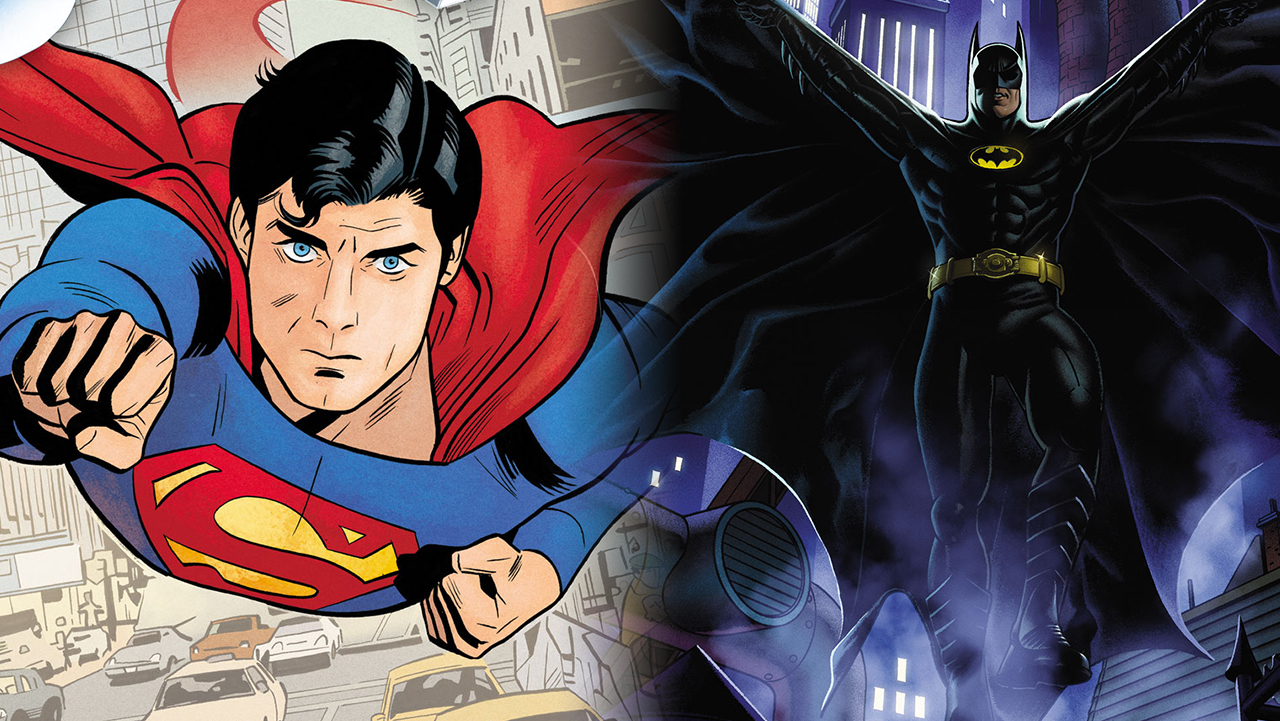
    The worlds of Tim Burton‘s Batman and Richard Donner‘s Superman will finally continue. They are receiving sequels in the form of comic books this summer. DC Comics announced that they are adapting the universes that started the comic book movie craze in two separate series, Batman ’89 and Superman ’78. They will play out throughout six digital issues. The first installments will drop on July 27th and will continue to release weekly. The books are similar to the continuations of television classic with Wonder Woman ’77 and Batman ’66 from a few years ago. It’s a move by DC that is sure to make fans excited, as both film franchises ended on sour notes.

    Batman ’89 will be written by screenwriter Sam Hamm, who wrote the scripts for both Tim Burton‘s Batman films. Joe Quinones, of Dial H for Hero fame, will take over the art and help Hamm pick up the gothic adventures of Michael Keaton‘s Bruce Wayne right where they left off at the end of Returns. The series promises to tie up several loose threads left open by Tim Burton, including the return of Michelle Pfieffer‘s take on Catwoman and the debut of a new Robin, who potentially is based on Damon Wayans unrealized version of the character. Quinones is also creating a universe-accurate Two-Face, once intended to be played by Billy Dee Williams, that is “as close to movie magic as a comic can get”.

    Superman ’78 will feature art by Wilfredo Torres, who previously worked on Batman ’66, and a story from Robert Venditti, who has operated in the world of DC before with a run on Hawkman. Set within the universe that made Christopher Reeves an icon, the book will tell stories that prove to fans that a man can truly fly. The timeline of the series is a little vaguer. The announcement did reveal that we will see a Lois Lane who does not yet know Clark Kent and Superman are the same. Plot details are also a little less ample. We may see classic Superman villains and other characters that didn’t get adapted in the film that would reflect Donner‘s vision.

    The creative team took to Twitter and share some of the artwork for the upcoming projects, which truly show that these designs will forever be iconic:

    https://twitter.com/joe_quinones/status/1361771925777887232?s=21

    https://twitter.com/mightyfineline/status/1361787931002830850


    Source: Nerdist, Twitter (DC Nation), Twitter (Batman), Twitter (Superman)

  • The 5 Best Daredevil Stories You’ve Probably Never Read

    The 5 Best Daredevil Stories You’ve Probably Never Read

    With a murderer’s row of writers and artists throughout the years, it’s no surprise that Daredevil has consistently been one of the best titles from Marvel. The title, in many ways, has served as a platform for writers and artists to explore a wide spectrum of storytelling opportunities. Some of them have gone on to be benchmarks that transcend the medium – Frank Miller’s run is still highly regarded as one of the medium’s best – while some have gone on to achieve massive critical acclaim. And with an array of good stories to his name, it’s understandably easy for some stories to get overshadowed by their more popular cohorts. So here are some of the best Daredevil stories you may have never read.

    DAREDEVIL: REDEMPTION


    In a small hick town in the backwoods of Alabama, a child is murdered in what is believed to be a Satanic ritual. Local law enforcement is quick to charge three outcast goth kids with the crime. The mother of one of the suspects pleads for New York bigshot Matt Murdock to give her son, who she claims to be innocent, a chance to fight for the truth. 

    Based on the true events of the West Memphis Three, Daredevil: Redemption is a haunting portrait of a hysteric God-fearing town’s faith and the rotting corruption underneath it. The story stands among Daredevil stories not for the spectacle but for how focused it is on Matt Murdock’s character as a man of faith, law, and righteousness and how it challenges those tenets of his being. In fact, there’s barely any Daredevil in the story nor is Matt Murdock the star of it. 

    If you’re a fan of neo-noir detective mysteries like True Detective or Zodiac, this is an absolute must-read. Artist Michael Gaydos and writer David Hine absolutely knock this one out of the park, writing a Daredevil story that’s wholly unforgettable.

    DAREDEVIL: FATHER


    As the son of a single dad, stories about fathers hit differently. It’s a big reason why Daredevil’s journey resonates so much for me. So it probably shouldn’t come as a surprise that Joe Quesada’s tribute to his late father in the form of a Daredevil comic named Father is one that I highly recommend. 

    In the midst of a terrible heatwave crippling Manhattan, a killer on the loose goes on a rampage and mutilates the eyes of his victims. Matt Murdock is hired by an ailing cancer patient to sue a  company for poisoning her land. Meanwhile, a new group of mystical vigilantes has a territorial dispute with Daredevil. 

    Joe Quesada fires on all cylinders as he flexes his storytelling prowess by masterfully weaving these seemingly unrelated moving parts into a shocking revisionist tale of the circumstances behind Matt’s accident. Seriously, this story contains one of the biggest twists I’ve seen in a comic. Plus, if you’ve ever wondered what a hulking Daredevil looks like, look no further. 

    DAREDEVIL: DECALOGUE 


    Brian Michael Bendis’ Daredevil run is arguably my favorite run of all time. I think it surpasses *gasp* Frank Miller’s on every level that it’s become the modern gold standard on how gritty Marvel crime stories should be. Over the course of 80 plus issues, Bendis and Alex Maleev took Matt Murdock to new lows and had him rise up from the pits of hell. That said, I think there’s one particular story in Bendis’ 80-issue run that stands out like a diamond in a sea of gold; Decalogue.

    Decalogue stars a group of Hell’s Kitchen locals attending a support group in the wake of Matt Murdock’s ascent into the Kingpin of their borough. The comic dissects the essence of Hell’s Kitchen, the people in it, and Matt Murdock’s place in their lives as its self-appointed protector. Some lives have changed for the better, while some have irrevocably worsened.  Layer by layer, the grime, and muck that binds each person to this fabled New York borough unravels as each member in the support group tells the story of the time they crossed paths with the Devil of Hell’s Kitchen. 

    Another thing I love about the comic is how it sheds light on not just Matt Murdock, the superhero, but also Matt Murdock, a practitioner of Eastern mysticism. I feel like the idea of Daredevil being a ninja first and foremost gets overlooked by a lot of interpretations. 

    DAREDEVIL: ANGELS UNAWARE 


    There’s never a shortage of superheroes punching their way through their problems so it’s always nice to see a comic that puts the superhero in a scenario where conflict is futile. In Angels Unaware, Daredevil is faced with the insurmountable task of getting a donor’s frozen heart across a terrible blizzard engulfing Manhattan to a dying child.

    It’s a beautiful story that shows the full extent of Matt Murdock’s resilience to save lives. It doesn’t matter to Matt that he’s on the brink of hypothermia or that Kingpin’s armed forces are after him. The Devil of Hell’s Kitchen will move mountains to save someone’s life even at the cost of his own. 

    3 JACKS & GAME ROOM 


    I’m lumping these two stories together because a) they’re both really short stories and b) they’re by Ann Nocenti and David Aja, two of the most prolific comic creators of their generation. Nocenti, some of you may know as one of the watershed writers for Daredevil, having created characters like Typhoid Mary and Aja as the star of the fabled Hawkeye run of Matt Fraction. That creative pairing alone merits a place in this but that’s not the sole reason why these two stories are in this. 

    In Game Room, Aja and Nocenti ditch the comic format and craft a short story with Aja’s subdued art serving as flourishes to the story. With no paneled art, Nocenti does the heavy lifting and tries her damnedest to have the audience visualize every single detail in the comic through prose. She does it in spades and the result is a nice little story about Daredevil investigating a suicide that might have been foul play. 

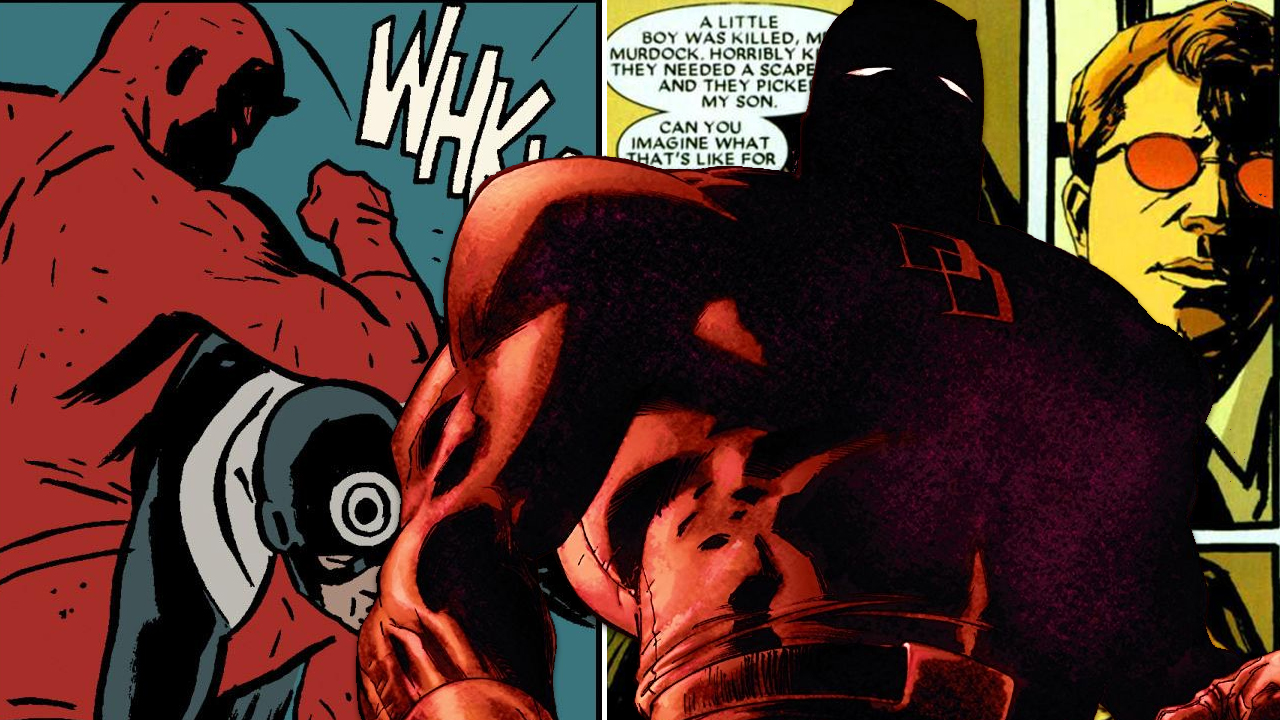
    3 Jacks captures Matt Murdock at a point in time at the height of his beef with Bullseye. Two bystanders witness Daredevil get brutally beaten by Bullseye and spend the day nursing him back to health. It’s a heartwarming encounter amidst a bloodied backdrop that surprisingly tugs the heartstrings as much as it satisfies anyone looking for a good comic fight. Aja, as always, destroys with his art as he crafts an amazing fight with Bullseye that’s one for the books as far as visuals go.

  • Our Pitch For a ‘Superior Foes’ Series In the MCU

    Our Pitch For a ‘Superior Foes’ Series In the MCU

    I promised myself I’d swear off writing one of these on account of them taking so much of my headspace for weeks at a time but I just had to write it down because I dug the idea so much. One of the best things I’ve read in the past 5 years was Nick Spencer‘s Superior Foes of Spider-Man, a screwball spin-off featuring the Seinfeld version of the Sinister Six. The comic saw several D-list villains come together to try tried to make it as a supervillain team all the while dealing with each other’s bullshit. The comic’s unique tone reminded me of the works of the Coen Brothers and shows like Better Call Saul. How it deftly bridged the wacky irreverence of characters, the despicability of their actions, and the absurdity of the situations they get themselves in. So it was only natural for me to imagine this show as a dark comedy, in the vein of the shows I mentioned above, should it ever make it to the MCU. And yeah, I went the extra mile and tried to plot an entire season.

    SETTING

    Ever wondered what it was like to live in the 5 years when half of the universe disappeared? I have, which is why this Superior Foes story is set in that timeframe, approximately a year before Scott Lang escapes the Quantum Realm. That time gap is so ripe for interesting stories and themes. The main thing I wanted to figure out was what the quality of living was like in a world that essentially nosedived into chaos and oblivion. Does it feel post-apocalyptic? Does the world look like an episode of The Walking Dead? With half of the world gone, imagine how crippled law enforcement would be and how remaining criminal organizations would fill the void left by their rivals.  How does one make a living in a period like this? It already sets up an immensely intriguing arc. This story tries to address those ideas while staying true to the spirit and irreverence of Nick Spencer‘s comic.

    Mind you, this iteration of the team is a reimagined one with none of the characters from the comics with the exception of Beetle. Because the comic was super Spidey-centric, I wanted a team made of up villains that didn’t necessarily belong to one particular rogue’s gallery. Also given how finicky the live-action rights of Spidey characters are, I figured to just try to keep most of the characters within the legal rights of Marvel Studios. However, l think what made the comic so good was the type of characters it included; Overdrive and Boomerang are legit D-listers that added a fun irreverence to the story. The characters that show up in this story are in that vein and are some of the most ridiculous characters in Marvel’s history.

    PLOT

    EPISODE 1

    Prologue: Paladin’s origins

    Arms dealer and crime syndicate boss Sonny Burch gets word that a highly dangerous, “world-changing” piece of hardware is stashed in an abandoned AIM base in Arizona. Fearing the hardware falling into the hands of rival organizations, he commissions washed-up mercenary Paladin to form an extraction team of his own. Paladin brings his partner-in-crime Jeb into the fold along with four down-on-their-luck schmucks – Stilt-Man, Paste Pote-Pete, Jester, and Beetle. Jester is quickly kicked out of the team for being an asshole. Expecting some resistance from rival factions, Sonny Burch contacts former Stark employee William Riva to arm the team. The team heads to the hidden AIM base in Montana where they encounter a rival faction led by Grizzly. The two groups engage in a piss-poor firefight with Paladin’s team escaping with the hardware. The group takes shelter in one of Nick Fury’s hidden bases in the state. They open the hardware and see that it’s the severed head of Ultron. It awakens instantly and becomes sentient.

    EPISODE 2


    Prologue: Paste-Pot Pete origin story

    The robot’s awakening sends the entire team into a panic. They angrily debate on whether to surrender Ultron to Burch, who they think is planning to use the robot to take over the world. Fearing another world-ending catastrophe just after the snap, conscience strikes the team and they all agree to betray Burch and come up with a new plan: bring the head to the Avengers HQ and get compensated handsomely. The team departs Fury’s hidden base and soon after that, Burch gets an anonymous message informing them of their plans. 

    EPISODE 3


    Prologue: Stilt-Man origin story

    Tensions rise between the team as they make their way to Roswell, New Mexico, where Jeb has set up a rendezvous with a contact, a former Hammer Industries agent codenamed K, to get them to New York as soon as possible. Paladin and Beetle grow distrustful of one another, believing each other to have their own agendas while Stilt-Man and Paste-Pot Pete take a liking to Ultron, who is now an active participant in the team’s discussions, helping them navigate through the trip. They also meet Gary the Cameraman, last seen in Iron Man 3, who they befriend. The team makes an effort to keep Ultron a secret from K to stay out of trouble but is futile as K manages to see Ultron. Learning the full extent of their situation, K agrees to take them to New York. As they prepare to depart for New York, the team is ambushed by Jester and Grizzly’s crew, who are now working for Burch. The fight goes poorly once again and much to everyone’s dismay, Beetle escapes with Ultron in the middle of the fight.

    EPISODE 4


    Prologue: Beetle origin story

    The fight abruptly ends as everyone races to find Beetle. Both Paladin and Jester’s team make several attempts to outpace one another. Beetle rushes through the streets of Roswell when she is suddenly stopped by K, who reveals himself to be a Skrull named K’ravt. Both teams arrive in the nick of time just as K’ravt is about to steal Ultron from Beetle, much to their shock at the revelation. Nonetheless, they band together and have their own little Endgame moment, a posse of ragtag misfits against one evil alien. That sense of relief quickly goes away when a small Skrull aircraft hovering above them decloaks and beams down three more Skrulls, revealing the Skrull Kill Krew. Jester’s team zooms past everyone leaving Paladin’s team to fight them. Against all odds, the Skrulls are defeated by Paladin’s team but not without repercussions. Stilt-Man and Paladin are wounded in the fight. The aircraft they were supposed to use to fly to New York, which is actually a Skrull ship, has been destroyed. But most important of all, Jeb makes an earth-shattering revelation and reveals himself to be a Skrull.

    EPISODE 5


    Prologue: Jeb origin story

    With two members injured, having no resource to move on with their plan, Beetle having just betrayed them, and the revelation that Jeb is a Skrull, the team reaches an all-time low. They are helped by Iron Man 3’s Gary the Cameraman, who they meet in Roswell earlier. Gary helps them find shelter in a warehouse outside the city. This episode mostly has the team dealing with their trust issues and coming to terms with how screwed up they are. Paladin gets outed by Beetle for trying to secretly contact Burch throughout their trip. Paladin comes clean with his debt problems with Burch, but claims he didn’t sell the team’s location to him. Jeb is confronted by the team on whether he planned to surrender Ultron to the Skrulls. 

    Ultron helps them devise a plan on how to deal with their two dilemmas: getting to New York and dealing with Burch chasing them. They decide to have Burch come to them under the pretense of surrendering Ultron. In actuality, they plan to steal Burch’s repurposed Quinjet, who has been seen using it in the first episode. They make the call and set a rendezvous. Burch makes several calls to various mercenaries to help him out but is unsuccessful. With no other option, Burch brings out a mysterious weapon. As Ultron helps the team strategize, we cut to an undisclosed laboratory where we see a kid sitting in front of several huge monitors mimicking and controlling what Ultron is saying through a mouthpiece in real-time. The kid turns out to be Amadeus Cho. 

    EPISODE 6


    Prologue: Amadeus Cho origin story

    The episode opens with 8-year old Amadeus Cho walking around the Avengers compound. He peeks out of a window to see Captain America and Falcon boarding a Quinjet. He walks by Bruce Banner’s office and looks inside to see if his favorite Avenger is in the room. Jump to 3 years later where he, his sister, and his mom, Helen, are living in the city. The snap happens and his sister and mom disappear. Cut to 3 years later, Amadeus is in a makeshift laboratory tinkering with something on his computer. We see him help law enforcement raid an illegal arms cache through remote hacking. Satisfied with the raid, Amadeus continues with studying the schematics of a redacted Ultron file he uncovers. He tracks the file’s origin to Arizona. On his computer, he parses through files of wanted active crime bosses. On the list is Sonny Burch among several others. Amadeus manages to remotely access the head of the Ultron bot and anonymously puts the word out that the head is up for grabs.  

    We then see various points of the season through Amadeus’ perspective; the heist, talking to the team, manipulating them to go through certain routes and locations, pinging Burch on their whereabouts, the arrival of the Skrulls until we get to the present. The team is now holed up in a bunker in Arizona awaiting Burch’s arrival. Expecting Burch to arrive with a slew of mercenaries, the team prepares a plan to take down Burch’s crew efficiently with Jeb masquerading as Paladin and Paste-Pot Pete planting a slew of traps. Things turn upside quickly when Burch arrives with his secret weapon: the Super Adaptoid. Of course, the fight doesn’t go as well as Burch had hoped as the Adaptoid doesn’t have any formidable abilities to adapt from his enemies. 

    The tide turns in favor of the team as they gain the upper hand. But just as they’re about to defeat the Super Adaptoid, the fight is interrupted by the intervention of an unexpected challenger: Bruce MF Banner, who is now Smart Hulk. The Adaptoid’s power level increases and the fight becomes a lot harder. But the team manages to come together and help Professor Hulk destroy the Super Adaptoid. Burch tries to make his escape but is stopped by Gary. The destroyed head of Ultron is uncovered in the rubble. 

    Burch is arrested once more and is shipped off to the Raft. Professor Hulk tracks down Amadeus Cho’s location where they meet in person for the first time. It is revealed that Cho was instrumental in Bruce’s success in merging both his and Hulk’s personalities as he anonymously corresponded with Bruce and sent formulas. Cho admits to taking a liking to Paladin’s crew and asks Hulk what happened to the team. Bruce reveals that he let the team go under the condition they attend Steve Rogers’ group counseling session on a weekly basis. Cut to the team sitting in a circle with Steve Rogers. 

    CHARACTERS

    Paladin – a former S.H.I.E.L.D. agent who excelled in the boot camp and wowed superiors but failed to be amount to anything on the field. Needless to say, Paladin peaked way too early. His days on the field as a SHIELD agent were a dud as several missions he was involved in were botched due to his incompetence. The collapse of S.H.I.E.L.D. became Paladin’s opportunity to prove himself elsewhere so he turned to private military contracting where he failed as well. Desperate to finally win in life, he sets up an elaborate operation with the help of his friend Sonny Burch’s finances where his team is intended to come out successful. Paladin, once more, takes another L as the snap happens during the mission, leaving him as the only survivor. Paladin becomes in debt to Burch.

    Jeb/J’bronii – A shy soft-spoken Skrull who has assimilated on Earth for several years. Jeb was originally sent to Earth alongside countless others to help facilitate the pending Skrull Invasion.  His task was to infiltrate Hydra to learn the ins and outs of the organization. However, a misunderstanding leads Jeb to join an industrial company called Hydro. Jeb manages to work his way up the career ladder and is an assistant regional manager when the snap happens. Having not heard from his superiors or allies in years, Jeb starts feeling guilty – thinking the Skrull Empire has somehow failed the invasion of Earth – and starts a journey of self-discovery to reclaim the Skrull in him once more.

    Stilt-Man – A henchman whose claim to fame was that he squared off with Captain America in the Lemurian Star, an encounter that left him permanently injured. He befriends Jeb and Paste-Pot Pete after a chance encounter and the three begin hanging out regularly. When he gets the invite to join Paladin’s team, he is given a suit of armor that allows him to extend his height. Neither malicious nor decent, Stilt-Man is a bit of a dummy who thinks hanging out with supervillains would elevate his chances of being a famous superhero one day. Gets along with Ultron and Paste Pot Pete really well.

    Paste-Pot Pete – The everyman of the group. Paste Pot Pete began dressing up and fighting crime in his youth inspired by the adventures of Captain America. Unlike his teammates, Paste-Pot Pete has no ambition in power or wealth. Now, he’s a mild-mannered 60-year old man urged his late grandson who perished in the snap to relive his glory days as a cheesy costumed fighter from the 80s. Arguably the nicest member of the group.

    Beetle – Daughter of a retired crime boss called the Beetle. The Beetle in his heydey was one of the west coast’s most powerful crime bosses until the 21st century came along, where his traditional organization was left in the wind by the more tech-centric organizations like AIM. The Beetle eventually had to sell off most of his assets to a rival group, leaving him and his family broke. The power struggle left by the snap convinces the now-retired Beetle to urge his daughter to help rebuild his criminal organization. He sends her on a path that leads her to Paladin’s team.

    Amadeus Cho – a boy-genius who grew up in close proximity with the Avengers thanks to his mother Helen Cho’s involvement with the team. Cho exhibited breathtaking intellect at a young age, impressing the likes of Bruce Banner. Cho is instrumental in Bruce’s eventual transformation into Professor Hulk, anonymously corresponding with Bruce in every step of the experimental process. With no one left to assist the Avengers after the snap, Cho takes it upon himself to round off the remaining criminal organizations as a vigilante hacker. His masterplan essentially is to put a stop to Burch’s operation so he comes up with an elaborate scheme to entrap Burch.

    Sonny Burch – Since getting arrested by Jimmy Woo and the FBI, Burch has managed to slither back into society and is up to no good once more. Since we last saw him in Ant-Man and the Wasp, Burch has gone up the ranks of criminality and is now the top dog in his organization.


    Bruce BannerAvengers: Endgame glossed over the finer details of how Bruce managed to merge his personality with the Hulk so I thought it neat to fill in some of the blanks of his transformation and build Bruce’s world a little bit. An Endgame deleted scene also showed Bruce rescuing a family in a burning building, which would have teased the Hulk actually doing some day-to-day superheroics. I figured what better way to showcase Bruce’s full transformation into a real hero by him going on missions himself to stop bad guys.

  • ‘PAPER GIRLS’ Adaptation Shifts Into Gear at Amazon

    ‘PAPER GIRLS’ Adaptation Shifts Into Gear at Amazon

    Back in July, Amazon gave the green light to Paper Girls, a series based on the Brian K. Vaughan and Cliff Chiang comic that was published by Image Comics from 2015 to 2019. Now, a new casting call has surfaced that is anything but surprising, but that shows that development on the show is probably ramping up, with more details sure to surface in the coming weeks.

    The comic centers on the time-traveling adventures of a group of four young, you guessed it, paper girls, back in the year 1988. Erin, Mac, KJ, and Tiffany don’t start off as the best and closest of friends, but through their shared experiences of fighting to save the world and trying to travel back home, that will undoubtedly change.

    The new casting call lists the four characters as being 11-12 years old, with their backgrounds, ethnicity, and personalities fitting the comics’ to perfection. Erin, Asian American, the group’s new girl. Mac, tough as nails, raised in an abusive home, a survivor. Karina, the wealthy, over-protected white girl that dreams of rebelling and that loves sports. Tiffany, African American, the brains in the group, addicted to videogames. These were always to be the four characters the show could not deviate from, so it’s only natural they are the first priorities when it comes to the casting process. Hopefully, we’ll get some more updates sooner rather than later, as production should be eyeing a March start date.

    This is a show that is sure to make a huge impact in the way Stranger Things did back in 2016. As such, the comic it’s based on was listed here in Murphy’s Multiverse as one that could make for an amazing small-screen adaptation.

  • 10 Comics That Could Use The Film and TV Treatment

    10 Comics That Could Use The Film and TV Treatment

    With the release of the Invincible trailer reminding us that there are still many amazing comics out there that haven’t been picked up by major production companies, here is a list of ten non-Marvel and non-DC properties that would make for great projects either for the big or small screen. I tried to keep it a bit varied, both in terms of tone and genre, with books that left their mark when I first read them.


    BLACK SCIENCE (2013-2019, 43 issues)

    Both Marvel and DC seem to be diving headfirst into their own Multiverses in the coming years, with WandaVision, the Doctor Strange sequel, and The Flash. But it’ll be hard to top what Black Science achieved in that regard for six straight years.

    Here we follow Grant McKay, a member of the Anarchist League of Scientists, his family, and his team of scientists and military personnel as they try to maneuver through a seemingly infinite number of universes (the “Eververse”) tapped into following the creation of the device they call “the Pillar”. These “Dimensionauts” have then to deal with a malfunctioning Pillar, that much like we saw in Quantum Leap, throws them into random worlds challenging them every step of the way, as they try to make their way back home, and back to each other.

    Why it could work: I have a hard time trying to figure out if this project would lend itself to TV or cinema. Its visual spectacle deserves the biggest screen possible, but the storyline would make for an enthralling series through several seasons. What I do know is that the best stories, with the most fantastic premises, are only as good as the human elements presented to the audience. And Black Science is not only one of the best science-fiction stories I’ve ever read but also one of the most human, with all our dreams and flaws painstakingly presented, where family and friendships are the centers of one’s universe. And sometimes you just need to fight your way to get to them. What is more relatable than that?

    THE MASSIVE (2012-2014, 30 issues) 

    After an earth-shattering event, we follow the environmentalist crew of the ship The Kapital as they search the world for their missing sister ship, The Massive. With the world falling apart, we question what is there still to fight for, what is there to protect but the ability to rise above it all, as the tides did to dry ground.

    Why it could work: The biggest challenge we face as a species is for how long can we keep our planet our home. Earth won’t die, nature will adapt, we just have to make sure we are along for the ride. This book isn’t that optimistic as it shows us the worst-case scenario, where not only our home but our humanity is gone. At a time when every help in addressing global warming is a welcome one, that alone would make this a relevant show by making us look in the mirror at a time when everything we see is still avoidable.


    PAPER GIRLS (2015-2019, 30 issues)

    Stranger Things meets Back to the Future. A coming-of-age story about a group of four 12-year-old girls that due to unforeseen circumstances become involved in a war between two factions of time travelers. Unlike most other books and movies, here they have no problem in meeting up with their past and future selves, as they need any help they can get trying to get back home to 1988 while saving the world at the same time.

    Why it could work: Stranger Things was and still is, a phenomenon. But this show has the potential of going a step further in the cultural zeitgeist. Meshing 80s nostalgia with any other era’s they happen to choose (Time Travel!!) while keeping that Goonies vibe and throwing in Generation X and Y growing pains, it is something that can work on so many levels, on so many demographics, that in the world we live in of constant reboots and sequels it quite baffling that we haven’t yet gotten the chance to get this original project going. 

    THE PAYBACKS (2015-2016, 8 issues)

    A superhero comic with a twist. When heroes borrow money to finance their gadgets and genetic enhancements, there comes a time when that money must be paid back in full. When that doesn’t happen, it’s time to call The Paybacks, a team of bankrupt superheroes that work as repo men in order to pay their own debts. But this time, the hunters become the prey, and someone is coming to collect.

    Why it could work: Superhero stories rule the world. This isn’t necessarily a good thing, but from the Marvel Cinematic Universe to the hottest streaming show right now (The Boys), it’s hard to say otherwise. So, right off the bat, this shows would seem like a safe bet. It would work as a sort of middle-ground between the more mainstream superhero movies and the TV-MA we sometimes get, a different take on the superhero gig where things aren’t as black and white as in other projects, but a lot lighter than being choked to death by a giant penis.

    PUNK ROCK JESUS (2012-2013, 6 issues)

    What if we could bring Jesus back to life through cloning? With the discovery of a sample of his DNA, that’s exactly what the entertainment company OPHIS did. But to make matters worse, they decided to raise him inside a Reality TV show with the entire world watching. Like many teenagers, most in far better circumstances, he rebels and turns to punk rock, with great religious and political consequences.

    Why it could work: Back in 2003 Dan Brown’s The Da Vinci Code took the world by storm as it tried to put into question centuries-old dogmas. Most people aren’t really big fans of reading, but that didn’t stop it from becoming a worldwide phenomenon that transcended reading habits and got everybody talking about the what-ifs Brown presented. A TV show that brought that same sort of discussions to an even more mainstream audience through an engaging storyline filled with modern cultural references would dominate our cultural climate, especially in the times we live in where everything can be a reason for outrage.


    SEVEN TO ETERNITY (2016-PRESENT, 13 issues, so far)

    A Lord of the Rings-style epic, set in a fantasy world filled with wonder, demons, witches, and Gods. We follow Adam Osidis, along with an order of magical warriors, on his quest to free the world of the God of Whispers’ enchantment that keeps everybody engulfed in despair and suspicion. He must then choose between doing what’s right, and following his own heart’s desires.

    Why it could work: This sort of fantasy epics have proven to have an audience, no matter the times we live in. The Lord of the Rings was as relevant at the beginning of the 20th century as it had been when JRR Tolkien first wrote the novel almost 50 years earlier. Game of Thrones became a cultural juggernaut for the entirety of its run and people are still clamoring for George RR Martin to finish the books. Seven to Eternity, unlike Thrones, has an ending within sight, and with a much less grounded setting, it would seem to be able to fill a thematic void The Witcher also managed to tap into.


    SHIRTLESS BEAR FIGHTER (2017, 5 issues)

    There’s really not much to say about this series that isn’t in its title. He’s a brawny bearded guy raised in the forest by bears. He’s shirtless (and sometimes naked). He likes to punch bears because they betrayed him. And he loves flapjacks. While not being innovating in any shape or form, this book has the potential to become the most entertaining 10-minute cartoon episode you’ll watch all day. Every day.

    Why it could work: In a world where short-form content gets all the views (unless you’re called Quibi), a cartoon with short episodes but with above-average laughs-per-second could go The Simpsons‘ way as they rose beyond The Tracey Ullman Show. Production costs should be low and being able to share it through social networks daily could help it grow beyond expectations. I mean, who wouldn’t like to see a (sometimes) naked lumberjack-type throw some bear-punches?


    THESE SAVAGE SHORES (2018-2019, 5 issues)

    Ever since it came out, if anyone asks me for a non-Marvel, non-DC comic to try out, this is my only answer. And with the right director, it would make for an amazing full-length motion picture.

    Set in the seventeen hundreds, as the British look into establishing themselves as an influential economic power in India, working behind the scenes to try and manipulate local rulers into wars only they would benefit from. This faraway territory also served as an escape for whoever needed to run away from western civilization, expecting never to be seen again. But when that someone is a monster that thinks of this as merely a new playground on which to feast, it’s hard to remain both unnoticed and unscathed. After all, there are monsters everywhere.

    Why it could work: Movies are supposed to transport us to different realities with a familiar starting point to help us identify with the events to come. This story, while not taking us to outer space or the far future, makes us connect with a period and location left mostly untapped in western film productions that still manages to keep you at the edge of your seat. Taking familiar horror elements and reshaping their food-chain status when faced with new foes can help audiences get away from the familiar tropes and dive into a new world of possibilities when it comes to fantastical beings.


    THE WAKE (2013-2014, 10 issues)

    This would make for an incredible couple of movies, as the story itself is already pretty much divided into two parts, one set in the present, the other in the far future. Think The Abyss meets Waterworld. We follow a team of scientists as they discover an aggressive new species locked away in the oceans below us since ancient times. This unstoppable alpha predator knows no rest and quickly conquers the planet, leaving little room for humanity to thrive.

    Why it could work: This is the blockbuster of the bunch. And there is always room for another one of those. The scope of the story and the incredible visuals lends themselves to an incredible cinematic experience and having the first movie end on such a sour note would make the anticipation for the sequel mimic what people felt in-between Infinity War and Endgame.

    WE STAND ON GUARD (2015, 6 issues)

    Independence Day meets Red Dawn. One hundred years in the future, Canada relies on a group of freedom fighters to protect its territory from a foreign threat. The United States of America. And so the USA becomes the faceless enemy, the technologically superior foe with the skewed ideals, looking to steal the natural resources it’s lacking (due to intentional oversight) from a more refined society.

    Why it could work: Growing up with mostly American-centered movies, there is always something refreshing when the USA (that like all other countries in the world, isn’t always on the right side of history) is shown as the antagonist. As in Dances with Wolves, we experience an invasion through a new perspective, making us question the authority behind military force, and how with great power comes great responsibility.

    (I can’t believe I just wrote that.)


    BONUS: DEADLY CLASS (2014-PRESENT, 44 issues, so far)

    I ended up wanting an extra stop on the list to get Deadly Class in here. Unlike the other series, this one has already been adapted to the small screen, having premiered in late 2018 on SyFy. It only lasted one season, being canceled after 10 episodes, but it was glorious and it deserved a second go. It’s set in the 80s and its plot revolves around Marcus, a disenfranchised orphan who enters a school for assassins, where the kids of the world’s most dangerous criminals look to live up to their families standards. But Marcus doesn’t care about any of that. All he wants is to try and kill the man he holds responsible for his parent’s death. President Ronald Reagan.

    From Hunter S. Thompson-style road trips to comic book stores, from severed heads to punk rock, it’s all there, as we explore the ethos and aspirations of the late 80s counterculture. It’s a shame we’ll never get to see what was to come in the following seasons on the small screen, but we’ll always have the unbelievable source material created by Rick Remender and Wes Craig to dive into, the way it was always meant to be experienced.

    Why it could work: Just go and watch the first season because.. it did work. If you like it, and since we won’t get more episodes out of it, go read the comics. Seriously.

  • REVIEW: X of Swords #1-5 is Hickman at his Most Hickman-est

    REVIEW: X of Swords #1-5 is Hickman at his Most Hickman-est

    I’m an unabashed fan of Jonathan Hickman’s work in comics. His work, both at Marvel Comics and as an indie creator, has always left me entertained, confused and made me walk away thinking deeply and often coming back to reread issues on multiple occasions. I was thrilled to find out that not only would Hickman be writing X-Men books but also that he was going to be “Head of X”, meaning that he’d be overseeing the entire X-line and that we were about to go on a long journey with one of the best longform narrators in comics.

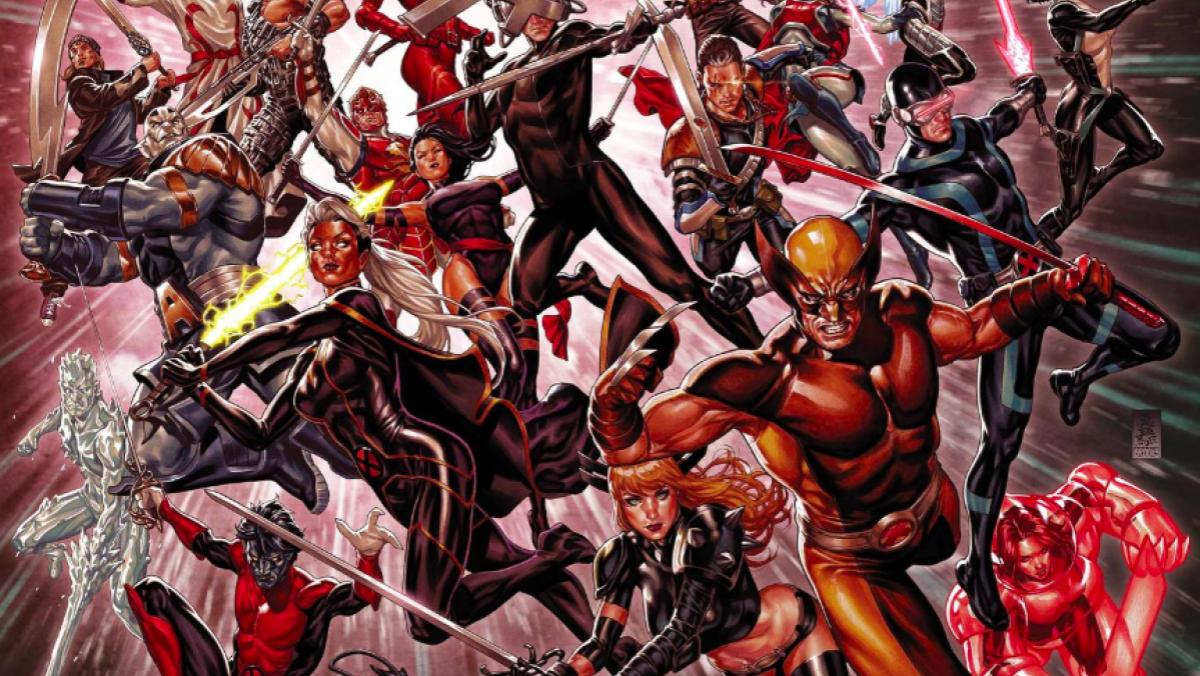
    One of the things Hickman has proven very adept at doing during his tenure with Marvel Comics is subtly reworking and expanding the mythology around some of the publisher’s most popular and well-established characters and he certainly didn’t hold back in doing that when he launched this X-line with dual titles House of X and Powers of X, establishing an incredible series of events and placing Moira McTaggert right in the middle of the very convoluted history (and future) of the X-Men. HoX and PoX launched the first two waves of X-books, all of which have landed more punches than they’ve missed for me, which have been building up to the Hickman’s first big X-event: X of Swords. The line-wide event has just kicked off and I’ve caught up on the first 5 issues of the 22-issue event. Is X of Swords off to a strong start? I have some thoughts!

    REVIEW: X of Swords - Creation #1 Is an Ambitious Start to Marvel's X-Men First Crossover

    The first title, X of Swords: Creation, came out swinging and set up perhaps Hickman’s most ambitious and far-reaching work at Marvel to this point. Hickman has spent a good deal of time in Dawn of X rewriting the history of Krakoa, reestablishing the importance of Otherworld and continuing to add to the already impressive personal history of one of Marvel’s most fascinating characters, Apocalypse. Hickman has always been a master world builder and his efforts during Dawn of X might well top any of his work at Marvel to this point. As usual for me, I’ve had to work through multiple rereads of multiple issues to try to get a handle on the disparate threads that are now weaving together in X of Swords but after finishing the first 5 issues of the event, I feel it is safe to say it was time well spent and that we might be in the opening act not only of one of Hickman’s best but also one of Marvel Comics best event-style arcs ever.

    Obviously this isn’t just Hickman at work here, though the narrative is certainly his concoction, and the group of writers who have been working to set up the chess board for this event have done a great job of telling their own stories while staying aligned with Hickman’s vision. Specific to this review, the works of Gerry Duggan (Cable and Maruauders), Benjamin Percy (X-Force and Wolverine), Leah Williams (X-Factor) and though her book wasn’t one of the first five issues of the event, Tini Howard (Excalibur). Of the group, Howard’s exquisite Excalibur book has laid much of the foundation for the first 5 parts of the event, bringing Otherworld to the forefront of not just the line of X-books but potentially the entire Marvel Universe. The amount of planning that had to have gone into this is staggering and, I imagine, on par with the 2007-08 Messiah Complex event under the direction of Christopher Yost, yet the team has made it work incredibly well.

    What Worked Well:

    Pretty much everything. The biggest payoff comes in the form of the latest chapter of the history of Apocalypse. We’ve seen bits and pieces of his past brought to light over the past several months, but the opening salvo of X of Swords clarifies what has to be one of the most shocking retcons in recent memory and something that has been a looming mystery since we were teased with this Sinister Secret all the way back in Powers of X #2:

    “For years, this fittest-of-all mutant has routinely surrounded himself with a particular-numbered entourage. These hangers-on stick around for a while until they are eventually replaced with newer, more exciting members. What most people don’t know is that if the original members returned, these pretenders would be dropped so fast their heads would spin.”

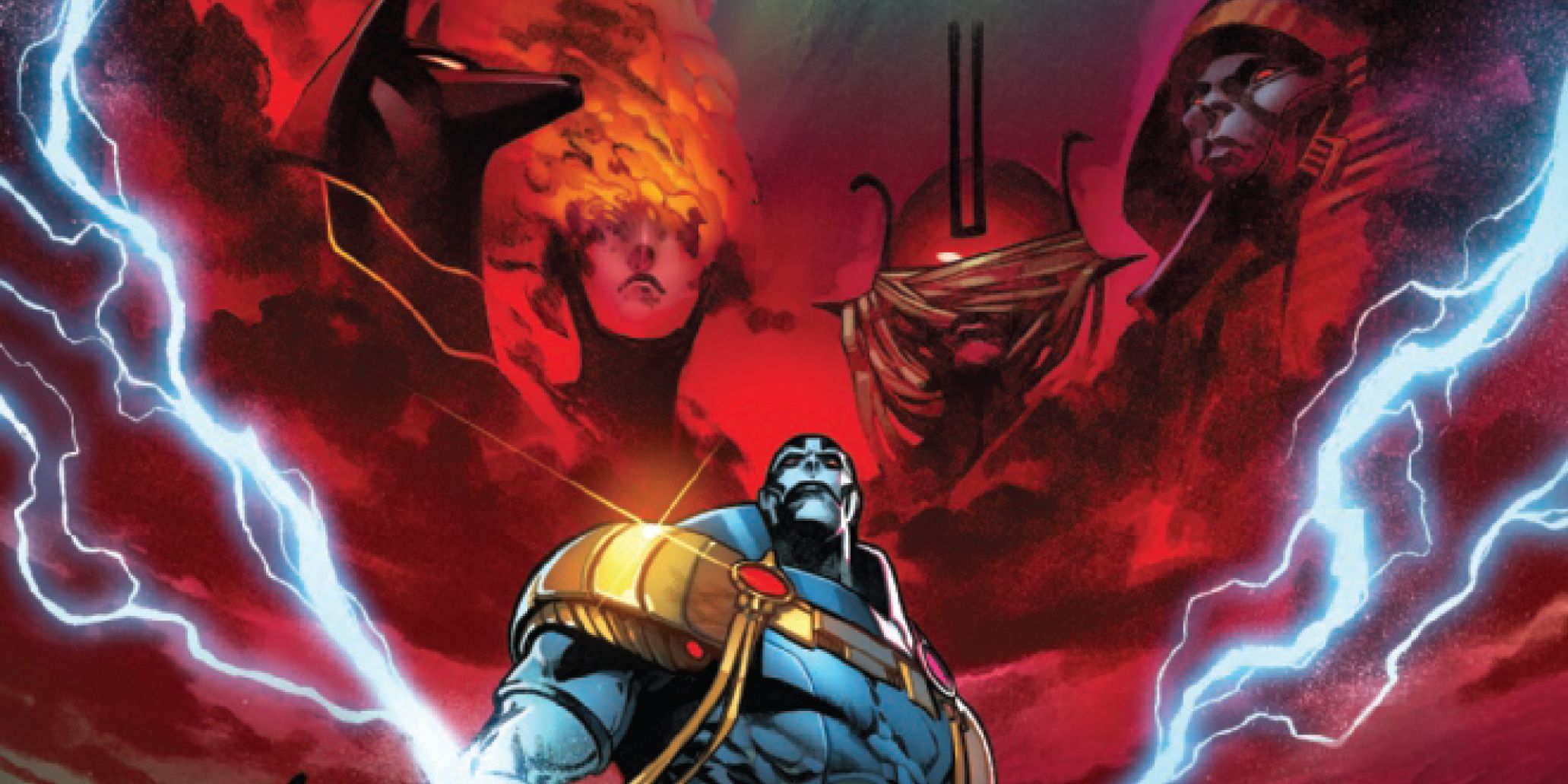
    As we learned from Krakoa itself (via Cypher), Krokoa is half of a whole with its other half, Arrako, having been separated in an ancient war when the Twilight Sword opened a rift in reality allowing an army of demons to pour through. Here Apocalypse and his original horsemen made a stand against the horde, saving Earth but at the cost of Arrako and the Horsemen being lost in another dimension that Apocalypse was unable to access until now. All of Apocalype’s machinations to this point have been about him finding a way to access Otherworld and then finding his way back to Arrako and now we know why: the original Four Horsemen are the children of Apocalypse, his true heirs and his actions cost him the life of their mother and doomed them to an eternal battle. Once reunited, it isn’t long before Apocalypse is betrayed by his children and the Summoner of Arrako forcing the X-Men to rush to his side and setting in motion the ambitious “contest of champions” that will pit 10 X-Men against 10 Swordbearers of Arrako with the fate of not just mutantkind but mankind at stake! For the first time in a long time, Apocalypse isn’t the one in charge of the game board, finding himself and his nation bending to the will of Saturnyne, the ruler of Otherworld. It’s here where it hit me that this event seems to truly be written for hardcore fans of the X-Men  who have poured not only through the Dawn of X books but also the 6 decades worth of stories that came before. Seeing a character like Saturnyne become a major power player by establishing a tournament, the repercussions of which will almost certainly be felt throughout the larger Marvel universe, seems incredibly satisfying as someone who has been a fan of X-books since the early 80s.

    X of Swords: Wolverine Blames Krakoa for Marvel's Mutant War

    I loved the verses recited by Polaris that hint at who the X-Men’s Swordbearers will be and much of what we saw in the first 5 issues (and will see for the next several more, I assume) is the individual journeys of those Swordbearers as they work to acquire their blades and find their way to the circle of Santo (I made that up). While some of the X-Men Swordbearers were predictable before the start (Magik and Wolverine were in the “oh yeah for sure” category for me) and another became obvious in his solo book (Cable), others were more of a surprise and, of course, we get to meet some new and memorable characters on the other side of the contest, such as Solem who has already become an incredibly intriguing character. Through the first five issues, Marauders #13 and the connected narrative of Wolverine #6 and X-Force #13 detail the events of two characters, Storm and Wolverine, in pursuit of the blades they’ll need to join the contest. Both characters are forced to confront their pasts (Strom must infiltrate Wakanda and Wolverine must go back to Hell) in order to acquire their blades. Storm’s tale was especially enjoyable as it allowed readers to revisit her past both as Queen of Wakanda and as a master thief while finding a way to add to the already well-developed history of Wakanda by introducing the Skybreaker blade. If these two stories are the template for what we can expect over the next several weeks as the other key figures gather their swords, we’re in for a treat. These stories are a great reminder of a constant theme in this review: it’s not JUST the mutant nation of Krakoa at risk here.

    And finally it’s the emergence of a true threat to the mutants that gives this event the promise of true stakes which then makes it worth reading. Since Hickman established the mutant resurrection protocols with the HoX/PoX relaunch, death has simply become an obstacle to mutantkind and one that is easily overcome. The death of Santo in Otherworld, however, changed the rules of the game as it was revealed that dying in Otherworld, the Nexus of all Realities, means that resurrection is a crap shoot as the “new” Santo was an amalgamation of all Santos (that’s some serious Hickman-ness). So while these brave heroes prepare this tournament, their lives are now truly on the line as they fight for everything they just established.

    The first 5 issues are truly Hickman at his most Hickman-est: weaving together multiple threads of complex world building, revealing secret histories of characters and places we thought we knew and quickly establishing that pretty much everything we thought we knew was wrong. It also goes ties back to one of his constant Marvel mantra: everything dies.

    What Didn’t Work Well:

    It’s hard to give something a fair review when you don’t have anything negative to say. To me this is the type of event story telling I love. It’s complex, layered, requires a lot of prior knowledge and sets up many potential new arcs even as it deals with ones that have been ongoing for some time. By nature then it includes a lot of moving parts and a ton of characters and could, for those reasons, be really off-putting to someone who hasn’t been keeping up. So it probably isn’t the ideal jumping on point if you’re looking to dig into X-books but more of a gift to the hardcore X-fans.


    Takeaway:

    A well-crafted start to an event that promises big things, X of Swords #1-5 are worth the money and effort you’ve invested so far but might not be for everyone, especially if you’re not up to date on Dawn of X.


  • Al Ewing Launches New ‘S.W.O.R.D.’ Series This December

    Al Ewing Launches New ‘S.W.O.R.D.’ Series This December

    As Al Ewing and Dan Slott’s Empyre event came to an end, former S.W.O.R.D. director Abigail Brand assured the Avengers and Alpha Flight that she had better things to do with her time than to clean up their messes when they leave her out of the loop. Now we know what she had in mind: Brand is bringing back S.W.O.R.D…with a twist.

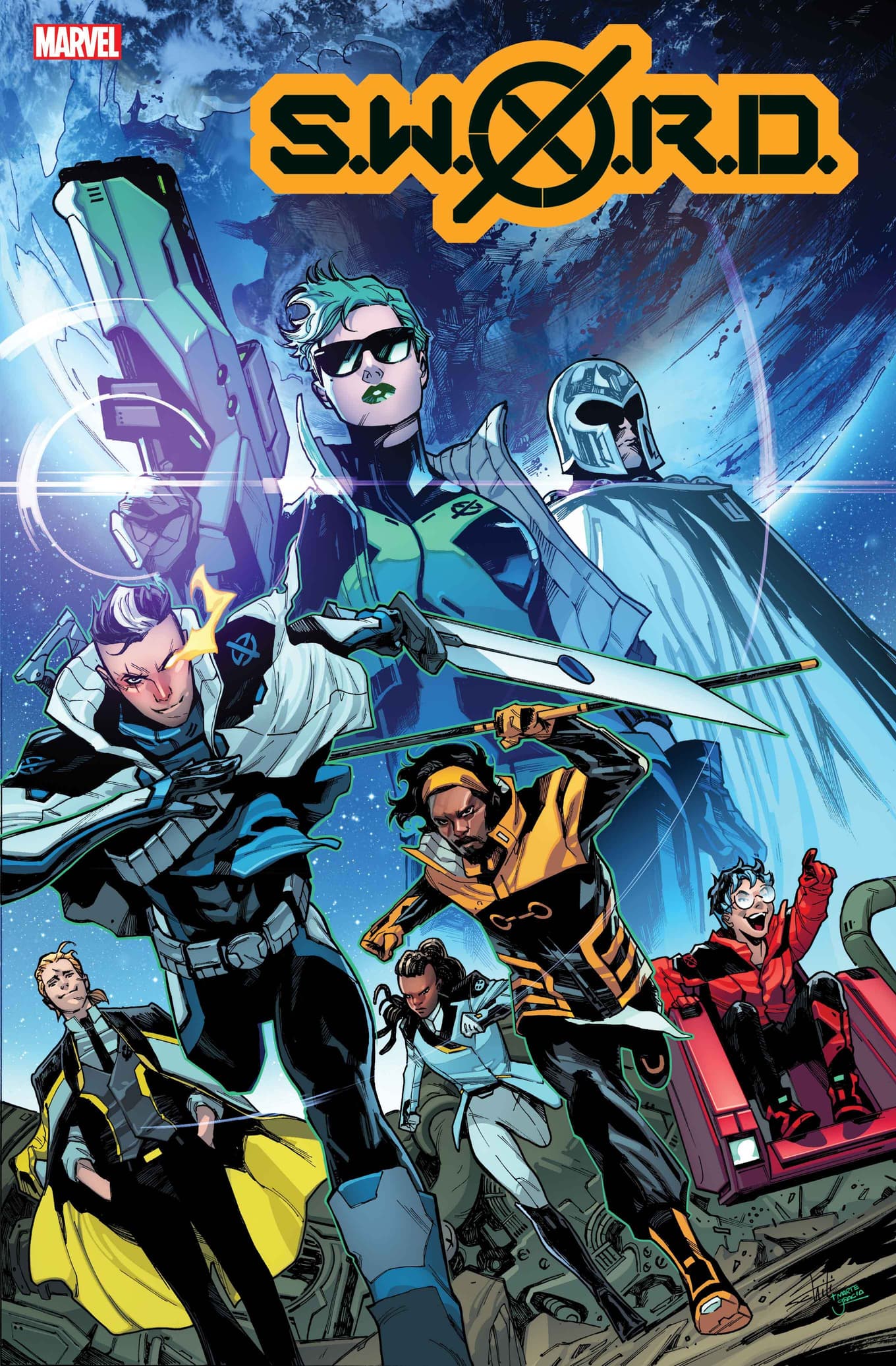
    S.W.O.R.D. #1 cover by Valerio Schiti

    Ewing will reteam with Empyre artist Valerio Schiti to bring Brand’s all-new, all-mutie version of the Sentient World Observation and Response Department to not only Jonathan Hickman’s line of X-books, but also to the larger Marvel Universe. Ewing, whose work on The Immortal Hulk earned him an Eisner nomination in 2019, has been one of Marvel’s most prolific and impressive writers over the last 5 years and this book will see him return to space where one of his best works, 2015’s Ultimates, took place.

    “It’s an absolute blast to be working with the X-team, and to bring Marvel’s merry mutants into the new Age of Space—and introduce space to the new age of Krakoa!” Ewing says. “And it’s not just X-readers and space explorers who get what they want—fans of my more cosmic Marvel work will have plenty to digest as well, as mutantkind thinks even bigger and takes it even further, into realms I’m almost surprised they let me get away with. After conquering death, what’s next—and will we survive the experience?”

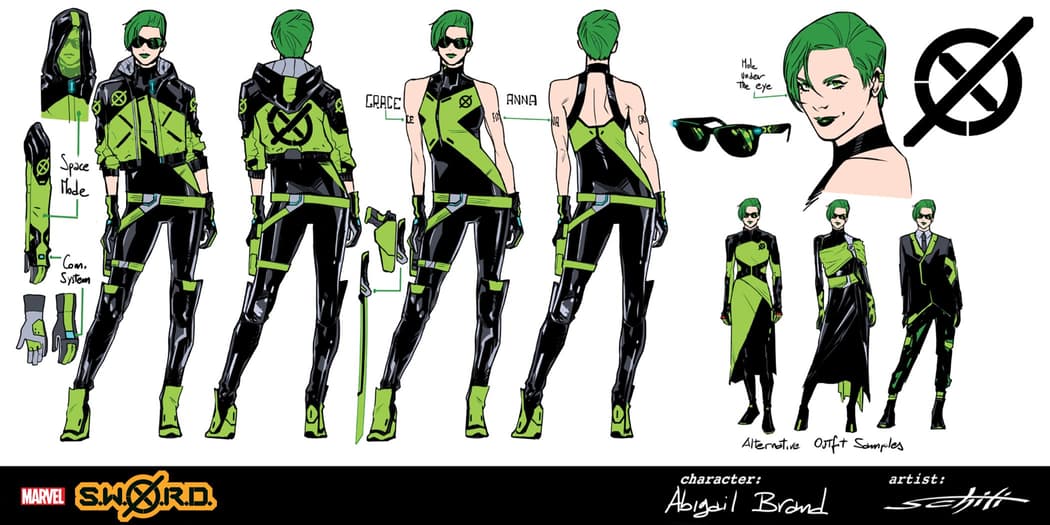
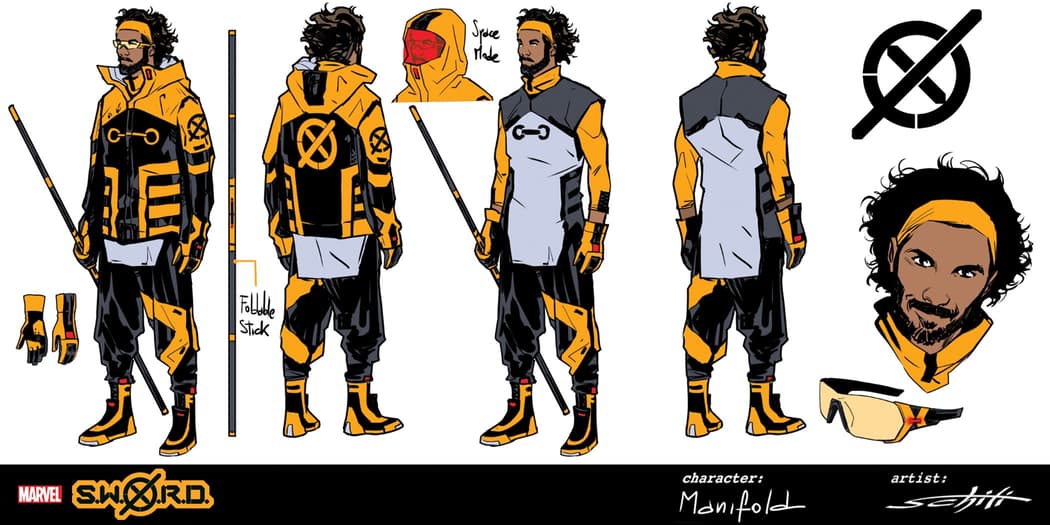
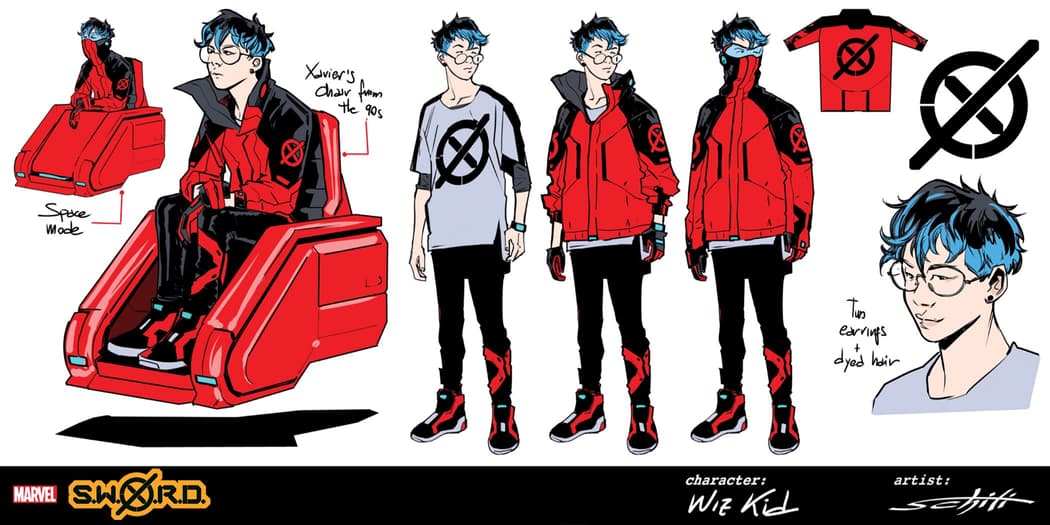
    Brand’s new squad will feature Magneto, kid Cable, Eden Fesi, aka Manifold, Frenzy, Wiz-Kid and a very different looking Fabian Cortez, thanks to Schiti, whose designs for some of the other members were shared via Marvel.com:

    S.W.O.R.D. character design sheet by Valerio Schiti

    S.W.O.R.D. character design sheet by Valerio Schiti

    S.W.O.R.D. character design sheet by Valerio Schiti

    As is always the case with X-teams, the whole is greater than the sum of its parts, so while there are some interesting choices here, including some reformed villains (Krakoa is for all mutants, afterall), Schiti assures us they are all here for a reason as the X-Men move forward following their upcoming event, X of Swords.

    “I can’t say much about what S.W.O.R.D. does, but I can say that every team member will have a peculiar role to play. That’s why I designed their uniforms with technical clothing, urban outfits, and even ceremonial uniforms: every role needed a different reference and a different starting point. The space outfits are inspired by trekking or hiking clothes, far from the typical space suit because these characters are explorers, not astronauts.”

    S.W.O.R.D. will be available for pre-order later this week and in your local comic shop this December.