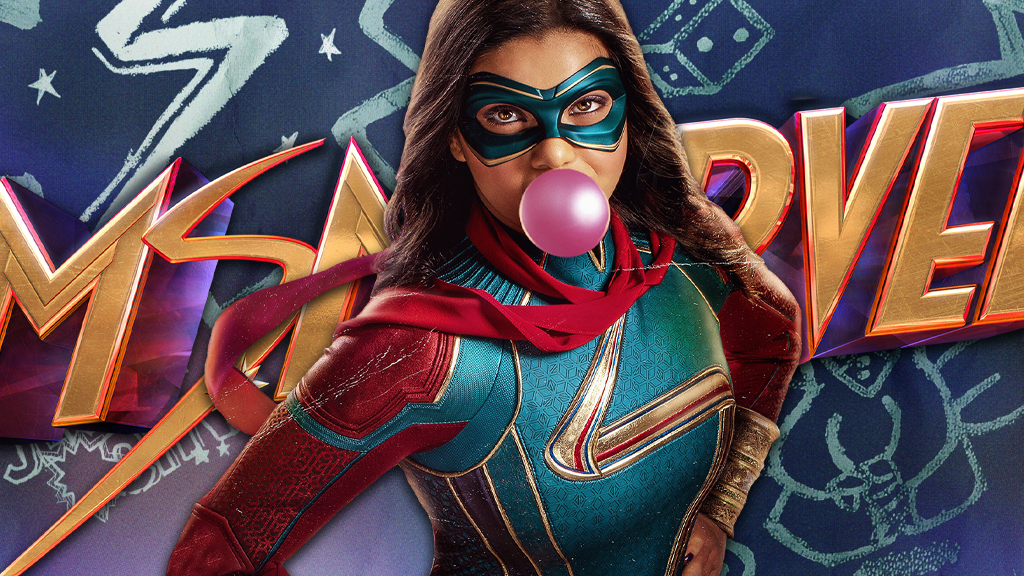
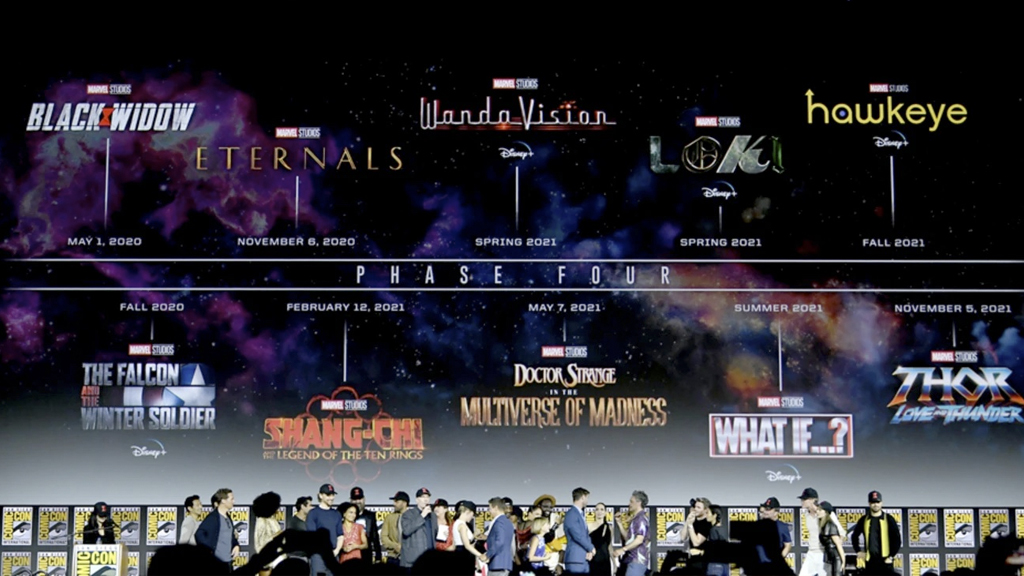
Now that Marvel Studios has formally ventured into television, new questions arise about the future of characters and plots that debut in the Disney+ series format. While we know some series—such as WandaVision and The Falcon and the Winter Soldier—lead into feature films, the announcement of Loki’s second season has made fans interested in other series getting the same treatment. While no show besides Loki has been confirmed for a Season 2, there are many signs that Ms. Marvel could be the next.
To be fair, we know we will see Kamala Khan in The Marvels, so it would be easy to say that Ms. Marvel’s follow-up will be in that film. But The Marvels is a sequel to Captain Marvel and will feature, from what we know, three main leads. To think that Kamala’s individual story will be able to fully continue without her own solo project is brave. With only the finale to go, Ms. Marvel has left quite a lot of story on the table. Even a strong finale—which Marvel Studios is not known for—cannot reasonably wrap it all up. And that may very well be part of the plan to give Ms. Marvel a Season 2.
First, Kamala’s entire high school-level plot has taken a backseat for the second act of the series. The last time we saw Nakia, she had just learned that Kamala was the masked hero and was no longer speaking to her. Bruno was jealous of Kamran and also told Kamala he was going to leave to attend CalTech. Kamran is clearly integrated into the superhero side of the plot, but the love triangle there is still up in the air. Many of these plot strings, particularly Nakia and Bruno, seem to come straight from Ms. Marvel comics and are nowhere near a resolution. Kamala’s personal life—the one she had before the bangle—has been set up for a longer journey than what the finale could handle. There is a very strong chance that the last episode will specifically leave these stories open and ready to explore in the future. And they would not make much sense in The Marvels.
If Episode 5 of Ms. Marvel made anything clear, it is that the full extent of Kamala’s powers might not be explained in the series (or the first season). While we have come a long way since Episode 1, there are so many questions remaining about Kamala’s heritage and powers. The finale will without a doubt answer some of these. To be fair, it could answer them all. But when Kamala’s grandmother cut off the questioning as to how and why Kamala can do what she does to suggest it is all about how two people fell in love and made something bigger than themselves, it seemed like a way for the series to say, “don’t worry about it.” Regardless of what we learn in the finale, the implications of the Noor Dimension and Kamala’s bangle are surely things that cannot adequately be resolved yet. That’s where The Marvels may very well help out, but something even bigger remains elusive.
Kamala has not yet become Ms. Marvel. She almost certainly will in the finale, but we will not have seen her be the masked hero of Jersey City in Ms. Marvel. The series has received high praise from critics, and audiences and Marvel Studios alike love Iman Vellani. The character will be part of future team-ups in the Marvel Cinematic Universe, but the idea that they would not explore her solo adventures more is both laughable and sad. Unlike Moon Knight, which does not appear to have plans for a second season, the lead character in Ms. Marvel has not actually been the titular superhero during the series. Also unlike Moon Knight, Ms. Marvel is based on much more beloved and popular comics. Kamala is relatively new to Marvel, but her stories of heroism in Jersey City have a broad audience and can likely be relatively easy to adapt into (more) series-based content.
MCU series have a troubled history with resolving their own stories by the end of their runs, but the many-lingering plots in Ms. Marvel might be by design. If, like Loki, a Season 2 has been part of the bigger plan, the series is free to set up ideas that will continue to be explored. The points surrounding Kamala’s teenage life and relationships are, arguably, a very clear sign that this is happening. In particular, her and Bruno’s long will-they-won’t-they romance is set up for the long haul. Kamala also deserves to spend time in the spotlight as a solo hero, Ms. Marvel, in a way that team-up films and events are suited for. So, don’t be too surprised if a Ms. Marvel Season 2 announcement comes soon.
The first five episodes of Ms. Marvel are now streaming on Disney+.
Episode 5 of Marvel Studios’ Ms. Marvel ended on a somewhat weird note. If on one hand the Clandestines’ subplot was apparently swiftly resolved, the Damage Control threat somehow gained traction with the attack on Kamran and Bruno at the Circle Q. While there is no real perfect counterpart to this sequence in the comics, the aftermath could perhaps lead Bruno down an interesting, yet painful path, taken straight out of the comics.
Marvel Studios’ Ms. Marvel Episode 5
Marvel Studios’ Ms. Marvel Episode 5
Leading up to Secret Wars, Kamala finally met her hero Captain Marvel as New York was soon to be destroyed by an incursion. This later led to Carol making Kamala the leader of a group they named the Carol Cadets. The Cadets were created following the discovery of an Inhuman named Ulysses, who through the use of mathematics could basically predict the future. They were made to go after criminals who were yet to commit any sort of crimes but that Ulysses deemed likely to end up doing so. This was something that began not to sit right with Kamala’s friends, around the same time she also began to fight back against the idea behind the creation of the Cadets by questioning their methods.
This all led to Bruno trying to break into the Cadets’ facilities in order to set free who, in his eyes, happened to be detained there without a valid reason. Said break-in went wrong and Bruno had to deal with the consequences, being left bedridden with third-degree burns all over the left side of his body, losing the use of his left hand (his dominant one), and with serious doubts if he’d ever be able to walk again.
Ms. Marvel #10 (2016)
Once he finally regained conscience, and even though Kamala tried her best to stay by his side throughout his hospital stay, Bruno made it extremely clear that he held her responsible for the situation that left him in the state he found himself in. He considered she was focusing too much on her superhero life without regarding the consequences to the people around her who loved her, taking everyone for granted. He vowed to never want to see her ever again, and that his next step would be moving away to study at the Golden City Polytechnic Prep, in Wakanda.
Ms. Marvel #18 (2017)
Once there, he was involved in an attempted vibranium robbery, he met King T’Challa and eventually went back home when he realized that Kamala was who he wanted to be near. Unfortunately for him, Kareem, the Red Dagger, had by then stepped into the frame.
Marvel Studios’ Ms. Marvel Episode 1
It’s hard to predict if the Circle Q explosion might end up serving as the catalyst to a similar journey for the MCU’s Bruno. If it does, it would certainly be something worth going into in the second season (?) of the show, with perhaps Black Panther: Wakanda Forever being a possible project in which to feature a Matt Lintz cameo in the meanwhile.
The first five episodes of Ms. Marvel are now streaming on Disney+.
In early July, Marvel Studios put out a casting call for a Mandarin-speaking actress to portray a character codenamed “Jin” for an untitled animated project. The synopsis for the project sets up the project as one in which “a secret society of humanoid aliens living on earth dispatches a team of spies across the world to collect a series of missing artifacts that threaten to influence mankind…” Marvel Studios has several animated projects in development such as X-Men ’97, Marvel Zombies and Spider-Man: Freshmen Year, but this synopsis does not seem to overlap with anything already known about those series. If that is the case, this casting call is the first indication that the studio has yet another production in the works and one that may have already started production. Taking a little closer look at the information that’s been made available and following and admittedly single-minded line of thought, it’s possible to connect the dots and wonder if Marvel Studios may just be making an animated Ten Rings prequel series for Disney Plus.
It’s worth noting that the casting call for “Jin” specified that the role was for the third episode in the series that would start in late July or early August, meaning it’s very likely they’ve already begun work on at least the first episode. If that’s the case, it’s totally possible that this series could be among the projects discussed during Marvel Studios’ first ever animation panel at SDCC on Friday, July 21st. So, right or wrong, speculation on the nature of the series could be short-lived.
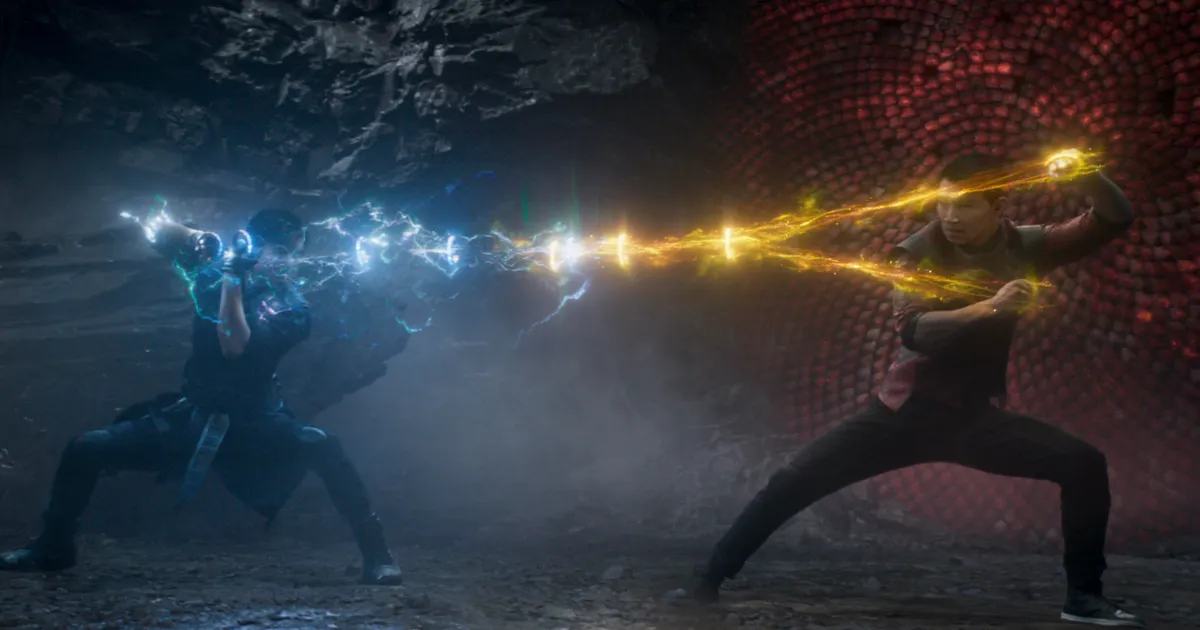
The origin of the Ten Rings was left intentionally vague during the opening of Shang-Chi and The Legend of The Ten Rings. By the end of the film, the audience only really knows that they are really powerful artifacts that are almost certainly alien in nature. Where they came from or how they got to Earth is left entirely unclear. In the comics, however, their origin is very clear and leads to the first clue that this animated series COULD explore how they came to be on Earth in the MCU. The synopsis mentions “a secret society of humanoid aliens living on earth” which ties nicely into the origin of the rings in the comics.
Retconned a few times over the decades, the story of how the ten rings arrived on Earth has always had one constant: a shape-shifting alien race known as the Makulans. Mostly known for being the race of Fin Fang Foom, Makulans are actually humanoid shape-shifters some of whom came to Earth at some point before the 8th century. Using their shape-shifting abilities, they infiltrated Chinese society with hopes over eventually conquering the planet. One of their number, Fin Fang Foom, voluntarily went into stasis, where he stayed for…a really long time. As told in the pages of Tales of Suspense #62, another Makulan, Axonn-Karr, arrived on Earth and, while looking very dragon-y, was attacked and mortally wounded. Karr was later found by The Mandarin, who before he killed him took from him 10 very powerful objects: the ten rings.
The animated series, much like the comics and Shang-Chi and The Legend of The Ten Rings, clearly takes place, at least in part, in China. “Jin” is described as a “Chinese warrior” and “perhaps the best trained martial artist in the world.” Her story begins, it seems, when another character named “Bosco” steals one of the series’ MacGuffin artifacts. With the history of the MCU’s ten rings yet to be revealed, there are plenty of scenarios that could result in the rings being scattered “across the world”, including perhaps different dimensions. For what it’s worth, “Jin” is just as likely to be Wu Ao-Shi, the Immortal Weapon of K’un Lun in the mid-1500s, as anyone else.
It’s possible that this series explores the history of the ten rings a little differently than they have been in the comics. As made clear by the synopsis, these artifacts (if they are the rings) have been scattered across the world. What the series might follow is the series of events that lead to them being collected by Makulans and then hidden away, in a tomb or a cave, BEFORE they are found by Wenwu. Marvel Studios has already shown that a tomb that was marked with the symbol of the Ten Rings organization that held the remains of what appeared to be a dead alien. Who’s to say that’s the only dead alien Wenwu left in the dirt?
Is anything presented above strong enough evidence that this series will tell the story of how the ten rings came to Earth and came to be in Wenwu’s possession? Absolutely not. However, there is one more piece of evidence available that could strengthen the case. The showrunner and executive producer of the series is Marvel Studios’ storyboard artist Todd Harris. Over the past 5 years, Harris has worked on 7 Marvel Studios films including, most recently, Shang-Chi and The Legend of The Ten Rings. It’s possible that during his time on Shang-Chi, Harris worked closely with director Destin Daniel Cretton on developing the backstory for the ten rings and that time spent on the story led to this animated series going into development.
Harris’ involvement doesn’t necessarily make the ten rings a lock to be the “missing artifacts” mentioned in the synopsis. Given the fact that the ten rings are just one of at least two alien artifacts hanging out on Earth (Kamala’s bangle being the other), it’s possible that over the next year or so before this animated series debuts, other alien tech will be uncovered in other projects. Ms. Marvel hinted at at least some level of connectivity to the rings, so maybe, as outlined here, the rings are just one of a group of Phase 4 MacGuffins connected to Variants of Kang. Whatever the case, it won’t be too long before Marvel Studios officially addresses the series and the implications of it.
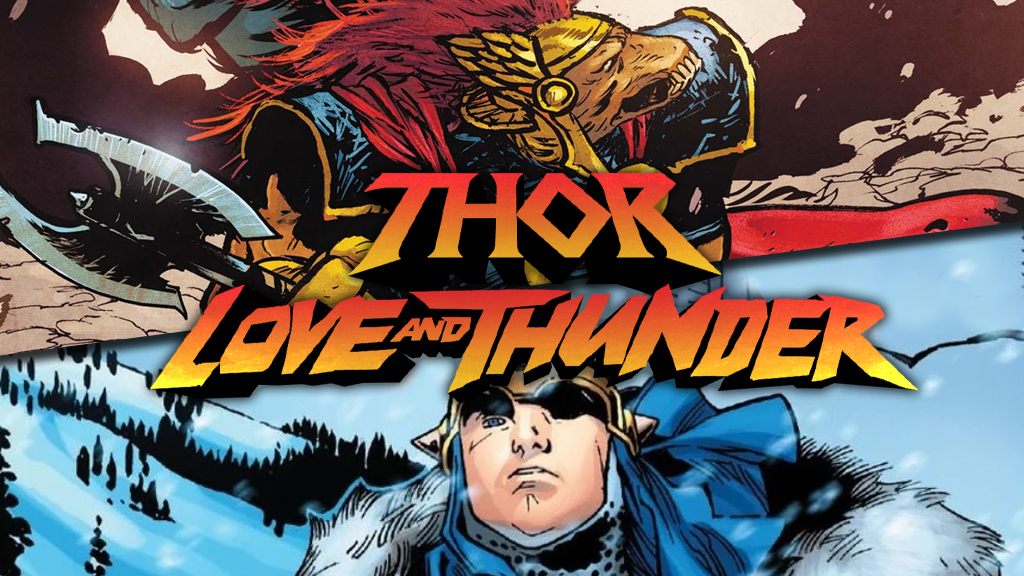
Thor: Love and Thunder certainly set the table for a fifth film in the Thor franchise with a mid-credit stinger which revealed that the Olympian Prince of Power has been assigned with taking the Odinson down a peg or two. Given Zeus’ command that Hercules knock Thor from the sky and humiliate him, the fifth film has to at least BEGIN on Earth with the two titans trying to prove superiority. However, if you think the whole film is going to be Thor vs. Herc, you’re probably mistaken. The two are more likely to go the Brennan and Dale route from Stepbrothers and, by the end of the first act, realize that they are best friends who need to go on adventures together. With that in mind, here are five potential stories that could be adapted for Thor 5.
Thor: Fear Itself
In classic Marvel Studios fashion, Thor: Fear Itself would have very little in common with the comic event other than borrowing the name, which is damn catchy, and the main antagonist. Family dynamics have often been at the center of the best Thor stories in the comics and in the MCU. Thor: Love and Thunder took a bit of a break from that, but Thor: Fear Itself could return to that winning formula by introducing a pair of terrifying family members: Thor’s uncle Cul Borson and The Midgard Serpent, Jormungand, Thor’s…nephew?
Thor: Ragnarok introduced the idea of Odin keeping some pretty major secrets from everyone, an idea that could come back to haunt Thor and New Asgard. In the comics, Odin imprisoned his brother and Jormungand deep in the oceans of Earth. Having Cul, who becomes known in the comics as “The Serpent” team up with Jormungand, an actual serpent, and do battle with Thor and Herc would allow for some spectacular battle scenes fully in line with two-time director Taika Waititi’s heavy metal sensibilities. Having a long-lost uncle come into play would also give Waititi plenty of room to mess around with some comedy before an absolutely insane third act.
Thor: Journey Into Mystery
One of the greatest characters of Thor’s supporting cast that has yet to hit the MCU is Karnilla, the Queen of Norns. A part of Marvel Comics’ take on Norse Mythology since 1964, Karnilla’s alliances have shifted multiple times over the years, siding with many of Asgard’s enemies, but occasionally siding with Asgard when is served her. Karnilla was always a powerful sorceress and her connection to the Three Norns, the goddesses of fate, and their shared past with both the Asgardian and Greek pantheons could make her the perfect antagonist for Thor: Journey Into Mystery.
Pulling Karnilla into the fifth film could allow for some flashbacks to Asgard, the location of Karnilla’s home, the Nornkeep, during Thor’s younger days and MAYBE allow for Marvel Studios to FINALLY bring another major supporting character off the bench: Balder the Brave, Thor’s brother and Karnilla’s great love. As it turns out, the world of Nornheim already exists in the MCU and was visited by Thor and Loki in their younger days. Given that their trip their was only mentioned in passing during Thor, that trip to Nornheim could become whatever the writer and director of the film want it to be, including a convenient way to introduce a “dead” Balder by adapting a recent series of events from the comics that found him in Niffleheim as the ruler of Hel. With MCU’s Hel needing a new ruler in the absence of Hela, putting Balder on the throne and finding a way to make Thor and Herc end up there as part of a first act “destiny” plot wouldn’t be too hard to pull off.
It would be very Greek of Marvel Studios, and maybe pretty Norse as well, to have Thor and Herc’s partnership fated for them, even against the will of Zeus. Avengers: Age of Ultron teased the Norns a bit with the Water of Sight, so the studio has clearly considered using them, and by proxy their Queen. Given the right touch, Karnilla could be both one of Thor’s greatest villains to date and one whose true intentions the audience is never sure of.
Thor: The Last Days of Midgard
Another Earth-bound adventure worthy of the two heroes teaming up can be found in the same place from which Waititi was inspired to make Thor: Love and Thunder. Jason Aaron’s epic run on Thor introduced not only Jane Foster’s Mighty Thor and Gorr the God Butcher, but also the terrifying CEO of Roxxon oil, Dario Agger. Agger, of course, was gifted (or cursed, depending on your point of view) with the ability to transform into the mythological Greek Minotaur. You can do the calculus for yourself here: angered by Herc’s friendship with Thor, Zeus turns Agger into the Minotaur.
During Aaron’s run, Agger often teamed up with one of Thor’s oldest foes that has yet to make his way to the big screen, Ulik the Troll. In those comics, Thor teamed up with Jane’s Mighty Thor to take on these villains and he’s definitely going to need some help if the two team up to terrorize the MCU. Agger’s ties to Greece and Greek mythology make him the perfect baddie to follow up Zeus’ appearance in the MCU and square off against Hercules in Thor: The Last Days of Midgard. And Agger’s position as the head of Roxxon would also open the door for Waititi, should he return to direct the film, to use the film to bring environmental issues and the climate crisis to light, topics he’s been very vocal on in the past, making The Last Days of Midgard a haunting and appropriate subtitle.
Thor: When Meet the Immortals
Clearly any and all Marvel Studios adaptation of Marvel Comics are growing incredibly loose and this would be no different. Thor: When Meet the Immortals would take inspiration from an arc by Stan Lee and Jack Kirby that began when Thor and Hercules first met in Journey Into Mystery Annual #1 and continued as Journey Into Mystery became retitled as Thor. For the fifth entry into the Thor franchise, Waititi could work to adapt a 7-issue arc that ended with Thor #130.
This arc provides the best opportunity for Waititi to tap into the Stepbrothers-style relationship between Thor and Hercules while also giving them the type of near impossible challenge both have always thrived on in mythology and in the Marvel Comics. After being sent to Earth to humiliate Thor, The Lion of Olympus not only becomes best buds with Odinson but also falls in love with being a superhero. Enraged, Zeus enlists the help another of his offspring, the bloodthirsty Ares. Meanwhile, seeing his brother’s weakness exposed by Thor, Pluto/Hades plots against Zeus and looks to take over Olympus. Alliances change, and Thor saves the day in the third act by defeating Pluto in the “Netherworld.” An adaptation of this old arc allows for some serious god-on-god violence and provides a more appropriate place for Waititi’s trademark humor than Love and Thunder provided.
Thor: Now Ends the Universe
A common complaint about Thor: Love and Thunder was that when it was all said and done, the stakes seemed relatively low. What better way to counter that than to have the greatest stakes imaginable: the end of the universe? And what better way to spite Zeus than to have his son, who he sent to humiliate Thor, work alongside the God of Thunder as a superhero that saves the universe? And what better threat for them to take on than The Hatred Who Walks, Mangog.
While at face value the Mangog might seem like a redundant villain following Gorr the God Butcher, the character actually provides a path to redemption for the franchise following the luke warm reception to the antagonist of Love and Thunder. Just when Thor thinks he can turn the corner and look the the future, the past of his father (and, for the sake of the MCU, Herc’s father, too) comes back to haunt him in the shape of Mangog. In the comics, Mangog, the last of his race, is imprisoned by Odin after the King of Asgard slaughtered his people. We know from Ragnarok that Odin was quite the conqueror with quite few skeletons in the closet. Mangog, who is powered by the hatred of the billion billion beings slaughtered by Odin, would be quite the skeleton.
For the sake of the MCU, it would easy enough to have a cold open that showed Zeus teaming up with Odin to imprison Mangog a thousand years ago or so. Whether it be the destruction of Asgard that set the monster free or perhaps Zeus being weakened after Thor’s attack at Omnipotence City, the end result is that Mangog is free and on the hunt for the film’s MacGuffin: the Odinsword, which has the power to destroy the universe. Mangog’s sheer power makes him more than a match for Thor and Hercules and his absolutely wild appearance would make him an unforgettable antagonist. He seems perfect for Waititi and it’s surprising he’s somehow never made it to the MCU yet.
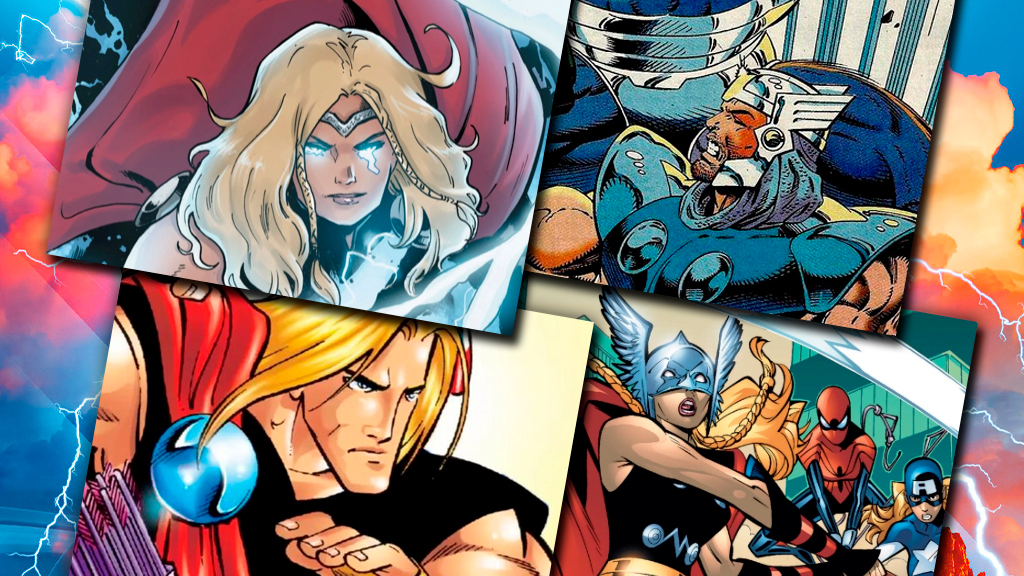
Anyone who’s seen a Thor movie knows Chris Hemsworth is a daddy, but only those who’ve seen Thor: Love and Thunder know his character is now too. The latest installment in the Marvel Cinematic Universe ended with the God of Thunder taking on a little more responsibility than he’s used to, adopting the daughter of his deceased foe Gorr the God Butcher and stepping into the role of father. While this might have been a shocking turn of events for global audiences, it’s actually not the first time Thor has been depicted raising a child. In fact, it’s happened a few times in the comics, and the concept has even made it to animation in the past. Follow along as we at Murphy’s Multiverse take you on a trip down memory lane, discussing every time the Odinson has ever been a Thorfather.
Torunn Thorsdóttir (Earth-555326)
When Next Avengers: Heroes of Tomorrow went directly to home video in 2008, a lot of fans missed out on a pretty charming-and creative-animated adventure. Set in a future where Ultron has slaughtered Earth’s Mightiest Heroes and taken over the planet, Next Avengers follows the teenage children of the original team as they emerge from hiding and go on a journey to save the world. Among them is Torunn, voiced by Brenna O’Brien, the daughter of Thor and his wife, Lady Sif.
In this timeline, Thor is actually one of the very few Avengers to have survived Ultron’s vicious attack. Unfortunately, he couldn’t stick around to keep helping Earth, as the sudden death of Odin forces him back to Asgard to replace his father as King. With duty calling, he chose to leave Torunn behind, hoping a childhood among mortals would teach her the same lessons of humility he had once learned in his own banishment. His plan works, and dodgy parenting tactics aside, Torunn grows to become a humble warrior who protects Midgard in the way her father did before her.
Created by Christopher Yost, Greg Johnson, and Craig Kyle, this version of the Thorsdóttir possesses all the same abilities as her pops, but wields a giant enchanted longsword into battle as opposed to a hammer. She is also every bit as fierce and brash as Thor once was, always acting quickly to defend those she loves. A few alternate Torunns have popped up in the comics as well, but typically only as background characters on different Earths related to Next Avengers.
Thena Thorsdóttir (Earth-982)
Before Marvel came up with the Ultimate line of comics, there was another attempt made to reboot the mainstream continuity in an accessible way for new readers. Far less successful and not as well-remembered, stories told in the “MC2” timeline are set in a present where the first Marvel heroes have mostly aged out of costumed activity. In their stead are a new generation of Avengers and superpowered do-gooders, and while it took her a while to show up, another version of Thor’s daughter did eventually make her way to the universe.
Created by Tom DeFalco, the same guy who launched the “MC2” brand with 1998’s Spider-Girl, and Ron Lim, Thena Thorsdóttir made her comic book debut in 2006’s Avengers Next #1. There, it’s revealed that Asgard has been destroyed by a very hungry Galactus, and that Thor and Loki’s children, Thena and Sylene, are among those who escaped the disaster. Unfortunately, Sylene disappeared in the chaos, and somebody has to go find her.
In her brief arc, Thena is sent to Earth by her father and uncle with two goals in mind – find her lost cousin, and restore Thunderstrike’s powers so he can continue to guard Earth in the Asgardians’ absence. Initially believed to be an enemy, Thena fights the new Avengers and loses her magic hammer in the process. Of course, she later makes amends with the team and joins them to battle Ultron, and later Sylene, when she turns out to be the real threat (it is Loki’s kid, after all). If you’re worried about the lost hammer, don’t fret. Thena gets a fancy new titanium weapon designed by Jarvis for all her troubles.
Brigid Thorsdóttir (Earth-20368)
The most recent addition on this list, Brigid Thorsdóttir has only been around since Captain Marvel (Vol. 10) #23 released in 2020. Hailing from an alternate future where a lethal cataclysm scorched Earth and left it bathing in leftover radiation, Brigid stays in New York City working as a blacksmith to aid other survivors. She is initially unworthy of lifting her father’s hammer Mjolnir, which has been dormant since Thor lost his life in the world-ending blast, and is unable to use it until a time-traveling Carol Danvers arrives in 2052 A.D.. Pulled into conflict alongside Captain Marvel, Brigid finds herself able to summon Mjolnir just before she’s killed by the forces of the Enchantress. It’s implied that, even after Carol leaves her timeline, the Thorsdóttir will use the hammer to continue protecting what’s left of humanity.
Brigid was created by Kelly Thompson and Lee Garbett, and unlike the previous Thorsdóttirs, whose time in the spotlight has pretty much ended, we may see more of her in the future. Fun fact: Brigid’s name comes from the Irish Goddess of Smithing, in reference to her unique skillset, and is not Norse at all. Nothing is known officially about her parentage, but it’s entirely possible Thor fell for a red-headed lass in this universe before things went south.
Magni & Modi Thorson (Earth-616)
The only known time Thor has had children in the main Earth-616 continuity. In accordance with Norse mythology, it’s revealed way back in 1980’s Thor #293 that the God of Thunder had two sons before the previous end of the Ragnarök cycle wiped them from existence. A story from Roy Thomas and Keith Pollard explains that Magni and Modi Thorson, based on the actual Norse deities, sacrificed themselves to bring back Odin so he could rebuild Asgard, father Thor once more, and start the Ragnarök cycle anew. Not much else is known about the brothers aside from this, but it can be assumed most of their whole deal would be the same as it was in actual mythology. If that’s the case, then their mother would be a giantess named Jarnsaxa.
Woden Thorson (Earth-691)
The Guardians of the Galaxy may be household names today, but in 1993, they were still just little-known characters living in an alternate 31st Century timeline. In that universe, Thor and Sif had a son named Woden, who was created by Michael Gallagher and Dale Eaglesham for an appearance in Guardians of the Galaxy #42. Described as a brooding bully, Woden grew up mostly without a father figure, as Thor found himself unable to give up a life of adventure for the role of dad. As a result, Woden had a troubled upbringing, with only his mother Sif around to help where she could. Eventually, Thor would be made to stay in Asgard by Odin, but his resentment of the situation would lead to his becoming an alcoholic and Woden leaving home as a bitter soul.
Years later, Woden would return to action in order to stop his uncle Loki and an army of Inhumans from tearing Asgard to the ground. With a bloated Thor now unworthy to wield Mjolnir, a disgruntled but worthy Woden would pick up the hammer and team with the Guardians and his grandfather Odin to end Loki’s latest assault on the Gods. Following the battle, Woden takes up his father’s once-righteous quest to protect Asgard as it’s golden son, even teaming with Heimdall later on to fend off a dangerous creature on the Bifrost Bridge.
Magni Thorson (Earth-3515)
Originating in a short arc titled Thor: The Reigning (which plays out in Thor (Vol. 2) #67-69), this reality continues the trend of Thor being a shockingly bad dad. In a story created by Dan Jurgens and Scot Eaton, the Odinson makes the decision to merge Asgard with New York City, creating a version of New Asgard that an organization called the Consortium of Nations deemed too dangerous to stick around. Their dramatic assault on New Asgard results in Thor slaughtering what’s left of his humanity and using his God power to forcibly take control of Earth, establishing his reign as “Lord Thor” and eventually crafting a variable paradise on Midgard. Two decades later, he would have a son with Amora, the Enchantress, and name him Magni.
Magni is raised as the beloved and loyaly crown prince of New Asgard, adventuring throughout the Eight Realms and conquering enemies in the same way his father had done in his youth. However, once he reached adulthood, the Son of Thor would come to resent the brutal way in which the Asgardians treated humanity. A relationship with a mortal woman named Jordahl pushes him over the edge, and Magni ends up leading the charge against his father to restore decency to Asgard’s legacy. This act enables the Thorson to wield Mjolnir, an ability his pops lost after murdering innocents. After a bunch of violent shenanigans, Thor realizes the error of his ways and relents, fixing his own timeline and collaterally erasing Magni from ever being born.
Modi Thorson (Earth-1610)
Thor may not have done too much papa-ing in the mainstream Marvel universe, but he did have a rather unfortunate brush with fatherhood in the Ultimate timeline. Jeph Loeb and Frank Cho‘s Ultimate New Ultimates #5 introduces readers to Modi Thorson, the God of Thunder’s child born out of, well, nothing comfortable. In this reality, Thor makes his way to Valhalla to retrieve the lost soul of his lover Valkyrie, only to come face-to-face with the Goddess of Death, Hela. The villain cuts a deal with the Odinson – he can have Valkyrie back, but first he must bare Hela a child. Yeah, as previously stated, nothing comfortable.
That child would quickly be discovered by his uncle (and sort of grandfather, but maybe don’t think about that too much) Loki, who brings Modi back to Asgard and reunites him with his father. Unfortunately, an unexpected assault on the realm causes Thor to lock Modi in “The Room Without Doors”, where he ages years in a matter of days, develops a hatred for his old man, and begins to resemble his uncle (grandfather). Upon escaping the room, Modi heads to Midgard and attempts to usher in a second American Civil War, partnering with Hydra to enact his complicated plan. Chronically terrible father Thor consequentially teams with Steve Rogers, who is President of the United States in this universe, to smite his own child and put an end to the chaos. The Ultimate timeline was messy, to say the least.
Balder Blake (Earth-9811)
What If…? #114, by Jay Faerber and Gregg Schigiel, explored a world where the heroes of Battleworld were never allowed to leave. There, they were forced to settle down and continue living their lives with whoever else had been unwillingly transported to the alternate dimension on which they defeated Doom and the Beyonder. Thor ended up pairing with the Enchantress, and together the two had a son named after Thor’s brother Balder. Each year on his birthday, Balder would attempt to life his father’s hammer Mjolnir, but consistently found himself to be unworthy.
Though he would never be shown to pick up the weapon, an encounter with the villain Malefactor (son of Victor von Doom) revealed his friend Sarah Rogers could, and together they would stop the threat and return peace to their universe. After a time, the heroes of Earth-9811 found an opening to make their return to their original homeworld, but instead are stranded in a new timeline ruled by an army of Sentinels. True to his parentage, Balder commits to making the world his next home, and helps form a new team of Avengers alongside Sarah and the other superheroic teens from Battleworld.
Woden Thorson/The Goddesses of Thunder (Earth-14412)
This child of Thor is at the bottom of the list because, frankly, we know almost nothing about him. Conceived by the maestro Jason Aaron and Esad Ribic for their run on Thor: God of Thunder, a second variant of Woden Thorson has been mentioned more than once but never shown. In this universe, Thor would eventually become King of Asgard and the All-Father, living a complex life that would see him spend time as both a Living Planet and an enforcer for Omnipotence City’s Ministry of Inter-Deity Justice. Along the way, the God of Thunder fathers a child with a Frost Giant general called She-Blizzard (which is awesome). Their half-Asgardian, half-Frost Giant son would apparently grow up to have three children of his own – daughters Frigg, Atli, and Ellisiv.
While Woden never actually shows his face in the comics, his daughters do. The grandchildren of Thor aid him and his past selves in the fight against Gorr the God Butcher. Each of the trio are taken as slaves by Gorr and forced to help him build his Godbomb contraption, until they are rescued by their grandfather’s younger self and freed to do some damage of their own. Following the Gorr conflict, all three Wodendóttirs return to Asgard and help Thor fend off Galactus and a variety of other threats to their kingdom. The Goddesses of Thunder would ultimately become players in 2015’s Secret Wars, before they form a new team of Avengers on their version of Midgard.
There’s a lot of riding on Thor: Love and Thunder as the Marvel Cinematic Universe’s first fourth outing of a solo franchise. As successful as the MCU is, the Thor films have always struggled to reach the same acclaim as their counterparts. While Captain America saw a complete reinvention by the second film, it took Thor a third film for the character to get a proper second wind. And in a metaseries that’s keener on introducing new franchises and ending legacy ones, it’s a blessing to get a fourth chance at continued redemption. Sadly, even this late into the series, Love and Thunder fumbles more than it scores thanks to director Taika Waititi’s impulsive comedic habits and narrative ideas that furiously clash with one another. The result is a film with an unbalanced dose of good, bad, and ugly.
THE GOOD
For all of his blindspots crafting this film,Waititi once more illustrates his impressive grasp on characters. Love and Thunder has its fair share of endearing goofballs, hopeless romantics, and tragic sinners. Even as the story fails to sustain Waititi’s wacky instincts, his characters cut through the noise. Christian Bale’s Gorr, the latest addition to the Thor mythos, is a zealot devoted to ending the reign of the gods. Bale carries the entirety of Gorr’s arc on his shoulders even as his scattershot presence in the film disservices the character’s arc. A performance epitomized in the character’s redemptive moments in the film’s climax. Gorr doesn’t quite reach the tension and dread wrought by his counterpart on the pages of Jason Aaron’s comic but it’s a role that salvages a fledgling film.
Like Ragnarok before it, Love and Thunder also has the privilege of being a film populated by bizarre visuals. From the opening planet with the Guardians and the muppet-looking Mad Max bandits to the monochromatic battle with Gorr, there’s a lot of eye candy in the film. Not the least of which are the array of costumes the film showcases. Thor alone has multiple wardrobe changes spanning eras of comic book runs. That Taika Waititi has him wear the maximalist gold helmet from the 90s and the Thunderstrike outfit in a single movie shows a commitment to making Thor the most stylish Avenger yet.
Powers in the MCU are often ill-defined and the full range of Thor’s abilities are no exception. So in a surprising turn during the film’s third act, Thor bestows a portion of his presumed Odinforce powers to a battalion of children. The result is a roaring, somewhat cheesy yet fist-pumping set piece that sees Gorr’s shadow monsters decimated by children. In a film that desperately needed a pick-me-up from the film’s trudging plot, a sequence like this is a win for the film.
THE BAD
Love and Thunder‘s fall from grace stems from a haphazard narrative where character development is abridged, pieces of the story are omitted, and the overall plot is contrived. For example, a B-plot about kidnapped Asgardian children takes place in order for the film to have a ticking clock with some semblance of stakes. It may pay off nicely in the end but the story that gets to it is messy.
Waititi eschews much of Aaron’s iron-clad blueprint for Gorr, a killer hellbent on personally slaying gods across eons, to service a father simply seeking Eternity to wish them away in a bloodless solution. A huge swing by any Marvel metric but one that spirals outward to an array of contrivances which includes a wasted set in Omnipotence City, home to all the gods. This bloodless endgame for a villain is a unique one but for a character whose moniker is the God Butcher, it’s a regretful choice considering how there’s minimal god butchering in the film. Furthermore, an argument can be made that the Eternity subplot and the Omnipotence City set piece overlap have overlapped. Imagine a sequence where Gorr destroys Omnipotence City and its gods in an attempt to find Eternity’s door.
There’s also an issue with its runtime. A handful of minutes are devoted to inane comedic sequences that overstay their welcome. A dull rehash of Thor: Ragnarok’s theater gag goes on for nearly 3 minutes. Russell Crowe’s scenes as Zeus is a distended mess of a comedy routine. It certainly doesn’t help that most of the jokes don’t land. An egregious example is a dying Sif being the butt of a joke about Valhalla. Meanwhile, Jane Foster’s battle with cancer is barely explored and her crucial transformation into Thor is kept off-screen. The same can be said for Gorr’s actions as the God Butcher; the movie keeps insisting that he slays gods but never shows it. Runtime should never preemptively define a film’s quality but a post-mortem of Love and Thunder shows how much extra screen time it could have used.
THE UGLY
Jane Foster can’t seem to catch a break even as she achieves godhood. Love and Thunder may be a well-meaning attempt to rectify the first two Thor films’ crime of demoting Oscar-winner Natalie Portman into a soulless love interest but it goes through the same pitfalls as its predecessors. Whereas Aaron’s comic proved Foster worthy of Mjolnir’s might by virtue of her own will and bravery in fighting cancer, in Love and Thunder, Jane is deemed worthy thanks to… Thor’s love for her. Even as she becomes the epicenter of the film’s best action sequences, the script doesn’t give the character the space to reckon with her newfound purpose. The worst comes when she succumbs to her cancer in order for Thor to have his climactic epiphany on life. Foster’s arc is indebted to Thor and her conclusion is to service Thor.
Gorr is similar to Thanos in a lot of ways. Both are victims of circumstances beyond their control. Both have villainous duties they deem as righteous. Both have a sliver of humanity beneath all their menace. Yet what separates Thanos from Gorr is that Thanos’ essence is aptly examined in Infinity War while Love and Thunder does the minimum effort in reckoning with Gorr’s agenda. For all the gods and divine characters that appear, Waititi never examines the themes most relevant and obvious to his story: godhood, prayer, faith, devotion, and worthiness. The apathy to such touchstones is what ultimately robs the film from having a lasting weight that the MCU has had in strides. Most of the gods in the film are presented as one-dimensional jackasses, signifying Waititi’s indifference in engaging with their POV and mostly proving Gorr’s point. And because the film doesn’t do anything to thematically challenge Gorr until the very end, the core of the film feels weightless.
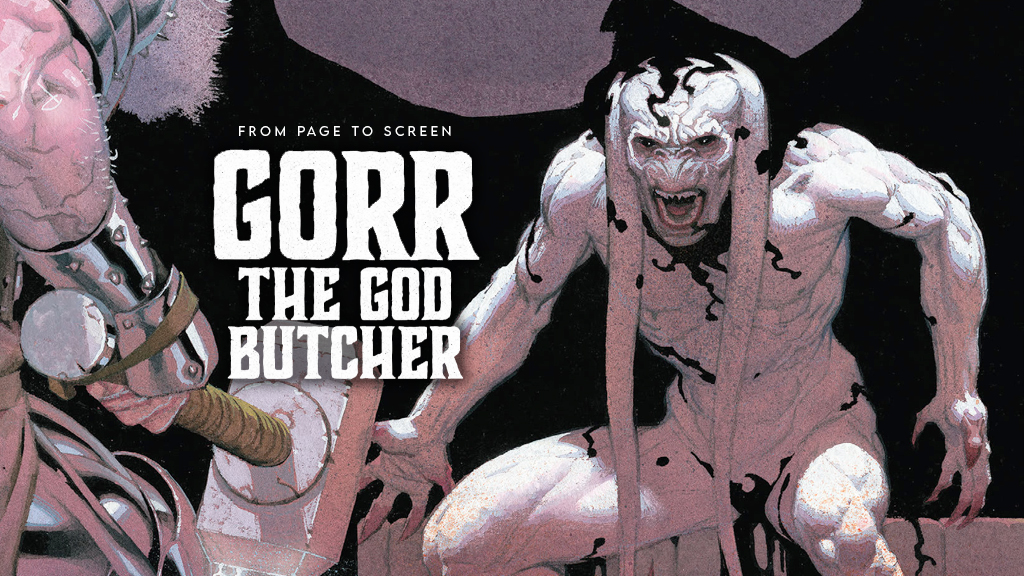
“All Gods must die.” These are words uttered by the horrifying Gorr in both Thor: Love and Thunder and in the world of Marvel comics. The character, played by Christian Bale in his Marvel Cinematic Universe debut, was created by Jason Aaron and Esad Ribic for 2013’s Thor: God of Thunder run and has since become a fan-favorite member of Thor’s extensive rogues’ gallery. Known as the God Butcher, the villain’s main objective is to wipe all living deities out of existence. This remains his goal in the MCU, an adaptation that actually manages to match up quite well with its iconic source material. Although, very few things can ever be exactly the same. Join us as we take a look at Gorr’s transition from page to screen, exploring what the MCU borrowed accurately from the comics and what it decided to change.
Design
King Thor #1 (2019)Marvel Studios’ Thor: Love and Thunder
Let’s first address the elephant in the room. Gorr is still pretty scary in Thor: Love and Thunder, but his design is a far cry from the look comic book readers grew accustomed to. Christian Bale‘s antagonist is still chalk white, but he’s not nearly as undressed as the original model. The MCU puts Gorr in a flowing white robe in place of the skin-tight black speedo look the God Butcher rocks in the 616. Both versions of Gorr wear an ominous hood, but the colors are different for each one. Comic Gorr dons black, in contrast to his skin, while MCU Gorr wears more white, perhaps as a means of making him appear sort of nude from afar. Lastly, Bale‘s Gorr has a fairly humanoid head and body, doing away with the comic’s more alien, tentacled monster.
Origin
Thor: God of Thunder #6 (2012)
Gorr has one of the more tragic origins of any Marvel villain, but of course, that may have been a requirement to explain why his desires are so extreme. In both the comics and the MCU, Gorr’s hatred of the Gods stems from the death of his loved ones. It’s just that, in Thor: Love and Thunder, the details are simplified for the sake of streamlining the story. Aaron‘s original books had Gorr losing his mother, his mate, and his son, all succumbing to the barren conditions they were subject to living in on their alien planet. Taika Waititi‘s version of this is incredibly similar, only on film, Gorr is only shown losing his child. There are no other relatives mentioned, and Gorr’s son Agar is replaced by a daughter mostly referred to as “Love”. That being said, MCU Gorr does still lose his daughter to the intense drought on his unnamed homeworld, just like his illustrated inspiration.
Thor: God of Thunder #6 (2012)Thor: God of Thunder #6 (2012)
After Agar breathes his last breath in the 616, Gorr comes across two gods duking it out in the lifeless environment he is barely surviving. One a god in golden armor, and the other a god of pitch black. The duo severely injure each other in battle, with the golden god falling at Gorr’s feet and requesting his help. Enraged by the fact no god had ever helped him, Gorr instead picks up the weapon of Knull (the aforementioned dark being, more on that later) and slays the golden god before him. Embued with new, lethal abilities by this weapon, called All-Black the Necrosword, Gorr vows to take revenge upon all gods and takes off into the unknown to begin his new journey in earnest.
Thor: God of Thunder #6 (2012)
This general concept of Gorr finding two gods is adapted for the MCU, but it doesn’t play out exactly the same. The live-action version of Gorr does not actually see two gods fighting to the death. Instead, he stumbles across an Oasis-like patch of greenery inhabited by the golden god of Light he had prayed to for his daughter’s safety. Initially relieved, believing he has finally found mercy, Gorr is shell-shocked to discover that the golden god is an arrogant, vain, gluttonous fool with no regard for the mortals he is supposed to protect. After insulting Gorr’s faith and family, the golden god reveals he has just killed a being corrupted by the Necrosword, gesturing to an all-black corpse on the ground. Enraged, Gorr renounces his devotion and uses the Necrosword to decapitate the god of Light, before making his famous vow and embracing his newfound powers. Many of the beats are the same as in the comic, it’s just adjusted slightly to fit Waititi‘s vision for the character.
Abilities
Thor: God of Thunder #2 (2012)
Gorr’s abilities were going to have to change a little bit for the MCU. In the comics, the Necrosword is created by Knull (told you we’d get back to it), who is the progenitor of the Klyntar race and the black god-figure seen by Gorr in battle. For the uninitiated, “Klyntar” is the scientific term for “alien symbiotes”. The same symbiotes Spider-Man can never seem to stop running into, and the same symbiotes whose film rights are still firmly owned by Sony. The 616 All-Black operates using symbiote-like power, allowing its user to form large black tendrils and gooey black wings among other constructs. It also grants an accelerated healing factor and enhanced durability, and assists Gorr in creating a small army of shadow monsters to aid him in accomplishing his goals.
Thor: God of Thunder #2 (2012)
The MCU’s take on the Necrosword is very similar, but it drops all connections to the Klyntar. Gorr is still able to summon creatures and strange black tendrils, but everything is related to a shadow world instead of oozing symbiotic material. The Necrosword also still has the unique ability to slay any god and continues to grant Bale‘s Gorr with enhanced capabilities. One major difference is that the live-action Gorr does not sprout wings to travel. Instead, the sword seemingly allows him to travel via shadow, disappearing and reappearing in darkness as he pleases.
Plot
Both versions of Gorr begin their quest by quietly slaughtering pantheons of “lower-level” gods across multiple planets. There’s even a shot-for-shot recreation of the death of Falligar, the large animal-like god that Thor finds dead next to a wounded Sif in the movie. They both also have the same endgame – using a MacGuffin to wipe out the rest of the gods in one fell swoop. 616 Gorr uses an army of kidnapped god-slaves to create the “Godbomb”, which when detonated would purge the universe of all its deities. In the MCU, however, he’s looking for Stormbreaker as a means of getting to Eternity, the wish-granting higher power he could use to magically make all gods pop out of reality.
Thor: God of Thunder #7 (2013)Thor: God of Thunder #7 (2013)
Comic book Gorr uses a lot of timey wimey shenanigans to carry out his plot, but the movie adaptation gets rid of all that to make things less complicated. Bale’s Gorr simply kidnaps the children of the gods to lure Thor and his valuable weapon directly to him. Both Gorrs, however, use an odd, colorless planet as their base of operations. In Aaron’s books, it’s the Black World while in Waititi‘s film, it’s a place known as the Shadow World. Close, but not exactly the same.
Death
Thor: God of Thunder #11 (2013)
Neither Gorr makes it out of their initial story alive, which is maybe in the universe’s best interest. MCU Gorr gets the better end of the deal, though, getting a touching reunion with his daughter before entering the final frontier. The final act of Love and Thunder sees Thor and Jane Foster convincing Gorr to use his wish to bring his child back instead of killing all gods, which enables him to give her a tearful goodbye before the corruption of the Necrosword ultimately kills him. In the comics, Gorr also sees his child one last time before death, only there it’s an evil construct of the Necrosword that berates him for the path he’s gone down. Not quite as cute.
Thor: God of Thunder #11 (2013)Thor: God of Thunder #11 (2013)
616 Gorr is also not killed by any sort of infection and is actually decapitated by the combined efforts of three different Thors from across the Marvel timeline. Thor: Love and Thunder manages to replicate this with a clever plot twist, where Thor temporarily passes his power to the group of kidnapped children he’s trying to save. This results in Gorr and his army having to deal with “three Thors” in the same way his comic counterpart did; Thor, Mighty Thor, and the combined force of all the Kid Thors.
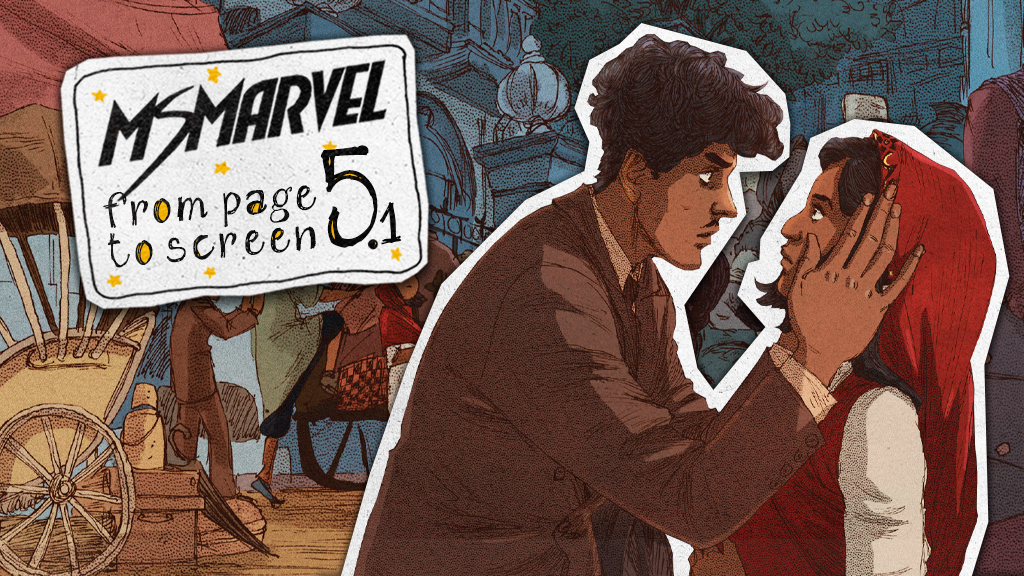
One of the most interesting ways in which Ms. Marvel adapted the comics is by expanding upon the story of Kamala’s ancestors during Partition. Of course, it has been obvious since the second episode of the series that what happened with Kamala’s great-grandmother in 1947 was key to understanding Kamala’s powers and the bangle. In Episode 5, the thrust of the story was a flashback to Aisha and her husband, Hasan, in 1942-47, ending with Aisha’s death as Hasan and their daughter, Sana, made it on the last train to Karachi.
Marvel Studios’ Ms. Marvel Episode 5
Marvel Studios’ Ms. Marvel Episode 5
In Ms. Marvel #8 and #9 (2015), we get a small snippet of this same time period in Kamala’s family history. In fact, it begins with a pregnant Aisha hastily getting ready to flee India to Pakistan with many of her family members. She sees a shooting star, which gives her some hope in the dark time. Notably, the comics’ only mention of Aisha’s bangles is in this brief story. She sold her jewelry and hid the money inside her wedding bangles in case she and her husband were separated.
In the second half of the comics’ version of the flashback, we jump to Kamala’s mother in Karachi around the year 2000. She is living with her mother and family—Aamir is young and she is pregnant with Kamala. She had chosen to move to New Jersey for her family, but she had many doubts and worries about her children’s futures in a new country and culture. Kamala’s grandmother tells Kamala’s mother how strong Aisha was and tells her that they are a family of survivors.
Ms. Marvel #9 (2016)
Kamala’s grandmother then passes down Aisha’s wedding bangles to Kamala’s mother. The live-action version of this story is taken from the page yet altered significantly to meet the demands of the Ms. Marvel story. In the comics, the story was mostly to emphasize the struggles and journeys Kamala’s ancestors had to go through during Partition and beyond.
Ms. Marvel #9 (2016)
But it does also hint at the family’s Inhuman heritage, as it ends with Kamala’s grandmother saying she always felt there was some sort of secret and strength that the family carried. Ms. Marvel hits those same notes by tying the story to Kamala’s (and her ancestors’) powers and superhuman heritage.
Marvel Studios’ Ms. Marvel Episode 5
The first five episodes of Ms. Marvel are now streaming on Disney+.
Thor: Love and Thunder is another non-stop rollercoaster from director Taika Waititi, filled to the brim with colorful characters and thrilling moments. Unfortunately, like any good ride, there’s a limit to how many people can get on. Leading up to the film’s release, it felt like a countless number of names and faces were rumored to be making an appearance. Some of those personalities actually did squeak their way into the movie’s 120-minute runtime, like Jamie Alexander‘s long-lost Sif and Brett Goldstein‘s spanking new Hercules, but the film otherwise stuck to focusing on established leads from the previous entries. For the sake of humility, let’s take a look at some of the most heavily rumored characters that didn’t actually end up in Thor’s fourth solo adventure.
Beta Ray Bill
From the beginning, nearly every comic fan hoped Love and Thunder would be the place they finally saw Beta Ray Bill in the Marvel Cinematic Universe. The character is the perfect mix of weird and cool for a film written by Waititi, and a visual tease in Thor: Ragnarok meant the director definitely had Bill on the brain. At different points in time, everyone from Barbiestar Ryan Gosling to the film’s actual villain Christian Balewere talked about as potential castings for the heroic Korbinite. Heck, even Beta Ray’s traditional weapon Stormbreaker has become a staple of Thor’s on-screen journey. Yet, the entirety of Love and Thunder comes and goes without so much as a mention of the intergalactic warrior. It might be for the best, considering how much is already going on in the movie, as long as Bill gets a shot at stardom somewhere down the line.
The Grandmaster
This one seemed all but confirmed until the film was actually released. In Thor: Ragnarok, Taika Waititi introduced the world to Jeff Goldblum‘s Grandmaster, an Elder of the Universe who used his less-than-iron fist to rule over the planet Sakaar and use its citizens for entertainment in gladiatorial combat. Though removed from power by the end of that project, the Grandmaster did survive all the way to the film’s end credits. Goldblum was never officially announced as returning to the role, but photos of the actor hanging out with Waititi and a bunch of the confirmed Love and Thunder cast led everyone to believe he’d be back. Alas, there’s no trace of the master manipulator in the fourthquel.
Of note, however, is that Christian Bale did actually confirm in an interview with Screen Rant that he filmed scenes with Goldblum that were cut from the film’s finished product. This might imply Gorr would have killed the Grandmaster in an original cut of the movie, so perhaps him not showing up is better news for Goldblum than fans thought.
Eitri, King of the Dwarves
More or less the same scenario as Goldblum‘s Grandmaster. Months ago, Game of Thrones star Peter Dinklage teased during an interview with Empire Magazine that he would soon be back for another shot at Eitri, the King of the Dwarves, after debuting as the character in Avengers: Infinity War. Not only that, but a short while later IMDb listed Lane Friedman‘s job on the Love and Thunder production team as “Hair Stylist: Peter Dinklage.” It turns out, much like the Grandmaster before him, Eitri was intended to appear in a scene featuring Gorr the God Butcher, as revealed by Christian Bale himself in a recent interview. Whether or not this means Gorr was supposed to kill the downtrodden Dwarf remains a mystery, but it’s worth mentioning Gorr isn’t exactly known for letting deities off the hook. Either way, fans don’t have to worry, because Eitri isn’t in the movie and lives to see another day.
Gamora
It was never a secret that the Guardians of the Galaxy would be showing up in Thor: Love and Thunder. The last time audiences saw Thor, he was flying away with them on their ship, and the team of quirky characters featured prominently in the film’s early marketing. However, never shown among them was Zoe Saldana‘s Gamora, who died during the events of Avengers: Infinity War only to have an alternate version of herself from a different timeline appear and then run away in Avengers: Endgame. There was never a lot of evidence to back up the idea that she’d be with the team in Love and Thunder, but that didn’t stop the internet from speculating wildly that she’d at least cameo on a screen somewhere in the Guardians portion of the film. While she does get an indirect mention from Chris Pratt‘s Star-Lord during a crucial thematic moment, that’s about the extent of her involvement in the story.
Loki
Another rumor that never had much behind it was the cinematic return of Tom Hiddleston as Thor’s maybe-more-popular brother Loki. Ever since the character cheated death, again, to lead the Disney+ series Loki, the God of Mischief’s fans assumed he’d find a way to make his presence known in Thor: Love and Thunder. After all, Hiddleston played a large role in all three previous Thor films, and his baddie-turned-sympathetic anti-hero is central to the hero’s extensive mythology. The conversation about a potential Loki cameo revved back up after the actor stated in an interview with Total Film that he had no idea if he’d be in the movie or not, jokingly commenting that he wasn’t even “doing an Andrew Garfield.” Well, it looks like Hiddleston won’t have to wonder anymore, as Loki is definitely not in the film. His face, and name, make a few quick appearances via archival flashbacks and a comical tattoo, but it doesn’t seem any new footage was ever shot.
Captain Marvel
It would seem fans shouldn’t believe everything they hear. Rumors began to run rampant about a Carol Danvers appearance in Thor: Love and Thunder after online scoopers claimed there’d be a romance between her and Tessa Thompson‘s Valkyrie happening in the near future. There was even talk that Brie Larson had filmed additional scenes as her character during reshoots in Los Angeles. A comment made by Thompson during an interview with The Wrap pushed the rumor even further, with the fan-favorite actress mentioning the queerness of her Asgardian warrior would be further explored in the latest Marvel outing. Obviously, Danvers doesn’t even come close to popping up in Love and Thunder, even if Valkyrie’s bisexuality is addressed briefly. For those disappointed by this turn of events, the new rumor is that Valkyrie could turn up in The Marvels to keep the romantic ship alive. So, maybe there’s still hope?
Throg
At one point, word circulated that Thor:Love and Thunder would embrace the multiverse theme of Phase 4 and feature multiple variants of the titular character and his cohorts. It didn’t take long for the internet to assume this meant another live-action appearance for Throg, the amphibious God of Thunder made popular by memes and an often-talked about cameo in Loki. Interviews with creatives behind the aforementioned Disney+ series revealed that Throg originally had a greater presence in the show, which seemed proof enough for a lot of fans that the character, voiced by Chris Hemsworth, could hop his way onto the big screen. Lamentably, this was not the case, and the only other version of Thor in the movie was Natalie Portman‘s Mighty Thor. Although, that’s really not so bad, considering how great she turned out to be.
Balder the Brave
The forgotten brother of Thor and Loki. Balder the Brave, or Balder the Bro, as I like to call him, has been considered for almost every entry in the Thor franchise, but has yet to actually make the cut. When Christian Bale was initially cast in Love and Thunder, and it was still unknown who the thespian would be portraying, many fans jumped at the idea he would be the one to finally bring Balder to life. It’s been known for a while now that isn’t true, but nobody can be blamed for thinking Marvel might want to bring the Asgardian into the fold. Old concept art from Charlie Wenrevealed Balder came close to making his MCU debut in both 2011’s Thor and 2013’s Thor: The Dark World, and Deadline’s Justin Kroll recently broke the news that Daniel Craig had once been tapped to play the character as a member of the Illuminati in Doctor Strange in the Multiverse of Madness. Sadly, the COVID-19 pandemic prevented that from coming to fruition, and Balder remains on the outskirts of cinematic notoriety.
Lena Headey (as Unknown)
This is the trickiest one of the bunch. Lena Headey, of Game of Thrones fame, spent a considerable amount of time in the rumor mill attached to Thor: Love and Thunder. After word began making the rounds on Twitter that she may be involved with the production, fans started piecing together via social media posts that the actress was staying in Australia at the same time the movie was filming. A rather recent bit of news, involving a lawsuit, finally confirmed that Headey was definitely set to join the MCU in Thor’s newest adventure, but for whatever reason, her part was cut and left out of the final product. It’s not known who the former Dredd star would have brought to life, considering the film leaves so little room for anything that’s not already there, but it’s likely she would have portrayed yet another God. It’s a shame she was removed from the film, but at least this leaves her open for a different role down the line.
Just recently, it was revealed that Marvel Studios’ new animation division will get its very own panel at San Diego Comic-Con. While we only got teases of what’s to come, it was hinted at we’ll see a lot more from their animation projects. Now, it seems like more details have dropped for the Hall H panel for the Marvel Cinematic Universe’s future.
In a new report by Deadline, Kevin Feige‘s “mega-panel” has been confirmed for 5 PM on Saturday, July 23rd. So, we’ll definitely get quite the double whammy with the upcoming projects. It’s unsure just how much they’ll show considering D23 and Disney+ Day are also on the horizon, but it’ll be exciting nonetheless.
Marvel Studios’ usual tradition was always a showcase of their upcoming Phase or new entries to the MCU. Yet, they may have a stronger focus on Black Panther: Wakanda Forever given that the film is going to release in November and we still don’t have a trailer for it. They may be keeping the “big” announcements for the Disney-owned event later on.
No matter what, there’s something special about these events and they also tend to create some build-up that Phase 4 may have needed if it weren’t for COVID delaying a lot of the releases. So, we’ll see how they enter the event and what they might be bringing to the show for those that are attending, as well as what they’ll share with those at home.
We use cookies to improve your experience on our site. By using our site, you consent to cookies.
This website uses cookies
Websites store cookies to enhance functionality and personalise your experience. You can manage your preferences, but blocking some cookies may impact site performance and services.
Essential cookies enable basic functions and are necessary for the proper function of the website.
Name
Description
Duration
Cookie Preferences
This cookie is used to store the user's cookie consent preferences.
30 days
These cookies are needed for adding comments on this website.
Name
Description
Duration
comment_author_email
Used to track the user across multiple sessions.
Session
comment_author_url
Used to track the user across multiple sessions.
Session
comment_author
Used to track the user across multiple sessions.
Session
Statistics cookies collect information anonymously. This information helps us understand how visitors use our website.
Google Analytics is a powerful tool that tracks and analyzes website traffic for informed marketing decisions.
Contains information related to marketing campaigns of the user. These are shared with Google AdWords / Google Ads when the Google Ads and Google Analytics accounts are linked together.
90 days
__utma
ID used to identify users and sessions
2 years after last activity
__utmt
Used to monitor number of Google Analytics server requests
10 minutes
__utmb
Used to distinguish new sessions and visits. This cookie is set when the GA.js javascript library is loaded and there is no existing __utmb cookie. The cookie is updated every time data is sent to the Google Analytics server.
30 minutes after last activity
__utmc
Used only with old Urchin versions of Google Analytics and not with GA.js. Was used to distinguish between new sessions and visits at the end of a session.
End of session (browser)
__utmz
Contains information about the traffic source or campaign that directed user to the website. The cookie is set when the GA.js javascript is loaded and updated when data is sent to the Google Anaytics server
6 months after last activity
__utmv
Contains custom information set by the web developer via the _setCustomVar method in Google Analytics. This cookie is updated every time new data is sent to the Google Analytics server.
2 years after last activity
__utmx
Used to determine whether a user is included in an A / B or Multivariate test.
18 months
_ga
ID used to identify users
2 years
_gali
Used by Google Analytics to determine which links on a page are being clicked
30 seconds
_ga_
ID used to identify users
2 years
_gid
ID used to identify users for 24 hours after last activity
24 hours
_gat
Used to monitor number of Google Analytics server requests when using Google Tag Manager
1 minute
Marketing cookies are used to follow visitors to websites. The intention is to show ads that are relevant and engaging to the individual user.
Pinterest Tag is a web analytics service that tracks and reports website traffic.