Tag: Marvel Studios

  • Wild ‘Fantastic Four’s Director Rumors Debunked

    Wild ‘Fantastic Four’s Director Rumors Debunked

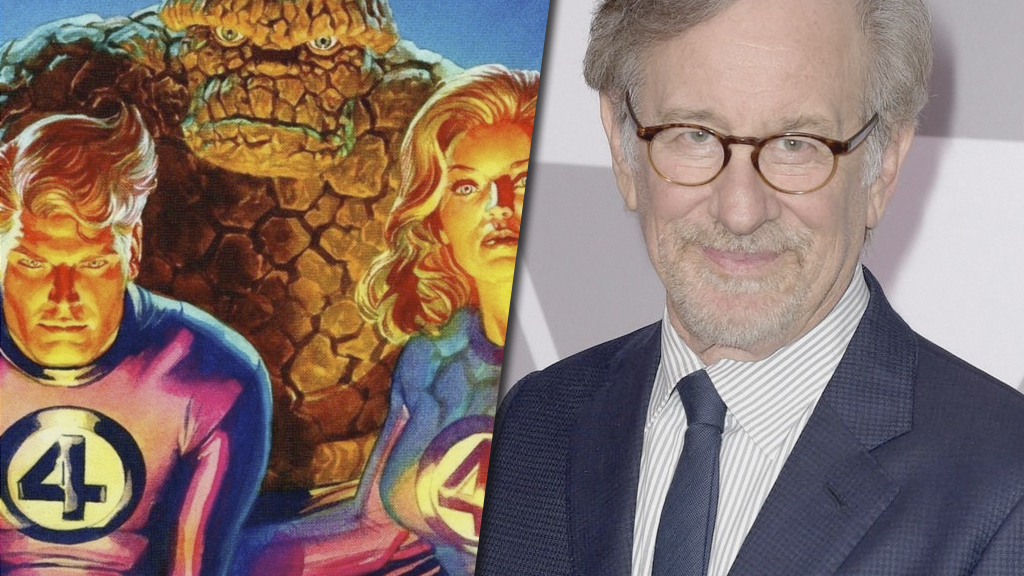
    It’s been a wild day, as quite a few rumors have made their way online as of late. Among them was who exactly is going to be spearheading the Fantastic Four movie. After Jon Watts left the project to focus on his Star Wars Disney+ series, many wondered who could fill his shoes. Suddenly, directing icon Steven Spielberg became a wildly rumored choice for the film with some even stating that Marvel Studios reached out.

    Now, Variety’s Adam B. Vary has put out a quick tweet debunking those wild rumors and highlighting that they have never been true. So, it seems we’re still without a clear indicator of who exactly is going to take over the project and give us the third attempt at a live-action adaptation of the Fantastic Four.

    https://twitter.com/adambvary/status/1547641254011293696

    UPDATING

    Source: Twitter

  • MCU Disney+ Series Ranked

    MCU Disney+ Series Ranked

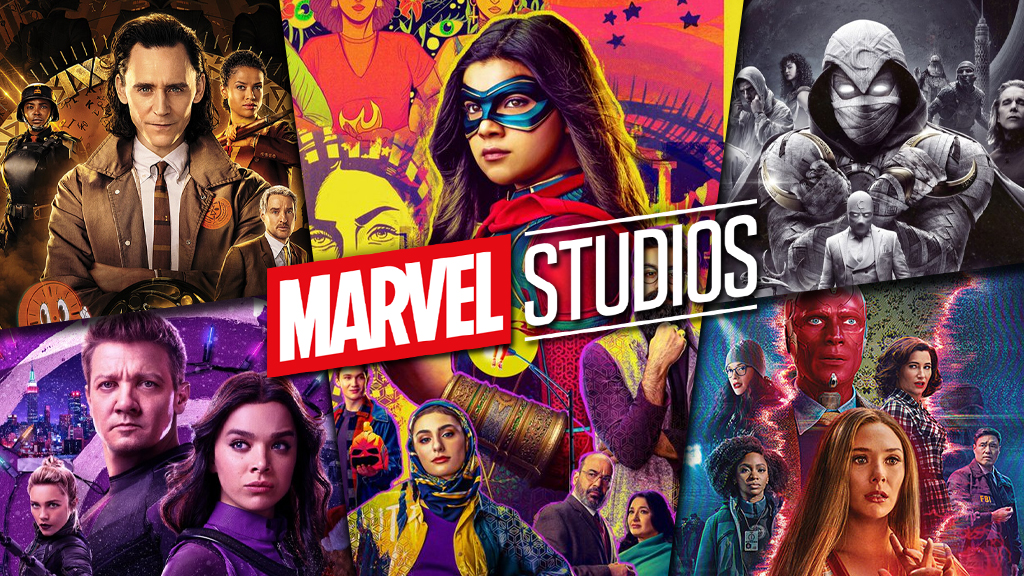
    Now that Ms. Marvel has wrapped up its run, there are seven Marvel Studios Disney+ series that have all been released within the past year and a half. Not surprisingly, many want to compare them to each other, even though some exceed in vastly different ways than others. The legacy of series on the greater MCU is slowly becoming more apparent, and the introduction of major characters and plots in them is surely a sign that Marvel Studios plans to take them seriously going forward. More series are on their way, but this article ranks the current seven MCU series from best to worst.

    1. Ms. Marvel

    Ms. Marvel did what few MCU series could do, which is have a great story and a satisfying conclusion. On top of that feat, the story was excellent and managed both small-scale and large-scale aspects of Kamala’s life with charm, wit, heart, mystery and even darkness. The overall quality of Ms. Marvel from episode to episode barely wavered, and the cast and crew were top-notch all around. While the series was never the most hyped for various reasons, the show managed to exceed all expectations despite very polarizing decisions regarding the changes from her comic book origins.

    2. WandaVision

    WandaVision is still the highlight of MCU creativity. It took the boldest creative leaps in terms of its narrative structure and style, and it remains wildly unique from everything else in the MCU. While it aired, fans were clamoring week-to-week for the next episode. Granted, it was also the first lesson for MCU fans in (mostly fan-induced) Phase 4 disappointment and rushed finales. The fact that myriads of extreme fan theories did not happen should not be a metric when evaluating any story.

    3. Loki

    Loki also took a bold route in its design and execution, but overall it was fairly inconsistent episode to episode. Some episodes were a bit dry and bland, while some came out of nowhere in the best of ways. Certain sequences could be dazzling, and the finale could practically do the legwork for the entire first season. But it was met with plenty of criticism on how Loki’s character was developed, and the Loki-Sylvie dynamic was certainly polarizing.

    4. Hawkeye

    Hawkeye was good old-fashioned MCU comfort pulled off well. It was nothing spectacular, and its big Kingpin reveal was ultimately underwhelming. But overall it had a satisfying story and ending—a rarity—that was sweet and simple. Kate Bishop was introduced but we also got to follow an original and Avenger post-Avengers: Endgame for the first time, and it gave the last of the six his first “solo” treatment. At the same time, it also felt like a constant tool for introducing new or spin-off-type projects like Echo rather than investing in its own story.

    5. Moon Knight

    Had the finale gone differently, Moon Knight may have been much higher on this list. Oscar Isaac’s performance alone was phenomenal and drove the show, while Egyptian mythology provided a new source of interest for MCU audiences. While the show could be stellar—Episode 5 is one of the best of the MCU—the overarching story was ultimately incredibly generic and a letdown to the potential that the rest of the series built up. 

    6. The Falcon and the Winter Soldier

    No one is surprised The Falcon and the Winter Soldier would be low on this list. It honestly, though, is not bad. It is maybe the best example of a comfort project in the MCU other than Hawkeye. We followed known (side) characters in a context and style that felt incredibly consistent with the Captain America franchise they came from. But it was generally lackluster and not worthy of too much praise in terms of the storyline and villains. It did touch on important topics, mostly regarding race and the notion that people would never accept a Black man as their Captain America. But alas, it could come across as dull and unoriginal most of the time.

    7. What If…?

    It feels too easy to put the only animated series at the bottom of the list, but What If… ? just belongs here. The animated style detaches it from the MCU fans want to engage in, and its anthology multiverse structure makes it feel like there are no stakes. It is a collection of interesting mini-ideas. Some could be brilliant, and the Doctor Strange episode is arguably the best episode of any MCU series. But as a whole, What If…? just isn’t on the same playing field as the rest. 

  • Joe Russo Talks Marvel Studios ‘Secret Wars’

    Joe Russo Talks Marvel Studios ‘Secret Wars’

    It’s no secret that the directing duo of Joe and Anthony Russo have a dream project that could tempt them to return to Marvel Studios where they helmed four films together, including the two-part culmination to the Infinity Saga. Even as they did press for Avengers: Endgame in 2019, the brothers spoke openly about how one project might get them back behind the cameras for Marvel Studios: Secret Wars.

    At the premiere of their new movie, The Gray Man, the Russos were asked, once again, what would bring them back to the Marvel Studios fold. And it was no surprise that Joe Russo gave what at this point is a pretty canned response to the question. This time, however, Joe may have given a little more away than usual.

    Our love for Marvel is based on the books we read as kids and the books that we fell in love with. The one series that we adored growing up was Secret Wars. It’s incredibly ambitious. It would be bigger than Infinity War and Endgame, but it’s a massive undertaking and those two movies were very hard to make. Trying to imagine making another two movies even bigger than those two…we’re going to have to sleep on it.

    Joe Russo

    It sounds like Joe and Anthony may have done more than sleep on the decision to return to co-direct Marvel Studios Secret Wars. In fact, it sounds like they are far enough down the road that they’ve outlined what they believe the story should be and have determined that it would take two films to tell the story the way they see fit.

    Once considered a pipe dream, an MCU-set Secret Wars has become an inevitability at this point. The story was first teased during Loki and further teased in Doctor Strange in The Multiverse of Madness when John Krasinski’s Reed Richards introduced the idea of Incursions. The introduction of Incursions makes it more likely than not that the MCU’s Secret Wars will, at least in part, be based on Jonathan Hickman’s 2015 event series, though the Russos oft-professed love for the the original 1984 event almost certainly means that its influence will be felt as well.

    It’s hard to imagine that the brothers, who worked so hard to make sure the two-part conclusion of the Infinity Saga were more than parts 1 and 2, would be happy with a basic Hollywood two-parter. With Joe imagining Secret Wars as a two-part event, it’s safe to assume they have something along the lines of an Infinity War and Endgame split in mind for their next MCU gig, making sure each film can stand on its own spectacular feet.

    Source: Deadline

  • Theory Thursday: What That ‘Thor: Love and Thunder’ Mid-Credit Scene Might Mean for the Future of the MCU

    Theory Thursday: What That ‘Thor: Love and Thunder’ Mid-Credit Scene Might Mean for the Future of the MCU

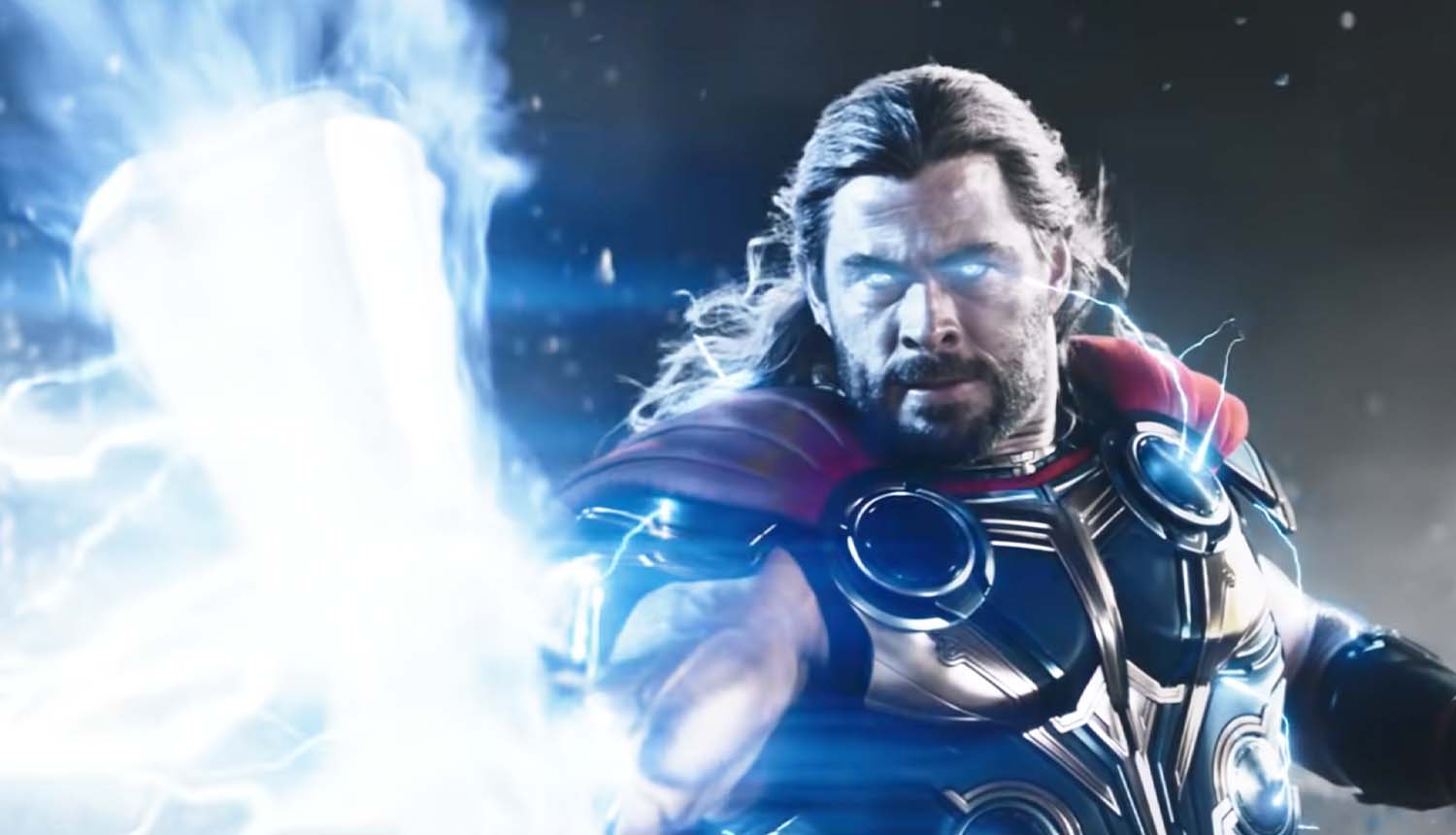
    Thor becoming the first Avenger to get a 4th film in their own series is actually a good thing given that there are still a few adventures for Odinson to go on, and make no mistake: this one leaves him in a very different place than any of the other three before it. The events of Thor left him on Asgard away from Jane and mourning the death of Loki. Thor: The Dark World had him leaving Asgard to be with Jane while again mourning the death of his mother and Loki…a second time. Then along came Ragnarok where he lost his father and sister and home but managed to escape Surtur. I think it is safe to say that no hero in the MCU has lost as much as Thor, and this fourth entry adds even more loss after adventures with the Avengers that saw him lose Coulson and Heimdall and Loki (again!) right in front of him. It should come as no surprise then that Thor’s latest movie ends with someone dying right in front of him then. Tragedy, it would seem, is what propels the God of Thunder forward into different adventures. It’s not just putting the Asgardian at the center of tragedy, though, that usually leads into the next big Avenger’s threat.

    It was Thor’s brother who arrived on Earth necessitating the Avengers to assemble initially, and it was the mind stone located inside Loki’s scepter that led to the creation of Ultron AND VIsion and the Scarlet Witch, which led to the Avengers reuniting. It was Thor sending Loki to light the eternal flame and unleash Surtur that also led to Loki stealing the Tesseract from Odin’s throne room, which drew Thanos to the refugee ship that the Asgardians were on. If you look back at the Infinity Saga, you can rightfully argue that Thor brought the Avengers face to face with their greatest villains (Loki, Ultron, and Thanos). The mid-credit scene of Thor: Love & Thunder hints at that continuing to be the case.

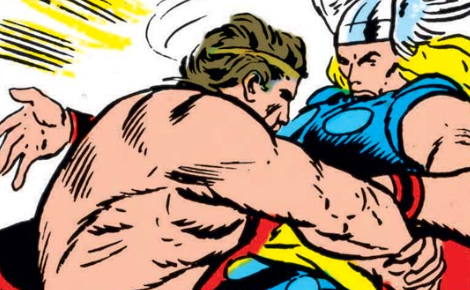
    Zeus, with a lightning-sized hole in his sternum, sends his son, Hercules, on a mission to knock the Odinson out of the sky, reclaiming glory meant for the gods instead of heroes. However, what if there’s more to this scene than meets the eye? What if what we are seeing play out isn’t really telling us everything? What if, to understand what’s really happening, we have to accept that someone else has paved the way?

    In the comics, one of Kang The Conqueror’s variants, Immortus, utilizes what are known as Space Phantoms to go after the Avengers by masquerading as famous heroes from different eras. This included heroes like Merlin, Goliath, and, yes, Hercules. This caused a team of villains led by Baron Zemo, who had enlisted Immortus’s help in defeating the Avengers, to go back in time to the moment where they accepted his help and, this time, refuse it. By introducing Hercules here, as an antagonist for Thor who arrives on Earth seeking the God Of Thunder out, it will undoubtedly bring the Olympian face to face with whoever the new group of Avengers is. What if the Hercules that arrives on Earth looking for Thor isn’t Zeus’s son, but a space phantom controlled by Immortus? Or, what if the Thor that Hercules finds isn’t the God of Thunder himself, but a space phantom?

    We are entering the world of secret invasions and variants. With Thor’s consistent connection to all of the Avengers-level villains, it stands to reason that we didn’t just see who Thor’s next antagonist would be, but that we just saw another piece of the puzzle being laid down by one of Kang’s variants. Hercules may be a son of Zeus, but he may also be a Space Phantom of Immortus.

  • ‘Thor: Love and Thunder’ Predicted to Cross $200M This Weekend

    ‘Thor: Love and Thunder’ Predicted to Cross $200M This Weekend

    The fourquel, which is seeing mixed reviews from critics, is still expected to top the box office in its second outing. However, as is the case with most blockbusters that are frontloaded, Love and Thunder is estimated to see a 65% decline for a $50 million second weekend. With yesterday’s $13.6 million haul, the film is just shy of $170 million stateside, which is actually ahead of Doctor Strange in the Multiverse of Madness’ first Tuesday, which only pulled in $12.6 million.

    As for its second weekend decline, while it is a steep one, the projected decline is in line with the declines of Spider-Man: No Way Home (67%), Doctor Strange in the Multiverse of Madness (67%) and Eternals (62%).

    Love and Thunder won’t have much competition at the box office this weekend. Paramount and Nickelodeon are releasing the animated film, Paws of Fury: The Legend of Hank, while Sony/Hello Sunshine are releasing the adaptation of Where the Crawdads Sing. Both are smaller budgeted films that are not expected to pose much of a threat. Although, Paws of Fury could see Minions: The Rise of Gru fall a notch or two this weekend with the films catering to the same market. The only true competition for Love and Thunder is Top Gun: Maverick, which doesn’t show any signs of slowing down at the box office now that is has crossed $600 million stateside.

    Source: Deadline

  • ‘Ms. Marvel’ Post-Credit Scene Explained

    ‘Ms. Marvel’ Post-Credit Scene Explained

    Kamala Khan’s bangle has been front and center over the course of all six episodes of Ms. Marvel, but even after the series wrapped, the bangle’s story seemingly just got a lot more interesting. The shocking post-credit scene sees Kamala’s bangle take on a life of its own, apparently energizing on its own before mysteriously sucking Kamala away and leaving Carol Danvers in her place. While it all seems pretty confusing, turning to the comics can provide some understanding.

    As seen in the opening moment of Episode 3, “Destined”, the bangle worn by Kamala was originally taken from the arm of a blue being and is one of a pair of bands. Following Episode 3, it seemed pretty clear that the bangles were probably either the Quantum Bands or Nega-Bands from the pages of Marvel Comics. The events of the post-credit scene all but confirm that speculation as they showcase one of the capabilities associated with the Nega-Bands: the ability for the wearers to trade places with one another.

    In the comics the Nega-Bands were created by the Kree as replicas of the Quantum Bands and while they share similar powers, they aren’t exactly the same. Most importantly, the Quantum Bands draw their power from the Quantum Zone while the Nega-Bands draw their power from the Negative Zone. It seems incredibly likely that the MCU’s version of the bands are an amalgamation of the two. Able to create energy constructs like the Quantum Bands, they are also now capable of allowing people to swap places with one another, like the Nega-Bands, as seen in the post-credit scene.

    The swap seems to have been ripped straight from the pages of Marvel Comics where Kree hero Mar-Vell used the Nega-Bands to swap places with super-normie Rick Jones. Of interest to the process was that the swap always left one or the other of Mar-Vell or Jones trapped in the Negative Zone. Applying that comic book lesson to the events of the Ms. Marvel post-credit scene, it would appear that Carol makes the jump from either the already-established Quantum Realm or the soon-to-be-established-in-The-Marvels-Negative Zone. Whichever of those two places Marvel Studios chooses to call it, the implications are clear: when Carol jumped into Kamala’s room, Kamala jumped to wherever it was Carol was.

    It’s unclear if Carol was wearing what might have been the other band on her wrist (in the comics they haven’t always looked the same and have been reshaped over time), but it is clear that the bands will play a large role in the plot of next summer’s Captain Marvel sequel, The Marvels. Also of interest is how Kamala’s mutant genetics allow her access to the powers of the band. In the comics, the latent X-gene was implanted into early man’s DNA by Celestials, allowing for the possibility of super-powered evolution should they ever be activated. Given the alien nature of the bands, it’s possible they were created by the Celestials, or other Cosmic beings, and simply ended up on the arm of the deceased Kree seen in Episode 3.

    Whatever the nature and origin of the bands, they’ve changed Kamala Khan’s life forever and, much like the ten rings did to Shang-Chi, pushed her into a larger universe. It’s reasonable to assume that some of the first act of The Marvels will explain much more about the bands while resolving the issue of Kamala being trapped in another dimension. Fans will have to wait just over a year to find out more as The Marvels is currently set to hit theaters on July 28th, 2023.

  • First Look at Sylvie from the Set of ‘Loki’ Season 2

    First Look at Sylvie from the Set of ‘Loki’ Season 2

    When we last saw Sylvie in the season finale of Loki, she had just unleashed all manor of chaos by killing He Who Remains. By killing He Who Remains, the Laufeydottir allowed for uncontrolled expansion of the multiverse and for the possibility of Kang the Conquerer to come into power. Struck with the implications of what she’d done, Sylvie fell to the floor of the Citadel at the End of Time.

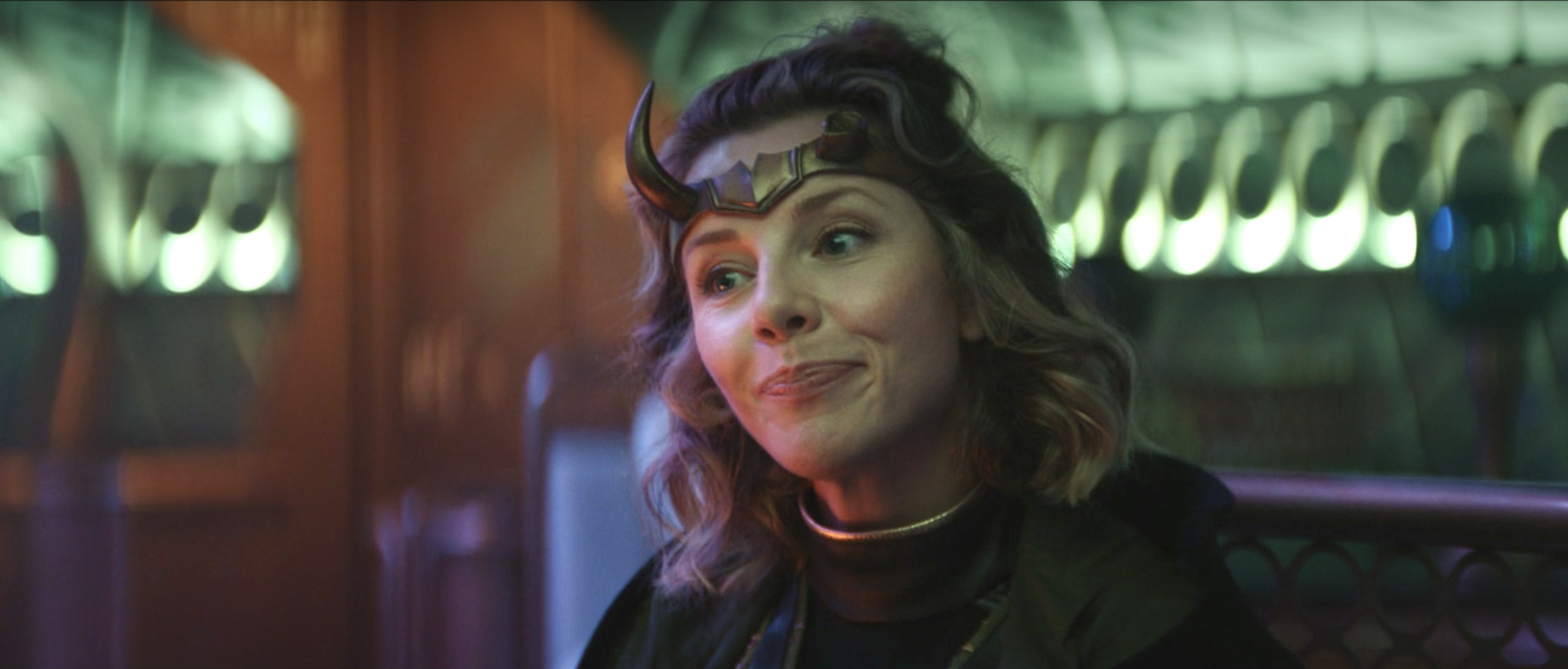
    With Season 2 of Loki now underway and set pics from the UK leaking out, it was only a matter of time before fans got a glimpse of what Sylvie has gotten up to since killing He Who Remains and, just as you’d expect, she went to McDonald’s. Set photos have hit Twitter that show Sophia Di Martino accompanied by Tom Hiddleston’s Loki leaving a McDonald’s in what appears to be the 1970s.

    Without context, the most interesting thing about the photos is certainly that Sylvie’s lunch seems to be in an era-accurate non-biodegradable container. This is the second set of set photos that seem to be set in the 70s, raising the question of what is so central to that decade that it will be the setting of at least one episode of the second season.

    Loki Season 2 is expected to hit Disney Plus sometime in 2023.

  • REVIEW: ‘Ms. Marvel’ Finale—”No Normal”

    REVIEW: ‘Ms. Marvel’ Finale—”No Normal”

    While the finales of Marvel Cinematic Universe series have generally struggled to stick the landing, the Ms. Marvel finale managed to do justice and provide closure to Kamala’s story while still setting up massive implications for the future of the MCU. It did gloss over most of the unanswered questions about Kamala’s powers, which is disappointing. Still, it seemed to “answer” them in one of the most exciting—and likely polarizing—ways possible.

    Kamala’s story in Ms. Marvel began as a relatively small-scale tale of a superhero fangirl in Jersey City. So much of the absolute charm of the early episodes of the series is centered around her family and friends in this context. The second act of the show brought forth her mysterious and eye-opening history that brought the show to new levels of depth and intrigue. While the penultimate episode left the status of her main adversary precarious, the finale skillfully but simply brought it back to where it all started—high school.

    Like any classic satisfying finale, the entire ensemble got involved in meaningful ways. The high school sequence with the Department of Damage Control was a warm reminder of the innocence and youth of the main hero and showed a glimpse of what “Ms. Marvel” could be as a hometown hero. Fans of Ms. Marvel comics will appreciate the subtle nods to the comics and the ways certain elements were rearranged in order to fit the live-action story. While much of Kamala’s reckoning with her friends and family after her reveal that she is the masked hero was too quick and smooth, it was likely the better route for the ending of such a short series. 

    Kamala finally got her “Ms. Marvel” moment(s) this episode as she donned her final costume, adopted her name, and took on her greatest challenge yet. Anyone familiar with her “embiggening” from the comics would be giddy to see the resemblance they gave her to her comic book counterpart in the finale. It was a mystery how Kamala would adopt “Ms. Marvel” as a mantle in live-action, but it was ultimately grounded in the name given to her by her parents, which nicely ties in the heavy family themes of the series into her superhero identity. 

    The main villain of the finale was set up in the post-credit scene of the first episode, though Damage Control did not play a particularly large role in the bulk of the series. So while the switch from the Clandestines back to the DODC as the adversaries is not seamless, there was enough Damage Control before the finale to require some resolution to that aspect. The organization represented a lot of Kamala’s ordinary-life struggles, so her overcoming the racist, xenophobic, and enhanced-individuals-hating villain makes the win fulfilling. The question of Damage Control still lingers, and the willingness to take the “bad apple” approach to the DODC calls into doubt how aggressive the future of that organization actually is. Similarly, Kamran ends the series in a surprising way as not quite a villain but with no real resolution.

    Of course, the moment of this finale that will gobsmack countless fans is Bruno’s reveal to Kamala that she has “a mutation” in her DNA. Considering the long-running debate over Marvel Studios not making Kamala an Inhuman, the fact that she may be the first confirmed mutant of the MCU is nothing light. It is too brief to draw any major conclusions from it yet. Are there others? How long have mutants been around? How does it actually play into her powers? It is all unclear. Part of the problem is, as mentioned, that the series declined to fully explain Kamala’s powers and ultimately left the Noor dimension a vague resource to draw from in lieu of Inhuman lore. In any event, the “mutation” drop was one exciting way to finish out the finale. Because it was mentioned so late, it did not affect, confuse, or overpower the rest of the story that came before it, and it without a doubt will keep eyes on Ms. Marvel going forward.

    Just as the mutant reveal sparked curiosity for the future of the character, the post-credit scene set up a predictable—but major—next step for Kamala. For whatever reason, Kamala’s bangle goes haywire and seemingly causes Carol Danvers and her to switch places, with Carol popping up in Kamala’s room. Brie Larson’s cameo is a fun, high-profile inclusion, but the fact that she and Kamala still never actually meet in the series leaves something wanting. Clearly, The Marvels will take on a huge role in exploring the next steps of Kamala’s story. Her powers are likely tied to something bigger that will play a role in that story. Even with that knowledge, the downside of Ms. Marvel was the eventual lack of answers on the mystery it created.

    Looking past all the implications of Kamala’s “mutation” and The Marvels tease, the finale did an expert job of tying the series in a bow with respect to Kamala’s origin as a Jersey City superhero. The transition between the threads being weaved in Episode 5 and the final episode is a tad choppy, but ultimately the right call. Ms. Marvel ends its tenure on arguably the best finale of any MCU series, and arguably as the best series itself. Iman Vellani and the rest of the stellar cast brought the charm and heart of the beloved character to the screen, and the show is one of the few to manage the 6-episode format in a satisfying and rewarding way.
  • ‘Ms. Marvel’: Major Finale Reveal Explained

    ‘Ms. Marvel’: Major Finale Reveal Explained

    Before audiences saw an episode of Marvel Studios’ Disney Plus streaming series Ms. Marvel, much had been made of the changes to the character from the comics that inspired the show. Sana Amanat, who co-created the character in the comics, moved to a position at Marvel Studios in order to shepherd Kalama Khan into the MCU. Amanat was among a group of creatives who worked to change Kamala’s powers, and indicated that the changes were made to allow them to link “to larger stories in the Marvel universe.” However, it’s safe to say that nearly nobody expected that link to be that Kamala Khan was a mutant.

    In an instant, Kamala Khan’s origin story went from a heartwarming story about family to a groundbreaking moment in the MCU. Kamala Khan is now the first mutant to appear on the MCU’s Earth-616 and she found out about it along with the audience. After Kamala’s brother learned that she was the superhero formerly known as Night Light, Amir requested that Bruno do some tests on him to see if he might have a trick or two up his sleeve. Following those tests, Bruno reconsiders his original hypothesis about why Kamala can use the bangle and when he takes a closer look, what he finds changes everything for Kamala and the MCU.

    As Bruno explains to Kamala, “there’s something different” in Kamala’s genes compared to the rest of the Khan family, “like a mutation.” With those words (and with the unmistakable theme from X-Men: The Animated Series chiming in their aftermath), everything changes for Kamala and for the MCU. And while fans may attempt to debate what the lines and the jingle may or may not mean, Marvel.com made it very clear: Kamala Khan is a mutant.

    Making Kamala a mutant rather than an Inhuman goes beyond any changes fans could have predicted for the character, but it also raises quite a few questions. For the moment, it seems that a lot of those questions won’t get answers for a while, but one thing made clear by Marvel is that her mutant genetics (and not being native to this dimension) were what allowed her to harness the power of the bangle when nobody else could.

    For now, Kamala stands as the lone known mutant on Earth, but that could (and will) change pretty fast. And while she’s the first to be revealed, she probably isn’t the first to exist. With a bomb like this being dropped in the finale, it’s safe to say fans can expect other mutants to emerge from the depths of the Marvel Cinematic Universe over the next year or two. The mutant-era of the MCU has begun and it has been ushered in by Kamala Khan.

  • ‘Ironheart’ Adds ‘Solo’ Star Alden Ehrenreich

    ‘Ironheart’ Adds ‘Solo’ Star Alden Ehrenreich

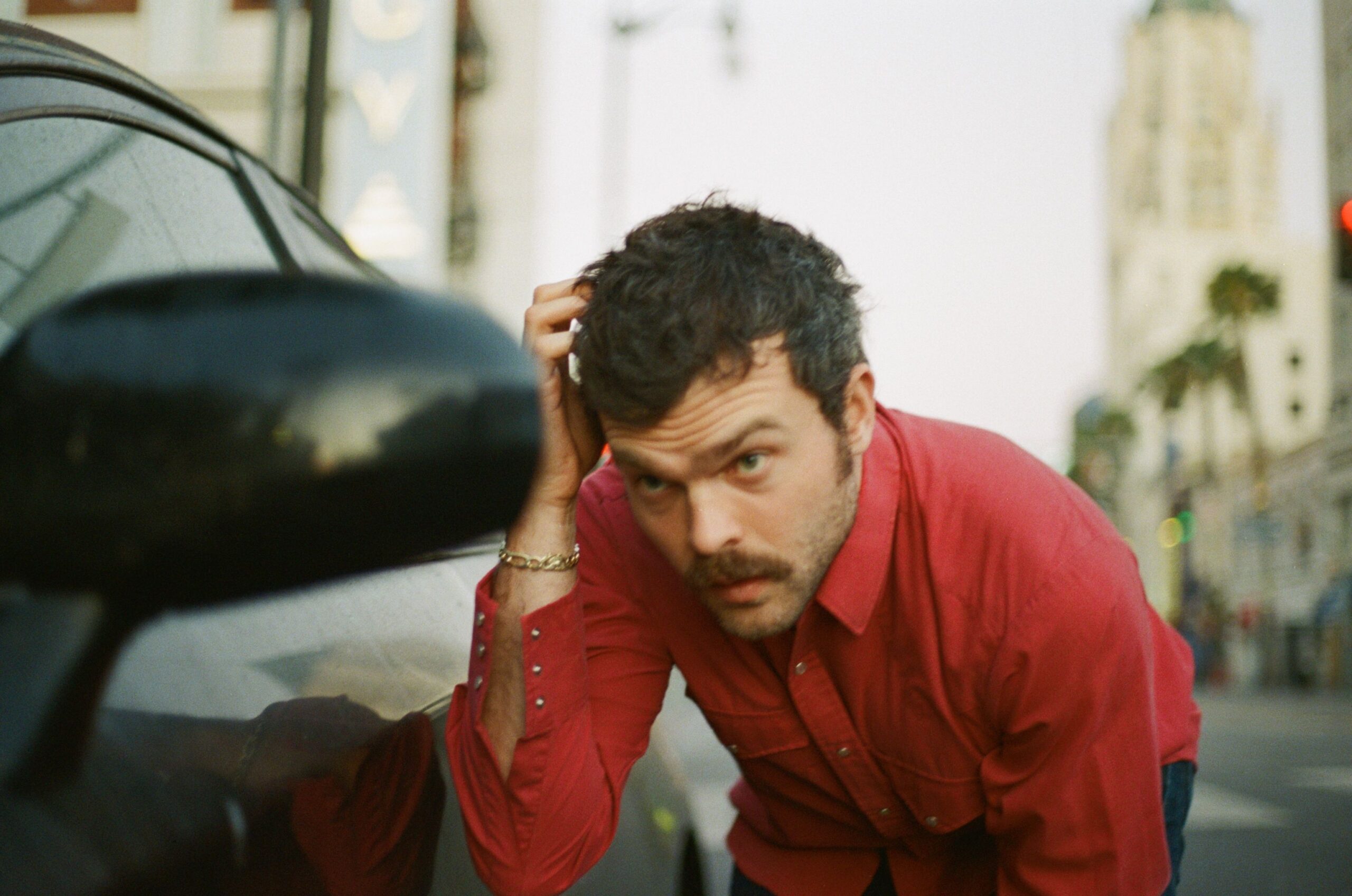
    Alden Ehrenreich is heading to the Marvel Cinematic Universe. Per Deadline, the actor has joined the cast of Ironheart, which is currently in production in Atlanta. Details surrounding who Ehrenreich might play are currently unknown.

    Ironheart follows Riri Williams, played by Dominique Thorne, a genius college student who goes on to be the first to develop a suit of armor as advanced as Tony Stark. Thorne will make her debut as Riri Williams, aka Ironheart, when Black Panther: Wakanda Forever hits theaters later this year. 

    Ehrenreich joins a cast that includes Thorne, Anthony Ramos (Hamilton), Manny Montana (Good Girls), and Harper Anthony. Rumors have suggested that Ramos is playing The Hood, which could mean that Ehrenreich is playing Obadiah Stane’s heir, Zeke Stane, who is expected to appear in the series, too.

    Chinaka Hodge serves as the head writer on the Disney+ series, while Sam Bailey (Brown Girl) and Angela Barnes (One Day at a Time) are on board to direct episodes of the show. Black Panther’s Ryan Coogler is on board as a producer as part of his overall deal with Disney. 

    While a release date has not yet been announced for Ironheart, it is thought the series will hit the streaming service sometime next year.

    Source: Deadline