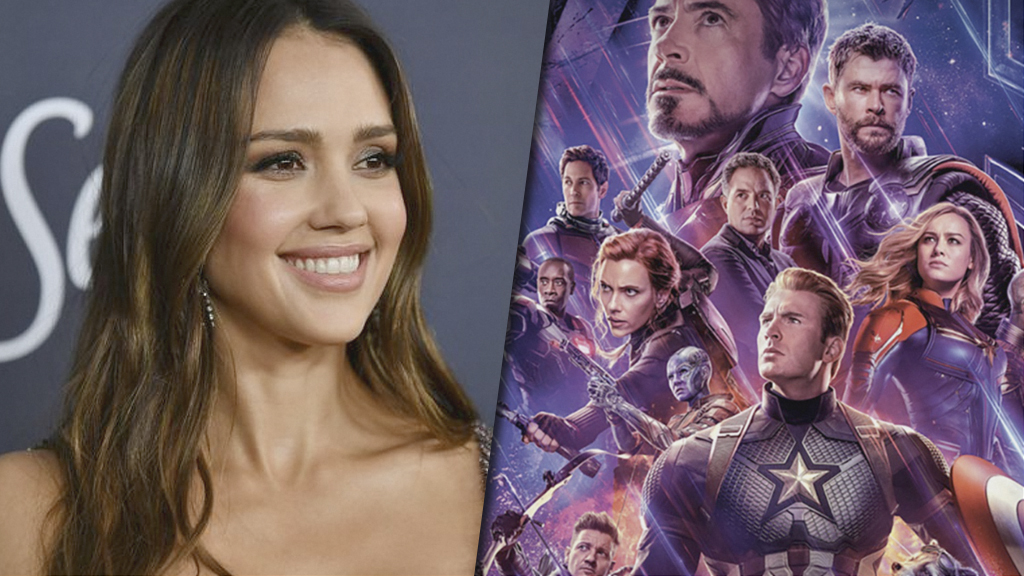
In recent years, Hollywood has come under fire for its lack of diversity – both behind the camera and in front of it. And while studios have been making strides, some might feel it’s not enough. Jessica Alba expressed her frustrations in a recent interview with Glamour UK, noting that not much has changed since her time in the Fantastic Four films. The actress and Honest Company owner specifically called out the Marvel films, noting that they are still majorly Caucasian. Alba does mention that although the superhero genre has started to become more inclusive, it has quite a ways to go still.
“Even if you look at the Marvel movies – that’s the biggest driver of fantasy and what’s happening right now in entertainment, because it’s sort of the family thing – it’s still quite Caucasian,” the actress said. “I would say I was one of the few back in the day… And it was before Marvel was sold to Disney, but it’s still quite more of the same.”
She continued by explaining that she hoped that younger people would be able to see themselves in the world on screen and in the stories we consume. “I just think more for the younger people who are coming up, who are going to be our future leaders, it’s important for them to see the world on screen, or in stories, in the dreams that we create as entertainers; it reflects the world that they’re in.”
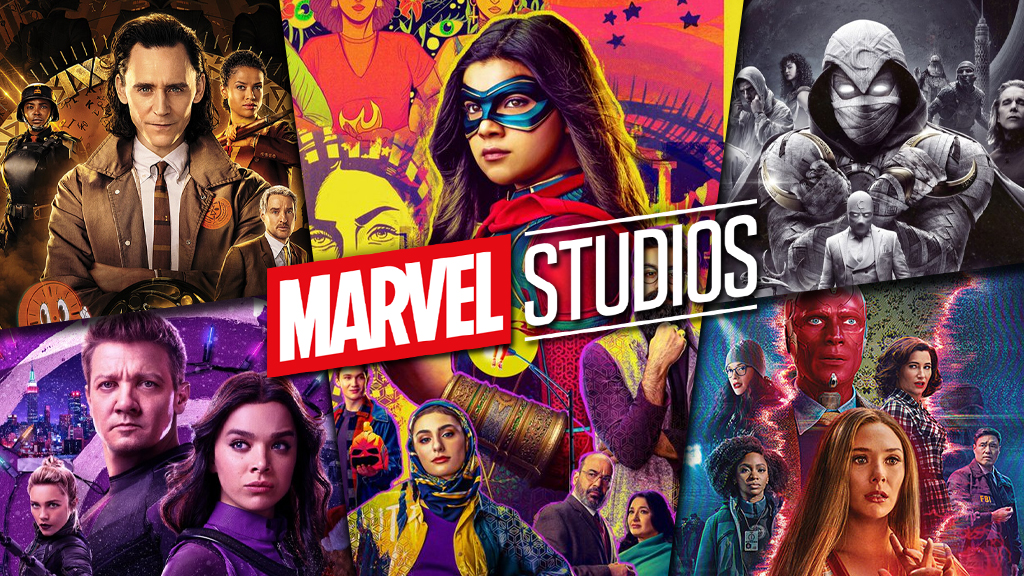
In recent years, Marvel Studios has made it a point to be more inclusive both behind the scenes and in front of the cameras. Recently, the long-running Marvel Cinematic Universe saw the debut of its first Muslim superhero thanks to Ms. Marvel, its first Asian superhero with Shang-Chi and the Legend of the Ten Rings, as well as the introduction of two deaf heroes with Eternals and Hawkeye. Of course, as Alba notes, there is always room for improvement, and one can only hope studios continue to include more diversity in future projects.
The Guardians of the Galaxy are making their mark on the Marvel Cinematic Universe’s Phase 4 already, despite the franchise’s third installment, Guardians of the Galaxy Vol.3, is not slated to hit theaters until 2023. Recently, the team showed up in the opening minutes of Thor: Love and Thunder, and a Guardians holiday special are set to land on Disney+ later this year.
Another, smaller, project based on the characters of the franchise is also set to debut soon. I Am Groot, a series of shorts based on the popular age-confused tree-like alien Groot will hit Disney+ on August 10, 2022. A new report has revealed that Marvel Studios released early footage of the Disney+ series, and it includes the return of another Guardians favorite.
According to The Direct, an early theatrical screening of the first episode of I Am Groot, Bradley Cooper is confirmed to return as Rocket Raccoon in the Disney+ shorts. Cooper’s name appeared in the credits as Rocket Raccoon, suggesting his appearance in at least one episode of I Am Grootand marking his sixth appearance in the MCU to date.
While it is fun that Cooper and Rocket will be involved, director James Gunn has hinted that the short series may not be canon to the greater MCU.I Am Groot, will consist of five shorts but there are no exact details on how long each individual episode will be, but as they are titled “shorts” we shouldn’t expect an overarching storyline or long episodes. This isn’t a new thing for the service and isn’t a sign that they are changing the model, as it’s rather common for the service in how they tackle their shorts, such as Olaf Presents.
I Am Groot is scheduled to release on Disney+ on August 10, 2022.
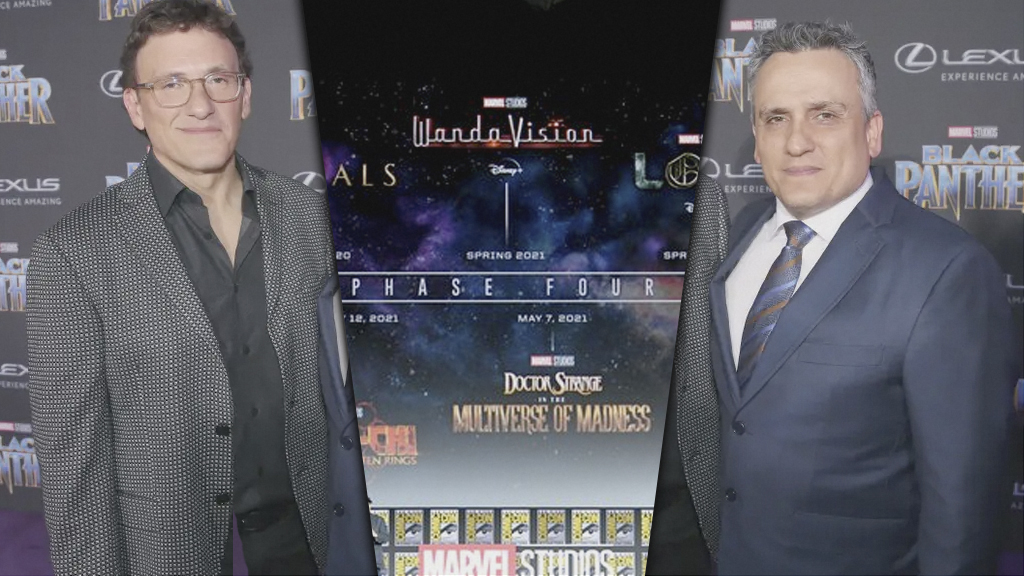
Marvel Studios and the fourth phase of the Marvel Cinematic Universe has been under heavy critique. Not only did its recent releases face a lower CinemaScore than previous entries, but as they experiment and try out new things, people are feeling a bit aimless in where it’s all leading. Well, directing duo Anthony and Joe Russo, who had a hand in shaping some of the biggest entries of the MCU, offered their thoughts on the matter.
Anthony Russo highlighted some of the critiques that recent Marvel movies aren’t breaking records like previous entries, which stems from the belief that their success metric is reaching at least a billion, which is technically still an uncommon action for any other franchise or film. Well, Anthony Russo believes that Marvel simply had such a success that even a slight sophomore slump is being turned into the end of an era.
The overwhelming success of those movies has caused them to represent something that has become ‘other,’ or maybe not attainable to some others for whatever reason. Not every movie has to be liked globally.
Anthony Russo
While his brother Joe Russo pulled in a comparison with his own relationship to the band U2. Especially highlighting how people tend to act towards any medium that reaches a certain point of popularity.
When I was 19, I used to love U2. And then they started getting some commercial success, beyond their MTV early days, where they were the biggest band in the world. And I was like, ‘I hate U2. I’m sick of U2. They’re so ubiquitous!’ That was just my ego trying to define myself against the masses. Then, 10 years later, I was like, ‘I fing love U2. Why did I do that?’ I outgrew it. It feels like a very juvenile conversation. The whole thing feels sad and cynical and pessimistic. You’re talking about movies that 10-year-olds are weeping over and begging to go see. They’ll remember for decades that they were there with their grandfather. Like, give me a fing break.
Joe Russo
The medium has definitely reached young and old, especially for those that found a way into comics and film through these projects. While some will point at these films as expendable and forgotten, there are definitely people that are now locked in a nostalgia for the Infinity Saga, as they face a new future and direction. We’ll see if perhaps SDCC or D23 have what the MCU fans have been waiting for.
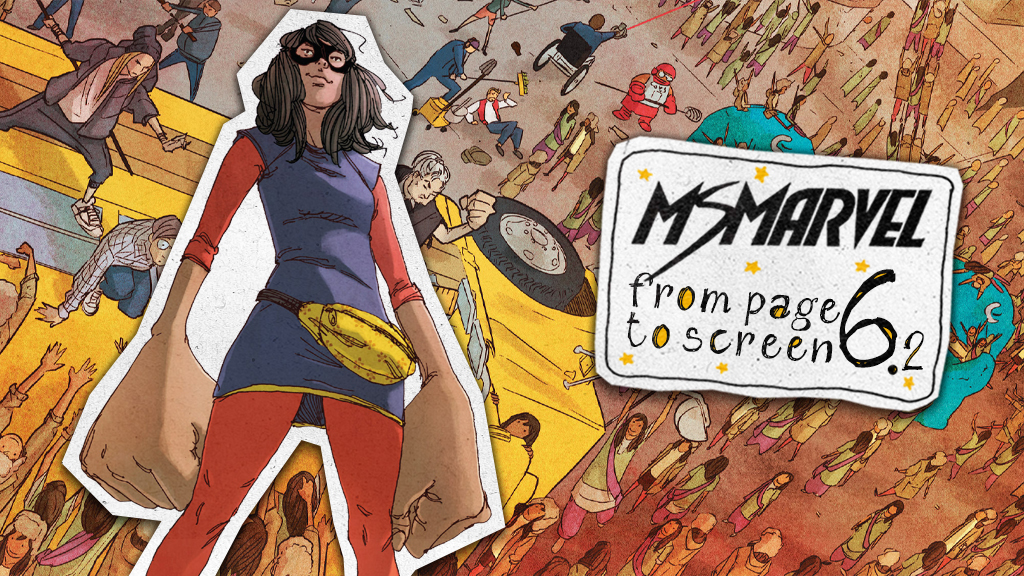
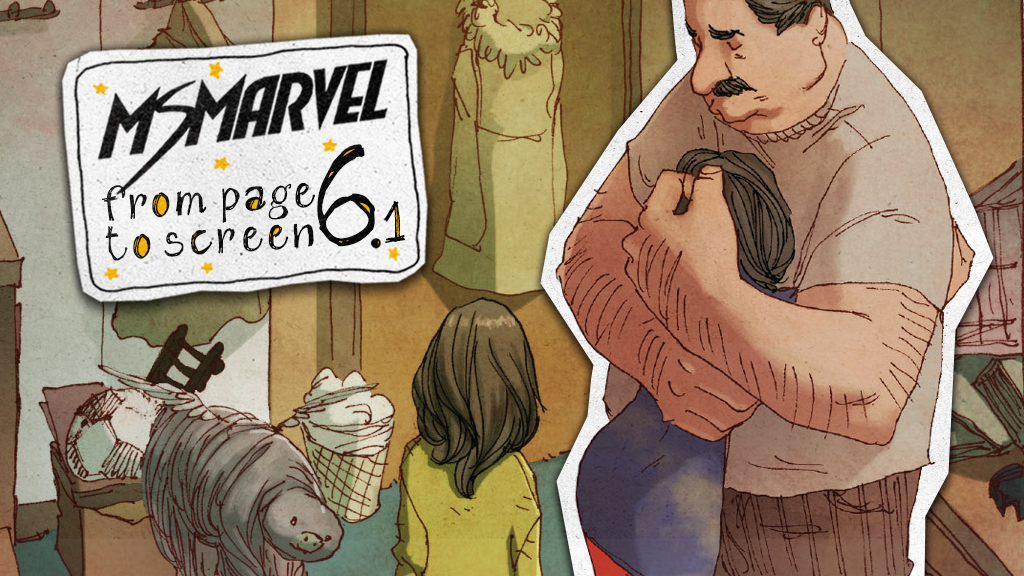
The first From Page to Screen for the Ms. Marvel finale focused on the episode’s inclusion of major aspects of Ms. Marvel lore. In particular, we looked at the significance of Kamala saying “embiggen” and how Kamala got her “Ms. Marvel” name in the live-action series. In this article, however, we spend time on more subtle references that maybe were only apparent to more hardcore fans of Ms. Marvel comics.
It All Ends In High School
Many of the other obvious references to Ms. Marvel comics in the finale were based on well-known plots or arcs that were significantly altered—but included—in the finale. Fans of the first Ms. Marvel (2014) run will no doubt remember that that very run ended with the incursion that led into Secret Wars (2015). In this part of her story, Kamala also met Carol Danvers for the first time, and the eeriness of the pre-incursion madness made for a phenomenal read.
But a major moment in those last few issues of Ms. Marvel (2014) revolves around Jersey City’s response to the incoming incursion. While the world is panicking and preparing emotionally for the end of the world, Jersey City congregates in Coles Academic High School at the request of Ms. Marvel. The community, even those normally opposed to one another, come together to create a space for supplies, worship, and comfort.
Ms. Marvel #19 (2014)Ms. Marvel #19 (2014)
It is a very different situation in Ms. Marvel, but the fact remains that the main characters sought refuge in the high school in the midst of the series’ final threat. The high school setting, of course, calls the comics into mind. But the fact that practically the whole ensemble gets involved in the Department of Damage Control “battle” also invokes the imagery of a community coming together in support of Ms. Marvel.
Marvel Studios’ Ms. Marvel Episode 6
Marvel Studios’ Ms. Marvel Episode 6
Zoe Zimmerman’s Change of Heart
Almost out of nowhere in the finale, Zoe Zimmerman because a friend rather than a foe. In Ms. Marvel comics, she had a personality overhaul after the traumatizing events of the incursion and became an activist-type who was self-aware of her prior bullying behaviors and worked to move past that time in her life. We can see some of this new change begin to happen in the last moments of Ms. Marvel, where she appears to be using her social platform for good to specifically amplify Nakia’s voice in on video.
Ms. Marvel #19 (2014)
Marvel Studios’ Ms. Marvel Episode 6
Marvel Studios’ Ms. Marvel Episode 6
She became a main figure in Kamala’a social group, along with Bruno and Nakia. Zoe’s further character development later involved her coming out as gay. Her unrequited crush on Nakia was a subplot that was both heartwarming and heartbreaking in some of the most high-school-type ways. Interestingly, the way the two characters interact at the tail end of the Ms. Marvel finale could be hinting at this development down the line in future projects.
One small mention in the high school sequence of the finale came when DODC agents wondered if the suspect(s) could multiply because our characters were wearing identical outfits and the agents had no idea what was going on. It does bring to mind an interesting arc in Ms. Marvel #4-6 (2015) where Bruno created essentially low-functioning clones of Kamala, at first in an effort for Kamala to meet all of her school, family, and superhero responsibilities. The clones ultimately go out of control and essentially took over Jersey City. Captain Marvel and Iron Man eventually had to bail her out, reminding her that she is still human and needs help sometimes…and it also leads into Civil War II.
Ms. Marvel recently ended its run on Disney+ as one of the most critically well-received Marvel Cinematic Universe. The series made viewers fall in love with Kamala Khan and get invested in the mysterious unraveling of what exactly her powers are. By the end of the show, audiences are already excited at seeing what comes next for Kamala in The Marvels.Iman Vellani will star alongside Brie Larson’s Captain Marvel, who appeared in the final post-credits scene of Ms. Marvel.
Kamala’s powers in the MCU raised a lot of eyebrows and questions. First, there were significantly different from the abilities and origin she had in the comics. But Ms. Marvel also dropped the huge fact that Kamala may be a mutant in the MCU, and it never fully explained her powers and her Clandestine background. Some of this was due to time constraints for the series, but the series’ director Adil El Arbi recently told The Direct that fans have quite a bit to look forward to regarding Kamala’s powers going forward. El Arbi stated:
And I think, power-wise, we saw just the tip of the iceberg of Kamala Khan. I think there is so much more she can do, and on that front, I think there’s a big road for that, some more spectacular power.”
Adil El Arbi
Considering Kamala’s powers were introduced and developed in a fairly unique way in the MCU, it makes sense that we are not done learning about them. The series’ creators previously mentioned that Ms. Marvel’s new MCU powers were, in part, meant to help the character fit in better with The Marvels. Director Billal Fallah added that her power growth will result in “a great can of action sequences.” The promise of Kamala’s abilities evolution certainly begs the question of whether she will ultimately have powers on par with Captain Marvel, who is arguably one of the strongest characters in the MCU.
Ms. Marvel is now streaming in its entirety on Disney+. The Marvels is scheduled to hit theaters on July 28, 2023.
Over the last two weeks, comic book fans were treated to two major season finales — The Boyson Amazon and Ms. Marvel on Disney Plus. And both, in their own respective ways, delivered, despite being geared to two totally different viewer demographics and adapting two totally different flavors of source material. However, despite its high praise — the show currently sits at a 98% critics consensus — only Ms. Marvel has had to grapple with the overarching questions that plague the Marvel Cinematic Universe’s Phase 4 enterprise as a whole, namely whether it did enough to not only advance the story of its title character across a satisfying season of television, but also progress the phase’s meta-narrative. And while it may not be fair to put that pressure on any one show, the truth is, that’s always been part of the promise in an MCU offering. Film or series, the story is expected to succeed on its own while also succeeding within a massive serialized storytelling apparatus.
Seven shows and eighteen months in, then, it’s worth assessing whether the Disney Plus structure has done enough to position its MCU series to succeed. And in particular, whether the SIX-EPISODE structure has done those series any favors. Because, unlike Ms. Marvel, The Boys, like Peacemaker before it, presented audiences with stories told over eight episodes, and it was able to dive deeper into the internal motivations of its leads, all while also doing the requisite amount of worldbuilding, new character introduction, and progression of supporting character arcs that we expect from great television.
In the cases of The Falcon and the Winter Soldier, which functioned as an extended prologue for Captain America 4, and Loki, which served as a bridge between Avengers: Endgameand the Multiverse Saga to come (not to mention its own second season), Marvel’s stumbles with respect to telling a six-part episodic story weren’t as damning as they could’ve been. But in the case of Hawkeye, Moon Knight, and now Ms. Marvel, which were all intended to be launching pads for new characters, the fact that certain aspects of the plot had to be sloppily executed and certain antagonists had to be left underdeveloped in order to get our main arcs to their respective endpoints hampered the final product.
In contrast, WandaVision, due to its unique sitcom structure, was afforded an additional three episodes to stretch its legs before diving into the six-part sprint we’ve now grown accustomed to. And while it admittedly didn’t fully stick the landing with respect to its climactic action, it ended on a tremendously satisfying emotional note for our lead characters, and it gave audiences enough insight into what Agatha Harkness and Monica Rambeau’s respective arcs might be to provide emotional stakes for wherever their next steps take them. And of course, the series was able to address the state of the world post-Blip and how the status quo had changed.
Had Ms. Marvel been afforded an additional two or three episodes to tell its story, the writers would have gotten the opportunity to flesh out what exactly the Clandestines’ motivations were, so that Najma wouldn’t have seemed so one-dimensional, and her villainous turn less abrupt and nonsensical. One more episode in Karachi would have given us more insight into the Red Daggers’ organization and the opportunity for Waleed and Kareem to be made even more compelling as mentors and allies to Kamala. Affording an entire episode to the Partition would have allowed the emotional climax of that story to breathe, instead of abruptly transitioning into poorly articulated Noor mumbo-jumbo which completely undercut the tragic star-crossed love story between Aisha and Hasan, and the part Kamala got to play in it. Not to mention, more time would have given the show more space to explore Kamala’s friendship dynamics, particularly concerning Nakia and Zoe, who not only proved to be bright spots in the finale but also play significant roles in the comics. In short, the things the show did well, we would have been able to luxuriate in, and with respect to the things it didn’t do well, there would have been more time allotted to fixing them.
Again, this is not to say that any of the MCU series have been bad. However, they’ve all been limited in certain respects, and six episodes hampers the storytellers’ ability to serve their characters in a satisfying way. (What If…? both as an animated series and a hybrid of an anthology show and a serialized show had its own unique challenges, even with nine episodes to work with.) And in the case of Ms. Marvel, while we do expect there to be a second season (which will clearly take place sometime after The Marvels, based on the stinger), some elements of this season can’t be revisited and retroactively improved. Especially when the “mutation” revelation has rendered some questions moot. So its flaws are its flaws, no matter what comes next. But hopefully, a nine-episode season of She-Hulk, paced differently from the six-episode breakneck pace that the other shows have struggled under, will convince Kevin Feige and the producing brain trust that the MCU’s characters — especially ones as thematically rich as Kamala Khan — need at least eight episodes each season to fully flesh their stories out. And then we can look forward to an embiggened Season 2.
The finale had numerous references to Ms. Marvel comics, particularly its first 2014 run, though with plenty of references to the 2015 run as well. Like last week, this week will feature two From Page to Screen entries. In this article, we focus on two of the most obvious and major connections—Kamala’s powers and her Ms. Marvel mantle.
“Embiggen”
Those maybe less familiar with Ms. Marvel comics may have been caught slightly off guard when Kamala, seemingly out of nowhere, says, “embiggen” before using her light powers to essentially construct a massive version of herself. Now, “embiggen” is not its own word capable of ascertaining much meaning outside of Kamala in the comics. As we’ve discussed before, the power changes made from comics Ms.Marvel to live-action Ms. Marvel were significant. In the comics, her powers were called embiggening. In the DIsney+ series, we know that she summons power from the Noor Dimension to create hard light constructs.
Ms. Marvel #2 (2014)Ms. Marvel #1 (2015)
As different as those two power sets are, the series clearly has tried to link the two in some ways. When Kamala stretches her light constructs in a way that looks like an extended arm and fist, it invokes her embiggening powers in the comics. The live-action version of “embiggen” was Kamala’s use of her powers to essentially grow herself into a much more formidable and in-control being. While the seemingly abrupt “embiggen” did not make a ton of sense in the context of the show, it was one of the biggest pieces of fan service that anyone familiar with comics Ms. Marvel would have cheered at.
Marvel Studios’ Ms. Marvel Episode 6
Marvel Studios’ Ms. Marvel Episode 6
“Ms. Marvel”
One of the mysteries of Ms. Marvel was how Kamala would end up with the name of “Ms. Marvel”. In the comics, Carol Danvers had previously used the moniker, and that was essentially the whole story. In live-action, Carol Danvers was always only Captain Marvel. Many fan theories suggested that the name would come from something family-based, as the show’s themes focused heavily on that topic. Moreover, names like “Ms. Marvel” are becoming a bit outdated now, so it would need to be something personal and loving.
Ms. Marvel #5 (2014)
And indeed the answer came in the finale that Kamala’s parents apparently nicknamed her “Ms. Marvel” as a young girl, based on the rough/expansive meaning of “Kamala.” An Arabic name, “Kamala” translates to “perfection”, which Kamala’s father tells her in Ms. Marvel #5 (2014). In Ms. Marvel, that same conversation takes place, though her dad expands upon it. He suggests that the “perfection” translation does not quite do it justice and that it also meant “marvel.” “Ms. Marvel” became a pet name from her parents, and Kamala seized on the opportunity to share the same name with Carol Danvers.
Marvel Studios’ Ms. Marvel Episode 6
Marvel Studios’ Ms. Marvel Episode 6
Marvel Studios’ Ms. Marvel Episode 6
Ms. Marvel is now streaming exclusively on Disney+.
Here we are, in the middle of Year 2 of Marvel Studios’ Phase 4 rollout. Ms. Marvel has found her way into live-action with Iman Vellani taking on the role of the popular Muslim-American superhero. Earl yon, there were many concerns regarding the changes to her abilities and new direction for the character Plus, it made many wonders if the Inhumans part of her backstory would even get explored as the series seemingly hyperfocused on her connection to the wider MCU. Well, the final episode revealed that they are taking quite a different direction.
Finally, ever since Disney acquired 20th Century Fox, the X-Men and Mutants have long been awaited in the franchise. While we’re seeing an “it wasn’t that bad” nostalgia making the rounds, there have been many theories on when exactly we’ll see the revelation of the mutants existing in the MCU. Little did we know, it would involve a character that was famously a NuHuman in the comics.
What makes it stand out is that Marvel Studios played quite the long con with this revelation. Everyone had two very specific projects in mind that would lead to their arrival. The first was the assumption that WandaVision, especially with its House of M influences, would do a twist that unleashes the mutant gene throughout the world. Yet, nothing came of it. The series was surrounded by quite a few fan theories that didn’t turn out to be true, such as the arrival of Mephisto.
So, everyone’s next best bet was the release of Doctor Strange in the Multiverse of Madness. Not only was Patrick Stewart‘s return as Professor X teased but also the concept of the multiverse taking centerstage. In a surprisingly personal storyline for Wanda and Strange, we do get our first official mutant in the MCU, but it is part of another dimension without any real hint on how he might tie into the world. The only thing is that his arrival is tied together with a familiar sound bit, the iconic X-Men ’97 theme song.
While some would simply point out this being introduced for the sake of nostalgia, it actually turns out to play a key role in Marvel Studios’ strategy. They took the long route around and instead of just rushing them out, they keep their focus on what they had mapped out long before the purchase was even finalized. Yet, they also set the ideas that would slowly connect the pieces as necessary were actually set in the projects that people were annoyed didn’t flat out confirm it.
WandaVision already introduced the concept of an inherent gene that is unlocked through an external source, in Wanda’s case the Mind Stone. It stands out that there is an implication that she’s used her hex powers long before they were truly unlocked and it simply sped up something that was already in her genetics. So, we technically already got the hint that she’s very likely a mutant even if it’s not directly spelled out.
So, we have the base concept hinted at and all we really need is a true indicator. Luckily, Doctor Strange introduced us to the MCU’s leitmotif for the mutants. Instead of inventing a new one that some might not truly connect with the concept, they used elements from one that was quite popular back in the day. It’s not purely for nostalgic reasons, but it also is easy for many viewers to make the connections. So, Professor X’s arrival with that leitmotif sets up the first use of the wording “mutation” within the MCU in Ms. Marvel.
No matter how you feel about Phase 4, Marvel Studios has slowly left the small details that would eventually build up to the grand confirmation. Mutants are coming and it’s not a coincidence that many different elements played a role throughout Phase 4. The only question now remains on what exactly may be the next step for their arrival. While we still don’t have an announcement for an X-Men film, the rumors surrounding Namor’s arrival inBlack Panther: Wakanda Forever is possibly another step in their introduction, as he was known as “the first mutant” in the comics due to debuting in 1939. So, perhaps the puzzle pieces were always there.
Now that Ms. Marvel has wrapped up its run, there are seven Marvel Studios Disney+ series that have all been released within the past year and a half. Not surprisingly, many want to compare them to each other, even though some exceed in vastly different ways than others. The legacy of series on the greater MCU is slowly becoming more apparent, and the introduction of major characters and plots in them is surely a sign that Marvel Studios plans to take them seriously going forward. More series are on their way, but this article ranks the current seven MCU series from best to worst.
1. Ms. Marvel
Ms. Marvel did what few MCU series could do, which is have a great story and a satisfying conclusion. On top of that feat, the story was excellent and managed both small-scale and large-scale aspects of Kamala’s life with charm, wit, heart, mystery and even darkness. The overall quality of Ms. Marvel from episode to episode barely wavered, and the cast and crew were top-notch all around. While the series was never the most hyped for various reasons, the show managed to exceed all expectations despite very polarizing decisions regarding the changes from her comic book origins.
2. WandaVision
WandaVision is still the highlight of MCU creativity. It took the boldest creative leaps in terms of its narrative structure and style, and it remains wildly unique from everything else in the MCU. While it aired, fans were clamoring week-to-week for the next episode. Granted, it was also the first lesson for MCU fans in (mostly fan-induced) Phase 4 disappointment and rushed finales. The fact that myriads of extreme fan theories did not happen should not be a metric when evaluating any story.
3. Loki
Loki also took a bold route in its design and execution, but overall it was fairly inconsistent episode to episode. Some episodes were a bit dry and bland, while some came out of nowhere in the best of ways. Certain sequences could be dazzling, and the finale could practically do the legwork for the entire first season. But it was met with plenty of criticism on how Loki’s character was developed, and the Loki-Sylvie dynamic was certainly polarizing.
4. Hawkeye
Hawkeye was good old-fashioned MCU comfort pulled off well. It was nothing spectacular, and its big Kingpin reveal was ultimately underwhelming. But overall it had a satisfying story and ending—a rarity—that was sweet and simple. Kate Bishop was introduced but we also got to follow an original and Avenger post-Avengers: Endgame for the first time, and it gave the last of the six his first “solo” treatment. At the same time, it also felt like a constant tool for introducing new or spin-off-type projects like Echo rather than investing in its own story.
5. Moon Knight
Had the finale gone differently, Moon Knight may have been much higher on this list. Oscar Isaac’s performance alone was phenomenal and drove the show, while Egyptian mythology provided a new source of interest for MCU audiences. While the show could be stellar—Episode 5 is one of the best of the MCU—the overarching story was ultimately incredibly generic and a letdown to the potential that the rest of the series built up.
6. The Falcon and the Winter Soldier
No one is surprised The Falcon and the Winter Soldier would be low on this list. It honestly, though, is not bad. It is maybe the best example of a comfort project in the MCU other than Hawkeye. We followed known (side) characters in a context and style that felt incredibly consistent with the Captain America franchise they came from. But it was generally lackluster and not worthy of too much praise in terms of the storyline and villains. It did touch on important topics, mostly regarding race and the notion that people would never accept a Black man as their Captain America. But alas, it could come across as dull and unoriginal most of the time.
7. What If…?
It feels too easy to put the only animated series at the bottom of the list, butWhat If… ? just belongs here. The animated style detaches it from the MCU fans want to engage in, and its anthology multiverse structure makes it feel like there are no stakes. It is a collection of interesting mini-ideas. Some could be brilliant, and the Doctor Strange episode is arguably the best episode of any MCU series. But as a whole, What If…? just isn’t on the same playing field as the rest.
The finale of Ms. Marvel gave fans more than they bargained for when it revealed Kamala Khan as the first mutant in the mainstream Marvel Cinematic Universe. For months, rumors, speculation and some spurious “leaks” all centered around Kamala being exposed to Terrigen Mist and learning of her Inhuman heritage during the finale. Instead, Marvel Studios chose to make Kamala a mutant, making her future in the MCU a complete unknown. It also seemed to spell the end of any hopes that the Inhumans would ever make their way into the stories of MCU’s Earth-616, but as it turns out, Kamala’s retcon isn’t quite the death knell for the Inhumans that it might first appear to be.
In the comics, Kamala is a NuHuman: a branch of Inhumans created en masse when Black Bolt detonated a Terrigen Bomb, causing thousands of humans of Inhuman lineage to undergo Terrigenesis and developing their Inhuman gifts. The event, which occurred in the pages of 2013’s Infinity #4, came at a time when Marvel Comics was making push to elevate the Inhumans’ popularity and, seemingly, diminish the X-Men’s. At that time, Fox still owned the live-action rights to the X-Men and Marvel Studios was hard at work building the foundation their shared cinematic universe, still years away from being the self-sustaining juggernaut it’s since become.
In hindsight, the NuHuman era was nothing short of a failure, with almost none of the characters created during that era now playing a major (or any) role within the Marvel Comics universe. In fact, the Inhumans have been rather absent from the comics in general for the past several years. Perhaps a little leave of absence will benefit the characters in the comics, allowing them to reenter the books at a later date and return to inhabit the very interesting niche they carved out after first appearing in the pages of Fantastic Four in 1965. And it’s this same niche that they could still find themselves inhabiting in the MCU, should Kevin Feige ever choose to introduce them to the 616-universe. And if that niche doesn’t quite work out, there’s another interesting option on the table as well.
The Royal Family and The Universal Inhumans
Should Feige and the Marvel Studios Parliament want to introduce the Inhumans to the MCU, the clearest path is to introduce them as the abandoned subject of Kree experimentation, as seen in the Marvel Comics. As the millena-long Kree-Skrull war raged on, the evolutionarily-stagnant Kree began experimenting on the native species of multiple plantes across the universe. In some cases, like on Earth, early life had already been experimented on by the Celestials and a latent gene that could spark the release of super powers was placed in their DNA. It’s this latent gene that eventually led to mutants on Earth and, after Kree experimentation, allowed for Terrigenesis to transform individuals. The Kree abandoned their projects across the universe following a prophecy that their experiments would produce a being that would end the Kree Empire, but not before successfully establishing metamorphic processes in place on 5 different planets: Earth, Centauri-IV, Lotlara, Kymellia and Wraithworld.
Over time, the experiments on Earth produced an advanced race whose superiority to early man saw them demonized. Over time, they went into hiding in a secret city, Attilan, and then the Blue Area of the Moon. This line of Inhumans produced what is known in the comics as the Royal Family, which is typically presented as Black Bolt, his wife Medusa, her sister Crystal, Black Bolt’s brother Maximus, Gorgon, Triton and Karnak. Of these, it was Black Bolt, the Midnight King of the Inhumans, that the Kree believed to be the being of prophecy. On the other planets, four queens who ruled over their own Inhuman populations were fated to join the Midnight King in ending the reign of the Kree.
It doesn’t take much to see that should Marvel Studios choose to pursue this path, there wouldn’t be much overlap with whatever Kamala Khan and the mutants get up to on Earth. Marvel Studios botched the Kree-Skrull War pretty badly in Captain Marvel and the history of early Earth pretty badly in Eternals. They could rectify both of those mistakes with an Inhumans D+ series that establishes a truer history of both and introduces the Inhuman Royal Family hidden away on the Moon. Rumors persist that the Universal Inhumans are set to make an appearance in The Marvels; if those rumors are true and Feige is introducing them to the MCU, the Royal Family should not be far behind. Make them as strange and Lee and Kirby intended them to be. Make them a hidden force in the universe. Make them what they once were before the NuHuman debacle. And should Marvel go this route, they could choose to adapt one of Marvel Comics’ best Cosmic events, War of Kings, down the road, making good on the prophecy.
The Inhumans of Earth-X
Marvel Comics has a long history of developing alternate universes where things are just a little different: let’s call this…the multiverse. One of the more dramatic reimaginings began in 1999 on Earth-9997, aka Earth X. Interestingly enough, the MCU has already dipped into Earth-X lore a bit for Eternals and they wouldn’t be wrong in wanting to further mine that territory for a different take on the Inhumans.
During the 12-issue arc, Black Bolt released Terrigen Mists on Earth, mutating almost all of Earth’s population into Inhumans. The events of Earth-9997 are set in the future of a dystopian timeline, so this won’t quite work if the 616 timeline is going to keep moving ahed. However, setting up the Inhumans as the villains of a future project and having someone, perhaps the Fantastic Four, have to stop their plan would be a great way to separate the characters from Earth’s mutants. It’s worth noting that the Inhumans of Earth X were given major redesigns by Alex Ross and, if the MCU isn’t going to go the 616 route with the characters, the Earth X designs are the only other acceptable option and would really work well if Feige wanted to introduce them as villains.
So while Ms. Marvel has all but put and end to any hopes that the NuHuman arc from the 2010s could ever work its way into the MCU, there’s still room for Black Bolt, Medusa and the rest to find a way there.
Cookie Consent
We use cookies to improve your experience on our site. By using our site, you consent to cookies.
This website uses cookies
Websites store cookies to enhance functionality and personalise your experience. You can manage your preferences, but blocking some cookies may impact site performance and services.
Essential cookies enable basic functions and are necessary for the proper function of the website.
Name
Description
Duration
Cookie Preferences
This cookie is used to store the user's cookie consent preferences.
30 days
These cookies are needed for adding comments on this website.
Name
Description
Duration
comment_author_email
Used to track the user across multiple sessions.
Session
comment_author_url
Used to track the user across multiple sessions.
Session
comment_author
Used to track the user across multiple sessions.
Session
Statistics cookies collect information anonymously. This information helps us understand how visitors use our website.
Google Analytics is a powerful tool that tracks and analyzes website traffic for informed marketing decisions.
Contains information related to marketing campaigns of the user. These are shared with Google AdWords / Google Ads when the Google Ads and Google Analytics accounts are linked together.
90 days
__utma
ID used to identify users and sessions
2 years after last activity
__utmt
Used to monitor number of Google Analytics server requests
10 minutes
__utmb
Used to distinguish new sessions and visits. This cookie is set when the GA.js javascript library is loaded and there is no existing __utmb cookie. The cookie is updated every time data is sent to the Google Analytics server.
30 minutes after last activity
__utmc
Used only with old Urchin versions of Google Analytics and not with GA.js. Was used to distinguish between new sessions and visits at the end of a session.
End of session (browser)
__utmz
Contains information about the traffic source or campaign that directed user to the website. The cookie is set when the GA.js javascript is loaded and updated when data is sent to the Google Anaytics server
6 months after last activity
__utmv
Contains custom information set by the web developer via the _setCustomVar method in Google Analytics. This cookie is updated every time new data is sent to the Google Analytics server.
2 years after last activity
__utmx
Used to determine whether a user is included in an A / B or Multivariate test.
18 months
_ga
ID used to identify users
2 years
_gali
Used by Google Analytics to determine which links on a page are being clicked
30 seconds
_ga_
ID used to identify users
2 years
_gid
ID used to identify users for 24 hours after last activity
24 hours
_gat
Used to monitor number of Google Analytics server requests when using Google Tag Manager
1 minute
Marketing cookies are used to follow visitors to websites. The intention is to show ads that are relevant and engaging to the individual user.
Pinterest Tag is a web analytics service that tracks and reports website traffic.