One of the most surprising successes of the Marvel Cinematic Universe has been the studio’s ability to draw from the far reaches of their intellectual property and turn those characters into household names. Perhaps the best example of this is the Guardians of the Galaxy franchise, which has spawned into one of the most well-known groups in pop culture.
James Gunn‘s 2014 film has become a staple in the MCU and characters like Star-Lord and Gamora have played huge roles in the building of the universe. To say anticipation is high for the third installment, set to be released on May 5, 2023, is an understatement.
The ending of the trilogy has been teased by the cast and director as being quite emotional for some time now. Chris Pratt, who plays Star-Lord, was asked by Digital Spy in an interview about his thoughts on the third film while promoting his new Amazon series, The Terminal List.
Pratt had high praise for Gunn:
It’s fantastic. [Director] James Gunn just watched a rough assembly the other day. I called him yesterday. We Facetimed, and he’s very, very proud of the work that everyone’s done. He said it’s the best work all of us have ever done. He feels very, very confident. The script was amazing.
Chris Pratt
But Pratt didn’t stop there. He went on to make a bold claim about the upcoming film as well:
And I can say with utter confidence that he’s made a true masterpiece, and I just cannot wait for people to see it. It’s James Gunn. He did all three movies, which is really rare and really special in the world of big box-office trilogies.
Chris Pratt
What do you think? Will Vol. 3 be able to outrank the previous films? Leave your thoughts in the comments below.
There was a time when one of the top criticisms the Marvel Cinematic Universe faced was that the films had a “villain problem.” This wasn’t entirely inaccurate, because unlike with well-known heroes like Batman and Spider-Man, the earliest MCU films were about establishing who our long-term protagonists would be, more than establishing who would be their foils.
But as the quality of the offerings have improved, so too has Marvel’s ability to introduce heroes and progress their stories in the projects of others, leaving the films with more real estate to give their antagonists room to flourish. Add in the way that some villains’ stories intertwined with those of the heroes, and that has provided the ingredients for the introduction of villains who leave an impression on audiences even after they’re vanquished. And in a storytelling form that thrives on characters returning and resurfacing, that has been invaluable.
But what if someone were to scour the first 4 phases of the MCU and create a new and formidable villain, stitched together from antagonists past? From which five villains would you take component parts for this unholy union, and which parts would you use? This piece purports to answer that question. Behold, our Villain Frankenstein!
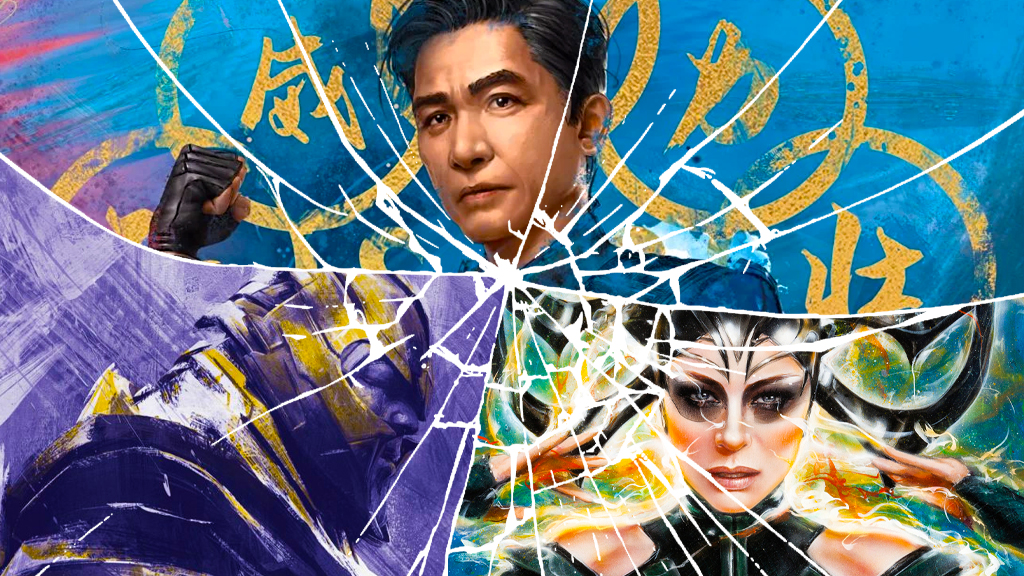
The Commitment of Thanos
For most fans, Thanos is either #1 or #1A on their list of favorite MCU villains. And why wouldn’t he? In Avengers: Infinity Warhe defeated the Avengers handily while throwing timeless verbal barbs in their direction — not to mention fragments of nearby moons. He humbled the Hulk, victimized the Vision, and laid waste to worlds, all in the name of balancing the universe through the eradication of half its sentient life. So thorough was his victory, and so committed was he to achieve that victory, that audiences couldn’t help but begrudgingly give him respect.
But beyond the respect for how formidable he was, audiences also considered, because of Thanos’ commitment to his vision for the universe, and his willingness to sacrifice and risk everything for it, the possibility that just maybe he had a point. Does the world warrant a biblical-style purge? Indeed, sometimes it feels like it does. Can the idea of killing half of everyone indiscriminately and leaving survivors to make a better universe in its aftermath seem oddly plausible? Yes! So we can understand a villain who takes years, stretched across multiple films, acquiring the MacGuffins and putting the pieces into place, doing so in service of a victory of that scale. That his Snap was ultimately reversed is immaterial; his impact is still being felt. Thanos showed that it was possible for the villain to win, and because it took five years for that win to be overcome, the MCU, and its audience, was forced to marinate in his message.
The Righteousness of Killmonger
Before “Thanos Was Right,” it was Erik “Killmonger” Stevens in Black Panther who articulated a worldview that resonated with audiences, despite being ultimately villainous. Colonization and oppression, particularly at the hands of Europeans, have ravaged the Global Majority, marginalizing them, and creating an underclass throughout the world who need to rise up and achieve liberation by striking back. And in the utopian nation of Wakanda reside the tools that could make this global revolution possible. By sitting back and letting all the horrors be visited on people of color throughout the world by imperial powers, Wakanda abdicated a responsibility that should have been a moral imperative. And if Killmonger led them, the formerly powerless would rise up worldwide and become a new power, a new empire, that would strike fear in the hearts of any that opposed them.
Yes, of course, that goes too far. But up until the point that it goes too far, we find ourselves nodding our heads in condemnation for the “comfortable” who sit idly by while others are oppressed. We admire the fact that a young boy left orphaned in an Oakland housing project was able to mold himself into a fierce fighter, a tactical genius, and an engineering wunderkind, with nary a Bat insignia to speak of. Instead, he wears on his body the scars of all the killing he had to do to put himself on the Wakandan throne — even the killing of his own people. And he scoffs at the fact that Wakandans debate intervention while innocents suffer and die in the imperial yoke. It’s a message that continues to resonate today, as the masses cry out for someone who will do whatever is necessary to defeat tyranny, including getting their hands dirty.
In our hearts, we know that Erik honed himself into something sharp and hard because his world wouldn’t let him be anything different, and when he does die in Black Panther, it’s tragic. But we also know that there are billions subjected to that same world, many making similar choices, because sharp and hard is what makes survival more likely than not. So villain or no, there’s something to the idea of the Wakandan spear that strikes at the heart of the powers that be in order to liberate the powerless. At times, we wanted to believe Killmonger could be that spear of righteousness, and it’s an epic villain whose cause is so sympathetic that you almost want to take it up alongside them.
The Resources of Wenwu
The Ten Rings organization was introduced to fans in the very first MCU movie, Iron Man as a shadowy terrorist network, yet we learn years later in Shang-Chi and The Legend of TheTen Rings that their roots stretch back millennia, and their origins lie in ten mystical artifacts of immense power, wielded by Xu Wenwu. With these Rings, Wenwu is able to take down kingdoms and annihilate armies singlehandedly and is granted near-immortality, inspiring the devoted and fanatical following which provides the foundation for his international criminal empire.
In the Ten Rings, Wenwu established a clandestine organization with the resources to rival Hydra, which for the most part had been able to prosper despite the existence of S.H.I.E.L.D., the emergence of the Avengers, and the rampage of the Ronin. And his identity as the head of the organization was secret enough that an actor could be installed as a figurehead with no one in law enforcement having a clue.
Although by the end of Shang-Chi, leadership of the Ten Rings organization has passed from Wenwu to his daughter Xu Xialing, and custody of the Rings themselves has passed to his son Shang-Chi, it should not be forgotten that for thousands of years, this martial arts master and criminal mastermind possessed ten of Earth’s most powerful weapons, and had an army of operatives at his disposal all over the world. It’s certainly disappointing that we mostly got to see the fall of Wenwu, rather than his rise and reign. But the glimpses we did see were of a formidable man who built an empire that was not to be trifled with. And there is a certain irony to the fact that his other defining characteristic, family man — exemplified by his desire to see his children extend his legacy — ended up being fulfilled in his death. He was a cruel and overbearing dad, and yet, he still managed to get his way. How villainous is that?
The Sex Appeal of Hela
Does a great villain have to be sexy? Of course not. However, great villains are often charismatic, confident, graceful, and lithe, and there’s something sensually appealing about a character who is uninhibited and unabashedly bad. From the moment she first steps out of the portal in Thor: Ragnarok like some kind of goth goddess, Hela was capable of stealing the spotlight from both the hunky and handsome Thor and the devilishly charming Loki, chewing scenery, smashing Mjolnir, and establishing her dominance. She laid waste to Asgard and looked fabulous doing it. Whether you’re male or female, a villain who can make you swoon, despite knowing that their intentions are far from pure…well, let’s just say that Tumblr exists for a reason.
The MCU was reluctant to have female villains for a long time, and I suspect part of the issue was presenting an antagonist who could convincingly present a physical threat to male heroes. Well in the Goddess of Death, Taika Waititi was able to give us all of that, as Hela stepped on the necks of every male character and dared them to beg for more. When she instructs them to take to their knees and submit to her will, we as an audience are kind of hoping she gets to do her worst. Every moment she strokes her hair, tilts her head back, and unleashes her thorny antlers becomes instantly iconic because she’s about to do Very Bad Things that we can’t wait to see.
There have been a lot of formidable villains in the MCU, but none other than Hela have served such looks while also serving up so much death and destruction. This goddess deserves her spot in the pantheon.
The Gravitas of the Kingpin
Wilson Fisk’s physical stature certainly looms large, and so does his influence. Whether he’s the Big Bad of Daredevilwilling to bash a head in for embarrassing him in front of Vanessa, or on Hawkeyetearing a car door off the hinges, the unbridled rage of the Kingpin is intimidating. However, even more intimidating is his soft-spoken, measured approach to getting his point across the other 90% of the time. As portrayed by Vincent D’Onofrio, Wilson Fisk is a man capable of conveying menace in an anecdote, inspiring fear in even the pauses between his words. You cross him at your peril, and Fisk speaks like a man who knows that, and most importantly, knows that you know it.
Kingpin is a villain that commands both our attention and our respect, even though he isn’t the most charismatic in his oratory. He isn’t going to drop a smooth one-liner or dazzle us with his charm. He is, however, going to be riveting in his determined and deliberate delivery of a dramatic monologue. And monologues are a great villain’s stock in trade.
Villainy is a complex stew. There’s not an exact formula that can be relied upon to create a timeless villain. But if you were trying to create a blueprint, so that you could build an elite supervillain in a lab, this would be a great starting point. We’ve got some great villains coming down the pipeline in the months and years ahead. Let’s see how they measure up.
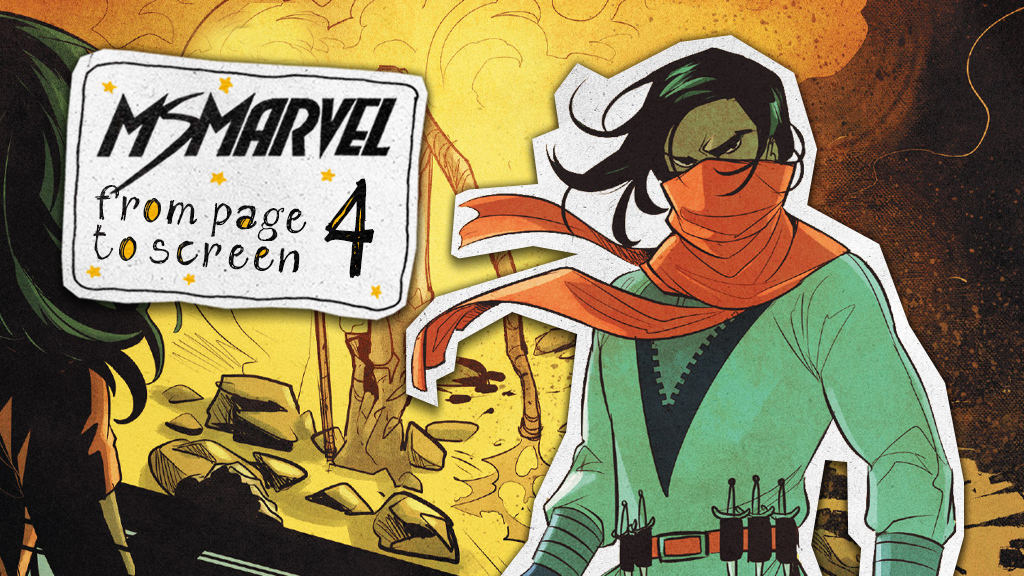
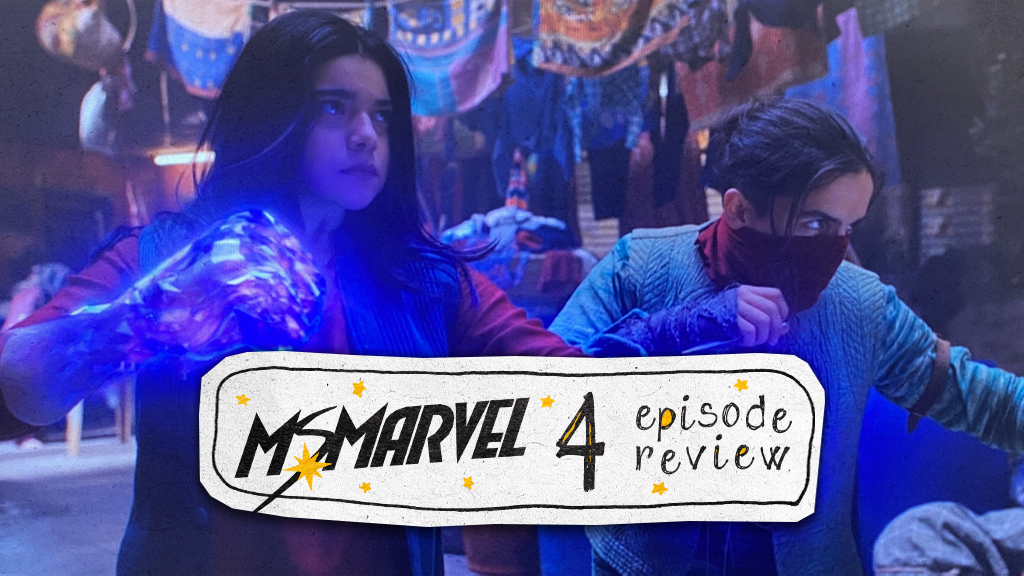
In the show, Kamala meets the Red Dagger while in Karachi. When she is investigating the train station looking for answers about the train in her vision, she is attacked by the Red Dagger. He then reveals that he knew she was Djinn because he could sense the Noor energy she was using. When he found out she was related to Aisha, he took her to the base of the Red Daggers where she met fellow Red Dagger Waleed. He explained to her that Clandestines come from another dimension that exists all around ours, but with a veil of energy that separates the two.
Marvel Studios’ Ms. Marvel Episode 4
Marvel Studios’ Ms. Marvel Episode 4
Red Dagger and Kamala bond in civilian mode as he introduces her to his friends at a bonfire. Ultimately, by the end of Episode 4, the Clandestines had tracked down Kamala and attacked the group, seemingly killing Waleed before Kamala is transported to what appears to be a 1947 Karachi train station.
What They Kept From the Comics
Ms. Marvel #12 (2016)
Ms. Marvel #12 (2016)
Ms. Marvel #12 (2016)
In Ms. Marvel, Kamala also meets Red Dagger while visiting Karachi. She does not know his true identity for quite some time, but his name is Kareem and he is a family friend. He acts as a vigilante in Karachi similar to how Ms. Marvel patrols Jersey City.
His look and skillset are incredibly comic accurate, and his role in Kamala’s life may track that seen in the comics. The two were introduced in both iterations when Kamala visited Karachi in an attempt to figure out who she was. In the comics, Kareem gave her a new and optimistic perspective on her role as a superhero in Jersey City. Here, he may ultimately be a significant spark in Kamala fully embracing her hero identity.
Ms. Marvel #23 (2017)
Kareem is also a romantic interest for Kamala in the comics, and subtle hints of that can be picked up in Episode 4. Kareem is an instrumental figure in advancing Kamala and Bruno’s romantic storyline—Kareem ends up living in Jersey City for some time, creating a love triangle—which is certainly a dynamic Ms. Marvel seems like it could lean into.
Ms. Marvel #23 (2017)
Ms. Marvel #29 (2018)
Ms. Marvel #29 (2018)
What They Changed
The most obvious difference between the live-action and the comics is that Ms. Marvel introduced the Red Daggers as a society with advanced technology working to protect people from things that cannot be seen. In Ms. Marvel comics, Red Dagger is simply Kareem, who is a solo vigilante-type hero. The dramatic expansion of Red Dagger in the live-action likely speaks to the need to aid and support Kamala’s mysterious and complex background/origin mystery. Introducing the Red Daggers certainly seems to have added to and advanced that aspect of the story, while still paying homage to the source material.
Marvel Studios’ Ms. Marvel Episode 4
Marvel Studios’ Ms. Marvel Episode 4
As to other differences, in Ms. Marvel, Kamala meets Kareem/Red Dagger extremely early on in her hero journey. She does not even have the Ms. Marvel mantle yet or donned a full costume. In the comics, she meets him as a well-established hero and Avenger struggling to come to terms with her self-identity and confidence as a hero.
In her meetings with Red Dagger, she learns humility when she botches a hero job in Karachi because she did not understand the workings of the area. In Jersey City, she struggled with feeling replaceable as Red Dagger immediately got the media’s attention after they stopped a runaway train.
Ms. Marvel #12 (2016)
Ms. Marvel #24 (2017)
The character’s story will continue throughout the rest of Ms. Marvel at least, but there is every reason to believe Red Dagger can serve as a sort of reflection point for Kamala like he does in the comics, but with more emphasis on her beginnings and growth into a superhero in the first place.
Marvel Studios’ Ms. Marvel Episode 4
The first four episodes of Ms. Marvel are now streaming on Disney+.
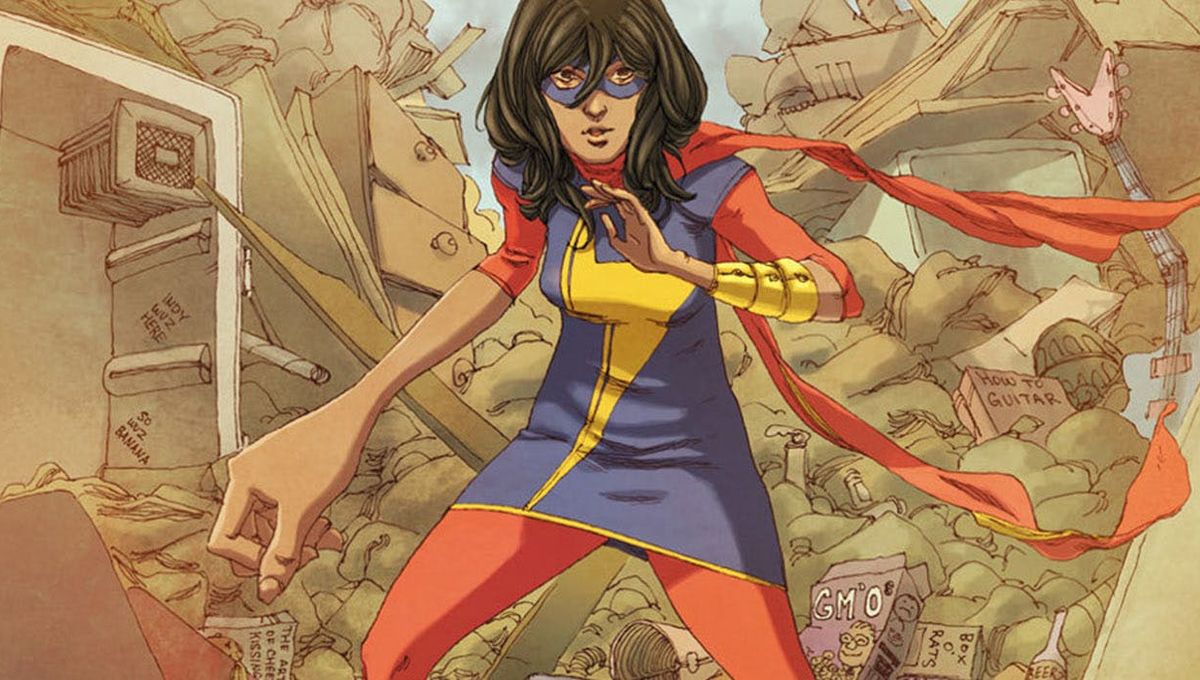
One of the most controversial decisions that was made by the creative team behind the Disney+ series Ms. Marvel was the decision to alter Kamala Khan’s power set. In the Marvel comics, Kamala had her latent Inhuman abilities activated after a Terrigen Bomb was dropped on Jersey City. Kamala developed polymorphic powers, allowing her to grow her limbs in any shape or size.
Considering the Inhumans do not exist in the 616-Marvel Cinematic Universe at the moment, the show decided to change the origins of Kamala’s powers to match up with Carol Danvers. That mystery is still being unraveled with two episodes left, but a cosmic connection to Captain Marvel is being established in Ms. Marvel.
The MCU Kamala still displays polymorphic powers, but she draws energy from the Noor Dimension and is able to create purple constructs that resemble crystals. While the decision was hotly debated when it was first announced, it seems to be paying off with fans and critics. But Kamala Khan co-creator Sana Amanat doesn’t think that the success of the show on Disney+ should lead to a change to the character in the comics. When asked about the idea in an interview with EW, Amanat had a strong response.
I hope not! I hope they stick to what they got. I think inherently, there’s a lot of similarities as it is just in terms of the ancestry in the comics. She comes from an alien, you know what I mean?
Sana Amanat
While more often than not the comics aren’t too heavily influenced by the event of the MCU, that hasn’t always been the case, with the Guardians of the Galaxy being one noteworthy (and sad) example. It’s good to see someone like Amanat, who has been in both worlds, be able to understand the balance-and the differences-between the two.
Kingsman: The Secret Service and Rocketman‘s Taron Egerton has actively talked about his hope of joining the Marvel Cinematic Universe one day. Amid fans casting him as the MCU’s new Wolverine, Egerton expressed excitement in taking up the reigns from Hugh Jackman. Luckily, The New York Times had the chance to sit down with the actor during his press tour for the Apple TV+ series Black Bird, where he revealed that he has indeed met with Marvel Studio executives, including Kevin Feige himself. Egerton also explicitly mentions Jackman, adding to the rumors that the talks might’ve been for the role of Wolverine.
I don’t think it would be wrong to say that. I’d be excited but I’d be apprehensive as well, because Hugh is so associated with the role that I’d wonder if it’d be very difficult for someone else to do it. But hopefully if it does come around, they’ll give me a shot.”
Egerton has been a popular pick to take on the role of Wolverine, but it’s not 100% confirmed if these talks were for the role, or a different character in the MCU. However, with a film career as eclectic as his, Egerton has proven that he has the range to succeed Jackman as Wolverine. Not to mention that Egerton stands at a not-all-that-tall 5 feet 9 inches; a perfectly acceptable height for an actor playing Wolverine. Here’s hoping the conversations between Egerton and Marvel Studios come to fruition sooner rather than later.
Part of what has made Ms. Marvel so enjoyable over the past four weeks is the genuine mystery that weaves throughout each episode and keeps viewers on their toes. It all stems from the fact that Kamala Khan does not appear to bring her Inhuman ties to the live-action Marvel Cinematic Universe. So, the source of her powers has left both casual viewers and comic book experts scratching their heads as to where the series is taking the beloved character. Even by the end of Episode 4, fans still aren’t entirely clear as to what’s happening. But we first looked at Kamala’s potential connection to the Quantum Realm and time travel after the series premiere, and more evidence of this theory just keeps rolling in.
Numerous aspects of Ms. Marvel could lean in this direction. A major theory suggests that the bangle that activated her powers is, in fact, a quantum band, which derives its powers from the Quantum Realm. There were hints of time travel via Kamala’s visions, and it could be important to remember that her comic powers operated based on constant time-traveling on a molecular level.
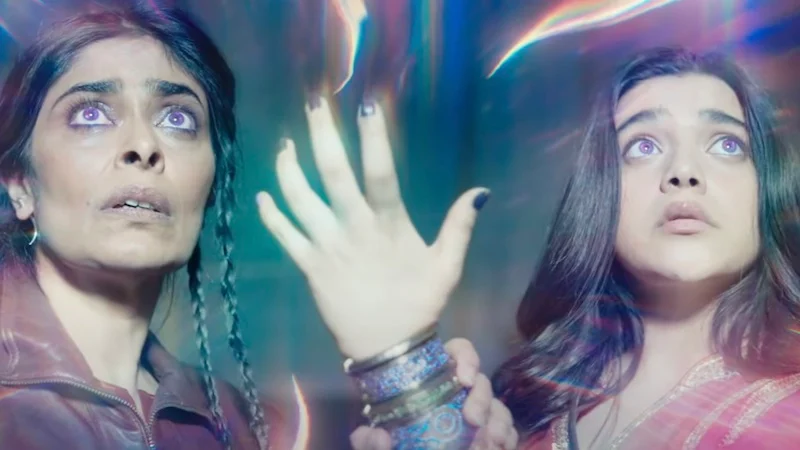
What we now know about Kamala’s origins and family history in Ms. Marvel is that her great-grandmother, Aisha, was a “Clandestine” or “Djinn.” While the “Djinn” designation turned out to be more of a red herring based on what we learned in Episode 4, we also know that the Clandestines come from the Noor Dimension, which is separated from the main reality by a veil of energy. Najma and her gang want Kamala to break through that veil, but it has been made clear that if she were to do so, the Noor Dimension would overtake and destroy Kamala’s reality.
We do not know much about the Noor Dimension other than that supernatural beings, identified in the past as “Djinn”, came from it and that Clandestines and the Red Daggers can sense the Noor energy that Kamala draws from the other dimension. In the MCU, we know about a few realms. Asgard is a great example, and it is even referenced in Episode 4 to help explain the Noor Dimension. Another “realm” we have heard of is the Quantum Realm, which is certainly creeping in as a major player in the future of the MCU.
As we know from Avengers: Endgame, the Quantum Realm, and quantum energy were the backbones of time travel. What Episode 4 possibly re-emphasizes is Kamala’s connection to time travel. By the end of Episode 4, Kamala seems very much in the 1940s in India after her bangle was attacked and went haywire. While it is not entirely clear yet whether she is actually, physically present there, the ending shots of the episode certainly made it easy to make that conclusion. Obviously, Episode 5 will keep her in that space for the purpose of explaining and resolving Aisha’s mysterious storyline, which is profoundly connected to the exact period Kamala is now in.
Still worth noting, Ms. Marvel has had quite the number of Ant-Man references. Obviously, Scott Lang and Hank Pym are the characters most associated with the Quantum Realm, and we next expect to see Ant-Man in Ant-Man and the Wasp: Quantumania. “Quantumania” alone should set the expectations for how important the Quantum Realm will be, but that film will also star the time-travelling villain Kang the Conquerer. Following Loki, the Kang Easter egg in Moon Knight, and Phase 4’s focus on the multiverse, Kang is very much set up to potentially be the next MCU saga’s Big Bad.
Overall, there’s enough evidence to form the theory that Kamala is utilizing some of the same general concepts that we have already been introduced to in the MCU. If the Noor Dimension is actually the Quantum Realm, that major piece of the universe would be served by being better developed in Ms. Marvel. It also could make Kamala’s story more interesting than if the Noor Dimension was a completely original concept that gets limited to her origin story and not much else. Obviously, there is more nuance to why Kamala or Aisha can utilize the bangle while others, like the Clandestines, cannot. We will likely learn virtually all of this information in the next episode, as all MCU DIsney+ series love spending the majority of their penultimate episodes resolving every mystery or question, and ultimately setting the hero up for the final battle fully embracing their identity.
The first four episodes of Ms. Marvel are now streaming on Disney+.
The fourth episode of Ms. Marvel just dropped and brought with it quite a lot of Kamala’s heritage and family history; not to mention some quality action sequences and Marvel Cinematic Universe world-building. But apart from the gradual exploration of what the series has dubbed the Noor Dimension, Ms. Marvel also debuted a connection to a future MCU project. In fact, it looks like a potentially major element of She-Hulk: Attorney At Law has had the foundation laid for it.
While the Department of Damage Control’s presence has faded since the first two Ms. Marvel episodes, their role in the story has carried on in a more subtle way. At the end of Episode 3, the DODC took the Clandestines into custody after the wedding fight. In Episode 4, we see the follow-up to that, as the Clandestine escape being brought into the DODC Supermax Prison. While we do not see any main area of the prison, we do see a shot of the outside of it. As it turns out, the DODC Supermax was the prison complex seen in the She-Hulk trailer.
By showing up in multiple projects, the Supermax has essentially been established as being a significant element in the MCU. While we got a taste of the Raft in Captain America: Civil War, that high-security prison has not been used since. The fact that the Supermax is run by the DODC is important for a few reasons. First, it means that, unlike the Raft, there is nothing secretive about it—it appears to be on land and is extremely visible and accessible.
Second, it means that the DODC is likely here to stay as an ongoing source of law enforcement and a thorn in the sides of superpowered people. This confirms the message in the second episode of Ms. Marvel that Damage Control is on a mission to target and incarcerate enhanced people. To what extent is unclear—surely some supers are allowed to operate, but we may find out more in She-Hulk.
Jennifer Walters, aka She-Hulk, is an attorney who specializes in superhuman law. We know from the She-Hulk trailer that she will deal with people like Emil Blonsky, otherwise known as Abomination. While we do not know for sure where Blonksy is being held, the DODC Supermax is now the top candidate. Practicing superhuman law requires either representing or suing superhumans. A great place to find clients or targets, then, would be a building where a bunch of superhumans is being held prisoner for alleged crimes.
So what do we know about the DODC Supermax Prison so far? Not a lot, aside from the fact that it is operated by the DODC. We can assume some relatively high-profile people, like Abomination, are there. If it is a sort of catch-all prison like it seems to be, a wide variety of supervillains should pass through. Despite being a Supermax prison, it clearly has terrible security. The Clandestine essentially walked out of that place. Plus, it is almost a given that prison breaks will pop up at least every now and again.
The first four episodes of Ms. Marvel are now streaming on Disney+.
While Ms. Marvel still has to stick the landing in its final two episodes—something that Marvel Cinematic Universe shows tend to struggle with—its Episode 4 was yet another triumph for Kamala Khan’s series. In fact, it manages to follow the MCU series template for four episodes, but yet surpasses all expectations set by previous Disney+ installments. Ultimately, the conclusion, so far, on Ms. Marvel is that from inception to execution it is the highest quality MCU series to date. And it is not particularly close.
While the mystery of Kamala’s origin continues in Episode 4, it is still developing in more interesting ways in each episode. Quickly, we learn that there is much more depth and nuance to the “Djinn” classification we were introduced to in the previous episode, and we get a hint that the Noor connection may have stronger connections to the more traditional super-aspects of the MCU. What that connection actually is remains the driving energy of the series, and Ms. Marvel expertly stretches the reveal out much like Kamala can stretch out her own hard light energy.
But one of the most delightfully perplexing aspects of Ms. Marvel is uncovering why exactly this is so well played out. While many substantive aspects of Ms. Marvel are certainly unique from other MCU entries, the actual structure of the series is not. For example, virtually every MCU series has a major cliff-hanging plot twist-type ending to its fourth episode. In WandavIsion’s Episode 4, Wanda’s sentience in the Hex is formally revealed. In Loki, the titular character wakes up to different variants of himself at the end of time. In Moon Knight, Marc Spector is killed and is awakened in what appears to be a mental asylum. Here, in Ms. Marvel, Kamala seems to have been somewhat transported to the past, as she finds herself engulfed in the scene of the last train to Karachi the night her great-grandmother Aisha disappeared.
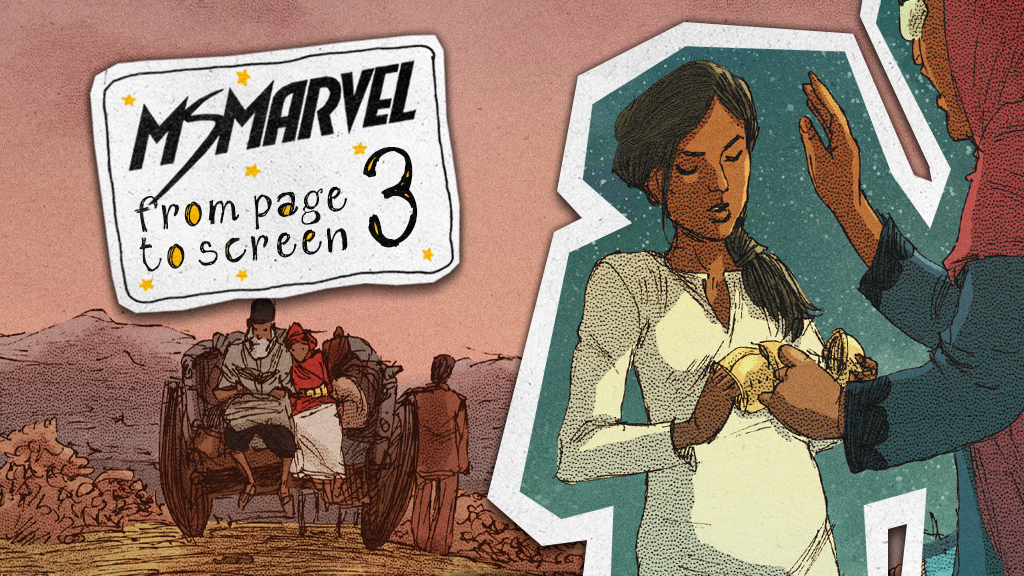
So while this sort of ending was not a true surprise—and the structure of the penultimate episode can likely similarly be guessed to an extent—Ms. Marvel executes it on an absurdly impressive level. The final shots are breathtaking and rely mostly on a realistic reimagining of the past rather than supernatural, magical, or fantastical elements. While the knowledge of Partition and Kamala’s family history has been known to this extent since the second episode, Episode 4 fully opened the door for what Kamala’s very human origin means to the character, and frankly, the world at large. Even Kamala is completely at a loss for words at the tragedy, suffering, and pain she sees around her.
Much of the beauty of the series’ focus on Kamala’s mysterious origin is the fact that, as emphasized and written in stone in this episode, Kamala’s origin is as much intertwined with traditional reality as it is with whatever inter-dimensional tie-in is. All superheroes carry the weight and strengths of their non-super past, but Ms. Marvel is unique in truly expressing that Kamala’s foundation is in her family and its history. The bangle is certainly the most important force in her superpowers, but it is every bit as important to Kamala’s character as is her relationship with her mother, her mother’s relationship with her mother, and whatever happened to Aisha during Partition.
In the midst of the incredibly rich storyline, even the action sequences of Episode 4 stand out. In particular, the extended chase scene could without a doubt be plopped into a feature film as is and no one would question it. While often in MCU series, even Ms. Marvel, action is rushed and sparing, this scene proved that that is a choice and not a necessity for these shows.
So, to go back to the earlier question of whyMs. Marvel seems to be ahead of the curve, there are numerous unique things that the show brings to the table. But it would not be fair to say that the series radically upended the Disney+ MCU model. Not everyone will personally prefer the series over all others, and no one has to. But at the end of the day, in all truthfulness, Ms. Marvel has been written and executed with such quality that it truly stands out. On no level is that an attack on other MCU shows, either—Ms. Marvelis simply that good.
The beginning of Episode 3, titled “Destined”, brought forth a lot of information supposedly explaining much of Kamala’s origin and background. Najma, Kamran’s mother and the woman Kamala had visions of, tells Kamala that she and Kamala’s great-grandmother Aishia were not human. Specifically, Najma claims that she and some others she appears to live with are actually Djinn, who were exiled from their home Noor dimension. She states that they are called many names, including Clandestines.
The explanation of who Djinn are that we get in Episode 3 of Ms. Marvel is pretty sparing. Kamala’s dad reads Bruno’s research, which says that Djinn are mythological beings of pre-Islamic folklore, sometimes referred to as genies. We also know from references throughout the series that Djinn seem to be viewed as demons to the superstitious, including Kamala.
Marvel Studios’ Ms. Marvel Episode 3
Marvel Studios’ Ms. Marvel Episode 3
There are still a lot of questions about the group, but they appear to be a patchwork group of loosely-related Djinn who live together. It is unclear if anyone is closely related other than Kamran and his mother, but there is a clear theme of family and belonging within the Clandestines which Najma uses to manipulate Kamala.
ClanDestine in the Comics
ClanDestine #1 (2008)
The Clandestines of Ms. Marvel are clearly influenced by the ClanDestine comics, although ClanDestine seems to provide minimal inspiration rather than being directly adapted into live-action. In the comics, ClanDestine is a large, kind of odd family comprised of the progeny of Adam Destine and a being named Elayath. All of their children inherited superhuman abilities of some kind. Adam himself is immortal and many of the children are decades or centuries apart in age.
The family primarily sought to operate in secret rather than identifying themselves as super-powered beings or superheroes, though certain members try to follow this path. ClanDestine stories in the comics are driven by family conflict, such as when Adam killed his son Victor because he believed he had become evil.
ClanDestine #5 (1994)
ClanDestine #5 (1994)
ClanDestine #5 (1994)
The clear connection that the makers of Ms. Marvel made to ClanDestine is that the matriarch, Elayath, is a Djinn. Adam freed her from a wizard that had trapped her in a jewel around 1200 A.D. In return, she granted him his immortality and invulnerability.
Why Would Ms. Marvel Adapt ClanDestine?
ClanDestine #12 (1995)
The comics’ ClanDestines and Ms. Marvel’s Clandestines seem extremely different in history, nature, and group members. The connection between the two seems to boil down simply to the name and the Djinn aspect. Even so, how the two groups incorporate Djinn is entirely different, as ClanDestine is a family descended from a single Djinn, whereas the Clandestines in the show appear to all be a type of being, known as Djinn, from another dimension.
Why would Marvel make this connection between an extremely obscure group from the comics and a very different group in live-action? It all likely comes down to the series attempting to give Kamala’s background and origin the same type of explanation as her Inhuman heritage in the comics. Everything in the series suggests that Marvel Studios wants to mimic Kamala’s comic story without invoking Inhumans. So, in Ms. Marvel, the Clandestines are a family-like group of super-powered, or at least mystical, beings that Kamala is related to in some way, similar to her relationship to Inhumans in the comics.
Ms. Marvel #7 (2014)
That connection is relatively obvious, but the series clearly wanted that familial theme to be tied to Kamala’s religious and cultural heritage. This leads, of course, to using beings of pre-Islamic folklore, Djinn, as an option to explain why Kamala is more than human. There is very little comic basis for this, but ClanDestine happens to already contain those essential elements of Kamala’s story in Ms. Marvel.
Marvel Studios’ Ms. Marvel Episode 3
To be fair, Najma’s explanation of the Clandestines should be taken with a grain of salt given the fact that she is a clear villain and there is not much evidence yet to back up her claims. Still, Ms. Marvel certainly made a bold creative choice in adapting ClanDestine from the comics to build Kamala’s Khan’s story.
The first three episodes of Ms. Marvel are now streaming on Disney+.
Moon Knight, despite the character’s relatively low-profile presence in the comics, is now firmly entrenched in the Marvel Cinematic Universe following the successful run of the series on Disney+ from March to May. The show was filled with firsts for Marvel Studios, including a deep look into dissociative identity disorder (DID) with Oscar Isaac’s characters Steven Grant, Marc Spector, and Jake Lockley.
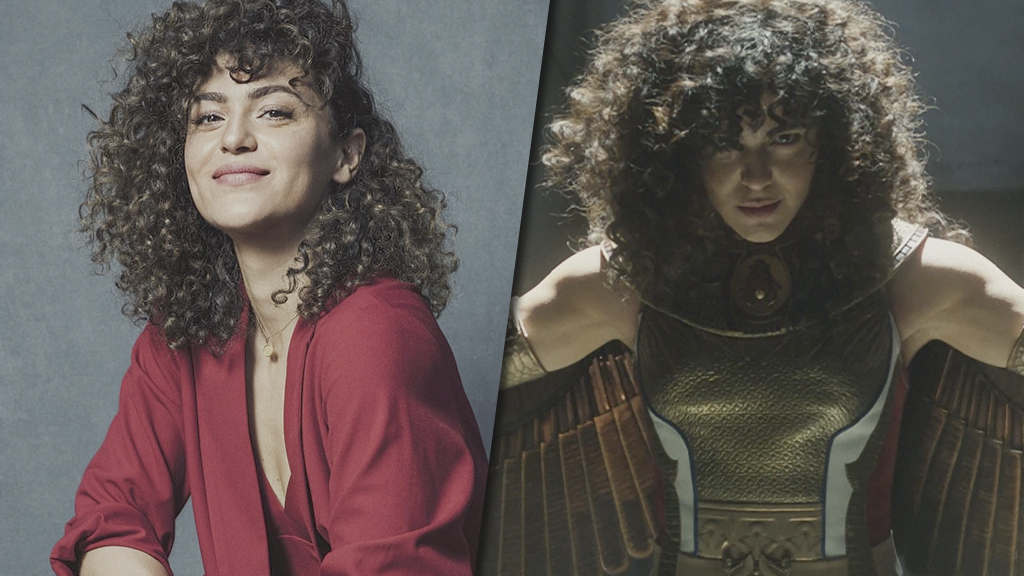
Most importantly, Moon Knight introduced audiences to the first Egyptian hero — May Calamawy as the Scarlet Scarab. Calamawy co-starred alongside Isaac as Layla El-Faouly, the estranged wife of Marc Spector. Instead of being just a love interest for the main character, Moon Knight empowered El-Faouly to be independent and powerful on her own as her story in the Disney+ showcased.
In a recent interview with Yasmine Kandil from Discussing Film, Calamawy was asked if she like feels like there has been a recent shift in MENA representation both in front and behind the camera. Here’s what she had to say:
I really do. I experienced it on Moon Knight and I’m lucky to experience it also on Ramy, there are Arabs on that show which is a testament to Ramy [Youssef], he’s very selective with who he brings on board. With Moon Knight, it’s a testament to Kevin Feige and that whole team for creating that space. We are in a time where I think we’ve realized that the only way to get closer to how a region really feels is to have people most intimately bring it there, and usually that will be either people who’ve lived there or understand it at a very deep level.
May Calamawy
She goes on to also compare how creating these spaces for all is important and how opening beyond Western beauty standards also further anchors the importance of modern representation.
I know so many women who are from the Middle East, one of my best friends is from Pakistan, we’re all actors working on our craft and I really want there to be a space for us all. I never want someone to question if they are pretty enough because I went through thinking I wasn’t pretty enough to be in a Western production and it’s an embarrassing thought to have, but I’m not going to say it wasn’t there. Often Western beauty standards don’t include how everyone around the world looks and representation is going to help us to feel that freedom and I think that’s happening more and more.
May Calawamy
Calamawy also discussed her decision to keep her curls for the show, which is something she said she struggled with growing up:
One thing that’s been amazing to see is that so many women have posted that they are wearing their hair curly, or that they’re throwing out their hair irons and that’s what makes me happy because I had to go through my own journey of accepting my curls and feeling beautiful. There was a time when I left them curly and I can’t say I felt beautiful, looking back it pains me. I went through that and thank god I feel good in my curls now, but I wish everyone grew up that way. If that’s something Layla can bring to others, then I’m so happy.
May Calamawy
She highlighted that she brought in a hairpiece that mimicked her hair during production. It mostly served as a way to keep continuity.
They brought in a hairpiece that mimicked my hair. In the beginning, they even suggested we straighten it and I did that too much growing up. I didn’t want to go back to that, so I was really adamant about them getting a hairpiece for continuity’s sake because curls, they will do what they want. Marvel really delivered because I loved it and they could just put it on and my hair was ready. It really helped me step into Layla and it was bigger than my own hair which was really fun.
May Calamawy
As for the future of the Scarlet Scarab in the MCU, no project has been officially announced involving the character. While there have been rumors of a Moon Knight Season 2, nothing has been revealed. But with the cliffhanger ending to the first season, it would not be a surprise to see these characters on-screen again in the future.
We use cookies to improve your experience on our site. By using our site, you consent to cookies.
This website uses cookies
Websites store cookies to enhance functionality and personalise your experience. You can manage your preferences, but blocking some cookies may impact site performance and services.
Essential cookies enable basic functions and are necessary for the proper function of the website.
Name
Description
Duration
Cookie Preferences
This cookie is used to store the user's cookie consent preferences.
30 days
These cookies are needed for adding comments on this website.
Name
Description
Duration
comment_author_email
Used to track the user across multiple sessions.
Session
comment_author_url
Used to track the user across multiple sessions.
Session
comment_author
Used to track the user across multiple sessions.
Session
Statistics cookies collect information anonymously. This information helps us understand how visitors use our website.
Google Analytics is a powerful tool that tracks and analyzes website traffic for informed marketing decisions.
Contains information related to marketing campaigns of the user. These are shared with Google AdWords / Google Ads when the Google Ads and Google Analytics accounts are linked together.
90 days
__utma
ID used to identify users and sessions
2 years after last activity
__utmt
Used to monitor number of Google Analytics server requests
10 minutes
__utmb
Used to distinguish new sessions and visits. This cookie is set when the GA.js javascript library is loaded and there is no existing __utmb cookie. The cookie is updated every time data is sent to the Google Analytics server.
30 minutes after last activity
__utmc
Used only with old Urchin versions of Google Analytics and not with GA.js. Was used to distinguish between new sessions and visits at the end of a session.
End of session (browser)
__utmz
Contains information about the traffic source or campaign that directed user to the website. The cookie is set when the GA.js javascript is loaded and updated when data is sent to the Google Anaytics server
6 months after last activity
__utmv
Contains custom information set by the web developer via the _setCustomVar method in Google Analytics. This cookie is updated every time new data is sent to the Google Analytics server.
2 years after last activity
__utmx
Used to determine whether a user is included in an A / B or Multivariate test.
18 months
_ga
ID used to identify users
2 years
_gali
Used by Google Analytics to determine which links on a page are being clicked
30 seconds
_ga_
ID used to identify users
2 years
_gid
ID used to identify users for 24 hours after last activity
24 hours
_gat
Used to monitor number of Google Analytics server requests when using Google Tag Manager
1 minute
Marketing cookies are used to follow visitors to websites. The intention is to show ads that are relevant and engaging to the individual user.
Pinterest Tag is a web analytics service that tracks and reports website traffic.