Tag: MCU

  • REVIEW: ‘Ms. Marvel’ Episode 2

    REVIEW: ‘Ms. Marvel’ Episode 2

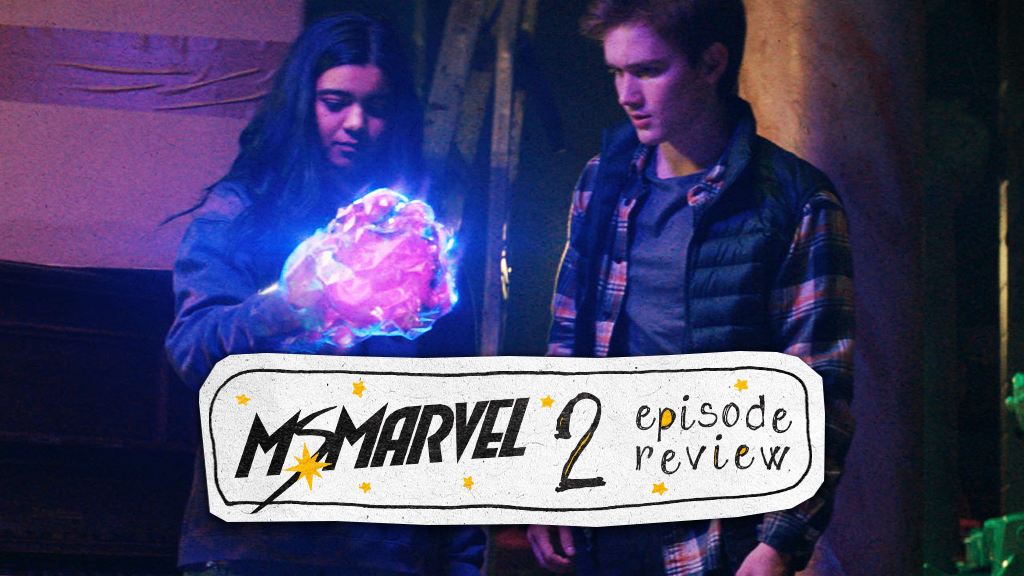
    After the triumphant first episode of Ms. Marvel, the series is back for its second installment. It brings most of the same shine and quirkiness, but it competes with a deeper, darker narrative as well as classic Marvel Cinematic Universe storytelling. It is still a bit too soon to figure out what exactly Ms. Marvel’s ultimate tone will be, but Episode 2 proves it has the potential to be just about anything. A coming-of-age comedy, a superhero origin story, or an emotional mystery—all of those elements can be easily teased out of this episode.

    While the series’ premiere felt emphatically unique, the second episode’s venture into more rigorous superhero territory fairly brings up concerns as to whether Ms. Marvel might eventually suffer from being “too MCU.” After all, Kamala Khan is directly connected to other heroes in the universe, and there is no denying that she will make her way into a variety of future projects. Episode 2 undoubtedly took on more conventional superhero or superpower-type tropes, though no one would expect the series not to feel like part of the universe. Still, the personality of Episode 1 felt slightly diluted in this episode, which may be something to keep an eye on as the series continues.

    The second episode aptly showcases a couple of dualities. The layers to Kamala’s story not only reflect the nuance of her character but also the complexity of the story being told. It is easy to pick out the fact that she now has two identities—“Night Light” and Kamala—but it goes further.

    On one hand, Kamala is a regular teenager with concerns such as crushes and parties. In regard to that part of Kamala, Episode 2 featured lighter subplots and more trivial (but genuine concerns). On the other hand, she is gradually getting engulfed in a clearly darker narrative surrounding her newfound powers and her family history. There is almost an awkward tension between the two levels of Ms. Marvel, though given the awkwardness of teenage years perhaps that is the point.

    While Kamala’s superhero tale unfolds, it is looking like the future Ms. Marvel will be facing two major adversaries as well. Obviously, the Department of Damage Control has made a strong racist and xenophobic entrance as a comic book DIY United States Homeland Security. Her escape from them and their drones at the end of Episode 2 cements their role as ongoing foes, but signs are pointing elsewhere for the true threat of Ms. Marvel. With nothing but some visions and an ominous final scene, Kamran’s mother is already radiating big bad energy. Kamran himself is a villain in the comics, so there is little reason to think that Kamala has not encountered her match for the series in him and his family. Given the strong familial themes of both the live-action series and Ms. Marvel comics, there is a good chance Kamala might see these new faces as trustworthy before the truth comes crashing down.

    The second episode of Ms. Marvel proves that the series did not peak in its first episode. While concessions may be made to support the ever-present greater MCU (both in front of and behind the camera), Kamala still outshines most freshman heroes across the board. Not only that, but the series is doing something that virtually no comic book adaptations can actually do: make it all a mystery. Because Kamala’s powers and origins have seemingly been overhauled from the comics, casual and hardcore fans alike have no idea what to expect with the revelation of her backstory. To keep all audiences on the edges of their seats in the MCU is not an easy feat, and it might be another reason Ms. Marvel ends up as one of the most successful Marvel Studios projects. 

    The first two episodes of Ms. Marvel are now streaming on Disney+. 
  • ‘Ms. Marvel’ Episode 2 May Have Introduced an Obscure Super Group as Kamala’s Foe

    ‘Ms. Marvel’ Episode 2 May Have Introduced an Obscure Super Group as Kamala’s Foe

    The mystery of Kamala Khan’s powers and her family’s past was in the spotlight in Ms. Marvel Episode 2. So far, the series has done a great job at keeping this aspect of Kamala’s story in suspense, and the most recent episode certainly ended in a cliffhanger that will surely take the series in a new direction. But while the show itself has not made much overly obvious to fans, we might have an idea as to where it is headed. The tail end of Episode 2 might have given us our first glimmer at one of Kamala’s main adversaries, and it is a group you may have never heard of. 

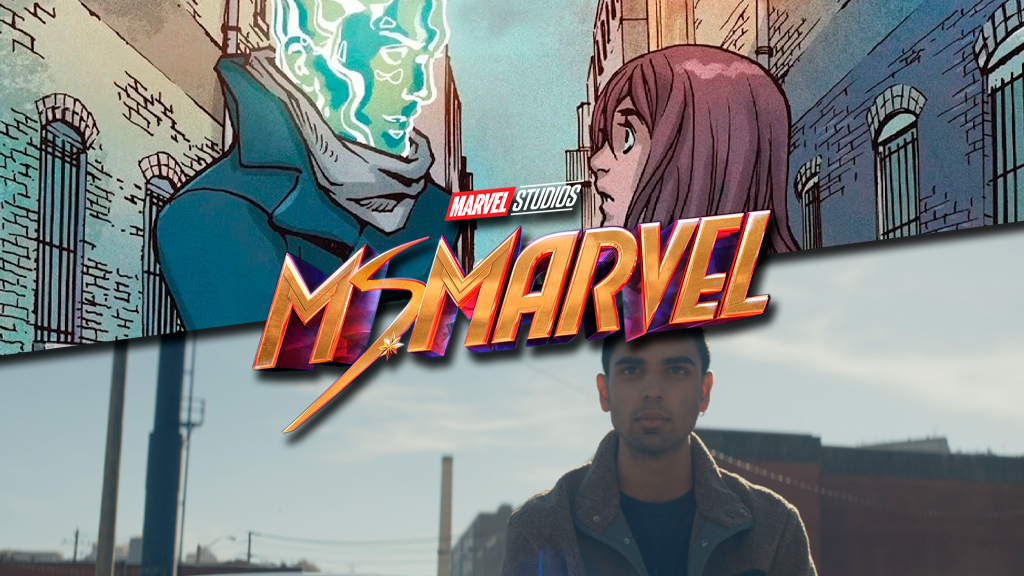
    Throughout Episode 2, Kamala finds herself with a hardcore crush on the new senior, Kamran. The two have a lot in common and he seems to show a lot of interest in Kamala in return. At the end of the episode, however, it becomes clear that he is more than a new kid in school. He helps Kamala escape the Department of Damage Control, making it clear he knew she was the super-powered person who dresses like Captain Marvel. Even more, he introduces Kamala to his mother who just so happens to be the lady Kamala kept seeing in her visions when her bangle would act out. 

    In the comics, Kamran was an Inhuman who gained Kamala’s trust in order to recruit her to a faction of Inhumans that, because of a superiority complex, was trying, essentially, to destroy Earth’s non-Inhuman population. But considering Inhumans are not likely at play in Ms. Marvel, Kamran may be a member of a different kind of superhuman group. The fact that his mother is already involved speaks to how genes and lineages are still important to the character and to his connection to Kamala. 

    Once it became known that Kamala’s powers and origin were being changed for Ms. Marvel, rumors circulated that Kamala, her powers, or something major in the series were related to Djinn. Djinn, or Jinn, are spirits in Islamic mythology and theology. Anglicized as “genies”, these spirits are recognized in Marvel comics as an ancient race with powerful magical abilities. Ms. Marvel has off-handedly mentioned Djinn or “evil Djinn” multiple times so far. Going back to the importance of family, heritage, and genes in Kamala’s origins, Marvel has a super-powered family that descends from a powerful Djinn, and that may be what Kamran is a member of.

    The comic book super-family Clan Destine is a family of super-powered individuals that spans centuries given the immortality of the patriarch, Adam Destine, which came from the magic of the mother of all the children, the Djinn Elalyth. Clan Destine is not particularly well-known, and the group is neither a superhero nor supervillain one, but instead, certain members have taken on their own roles. But considering the super family is not popular and a bit odd, why would Ms. Marvel feature them as an adversary?

    Technically, we do not know that Kamran and his mom are villains, but considering Kamran’s comics history and the general tone at the end of Episode 2, it is probably a safe bet that they will ultimately not be on Kamala’s side. Kamran’s mother looked to be from a very different time period when she would appear in Kamala’s visions, so it looks likely that she may be the immortal leader like Adam Destine is in the comics. But using Clan Destine as a template or inspiration would allow Kamala’s story to still take the Inhuman-like structure but without Inhumans. 

    Whether or not Kamala would be related to the Clan Destine-type family in Ms. Marvel is an interesting question. On one hand, it makes a lot of sense considering the Djinn connection could explain her powers and fill in the gaps in her mysterious family history. Kamran’s role as a distant relative would also be preserved from the comics, and his motivation in recruiting her to supposedly advocate for the larger family could similarly make its way into the live-action series. 

    Whether Kamran and his mother are part of “Clan Destine” or a family group that resembles it is yet to be seen. But it would be an interesting way for the Marvel Cinematic Universe to keep Kamala’s traditional origin story relatively intact while avoiding the concept of Inhuman if they choose to go that route.

    The first two episodes of Ms. Marvel are now streaming on Disney+. 
  • ‘Ms. Marvel’ Episode 2 Dropped the MCU’s First ‘Eternals’ Reference

    ‘Ms. Marvel’ Episode 2 Dropped the MCU’s First ‘Eternals’ Reference

    It is no secret that the Marvel Cinematic Universe’s latest series, Ms. Marvel, is a haven for Easter eggs and references to the rest of the franchise. Teenage soon-to-be superhero Kamala Khan is a fangirl of the Avengers herself, so between her conversations and AvengerCon, the new series almost certainly already holds the record for most MCU easter eggs in a project. Among all of it, though, the second episode of Ms. Marvel dropped a particularly interesting MCU reference.

    While Kamala and Kamran are at the restaurant, they bond over things they have in common. One of those things is a love for Bollywood movies. When mentioning which celebrities they like, Kamala mentions that her mom, embarrassingly, still has a crush on Kingo, Sr. It is a quick name drop that is easy to miss, especially for viewers not as familiar with Bollywood stars. But the mention is a reference to Kumail Nanjiani’s Kingo from Eternals. As we learned in that movie, Kingo has posed as a long line of Bollywood stars, embodying a new generation of “Kingo” as he ages in order to avoid exposing himself as immortal.

    Interestingly, this reference to Kingo is actually the first Eternals reference in the MCU since the movie was released last November. We did learn that Moon Knight creators at one point wanted Eternals—particularly Kingo—in an Ancient Egypt flashback scene. Alas, it never happened. Because the ending of Eternals left many of the Eternals with a fairly ambiguous fate, little glimmers like this reference in Ms. Marvel are all fans have to go on until they formally return to the screen.

    The easter egg is also interesting because it is practically the only reference that Kamala is unaware of the significance of. She, of course, loves the Avengers and other known superheroes, such as Doctor Strange, but the Kingo nod is a reminder that the regular people of the MCU still have no idea about the existence of the Eternals. It also leaves major questions for Eternals open—for example, how have people reacted to the giant marble Celestial in the ocean or the even larger Celestial that appeared over Earth in the film? Perhaps someday we will find out, but that day is not today.

    The first two episodes of Ms. Marvel are now streaming on Disney+. 
  • ‘Ms. Marvel’ From Page to Screen: Episode 1

    ‘Ms. Marvel’ From Page to Screen: Episode 1

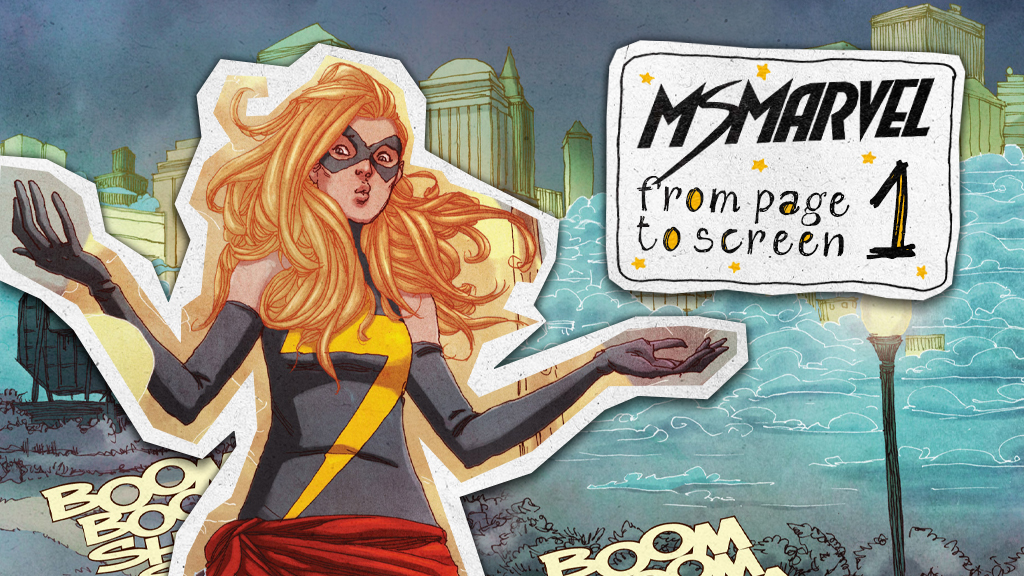
    Ms. Marvel has finally premiered its first episode, which means it is time for another round of our From Page to Screen feature. Previously, we compared the comics to their live-action counterparts for each episode of Hawkeye and Moon Knight. Now, it is Ms. Marvel’s turn. Despite making headlines for significantly changing Kamala’s powers and origins for live-action series, Episode 1 has revealed that the show may be much more comics accurate than some would have guessed. Here, we look at how the first episode adapted the moment Kamala discovered she had powers from the comics.

    The Comics

    Kamala’s power discovery or power activation moment comes across the first two issues of Ms. Marvel (2014). In Ms. Marvel #1, Kamala is exposed to Terrigen mist from the Terrigen Bomb as she is leaving a party that her parents would not have allowed her to be at. After being exposed, she has a vision of some Avengers, including her hero Carol Danvers/Captain Marvel. After breaking out of her cocoon, she discovers she looks like Carol Danvers in her old Ms. Marvel costume.

    Ms. Marvel #1 (2014)
    Ms. Marvel #1 (2014)
    Ms. Marvel #1 (2014)

    Ms. Marvel #2 reveals the rest of the story. While wandering around after being exposed to the mist, Kamala realizes she has the ability to shapeshift and stretch and elongate parts of her body. She witnesses Zoe Zimmer fall into the water and not come back up. She rushes in—as Carol Danvers Ms. Marvel—to save her. She scoops Zoe out of the water with a giant and elongated arm and hand. 

    Ms. Marvel #2 (2014)

    There are people around who take photos and videos of “Ms. Marvel” saving Zoe, which leads people in Jersey City to think that Carol Danvers was around and saving the day in her old costume. Kamala tries to sneak back into her room late, but she is caught by her family. 

    What They Kept

    Ms. Marvel #1 (2014)
    Marvel Studios’ Ms. Marvel Episode 1
    Marvel Studios’ Ms. Marvel Episode 1

    Despite the MCU’s Kamala seemingly having a very different origin in terms of her powers, this “power discovery” moment for the character is, perhaps surprisingly, notably comics accurate. While AvengerCon is certainly no traditional high school party, Kamala’s mom calls it a “party” when she forbids her from going. 

    Ms. Marvel #2 (2014)
    Marvel Studios’ Ms. Marvel Episode 1
    Marvel Studios’ Ms. Marvel Episode 1

    At the “party”, Kamala’s powers get activated, but the differences in that aspect are discussed more below. In any event, she still has what appears to be a vision (or something vision-like) as they are awakened. Even more, she ultimately uses her newfound powers to save Zoe from danger. The moment she breaks Zoe’s fall from the giant replica Mjolnir, her powers create a light construct that looks like a giant extended arm and fist in a clear homage to the comics.

    People at AvengersCon took photos and videos of Kamala saving Zoe which go on to make Kamala go viral. Her identity is not known and all that is known about her is that she was dressed as Captain Marvel, aka Carol Danvers. Afterward, Kamala tries to sneak back home, but her mom catches her.

    Ms. Marvel #2 (2014)
    Marvel Studios’ Ms. Marvel Episode 1
    Marvel Studios’ Ms. Marvel Episode 1

    What They Changed

    The general narrative structure of Kamala’s power discovery moment is the same, but the MCU of course made significant changes. Obviously, the setting of AvengerCon is different, although this is likely to give Kamala a reason for looking like Captain Marvel when she first acts as a hero. Similarly, in Ms. Marvel Kamala is merely dressed like Captain Marvel rather than actually shapeshifting into Carol Danvers as Ms. Marvel. In that way, there is no confusion as to the fact that Kamala is not Carol, but she is still sort of “stuck” with that costume and association after getting attention for saving Zoe. Of course, she does not dress like comics Ms. Marvel because the MCU never had that mantle, though Zoe’s cosplay with that classic costume is another homage to the comics.

    Marvel Studios’ Ms. Marvel Episode 1
    Marvel Studios’ Ms. Marvel Episode 1

    The reason Kamala’s moment comes at a time when she happened to be dressed as Captain Marvel is a product of the changes Marvel Studios made to her powers. In live-action, she is not exposed to Terrigen mist and does not appear to be Inhuman, but instead, the bangle is what appears to awaken her abilities. Her “vision” is not of the Avengers but remains a mystery. Instead of having stretchy, embiggening, or shapeshifting powers, she appears to be able to create energy or light constructs that are crystal-like and breakable. She uses them to save Zoe, although her lack of control of her powers is what caused the danger in the first place. 

    Ms. Marvel #1 (2014)

    We will keep analyzing how the comics-inspired Ms. Marvel as the series continues. The first episode is now streaming on Disney+.

  • Deadpool Should Be the MCU’s LGBTQ+ Icon

    Deadpool Should Be the MCU’s LGBTQ+ Icon

    Pride Month is in full swing, meaning people, organizations, and even companies are celebrating or showing support for LGBTQ+ persons across the globe. Marvel is certainly one of those companies, and the brand is eager to highlight its queer representation in its properties. Previously, we have taken a look back at one of Marvel Comics’ milestones. And while the comics certainly have more history to draw from, the Marvel Cinematic Universe notably lags in LGBTQ+ representation across its franchise.

    The MCU is absolutely gaining momentum here, with recent additions such as Phastos in Eternals and America Chavez in Doctor: Strange in the Multiverse of Madness. The franchise even promises more inclusion in the near future with characters like Valkyrie in Thor: Love and Thunder. As with any underrepresented group, there is always pushback from an unfortunate corner of the supposed fandom when any major (or minor) character is explicitly queer.

    While we can celebrate the progress the MCU has made and is continuing to make, there is room for the Disney-owned company to make a significant and bold statement in support of LGBTQ+ representation on screen. The MCU needs a strong queer icon, and there is no better choice than the Merc with a Mouth himself. Below are four major reasons why Deadpool should be MCU’s LGBTQ+ icon.

    Deadpool Has Long Been Established as LGBTQ+

    Important to any conversation about queer representation is an understanding of the character themselves. In Deadpool’s case, there is no question that Wade Wilson is an out member of the LGBTQ+ community. The comics antihero was first confirmed as pansexual by writer Gerry Duggan, though the terminology to describe Deadpool’s sexuality has fittingly been in flux—the character’s co-creator Fabian Nicieza emphasized this back in 2015.

    Deadpool has become well-known as a pansexual symbol for many, including Fox-universe Deadpool director Tim Miller, who previously expressed his support for showcasing Deadpool’s sexuality in the movie franchise. While the character clearly has a female love interest in the live-action franchise, any viewer simply has to pay attention to Deadpool and Deadpool 2’s dialogue to know that the character’s interests go beyond the opposite sex.

    In any event, the fact that Deadpool is already a well-known queer character in the comics and has the support of many of the films’ creators, including actor Ryan Reynolds (see below), to bring that aspect of the hero into live-action is a perfect starting point for the character to further embrace that when he makes his MCU debut.

    Deadpool Is High-Profile

    When any franchise begins to embrace and increase diversity among its characters, those characters tend to often get assigned more minor roles. It does not take rocket science to understand why, but it is another reason why the MCU should wholeheartedly embrace Deadpool as LGBTQ+. Of course, the more prominent a queer character is, the more backlash they will receive. But frankly, Deadpool is already beloved across wide demographics. While he has not made his MCU debut yet, the character is established in the greater Marvel film universe, so opinions of the super-powered mercenary have already been formed. If Deadpool were to act as one of the leading LGBTQ+ characters of the MCU, it would give the character a huge platform for representation that other characters simply do not have yet.

    Deadpool’s Fan Base Spans a Wide Demographic

    It goes without saying that LGBTQ+ people—and fictional characters by extension—are subject to a wide range of stereotypes and discrimination based solely on their sexual orientation or gender identity. Certain segments of the population, including MCU fans, support queer inclusion less than others. When new LGBTQ+ characters are introduced, it is quite easy for those people to immediately be hostile toward the idea that a single character in a movie may make them uncomfortable. For example, both Phastos and America Chavez were queer characters of color, which led to hatred and accusations of “wokeness” long before their respective films were ever released.

    Make no mistake, all LGBTQ+ characters—including women, trans, and those of color—should be fully supported by the MCU, Disney, and the vast majority of fans who have no issue with characters reflecting the real world. But in an age where the ignorant backlash is so common, Deadpool is a character that, for several reasons, has the advantage to cut through much of that in the MCU. That can be a win for the character, but it should be recognized that it could help pave the way for other queer characters.

    Deadpool is well known for being vulgar and hyperviolent among plenty of other traits. He is loved for his mature themes as well as his basic charisma and humor. The character is a hit across nearly all adult and teen demographics, and that includes demographics that may otherwise not be so supportive of LGBTQ+ representation. If the MCU’s Deadpool 3, for example, made the hero’s sexuality explicit and left no room for audiences to argue whether or not he is queer, Deadpool then becomes a symbol or icon for LGBTQ+ people across the board. In addition, it may force certain groups of people to question their assumptions and biases if one of their favorite characters also happens to not be straight.

    Deadpool’s LGBTQ+ Identity Has Ryan Reynolds’ Support

    There is no dancing around the fact that actor Ryan Reynolds, the epitome of Deadpool, is well-loved and respected in the entertainment community generally as well as for his embodiment of Wade Wilson. Reynolds has several times made it clear that he would love for the Deadpool franchise to explore Deadpool’s pansexuality, and very much wants Marvel to let the character be explicitly queer in the future. Deadpool 3 will actually be Marvel Studios’ first non-Spider-Man co-production, with Reynolds’ Maximum Effort Productions also in the producer’s role. While Reynolds will not have unilateral control over the character’s future, he undoubtedly has a lot. With the support of someone as powerful as the actor/producer/businessman is, though, the amount to which MCU could push the envelope with Deadpool’s LGBTQ+ identity could be significantly increased.

    In conclusion, no one character is the perfect icon for an entire group, including the LGBTQ+ community, nor should they be. Queer MCU fans, and queer people in general, deserve to have major franchises better represent them and better represent reality. If the MCU were to fully embrace Deadpool’s LGBTQ+ identity, whether it is explicitly pansexual or described/defined in some other way, it could be one of the strongest moves Marvel Studios could make in terms of supporting the diversity of their characters and audiences.

    The character is already well-known to be queer; the Deadpool franchise creators, producers, and actors strongly support the move; and the character’s more formal cinematic coming out would have a ripple effect through numerous groups and demographics that would almost certainly strengthen the general MCU fanbase’s support, acceptance, and love for LGBTQ+ characters.

  • ‘Ms. Marvel’: MCU’s Captain Marvel Is a Bad Role Model

    ‘Ms. Marvel’: MCU’s Captain Marvel Is a Bad Role Model

    The Marvel Cinematic Universe just debuted its newest hero in Iman Vellani’s Ms. Marvel. One of the foundational premises of Ms. Marvel is that young Kamala Khan aspires to be like her hero, Captain Marvel. When she learns she has powers, she dons a Captain Marvel-themed costume in her journey to become her own superhero. But in the MCU, Captain Marvel has truly never been much of a hero to Earth, so the connection is not as meaningful. Basically, the MCU’s Captain Marvel is not a great role model.

    In the comics, the notion that Kamala is inspired by Carol Danvers is more poignant for several reasons. On one hand, Danvers had been a prominent superhero on Earth for a long time and the public witnessed her save the day many times. Captain Marvel had been a major member of the Avengers, and so she was easily a household name. Her first moniker was, in fact, “Ms. Marvel,” which is why Kamala adopts the title when she does in Ms. Marvel (2013). But the adoration does not feel as earned in live-action.

    The MCU has not spent as much time with Captain Marvel. She has been established as being incredibly powerful and potentially a major ally to the Avengers. In reality, though, Captain Marvel has—from what we know—never really been a superhero to the people of Earth. Her 2019 solo movie takes place in the 1990s, and it is revealed that after the moment she gained her powers, she was no longer on Earth. She returned to Earth in Captain Marvel by accident, the events of the film were very isolated and secret to the rest of the world, and then she left Earth again afterward. She returned when Thanos snapped and briefly seemed to help the Avengers, including saving Tony Stark’s life. But early on in Avengers: Endgame it is shown that she was nowhere near Earth, would not be for a long time, and presumably had not been there much since the first few minutes of the film. Obviously, she returned late in Endgame’s Battle of Earth with impressive strength, but even Ms. Marvel’s opening sequence describes how Captain Marvel once again “abandoned the people of Earth” since the battle.

    Going out on a very safe limb here, the MCU likely wants Captain Marvel to be a more prominent character in its universe than she is right now. She has not been given many appearances or a presence in the franchise at this point, so there is no reason Carol Danvers cannot become this much bigger and more important character in the future. In theory, to be fair, she could have been around for a small period of time after the events of both Avengers: Infinity War and Endgame and become known to Earth then, but otherwise, she seems to be known exclusively as the superhero who came in and put up a good fight against Thanos in the Battle of Earth.

    Carol Danvers could be the greatest person that has ever existed in the MCU and the strongest hero of all time, but it still makes little sense that the people of Earth would consider her one of their superheroes, an Avenger, or a household name. Obviously, the MCU version of Kamala Khan is going to be inspired by Captain Marvel, because Kamala was always going to be Ms. Marvel. But other than what she knows about the Battle of Earth from her own research, the connection between the two at this point is based on a very small portion of one major event. The future for The Marvels is bright, but in terms of being a superhero, Captain Marvel simply has not been one on Earth. It will be interesting to see how Kamala even take on the mantle of “Ms. Marvel.”

    Even still, the fact that Carol has been very absent could be embraced. In WandaVision, Monica Rambeau seemed actively disappointed or upset by the mention of Captain Marvel, likely because she resents how Carol was not there to help her mother, Maria, when she died during the Blip. Whatever the exact reason, it definitely seems like it is connected to the general absence of Captain Marvel. Perhaps during Ms. Marvel or early in The Marvels, Kamala comes to feel as though Captain Marvel is not the hero she thought she was—a sentiment that would also echo events in the comics—and that would bring some unity to her and Monica. Or, maybe Carol makes an appearance in Ms. Marvel, Kamala loves her even more, and Ms. Marvel is the one who ends up making Monica have a change of heart.

    Whatever the ultimate connection to Captain Marvel may be, fans can meet Kamala Khan in Ms. Marvel. The first episode is now streaming exclusively on Disney+.

  • ‘Ms. Marvel’ Producer on the Aggressive Expansion of the MCU (EXCLUSIVE)

    ‘Ms. Marvel’ Producer on the Aggressive Expansion of the MCU (EXCLUSIVE)

    As recently as 2018, MCU fans could look forward to two trips to the theater every year to catch the latest installments of their favorite franchise. Now, with Marvel Studios developing streaming series in addition to upping the number of films per year, fans can look forward to near year-round content.

    Ms. Marvel is the latest project to bring an incredibly popular character from the pages of Marvel Comics to the screen. The character debuted in 2014 and has become one of Marvel’s most popular, leading several volumes of her own series, joining the Avengers and serving as one of the main characters in The Avengers video game. Even though she’s a relatively new character compared to the long history of the comics, she’s certainly been at the forefront for the better part of her time, so getting her introduced into the MCU has been a priority for Marvel Studios for some time.

    While Ms. Marvel streams, the studio is developing no fewer than two dozen other properties that will introduce dozens of new characters to the MCU, causing some to wonder if they are doing too much, too fast. In an interview with Ms. Marvel co-creator Sana Amanat, Charles Villanueva asked if the MCU is expanding TOO fast and if the studio might run out of marquee characters, like Ms. Marvel, to adapt.

    I don’t know. I don’t think I’m too worried about that cause I feel like there’s so many different kinds of stories. I mean Marvel, let’s see, has been around for over 80 years and there’s so many different kinds of characters-I think we’re at like 7,500 characters-so I feel pretty confident that we’ll be ok. Not to say we’re going to be doing all of those characters, but there’s a lot of different kinds of stories that you can tell and, also, ways to kind of retell them. So I’m not too worried about it. I think it’s really just gonna be about playing with different-what we’re doing right now-which is playing with genre and playing with, sort of different kinds of characters and bringing new perspectives on them.

    Sana Amanat

    With Marvel putting so many productions into motion at once, it’s good to hear from Amanat that they’re continuing to work on finding the best way to represent the heart of each one in the MCU.

  • ‘Ms. Marvel’ Reveals What the Public Does (and Does NOT) Know About the Battle for Earth

    ‘Ms. Marvel’ Reveals What the Public Does (and Does NOT) Know About the Battle for Earth

    The newest installment of the Marvel Cinematic Universe, Ms. Marvel, has made its debut on Disney+. While there is plenty to unpack about the first episode, the charming opening scene brought back questions that have been on the minds of MCU fans since 2019. What do the ordinary people of Earth know about the events of Avengers: Infinity War and Avengers: Endgame? It is something that has never been directly dealt with, and we have received bits and pieces about it since Spider-Man: Far From Home. But the first episode of Ms. Marvel gave viewers a few more answers.

    The animated opening montage features Kamala Khan’s own reenactment of the final battle of Endgame, apparently termed the “Battle of Earth.” So clearly, the citizens know a good amount about what transpired there—the Avengers fought Thanos, who was trying to use the stones. Even the detail as to Captain Marvel coming in last minute and punching Thanos in the face is common knowledge. How did people even come to learn those kinds of details?

    Far From Home offers one answer to that question. From glimpses of airplane movie options, there were documentaries about “The Snap” floating around. So the Avengers must have made some of their knowledge of the Battle for Earth available to the public. It also stands to reason that those who did survive the Blip would have been given some sort of explanation as to why half of Earth’s population disappeared all at once. So half of the planet post-Endgame likely already had information about Thanos and the stones for years. 

    The Battle of Earth took place without warning and out of the public eye, so it did not seem observable. It is possible that there could have been satellite imagery or that Stark Tech could have recorded parts of the battle, which would make the most sense in terms of the public knowing precise details of the battle, as noted in WandaVision. But Kamala revealed that Scott Lang, aka Ant-Man, is a frequent guest on podcasts where he would be interviewed about the battle. So, details about who did what during the fight may make their way to the public from things like that as well. Still, if Scott Lang is a major source of what the public knows, it might make us question the accuracy or version of the main version story circulating.

    So there are some obvious ways that citizens of Earth came to learn some of the information, but just how much do they know? This might be a little trickier, because they certainly do not know every detail of Infinity War and Endgame, and there are good reasons for that. On one hand, they clearly seem to know about Thanos and the Infinity Stones, so information on basic Infinity Gauntlet assembly is probably out there. The public deserved an explanation of what had happened, so this makes sense.

    But they probably were not told in detail about how there are universal threats that could annihilate them at any moment. Do they know what happened to the Stones after the Battle of Earth? This is unclear. Considering it would be worrying to think that the Stones were all still floating around, the public was probably told they were destroyed. But past that, it would be surprising if they knew much more. 

    For them to know that the Stones were returned to their original timelines, ordinary citizens would have to know that the Avengers invented and used time travel, which is knowledge they almost certainly do NOT possess. If time travel was common knowledge, there would surely be more interest in it. And if they knew about it, they would have to completely understand the mechanics of it for there not to be a segment of the population demanding it be used to fix certain events, like the Blip. Plus, it was not fully understood by the Avengers themselves, and a true understanding of it would lead to discussions of the multiverse. Peter Parker, who surely has a bit more information about how the Blip was reversed than others, was shocked that the multiverse was real in Spider-Man: No Way Home

    The public knows that Natasha Romanoff and Tony Stark sacrificed themselves, but questions would seem to linger about the fate of Steve Rogers. No one seems to believe he is dead, and Sam Wilson was asked in The Falcon and the Winter Soldier if the rumors of Rogers living on the moon were real. Ordinary citizens likely do not know that he aged dramatically, either, as it has never been mentioned and that would potentially require them to know about the time travel. 

    Lastly, will the public learn more as time goes on? The easy answer is yes, as naturally more information comes out over time. But will anything major or of consequence be revealed within the MCU to ordinary people? Probably not, with the exception of Steve Rogers. The MCU does not seem to be wrestling with the concept of keeping certain things from the public. But considering the viewers have yet to find out what happened to Rogers after Endgame, it is possible that the greater reveal (if ever) of that could be simultaneous to the real world and MCU people. For example, if we find out he died or has been dead, we might learn because the public learns and mourns. However, if we find out he has been a secret moon agent, that might remain a secret. 

    You can watch Kamala’s reenactment of the Battle of Earth in the first episode of Ms. Marvel, now streaming exclusively on Disney+. 

  • Damage Control and the Legacy of the Sokovia Accords in ‘Ms. Marvel’

    Damage Control and the Legacy of the Sokovia Accords in ‘Ms. Marvel’

    The first episode of Ms. Marvel has been released, ushering in the seventh Marvel Cinematic Universe Disney+ series. Whether you like them or not, the first episode brought with it a post-credits scene that teased an interesting development for a so-far minor MCU organization. While the role of the Department of Damage Control has not been well-defined since its introduction, the Ms. Marvel post-credits scene teased an expanded—and darker—role for the group that may be a lasting consequence of Captain America: Civil War.

    Damage Control was first mentioned in Iron Man, where Phil Coulson explained to Tony Stark that the S.H.I.E.L.D. team controls messes like the one left behind at the end of the film’s final battle. Following the events of The Avengers, Damage Control became a department of the United States government in a joint venture with Stark Industries, as learned in Spider-Man: Homecoming

    While the DODC does clean up super messes like the Battle of New York, it also has quite a collection of technology and other items beyond the normalcy of ordinary society. Peter Parker gets stuck in the Damage Control Deep Storage Vault in Homecoming, where the department has everything from Chitauri technology to the black hole grenades from Thor: The Dark World

    While Damage Control has been a background entity at best in the MCU, Spider-Man: No Way Home saw a new focus for the organization, and Ms. Marvel looks like it is going to dive deeper into that aspect of it. In No Way Home, Agent P. Cleary arrests and interrogates Parker over the death of Mysterio. The change to investigating and arresting superpowered or otherwise extraordinary individuals was new. But Ms. Marvel’s first episode post-credit scene makes it seem as though the new show will build heavily upon that new Damage Control reality.

    In the brief scene, we see Agent Cleary along with Alysia Reiner’s Agent Deever. Deever shows Cleary a video of Kamala at AvengerCon using her new powers, and he says, “Ok, let’s bring her in.” So at least part of the agency is now dedicated to tracking down those with super-abilities and bringing them into custody. So far, the DODC certainly feels like an MCU-ified U.S. Homeland Security. But the agents apparently did not decide to find Kamala because of the damage she caused, but purely because she had powers. So how did Damage Control get here?

    Several things have happened since we saw Damage Control in Homecoming. The Blip is the most obvious example, and it makes sense that governments would be a bit more alert to powerful beings wandering around unchecked. But something happened just before Homecoming that is almost certainly behind this. The Sokovia Accords became international law in Civil War, and they essentially outlawed superhero/superpower-related behavior if not explicitly allowed by the government. Because Avengers: Infinity War was so soon after Civil War, Phase 3 never really dealt with much of the specific aftermath of the Accords.

    It looks like Ms. Marvel might be the first MCU project that actually does just that. While No Way Home definitely demonstrated that even superheroes could be held legally accountable, there was no evidence that the DODC was rounding up individuals at that point. Here, that clearly seems to be the case. The Accords have not been mentioned, but it was confirmed that they are still in effect in WandaVision. Considering Stark was on the government’s side in Civil War, the fact that Damage Control became a Stark Industries joint venture for the purpose of enforcing those laws makes sense. 

    In any event, the DODC so far seems to be an adversary to Kamala rather than anything helpful. In just a short scene, the two agents we see are portrayed fairly menacingly—it certainly brings to mind the very negative views on certain governmental agencies that target immigrants or people of other cultures. Kamala could be the first hero we’ve seen who has to overcome this darker Damage Control, the Sokovia Accords, and the legacy of Civil War

    The first episode of Ms. Marvel is now streaming exclusively on Disney+. 

  • Breaking Down Kamala Khan’s Powers Change In ‘Ms. Marvel’

    Breaking Down Kamala Khan’s Powers Change In ‘Ms. Marvel’

    As Marvel Studios’ newest project, Ms. Marvel, debuted its first episode, fans can now officially experience the first chapter in Kamala Khan’s Marvel Cinematic Universe journey. The new hero is also relatively new to Marvel comics, but the charismatic character has a strong following among fans. Fans are excited for Kamala to join the MCU, but one major change to the character has been hotly debated: her live-action character has significantly different powers than she has in the comics. While even star Iman Vellani, creators of the Ms. Marvel comics, and Marvel Studios President Kevin Feige have all expressed their support for the changes, some remain unconvinced. Now that the Disney+ series has formally introduced those powers, let’s dissect the differences between the comics and live-action powers and the debate surrounding them.

    In the Ms. Marvel comics, Kamala’s Inhuman lineage is activated by the Terrigen Bomb. When she was exposed to the Terrigen Mist, she became able to stretch her body in pretty much any manner. Not only can she extend limbs, but she can grow or shrink, as well as shapeshift. These same abilities allow her to rapidly heal from injuries and effectively grant her super strength and speed. Kamala refers to her powers, particularly when she enlarges herself or parts of her body (such as her fist), as “embiggening.” Interestingly, it was later revealed that she is able to do this by time-traveling on a molecular level, meaning she is borrowing or giving her cells to past or future versions of herself in order to add or lose mass which allows her to embiggen or shapeshift.

    While we will learn more about her live-action powers over the course of all six episodes of Ms. Marvel, there is no doubt that Kamala’s powers in the MCU are substantially different. First, the MCU has not officially introduced Inhumans to the live-action Earth-616, so no connections between the Inhumans and Kamala can currently be made. Instead, the bangle gifted by her grandmother unlocks powers that we can infer are related to her family history and lineage, at least in some way.

    In terms of her actual powers, she seems to be able to project crystal-like light structures that are solid yet breakable. From what we saw at AvengerCon, she can shoot the projections away from her, suspend them in the air, or even use them as extensions of herself. Many have pointed out that these powers seem similar to the DC comics hero Green Lantern. The shot where she projects an extended arm and large fist to catch Zoe is clearly an homage to her comics abilities.

    The debate goes beyond general disappointment that Ms. Marvel’s powers have been changed. On one hand, her embiggening powers are just cool. They look extraordinary on the page, and while shapeshifting and elongating are not exclusive to Kamala’s character in Marvel comics, something about the way Ms. Marvel uses her abilities always feels unique. Some fans have expressed disappointment purely on this front, but many also speculate that the MCU did not want her to have similar powers to the someday-introduced (to Earth-616) Reed Richards, aka Mr. Fantastic. Others guess that the budget for a Disney+ series may not have allowed for her comics powers to translate well to the screen. Both may be true (or false), but the main factor cited by the series’ creators is that her new powers are better suited to connect Kamala to Monica Rambeau and Captain Marvel in The Marvels

    In addition, plenty of fans are upset that Kamala does not seem to be Inhuman. As noted, though, establishing her as an Inhuman is not particularly practical in the current MCU. Even if Marvel Studios wanted to introduce the group through Ms. Marvel—which does not make the most sense—Kamala’s connection to them would not carry much weight. But the fact that her powers seem to still be linked to her own genes and family lineage is functionally similar to her Inhuman origins in the comics, even though it may not connect her to a larger superhuman group like it did in the comics. Still, it has yet to be seen if or how the ultimate source of her powers may relate to the greater MCU.

    However, the biggest debate centers on how integral Kamala’s shapeshifting powers are to her story in the comics. Much of Kamala’s journey as a Pakistani teenager in Jersey City in the age of superheroes centers around her self-identity. Early on, after she discovered she had powers, she shapeshifted to look like Carol Danvers in the retired Ms. Marvel costume, because she struggled to reconcile how she viewed herself with what she thought superheroes looked like or should look like. Kamala’s story resonates with many, and her powers were the perfect conduit for her self-expression as well as an easy metaphor for self-consciousness. When she was afraid, embarrassed, or felt defeated, she could shrink to hide; when she felt confident, she could embiggen. Many fans are concerned that without her comics powers, that aspect of her and her story will be diluted. However, many people who worked on the series have openly given reassurances to fans that those worries are unnecessary and that Ms. Marvel does justice to Kamala Khan’s character.

    Fans can judge Kamala’s new powers for themselves, as Ms. Marvel‘s first episode is now streaming on Disney+.