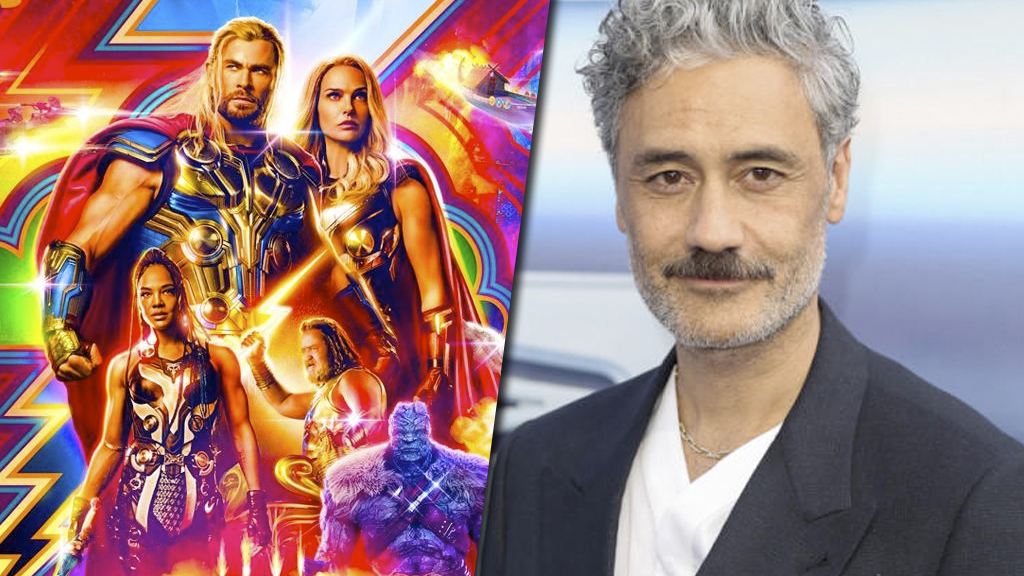
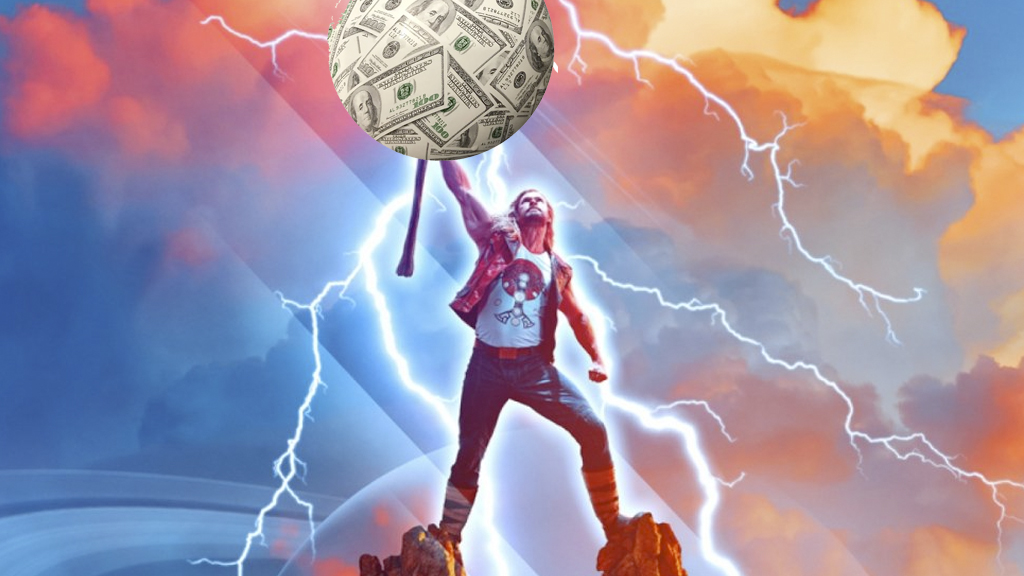
Thor: Love and Thunder has been an interesting release, as it was welcomed with some more mixed arms by viewers. While Doctor Strange in the Multiverse of Madness also faced a similar fate, mostly due to its horror roots, the B+ CinemaScore didn’t stop it from reaching creeping closely to $950M. Now, Thor: Love and Thunder may not have opened to thunderous applause, its box office numbers are certainly impressive.
Just a few days into its first week after a strong international and domestic opening weekend; only missing the third-highest grossing opening weekend of the year by a million. Now, the film has already passed $200M worldwide after pulling in $16.4M. It now stands at $203.5M domestically
The film opened to a $2.9M bow in France, which was one of the last to release and is an impressive +53% ahead of Thor: Ragnarok‘s release. Only slightly behind Jurassic World Dominion, as we saw domestically as well. Korea is seemingly the one market that has slowed down quite a bit given it got a worse ranking there, which is surprising given its strong standing with previous entries.
The film is likely to pass $200M domestically by Friday, which sets it up for a strong weekend that could be on the lowe rend of Marvel’s recent high drops. Still, it seems its overall weekend to day seven is on the lower spectrum of the multiplier. A big drop is expected in the second weekend around the 60%+ but leg it out throughout the rest of the summer.
Even Minions: the Rise of Gru faced a surprising harsh drop in its second weekend with only Top Gun: Maverick defying all expectations. It already pulled in $178.9M and has passed F9‘s $173M. So, it’ll be interesting what the weekend has planned for the latest Marvel venture.
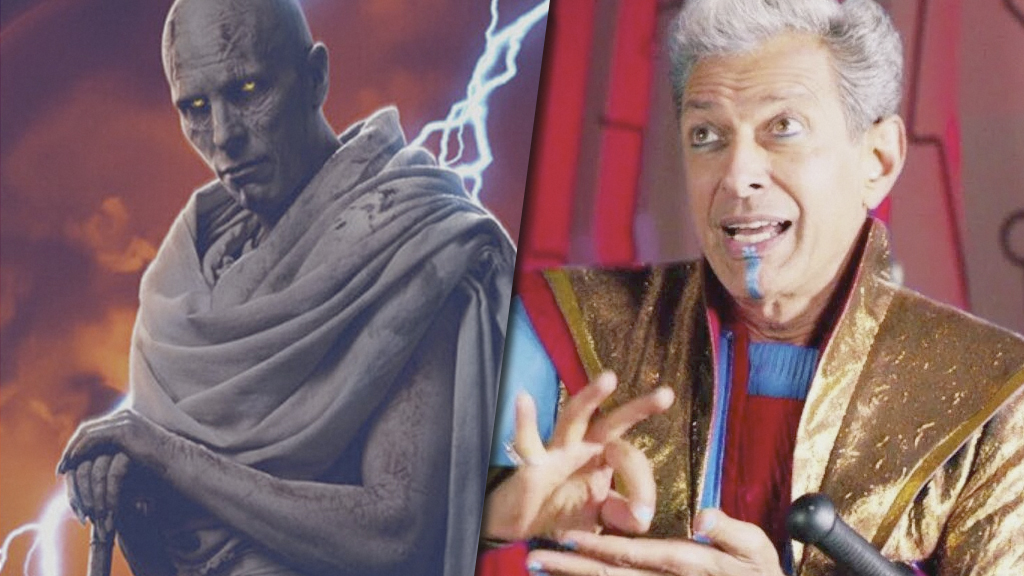
Thor: Love and Thunder has been teased to have quite a few deleted scenes, especially starring Jeff Goldblum, Lena Headey, and Peter Dinklage. Many were excited to see the return of the Thor: Ragnarok and Avengers: Infinity War veterans but for some reason, it ended up on the cutting room floor. As such, many were looking forward to the physical and digital release to offer a glimpse at what was going to be included. Yet, Taika Waititi has seemingly no plans to release them.
The Love and Thunder mastermind has always been rather straightforward with his answers, though he also enjoys playing with people such as the recent CGI scene that made the rounds, he has pointed out that he’s not interested in releasing the cut sequences.
And if you ask any of those actors who were cut out — Jeff Goldblum, Lena Headey, Peter Dinklage — they all understand how it works. They have been in the game long enough. But that’s just the way I look at things. […] because this is my way of telling you, like, people say, “I can’t wait for the deleted scenes with those actors.” I don’t want people to see the deleted scenes because they’re deleted for a reason: They aren’t good enough. [Laughs.] The scenes were not in the movie and that’s it.
Taika Waititi
It’s a bit of a surprise, especially with how deleted scenes are a tradition with any additional release. Of course, they may still find their way unto the blu-ray disc if Marvel Studios has the final say but it’s unclear just how much input he’ll have on the project. We still have to wait a few months until we find out.
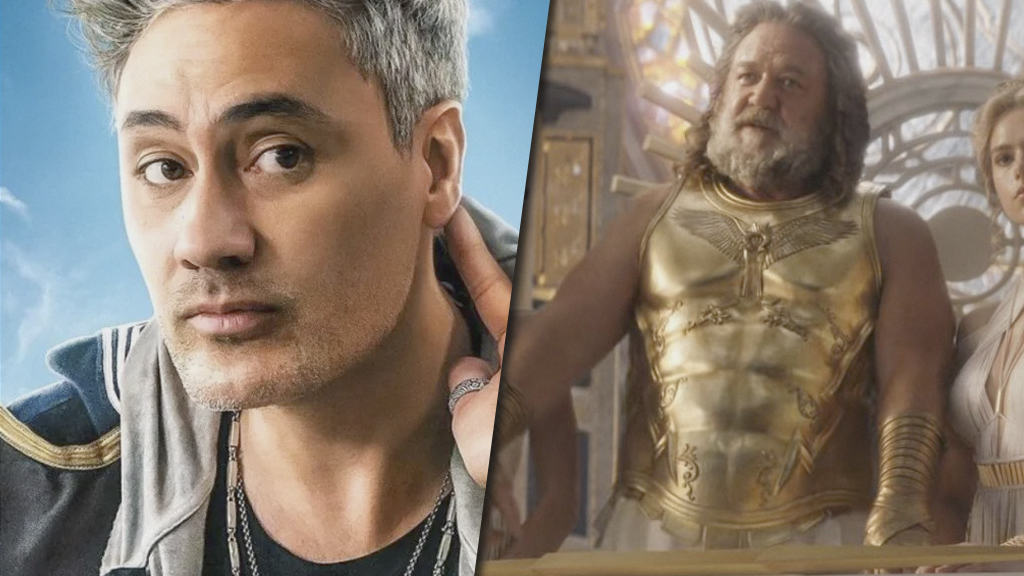
There are many standout elements in the story of Thor: Love and Thunder, but Russell Crowe‘s Zeus was definitely a fun addition. As a member of the city of Gods, he puts on a great show and we even uncover that Thor looks up to the fellow god of lightning. One of the fun aspects of his character was that Crowe was pulling off a fun Greek accent, but according to director Taika Waititi he couldn’t quite decide on which accent to go with. So, he just had the actor play each scene with both.
No. You would love to think that, I would love to think that. We actually talked at length about the accent. We wondered if someone did a Greek accent of a Greek god, is it going to be a farce? Will it be too silly? And Russell was very much wanting it to be Greek. But I wasn’t sure, so we ended up doing two versions of every take with Russell. One in a Greek accent and then another in a British accent. Because I felt people would think Zeus would sound British like Laurence Olivier in “Clash of the Titans.
Taika Waititi
He did highlight that the Greek accent was welcomed with open arms by the test audience, and it also worked out much better. His worry about offending Greeks has seemingly been solved and Crowe‘s gut instinct was on the money.
But then I realized in post that it’s actually more offensive to the Greeks to have Zeus sound like he’s British. And test audiences loved the Greek accent. I’m really happy with it. But, yeah, he had to do every take once in the Greek accent and once with a British accent because I couldn’t make up my mind. But Russell was right all along.
Taika Waititi
It definitely is interesting to see how these ideas come together. What stands out however is that he went through the trouble of shooting both versions, which may have put a lot of weight on various parts of the production crew, especially if he couldn’t decide even going into the test screenings. Perhaps we’ll get the British Zeus with the digital and physical release.
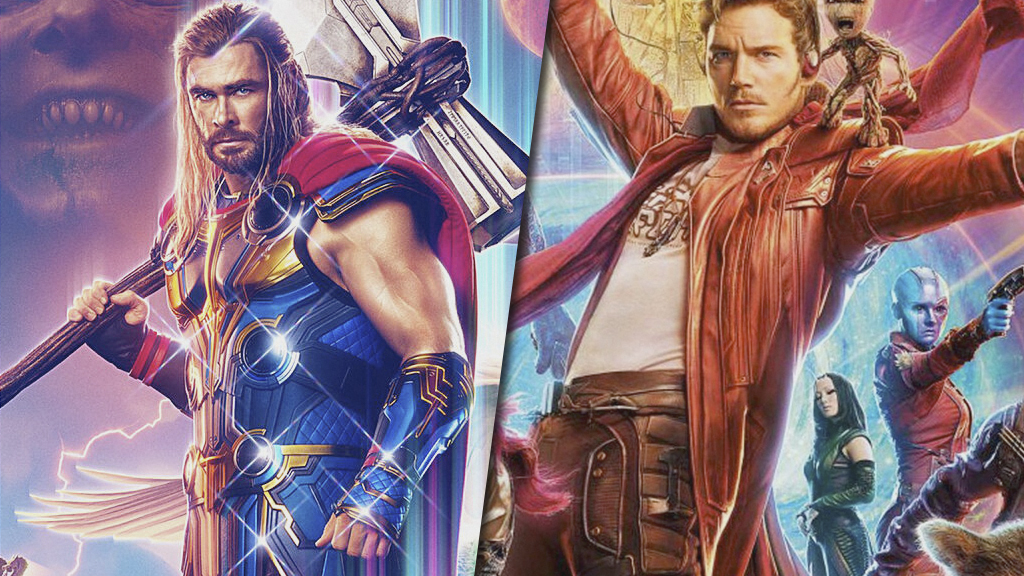
When the news dropped that Thor: Love and Thunder would arrive ahead of Guardians of the Galaxy Vol. 3, many were surprised and wondered how they would integrate them into the story. As it turns out, they had quite a small role early on as many expected when the first trailers hinted that they’ll likely only be in an early part.
Surprisingly, it turns out that early ideas originally had the team having a bigger role. While it’s unclear just how they would’ve connected to the ending, it does seem like they were going to become the cavalry that comes rushing in to help thor in his battle against Gorr. Yet, they realized that the focus should remain on Thor and Jane Foster.
The plan was always to have them in the beginning and then move on. Because they have their own movie. There was talk about having them come back at the end. The thing is that happens in every movie. No more. No more of the cavalry coming at the end. So we shelved that idea. We just wanted Jane to come in at the end.
Taika Waititi
While it is a bit strange to not give them one last wink, potentially even teasing their future storyline as a setup for the threequel but the emotional aspect was prioritized. Plus, the friends that they made along the way were there to also set up the ending of the film. We’ll see just where the Guardians are heading with their potentially final story but we’ll have to wait and see.
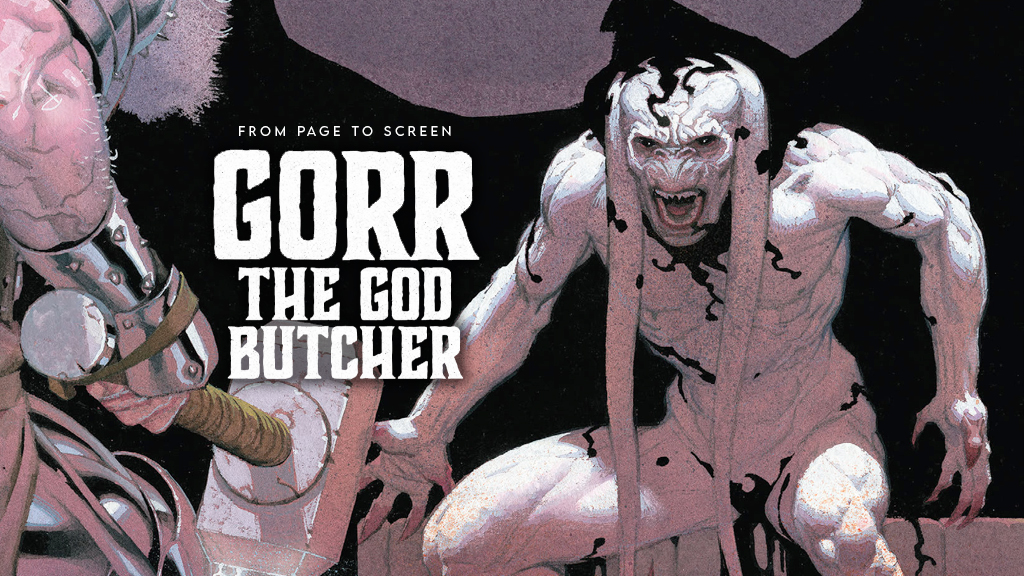
“All Gods must die.” These are words uttered by the horrifying Gorr in both Thor: Love and Thunder and in the world of Marvel comics. The character, played by Christian Bale in his Marvel Cinematic Universe debut, was created by Jason Aaron and Esad Ribic for 2013’s Thor: God of Thunder run and has since become a fan-favorite member of Thor’s extensive rogues’ gallery. Known as the God Butcher, the villain’s main objective is to wipe all living deities out of existence. This remains his goal in the MCU, an adaptation that actually manages to match up quite well with its iconic source material. Although, very few things can ever be exactly the same. Join us as we take a look at Gorr’s transition from page to screen, exploring what the MCU borrowed accurately from the comics and what it decided to change.
Design
King Thor #1 (2019)Marvel Studios’ Thor: Love and Thunder
Let’s first address the elephant in the room. Gorr is still pretty scary in Thor: Love and Thunder, but his design is a far cry from the look comic book readers grew accustomed to. Christian Bale‘s antagonist is still chalk white, but he’s not nearly as undressed as the original model. The MCU puts Gorr in a flowing white robe in place of the skin-tight black speedo look the God Butcher rocks in the 616. Both versions of Gorr wear an ominous hood, but the colors are different for each one. Comic Gorr dons black, in contrast to his skin, while MCU Gorr wears more white, perhaps as a means of making him appear sort of nude from afar. Lastly, Bale‘s Gorr has a fairly humanoid head and body, doing away with the comic’s more alien, tentacled monster.
Origin
Thor: God of Thunder #6 (2012)
Gorr has one of the more tragic origins of any Marvel villain, but of course, that may have been a requirement to explain why his desires are so extreme. In both the comics and the MCU, Gorr’s hatred of the Gods stems from the death of his loved ones. It’s just that, in Thor: Love and Thunder, the details are simplified for the sake of streamlining the story. Aaron‘s original books had Gorr losing his mother, his mate, and his son, all succumbing to the barren conditions they were subject to living in on their alien planet. Taika Waititi‘s version of this is incredibly similar, only on film, Gorr is only shown losing his child. There are no other relatives mentioned, and Gorr’s son Agar is replaced by a daughter mostly referred to as “Love”. That being said, MCU Gorr does still lose his daughter to the intense drought on his unnamed homeworld, just like his illustrated inspiration.
Thor: God of Thunder #6 (2012)Thor: God of Thunder #6 (2012)
After Agar breathes his last breath in the 616, Gorr comes across two gods duking it out in the lifeless environment he is barely surviving. One a god in golden armor, and the other a god of pitch black. The duo severely injure each other in battle, with the golden god falling at Gorr’s feet and requesting his help. Enraged by the fact no god had ever helped him, Gorr instead picks up the weapon of Knull (the aforementioned dark being, more on that later) and slays the golden god before him. Embued with new, lethal abilities by this weapon, called All-Black the Necrosword, Gorr vows to take revenge upon all gods and takes off into the unknown to begin his new journey in earnest.
Thor: God of Thunder #6 (2012)
This general concept of Gorr finding two gods is adapted for the MCU, but it doesn’t play out exactly the same. The live-action version of Gorr does not actually see two gods fighting to the death. Instead, he stumbles across an Oasis-like patch of greenery inhabited by the golden god of Light he had prayed to for his daughter’s safety. Initially relieved, believing he has finally found mercy, Gorr is shell-shocked to discover that the golden god is an arrogant, vain, gluttonous fool with no regard for the mortals he is supposed to protect. After insulting Gorr’s faith and family, the golden god reveals he has just killed a being corrupted by the Necrosword, gesturing to an all-black corpse on the ground. Enraged, Gorr renounces his devotion and uses the Necrosword to decapitate the god of Light, before making his famous vow and embracing his newfound powers. Many of the beats are the same as in the comic, it’s just adjusted slightly to fit Waititi‘s vision for the character.
Abilities
Thor: God of Thunder #2 (2012)
Gorr’s abilities were going to have to change a little bit for the MCU. In the comics, the Necrosword is created by Knull (told you we’d get back to it), who is the progenitor of the Klyntar race and the black god-figure seen by Gorr in battle. For the uninitiated, “Klyntar” is the scientific term for “alien symbiotes”. The same symbiotes Spider-Man can never seem to stop running into, and the same symbiotes whose film rights are still firmly owned by Sony. The 616 All-Black operates using symbiote-like power, allowing its user to form large black tendrils and gooey black wings among other constructs. It also grants an accelerated healing factor and enhanced durability, and assists Gorr in creating a small army of shadow monsters to aid him in accomplishing his goals.
Thor: God of Thunder #2 (2012)
The MCU’s take on the Necrosword is very similar, but it drops all connections to the Klyntar. Gorr is still able to summon creatures and strange black tendrils, but everything is related to a shadow world instead of oozing symbiotic material. The Necrosword also still has the unique ability to slay any god and continues to grant Bale‘s Gorr with enhanced capabilities. One major difference is that the live-action Gorr does not sprout wings to travel. Instead, the sword seemingly allows him to travel via shadow, disappearing and reappearing in darkness as he pleases.
Plot
Both versions of Gorr begin their quest by quietly slaughtering pantheons of “lower-level” gods across multiple planets. There’s even a shot-for-shot recreation of the death of Falligar, the large animal-like god that Thor finds dead next to a wounded Sif in the movie. They both also have the same endgame – using a MacGuffin to wipe out the rest of the gods in one fell swoop. 616 Gorr uses an army of kidnapped god-slaves to create the “Godbomb”, which when detonated would purge the universe of all its deities. In the MCU, however, he’s looking for Stormbreaker as a means of getting to Eternity, the wish-granting higher power he could use to magically make all gods pop out of reality.
Thor: God of Thunder #7 (2013)Thor: God of Thunder #7 (2013)
Comic book Gorr uses a lot of timey wimey shenanigans to carry out his plot, but the movie adaptation gets rid of all that to make things less complicated. Bale’s Gorr simply kidnaps the children of the gods to lure Thor and his valuable weapon directly to him. Both Gorrs, however, use an odd, colorless planet as their base of operations. In Aaron’s books, it’s the Black World while in Waititi‘s film, it’s a place known as the Shadow World. Close, but not exactly the same.
Death
Thor: God of Thunder #11 (2013)
Neither Gorr makes it out of their initial story alive, which is maybe in the universe’s best interest. MCU Gorr gets the better end of the deal, though, getting a touching reunion with his daughter before entering the final frontier. The final act of Love and Thunder sees Thor and Jane Foster convincing Gorr to use his wish to bring his child back instead of killing all gods, which enables him to give her a tearful goodbye before the corruption of the Necrosword ultimately kills him. In the comics, Gorr also sees his child one last time before death, only there it’s an evil construct of the Necrosword that berates him for the path he’s gone down. Not quite as cute.
Thor: God of Thunder #11 (2013)Thor: God of Thunder #11 (2013)
616 Gorr is also not killed by any sort of infection and is actually decapitated by the combined efforts of three different Thors from across the Marvel timeline. Thor: Love and Thunder manages to replicate this with a clever plot twist, where Thor temporarily passes his power to the group of kidnapped children he’s trying to save. This results in Gorr and his army having to deal with “three Thors” in the same way his comic counterpart did; Thor, Mighty Thor, and the combined force of all the Kid Thors.
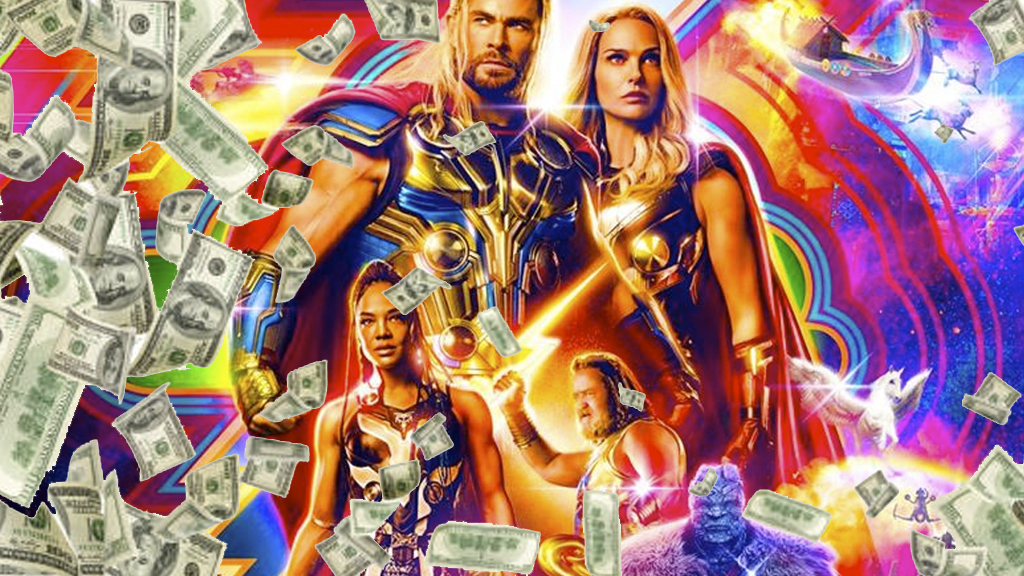
The numbers are finally in and it looks like even with what some deem mixed word-of-mouth, the film has already pulled in $300M worldwide. While the film is on the lower end of its predictions, the film pulled in $143M domestically, which is certainly shy of the $150M to $170M projections. In a way, it’s closer to Guardians of the Galaxy Vol. 2‘s release which is fitting given some of the discussions surrounding the latest entry. Still, the film has pulled in the third highest opening of the year just behind fellow Marvel release Doctor Strange in the Multiverse of Madness and Jurassic World: Dominion, which it was only $2M shy of passing it.
As pointed out by Forbes Scott Mendelsohn, July releases aren’t as dominant as the pre-summer blockbuster releases and have showcased better legs. What is helping Marvel’s latest release is the fact that its only four-quadrant competition will be Black Adam in late October. While the smaller jump of 17% from Thor: Ragnarok isn’t their usual power push but the film wasn’t sold in the same way as the franchise changers like Captain America: Civil War and Multiverse of Madness.
Even if it’s on the lower end of projections, closer to the conservative ones from Marvel and Disney, the big question is where does it head from here. A harsh drop in the second weekend has become a norm for the franchise, but if it does end up sticking around 60% like Spider-Man: Homecoming and Ant-Man and the Wasp could get it to $400M. Yet, that B+ CinemaScore is likely going to drag it down a bit as those films bounced back. Yet, the lack of any real competition outside of Bullet Train and still ongoing power players Minions 2 and Top Gun Maverick.
At the moment, it does seem like the film will likely end domestically somewhere beyond $300M domestically. The film is also still showing a strong international release and won’t find its way to China and Russia, where the previous entry made around $135M. So, if the current film passes $715M worldwide it’ll still be a strong showing alongside other releases this year like No Time to Die ($774M) and The Batman ($770M). So the lowest bar to pass would be F9‘s $721M.
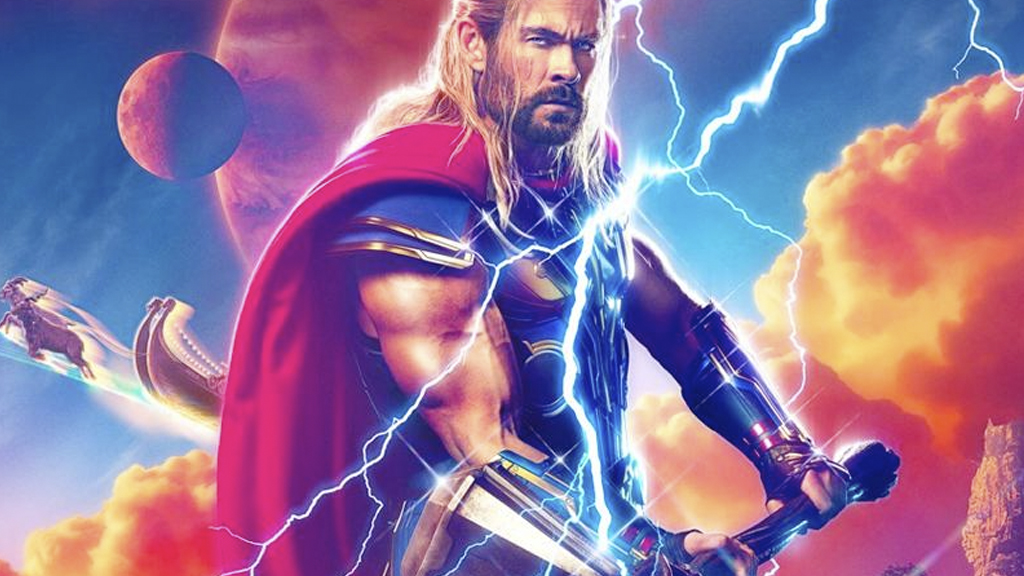
Chris Hemsworth and the cast of the film have been ever busy with promoting Marvel Studios’ latest project, Thor: Love and Thunder. In that process, Hemsworth has described Christian Bale’s Gorr the God Butcher as his “favorite villain” to work against in the Marvel Cinematic Universe.
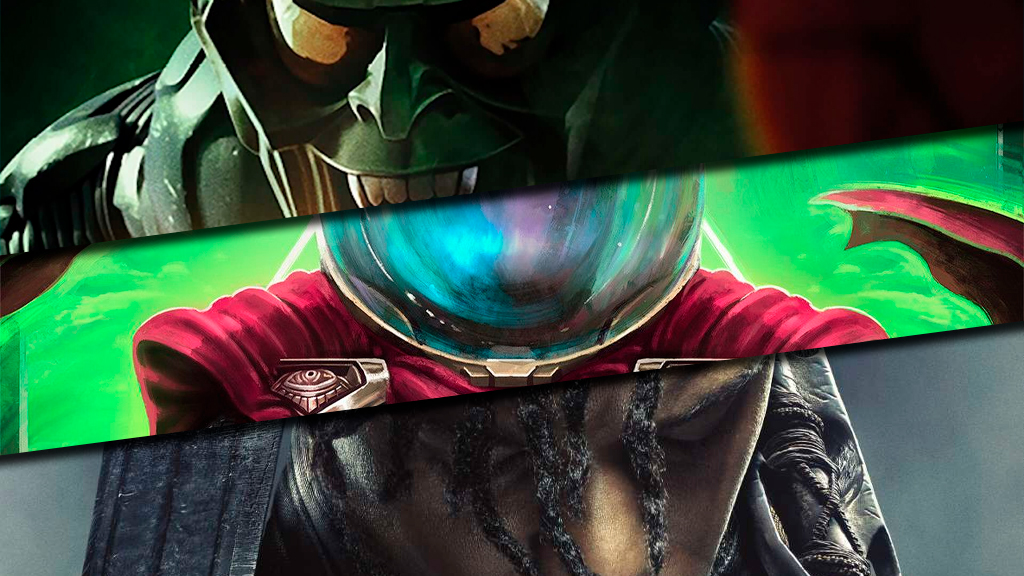
This quote from the lead actor has stirred me into thinking who would qualify as my personal favorite villain within the history of the Marvel Cinematic Universe. With this being a truly daunting task, I’ve thought up a list of my five favorite villains from the MCU. Before getting into this specific list, I want to make it specifically clear that this is a list of my favoritevillains and not necessarily the best villains (in whatever metric you may qualify that to be). These are five characters whose film appearances resonated the most with me for a plethora of reasons, and I encourage the notion of thinking up which five would be your favorites.
Willem Dafoe as Norman Osborn / Green Goblin
5) Norman Osborn / Green Goblin (Earth-96283) – Spider-Man: No Way Home
The argument could be made that Willem Dafoe’s portrayal of the classic villain is technically an MCU villain due to him coming from the universe of the Sam Raimi-directed Spider-Man films, but Green Goblin’s now intrinsic ties to the life of Tom Holland’s Peter Parker should qualify him as a definitive MCU antagonist. Having grown up with said Raimi-directed films, the absurdist camp of Dafoe chewing scenery in his descent into madness left a large imprint on myself and specific turns of phrase were in my lexicon well before Spider-Man: No Way Home. Though with the news of his return into this role in the 2021 blockbuster, I held some reservations that he (and the other returning characters) would feel too incongruous with the more slightly subtle tones of what the Marvel Cinematic Universe had done with Spider-Man. Though fortunately, not only did this version of Norman Osborn fit in extremely well with Holland, I’d argue the campiness of the character enhanced the performance. Willem Dafoe adeptly balanced both sides of the sympathetic figure of a man trapped by a demon inside of him and the sinister villain who killed this universe’s Aunt May and drove Peter into nearly becoming a killer. He was the perfect type of villain to help transition Holland’s Spider-Man into the seemingly more adult version that will continue into the future.
Daniel Bruhl as Helmut Zemo
4) Helmut Zemo – Captain America: Civil War
What makes DanielBrühl‘s portrayal of Helmut Zemo such a memorable villain for me in the history of the MCU is the distinct lack of physical action we see him undertake. Whereas essentially every other villain from the Marvel Cinematic Universe made their claim for power through overt action, Zemo got what he wanted through acting in the shadows and through the power of words. This Machiavellian approach felt extremely fresh at the time of Captain America: Civil War’s release and he still remains one of the most unique villains from the franchise. And then of course, there’s the worthwhile discourse that Zemo is arguably the most effective villain in the MCU thanks to being the catalyst of the Avengers disassembling through only a few distinct actions.
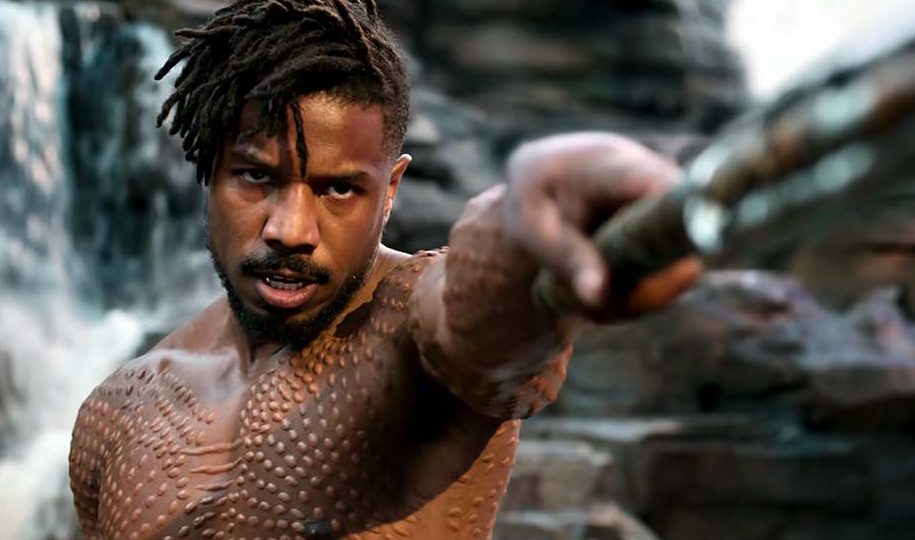
Michael B. Jordan as Killmonger
3) N’Jadaka / Erik Stevens / Killmonger – Black Panther
For a film like Black Panther, its primary villain is what moves the film from a really strong entry into the Marvel Cinematic Universe to an all-time classic. The strong working relationship between director Ryan Coogler and actor Michael B. Jordan is ever present in how much the movie is carried by the actions and motivations of Killmonger (though I certainly don’t mean that as a slight on anyone else involved in the strong ensemble cast). For me, watching Killmonger throughout Black Panther is akin to watching a Shakespearean performance of King Richard III in his titular play or Iago in Othello. There will always be something exciting and intriguing seeing a villain being able to strategically navigate the world around him and end up in ultimate power, only to have a dramatic fall by the end of their story. And what especially makes Killmonger a majorly compelling character is having justifiable motivations for his actions in the world around that has genuinely unfairly wronged him. Some of the most interesting villains to watch are those that have the right moral justifications, but carry them out immorally.
Josh Brolin as Thanos
2) Thanos – Avengers: Infinity War
While Thanos serves as the main antagonist for both Infinity War and Endgame, I particularly want to focus on why the former portrayal of the character is especially one of my favorite MCU villains. The level of nuance that Thanos brings to the table on his quest for all six Infinity Stones was a pleasant surprise for some audience members (including myself). This was a character that very easily could’ve been portrayed as an ultimate “man in the chair” that orchestrates his villainous scheme from a distance while focusing on the large Avengers roster before a large final battle. However, Infinity War gives Josh Brolin some substantial material to work with in terms of character development by making him essentially the protagonist of one of the highest anticipated major blockbuster films. When Marvel Studios could have simply made Thanos the personification of pure evil, they instead made him a complicated figure that truly believes he is acting for the good of the universe (even though his actions clearly show that he isn’t). It was a genuinely risky decision by Marvel Studios, and I greatly appreciate that risk and how well it ended up playing out for them. And on the point of risky decisions, the most critical component for making him one of my favorite cinematic villains is him ultimately being successful in his resoundly defeating Earth’s mightiest heroes destroying half of the universe’s life. While it was obvious in the moment that the killed heroes would rise again by Endgame the following year, it still remains one of the most bold endings to a major studio film and solidified this film as the Star Wars: Empire Strikes Back of this generation. And Avengers: Infinity War would certainly have not reached that status without the all-time great portrayal of Thanos.
Jake Gyllenhaal as Mysterio
1) Quentin Beck / Mysterio – Spider-Man: Far From Home
While generally well received by audiences as an enjoyable villain, I certainly expect this to be considered to be an at least unconventional #1 pick for favorite Marvel Cinematic Universe villain. However, Jake Gyllenhaal gives an all-time great and multi-layered performance as Mysterio that consistently rings in my mind a favorite character from this decade-plus long cinematic saga. While I certainly feel strongly about nuanced characters with complex motivations (as seen in my entries of Zemo, Killmonger, and Thanos), I can find equally great enjoyment out of a villain who has essentially no real redeeming qualities. Quentin Beck is simply an absolute irredeemable villain in his vain attempt to enter the world of celebrity and total willingness to outright murder a teenager. Plus his showmanship is extremely memorable, between his iconic revealing monologue and multi-layered illusion on Spider-Man in Berlin. What I find most interesting with Mysterio is Gyllenhaal’s master-class in acting with this role. Quentin Beck is played as a fairly wooden and generic superhero for the first half Far From Home, and it reaches the point that one could think it’s just an outright bad performance on a first viewing. However, the turn at the midpoint of the film is both extremely fun to watch and recontextualizes his entire role in the film as part of his master scheme (which makes this film extremely rewatchable in my book). Jake Gyllenhaal looks like he’s having the time of his life as an unhinged, vapid Hollywood-esque, mustache-twirling lunatic. And of course Mysterio is responsible for providing this version of Spider-Man with my favorite live-action action scenes with the character throughout the third act. Then of course comes the notion that Mysterio is the catalyst for the status-quo breaking events for Peter Parker, which places him in my pantheon of enjoyable villains that at least semi-successfully achieve their goals.
Of course, this whole thought experiment is ultimately subjective, and I’m very certain any reader of this will have their own variations on a “Top Five Favorite Marvel Cinematic Universe Villain” list. That in itself has been critical in making Marvel Studios as successful as it has been. And hopefully we will be able to see new villains that could be included on these types of lists in the near future as Phase Four continues.
Currently, Thor: Love and Thunder is setting the box office ablaze and making its mark among the Marvel Cinematic Universe offerings. While not a critical darling, it does seem that audiences have enjoyed the film for the most part going by its 83% liked rating on Google and 81% Audience score on Rotten Tomatoes. It was once again a Marvel film that pulled in a B+ after Doctor Strange in the Multiverse of Madness and Eternals both landed in that category. Many have been pointing to a doom and gloom scenario for the future of the franchise.
In the many discussions online in regards to the quality of the film’s overall effects work, Variety has revealed that the film’s budget has topped the previously assumed $200M and now stands at around $250M. While from a box office perspective, this merely adds weight to the project needing to at least hit $500M, which also doesn’t include the marketing costs. There’s no definite reason given why the production budget for this film ballooned up to this price mark but it should be noted that VFX isn’t the biggest part of the pie.
Given that they’ve done reshoots on the film with some rather expensive cast, it wouldn’t be too surprising that they may have wanted to invest slightly more. It’s only speculation mind you, but it’s interesting if you consider Doctor Strange in the Multiverse of Madness is still reported with a $200M budget. There’s also the chance that the use of the Volume has skyrocketed due to the rising interest. It does put the film on the same level as Captain America: Civil War and Avengers.
Yes, people will probably boggle down this to “why the VFX looks bad if that’s the budget” but there’s a lot we don’t know about how this production came together. Marvel films also have the added benefit of profiting off of merchandise sales that aren’t a key factor in its box office dominance. The bigger question remains if the current phase is still the aftermath of films being shot during COVID and that is a leading cause for many qualms people have; especially as it is something that’s affecting many films throughout the industry.
The following article will contain spoilers for Thor: Love and Thunder’s post-credit sequences. If you want to avoid spoilers, only continue at your own risk.
Thor: Love and Thunder may have expanded the Marvel Cinematic Universe in smaller but relevant ways. Not only did we meet other god pantheons, but we even got a glimpse on how they act when it comes to those they were meant to protect. After getting tired of their arrogance, thor seemingly kills Russell Crowe’s Zeus. Yet, the post-credit sequence reveals he survived and also introduced us to the MCU’s Hercules.
The biggest surprise comes in theform of him being played by British actor, famous for his work onTed Lasso, Brett Goldstein. They keep the door open on how exactly he will return but it turns out that his casting was something Marvel Studios CEO Kevin Feige wanted to make happen according to director Taika Waititi.
Kevin really wanted him to do it, and yeah, Brett’s amazing. He’s great.
Taika Waititi
He also goes on to highlight that Hercules’ future in the MCU isn’t truly set in stone outside of what Feige might be planning for the cahracter.
And I don’t know if that’s to do with Thor, or if it’s to do with how that will develop. Because, obviously, Hercules, there’s a character from the books as well. And so, yeah, this will be interesting to see because Kevin, he’s obviously the mastermind of all of these threads and how they’ll tie up and how they meet, mix and match. So I’m curious to find out myself.
Taika Waititi
Goldstein is definitely a great get for Marvel Studios, as he’s hot off of the success of Ted Lasso and likely going to become a bigger name in the near future. It’s unclear if Hercules might get his own series or film leading into a fifth Thor film, or if that might generally be their take. For now, we’ll have to wait and see where the future might lead him to.
There have been many times as of late where fans have wanted to see the director’s cut of a recently released film. It’s not always the case but with success stories like Zack Snyder’s Justice League, it became a bit of a habit. Yet, Thor: Love and Thunder director Taika Waititi doesn’t really share those thoughts and highlights the importance of studios and directors working together, as otherwise, he’d release a “four and a half hours long” movie.
I’ve been thinking about director’s cuts. I watch director’s cuts of a lot of other directors. They suck. Director’s cuts are not good. Directors need to be controlled sometimes, and if I was to say, ‘ah, you wanna watch my director’s cut? It’s four and a half hours long!’ It’s not good, at four and a half hours. There’s a lot of cup-of-tea breaks in there, you don’t even have to pause it.
Taika Waititi
He also highlights that he’d mostly just add cuts scenes and add a few more jokes in the film, which many have critics have actually pointed out was an issue with the film’s overall tonee.
I’d say my cut would probably have a few more jokes in there. There might be a couple of deleted scenes, but as I always say, a scene is deleted because it’s not good enough to be in the film. I think the deleted scenes section on the DVD, not that they use them anymore, should just be a list of the scenes and no links so you can’t click on them!
Taika Waititi
So, if you were hoping for some kind of director’s cut you’ll not get one. Yes, they have teased that quite a few sequences were cut from the film, but it does match Taika Waititi‘s directing style to throw everything he has against the wall to see what sticks. So, it does seem safe to say that his version would definitely include quite a few more jokes.
We use cookies to improve your experience on our site. By using our site, you consent to cookies.
This website uses cookies
Websites store cookies to enhance functionality and personalise your experience. You can manage your preferences, but blocking some cookies may impact site performance and services.
Essential cookies enable basic functions and are necessary for the proper function of the website.
Name
Description
Duration
Cookie Preferences
This cookie is used to store the user's cookie consent preferences.
30 days
These cookies are needed for adding comments on this website.
Name
Description
Duration
comment_author_email
Used to track the user across multiple sessions.
Session
comment_author_url
Used to track the user across multiple sessions.
Session
comment_author
Used to track the user across multiple sessions.
Session
Statistics cookies collect information anonymously. This information helps us understand how visitors use our website.
Google Analytics is a powerful tool that tracks and analyzes website traffic for informed marketing decisions.
Contains information related to marketing campaigns of the user. These are shared with Google AdWords / Google Ads when the Google Ads and Google Analytics accounts are linked together.
90 days
__utma
ID used to identify users and sessions
2 years after last activity
__utmt
Used to monitor number of Google Analytics server requests
10 minutes
__utmb
Used to distinguish new sessions and visits. This cookie is set when the GA.js javascript library is loaded and there is no existing __utmb cookie. The cookie is updated every time data is sent to the Google Analytics server.
30 minutes after last activity
__utmc
Used only with old Urchin versions of Google Analytics and not with GA.js. Was used to distinguish between new sessions and visits at the end of a session.
End of session (browser)
__utmz
Contains information about the traffic source or campaign that directed user to the website. The cookie is set when the GA.js javascript is loaded and updated when data is sent to the Google Anaytics server
6 months after last activity
__utmv
Contains custom information set by the web developer via the _setCustomVar method in Google Analytics. This cookie is updated every time new data is sent to the Google Analytics server.
2 years after last activity
__utmx
Used to determine whether a user is included in an A / B or Multivariate test.
18 months
_ga
ID used to identify users
2 years
_gali
Used by Google Analytics to determine which links on a page are being clicked
30 seconds
_ga_
ID used to identify users
2 years
_gid
ID used to identify users for 24 hours after last activity
24 hours
_gat
Used to monitor number of Google Analytics server requests when using Google Tag Manager
1 minute
Marketing cookies are used to follow visitors to websites. The intention is to show ads that are relevant and engaging to the individual user.
Pinterest Tag is a web analytics service that tracks and reports website traffic.






![‘Thor: Love and Thunder’ Director Spills the Beans on [SPOILER]s Casting](https://assets.murphysmultiverse.com/uploads/2022/07/herculesherculeshercules.jpg)