Tag: TV Reviews

  • REVIEW: ‘The Acolyte’

    REVIEW: ‘The Acolyte’

    Since Disney’s acquisition of Lucasfilm in 2012, the studio’s projects, both film and television, have been unevenly received by Star Wars fandom. It’s been eight and a half years since the nostalgia-driven Episode VII-The Force Awakens launched the Disney Star Wars era and in that time, segments of the fandom moved from a sense of uncertainty and unrest to vocal and volatile about the direction of the franchise. Almost echoing the history of the Jedi Order itself, Star Wars fandom experienced the First Great Schism when Episode VIII-The Last Jedi hit theaters. As fans grew increasingly displeased with the further exploration of the Skywalker Saga and the themes originally developed within it by George Lucas, Lucasfilm President Kathleen Kennedy recognized a need to move away from the Skywalkers and the outline of The Maker. However, even as the ascension of heir to the empire Dave Filoni began as Disney Plus allowed for more stories to be told through streaming series, it seemed hard to break away from the addiction to the Skywalkers. Even as the Creative Grand Admiral of Lucasfilm’s Star Wars division, Filoni‘s projects continued to feature Skywalkers as Luke made an appearance in The Mandalorian and Anakin in Ahsoka.

    I think it is vital. Just staying within the construct of George’s storytelling, to keep chipping away at that, I think would be wrong. It’s our job to step away now, but still have a connection to the mythology that George created. That won’t stop. But we are moving on from the Skywalker saga. That’s what’s taking a lot of time, discussion, and thought right now.

    Kathleen Kennedy, Vanity Fair, 2022

    While the desire to connect each new project to the brand’s most recognizable names can be easily understood–especially since so many of the key creatives currently working on Star Wars projects grew up as fans of the brand–it remains a cord that has to be cut. Enter Leslye Headland. Like Filoni, Headland is a lifelong fan of the franchise who describes her love for Star Wars as existing on a “deep cellular level.” And, like Filoni, she has grown into adulthood pondering, meditating on and dreaming about the galaxy far, far away. And now, in The Acolyte, Headland gives fans a brand new entry point into that galaxy that allows fans to engage with the same themes and concepts that Lucas made central to Star Wars but in an all-new era of stories that does not depend on the Skywalkers or, so far, even a passing familiarity with their stories. Steeped and connected in the mythology of Star Wars yet independent of anything that’s come before it, The Acolyte is Disney’s boldest storytelling effort to date within the franchise as it looks to redefine itself.

    I just love Star Wars—I always have. Every time I’m asked the question ‘what is your fandom like?’ or ‘what do you love about Star Wars?’, it’s difficult for me to answer because I love it on a deep cellular level. I almost think Star Wars has been a part of my personality since I can remember.

    -Leslye Headland
    (L-R): Mae (Amandla Stenberg) and Master Sol (Lee Jung-jae) in Lucasfilm’s THE ACOLYTE, exclusively on Disney+. ©2024 Lucasfilm Ltd. & TM. All Rights Reserved.

    Set at a time in the High Republic era that precedes the events of Episode 1-The Phantom Menace by a century, The Acolyte represents a daring new direction for Star Wars. And through four episodes, it blazes the trail that the franchise sorely needed. Headland‘s intrepid exploration of the High Republic is ripe with thematic parallels upon which Lucas built the foundation of the franchise and toys with the expansion of the mythology similar to Filoni’s work. However, The Acolyte is singular in that outside of the briefest of cameos that casual viewers will never recognize, Headland does it all with a new cast of characters who are incredibly easy to like from jump street.

    As the franchise sputtered through the sequels, Kennedy believed the future depended not only on moving away from the Skywalkers but also on allowing talented creators to expand the Star Wars sandbox beyond Tatooine and to tell character-driven stories. The Acolyte succeeds on both counts. While it’s billed as Star Wars-noir, it tells a Star Wars tale as old as time that explores the duality of good and bad and centers around relationships. At the center of the story are twins, Osha and Mae, and Jedi Master Sol, whose history with the twins allows Headland to explore flaws inherent in the Jedi Order. Within the first four episodes of The Acolyte, the dynamics of the Jedi–who are at their peak during the High Republic–reveal the beginnings of the cracks in the firmament that ultimately allow for their fall. Star Amandla Stenberg‘s transition between twins Osha and Mae is smooth and effortless and among the franchise’s best in years and Lee Jung-jae’s compassionate Sol joins the ranks of the Jedi Order’s most loveable Masters.

    We’re not defined by what we lose; we’re defined by what we survive.

    -Jedi Padawn Jecki Lon

    Despite the Great Schism, Star Wars lives on and as Jedi Padawan Jecki Lon shares with Osha, “we’re not defined by what we lose; we’re defined by what we survive.” The Acolyte stands as a wonderful example of survival and adaptation. It’s an all-new era of Star Wars with no keepers standing at the gate and no background necessary to enjoy. It delivers one of the franchise’s most beautifully shot episodes to date in Episode 3, many of its most interesting new characters in what seems like forever and some of the best-looking action sequences ever shot in the galaxy far, far away. The screener package left us at one helluva cliffhanger but should the second half of the series deliver on the promises made in the first, The Acolyte will become the first step in a new direction the franchise sorely needs.

    Sources: Vanity Fair,
  • REVIEW: ‘The Bad Batch’ Season 3

    REVIEW: ‘The Bad Batch’ Season 3

    Throughout its first two seasons, The Bad Batch has wonderfully–and sometimes painfully–been thematically centered on identity. While some audiences still struggle to recognize animated series as something more than children’s cartoons, The Bad Batch has been a fascinating psychological study of individual change. Over the course of Season 2, each of the members of Clone Force 99 had more or less worked their way through Robert Dilts’ Pyramid of Logical Levels. For better and for worse, Tech, Wrecker, Hunter and, yes, Crosshair, each reengineered his identity and each rebuilt his personal ethos. As their values and beliefs were challenged, the mutant clones reprogrammed their minds and changed their behavior. Tech, Hunter, Wrecker and Omega settled in on Pabu and Crosshair found himself in what he believed to be a comfortable position with the Empire. And then the two-part season finale shook them all to the core of their new identities; however, rather than halt their journeys of personal growth, the cliffhanger put the Bad Batch exactly where they needed to be to complete them. After a lifetime of running missions for others, Season 3 allows the remaining members of Clone Force 99 to determine their own purpose and take on one last mission of their own choosing.

    Crosshair has always been severe and unyielding. It is his nature. You cannot change that. He cannot change that.

    Tech, The Bad Batch: Kamino Lost

    Thought up by George Lucas while he and Dave Filoni were developing Star Wars: The Clone Wars, Clone Force 99’s path to the Star Wars universe was bumpy and their place within it seemed unclear until about halfway through Season 2. Lucas originally conceived of the Bad Batch as a group of aberrant clones that would undergo further testing by the Empire in their pursuit of producing an elite squad of genetic Super Soldiers. While their connection to the Kaminoan cloners was well-explored in Season 1, the introduction of Doctor Royce Hemlock–and the unknown nature of his sister mission–in Season 2 smoothed that bumpy path for The Bad Batch and set the series up to do some of the heaviest science-fiction lifting yet. Throughout the first eight episodes of Season 3, The Bad Batch completes its evolution from a show you might want to watch if you have some time to a show that serves as an integral piece of Star Wars mythology with story-telling tendrils that touch the prequels, the New Republic era of stories and the sequels.

    Doctor Royce Hemlock in a scene from “STAR WARS: THE BAD BATCH”, season 3 exclusively on Disney+. © 2024 Lucasfilm Ltd. & ™. All Rights Reserved.

    Those storytelling tendrils are most active, both thematically and in shared plot points, during the first five episodes of Season 3. Star Wars fans will find connections to Andor, The Mandalorian, The Book of Boba Fett and, yes, Star Wars: Episode IX-The Rise of Skywalker. Omega’s abduction by the Empire in Season 2 is, of course, the inciting moment for the action of the first half of Season 3 and her time at Mount Tantiss over the first four episodes is both revelatory and catalytic, exposing a mystery that fans will immediately solve but that will set Clone Force 99 on their true final mission. The first five episodes are easily among the best the series has put forth so far with episodes 1-3, which premiere together, serving not only as the follow-up to the Season 2 cliffhanger but as a wonderful example of how The Bad Batch has carved out a hardcore sci-fi niche within the larger space opera of Star Wars. If you enjoyed the Alien-esque Season 2 episode “Metamorphosis”, the three-episode premiere will be your cup of tea.

    I am a soldier of the Empire.

    Crosshair, The Bad Batch: The Solitary Clone

    Not the only Batcher being held in the Empire’s Weyland facility, Omega’s interactions with Crosshair highlight the strength of head writer Jennifer Corbett in exploring the team’s interpersonal dynamics. Omega and Crosshair couldn’t be much more different from one another than they are but the two form a wonderful bond that ultimately saves them both. As Omega and Crosshair look to escape the facility, Wrecker and an emotionally devastated Hunter work with what they have left to find Omega and an invested audience will surely be anticipating the frosty reunion between Hunter and Crosshair. To that end, episode 5, “The Return”, might be one of the most cathartic episodes of Star Wars TV to date. While it may not hit as hard as Ahsoka’s “Shadow Warrior”, it’s spiritually similar and without it there’s neither a literal nor figurative path forward for what’s left of the team.

    Crosshair in a scene from “STAR WARS: THE BAD BATCH”, season 3 exclusively on Disney+. © 2024 Lucasfilm Ltd. & ™. All Rights Reserved.

    Season 3 isn’t all pedal to the metal, however, and is not–as was the case with previous seasons–without its lulls. Episodes 6 and 7 step away from the sci-fi and dip back into some familiar subplots from last season, notably the post-Order 66 politics and the place of discarded Clone Troopers in the Empire. Fans have taken–somewhat understandably and also regrettably–to referring to these episodes as “filler”; however, they’ve become a staple in the modern serial Star Wars narratives and while it’s fair to say they typically slow down the pace of the series (and they do so again here), they also provide the galaxy far, far away with an unparalleled level of verisimilitude by calling to mind the politics of the real world. Star Wars always has and always will delve into politics and the expansion into longer-form narratives simply opens up more space for them to be explored more thoroughly. If you haven’t enjoyed the subplot around Palpatine’s Defense Recruitment Bill or finding out how Rex got his groove back after Order 66, this two-episode arc (“Infiltration and “Extraction”) will not be your cup of tea. If that’s the case, though, you’ll be happy to find that Episode 8, “Bad Territory”, puts the series back on its breakneck pace.

    This is who I am.

    Crosshair, The Bad Batch: Return to Kamino

    With the final 5 episodes withheld from the early screening package, it is unfortunately impossible to make a fair judgment of the final season of The Bad Batch. What can be comfortably and confidently said, however, is that much like the members of Clone Force 99, the show has settled on its identity after wavering on determining just exactly what it was capable of becoming. For it to become truly transformative, though, it will have to become truly impactful by settling on what the ultimate purpose of the Batchers’ three-season journey is and provide true clarity on how the story of Omega and her band of mutant brothers fits into a larger narrative whose ending is already known. And so it’s reasonable to ask that the final five episodes of The Bad Batch deliver an answer to why the show existed in the first place. If they do, Clone Force 99’s last mission will likely establish the series’ place alongside its animated predecessors (Star Wars: The Clone Wars and Star Wars Rebels) as mandatory viewing for anyone whose mission is to connect to the creator’s true vision of Star Wars.

    About The Bad Batch Season 3

    In the epic final season of Star Wars: The Bad Batch, the Batch will have their limits tested in the fight to reunite with Omega as she faces challenges of her own inside a remote Imperial science lab. With the group fractured and facing threats from all directions, they will have to seek out unexpected allies, embark on dangerous missions, and muster everything they have learned to free themselves from the Empire.

    Star Wars: The Bad Batch showcases a talented voice cast, including Dee Bradley
    Baker
     (American Dad!), Michelle Ang (Fear the Walking Dead: Flight 462), Keisha Castle-Hughes (Whale Rider), Jimmi Simpson (Westworld), Noshir Dalal (It’s Pony) and Wanda Sykes (The Upshaws).

    Star Wars: The Bad Batch is executive produced by Dave Filoni (AhsokaThe
    Mandalorian), Athena Portillo (Star Wars: The Clone WarsStar Wars Rebels), Brad
    Rau (Star Wars RebelsStar Wars Resistance), Jennifer Corbett (Star
    Wars ResistanceNCIS) and Carrie Beck (AhsokaThe Mandalorian), with Josh
    Rimes (Star Wars ResistanceStar Wars: Visions) as co-executive producer and Alex
    Spotswood (Star Wars: The Clone WarsStar Wars Rebels) as senior producer. Rau
    is also serving as supervising director with Corbett as head writer.

  • Marvel Studios Falls Short of Neil Gaiman’s Magic in ‘What If…?’ Episode 8

    Marvel Studios Falls Short of Neil Gaiman’s Magic in ‘What If…?’ Episode 8

    In 2003, author Neil Gaiman’s eight-issue limited series, 1602, reimagined the existence of a couple dozen Marvel Comics heroes and villains in Elizabethan England. Make no mistake, while it was fun and won an award or two, the series was no critical darling. While it hit the mark with readers and ultimately spawned three sequels, critics were split on Gaiman’s first work for Marvel since he wrote Marvelman in the early 1990s. In fact, Comics Bulletin’s Cody Dolan described the series as a “glorified What If…? series” that was neither “revolutionary” nor “groundbreaking.” Unfortunately for Marvel Studios, their attempt to adapt that very same series into their own animated What If…? series is even less revolutionary.

    This is certainly not to say that there’s no fun to be had in Episode 8, “What If…The Avengers Assembled in 1602?”; in fact, it’s rather loaded with solid performances, fun one-liners and even the return of The Freak. However, despite all the magic at the disposal of Wanda Merlin, who is revealed to be responsible for bringing Haley Atwell’s Captain Carter to the 1602 universe, the episode fails to capture even the limited magic of Gaiman’s original and oft-derided series.

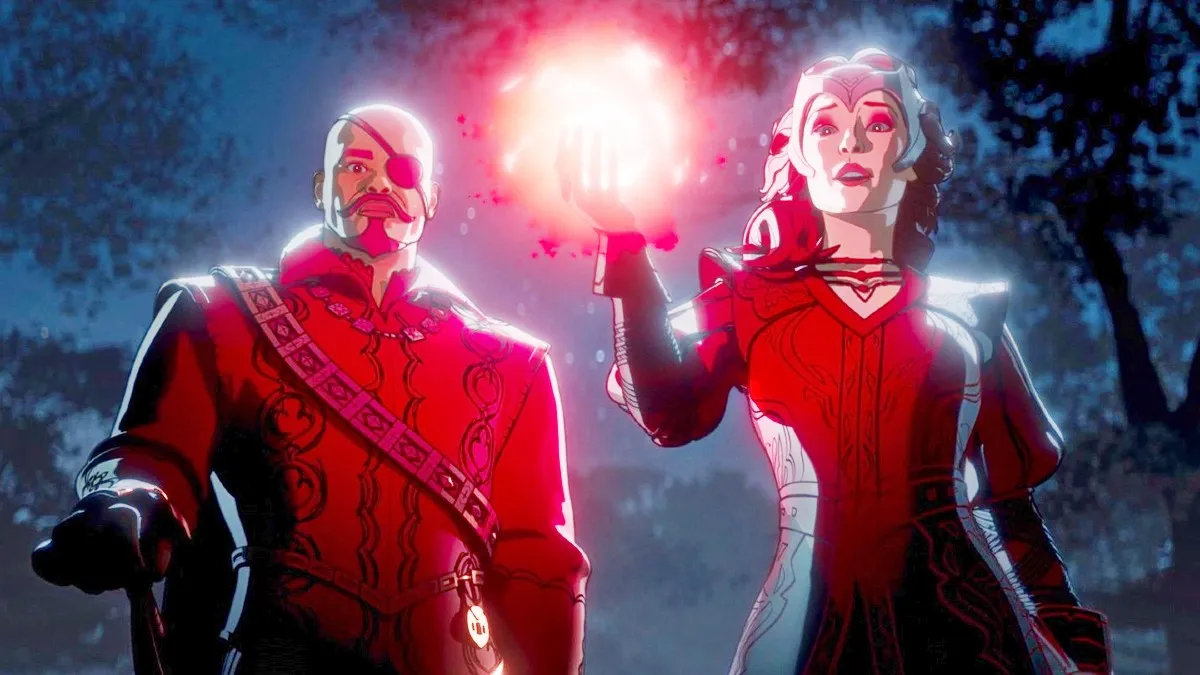
    1602 Wanda Merlin in Marvel Studios’ WHAT IF…?, Season 2 exclusively on Disney+. © 2023 MARVEL.

    Unfortunately, a collection of moments does not a good episode make. And so not Jon Favreau’s Sir Harold “The Happy” Hogan, nor Paul Rudd’s Scott Lang, nor even Tom Hiddelston’s Loki doing Hamlet can find the right additive recipe to make the episode nearly as engaging as Gaiman’s comics. In the end, it feels as though the 1602 episode was one that the creators of What If…? were determined to shoehorn into the series from its inception.

    Despite the lack of creative chutzpah apparent in it (to be fair, it’s likely that many of the characters that made the comic book series so entertaining were not available to the creators), the episode does come tantalizingly close to entangling the animated series in the larger ongoing issues that predominate the Multiverse Saga. Though it’s not explicitly stated, the presence of Steve Rogers “Hood”–once again the Man Out of Time–in 1602 is causing an Incursion. And, of course, there’s the much more axiomatic premise that no matter where or when these stories take place, Marvel’s core heroes remain Marvel’s core heroes. And as the Multiverse Saga approaches its swan song, “What If…The Avengers Assembled in 1602?” reminds us that Earth’s Mightiest Heroes can assemble anywhere and anywhen.

  • ‘What If…?’ Season 2 Find Success Through Alchemy in Episode 7

    ‘What If…?’ Season 2 Find Success Through Alchemy in Episode 7

    Derivation is the fundamental underlying concept of What If…?. In both the comic book series and the streaming series it inspired, stories are spawned by imagining an alternate history of a familiar character whose path diverged at some point. That point of divergence–or Nexus Point–begets an entirely new universe on an entirely new timeline. And it also begets an entirely new set of consequences. To that end, Season 2 of What If…? may not have a more intriguing installment than Episode 7, “What If…Hela Found the Ten Rings?”.

    Set within the once-hidden history of Asgard that was revealed in Thor: Ragnarok, “What If…Hela Found the Ten Rings?” creates a new scenario in which rather than banishing his sanguinary daughter to Hel, Odin casts her out down to Midgard. The scene unfolds parallel to the more familiar banishment of Thor (as seen in director Kenneth Branagh’s 2011 film) right down to the spell the Allfather places on Hela’s signature helm. Make no mistake, this decision sets the episode on the precipice of becoming a boringly derivative adventure where Hela simply follows in the footsteps of the Sacred Timeline’s Thor (watch Episode 5, “What If…Captain Carter Fought the Hydra Stomper?” if that’s your thing); however, writer Matt Chauncey‘s creative choices allow for a wonderfully bold new adventure to unfold on Earth…and beyond.

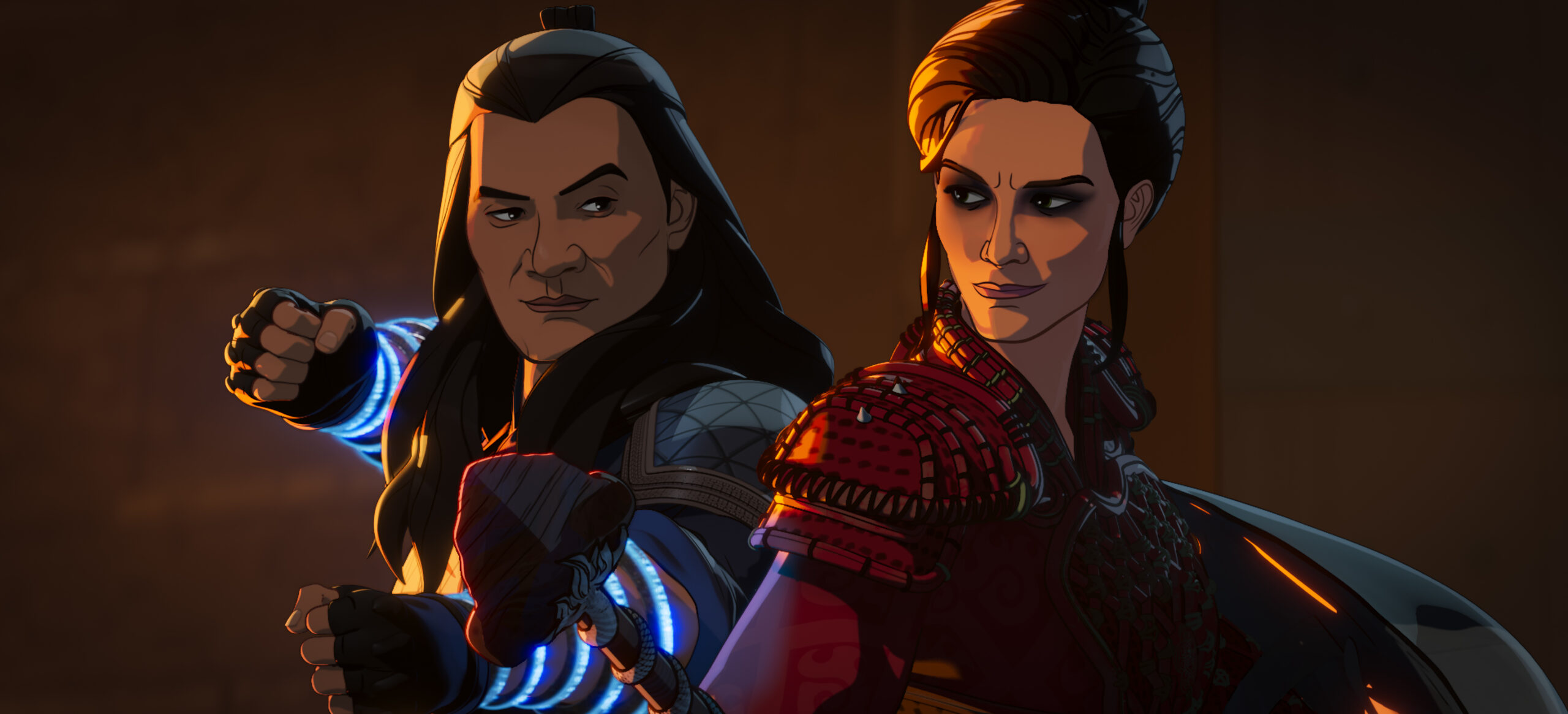
    By setting the episode roughly one thousand years before the events of Thor, Chauncey opened the door for Hela, one of Marvel’s most audacious villains, to cross paths with someone nearly as ruthless as her: Xu Wenwu. Awestruck by the now powerless Asgardian’s will, Wenwu proposes an alliance that would see Hela join him in protecting the people of Earth. Clearly uncomfortable with the idea, Hela flees Wenwu’s compound and-with the help of the dijiang Morris–finds her way to Ta Lo where one of its Protectors, Jiayi, helps her break free from Odin’s conditioning and break free to walk her own path and regain her crown. Once reunited with Wenwu the result is hardly what one would expect of the two characters from the Sacred Timeline. Rather than amplify each other’s destructive qualities, Hela and Wenwu choose to become champions of peace and, after defeating Odin, join with Asgard to help rid the universe of callous warlords and conquerors.

    What’s put forth on-screen during the episode is worthy enough; however, what’s possible within this new alternate universe created by the divergence is equally fascinating. As the original change to the familiar story ripples throughout time, a fascinating cascade of changes emerges. With Odin storming across the galaxy liberating those who are held down, is Thor ever born? And if he is, it’s highly unlikely his journey would have much in common with his Sacred Timeline counterpart. Given that the Asgardian-Ten Rings alliance is seen charging at Thanos and a young Gamora, it would seem unlikely that the Mad Titan’s quest for the Infinity Stones would ever happen. And since in the Sacred Timeline Gamora and Shang-Chi are the same age and given Wenwu’s partnership with Hela and his lack of interest in seizing the power of Ta Lo for himself, there’s probably no Shang-Chi waiting for his own adventure. Much as the episode allowed Hela to explore her true nature, it also fully embraces the true nature of the premise of What If…?. One change leads to a new one and each new action leads to another until familiar characters exist in an entirely unfamiliar universe. And now, as happened on occasion in the comics, the streaming series has created an alternate universe worthy of further exploration.

    What If….? Season 2 will stream new episodes daily through December 30th.

  • ‘What If…?’ Episode 5 Treads Too Closely to Familiar Ground

    ‘What If…?’ Episode 5 Treads Too Closely to Familiar Ground

    In an infinite multiverse, an infinite number of stories exist including those that might be incredibly similar to others…but that doesn’t mean they need to be told. Episode 5 of the second season of What If…? is, unfortunately, such a story. The episode, “What If…Captain Carter Fought the Hydra Stomper?”–much like its predecessor, “What If…Captain Carter Were the First Avenger?”–treads far too closely to the familiar ground of the Captain America franchise rather than allowing the character the opportunity to blaze her own trail.

    While it’s logical that early parts of Peggy Carter’s story might mirror that of Steve Rogers in Captain America: The First Avenger, in the vastness of the Multiverse it would seem that another Variant of Captain Carter would have gotten up to something more interesting than another 70 years of adventures that end up with her simply continuing to step into the footprints first put down by Rogers on the Sacred Timeline. After founding the Avengers and taking down Loki, Carter’s next chapter as seen in Episode 5 paralleled Rogers’ so closely that the working title for it was “The Winter Widow”, as revealed by writer A.C. Bradley.

    https://twitter.com/TheAshBradley/status/1739758400328868005?s=20

    Peggy ends up on the other end of the car joke from the Winter Solider, finds herself aboard a ship at sea and even ends up sharing a scene with Brock Rumlow. A brainwashed Steve takes the place of a brainwashed Bucky and the Red Room and Melina Vostokoff take the place of Hydra but right down to pairing her up with Nat, the episode just keeps giving Peggy things to do that Steve has already done. Carter is the lead of the series and this particular Variant seems destined to make a live-action appearance down the road (one Variant made a brief appearance in Doctor Strange in the Multiverse of Madness). The character deserves her own story.

    Fortunately, the creative team remedies the situation and sets the character on what’s hopefully a singular path by plucking Captain Carter out of her modern-day setting and dropping her in 1602 where she’ll have a major role in the two-part season finale. With a new head writer set to take over for Season 3, here’s to hoping they find something more original and exciting for Peggy to do than to star in the slightly altered Reader’s Digest version of Captain Carter: Civil War.

  • ‘What If…?” Episode 4 Finally Reveals the Origins of the Alt Universe Gamora

    ‘What If…?” Episode 4 Finally Reveals the Origins of the Alt Universe Gamora

    Season 1 of What If…? introduced a Variant of Gamora who served among other heroes as one of Uatu’s Guardians of the Multiverse. Debuting in the Season 1 finale, “What If…The Watcher Broke His Oath.”, this Gamora seemed to have quite an interesting backstory as its revealed that she killed Thanos; however, that was about the only information revealed about the character before she went about the business of defeating Infinity Ultron. Unlike the other heroes, there was no Season 1 episode dedicated to Gamora’s story but that’s not because one didn’t exist in some form.

    An episode about the hero which became known as the “Lost Gamora Episode” was written and was originally said to be included in Season 1. Writer AC Bradley confirmed the existence of the episode– which at some point must have been in the Season 1 lineup because a Lego set was created for it–and indicated that it would finally be released in Season 2…and now it has been. Episode 4, “What If…Iron Man Crashed into The Grandmaster?”, finally gives Gamora a proper introduction while following Tony Stark on an interesting adventure.

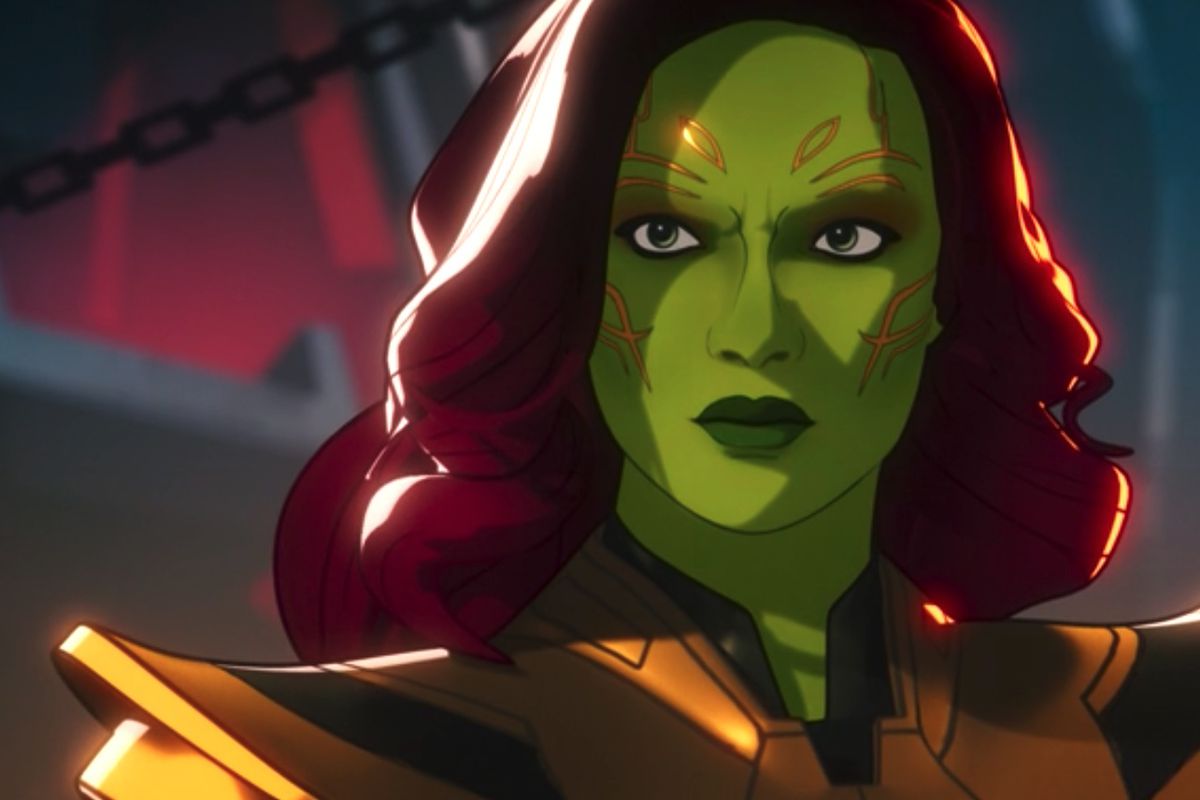
    Set in the semi-immediate aftermath of The Battle of New York (time works real different on Sakaar), the events of theepisode veer from the Sacred Timeline when the Armored Avenger’s mad dash with the nuke as seen in The Avengers ends with him not making it back through the portal. Stark finds himself on Sakaar, face-to-face with The Grandmaster and ,as you might expect, things get weird. Riffing on scenes from both Iron Man and Thor: Ragnarok, the episode puts Stark in real jeopardy when Gamora, still the daughter and Hand of Thanos, comes for revenge on the man who foiled the Mad Titan’s plan.

    Delayed in killing Stark by one of the Grandmaster’s obedience disks, Gamora ultimately sees the good in the hero and finds her way to redemption by helping him overthrow the wily Elder of the Universe. As the episode ends, Tony is seen helping Gamora put an end to Thanos using Topaz’s Melt Stick. Unfortunately, even with the full scope of Gamora’s heroic journey now having been laid bare, no further chapter in her story is told over the rest of Season 2. That definitely makes the decision to pull the episode from Season 1 a little stranger but the episode is fun enough on its own, especially with the wonderfully eccentric Jeff Goldblum back as the voice of The Grandmaster.

    The first four episodes of What If…? Season 2 are now streaming on Disney Plus. A new episode will debut each day through December 30th.

  • The Freak Comes Out at (Silent) Night in ‘What If…?’ Episode 3

    The Freak Comes Out at (Silent) Night in ‘What If…?’ Episode 3

    Though tradition dictates presents are to be opened on Christmas morning, plenty of families allow their children to open one on Christmas Eve. As Marvel Studios continues to release daily episodes of Season 2 of What If…?, they gave fans a doozy of a Christmas Eve gift with Episode 3: “What If…Happy Hogan Saved Christmas?”.

    An unabashed tribute to one of the greatest Christmas movies of all time, Episode 3 puts Jon Favreau‘s Happy Hogan in John McClane’s bare feet and gives the Forehead of Security a chance to be the hero. Up against Sam Rockwell‘s wonderfully petulant and pedantic Justin Hammer–who gets the full Hans Gruber treatment in the episode–Hogan blunders through defending Avengers Tower and ultimately and unwillingly becomes an all-new, all-different version of himself.

    Sometime post-Iron Man 3 and pre-Age of Ultron, Hammer and his pair of Russian goons have chosen the Yuletide season to break into Avengers Tower, which on this particular night, finds itself without its Avengers. It’s no random act of terror, however, as Hammer has one objective in mind: obtaining a vial of Bruce Banmer’s gamma-irradiated blood. While attempting to defend the precious serum, Hogan accidentally injects it into himself unleashing a very obscure comic book version of himself: The Freak.

    First appearing in “If This Guilt Be Mine…”, one of three stories in 1965’s Tales of Suspense #74, the Happy Hogan version of the Freak came to be when Tony Stark used a typically wacky of the time sci-fi device to try to heal injuries Hogan sustained at the hands of Titanium Man. As the Freak, Hogan exhibited superhuman powers including but not limited to strength and durability and a propensity for some pretty epic rage tantrums. Other characters have also gone by the moniker the Freak as well, including Stark employee Eddie March and, more recently, a vagrant junkie that appeared in Bob Gale and Phil Jimenez‘s Spider-Man run.

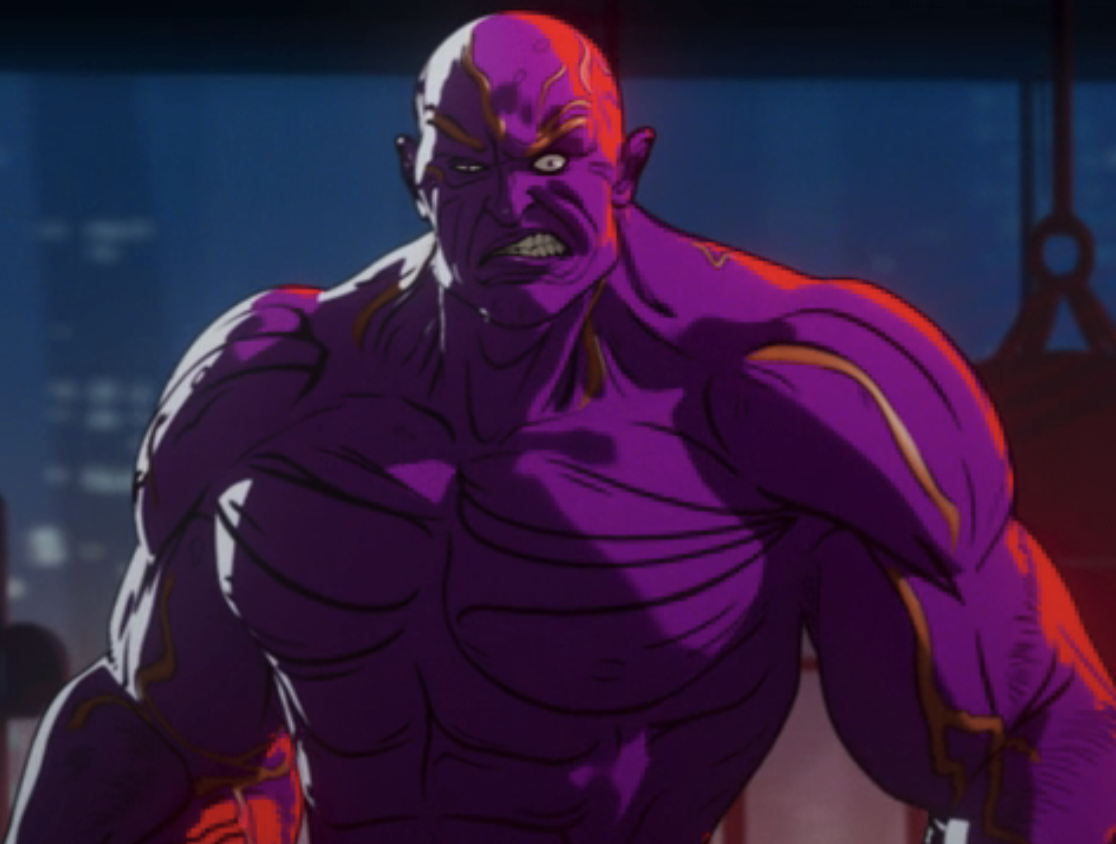
    Though it’s Hogan in the driver’s seat, the MCU’s version of the Freak seemed to take a little more aesthetic inspiration from Jimenez’s pencil. Favreau is fantastic as the powered up Hogan, clearly having fun letting his Freak flag fly and getting a chance to be the hero of the day. Director Bryan Andrews and writer AC Bradley did such a great job bringing the obscure character to the MCU that it would be a shame if we didn’t see him again sometime soon.

  • REVIEW: ‘What If…?’ Season 2 Review

    REVIEW: ‘What If…?’ Season 2 Review

    In a shocking bit of risk-taking Marvel Studios, nine new episodes of their canonical animated series, What If…?, are set to roll out daily over the holiday season. The first season of What If…?, which streamed in 2021, was a fun exploration of the multiverse that sometimes failed to fully capitalize on its subversive premise. The creative team of director/executive producer Bryan Andrews and writer/executive producer AC Bradley returned for Season 2 and significantly upped their game; however, despite attempting to go “further outside the box”, the series still feels far too boxed in at times.

    Following the premise of the Marvel comic that debuted in 1977, What If…? explores the repercussions of changes to key moments in the Marvel Cinematic Universe. Narrated by the omnipresent Uatu, the stories in the anthology take place at points all around the Multiverse where any and everything should be possible; however, for a series that takes place in an infinite multiverse of possibilities, the scope of the stories told in Season 2 of What If…? occasionally still feels far too limited.

    (L-R): Dr. Wendy Lawson/Mar-vell, Bill Foster/Goliath, Black Panther/King T’Chaka, and Hank Pym/Ant-Man in Marvel Studios’ WHAT IF…?, Season 2 exclusively on Disney+. © 2023 MARVEL.

    That’s not to say that Season 2 is a disappointment; in fact, it’s far from it. It’s reasonable to postulate that 7 or 8 of the 9 episodes of the sophomore season are better than 2/3 of the first season of the series. Episodes like “What If…Doctor Strange Lost His Heart Instead of His Hands?” (and let me tell you, that doozy of an episode remains vitally important into Season 2), “What If…Ultron Won?” and What If…Zombies?” truly embodied the nature of the work that could be done in telling stories across the Multiverse and Season 2 has many more episodes of that caliber. “What If…Happy Hogan Saved Christmas?”, “What If…Hela Found the Ten Rings?” and “What If…The Avengers Assembled in 1602?” are spectacular examples of the sort of stories that can be told when the creators unshackle their imaginations and, quite honestly, set out to have some fun. Each of the episodes mentioned above is arguably of higher quality and more enjoyable than any episode of Secret Invasion. And, it may turn out that one of them may be more consequential to the narrative tapestry of the Multiverse Saga than the disappointing live-action series.

    Season 2 also ventures into groundbreaking territory by telling an original story with an original character. In what stands as unequivocally their most bold and audacious adventure yet, Andrews and Bradley introduce the Mohawk hero, Kahhori, into the Marvel Cinematic Universe in “What If…Kahhori Reshaped the World?”, the sixth episode of the season. An episode four years in the making, it’s clear from the opening moments–which see Asgard destroyed by Surtur in a Ragnarok set far before the events of the 2017 film–that the story set to unfold will blaze its own trail. “What If…Kahhori Reshaped the World?” not only tells the story from the point of view of the Mohawk Nation–indeed the First Nations characters in the episode speak in Kanien’kéha–but it also introduces an all-new in-universe mythology (which includes the beautiful Mohawk Skyworld), wonderfully reimagines the powers held within the Tersseract/Space Stone and finds its villains in European colonizers. The episode is beautifully animated, wonderfully inventive and in every way the epitome of the kind of stories the premise of What If…? allows for. And because it exists it also shines a light on some of the issues the series still faces.

    Kahhori in Marvel Studios’ WHAT IF…?, Season 2 exclusively on Disney+. © 2023 MARVEL.

    To the point, if Marvel Studios can produce an episode with the singular ingenuity and quality of “What If…Kahhori Reshaped the World?”, what if…they were as creative all the time? The poster child of this dissonance in Season 2–as it was unfortunately was in Season 1–is the Captain Carter-centric episode, “What If…Captain Carter Fought the Hydra Stomper?”. Once again, Captain Carter, the lead of the ENTIRE series, gets done dirty by the studio’s boring choice to retell Steve Rogers’ MCU story chapter by chapter but with Peggy as the woman out of time. If last season’s episode was Captain Carter: The First Avenger, this one is Captain Carter: The Winter Soldier with Steve Rogers’ Hydra Stomper taking the place of Bucky Barnes. While things truly are not beat for beat as they were in The Winter Solider, the beats resonate far too much with that film, right down to pairing up Peggy with Black Widow. Fortunately, Andrews and Bradley remedy it by giving Carter an original and wonderful role in the 2-part finale which is one part awesome (Episode 8: “What If…The Avengers Assembled in 1602?”) and, once again, one part a little less awesome (Episode 9: “What If…Strange Supreme Intervened?”).

    The finale makes a less-than-shocking reveal about the true nature of one of the series’ lead characters–at least it’s not shocking if you’re following along with the MCU’s ongoing Multiverse narrative–and introduces the evocative conceit of “Universe Killers.” An amazing idea, the nature of which seems fully congruent with a show exploring the infinite multiverse…until it unfolds on screen. In an infinite multiverse full of an infinite number of potential Universe Killers, they are almost all Variants of characters we’ve already seen with the exception of a one-second shot of a Thor Hulk mash-up that looks like the one Donny Cates dreamt up for Banner of War. While it’s more likely than not that Marvel Studios’ One Above All, Kevin Feige, has a list of characters that don’t get to make their MCU debuts until he’s ready to roll them out, spicing up the Universe Killer trophy gallery with an Apocalypse here, an Onslaught there or a Doom up in the corner somewhere shouldn’t be off limits.

    Strange-Supreme in Marvel Studios’ WHAT IF…?, Season 2 exclusively on Disney+. © 2023 MARVEL.

    Ultimately, however, even though if much like the first season the finale isn’t bulletproof-maybe it’s because trying to thread a story through it is antithetical to the anthological nature of the series but the finales of both seasons have certainly fallen short of greatness–Season 2 of the series is a marked improvement over Season 1. The creative team of Andrews and Bradley seems to have found a winning formula in which playing with influences from beloved films such as Blade Runner and Die Hard, exploring different genres and true innovation combine to make a wonderful addition to the MCU’s Multiverse Saga and allow the besieged studio to end 2023 on a high note.

    About What If…? Season 2

    The Watcher returns to season two of Marvel Studios’ What If…? when the animated series
    begins streaming on Disney+ on Dec. 22. And in the spirit of the holiday season, fans are
    invited to unwrap a new episode nightly for nine nights.

    With a new episode debuting nightly beginning December 22, season two of What If…? continues the journey as The Watcher guides viewers through the vast multiverse, introducing brand new and familiar faces throughout the MCU. The series questions, revisits and twists classic Marvel Cinematic moments with an incredible voice cast that includes a host of stars who reprise their iconic roles. Featuring fan-favorite characters this season like Nebula, Hela and Happy Hogan, episodes are directed by Bryan Andrews (eps 2-9) and Stephan Franck (ep 1) and written by AC Bradley (eps 3, 4, 5, 8), Matthew Chauncey (eps 1-3, 7, 9) and Ryan Little (eps 6, 8). The animated series is executive produced by Brad Winderbaum, Kevin FeigeLouis D’EspositoVictoria AlonsoBryan Andrews and AC Bradley

  • REVIEW: Season 2 of ‘Reacher’ is a Triumphant Throwback

    REVIEW: Season 2 of ‘Reacher’ is a Triumphant Throwback

    *NOTE: This spoiler-free review covers Episodes 1-3 of Season 2 of Reacher. All 3 episodes debut on December 15th.*

    Alan Ritchson has found his home. After trying his hand as a pair of superheroes and voicing a Teenage Mutant Ninja Turtle, the mammoth Ritchson has found a character he nearly perfectly embodies in Jack Reacher. Based on the works of author Lee Child, Reacher follows Ritchson’s nomadic military police investigator who dispenses equal parts brains and brawn as an “avenging angel.” The 8-episode first season of Reacher was incredibly well-received by critics and audiences alike in early 2022 and the new season, adapted from Child’s 2007 novel, Bad Luck and Trouble, doubles down on everything that made Season 1 such as a hit with dads all over the globe.

    Like Season 1, Reacher Season 2 makes a strong statement as an intentional antithesis to modern action franchises. Neither hyper-stylized like The World of John Wick nor full of adrenalized stunts like the Mission: Impossible series, Reacher is undeviating in the pursuit of purpose and predictably principled. Nothing about Reacher requires the audience to pay particularly close attention to detail, the villains are neither subtle nor nuances and both the series and the title character work methodically and joyfully through whatever impediments are introduced to solve the problem at hand. To that end, Ritchson gets to flex his mental muscle as well; despite his bullish physique and demeanor, Reacher is always the smartest guy in the room. Reacher presents a wonderfully full-bodied bouquet with hints of 80’s action films such as Commando and Cobra upfront with a tight, underlying structure of Columbo.

    While Emmy-nominated showrunner Nick Santora was smart enough to veer too far from the formula that made Season 1 such a hit, the choice to adapt Bad Luck and Trouble, the 11th book in Childs’ series, does add a little more to the show in terms of a stronger supporting cast and to Ritchson‘s Reacher by humanizing him a bit more. The season opens with Maria Sten’s Neagley, who played a solid supporting role in Season 1 as one of the only characters to have a shared history with Reacher, contacting her old boss with some bad news: one of their old Army buddies was tortured and dropped from a helicopter. Their investigation quickly leads them to conclude that a bad man is out to get the members of Reacher’s old Army MP Unit: the Special Investigators of the 110th. As Reacher and Neagley track down the other members of their old unit, they continue to uncover clues that lead them down the road to a much bigger mystery.

    Serinda Swan (Inhumans, Coroner), who plays the saucy Karla Dixon, and Shaun Sipos (Krypton, Outer Range), whose wise ass David O’Donnell serves as a wonderful foil to Reacher’s straight-man routine, work well as newbies whose connections with Reacher allow the audience to get to know the tough guy a little more. Teamwork makes the dream work and Reacher’s team of Special Investigators help transmute their old boss into something more than just a rageful ronin who is all-too-happy to rid the world of wrongdoers. In this case, that wrongdoer is Shane Langston, a character seemingly pulled directly from a late 20th-century action movie, whose commitment to corruption has put him on a collision course with the unstoppable, American knight errant. And to make Langston feel authentic last century, the series cast Robert Patrick, the face of one of the 90s greatest villains, in the role…and then dropped a T2 reference in case you missed it.

    Season 2 of Reacher smartly hold on to the recipe that made the first season a wide-ranging success while adding just the right amount of accouterments to make it feel like a truly new chapter. Ritchson leans even harder into his portrayal of the stoical character yet maintains enough charm to elicit a few laughs in between the beatings. An unabashed ode to 20th-century action films and the tough guys that inhabited them, Reacher Season 2 is a triumphant throwback.

    About Reacher Season 2

    Reacher Season Two begins when veteran military police investigator Jack Reacher (Alan Ritchson) receives a coded message that the members of his former U.S. Army unit, the 110th MP Special Investigations, are being mysteriously and brutally murdered one by one. Pulled from his drifter lifestyle, Reacher reunites with three of his former teammates turned chosen family to investigate, including Frances Neagley (Maria Sten); Karla Dixon (Serinda Swan), a forensic accountant for whom Reacher has long had a soft spot; and fast-talking, switchblade-wielding family man David O’Donnell (Shaun Sipos). Together, they begin to connect the dots in a mystery where the stakes get higher at every turn, and that brings about questions of who has betrayed them—and who will die next. Using his inimitable blend of smarts and size, Reacher will stop at nothing to uncover the truth and protect the members of his unit. If there’s one thing Reacher and his team know for certain, it’s
    that you do not mess with the Special Investigators. This season, get ready for Reacher and the 110th to hit back hard.

    Based on Bad Luck and Trouble, the 11th book in Lee Child’s global best-selling series, Reacher Season Two stars Alan Ritchson in the title role of Jack Reacher, with Maria Sten, Serinda Swan, and Shaun Sipos as key members of the 110th MP Special Investigations Unit. Rounding out the cast are Ferdinand Kingsley as A.M., a mercenary that homeland security refers to as a “ghost;” Robert Patrick as Shane Langston, head of security for a private defense contractor with a questionable track record; and Domenick Lombardozzi as tough NYPD detective Guy Russo.

    Reacher is produced by Amazon Studios, Skydance Television, and Paramount Television Studios. Based on the novels by Lee Child, who serves as an executive producer, the series is written for television by Emmy-nominated writer Nick Santora (Scorpion, Prison Break), who also executive produces and serves as showrunner. In addition to Santora and Child, the series is executive produced by Don Granger, Scott Sullivan, and Adam Higgs, with David Ellison, Dana Goldberg, and Bill Bost for Skydance.

  • REVIEW: ‘Loki’ Season 2 Finale

    REVIEW: ‘Loki’ Season 2 Finale

    The reinvention of the God of Lies is complete. With a thrilling and satisfying finale to the second season of Loki, Tom Hiddleston has roundly addressed critics’ concerns (including my own) about how much could possibly have been left in the tank for a character who had already done so much. Hiddleston’s dedication to the character, a fantastic creative team that was fully dedicated to some ridiculous sci-fi concepts and held fast to their vision and a deep cast combined to provide 12 incredible episodes of streaming television including an astounding season (and likely series) finale.

    Though it won’t be the last time we see Loki, “Glorious Purpose” was a wonderfully fitting bookend to the entire series (you’ll recall that the first episode of the series was also entitled “Glorious Purpose”). Loki’s journey into mystery led him right back to where Season 1 ended and put him face to face once again with He Who Remains who, sort of unsurprisingly, revealed that every step of said journey–including his own “death” and all the crazy bits that went on in Season 2–where engineered by him. Having spent centuries trying to save every reality and totally recreating himself along the way, Loki’s refusal to take He Who Remains final offer as an answer leads him to make a choice that nobody, including himself, could have ever predicted. No longer the conqueror or mischief maker, Loki reanimates the dead branches of reality and sets himself about the endless task of giving life to others at the expense of his own freedom. Free will outside of the boundaries set by He Who Remains.

    (L-R): Owen Wilson as Mobius, Wunmi Mosaku as Hunter B-15, Eugene Cordero as Casey, Sophia Di Martino as Sylvie, Ke Huy Quan as O.B., and Tom Hiddleston as Loki in Marvel Studios’ LOKI, Season 2, exclusively on Disney+. Photo by Gareth Gatrell. © 2023 MARVEL.

    As a finale to a season and the series, the episode lands because it ties up so many of the series’ threads nearly as neatly as Loki ties together the branched timelines. Loki is the MCU’s longest experiment with longform narration to date and it’s a tall task for any writing room to keep everything together over the course of nearly 12 hours of a series. Thankfully despite series creator Michael Waldron moving on, the studio maintained continuity by handing the keys to the show to one of Season 1’s most key contributors, Eric Martin. Resultant of that, Season 2 picked up where Season 1 left off, took the audience on a wild romp and then dropped them right back off in a familiar place with the main character in a familiar predicament.

    For as complicated as the sci-fi weirdness of the show seemed to be, in the end, Loki remained a fairly straightforward character study of one of the MCU’s greatest characters. And powered by one of the MCU’s greatest talents in Hiddleston, Loki became the warm light for all mankind to share. In that regard, Loki was more than just a series that maintained continuity over 12 episodes; it was a reverential ode to every beat that has made the character so popular since he first appeared in 2011’s Thor. In just about every way, Loki is the MCU’s “Breaking Good” full of all the things that make stories great. Perhaps, in his big chair at the end of time, this was a story written by the God of Stories himself.