Tag: TV Reviews

  • REVIEW: ‘Titans’ Episode 12 – Prodigal

    REVIEW: ‘Titans’ Episode 12 – Prodigal

    Over the course of the season, and particularly with the past few episodes, Titans has dug a hole for itself with many of its questionable (if not cringe) character and plot decisions. The penultimate episode of Season 3 carries on much of this legacy—the rough parts of the episode are very rough—but somehow Tim Drake and Donna Troy are still hanging on as a glimmer of hope for the show. By the end, though, we still aren’t put on an obvious path to a finale.

    For much of Titans‘ third season, there hasn’t been much to add to the Crane and Jason villain arc. Both of their motivations—and often personalities—change dramatically each episode. In “Prodigal,” Crane has started speaking in poems with his focus on destroying Gotham and killing everyone in it. In the last episode, we were still working with the “Gotham’s savior” version of Crane. But perhaps cutting up the pizza guy can change a person. Shockingly, Jason soon realizes that he does not want to help Crane, perhaps for the final time given the swiftly approaching end to the season. 

    Last episode ended with Dick presumably dying at the hands of random Gotham citizens, and Rachel and Gar confirm that. What follows is absolutely bonkers. Through watching it all happen along with Rachel’s later description, we come to find out that the bats that have been following Gar around for quite a few episodes did so because they knew that Gar loved Dick. After discovering Dick’s body, the bats swarm Gar who then inadvertently changes into a bat and leads the bat swarm to lift and carry Dick’s body to the Lazarus Pit. Congratulations to Gar for being given the green light by the series to actually change into an animal, but the rest of that is rough.

    The episode hits again on the fear theme—Gar confesses that fear is what unlocks his ability to change. At this point, it feels like this is an after-the-fact excuse as to why Gar essentially does nothing in the series. But Dick also has to work through fear in the Lazarus Pit. There, he encounters a nightmare Crane who tells him that he let his father down and that he also hates Jason and wants him dead. After miming the Joker and beating Jason to death in the Pit fever dream, Dick realizes that he does not actually want to do that, which is a huge revelation and personal breakthrough.

    He then sees and talks to his late father, and his father telling Dick that he loves him really does the trick—Dick then sees a young girl who calls him her dad. It’s not clear if this is supposed to be a sort of vision of the future or a manifestation of hope and love. Either way, we don’t learn that the girl’s name is Mar’i or anything crazy, but it seems implied that Kory could be the girl’s mother. Lastly, Dick has a very strangely shot and edited conversation with Crane again in his dream, which mostly consists of close, straight-on shots of both of their faces. With terrible editing, Dick goes to punch Crane and simultaneously in the real world punches through the Lazarus Pit to revive from the dead. While there were some decent elements of Dick’s psyche involved in this whole sequence, it’s a letdown that his dramatic fight to live ultimately prevailed because he just wanted to punch Crane of all people.

    Blackfire reunites with Conner thanks to a little help from Krypto. She’s still a hard character to really embrace, but giving her the “fire” actually makes her a bit more enjoyable. Her dominating and confident personality type is complimented by her being more powerful, and it seems like she was immediately given better visual effects and better mastery of the power than Kory ever had. Blackfire convinces Conner that the two should be some sort of super duo. Conner doesn’t take too much persuading after Dick’s betrayal, so we get a couple of “Fuck the Titans” quotes and Conner is now the rebellious type. 

    Kory and Blackfire have a solid moment of sisterly love after Kory explains to Blackfire what their parents did to them as kids. Blackfire is ready to return to Tamaran alone to face her destiny as queen. Conner, newly minted as a bad boy, gets the last laugh of the episode as he psychotically blows up Blackfire’s ship because he is mad she would be leaving him. Honestly, it’s a fun last shot of the episode because Conner’s evil Luthor-side appearance was a surprise in the moment and gave Superboy some (immature) edge.

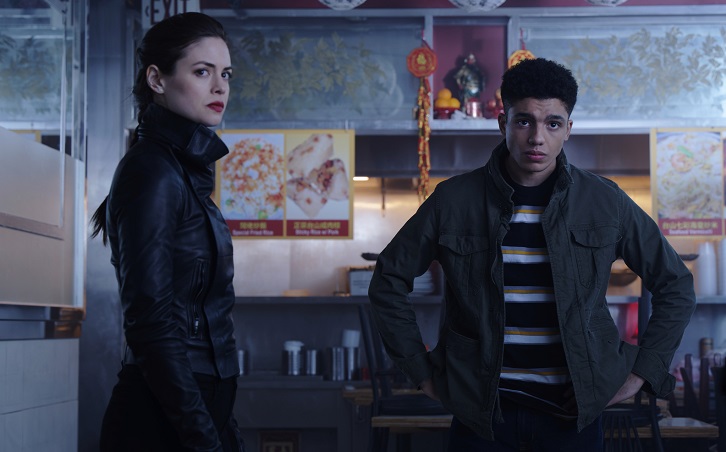
    Tim and Donna’s side plot with the Drake family ends up being a mild letdown because instead of holding their ground and revolting against the corrupt GCPD, they end up choosing to escape instead. Still, the dynamic between Tim and Donna is the strongest element the show has going for it currently. Tim is gearing up to try and be a superhero-type, but Donna’s big sister energy very clearly tells him it’s a terrible idea and that he wouldn’t be able to cut it. Tim, though, does not doubt that he needs to fight and that he at least has to try. His holding his moral and personal ground against Wonder Girl is a solid way to give his resolve credibility. He may also have the benefit going forward as a hero that his mentor happened to be one the most reasonable and well-qualified around.

    Finally, Jason and Dick—both Lazarus Pit alumni—come together in an agreement to take down Crane. Considering the intended storyline of the season, this should not have felt as hollow as it did. It is too easy, and there is no appreciation for what the characters have been through or what they have done to each other. Any character build-up or side arcs are easily forgotten, and apparently, there are generally no consequences of anyone’s actions. They all simply come back together no questions asked when the plot needs them to. All of the in-between moments are pretty much confirmed to be filler.

    Episode 12 took some interesting liberties with how it moved the plot forward. While the theme of fear has been around for some time, we are now getting some hints of “love conquers fear” — which isn’t exactly where this seemed to be going. Overall, though, this episode felt at least somewhat better than the last few. Perhaps that’s because it did decide to drive itself into a corner where it has no choice but to pick (at least the end of) a plot. It still does not feel like a finale has really been set up, which is probably not a good sign. 
  • REVIEW: ‘Titans’ Episode 11 – The Call is Coming From Inside the House

    REVIEW: ‘Titans’ Episode 11 – The Call is Coming From Inside the House

    We’re nearing the end of Season 3 of Titans, which means the future is bright. Episode 11 makes sure to hold on to most if not all of the shortcomings the series has compiled this season and repeats many the same bad patterns that have pretty much been on a loop episode after episode. The remaining glimmer of hope is still Tim Drake, and his and Donna’s arc already greatly outshines everything else.

    The main Gotham plot, if it can be found, is once more based on character choices that either come out of nowhere or have been visited unsuccessfully numerous times. The idea of Scarecrow going about drugging all of Gotham with an anti-fear chemical just to play a video that says the Titans are bad and Red Hood is good is disappointing to say the least. But now Jason’s aggressive interest in taking on Nightwing one-on-one to somehow prove that Red Hood is a hero is not only another situation where Jason has done a complete switch of character, but is so meaningless compared to everything else going on at this point. There is no need to worry about Jason being consistent, though, as by the end of the episode he has an internal crisis on being Red Hood.

    Not to be outdone, Dick has gone all-in on being terrible. Not only have his terrible ideas gotten him and the Titans to the hiding places they currently reside in, the leader of this “family” stops at nothing to be able to fight Jason alone for absolutely no reason other than to just make it about himself. Shockingly, this gets him shot and then jumped by the dosed zombie-people of Gotham—not even Jason. Gar and Rachel, after needing a total of probably 45 minutes to learn about and then find a Lazarus Pit conveniently sitting open in a random abandoned building, pretty much hold up a neon sign that says, “Dick is going to die but we will put him in this pit and nothing matters.” 

    After letting Crane be the least threatening and most unnecessary villain around for the entire season, the show did put some type of effort into ramping up his crazy and violent side. The strange new complex about “the time for masks is over” somehow leads him to torturing the pizza guy and acting particularly manic. Why anyone cares whether this guy wears the Scarecrow mask or not is unknown at this time.

    In another part of Gotham, Tim and Donna reunite in the world of the living. Tim’s character and Jay Lycurgo’s portrayal of him is what so much of Titans is unfortunately not—good. We get a better glimpse at Tim through his family, and the episode appears to be setting up a moment where the remaining “hold out” neighborhoods of Gotham revolt. It’s a much more compelling concept than the rest of the current plot, and the street-level and ordinary people aspect of it could be refreshing if it stays that way.

    This episode seemed brilliantly self-aware that the series completely wrecks its most powerful characters for no reason. At least it can only be assumed it is aware considering it does it some more and somehow worse. For one thing, the best line of the episode is Conner telling Dick his is better than him in every way after kindly acting as Dick’s secretary. Because it would apparently be a shame for Superboy to be super, Dick promptly hits him and Krypto with some kryptonite so that the Titans can remain useless and he can get personal with Jason. 

    What they did to Starfire is almost unspeakable. Not only do we get some gnarly visions based on a random baby she saw in the street, but we learn that she was not born with the “fire”, her family used magic to give Blackfire’s fire to her, and now she unexplainably has new blue powers with no clear function or origin. It’s very difficult to understand why her new powers, which has “been with her all along”, are not even green–they won’t even let her be color-coordinated. Titans just won’t leave Starfire alone.

    All in all, nothing much actually changed in the plot or in how the series tries to spin the plot. It is a rehash of the villains being all over the place with no real motivation or personality; Dick being a real hindrance to everything and everybody for no reason; and most good characters being reduced to nothing. Tim and Donna’s neighborhood war could be promising, but only if the rest of the Titans do not get involved.

  • REVIEW: ‘Doom Patrol’ Episode 5 – Dada Patrol

    REVIEW: ‘Doom Patrol’ Episode 5 – Dada Patrol

    Doom Patrol’s fifth episode is a well-earned lesson in giving up. From day one, our main characters have all been teetering on a 4-foot-high ledge, often actually falling off. But as “heroes” they generally get right back up again. This time, they are much more relatable. 

    The team bus is broken out again so that our heroes can pursue Laura DeMille’s plan to murder—but never mind, let’s just infiltrate—the Sisterhood of Dada. The whole crew ends up enveloped in a very dense fog, where they individually meet different Sisterhood members that serve mostly to mentally terrorize our already-fragile characters’ mental states. If the attempted infiltration of the Sisterhood does anything, it gives everyone a kick in the face that knocks them off the ledge into a faceplant—and the Sisterhood laughs while they do it.

    While we get a shallow survey of the different members of the Sisterhood, the most prominent and interesting one is the aptly-named, “The Fog”, or Shelley Byron (you might remember her from the hidden film last episode). The Fog is genuinely intimidating between her masterful use of her powers to casually disarm and humiliate our team in addition to her general presence. While Season 3 seems to be setting a few too many villain-related pieces up with so far no real threat—Madame Rouge, the Sisterhood of Dada, and the Brotherhood of Evil—she is one that stands out as having a formidable enough stance to be one worth looking forward to. 

    Jane is starting to struggle to find herself in this post-“Miranda” landscape where Kay herself is now more active and actually growing. There’s conflict with Jane and the rest of the personalities regarding whether or not Jane is doing what is best for Kay. It isn’t entirely clear what Jane is actually doing “wrong” but The Fog absolutely gets further into Jane’s head and spotlights her insecurity over a domain she used to run so smoothly. 

    Cliff is on his own self-journey of becoming more problematic while trying to improve. Instead of more appropriately addressing his (likely) Parkinson’s, he opts to messily self-medicate with black market drugs to try and be a better functioning grandfather. It also leads him to be absolutely useless in the fog and generally out of his mind. Larry is also a defeated mess without the Negative Spirit—his “give up” moment comes  as early as being told to stay with the bus.

    Vic stays on track with his usual inner turmoil. He’s lost in his feelings for Roni, which impacts his feelings about himself, and ultimately everything comes back to “Who is Vic?” That in and of itself is hard for Vic, because Cyborg was early-on branded as this awesome superhero, but we have never actually seen him do much of that since abandoning Detroit for Cloverton. While his heroic complex is already on the fritz, Frenzy—another member of the Sisterhood—throws him for a loop to ask, “Why are you?” Long story short, Cyborg does not come out of that conversation a winner. 

    Rita’s building existential crisis this season certainly makes the biggest move by the end of the episode. Having convinced herself that she is a world-renowned time traveler—based on images of someone who appears to be her in old footage and her being the target of the Brotherhood of Evil—she is gutted when Laura drunkenly insults her for thinking this. Rather than reevaluating herself or identifying the areas in which she is confident in herself, Rita goes all-in to drunk drive the time machine with no plan to, in effect, give in to the blackhole that is her identity crisis. 

    At the end of the day, the characters all return to the bus and pretty much just say, “Ok that was hard, we’re quitting.” In other words, after they faceplanted above, they stayed there. For a gaggle of people that are simultaneously so relatable and unrelatable, they really stuck the landing on relatable this time. The fact that their defeats came at the hands of, generally, mere conversations, is the icing on the cake of them simply giving up.

    With the characters in this state of mind at the end of the episode, it feels similar to many places we’ve been before. Doom Patrol often seems like it wants to be a journey, but it can sometimes move at the pace of a snail and feature constant, non-stop diversions. The diversions are a blast, but sometimes it is not particularly clear if the series has actually moved much or if it is all one big circular fever dream that never ends. If it is, the desire to give up makes the most sense, but it also means giving up is impossible—good luck to our characters are they keep going through the wringer. 

  • REVIEW: ‘What If… The Watcher Broke His Oath?’ – Episode 9

    REVIEW: ‘What If… The Watcher Broke His Oath?’ – Episode 9

    The finale of the experimental first season of What If… ? delivered a sense of resolution to the series and the Ultron arc that began last episode. While it was exciting to see pieces and characters of the multiverse come together in such a direct and desired way, the episode, unfortunately, felt shallow by completely ignoring the Sacred Timeline implications the series—and the multiverse as a whole—have on the main MCU timeline. 

    The collection of the Guardians of the Multiverse is obviously the stand-out aspect of the episode. While the episode title implies that the Watcher really gets involved, he actually just, essentially, forces certain hand-selected heroes to fight Ultron for him. It’s unclear where the battle-involved Watcher of the previous episode went, but it was a noticeable absence. 

    Included in the Guardians of the Multiverse, of course, are characters highlighted throughout the season. Captain Carter, Party Thor, Strange Supreme, Star-Lord T’Challa, and Killmonger all are selected by the Watcher. The newly-introduced Gamora, Destroyer of Thanos, is also part of the squad and lone survivor Natasha from Ultron’s original universe eventually joins the fight. Killmonger’s inclusion realistically makes little sense other than to set up a double-cross and make him a villain once more, which is exactly what happens.

    It is fair to say that Captain Carter was immensely more enjoyable in the finale than she was in the premiere episode. Whether it was her modernization into the Winter Soldier era or the watering down of the corny perfect soldier theme from her solo episode, she’s more down-to-Earth and more energizing and compelling as a character. Her return to future seasons of What If.. ? or live-action films feels more organic now. The episode also gives the character space to explore her relationship with her own Natasha and a set-up for her future stories via Steve’s return in the post-credits scene.

    Strange Supreme essentially felt like the Hulk of the team considering he was vastly more powerful than everyone around him.  He protected everyone from crazy-powerful Ultron while landing some of the biggest blows against the villain, including multiplying Mjolnir and going wild with that. He also purposefully turns himself into some of the monsters he consumed in his episode, which is in a move so unfamiliar with respect to our regular Doctor Strange. 

    Episode 8 Natasha also received special treatment from the episode and the Watcher specifically. In maybe his most uncharacteristic move of the series, he allows her to enter the universe where nearly all of the original Avengers were killed, rather than return to her own barren wasteland. 

    The episode was definitely one of the best—competing only with its immediate predecessor—when it comes to action, big superhero battle battles, having meaningful stakes, and embracing the full series. The Guardians of the Multiverse debut is a fun companion to Avengers: Infinity War or Endgame, and the Ultron battle is first-class. We even see the zombie universe pour in, with a brief dramatic zombie Scarlett Witch set-up for fight.

    The battle was massive, explosive, and probably worthy of a live-action battle—it certainly puts Avengers: Age of Ultron to shame there. It was exciting, and it definitely felt like this is what we’ve been waiting for from What If… ?. It almost felt like the excitement of Phase One where the various pieces are finally brought together for one epic story. All of this is great until Ultron is cheaply defeated by the unrealistic simple answer of an Arnim Zola virus corrupting the multiverse’s most powerful and intelligent being.

    This episode could have so benefitted so much from an extended runtime. There’s not too much of a problem with rushing through the character introductions—it’s not clear how much we would have gained from that—but the battle could have been much more exciting and entertaining if it wasn’t so condensed. The frantic pace is both a blessing to the episode by bestowing upon it a certain amount of intense energy, but it is also a curse in that it didn’t allow great moments to fully shine.

    The end of the series very much had a Nick Fury end-of-Avengers speech vibe. All of our heroes go back to their own lives, but there’s a strong sense that they will come back together when the multiverse needs them to. 

    The only major lingering situation is Strange Supreme having guardianship over the pocket dimension he created that trapped Zola Ultron and Killmonger in the midst of their fight over the infinity stones. While this also seems like a rushed and unearned resolution, the prospect of dark and internally-tortured Strange obsessing over this potentially catastrophic mini-universe while in his own void pocket dimension is intriguing. It leaves the door open for those two villains to return, though they aren’t that exciting compared to the Ultron we just lost. It also implies that Strange Supreme might have a continuing role and presence, and it could be deadly. He seems to possess a dry sense of humor and a more peaceful acquiescence of his situation than he did in his own episode, but there is still something menacing about how he looks at his pocket universe of power. 

    There is, honestly, a pretty solid amount of humor in this episode given the high stakes and dark intensity of the mission. Party Thor no doubt had a major hand in it, but quite frankly Strange Supreme in his dark broodiness deliverers well in this department too with some signature Strange dry humor. This aspect of the episode strongly distinguishes it in a positive way from the tone of the previous Ultron episode.

    Unfortunately, the episode fell short in terms of meeting expectations and hopes that the finale and the season would connect in some way at some point to the Sacred Timeline, or even provide greater answers to the multiverse conundrum. Knowing that Captain Carter is likely going to make a live-action debut in the future and that Spider-Man: No Way Home and Doctor Strange in the Multiverse of Madness are set to heavily feature the multiverse, it would have been awe-inspiring to see some of those connections teased. While the series was not necessarily created with the sole purpose to connect heavily to our familiar universe, it still would have made sense—and would have been extremely exciting—if something related to the Sacred Timeline made any appearance or was acknowledged at all. 

    So while ultimately the finale was rewarding in the sense that the character team-up felt long-awaited and tied the series together in a fairly smooth way, it was also disappointing that we did not get more of how this series will impact our main MCU. It really lost an opportunity for an explosive ending. Still, the Guardians of the Multiverse are the animated versions of strong competitors for best team-up, best battle, and best villain in the MCU at large. The episode was exciting and pulled together the entire season in a very satisfying way. We’ll see soon enough how Season 2 will build on what this first season has accomplished.

  • REVIEW: ‘Doom Patrol’ Episode 4 – Undead Patrol

    REVIEW: ‘Doom Patrol’ Episode 4 – Undead Patrol

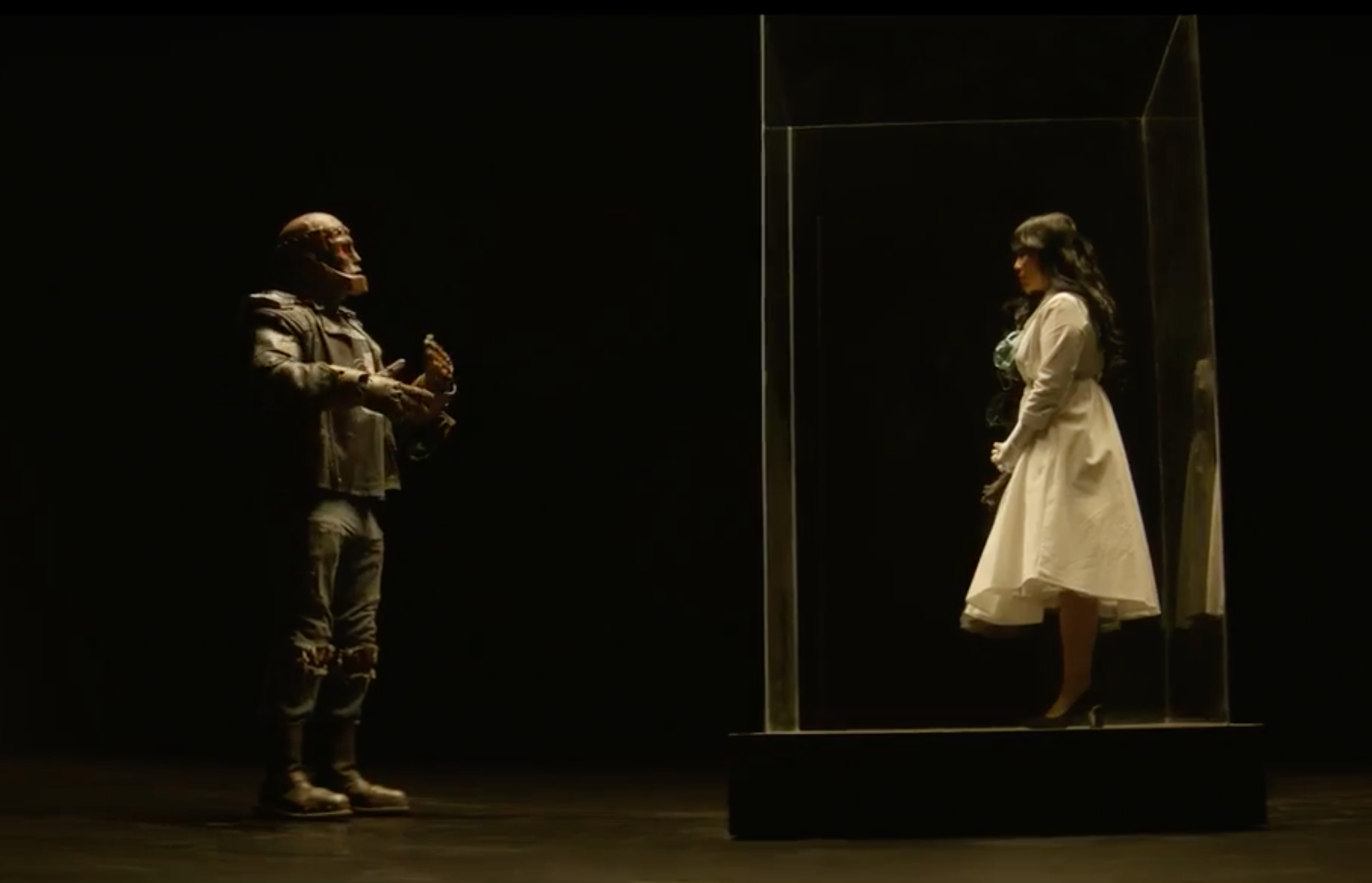
    Undead Patrol is a hodgepodge of different elements framed as a zombie flick right off the bat given the title. There’s actually a lot more that goes on throughout the episode which is ultimately positively overshadowed by the zombie elements. It begins by keeping Niles (or just his head) alive and in play for a bit longer. Niles was completely absent for a solid one episode, so feels a bit redundant to yet again have him return. But his ultimate utility in the episode does find a way to fit into the larger story of grief. There’s an obvious irony in that eating Niles’ head cured the team of their undead-ness, whereas Niles had taken advantage of each of them in the past to avoid death. Maybe this is more apt closure on a Doom Patrol level, but it isn’t hard to imagine that cannibalizing the Chief could give them more of a complex over his death.

    Preview — Doom Patrol Season 3 Episode 4: Undead Patrol | Tell-Tale TV

    The episode is again packed with character plotlines and extensions of each’s individual stories. Of note, Larry is dying because of the negative spirit left, Cliff is attempting online therapy, and Rita is genuinely concerned about all of the suspicious and dangerous circumstances they have all been in, but no one seems to actually care yet. But Rita’s self-motivation to become involved is pulling more strings behind the scenes than might be apparent at the moment. 

    Vic is caught in the seemingly endless cycle of his self-identity crisis as a hero, his responsibilities as such, and his actual “rebellious” actions that depart from what is expected of him. Now, his dad lost his job at S.T.A.R. labs because Vic helped Roni escape, and Cyborg’s systems are shut off. While Cyborg has one of the more interesting arcs of the series, in theory, his constant back and forth with his dad feels stagnant and is beginning to take away from Vic’s journey with the team. It feels like it pulls him out of the show’s general context to a dangerous point where it sometimes comes across as though he doesn’t truly belong. But his constant battle of man vs. machine is no doubt a strong anchor for the character, but it feels stuck at the moment, much like Vic himself who is turned offline. 

    Doom Patrol Season 3 Episode 4: September 30 Release and Speculations Based  on Previous Episodes

    “Madame Rouge” (she is not named that yet) remains in the spotlight as some sympathetic character at the moment. She has no memory of who she is and only knows that she traveled in time via her underground drill-type time machine to find Niles. Her personality is very hard to pin down, but it works for now. It also arguably makes sense given her shapeshifting abilities that we have been teased that her identity would also be fluid. She and Rita learn from a hidden film that Rouge, actually named Laura DeMille, was previously associated with the mysterious Sisterhood of Dada and convinces herself she is a bird. Still, it appears that the hoped-for savior Niles actually recommended she be killed back in the day for being “insubordinate”. Hopefully, this kickstarts a graceful climb into a place of purpose and power for DeMille.

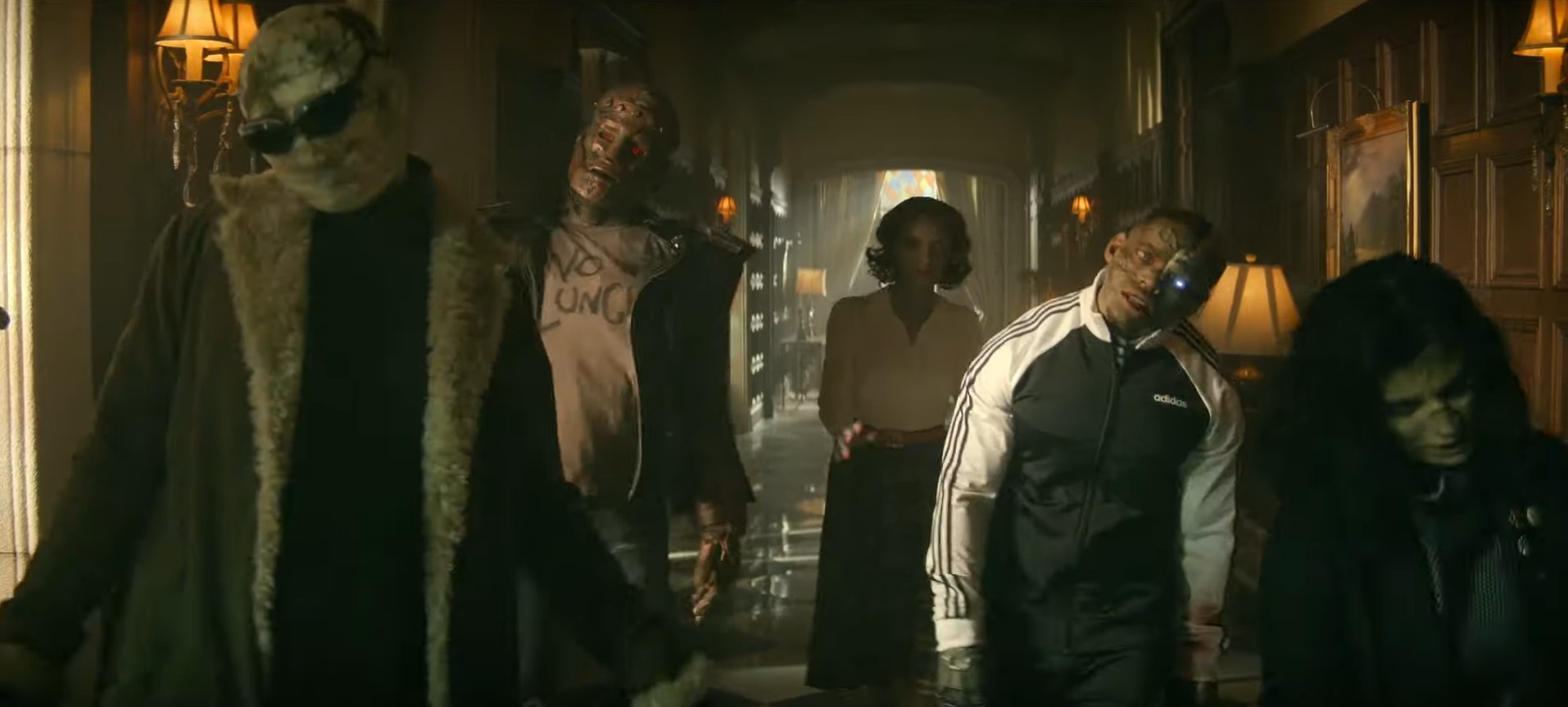
    But yes, amongst all of the above (and more), this episode is, indeed, a zombie episode. The hell demon vomit the characters were sprayed with at the end of the previous episode has caught up to them, apparently kickstarting the undeadening. There ends up being relatively little horror in it, though, and it actually plays out quite hilariously. The zombies are generally just locked out of a room that Kipling and DeMille are plotting in, but the zombie growls and moans are given coherent subtitles with often non-zombie thoughts and apparently, everyone can understand them. But the main benefit we get from their zombification is the big, over-the-top, and violent battle with the butt monsters first seen escaping the Bureau of Normalcy in Season 1. The sheer adrenaline of it all is a reminder that this aspect of the show is truly lacking, if not missing. 

    Doom Patrol Season 3 Episode 4: September 30 Release on HBO Max and  Speculations Based on Previous Episodes - Gizmo Story

    Despite the buzzwords/phrases in this episode – zombies, eating Niles’ resurrected head, butt monsters, etc. – the episode also managed to feel slow and sometimes tedious throughout. It certainly kept delivering quirky, small, bizarre elements, and similar moments were thrown into the pot almost non-stop. Overall, the episode felt like one the creators had a blast with, even if their play had a bit of an issue balancing its conventional plot points and story expositions with wild diversions. 

  • REVIEW: ‘Titans’ Episode 10 – Troubled Water

    REVIEW: ‘Titans’ Episode 10 – Troubled Water

    It’s hard to know where to start with episode 10. At the end of the day, the episode is as chaotic as Gotham after the water contamination from the end of episode 8. The show not only flubs the villain story but manages to implode the remaining slivers of an overarching, cohesive plot. In fact, the episode seems to decidedly prove that there is no genuine or comprehensible story. There’s certainly no storyline available with a meaningful, consistent, or valid goal or even journey throughout. 

    Titans Season 3 Episode 10 Spoilers Reveal Major Gotham Water Supply Bout -  MediaScrolls

    Even if Titans has some clue as to what that plot might be, the villains of the show absolutely do not. Apparently, dosing the entire city with the anti-fear (and now crazy zombie-esque?) drug was not really an end goal at all, but simply a throwaway to hype up Red Hood as Gotham’s true savior. All that to take down Nightwing and the other Titans. How this tracks with what the season has provided us thus far is mysterious, to say the least. After non-stop back-and-forth motivations and betrayals by Jason, he winds up at Crane’s side as if nothing ever happened. Crane is still just Crane, defined by mediocracy and unconvincing ever-moving plans and motivations to take over Gotham. At the very end of the episode, they make a toast to “bad seeds”, not knowing he was breaking the fourth wall in doing so.

    The episode moves into emergency territory with much of Gotham affected by the drug, the city put in full lockdown and quarantine, and general crime is causing generic chaos throughout the city – it is reminiscent of the episode as a whole. However, the true sacrifices to this setup are unfortunately our Titans, whose grand plan first involved showing up in random spots in the city to fight drugged criminals rather unsuccessfully. With that failure in plain sight, they somehow concoct the brilliant plan to turn themselves in as a group “for show”, with the idea being that they would post bail and then disappear. As a quick aside, the notion that these people – accused and arrested for poisoning and attacking an entire whole city – would be granted bail is just absolutely ridiculous to the point it almost hurts. 

    Titans Season 3 Episode 10: Release Date, Recap & Spoilers - OtakuKart

    Shocking, however, is that this plan did not work out. Not because they were not granted bail, but because some Gotham City police are in cahoots with Red Hood and the attack the Titans. Now they are simply in hiding—a large group of (depending on the day) highly superpowered individuals up against the occasional handgun did, in fact, run away from the situation. Again, how this squares with the first nine episodes that portrayed the group as a very confident, dedicated to Gotham unit is anyone’s guess. It’s probably safe to assume that separating the group in this sort of war zone atmosphere of Gotham would, in fact, give it more of a gritty war zone sensation. However, it’s not only completely arbitrary but flat-out disingenuous to any premise laid down thus far.

    If the episode felt bold with its general Gotham story decisions, it undoubtedly felt more empowered to make some bold character-specific moves. It could be compared to the brief allusions to a chess match between the Titans and Red Hood early in the season, except the Titans – and Jason Todd honestly – are making completely random moves without any rhyme or reason. Hence, this episode.

    Titans Season 3, Episode 10 recap: Anarchy in Gotham City

    We can start with Dick, who is given the most attention as always. While he just suffered some head trauma and is having occasional visions of the bat symbol, he otherwise comes across as mentally competent. While sane as he might be, his character is not consistent in the slightest. If he’s seeing bats, that would suggest he’s probably leaning into the “bad Batman” route some more, and one would expect that it would lead him to be more dark and batty, quite frankly. Here, though, he’s just lukewarm at best and making terrible, selfish decisions without the added necessary mental components to make it believable or understandable. The hardest pill to swallow is his line, “Gotham is on its own.” I mean, come on. Even in a “baddest Batman” situation, Gotham is very much attended to.

    Other characters can be looked at more briefly because the absurdity speaks entirely for itself. Blackfire somehow sustained a deadly gunshot wound through her Tamaranian armor. Starfire attempts to heal (really?) her with her fire, but her sister merely absorbed it and takes it from her. Moving past how all of that is bad, we are yet again at a space where Starfire’s character and powers are just wrecked. Shockingly, the admittedly evil and traitorous Blackfire appears to be following her passion. It might be worth harping on how this storyline has a negative amount of reasons to take place within the Gotham story. It’s hard to even care at times when it’s treated like it’s some mild sisterly squabble among the “real stuff”.

    Titans Season 3 Episode 10 Recap "Troubled Water" – Alexus Renée Celebrity  Myxer

    Donna and Lydia’s interactions were so unnecessary. Of course, the show feels the need to tie Donna’s just-came-back-from-the-dead issue in a very shoddy knot. But Lydia sneaking around in a potato sack outfit acting a bit crazed, the two “fighting” for four seconds in mystical woods only for Donna to be told she is the greatest of everyone just didn’t need to happen. Her arc within episode 9 was plenty enough to redeem and re-hype her character, and this only brought it down. 

    To end on a high note, the random never-before-seen police station GCPD officers/workers that gave Commissioner Gordon the rundown on the situation and advised her what to do actually provided some solid acting. While the (what felt like) 23 seconds of that scene at the very beginning go the episode left more to be desired, it was solid. 

  • REVIEW: ‘What If… Ultron Won?’ – Episode 8

    REVIEW: ‘What If… Ultron Won?’ – Episode 8

    What If… Ultron Won? is another lovingly dark episode that scoops up the scraps of the multiverse and the varied multiversal seeds the series has been planting throughout the season. While Ultron’s presence is certainly in the spotlight—and he’s definitely a class-act villain—he comes across as more of a vessel to tell the Watcher’s own story through. Impressively, Episode 8 manages to tell a two-pronged story throughout its short runtime. 

    First, it explores the classic What If… ? story of what would have happened on the sacred timeline had Ultron been able to assume Vision’s body. The result is that he is able to quickly laser Thanos in half, acquire all of the infinity stones, and destroy the entire universe piece by piece. He even takes on Captain Marvel, who once again returns as a wildly powerful being that can drive Ultron into the inner core of a planet but it’s not enough. It’s a story that the Watcher uncharacteristically states breaks his heart—which is somewhat interesting considering he also watched Strange Supreme destroy his entire universe for love and due to overwhelming grief. Either way, generally everything and everyone we would know from our universe is wiped out, and almost no hope remains.

    But enter that sliver of hope: Natasha Romanoff and Clint Barton as the last remaining heroes alive fighting Ultron and his sentries. The episode absolutely paints the two “lamest Avengers” as, frankly, pretty damn cool. Natasha is up to her usual skillset for the most part, but Clint really seems to get an upgrade. Apart from a metal arm, his archery skills are nearly perfect and his arrows are wild. 

    Still, Clint stands out as having a particularly human dark moment that hit even amongst the total universal destruction. He mentions throughout the episode that he feels tired and as though there’s no point in fighting anymore. While Natasha and the Watcher hold out hope—and hope appears to arrive in the form of Arnim Zola—Hawkeye eventually actually gives up because he no longer wants to fight. It’s a stunning shot of him leaping into a pit of sentries in an obvious nod to Natasha’s own death on Vormir in Endgame. Honestly, even if you hate dark episodes, you have to love it for its realistic take on post-apocalyptic life and human (or superhuman) imperfections. Despite the entire premise of this first layer of story being “hope survives”—a message we’ve encountered before in the series—this episode is a brutal but wise reminder that sometimes it dies.

    The other side of the episode involves the Watcher more personally. While we have seen him somewhat more involved emotionally, we have never peered behind the curtain until now. The Watcher already toyed with interfering in Natasha’s and Clint’s affairs, but was able to stay out of it. But, when all seemed saved, Ultron gained the power to see beyond his own universe, recognize the multiverse, and find the Watcher. 

    The Ultron-Watcher showdown is a genuine spectacle of solid animated action and visual enhancement. At first, the Watcher was surprised that Ultron was able to see and locate him, but he also seemed scared. The turnaround into him being an incredibly powerful cosmic being was definitely rewarding, particularly considering that we have only seen him hovering around. Still, Ultron is ultimately the powerhouse he always should have been, and he ultimately defeats the Watcher with some bonkers moves like taking a Galactus-esque bite out of a galaxy. 

    Once the Ultron-Watcher battle starts, What If… ? really begins feels like the work it did in building the season piece by piece will pay off in a compelling and rewarding way, rather than just attending to fan service in exclusively one-off kernels of easter eggs and mini-stories. The two literally punched their way through numerous universes throughout the fight, with Ultron seemingly taking the wheel on most of it. And yes, we did see a universe where Steve Rogers becomes president.

    The result was stunning—combine it with the visuals of where the Watcher resides amongst all the shards of time prisms, and we have a very different visual and spatial concept of the series and the multiverse itself. It’s much more Doctor Strange than any other comparison, but the unique elements at play (and the animation) certainly distinguish it from anything we’ve seen before. Any live-action adaption of this type of imagery and movement—looking at you, Multiverse of Madness—will likely be a sight to behold.

    Speaking of Doctor Strange, the Watcher ends up in Strange Supreme’s tiny universe bubble we saw at the end of Episode 4. Luckily, the two have briefly met before, and there’s already a buddy-banter dynamic. Which does interestingly call into question Strange Supreme’s personality—he was certainly “Dark Strange” before, but he was fairly jolly here. Either way, he gets the Watcher to admit he needs to intervene and get help. While we know from teasers and trailers who many of these “Guardians of the Multiverse” will be, the finale will undoubtedly keep a few surprises or twists up its sleeve to finish the season strong.

    The penultimate episode of What If… ? definitely delivered in terms of setting up a larger crossover that spans the entire season. Now that we’ve finally seen the Watcher in his fullest, we have a greater sense of how the multiverse comes together and how to view it on a macro-level rather than bit by bit as we have been doing. The episode certainly sets up an exciting finale and it is another strong take on dark themes that the series has toyed with so well in the past. 

  • REVIEW: ‘TITANS’ Season 3 Episode 9 – Souls

    REVIEW: ‘TITANS’ Season 3 Episode 9 – Souls

    Episode 9 of this season of Titans is extremely baffling. On one hand, it makes no sense at all and feels completely out of place. Combine that with how corny and ridiculous it is this episode should have been a write-off. But yet, like its main characters, it manages to keep itself alive and be one of the most enjoyable rides of the entire series. 

    The episode finds our main three (dead) characters—Tim Drake, Donna Troy, and Hank Hall—in the black-and-white area of the afterlife where they are supposed to be on a literal train that takes them to the “final place.” Inexplicably, Tim and Donna are on the train at the same time but jump off the train because Tim desperately wants to be alive. Outside of the train, there is an entire rural outskirts-of-a-small-town type of area that generally consists of wooded areas and a road. There, they happen to run into none other than ‘Livin’ On a Prayer’-blasting Hank Hall, who is some sort of purgatory outlaw. There’s plenty more that can be mentioned, but the concept is outright nonsensical and absolutely does not match the universe in which Titans has been placed. The premise comes off as one that could better belong in Doom Patrol. Maybe that’s why it was so much more fun to experience, but in the context of Titans it is downright bewildering, even apart from the extremely contrived and illogical circumstances of absolutely everything that happens in the black-and-white place. 

    As mentioned, though, the episode is quite the dark horse, and the mini-adventure our three heroes go on throughout the episode was genuinely enjoyable and only partly because of its “so bad it’s good” quality. The three main characters, arguably all very much side characters in the world of the living, had the best chemistry and presence of any characters this season. Hank and Donna easily outdid their previous incantations and newcomer Jay Lycurgo’s Tim was stellar in the limelight this episode. Alan Ritchson’s Hank, alone and sans obligatory Dawn, was the charming and entertaining character he always had the potential to be. Even Conor Leslie’s Donna, who previously always felt flat, had substantially more color (ironically) to her personality and presence and was much more compelling than the character who died last season. The dynamic between the three was solid and the episode brought some humor to the land of death. Donna’s acknowledgment and resentment of dying at a carnival was appreciated dark humor and even a recognition of where at least one creative choice Titans made went wrong. 

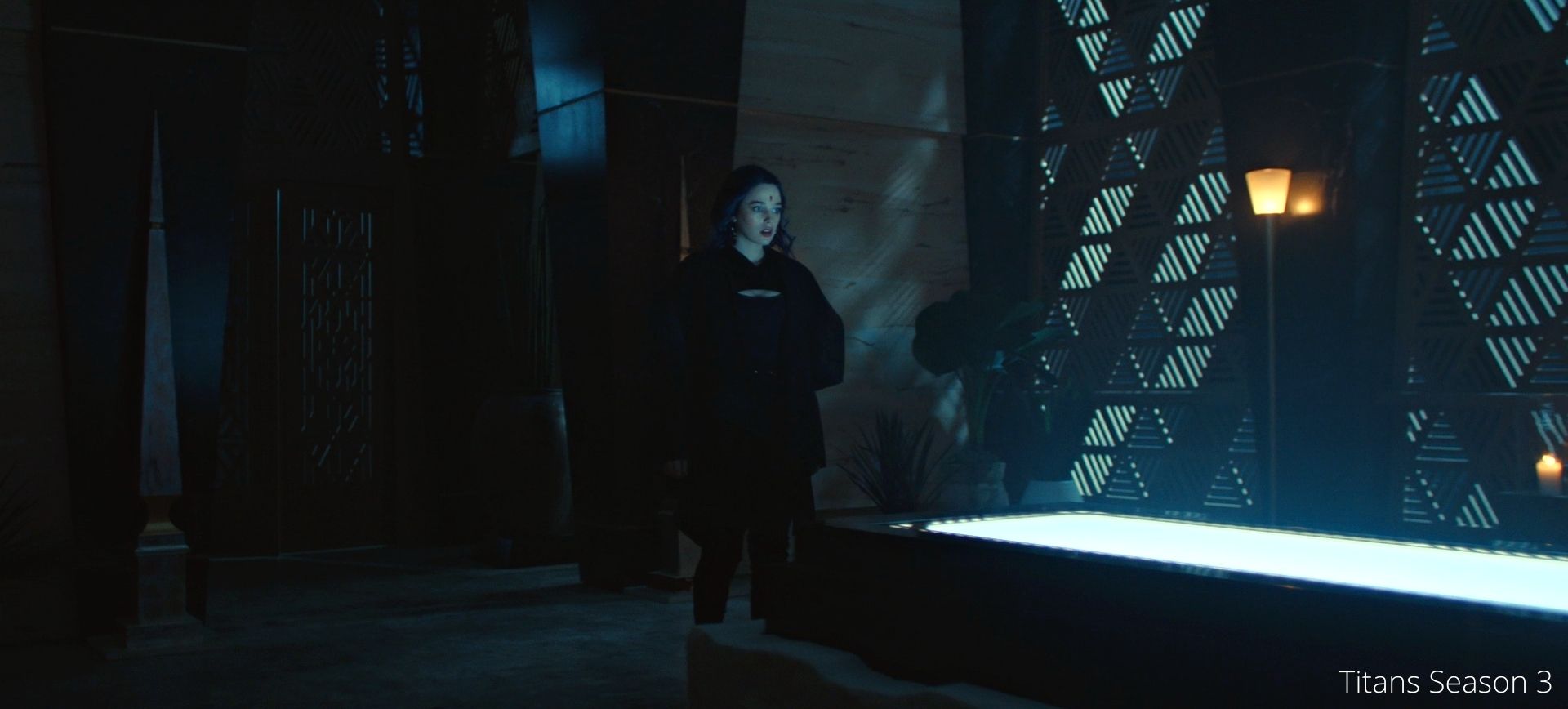
    Out in the colorful regular world, Rachel Roth is living with the Amazonians in Themyscira, wanting to bring Donna back to life. The idea that Rachel was able to simply decide to go to Themyscira and then live and train there as one of them is ridiculous. That aside, the character was both still annoyingly juvenile in blatantly disrespectful of the Amazonian culture at every possible moment, but seemed to have some sort of growth when she was, essentially, put in time out. Hopefully, her time here off-screen will be used as an excuse for her having better control of her powers going forward and make her less of a constant liability to the Titans. She did provide a lovely admission that the Titans never actually did much work when she was with them.

    While, as depicted, Donna and Tim seem to be able to simply will themselves back to life, it’s unclear if there is more behind their ability to do so. Hank didn’t make it over the bridge, however, one has to wonder what body he would have woken up as he previously exploded. Hank not returning made the most sense and at least gave some additional finality to that emotional arc, including a sweet reunion with his brother. Bringing any character back to life, especially so soon after their death, cheapens and lowers too many stakes, but Donna’s revival was entirely foreshadowed and Tim was too new and clearly significant to actually be removed from the story.

    Donna’s first course of business upon being reanimated after months was, for some completely unknown and likely absurd reason, to rescue Bruce Wayne from suicide by fire. Yes, Bruce has returned to the screen, and apparently, he is still generally deranged. He dramatically finalized a last will and testament and then set his castle on fire with him in it. At this point, the question still remains why Titans has such a Bruce Wayne complex and why we need to keep caring considering we have been told or shown time and time and time and time again that he is terrible. 

    Episode 9 still deserves a toast—despite being dealt a hand that should never be able to win, it managed to make the most of it. The premise and context of it all made less than zero sense and had no place in the currently established Titans universe, its story devices were lazy and corny, but it entertained like no other. So, here’s to this episode—and the viewer—having some fun.

  • REVIEW: ‘Doom Patrol’ Season 3 Episodes 1-3

    REVIEW: ‘Doom Patrol’ Season 3 Episodes 1-3

    The premiere of Season 3 of Doom Patrol picks up right after the cliffhanger that was the pandemic-induced Season 2 finale. While all still seems lost for the briefest moment, Dorothy quickly regains control of the Candlemaker by putting it in a sort of timeout “as long as it takes for us to be friends again.” It’s a quirky, maybe sweet, way to look at the relationship between the apocalypse and a hundred-year-old “little girl,” but the episode makes quick work of that entire arc. It feels too easy after all this time, but the series was probably just ready to move on. With Niles apparently dead, the characters and the viewers are also supposed to move on, but the next couple of episodes promise that he will continue to linger around for a bit.

    If Episode 1 does anything, it really goes character by character to remind us of where exactly they were literally and mentally the last time we saw them and sturdily place them on a new track. There’s definitely a lot going on, but arguably it’s a reflection of all the stuff going through the characters’ heads in light of their complex and contradictory feelings about the Chief’s death. Cliff is still resentful that his metal body is pretty terrible, but now his human brain seems to be letting him down, possibly with Parkinson’s. The Negative Spirit is taking Larry to space (for a very brief moment). Vic is dealing with the aftermath of his relationship with Roni, making it worse for himself by letting her get away with another crime. But Jane and Rita really do the most work.

    Jane’s story picks up in the Well right where we left her last season. She rescues Harry the stuffed lamb and her and the other personalities band together to take on “Miranda,” aka the manifestation of Kay’s psychological trauma, to make it to the surface the very moment “Miranda” steps off the real-world table to hang herself (themselves?). It’s an intense, but short, moment—it definitely sets the stage for Jane to change in some way having been affected by all of that journey built by Season 2. Her relationship with Kay is clearly different, and she seems much more tuned in to Kay than she ever was before. These first few episodes make it clear that Kay is starting to grow and is even trying to take care of Jane, rather than the other way around. The series’ ability to keep Jane’s narrative so high quality and long-running is insane. The very literal depiction of trauma manifesting in someone is pretty stunning. Even though they make Jane/Kay’s mind so supernatural, it honestly might be the most real and grounded part of the series if you cut back on taking it literally.

    Rita’s moments are less dramatic but certainly the most integral to the burgeoning plot. The episode makes an effort to tell us that the characters have a very messy grieving period to mush through with Niles’ death, but Rita represents this the most. As she tells Larry, “our relationship to the Chief was complex, I wouldn’t expect our reaction to his death to be anything but.” Coupled with her breakdown at community theatre rehearsal, she truly portrays this aspect the best by far. She discovers that Niles left her a key to a “secret”, which turns out to be an alarm for some sort of danger. Rita outright ignores the call to heroism, and her journey there is put in focus and set up for future episodes. Her general identity crisis that follows literally leaves her as a puddle that has to be carried around in a sack.

    The alarm turns out to be a woman who does not reveal anything about herself arriving in some time travel/underground drill machine. While it’s only practical to assume that she will be a significant villain called Madame Rouge, here she’s incredibly goofy, but her demeanor is just serious enough that she keeps some facets of threatening. The fact that she shape-shifts sets up countless potential snags for our heroes and may curiously tie into Rita’s own abilities.

    Episode 2 sees the group take an uncomfortable vacation to a ghost town of a resort. The Brotherhood of Evil, along with the Brain and Monsieur Mallah, is briefly introduced, and we mostly get acquainted with Garguax, who was hired by the Brotherhood to assassinate a target that looks like Rita. After decades of no luck, he gives up and lives in peace at the same resort. When he and our main characters come face to face, the awkward banquet hall scene is both hilarious and meaningful concerning how the group talks to Garguax as well as how they talk amongst and about themselves. Vic is dead set on taking on obvious supervillains, while the rest of the group is adamant that they are not a super team.

    While Episode 2 was great in a very laid-back and comforting way, it also ended with them all being killed by Garguax’s still-eager henchman. Episode 3 is an absolute delight with the group navigating the afterlife. While Cliff, Vic, and Jane/Kay all visit family members, Rita is somehow still conscious and instead visits her ongoing self-identity problem once more: “He [Niles] literally handed me my destiny and I went on vacation.” The main players in the episode, though, are the Dead Boy Detectives who agree to help Dorothy and Larry bring back the rest of the team before they are truly, fully dead. Charles and Edwin, played by Sebastian Croft and Ty Tennant respectively, are delightful. After watching Episode 3, it is not all that surprising that ‘Dead Boy Detectives’ got an HBO Max pilot order. Add them to Larry’s mental breakdown and you’ve got a solid concoction. 

    Overall, one of the biggest concerns is how separate the heroes’ plot lines seem to have gotten last season Episodes 1 through 3 fluctuate on that. Doom Patrol generally does best when the characters are all very scrubbed together on shared absurd terrain. Episode 1 still felt too separated, but Episodes 2 and 3 represent the series’ skill at creating isolated adventures within kooky and fun newly-built worlds. It’s reminiscent of earlier Season 1 Doom Patrol where the group is placed in random situations with each other non-stop while the details of the story are driven by their own actions and personalities in contrast to the wild components happening around them. The first three episodes of the series are certainly promising for a fulfilling third season. Seeing where Madame Rouge and the Brotherhood of Evil take the villainous element from here will be integral, but the opening of Season 3 suggests that our team still has the knack for its classic, dark, absurd, and hysterical exploits. 

  • REVIEW: ‘What If… Thor Were an Only Child?’ – Episode 7

    REVIEW: ‘What If… Thor Were an Only Child?’ – Episode 7

    The most recent episode of What If… ? is certainly the most casual and light episode to date which is sure to please the select group of fans who have been complaining that the episodes have consistently been overly tragic. Exploring Thor and Midgard’s fate had he not grown up with Loki as a brother ends up as a fun romp with little more to offer outside of its own bubble…until that phenomenal ending.

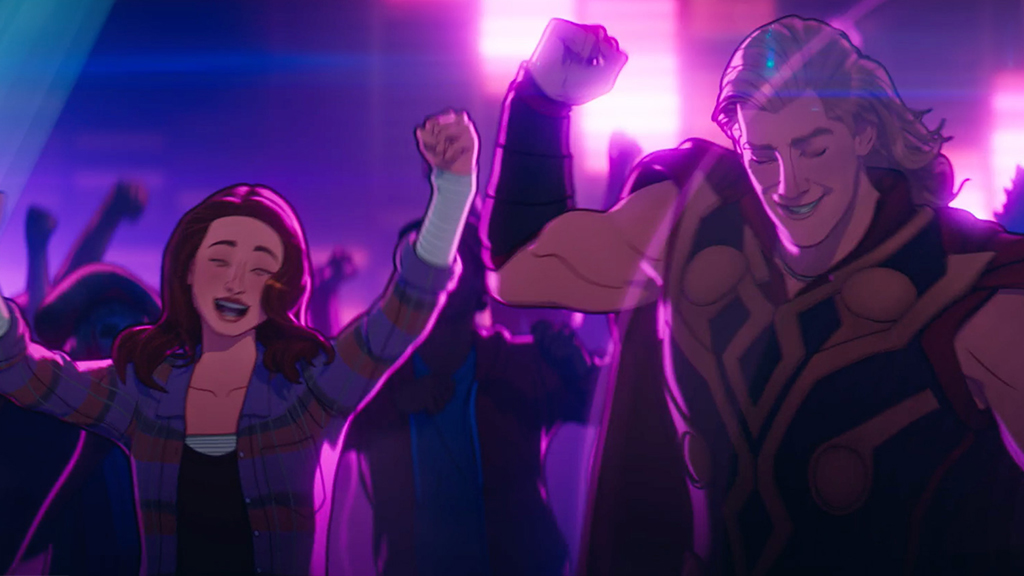
    Turns out, having Loki as his adopted brother was the element that prevents Thor from becoming the aptly nicknamed “Party Thor”, or a full-on raging frat bro throwing wild and destructive parties across the cosmos. Not only has Thor himself been remixed, but his influence seems to have spread across the Nine Realms and beyond, as countless other major and minor characters make appearances at these legendary parties as party animals in their own right. 

    This episode is notable for having virtually all of its characters voiced by the original actors, though there are too many to specifically mention. Chris Hemsworth’s Thor feels like the Thor: Ragnarok version of the character, but with some added frat boy persona and devoid of any semblance of seriousness or responsibility. Ironically, Loki taking the Jotunheim throne still has the two ending up as “brothers from another mother.” He becomes the most laidback and seemingly least motivated with glorious purpose iteration of the character the MCU has given us. Tom Hiddleston’s performance is integral to pulling it off.

    Natalie Portman’s Jane Foster is arguably the main character of the episode as her actions drive the plot. Thor and Jane Foster’s kindling romance is highlighted throughout the episode, but it’s her ultimate resolve to stop the alien invasion from destroying the planet that truly pulls the strings with S.H.I.E.L.D.’s involvement. Kat Dennings’ Darcy is true to character and the voice work is perfectly corny to match her. Seth Green’s Howard the Duck’s three-ish lines landed so well that they are some of the most memorable lines of the entire episode. 

    The result is a quirky alien invasion story that sees S.H.I.E.L.D. under the acting leadership of Maria Hill – due to Fury being incapacitated from a Korg party foul – responding to the very real threat of Thor’s planetary party destroying many parts of Earth, if not the entire planet. This is the vessel through which Alexandra Daniels’ Captain Marvel makes her true debut in What If… ? (apart from her very brief cameo in Episode 3). From this, we get epic showdowns between powerhouse Carol Danvers and the God of Thunder. The two are a solid duo and the matchup is no doubt another example of the series having fun with which characters they would want to see go up against one another.

    Still, the plot is ultimately a classic teenager throws a party while parents are out of town, then finds out mom is coming home, and frantically tries to clean up the mess. Of course, said teenager somehow succeeds at the very last minute. Frigga still figures out that Thor was not studying as part of cultural exchange, but nevertheless, the classic comedy trope is all over this episode.

    At the end of the day, Episode 7 is arguably a throwaway episode but not necessarily in a bad way. The writers and actors clearly had fun with it, and it was a lighthearted as well as a rose-colored view of what alternate timelines can provide. It also took incredible advantage of the talent available to create a melting pot of MCU characters in the form of a big party. Even Nebula needs a night to drink her family issues away.

    The Watcher goes out of his way to acknowledge that this timeline’s story is an example of a simple happy ending. That is, until, the exciting final few seconds that feel like a classic post-credits scene setting up the “big bad” for an eventual crossover showdown. Here, we see what appears to be Vision as Ultron with a sentry army coming through some type of portal. Not just that, he also seems to possess all six Infinity Stones. 

    Almost certainly, this is something the Watcher might feel the need to address sooner rather than later considering that he seems to be completely caught off guard at Vision-Ultron’s arrival. Also, there are only two episodes left in this season. Given what What If… ? has either already provided or teased it can provide, a culmination of the entire season into an overarching crux will surely, and hopefully, be something worth waiting for.