Category: Reviews

  • Review: ‘Thunderbolts*’

    Review: ‘Thunderbolts*’

    Over the years, Marvel Studios’ approach to storytelling has increasingly been the focus of criticism. The framework within which the studio chooses to spin its narrative, the “Marvel formula,” has come under fire for its predictable plot structure, overreliance on humor, and willingness to sacrifice character-driven stories to advance the MCU’s longform story. As the studio’s Multiverse Saga has moved forward, the type of nuanced performances that allow for true excavation of a character have been forgone in favor of spectacle and it has become increasingly difficult to “spectacle” an audience that grew up with fully realized heroes flying around on screen. That hasn’t stopped Marvel from attempting to outspectacle its latest spectacle and the result has been a saga largely composed of vapid films, void of any emotional resonance. And along comes Thunderbolts*

    Piecemealed together by a series of writers, Thunderbolts* cavorts in insouciance for the Marvel formula, delivering something audiences haven’t seen from the studio in quite some time: a story galvanized and energized by its characters rather than visual effects and nostalgia. Eric Pearson, Joanna Calo and Lee Sung Jin Frankensteined a script that provided director Jake Schreier the opportunity to tell an MCU-set Jekyll and Hyde (that’s an entirely different monster) story, steeped in metaphysics and exploring ontological dependence. A non-empty set depends on its elements and the respective successes of both the Thunderbolts and the Thunderbolts* are entirely dependent on their respective elements.
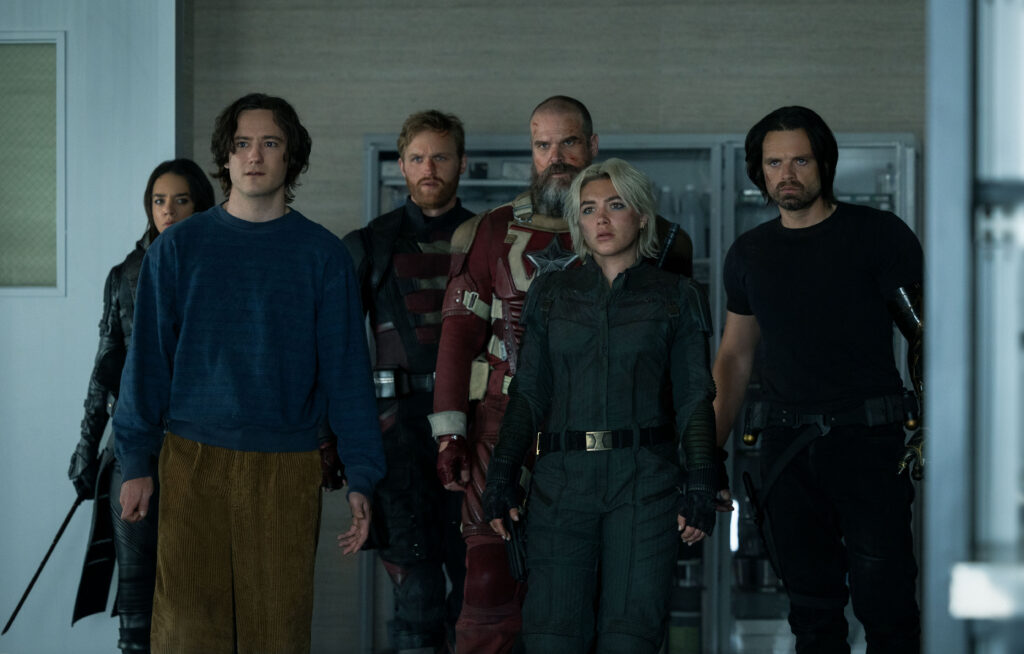
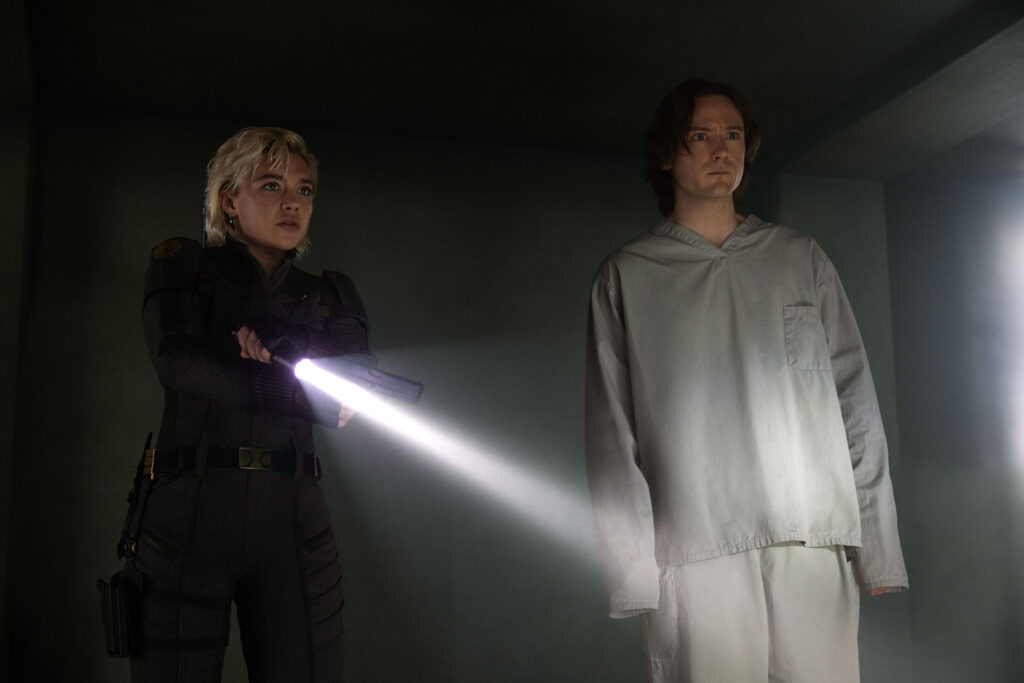
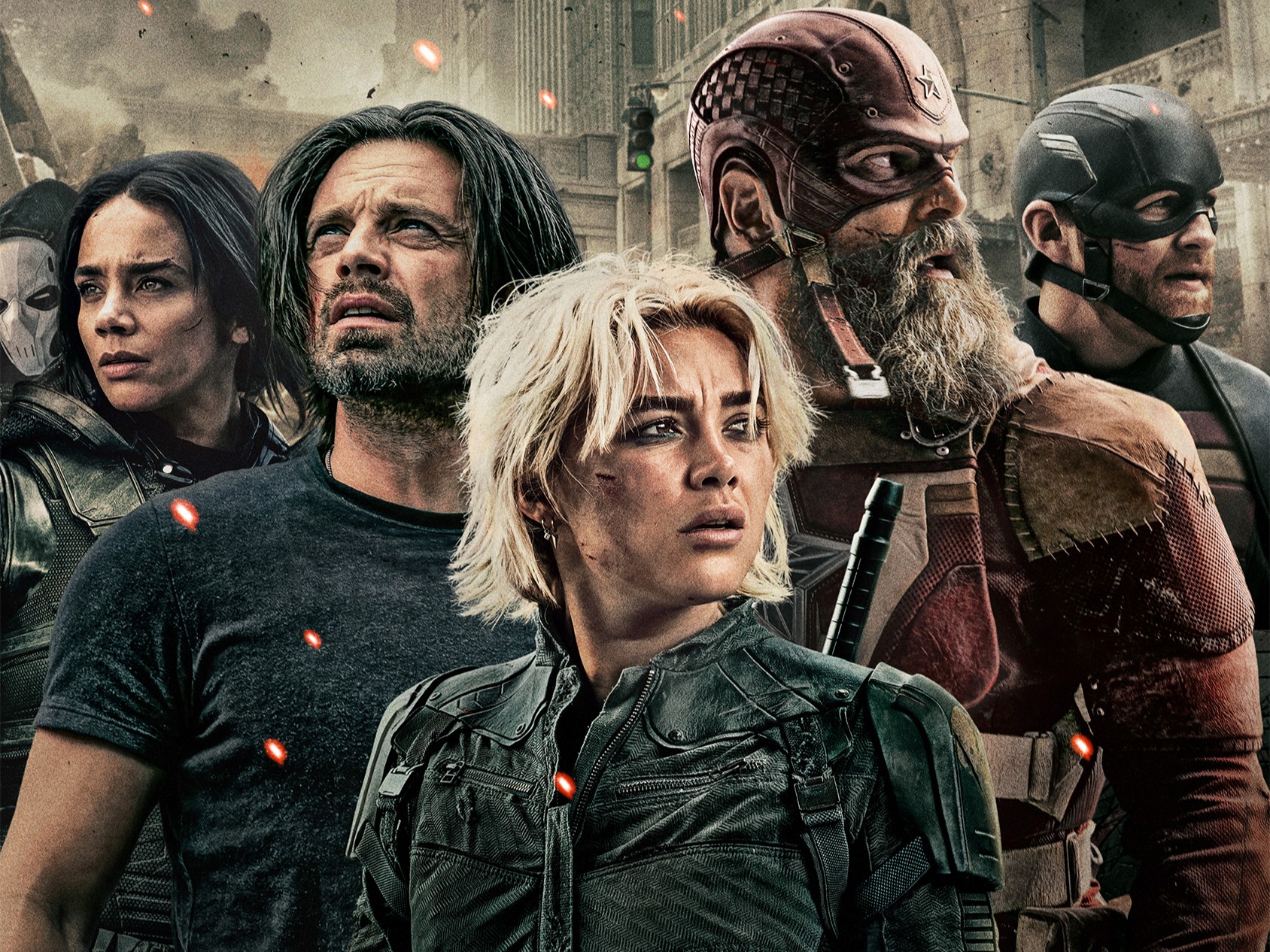
    Ghost (Hannah John-Kamen), Bob (Lewis Pullman), John Walker (Wyatt Russell), Alexei Shostakov/Red Guardian (David Harbour), Yelena Belova (Florence Pugh) and Bucky Barnes (Sebastian Stan)in Marvel Studios’ THUNDERBOLTS*. Photo by Chuck Zlotnick. © 2025 MARVEL.

    You’re talking about a group of characters that have done a lot of bad things, and maybe are struggling with feeling good about themselves. There’s an element that does speak to mental health, and loneliness, and how some of the darkness that we experience in our lives can’t be necessarily fixed, but can only really be made lighter through connection and finding others

    Director Jake Schreier

    Working solo, the titular team wouldn’t survive the film’s first act and, reading between the lines of some comments recently made by Schreier, it sounds as if the film might have been on track to turn out to be another hollow, one-note action flick (Schreier described it as a small-scale “Die Hard thing”) that wouldn’t have survived a critical bashing before Calo and Sung Jin weaved heart and emotion into Pearson‘s original script. Instead of another potential dud, the reworked script turned into the studio’s most impressive Multiverse Saga film to date, putting character first without sacrificing spectacle, delivering some of the most impressive action sequences the MCU has seen in a decade, while telling a story about human trauma that powerfully reverberates with the audience. Whatever Thunderbolts* originally was, it evolved into one of the studio’s most entertaining and evocative films.

    Making a superhero film featuring a cast of charming, misfit losers meant that Thunderbolts* was inevitably going to be compared to Warner Bros. Suicide Squad films and Marvel’s own Guardians of the Galaxy. Thunderbolts* never feels derivative of those projects, however, because it leans so much harder into darker, more uncomfortable emotions and corners of human nature that are typically not part of superhero fare. For reasons each their own, Yelena Belova, John Walker, Ava Starr and Antonia Dreykov–all of whom find themselves in the employ of Julia Louis-Dreyfus‘ Valentina Allegra de Fontaine–have lived large portions of their lives as disposable tools to be used at the whims of others. Bucky Barnes and Alexi Shostakov–neither of whom are working for Julia Louis-Dreyfus‘ Valentina Allegra de Fontaine–have suffered the same fate. In one of the film’s more powerful moments, Bucky, who should know better than anyone given his past as The Winter Soldier, finds himself standing in the same shoes as those who were his masters in the past, seeking only to use the others as tools for his own ends without any value for consideration for them as human beings. Indeed his desire to succeed and inability to see them as anything other than means to an end prevents him from acknowledging their warnings about the film’s true threat. While parts of the scene are played off humurosly, it’s deeply tied to the film’s exploration of how emptiness can consume and how power can corrupt.
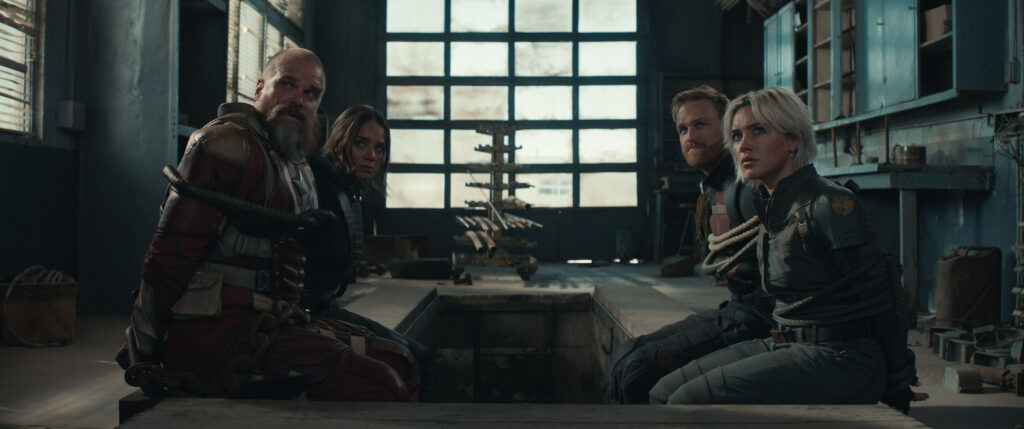
    L-R): Alexei Shostakov/Red Guardian (David Harbour), Ghost (Hannah John-Kamen), John Walker (Wyatt Russell) and Yelena Belova (Florence Pugh) in Marvel Studios’ THUNDERBOLTS*. Photo courtesy of Marvel Studios. © 2025 MARVEL.

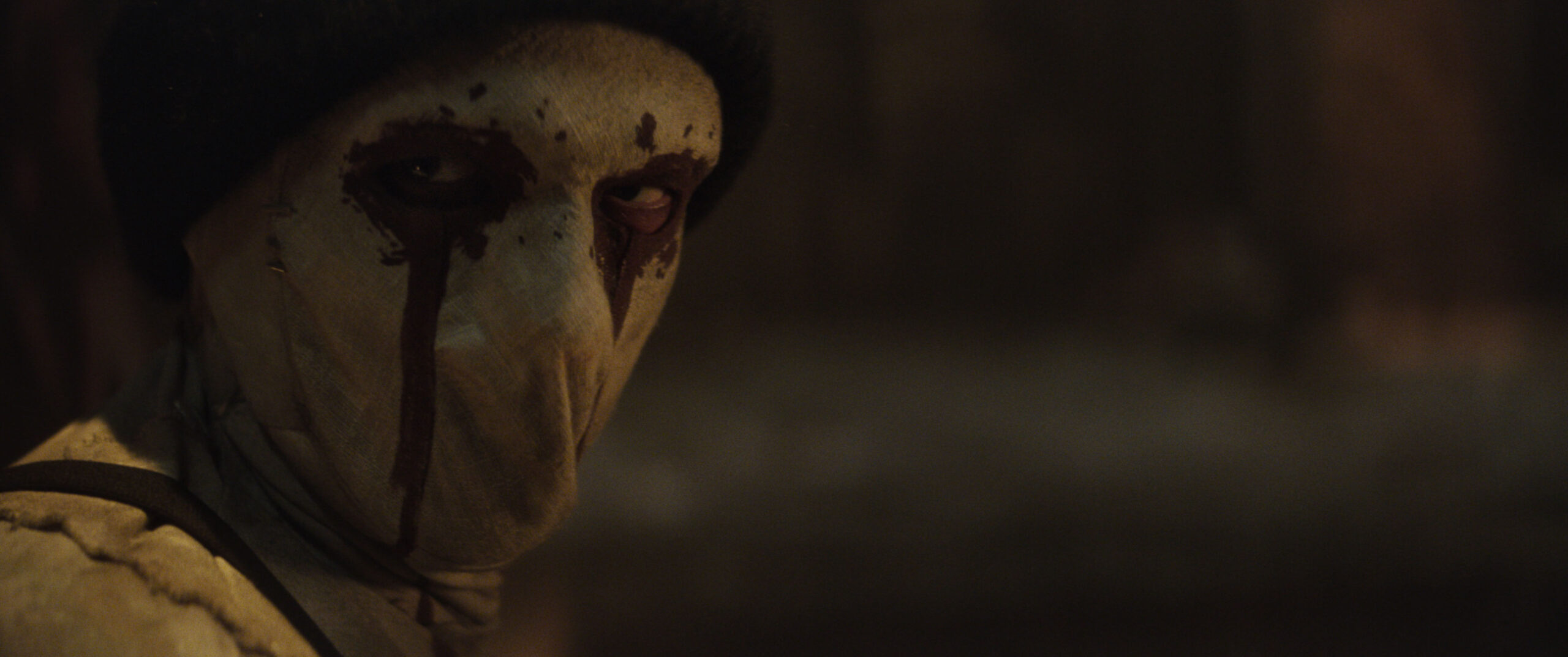
    And we all have Paul Jenkins to thank for that. At the center of Thunderbolts* is Lewis Pullman‘s Bob, a tortured meth addict who volunteered to be a test subject for a program he’s told will help him and humanity reach new heights: Project Sentry. Though the studio kinda-sorta tried to hide it, Bob is Robert Reynolds, aka The Sentry, a Marvel Comics character created by Paul Jenkins. Jenkins always intended for Reynolds to be a study in mental health and while the MCU’s iteration of the character is not a beat-for-beat adaptation, he is as Jenkins intended him to be. Pullman‘s quirky, unassuming Bob–the only new character on the film’s main cast–enters the fray in the first act and quickly becomes the centerpiece of a story that subverts what fans have come to expect from the Marvel Cinematic Universe.

    So I knew from the beginning that Sentry was the Void, and this story was about mental health. It was about two sides of him. And in part, it was about the part that he couldn’t accept. The Void is part of him.

    Paul Jenkins
    (L-R) Yelena Belova (Florence Pugh) and Bob (Lewis Pullman) in Marvel Studios’ THUNDERBOLTS*. Photo by Chuck Zlotnick. © 2025 MARVEL.

    Schreier‘s subversion of the Marvel formula comes attached to a story centered around the continued bastardization of a formula foundational to the ongoing MCU narrative: the Super Soldier Serum. As Stanley Tucci‘s Abraham Erskine forewarned, the Super Soldier Serum amplifies everything that already exists inside the subject. Steve Rogers–a good man–became Captain America, the Senintel of Liberty and the Symbol of Truth–while Johann Shmidt became the Red Skull–the aberrant face of the Nazi Third Reich. A bit of dialogue in the second act of Thunderbolts* illumintates just how far the science of the MCU has progressed since then, however, as Bucky Barnes, Alexis Shostakov and John Walker compare and contrast their varieties of the serum, all while the most volatile and unethical version of the serum has created the most imperfect Super Soldier yet in the Sentry. By injecting the latest and greatest version of the serum into someone broken and hollow, Valentina Allegra de Fontaine makes good on Erskine’s warning, amplifying the void inside Robert Reynolds to the point where it manifests itself as The Void, an omnipotent shadow version of The Sentry. Over the course of the film, The Void seems to be held at bay by Bob, though physical contact with him drags the characters into memories of their own, dark traumas. However, once he’s finally unleashed in what begins as an Avengers-esque third act, the film takes a welcome detour from the Marvel formula. This Battle of New York, fought inside The Void, is the battle we must all fight from time to time: a battle against our worst self. And none of these characters can make it out without the others.

    It’s no surprise to me, I am my own worst enemy, ’cause every now I then I beat the living shit out of me.

    -Lit

    Fascinatingly, Thunderbolts* instantly becomes the standard for “new Marvel” while paying homage to one of the MCU’s most important legacies. Perhps coincidentally, it also works wonderfully as commentary on the struggles of the Multiverse Saga. The Thunderbolts and Thunderbolts* ride parallel rails. Pullman‘s Bob becomes analogous with Marvel’s Multiverse Saga struggles. Just as Julia Louis-Dreyfus‘ Valentina Allegra de Fontaine carelessly dosed Robert Reynolds, a hollow shell of a man, with an all-new, all-different formula intended to grant him the power of a thousand exploding suns, the studio carelessly assumed the Marvel formula would carry the hollow shells that were Ant-Man and The Wasp: Quantumania and Thor: Love and Thunder to all-new heights. But that did not happen. The MCU was in jeopardy, both in and out of universe…and along came the Thunderbolts and Thunderbolts*.
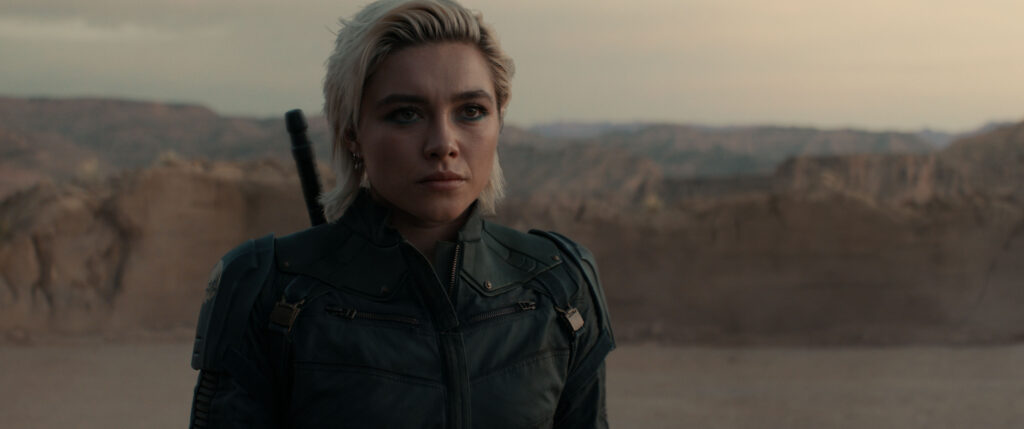
    Yelena Belova (Florence Pugh) in Marvel Studios’ THUNDERBOLTS*. Photo courtesy of Marvel Studios. © 2025 MARVEL.

    The serum amplifies everything that is inside, so good becomes great; bad becomes worse. This is why you were chosen. Because the strong man who has known power all his life, may lose respect for that power, but a weak man knows the value of strength, and knows… compassion.

    -Doctor Abraham Erskine, Captain America: The First Avenger

    Playing with a stacked deck that nobody saw coming, Thunderbolts* combines fresh visuals (Schreier‘s eye for action and unique shots will have him on every studio’s list), a pair of emotionally powerful performances by Marvel’s brightest star, Florence Pugh, and Pullman, and, yeah, some MCU humor delivered by David Harbour and, surprisingly, Wyatt Russell. If Thunderbolts* is representative of what can be accomplished when the studio is willing to tinker with its formula, these new* heroes will be at the forefront of an intriguing renaissance for Marvel Studios.

    Sources: Comic Frontier, EW
  • Review: ‘Andor’ BBY 4

    Review: ‘Andor’ BBY 4

    Without the weight of expectations, Season 1 of Andor cemented itself as a key chapter in the history of the galaxy far, far away and one of the best Star Wars projects ever made. Season 2 of the Tony Gilroy-created project could not be debuting under any more radically different circumstances. Following a pair of streaming series (The Acolyte and Skeleton Crew) that struggled to find audiences and didn’t set the galaxy on fire, Lucasfilm finds itself hoping that Season 2 of Andor, a series that Star Wars fans initially questioned the need for, will right the franchise’s starship.

    Unsurprisingly, that’s not a problem Gilroy concerned himself with addressing in the first pod of episodes, choosing instead to continue to tell his story in his way. Despite orchestrating a masterpiece in Season 1’s incredibly intense finale, Gilroy abandoned all momentum gathered on that downhill ride and started Season 2 back down at the bottom of a brand new narrative plot hill.

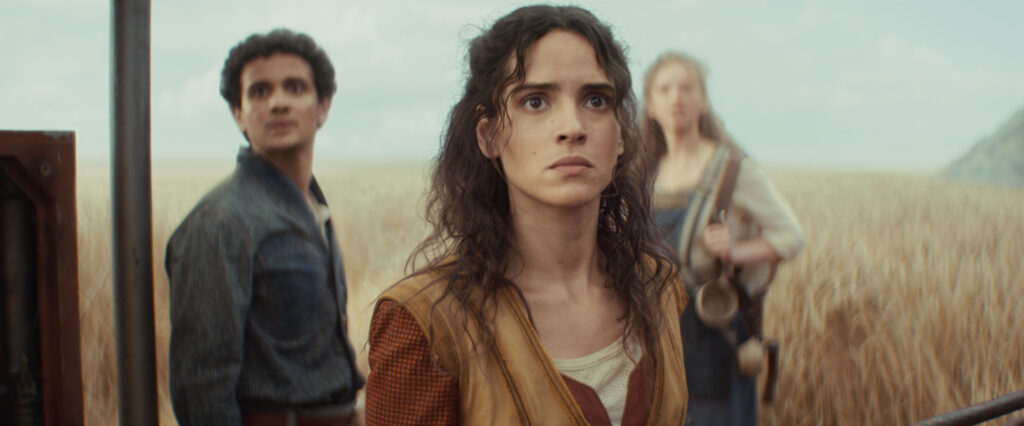
    Bix Caleen (Adria Arjona) in Lucasfilm’s ANDOR Season 2, exclusively on Disney+. ©2025 Lucasfilm Ltd. & TM. All Rights Reserved.

    Though the series bears the name of Diego Luna‘s character, it quickly became clear in Season 1 that Andor isn’t simply the story of Cassian Andor but rather the story of the unnumbered faceless, nameless people who may not have even known they were Rebels but whose lives, actions and deaths made the grand gestures of the Rebellion possible.

    One of the great thrills of making Andor is the scale of the story and the number of characters we’re able to meet — ordinary people, Imperial overlords, passionate revolutionaries. They are real people making epic decisions, all of them staring down questions with terrifying consequences. Cassian’s journey is the soul and spine of our story, but it’s the choir that makes the show. I’m so excited for audiences to see where we go in Season 2.

    -Tony Gilroy

    Set one year after the events of “Rix Road”, the first three episodes of Season 2 cover three days in the year 4 BBY and reveal a Rebellion barely clinging together and an ambitious Empire that’s grown increasingly contemptuous of its populace. Episodes 1-3 spin multiple, disparate narratives that take place in vastly different settings. As Bix, Brasso and Wilmon bide their time on the simple, pastoral planet of Mina-Rau, Mon Motma’s family prepares for her daughter’s marriage at their extravagant estate on Chandrila. While Cassian navigates shit’s creek without a paddle while held prisoner by the Maya Pei brigade (a faction of Rebels mentioned by Luthen Rael in Season 1), Orson Krennic and Dedra Meero orchestrate a multi-facted plan to gain control of Ghorman…and the foreshadowing of what will ultimately take place there is never subtle. The trio of episodes produces a beautiful contrast between the buttoned-up and decisive Empire and the threadbare, irresolute Rebellion. While the Empire is playing The Campaign for North Africa, the Rebellion is playing Rock, Paper, Scissors, verily.

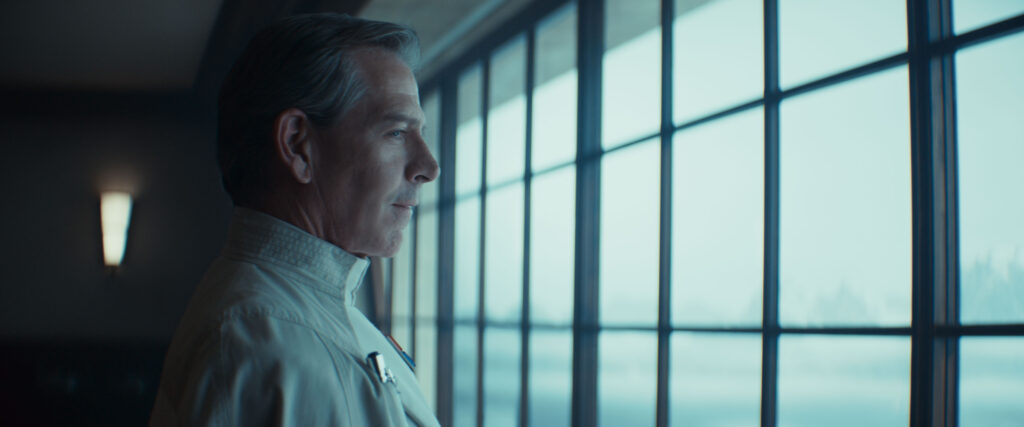
    Director Orson Krennic (Ben Mendelsohn) in Lucasfilm’s ANDOR Season 2, exclusively on Disney+. ©2025 Lucasfilm Ltd. & TM. All Rights Reserved

    As before, a good deal of the new episode’s runtime is spent with members of the Rebellion and the Empire whose names you can’t quite remember even if they look a bit familiar. However, one way in which the new season diverges from its predecessor is that it starts to make very clear which of those Imperial faces fans should recognize as the villain(s). Despite having plenty of Imps to dislike, no single character really deserved, much less earned, the title of “Big Bad.” Season 1’s baddie was “The Empire.” That all changes quickly as the ambition of Denise Gough‘s sneering Dedra Meero has caught the eye of Orson Krennic. During a top secret Imperial retreat at the Maltheen Divide, Krennic–what a delight it is to have Ben Mendelssohn back as the snarky senior officer–singles out Meera to lead the destabilization of Ghorman…through any means necessary.

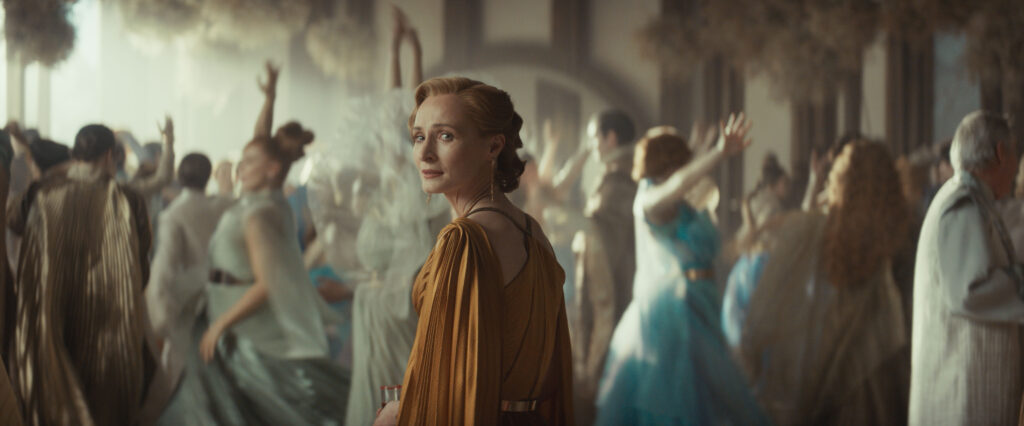
    As the Empire’s plan for energy independence is born, Mon Mothma dances the night away in a wild release of frustration stemming from the realization that the Rebellion may be stillborn. Throughout the three episodes, the stark contrast of the comfort with which the Empire plots to disparage, displace and decimate an entire race to the tension Mothma, Luthen and Cassian (and the audience) experience while attempting to complete far smaller scale tasks grows, painting a clear picture of an underdog who is dangerously under water. But therin lies the beauty of Andor: nothing can be easy.

    Mon Mothma (Genevieve O’Reilly) in Lucasfilm’s ANDOR Season 2, exclusively on Disney+. ©2025 Lucasfilm Ltd. & TM. All Rights Reserved.

    And in this pod of episodes, nothing is. Tension grows. People are lost. A Stormtrooper can aim. It seems clear that the well-oiled machine of the Empire will surely put down the dysfunctional Rebels before they can grow into something larger. As tough as the circumstances are on the Rebels, watching those characters experience them is as tough. Gilroy’s first episodes remind us all that Andor will not sacrifice detail for spectacle. In that way, when big action arrives, it feels even more grand because along the way, the history of Chandrila, conversations between leaderless Rebels and an awkward visit from Syril’s henpecking mother serve to reimmerse the audience in the slow burn corner of the galaxy far, far away.

    Though at times the burn may feel a bit too prescribed and too slow, Gilroy continues to stratify significance and embed urgency into the details of these first three episodes. While Luthen and Kleya struggle to communicate with Cassian and the funding once promised to Mon by Tay Kolma looks to be lost, the pod reveals that during the year that has passed since the Ferrix Riot, the Empire’s evil reach has extended to every part of the galaxy. As Brasso, Bix and Wilmon learn, no corner of the universe is safe for the Rebels, the Empire views everything and everyone as its property and no laws, ethics or poltical push back will stop them.  Indeed Andor may resonate sharply with the audience, perhaps too sharply for some; however, the best art makes use of the real world in which it was created, as Star Wars always has. It’s just that Andor does it better than any Star Wars ever has.

    Sources: Deadline,

  • ‘Daredevil: Born Again’Episode 8 Review-The Guardian Devil

    ‘Daredevil: Born Again’Episode 8 Review-The Guardian Devil

    For the bulk of the first seven episodes of Daredevil: Born Again, the series felt as smoothly paced as any streaming series Marvel Studios has produced. While Netflix edge lords may have bemoaned the lack of gratuitous violence, it was rare that the first seven episodes felt either dawdling or rushed. Somehow, Dario Scardapane and Jesse Wigutow’s script for Episode 8, “Isle of Joy”, managed to accomplish both.

    Despite some truly big league cinematography and a major surprise in the closing moments, Episode 8 slothfully moved through some truly meaningless ground while also tackling a half dozen or so subplots. Every second spent with Michael Gandolfini‘s Daniel and Genneya Watson‘s BB Urich feels much like the parts of the Netflix series that the new creative team seemed intent on eliminating. Meanwhile, the pieces to the puzzle the audience has been missing to fully understand Wilson and Vanessa’s plans are more-or-less “oh by the way’d” into the runtime.

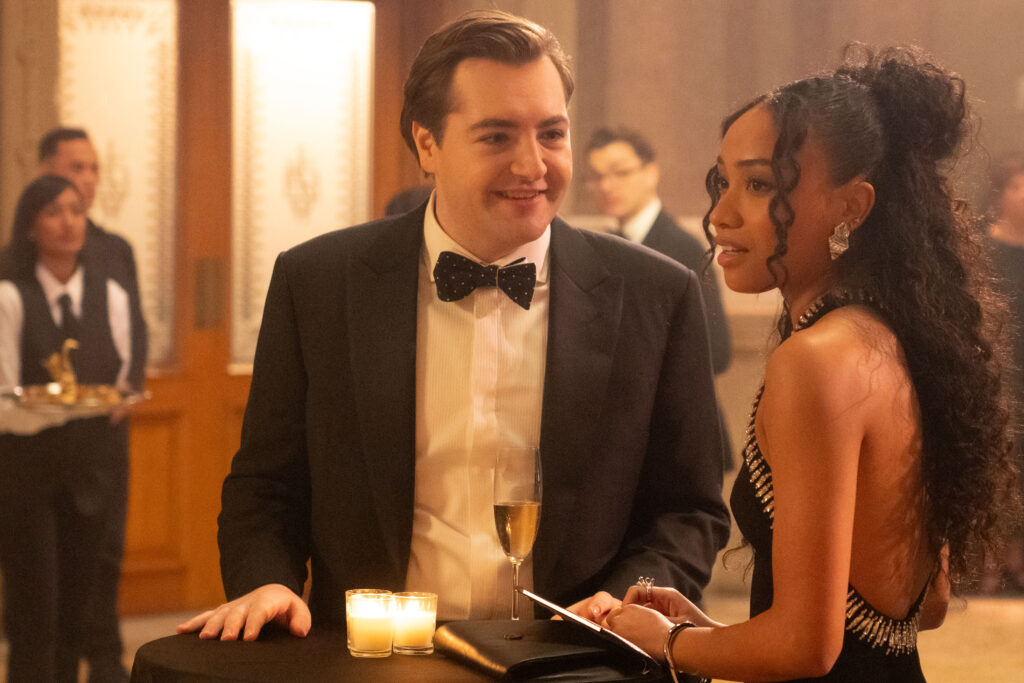
    (L-R) BB Urich (Genneya Walton) and Daniel Blake (Michael Gandolfini) in Marvel Television’s DAREDEVIL: BORN AGAIN, exclusively on Disney+. Photo by Giovanni Rufino. © 2025 MARVEL.

    Of course, without the ability to see the entire two-season plan, some of what took place in Episode 8–and in bits and pieces of other episodes–may still come into play in the future; however, it’s probably worth pointing out now that some moments that may have seemed to matter won’t be followed up on in Episode 9…and maybe never again.

    With the season finale ahead and Matt having made the choice to be a good man and defend his enemies, as Bullseye said he should, the finale could prove interesting. Will Fisk’s near-death experience make him consider backing off his mission to put Daredevil behind bars? On his own and seriously injured, will Matt muster up the energy to put up a fight, as he always has? Will the Netflixers find themselves immersed in the darkness and blood that made them love Daredevil 10 years ago? Will you be able to see what’s happening in the episode of you’re watching in a room where there’s any natural light? We’ll all find out soon, True Believers!

  • ‘Daredevil: Born Again’ Episode 7 Review: Devil By Day

    ‘Daredevil: Born Again’ Episode 7 Review: Devil By Day

    Pablo Picasso once sort of-famously explained that “the purpose of art is washing the dust of daily life off our souls.” That idea put him squarely at odds with the 19th century philosophy of “art for art’s sake,” which valued aesthetics over the idea that art should have some larger utility within society. It’s then worth pondering how Picasso might have felt about Episode 7 of Daredevil: Born Again, “Art for Art’s Sake.” Despite featuring a Daredevil daring to buckle his swash in broad daylight and some shooting and some blood and shit, “Art for Art’s Sake” somehow feels more like the “filler episode” fans seemed convinced Episode 5 would be.

    Though it’s not a poor episode, “Art for Art’s Sake” is the first time—and truly the only time—that Daredevil: Born Again felt like a stitched-together show. It seems unlikely that Disney ironically placed the title it did on the episode; however, that’s essentially how this episode fits into the bigger picture. It exists to exist and nearly all of what happens within its runtime has no larger utility in the structure of the series other than to put a disappointing end to the one arc that was beginning to approach entertaining.

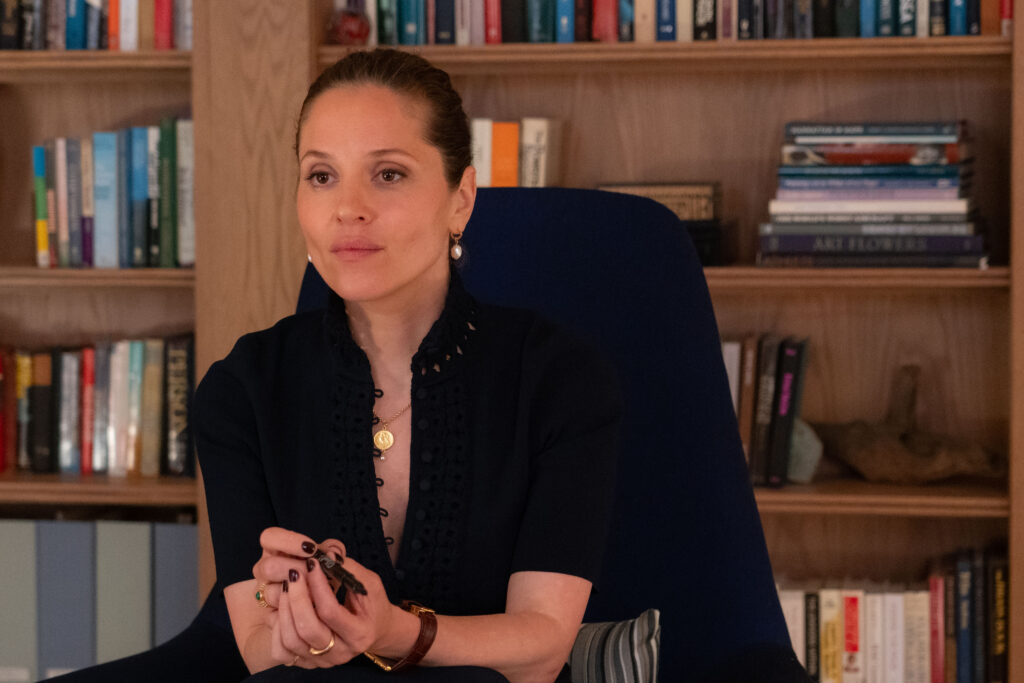
    Heather Glenn (Margarita Levieva) in Marvel Television’s DAREDEVIL: BORN AGAIN, exclusively on Disney+. Photo by Giovanni Rufino. © 2025 MARVEL.

    While screening the series in early March, it was right about the time that Muse died that I began to realize that not only does Daredevil have a Kingpin problem, but also that Daredevil has a Kingpin problem. For the third time in four seasons (and early returns from production on Season 2 would indicate it’ll become the fourth time in five seasons), Wilson Fisk is the primary antagonist of a Daredevil series. Yes, Dex was the physical opponent in Season 3 of Daredevil and Matt got to fight crazy buzzsaw costume guy once but with Muse, the creatives had a chance to do something really special…and instead they made him into background noise so that we could get to some more Matt and Wilson stories. I understand the place Fisk holds in the Daredevil mythos; however, it’s ok to let the Fat Man take a break and give Matt something else to do.

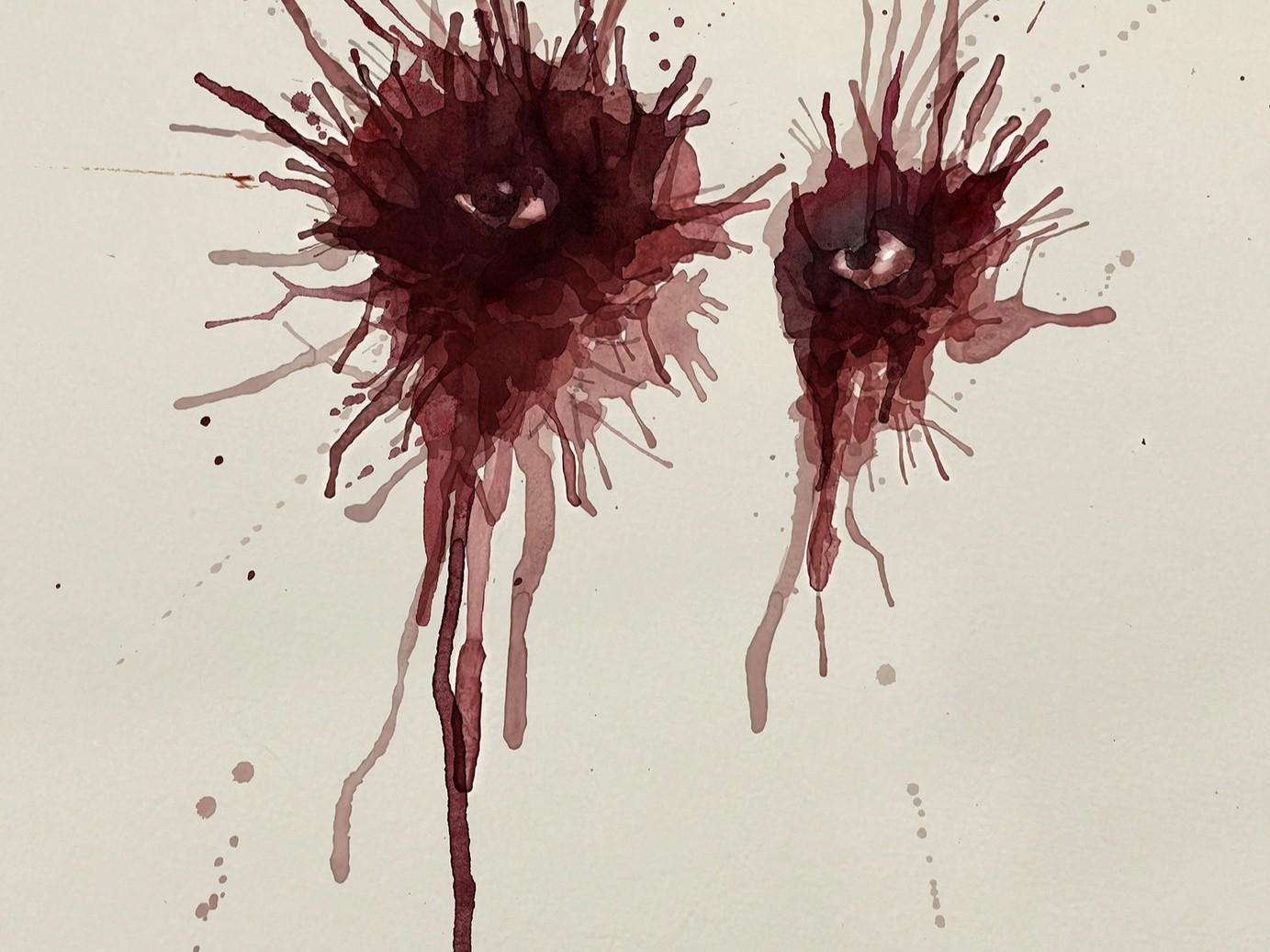
    And so, rather than having an episode that washed the dust of daily life off of our souls, it seemed to just add another layer. Hope does spring eternal, however, and photos from the New York City set of Season 2 have revealed that somehow, some way, Muse will return and showrunner Dario Scardapane also revealed that the character will be a multi-season problem for Matt. However, without any solid idea of what the future holds of the character, it’s easy to feel disappointed in the way he was incorporated into Season 1. Already changed from the (probably) Inhuman-ly powered character in the comics, Hunter Doohan‘s Muse deserved to be a bit more than the catalyst for another round of Daredevil vs. Kingpin.

  • ‘Daredevil: Born Again’ Episode 6 Review: Renaissance

    ‘Daredevil: Born Again’ Episode 6 Review: Renaissance

    For some, the first four episodes of Daredevil: Born Again fell short of expectations. Others, it turned out, enjoyed the lighter tone and lighter tones. Wherever your tastes fell on that spectrum, with Episode 6, “Excessive Force”, the series pivoted aggressively, starting down a far darker path. Episode 5, “With Interest”, bridged the gap between light and dark, allowing Charlie Cox to collect some serious aura farming, slinging  and swinging swag instead of billyclubs but by the time Angela del Toro goes missing, the devil that Matt Murdock let out for a brief romp in the daylight just can’t be out back in the bottle.

    Simply enough, “Excessive Force” IS the episode fans of the Netflix series have been waiting for: the renaissance of The Devil of Hell’s Kitchen. Complicating the matter, however, is that the rebirth of Daredevil coincides with the rebirth of the Kingpin. With his fractured relationship with Vanessa healing quickly, Wilson Fisk finally lets his darker half resurface. Complicating things for both men is the revelation that the City’s most popular street artist, Muse, is a sadistic serial killer with a body count of at least 60 bodies.

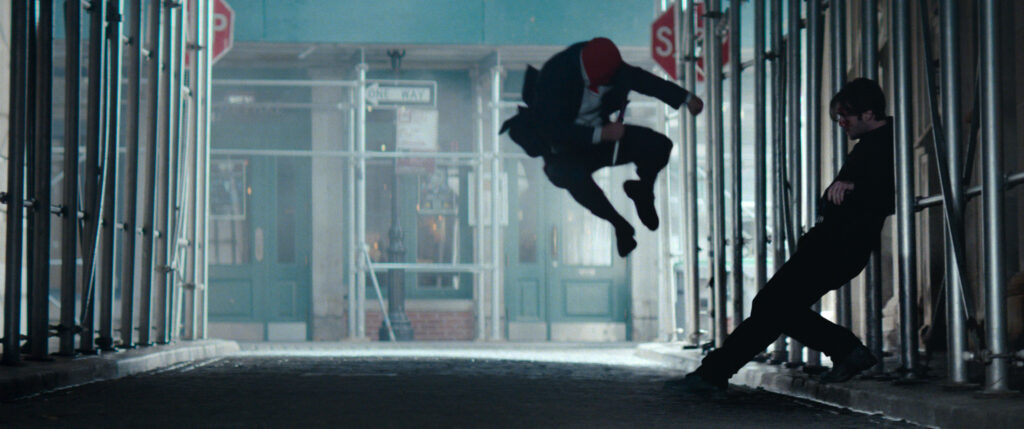
    Daredevil/Matt Murdock (Charlie Cox) in Marvel Television’s DAREDEVIL: BORN AGAIN, exclusively on Disney+. Photo by Giovanni Rufino. © 2025 MARVEL.

    The series has consisted of a series of parallels and the creators allowed those to play out without rushing the inevitable right turn those paths would take, putting the two on an inevitable collision course. As it’s played out, Muse catalyzes collision by becoming something neither man can ignore and neither man can stop without resorting to the depths of their own darkness they had both sworn to leave behind.

    In Matt’s case, Muse’s abduction of Angela del Toro forces him back into his armored suit. The result is a violent confrontation with the killer in his lair which Matt clearly enjoys…perhaps a bit too much. For Fisk, Muse’s spree gives him reason enough to pull together a goon squad of corrupt cops, far more akin to the type of people he “worked” with as the Kingpin than NYC’s finest. And, of course, the episode wouldn’t be complete without Fisk resorting to his own use of “excessive force”, reminding the audience of the brutality of the Fat Man…who is getting fat again. It’s taken some time but through the work of an artist with his own distinct style, Daredevil and Kingpin each experience a renaissance that will certainly put them as odds.

  • REVIEW: ‘Alexander and the Terrible, Horrible, No Good, Very Bad Road Trip’

    REVIEW: ‘Alexander and the Terrible, Horrible, No Good, Very Bad Road Trip’

    More than a decade after Disney adapted Judith Viorst‘s beloved children’s book, Alexander and the Terrible, Horrible, No Good, Very Bad Day, into a film starring Steve Carell and Jennifer Garner as the parents of the title character, the studio reunited with Sean Levy‘s 21 Laps Entertainment for a reimagined take on the tale. Written by Matt Lopez and directed by Marvin Lemus, Alexander and the Terrible, Horrible, No Good, Very Bad Road Trip pays homage to both the book and the 2014 film through a very different lens. Stuffed with all the elements of a classic road movie, Alexander and the Terrible, Horrible, No Good, Very Bad Road Trip proves to be a tightly spun story that, thanks to its easily digestible runtime, plays as a tolerable, not-so-bad watch that fits the bill for a family looking for something appropriate to watch for all ages.

    Alexander and the Terrible, Horrible, No Good, Very Bad Road Trip follows 11-year-old Alexander and his family as they embark on a dream Spring Break vacation to Mexico City only to have all their plans go terribly wrong when they discover a cursed idol. The family is put to the test until they resolve to return the idol to its rightful home.

    -Official synopsis for Alexander and the Terrible, Horrible, No Good, Very Bad Road Trip

    In looking to avoid a direct remake of 2014’s Alexander and the Terrible, Horrible, No Good, Very Bad Day, the producers sought a “universal family experience” that would allow for a story full of challenges and experiences that would bring the family at the center of the new film closer together. And thus the road trip came to be. Road movies remain a staple of the American film industry and Alexander and the Terrible, Horrible, No Good, Very Bad Road Trip riffs on some of the classics. Full of the ridiculous mishaps that befall all families who dare pack up for a family vacation, the film channels National Lampoons Vacation, RV, Planes,Trains and Automobiles and, for just a minute, maybe even Thelma and Louise. Cars crash, folks get left behind and the family even loses their IDs and has to rely on a “scary” stranger they just met for some kindness. By the time it’s all over, however, everyone is exactly where they are meant to be and despite the chaos, the Garcia family comes out of it all in a better place than when it started.

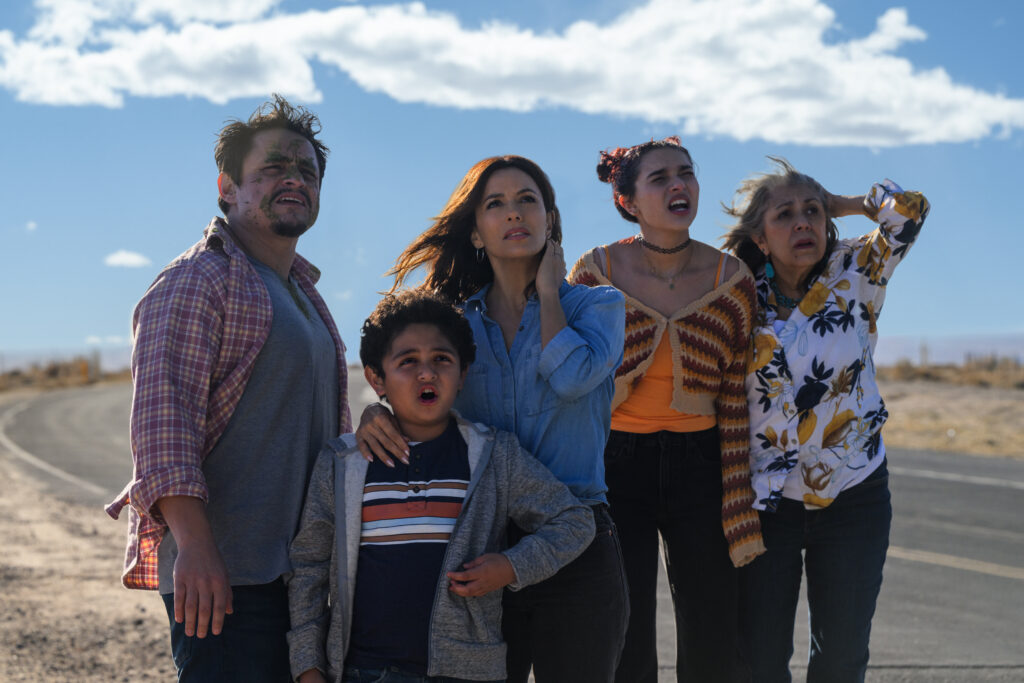
    (L-R) Jesse Garcia as Frank Garcia, Thom Nemer as Alexander Garcia, Eva Longoria as Val Garcia, Paulina Chavez as Mia Garcia and Rose Portillo as Lidia in Disney’s ALEXANDER AND THE TERRIBLE, HORRIBLE, NO GOOD, VERY BAD ROAD TRIP. Photo by Anna Kooris. © 2024 Disney Enterprises, Inc. All Rights Reserved.

    If anything is holding the film back, it’s that the cast isn’t exceptionally strong. In an ironic twist, perhaps the best addition to the cast was Cheech Marin, who replaced George Lopez. Lopez had long been attached to the film as the Garcia family’s tough-talking, motorcycle-riding abuelo and would have certainly had fun in the role; however, Marin’s trademark high-energy delivery add a spark to an adult cast that sometimes sorely needs it. Landman‘s Paulina Chávez more than holds her own as Mia, the big sister to Thom Nemer‘s title character, whose belief in bad luck and a family curse seems to hold more water as the film moves on.

    Alexander Garcia (Thom Nemer) has always believed he has the worst luck in the world, so when
    his mom Val (Eva Longoria) devises a plan to bring her seemingly disconnected family on a fancy
    vacation to Mexico City aboard a luxury RV as part of her travel writing job, he is sure it will end
    in disaster. Despite his fears, the family including dad Frank (Jesse Garcia), teen sister Mia
    (Paulina Chávez), Grandma Lidia (Rose Portillo), and Grandpa Gil (Cheech Marin) – set out, only
    to find absolutely everything is going chaotically, hilariously wrong. When the family discovers an
    ancient, cursed idol may be to blame, they must work together to return it to where it belongs.

    -Official boilerplate for Alexander and the Terrible, Horrible, No Good, Very Bad Road Trip

    Presented as a fairly typical modern family, the Garcias begin the film seemingly without a real sense of who the other members of their family are. As road movies tend to do, the time together helps them understand themselves, each other and, in this case, their heritage. And, as Alexander comes to understand, bad luck is just good luck in disguise and not every day is so terrible, horrible or very bad after all.

    Alexander and the Terrible, Horrible, No Good, Very Bad Road Trip is now streaming on Disney Plus.

  • ‘Daredevil: Born Again’ Episode 5 Review: Devil in a Bottle

    ‘Daredevil: Born Again’ Episode 5 Review: Devil in a Bottle

    For no discernible or logical reason at all, fandoms–and in particular Marvel fans–have developed and peculiar and excruciatingly idiotic obsession with runtimes of films and episodes of streaming series. Without ever seeing a Marvel Studios production, a growing breed of fan believes it can judge the quality of that production by its runtime. Ahead of the debut of Daredevil: Born Again, the runtimers focused their faux rage on the series’ fifth episode when a social media source revealed it would only run for a paltry 39 minutes. One month later, “With Interest” hit Disney Plus and while you can’t please everyone, the episode has widely been hailed as one of the best not just of the revival series but of any of Charlie Cox‘s four seasons as The Man Without Fear…but there’s just one problem.

    Before addressing that problem–which, like the runtime obsession, seems to be a vestigial construct from the great COVID new media shortage of 2020–all due props must be given to Charlie Cox. As the kids are saying, “With Interest” was essentially an aura showcase for Cox, who flexed every fiber of his formidable talent as the charming and disarming Matt Murdock who has been the focus of the first chunk of the season. Whether in casual conversation with Mohan Kapur‘s Yusuf Khan or distracting the crazy Irish fucks robbing a bank on St. Patrick’s Day (where are the MacManus brothers when you need them?), Cox slayed it as Murdock in the episode. But the time has come for Murdock to take a backseat and let the devil out of the bottle.

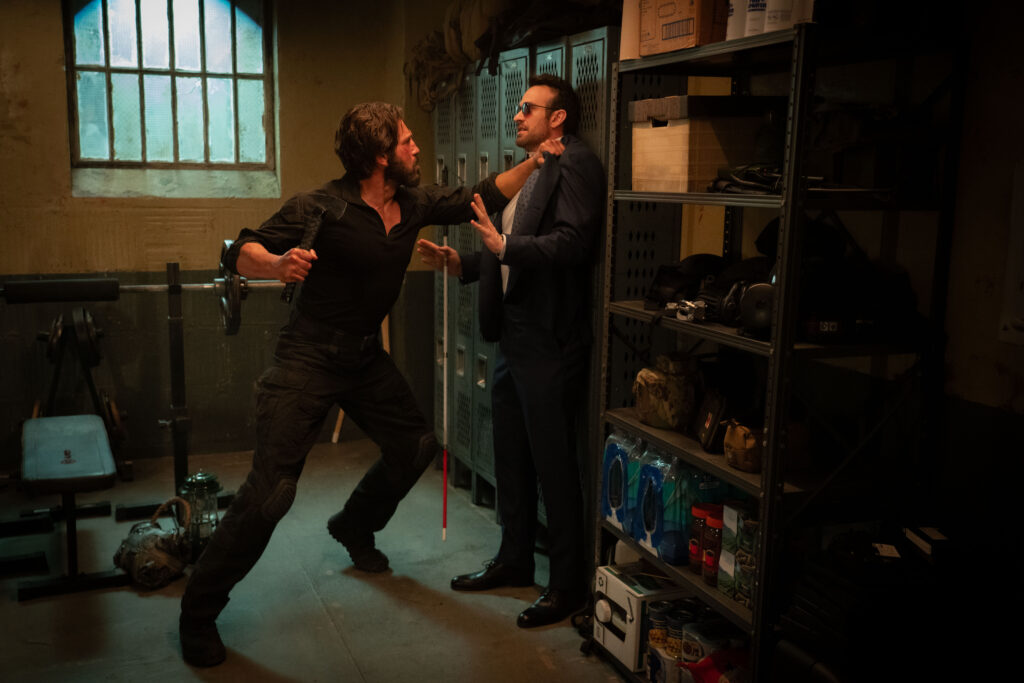
    (L-R) Daredevil/Matt Murdock (Charlie Cox) and Devlin (Cillian O’Sullivan) Marvel Television’s DAREDEVIL: BORN AGAIN, exclusively on Disney+. Photo courtesy of Marvel Television. © 2025 MARVEL.

    Throughout the first four episodes, Matt has slowly been losing control of the devil he’s tried to keep bottled up. In “With Interest”, the Devil of Hell’s Kitchen breaks the bottle, kicks the shit out of some bank robbers and gets back in the habit of saving his city. “With Interest” does in 39 minutes what many of the 39 episodes of the Netflix series couldn’t quite do: deliver a slice-of-life episode that stars its star. And while most critics and fans enjoyed it as a “filler episode”, that’s just not what it is.

    “With Interest” certainly fits neatly within the criteria that define a bottle episode: minimal cast, one main location, little-to-no major CGI, etc. However, tagging it as a filler episode is, at best, reductive. Without spoiling the remaining three episodes (Episode 6 aired right after and you’ve already seen it if you’re reading this), Episode 5 serves essentially as a bridge from the bright new life that Matt wanted so badly to live back to the darkness that comes with being Daredevil. For four episodes, Matt fought with all his might to be someone he wasn’t. In “With Interest”, Matt–maybe for the first time in his life–stopped fighting. In cutting from 13 episodes per season to 9 in this first season of Daredevil: Born Again, no room was left for filler. Step back and take a big picture look at what’s been going on and you might just reframe your thoughts about “With Interest” and see it for what it is: a killer, very comic book-like adventure for Matt Murdock before things turn Netflix dark.

  • ‘Daredevil: Born Again’ Episode 4 Review: New Religion

    ‘Daredevil: Born Again’ Episode 4 Review: New Religion

    After going back to the drawing board to retool its identity, Daredevil: Born Again has yet to feel quite like its streaming predecessor, Netflix’s Daredevil. Whereas some of the 39 episodes that made up the three seasons of the Netflix series often stalled around extended and bloviated dialogue about…well, mostly nothing, the new series seems to have trimmed the majority of that narrative fat.

    Episode 4 of Daredevil: Born Again, titled “Sic Semper Systema”, has plenty of dialogue but, as it turns out, not all dialogue is created equally. In what’s unquestionably one of the best scenes of the season–and quite possibly in any season of DaredevilJon Bernthal and Charlie Cox share an intense exchange that illuminates each of their characters’ irreparably battered psyches.

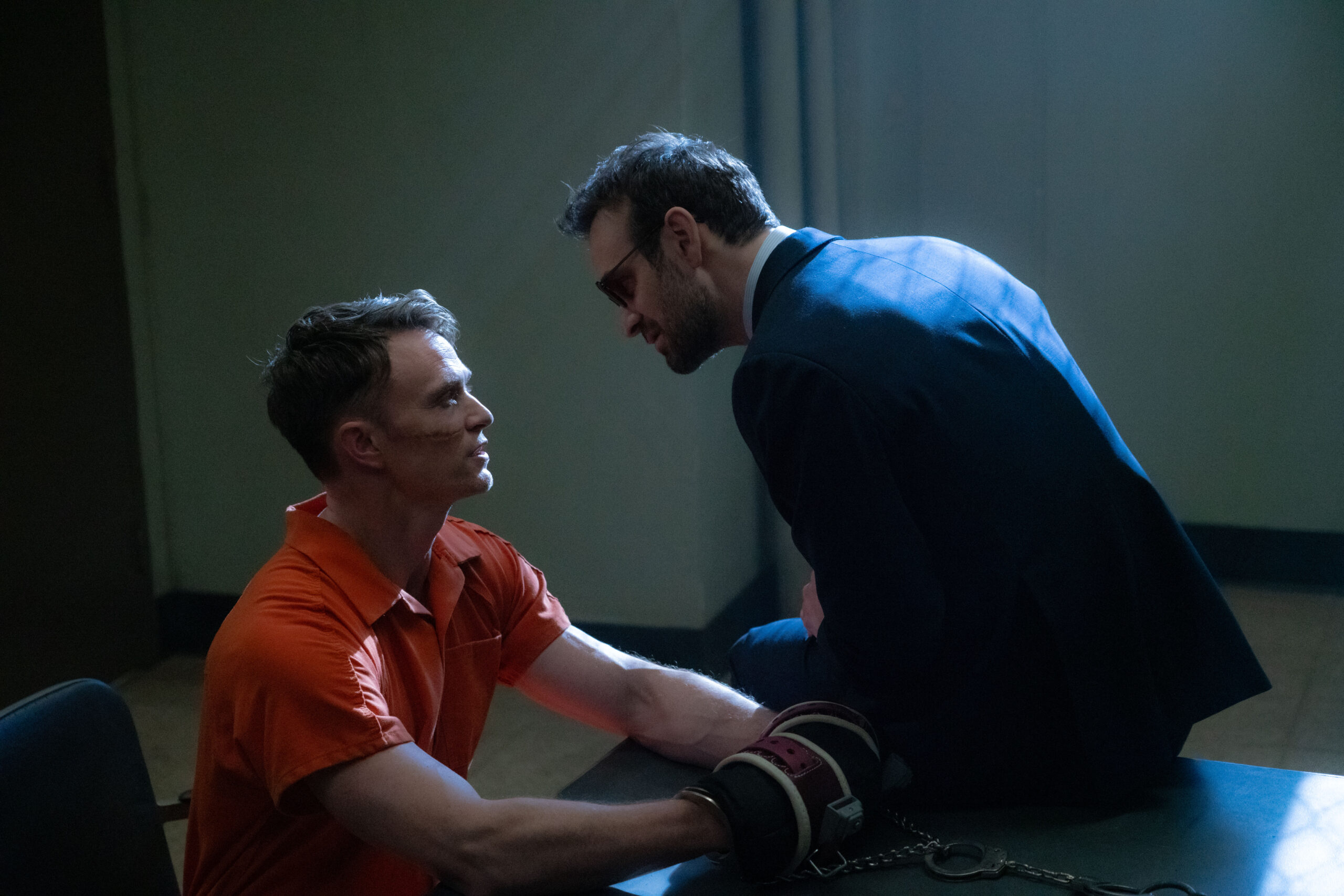
    (L-R) Frank Castle/The Punisher (Jon Bernthal) and Matt Murdock/Daredevil (Charlie Cox) in Marvel Television’s DAREDEVIL: BORN AGAIN, exclusively on Disney+. Photo by Giovanni Rufino. © 2025 MARVEL.

    Without giving away any detailed spoilers (but if you’ve been paying attention, you’ve already figured this out anyway), each episode of the season has moved both Matt Murdock and Wilson Fisk closer to breaking free of their self-imposed shackles. As Wilson’s relationship with Vanessa undergoes repairs, he moves closer and closer to being reborn as the Kingpin. Episode 4 continues the wonderful symbolism of this metamorphosis by continuing to decrease the physical space between husband and wife. Where they previously shared a meal at opposite ends of a large dining table, the couple share a much more intimate nightcap here. With Foggy dead and Karen gone, however, Matt doesn’t have an anchor to his old life and so he turns to the unlikeliest of places to get his bearings.

    Nobody in his right mind, of course, would seek out someone so deranged as Frank Castle for therapy; however, Matt is not right-minded and, of course, Catholic and so he goes seeking punishment…and he gets it. In what was a verbal assault on Matt that might stand up to any of the physical beatings the man has taken over the years, Frank Castle showed no mercy on Red and gave no quarter to his still-wounded emotional state. The dialogue between the two men, which took place in Castle’s new underground lair, exposed the underpinnings that make both men tick and Bernthal and Cox put on quite a clinic. Just a couple of crazy fucks talking it out.

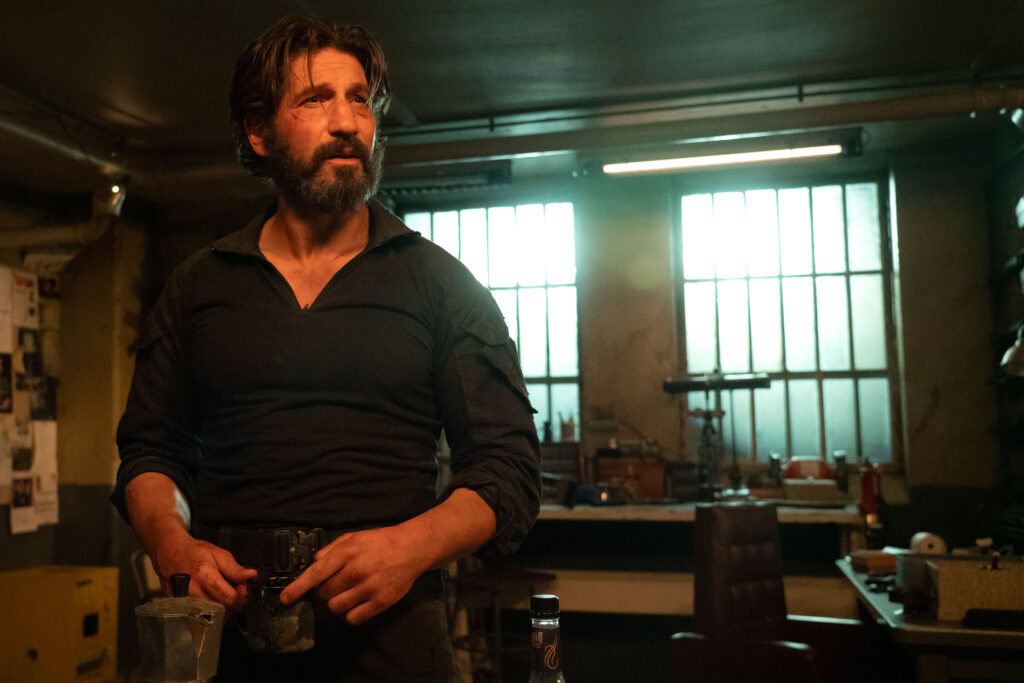
    Frank Castle/The Punisher (Jon Bernthal) in Marvel Television’s DAREDEVIL: BORN AGAIN, exclusively on Disney+. Photo by Giovanni Rufino. © 2025 MARVEL.

    In digging at Murdock’s true purpose for seeking him out, Castle revealed the depth of his chaotic and tortured depravity. So thoroughly broken by trauma and tragedy, Frank’s psychotic engine continues to be revved by the belief that it is the will of his murdered son that he continue to kill all the bad guys he can lay his hands on. And while even Frank likely knows that Matt will never break as he did, he does find the breaking point of Matt’s two personalities, challenging to consider a different interpretation of the scales of justice: one that measures the court’s work against Matt’s and, in that moment, Matt gains clarity and regains purpose.

    For fans of the Netflix series, this conversation between Matt and Frank should have felt incredibly familiar because it was the type of conversation that Matt used to have with Father Lantom, who was often the sounding board for Matt’s soul before being killed by Bullseye (who Frank addresses by that moniker for the first time here). “Sic Semper Systema” sees Matt walk into a new confessional and bare his soul to a new priest…and this one will hardly help him keep the devil at bay.

  • ‘Daredevil: Born Again’ Episode 2 Review: Let the Devil Out

    ‘Daredevil: Born Again’ Episode 2 Review: Let the Devil Out

    Marvel Comics’ first Hispanic hero, Hector Ayala, never really got a turn to take the lead. First appearing in the Shang-Chi book, Deadly Hands of Kung Fu, in 1975 and then taking on a semi-regular supporting role in the late 70s/early 80s title, Peter Parker, The Spectacular Spider-Man, Ayala, also known as the White Tiger, had some wild adventures across the Marvel Universe. However, it wasn’t until Brian Michael Bendis‘ early 2000s run on Daredevil that Ayala really took center stage in a popular title. The defendant in Bendis‘ “The Trial of the Century”, Ayala’s vigilante efforts as the White Tiger lead to him being falsely accused of killing a police officer which, interestingly enough, means that the courtroom–and not the streets of New York where he risked his life for his community–became the setting for Ayala’s time in the spotlight. Before he could beat the bunk charges, Ayala was killed by the cops and, ultimately, his legacy and the legacy of the White Tiger grew into something greater than he ever imagined when he first picked up the Jade Tiger amulets that granted him superhuman powers.

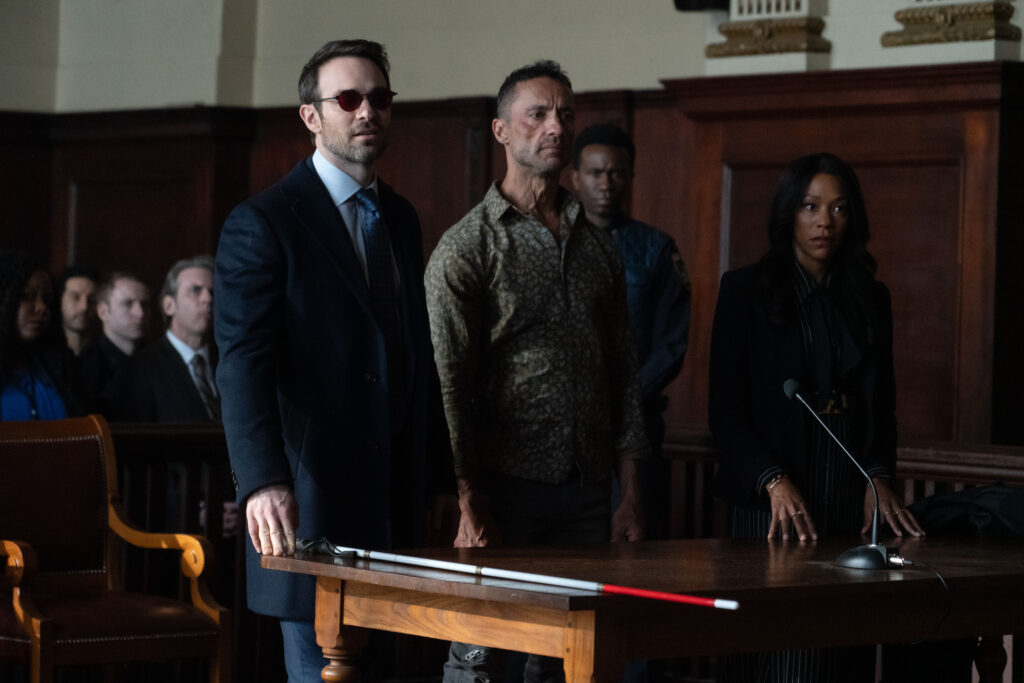
    Episode 2 of Daredevil: Born Again introduces Ayala and his White Tiger alter ego to the MCU, slightly altering the scenario that leads to his arrest and trial but–somewhat incredibly–embracing the mystical nature of his powers in a corner of the world that’s not always taken full advantage of the opportunities such capabilities provide. Highlighted by the late Kamar de los Reyes‘ understated performance as beaten up and washed Ayala, “Optics” is an excellent offering that allows the audience an extended view of the other side of Matt Murdock’s life. Though fans haven’t seen Episode 3 yet, paired with Episode 2, the MCU’s version of The Trial of the Century is must-see DD, allowing Murdock to flex his wits in what is truly a tense courtroom drama. The traits that serve Murdock so well as the Devil of Hell’s Kitchen are indeed the very same that make him a really good lawyer and as Ayala’s trial unfolds, Murdock proves that as in combat, he can take a punch in the courtroom and dig deep to find a way to stay in the fight.

    Though there’s little bloodshed and much of the episode takes place during the day (gasp!), “Optics” proves just as important to the Frank Miller-heavy noir world of Daredevil as any other episode. Any great NYC crime drama will, of course, include dirty piggies and Episode 2 introduces the audience to the dirtiest and though it may not be readily apparent just yet, be sure that your time spent watching this episode will pay off as the series moves forward. A reborn Matt Murdock didn’t need to take Ayala’s case, especially once he became aware that Ayala wasn’t sharing everything with him, but the serendipitous intersection of his commitment to justice and Ayala’s commitment to doing the right thing was too hard to pass up. Up against the NYPD, Ayala is the ultimate underdog as an accused cop killer…but even when outmatched, Murdocks can take a beating and stay in the fight until the devil in ’em comes out.

    (L-R): Wilson Fisk/Kingpin (Vincent D’Onofrio) and Kirsten McDuffie, ADA (Niki M. James) in Marvel Television’s DAREDEVIL: BORN AGAIN, exclusively on Disney+. Photo by Giovanni Rufino. © 2025 MARVEL.

    And following a palpably tense scene in which the dirty NYC cops look to take Murdock’s key witness off the board, the devil that Matt believed he has so securely tucked away does get out. The episode’s violent closing minutes may seem to exist solely to soothe the blood lust of the edge lord crew; however, paired with Wilson Fisk’s lunch meeting with NYC Police Commissioner Gallo, the scenes remind the fans that neither of these men can ever truly be anyone other than who they are. They want–perhaps even truly desire–to become the men they try so hard to be but when push comes to shove, these men, shaped so completely by their environments for so long, will always fall back on the skills of their true identities.

    As the follow-up to the new crew’s violent pilot episode, “Optics” stands in stark contrast and while it may feel slow, it begins scaffolding every major storyline of Season 1 of Daredevil: Born Again. Possibly my favorite episode of the season (if not, it’s Episode 3), “Optics” serves as a prime example of how much can be accomplished in a streaming episode and how this Daredevil revival’s efforts to trim the fat have made it an upgrade over the original Netflix series.

  • ‘Daredevil: Born Again’ Episode 1 Review: You Crazy Son of a Bitch You Did It

    ‘Daredevil: Born Again’ Episode 1 Review: You Crazy Son of a Bitch You Did It

    While promoting the first season of Daredevil: Born Again, series showrunner Dario Scardapane revealed that an integral part of his pitch to get the show back on track was bringing back Daredevil co-stars Elden Henson and Deborah Ann Woll, both of whom were absent from Marvel’s original plans for the new series. “I was willing to lose a job over this one,” Scardapane told Empire, adding that pitching the returns of Foggy Nelson and Karen Page was “one of the first things I said to the bosses.

    You can’t do this show without Karen and Foggy. They’re Matt’s family. They’re the heart of his world. You can’t take them out without explaining why, and if that explanation doesn’t ring true, don’t take them out.

    -Dario Scardapane, Empire Magazine

    Because Season 3 of the Netflix show ended with a dream, with the names on that napkin,” Scardapane explained, adding, “If you don’t pay that off, you’re not giving your characters context. You can’t ignore that dream.” And so, Episode 1 of Daredevil: Born Again, “Heaven’s Half Hour,” does indeed make good on that dream as Nelson, Murdock and Page emerge from their dream office for another of many nights on the town. And what follows is a bamboozling nightmare that might just prevent fans from ever trusting anyone at Marvel Studios again.

    If bringing back Henson and Woll was meant to bring a preestablished order to Daredevil:Born Again, then the first 16 minutes of the first episode are the most entropic of a series built around chaos. Crafted by Scardapane after he and directors Justin Benson and Aaron Moorehead boarded the project, Episode 1 apparently exists to prove that you can indeed “do this show without Karen and Foggy.”

    The death of Foggy Nelson at the hands of the deranged and somehow-still-alive-after-casually-being-thrown-off-a-roof-what-the-fuck Bullseye catapults Matt Murdock’s world into a state of such significant disorder that no further changes can take place within it. And so, Murdock is born again into an all-new, all-different world, one brighter and more hopeful than any the writers of the original Netflix series ever imagined.

    Abashed the Devil stood, And felt how awful goodness is.

    -John Milton, Paradise Lost

    Bereft of his besties, Murdock locks the Devil of Hell’s Kitchen away and leans into lawyering and living, thriving in a shockingly satisfying new status quo. A new firm (Murdock & McDuffie), a new love interest (Margarita Levieva‘s fascinating Heather Glenn) and some new glasses set Matt up to move forward in a direction that the Netflix showrunners never knew existed. And just as that wonderful new world gains its own momentum, Wilson Fisk is born again.

    Set sometime in 2025, the “current events” of  Episode 1 of Daredevil: Born Again set the foundation for a fascinating first season of a four season series. A decidedly douchey Daniel Blake and a stunningly Sisyphean BB Urich aside, “Heaven’s Half Hour” does exactly what it needs to do by giving both Matt Murdock and the fans every reason to forget everything they’ve held dear about the original Netflix series. The lunch meeting between the series’ leads reveals that neither man can truly put his past behind him, establishing the inevitability of hostility even as Fisk’s pursuit of the mayorship of New York City would seem to make him untouchable.

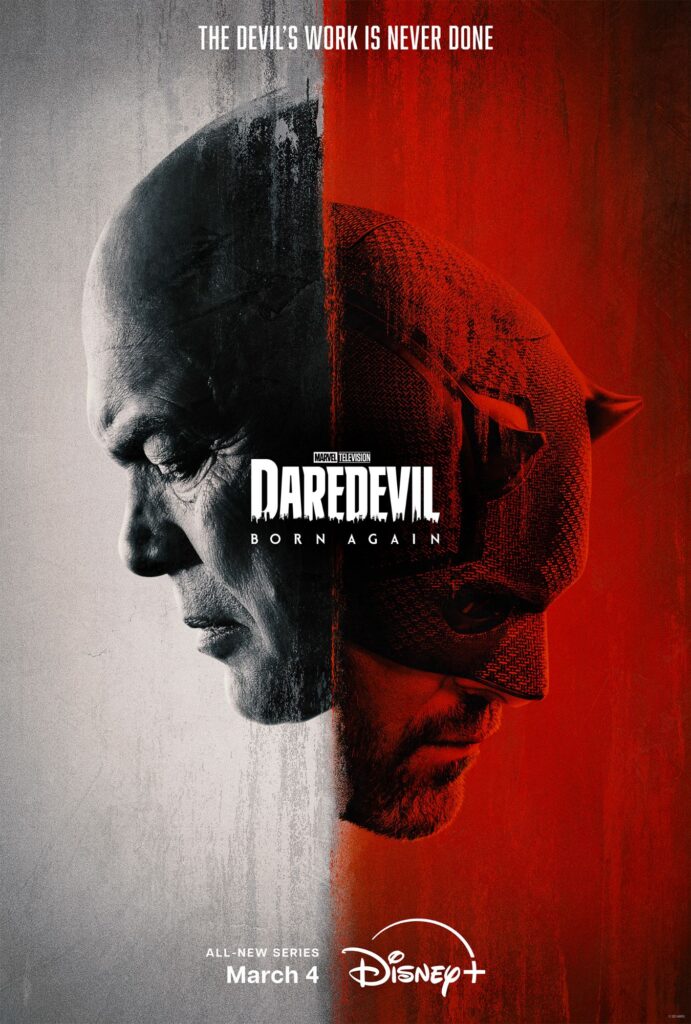
    Fisk’s role in the season is so large that, as one promotional poster seems to hint, the series could just as well be titled Kingpin: Born Again. As Matt learns to move forward without his heart and soul, Fisk seeks to close the gap that has grown between him and his wife, Vanessa, who ran the criminal empire while her husband was away (see Echo). Like Murdock, Fisk has chosen a new path forward and in doing so, claims to have locked away the Kingpin of Crime.

    Of course, Marvel Studios didn’t revive this series and being back both Cox and D’Onofrio for what looks to be a total of 17 episodes for them to have tea. A showdown is looming and Episode 1, created by Scardapane following the creative overhaul, wonderfully put the two men on seemingly parallel paths that are somehow bound to intersect.

    Source: Empire