Category: Reviews

  • REVIEW: ‘Tales of the Empire’

    REVIEW: ‘Tales of the Empire’

    After a very well recieved debut in 2022’s Tales of the Jedi, the second installment of Lucasfilm’s Star Wars Tales anthology, Tales of the Empire, hits Disney Plus on May 4th as part of the celebration of Star Wars Day. Like its predecessor, Tales of the Empire is a six-episode entry into the already voluminous story of the galaxy far, far away. Created, once again, by Dave Filoni, the new series of shorts (each episode’s story is told in 15 minutes or less) is divided into two wide-ranging three-episode arcs that flesh out the stories of a pair of characters who have, at various times, been key players in other Star Wars projects. The first three episodes recount Morgan Elsbeth’s history before her appearance in The Mandalorian while the final three episodes reveal what became of Barriss Offee following her betrayal of Ahsoka Tano in Star Wars: The Clone Wars. Expertly crafted, beautifully animated and action-packed, Tales of the Empire is must-see non-essential TV.

    The paradoxical nature of an anthology that doesn’t need to be seen to fully enjoy other projects set within in the Star Wars universe may be a direct reflection of the true nature of the Tales series. It also may be one of the more perfect examples of how Disney’s major studios could and should use Disney Plus. Like the stories of Count Dooku and Ahsoka told in Tales of the Jedi, none of what plays out in Tales of the Empire could be taken as required reading for a casual fan to understand and enjoy any current Star Wars project; in fact, most of what takes place on screen throughout the three episodes dedicated to Morgan Elsbeth was already known. However, viewers are highly unlikely to come away feeling as though they’ve wasted 45 minutes or so per character. The careful direction behind each arc, the tasteful and effective uses of other characters and the emotional current that runs throughout create two expertly crafted stories of tragic characters. Thematically, Star Wars has always dipped into the fall and the redemption of its characters and Tales of the Empire follows suit, following two characters whose choices have put them a crossroads where their next choices will ultimately define their legacy in the galaxy.

    Fear Leads to Anger. Anger Leads to Hate. Hate Leads to Suffering.

    Morgan Elsbeth in a scene from “STAR WARS: TALES OF THE EMPIRE”, exclusively on Disney+. © 2024 Lucasfilm Ltd. & ™. All Rights Reserved.

    Morgan Elsbeth’s legacy is a known quantity. Introduced as an antagonist in The Madalorian, Elsbeth became a truly central villain in Ahsoka. One of the last surviving Nightsisters of Dathomir, Elsbeth was a known ally of Grand Admiral Thrawn and was willing to give her life in order to allow him and the Great Mothers to escape Peridea. Though details were certainly scarce, the bullet points of her life before the events of The Mandalorian were shared with Din Djarin and the audience by Ahsoka Tano.

    During the Clone Wars, her people were massacred. She survived, and let her anger fuel an industry which helped build the Imperial Starfleet. She plundered worlds, destroying them in the process

    Ahsoka Tano to Din Djarin on Morgan Elsbeth in The Mandalorian

    The first three episodes of Tales of the Empire chronicle nearly 30 years of Elsbeth’s life from the slaughter of her family on Dathomir, to her first meeting with Thrawn to the New Republic era just ahead of her first encounter with Ahsoka. Driven by vengeance and emboldened by anger, Morgan’s descent into villainy doesn’t need to be seen to root against her in The Mandalorian or Ahsoka. However, Morgan’s true motivations, including why she’s so willing to give her life in exchange for the safe return of the Great Mothers to their home galaxy, are fully developed. Bearing witness to the trauma endured by a young Morgan Elsbeth at the hands of General Grievous doesn’t necessarily make her a sympathetic character but it does place her firmly on a path of vengeance and establishes why she became entrenched in the Empire while maintaining a myopic focus of restoring her culture as the last of her kind.

    There Are Some Things Far More Frightening Than Death

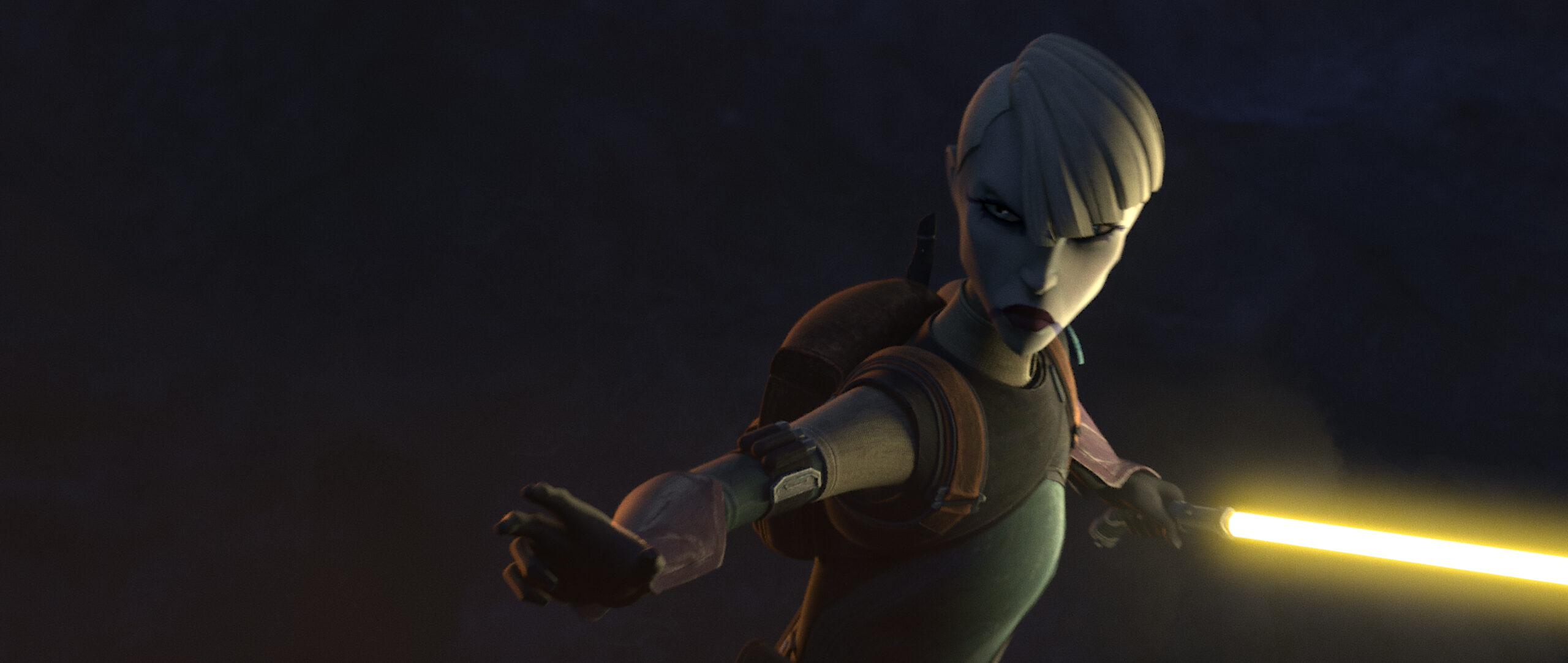
    Barriss Offee (center) and Clone guards in a scene from “STAR WARS: TALES OF THE EMPIRE”, exclusively on Disney+. © 2024 Lucasfilm Ltd. & ™. All Rights Reserved.

    Juxtaposed against the story of how Morgan Elsbeth became who she was is a three-episode story that reveals who Barriss Offee becomes. A key character in later seasons of Star Wars: The Clone Wars, Offee’s final fate following her imprisonment for crimes against the Republic had yet to be explored in any Star Wars project. The winds certainly shifted shortly after Offee was imprisoned and that’s right where the next chapters in Offee’s life begin.

    I did it. Because I’ve come to realize what many people in the Republic have come to realize. That the Jedi are the ones responsible for this war. That we’ve so lost our way that we have become villains in this conflict. That we are the ones that should be put on trial. All of us! And my attack on the Temple was an attack on what the Jedi have become. An army fighting for the dark side. Fallen from the light that we once held so dear. This Republic is failing! It’s only a matter of time.

    Barriss Offee’s confession as heard in Star Wars: The Clone Wars-The Wrong Jedi

    Offee’s three-episode arc, as revealed in the trailer for Tales of the Empire, involves her recruitment into the Inquisitorious by Lyn, the Fourth Sister of the Inquisitorious, who was introduced in Obi-Wan Kenobi. Present throughout Offee’s entire arc, which extends until at least roughly 1 BBY, the Fourth Sister works as a steadfast foil for the former Padawan of Luminara Unduli. Like Elsbeth’s story, Offee’s is not particularly necessary to any greater understanding of the Star Wars galaxy; however, in the larger setting of modern Star Wars storytelling, it offers yet another perspective of what becomes of former Jedi. While superficially similar to characters such as her old friend Ahsoka Tano, Count Dooku and Baylan Skoll, Offee finds a different resolution to her philosophical difference with the Jedi. Losing faith in what the Order became does not necessarily dictate the abandonment of its principles nor cast one eternally into the shadow of the Dark Side. Ironically enough, Offee’s path may more closely follow the one taken by Asajj Ventress, whom she once impersonated in her efforts to take down Ahsoka and the Jedi. Offee’s story is another example of Filoni’s interest in exploring a far wider view of the Force and the overall saga’s examination of redemption.

    As was the case with Tales of the Jedi, Tales of the Empire works as a fascinating character study that illuminates the psychology and internal struggles that define its central figures. Set against the ever-present themes of destiny, fate and free will, Tales of the Empire stands alone as a strong entry into the Star Wars franchise and given the quality of the storytelling contained within, stands as an exemplar of how Lucasfilm can use Disney’s streaming service to its advantage. While fans will never need to see it, they’ll not only be glad they did but also find themselves hoping the Tales anthology series continues.
  • REVIEW: ‘The Bad Batch’ Series Finale

    REVIEW: ‘The Bad Batch’ Series Finale

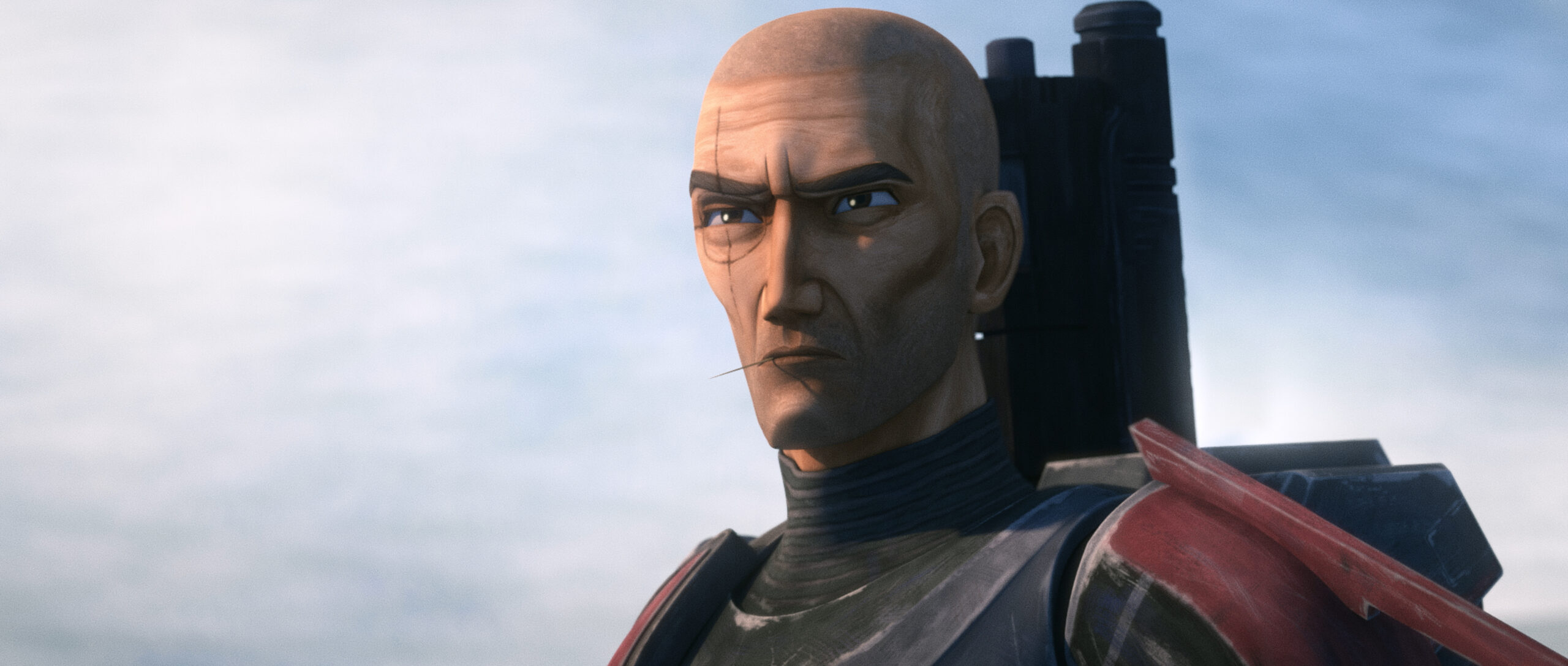
    Throughout its 47-episode run, The Bad Batch spun a tale of a crew of wartime veterans searching for an identity in a galaxy that had chewed them up and spit them out. As the third and final season of the show launched in April, the remaining members of Clone Force 99 found themselves reeling from the loss of one of their own and the abduction of another. Though they had hoped their days of running missions were over, Season 3 gave the squad plenty of reason to stay in the fight, though this fight was one of their own choosing. In the final episode of the series, “The Cavalry Has Arrived”, every member of the team puts everything on the line to complete their most important mission yet: holding on to what they fought so hard to get.

    “The Cavalry Has Arrived” works wonderfully as a season and series finale by wrapping up three seasons’ worth of plot and by keeping Hunter, Wrecker, Tech, Crosshair and Omega at the center of the action. No heroes dropped in for a cameo appearance and to help save the day; Darth Vader didn’t show up at Tantiss Base and cut down Clone Force 99; no major reveals intended to set up a new Star Wars project stole the spotlight. Indeed short of a brief appearance from Tarkin and a reference to Project Stardust, no connections to the larger Star Wars universe were made. Instead, Omega found herself able to deftly apply all she’d learned from the crew, simultaneously helping the other children held at Tantiss Base to escape and providing a way for Hunter, Wrecker and Crosshair to find their way in. By the time it was over, the Batchers all did what they do best, the bad guys got what they had coming (it was somehow more satisfying to see Rampart meet his end than to see Hemlock meet his) and, somewhat surprisingly, they all made it out alive and returned to Pabu. The end.

    (L-R): Omega and Hunter in a scene from “STAR WARS: THE BAD BATCH”, season 3 exclusively on Disney+. © 2024 Lucasfilm Ltd. & ™. All Rights Reserved.

    Of course, it’s never truly the end. A nice epilogue set roughly 20 years or so later showed a grown Omega heading off to join the Rebellion as a pilot. A touching moment with an older, grayer Hunter served to inform fans that they should not expect to see him, Wrecker or Crosshair taking part in the Rebellion. There war is over. Omega’s, however, is just beginning. Given the care with which the character has been curated by Dave Filoni, Jennifer Corbett and the rest of the crew behind The Bad Batch and given Filoni’s penchant for finding ways to work his favorite creations into other projects, both animated and live-action, it seems incredibly likely that Omega’s story in only just beginning.

    Taken as a complete body of work, The Bad Batch will rightfully take its place by the side of Star Wars Rebels and Star Wars: The Clone Wars as foundational pieces of the modern era of Star Wars stories. It established itself as an integral piece of the larger mythology of galaxy far, far away both in its ability to tackle to politics of the Empire and establish the importance of cloning in Palpatine’s ultimate plans. It’s examination of the treatment of war veterans probably doesn’t receive enough attention but the show boldly tackled the topic along with glimpses of post-traumatic stress disorders in soldiers. In a galaxy that’s always just moving from one war to another, those themes alone make The Bad Batch a worthwhile watch. It’s the end of an short-lived era for the best group of good soldiers. Clone Force 99, we thank you for your service.

  • Book Review: ‘The Fireborne Blade’ by Charlotte Bond

    Book Review: ‘The Fireborne Blade’ by Charlotte Bond

    The Fireborne Blade by Charlotte Bond

    My rating: 4 of 5 stars


    When it came to The Fireborne Blade, I had no idea what to expect. I’ve never read anything by Charlotte Bond previously, and it’s very hit-or-miss with me when it comes to dragon books. However, The Fireborne Blade manages to pack a hell of a punch in such a small package, it’s safe to say Bond is now on my list of writers to follow going forward.

    The Fireborne Blade follows a Knight named Maddileh. Eager to right herself as a Knight, following a regretful personal relationship, Maddileh goes out in search of the Fireborne Blade. The legendary weapon is a tale among her people, and she believes if she manages to successfully find it, she’ll be hailed a hero, and her name will be restored once again. Simple enough, except securing the blade will set Maddileh on a journey full of danger and secrecy, one that seems all but certain to end in death.

    The book itself is merely one-hundred and sixty-four pages. As far as fantasies go, that’s on the shorter end. And yet, what Bond manages to achieve within such a short page count is incredibly impressive. Not only does Bond craft an intriguing story with characters such as Maddileh, Petros and Saralene; Bond also manages to create fascinating backstories that help to push their journey along. Not exactly an easy task to do with a novella, and yet, The Fireborne Blade proves it is possible.

    Yes, the book is about dragons. Yes, there’s plenty of dragon lore. And yet, The Fireborne Blade is far from just another dragon book. The amount of character development that Maddileh goes through over the course of the book is top-notch. The character initially comes off as very standoffish; unwilling to confide in anyone. Then, by the end of the book, we see Maddileh showcase a softer side, one that perhaps isn’t as cold-hearted as she tries to let on.

    All in all, The Fireborne Blade is the perfect little bite of fantasy for those looking for an introduction to the genre. It’s short. It’s action-packed. But more importantly, along with impressive fantasy work, The Fireborne Blade is a wonderful character-driven story. Give it a read when it releases in May.


    View all my reviews

  • REVIEW: ‘Phenomena: Book One’ by Brian Michael Bendis, André Lima Araújo

    REVIEW: ‘Phenomena: Book One’ by Brian Michael Bendis, André Lima Araújo

    Editor’s Note: Ahead of the release of Phenomena: Matilde’s Quest later this month, Abrams sent us a physical copy of the first book to review.

    Phenomena, Vol. 1: The Golden City of Eyes by Brian Michael Bendis

    Brian Michael Bendis is responsible for helping to create some of the best comic characters in recent years, including Jessica Jones and Miles Morales. I enjoy his work and was thrilled when I had the chance to read and review Phenomena: Vol. 1 ahead of the release of Vol. 2. I admittedly hadn’t really heard of this title, and I’m a bit upset that I somehow allowed it to fly under my radar. It’s not one of my favorites of Bendis’, and I’m not quite sure what star rating I would give it, but I did enjoy it overall.

    The story follows a young kid named Boldon as he goes on the hunt for the Golden City. Early on in his journey, he stumbles upon a Cyper named Spike, and a mysterious character that seems keen to cause the duo plenty of trouble. The story is at times ridiculous, and other times, utterly charming, and yet, it manages to be an enjoyable ride despite its bumps. Boldon and Spike are great together; Boldon is reckless and Cyper is very much all business, no play. The addition of the mysterious character – who I’m not naming as to avoid spoilers – proves to be a great addition, too. They play well off of the two main characters and help to add more depth to the story.

    Phenomena: Vol. 1 is under a hundred and fifty pages, and yet, despite its short length, the story doesn’t always feel as though it’s fast-moving. This is, naturally, due to having to set up this world and its history and workings. But there’s still plenty to be established in this world, and by the end of the first volume, readers are sure to have more questions than answers. Something that should, hopefully, be tackled in the next installment now that the world has been established.


    One of the main issues in the book is the artwork inside of it. The artwork is well done – André Lima Araújo has crafted some fantastic linework in this graphic novel. However, the lack of color does make it difficult to really appreciate the story being told as a whole. Normally, I don’t mind when a graphic novel is in black and white. In fact, sometimes it does serve the story better. In this instance, though, the lack of coloring seems to work against the story. The shading isn’t all that defined. And honestly, it makes it hard to get captivated by the story in the end. There are battles that are hard to follow. The locations seem to be lifeless and bland. If there was even a slight pop of color, or perhaps even more defined shading, this book could be perfect.

    Overall: I’d definitely recommend giving this one a read. It’s short. It’s fun. And Spike is a great character.

  • REVIEW: ‘The Bad Batch’ Brings Back the Bad Bitch

    REVIEW: ‘The Bad Batch’ Brings Back the Bad Bitch

    Star Wars hasn’t always provided room to explore the grey areas of morality. Good is good. Bad is bad. Of course, that’s almost entirely driven by the binary nature of the Force. The Light is good; the Dark is bad. Jedi or Sith. While there’s room for redemption within George Lucas‘ original trilogy, “classic Star Wars” storytelling left no room for Force wielders who were neither Jedi nor Sith. Modern Star Wars storytelling, on the other hand, has found plenty of narrative space for characters who find no use for either Sith or Jedi. Following the collapse of the Republic, Ahsoka Tano and Baylan Skoll no longer consider themselves Jedi and Ahsoka’s good friend Ezra Bridger dabbled in the Dark Side without becoming permanently corrupted. Their journeys through the Force are a natural consequence of new stories being built on the foundation of Lucas’ stories. Modern Star Wars has expanded the scope of Force users beyond Jedi and Sith, including the exploration of other aspects of it and how it’s perceived and wielded by those outside of the binary constraints, such as the Nightsisters. Interestingly enough, there’s one character who has traveled all the paths described above, and in Episode 9 of Season 3 of The Bad Batch, her return antecedes the next round of chaos headed the way of Clone Force 99.

    As many fans presumed to be the case, Asajj Ventress is indeed the friend Fennec Shand turned to for information about M-count and, as the episode’s title, “Harbinger”, indicates, her arrival portends dark days for the Batchers. For fans who know Ventress only from Star Wars: The Clone Wars, the Dathomirian Nightsister who was once both a Jedi Padawan and a Sith apprentice seems like the last person anyone would turn to for help; however, after having been a pawn for others, Ventress walks a different path now: her own. And make no mistake, her meeting with Uhmeeguh falls under the category of one of Star Wars most thoroughly explored themes: destiny.

    Remember… you always have a choice to be better. You always have a choice to… to pick the right path. Even if that choice comes a little late.

    -Asajj Ventress, Dark Disciple
    Asajj Ventress in a scene from “STAR WARS: THE BAD BATCH”, season 3 exclusively on Disney+. © 2024 Lucasfilm Ltd. & ™. All Rights Reserved.

    Explored in the canon novel Dark Disciple, Ventress began her ascent from darkness after teaming with Jedi Quinlan Vos to attempt to assassinate Count Dooku. Though it was believed she died while sacrificing herself to save Vos, the trailer for The Bad Batch made it clear that Lucasfilm saw further storytelling currency in Ventress and in “The Harbinger”, head writer Jennifer Corbett seemed to hint at just what that might be. After revealing the meaning of M-count to Clone Force 99 and realizing what danger lurks for Uhmeeguh and her presumably high Midi-chlorian count, Ventress agrees to test the clone’s abilities with the Force. While Uhmeeguh’s potential to wield the Force isn’t made clear to viewers, what is made clear is that Ventress can sense both her latent potential to use the Force and the danger in which it puts her. Though she skitters off at the end of the episode, it seems highly unlikely this is the last time Ventress and Omega meet. In fact, it might just be the start of one of the most unlikely relationships ever to unfold in the galaxy far, far away.

    Ventress has seen and done it all. She’s walked the path of light and descended into darkness but now, by her own omission, she walks her own path and it almost certainly is shaded grey. Given the totality of her own experiences, it’s almost impossible for it not to be. And what she sees in Omega is someone who, like her, whose life is being controlled by everyone but her…and it’s at least worth wondering if Ventress means to stop that and give Omega agency moving forward. Ventress mentions training Uhmeeguh during the episode and it would seem that might at least one possible option for what happens to the young clone (she’s somewhere between 12 and 14 years old during Season 3). While it’s known that Project Necromancer is ultimately at least sort of successful (Sleepy Sheev does inhabit a clone body in The Rise of Skywalker but it’s certainly no masterpiece) it doesn’t mean Omega has to die. The Bad Batch producer Brad Rau has teased the potential for more adventures with Ventress down the road and given Dave Filoni’s fascination for bringing animated characters into live-action, any number of possibilities exist including Ventress and Omega still being alive and well during the New Republic era. The producers once explored the possibility of using Ventress in Star Wars Resistance which is set long after The Mandalorian and, as the Nighsister said, she has a few lives left. Star Wars loves destiny; Star Wars loves to tell master and apprentice stories; and it’s starting to show some love to those who live in the grey which gives plenty of room for the continuing story of Asajj Ventress…and maybe Uhmeeguh.

  • REVIEW: ‘X-Men ’97’

    REVIEW: ‘X-Men ’97’

    It’s been said that nostalgia is a hell of a drug. The sentimental longing for an overidealized past can all but rewrite reality within our minds, amplifying our perception of the emotional impact of past experiences and manifesting something that never truly existed in the way we remember it. It’s a road we’ve all traveled and the longer we stay on it, the further we get from the true nature of the original experience. Unlike fortune, nostalgia’s no fickle wench: it provides exactly what we want it to every time.

    Revisiting that imaginary hallowed ground simply reinforces whatever good feeling we’re searching for and is the source of every grumpy old man telling a young buck that “they don’t make them like they used to.” However, as it turns out, they do indeed make them like they used to and, every so often, even better. Marvel Animation’s X-Men ’97 stands as an exemplar of how studios can revisit known and even beloved quantities while finding something that may not have been there originally. Whether you grew up with X-Men: The Animated Series or have never seen an episode of the ’90s classic, X-Men ’97 is about to become your favorite Saturday morning cartoon.

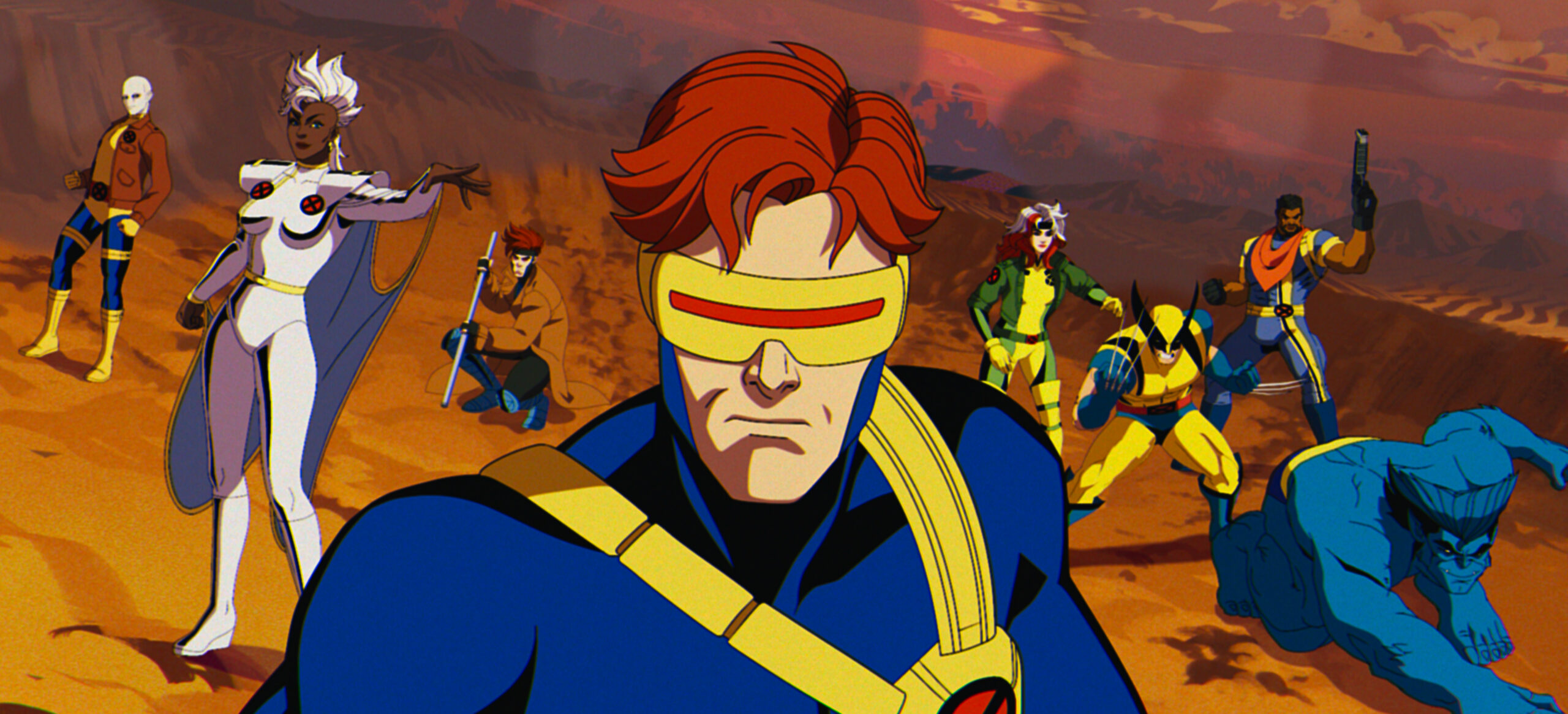
    (L-R): Jubilee (voiced by Holly Chou), Morph (voiced by JP Karliak), Wolverine (voiced by Cal Dodd), Storm (voiced by Alison Sealy-Smith), Cyclops (voiced by Ray Chase), Rogue (voiced by Lenore Zann), Jean Grey (voiced by Jennifer Hale), Gambit (voiced by AJ LaCascio), Bishop (voiced by Isaac Robinson-Smith), and Beast (voiced by George Buza) in Marvel Animation’s X-MEN ’97. Photo courtesy of Marvel Animation. © 2024 MARVEL.

    Give Marvel Studios mad props. They smartly leaned heavily into ’90s nostalgia in promoting X-Men ’97, adeptly using the dope theme song from X-Men: The Animated Series and some sweet old-school posters to provide O.G. fans with a phat dopamine rush that reminded them just how off the hook chillin’ on Saturday mornings used to be. Back in the day, X-Men: The Animated Series was the bomb…or was it? Nostalgia is a hell of a drug.

    For a nearly unquantifiable portion of a generation, X-Men: The Animated Series was the gateway drug into the uncanny world of mutant heroes and villains created by Stan Lee and Jack Kirby. Over 76 episodes, the series–heavily inspired by Chris Claremont’s work with the characters in the pages of Marvel Comics–became a frenetic highlight reel of the X-Men’s greatest hits. Without ever reading an X-Men comic, fans of the show could name a dozen X-Men, define an Omega mutant and summarize some of Marvel Comics’ greatest X-Men runs. Just as Claremont’s life-saving run on the Uncanny X-Men concluded, X-Men: The Animated Series cemented the characters in the era’s zeitgeist. The serendipitous multimedia symbiosis of page and animation no doubt led Fox to the inevitable conclusion that the X-Men would be a hit on the big screen and thus, the X-Men became embedded in pop culture, where they have firmly remained over 30 years later. But if the first three episodes of X-Men ’97 reveal anything, they reveal just how weak our minds can be when challenged by the nostalgia for better days.

    (L-R): Beast (voiced by George Buza), Wolverine (voiced by Cal Dodd), Morph (voiced by JP Karliak), Bishop (voiced by Isaac Robinson-Smith), Rogue (voiced by Lenore Zann), Gambit (voiced by AJ LoCascio), Storm (voiced by Alison Sealy-Smith), Cyclops (voiced by Ray Chase) in Marvel Animation’s X-MEN ’97. Photo courtesy of Marvel Animation. © 2024 MARVEL.

    If you believe yourself a fan of X-Men: The Animated Series, challenge yourself to a modern-day rewatch. Unlike the finest of wines, the series struggles to mature with its audience, limited not only by the technology of its time but also by the sensibilities of an era gone by. And that’s just fine and totally fair…however, as Marvel Animation rolls out a brand new series set in that bygone era, it absolutely needs to be fit enough to survive the onslaught of modern fans. Showrunner Beau DeMayo aggressively relieves the evolutionary force of selective pressure by slightly changing the DNA of the series to favorably adapt to the modern environment in which it will be judged. What emerges is a new generation more fit than its predecessor on nearly every measurable standard.

    X-Men ’97 veraciously maintains the feverish pace of its progenitor. The first three episodes of the season cover more than 20 issues of Claremont’s run on Uncanny and resolve an eight-month line-wide comic run in 30 minutes. However, it’s here where a reflective member of the audience should stop, drop and roll back into common sense: regardless of your modern sensibilities, X-Men: The Animated Series was created to entertain children. In this sense, compared to offerings such as Teen Titans Go!, X-Men ’97 is much more Hawthorne than Hemingway.

    (L-R): Beast (voiced by George Buza), Rogue (voiced by Lenore Zann), Morph (voiced by JP Karliak), Cyclops (voiced by Ray Chase), Wolverine (voiced by Cal Dodd), Gambit (voiced by AJ LoCascio), and Bishop (voiced by Isaac Robinson-Smith) in Marvel Animation’s X-MEN ’97. Photo courtesy of Marvel Animation. © 2024 MARVEL.

    The first three episodes offer plenty of rawhide upon which to chew. Is Marvel Animation starting up its own connected universe? The Daily Bugle provides plenty of opportunities to believe so. Despite the statement that X-Men ’97 is doing its own thing, does the appearance of WHiH News portend some connection to the live-action MCU and the Multiverse Saga? When dealing with the timey-wimey concepts that are part and parcel of the X-Men, could the crazy sumbitches at Marvel Studios be planning to capitalize on nostalgia in a way ’90s kids could never have dreamt of by bringing the team that brought X-Men into pop culture back into pop culture in an all-new, all-different millennium?

    As of March 2024, there are no answers to those questions; however, in an ever-expanding wilderness of superhero projects, the fitness of X-Men ’97 is not dependent on the audience’s familiarity with the MCU. Should you have watched all 76 episodes of X-Men: The Animated Series once, twice or nonce, you’ll find yourself fully engaged in the story of Cyclops, Jean and the team as they learn to move forward in the absence of Charles Xavier who, by the way, “died” in Season 5, Episode 10 of X-Men: The Animated Series which aired in 1996. Yet somehow, some way, DeMayo and his writers’ room have found common ground for those who saw Charles “die” with those who only know who Charles is from Logan or Doctor Strange in the Multiverse of Madness. As Marvel Studios rightfully finds itself under fire, X-Men ’97 could ironically raise the roof of what fans consider as the shit while still being enjoyable for trifling busters.

  • REVIEW: ‘The Bad Batch’ Mend Their Broken Fences in “The Return”

    REVIEW: ‘The Bad Batch’ Mend Their Broken Fences in “The Return”

    Since Crosshair turned on his brothers in the series debut, “Aftermath”, the Bad Batch has fundamentally been broken. The composition of the team has been somewhat fluid as Echo and Rex have joined them on missions but with Crosshair’s decision to remain loyal to the Empire and the shocking loss of Tech in Season 2, Clone Force 99 has simply not been whole. The truth is that they likely never will be made whole again, they will certainly fight to the last to keep what they do have together. And with Crosshair helping Omega make their way back to them with the Empire in hot pursuit, keeping her safe becomes their new mission and with the clock ticking, that means doing it under whatever conditions are necessary, even if one such condition is working with their wayward brother.

    In the final season’s fifth episode, entitled “The Return”, the Batchers enlist Echo’s help to crack open Nala Se’s datapad to understand why Omega is so vital to the Empire. Despite all of Echo’s techpertise, the conclusion is drawn that it can only be accessed from inside an Imperial facility. And so it’s here where Crosshair takes his shot, telling the team of the abandoned outpost on Barton IV where the sniper faced his own existential crisis in Season 2.

    (L-R): Crosshair, Omega, and Hunter in a scene from “STAR WARS: THE BAD BATCH”, season 3 exclusively on Disney+. © 2024 Lucasfilm Ltd. & ™. All Rights Reserved.

    After only just reuniting with Hunter and Wrecker, “The Return” puts Crosshair in the driver’s seat, adding some serious stressors to a relationship that’s already fractured. There are plenty of dangers to be faced on Barton IV, including a terrifying ice wyrm, but it proves the perfect place for Wrecker and Crosshair to work out their differences and to learn that they have quite a bit more in common than either of them realized. While they each have plenty of their own personal demons, the guilt of what has befallen Omega weighs heavily on both of them and it’s their shared concern for her well-being that allows them to bury the hatchet. Though the series is progressing toward a known conclusion (spoiler: the bad guys win), the Batch becoming whole-ish again won’t end well for the Imperials on their tail.

    Once again, The Bad Batch delivers an episode where a surprising amount of character growth is accomplished while still allowing for some serious sci-fi action to take place. It’s hard to say that the broken trust between Crosshair and Hunter has been totally mended in “The Return” but if Ted Lasso taught us anything, it’s that by embracing the flaws and imperfections, something much stronger can be created.

  • REVIEW: ‘Invincible’ Season 2, Part 2

    REVIEW: ‘Invincible’ Season 2, Part 2

    In 2021, Season 1 of Amazon Prime’s animated subversive superhero series Invincible enraptured audiences starved for content. An adaptation of creator Robert Kirkman’s long-running Image Comics series, the streaming series worked wonderfully as counter-programming to the world’s most popular film franchise. Season 1’s cagey navigation of the superhero tropes fans think they know and love allowed for its hard-hitting finale to serve as a major shock to the system while leaving fans craving more. Over two-and-a-half years later, in November 2023, the first four episodes of the show’s second season finally debuted and delivered a somber and blood-soaked follow-up that took the series lead, Mark Grayson, on a heavy emotional journey that crescendoed in a reunion with his father, Nolan, and another titanic battle that, once again, left Invincible feeling rather vincible and, of course, teasing fans with plenty of potential for what’s next. Thankfully, the gap between Season 2, Part 1 and Season 2, Part 2 was nowhere near as interminable as the gap between Seasons 1 and 2. On March 14th, Part 2 of Invincible Season 2 debuts on Amazon Prime and the four episodes that comprise it are as saturated in emotional trauma as they are in the blood of the heroes and villains of the series.

    It’s in the exploration of Mark’s trauma where these episodes of Invincible make their greatest impact. While the show’s savagery caught the attention of unsuspecting audiences in Season 1, returned with renewed vigor in Season 2, Part 1 and remains part of the fabric of the story in Season 2, Part 2, Invincible is no one-trick pony. Indeed the show’s greatest strength remains not in its ability to raise the bar in terms of onscreen brutality but rather to generate genuine pathos through the continued exploration of its characters’ response to trauma. As the title character, Mark is rightfully front and center in that exploration but Season 2, Part 2 also peels open the emotional wounds of Mark’s mom, Debbie, Donald, Eve, Amber, The Immortal, Robot, Monster Girl, Rex, Rick Sheridan and yes, even Nolan. And even as the characters recover from black eyes, broken arms and bullets to the head, Invincible never hesitates to remind the audience that it is the wounds others cannot see that heal most slowly, if at all, and often take the greatest toll. And for as depressive and weighty as that sounds, Invincible also reminds us of one of the most important universal truths of humanity: we’re stronger together and none of us need to face our trauma alone.

    Of course, time to heal from both physical and emotional wounds is hard to come by when you’re the savior of Earth and, unfortunately for Mark, the four episodes of Season 2, Part 2 provide the hero no time for respite. As social media continues to keep trying to make fetch happen in terms of superhero fatigue, Invincible Season 2, Part 2 presents the fatigued superhero. There’s plenty of evidence to suggest that Mark can and will survive and recover from even the most egregious physical damage; however, over the course of these four epsidoes, the question of just how much emotional damage Invincible can sustain adeptly arises.

    One of the few and admittedly mild criticisms of Part 1 of the sophomore season was that it felt bloated with new characters and setups that played no significant role over the course of its four episodes. Unfortunately for Mark, his mother and baby brother and the Guardians of the Globe, those characters and setups are cascadingly paid off, culminating in the episode eight showdown with Angstrom Levy. Already at his breaking point as Mark Grayson’s needs continue to take a back seat to Invincible’s uses, Mark faces an all-new challenge that proves more than the hero can abide, pushing him toward the inevitable existential crisis his ruptured relationship with Nolan created: is he his father’s son?

    As part of a series that Kirkman has expressed he hopes will continue on for seven or eight seasons, Season 2, Part 2 is partially a prolepsis of two major events to be adapted from the 144 issues of the Invincible comics. The ability of the episodes to elucidate the dangers of the present is never impeded by foreshadowing the colossal challenges ahead for Mark. Rather, they continue to provide Invincible with ample opportunity to appraise his abilities ahead of the ordeals coming his way and to find out just how Invincible he truly is. Truly dark and cataclysmic, Season 2, Part 2 of Invincible takes its hero to a place on his journey rarely explored in the genre. And while the final post-credit scene hints that there may be some hope on the horizon, one is left to wonder if Mark can recover enough to recognize help when he sees it.

    Invincible Season 2, Part 2 begins streaming on March 14th.

  • REVIEW: ‘The Bad Batch’ Heads Back into a Bottle for “A Different Approach”

    REVIEW: ‘The Bad Batch’ Heads Back into a Bottle for “A Different Approach”

    If The Bad Batch has proven one thing over its first two seasons, it’s that Omega’s plucky optimism can turn anyone around. In Season 3’s fourth episode, “A Different Approach”, the pragmatic and resolute Crosshair steps into Omega’s…crosshairs. After a pretty frenetic three-part premeire in which it was revealed that Hemlock was working on Project Necromancer and that Omega’s DNA was the key to creating clones of Sleepy Sheev, writer Ezra Nachman and director Saul Ruiz put together a solid bottle episode that focused on what The Bad Batch has always done well: explore interpersonal dynamics.

    After teaming up to escape from Tantiss Base, Crosshair, Echo and Batcher crash land on a planet named Lau where, other than for a brief check in on Hemlock and Nala Se, the bulk of the episode takes place. The heavy Imperial presece on the planet and the restrictive circumstances of their situation call for some creative solutions. Rather than resorting to blasting their way off the planet and adding to Crosshair’s body count, Omega’s strategic mind becomes their best weapon as they seek to find a way back to Hunter and Wrecker which, of course, they ultimately do.

    (L-R): Omega and Hunter in a scene from “STAR WARS: THE BAD BATCH”, season 3 exclusively on Disney+. © 2024 Lucasfilm Ltd. & ™. All Rights Reserved.

    The final moments of the episode aside, “A Different Approach” doesn’t do much to advance the overall plot of the series but after such a heavy does of exposition in the three-part premeire, that’s ok. Throughout the first two seasons, executive producers Jennifer Corbett and Brad Rau have had no problem backing off into bottle episodes–which sometimes end up being derided as “filler episodes”–and they’ve done it again here. The strength of these types of episodes, such as Season 2, Episode 5-Entombed, is almost almost always in the character dynamics and that remains the case here. Crosshair has given Omega–and all of us–plenty of reasons to hate him over the first two seasons; however, he’s hurting, too, and his time with Omega is providing exactly what he needs to find himself again. In a series with a heavy emphasis on identity, these “filler episodes” have almost always helped define each of the main characters.

    Corbett and Rau’s bottle epsiodes have also always seemed to take inspiration from other action franchises. “Entombed” was an homage to Uncharted; “Metamorphosis” hit all the notes of an entry in the Alien franchise; “A Different Approach” feels a bit like the opening act of a James Bond film. However fans feel about such episodes, by the end of Episode 4, Crosshair and Omega are back with their brothers, though as shown in a brilliant shot, there’s quite a gap to close before they can return to be a functioning Bad Batch.

  • Review: ‘Iwájú’

    Review: ‘Iwájú’

    In the age of remakes, reboots, reimaginings and revivals, new IPs are hard to come by. Even harder to come by are new IPs from the minds of new storytellers. Through an unprecedented collaboration with the Pan-African storytelling company Kugali Media, Walt Disney Animation Studios found just that in the six-episode animated series Iwájú. An Afrofuturist coming-of-age tale set in Lagos, Nigeria, Iwájú plays as a vibrant, fun and extremely fast-paced exploration of some relevant and timely themes. A decade after the studio rolled the dice on Big Hero 6, Iwájú feels like a thematic sequel infused with the spirit and culture of Lagos.

    At the center of Iwájú is the innocent and effervescent Tola (whose spirit is brought to life by voice actor Simisola Gbadamosi) a 10-year old girl whose father, Tunde, has kept her sheltered and safe at their home on Lagos Island. Eager to experience the buzz of the big city on the Mainland with her best friend, Kole, Tola’s curiosity puts her in the crosshairs of the nefarious Bode DeSousa (Femi Branch), a crime lord whose fortune has been made running a kidnapping racket in which he extracts heavy ransoms from the wealthy parents of the kids he steals from the streets. For Tola’s 10th birthday, Tunde–a tech genius whose work with robotics and AI have kept him from truly bonding with his daughter–gives her Otin, a robotic agama lizard whose sole purpose is to protect Tola.

    Eager to experience the Mainland against her father’s wishes, Tola and Kole head to the Ajegunle Market and, ultimately, Tola ends up in the clutches of Bode. While the plot plays pretty straightforward from this point on, the thematic exploration of the economic disparity in Lagos hits hard. Tola’s empathetic and upbeat nature are central to the story and allow her and Kole –with a lot of help from Otin–to prove their mettle to Tunde.

    While it’s still mainly an outlet for Disney to roll out projects from its biggest studios (Marvel Studios and Lucasfilm chief among them), Iwájú reminds us of the full potential of Disney Plus. Screenwriter/director Olufikayo Ziki Adeola along with Kugali Media cofounders Hamid Ibrahim and Tolu Olowofoyeku meant to share their stories and the rich culture of the African diaspora with the world. Their collaboration with Disney resulted in a wonderfully fresh take in a familiar genre thanks to a passionate vision and the means to convey it through strong storytelling and a beautiful and creative visual environment. If you love Big Hero 6, you’ll find yourself drawn right into Iwájú.