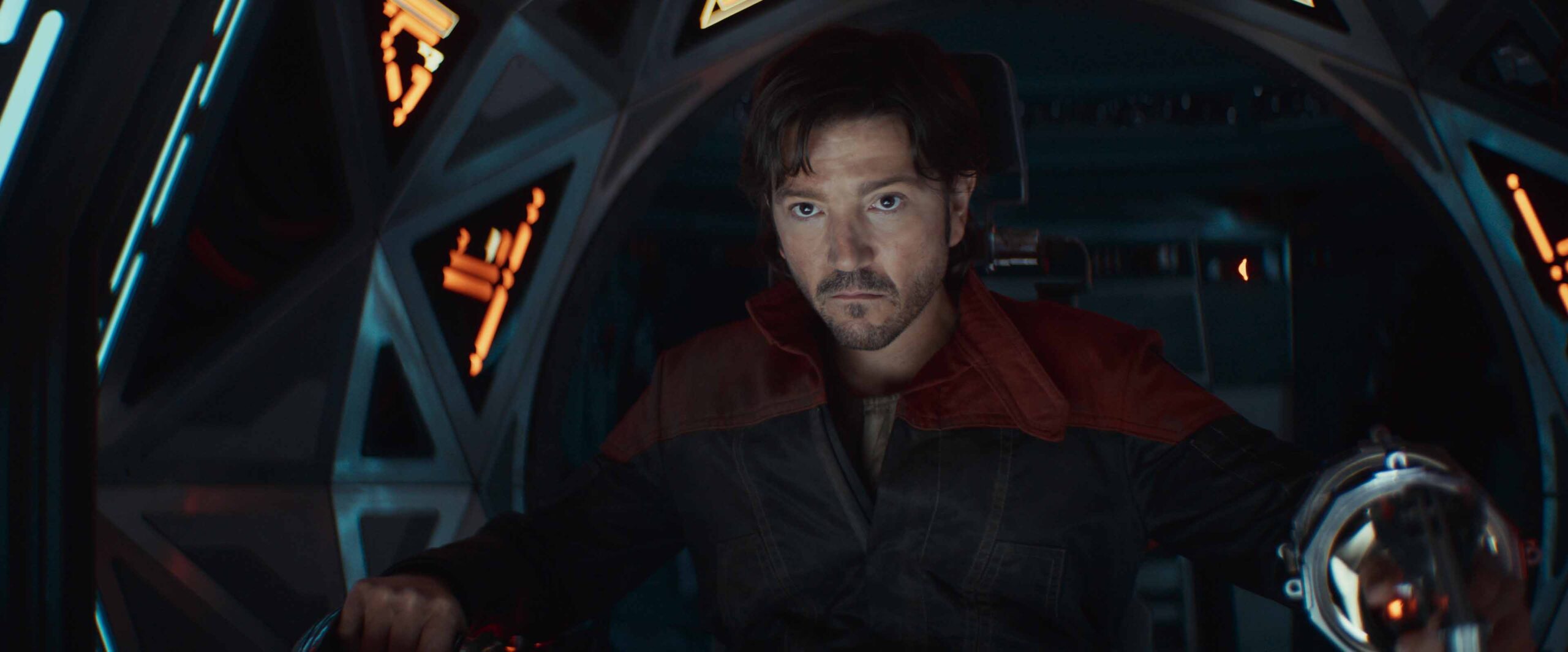
Without the weight of expectations, Season 1 of Andor cemented itself as a key chapter in the history of the galaxy far, far away and one of the best Star Wars projects ever made. Season 2 of the Tony Gilroy-created project could not be debuting under any more radically different circumstances. Following a pair of streaming series (The Acolyte and Skeleton Crew) that struggled to find audiences and didn’t set the galaxy on fire, Lucasfilm finds itself hoping that Season 2 of Andor, a series that Star Wars fans initially questioned the need for, will right the franchise’s starship.
Unsurprisingly, that’s not a problem Gilroy concerned himself with addressing in the first pod of episodes, choosing instead to continue to tell his story in his way. Despite orchestrating a masterpiece in Season 1’s incredibly intense finale, Gilroy abandoned all momentum gathered on that downhill ride and started Season 2 back down at the bottom of a brand new narrative plot hill.
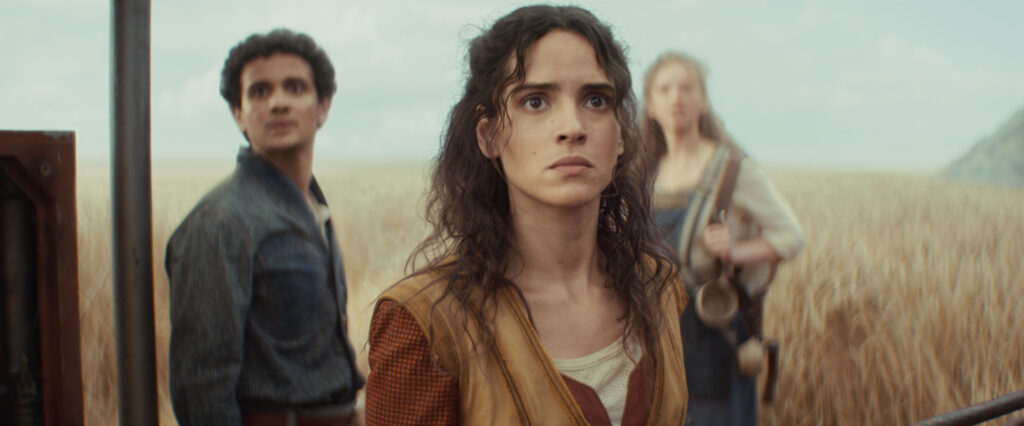
Though the series bears the name of Diego Luna‘s character, it quickly became clear in Season 1 that Andor isn’t simply the story of Cassian Andor but rather the story of the unnumbered faceless, nameless people who may not have even known they were Rebels but whose lives, actions and deaths made the grand gestures of the Rebellion possible.
One of the great thrills of making Andor is the scale of the story and the number of characters we’re able to meet — ordinary people, Imperial overlords, passionate revolutionaries. They are real people making epic decisions, all of them staring down questions with terrifying consequences. Cassian’s journey is the soul and spine of our story, but it’s the choir that makes the show. I’m so excited for audiences to see where we go in Season 2.
-Tony Gilroy
Set one year after the events of “Rix Road”, the first three episodes of Season 2 cover three days in the year 4 BBY and reveal a Rebellion barely clinging together and an ambitious Empire that’s grown increasingly contemptuous of its populace. Episodes 1-3 spin multiple, disparate narratives that take place in vastly different settings. As Bix, Brasso and Wilmon bide their time on the simple, pastoral planet of Mina-Rau, Mon Motma’s family prepares for her daughter’s marriage at their extravagant estate on Chandrila. While Cassian navigates shit’s creek without a paddle while held prisoner by the Maya Pei brigade (a faction of Rebels mentioned by Luthen Rael in Season 1), Orson Krennic and Dedra Meero orchestrate a multi-facted plan to gain control of Ghorman…and the foreshadowing of what will ultimately take place there is never subtle. The trio of episodes produces a beautiful contrast between the buttoned-up and decisive Empire and the threadbare, irresolute Rebellion. While the Empire is playing The Campaign for North Africa, the Rebellion is playing Rock, Paper, Scissors, verily.
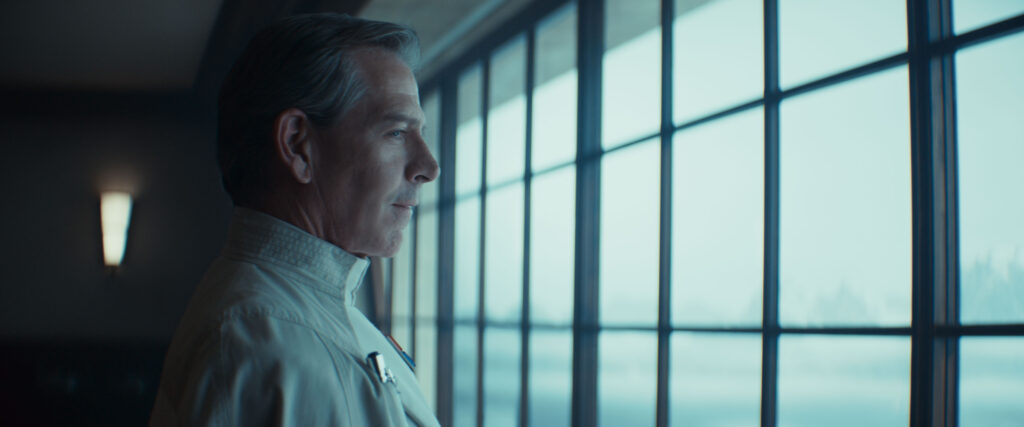
As before, a good deal of the new episode’s runtime is spent with members of the Rebellion and the Empire whose names you can’t quite remember even if they look a bit familiar. However, one way in which the new season diverges from its predecessor is that it starts to make very clear which of those Imperial faces fans should recognize as the villain(s). Despite having plenty of Imps to dislike, no single character really deserved, much less earned, the title of “Big Bad.” Season 1’s baddie was “The Empire.” That all changes quickly as the ambition of Denise Gough‘s sneering Dedra Meero has caught the eye of Orson Krennic. During a top secret Imperial retreat at the Maltheen Divide, Krennic–what a delight it is to have Ben Mendelssohn back as the snarky senior officer–singles out Meera to lead the destabilization of Ghorman…through any means necessary.
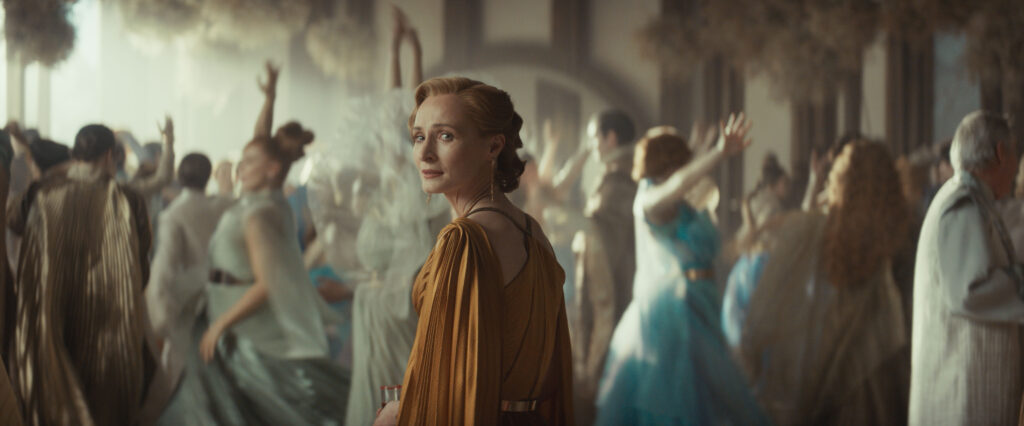
As the Empire’s plan for energy independence is born, Mon Mothma dances the night away in a wild release of frustration stemming from the realization that the Rebellion may be stillborn. Throughout the three episodes, the stark contrast of the comfort with which the Empire plots to disparage, displace and decimate an entire race to the tension Mothma, Luthen and Cassian (and the audience) experience while attempting to complete far smaller scale tasks grows, painting a clear picture of an underdog who is dangerously under water. But therin lies the beauty of Andor: nothing can be easy.
And in this pod of episodes, nothing is. Tension grows. People are lost. A Stormtrooper can aim. It seems clear that the well-oiled machine of the Empire will surely put down the dysfunctional Rebels before they can grow into something larger. As tough as the circumstances are on the Rebels, watching those characters experience them is as tough. Gilroy’s first episodes remind us all that Andor will not sacrifice detail for spectacle. In that way, when big action arrives, it feels even more grand because along the way, the history of Chandrila, conversations between leaderless Rebels and an awkward visit from Syril’s henpecking mother serve to reimmerse the audience in the slow burn corner of the galaxy far, far away.
Though at times the burn may feel a bit too prescribed and too slow, Gilroy continues to stratify significance and embed urgency into the details of these first three episodes. While Luthen and Kleya struggle to communicate with Cassian and the funding once promised to Mon by Tay Kolma looks to be lost, the pod reveals that during the year that has passed since the Ferrix Riot, the Empire’s evil reach has extended to every part of the galaxy. As Brasso, Bix and Wilmon learn, no corner of the universe is safe for the Rebels, the Empire views everything and everyone as its property and no laws, ethics or poltical push back will stop them. Indeed Andor may resonate sharply with the audience, perhaps too sharply for some; however, the best art makes use of the real world in which it was created, as Star Wars always has. It’s just that Andor does it better than any Star Wars ever has.
Sources: Deadline,

Leave a Reply