Category: Reviews

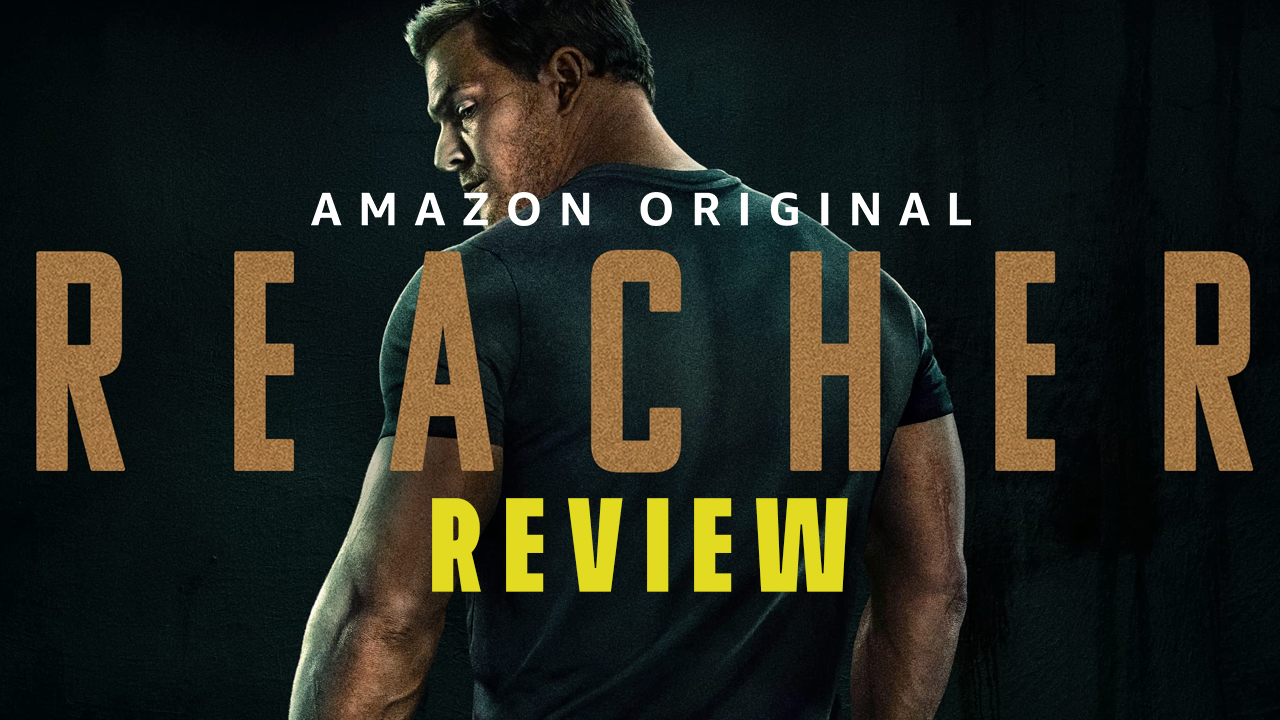
  • REVIEW: ‘Reacher’ Is Your Dad’s New Favorite Show

    REVIEW: ‘Reacher’ Is Your Dad’s New Favorite Show

    Picture a stereotypical father. He’s wearing a flannel and a pair of reading glasses he insists he doesn’t need. Perhaps he’s just finished barbecuing chicken on the grill and has cracked open a light beer after giggling to himself over the worst joke you’ve ever heard. Now, he plans to sit down in his chair, kick up the footrest, and turn on his latest favorite show. It’s another straightforward tale of the hero with a thousand faces, a lonesome wanderer who keeps finding that he’s the only thing standing between a group of innocents and those that would seek to harm them.

    Thirty years ago, this show might have been Walker, Texas Ranger on CBS, and ten years before that it may have been Knight Rider on NBC. Starting this month, it will be Reacher, a new show based on Lee Child‘s acclaimed series of novels, streaming on Amazon Prime.

    Over the course of eight episodes, Reacher checks off pretty much every box that its genre requires. We’re introduced to a quiet, pie-loving man’s man with more muscles than any shirt could adequately contain. His past is a secret, his emotions are cut off, and his proficiency with a gun is seemingly unmatched. He is portrayed as a force of good, who always knows what he’s doing and never does anything wrong. If he ever gets close to committing a crime, he probably has a good reason for it. He’s flanked by skeptical companions that do most of the talking and opposed by bad guys who’ve never met a line they won’t cross.

    There is soft-hearted romance, tough-guy bromance, criminal conspiracy, damsels in distress, and plenty of violence to go around. The general plot is mostly predictable, even if the central mystery is not, and you can pretty much guess how the season will end before it’s done beginning. It’s easy reading, better as a light rational dessert than a full mental meal. Yet, in spite of the entire preceding paragraph, I actually think the show is pretty enjoyable.

    Though he may not carry the same name recognition or star power as Chuck Norris or David Hasselhoff before him, the headliner behind the titular man of action is a big part of why the show works as well as it does. Alan Ritchson gives a stoic performance as Jack Reacher, slipping a surprising amount of acting into the motions of the strong, silent type. He’s exactly the kind of lead a show like this wants to build itself around; charming, authoritative yet somehow able to make the audience feel safe while delivering bad news with gruff curtness. His buddy-cop banter with Malcolm Goodwin‘s straight-laced detective character makes for a few good laughs, even if his romantic sub-plot with Willa Fitzgerald feels a little forced at times. A testament to Ritchson‘s likability in the role can be found in the way nobody really outshines him for the duration of the series, despite the fact he’s often given little to do in the script outside of spitting facts and taking names.

    The show occasionally succumbs to a handful of superficial low-budget television tropes, like poorly choreographed hand-to-hand combat and background fire that feels a little too obviously fake. Luckily, the events of each episode prove to be engaging enough that none of it matters all that much. There are some genuinely surprising twists and turns as the story goes on, and I found myself pleasantly surprised by how interested I was in what would happen next. In fact, some of the season’s cheesier moments play as fairly self-aware, breaking away from an intriguing conversation or important plot development for a corny one-liner or an action shot out of an early Stallone film. If you’re in the right state of mind, it might just make you smile.

    Ultimately, Reacher proves to be a completely serviceable television series, and maybe even a better adaptation of the source material than the pair of Tom Cruise movies that came before it. There may not be enough spark to garner attention from a wide range of Amazon viewers, but those who gravitate towards it will probably find pleasure in a series of episodes that are exactly what they expect. If not, perhaps, a little bit better. At the very least, your old man will probably love it.

  • REVIEW: ‘Raising Dion’ Season 2 Ups the Ante

    REVIEW: ‘Raising Dion’ Season 2 Ups the Ante

    Note: This review is spoiler-free. Any bits hinted at were introduced at the tail-end of Season 1, or teased in the trailer for Season 2.

    The first season of Raising Dion focused on the relationship between Nicole and Dion, and the struggles both characters endured due to Dion’s unexpected abilities. It was a deep dive into the mystery surrounding her husband’s death, and how the events leading to his death ultimately led to Dion’s powers. At the heart, though, it was very much a family drama full of self-discovery, humor and loss. The second season takes the series in a brand new direction, though.

    A two-year time jump allows the series to move forward, while also allowing for leading actor, Ja’Siah Young, to grow into the role. This time around, he’s in control of his powers and trying to use them to do some good around his neighborhood. Along with Esperanza and Jonathan, the former bully of Season 1, the trio form the Triangle of Justice. Rather than focus on the pain of growing up and being accepted by their peers, we get to see the students grow into their characters this go-round. They’re more confident, a heck of a lot more daring and all the more compelling. Seeing them work against the new big-bad? It’s exciting because there’s such a huge change in these characters we met in 2019.

    Season 2 picks up two years after the events on the school football field, where the battle between Dion and the Crooked Man took place. The world has, for the most part, moved on from the event, however, it soon becomes clear wherever the Crooked Man appeared, the land was impacted — left to decay, rot away without answer. Rather than being an imposing threat this season, BIONA is quickly proven to be the safety net for Dion and others like him. However, just as things seem to be going well, an old friend returns to upheave everything.

    There’s very little to complain about when it comes to Season 2 of Raising Dion. It’s a more cohesive storyline that allows its characters to thrive; it’s action-packed, having already established this unique spin on our world, and there are plenty of thrills to keep viewers guessing. One of the downfalls, though, is the decision to bring in Griffin Robert Faulkner‘s Brayden full-time this season. While Brayden does capture the creepiness aspect that Season 1 teases at the end, he often comes across as cruel more so than terrifying. This isn’t at the fault of the young actor, of course, but rather the way the character was handled. It’s all the more evident at the end when everything erupts into chaos.

    One thing Raising Dion does perfectly is build upon what it has already established. The series doesn’t dwell on what’s done. Season 1 was focused on the Iceland Event, the mystery surrounding Mark’s death and the Crooked Man. All were vital to Dion’s story, however, the second season moves beyond the Iceland Event and Mark’s death. The writers know viewers are not looking to rehash the same plotlines. Yes, they may be occasionally mentioned, but this is something entirely new. It’s an exciting story that is easy to binge in a single setting.

    While a third season has yet to be officially announced, fans will quickly find themselves awaiting said announcement. The ending of Raising Dion Season 2 will surely leave fans with more questions than answers and, in this instance, that’s far from a bad thing. It just proves there’s plenty of power left in this series, and if you haven’t already, it’s time to familiarize yourself with Mind Mover because Dion is the type of superhero we need on our screens.

  • REVIEW: ‘One Shot’ Feels Like a Soulless Gimmick

    REVIEW: ‘One Shot’ Feels Like a Soulless Gimmick

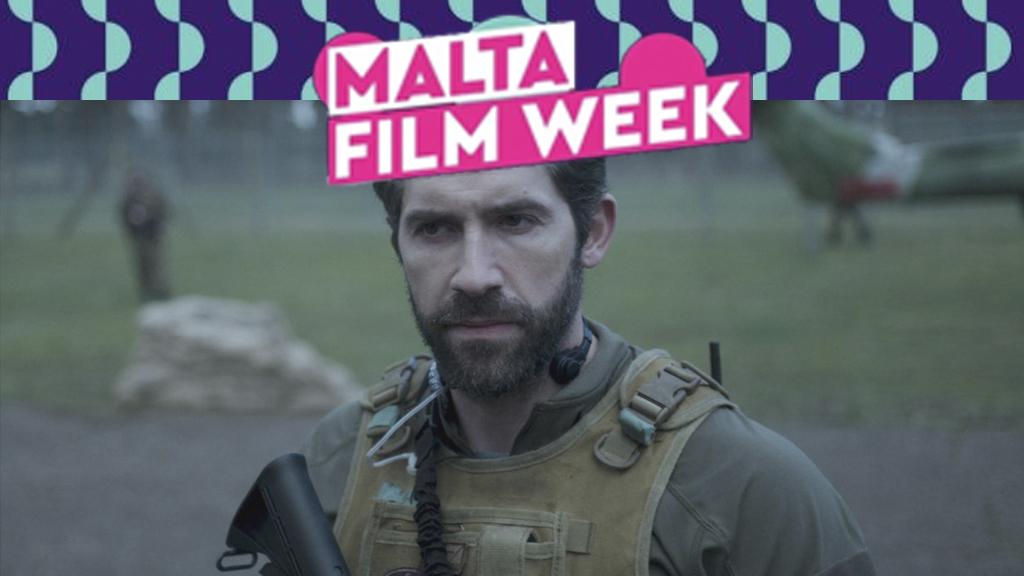
    As part of the Malta Film Week, I was given the opportunity to attend a screening of the 2021 film One Shot. Director James Nunn‘s shared during the live Q&A that he had the idea for the project six years ago and the success of films like Birdman or (The Unexpected Virtue of Ignorance) would eventually convince producers to greenlight his dream project of an action film made to look like a singular shot. Yet, as the title of the review might give away, this didn’t quite work out.

    Nunn’s concept isn’t a bad one. The tension of closely following a Navy SEAL (Scott Adkins) during a covert prisoner transport as terrorists attack the camp works on paper. Yet, the project went with a style over substance approach in how the one-shot turns more into a gimmick rather than a way to enhance the experience. I will state that the action choreography is impressive, especially as he revealed they only had three weeks time to prepare everything in pre-production and it shows that the film mainly focuses on it.

    There are characters here, but they are quite one-note. Adkins‘ Jake Harris is a blank slate by-the-numbers action hero that seemingly survives any scenario. Ashley Greene‘s Zoe is introduced as what seemed like another main character that is underutilized outside of long exposition sequences early on. We technically have a villain, but his character is mostly every villain cliché you can imagine. We get a tragic character in the form of Waleed Elgadi‘s Amin Mansur, but he repeats the same lines throughout the entirety of the film that just drags down a good performance by the actor.

    The only character with any real personality is Terence Maynard‘s Tom Shields, but mostly due to him chewing the scenery throughout most of the film. He’s also the only one that doesn’t talk in pure exposition but actually gives us some personality. Even the more jokey characters that are part of Harris’ SEAL team talk in mostly clichés that pretty much give away their fate for anyone that has seen a film like this.

    Cliché is a fitting way to describe the film overall. There’s just nothing to make it stand out from other films in the genre, especially those with a lot to say about the current climate surrounding soldiers and war. The film mostly uses a good base concept – which could’ve built up an incredible amount of tension for viewers – and is more focused on showcasing how cool Adkins is taking down evil bad guys while the camera never cuts away.

    There are drawn-out sections in this film that are just pure action. It tries to build up some kind of tension, and there are small moments of it, but overall it felt like a non-interactive video game. If Call of Duty ever had a movie adaptation, this film pretty much is that with some Metal Gear Solid sneaking thrown into the mix. Not just that, we spend hours of people talking as they just shoot down goon after goon with their main issue being the lack of ammo that only becomes relevant when the story requires it to build some last-minute tension.

    Speaking of, there’s an uncomfortable element on how this film approaches its “antagonists.” Not only do we see Americans torturing prisoners – mostly to make you feel bad for Mansur – and it comes at the cost of not caring for any of our supposed “heroes.” We get gratuitous violence with the camera shying away from people getting stabbed but forces us to watch as an innocent civilian is shot in the head. It just feels like it’s sending the wrong message and lacks any nuance.

    I want to especially highlight one sequence that comes at a later point in the film. So, beware of spoilers in this paragraph before continuing. The film does take some time to “flesh out” its villains and we get a brief sequence of a young soldier being convinced to sacrifice his life with a bomb vest. Besides the obvious problems with this, there’s a lot of build-up for this and he just randomly shows up in another sequence. And, the results of his action made me scratch my head and wonder what was the point of this film.

    There are a lot of sequences that drag out, and Nunn confirmed in the Q&A that his initial script only truly worked for a 60-minute film. The fact he had to add another 30 minutes to meet his quota shows It’s just action for the sake of action. The opening is pure exposition without any real character development. So, the only selling point is the gimmick in the title – which also seems depressing that it doesn’t actually play into the story of the film – and it doesn’t add anything. The shot composition is restricted as a result and you mostly can see some fun action choreography. If that is something you’re interested in, then you can give this one a shot.

  • REVIEW: Netflix’s “All of Us Are Dead” Breathes New Life into the Zombie Genre

    REVIEW: Netflix’s “All of Us Are Dead” Breathes New Life into the Zombie Genre

    When it comes to zombie shows, The Walking Dead has clearly dominated the small screen for the past twelve years. Even now, as it readies for its final season, the series has launched multiple spinoffs and will soon have a series of films to go along with it. Yet, as the zombie genre appears to be dying, Netflix’s All of Us Are Dead looks ready to change the conversation.

    All of Us Are Dead is a series that focuses on a high school in Hyosan, Korea, Hyosan High School. After a mysterious virus is unleashed on the High School, the students — and the staff — must fight for survival. It’s easy to write a zombie story. It’s hard, however, to write one that manages to be exciting and retain a sense of humanity along the way. Netflix’s All of Us Are Dead proves there are still risks to be taken with the zombie genre. This isn’t merely a series of teens fighting the undead, it’s a series that ultimately focuses on the struggles of high school and growing up set against the backdrop of zombies. It tackles some of the most uncomfortable topics and doesn’t try to make viewers feel empathy for the terrible characters that inhabit the series.

    The series begins with an unsettling occurrence between a few students on a rainy night. What takes place between the students will kick off a series of events that’ll change the world forever. It’s a strong way to kickstart the series, one that will leave viewers curious as to where it is going and how it’ll become the zombie-infested series the trailer promises. The series isn’t looking to hold viewers’ hands going into the chaos. The ugly truths of the world – bullying, parental abuse, sexual harassment/assault and depression – are all tackled hands-on; there is no sugarcoating any of it. This is what kids of the world endure, so All of Us Are Dead isn’t going to make it easier to watch – what these kids go through before the outbreak becomes vital to who they become when the world falls to the dead.

    One of the most impressive bits of All of Us Are Dead is that it manages to balance a rather large ensemble cast successfully. Not only does the series have to establish this world for viewers, but it also needs to develop these characters for viewers. The fact that it manages to craft such rich stories for each character is fascinating. Yi-Hyun Cho as Nam-ra, Park Solomon as Lee Soo-hyuk, Ji-hu Park as On-jo and Chan-Young Yoon as Chung-san have some of the best character development. Among the impressive young cast, the four actors stand out, delivering some of the strongest performances within the series — especially Cho, whose Nam-ra becomes a favorite as the show progresses.

    One of the minor setbacks for All of Us Are Dead is that each episode ends on a massive cliffhanger. If you’re looking for a show to slow binge, perhaps this isn’t the series for you. If you’re looking for a title to devour over the weekend, however, All of Us Are Dead is ripe for the picking. It’s well-crafted, with each episode immediately leading into the other, ensuring the story remains tight and avoids having to craft filler stories between. This allows the writers to tell what is essentially a twelve-hour film of the human’s desire to survive at all costs. There are sacrifices, there are brutal deaths and there are careless mistakes, all of which will elicit strong reactions from viewers. It’s just entertaining television that’ll entrance its viewers with ease.

    Overall, All of Us Are Dead is a breath of fresh life in the zombie genre. It’s beautifully shot and features a stellar ensemble cast and a fantastic new take on zombies. It’s dark, it’s screwed-up, but it’s also a realistic approach to a fictional subject. For viewers looking for something new to binge, give this exciting zombie series a go. By the end, they’ll be desperate for a second season.

  • REVIEW: ‘Peacemaker’ Episode 5 – Monkey Dory

    REVIEW: ‘Peacemaker’ Episode 5 – Monkey Dory

    Peacemaker’s Episode 5 is the best episode to date. It is likely the funniest episode, and certainly best suited to drive the plot forward into the last three episodes. It tackles both the Auggie and Project Butterfly plotline, leans heavily on both light and dark humor, provides at least one or two “superhero moments,” and still has time for a little heart.

    Peacemaker is still in his own head about his life and identity as a mass murderer, continuing probably the greatest focus of the series. While he sinks to deeper mental and emotional lows, the episode shows him a potential way out through the power of friendship. Part of the brilliance of the characters’ dynamics is how everyone feels as if they operate on the same playing field, even if they shouldn’t. Economos and Peacemaker, for example, were one of the highlights of the episode as they passively sparred over how the former accidentally framed Peacemaker’s dad. While everyone on this small Task X squad seems as if they are one bad hair day away from a psychotic break, the moment they join forces under the umbrella of chainsaw-massacre-ing a super gorilla, positive things are possible. It’s a hard pivot to a dirty and psychologically unstable version of Paw Patrol, but they don’t call him Peacemaker for nothing.  

    While the show is generally entertaining as hell, it has noticeably lacked much of the gusto that’s come to be expected of most comic book properties with its action scenes. The series certainly isn’t devoid of it, and there is no reason this can’t be plenty successful with a “less is more” approach. Still, the premise begs for a little more. Luckily, the fifth episode does more than hint that it’s still connected with its over-the-top, violent roots. The entire sequence of the bottling facility is the series’ peak so far. Between Peacemaker shooting most of the heads off of unassuming yet butterflied civilians to the eventual boss-level super-gorilla chainsaw party, it doesn’t disappoint.

    The episode still has its flaws, which generally speak to Peacemaker as a whole. Adebayo is a strong character billed as, and given the screen time of, a co-lead in the series. Danielle Brooks really delivers for the character, but her background and family struggles are not particularly engrossing and, at times, feel like an additional weight to the clunky balance of plots. The Auggie plotline has been interesting as it adds to Peacemaker’s character but otherwise has felt a bit out of place next to Project Butterfly. The detectives that spend quite a lot of time working to keep notorious KKK-level supervillains off the streets just feel like they are around without offering much more. While exploring Peacemaker’s relationship with his father has a lot to offer, there is too much focus on Project Butterfly and the detectives rather than that actual arc for it to pay off fully. Similarly, Project Butterfly feels a bit watered down and lukewarm amongst the mix.

    For plenty of reasons, Episode 5 is the strongest episode yet of Peacemaker and a great kickoff into the final half of the series. It ends in a cliffhanger (or two) that propels the main plotline forward enough to keep Project Butterfly in the air. The humor is there, and the emotional components – while at times extremely corny this episode – are still performing. The weight of the somewhat incompatible plotlines seems to – for a lack of a better term – weigh Peacemaker down just a bit, it only shows signs of going up from here as this fifth episode continues the series’ streak of improving on the last.

  • REVIEW: ‘The Book of Boba Fett’ Chapter 5 – Return of the Mandalorian

    REVIEW: ‘The Book of Boba Fett’ Chapter 5 – Return of the Mandalorian

    After what can perhaps be described as a rather lackluster series so far, The Book of Boba Fett has delivered not only its best episode yet, but probably one of the best Star Wars Disney+ episodes ever. It’s interesting how it managed that on an episode where the titular character doesn’t show up, even if the reasons for that tend to be pretty obvious. Let’s dive in.

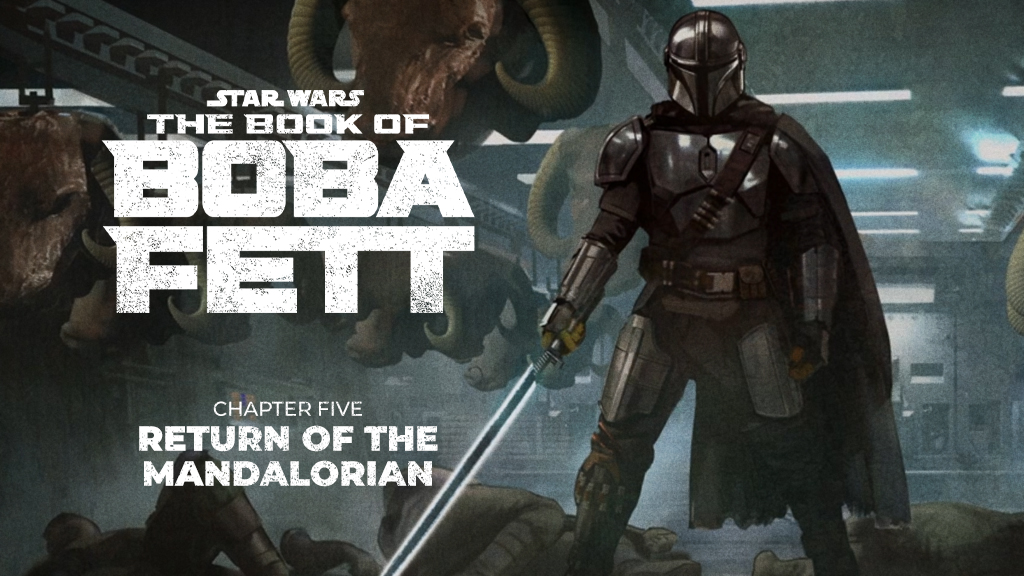
    After the obvious hints on last week’s episode, it’s no surprise that Din Djarin finally made his debut on the show. And much like Ahsoka Tano’s introduction on Chapter 13 of The Mandalorian, we didn’t have to wait long for that to happen, with the series putting aside an endless tease and going straight into it. By giving us an entire episode following Din the show cashed in on the growing expectations to see what was to come next in the journeys of Din Djarin, following Grogu’s departure and his acquiring of the Darksaber. By expanding his story and also tying it with Boba Fett’s it managed to deliver a compelling addendum to both The Book of Boba Fett and The Mandalorian.

    One might say that a few of the issues that have made The Book of Boba Fett pale in comparison to its predecessor might come to the (lack of) novelty of it all. Having a show not only set on Tatooine, perhaps the most uninteresting of the interesting planets of the Star Wars universe but also focusing half of your runtime on flashbacks that do little more than connecting dots one already knew existed doesn’t exactly invite the awe of discovery one often associates with Star Wars. With the flashbacks presumably ending in Chapter 4, given Boba Fett being finally healed of the injuries inflicted on him by the Sarlacc, it was now time to move forward and bring something new to the table.

    This breath of fresh air is personified by the return of Din Djarin. His on-screen magnetism is perhaps best explained through the tracking shot set between 07:05 and 09:21. We follow him go up an elevator, delivering his bounty, collecting the information he needed, and then leaving, all on a single take, with the camera focusing on him at all times. The Disney+ shows have been known for doing something similar to what Peli Motto did with Din’s new ship when she states “Not a gram of fat on her!” in order to make it go faster. They always seem to be able to cut the superfluous shots and give us the bare essentials that the story needs in order to move forward at a more pleasant pace. So it is interesting to see an episode take its time with the reintroduction of a character so that when it’s done everybody had the opportunity to settle in and begin the episode on the same page. That can only speak of how much the character means to so many, even if it’s only been around for a little over two years.

    By making Din Djarin the star of the show we managed to get off-planet and onto some new and interesting locations, one of the aspects where The Book of Boba Fett doesn’t really deliver. Elysium and Interstellar came to mind when we got to the city in space where Din delivers his bounty. But the references within the new and exciting location and action shots didn’t stop there as the flashbacks to the destruction of Mandalore was reminiscent of Terminator 2: Judgment Day with the KX-series security droids taking the place of the Terminators stepping on human skulls. All these references, combined with the connections to past Star Wars projects as seen when Din is testing out his Naboo N-1 Starfighter through Beggar’s Canyon, Motto’s BD droid, and a few more, could feel gratuitous but they all end up shining by flowing nicely into the plot and being used as an integral part of the story.

    At the end of the day having a Din Djarin-centered episode also benefits his future endeavors. Besides setting up what is sure to be a transformative final act for The Book of Boba Fett, having Chapter 5 explore the present state of The Tribe, the group hidden in the Mandalorian covert in the sewers of Nevarro, first introduced and mostly destroyed in The Mandalorian, also perfectly sets up what a The Mandalorian season 3 might be all about by addressing the legacy of the Darksaber and how that impacts Din’s relationship with his fellow Mandalorians. With Din left on his own, and much like in his own show battling his teachings after realizing there were other ways to honor his Mandalorian background, his search for Grogu will now begin as he plans to deliver him his own mesh armor made out of beskar. 

    This chapter feels like one that jumpstarts the show from its lethargic state, giving it a much-needed energy boost as we get to the final two episodes with a greater sense of urgency, with more dynamic character dynamics on the horizon. The Book of Boba Fett might not be living up to the hype, but there is no reason why it can’t still surpass it. 

  • REVIEW: ‘How I Met Your Father’ Episode 3 – The Fixer

    REVIEW: ‘How I Met Your Father’ Episode 3 – The Fixer

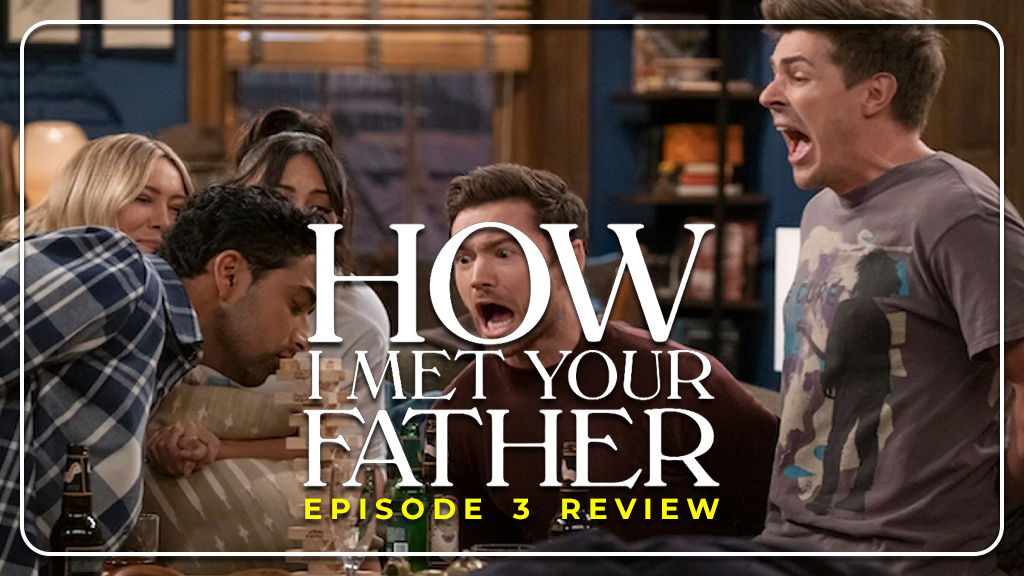
    Sophie’s love story continues. This time, Jesse takes the spotlight, as they both try and conquer their return to the dating world. Last week, I shared my thoughts on the premiere of How I Met Your Father and had some complaints about the series. Luckily, it seems those may have been answered. During the premiere episodes, I felt the humor was a bit lacking, and the connections to How I Met Your Mother were great, but I felt the feel was a bit off. In a way, it was almost like the show was trying desperately to recreate the atmosphere of the original, but wasn’t quite hitting the mark. Episode 3, however, answers these problems and then some.

    As I had suggested last week, I feel the first two episodes may have only felt off due to it being a premiere and, therefore, needing to set up multiple different characters and relationships. One thing I did love last week was that I had already started to get a feeling for the characters and have grown to love a few of them already. That helped tremendously in the third episode, which is by far the best one out of the three. It follows Sophie and Jesse returning to the dating world, both feeling a bit defeated on their search for love. As romantic sitcoms go, the episode concludes with both characters hyping each other up, and having new prospects and views on their current dating life.

    Episode 3 was both charming and funny. The humor that I felt missed the mark last week was dead on this time around, obviously not all jokes will land with everyone, but I felt that laugh tracks weren’t placed in humorless moments as often. The characters once again stand out, and the more I watch them – especially Jesse and Sophie – the more I am falling in love with them. I am invested in this journey. In my last review, I noted the clever approach to already hinting at who might be the father. Yet, this new episode defied expectations and introduced a new possible father, Josh Peck‘s Drew, as we learn he met Sophie briefly on the first night while asking for a charger. This new development not only adds another father into the mix but also opens up the possibility of many new men that could be the aforementioned father. I mean, it was a party that filled up a bar, after all.

    On top of the love story, the supporting cast also made some leaps this week. Just like with How I Met Your Mother, the show followed Sophie and Jesse on their “main journey,” but also spent some time with the other members of the group while they live their respective lives. This week, we followed Valentina and Sid trying to improve their long-distance relationship, as well as Ellen and Charlie house hunting in New York. The character pair-ups were a bit odd to me at first, but as the episode continued, you immediately felt the chemistry between them. This cohesive friend group continues to impress me with how natural it feels.

    From the character sitting around the apartment to the humor to the charming love story, this episode landed so perfectly in its attempt to capture the feeling of the original. How I Met Your Father had an uphill battle in trying to live up to one of the most beloved sitcoms in the last 20 years, and somehow, they managed to do it. Episode 3 had me truly feel like this was an extension of How I Met Your Mother and that it’s expanding the world of the original. I was quite impressed with how fast the problems seemed to just disappear, and how fast the show has managed to grip me.

    How I Met Your Father is starting to line up as a great premiere in a crowded 2022 schedule. If they can continue to deliver as they did with this entry, they may have a stand-out new show on their hands that is worth your attention. As the streaming wars continue, IP is like gold. So, when a new show manages to deliver on its predecessors, it’s a true treat for fans. So far, How I Met Your Father is a good show worth checking out, but if they can keep up this momentum, it may just become a must-watch. I hope it continues on this path, if they do, I truly believe it may possibly live up to and maybe fix the problems of How I Met Your Mother.

  • REVIEW: ‘The Ritual’ Makes You Never Want to Enter a Forest Again

    REVIEW: ‘The Ritual’ Makes You Never Want to Enter a Forest Again

    I have the problem of being late to the party on many things. With only so many hours in a day, you end up losing out on some projects during their peak. After quite a few years, I’ve finally decided to check out the horror film The Ritual. The 2017 David Bruckner project brought the 2011 novel by Adam Nevill to life and follows a group of friends traveling into the unknown forests of Sweden with some dark consequences. What turns out as a mourning trip through the mountains ends up as probably one of the best horror films I’ve seen in some time, and why I wanted to write up a review on it.

    As the film was released back in 2017, I will be tackling spoilers in this review. If you haven’t yet seen it, I highly recommend you check it out before continuing.

    The opening is quite different from what I initially expected. The story doesn’t send you directly into the thick of it all, but rather we spend some time with our main cast. While we only get small inclinations of their characters, the story takes a dark turn very early on. A robbery goes wrong and ends up with one of our main cast getting killed in a convenience store. I’ve somehow managed to stay away from spoilers, and it catches you off-guard. We watch Rafe Spall‘s Luke, as he is forced to witness when his friend Rob (Paul Reid) is brutally killed over his wedding ring. He is too scared to help him and ends up living with that regret.

    In his honor, he and the rest of their friend group take a trip to Sweden to go hike in the mountains. Kungsleden – also known as the King’s Trail – was their original goal but they end up taking a shortcut through a forest after Dom (Sam Troughton) hurts his knee. This moment is when the actual story of the film kicks off as the forest is where the true horror is lurking, regret. Yes, there is a monster in this story, but what they did to flesh out our characters is by having that opening shock become a narrative throughline for Luke.

    It also lends itself for some amazing visuals as the threat they face blends their regret into the first. While at first there are separate areas, seeing elements from the convenience store appear into the forest made for great surreal imagery. We have an actual main threat, which I’ll get to in a bit, but the character arc of standing up to things makes the character interesting to follow, as it also becomes a point of conflict with his friends. They sadly end up mostly as lambs to the slaughter, we still feel for them. There is some well-done character development at play that is subtle but effective for the little time we spend with them.

    The film’s length works to its advantage, as it doesn’t overstay its welcome. As soon as we enter the forest, there’s a lot of build-up to the reveal of the creature lurking in the endless forest. One of my favorite moments was as they wander off, you can see it standing in the background before it moves along. Even if they still rely on some classic Western horror tropes with jump scares and red herrings – which still are used for a build-up. Once the shock factor of “something is lurking in the dark” is over, we get a lot of tension building as it tarts playing with their minds. As pointed out, those moments when the real world blends into the past to screw with our protagonist’s head were some of the best.

    So, let’s talk about the monster. It might be one of the most effective yet simplest design choices. The body is that of an exaggerated moose or dear, but its head is a human body twisted abnormally. We don’t get that many close-ups of his design, especially not until further into the film, but the use of shadows and the forest make it truly memorable. The fact it is teased as a god and the son of Loki makes it such a curious take on Norse folklore that I wish they expanded upon. We mostly get hints and teases throughout, which is very likely a better choice to keep it vague, but my love for mythology just made me wish they explored it even more.

    The way they hinted at the people that lived in this forest was well-done, as they used the buildings and road marks as a way to hint at their existence. They were effective and creepy, but part of me thinks they might’ve been better left out of the story. Yet, it’s also called The Ritual for a reason and you can’t include a god-like entity without any people willing to worship it.

    I will say, the ending has some strange moments that take you out of the “horror” aspect of the film. After a heartbreaking yet creepy sequence with Dom, Luke has this strange calm reaction to everything happening. He walks into this creepy room filled with mummies and after they all start coming to life, he just calmly sets them on fire. Creepy old lady creeps up on you? He takes barely a second to just punch her square in the face. I was laughing way louder than I probably should’ve been because it was supposed to be scary.

    Surprisingly, those moments didn’t take away from the film’s overall experience, and the film might’ve become one of my new favorite horror films. The atmosphere throughout was really well handled and even with most of the film taking place in a dark forest, everything was lit appropriately and built up a tense atmosphere. The monster design and the build-up to its arrival were some of the best parts of the film. Its use of grief and trauma was also a smart character throughline that adds personal conflict and a resolution beyond just “survival.” It certainly has found a way into the top of my horror list.

  • REVIEW: ‘How I Met Your Father’ Episode 1 – 2

    REVIEW: ‘How I Met Your Father’ Episode 1 – 2

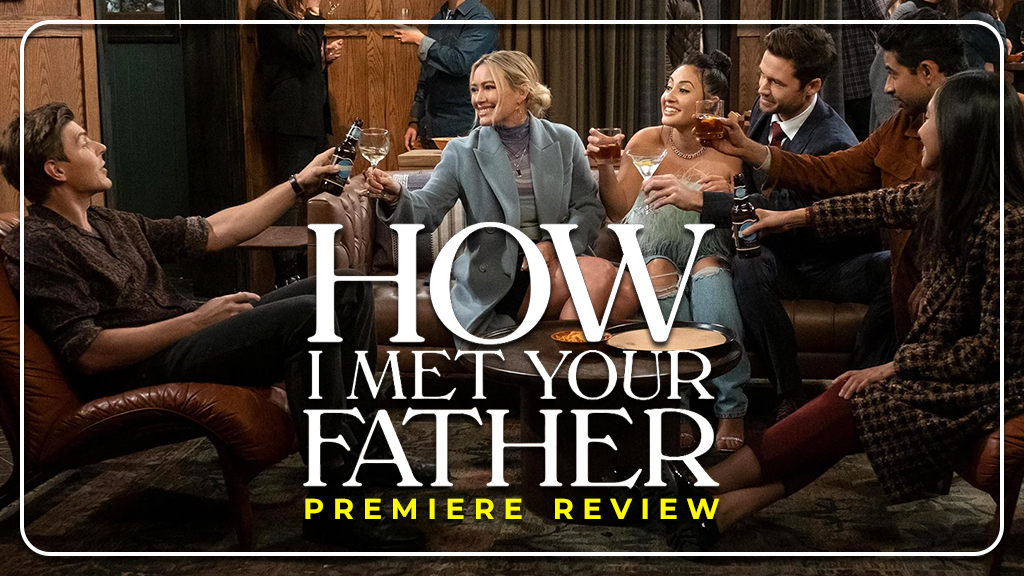
    Everyone has their “ol’ reliable” show to fall back on. It’s that one show you can’t help but go back to, over and over again even though there are countless other things to watch. Some have The Office, while others Parks & Rec, and for me, it always ends up being How I Met Your Mother. I have watched my ol’ reliable over 30 times by this point. If I’m being honest, I watch it so much that I have started to leave it on while I fall asleep purely to function as white noise. You can imagine both my excitement and skepticism when How I Met Your Father, a spin-off set in the same universe as its predecessor, was announced. I loved the prospect of a new series with the same love and charm that made the original so great. However, I was also worried about the all too common problem of a sequel that either falls into the trap of trying too hard to be the original, or steers so far off from it that the only link is by name. Now, after a long wait since its announcement, it has finally arrived on Hulu. Does it live up to How I Met Your Mother, or is this another sequel disaster in the making?

    Thanks to a two-episode premiere, we already have a start to the character and relationship development needed for a romantic sitcom. The show follows Sophie, played by Hillary Duff with Kim Catrall as her future self, as she tells her son the story of how she met his father. Similar to the approach of How I Met Your Mother, we follow older Sophie recounting her memories of the past. However, the show has made some changes to the original formula. Instead of being in the blind on who the aforementioned mother or father is, the new show lets us in on a pretty big secret as of the first episode: the father is one of the men we see her meet in the very first episode.

    Another change is that instead of watching the kids react to the story in the future, future Sophie is instead seen telling the story to her son, who is the one kept a secret from the viewers. I feel this was pretty obviously done in an effort to not make it obvious who the father is, considering we are narrowing it down to four gentlemen from the start. I personally love this change. The original was very ambiguous, which made it so any lucky lady could be the mother during the journey. However, I feel like this new approach will make for some tense and emotional moments as the show progresses. We’ll be on the edge of our seats, as four possible suitors are in the picture, all being around Sophie and competing for her attention as the plot unravels.

    In the two-episode premiere, I was surprised by how fast I was getting emotionally invested in the characters and their relationships. Jesse (Chris Lowell) is an emotionally damaged character that immediately takes a liking to Sophie. He is charming but awkward, which makes for a great character to cheer for. Sid (Suraj Sharma) seems to be a fun and loving man, who gets engaged to his fiancee in the first episode. It’s a similar scenario Lilly and Marshall’s from the original, but with a twist. Unlike the original, Sid’s fiancee has to leave to work in another city, seemingly not a part of the main cast. This dynamic has led me to believe that while he is engaged now, he is definitely not out of the running to be the father.

    Other characters include Valentina (Francia Raisa) who is Sophie’s best friend – a character that immediately made me laugh out loud – and her date Charlie (Tom Ainsley), as well as Ellen (Tien Tran), Jesse’s adoptive sister. I felt the cast immediately had chemistry and seemed like a very easy to imagine as a group of friends. This is largely why I am excited for the future of the show, a lot of shows struggle with introducing a new cast or building them into a cohesive friend group. With this largely already out of the way, more time can be focused on developing the plot.

    While the relationships and characters are lovable, the humor felt a bit forced. Multiple times I heard a laugh track and couldn’t help but feel that it distracted from the show rather than back up an actual hilarious moment. I’m not particularly fond of laugh tracks in general, but I will never fault a show for using them considering it is such a standard practice in the genre. However, using them to force a boring moment into being a funny one is never fun. That isn’t to say the show doesn’t have its laughs, there were many times when my fiancee and I audibly laughed out loud. While this was a negative thing for me, I also feel this is a problem with a lot of shows as they start out, so I will reserve judgment on this until the full season is completed.

    All-in-all, while I feel like the humor could use some work, the groundwork laid out in the first couple of episodes has me excited for the future. So far, I feel the show lies firmly in the “fans of the original should check this out” category. Sitcom lovers will also probably feel right at home. However, so far, I think the show is not for everyone, but we will see how that changes over the course of the season. Considering the emotional moment at the end of the second episode that ties How I Met Your Father to How I Met Your Mother, I think we are in for a real treat when we see what’s to come.

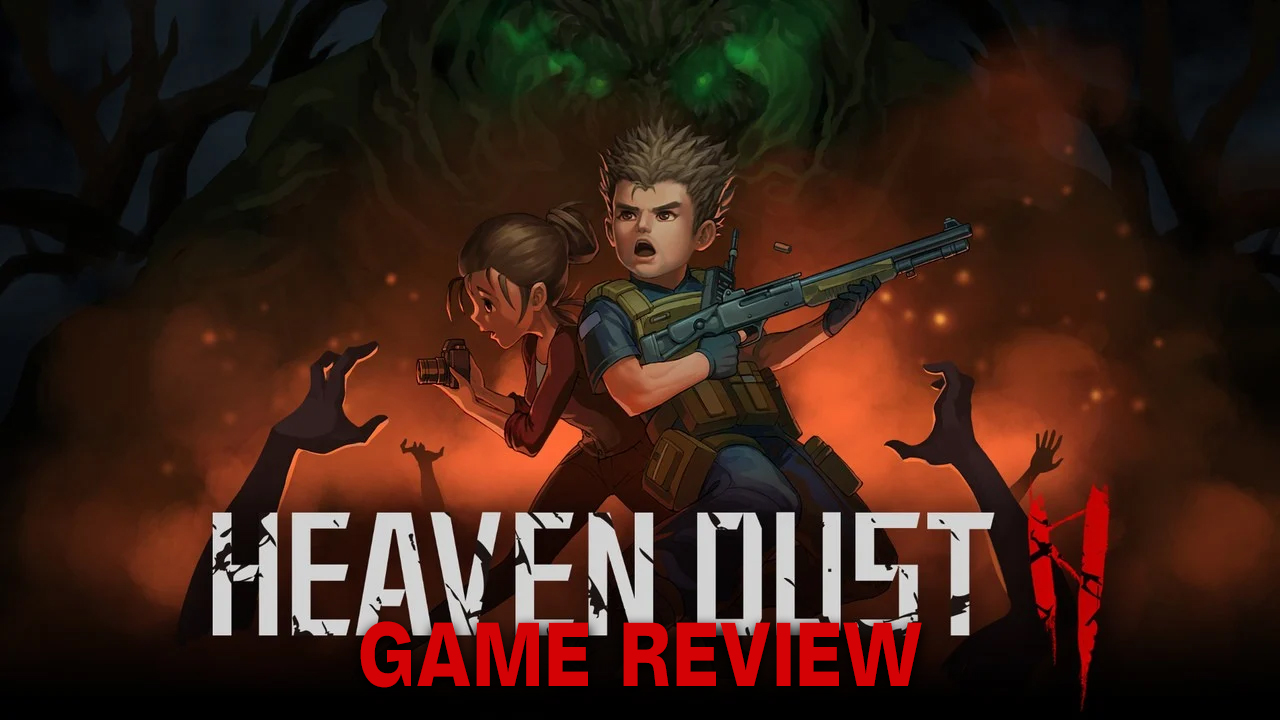
  • REVIEW: ‘Heaven Dust 2’ is the ‘Resident Evil’ Throwback Gamers Need To Try

    REVIEW: ‘Heaven Dust 2’ is the ‘Resident Evil’ Throwback Gamers Need To Try

    As janky as the original Resident Evil games are, there’s an undeniable charm to them. Part of the essential old-school experience is the terror brought by the controls, the rigidness of the fixed camera angle, and the nightmarish door-opening loading screens. Within modern gaming standards, these are elements that players would crucify a game on, but back in the day, they served as key tenets of the genre. So when a new indie survival game commits to the DNA of the original Resident Evil games, you can’t help but applaud the homage.

    https://gfycat.com/leftwhoppinggrebe

    Heaven Dust 2 is a Resident Evil love letter from Chinese developers One Gruel Studio and publisher Indie Nova. It unabashedly wears its influence on its sleeve, in particular the first Resident Evil game, from the premise, which takes place in a mansion replete with secret passageways and laboratories, to the aforementioned mechanics that made those games so enduring.

    As expected, its story echoes many tropes from any imaginable zombie story. It has the quintessential virus outbreak, the mad scientist responsible, the mysterious patient zero, and the adversarial military group trying to keep the whole thing a secret. The storytelling isn’t particularly good and at times feels like the campaign of a mobile game. 

    https://gfycat.com/accuratedimfiddlercrab

    The way Heaven Dust 2 is indebted to its forebears may make or break the game depending on your mileage. Some of its attempts to replicate the DNA may be for the worse. The recovery frames in this game are unrefined to the point where getting stun-locked is a possibility. Not only that, the puzzle designs can oftentimes be frustrating to figure out while the bosses are mostly just bullet sponges. To top it all off, the gunplay lacks serious finesse.  

    The game’s puzzles are constantly at odds with its poor localization. Puzzle solutions are commonly found in in-game documents chronicling the events of the story. Unfortunately, a lot of the documents aren’t translated well into English, making certain puzzles tougher to figure out if you don’t read hard enough. The localization isn’t entirely incomprehensible but the solutions tend to get lost in translation.

    By design, there are also some gaps with the mechanics. The game isn’t exactly forgiving when it comes to inventory management and the lack of required items may hardlock players from progressing. It isn’t clear if there’s a built-in fix for potential hardlock issues so it’s important to be very careful while progressing through the game.

    The old curse of badly designed UI plagues Heaven Dust 2‘s menu system. It’s painful to look at and fails at distinguishing the many elements it throws on screen. The map is so shoddily made as well as the game’s gun modification menu.

    https://gfycat.com/disloyalwhoppingaddax

    One improvement Heaven Dust has over the old Resident Evil games is its isometric view, which gives players a more precise sense of space that in turn makes exploration more engaging. The game loses a bit of its atmosphere with the isometric view and kiddie chibi art style but it’s a game that’s easy on the eyes. You won’t play this game for the scares but for the familiarity it evokes.

    Heaven Dust 2 is a great reminder of how effective the original Resident Evil games were at using Metroidvania-style exploration. In spite of all its flaws, the game’s gated progression, rewards system, and cohesive level design convene in a very satisfying manner. A big plus is that backtracking never feels as tedious as it should be; it’ll take less than 10 minutes to cover the entire map of the game and there are zero loading screens to worry about.

    https://gfycat.com/generouszealouskillifish

    All in all, Heaven Dust 2 is a wildly flawed game that manages to stay true to its goal of delivering an experience that brings players back to the early days of the survival-horror genre. It’s a charming game that doesn’t overstay its welcome yet will playfully keep players feeling nostalgic. Enthusiasts of the genre need to put this on their list.