Category: Reviews

  • REVIEW: ‘Peacemaker’ Episodes 1-3

    REVIEW: ‘Peacemaker’ Episodes 1-3

    Peacemaker’s comedic tone and its take-nothing-serious attitude are immediately in full force at the beginning of its premiere episode, and the series’ amazing opening credits promise that that will underlie the entire show. With that, it is successful, and it is sure to please a wide-ranging audience with those elements alone. Still, the first three episodes of Peacemaker left some to be desired with a sometimes-dragging pace. The series mostly makes up for it with its characters and the excitement and pace pick up as the series progresses. 

    Where Peacemaker excels most is its desire and fearlessness to allow itself to be the joke rather than just making jokes. In The Suicide Squad, that is essentially what the character of Peacemaker brings to the table, though with a bit more grit than the series is so far generating. Peacemaker is driven by general incompetence, and the series feels somewhat like it exists in some bootleg underbelly of a superhero universe. A universe where generally ordinary but demented people dress up in colorful costumes and casually assimilate into society. From what Peacemaker shows, there is nothing flashy or elegant about the lives of these superheroes—the titular hero lives in a cluttered mobile home—and it adds to the feeling that the series takes place in a reality closer to our own. 

    The one thing that Peacemaker nailed before it even began was John Cena’s casting. It’s hard to put a finger on it, but there’s something about him and his performance that is Peacemaker and feels effortlessly so. Cena allows himself to inhabit a character that is the butt of the joke but also portrays genuine bravado yet cluelessness at the same time. Peacemaker does not spend time trying to convince anyone that the titular character is some worthy hero, and the series even attacks the character for being racist within the first few minutes. The character also encapsulates the series’ intended tone, so even if other elements aren’t matching it, Cena’s Peacemaker rightfully anchors it all to keep it from losing its heart.

    While there is some controversy over the direction the series decided to take Freddie Stroma’s Vigilante, the character is possibly the best part of Peacemaker so far. While his scenes were sparing over the first couple of episodes, his character is being consistently built into the foundation of the series. His flamboyant, upbeat personality that overlaps with a clearly deranged and murderous individual is a Peacemaker-level character at its finest. Cena’s Peacemaker is otherwise surrounded by a bit more serious and grounded characters, so Vigilante’s personality is a strong addition that compliments Peacemaker’s in a way that others cannot. 

    Still, the supporting cast feels integral to the series to the same degree that Peacemaker does. Jennifer Holland’s Emilia Harcourt is often the most serious character of the series but can come across as one-note. Danielle Brooks’ Leota Adebayo is a welcome addition to Peacemaker’s Task Force X that underscores the premise that the team often is not exactly inspiring or competent. Steve Agee’s John Economos mostly seems there to exchange insults with others, and Chukwudi Iwuji is undoubtedly the most formidable and intriguing member but has yet to reveal much about himself. The reluctant team aspect is reminiscent of The Suicide Squad in some senses, but the group’s dynamic has room to evolve and improve. The team plays as (mostly) the level-headed backbone of the Project Butterfly plot, in stark contrast to Peacemaker who ironically is often the most incompetent around. The team, though, is not immune from the series’ desire to make fun of itself and not take things so seriously. As serious as they can be, they also suffer from silly mishaps and poor decision-making skills. Robert Patrick’s Auggie Smith or White Dragon is featured prominently in the first two episodes, and it is made clear that the white supremacist villain will have a substantial role to play other than being the source of Peacemaker’s daddy issues. 

    However, the series is surprisingly slower than expected. The first episode in particular felt rather mundane and drawn out, serving as a basic primer without much-added excitement. After that, the series picks up with Episode 3 easily being the best and well-paced of the three. Episode 3 is also the first episode where the overarching “Project Butterfly” really comes into play, though the series is still rolling out the details. The effect is a show that is currently more of a mystery than an action-thriller, but there’s every reason to assume that that will shift. For now, though, Peacemaker falls significantly flatter than maybe it intends to. The humor still carries and drives the series, so it is not left without its fun and heart, even in its blander moments.

    All in all, Peacemaker is full of plenty of promise. The first three episodes seem to have set up most of the major players and elements of the series, even though most of Project Butterfly remains under wraps. Hopefully, the show can utilize its strong cast and collection of characters to propel the series to greater heights as the story picks up the pace and the action—hopefully—follows suit. 
  • REVIEW: ‘The Book of Boba Fett’ Episode 3 – The Streets of Mos Espa

    REVIEW: ‘The Book of Boba Fett’ Episode 3 – The Streets of Mos Espa

    After spending most of the time with the Tusken Raiders in the initial episodes, the third chapter titled “The Streets of Mos Espa” remains mostly focused on the present-day storyline. It feels like the story is starting to pick up the pace, as we find out what other dark secrets the town of Mos Espa has hiding, as well as continue to humanize the man behind the helmet, as Boba Fett remains a much kinder character than one might initially expect. Can the former bounty hunter finally set his foot as ruler of Tatooine?

    The core of this episode continues to highlight Fett’s character. While he is now the Daimyo, he stays true to his beliefs. These are strongly reinforced by the Bacta flashbacks, and this episode feels like the first time it is truly coming together. He’s shown quite a lot of mercy, which you wouldn’t expect from a man who worked as a bounty hunter. If it weren’t for the Raiders, we might have a very different man leading this show and it knows that. That development makes the poignant moment of this week’s episode hit even harder, as reality sadly is much harsher. In a way, it parallels what he’s trying to accomplish with his more kind take on ruling, as when violence was used it only ended in violence in his past.

    Disney+’s latest Star Wars series offers many dramatic moments, but as highlighted in last week’s episode is also not ashamed of having some fun. The fact that he faced off against a literal desert alien biker gang in the last episode and the arrival of Tatooine’s youth with their shiny rides feels somehow bizarre yet fitting for the franchise. It’s that combination of fun world-building based on familiar elements that always made this franchise stand out among its intergalactic peers.

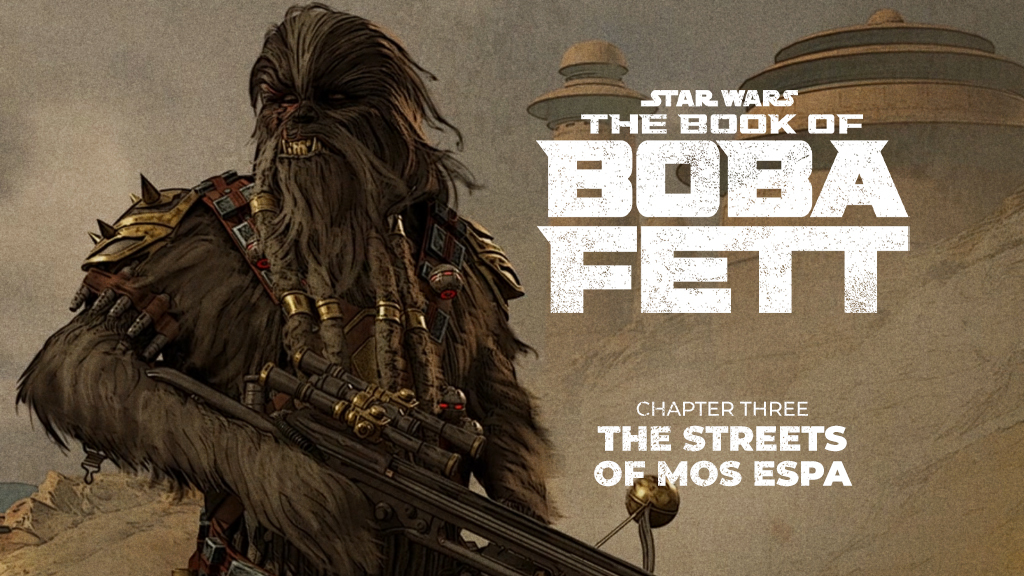
    One of my favorite moments in this episode is when Krrsantan just dragged Fett out of his Bacta tank. Right after a dramatic revelation on Fett’s past before he regained his armor, we are ripped out of the memory by the newly introduced Wookie, who wipes the floor with our favorite bounty hunter. It was a great moment of tension, as it ripped Fett of all his armor and gimmicks to force his hand. The fact that the only effective weapon he had was the gaffi stick at the time was a nice touch even if he went down a little faster than you’d hope. He does end up getting helped out by his allies and it is the badass Ming-Na Wen‘s Fennec Shand that manages to win.

    The action has been great, but its titular character only got a single moment to truly shine and that was part of a flashback. In the modern-day, he seemingly is over-reliant on those around him, which makes me wonder if his continued visit to the Bacta tank is a hint that something is wrong. He might have much deeper scars than we anticipated, which may become a key factor later down the line. Here’s hoping that he gets a moment like in The Mandalorian in the latter half of this series.

    The Hutts also make their return this episode, but it seems they have decided to save some money on their budget due to them already leaving the story. A bigger conspiracy is woven, as they were the obvious ones to pin the assassinations on, but this episode may have finally set the stage for the main antagonists, as the present and past are coming together with the Pykes. There might still be more to this story, but it feels like the slow pacing is coming to a payoff soon.

    Speaking off, my reviews of earlier episodes might’ve been a bit harsher than need-be, as the show isn’t restricted to forcing a fast-paced action set. It’s what one would expect from a show featuring THE Boba Fett, but the more time I spend with Temuera Morrison, the more I understand what they are doing. He’s a true leading man and gets actual time to shine outside of the mask. His interaction with the incredible cameo by Danny Trejo and a very special gift that I cannot wait to see develop in future episodes were stand-out moments. We get this hint at kindness and giddiness that makes the character stand out even more than the myths we’ve weaved around him in the past. It makes me hope we have many more stories to tell with this incarnation of the character.

  • REVIEW: ‘Slip’ Uses Art to Tell a Heartbreaking Tale of Mental Illness

    REVIEW: ‘Slip’ Uses Art to Tell a Heartbreaking Tale of Mental Illness

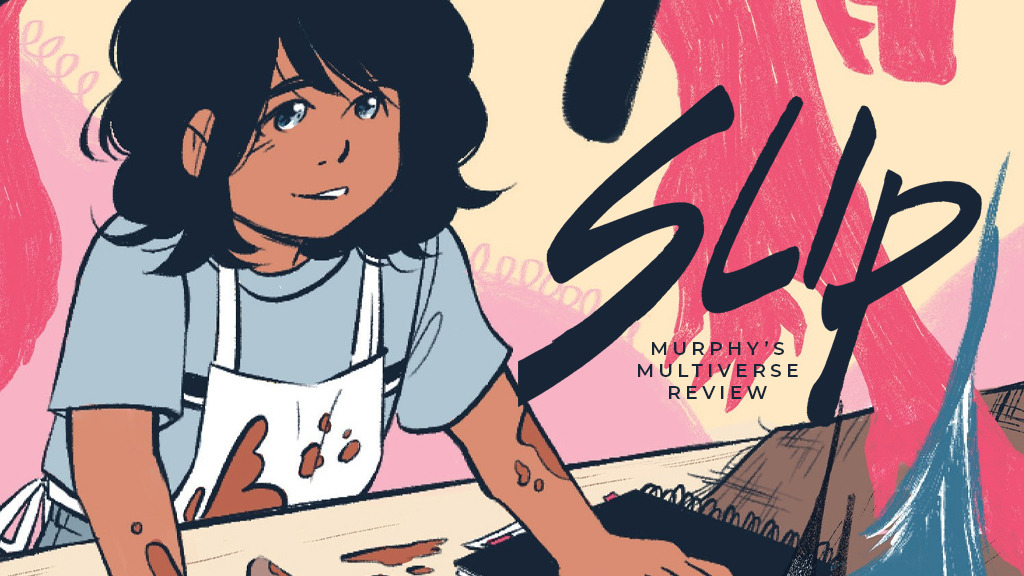
    When I first stumbled upon Slip on NetGalley, I wasn’t entirely sure what to make of the book. There’s no denying the cover is stunning, and the descriptive text is rather intriguing, but it also promises a story self-harm and coping through art. Suicide is something that’s hard enough to deal with in reality; using a friend’s attempted suicide to frame a story? It seemed wrong. Yet, in the end, Slip manages to be a powerful story worthy of your time.

    Slip hails from writer Marika McCoola and debut artist Aatmaja Pandya. It tells the story of a young girl named Jade who finds herself trying to cope with a friend’s hospital stay following a suicide attempt. Just as things seem to be going up for Jade, she finds herself struggling to make it through everyday as her thoughts immediately turn to Phoebe. For Jade, her best friend was supposed to be by her side during art camp, so the idea of getting through it alone is hard to process. She doesn’t feel good enough, as Phoebe was her biggest cheerleader. She moves through the day like a zombie, oblivious to what’s taking place around her. Until she meets fellow art student, Mary.

    Mary helps revive her spirit, helping her figure out what she needs to do to get her work back on track. More importantly, though, she helps Jade find a way to cope with Phoebe. It’s an emotional story that is beautifully told thanks greatly to Pandya‘s artwork. You can feel the grief, you can sense the confusion and by the end, you’ll find yourself in the same boat as Jade. It’s a powerful story that isn’t perfect, as it often loses focus but when it gets back on track? It soars like the phoenix Jade crafts.

    The artwork can be choppy, but it only helps to sell the story. It adds to the grief and the uncertainty. It captures Jade’s feelings. The use of the red when Jade is hurting is gorgeous and the way Pandya brings Jade’s pieces to life is wonderful. They’re pieces of clay, that spring to life to help Jade along her way. It can be a bit confusing at times, as the story isn’t the best at transitions, but those moments of uncertainty are some of the biggest moments for Jade’s character.

    Ultimately, Slip isn’t a light read. If you’re looking for a fluffy romance? Slip isn’t your book. If you are, however, looking for a graphic novel that successfully tackles real life issues thanks to artwork, then Slip is the perfect book for you.

    Reviewer’s note: I generally don’t make it a point of adding my own personal bits into reviews. To be fair, though, in most instances? My reality doesn’t relate to the fiction I consume. Slip, though, hits hard. Very, very hard. Eleven years ago, I lost a dear friend to suicide. They remind me a lot of Phoebe. Loved to talk, was always smiling, and in the end, I never understood why they felt the need to end it. (We never know the full truth to someone else’s story.) To say Slip brought back some emotions for me would be putting it lightly. I never got into ceramics – look, I tried in college and it did not go over well – but I still related to the story. Art is a tool to help with grief in Slip, but there’s so much here that many others will, unfortunately, be able to comprehend.

    Slip will go on sale on June 7th from Algonquin Young Readers.

  • REVIEW: ‘The Witcher’ 2×2, ‘Kaer Morhen’

    REVIEW: ‘The Witcher’ 2×2, ‘Kaer Morhen’

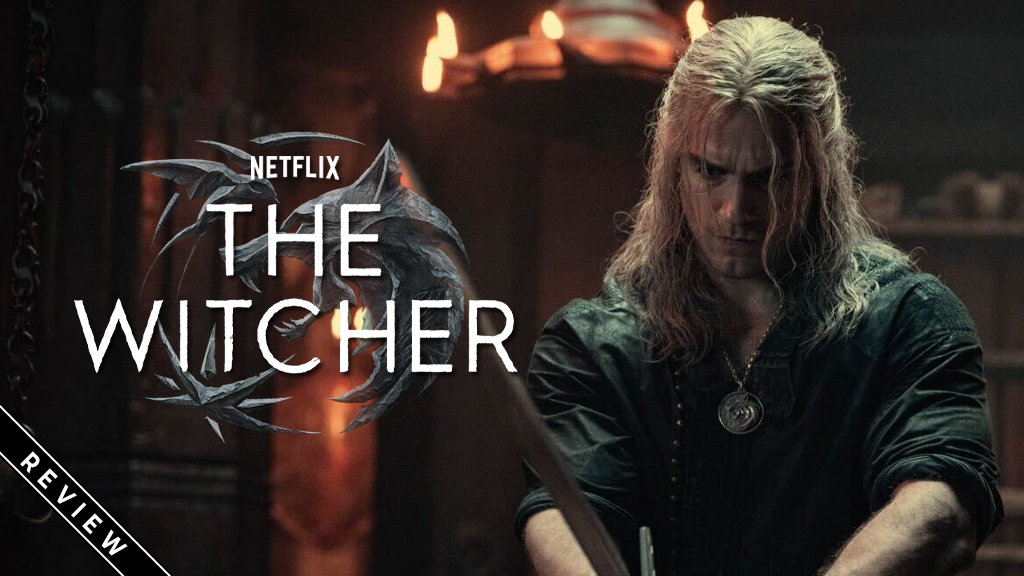
    The first episode of The Witcher Season 2 set the story off to a bit of a slower start, picking up right where Season 1 ended. Before making their way to Kaer Morhen, Geralt and Ciri head towards an old friend of Geralt’s to wait out a violent blizzard. The two meet a now cursed Nivellen, who appears as a hybrid of a bear and a pig, Geralt is instantly on edge at what stands before him. The episode ends with Geralt freeing Nivellen of his curse, but learning about what bound him to it in the first place.

    The episode begins with Geralt and Ciri arriving at Kaer Morhen, something that’s been built up since Season 1. This is where Ciri can finally begin her training, learn to hone her abilities, the ones that would randomly pop up throughout the first season. This episode, while it’s a bit fast, feels a whole lot like the first episode, which is really just a lot of sitting around until the end when the monster reveals itself and Geralt springs into action and leaves Ciri behind to “protect her.”

    Arriving at Kaer Morhen, the series introduces many characters that should be familiar to fans of both The Witcher games and books like Vesemir, Eskel, Lambert, and Coën. and while the series gets most of these characters right or at least pretty accurate, Eskel is only the character in the name, an absolutely massive departure from who the character truly is.

    First of all, these are people Geralt grew up with and trained alongside on the path to becoming Witchers. While, for the most part, you can feel those years together in Geralt’s interactions with them, Eskel is the weakest link. Eskel is supposed to be like Geralt, calm and collected, as well as one of Geralt’s closest friends and basically a brother. Eskel is stripped of all that and made to be the black sheep of the family who acts as the rebellious teen, a complete douche essentially. This is furthered by him hiding his Leshy infection that’s slowly turning him into a tree monster, quickly succumbing to it and attacking the castle.

    Perhaps the best part of the episode is when we’re able to see Geralt and Vesemir work together as protege and master, father and son. The fight scene that ensues is quite well done, but the series tries to make you feel sympathy for Geralt in this situation in which he’s pitted against Eskel. This is someone whose supposed to be quite close with Geralt, and when he’s eventually forced to kill Eskel, there’s just no emotional weight attached to that moment.

    The absolute weakest part of this episode, and so far this season, is whatever path they’ve set Yennefer on because it honestly feels like they’ve got no idea what to do with her. This is probably because, in the story they are attempting to adapt, Yennefer really does not play a part. She is still presumed dead by Geralt, who moved on to watch over and train Ciri, but her entire arc feels like it has no end goal right now, she spends a majority of this episode caught in a dream-like state with a forest witch. It again feels like it has sent her nowhere, especially as she finishes out this episode screaming in the woods.

    The Witcher Season 2 seems to have finally found a bit of its footing with Geralt and Ciri arriving at Kar Morhen and I hope to see some solid development for the two of them. The season still teeters on the edge with it not knowing what to do with Yennefer, though. After a fantastic first season arc for the character, she deserves more than what she’s being given.

  • REVIEW: ‘The Book of Boba Fett’ Episode 2 – The Tribes of Tatooine

    REVIEW: ‘The Book of Boba Fett’ Episode 2 – The Tribes of Tatooine

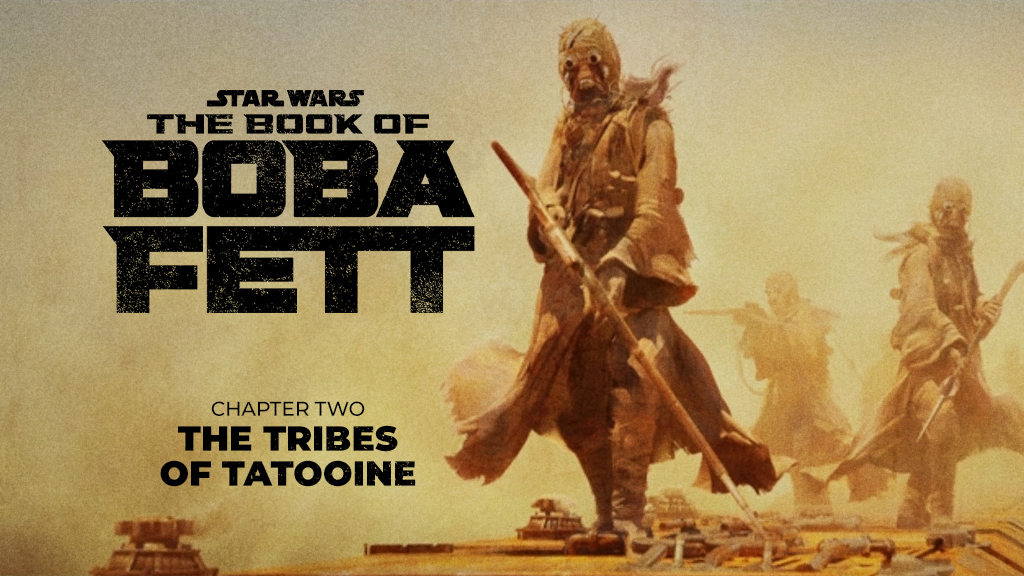
    The second episode of The Book of Boba Fett continues both storylines that were put into motion last week. Robert Rodriguez and John Favreau unravel the story of how its titular character survived the fall into the Sarlacc Pit and his future ventures like the new Daimyo of Tatooine or at least trying to keep some control over Mos Espa. The series tries to juggle the political underworld and flashbacks to Boba’s time stuck in the desert with Tusken Raiders. Last week, it had a bit of a struggle keeping a fine balance between the two. Does it manage to make up for it this time around?

    This week’s entry had a strong beginning, as we finally meet the Mayor – who was oddly teased as a mystery but turned out to be someone we saw in the trailers – and who will most likely be Boba Fett’s main antagonists. It was never going to be an easy task to take over Hutt’s territory, but his aim of leading without fear might become a much more difficult task. As the name of the episode, “The Tribes of Tatooine” implies, this episode mainly sets up a lot of elements that’ll probably come into play later on. For now, it still leaves you questioning what the future has in store for the series.

    The episode has a very straightforward structure this time around, as it’s split into two halves. We already covered most of the first, but the second continues Fett’s travels into his past. Temuera Morrison continues to carry the show with his reserved but powerful performance, as he has to act alongside the Tusken Raiders that stick to their native tongue. There are bouts of silence that are quite powerful in a media landscape filled with mostly exposition. There’s an interesting concept at play, as we get a closer look at their culture and how they survived in the desert.

    Yet, the drawback is that this storyline fills in blanks that most could’ve put together themselves. There’s a lack of connectivity, for now, to understand why we’re spending so much time with the Raiders and how it may connect into the overarching plot. There’s a strong hint at the end, and I believe the pay-off may be quite an emotional one given his strong connection to the sand inhabitants, but it does come at the cost of the series’ overarching pacing.

    So far, the biggest selling point of the series is Morrison and the further exploration of Tatooine’s culture. The advantage of long-form storytelling gives us these smaller moments that have a stronger impact on this galaxy being more than just its main heroes, which also makes it stand out from the more character-focused story in The Mandalorian. Even with uneasy pacing, the episode offers some strong moments that continue to explore Fett’s role in the galaxy.

    I do believe that we haven’t scratched the surface yet and this episode had a stronger core narrative, even if it was split into two separate storylines. There was a surprising amount of humor thrown in that added some nice levity to the otherwise very reserved approach to storytelling. It’s funny how the series generally focuses on action-packed set pieces with calmer, character, and world-focused elements mixed in-between. Also, who knew that even the desert would have its biker gangs.

    The second chapter is a step up from before, even if it still feels like there could’ve been a stronger balance between its two main storylines. Morrison‘s reserved take on the character continues to carry the show but there’s slowly a need for justification seeping in on why we’re spending this much time. Most could’ve connected the dots on how he survived, which makes the dragged-out nature of these flashbacks questionable, for now. Here’s hoping that the next episode offers a clearer picture. For now, while interesting from a world-building standpoint, it does undermine the more interesting crime lord plot that has yet to really get going.

  • REVIEW: ‘School of X’ is a Strong Entry Into the X-Men Mythos

    REVIEW: ‘School of X’ is a Strong Entry Into the X-Men Mythos

    When you introduce time travel and multiverses, a story can sometimes be weighed down by the intricacies of the story if the rules aren’t properly explained. The DC Extended Universe will take its crack at the multiverse with the Flash’s first solo film, while Marvel has methodically begun to build out the rules of their multiverse. The comics these universes take their inspiration from, however, have never really cared for rules. What is canon today may not be canon tomorrow, and this has been true for some time. With that said, there has been more of an effort by DC and Marvel to streamline timelines over the last few years, and it is in that effort that School of X arrives. 

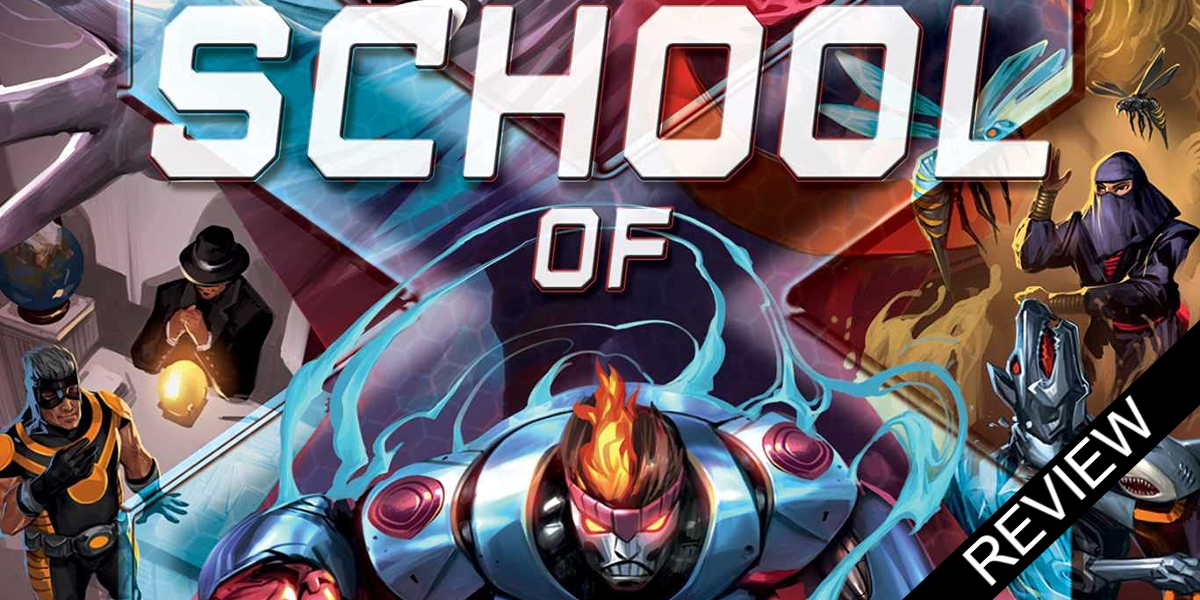
    A seven-story anthology edited by Gwendolyn NixSchool of X tells the story of the next generation of X-Men as they train under the watchful eye of Magneto, Emma Frost, and Cyclops. Jaleigh Johnson, Robbie MacnivenCath LauriaAmanda BridgemanPat ShandNeil Kleid, and Carrie Harris each get a story and they deliver fresh takes on the new X-Men as they fight alternate versions of themselves. Nix, in particular, deserves credit for editing together a cohesive story that doesn’t relegate the aforementioned X-Men into Dumbledore status, where they are merely just caring for the new mutants. Cyclops, given all he’s lost, does come off more ornery than in any other X-book, but it is earned and it feels like positive character development for Marvel’s boy scout. Magneto behaves like a surrogate Professor X, though, and I’m not really sure that worked so well, but Emma Frost is really the standout amongst the caregivers in part because she has the most emotional connection to the new mutants. 

    Each author puts their own spin on the mutants, but what stood out to me was how Emma Frost’s triplets (the Stepford Cuckoos) jump off the page every chance they get. This is particularly true in Of Dirt and Bones, the 5th story in the anthology: whereas Your 15 Minutes was on the shorter side, Of Dirt and Bones gives you what the family dynamic we’ve come to love from the best X-books. Depowered gives us a fresh look at Polaris, the oft-forgotten daughter of Magneto and sister of Quicksilver and Scarlet Witch, and she continues to be one of my favorite characters in the X-Men mythology. I hope Marvel brings her into the Marvel Cinematic Universe because she’s been written really well as of late, and remains one of the most powerful mutants. 

    The only story that doesn’t work in the anthology, for me, is Kid Omega Faces The Music. A Grant Morrison creation, I’m admittedly not the biggest fan of him in the comics, but this story also does him no favors. He comes off annoying and arrogant and, even when faced with his demons, doesn’t really display much growth in comparison to his peers. For example, in Call of The Dark Graymalkin comes face to face with his biggest fear and ultimately comes out of that encounter in a much more interesting place. The same cannot be said for Kid Omega. 

    Overall, a strong addition to the X-Men mythology, with particular shoutouts to Amanda Bridgeman for Eye Of The Storm and Pat Shand for writing Phoebe Cuckoo in a really powerful way in Of Dirt And Bones. You get some action-packed stories that really supplement the more familiar X-Men themes (family, teamwork, independence), and you get a Polaris that has to come out of her father and siblings’ shadow. All in all, a really good read.

  • REVIEW: ‘The Book of Boba Fett’ Chapter 1 – Stranger in a Strange Land

    REVIEW: ‘The Book of Boba Fett’ Chapter 1 – Stranger in a Strange Land

    After a long wait, The Book of Boba Fett has finally premiered on Disney+. After making his grand return as the titular character in The Mandalorian, Temuera Morrison continues the story in the first of many spinoffs that’ll expand the galaxy far, far away. The first episode “Stranger in a Strange Land” takes a very different approach to what you may expect from what was teased as Star Wars‘ take on the Godfather. While we still get those elements that hint at the series’ bigger picture, it takes a few steps back to build up the character we always knew surprisingly little about. Does it falter under the weight of expectation, or shine new light upon the Mandalorian clone?

    Most of the episode is spent with the aftermath of 1983’s Return of the Jedi, as we finally find out how exactly Boba Fett survived the Sarlacc Pit. It was almost expected that they’d fill in the blanks that were left purposefully vague before, as it strengthens the character we’re about to see grow throughout this series. Yet, we already know he survived and it left us questioning what these extensive flashbacks will bring to the series’ overarching narrative. The actual plotline revolves around Boba’s new role as the daimyo after taking over from Bib Fortuna. Yet, we spend very little time with him in that role.

    The biggest mystery set up in this episode is the identity of the “Mayor.” He’s hinted at as Boba’s biggest threat, especially when he’s the only one who refuses to not pay tribute to the new underworld leader. There’s an interesting conflict brewing between these two parties, but the episode doesn’t effectively use its runtime to focus on the world-building of Tatooine’s underbelly. We see a casino, he gets attacked (and his ass handed to him) before we move back to the flashback. While it worked as an opening segment to tease future development, it is trying to build something up that has no clear goal.

    The Book of Boba Fett‘s opening is sadly more lukewarm than exciting due to the first episode not set up many future plotlines to explore. The cliffhanger we are left with is Boba back in his flashback. There’s a lost momentum to what exactly the show is trying to be or even set up. We have no clear indication if these flashbacks and his time with the Tusken Raiders might connect to the current storyline. It’s good they don’t give too much away, but it leaves you wondering what exactly the show is going for after the credits roll.

    It’s strange how often Morrison gets beaten up in this first episode. While it makes sense in the flashbacks, he makes his grand entrance as the new Tatooine Kingpin only for random stragglers to pretty much beat him so badly, he needs to go back to the Bacta tank. I am not sure if him quitting halfway early on was a hint that he’s out of it, but when he and Ming-Na Wen‘s Fennec Shand get surrounded, it seemed odd they couldn’t get out without help. It does fall back on the “jetpack” fallacy, as he could’ve easily flown out of there, but he didn’t even give it a thought.

    The action still has its moments, his fight at the end was well done and gave Boba a moment to finally shine. Shand’s chase sequence was probably a highlight, as she uses clever – even if unclear – tactics to outmaneuver their attackers. Yet, it felt like something was missing throughout the show, especially with how little its titular character is used. He does get a cheap shot in, which is potentially to highlight his conflict on ruling with fear or respect, which is very likely going to be his character arc. We’ll see if future episodes will offer a clearer picture of where the show is heading.

  • REVIEW: ‘Cobra Kai’ Season 4 is the Best Season Yet

    REVIEW: ‘Cobra Kai’ Season 4 is the Best Season Yet

    The hit follow-up series to the Karate Kid film franchise is thriving in its newfound home on Netflix following the streamer’s acquisition of the series with Season 3. Now, Season 4 is here and the show looks ready to kick some more butt. With the return of a few familiar faces and the future of karate in the valley on the line, Cobra Kai is back and it might be better than ever with an absolutely enthralling fourth season that will have you on the edge of your set the entire time. 

    The season picks up right where Season 3 left off, with Miyagi-Do and Eagle Fang Karate coming together to defeat Cobra Kai at the All Valley and shutdown Cobra Kai for good. This is one of the season’s most interesting dynamics as both sides have their very obvious and glaring differences, it leads to some intriguing conflicts and interactions that you would never think would happen.

    The latest season of Cobra Kai does an excellent job of tackling character relationships. Developing new and old relationships is something Season 4 does quite well. It’s Daniel and Johnny’s rivalry that sticks out the most this season, while both men try to hold onto the father/son relationship they’ve developed over the past few seasons with Miguel and Johnny. We also get to delve deeper into the relationship between John Kreese and Terry Silver, and seeing how their relationship fluctuates over the course of the ten episodes is thrilling; it’s well-written with plenty of moments that’ll keep you guessing. For the first time on the series, these two men feel like more than merely “villains,” which makes their “big, bad” moments all the more terrifying.

    But the absolute for-sure highlight of this season is the return of Thomas Ian Griffith as Terry Silver. When we first meet him, he wants absolutely nothing to do with Cobra Kai or Karate, as the season progresses, however, he slowly begins to become obsessed with it once more. Griffith becomes an absolute menace the second he steps back into the dojo and becomes a serious threat, and not just in the world of Karate. Terry Silver is even more ruthless than John Kreese and doesn’t have the same soft spot for Johnny as Kreese does, as he looks to right many mistakes they made in the past and will not stop at anything to get things done. 

    The extent of Silver’s influence and antagonist development can be seen in the introduction of a new character named Kenny, played by Dallas Dupree. Robby was actively trying to help Kenny stand up to his bullies through karate as the series looks to redeem Robby and eventually bring him and his father together. Unfortunately, though, the introduction of Silver to Cobra Kai turns Kenny into a product of Silver’s malicious and violent nature, pivoting a once kind and promising student into a killing machine. 

    While the character development is a strong point this season, the show looks to have kicked it up a notch on the nature of the show, with what seems to be some of its most violent and mature fights yet. The excellent fight choreography is on full display during the All Valley tournament, with each of the kids truly getting a chance to shine.

    Overall, Season 4 of Cobra Kai may just be the best installment yet of the beloved series. It’s smart, well-written with plenty of stunning fight choreography. At a time when many shows are lucky to tell a cohesive story over multiple seasons that doesn’t falter, Cobra Kai proves it still has plenty of moves left to unleash as it readies for a fifth season. A tight, cohesive season that manages to successfully take the series in a new direction for Season 5? It’s hard not to enjoy this latest return to the Karate Kid franchise.

    The fourth season of Cobra Kai is set to premiere on December 31st, only on Netflix. The show’s fifth season has already wrapped production, but a release date has yet to be revealed.

  • REVIEW: ‘Klaus’ Wants You To Suffer

    REVIEW: ‘Klaus’ Wants You To Suffer

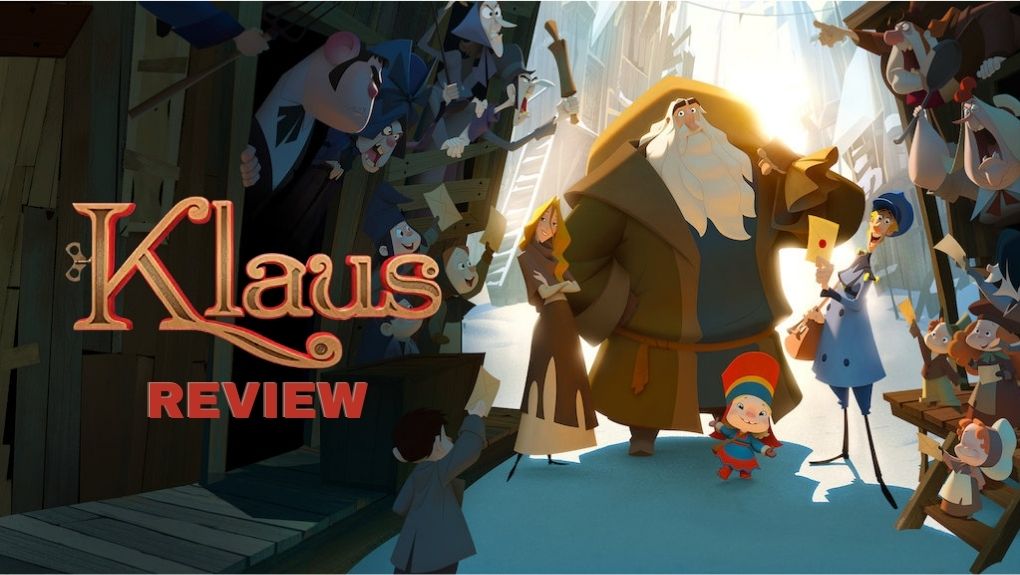
    Christmas movies are generally filled with joy and cheer. Throughout the years, that is exactly what we have come to expect. While most are filled with genuine merriment, some Christmas films are disguised as such while actually being elaborate devices to make you suffer. Klaus is a curious example of a silly animated holiday tale that would much rather have the emotional tone of Sophie’s Choice, while the creators were clearly only greenlit by Netflix to create the next Winnie the Pooh: A Very Merry Pooh Year

    But where there’s a will, there’s a way. And Klaus found that into being a drawn-out and camouflaged version of the famously emotional opening montage from Up. But this time around, the main grumpy old man becomes the ghost of Santa Claus instead of finding a new lease on life by befriending a young boy and a talking dog.

    Klaus certainly hits some of the right “I swear this is just a happy movie for kids” notes. It follows the spoiled son of some big-shot Postmaster General, who decides to teach his son, Jesper, a lesson by sending him to be the postman in Smeerensburg. It, of course, is the children’s Christmas movie equivalent of an apocalyptic warzone full of violent children and dead fish. The main character willingly places a literal noose around his neck in the first 20 minutes of this movie because he has accepted death as his fate.

    Jesper is enjoyable as the clueless, pampered man-boy attempting to solicit letters from people who otherwise spend their time carrying dead bodies through alleys, or – in the children’s case – psychopathically slowly stabbing a snowman repetitively with carrots. As anyone could guess, Jesper finally comes around by the end of the film to be a wholesome guy who loves his family and the new, less-homicidal community. But his reformation came from the real star, the titular Klaus.

    Our introduction to Klaus is as a scary, giant man who lives alone in the woods, likely chopping up both trees and people. Through Jesper’s desperate need to gather letters, he learns that Old Man Klaus is a skilled woodworker with a dusty, dark house full of elaborate children’s toys and nothing else. Don’t let that fool you, though, because this is only the beginning of an overly-elaborate secular explanation for the legend of Santa Claus where all the necessary elements are included but are instead generally sad and heart-wrenching.

    Klaus was perfectly fine – even while being extremely depressed – living in the woods and spending time with his wife, Lydia. She, unlike the classic Mrs. Claus, died years ago and takes the form of sparkly wind that gives Klaus brief moments of remembrance of his one and only love. Somehow, Jesper and he secretly deliver one of his toys to one of the infinite toyless evil children of Smeerensburg. Watching through the window, the pure joy it brought the kid inspires Klaus to continue delivering his toys in secret. Jesper acts as the intermediary, forcing children to write sham letters to the toymaker for his own gain while coincidentally making up facts about Klaus that seem familiar, such as him having a naughty and nice list.

    That plot seems good and healthy, but it’s not sad enough. To make up for it, it is revealed that Klaus has a carved-out wall in his home designed as a family tree – it is extensive but completely empty because he and his wife Lydia were unable to have any of the dozens of children they dreamed of having. While they tried and waited, they built countless toys to one day give to their own kids, but as the ghost mist of Lydia could whisper to you, the toys were left to gather dust and haunt the dark and lonely house. 

    There are entire subplots, such as the dueling war clans that try to bludgeon one another when a bell rings and Jesper’s romance with the angry schoolteacher – but they don’t really matter. The Sámi community that lives outside of Smeerensburg ends up being the warmest and most compelling secondary aspect of Klaus, as they end up taking the place of classic Santa’s elves. They even took the time to make everyone cry when they filled up Klaus’ family tree with wooden figures of themselves. 

    If watching along to the survey of Santa’s heartbreak and loss is not enough for you, the movie also ends in possibly the saddest way it could while still pretending to be jolly. As Jesper recounts the years that have passed since Klaus began delivering gifts, he talks about how one day Klaus just disappeared without any explanation and he never got to say goodbye. We see a tired Klaus say “I’m coming, love,” and merge into the sparkly wind of his dead wife. To top it all off, we vaguely see some sort of ghostly Santa entity flying around as Jesper says, “All I know is that once a year, I get to see my friend.” 

    In some seriousness, Klaus delivers a genuinely fresh and unique twist on the legend of Santa Claus by presenting Klaus, the trauma Santa. The somewhat confusing level of dark humor also makes the movie stand out from its peers and gives the film some maturity that elevates it beyond what is expected of it. If you are looking to rip your own heart out this holiday season, Klaus may be the movie for you.

  • REVIEW: Wheel of Time 1×8, “The Eye of the World”

    REVIEW: Wheel of Time 1×8, “The Eye of the World”

    Over the course of its first season, Amazon’s Wheel of Time adaptation opted to turn the Dragon Reborn into a mystery to be solved. For six episodes, viewers were left to ponder who would be the Dragon Reborn: Rand, Mat, Perrin, Egwene or Nynaeve. Book readers, of course, knew it would be none other than Rand. However, the series looked to be going in a potentially different direction – until episode seven confirmed Rand to be the Dragon Reborn. “The Eye of the World” sees him come to terms with who he is, all while he recalls a prior life he’s lived. In the end, it makes for a quiet finale, to an otherwise fantastic first season.

    The episode picks back up with Moiraine and Rand making their way through the blight in search of the Dark One (Ishamael). As they fight their way through the blight, the others remain back in the city of Fal Dara, trying to figure out a way to help. Their initial reaction is to run after Moiraine and Rand, however, they know that should they step foot into the blight, it would more than likely result in death. Still, Lan is willing to chance it in order to find Moiraine. So, he uses tracking skills taught to him by Nynaeve to find her, while she aides the others in finding another way to help. The storyline essentially stretches over the show’s nearly one-hour timeframe, and yet, despite so much happening, the story ultimately feels stalled.

    As the episode cuts between the two locations, we see Rand make his way to the Eye of the World with Moiraine following close behind him. Flashes begin to appear as Rand recalls a prior life in which he’s already been to the Eye of the World and faced the Dark One. Their last meeting ended with the Dark One winning. This time, though, Moiraine is willing to do what is needed to ensure Rand does not stray from the light – even if it means killing him. As Rand enters another realm with the Dark One, one where he’s presented with a future with Egwene in which they have a child. It’s a future he wants, and one Rand nearly gives everything up for. Thankfully, however, he soon realizes that the future he’s being presented with is nothing more than a fantasy. Even if he can make it a reality, it isn’t a future Egwene has a say in and therefore isn’t one he can accept. It’s this moment in which Rand successfully overcomes the Dark in order to defeat the Dark One – at least temporarily.

    Unfortunately, though, by this point, an army of Trollocs have already made their way to Fal Dara along with Fades. While the city itself does not fall, those that stayed behind to fight soon find themselves facing certain death. While Egwene and Nynaeve help by accessing the One Power and helping Lady Amalisa (Sandra Yi Sencindiver) channel enough power to try and take down the armies before they make their way to the city. The scene is a stunning one as the lighting stands in stark contrast against the gloomy background. It’s made all the more powerful as the women collapse under the weight of the One Power, with Egwene seemingly the only survivor, until she heals Nynaeve.

    When Rand “defeats” the Dark One, he makes Moiraine promise to tell the others he has died to ensure he can head out on his own. It’s a strong ending to an otherwise uneven episode, however, it’s the closing scene viewers will most likely be talking about going into Season 2. As the episode ends, we see a young girl on a beach. Out of nowhere, a horde of ships come into focus in the ocean, catching her eye. It’s the Seanchan, and they’ve seemingly created a tsunami upon their arrival.

    I’ve thoroughly enjoyed the first season of Wheel of Time because it has successfully managed to combine excellent character work with a love of the source material. It never tried to go full action series as the show respects its source material, which is something most adaptations fail to do these days. Unfortunately, though, because of how eager the show is to stay true to the source, it sometimes feels unsure of how to adapt Robert Jordan‘s work. While there are some fine character moments in “The Eye of the World,” the episode only barley moves the storyline forward.

    Yes, there are some big moments, such as Moiraine losing access to the One power and Rand making the decision to leave the others are quite memorable. However, the bits in between are slow-going. It’s a shame, honestly, because the first season was a great success overall. “The Eye of the World” seems to feel like an afterthought. It’s slow, the few action bits are stellar, but the CGI work is wonky, and the Dark One could have been handled so much better.