Category: Reviews

  • REVIEW: ‘The Legend of Vox Machina’ Is Raunchy, Violent, Fantasy Fun

    REVIEW: ‘The Legend of Vox Machina’ Is Raunchy, Violent, Fantasy Fun

    The world of animation is home to a rather wide variety of genres, and most of them are designed to cater to a very specific audience. Those with a flair for the theatrical tend to love an action-packed anime, filled with an ample amount of drama and enough fast-paced violence to make a vampire blush. Escapists will frequently stray towards fantasy epics, which transport them away from the realities of life and towards a more magical land of adventure. Late-night crowds love adult comedies, which typically go to great lengths to make their raunchiest jokes an auditory and visual experience. Pleasing an audience is no easy task, so it’s impressive when a show can hit the mark on any one of these concepts. It’s even more impressive when it succeeds in hitting on all three.

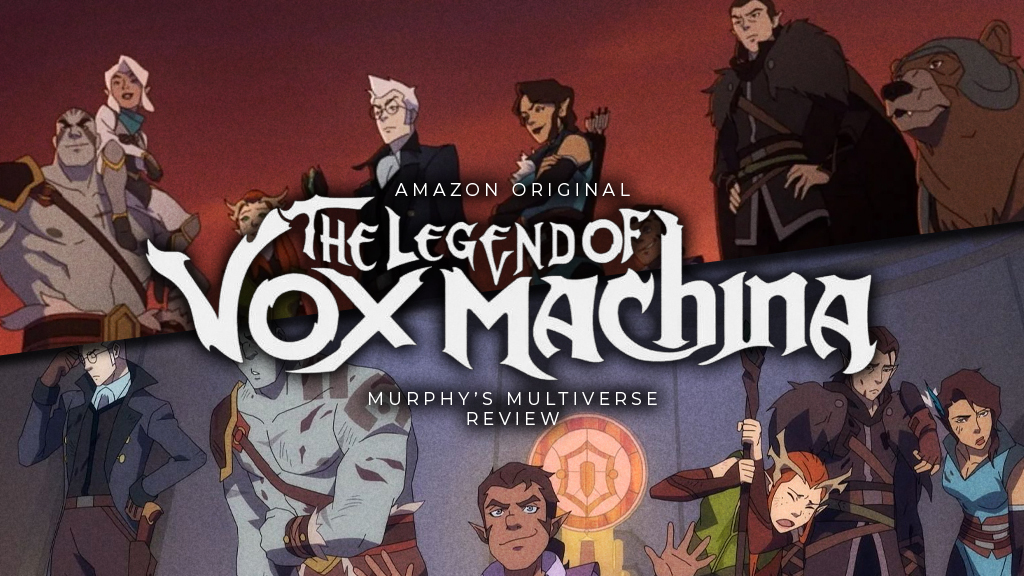
    The Legend of Vox Machina is Amazon Prime’s latest animated offering, based on a long-running Dungeons & Dragons campaign played by some of the industry’s most talented vocal performers. The group, who initially presented their journey in the form of a web series called Critical Role, all return to voice their respective characters in a new adaptation that entertainingly balances the earnestness of good storytelling with the jolly aura of nerds just messing around. Though the humor may sometimes be a bit on the nose, its honest bluntness makes it hard not to laugh. For example, when one of our protagonists is confronted by a monstrous demon beast, he appropriately exclaims something along the lines of ‘What in the actual [insert expletive] is that!?’ This, being probably exactly what the viewer was also thinking, makes for a good reminder that the majority of the show’s jokes stem from someone sitting at a table and reacting to plot twists with as much humanity as any viewer.

    As hinted above, however, it’s not just the R-rated comedic material that makes Vox Machina so charming to watch. Jokes hit harder when an audience is engrossed in the plot, and more so when the characters involved are actually made to be interesting. Throughout the series’ first six episodes, those ready to observe will be introduced to a seemingly expansive world of magic and monsters (or rather, dungeons and dragons). None of the concepts presented are especially new or groundbreaking, but a handful of genuinely fun-to-watch sequences and the sporadically very cool character design will surely be quick to convince viewers of their right to exist. The exaggerated nature of animation, paired with the occasionally brutal nature of fantasy, serves to make the action scenes sometimes shockingly violent. It’s most definitely not a show for children, and some moments may even be too grotesque for grown adults, but fans of a satisfyingly choreographed fatality should be pleased by what the series has to offer.

    The likability of the story’s titular band of misfits also helps to keep a potential fandom wanting more, whether it be to see further evidence of the easy chemistry between actors or simply because they’ll want to know what happens to their sort-of-heroes next. By the tradition of role-playing games, all protagonists are a bit of a stereotype. Yet, the dualistic authenticity with which each is portrayed in Vox Machina helps to inject a certain amount of lifeblood into the plot. Travis Willingham‘s Grog Strongjaw is your typical meathead barbarian, but the actor delves into the role with enough heart to make him one of the team’s softest members. Laura Bailey‘s half-elf ranger Vex Vessar is as independent as they come, and Sam Reigel‘s Scanlan Shorthalt is a musical gnome with a penchant for sex and self-obsession, yet somehow both keep finding themselves in danger for someone they care about. Some of the more prominent character developments can’t be discussed without giving away some really intriguing spoilers, but suffice to say the rest of the cast has a lot of fun as well. Especially when the story deviates from the expected.

    Ironically, a final bright spot worth mentioning is just how gleefully dark the series can get. With old-fashioned villains who are bad for the sake of being bad and cherish the idea of causing others pain, it sometimes feels like nothing is off the table. Despite a generally jovial tone, any show with evil books, giant wolves, and mustache-twirling bad guys is sure to make it to some scary places. What’s surprising is just how willing Vox Machina is to embrace the chaos.

    While every minute spent watching The Legend of Vox Machina was thoroughly enjoyable, it does seem like the series is meant to flourish with a very specific niche. Those who love the original web series will flock to this new take, and they’ll more than likely fall for it quicker than most. However, anyone unfamiliar with the source material should prepare themselves for a ride that pulls out quite a few stops. If you’re expecting a straightforward show that commits to any one style, you might want to look elsewhere. If you’re willing to let yourself be open to anything, then you just might find yourself a new favorite adventure on Amazon Prime.

  • REVIEW: Kaido and Luffy Collide in ‘One Piece’ 1037

    REVIEW: Kaido and Luffy Collide in ‘One Piece’ 1037

    One Piece always seems to manage to continue to grow a world in creative ways. Elements that seemed like small tidbits from years ago can suddenly become relevant within seconds. Worldbuilding has always been Eiichiro Oda‘s greatest strength and the final moments of this chapter truly solidify that. Yet, we also get a dense chapter filled with some of the series’ best action and some actual character development for a villain, who seemingly was left behind and barely explored outside of the way he took over Wano. The battle between Luffy and Kaido may have done more for the character than the rest of the entire three acts of this storyline.

    If I bring it up, it may be good to start there with a look at this latest chapter. Kaido reveals he had a secret up his sleeve all along. He’s an alcoholic. Okay, technically yes but the point is that alcohol seems to make him unleash most of his abilities. We get some Drunk fu from a man who can turn into a fire-breathing dragon and he is taking it out on Luffy. the different phases showing a personality that he had seemingly hidden away. The Emperor of the Sea is having fun as someone is finally putting up a challenge. His smile also fits perfectly into King’s flashbacks on when he believed he may be Joy Boy.

    Most of the chapter is about this fight, as we get some creative sequences with Kaido switching between the different moves. You can see Luffy smiling at times throughout, and he’s gotten quite creative in how he takes on his enemy. That headbutt looks quite painful and there’s a lot of weight to the events that are unfolding. You can feel every single punch as the battle continues to unfold. It seems uncertain if the fight will truly come to an end in the next few chapters, but we’re definitely in the endgame now.

    The big revelation at the end, however, is the true selling point of this chapter. 1037 randomly moves to the Red Line’s Sacred Marijoa. Suddenly, the Five Elders are discussing a secret Devil Fruit. Something about one that hasn’t awakened in “centuries upon centuries” and even was given a fake name. As this is being discussed, the World Government’s ships are closing in on Wano. Yet, a giant shadow has arrived and is ready to take care of an issue the Straw Hats never realized they had. It’s the giant elephant known as Zunesha, who has been traveling for quite some time to a specific location. Could that have been Wano all along?

    So, the lines on the Devil Fruit seem to imply the awakening has a connection to the giant elegant, but they imply that it hasn’t reached its true power in a long time. Plus, if you think about it: there have been two massive teases in this arc. First, we find out that Who’s Who was supposed to be guarding the Gomu Gomu no Mi, but it ended up getting stolen by the Shank’s crew. Secondly, Kid and Law have revealed they already had their awakenings at some point in time. Last, but certainly not least, the chapter is all about Kaido and Luffy’s fight. So, it seems very possible that Luffy’s original fruit might be hiding a rather curious secret that we’ll find out about in the next few chapters.

  • REVIEW: ‘Peacemaker’ Episode 4 – The Choad Less Traveled

    REVIEW: ‘Peacemaker’ Episode 4 – The Choad Less Traveled

    Peacemaker’s fourth installment indicates that the series plans to take a hard left with its main character in terms of his identity on the antihero spectrum. While making the somewhat-established ruthless mercenary have feelings isn’t surprising, Episode 4 is quick to make it perfectly clear that John Cena’s Peacemaker may have more emotion to offer than anything else. 

    This episode revolves almost entirely around the characters’ psyches concerning killing. On one end is Vigilante, who at times truly does not understand why he or someone else should not kill any given person. On the other end, arguably, is Adebayo, who is struggling with feeling like she is not cut out for the job after she could not kill someone during the Goff altercation. Harcourt offers a small bit of her insight into murder. 

    Perhaps Peacemaker is supposed to fit somewhere between these characters. The character has seemingly taken a big leap from where he was in The Suicide Squad. As much as Peacemaker is clearly trying to redeem his character in the long run, the series itself has not seen much if any of the cold-blooded mercenary. Instead—with the aid of his brother’s death and Rick Flag flashbacks—the killer has actually been relatively peaceful. He showed issues with being used as a ruthless tool, and Episode 4 highlights this more. Peacemaker has major issues with Murn’s order for him to kill kids without being told the specifics of why. So the character has maybe shown cracks in his demeanor, although he certainly did not start this series without any.

    The episode picks up immediately following the assassination of the butterflied Senator Goff and his family. While the leftovers from that event certainly suggest that there are world-ending implications to Project Butterfly, Peacemaker feels humorous and relaxingly off-task. One of the best quotes comes from Murn: “Every time I turn around one of you is doing something fucked up!” 

    Plenty of the distraction comes from basic conversations between characters such as Peacemaker’s and Vigilante’s conversation about how “if it walks like a duck…” it must be a duck or at least a duck in a human costume. Vigilante spends a significant amount of time somewhat ironically thanking Peacemaker for “allowing [him] to be tortured,” so that he could become stronger. Peacemaker also takes the time to yell at the elderly neighbor about how Batman causes more people to be killed than he saves by not killing his enemies. 

    However, a substantial part of the side-tracking this episode comes from Auggie Smith’s—Peacemaker’s father—arc. While Project Butterfly seems more urgent than before, much of this episode is spent with characters trying to keep Peacemaker from ruining everything by talking to his dad. He does, in fact, do just that, which then leads Vigilante to “break into” jail to try and kill Auggie. That also goes sideways, and Auggie is now set on a path to be a more tangible threat to Peacemaker this series.

    The focus on Peacemaker’s dad is an odd counterbalance to the overarching Project Butterfly plot, but it brings with it much more emotion and potential character development than the more traditional story brings. Peacemaker’s mini-breakdowns over his role as a killer are accentuated by memories of his father forcing him to kill people in their basement, as well as having some mysterious role in his brother’s death. His total failure at being a psychopath is emphasized by his unwillingness to kill his white supremacist supervillain father. Vigilante makes that point clear, and Adebayo delivers a solid miniature monologue about how everyone wants to believe that their parents are inherently good—but that just isn’t the case with Auggie. 

    Aside from nearly the entire cast having a crisis of faith over whether or not they are competent enough to do their job, Vigilante is the highlight of every scene he is in. The guy is completely and murderously insane, yet you feel like you could hug him. As much as the series wants to double-down that he is a clinically-certified psychopath, his “I think I might have made things worse” to Harcourt once he gets out of jail is brimming with some kind of emotions. The character is a wonderful mix of incompatible parts that turns out so charming. Judomaster, on the other hand, awakes and escapes from Task Force X custody only to beautifully fight Peacemaker in the parking lot, get shot, and become unconscious in Task Force X custody once more. At the very end, it’s revealed that Murn himself is a butterfly, meaning the Project Butterfly plot should start to kick into high gear. 

    Peacemaker’s fourth episode further extends the series upward momentum. Again, the action was lacking overall and the pace does not scream “there’s a really important potentially apocalypse-level threat going on.” However, every bit of distractedness and feeling of being off-task is brilliantly and fluidly merged into Peacemaker’s unstoppable humor and signature style. Episode 4 also left no doubts that the series plans to get emotions and dig deeper into what exactly makes a Peacemaker, or even, what exactly makes a killer? 

  • REVIEW: ‘Hotel Transylvania: Transformania’ is Missing That Zing

    REVIEW: ‘Hotel Transylvania: Transformania’ is Missing That Zing

    Sony Animations was once at rock bottom with critically-panned projects like The Emoji Movie. Yet, there was a charming trilogy that managed to pull on your heartstrings even though there was a lot against it. The Hotel Transylvania trilogy somehow worked even some were worried that Adam Sandler and his usual group of friends were cast to voice most of the characters. Yet, the addition of animation veteran Genndy Tartakovsky, the mind behind Primal and Samurai Jack, became a beacon of light for many. It turned out, that it was a combination of Tartakovsky‘s fluid animation style and a heartfelt performance by Sandler and the cast that made the project stand out. So, can a fourth entry manage the same without their involvement?

    Hotel Transylvania: Transformania was quite unlucky in its release, as it originally was heading to theaters before being sold to Amazon Prime for a streaming exclusive release. Sadly, I believe that was for the better as this film does not live up to the originals in many ways. There’s a spark that is missing and it shows that this entry is more of an addition than a true sequel. In some ways, it felt like a direct-to-DVD film that tries to replicate the original but something is off.

    Jennifer Kluska and Derek Drymon take over directing duties this time around and try to replicate Tartakovsky‘s directing style. It still has that fluid animation that made the series stand out from others in the animation industry, but there seems to be a habit to over animate. Andy Samberg‘s Johnny is constantly moving in the opening, but it gets to a point where it’s almost exhausting to watch. The whimsy of that fluid animation ends up lost, as you never know where to look. Summer Vacation did start the stronger focus on zaniness in its animation, but it feels like it’s truly unhinged this time around.

    What will stick out for many fans of the franchise is that some of the voices haven’t returned for the latest entry. While Samberg and Selena Gomez returned to play Johnny and Mavis, the same cannot be said for others. Brian Hull takes over the role of Dracula from Adam Sandler while Brad Abrell has to replace Kevin James‘ Frankenstein. They both did their best to replicate the previous actors’ voices, but it sadly feels off at times as it feels more like they’re trying to replicate the original voices rather than bringing the characters to life. Hull‘s performance especially sticks out with a more over-the-top performance, which s likely due to how his character was written this time around.

    This sounds odd because it is Hotel Transylvania but there’s an odd lack of subtlety. Yes, the franchise was always known for its over-the-top animation and quite childish humor, but there was always a soft spot that brought it together. Mavis and Dracula’s relationship was heartfelt and given a lot of attention. It seemed like they wanted to do the same with Johnny and his father-in-law, but it just doesn’t work. They go on this trip together, but we spend more time on jokes than actual character development, especially because they already had the bond they end up with during the film. It felt like we were retreading old ground for the sake of the plot rather than character progression.

    Speaking of plot, the “Transformania” part of the title is a fun gimmick. Johnny’s monster design looked great and did let them have some fun with the way he moved or interacted with his environment. His want to become a monster to impress Drac is a nice touch, even if the reasoning is really forced. Also, the twist that it’s Dracula’s own fault for turning into a human was a nice hubris, even if the joke of him being normal didn’t quite land due to the best jokes being in the trailers. Now that I think about it, a big point is made about the rest of the usual crew also transforming but they are such minor characters that it felt like a distraction.

    One of my favorite parts of the second film was this group of friends interacting, and it felt like a waste not to have them spend time in the human world. Yes, the plot is about Johnny and Drac bonding, but we’ve kind of already explored that in each film so far. Why not use this gimmick to its fullest extent as they play off of each other, or further explore new dynamics. Frankenstein’s transformation turned him into an ego-obsessed guy. It makes him the perfect contrast to Drac’s middle-aged look as a human. Hell, we don’t even spend a lot of time with Kathryn Hahn‘s Ericka Van Helsing, whose newly minted relationship with Dracula has never really explored There’s a lot of potential here, but it feels like it’s trying too hard to be like the previous films.

    That’s kind of the issue I have overall with the film. Hotel Transylvania‘s filmography certainly isn’t a masterpiece, but there was a lot of heart that surprised me and made me really enjoy these films. Sadly, it felt like a pale imitation of the original. It’s still impressive what they were able to do with the animation and the voice cast gives a good performance, but something feels off throughout the film. It’s just missing that zing that made you fall in love with the originals, and if it’s the last in the franchise, it didn’t end on a high note.

  • REVIEW: ‘The Book of Boba Fett’ Episode 4 – The Gathering Storm

    REVIEW: ‘The Book of Boba Fett’ Episode 4 – The Gathering Storm

    We’ve returned once more to The Book of Boba Fett with the episode “The Gathering Storm,” which kicks off with another flashback sequence. As somewhat expected, the series explored the time when Boba met up with Fennec Shand, how he ended up saving her, and even his journey to retrieve his armor. There are great moments in this episode, but it once again suffers from feeling aimless throughout its 40+ minute runtime. Can those moments outshine the retelling of a story already told?

    Up until this point, the flashbacks during Boba’s ongoing Baccta tank resting plan offered some great moments to humanize the once style-over-substance character. While we get moments like that this time around – especially with his Bantha – it feels even more aimless in this episode. We catch up with The Mandalorian’s introduction of Shand but from his perspective. The use of his iconic audio cues – which highlights just how iconic Din Djarin’s character has become – was a great touch, but most of the story explored here was already explained.

    Yes, the medium should abide by the “show don’t tell” rule, but we’re showing what we’ve already been told. Even if it’s a great tie-in to why Boba recruited the Mods in the modern-day, we didn’t need to see Fennec get her implants. The highlight of the episode was the heist action sequence to steal his ship and the subsequent return to the Sarlacc Pit. He also got his revenge on the bikers in a rather short sequence that felt like a handwave rather than a poignant moment for his character, even if there are implications they weren’t working alone.

    We’ve now understood the Pykes are the main antagonists – as far as we know – for the upcoming battle for Mos Espa, but then we jump back into the past for most of the episode. Outside of learning why Fennec trusts Boba and what makes him different from the Hutts, which we already know since the first episode, there wasn’t much new here. The best moments of the episode – once again – are all the parts of his time trying to maintain his new empire.

    Krrsantan makes a surprisingly early reappearance, as he’s just kind of drinking his life away at the casino we visited in the first episode. He’s a great addition to the story, and the fact Boba recruits him was a great way to keep him in the story while also not relegating the character to a slave, as the Hutts sold him off, but it feels anti-climactic. Instead of coming in later on to help, he’s just a gun-for-hire now but my feelings on its quality are also conflicted with the fact that it works in Fett’s overarching narrative’s favor. So, it’s well handled but could’ve been better.

    I will say that this episode ended on a better note than previous entries. Din Djarin is making his return and the use of his soundtrack was a great touch without having to name the character outright. Supposedly, Boba is fully healed and it seems that these injuries that kept him going back to the Bacta tank have come to an end. Hopefully, he also gets a true moment to shine like his return in the second season of The Mandalorian. His short stint in the bar against the bikers was a good appetizer, but the character has never been truly unleashed up to this point.

    We are four episodes in and I can’t help but feel like the series is playing catch-up most of the time. The narratives from the past and present don’t feel interweaved as effective as they could’ve been to ensure we’re building up to something. Its predecessor Disney+ series had the luck of having individual storylines per episode that made it feel exciting each time. Yet, this season seems to be struggling with wanting to tell not one but two cohesive linear storylines, while keeping each episode self-contained. There’s a lot to love here, but I sometimes feel like this series may have benefitted from a Netflix-style binge watch rather than a weekly release.

  • REVIEW: ‘As We See It’ Is Charmingly Honest

    REVIEW: ‘As We See It’ Is Charmingly Honest

    Life isn’t easy out there, especially not if it feels like the world is stacked against you. Everyone strives to be like those that seemingly have it all together, even if they may struggle in their way. As We See It takes a closer look at that very struggle through the eyes of Jack (Rick Glassman), Violet (Sue Ann Pien), and Harrison (Albert Rutecki), three roommates on the autistic spectrum. In the past, the portrayal of autism has been rough in films and TV. Yet, this series by Jason Katims finds a humanizing way to induce comedy and drama that shows a charmingly honest look at their lives and those around them.

    What I believe this show handles best is that it avoids autism as a caricature or even turning it into the butt of the joke. Instead, it embraces its characters and every aspect that defines them. We’re not in a sitcom. This show warms your heart by showing you the highs when even the smallest challenge is accomplished – a lesson perhaps many of us should learn as well. Harrison managing to walk down the street may seem unimportant but it means the world to him. He manages it because of the support system he has in Sosie Bacon‘s Mandy.

    Speaking of, her role in the story highlights another strength of this series. While Jack, Violet, and Harrison are technically our main trio, a lot of time is spent fleshing out the people around them and how their lives start to interweave. Mandy’s storyline is about her questioning to follow her dreams – if they truly were her own – or continue the work she’s doing for these three. The show doesn’t harp on drama but doesn’t shy away from it. That’s why I mention it is “honest” earlier in the review.

    They don’t sugarcoat autism and how it affects not only those living with it but those closest to them. Violet’s relationship with her brother Van (Chris Pang) is a great showcase of exactly that. He takes harsh actions due to having to handle it on his own after the passing of their parents. There’s so much pressure already on him that he’s become overprotective. It’s a natural progression of his character that is punctuated throughout his development in this show, heightened by Pien and Pang‘s performances.

    However, I will say there is one plotline that seemingly felt predictable yet forced at the same time. I do not want to spoil it, but I feel once it happens many will understand what it is. It exists purely to add drama and it takes away from a character’s nuanced struggle. The idea is fine, but I do feel like if it was slowly introduced for a future season it may have more impact, as well as not taken away from an already nuanced struggle that a character faced.

    There are some moments where the show takes its time with storylines, but it’s part of its charm. It offers an unrelenting experience of the struggles our main characters go through. Glassman‘s Jack tries to take a very direct approach to solve his issues while the underlying emotional challenges are yet to be addressed. Through Violet’s experiences, the series highlights the cruelty of the real world and how unkind people can be. And even those that are good-natured at their core, like Harrison, may be misunderstood by a world that just simply is untrusting.

    When tackling such a sensitive topic, there’s always going to be a fine line that is hard to keep intact. I can’t help but praise how As We See It manages to do it so well. There’s a charming honesty at display in its portrayal of its characters and the struggles they face. It teaches you that no matter how difficult it may be, there’s always going to be a moment to smile, connect, and live. Even if there may be a new challenge just around the corner, that only means well face a new opportunity to grow. Perhaps for some, this show can do exactly that.

  • REVIEW: ‘Redeeming Love’ Is More Than a Love Story

    REVIEW: ‘Redeeming Love’ Is More Than a Love Story

    As someone who has never read the original book by Francine Rivers, I was uncertain what to expect going into Redeeming Love. The poster seems to sell you on a Nicholas Sparks romance story while the trailers tell this story of a girl down on her luck saved by a guy who she’ll fall in love with. It’s punctuated by him being kind and standing up for her, which makes you think it might be a by-the-numbers romance that tugs on your heartstring. Yet, what is being told is way darker than I initially expected and is more a story of learning to live with your past sins, no matter how deep those scars have buried their ways into your life. All of that through the eyes of Abigail Cown‘s Angel.

    The Fate: The Wingx Saga actress takes on quite a tough role, as she portrays a young girl who we’re introduced to as the most sought-after prostitute of the small town of Paradise. It doesn’t waste any time to solidify that this film is about her and the struggles she faced that would lead her down this path. I was surprised by how dark moments or even implications are set up, especially as I had no idea what to expect going in. To some degree, it was relentless what she had to go through in this story, even if it also sets up her reluctance to be loved later in her life. I still have that Nicholas Sparks poster of them hugging romantically with the sun in the back of my mind, only to be faced by this heavy and dramatic tale of a young woman fighting her way through an unkind and terrible 1850s.

    All that is meant to change when she meets Tom Lewis‘ Michael, who is an interesting caricature in this film. He sees his life with her as a message from God and loves her unconditionally no matter what. It’s a fitting counterpoint to highlight her insecurities and demons, which is a motivating factor throughout the story for her pushing away. The only issue I had is that he’s seemingly too perfect at times. We do get moments of his mask cracking, one, in particular, being a highlight for his character. Yet, he just kind of goes back to being the guy who loves unconditionally no matter what. It’s an important part of the story, but I feel like adding some flaw to his character could’ve elevated the message of unconditional love just a bit more.

    The set design is very impressive by recreating the 1850s through the small towns, cities, and how the people dressed back during the California Gold Rush. You wouldn’t think they filmed in South Africa. They use these locations well to convey the different atmosphere of being on a farm or in a city during that era. Each location felt distinct, and some of the use of the Golden hour was well executed. It was fun seeing so many actors, such as Logan Marshall-Green‘s Paul, running around with massive beards while Michael looked like he was perfectly trimmed all the time.

    The authenticity does come at a price, as some characters use strong accents and when they mumble in certain scenes, it’s not easy to make out what exactly they are saying. Eric Dane‘s Duke, who is a pivotal character in the story, is supposed to be somewhat menacing but the accent didn’t really help the performance to make you feel intimidated. At times, when he said nothing it was way more powerful especially earlier in the film. Still, the story weaved around his character and the implications are quite heavy even if feels forgotten depending on where the plot is at a specific time.

    Redeeming Love surprised me in telling a strong yet dark story that offers a glimpse of hope through the power of unconditional love. It doesn’t fall back on classical conventions of what you expect from a romance story, and while I believe Lewis‘ Michael could’ve done with a bit more fleshing out, the tale told is carried by Cowen‘s performance as Angel. Going in, I was expecting a simple romance story and afterward, I learned never to trust a poster again. Joking aside, I was pleasantly surprised by the story and it had me thinking a lot about human history and just how important love can be to help us come to terms with our darkest times.

  • REVIEW: “Fearbook Club” is a Story of Growing Up Told Through a Spooky Tale

    REVIEW: “Fearbook Club” is a Story of Growing Up Told Through a Spooky Tale

    When I first stumbled upon Fearbook Club on NetGalley, I was immediately pulled in by the cover. Then I read the description and was easily sold by its premise. A group of middle school students who are deemed the weirdos and forced to join Yearbook Club, only to discover there are ghosts of missing students lingering around campus. It’s a pretty fun concept, and while it isn’t always cohesive, it’s a rather easy read that celebrates the outcasts.

    Fearbook Club, which hails from AfterShock Comics, was created by writer Richard Hamilton, artist Marco Matrone and letterer Dave Sharpe tells the story of four middle school outcasts that are forced to work together in a Yearbook Club. The lead character, Whit, is a shy 6th grader who loves photography and spends most of his free time taking photographs that he develops in his makeshift darkroom at home. It’s when he develops his film after he takes of a fellow student near a condemned building on school that his world becomes entwined in chaos. In the photo, Whit discovers other students in the picture — other students that were only visible through the photograph.

    When Whit and the others try to unravel the mystery, they soon discover their school has a long track record of missing students that are seemingly forgotten. What unravels is a story of overcoming fear and doing what is right in the long run. Unfortunately, this is also where the story falls apart. Things become rushed that the last twenty pages become hard to follow. The mystery of who and what is behind the missing students is fascinating, but it’s not executed in the best way to truly benefit the story.

    As for the artwork, it’s pretty great, honestly. It’s the artwork that carries the story. From the design of the “monster,” to the way the emotions are conveyed in scenes, the artwork tells the story wonderfully.

    Overall, Fearbook Club isn’t a book everyone is going to love and there’s absolutely nothing wrong with that. While it does have its issues, Fearbook Club is a book I would highly recommend to young readers because it tackles important topics such as overcoming fear, handling grief and finding yourself. Even better? It does so in a way to keep them invested in the story — it brings in a spooky element, all while still managing to stay reality-based.

  • Murphy’s Team-Up, Volume 14: Reviewing ‘Peacemaker’

    Murphy’s Team-Up, Volume 14: Reviewing ‘Peacemaker’

    Anthony Canton III

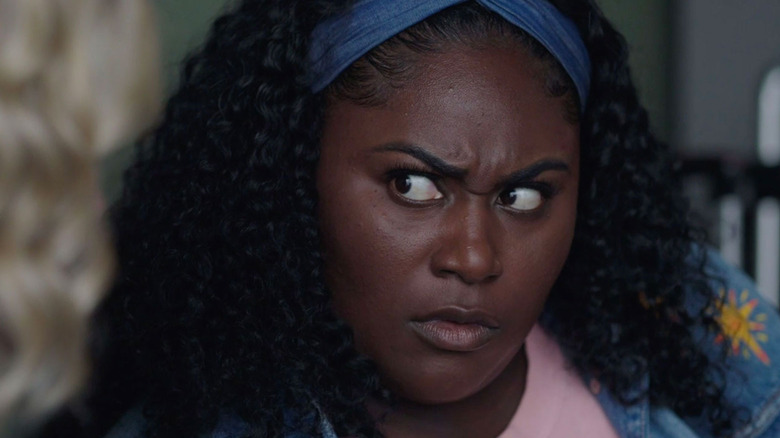
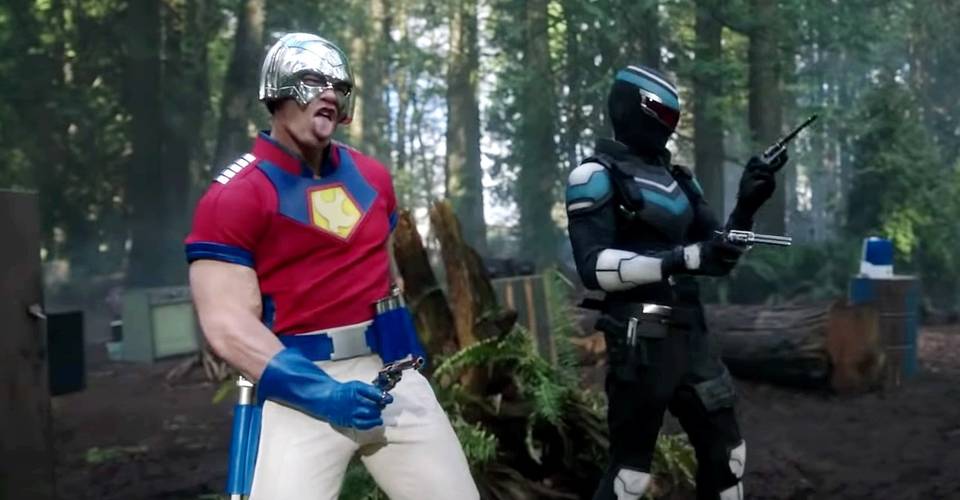
    The first three episodes of Peacemaker are an energetic whirlwind of wild. James Gunn’s fingerprints are all over this in the best way possible. From the opening scene to the can’t skip opening credits, it’s a tour de force of fun. John Cena was born to play this role, and Danielle Brooks is a revelation as Adebayo. Having the intricate knowledge of The Suicide Squad makes this show already feel lived in, but you can totally watch it fresh. I’m anticipating episode 4 already to see what’s next from this wonderful cast and crew. P and V!

    Charles Murphy

    Peacemaker Trailer Reveals First Look at Judomaster

    Peacemaker’s first 3 episodes were a ride! This is the role John Cena was born to play. While he’s otherwise never really stood out to me in any of his other projects, Cena’s work as Peacemaker has been fantastic. And while’s he’s still pretty much just an asshole who works well as the punchline of pretty much every joke, if you’re paying attention you’re seeing something more from Cena in these episodes. James Gunn’s strengths as a writer and director are magnified here with more time to spend on the interpersonal dynamics that he always manages so magnificently and the members of the core team are all doing great work both fitting in and getting their chances to shine. Gunn’s also done a great job taking characters that nobody has given a shit about for decades and making them fun. Vigilante has been hilarious to date and Judomaster’s fight scene was a riot. Robert Patrick has caused a lot of feelings in his limited time as Peacemaker’s piece of shit father and it’s clear he’s got a bigger role to play yet. To be fully honest, I don’t even care to learn more about Project Butterfly or who is behind it. I’d be fine just watching these people go through their day.

    Mary Maerz

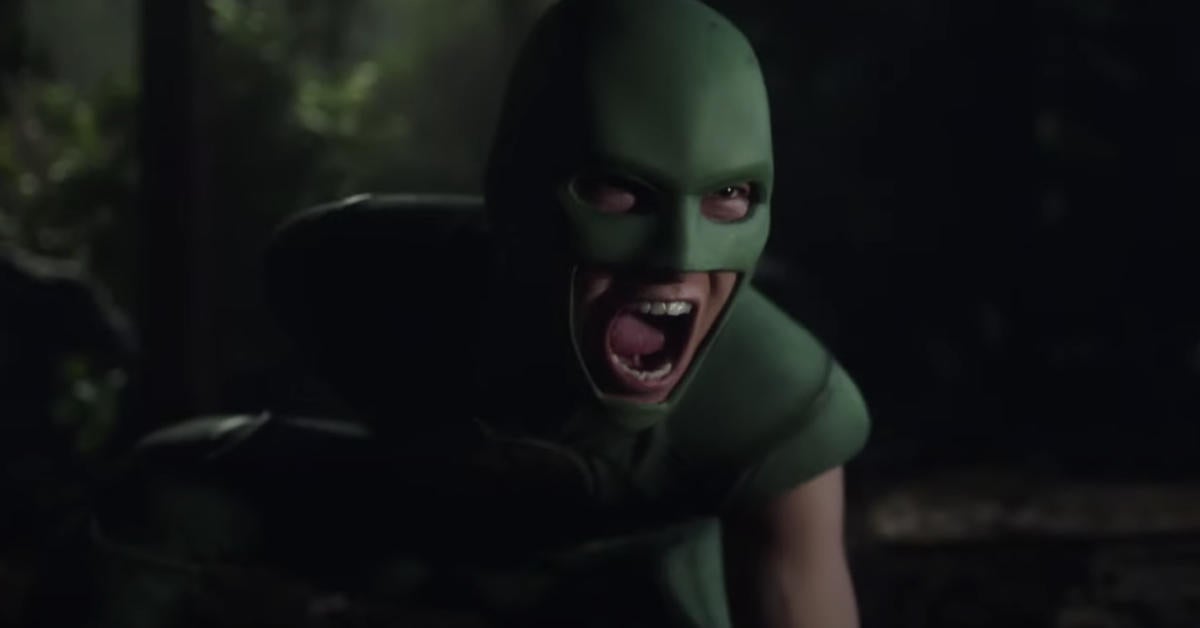
    Peacemaker delivers on its promise to be a parody-like take on the more traditional superhero genre. It’s funny, it’s raunchy, and it confuses the boundaries of hero and anti-hero more than most takes on anti-heroes. John Cena really is perfect as Peacemaker–without that, Peacemaker might have been a non-starter–and the casting overall is phenomenal. Freddie Stroma’s Vigilante is the best part of the whole series, though. I thought the first three episodes had some pacing issues and didn’t quite capitalize on its strongest elements, so to me they felt a bit more flat than I would have liked. But they consistently improved as they went along, and I am pretty confident the series is going to keep getting stronger.

    Joao Pinto

    The Unexpected Relationship That DC Fans Are Loving In Peacemaker

    Even though Peacemaker debuted to mostly wonderful reviews across the board it didn’t quite grab me in the same way. Even so, I absolutely understand how it being R-rated helps to take such a show to a new level, making it feel, at times, a bit more real and not as squeaky clean, to a fault, as many others. Especially because that angle fits so very well with the bonkers worldbuilding set up in The Suicide Squad by James Gunn. The episodic format does allow us to spend more time in said world, and it’s perhaps the repetitiveness and the double downing on many jokes that comes with that extra runtime, making them the norm and not the exception, that makes them feel a bit odd. As such, the humor has been sort of hit-and-miss but I don’t hold that against the series as its best moments still seem to overshadow its lowest. With just three episodes out so far it’s expected that the best is still yet to come as the script matures alongside the characters in it.
    The highlights have been, without a doubt, John Cena and Danielle Brooks’ performances. While Cena seems to have been born to play this role and shines in every chance he gets, Brooks exudes such humanity in every single line spoken that you can’t help but root for her every step of the way.
    Above all, it’s palpable how everybody involved had a great time making this show. Even if it might turn out not to be my favorite thing ever, there isn’t much more one can ask for from such a talented cast and crew.

    Joseph Aberl

    Peacemaker is peak James Gunn, as you see him truly embrace the wackiness of a post-The Suicide Squad world. Not only do we get some good comedy to ease us into understanding these characters quite easily, but they also build up a rather intriguing mystery surrounding its main antagonists. We’re put into Peacemaker’s shoes as we try to find out what exactly he is going up against, as it slowly unravels throughout the episodes. What sells the show are the performances by Freddie Stroma and John Cena, whose attitude completely counteracts the more serious nature of what they are going up against. Cena is also all-in with the wackiness and quite a raunchy continuation of his character, which fits perfectly into the R-rated and brutal world we were introduced to.

    Hunter Radesi

    Peacemaker Show Footage Reveals First Look At Vigilante

    Peacemaker is a wonderful, mixed bag. The show simultaneously feels like something born out of the early 2000s and something that could never have existed before now. It is a glorious celebration of the weirdness of comic books while also tearing their self-righteousness apart at the seams. It’s not a show for everyone, but it was never advertised that way. John Cena is a surprisingly capable leading man, the action is great, and when the humor lands, it really lands. It’s James Gunn tapping into his Super days, with a much larger budget. It may not be the most nuanced comic adaptation we’ve ever gotten, but if you’re looking for a good, raunchy time, it doesn’t get much better. I dig it.

    John Sabato

    Peacemaker has been everything I’ve wanted it to be and more. John Cena shines brighter than his helmet in this series. He’s really acting his ass off here and is becoming such a phenomenal actor. His supporting cast is just as good with Harcourt, Economos, Murn, Vigilante, and Adebayo each bringing something special to the show and just working so well with each other. Of course this wouldn’t be a thing without the maestro himself, James Gunn, who continues to create of the best comic book media in the genre. The way he’s able to bring such emotional weight to the silliest and most outlandish ideas is something to behold. Gunn just knows what he is doing here; he’s a giant nerd in the best way possible and makes some really deep cuts and provides some fantastic world building in the series. There’s some seriously great character work here with Christopher Smith, peeling back those layers yet still letting him be the douchebag we all got to know in The Suicide Squad. I truly hope Gunn continues to build on his corner of the DCEU because this stuff is GOLD.

  • REVIEW: Usopp Gets His Time to Shine in ‘One Piece’s Chapter 1036

    REVIEW: Usopp Gets His Time to Shine in ‘One Piece’s Chapter 1036

    So, I know I am very late to this chapter and the next one is pretty much already out, but I still wanted to take some time to catch up on One Piece Chapter 1036 after the holidays. This chapter uses its time to give us an epilogue on Zoro’s fight, catch up with everyone throughout the raid as well as set up the return to Luffy and Kaido’s showdown. There’s a lot happening in this entry and just highlights how well Eiichiro Oda manages to juggle every single moving piece throughout the arc.

    Zoro’s takedown is quite brutal, as the man literally lost a piece of his wing as a result. Though, the true loss is highlighted in the flashback to King’s time with a more enthusiastic Kaido. We once again get a reference to Joy Boy, as Oda sets up a curious parallel between these two combatants. Two men who swore to never lose a fight are at the breaking point to define which one would succeed. The declaration of Zorro’s to be “The King of Hell” is a powerful moment and is highlighted by the visuals.

    Though, I love Oda can still keep a powerful moment and add something a bit goofy, such as Zoro being so powerful a swing of his swords can push him right back to the floating island. It’s the same when we return to Yamato, who is still desperately trying to find a way to the armory to ensure that when the island drops it doesn’t blow up Wano. Her new ally Fuga crashing into Rokki is worthy of a new nominee for best One Piece faces.

    There are a few more vignettes that give us quick updates on what is happening, such as Big Mom’s continued onslaught, the battle between Raizo and Fukurokuju, and Orochi enjoying the company of Komurasaki. I’m a little disappointed that Drake was taken down off-screen by CP-0 and hope the set-up from his revelation still gets some build-up at one point, but it seems unlikely for now. Yet, I also thought the same with Apoo and he just keeps getting back up. So, you never know.

    Out of everyone in this chapter – and there are some great character moments – Usopp truly gets to shine in my opinion. It’s such a great moment as he fights a ton of Breast Pirates to protect Kiku and Kinemon. His speech calling out their “leave us behind” mentality is just an incredible showcase of how much character growth he went through. His survivor mentality is also a perfect contrast to the samurai’s honor code, and it truly gives him a moment to stand out with everything happening in the raid. Izo’s appearance is also such a poignant moment, as he unveils the mark that has always remained on his back.

    We’ve finally at the final part of the chapter and it’s finally time to see just how the one-on-one is going between Luffy and Kaido. They say very little once we return to the top of Onigashima, as they are just wailing at each other with all their moves. It’s obvious they are hitting their limit, but the smiles on both faces just highlight the words from King earlier in the chapter. We’ve finally returned to the fight that’ll shake the world as we know it and what a way to lead into it.