Category: Reviews

  • REVIEW: ‘Doom Patrol’ Finale – “Amends Patrol”

    REVIEW: ‘Doom Patrol’ Finale – “Amends Patrol”

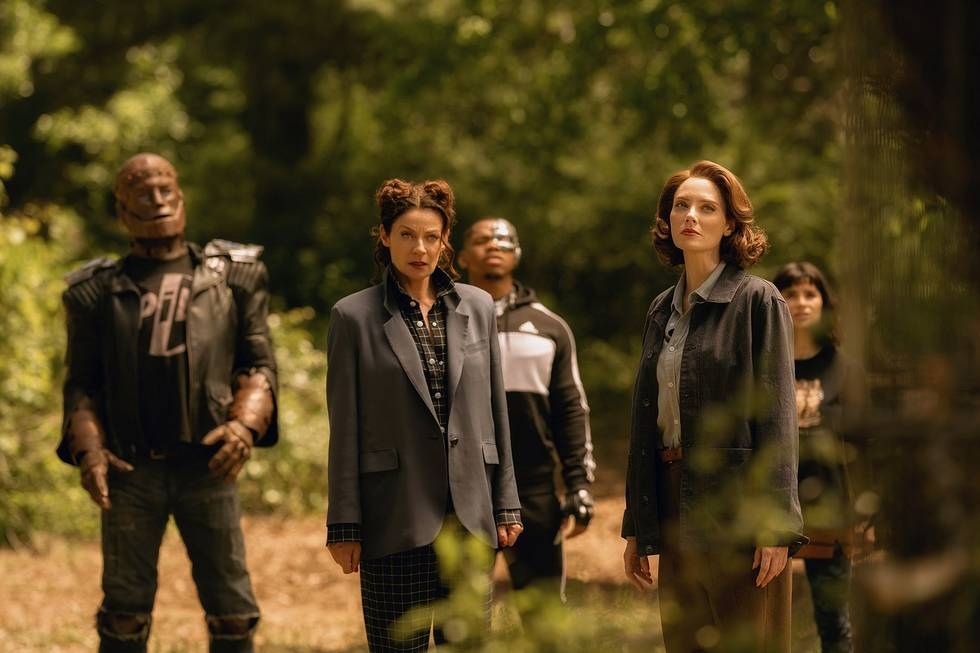
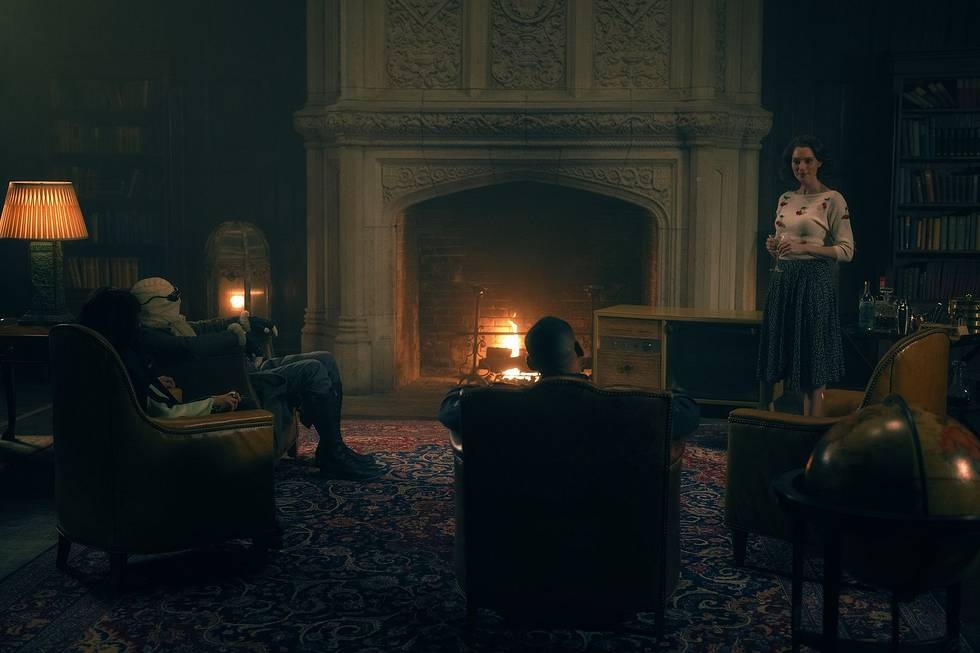
    The title of the Doom Patrol Season 3 finale is more relevant than usual. Amends Patrol is all about redemption. Redemption here is most literal—making amends—and figurative. Our main characters finally make definitive choices as to who they are and who they want to be, taking control of their often-rocky narratives and owning up to the insecurities and flaws that have held them back for three seasons. As is typical for the series, redemption happens on an individual level for the characters, but perhaps the most exciting part of the finale is that we also get a major transformation on a group level. It is still abundantly obvious that Doom Patrol keeps finding ways to be successful in ways that most superhero or comic book shows cannot. It succeeds by refusing to yield to convention or by taking an easy story-telling route. It has consistently paid off for the series, but this episode is one of the finest examples of the series’ talent.

    Where the episode ends highlights just how far the group has come. Where revelations and breakthroughs have come in the past, they are sometimes undone or overshadowed by the next conflict. Interestingly, they were often not accompanied by physical changes even though a lot of the internal struggles were pretty connected with the physical abilities or burdens of the characters. Here, there is no ambiguity—through all the turmoil, they seem to have settled into the new mental and physical places that they couldn’t previously access.

    Season 3 made the decision to take its 10 episodes to genuinely develop and play out the characters’ arcs. The show could have easily turned the group into a formal super team at the end of the first or second season. In fact, it’s arguably bold that it avoided this very expected and anticipated element for as long as they did. But the result is a slow but rewarding burn that makes the “Doom Force” moment all the more exciting and meaningful. 

    The episode begins with most of the group in the last episode’s bus wreckage after Kay/Jane screamed and Larry’s parasite baby essentially blew everything up. While Rita is still obsessed with continuing on to find Laura, Larry and Vic are done following her after it became obvious that the whole situation is based on Rita’s selfish interests, which eclipse any concern she might have had for her teammates. Vic, who had been the biggest proponent of the super team concept, breaks and yells at Rita that they are absolutely not that. The Fog shows up as well to call out Rita. She tells her that neither Rita nor Laura are completely lost.

    This sets up a make-or-break moment for Rita as a character, which was foreshadowed at the very beginning of the season. Will she take her newfound confidence and self-identity to pursue revenge and her own personal interest, or will she figure out how to direct it to something bigger? Not surprisingly, she ultimately makes it clear that she’s not truly evil, notably by coaxing the Brain into thinking she will help him only to kill him with boiling water. Her presence as a leader is finally realized in a positive way at the end of the episode as she seems to take on that type of role with the newly minted super team. If you remember the Rita of season one, it’s amazing how seamlessly and gradually she’s made it here.

    Laura—definitively known as Rouge now—ends up a member of the Doom Force after she used the time machine’s amnesia to help herself make amends to the main group. Rita, for her part, decides at the last minute not to kill Rogue, further establishing that Rita will move forward.

    Larry has a pretty straightforward path to “redemption.” The larva, a negative spirit named Keeg, needs to merge with Larry or it will die. He struggles with the decision of whether he can let himself go through it all again. Vic reminds Larry that he decided during the eternal flagellation to try and let love in. Larry ultimately takes in the negative spirit, saying “I swear I will try my best to do right by you. Always.” We later have a moment of glorious negative spirit flight and action before it suddenly fails and falls to the ground unceremoniously. He’s trying.

    Jane’s decisions are less clear. She has been in constant conflict with the other personas over her beliefs on Kay’s growth. It turns out the personas fled the Underground and are living in the Fog because they are afraid they will disappear as Kay evolves. Yet they are still dying. Apparently, Dr. Harrison is the persona behind the scheme, only looking for control. Jane makes a deal with her that if she helps the personas return and rebuild the Underground, Dr. Harrison can be primary. It seems to suggest that Jane’s redemption is geared towards the personas now, not Kay. With all the previous focus on “the girl” with last season’s Miranda plot, Jane spent this season alienating and ignoring the concerns of the other personas in order to focus on Kay. By sacrificing potentially quite a lot in both the Underground and on the surface, Jane manages to make amends to the personas—it’s unclear if this will undermine some of her journey with Kay.

    Cliff is the one who embraces making amends directly. Laura winds up early on putting his brain in a giant robot that the Brotherhood of Evil had thrown out at some point. He then convinces Laura to stop her rampage toward Rita, telling her that she’s, essentially, not completely evil. This is seemingly confirmed as Laura cannot bring herself to kill Cliff, and flies off instead. He then goes to Clara’s to genuinely apologize for being a terrible father.

    The ultimate conflict of the finale ends up being Cliff, who has Parkinson’s, losing control of the giant robot which is stampeding into Cloverton. Jane, via Flit, teleports into the robot to try and help Cliff, and they have a tender moment while thinking that they are both about to die. Ultimately, Rita grows into the size of the new Cliff and stops him. It’s a very dramatic moment for her that speaks to a level of control over her powers that we have absolutely not seen before.

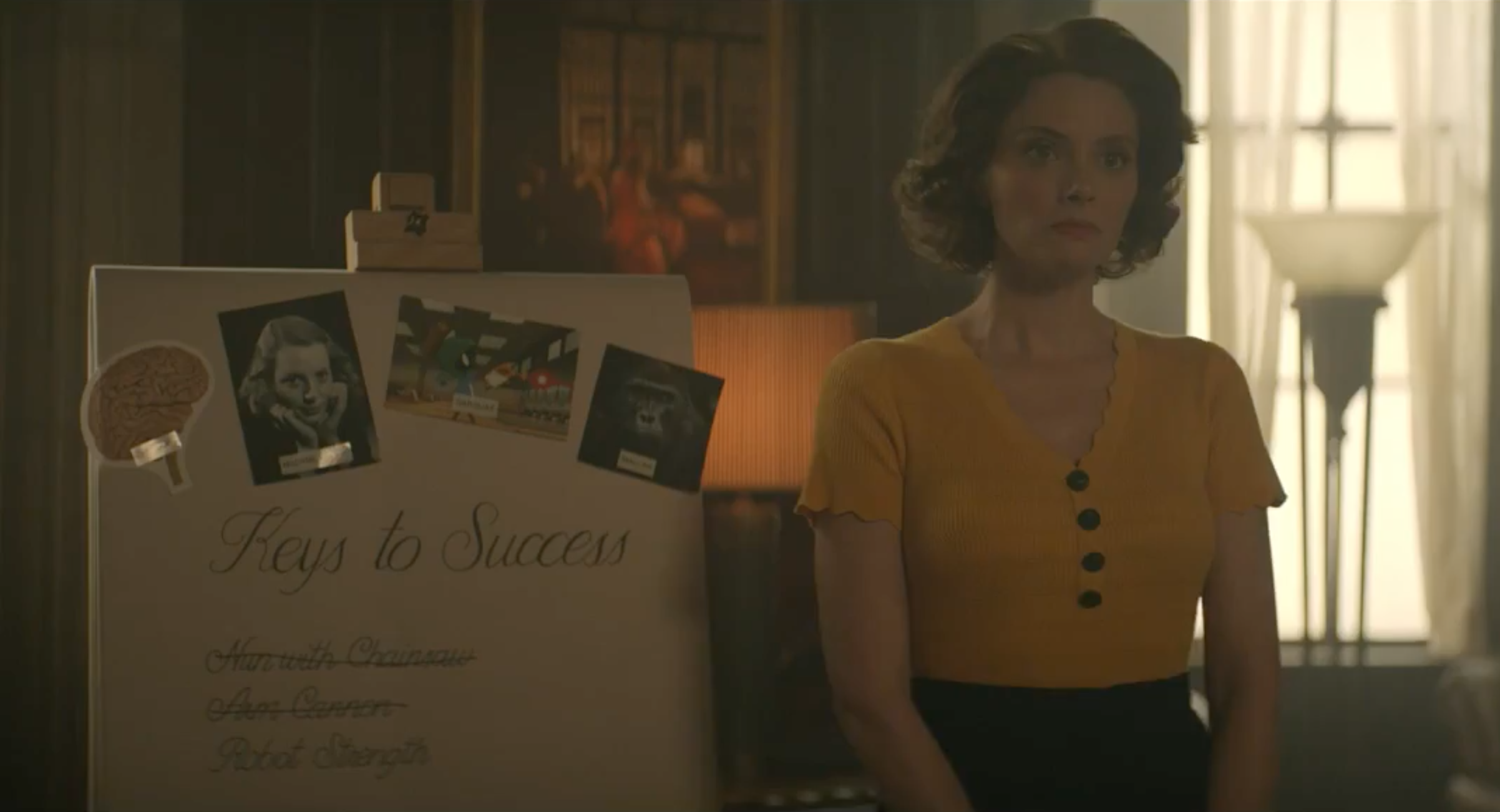
    Later, the group reacts to what they had accomplished. Rita is particularly proud that they saved a town, even though Larry reminds her that they were the only threat in the first place. They finally agree to be a super team, with Cliff hilariously proclaiming them to be the “Doom Force.” It’s going to be a wild ride because the episode ends with the team labeling themselves and making a to-do list to fight a monster that they are using the time machine to get to.

    Amends Patrol is undoubtedly one of the best episodes of the season. It leaves you excited for the next season while managing to be an engaging and compelling episode by itself. While Doom Patrol seems to finally make itself about the Doom Patrol, it’s also clear that the series is not going to be any more predictable. Yes, we now have an official team. But Vic isn’t Cyborg, Jane may not be primary, and Cliff is a giant robot. Larry still hasn’t mastered his new negative spirit, and Rita and Rogue have a tense relationship. And, of course, they are inducing amnesia to go fight monsters with all of these defects. But somehow, this episode ends in one of the most optimistic places Doom Patrol has ever been. The series is not taking the easy way into the superhero plot, which is what makes this show so unique. The individual character grind over the past three seasons made this space better and more meaningful than it could’ve possibly been had the series jumped into the super-team quickly. After this season, there’s every reason to believe that this show will only get better.

  • REVIEW: ‘Home Sweet Home Alone’ Is In Need of a Christmas Miracle

    REVIEW: ‘Home Sweet Home Alone’ Is In Need of a Christmas Miracle

    Like bandits who never learn, people still insist on reviving the Home Alone franchise in the year of our Lord 2021, replete with the same abject cruelty inflicted by children upon adults as per Christmas tradition. This time, though, feels different, as this latest installment, the cornily titled Home Sweet Home Alone, dares to show some actual Christmas kindness for once and asks: what if we cared about the thieves this time?

    Director Dan Mazer relinquishes some of the raunchy comedic chops that he’s become known for, courtesy of Da Ali G Show and Dirty Grandpa, to deliver a family-friendly affair that’ll keep Disney+ investors happy. Mazer likely succeeds in keeping the Disney+ folk happy but ultimately drops the ball in celebrating the 30-year legacy of one of the most beloved holiday franchises in pop culture.  

    Ellie Kemper and Rob Delaney play this installment’s sympathetic heisters, a married couple in debt and searching for a very expensive heirloom they believe was stolen from them. When they realize that a British kid in their neighborhood is the likely culprit, they hatch a plan to get it back to avoid losing their home. True to franchise form, a lot of painful traps are set off during their heist, with each one so much more agonizing than the last that could they give the cast of Jackass a run for their money. 

    You’d be forgiven for thinking that Kemper and Delaney are the protagonists of this traditionally child-centric Christmas tale because the movie makes a compelling case for it. Their struggles as parents and breadwinners of their household serve as the heist’s impetus as they face the prospect of losing their home. And were it not for the Home Alone DNA, you’d also be forgiven for thinking that Max Mercer, a snarky rich British kid, is the true big bad of this tale. Perhaps the milking of this franchise was always bound to try new things but positing a financially struggling family as the butt of a rich kid’s pranks might not be the best spin on the material. The aforementioned Christmas kindness on display feels all for naught. 

    The usual sentiment that comes with every remake/sequel that features a new cast rings true here: Home Sweet Home Alone just doesn’t have the same magic as the original. The new cast is mostly harmless and, through no fault of their own, are restricted from doing any remarkable work by Mikey Day and Streeter Streidell‘s script. The mother, played Aisling Bea, is painfully set aside to provide no drama as she merely books a flight home from Tokyo, a stark contrast to Catherine O’Hara‘s woeful journey home through the lonely winter of 1990. 

    Kemper and Delaney do their best to be the defacto baddies of the piece, but there’s a striking dissonance between the movie’s sympathetic portrayal of their backstory and Mazer’s direction. The movie tries to make it seem like they’re as dumb and mean as the Wet Bandits and therefore deserving to be the recipient of a child’s Christmas wrath when they’re clearly not. Hearing their agonizing screams isn’t as fun anymore.

    Archie Yates is this holiday’s Kevin McAllister. Yates is fine in the role, but the sweet naivete he emanated in 2019’s Jojo Rabbit would have added a needed warmness to the coldness of the writing. It’s not the star-making performance that turned McCulley Culkin into a superstar overnight, but Yates carries with him the confidence of a great young actor, and at the very least, this movie wears that on its sleeve.

    There’s also a stacked crew of supporting comedians the film has at its disposal, but they all end up beleaguered. Kenan Thompson shows up for a few gags that go nowhere. That his fellow sketch greats Chris Parnell and Andrew Daly are robbed of doing what they do best in a film that sorely needs some holiday cheer is a travesty. Also a travesty is Pete Holmes hogging all the scenes better left to his funnier co-stars. 

    There’s a decent new Home Alone movie deep within the floorboards of this franchise, but a dull vision and cheerless script are ultimately what keep it from the light of day. Should there be more plans of continuing this increasingly wistful holiday tradition, a Christmas miracle might be needed to make up for Home Sweet Home Alone

  • REVIEW: ‘Olaf Presents’ is a Lovable Recycling Project

    REVIEW: ‘Olaf Presents’ is a Lovable Recycling Project

    Olaf Presents is the latest in Disney’s obsession with rehashing and recycling the bottomless financial well of its animated films. Despite the lingering question of what exactly is the goal or purpose of the mini-series, it does manage to be genuinely delightful. Josh Gad’s Olaf of the Frozen franchise fame is a golden nugget of a character and is special enough that his overuse and excessive commercialization can be forgiven enough to truly enjoy this series. With its home on Disney+ within the complete collection of the films, the talking snowman “presents” places it in a much-needed external context. Instead of being a cute, but empty isolated concept, it feels much more like a worthy piece of the larger animated Disney film tapestry. 

    With each episode sporting a runtime of under two minutes, the length of each mini-story is perfect. It’s enough to get a laugh, but it ends almost exactly when it starts to get old. In fact, everything about Olaf Presents is miniature. The writing comes in super abrupt chunks and the editing emphasizes it. The blink-and-you’ll-miss-it narrative sections combined with the harsh edit to the next one to two-second section is quite funny. Gad is as triumphant as the silly sidekick as ever, and it’s one of those rare castings that seem irreplaceable. Gad and Olaf in Olaf Presents only need to find a way to be funny in micro-bursts, and they can do that on repeat in this series. 

    Much of the humor comes from Olaf’s more removed takes on some of Disney’s most classic animated movies. He describes scenes or plot points in ways that the “ordinary” person might. The dark, dramatic, and detailed description of Mufasa’s death in The Lion King that emphasizes just how brutal the famous scene actually is is a perfect example. Our goofy snowman surely makes people think, “Look! He’s saying what we’ve always thought!” 

    Poking fun at its own films is a refreshing move from Disney at least. The mini-series is able to call out some outdated, overly corny, or otherwise laughable themes and storylines that work best for older movies, such as 1989’s The Little Mermaid. It is interesting, though, how Olaf Presents can make an audience laugh at the absurdities in Disney movies by taking cues from the Frankenstein’s Monster of Disney movies’ culmination of their absurdities.  

    The series is a nice way to promote classic films by using a more recent but future classic as a vehicle to reintroduce them either to a younger audience who did not grow up on some of the older animated classics or to an older audience that has left them behind. The presentations are undoubtedly far less enjoyable—if at all—to a person who hasn’t seen the movie being presented. So, to that extent, it’s unclear if Olaf Presents can persuade a newbie to scroll to another part of Disney+ to watch a feature-length film for context.

    Olaf Presents is honestly a funny, cute, and amusing collection of bite-sized episodes for the Disney animated film fan. Olaf’s humor will not disappoint his fan base and it’s surely more than enough to make Olaf-indifferent audiences laugh. Poking fun at classic, and even more recent, movies for about a minute and a half proves to be entertaining. However, those who aren’t already familiar with the movies may not get much out of the series. While the series is a blatant recycling project that highlights ongoing Disney’s death grip on its iconic properties, the fact that Olaf Presents finds itself as a tiny piece within the Disney+ platform makes it feel like a more inspired addition to the conglomerate. 

    Olaf Presents premieres exclusively on Disney+ on Nov. 12.

  • REVIEW: ‘Guardians of the Galaxy’ Rocks

    REVIEW: ‘Guardians of the Galaxy’ Rocks

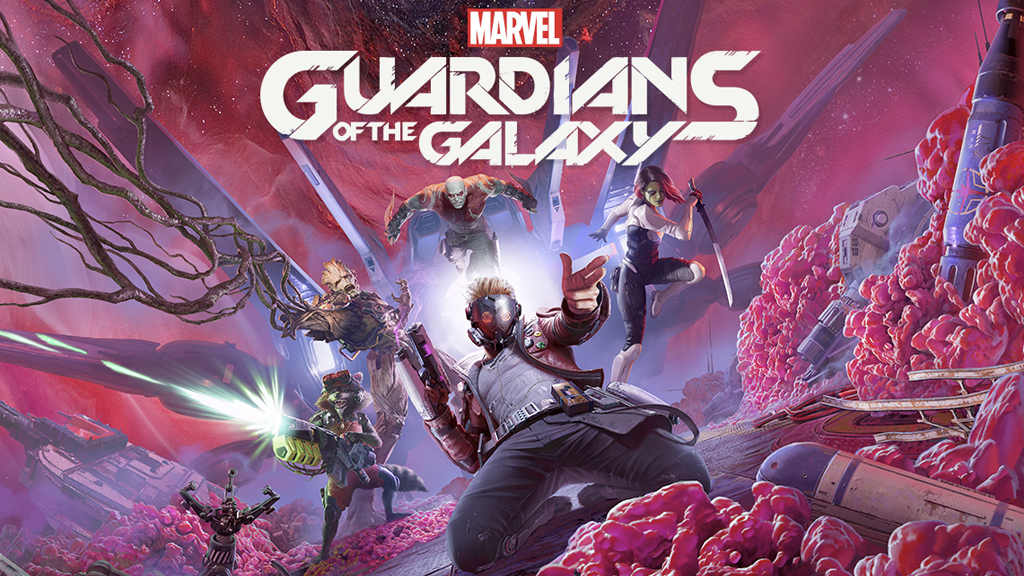
    Square-Enix’s subsidiary Eidos Montreal has tackled another sector of the Marvel universe in their adaptation of the Guardians of the Galaxy. When the first trailers dropped, it seemed like they took the original film franchise that started in 2014 and added a new rock-focused paint job. There was some skepticism with the focus on Star-Lord being the only playable character, Yet, as more trailers were released it offered a glimpse into what may be a fun new interpretation of these beloved characters and may offer one of gaming’s most unique world designs. Does it live up to its expectations or falter under the weight of expectation?

    Guardians of the Galaxy' is already better than the 'Avengers' game |  Engadget

    The story starts simply with our group of Guardians trying to nab a decent bounty and make a quick buck. Yet, they end up getting caught for their infiltrating an unrestricted area and have to pay off a fine for the Nova Corps. As you can guess, it’s never that simple and things start to unravel from thereon. There’s a curious plot point that stands out as it humanizes the struggle Quill goes through in the story, as well as adds a layer to make it a surprisingly personal story as events unfold. This core narrative is one of the most exciting aspects of the game, as you follow these characters from one planet to another as everything just seems to unravel. We get a chance to explore a very different kind of Marvel galaxy with some familiar characters.

    We have to keep in mind, Guardians of the Galaxy is an intellectual property that was completely unknown to non-comic readers until James Gunn redefined our understanding of them. Nowadays, they are a household name and you can see that some elements are inescapable when adapting these characters. Peter Quill and Drax share a lot of traits with their cinematic counterparts, especially the former with his love for music. Yet, they took an interesting angle by sticking to the 80s-inspired music but giving him a stronger rock-centric interest. That especially comes to the forefront with the fictional band Star-Lord, which is the new origin of his code name.

    Marvel's Guardians of the Galaxy has Gone Gold

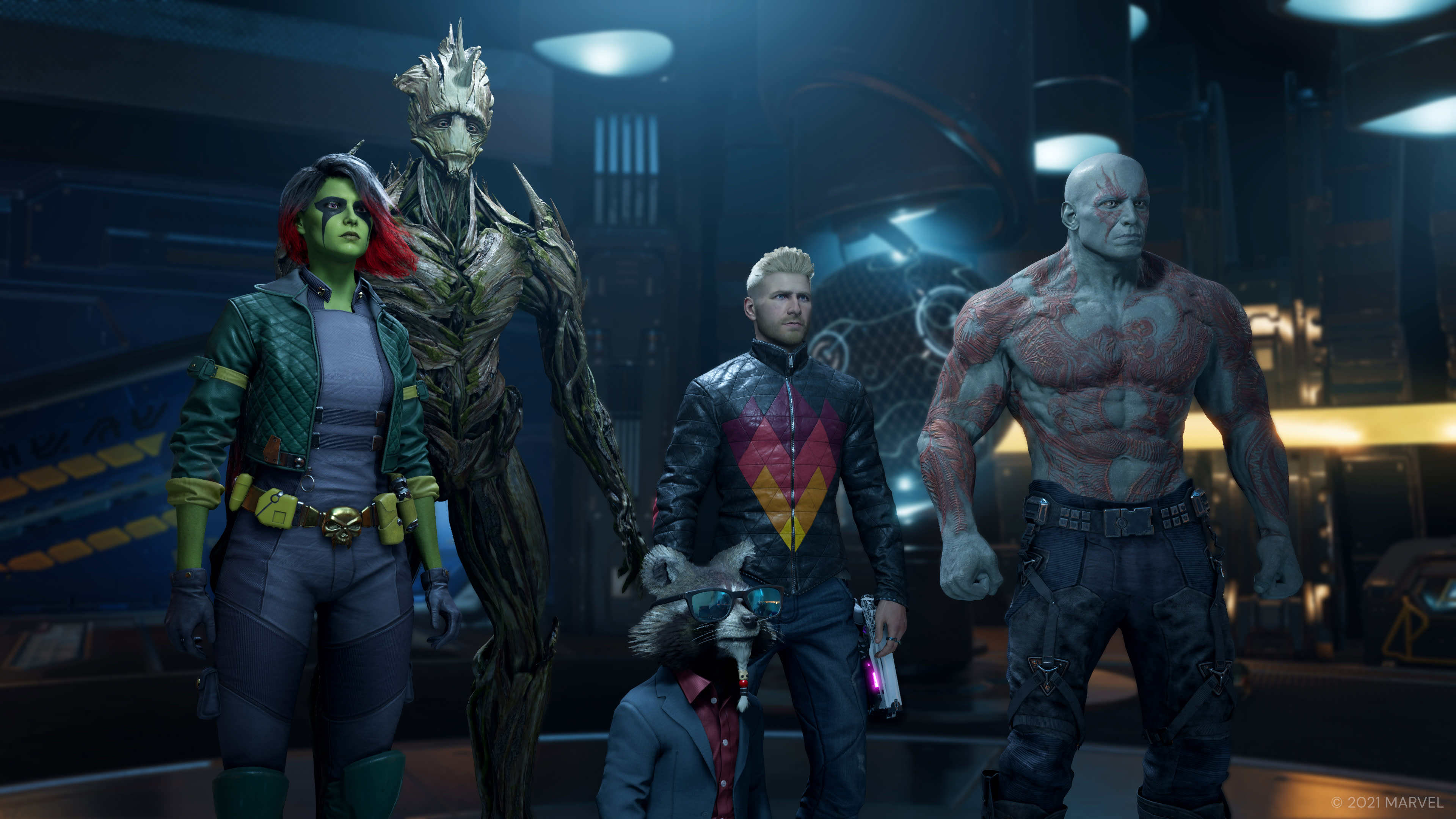
    Drax is a good example of how they took the base personality of these characters from the films but added additional layers. He still takes things quite literally but is given a much more grounded personality this time around. He gets some of the most emotional scenes in the game, as we explore his relationship with his wife and daughter, or rather how he handles the tragedy. Every member of this group connects the overarching challenges to their core worries. Rocket has a fear that is rooted in his origin while Gamora has some baggage we slowly learn about throughout the story. Personally, though, Rocket is a standout character, who purposefully rubs you the wrong way before slowly we get to know the character better and why he behaves the way he does.

    Of course, a game is more than just its core narrative. As the trailers promised, you only control Star-ord directly but can command your team throughout the battle scenarios. Every member is specialized in something and you’ll need to make use of each member to survive most encounters. That doesn’t mean Star-Lord is weak, as he uses his Elemental Guns that include different abilities. You’ll unlock most of them throughout the game, which is activated through a specific moment in Peter’s journey. At times, it does become a lot to keep an eye on and memorize throughout a fight. I’ve more than often accidentally activated the Huddle mechanic due to how easy it is to activate.

    Marvel's Guardians of the Galaxy im Test + Video: Starker Lizenztitel mit  Story-Fokus

    Speaking of, every game has some kind of special move that gives you bonuses or ways to take down enemies more efficiently. In Guardians of the Galaxy, it is called a huddle, where you call in your teammates, analyze their current mood and pick a fitting answer to motivate them. If you fail to do so, only Star-Lord will get a bonus. It’s an interesting idea that fits into the “leader” role of the character, but it’s kind of a pacing breaker. Everyone huddles up, they talk quite a bit, you choose an answer that you have to listen to the audio cue before you enter battle again. While an interesting idea, it’s also not satisfying outside of maybe getting back some special abilities and stat boosts. Also, I once got stuck in it and they just kept staring into my soul without a button prompt which was a fun experience.

    I’ve experienced quite a few bugs while playing on the PlayStation 5. Some in-game models would pop out and into existence. Enemies would get stuck in place, or textures would take some time before they popped in. I even had the game suddenly crash on me in the middle of a fight, but it was only once in my entire playthrough. They’re far from a dealbreaker but were a bit noticeable. I also have to point out that there’s a great mechanic where you collect items and your crewmates share stories with you. For some reason, Drax was following me around and when I started a conversation with Gamora, he was stuck between us. It might be one of the funniest bugs I ever had, especially cause Drax not caring about personal space is in character for him.

    Guardians of the Galaxy: Neuer Titel kommt ebenfalls für Switch

    Still, even with these bugs, they don’t take away from the beauty of this game. The environments and creature designs might be some of the best I’ve seen in a game. Instead of grounding the concepts, they went with the wildest, Lovecraftian-inspired designs you could imagine. Each planet has a very distinct visual style, such as one covered in ice with fire raining from the sky. Even Nova Corps. ships have elements that make them visually stand out in contrast to the diverse flora and fauna you meet in your adventure.

    Overall, Guardians of the Galaxy surprised me in many ways. The story is exciting and has that feeling of adventure you expect from this kind of game. Some emotional moments anchor these characters in interesting ways that make them stand out from their cinematic counterparts. Add in a dash of visual creativity and fun combat, you have a recipe that lends itself to a brand new franchise. Here’s hoping we get to explore more aspects of space in future entries. Just like the incredible music selection and fictional Star-Lord band, the game just rocks even with its faults.

  • Murphy’s Team-Up, Volume 5: Reviewing ‘Eternals’

    Murphy’s Team-Up, Volume 5: Reviewing ‘Eternals’

    Mary Maerz

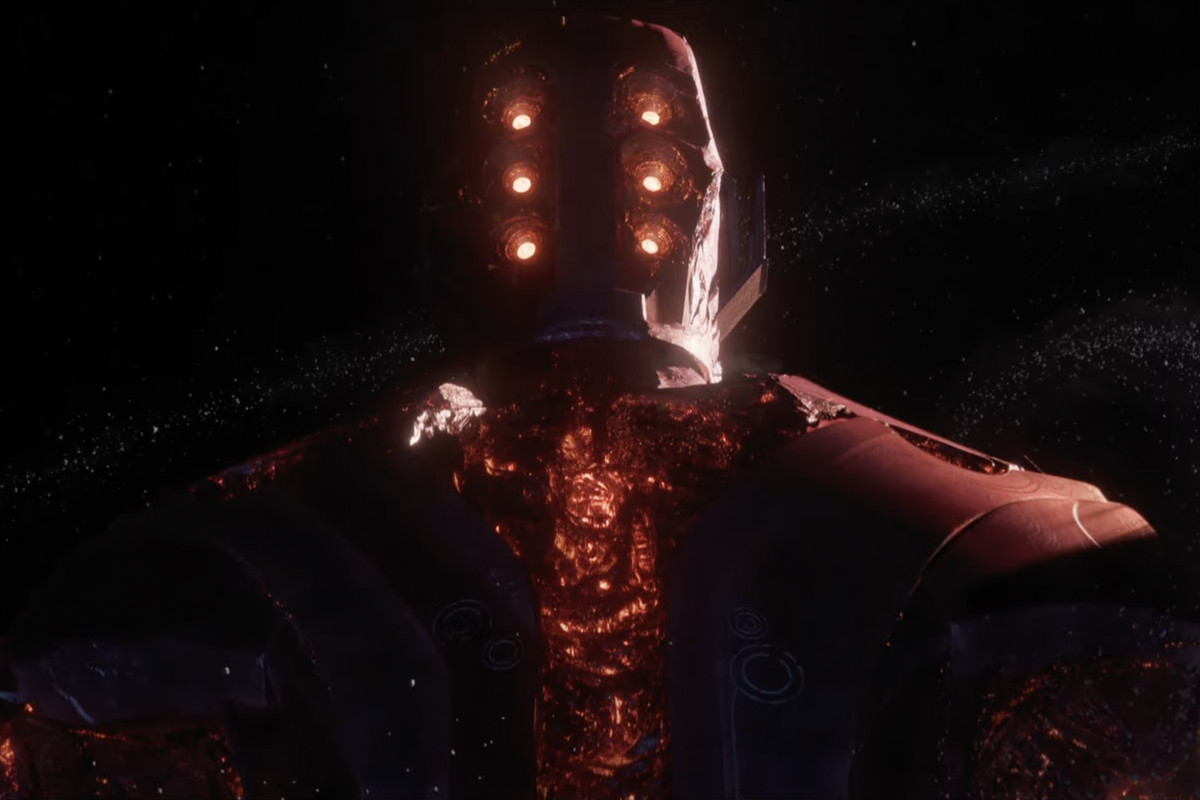
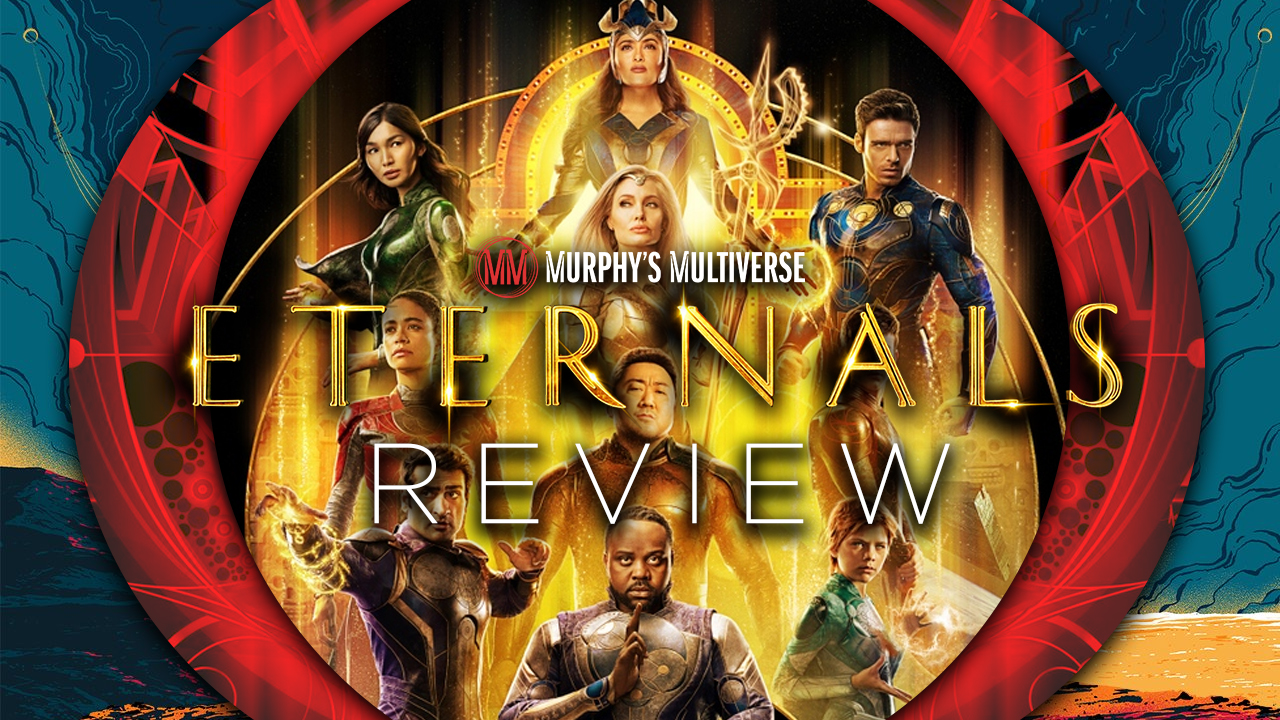
    Eternals is confusing in how it comes across—somehow it could have both terrible and great moments in the same 30 seconds. The first third or so of the movie was, honestly, just not good. I don’t remember the last time I watched a MCU film for the first time and thought, “uh oh, this is bad.” But it picks up steam over time, and there are genuinely delightful moments of humor, action, and character focus. Personally, I thought Sersi and Ikaris were some of the most bland personalities around, so the film’s primary focus on those two definitely didn’t do it for me and weighed it down too much. There were phenomenal emotional moments between some characters throughout, but they were few and far between. Phastos, for example, has some incredible interactions with Ikaris in the climax, but it mostly felt like it came out of nowhere. I do think that there were too many things going, and not much was given enough attention to allow it to be great. Still, I am excited about a lot of the MCU elements that Eternals brought, including Celestials (visually, they were so stunning that I would have watched two and a half hours of them just hanging out), several of the Eternals themselves (my favorites going forward are Makkari, Druig, Phastos, and Kingo), and the expansion of the cosmic MCU overall. At the end of the day, I would not say it’s a “good” movie—there are too many forced, cringey, and otherwise bad moments compared to the good ones. But I’m still pretty happy with how Eternals fits in the MCU and the new material it gave us.

    Filip Manka

    Eternals opened a new chapter in the MCU that exudes freshness and uniqueness in terms of content delivery. Chloé Zhao confronted the myth of superhero, or in this case, God, by deconstructing and reinterpreting certain beliefs and myths. Zhao crafted a love letter to the world and humankind that also serves as a warning against our self-destructive nature, placing the film in the context of global issues such as climate change. Despite the narrative and script problems, Eternals will stay in my heart for a long time by its balance between scale and momentousness, and intimacy and proximity.

    Nathan Miller

    Eternals movie ending explained: Marvel links and sequel hints - CNET

    I loved Eternals! I can see that it isn’t a typical Marvel Studios film, and that’s OK. Part of the beauty of a cinematic universe is that teams can try out different things and still have the space to develop them. I thought it was brilliant and showed a continuing evolution of the studio, that there were no outright binary evil villains, but rather just different perspectives on the matter at hand. I adored the hope in the message of needing to band together collaboratively to prevent ecological devastation. The performances of the actors really played into this element. It’s clear that Sersi is burdened by the beauty of humanity, with her first line, in contrast to Ikaris’ stoicism. Chloe Zhao’s framing of shots and the lighting adds to the mythological feeling of the film.  I’m really looking forward to how the film changes the MCU. On one hand introducing 10 lead characters is a lot, but on the other hand that is again the beauty of a continuing universe that we will visit them again. Perhaps we can change our expectations somewhat to align with this, and in that way Eternals is changing cultural expectations of cinema. It would be brilliant for Marvel Studios to follow through on this forward charge by announcing a green-lit sequel sooner rather than later!

    DA Osorio

    The fight between Ikaris and the Eternals? Really great. Marvel doing super speed, and a fight between a speedster and a God, better than DC has ever done it? Amazing. The first half was a lot of mythology and deep Marvel cuts, and a GRC mention puts it at the same time more or less as FWS. That helps set this apart from Shang Chi, IMO, in the sense that the parts in the US didn’t seem to be connected to the rest of the Earth MCU (not a knock, just an observation). Thor knowing them was cool too, and I wonder if we are going to find out that the Asgardians were also created by the Celestials like they are in the Ultimates. I’d give it a 8/10. Kro was whatever, and some of the deviant designs weren’t great, and I don’t love them being advanced robots, but man, there was a lot of good there.

    Also: Mahershala Ali making his debut, with the Ebony Blade being tied to Dracula and Moon Knight, means that we are on the road to a version of the Midnight Sons. You know what I’d like? For them to go with Alejandra Jones’s Ghost Rider (she’s the female Ghost Rider), and be called the Avengers of the Supernatural instead. Either way, Eternals was very good.

    Hunter Radesi

    Marvel’s Eternals is an absolutely beautiful, earnest jumble of thoughts and ideas. The film gets off to a bumpy start, with a first act that tries to cram a plethora of characters and information into a total runtime that could have lasted over three hours. However, once the movie is allowed to hit the points it’s really trying to make, it begins to tell an epic story of humanity through the eyes of gods in a way only Chloé Zhao could muster. Ultimately, the film is imperfect and awkwardly paced, but a worthy and welcome addition to the zeitgeist of Marvel’s modern blockbuster.

    Joseph Aberl

    Eternals is a strange piece to me. It’s far from what we are used to from Marvel Studios, as it’s less about a bombastic setting but rather explores a more personal story in a larger setting. The lore and exploration of history are curious, but most everything is in service of character. The film is less a Marvel movie but an indie film with a blockbuster coat. It avoids linear storytelling to explore history in service of character rather than to build up to its end goal. In a way, it’s also its biggest fault, as revelations are giving less weight besides a large info dump. There are fewer highs in this that could mask its early troubles and the characters don’t earn their revelations. On the one hand, it plays into the story’s structure about a “higher purpose” which is more poignant in the finale than early on. What truly makes this film work for some and not others is dependent on your interest in the characters. The film takes more nuance in making you care for them than their actual journey, especially evident in the Emergence’s lack of a “timing.” We know it’s happening but not when or where until we enter the confrontation. The investment in these characters overshadowed this issue and made it quite a visually captivating and new take on heroic deconstruction.

    Joao Pinto

    Personally, Eternals is the MCU’s most intriguing entry to date. By only having watched it once, I’m trying to allow myself to go beyond my immediate response to the movie, which wasn’t all that positive. I’m now expecting to have a more definite opinion in the coming days after going back for more viewings. All things considered, I do believe it did way more things right than what it might have done wrong. The cosmology of the MCU has been reshaped in a way that I simply adore, opening the doors for the MCU to finally become a proper Universe in and of itself. At the same time I’m not completely sold on the pacing when introducing a dozen new characters and their relationships over millennia, all while world-building within such a large scope. At the end of the day I’m still highly intrigued by what might come next for these characters and the MCU as a whole, meaning Eternals accomplished what every entry this franchise has to see as a win: it kept audiences engaged and wanting more.

    Arlyn Murphy

    When I watched Eternals for the first time I was like “WHOA”. I honestly felt that it was a little too god and goddess-y for Marvel. I also felt that some of the characters were out of place, including, Angelina Jolie and Barry Keoghan’s Thena and Druig. In the end, I just didn’t connect with them; however, I connected with Sprite and Kingo who both made me laugh so many times. If I were to rank this movie in comparison to the other Marvel Studios’ movies, it would probably be right in the middle. I liked the story line, however, there was a lot of information in the movie and I feel as though it was just all crammed in. On the other hand, it had great introductions to the all of the new characters, some of whom I would like to see again and others…not so much.

    Charles Murphy

    New Eternals Image Offers a Detailed Look at Kumail Nanjiani's Costume

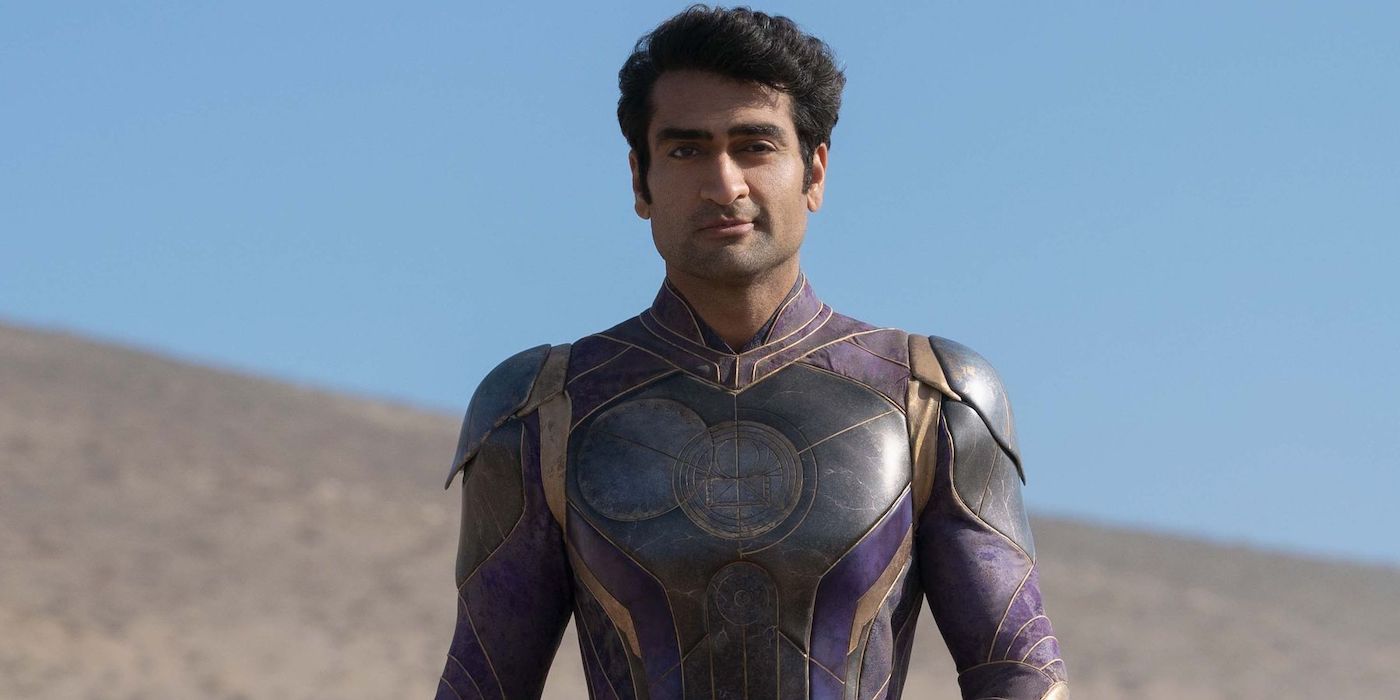
    After my first screening of Eternals, I felt a lot of frustration. Frustrated at the changes made to the origins of the Eternals; frustrated at the changes made to and the use of the Deviants; frustrated at some editing choices that took me out of the film. Outside of those frustrations, I was also really disappointed in some of the performances in the film. Angelina Jolie’s performance tops the list of ones that I wish I could forget, closely followed by Salma Hayek. Jolie seemed to be there just to pose and smolder while Hayek’s expressionless face belied the allegedly maternal emotions of the character. At times I could argue that Arishem emoted more than Ajak. Fortunately, these performances were balanced out by the rest of the cast. Kumail Nanjiani was brilliant and the Bollywood scene is among the high points of the film; Richard Madden played Ikaris as the arrow he is described to be; and Lia McHugh delivered an adult-sized range of emotions to the role.

    Following my second screening, it was clear that while the many of the problems remained the same, the film is less problematic than I originally believed it to be and I found myself less frustrated and enjoyed it quite a bit more. I originally thought it moved along great until the flashback around 35 minutes in (Tenochtitlan) and attributed the decision to flashback again there to taking me out of the film. In truth, that flashback isn’t the problem. It’s a huge part of the overall narrative as it explains Thena’s memory loss and why the group drifts apart. In my second screening, I realized it wasn’t the story that lost me but the really uninspiring performances by the two actors who shared the bulk of that chunk of the film: Jolie and Barry Keoghan. In fact, if the really wanted Druig to put Tiamut to sleep, they could probably just show him that part of the film and be done with it. At no point during the film, did either one these actors elicit any sort of emotion from me other than an eye roll. I’ve read criticisms that there are too many characters and while I can agree with that to an extent, I think some of that might be lessened if the people portraying them made them interesting.

    Chloe Zhao did do something magnificent here. This film’s scale was not too big for her, as some have said. She weaved a fascinating narrative against an incredibly beautiful backdrop. She explored the bonds between us that can just as easily form as they can break and the hold that memories can have on all of us. She wrote the earliest chapter of the history of the MCU and wow did she deliver on the size and scope of the Celestials; not just physically, but in who they are and what they do (I was thrilled to see them adopt the Earth X plot, which I guessed they might way back when). At the end of the day, it seems like she checked a lot of boxes but, as the director of these actors, missed one big one: getting solid performances out of all of them. This isn’t a top-tier MCU film, but I think it might end up being something like Avengers: Age of Ultron in that after a few years, it’ll be one to revisit and might look like an entirely different film. Zhao had a Herculean task here in not only telling the tale of the MCU’s entire past but also setting up a huge chunk of its future (including two great scenes in the mid and post credits, one of which is top 5 of its kind in the MCU); she did an admirable job on the first part and only in time will we be able to truly judge how she did with the second half of that task. While I didn’t love Eternals, I fully support Zhao’s return for the sequel.

    Megan Murphy

    Before watching Eternals I assumed that I would be diving into another team like the Guardians of the Galaxy or the Avengers, however, the plot of this story was much different. To start off, I think that the drastic timeline and different events that took place within the movie were a good way to incorporate real history into the MCU, but I also think it took away from the actual Eternals. When watching the movie I was more drawn into the plot and the setting of the movie than the characters. I believe that characters such as Thena and Druig could have had a much more present role in the movie because of the extent of their powers and what they are capable of doing. I also thought that the way the Eternals were portrayed was a little too much ancient Greece and not enough MCU. On the other hand, the way that Sprite was turned into a human was a very good addition to the end of the movie. With this action, in later movies we might be able to find Sprite to be a more influential character if she is able to be more comfortable as an adult. Overall, the Eternals was much different then the average Marvel movie but had a little too much going on to really understand the characters.

  • REVIEW: ‘Doom Patrol’ – 3×9, “Evil Patrol”

    REVIEW: ‘Doom Patrol’ – 3×9, “Evil Patrol”

    Season 3’s penultimate episode of Doom Patrol is all about dysfunctional relationships. In fact, it is nearly impossible to point to any element of this episode that isn’t quite clearly a representation of a rocky and toxic relationship. It’s a theme that pervades Doom Patrol as a whole, but it was certainly wrung out in all of its glory in the previous episode. Evil Patrol makes it quite clear that the bulk of this season did the messy work of getting our characters to a significantly different place than they have ever been before in the series. As a result, this episode feels like Doom Patrol is now at a spot where the audience is no longer forced to try and figure out and parse through what is going on, but rather just getting to enjoy it uninhibited. And this episode—which could also be fairly named “Plot Patrol”—does what the series does best: be extraordinarily fun.

    This season of Doom Patrol seemed to be setting up Rita as a major player at the very start of it, and it’s become more than obvious that Rita is really who is driving the show now. Even though the clearest conflict is Rita against Laura, Laura only becomes an arguably villainous figure in the present day because Rita pushes her into survival mode. Without Rita plotting to destroy Laura, the latter never would have returned to the Brotherhood of Evil or hatched any nefarious plot. Rita’s obsession with revenge is the only true adversarial threat of the story at this point—it’s pretty safe to say for certain that Season 3 does indeed lack a strong villain, but it isn’t suffering for it.

    Rita’s loss of Malcolm turns her into a staunch vengeful personality with the confidence and motivation that comes along with it. It allows her to be an extremely different Rita than ever before. She makes it clear to Laura that she won’t let her ruin anything else and that she won’t stop fighting until she’s ended her life. She doesn’t hesitate to start gathering a team to help her, but she quickly realizes that almost all of her potential “assets”—Vic, Jane, and Larry—are no longer assets. It doesn’t really deter her, and she’s more than willing to go the extra mile in keeping everyone around to help. That’s how desperate she is to get revenge on Laura, and that’s how clear it is that she has little concern for the friends she used to have much more compassion for.

    Her loss of herself seems most apparent when she becomes extremely paranoid that Cliff’s daughter Clara is actually Laura in disguise. It comes off as more of a blow to Cliff’s sense of worth, but it turns out that Laura did, in fact, infiltrate Doom Manor, but as Clara’s baby. The result is one of the funniest moments the series has put together—Laura shapeshifts into some kind of elf-sized, disturbingly proportioned creature that looks like it could have come straight out of a Shrek film. She essentially bounces around while the new and mostly depowered team swat at her with objects. The intentionally rough visual effects, including the awkward tempo of it all, fits with the series’ aesthetic perfectly, and it’s just a near-perfect moment. In the end, Laura teleports away with Cliff.

    The fight comes after Laura rejoins the Brotherhood of Evil. The group—which is just the Brain and Monsieur Mallah—is a standout in Season 3 despite being minimally involved and having little screen time. Laura finds the two living in a retirement community in Florida, done with the life of the Brotherhood. Laura convinces the Brain to work with her to both keep herself from being killed but also to supposedly destroy Niles Caulder’s legacy. While they ultimately betray her, it’s not until after the Brain puts himself in Cliff’s body—he is living his best life. While the Brotherhood stand out particularly for the humor they bring, it’s ironic how they just truly aren’t villains here. Both Rita and Laura essentially use the Brotherhood as an excuse to target the other, and the threatening-sounding organization is just sort of the connector. The Brain and Mallah were perfectly content with their retirement before these two women came along. 

    Apart from the main Rita-Laura situation, the other characters have strong moments both alone and together. Vic probably has the rawest and compelling moment with his conversation with his father after Vic has his tech removed. Joivan Wade really delivers, and the scene grows from comforting nostalgia to completely chilling. It’s also the best Vic/Cyborg mental and emotional moment the series has given us. Vic’s arc was always very interesting—and this moment doesn’t make it more or less so—but it always felt like it was missing some intensity. Vic’s pushback against his dad’s attempts to convince him that turning him into Cyborg was the right thing to do, and claiming that he is ready to be able to actually define himself undoubtedly provides that intensity. It also feels like a watershed moment in the character’s development that was a long time coming. While we arguably “lost” the character of Cyborg, the fact that Vic otherwise remains himself is pretty cool. He’s such a strong personality with a good heart. When the team asks him why he came back to Doom Manor now that he is “normal”, he simply says, “I live here.” He has no interest in not being some kind of hero or doing the right thing—losing the tech highlights that Vic, not Cyborg, was always the hero.

    Larry’s parasite baby is a delight. We get sweet and funny dad moments, but we also learn that the little larva can sense and react to everyone’s emotions leading to Larry being zapped by it every few minutes. Jane and Kay are still on rocky and fragile ground, especially now that the rest of the personas have left the Underground. Kay tries to take the reins but flees when she gets scared, and it becomes clear that the Underground will destroy itself if it remains empty. Cliff gets convinced that Clara coming to help him is too good to be true because he doesn’t deserve another second chance.

    The overall theme of “dysfunctional relationships” is at its height at the end of the episode when the team takes the bus to go save Cliff. Everyone is resentful that Vic seems to actually have figured things out about himself after the eternal flagellation. Larry confronts Rita about how the mission really has nothing to do with Cliff for her, and she admits she chose not to save them all from dying to not risk erasing the life she built with Malcolm. Larry’s parasite makes it clear that everyone is emotionally toxic. It’s entertaining and laugh-worthy, and it seems true to the “team” we have known in Doom Patrol

    Because this episode seems to have started from somewhat new ground in terms of the overall plot—notably, getting the Brotherhood of Evil involved as a major piece—it was not predictable and it makes it hard to predict where the finale is headed. This isn’t anxiety-inducing, as the series in general and the second half of Season 3, in particular, has been very successful at making stories come out of nowhere and still be great. While we can say goodbye to the idea of a “big bad”, the Rita-Laura situation can probably be seen as a villain in and of itself, with Rita in particular actually giving off the “evil” vibes. Evil Patrol sets up an entertaining finale at least, and probably an exciting one as well. While only time will tell, Doom Patrol has done the work this season to make it something special. 

  • REVIEW: ‘Spencer’ is an Eerie Window into Cinematic Anxiety

    REVIEW: ‘Spencer’ is an Eerie Window into Cinematic Anxiety

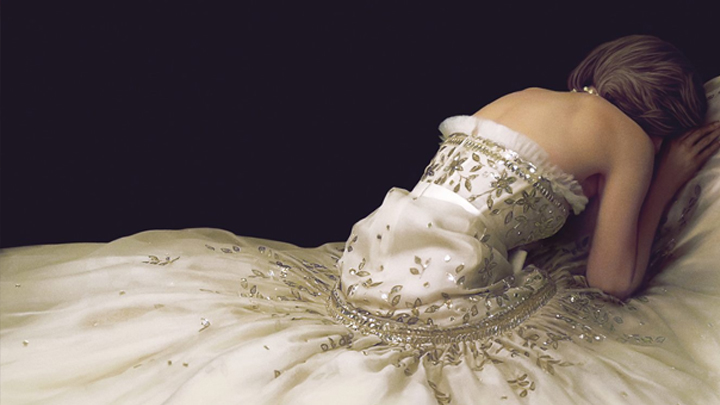
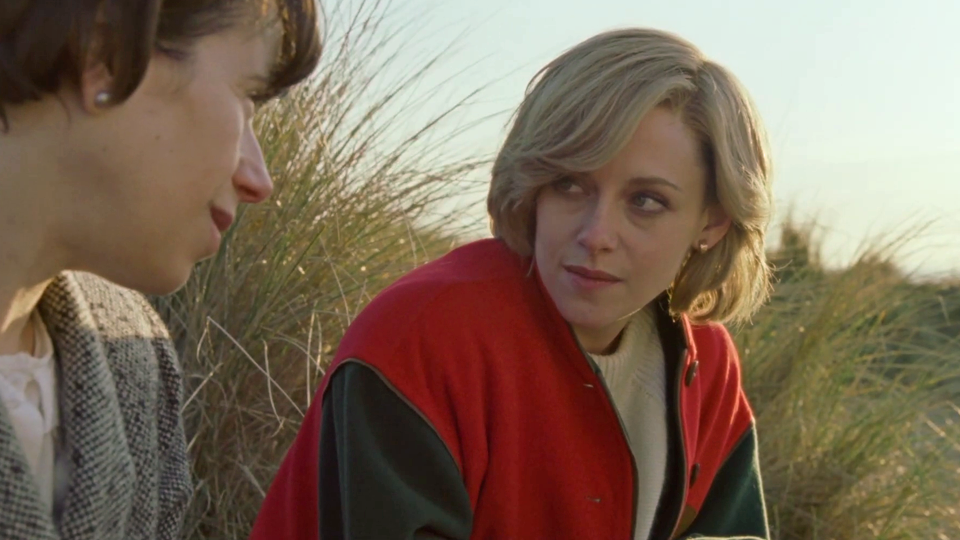
    At this year’s Viennale, a local film festival in Vienna, I had the chance to watch an early screening of Pablo Larrain‘s Spencer. Kristen Stewart takes the daunting task of telling Diana, Princess of Wales’ time over Christmas in 1991 with the Royale family. Over a few days, we witness the pressure of what it means to stand among Royalty with little interest in being there and their traditions. The opening tagline that it’s a “fable based on a true tragedy” tells you all you need to know while hiding the anxiety you’re about to witness.

    Kristen Stewart Shines Playing Princess Diana in New Trailer for the Movie  Spencer | 107.5 Kool FM

    At the core of this story lies Kristen Stewart‘s performance as Diana. There’s a lot of subtlety within the lack of it. Throughout the entire film, one can see that she is always on the edge of falling apart. We close in frequently to see the inner conflict barely managing to stay in. She plays a convincing interpretation of the character in this fable of a true tragedy. The film often relies solely on her performance to carry the weight, as we start to unravel what is real and what isn’t. Many scenes are her alone in a room, trying to wrestle with the reality that

    Jack Farthing‘s cold performance as Prince Charles offers a window into what it means to give up and let the rules set by generations become your new reality. One of the stories’ core catalysts is also the uncertainty of her own marriage, as both sides accuse each other of finding another. The brief stare by Camilla sets the underlying core without it being directly spoken. Rules seem to be bend and broken by others to their need, while her actions towards freedom are seen as a burden.

    The biopic “Spencer” about Mrs. Di would be the shock film of the San  Sebastian Movie Competition – NewsLine

    Everything that carries those very emotions is the film’s eerie score and muted color palate. At some point, it feels like the film’s main goal is to put you on edge. The lack of bright colors takes away any sense of reality the fable is trying to convey while putting you in Diana’s disconnected sense of self. The soundtrack isn’t there to give you relief but solidify that feeling. Once the strings start to play, you cannot escape that same feeling of suffocation she is feeling. Stifled by tradition and uncertainty, it’s a story about the search for freedom at its core.

    It’s not without its imperfections. There’s a strange balance that is trying to be struck by having this be mainly focused on Diana and those she holds dear. Often, the Royal family takes a backseat throughout the story only to suddenly gain relevance at various points. It’s more a nitpick than a complaint, but it does feel like a wasted opportunity to give the other members a presence without character. In a way, the film may have benefitted from stripping them from actual character and adding to the fable by creating an unworldly existence for other members.

    Spencer - Film 2021 - FILMSTARTS.de

    A strong focus of this story is Diana’s connection to the staff. It gives her a few moments of reprieve and the other standout performances of the film. Sean Harris‘ Darren McGrady and Sally Hawkins‘ Maggie cement the character alongside her children. It’s the few times you feel at ease in the film. Especially Harris’ character is an interesting contrast to that of Diana. The implications of deeper bonds between them and his orderliness within the traditions and structure make him a good counterpoint of the story.

    At its core, Spencer is a simple story. Yet, Kristen Stewart‘s performance and a heightened sense of reality carry it in ways that turn it into an experience you share with Diana. The music and color palette create this strange atmosphere that lets anxiety seep into your mind. You aren’t just witnessing the events unfold, you have no choice but to partake in the cinematic induced anxiety.

    https://www.youtube.com/watch?v=20BIS4YxP5Q
  • The Fourth Host: ‘Eternals’ Proves Divisive in First Wave of Reviews

    The Fourth Host: ‘Eternals’ Proves Divisive in First Wave of Reviews

    Marvel Studios Eternals will open up for Thursday night previews in just 10 days and the first wave of reviews from the New York and Los Angeles press screenings and premiers are now online. You can read our review right here, but it is safe to say that the reviews to Marvel Studios 26th film are as divided as any film since 2015’s Avengers: Age of Ultron.

    Too Much Talk

    A common criticism of the film is that large portions of it serve as actionless exposition. While that might be expected of a film that attempts to explain the origins of an entire universe, it didn’t land with everyone:

    Peri Nemiroff (YouTube): “The weight of complicated exposition weakens the energy of Eternals a little too often.

    Rodrigo Perez (Inverse): “Eternals is a chore to explain too, and even comes with an opening “Star Wars”-like crawl—it is by far the Marvel movie with the most mumbo jumbo backstory explaining the setup of things.

    Different is Good

    Some critics believed that director Chloe Zhao accomplished something truly unlike anything the MCU put to screen before:

    Don Kaye (Den of Geek): “… Marvel Studios’ Eternals doesn’t feel much like the “typical” Marvel movie, whatever that may be.

    Robert Abele (The Wrap): “But what makes “Eternals” feel special is that, for once, the director genuinely cares as much about the character within that spectacle, as the spectacle itself.

    Different is Bad

    Other critics believe that Eternals fell short, in part, by moving away from the Marvel formula.

    Steve Rose (The Guardian): “It’s not exactly boring – there’s always something new to behold – but nor it is particularly exciting, and it lacks the breezy wit of Marvel’s best movies.

    David Ehrlich (Polygon): “By making such an unadventurous movie about how crisis breeds creativity, Marvel effectively illustrates why even the most independent-minded of filmmakers are powerless to evolve an apex predator franchise that doesn’t have any Darwinian impetus to adapt.

    Reading through a dozen or so reviews, you’ll see some critics praise the use of locations over CGI backdrops and see others cite it as a fault; you’ll see some praise the plot, while others say it’s too dense and complicated. On the whole, the reviews are just as divided on Eternals as the team of Eternals within the movie have become over 7,000 years. As always, the best way to determine how you feel about a film is to see it yourself.

  • REVIEW: ‘Eternals’

    REVIEW: ‘Eternals’

    Eternals is a study in contradictions. It’s a movie that’s epic in scope and scale, which endeavors to not only detail the cosmic origins of life in the universe, but also the role of godlike beings in shaping human development and its mythologies over the course of millennia, all over the world. Yet it’s also about a family estranged, and the cleaves formed by divergences of faith, hope, and duty. In a genre driven by spectacle, Chloé Zhao delivers a film that is carried by heart and drama.

    The story of Eternals centers on ten immortal cosmic characters created by the godlike Celestials and sent to Earth 7000 years ago to protect sentient life from the Deviants, a predatory race of beings bred to adapt and kill. They were once thought to be eradicated hundreds of years before, but they return in present day, led by the mysterious Kro, and as such, the Eternals emerge from the shadows and the lives they adopted to defeat them, all while a cosmic event called The Emergence poses an even more looming threat.

    The outstanding ensemble cast includes Salma Hayek as Ajak, their leader and maternal figure; Richard Madden as Ikaris, the all-powerful soldier who can’t help but evoke a certain Kryptonian; Angelina Jolie as Thena, the fierce warrior woman who could stand toe to toe with a certain lassoed heroine; Gemma Chan as Sersi, the soulful, humankind-loving heart of the group, who possesses the ability to transmute matter; Kumail Nanjiani as Kingo, the Bollywood star who boasts the ability to generate cosmic blasts; Brian Tyree Henry as Phastos, the brilliant inventor with a penchant for fabricating highly complex machines; Lia McHugh as Sprite, who is part Loki, part Tinkerbell, and eternally youthful; Lauren Ridloff as Makkari, the speedster; Barry Keoghan as Druig, who possesses mental powers as well as a sullen disposition; and Don Lee as Gilgamesh, the powerhouse. Kit Harrington, Jon Snow himself, portrays Dane Whitman, Sersi’s lover and potential future MCU Black Knight.

    Much consternation has been voiced in the leadup to the film’s release about the color palette, and I’m not going to lie to you — if you’re expecting bombastic blasts of color lifted right out of Jack Kirby panels, you will be disappointed. There are definitely visual flourishes, and the rendering of Celestials in particular stand out as true to the Marvel Cosmic we’ve seen rendered in the Guardians movies and Thor: Ragnarok. But there’s an understated nature to how these sequences are shot that give it an almost dreamlike quality. Cinematographer Ben Davis, no stranger to MCU films with five under his belt, used his camera to convey a sense of mood and connect to the characters’ respective emotional journeys.

    I do think that some of the initial criticisms of the film being heavy on exposition are valid. It starts with an opening scroll, a la Star Wars. There is a lot being set up in the opening minutes, to the point that you’re wondering if there will be a test later. And the first act table-setting meanders somewhat, as the movie struggles out of the gate to show you what it is. It’s big cosmic god stuff, and if you enjoy more grounded, emotionally-driven plot propulsion, the story will lose you a bit. But luckily, Zhao seems more interested in the humanity of it all than the godliness of it all, and once the character dynamics lock-in, the need for giant Celestial godheads to regale us with cosmic PowerPoint presentations melt away, and you can invest in character stakes just as much as fate-of-mankind stakes. 

    As for the characters themselves, Zhao’s script actually does justice to the star-studded cast the movie boasts. With ten named Eternals and a Dane Whitman, you’d worry about characters getting the short shrift, and this is where the movie’s ability to do more with less really shines. In its pairings and the qualities of each character that are teased out by these pairings, Eternals is able to round out these archetypes into characters who yearn, who misstep, and who regret, and do so over the course of many lifetimes.

    The clear standout here is Madden, who, along with Chan, commands the bulk of the screen time. They are, more than anyone else, the “faces” of the Eternals. If you only know him from his time on Game of Thrones, you will appreciate the range he shows here, as his dynamics with each of the characters tease out a different aspect of his personality that lies beneath his stoic soldier’s veneer. It’s played for laughs in the trailer, but the notion that he can lead heroes rather than simply be a dutiful lieutenant figures prominently in his motivations, and Madden manages subtlety well. The other side of the coin is McHugh’s Sprite, who at first glance is locked in wisecracking trickster mode, but whose particular pathos as a perpetual preteen informs her character arc. McHugh does “old soul” well, and I’d love to see what the future holds for her as an actress.

    Barry Keoghan’s Druig is another high point, as there’s a darkness and a danger to his performance that is really compelling. However, it is in his chemistry with Ridloff’s Makkari that we see his softer side. Speaking of Ridloff, she was by far given the least to do, but the time she was given was impactful, especially when it came to the action sequences. As to her importance as the first prominent deaf character in the MCU, her signed dialogue was seamlessly integrated and her emotions were still effectively conveyed by her expressions.

    Angelina Jolie’s Thena, however, might be the stealth MVP here. Jolie’s an Academy Award-winning actress, and her ability to balance fierceness and vulnerability, to almost wink at the audience when it’s time for action, but still convey a broken, battle-weary heart in quieter moments, reminds us that she’s still got the chops. Don Lee, both in his ensemble scenes where he verbally spars with Nanjiani and his scenes with Jolie where the sparring is more literal, holds his own and brings good energy to the film.

    One of the crucial themes of the movie is love, and the characters convey that well. The love triangle between Ikaris, Sersi, and Dane, teased throughout the film’s marketing, doesn’t overwhelm the plot, but the love between Ikaris and Sersi — which features the MCU’s first love scene — is central to the film’s emotional journey. Madden and Chan have great chemistry, and yet for both characters, the tension between love and duty is apparent. Brian Tyree Henry’s Phastos, who made headlines as the MCU’s first openly gay main character, is portrayed as a loving father and husband, and his scenes are particularly touching, as we see the extent to which he has found a family that means more to him than the one he had for millennia, and how that unlocks parts of him that seem like abstractions to the others. There are other love stories at work that I won’t spoil here, but rest assured that Eternals is a film meant to be viewed with an open heart.

    Where the characterization is lacking, however, is in the fleshing out of the motivations of the villains. Admittedly, there are always narrative challenges when your primary antagonists are mindless monsters, and the movie does overcome them somewhat, as there is more to the Deviant story than meets the eye. Kro, best understood as the Alpha Deviant, gets close to becoming compelling as the film progresses but falls short. However, the movie does a fairly good job of presenting the Deviants as formidable enough for us to feel the peril they pose to humans and Eternals alike. The action sequences that pit Eternal against Deviant work as showcases for the unique power sets of the main characters, even if they don’t necessarily deliver the Holy Shit! moments we typically associate with our superhero films.

    But that’s because Eternals isn’t really interested in being a superhero film. Yes, it could certainly be argued that the plot positions them as Earth’s First Mightiest Heroes, who protected the planet for over 5000 years. But it also positions them as humanity’s shepherds, with each of them coping with the various ways the human race has gone astray, and grappling with the immortal question of whether we are a people worth saving. And for a group of beings created for the express purpose of saving us, how then do they reckon with their own identities?

    Is the movie deep? For sure. Philosophy majors and film students alike could have a field day exploring the movie’s themes. Is it fun? Definitely, as it delivers the Marvel quippery we have grown to know and love, mixed in with exciting set pieces and power displays. Is it beautiful? It’s stunning — whether in the day or night, in the desert or in the jungle, everyone is perfectly lit and dazzles on screen. I think it’s worth an IMAX screening to immerse yourself in the sense of grandeur and scope. Overall, it’s a strong jumping-off point for a new series of stories featuring a new series of characters, and by the end, Eternals is a worthy entrant into Marvel Phase Four.

  • REVIEW: ‘Doom Patrol’ Episode 7 – Bird Patrol

    REVIEW: ‘Doom Patrol’ Episode 7 – Bird Patrol

    Episode 7 of Doom Patrol methodically builds onto the Sisterhood of Dada storyline while gradually weaving in our main heroes. Flashing back and forth from past to present, we see how intricately the details of Laura and Rita’s past have come to a head in the present. While it takes a little time to truly get going, by the end of Bird Patrol there’s no doubt that the story is rolling and rolling fast. While the Dada story is undoubtedly still the heart of the episode, we get very meaningful developments with our main characters that suggest more dramatic changes and decisions will come their way very soon. The end of the episode is wacky and confusing, but is an incredibly intriguing cliffhanger and setup for next episode.

    The episode gives us more of an explanation as to what the Sisterhood’s goal actually is. Last episode, they were simply metahumans trying to find comfort with one another and express their creativity in a safe space. While in present day, we watch foreboding fog roll in slowly throughout our characters’ unrelated lives. At some point, the Sisterhood grow pretty tired of their lives because they realize they are not actually making any difference in the world. The growing fire for change coupled with a triggering event is what moves the Sisterhood from an eccentric group of friends to an odd group of perpetrators bent on the eternal flagellation.

    Laura’s role in the Sisterhood’s transformation becomes apparent as we watch her ultimately betray the Dada by caving into Bureau pressure and reclassifying the members as weapons. What makes this arc so interesting, though, is that Laura does not become “evil” or a “villain”, but rather is portrayed as a woman who saw the need for more soldiers after World Wars I and II. She’s tired, depressed, and somewhat hopeless—there’s not much active intent to do harm, and she truly believes she is doing the right thing.

    The show has been working on filling in the gaps in Laura’s story, but at the same time we’ve been adding on to Rita’s. Her relationship to Laura and Laura’s betrayal causes everything to come together by the end of the episode. The moment the episode chooses to reveal Laura’s true betrayal of the Sisterhood is pretty stunning. After the fog rolls in and takes over, the Doom Patrol and Laura are in a sort of rundown, haunted version of the place the Sisterhood used to meet. Something possesses the characters to do strange dances that the Sisterhood members used to do. All of this causes Laura to regain her memory, and its shown that she is reenacting when she and the Bureau came to apprehend the Sisterhood as well as Malcolm’s death in the process. The past-present switches are phenomenal, and it solidifies how important Rita’s role in the story is after her love Malcolm’s emotional death.

    The only negative to the reveal is that Laura isn’t close enough with the Doom Patrol for the reenactment of her betrayal on them to hit all that hard. Still, it underscores Jane’s realization later that this story has really nothing to do with the Doom Patrol. It’s an interesting stance to take for the show, but the past couple of episodes have proved that they can be a useful vehicle for the Dada story, and the upcoming eternal flagellation along with Rita’s new life will certainly play into our characters’ own stories. Plus, the Dada story certainly benefits in terms of how enjoyable it is from having the Doom Patrol serve as a sort of middleman.

    The Doom Patrol are continuing their (what feels like) mini-stories while the rest of this is going on. Cliff is still addicted to several online activities and is generally being an idiot. Jane is inching closer and closer to a major confrontation with the other personas over Kay growing and maturing—no one really says it explicitly, but clearly the other personas are concerned about disappearing, and it’s interesting that Jane doesn’t seem to either think or worry about it. Vic is still looking into synthetic skin and calls Roni who encourages him to keep the tech to be a better hero—essentially, Vic has to figure out if Cyborg is important enough to outweigh the fact that he doesn’t know if he even is “Cyborg”. Larry’s lump turns into some sort of giant larvae that he vomits up. Laura tells him to burn it, but Larry can’t get himself to hurt it. Instead, he leaves it in the woods with a sleeping bag and a peanut butter and jelly sandwich.

    The end of the episode is bizarre in the best way. Rita shows back up in the present day as the surprise-ish orchestrator of the eternal flagellation. She’s notably different—she’s much more confident, angrier, and more demanding. She’s certainly not the passive Rita we’ve known. The Sisterhood have some sort of giant cage with a bonkers-looking monster. Rita absolutely insists that Laura has to be the one to open the cage and begin the eternal flagellation. It seems to be pretty important, but Laura doubles down on believing she did the right thing so someone else opens it. Countless strange birds (“Dada birds”) emerge and fly everywhere. It is yet to be seen if the fact that Laura didn’t open the cage has some actual consequences.

    While Rita and Laura are coming to a confrontation, Laura escapes by shapeshifting into a bird and flying off. It’s absolutely chaotic, and this is all happening while the Doom Patrol just sort of stand there confused and not a part of any of it. It seems like they will be, though, because the final scenes are them being sort of zapped up by Dada birds and disappearing.

    Bird Patrol was probably the most exciting episode of Season 3 to date. The ending undoubtedly served as quite the cliffhanger going into the eternal flagellation, which is still incredibly mysterious and unknown. This episode makes it clear that Doom Patrol can tell a story where the Doom Patrol isn’t actually all that important. The show recognizes that they are entertaining and creative vehicles to tell another story through, and the inevitable weaving of them into the greater narrative can only make the actual story more fun than it could be on its own. On the other hand, having the Doom Patrol’s sporadic individual stories organized and portrayed through a larger and somewhat unrelated plotline also amplifies those stories in a way they would not have been otherwise.