Category: Reviews

  • REVIEW: ‘What If… Ultron Won?’ – Episode 8

    REVIEW: ‘What If… Ultron Won?’ – Episode 8

    What If… Ultron Won? is another lovingly dark episode that scoops up the scraps of the multiverse and the varied multiversal seeds the series has been planting throughout the season. While Ultron’s presence is certainly in the spotlight—and he’s definitely a class-act villain—he comes across as more of a vessel to tell the Watcher’s own story through. Impressively, Episode 8 manages to tell a two-pronged story throughout its short runtime. 

    First, it explores the classic What If… ? story of what would have happened on the sacred timeline had Ultron been able to assume Vision’s body. The result is that he is able to quickly laser Thanos in half, acquire all of the infinity stones, and destroy the entire universe piece by piece. He even takes on Captain Marvel, who once again returns as a wildly powerful being that can drive Ultron into the inner core of a planet but it’s not enough. It’s a story that the Watcher uncharacteristically states breaks his heart—which is somewhat interesting considering he also watched Strange Supreme destroy his entire universe for love and due to overwhelming grief. Either way, generally everything and everyone we would know from our universe is wiped out, and almost no hope remains.

    But enter that sliver of hope: Natasha Romanoff and Clint Barton as the last remaining heroes alive fighting Ultron and his sentries. The episode absolutely paints the two “lamest Avengers” as, frankly, pretty damn cool. Natasha is up to her usual skillset for the most part, but Clint really seems to get an upgrade. Apart from a metal arm, his archery skills are nearly perfect and his arrows are wild. 

    Still, Clint stands out as having a particularly human dark moment that hit even amongst the total universal destruction. He mentions throughout the episode that he feels tired and as though there’s no point in fighting anymore. While Natasha and the Watcher hold out hope—and hope appears to arrive in the form of Arnim Zola—Hawkeye eventually actually gives up because he no longer wants to fight. It’s a stunning shot of him leaping into a pit of sentries in an obvious nod to Natasha’s own death on Vormir in Endgame. Honestly, even if you hate dark episodes, you have to love it for its realistic take on post-apocalyptic life and human (or superhuman) imperfections. Despite the entire premise of this first layer of story being “hope survives”—a message we’ve encountered before in the series—this episode is a brutal but wise reminder that sometimes it dies.

    The other side of the episode involves the Watcher more personally. While we have seen him somewhat more involved emotionally, we have never peered behind the curtain until now. The Watcher already toyed with interfering in Natasha’s and Clint’s affairs, but was able to stay out of it. But, when all seemed saved, Ultron gained the power to see beyond his own universe, recognize the multiverse, and find the Watcher. 

    The Ultron-Watcher showdown is a genuine spectacle of solid animated action and visual enhancement. At first, the Watcher was surprised that Ultron was able to see and locate him, but he also seemed scared. The turnaround into him being an incredibly powerful cosmic being was definitely rewarding, particularly considering that we have only seen him hovering around. Still, Ultron is ultimately the powerhouse he always should have been, and he ultimately defeats the Watcher with some bonkers moves like taking a Galactus-esque bite out of a galaxy. 

    Once the Ultron-Watcher battle starts, What If… ? really begins feels like the work it did in building the season piece by piece will pay off in a compelling and rewarding way, rather than just attending to fan service in exclusively one-off kernels of easter eggs and mini-stories. The two literally punched their way through numerous universes throughout the fight, with Ultron seemingly taking the wheel on most of it. And yes, we did see a universe where Steve Rogers becomes president.

    The result was stunning—combine it with the visuals of where the Watcher resides amongst all the shards of time prisms, and we have a very different visual and spatial concept of the series and the multiverse itself. It’s much more Doctor Strange than any other comparison, but the unique elements at play (and the animation) certainly distinguish it from anything we’ve seen before. Any live-action adaption of this type of imagery and movement—looking at you, Multiverse of Madness—will likely be a sight to behold.

    Speaking of Doctor Strange, the Watcher ends up in Strange Supreme’s tiny universe bubble we saw at the end of Episode 4. Luckily, the two have briefly met before, and there’s already a buddy-banter dynamic. Which does interestingly call into question Strange Supreme’s personality—he was certainly “Dark Strange” before, but he was fairly jolly here. Either way, he gets the Watcher to admit he needs to intervene and get help. While we know from teasers and trailers who many of these “Guardians of the Multiverse” will be, the finale will undoubtedly keep a few surprises or twists up its sleeve to finish the season strong.

    The penultimate episode of What If… ? definitely delivered in terms of setting up a larger crossover that spans the entire season. Now that we’ve finally seen the Watcher in his fullest, we have a greater sense of how the multiverse comes together and how to view it on a macro-level rather than bit by bit as we have been doing. The episode certainly sets up an exciting finale and it is another strong take on dark themes that the series has toyed with so well in the past. 
  • REVIEW: ‘DUNE’ Is A Mesmerizing Cinematic Experience

    REVIEW: ‘DUNE’ Is A Mesmerizing Cinematic Experience

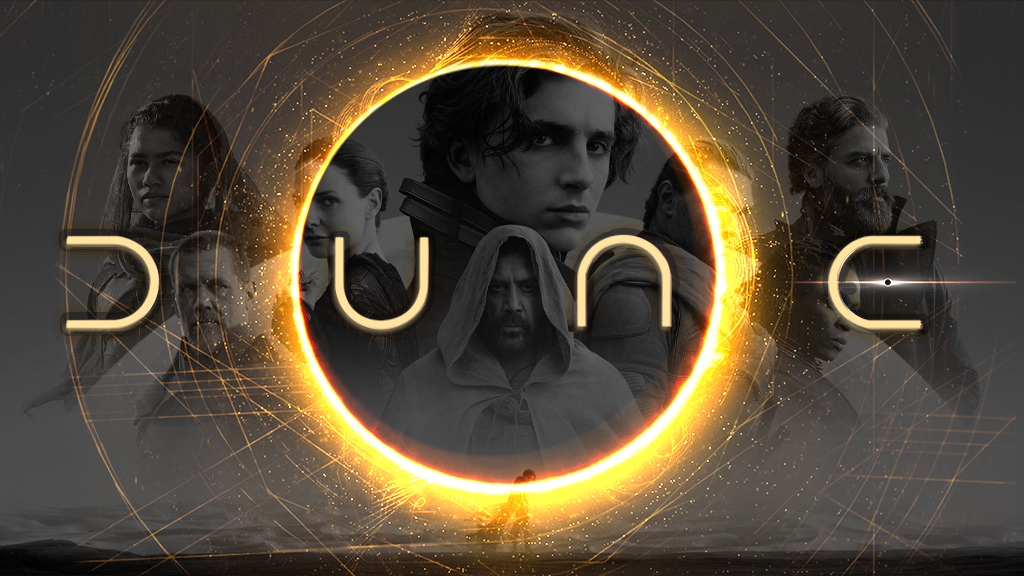
    Dune was without a doubt my most anticipated movie ever. After years of waiting, I had the chance to finally see the movie (twice!) and I can confidently say that Dune is another brilliant film in Villeneuve‘s career. Is it the best? I think not. But it’s certainly the most personal in terms of form as well as themes. It is the kind of film that will go down as one of the most unique blockbusters of this century, one that has brought a lot of fresh air into the landscape of mainstream cinema.

    Dune is a coming-of-age story of a young man named Paul Atreides who is frightened of leaving Caladan – his home planet full of water and a variety of life. House Atreides is supposed to go Arrakis, also known as Dune, which is a desert planet with a rough ecosystem. However, Dune is full of spice called melange, a psychoactive chemical that is the main natural resource in the entire Empire. Melange enables interstellar travels and without it, the economy of the empire would collapse. As soon as Paul enters the Arrakis’ environment imbued with spice, his powers awaken.

    Denis Villeneuve has created a work that is enthralling in its immersion and scale. The editing makes the film feel like a dream, which resonates with Paul’s storyline and the film’s narrative. From the very beginning, we step into the shoes of Paul Atreides who is faced with strange dreams, and from a certain point, he loses his footing and stops fighting both his nature and the environment of Arrakis.

    Dune delivers a solid story about adapting our bodies and subconsciousness to a new environment, showing the power of nature over our petty human issues. Paul, being the (false) messiah, is faced with the sandworm Shai-Hulud, a sacred and religious manifestation of the power of nature. From the beginning of the movie, it’s clear that Paul’s journey isn’t a pleasant one but a sad one and at the very end of the film, I felt the emptiness and imprisonment that Paul suffered.

    Dune’s source material is very dense and comprehensive, as it deconstructs the journey of a white hero while providing readers with a treatise on many sociopolitical issues. The filmmakers had a tough task to fit all of this neatly into the film’s narrative without losing focus on the main plot. I had a lot of concerns about this but as a fan of the book, I am really satisfied with how skillfully they were able to adapt 2/3 of the book’s material.

    While Villeneuve’s vision has an emphasis on the sacred and metaphysical parts of Dune, he doesn’t lose sight of the sociopolitical issues. From the very opening scene, the movie criticizes colonialism and the exploitation of the planet’s natural resources by the Empire’s great houses. It is a theme that is consistently built upon by Villeneuve, including Fremen’s tribalist lifestyle and their relationship with the otherworldly people. Moreover, Paul’s journey fits symbolically into the ecological thesis of the Dune universe and provides a good foundation for the sequel.

    As the movie adapts 2/3 of the book, some conscious flaws in the production are hard to judge after one movie. I have to state that my biggest disappointment and simultaneously the movie’s biggest flaw is the pacing. After the director’s work and the characterization of Dune itself, I had expected the picture to be calmly paced, in a style similar to Blade Runner 2049.

    But the movie is spectacle after spectacle with little room to breathe in between. The beginning of the second act, where the heroes find themselves on Arrakis, suffers the most as it never takes time to deepen the relationships of the characters. At this point, I felt that the movie was just ticking off some of the scenes from the book that only bring us closer to the midpoint of the story, robbing any weight from the build to the story’s pivotal moment.

    Denis Villeneuve is a genuinely talented filmmaker and presents the story gracefully but either the film should have paced better or should have been 10 minutes longer. Many relationships would have benefited from it. One of those characters that suffered from the pace is Doctor Yueh. I don’t want to reveal too much, but his character and his tragedy were completely swept under the rug.

    Villeneuve makes the most out of his canvas, using sound and design to tell stories, and building the atmosphere with Greig Fraser‘s cinematography. The entire film evokes a sense of historic real-world scale because of many vast panoramic shots, which takes us back to the first films of the Canadian filmmaker from Quebec. Arrakis, the culture, ecology, and religion of this planet are treated with non-fictional aesthetics. On the other hand, the more intimate, personal character moments are shot in a slightly more static tone. Many wide frames show us the scale and size of this universe and it never feels empty. It feels alive, breathing, and lived-in. Villeneuve and Fraser brilliantly draw the contrast between the humid and wet Kaladan and the sultry and hot Arrakis. Every frame is treated with reverence and care.

    As for the music, Hans Zimmer has probably delivered the best soundtrack of his career. The soundtrack is extremely diverse and feels a lot of electronics, oriental music, or strong vocals. The soundtrack in itself is a distinct character in the story.

    However, the most important element, which was supposed to highlight the internal state of the characters, is of course the acting. Overall, I would rate it as really good and I wouldn’t be able to point out a bad performance. I would say that some of the performances are simply unsatisfying due to lack of screen time or script problems, like Josh Brolin as Gurney Halleck or Chen Chang as Doctor Wellington Yueh, among others.

    The rest of the cast brings stellar performances The absolute MVP of the film is Rebbeca Ferguson as Lady Jessica. She is outstanding and brilliant in this role, providing a wealth of emotion and character simply with the most nuanced of expressions. She is genius in the fluidity of her mannerisms and switching between being a mother, Bene Gesserit, a concubine of a duke, or a warrior. Her interpretation of Lady Jessica perfectly corresponds with my idea of this character who from the beginning of the film plays chess with everyone.

    Timothée Chamalet as Paul Atreides is also great, and I could say he was born for this role. As in the case of Jessica, his performance matched my idea of the character. Timothée smuggles in a lot of nuances and also smoothly transitions from this scared boy to a person who has to face the fatalism of his existence.

    Dune is an event-like film and an experience that has stuck with me. I feel as if I have entered someone’s dream and seen images that have been in the mind of the creator for decades. It’s not a film without flaws, and I think it may turn a lot of viewers from it. In my opinion, it’s a film that breaks out of the blockbuster mold and tells a story through a visual and aural experience. This is a film that must be seen in a cinema, preferably in IMAX. This is the kind of movie that breathes and lives its own life, introducing us to this alien world with grace and a touch of style.

  • REVIEW: ‘What If… Thor Were an Only Child?’ – Episode 7

    REVIEW: ‘What If… Thor Were an Only Child?’ – Episode 7

    The most recent episode of What If… ? is certainly the most casual and light episode to date which is sure to please the select group of fans who have been complaining that the episodes have consistently been overly tragic. Exploring Thor and Midgard’s fate had he not grown up with Loki as a brother ends up as a fun romp with little more to offer outside of its own bubble…until that phenomenal ending.

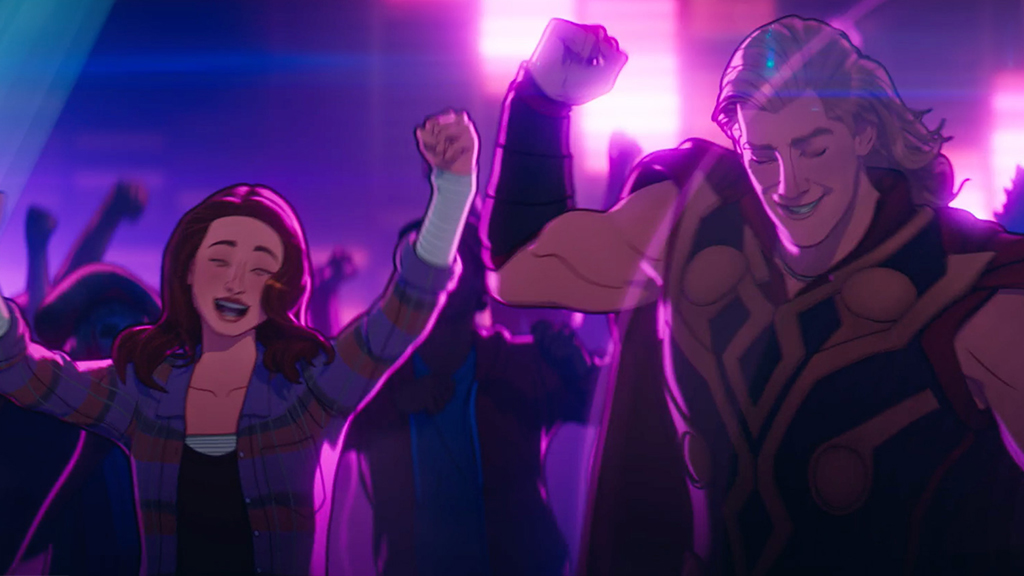
    Turns out, having Loki as his adopted brother was the element that prevents Thor from becoming the aptly nicknamed “Party Thor”, or a full-on raging frat bro throwing wild and destructive parties across the cosmos. Not only has Thor himself been remixed, but his influence seems to have spread across the Nine Realms and beyond, as countless other major and minor characters make appearances at these legendary parties as party animals in their own right. 

    This episode is notable for having virtually all of its characters voiced by the original actors, though there are too many to specifically mention. Chris Hemsworth’s Thor feels like the Thor: Ragnarok version of the character, but with some added frat boy persona and devoid of any semblance of seriousness or responsibility. Ironically, Loki taking the Jotunheim throne still has the two ending up as “brothers from another mother.” He becomes the most laidback and seemingly least motivated with glorious purpose iteration of the character the MCU has given us. Tom Hiddleston’s performance is integral to pulling it off.

    Natalie Portman’s Jane Foster is arguably the main character of the episode as her actions drive the plot. Thor and Jane Foster’s kindling romance is highlighted throughout the episode, but it’s her ultimate resolve to stop the alien invasion from destroying the planet that truly pulls the strings with S.H.I.E.L.D.’s involvement. Kat Dennings’ Darcy is true to character and the voice work is perfectly corny to match her. Seth Green’s Howard the Duck’s three-ish lines landed so well that they are some of the most memorable lines of the entire episode. 

    The result is a quirky alien invasion story that sees S.H.I.E.L.D. under the acting leadership of Maria Hill – due to Fury being incapacitated from a Korg party foul – responding to the very real threat of Thor’s planetary party destroying many parts of Earth, if not the entire planet. This is the vessel through which Alexandra Daniels’ Captain Marvel makes her true debut in What If… ? (apart from her very brief cameo in Episode 3). From this, we get epic showdowns between powerhouse Carol Danvers and the God of Thunder. The two are a solid duo and the matchup is no doubt another example of the series having fun with which characters they would want to see go up against one another.

    Still, the plot is ultimately a classic teenager throws a party while parents are out of town, then finds out mom is coming home, and frantically tries to clean up the mess. Of course, said teenager somehow succeeds at the very last minute. Frigga still figures out that Thor was not studying as part of cultural exchange, but nevertheless, the classic comedy trope is all over this episode.

    At the end of the day, Episode 7 is arguably a throwaway episode but not necessarily in a bad way. The writers and actors clearly had fun with it, and it was a lighthearted as well as a rose-colored view of what alternate timelines can provide. It also took incredible advantage of the talent available to create a melting pot of MCU characters in the form of a big party. Even Nebula needs a night to drink her family issues away.

    The Watcher goes out of his way to acknowledge that this timeline’s story is an example of a simple happy ending. That is, until, the exciting final few seconds that feel like a classic post-credits scene setting up the “big bad” for an eventual crossover showdown. Here, we see what appears to be Vision as Ultron with a sentry army coming through some type of portal. Not just that, he also seems to possess all six Infinity Stones. 

    Almost certainly, this is something the Watcher might feel the need to address sooner rather than later considering that he seems to be completely caught off guard at Vision-Ultron’s arrival. Also, there are only two episodes left in this season. Given what What If… ? has either already provided or teased it can provide, a culmination of the entire season into an overarching crux will surely, and hopefully, be something worth waiting for. 

  • REVIEW: ‘STAR WARS: VISIONS’ Feels Like A Homecoming For The Franchise

    REVIEW: ‘STAR WARS: VISIONS’ Feels Like A Homecoming For The Franchise

    It’s exciting to see Star Wars find new life in interesting ways, 40+ years into its existence. The franchise first found new life in books when the Original Trilogy first ended and then found its way into animated shows once George Lucas did the Prequel Trilogy. Disney upped the ante by canonizing a new line of comic books, video games, and animated shows to coincide with the Sequel Trilogy. With the sequel trilogy over, the franchise now finds new life in an anthology series called Star Wars: Visions. 

    The idea behind Star Wars: Visions is simple: have the best animation studios in Japan create whatever stories they want in the Star Wars sandbox. Spread out over 9 tightly crafted episodes, the result is a stunning reimagining of what Star Wars fundamentally could be if divorced from complicated continuity and restrictive lore. This might be the most autonomous Star Wars has been since the Legends Novels.

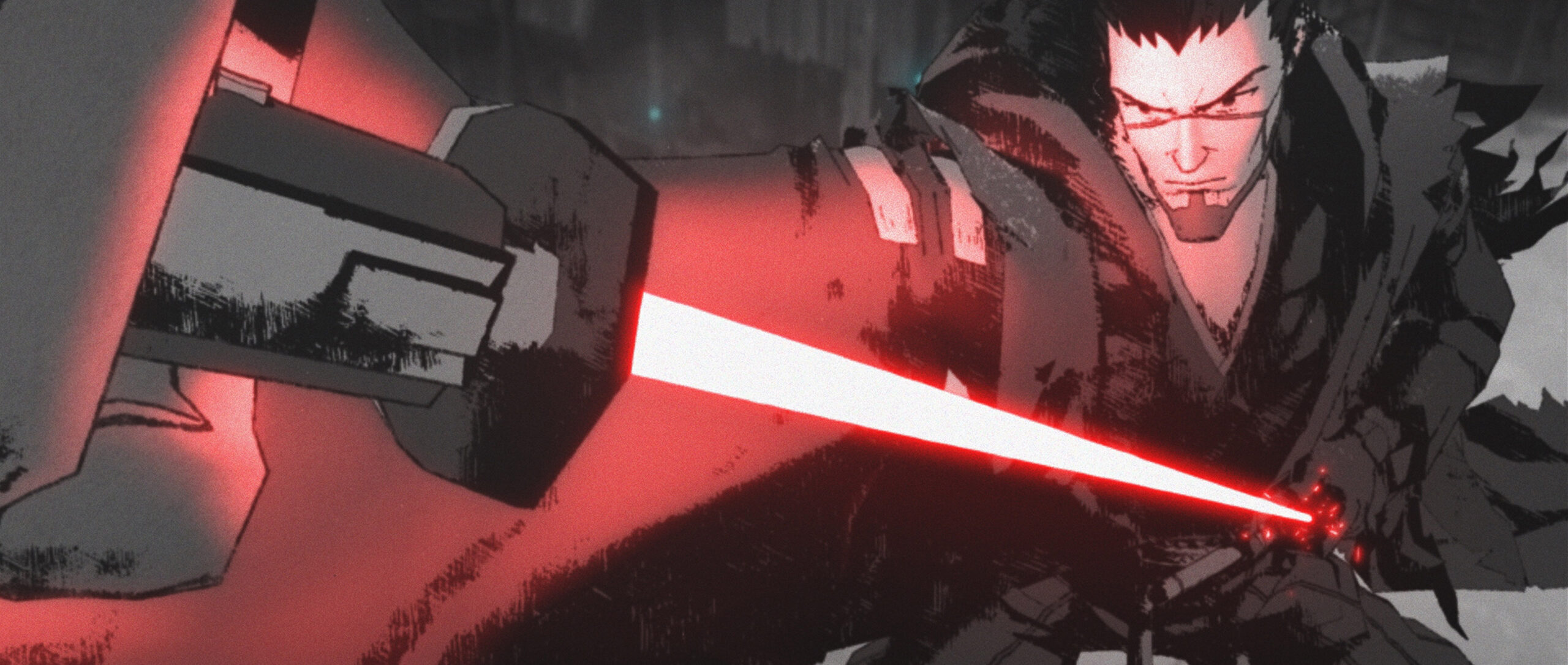
    Visually, the Japanese studios went all out. Each episode boasts its own distinct art style ranging from monochromatic Kurosawa compositions to Osamu Tezuka-inspired Astroboy aesthetics. The series is sprinkled with charming anachronisms: lightsabers resemble katanas, Stormtroopers look like Edo-period warriors, Jedis wear tengais, and settlements don’t look like they’re in a galaxy far, far away. The design liberties they take look jarring at a glance but the way everything comes together makes it a feature, not a bug.

    The lightsabers fights are absolutely stunning. They’re executed with the precision and excess that animes have become synonymous with, giving battles a true sense of scale, weight, and personality. There’s never a dull fight in Visions. Every lightsaber swing feels thunderous. Even the goofier designs like the umbrella lightsaber manage to look graceful thanks to how the fights are composed.

    Contrasting exuberant aesthetics, Star Wars: Visions breaks down a lot of grand Star Wars concepts into the fundamental ideas that inspired George Lucas in the first place, in particular, the Japanese feudal myths. A chunk of the season depicts Jedis as wandering ronins, looking for their next momentary calling, harkening back to the jidaigeki roots of Star Wars. And then you have the more classic Star Wars motifs such as warring families and the Campbellian monomyths that are also explored throughout the season.  

    These episodes are simple in nature but speak volumes through the spaces it allows its ideas to breathe. Plots aren’t complex nor are there dozens of characters. Every story is confined to its own 15-20 minute space but the thematic scope that gets explored is vast and profound.

    Siblings and families tethered together by the Force is an idea that is famously explored in the Skywalker Saga. Anakin, Luke, Leia, Kylo Ren, and by proxy, Rey, all figure into this lineage of fate and tragedy that served as the franchise’s core pathos. Star Wars: Visions harnesses that idea and synthesizes it in ways that the films did not. The episode aptly titled The Twins pits two sibling Sith Lords against one another in an over-the-top lightsaber battle in space, an idea remotely reminiscent of the Solo twins in Legends lore. Lop and Ocho is a tale of two sisters who are forced into choosing sides when the Empire takes over their city; both fighting for their city’s protection. 

    The true star of the season might be the second episode titled Tattooine Rhapsody. As evidenced by its namesake, Tattoine Rhapsody’s story has an emphasis on music. It’s about rock musicians on the run from bounty hunters, a premise that already stands out in a series that has an emphasis on the feudal inspirations of Star Wars. Tattooine Rhapsody feels the most contemporary of all the episodes yet is the most unique. There’s a surprising weight to the episode as its themes deal with friendship and purpose in a really fun way. The J-rock music sequences add a charm to it as well.

    My favorite episodes of the season happen to explore the archetypal commoner-turns-hero myth that made Luke Skywalker’s story so iconic. Visions takes that soaring feeling of watching the Twin Suns set in Tattooine as the hero faces uncertainty, and gives it new life. Whether it’s a droid fending for his home or a humble daughter of a sabersmith forced to vanquish an evil force, these stories are the ones that resonate the most.

    Japanese culture has long influenced this grand world and to have Japanese visionaries take a stab at it feels like a homecoming in many ways. That Star Wars can be at its best by having simple stories that celebrate its essence is proof of its lasting legacy.  Give me more of Star Wars: Visions.

  • REVIEW: ‘Doom Patrol’ Remains Consistently Zany in Season 3

    REVIEW: ‘Doom Patrol’ Remains Consistently Zany in Season 3

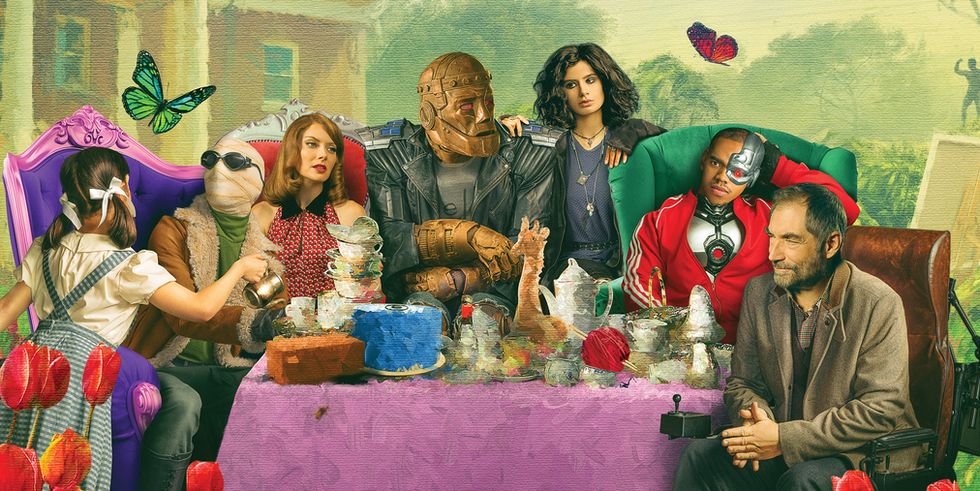
    Doom Patrol manages to be one of the most unique and eccentric comic book television series around. More impressively, it manages to somehow be the least and most grounded series given its ability to present constant off-the-wall supernatural stories, as well as give its characters meaningful and intimate development. Season 3 stays the course and promises to keep the series’ signature zany spirit and hard spotlight on the characters’ continuing inner journeys.

    When is Doom Patrol Season 3 dropping on HBO Max, and what's it all about?  - Android Authority

    What Season 3 of Doom Patrol might not offer – based on the first half of the season – is something sensationally different than what we’ve seen before. To be fair, how “different” can a show that embodies outlandishness actually end up being by the previous seasons? The answer might lie with the hidden foundational and conventional aspects of the show – the series is noticeably short of strong adversarial characters. Season 1’s Mr. Nobody is still the show’s gold standard, and no character or entity has risen to that villainous level since. 

    The fairly sporadic consistency and intensity of Doom Patrol’s villains tend to make the show feel like it hasn’t moved much over the course of multiple seasons. If the first five episodes of Season 3 are representative of the rest, the main team’s status as decidedly not the “Doom Patrol” may not be adjusted. But there are plenty of kernels of heroic ambitions, curiosities, and what it means to be a hero to think that this gaggle of superhumans could, eventually, be a super team. These bits and scraps have existed all along, though, but maybe two to three years in the title of the series could have a more direct meaning. 

    Doom Patrol's trippy Season 3 teaser at HBO Max

    Some of the overarching plotlines from the first two seasons that felt weighty and more of a burden are mostly alleviated, though what haunted the team from the very beginning seems unwilling to let go. Perhaps that very haunting is the glue they need right now. Season 3 is a masterclass in forming individual unique episodes with absolutely and delightfully absurd micro-stories. This time around, the miniature adventures, while still feeling thematically removed from one another, fit better as puzzle pieces to the overall picture that is slowly coming to life. Episodes 2, 3, and 4 in particular are absolute gems as individual episodes a well as chapters of the same short story, and they are fun beyond expectation. 

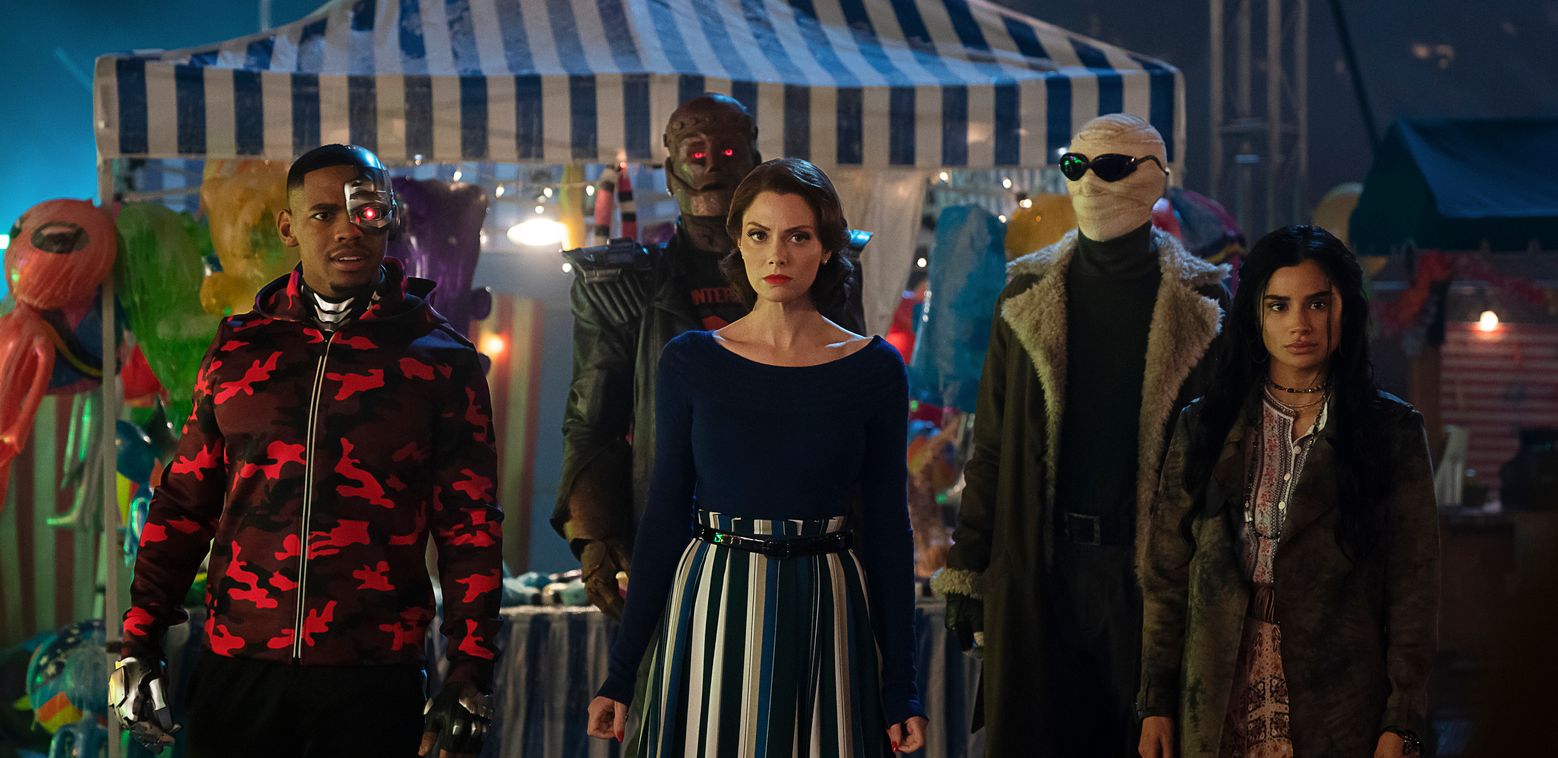
    In any event, Doom Patrol is still doing what it arguably and sometimes surprisingly does best – its characters. Diane Guerrero is still an absolute powerhouse as “Crazy Jane” and while much of her story seemed to be tying itself to a close at the end of Season 2, the series’ most intricate and interesting character has plenty of additional journeys up her sleeve. Matt Bomer as Larry promises to keep being an anchor of tragedy and charm, but the character that truly steps into the spotlight this season is April Bowlby’s Rita. If any character has the ability to move the group—and plot—forward in a major way it surprisingly seems to be her. 

    Doom Patrol First Season 3 HBO Max Trailer: Your Brain on Drugs

    Overall, Season 3 certainly understands its own assignment and admirably seems to refuse to sacrifice its bizarre and wonderfully unconventional style for anything else. Doom Patrol certainly has the ability to do so while simultaneously nailing the quality and depth of its characters’ stories. So, it undoubtedly has the potential to hit even more notes under the ever-present and ironic “Doom Patrol” label. Whether this season will see the group wind up in virtually the same enjoyable place they’ve been in since the beginning of the series or charge into genuinely new territory is still on the horizon yet to be seen.

  • REVIEW: ‘TITANS’ Season 3 Episode 8 – Home

    REVIEW: ‘TITANS’ Season 3 Episode 8 – Home

    The beginning of Season 3 Episode 8 of Titans might make you briefly reminisce about the first few minutes of Episode 1 of the season where the Titans were a successful team popular with the San Fransisco public. That was a decent concept at the time as they were finally an actual team. Now, though, they have a Titans Signal in Gotham after the fact that they just celebrated that they won the whole Gotham situation with one tiny fight, and any happy memory is pretty marred by the pretentiousness of it all now. The episode does deliver some likely unintentional irony by the end of the episode when it is the Titans who actually cause the ultimate problem the season has been leading up to. 

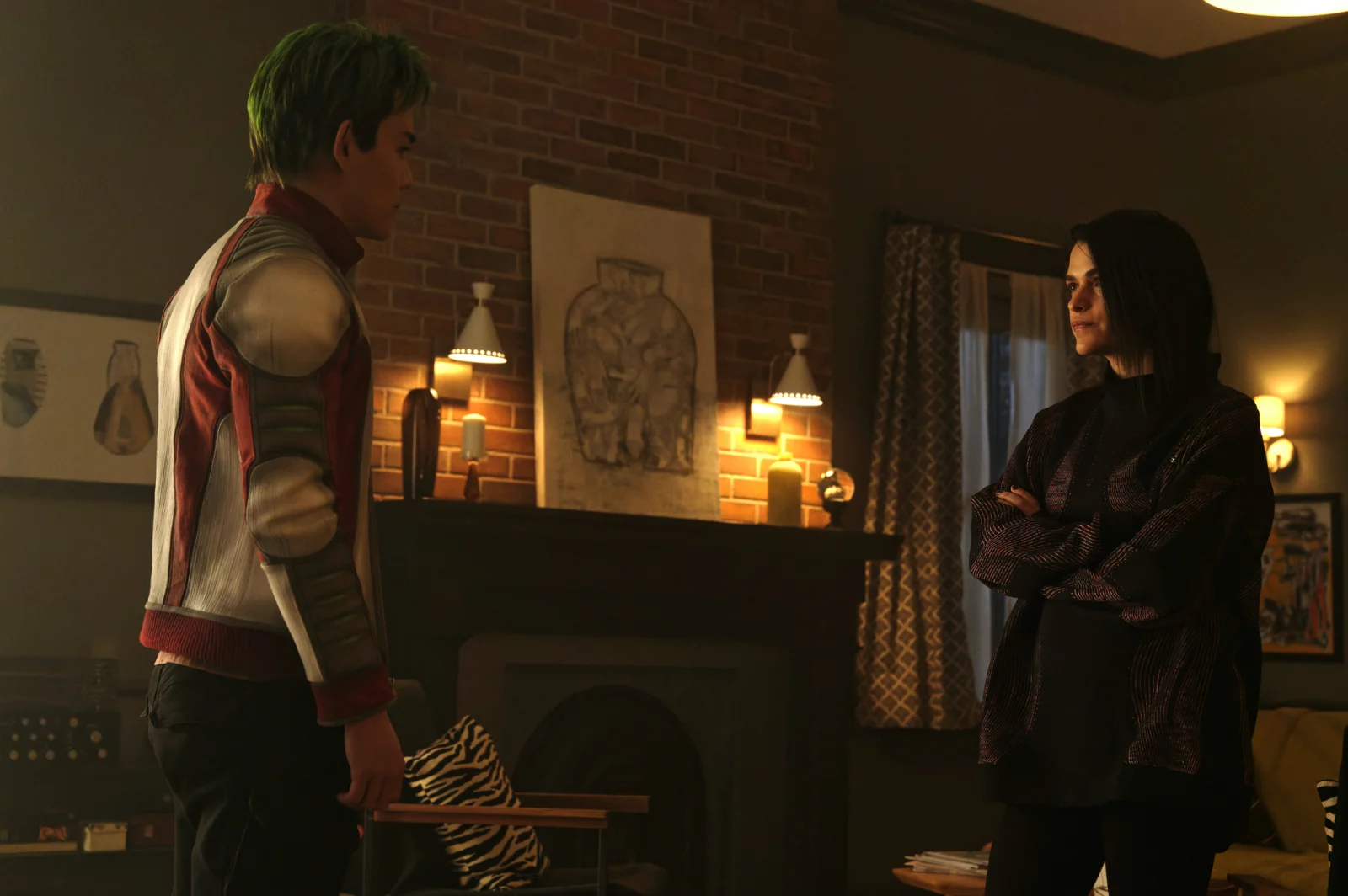
    I would love to skip over it, but the episode certainly did not and it’s a hard pass on the Conner-Komand’r romance arc. Superboy has the acknowledged essence of a very young and naive boy, while Blackfire is supposed to come across as a hardened, elitist, dominating badass. Neither really lands so it comes across as overly cringe and it’s not what Gotham deserves right now. Also on a Tamaranian note, Kory is once again back to having visions she can’t control and that whole deprivation chamber nonsense is coming to the rescue again. The show seems determined to never give the woman a fair shot at being much more than a confused person waking up in random places and sometimes shooting fire out of her hands. 

    The Red Hood plot has had yet another rapid-fire turnaround. Jason declares to Crane that he is done with him and is done being used. Did that not happen two episodes ago? Either way, the episode seemed to commit to making Scarecrow the true villain at this point. We get the scenes with his overly horrible mother, his increasingly angry rants, and his increasing violence (see: dead mother), which classically hint that the man is approaching his final evil form as this absolutely insane and puppet master mastermind. Crane definitely makes you uncomfortable, but the character is still portrayed as entirely too casual to be particularly threatening or even plausibly pulling such intricate strings. 

    Episode 8 does deliver some good news by making it clear Titans will continue throwing a growing number of Robins at every problem, causing intra- and inter-Robin problems, which makes the original problem much worse. Dick is very harsh at times with Jason, telling Barbara for example that he essentially plans to execute Jason when he gets the chance. Later, he offers Jason a chance to come home if he gives up Crane—I assumed he was bluffing, but he apparently means it and the real kicker is that many of the Titans now absolutely hate Jason and would, I guess, prefer Dick kill him. 

    Jason seems repentant once he is cut off from the anti-fear gas, which is emphasized by the creepy scene where he goes to role-play apologizing to Hank and Dawn to exhibitionist sex workers. So while Jason is struggling with his actions stemming from his downfall from Robin to Red Hood, Dick (after being hit by a car) is now having visions reflecting his struggles with his Robin to Nightwing journey.

    Enter Tim Drake. Honestly, he’s sweet, he’s likable, and he just wants to help. Unfortunately, he also wants to be the next Robin and there is absolutely no indication that he will not get to be that in the near future considering Titans. While he will probably get to be the next sacrificial lamb for everyone to say, “Wow, the Robins really are problematic!”, at the moment he sparks a glimmer of joy. Does he get (presumably) fatally shot at the end of the episode? Sure. But there’s always Episode 9. 

    To be fair, Episode 8 ends with a major Scarecrow victory as all of Gotham City’s water supply is dosed with the chemical. While this plan, like much of the Gotham lore this season, is unoriginal and stale, it did finally come to fruition. Maybe the Titans will be kicked into more action and at a quicker pace as a result. Maybe the interpersonal relationships—between the Titans or Dick and Barbara or everyone and Jason—will be put to the test and come out with more complex understandings of themselves. But then again, there are still a considerable 5 more episodes left to stretch it all out.

  • REVIEW: ‘What If… Killmonger Rescued Tony Stark?’ – Episode 6

    REVIEW: ‘What If… Killmonger Rescued Tony Stark?’ – Episode 6

    What If… Killmonger Rescued Tony Stark? takes advantage of its freedom and the flexibility of the series to focus almost exclusively on upgrading an existing supervillain. It pairs with the Doctor Strange episode in terms of establishing a singular powerful villain as the overarching goal. The episode returns to previous What If… ? form by heavily tracking sacred timeline stories, though with dramatic alterations here. It’s an obvious mash-up of Iron Man and Black Panther, with hints of Iron Man 2, Avengers: Age of Ultron, and even a touch of Avengers: Infinity War—as a result, Episode 6 truly emphasizes how interconnected the existing MCU is in ways not obvious from the films alone.

    Michael B. Jordan continues his iconic and powerful role as Erik Stevens AKA Killmonger, and the episode gives the role proper respect and recognizes his overall merit as a character. He is eight steps ahead of virtually everyone he encounters and completely dominates the entire plotline with hardly any difficulty. He continues a trend in the series of eliminating major characters and superheroes from the main MCU—in this case, Killmonger swiftly takes out Tony Stark, T’Challa, and James Rhodes. 

    Overall, though, Episode 6 falls flat. While it definitely explores more of Killmonger, it comes across as a kind of standard remix to our known universe’s plot without much more depth or even a solid grasp on what Killmonger’s bigger picture might be. His motivations—which are one of the strongest aspects of the character and what, along with Jordan’s portrayal with them, makes him as interesting as he is—are noted more heavily towards the end of the episode, but they are glossed over compared to their treatment in Black Panther. While Killmonger is given his due as a powerful character, it a fairly surface-level take on him.

    The episode hones in on the general premise that one small change in a hero’s story can dramatically change the course of everything we know to be true. As our friend the Watcher reminds us, heroes are made, not born. If they miss their opportunity to “make” themselves, they merely become pawns in someone else’s story. Killmonger rescuing Stark—as a Navy Seal involved in an undercover operation with the Ten Rings—is all the grease Killmonger needs to succeed where he failed in Black Panther. Apparently, he already had plans for a weaponized automated drone called the Liberator, and Stark’s technology and help seals the deal to create these machines in contrast to the Iron Man suit. 

    In terms of performances, the voice acting in this episode is solid across the board. Michael B. Jordan is unmistakably great. Don Cheadle is quality, and Jon Favreau is very true to Happy. Andy Serkis is absolutely phenomenal and honestly gives one of the best performances of the series to date. Chadwick Boseman’s talent goes without saying. Mick McGill is decent as Tony Stark—the writing and his performance definitely capture the character well, but it’s near impossible to not stand out as not being Robert Downey Jr. in that role.

    Episode 6 also continues a growing trend in the series of ending on a very obvious cliffhanger and/or generally being an unfinished story. Earlier episodes always left the door cracked for future implications, but this episode and the immediately preceding zombie episode very much leave the door wide open for their respective stories to continue. It certainly implies that What If… ? is building to something bigger and something that likely involves interconnecting episodes.  

    Even so, the Watcher—who certainly acts as a connector—does not involve himself whatsoever, leaving the Doctor Strange episode as the sole exception to his general narrator-only role. He does, however, look noticeably unhappy and disturbed as a giant head in the sky at one point. While Killmonger certainly rules the day in this episode as he makes his way to become the Black Panther, the Watcher does cue that heroes—specifically our classic heroes—never die as they live on in those they inspire. Perhaps we will get to see later in this season or further down the line what Shuri and Pepper have to offer against Killmonger in this universe.

  • REVIEW: ‘TITANS’ Season 3 Episode 7 – 51%

    REVIEW: ‘TITANS’ Season 3 Episode 7 – 51%

    After Jason’s joyride with the anti-fear gas, Gotham City is one again in about the same amount of peril it always is, and the chemical caused regular people to turn violent and murder people. Yet, after the dramatic previous exchange between Jason and Crane, Jason simply teams back up with him and promptly gets poisoned and essentially kidnapped. We learn that Crane/Scarecrow’s plan, as described to the 5 Families, is to dose the entire city to both set everyone “free” and put everyone under his and the mob’s control. Let’s be clear, though, that makes absolutely no sense. 

    The show is still fumbling with the Scarecrow/Red Hood villain situation so much that not even a single move by Jason last episode stuck. Presumably, Crane is now supposed to be the Big Bad, which is a general letdown considering Scarecrow is a somewhat tired character and exists within constant references to Batman. Plus, he’s just not menacing or threatening enough to be overly interesting. Red Hood seems to be effectively sidelined for now—knowing the show, he might likely get a redemption arc he doesn’t earn, but either way at this point it seems like a general waste of Red Hood as a villain.

    Dick and Barbara have even more time this episode to dramatically discuss the ethics of vigilante justice and heroism. This time, we get a very brief introduction and use of Oracle the supercomputer, stored in Gotham PD, that essentially can track anything and anyone using illegal methods. How characters in a show heavily centered around not-particularly-legal methods of fighting wrongdoing can all of a sudden face a moral dilemma by using a computer that can listen to private conversations is beyond me. And yet, the whole situation is nuked almost immediately because Crane casually hacked in to the system. But Dick and Barb also have a strange moment where they seem to blame themselves as a duo for Crane’s escape (when it was 100% Dick’s doing) and decide, “We’ll put him back in…together.” Yikes. They both give themselves way too much credit for what is going on around them and at times completely unaffected by it either, other than several forced lines to the the contrary. There are more express references to Dick being like Batman and aiming to “be a better Batman” this time around. I’m patiently awaiting any kind of payoff there. 

    Somewhere along the way, in what could have been the most effective action taken by anyone this entire season, Kory and Komand’r go to a mob boss to get information on where Crane is and ultimately just kill two people for nothing. First of all, Blackfire still has absolutely no business being around at all. We get very forced lines on the whole Komand’r killed their parents thing, which is presumably meant to redeem her now. It’s very frustrating how unnecessary and shallow it all is. Neither seems concerned or upset at all that their parents were violently killed, but yet that is supposed to drive their relationship at this point. Blackfire’s emphatic “excuse” just diminishes her capacity to be a more bad ass threat at any point which is a bummer. To this day, I cannot pin down Kory’s character or personality. It’s fair to say that Blackfire has, you know, none. But Starfire is some sort of mixture of stern and serious but charming and better-than-thou, and almost motherly and nurturing. It’s very confusingly portrayed and doesn’t match with her backstory or even appropriately place her in the general context of the Titans. 

    One quick obligatory mention that Gar, with little to no screen time, is still the best character. He has a genuine emotional core that none of the other characters can claim. He also is arguably the best martial artist of the group for some wildly unknown reason other than the lack of willingness to devote more visual effects to him. While everyone is celebrating later, Gar is out there still trying to help Jason. 

    Finally, Titans presents to you: The Battle of Gotham. Clearly it’s all for show considering this is Episode 7 of 13. The ultimate war/battle was announced for that very night at the beginning of the episode. That’s a bit suspect. But maybe the plot will move on quicker? (It won’t). What we do get is a suited-up Titans team ready to take on some bad guys in an ice cream factory. Unfortunately, Blackfire is now just a full-on member? That’s difficult to deal with. But, they do some fighting. They are extremely non-dynamic and the action generally consists of one character doing something pretty slowly while the others stand around. If you need an example, watch…all of it. Still, Gar really stepped up without, for the most part, powers of any kind. Give this kid some limelight. 

    So, after doing very little, Crane ran away and the Titans literally celebrated their total victory over the situation. It’s a struggle to see that as some sort of reward for the first seven episodes of unclear plot and villains and, sometimes, point. But no worries, Dick and Barbara share a romantic moment, confirming that they will fully cycle through the history that keeps bringing them all down. Next time, let’s enjoy some Snowy Cones Ice Cream while we (probably) keep watching them make bad decisions.

  • Pixar’s New Short ‘TWENTY SOMETHING’ Is Pure Brilliance

    Pixar’s New Short ‘TWENTY SOMETHING’ Is Pure Brilliance

    Growing old gets old fast, as anyone past their mid-20s would know. The grass of adulthood isn’t as green as we all thought it would be as naive kids. There are lessons to learn, pressures to deal with, bills to pay, and norms to live up to. Growing old isn’t easy and Pixar’s latest short, Twenty Something, captures the pains of growing in the most meaningful way possible.

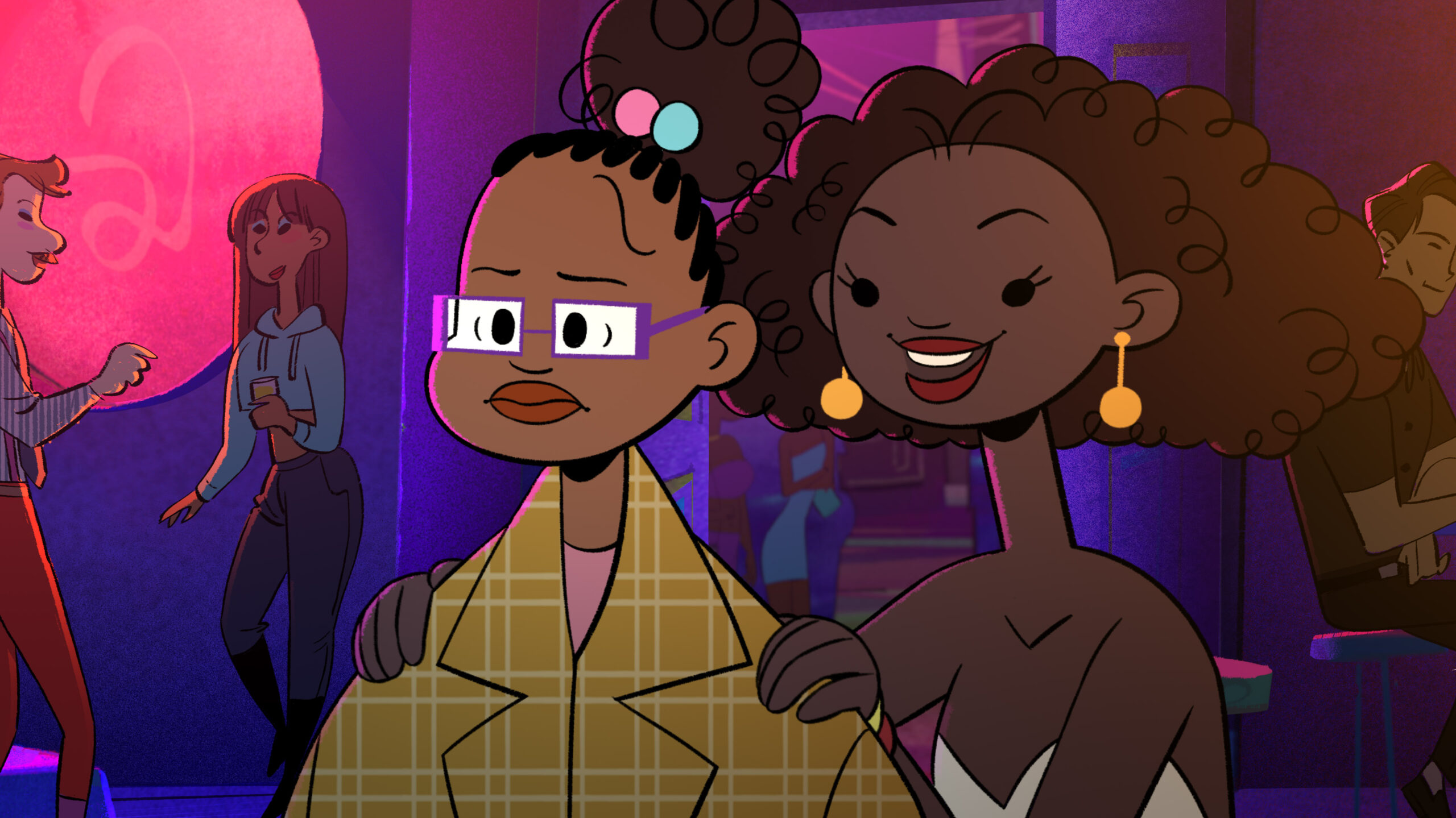
    Directed by Soul artist Aphton Corbin, the short follows Gia’s first night out as a 21-year old. In true Pixar fashion, the night doesn’t quite go well for her as the crippling anxiety adulthood brings soon takes over. And in truer Pixar fashion, there’s a conceit within the short that elevates it to a whole new level; Gia is made up of three kids walking under a trench coat – 1-year old Gia, 10-year old Gia, and 16-year old Gia. In the press junket, Corbin elaborates:

    I just love this idea of all these kids and what they’d look like stacked up in a trench coat.  Trying to navigate through life.  It felt like the perfect metaphor of trying to steer through life while hiding your insecurities.

    Through the eyes of Gia’s past selves, Corbin puts the perils of adulthood in focus; an insurmountable hurdle we must all jump over. Part of being an adult means being in control of yourself, both physically and emotionally, which 1-year old Gia is unable to do. For 16-year old Gia, it’s that yearning for social acceptance but being ill-equipped to handle socializing. All of this is beautifully realized by Corbin and her team and its powerful messaging cuts through the whimsy of it all.

    There’s even an added layer of complexity behind the cute representations of Gia as Corbin purposefully based them on psychoanalytic theory. In our interview with her, she said:

    I kind of based it on the subconscious. The id, ego, and super-ego. I tried to break the character down in that way. 1-year old Gia is the id; what does it want? Eat, sleep, and drink. 16-year old Gia is the super-ego who is super insecure all the time. 10-year old Gia is the level-headed one, the most confident of them all. Those three felt right.

    What makes Twenty Something stand out in an era of sleek, fancy, 3D Pixar shorts is that it’s in 2D. As I put it while speaking to Corbin, the short has a very nostalgic Saturday morning cartoon vibe to it, which only underlines the child-like yet complex messaging of it all. Corbin cited budget constraints as a driving reason but also referred to vintage cartoons as sources of inspiration.

    It was really inspired by older vintage cartoons specifically in the 60s and 70s.  We tried to get some of that charm and appeal into the design that we have there.

    With a short as evergreen as Twenty Something, it didn’t come as a surprise to hear that the story was somewhat autobiographical for Corbin, who took the plunge of directing something for Pixar for the first time with the short. Like a true artist, Corbin took all her fears and worries over something as monumental as directing and turned it into a beautiful piece of art.

    The whole thing is absolutely autobiographical. Gia was just me in my twenties, especially with the insecurity of directing for the first time. All those feelings came over me of like, “Oh my god. I can’t do this. This isn’t going to be a good movie.” And so it was fun to take those insecurities and put them into a film. It was very fun to put parts of me into that one character. I’ve never had anything quite as embarrassing as what Gia does in her first night out though [laughs].

    Twenty Something is out this Friday on Disney+ which I highly recommend you guys check out. It’s a beautiful short with a heartfelt message told in a really fun story.

  • REVIEW: ‘What If… Zombies!? – Episode 5

    REVIEW: ‘What If… Zombies!? – Episode 5

    If there’s any pattern to the rollout of each episode of What If…?, it seems to be that each episode is getting more and more removed from the original source material and more willing to push the limits of what themes and concepts the MCU is willing to explore. Episode 5, What If… Zombies!?, is the most outlandish the series has given us so far, and it was also an extremely fun ride.

    First, this episode is very loosely tied to the events of Avengers: Infinity War due to the starting point being Bruce Banner’s return to Earth that we see at the beginning of that movie. From there, we learn that essentially the entirety of Earth is infected with a brain virus that turns anyone infected into a zombie. This includes the original Avengers lineup, marking the second episode where they simply do away with the original six. 

    This episode, similar to the previous Doctor Strange episode, goes far beyond the plot of the source material to bring an entirely new story to the table. The result is an amusing mixture of reference after reference from previous films. Of the numerous examples: one of Sharon Carter’s skills was “Eulogies”, Bucky with the good hair found the “end of the line” with pal zombie Steve, the virus was contracted by Janet van Dyne in the Quantum Realm based on the events of Ant-Man and the Wasp, Kurt’s concern with Baba Yaga, Happy’s insecurities about his chauffeur profession, the New Jersey facility is visited once again, and Vision and Wanda’s romance ultimately leads to Vision’s iconic death.

    The true stars of the episode are, of course, the remaining Avengers. The episode gives lip service to more of these “smaller” characters such as Hope, Bucky, Okoye, Sharon, and even Happy Hogan and Kurt from Ant-Man. The honest lead was Hudson Thames’ dominant performance as Peter Parker, who seemingly takes on a greater leadership role after the infection. While logically he is not any older than he was in Infinity War, he seems more mature in a lot of ways, including acknowledging his grief over all of those he has lost—including previously unmentioned in the MCU Uncle Ben. Chadwick Boseman’s T’Challa also makes an appearance in this episode and Boseman’s performance is unsurprisingly extremely well executed. His character’s quotes about death also hit hard. 

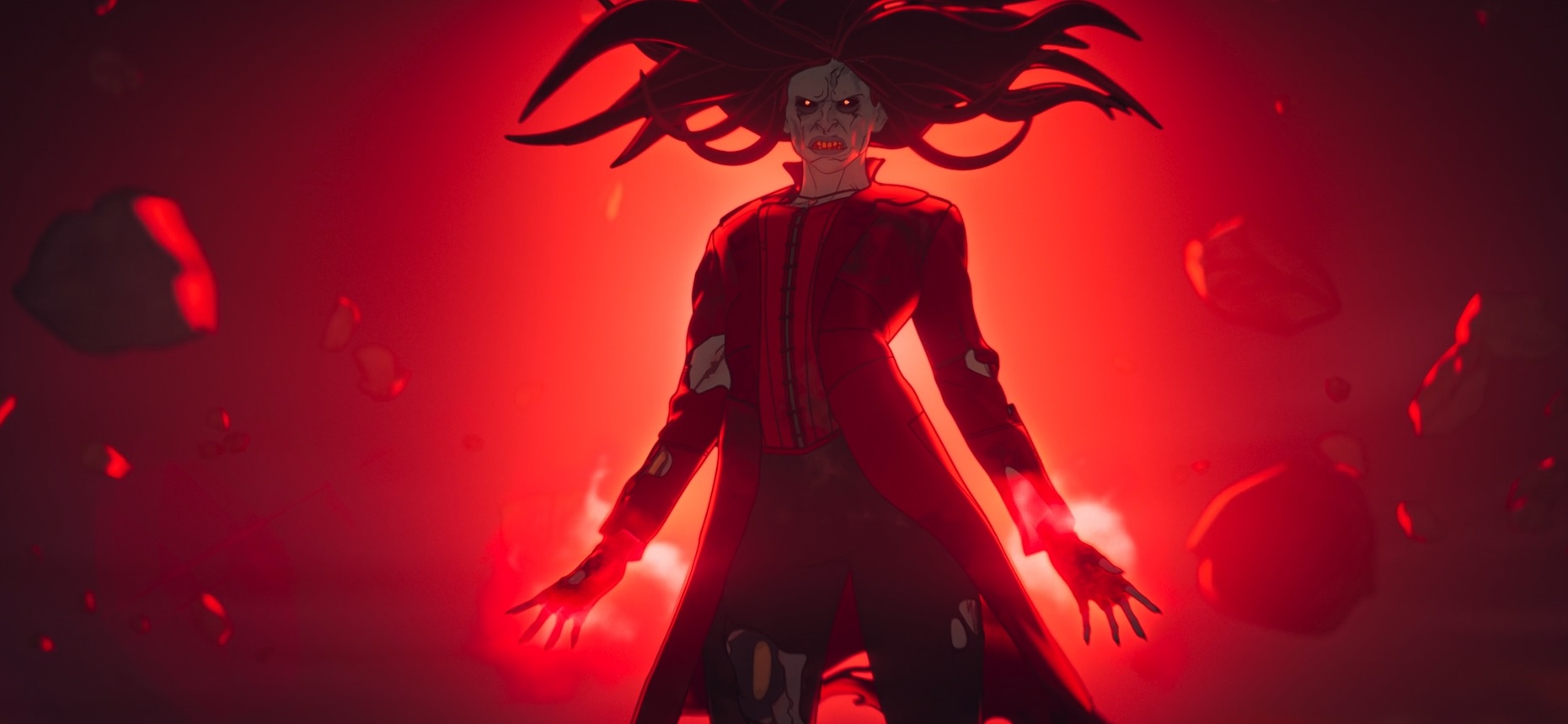
    Episode 5 is undoubtedly a horror and apocalyptic episode genre-wise. It certainly has been the most violent, gruesome (toned down for a more wholesome audience), and dark episode graphically. There were plenty of decapitations and severely violent deaths of well-known characters to go around. All credit to the show for making the jump into this sort of territory—the major cliffhanger of zombie Thanos certainly sets up our zombie universe to play a significant role down the line in the series if not beyond. It is also yet to be seen if our remaining heroes—Peter, Scott, and T’Challa—actually get the cure into action.

    Still, the episode was genuinely funny. Between Peter’s “How to Survive the Zombie Apocalypse” video, the banter between the characters, Scott Lang’s head in a jar, and Mark Ruffalo’s Bruce’s commentary at the beginning of the episode—among plenty more examples—the zombie episode was at times hilarious and generally delightful with the combination of both legitimate horror and legitimate comedy. 

    Episode 5 of What If…? is heavily suggesting that the series is picking up steam and more unique and boundary-pushing episodes are coming. We’re also at a point where the potential universes for live-action use are expanding so dramatically that the possibilities seem endless and also perhaps overwhelming, particularly for Doctor Strange in the Multiverse of Madness. Either way, the long-awaited zombie episode was truly a lovely experience and wildly fun.