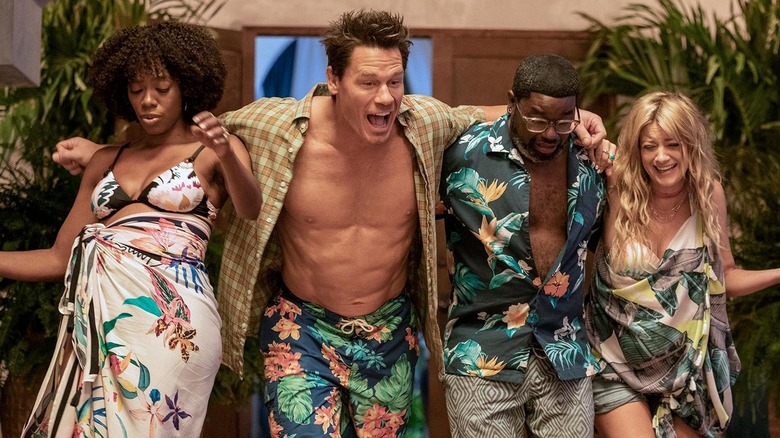
Vacations generally suck. They’re expensive. They’re a pain in the ass to plan especially when there are other people involved. The traveling is so draining that after you spend all that time relaxing, you’re back home tired from the trip. If you’re lucky or unlucky, you’ll meet people that will make the experience etched in memory, in good or bad ways. Hulu’s latest comedy, Vacation Friends, a rowdy comedy in the vein of classic nightmare vacation films with a touch of Meet the Parents, has it in both ways.
Lil Rel Howrey and Yvonne Orji play soon-to-be-engaged couple Marcus and Emily, who both live straight-laced upstanding lives. As part of his proposal plan, Marcus organizes a trip to Mexico with Emily in the guise of an unsuspecting getaway. Things don’t go well in true vacation movie fashion when Marcus and Emily cross paths with Ron and Kyla, a crazy couple with a knack for getting themselves into deep trouble. The two couples fall into all sorts of drunken craziness during their trip but eventually part ways when they return to the real world outside their vacation bubble. That is until the crazies get wind of Marcus and Emily’s very exclusive wedding date in the real world.
Hot off the heels of his acclaimed role as Peacemaker in The Suicide Squad, John Cena plays Ron, a jack-of-all-trades Green Beret/mountain ranger with a penchant for sniffing out mushrooms and bird shit. But despite those seemingly fun quirks, Cena is surprisingly dull as Ron. A big problem here is that Cena is constantly going for the bit whereas in Suicide Squad, Peacemaker’s astute subdued demeanor is the bit. When Cena reaches for that laugh – and he really reaches for it – the bit gets played out before it even ends. In contrast to his numerous scene-stealing one-liners in Suicide Squad, it’s almost baffling to see Cena fumble here.
This movie doesn’t have a great script nor focused story to start with so Cena’s chemistry with Lil Rel Howrey is this film’s strongest foundation. The movie knows that these two guys have something special going on so it spends a lot of time just honing on these two polar opposites at odds with each other. It’s the classic tandem of uptight straight man and wild card and it works for those two. Howrey plays Marcus’ grumpy uptight straight man persona to the T while Cena’s carefree lumbering take on Ron contrasts it nicely. It doesn’t reinvent the wheel but it’s a cog that makes the whole thing run smoothly. Without their chemistry, this movie would’ve been a total misfire.
And Vacation Friends falls close to being a misfire. The idea of mixing a nightmare vacation comedy with a Meet the Parents wedding movie may seem like a fun combo at first but this film makes neither of those ideas work beyond the surface. The vacation aspect of the film just isn’t crazy enough nor does its definition of “crazy” – basically getting drunk and doing drunk shit – make the Meet the Parents aspect an entertaining riot. Ron and Marcus getting high on shrooms just isn’t as wild as Greg Focker spray painting a stray cat’s tail to pass it off as his father-in-law’s lost cat. The outcome is a totally dull affair.
Even more frustrating is the inklings of good ideas they have. The movie makes you think that there is more than meets the eye to the crazy couple. Ron and Kyla constantly allude to their wildly dubious backgrounds throughout the film that it comes off as a setup to some crazy reveal. There’s even a bit early in the film that plays with the idea of something tonally sinister behind who these people are. Sadly, none of those entertaining ideas ever materialize at any point in the film which feels like a complete waste. Their characters are completely laid straight, devoid of any true whimsy that underpins why they are the way they are. Having some kind of spin to these characters would have at least made it a funner watch.
Vacation Friends drops the ball on a lot of things it tries hard to do that not even a fairly good cast can pick it back up. Robert Wisdom, who took The Wire to a whole new level as Bunny Colvin, is fully disserviced by a bad script. Yvonne Orji and Meredith Hagner, who have absolutely killed it in their own respective shows, aren’t really given the space to be funny the way they are in those shows.
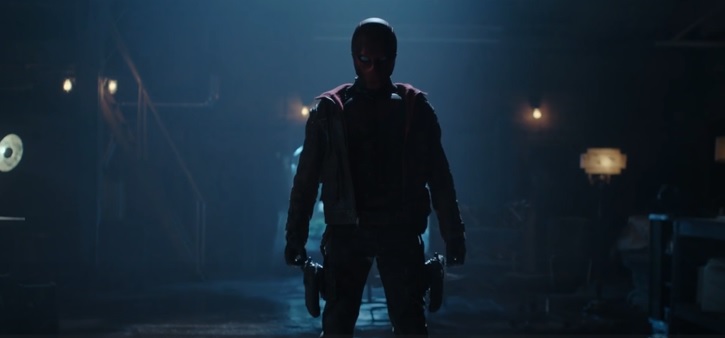
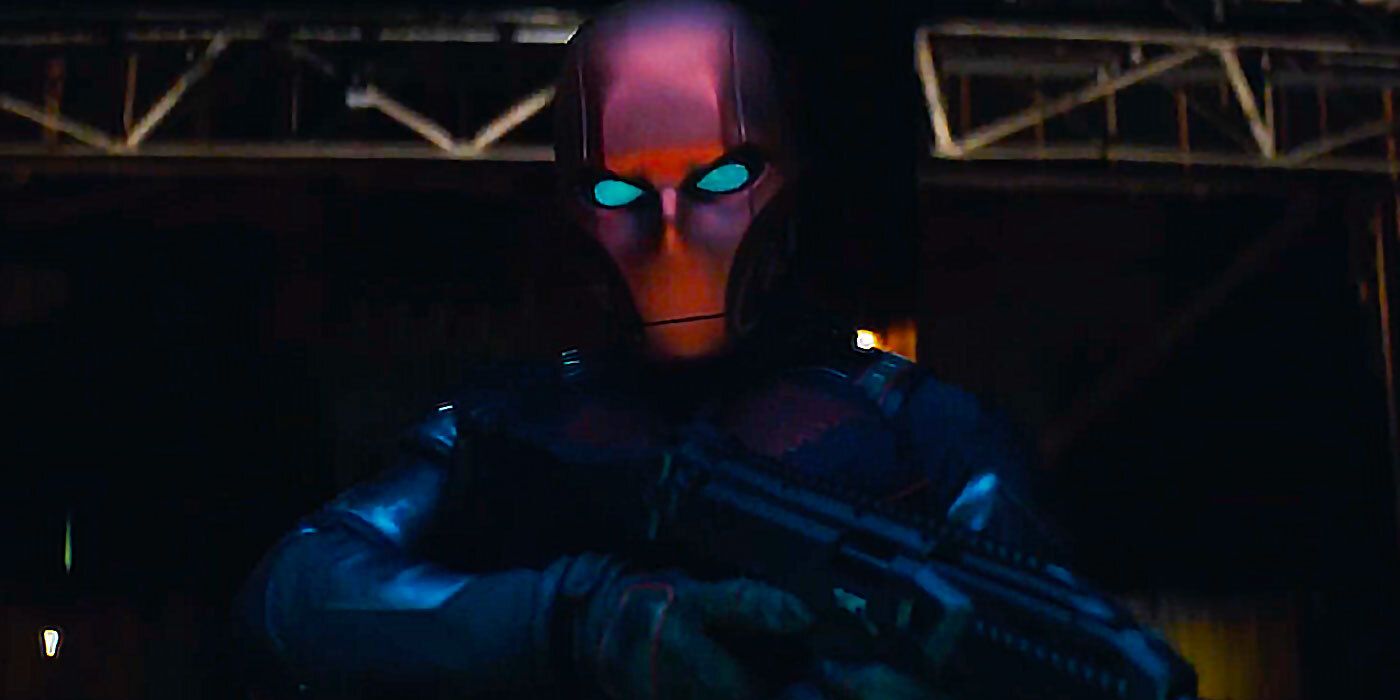
TitansEpisode 5 boldly attempts to navigate the mental and emotional spiral of Jason Todd that we know culminates in his adoption of the Red Hood mantle. While some of the series dives into the intricacies of its characters has paid off in the past, Jason’s spotlight here fails to reach the depth it needs to be absorbing. To be fair, the more intimate focus on Jason does give off a flicker of greatness in its examination of the long-term effects of superherodom on an impressionable and flawed teenager.
The episode essentially takes the scenic route to its explanation of how Jason/Red Hood wound up in criminal business with Scarecrow. The supposed reveal that Scarecrow is the mastermind behind the vague scheme is honestly a tad disappointing as it deflates any prowess that Jason at one point seemed to have as Red Hood. And the plan is…something? Turning Gotham into Fear City is certainly on brand, but the rest is fluff at the moment. Hopefully, a more menacing or even meaningful evil scheme will come to the surface, but for now, it’s about as gray as Gotham itself.
The series has plenty teased that Jason was internally scarred by his confrontation and near-death experience with Deathstroke last season. It seemed to play some role in his impulsive and angry departure from the Titans, but it was otherwise left alone. Dedicating this episode to Jason could have been an entrancing look at his festering inner demons. To be fair, the episode had the bones to make it work, but it never hits the right note. For starters, while Titanscan be notoriously slow, but this really crawled. For the better part of an hour we watched Jason have a conversation either with the therapist or Bruce. Considering both played essentially the same role in drawing out Jason’s thoughts and feelings, the two felt duplicative. Jason’s revelations mostly felt like a re-watch of the tortured- and traumatized-by-Batman Robin story that still feels like is being played out by Dick Grayson.
The icing (or lack thereof) on the cake is that overall the portrayal of Jason and his troubles in this episode merely felt like it was scratching the surface—there’s depth somewhere that could have been tapped into, but we never get there. Despite this being about Jason himself, it was still hard to pin down his personality or character in general throughout the episode. The best moment for Curran Walters’ Jason came along with Bruce firing him as Robin. Jason more authentically comes unglued and shows the cracks in his psyche. His reaction to what he perceives as another rejection of his Robin encompasses his insecurities in not being good enough which has been well planted throughout the series.
While Episode 5 attempts to recreate some of the series’ past successes with character focuses, it did not quite rise to the occasion. While Jason had his moments, overall the narrative here dragged on slowly with static conversations that felt like Dick Grayson on repeat. Now that Jason is out to prove Bruce wrong, the interesting path would be to see when, where, and why the two former Robins diverge.
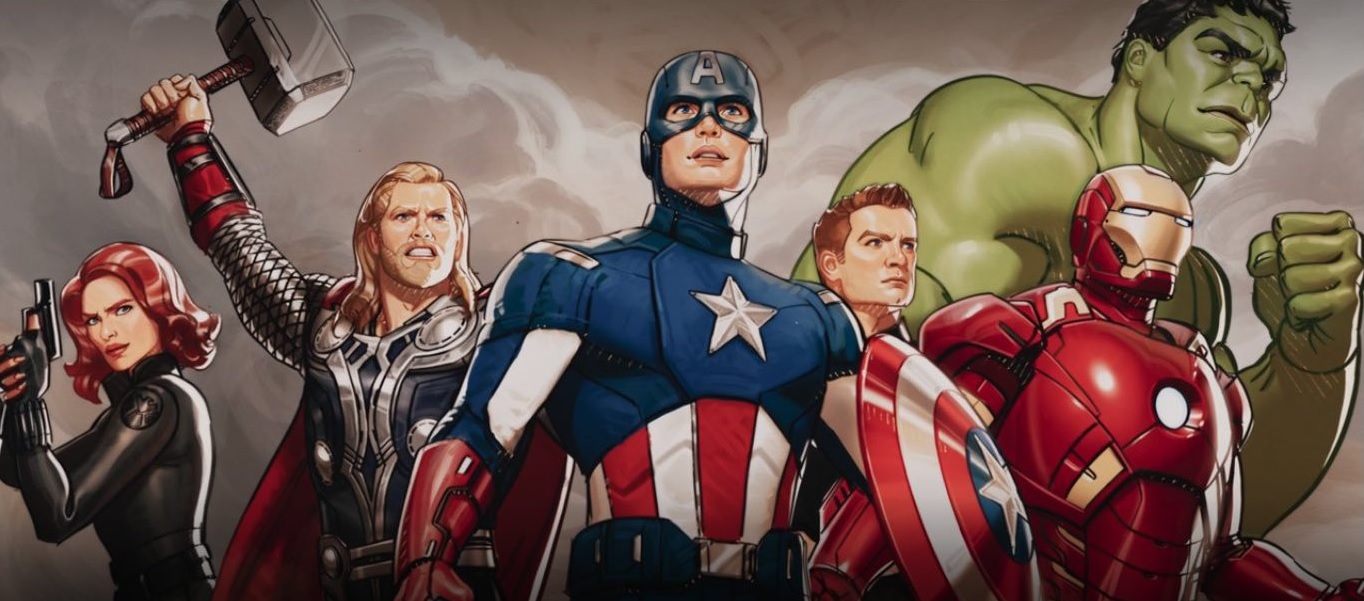
What If… The World Lost Its Mightiest Heroes? is a fairly middle-of-the-road redux of Fury’s Big Week from Phase One that at the end of the day highlighted the original intentions and inspiration of the Avenger’s Initiative. Episode 3 found an effective way to do that while killing off (or not introducing) all six original Avengers. The overall moral of the story is, simply, that more mighty heroes are waiting and willing to save Earth in its time of deepest need.
The tagline for the episode could be or should be, “Hope never dies.” On one hand, this was originally in reference to Hope Van Dyne—who actually died in the course of being an Agent of S.H.I.E.L.D.—and her father Hank Pym’s descent into murderous madness seeking vengeance. The premise of Pym being the assassin that eliminated the Avengers before they actually began is interesting, because it gives a look at Pym being in action (as Yellowjacket) for the first time that we have really seen in the MCU. It also added a bit extra to the familiar plot considering he was not introduced in the main universe until the tail end of Phase Two. The mixture of elements now at the MCU’s disposal is entirely what What If…?is about, so the light overlap in stories is appreciated here but did not seem to be enough to make this episode particularly exceptional.
Fury was the absolute star of the episode in terms of his significance to the plot. Samuel L. Jackson reprised his role wonderfully, giving animated Fury an authentic feel that likely kept Episode 3 afloat at times where it could feel a bit tedious. We got a better glimpse of Fury as Director of S.H.I.E.L.D. in a fuller capacity than he was afforded in the main universe given screen time constraints. While it did not fundamentally change the character, or how anyone viewed him, it certainly bolstered his persona by giving him room to stretch and simply be in control.
Considering that all the original Avengers, other than Steve Rogers, were killed off, the main consequence of this episode was Loki’s eventual takeover of Earth. His address to the United Nations at the end was an interesting and fairly comical look as to how King Loki would come about and rule Earth absent the dramatic and violent Battle of New York. Tom Hiddleston’s performance—particularly in light of Loki’s heightened popularity right now from the Loki series—was also phenomenal, and the transition from screen to voice was very smooth which similarly buoyed the episode.
Ultimately, “hope never dies” becomes a reference to the enduring spirit of the Avengers Initiative that dominated the latter half of Phase One and Avengersin particular. Despite the Avengers as we know them being utterly gutted, the idea of bringing together a group of remarkable people never died in Fury’s eyes, as the episode ends with Captain Marvel and, presumably, Captain America ready to continue the fight. While the episode never felt overly exciting, it was a nice reminder of where the Avengers, and the MCU, began and what they mean to both these fictional universes and our own reality.
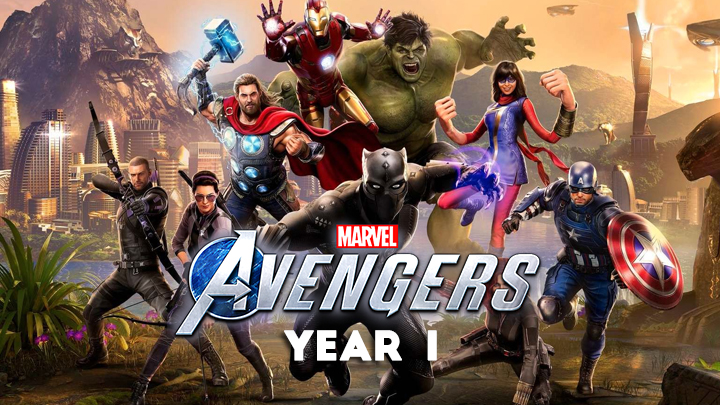
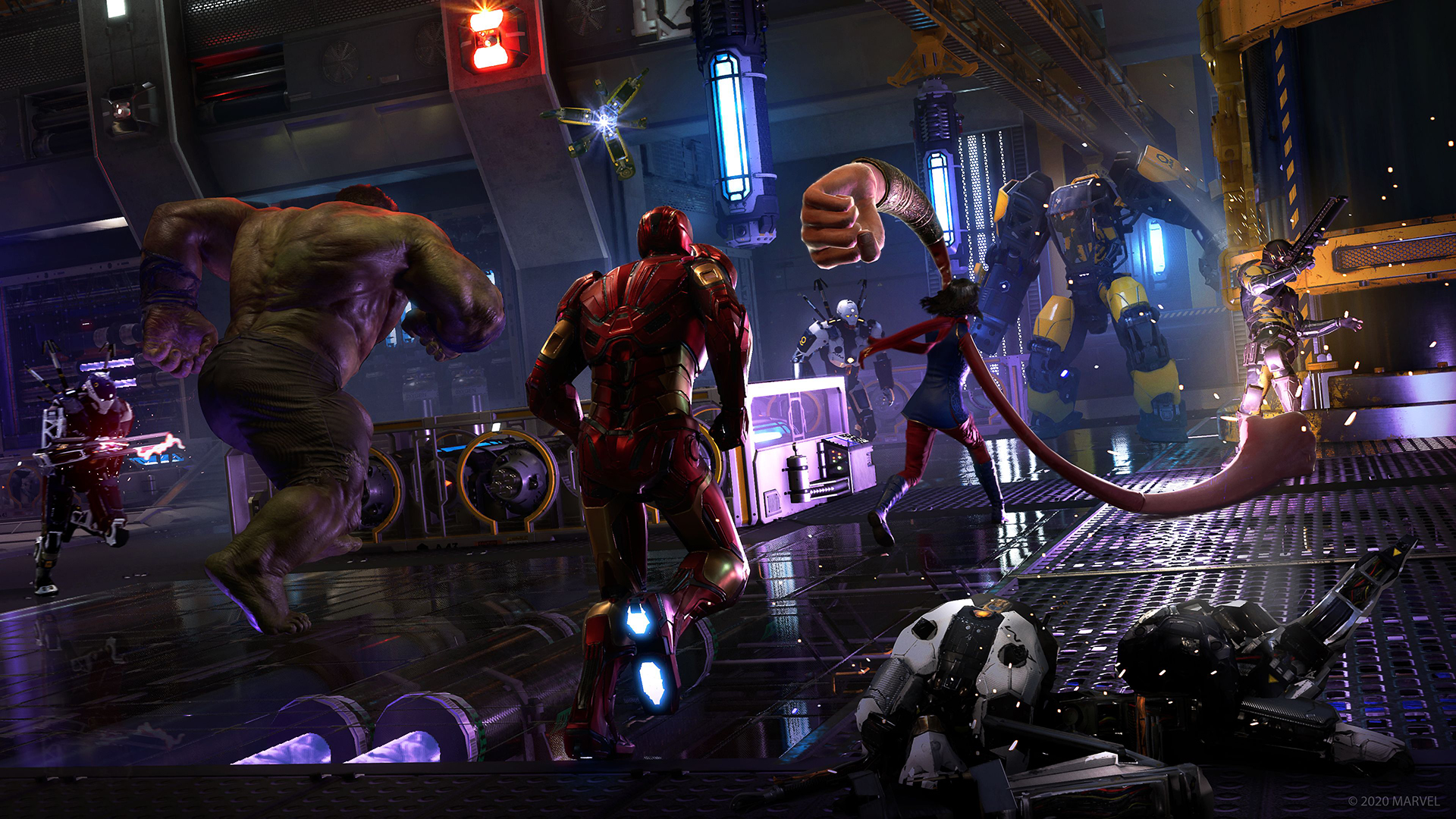
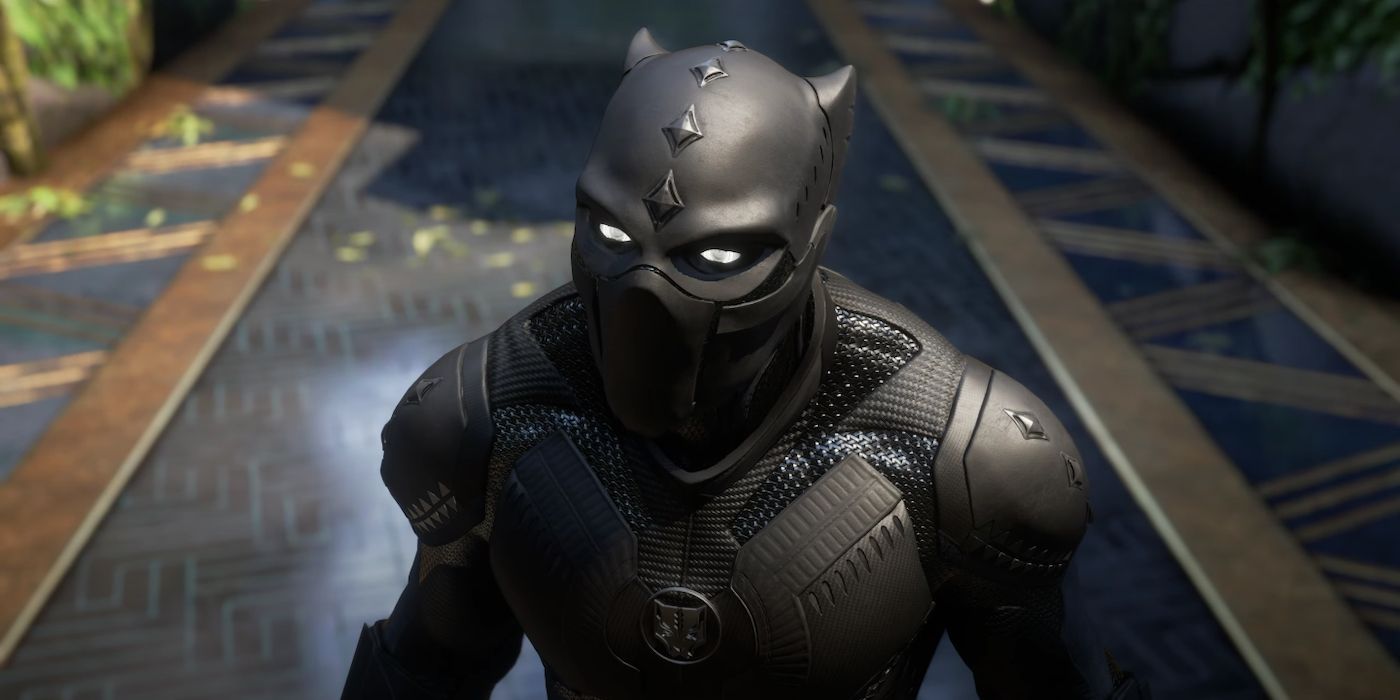
It hasn’t been an easy road to this point. Marvel’s Avengers had quite a questionable start for many. The game faced many challenges with various bugs and a pandemic pushing content back. Yet, it continued to persevere with monthly events starting in April and the release of three new playable characters. The latest expansion, War for Wakanda, finally introduced the game’s version toofBlack Panther and continued to build upon the war against AIM. We’re also only a week or two away from the game’s first year coming to an end. So, what better time to explore how far the game has come and what the latest addition has to offer.
The game’s biggest strength has been gameplay and the story. While mission variety has been a bit stale early on, each of the game’s characters feels like their own character. Even with a base combat style, the newly introduced Black Panther has quite a few tricks up his sleeve. He comes with a new mechanic that lets him lunge at enemies. You can even jump on giant machines to do damage. His heroics also add some fun elements, as you can summon the Panther God Bast alongside Dora Milaje to help you in combat. His addition continues the tradition of complex kits to test out.
He’s also a great contrast to the last two characters, who were a bit too similar. It made sense, as it was Hawkeye and his protégé, Kate Bishop. They both rely on their arrows and swords to take on enemies, and they pretty much share the same base ability. Clint Barton is more bow-focused, but they are just a tad too similar. In a way, I think him only relying on keeping enemies at a distance with his bow and shurikens from his time as Ronin could’ve made him stand out just a bit more. Perhaps something they could add in future updates.
Still, all three stories continue to expand the overarching narrative in unique ways. The first campaign was an introduction to this world’s Avengers and the threat that AIM poses. Kate built up the mystery of the strange Tachyon storms that led us into the future with Hawkeye. The tease after the Cosmic Cube event was a personal highlight as it answered theories and offered a glimpse into the future. War for Wakanda takes a different turn as it’s not only longer than previous entries but also feels a lot more personal.
The Avengers take a backseat this time around, which fits the story from T’Challa’s perspective. I do wish the opening was from the Avenger’s perspective as we fight our way through the jungle to end up in this new location, but it’s Wakanda’s story and better left as such. It just lacks cohesion on how they ended up deciding to fight there now and not earlier. Personally, the ending is the weakest point in the story, as it does what it needs to do so Black Panther can join the Avengers for future adventures, but it doesn’t give us any hints at what’s ahead.
Of course, the new story also adds some new elements to the endgame. We get quite a few new mission types this time around. I noticed that the challenge spiked in this expansion, which is a good thing. Some of the earlier parts of the game weren’t too difficult to play through, but since the Cosmic Cube event, it seems they’ve been upping the overall challenge. There are also new puzzle types, like a miniature Horde mode, that push the players to communicate. I hope we get more of them in other biomes. The Wasteland is still very barebones, which could benefit from this type of content.
In a way, while the story does introduce new mission types, the endgame still feels like an afterthought. We didn’t get an Omega-Level Threat included in this release. While it does add some new mission types to test out after finishing the story, there’s nothing endgame-specific to catch your attention as a player. Why not include a special mission to tease the next story arc, like Cosmic Cube was just without the month-long wait. The ending leaves a specific villain’s story open, which would be great to expand in an epilogue fashion teasing the next arc. How about a new mission type that feels like a reward for finishing the story.
Gear is still getting overhauled, but there are some fantastic exotic pieces with Black Panther. So, there’s a reason to grind, but the lack of something new is a bit of a bummer for more casual players. Luckily, the new Corrupted Vibranium event adds new elements to existing missions and is a pleasant addition to the content drop. Plus, Vibranium and Sonic gear adds something new to play around with and motivates one to grind a bit more. My only real complaint is that Sonic’s blurring effect is annoying and needs an overhaul as soon as possible. Still, the addition to existing missions might also be our first step towards randomization that, hopefully, is an element we see in the upcoming Patrol mode.
War for Wakanda also came with a complete overhaul of their user interface, which they teased as the foundation for the game’s latest developments. While needing to adjust to it, it took away the clutter of each menu consisting of various submenus, but there are some parts where it overcorrected. Gear management requires more clicks than previously but could get rectified with future updates as we’re only getting a glimpse of where it’s heading. Still, the option to have gear loadouts in the future is an exciting prospect and entices keeping more gear pieces to play around with.
Marvel’s Avengers has changed quite a bit since its launch. I’ve noticed that I am playing it more frequently than I did months prior. The events add quite a bit of replay value and temporary challenge. War for Wakanda is a great addition. T’Challa’s performance by Christopher Judge being a highlight. In general, the voice work here is fantastic and elevated the story in comparison to other updates. We had more characters to interact with, a new hub world where you can find Easter Eggs and other things.
Though the new Outpost is beautiful, it still lacks functionality outside of mission selection and getting dailies. I hope we get something to do at these places in the future. We’re still anxiously awaiting the updated roadmap for the coming months, and there’s a lot more content heading our way. My biggest complaint is that the endgame still needs a bit more attention. Still, we have additional OLTs, Patrol mode, and potentially a lot more heading our way. So, I think Year 2 has the potential to remedy those complaints. The game is a fun experience, and being a part of its evolution and community adds that little extra.
It’s not hyperbole to say that Shang-Chi and The Legend of the Ten Rings is a movie that I’ve waited nearly my entire life to see. I fell in love with the pulpy, walk-the-Earth character as a kid and anticipated his MCU debut long before any official announcements were made. I’ve followed the development of the film closely and joyfully as Marvel Studios followed through on their promise to make this film a vehicle for an Asian cast, crew, and creatives. And what Marvel Studios created is something not only truly unlike they have ever put on a big screen, but also arguably their best effort at recreating a character, his supporting characters, and the world which they inhabit. The result is an origin film that rivals (and connects with) 2008’s Iron Man, introduces one of the MCU’s most well-developed antagonists, and sets up a future that promises greater things for the film’s core cast.
As advertised, the film introduces us to a brand new Marvel hero in Shang-Chi and addresses the origins of the Ten Rings organization which has inhabited the Marvel Cinematic Universe from its inception. The film’s prologue tells the story of the organization, the man who founded it, and the ten rings of power that have helped the organization secretly shape the history of the MCU. While we get plenty of backstory on the organization, the nature of the rings themselves remains nebulous even as the film concludes, though they remain integral to the film, almost a character unto themselves. Even as the MCU charges into the future, it continues to satisfyingly establish events set in its past. We’ve seen it done more frequently of late and it serves the purpose of informing fans that Shang-Chi has spent a decade of his young life trying to hide from his father, his family, and his fate. Director Destin Daniel Cretton should be lauded for the way he cleverly uses the prologue and the early moments of the first act to set the audience up for their expectations to be subverted.
Structurally, the film deftly meshes three disparate acts into an incredibly imaginative and fertile plot that never feels drawn out despite the film’s 2+ hour runtime. The first act feels like a martial arts short paying homage to legends like Bruce Lee and Jackie Chan. The second part plays out as an ever-evolving family tragedy on the level of Shakespeare’s King Lear before the film’s final act delivers an amazing fantasy story worthy of the Marvel comic book title’s rich history. Together, they tell the story of how love can both create or destroy, how power can both corrupt or enable and how, when the family is involved, there might not be such a thing as a point of no return. The film is beautifully written in service of these things and directed to emphasize them. The creatives behind the film deserve accolades for working together to deliver a film that manages to invoke empathy, sympathy, and apathy in the audience. When you’re watching this film, expect to experience a wide range of emotions.
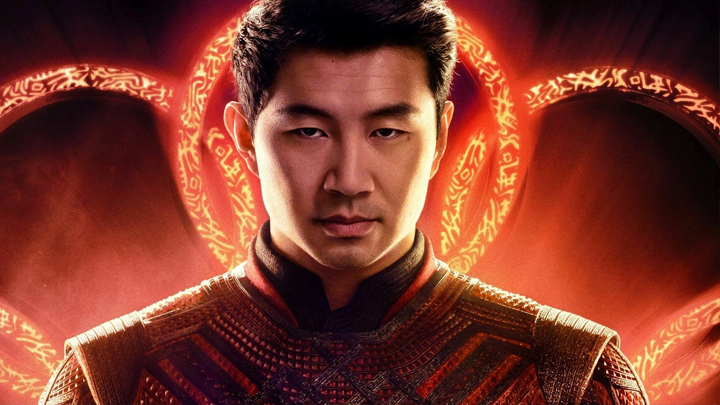
If there’s anything that keeps the film from ascending into the absolute upper echelon of the 25 Marvel Cinematic Universe films it is, unfortunately, that the title character is, at best, the second most interesting character in the film. The great news is that this is in no way the fault of star Simu Liu, who is positioned to become one of the faces of the MCU over the next 5 years. Liu takes full ownership of Shang-Chi, a character who has a lot to do in this film and for whom there are clearly incredibly large-scale plans moving forward. Liu absolutely nails what he’s given here: he is equal parts charismatic, emotional, and an action star. He’s probably Marvel’s most instantly loveable hero since Chadwick Boseman‘s T’Challa. Also noteworthy is Liu‘s incredible chemistry with Awkwafina, who plays Shang-Chi’s attached-at-the-hip bestie, Katy. Marvel Studios targeted Awkwafina for the role early and her MCU original character – who experiences all the film’s big twists and turns right along with the audience – gets her own time to shine. She and Liu will continue to be paired together in the future and that’s something that’s going to befun to see develop as they meet some of the universe’s established characters.
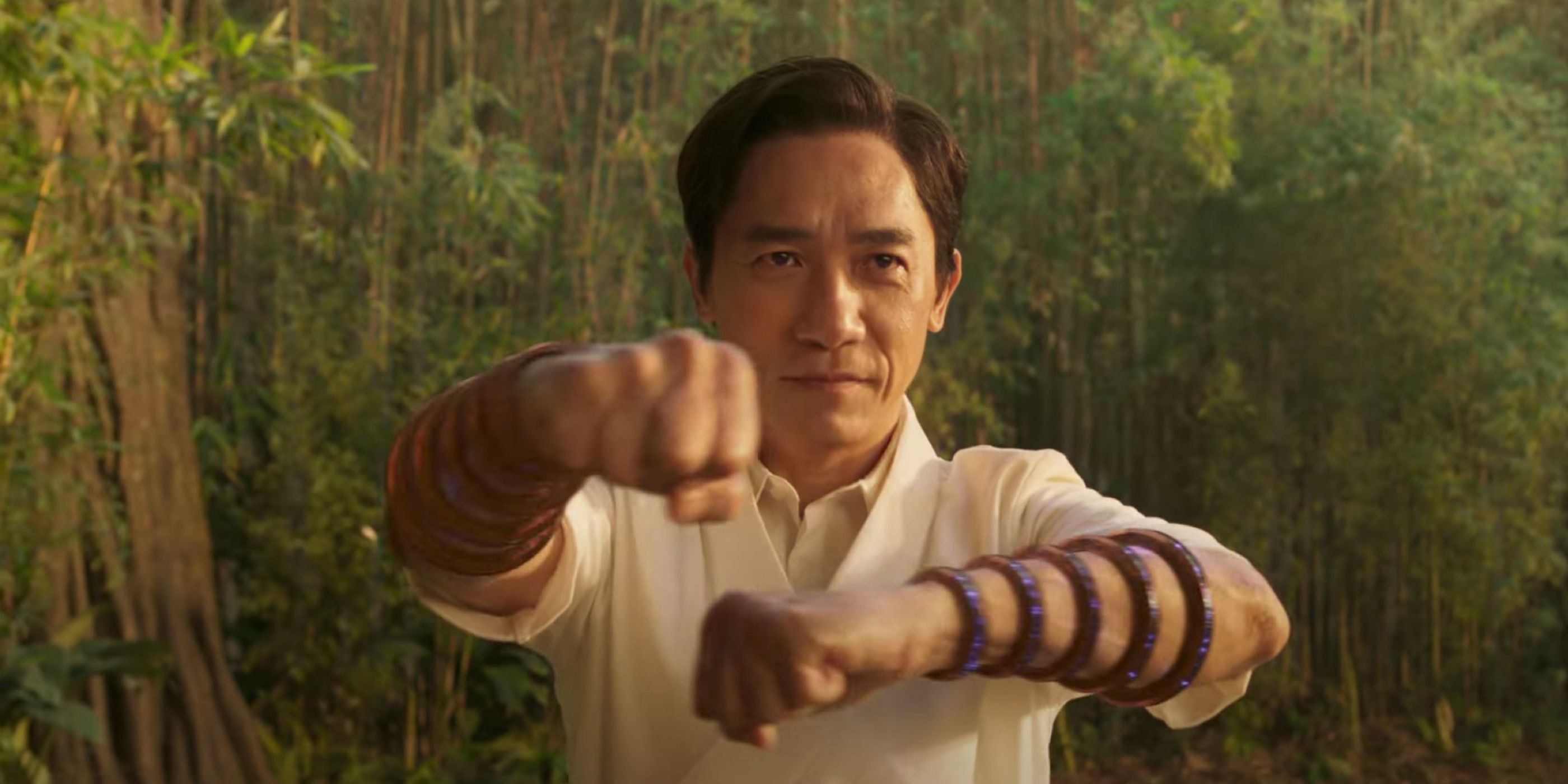
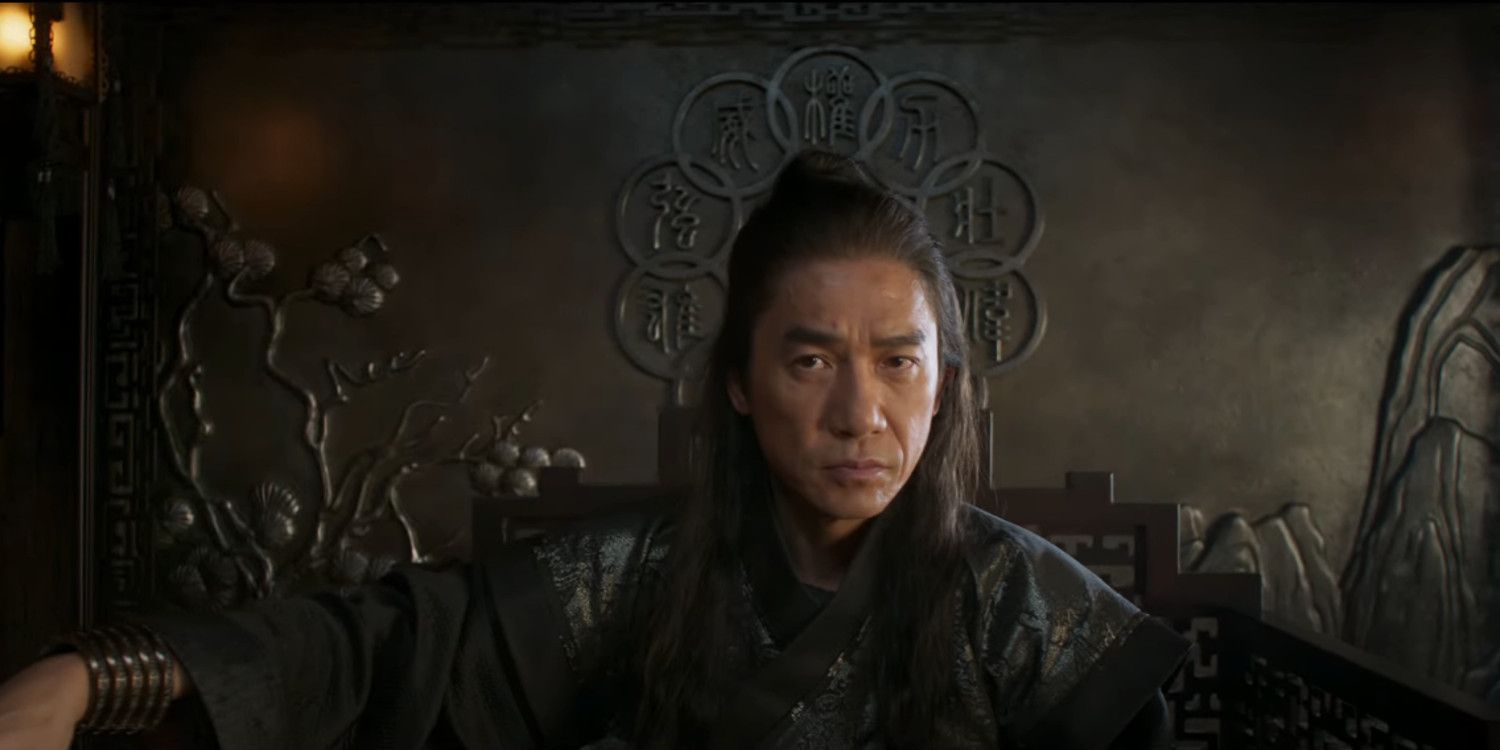
In reality, however, this film could have been titled Wenwu and The Legend of The Ten Rings because Hong Kong legend Tony Leung owns every second of screen time. Without getting spoilery, he is technically the film’s protagonist and his character arc is befitting of that title. Cretton creatively uses flashbacks to alter the audience’s perception of Wenwu (and indeed of more than one character) much to the advancement of not only the plot of the film but to the overall strength of the story. His use of non-linear storytelling elevates the cast and the film in an incredibly crafty way that can make one hope that he’s negotiated a long-term deal with the studio. His investment into these characters and this world bodes incredibly well for the future of the franchise(s) this origin film may spawn.
The greatest payoff of this investment is Leung‘s Wenwu: an entirely original character derived from Marvel Studios’ alchemical task of combining classic and stereotypically offensive characters, the Mandarin and Fu Manchu, into a brand new and beautifully complex character. The trailers intentionally tell a very specific story about Wenwu, that story is a lie. Leung‘s Wenwu is the furthest thing from a boring, one-note villain. In fact, he arguably has the film’s greatest and most fulfilling character arc. One struggles to find a comparable one-off villain in the rich history of the Marvel Cinematic Universe.
While the trailers prepared us for that martial arts action and father-son showdown, they did leave a couple of surprises for the audience. The most pleasant surprise of the film was the performance of Meng’er Zhang as Shang-Chi’s estranged sister, Xialing. Kept in the background by her father’s old ways, Xialing decided to carve her own path without her father and brother. Zhang played Xialing with confidence and an edge that made her ascension in the film feel both earned and deserved. As the film’s central plot resolves, Xialing finds herself positioned to be a key player in the MCU’s near future, perhaps even on the same level as her long-lost brother.
The film is also surprised with its hard lean into fantasy. Promotional material and merchandise indicated that the film would feature the Great Protector and some other mythological beasts, though there was no real indication of how large a role those fantastical elements would play in the film. Shang-Chi and Xialing’s mother, Jiang Li, brought to life gracefully and beautifully by Fala Chen, serves to introduce fans to the other-dimensional realm of Ta-Lo where the film’s resolution plays out. Ta-Lo showcases a number of mythological beasts, including Morris, a cute faceless critter who aids our heroes and serves to help Shang-Chi connect to his secret and sacred inheritance. The final act features action, unlike anything the MCU has ever put to film against a beautiful backdrop of plates from across Asia.
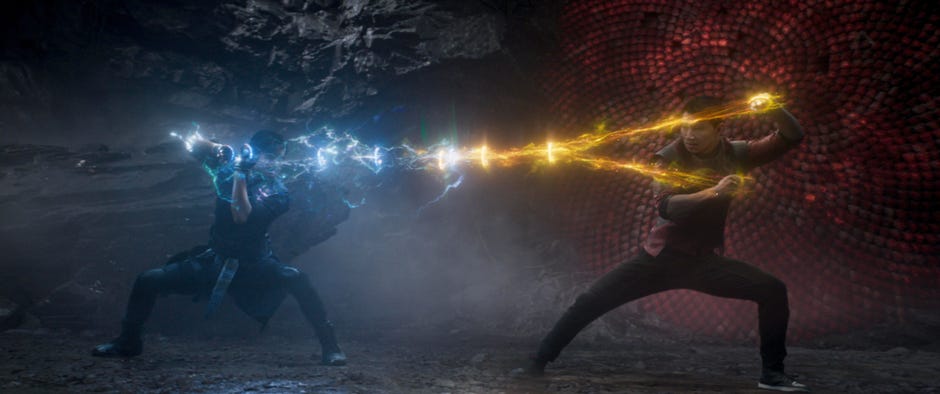
The big showdown, which features breathtaking action and heartbreaking consequences, feels like an anime of Donghua feature brought to life. The creative team took some big swings during the final battle and should be applauded for being brave enough to make something so divergent from what Marvel fans are used to seeing.
A common complaint of mine is that Marvel Studios origin stories have often spent too much time setting up the future of their titular characters at the expense of telling the story at hand. Much like the aforementioned Iron Man, Shang-Chi and The Legend of the Ten Rings saves the setup for the mid and post-credit scenes, devoting almost the entirety of its run time to the development of the characters and the curation of the plot.
The dedication to the story and its characters, the exploration of genres and pathways previously unexplored in the 13-year history of the MCU, and the fulfillment of a promise to make films that represent the world we inhabit give Shang-Chi and The Legend of the Ten Rings a firm foundation for success, even as the global box office climate continues to be volatile. For me, the true measure of success for an MCU film is its rewatchability, and this film promises to be one that fans will want to revisit over the years; the action shots and loveable characters make that all but a certainty. As the MCU grows and evolves, fans can only hope to have wonderful first entries such as this be a part of it.
After a relatively strong start for Titans, Episode 4 is starting to show a few more cracks in the operation. We interrupt a functional story with a new side story that doesn’t quite land on the same planet we’ve been working with. Optimistically, Episode 4 may just be an innocent stumble along the way to a satisfying story. Pessimistically, the episode might be foreshadowing the slow unraveling of the rest of the season—only the coming weeks will tell.
The episode briefly explores the emotional aftermath of Hank’s dramatic death last episode. Dawn is shockingly composed given the fact that Hank’s death is technically, or at least directly, her fault. This is all used as an excuse for her character to exit the series for the foreseeable future. It’s fully cemented that Titans has no vision to see Hank and Dawn as two separate people, but while it may have been interesting to explore her individual character more, the show never made her a particularly interesting one, to begin with. She and Hank always came across as unneeded filler, and maybe the series is trying to remedy that.
Unfortunately, it seems as though the show decided that the exit of two peripheral and plot-overflowing characters was the perfect time to add another significant character alongside a side plot that overpacks the existing story in the same way. While the Red Hood chronicle continues, Kory a.k.a. Starfire is handed a major arc in the form of her sister, Blackfire. The lazy arc origin does suit the story itself sadly – it’s bland. How the murderous, vengeful, Queen Blackfire managed to find herself completely helpless in a government lab secured by one person is supposedly explained, but it will just never be okay.
The situation makes both sisters and their powers come across as relatively arbitrary and insignificant. This is more a shame considering that Starfire’s character already suffered from that. It begs the question of whether the series is concerned with her being overpowered and is going out of its way at every turn to dampen her. Spending episodes with her blacking out and having visions just felt like a return to her amnesia in the first season. In any event, maybe the dynamic between the two rivals could have dormant potential, but hope for that feels lost on the delivery. At times it could be hard to watch given the dry and empty performances which automatically took you out of any scene.
Turning to our main story, it’s obvious that history repeats itself. While it could be an interesting theme to explore, it still sometimes seems unintentional at this point. Despite overwhelmingly constant reminders throughout the series as a whole that no Titan should go out on their own to confront a villain, Dick decides to once again do exactly that. Instead of being “a better Batman”, he is being as “Batman” as he can be. On one hand, it seems to suit his character—it’s fun to see him act so in control and with so much dark confidence, but the outcome is the same and he inadvertently lets both Jason and Scarecrow loose.
The good news is that having them together should fuel their master plan. However, the bad news is that the master plan doesn’t seem like much of a plan. Sure, we will probably get more elaboration on what the pair are up to down the line, but it’s looking like Scarecrow will more or less reduce Jason to assistant villain without anyone taking the place of head villain. Suffice to say, Titans has more “villain problems” on the horizon. Unless someone can truly climb the criminal ladder and sit on a throne of captivation, it’s going to be underwhelming.
Overall, the fourth episode keeps the Gotham City plot intact, though its potency may be severely threatened by the shift in villain dynamics now that Scarecrow is more in play. The episode tries to spice things up with the Starfire-Blackfire arc, but it is genuinely not compelling nor well-executed. The noticeable housekeeping and streamlining of storylines and characters Titans undertook at the beginning of this season is, unfortunately, looking to be in jeopardy now. Fingers crossed things will reorganize themselves, take a look in the mirror, and be better Batmen.
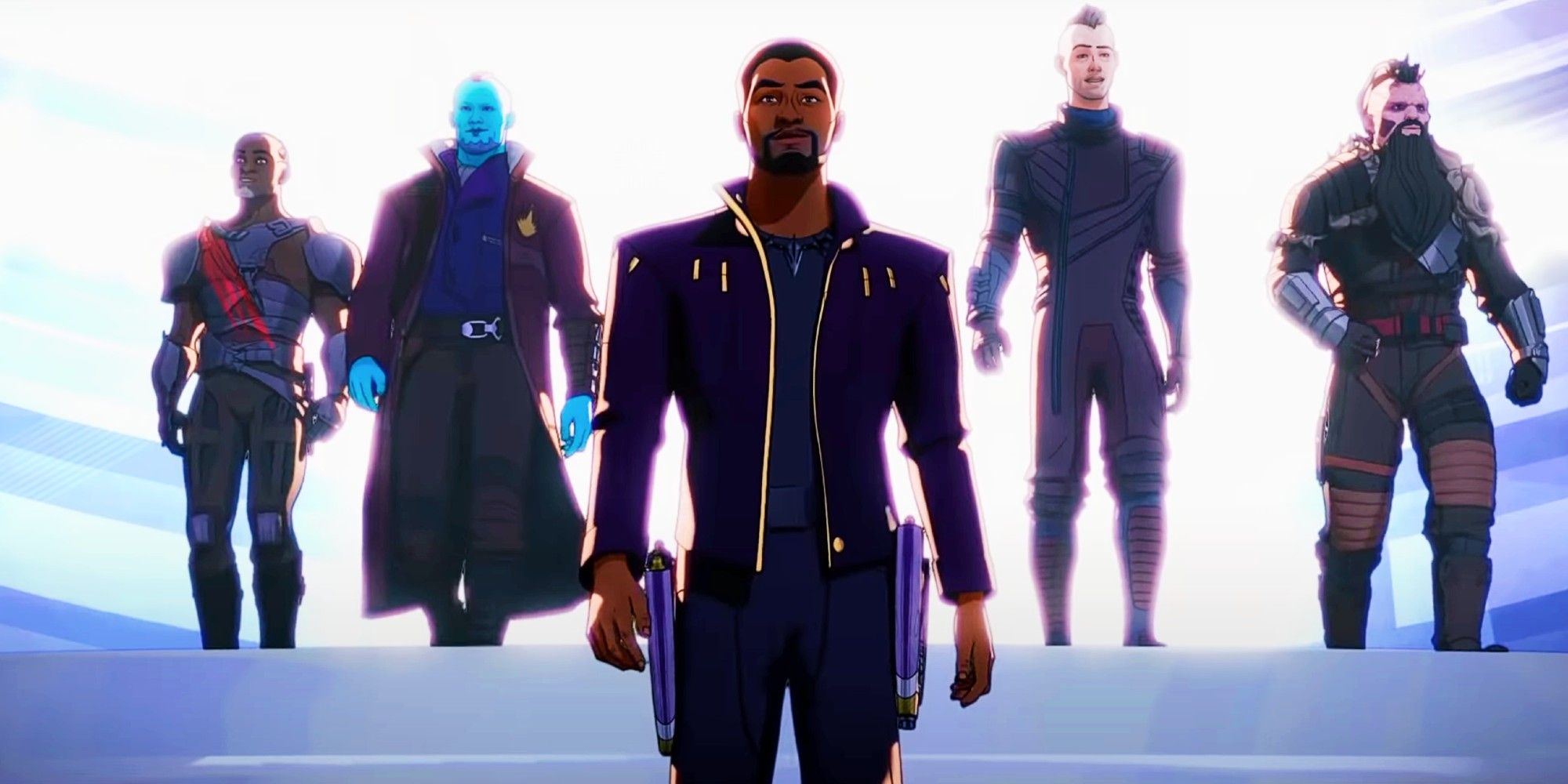
Episode 2 of What If…?, What If…T’Challa Became a Star-Lord?, is absolutely stunning. It is an incredible joyride through an almost absurd amount of MCU nods and history that is gripping from start to finish. The episode impressively manages to be both hilarious and heart-wrenching in constant waves that at times are simultaneous. All eyes and ears are on Chadwick Boseman’s final role as T’Challa, and Episode 2 as a whole rises to meet his brilliant performance. Despite being in the form of a half-hour animated show, it manages to be a beautiful farewell to such an iconic and impactful actor and character.
Even armed with the heavy knowledge that Episode 2 marks one of Boseman’s final performances—and one of T’Challa’s final appearances—the episode hit an emotional depth that, quite frankly, didn’t seem entirely possible given the nature of the What If…? series and the Guardians of the Galaxy-based premise. It is no surprise that the sound of Boseman’s voice evokes such a mixture of joy and grief nearly a year after his death, but hearing his Star-Lord performed with such vibrant personality and passion both breaks and fills your heart at the same time.
The fact that T’Challa as Star-Lord completely changes character trajectories of Star-Lord himself, the Ravagers, and various side characters is a hilarious contrast to Guardians of the Galaxy, but it also doubles as what feels like a tribute to T’Challa and Boseman. The impact the two have had in the MCU and world at large is well analogized here. The utter goodness of T’Challa that turns the space explorers into world-saving heroes and Thanos righteous is heartwarming almost beyond words now. And wow—the quick bits ofBlack Panther score that would pop in and out constantly added another layer of intensity and emotion to the episode that kept on surprising.
While loosely following the plot of Guardians of the Galaxy, Episode 2 hits a family theme hard. Despite the fact that we end up exploring three or four different “families” by the end of the episode, they are presented and played out so well that it all comes across cohesive and genuinely a part of the same story without feeling overdone. Even the brief nod to Drax’s wife and daughter being alive in this reality was a noteworthy moment. While the Nebula-Thanos dynamic and arc is less compelling, the episode nails the portrayal of T’Challa’s relationship to both the Ravagers and Wakanda. The most gutting scene is undeniably T’Chaka’s message left for T’Challa that his Wakandan family would never stop looking for him, whether on this plane or the next. It’s simply both heartbreaking and heartwarming. In any event, it’s moving.
Throughout the unavoidable but captivating bittersweet emotion that shrouded this episode, it also managed to have countless laugh-out-loud moments stemming primarily from the dramatic character changes. Easily one of the best examples is Thanos who has seen the error of his ways yet his original genocidal plan becomes a big source of laughter and also spotlights a fairly joyful version of the Mad Titan which is just authentically fun. The banter between the characters is also well done, and the voice performances overall do well enough to pull it off.
In short, Episode 2 of What If…? is absolutely phenomenal. It was broadly fun and enjoyable from start to finish and likely could easily fill an hour runtime—or even longer—without faltering. The incredibly well-executed mixture of laughter and tears turned this unassuming, animated, and inherently wacky episode into a moving and compelling story that resonates far beyond this series. Truly, it seems to be an episode of this type fit for a king. Boseman’s and T’Challa’s final bow is such a gift here at the end of the day and that is something to be grateful for amongst the grief.
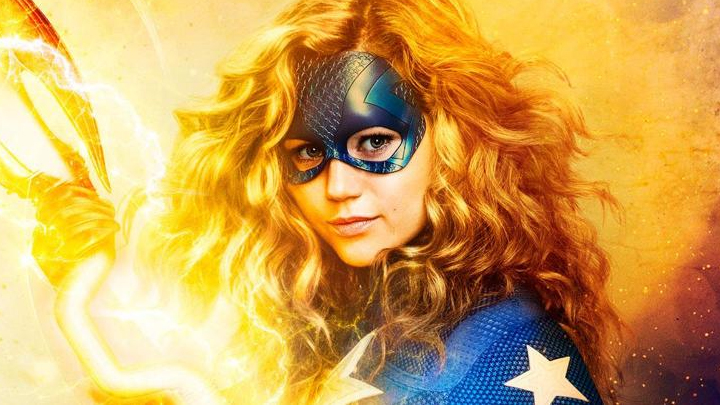
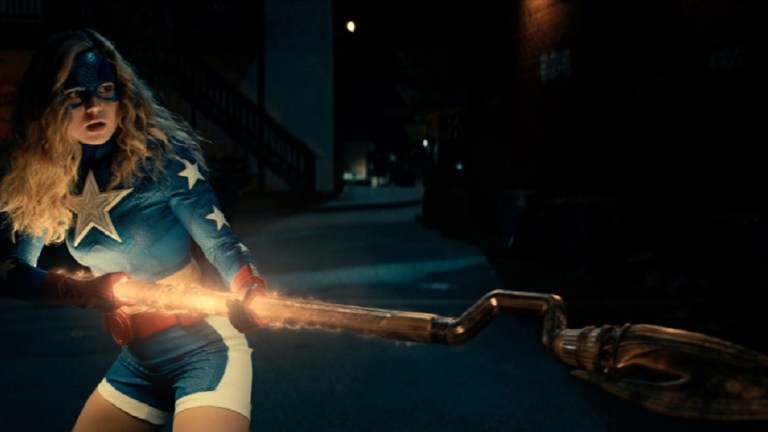
Season 2 of CW’s Stargirl begins in a much different place than when season 1 ended. Courtney Whitmore has a fix, and it’s to fight supervillains. The one problem with that though; there’s more to life than being a superhero.
“The JSA is not the only team that you’re a part of. Our family’s a team too, okay?” Stepdad and S.T.R.I.P.E. creator Pat reminds Courtney. Pat’s attempting to normalize Courtney’s life while she’s trying to find a fight that doesn’t exist, not yet anyway. The new JSA members are also feeling the lack of threats in their own way.
The season premiere deals with trauma as Yolanda is dealing with her role in Brainwave’s death. Beth is struggling with the loneliness of not only her parent’s pending divorce but also trying to get Chuck (the famous AI goggles) back online. Rick is struggling with the idea of being a hero yet not getting any accolades from it. The theme had weight. These heroes are so young and were so excited to get into this without thinking of the cost.
Examining how a hero deals with the silent moments when the mask isn’t on is something Stargirl excels at. Courtney can’t take the mask off, so Pat makes her for a couple of weeks till she can get her act together. Even young Mike wants to get involved in the crime-fighting business instead of going on vacation. Our young heroes wanted everything right now and they most certainly got it. Now they have to deal with the idea of living somewhat normal lives from time to time.
Here are three other quick hitters from the premiere.
Cindy (who we love to hate) is informing her own Injustice Gang with the help of Eclipso. One of the pictures she chooses is Courtney’s step brother Mike Dugan. Oh boy, this could get complicated.
Green Lantern’s daughter Jennie-Lynn Hayden, or better known as Jade, has arived. We get an explosive debut from her as she battles Courtney and grabs her father’s lantern. Courtney has quite the journey on her hands with Jade in the fold.
Is that Starman? In the pilot we think Sylvester Pemberton is dead, but it seems like he’s alive and well. We find him in a diner talking to Pat Dugan’s ex-wife. Will he be making an appearance soon and what does that mean for Courtney?
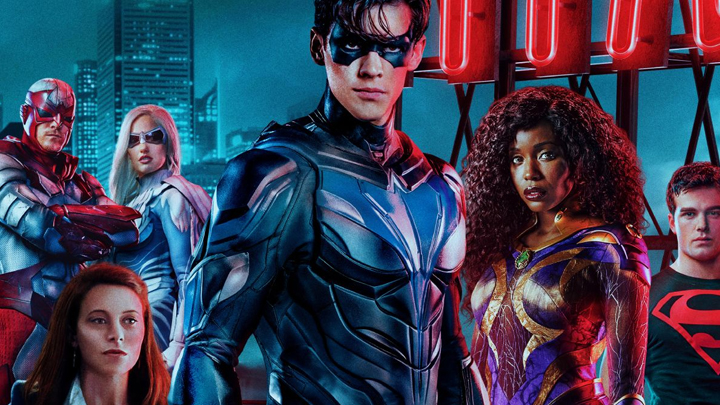
The first three episodes of Titans Season 3 released on HBO Max yesterday waste no time making it clear that Titans can be a very different show. Despite still being centered around darker themes, it is hard to miss that the start of the season feels like Titans is being dragged away from its overly broody, dispirited origins. Episode 1 immediately portrays our heroes as an actual team that takes down bad guys and sticks around for the San Francisco press—the people love them. Already, the show feels more optimistic and a bit more enthusiastic.
Dick Grayson himself is a bit jarringly more upbeat in these first scenes. He is snarkier and less dejected, fully embracing his role as the leader of the Titans. Koriand’r is similarly lighter and friendlier right off the bat. Season 3 also wasted no time in updating her look once again. While it’s a bit tedious to see her physically change so frequently—especially while the others remain exactly the same—each time Titans updates Kory she tends to look more and more like the strong and intimidating royal alien that we want her to be. The other characters showcased in the early minutes of Episode 1—Gar, Conner, Dawn, and Hank—all are given brief but meaningful re-introductions that emphasize how far the characters have come in terms of their physical abilities and relationships to one another.
The first three episodes are ignited by the death of Jason Todd. While Season 2 ended with the death of Donna Troy, using Jason’s supposed death as the focal point here is genuinely a clever move. Fresh off of the trauma and perceived abandonment he endured by the Titans last season, Jason as Robin impulsively and unpreparedly confronts the Joker alone, only appear to be quickly and brutally beaten to death. Already the show has married the internal tensions of the Titans with Gotham City lore, which Titans has repeatedly flirted with in the past. Dick’s discovery of Jason’s strange chemical inhalant and Bruce Wayne’s utter psychotic break following Jason’s death sparks a detective thriller that sees the Titans relocate to Wayne Manor to investigate.
There is heavy emphasis on Bruce Wayne/Batman, Gotham, Dick, and Jason in the first three episodes. While the show seems rightfully aware of its past success in its portrayal of Dick as a damaged former Robin and his relationship to Bruce, this theme starts to feel a bit excessive at times. The way in which Titans is going out of its way to literally tell (rather than show) us how Bruce is a psychopath who destroyed the lives of young Dick and Jason is too forced. Dick and Barbara Gordon talk about how Bruce is in denial several times, Barbara yells at Bruce in front of Dick about how horrible he was with the Robins, and Bruce promptly opted to murder to Joker all to bring it home that Bruce is, well, terrible. The introduction of Barbara has so far been positive, as she anchors our characters into Gotham a bit more smoothly. It also expands our known Bat-Family and exposes us to more of its secrets and scars.
Still, the show wasted an opportunity to emotionally hook the audience at the start by glossing over Jason’s “death.” Given the groundwork the series has laid, it likely would have been effective to wallow in the loss for a moment before quickly moving on to his Red Hood alias and continually focusing on how Bruce is, again, terrible. Not only does the rushed and vague death make the Red Hood twist more predictable, but it also dampens how much impact the story could have had with a more intense focus on the implications of Jason’s death on the Titans and even in Gotham. Instead, it is mostly used as a quick plot creator and a reason to aggressively communicate that Bruce is, once again, terrible.
The emphasis on Bruce is clearly a ploy to emphasize Dick. Showcasing Bruce as terrible and doomed to be terrible is any easy way to make Dick look worthier. It also spurs the recurring theme through these three episodes that Dick should “be a better Batman.” This will surely set the course throughout the season for Dick to continue to go through turmoil as Batman’s legacy. There were moments in Season 2 where this dynamic truly shined for the show, but at a certain point it gets repetitive. Dick’s character and the series’ exploration and development of it is no doubt one of its best assets, but it’s coming at the expense of Titans being about Dick and Gotham City rather than the Titans.
Jason’s Red Hood is an OK villain so far. While his presence isn’t particularly menacing or frightening, he does commit significantly violent and sadistic actions at the beginning of his tenure which cements him as a formidable and serious foe for the Titans. While Jason’s change in character is just convincing enough, it falls short of being truly gripping or believable. Still, his more manipulative and puppet master-type edge is more interesting than his Robin. His role does bring forth more intricate detective-type work and storytelling than in previous seasons. It has the unfortunate tendency to drag, but when it’s at its best it can be compelling. In any event, it’s certainly an upgrade to the splotchy and often incoherent plotlines of the past.
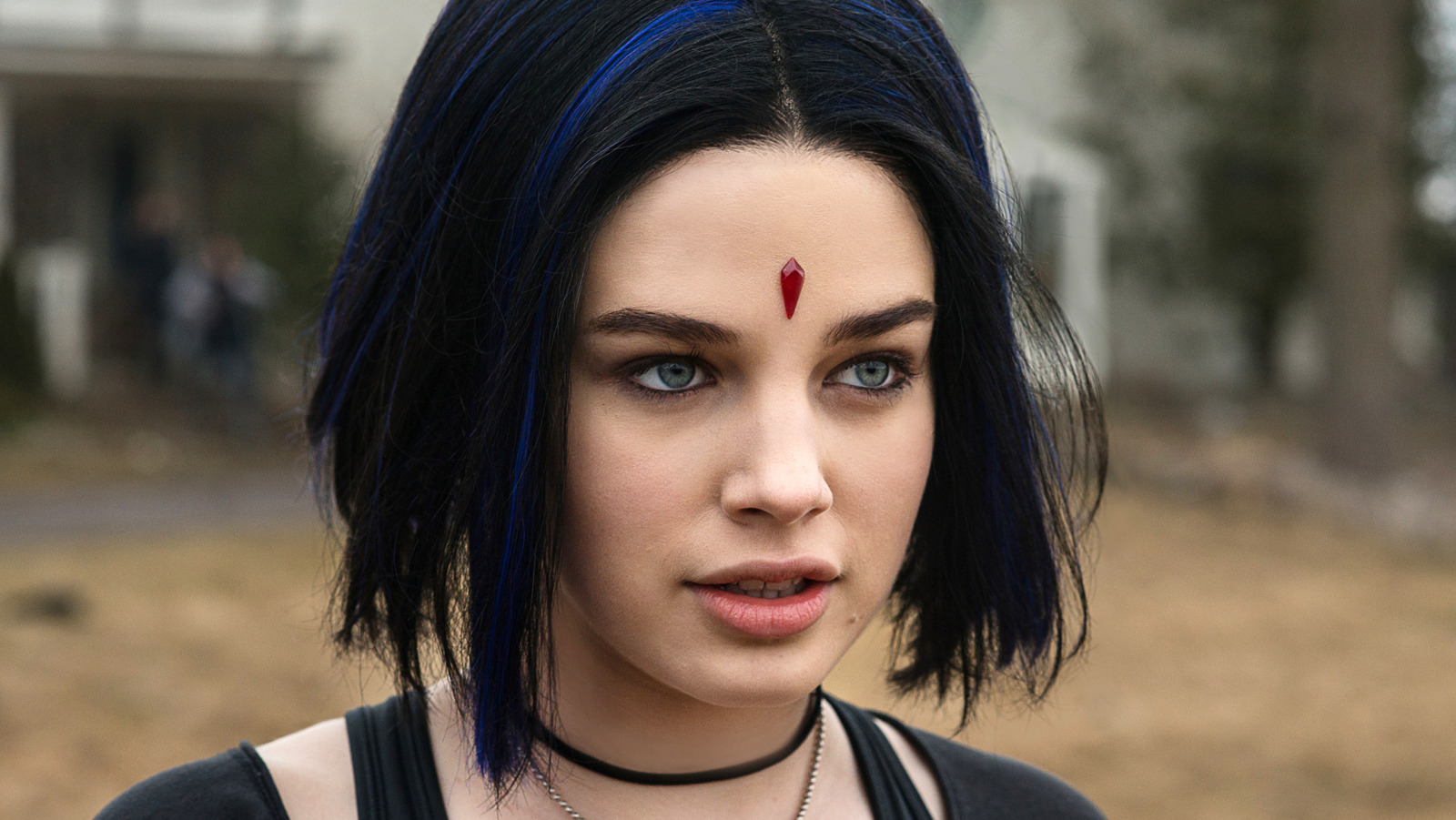
Aside from developing a cohesive and streamlined story, the first three episodes have also vastly improved on their portrayal of their titular characters. Gar remains cheekily charismatic, and Conner, the newcomer, has been well implanted as his number one companion. The two have an innocent, childlike dynamic that suits both characters consistent with how they’ve been established in previous seasons. Honestly, the two—especially Gar—deserve more screen time based on how well they interact amongst themselves and as side characters in others’ stories. Perhaps more is in store for them later in Season 3. Kory, on the other hand, is very slowly improving, but the script never seems to give her much personality or even room to express one. Rachel is absent for the first time. To be honest, it wasn’t all that noticeable until it was mentioned in the show. While I’m sure the character will return from Themyscira bringing potentially several major plot lines to the table, her absence is letting Titans breathe and regroup at the moment following the overly ambitious Rachel-centered Season 1 and Rachel-heavy Season 2.
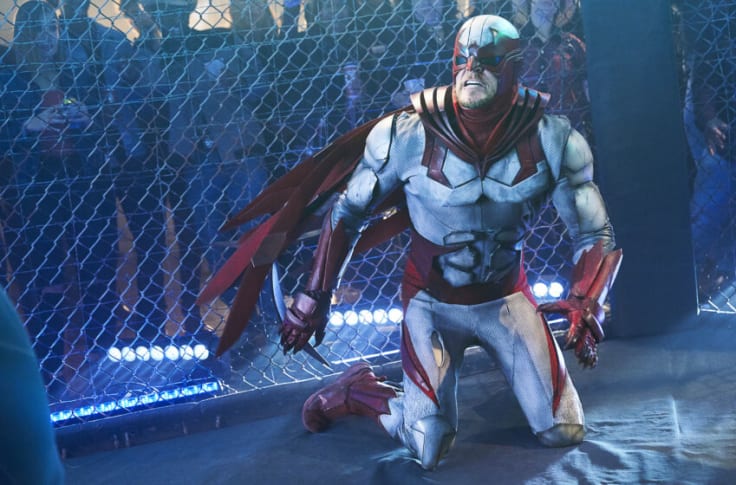
The greatest praise that can be given to these first three episodes is Hank’s arc. Hank and Dawn always had the problem of being two characters that did not exist without the other. True, their relationship was a driving force of Hawk and Dove, but neither felt overly interesting. In the brief space where the two were no longer a couple, Hank was given more screen time and the character was actually one of the more enjoyable to watch. He gained aspects of humor and even joy without losing his short-tempered and sturdier ways. He also had warm moments with several Titans that he normally would not interact with much. When Jason implanted the bomb in his chest, it initially felt like a generic beat-the-clock episode. It played out as one, but the ending took the bold step to actually kill Hank at the very moment all seemed saved. It was a little disappointing to see him and Dawn make up so quickly in the midst of it all after they had finally been released from the constraints of being attached, but ultimately it was all in favor of making Hank’s death actually impactful. For the first time in the series, a death actually felt like a loss. Not only did the Titans lose Hank, but they seemingly lost Dawn as well after she decided to leave following his death.
Episodes 1 through 3 delivered a solid start to Season 3, and are undeniably of higher quality and more enjoyable than Titans episodes have been in the past. It comes with the unfortunate tradeoff of losing focus on the actual Titans in favor of a Gotham-centered plot. The action is also noticeably missing so far from the series, particularly with respect to any hero whose powers rely on (less than ideal) visual effects. Where some is included, it’s perfectly decent, but there’s not enough of it to drawn from at this point.
The third season of the now-HBO Max original Titans promises to be the best season yet, easily leaving the first two in the rearview mirror. It does not fail to recognize what it did well in previous seasons and not only amplifies it but uses it more purposefully. The result is a much more cohesive and engaging plotline that evenhandedly threads itself out across the season. This approach is in stark contrast to the patchwork of character introductions and scattered stories that weighed down the previous seasons. Sadly, it still suffers slow and even tedious points, but ultimately is a vast improvement on the series’ ability to tell a story.
The series is noticeably lighter in tone this time around. Titans has by no means become “light”, but much of the overly dark visuals and broody, dejected tone have been pulled back some. With that, the severity of violence, the amount of blood and gore the series puts forth is significantly lower. While there may be some loss in terms of how gritty the HBO Max series could be, it also feels like there is more space now for the show to deliver a story and explore its characters.
One of the biggest strengths of the season is highlighted in the very first scenes of the first episode. Titans, for the first time, has really established that the Titans are, in fact, a team. While they took time to call themselves a team and a family in the last season, it never felt particularly believable until now. The series is starting to truly take advantage of the groundwork it laid for itself. While the series still does what DC often does well by opening the series up to a wide and versatile survey of DC characters and storylines, this season feels like it is building upwards for the first time rather than outwards.
Instead of endlessly adding new elements into the show just to leave others to wilt, Titans finally takes existing elements and uses them to their higher potential while more subtly and tactfully adding in new pieces. There are certain themes and characters that were simply dull in the past but are redesigned into powerful and emotional moments in Season 3 that make the show great at times.
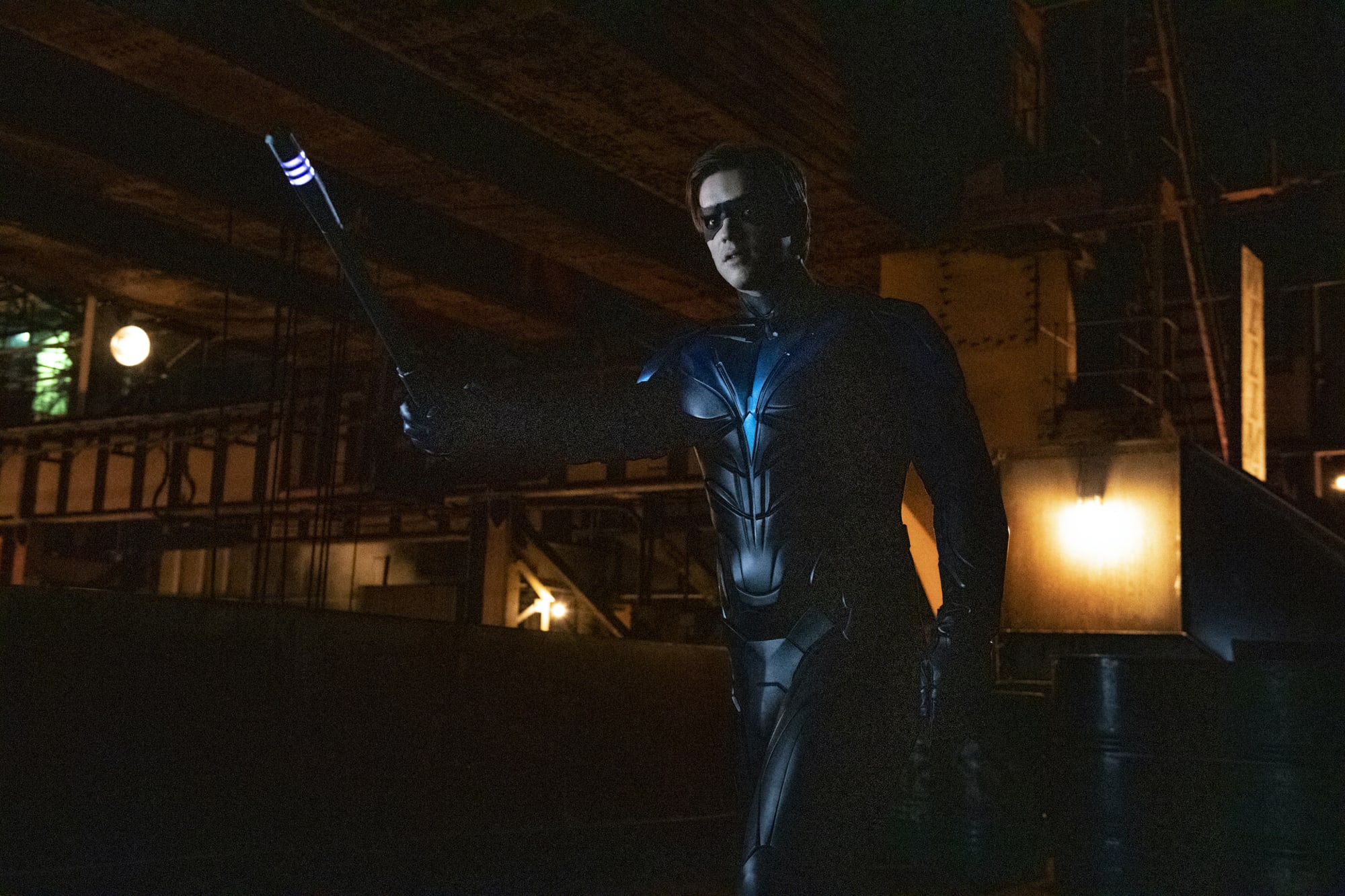
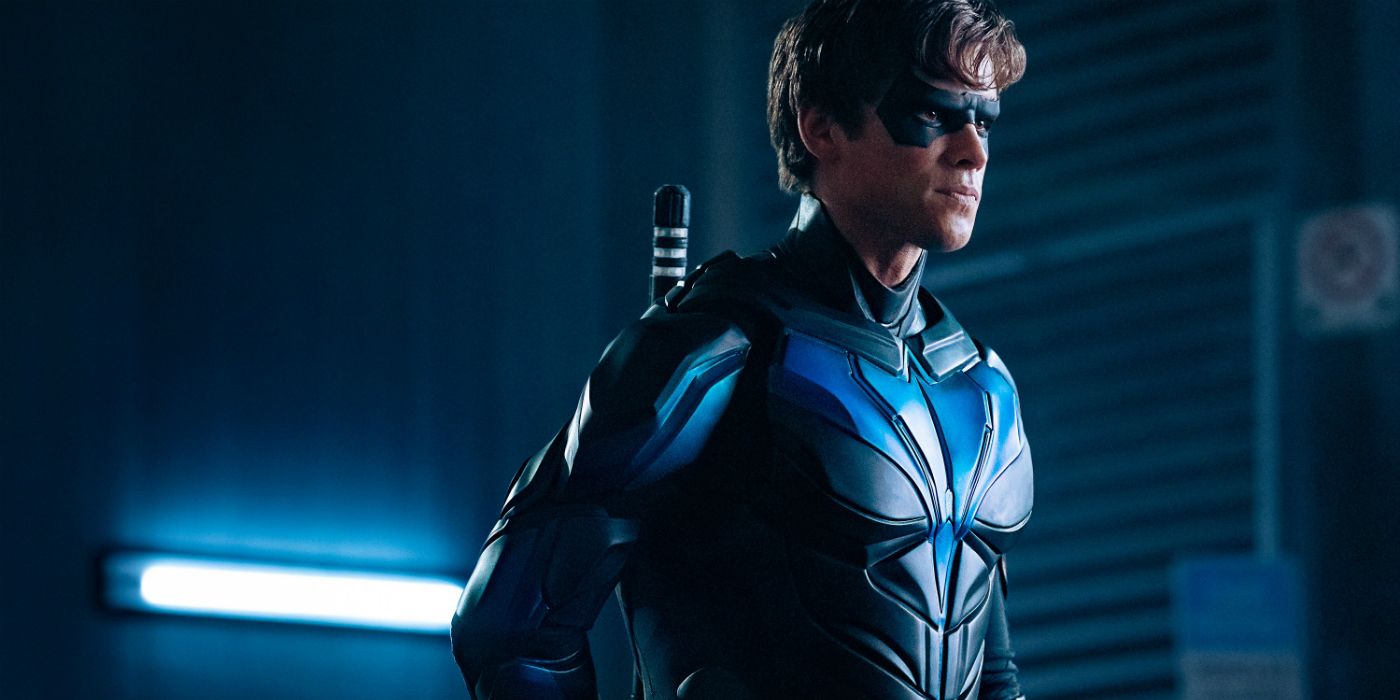
Where Titans truly shined in the past is its portrayal of its leading character, Dick Grayson. Brenton Thwaites’ Grayson, newly minted as Nightwing, continues to steal the spotlight. The series doubles down on the character to the point that the show could, at times, arguably be titled Nightwing without being misleading. This direction can come at the obvious expense of other characters’ development, but it also genuinely aids the organization, consistency, and quality of the season. Where some characters are afforded more limited attention, it is often deliberate and of higher quality than in previous seasons.
Rather than portraying itself as a typical superhero action show, the latest season often operates under the guise of a detective thriller. This does, unfortunately, lead to a deficiency of action, particularly of those characters whose powers are dependent on visual effects. To be fair, where the action is highlighted – particularly hand-to-hand combat – it is well executed and enjoyable to watch. There’s just not enough of it.
At the end of the day, Titans retains plenty of its flaws going into its sophomore season. Still, it does stand out, though, by being noticeably and significantly better. It seems like the creators meaningfully took stock in what the series was doing well and what it was not, and tailored this season specifically to address that. Because of that, it can feel like a different show than what it has been, but the result is a much more compelling and enjoyable Titans.
Cookie Consent
We use cookies to improve your experience on our site. By using our site, you consent to cookies.
This website uses cookies
Websites store cookies to enhance functionality and personalise your experience. You can manage your preferences, but blocking some cookies may impact site performance and services.
Essential cookies enable basic functions and are necessary for the proper function of the website.
Name
Description
Duration
Cookie Preferences
This cookie is used to store the user's cookie consent preferences.
30 days
These cookies are needed for adding comments on this website.
Name
Description
Duration
comment_author_email
Used to track the user across multiple sessions.
Session
comment_author_url
Used to track the user across multiple sessions.
Session
comment_author
Used to track the user across multiple sessions.
Session
Statistics cookies collect information anonymously. This information helps us understand how visitors use our website.
Google Analytics is a powerful tool that tracks and analyzes website traffic for informed marketing decisions.
Contains information related to marketing campaigns of the user. These are shared with Google AdWords / Google Ads when the Google Ads and Google Analytics accounts are linked together.
90 days
__utma
ID used to identify users and sessions
2 years after last activity
__utmt
Used to monitor number of Google Analytics server requests
10 minutes
__utmb
Used to distinguish new sessions and visits. This cookie is set when the GA.js javascript library is loaded and there is no existing __utmb cookie. The cookie is updated every time data is sent to the Google Analytics server.
30 minutes after last activity
__utmc
Used only with old Urchin versions of Google Analytics and not with GA.js. Was used to distinguish between new sessions and visits at the end of a session.
End of session (browser)
__utmz
Contains information about the traffic source or campaign that directed user to the website. The cookie is set when the GA.js javascript is loaded and updated when data is sent to the Google Anaytics server
6 months after last activity
__utmv
Contains custom information set by the web developer via the _setCustomVar method in Google Analytics. This cookie is updated every time new data is sent to the Google Analytics server.
2 years after last activity
__utmx
Used to determine whether a user is included in an A / B or Multivariate test.
18 months
_ga
ID used to identify users
2 years
_gali
Used by Google Analytics to determine which links on a page are being clicked
30 seconds
_ga_
ID used to identify users
2 years
_gid
ID used to identify users for 24 hours after last activity
24 hours
_gat
Used to monitor number of Google Analytics server requests when using Google Tag Manager
1 minute
Marketing cookies are used to follow visitors to websites. The intention is to show ads that are relevant and engaging to the individual user.
Pinterest Tag is a web analytics service that tracks and reports website traffic.