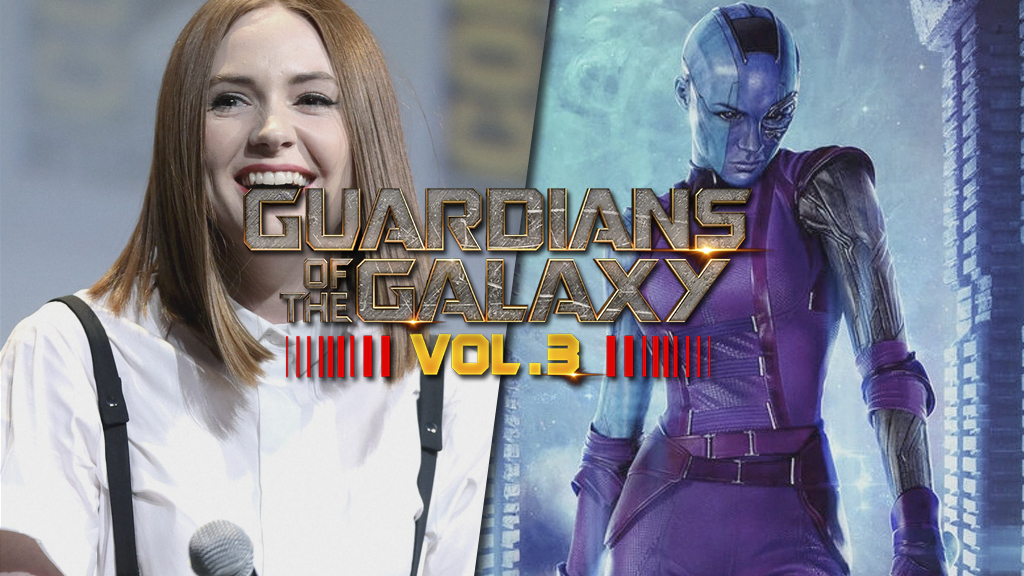
Karen Gillan has been busy promoting her newest film, The Bubble, where she teamed up with Judd Apatow to offer a meta film about film-making. It seems her work on that project has inspired her to push a bit more to try and improvise her work. In an interview with The Wrap, she’s talked about her approach to acting and made a promise that Nebula is improvising “a lot more lines” in Guardians of the Galaxy Vol. 3.
This time around in ‘Guardians 3’, she’s, yeah, she’s improvising a lot more lines.
Karen Gillan
Of course, she doesn’t give away what she may have improvised throughout the production but did highlight that a big part of the opening for Avengers: Endgame was her doing just that alongside Robert Downey Jr, as Nebula and Stark bonded while adrift in space.
I will say, I’ve improvised a fair bit of Nebula because I don’t know if you saw ‘Endgame,’ which seems like. That’s a ridiculous question. But basically, all of the stuff with Robert Downey Jr. at the beginning was like, that whole montage was improvised.
Karen Gillan
Some of the most memorable lines in cinematic history have been improvised. So, it’s great to also see James Gunn giving his team the freedom to add their own touches to further develop the characters they’ve played for so long. Nebula’s interactions with Stark were quite memorable, especially in how they added quite a bit more to her personality after just losing her sister, who she finally built up a connection with.
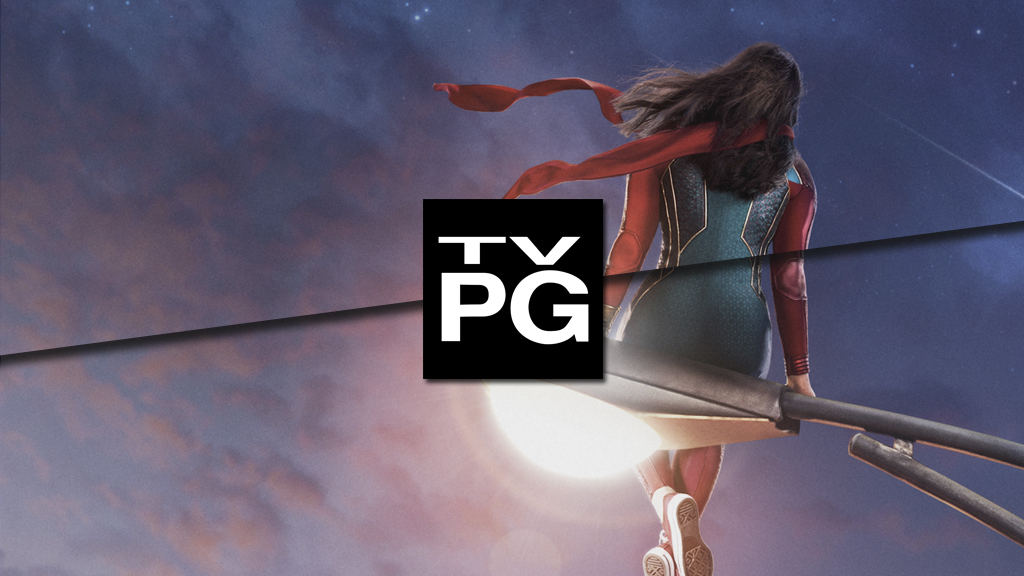
Those looking for an MCU installment that is geared to younger or more wholesome audiences are in luck. Disney+ revealed that the next MCU series, Ms. Marvel, will be rated TV-PG, making it the first time that any Marvel Studios movie or series has received a rating this low. All MCU movies to date have been rated PG-13, and every Disney+ MCU series to date has been rated TV-14, which is the television equivalent of a PG-13 rating.
Ms. Marvel recently unveiled its first trailer and set up a story focused on Iman Vellani’s Kamala Khan. It is perhaps not too surprising that a series about a teenage girl set in a high school-type setting would be the first series to nab a PG rating, though the MCU has dealt with similar ages and setting in its Tom Holland-led Spider-Man trilogy.
The battle over the streaming service’s ability to provide a family-friendly service while also showcasing its incredibly successful range of more mature properties will surely rage on. Recently, some fans spotted shots in The Falcon and the Winter Soldier that had been edited to be less violent, but Disney+ quickly retracted the altered scenes. At the very least, it does not look like Ms. Marvel will pose much of a challenge for the streaming service on that front.
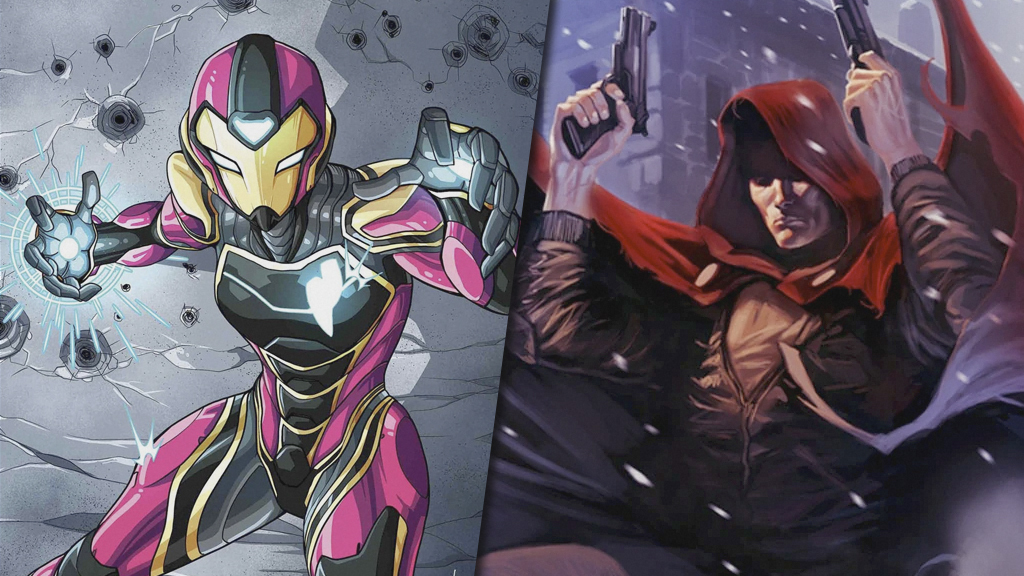
A recent casting call from POC Culture shed light on a new, supporting character to be featured in the as-yet-undated Marvel Studios Disney Plus streaming series Ironheart. The report indicated that the production is searching for a Black, Latina or Afro-Latina transgender woman between the ages of 18 and 22 to portray a character described as “smart” and “confident” with a “unique sense of humor.”
As the news made the rounds, one additional bit of information seemed to slip through the cracks just a bit and it’s information that might lend credibility to some previous rumors about the villain of the series. In early January, The Illuminerdi reported that a casting call for Ironheart might indicate that Parker Robbins, aka The Hood, could be villain of the project. That idea has been met with a heavy dose of skepticism by fans because it seems incongruous to have a mystically-enhanced villain going up against a tech-based hero. However, the recent casting call for the transgender woman included an additional description of the character that actually supports the idea of The Hood.
POC Culture’s report included among the descriptors of the character that she also had a “mystical bent.” While this is EXTREMELY vague, it does indicate that Ironheart will include at least some sort of mystical elements. And while this in no way confirms the presence of a character so steeped in mysticism as The Hood, it does raise some interesting points for discussion, not the least of which being that by putting a magic user up against Riri’s powerful tech, Marvel Studios would be going against LONG-established pillars of their stories in which the power sets of the villains match the heroes. By pitting someone like The Hood against Ironheart, Marvel Studios would give Riri a chance to truly flex her genius muscle and separate herself from her armored predecessor. So while this is by no means some sort of confirmation of The Hood, it is interesting food for thought and something to follow over the next couple of months.
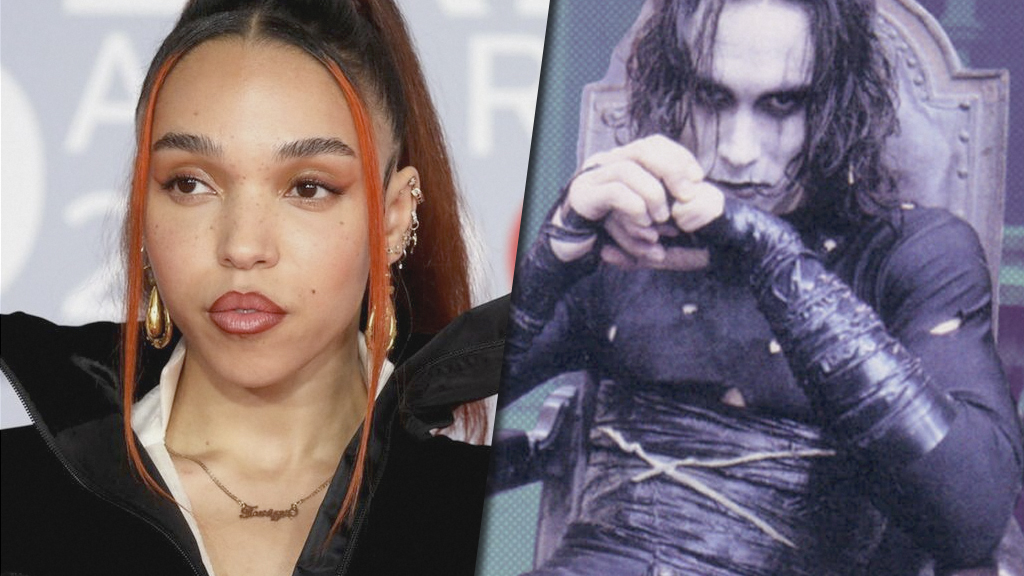
Just a few days ago, we learned that Bill Skarsgard will spearhead a new attempt at reviving the cult classic The Crow for a modern audience. Rupert Sanders will take on directing duties on the project with the former Pennywise taking on the iconic role. Well, the project is moving at a fast speed, as The Hollywood Reporter has now revealed that musician FKA Twigs has joined the reboot and will co-star alongside Skarsgard as the main love interest.
What is interesting is that THR’s Borys Kit also added some additional information on Twitter highlighting that it’s unclear if they’ll go down the resurrection storyline, or it becomes a personification of the crow. We might not know until we get the first trailer, as the production is eyeing a June production start in Prague and in Munich.
It's unclear if the character actually dies in this one, or is perhaps resurrected in some fashion…or may even be a personification of the crow itself. https://t.co/hJIhXKhlQZ
While many mainly remember the film starring the late Brendan Lee, the story is actually based on James O’Barr indie comic by the same name. After being assaulted by a gang, a man is resurrected by a mystical crow and enacts his revenge plan on those that took his life and that of his love, who will be played by FKA Twigs. It’s unclear if they might make more changes to adapt it to the modern age or stick to a more Victorian-inspired design like the first film did. For now, it’s kind of a miracle that the production is picking up speed, to begin with given how cursed any previous adaptation has been.
Reshoots have become a staple for the industry, especially as high-budget productions are becoming more and more complex. Yet, it seems that the upcoming release of Sonic the Hedgehog 2 managed to go off with a strong start and didn’t really have to rely on any extensive reshoots. In an interview with Collider, director Jeff Fowler revealed that they pretty much only made some minor adjustments but “didn’t really have any reshoots” on the high-budget production. His full quote is as follows:
I am actually very proud to say that we really, aside from some minor adjustments here or there, we didn’t really have any reshoots on the film. It was just, [that] we had a really strong story from the start. And a lot of it was really just about trying to tighten it up as much as possible, make sure all of the messaging, all of the emotional stuff was clear and was really landing.
Jeff Fowler
It’s quite impressive considering how many moving parts and involved parties these projects have. He does hint that they’ve made some adjustments, but it seems those may have been done in their CG work, especially as they don’t require the live-action cast to focus on the sequences that only include Sonic, Tails, and Knuckles. Still, not tackling any reshoots is a curious decision, as it helps tighten the script and some moments that might not hit as well. But, it’s also great to see a creative team that just believes in their vision and that the producers let them bring the initial vision to life.
Here’s a curious surprise. Paramount has swiftly confirmed that Sonic the Hedgehog will get a third film even long before its first sequel even hit theaters. The second entry has just been released in some select countries with a US release this weekend. So, director Jeff Fowler is currently busy with interviews. In one with Collider, he has revealed that he isn’t signed on yet for the already confirmed third project. While one might assume they are already working on the story, it seems they are doing so without the director’s involvement.
Nothing would make me happier, I’m not officially involved with any of the additional films yet, but I’m so proud of this movie, I’m so proud of the first movie, so excited for fans to see it. They’re really incredible movies to make.
Jeff Fowler
What is interesting is that the words “additional films” may hint at some other spinoffs being in some form of development. So far, we know that Knuckles will get his own Paramount+ spinoff series, but it’s unclear what the story they might explore and if it might even tie into the third entry. If they are working on other spinoffs, it seems that Paramount is all-in to establish a cinematic universe that further explores the many colorful characters in Sonic’s world. At this point, we’ll just have to wait until we get an official name for this newly established universe. If you’re interested to get our thoughts on the film, you can read our review by clicking here.
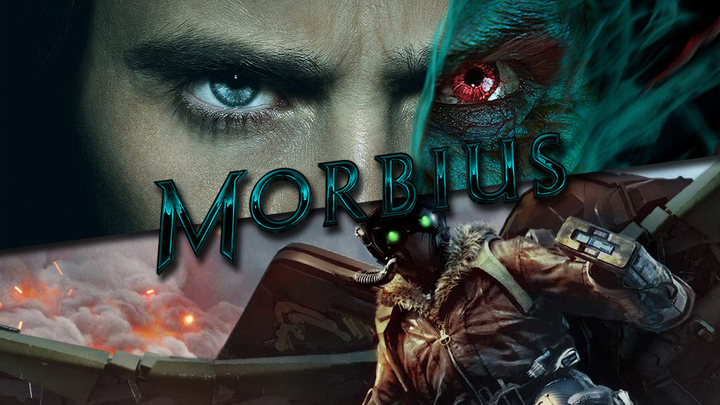
For those that have watched Sony’s latest venture into building a separate Marvel Cinematic Universe, Morbius sets up a curious crossover between its various anti-hero characters. Somehow, MCU’s Vulture (Michael Keaton) lands in this new universe in the film’s post-credit sequence. Not just that, he even ends up meeting up with the newly minted vampire to pitch an idea of teaming up to face off against Spider-Man. Ignoring the fact that Spidey isn’t really a factor at any point in the film and its out-of-character, Keaton was a big part of the ongoing trailers. So, it’s strange he’s suddenly relegated to a post-credit sequence.
Director Daniel Espinosa got a chance to discuss the challenge of adapting to Spider-Man: No Way Home as the film introduced the concept of the live-action Spider-Verse. It also opened up the confirmation that Venom was part of a separate universe, which turns out was Sony’s idea. So, the fact they are now separate universes complicated matters and forced them to adapt elements of the story. To not overcomplicate things, they just added him at the end as a result.
The first thing that happened was that we had Michael Keaton because we were planning on doing this. But then when Spider-Man: No Way Home came out, it said, “This is how the visual effects are.” And then the idea of having him just encountering him in that universe seemed too complicated, and then we put it in the end.
Daniel Espinosa
A lot of the piece highlights the challenges they’ve faced throughout production. Morbius was originally going to release two years earlier. So, we may have faced a very different kind of connection between the MCU and Sony’s attempt at one. We’ll see if the physical release might include a hint at the original scenes and how Michael Keaton was originally going to fit into the story.
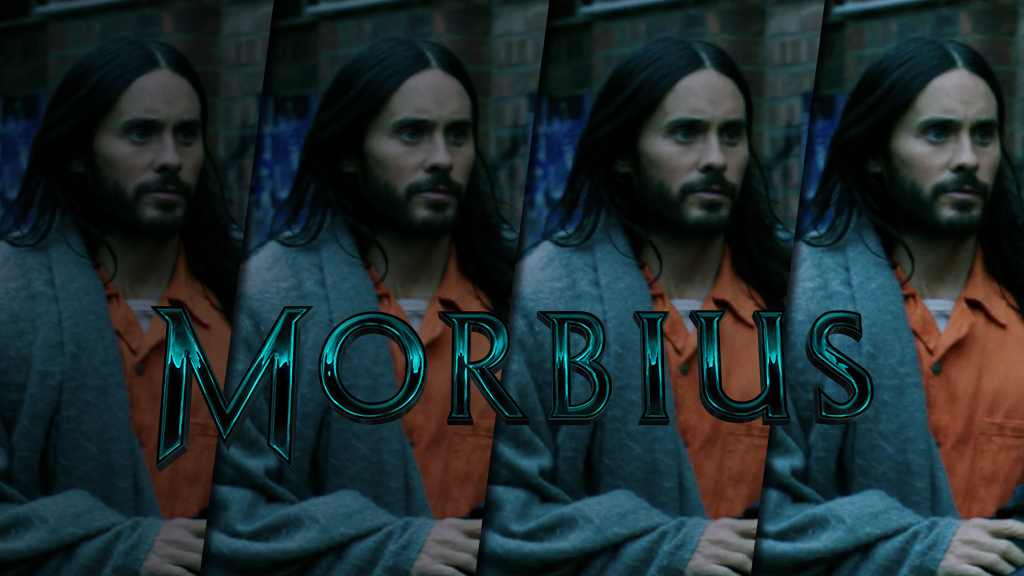
Jared Leto is well-known throughout the industry, but not for the reasons you’d expect. During his tenure as the Joker on David Ayer‘s Suicide Squad, the actor took “method acting” a step too far by sending his co-stars some questionable gifts. There’ve been rumors that he’s done something similar with his time on his latest feature Morbius, where he plays a character with a disability. Supposedly, he would walk around on crutches and remainin character even long after the camera’s stopped rolling As such, it would cost the production hours for him to just go to the bathroom as a result. Morbius’ director Daniel Espinosa has now confirmed his off-screen behavior in an interview with Uproxx.
Yeah. Because I think that what Jared thinks, what Jared believes, is that somehow the pain of those movements, even when he was playing normal Michael Morbius, he needed, because he’s been having this pain his whole life. Even though, as he’s alive and strong, it has to be a difference. Hey, man, it’s people’s processes.
Daniel Espinosa
As his focus on moving around with crutches became too much, they made a deal to have him sit in a wheelchair as it otherwise would’ve dragged production out even more. It certainly sounds like the director of films like Life and Safe House has faced some harsh challenges on set, especially how he generalizes the experience with actors. He even goes on to say that:
If you want a completely normal person that does only things that you understand, then you’re in the wrong business. Because what’s different is what makes them tick. It’s very hard to be able to say, “I can take this part away and I will still get the same stuff from him.” I don’t do that. I’m more to see like, “Hey, if you’re doing this, we have to do this.”
Daniel Espinosa
So, it sounds like directing a feature film, especially a high-budget one, is quite the challenge. He hints that there are many parties involved with these projects that had their own goals with the production. So, to top it off with actors that have very specific expectations and their own methods to tackle projects like these certainly adds to the pressure any creative has to go through in a competitive industry like Hollywood.
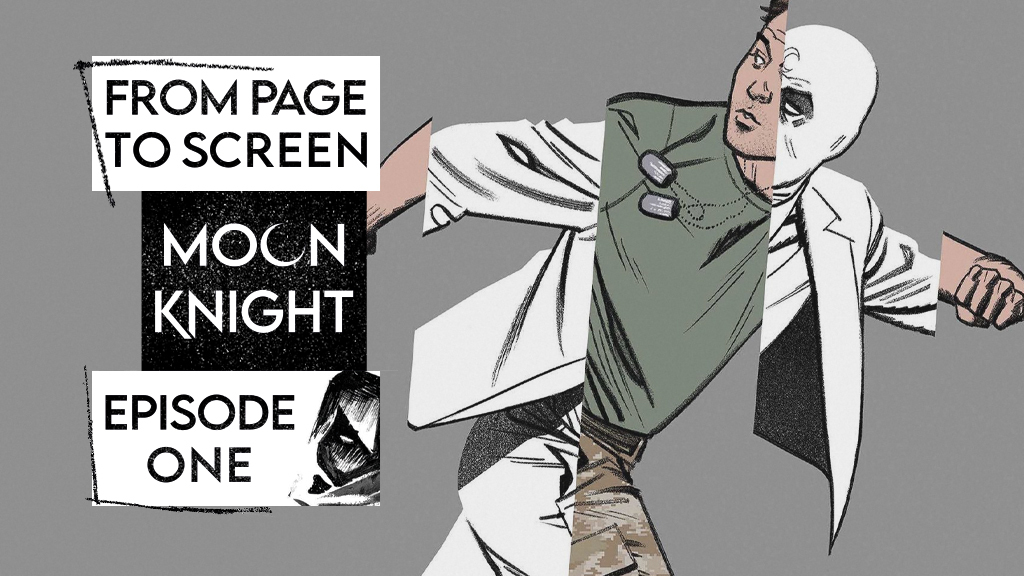
Unlike the last Marvel Studios series, Hawkeye, Moon Knight has made it pretty clear so far that the series does not draw its inspiration from any particular comic book run. While that makes it more difficult to pull any particular page or panel from the comics and compare it to the live-action series, it does give us an excuse to explore much more of Moon Knight’s comics history. The premiere episode of Moon Knight had a heavy focus on Steven Grant’s dissociative identity disorder (DID) and his discovery of Marc Spector, his alter. Here, we give a rundown of Marc Spector’s DID throughout the character’s history.
The origin of Spector’s DID was not explored until much more recently. But the first appearance of Moon Knight’s personalities came with Moon Knight #1 (1980). After Spector died under the statute of the Egyptian moon god Khonshu, he was seemingly revived. He vowed to act as the human fist of Khonshu as Moon Knight. Causally, though, it was mentioned that Marc Spector had two other personalities as well: millionaire Steven Grant and taxi driver Jake Lockley. In that first story, the caped Moon Knight persona was referred to as a combination of Spector, Grant, and Lockley, though later stories have considered Moon Knight his own personality. In Episode 1 of Moon Knight, Jake Lockley has yet to appear or be referenced. Spector has also had other identities including Mr. Knight, Captain America, Spider-Man, and Wolverine.
‘Moon Knight’ #1 (1980)
Some Moon Knight stories had a tendency to downplay the fact that Spector had multiple identities, not mention it at all, or inaccurately reference it as schizophrenia. In 2016, the Jeff Lemire and Greg Smallwood run first acknowledged that Spector’s DID manifested as a child:
‘Moon Knight’ #10 (2016)
Not too long after that, Max Bemis and Paul Davidson exposed that Spector’s DID may have been triggered by a traumatic event. Specifically, a family friend, whose real name was Ernst, was actually a Nazi and a serial killer, who brutally tortured and killed members of Spector’s Jewish community. Spector escaped, though his DID was apparently a coping mechanism to handle the trauma.
‘Moon Knight’ #194
Generally speaking, Spector, Grant, and Lockley are aware of one another. Often, particularly in Moon Knight’s early days, they worked together as a unit in order to make the whole caped vigilante deal work.
‘Moon Knight’ #189‘Moon Knight’ #195
Episode 1 of Moon Knight, however, depicts a Steven Grant that has no idea Spector or Khonshu exists. A similar moment in the comics also comes from the Lemire-Smallwood run where Spector confronts his alters (or at least versions of them) in order to gain control.
Marvel Studios ‘Moon Knight’ Episode 1
‘Moon Knight’ #14 (2016)
The episode also depicts Steven blacking out when Marc takes control of his body. That also is not something that the comics Moon Knight seems to have much issue with, although there are times when certain personalities–often Marc–are intentionally suppressed for long periods. But in the Bemis-Davidson run, it’s revealed that Jake Lockley had a relationship with Marlene and fathered a child with her, and Marc was completely unaware of it.
‘Moon Knight’ #190
Marvel Studios’ ‘Moon Knight’ Episode 1
How Moon Knight will continue to explore the titular character’s DID will be interesting, to say the least. It could take on the primary focus of the series like it did for the Lemire-Smallwood run, or it could remain somewhat on the sidelines as it has for most of Moon Knight’s comic book history. For now, enjoy one of the most iconic Moon Knight pages out there:
There have been many discussions on who exactly had what idea in setting up the future of the Marvel Cinematic Universe’s relationship with Sony’s Spider-Man Universe. While Tom Holland‘s run as the character stuck in the MCU after Spider-Man: No Way Home, we learned that the universe introduced with Venom was a completely separate timeline altogether. That set-up naturally bled over into Morbius, which existed in this separate timeline. The introduction of Michael Keaton‘s Vulture has added quite a lot of confusion to the story, but luckily director Daniel Espinosa revealed some details on how it came together.
Most theories pointed to Marvel Studios pitching the idea of a separate universe for Sony, but it turns out that wasn’t the case. According to Espinosa in an interview with Uproxx, Sony was the one that created the concept of this different timeline. Naturally, it led to some issues as the film was originally going to release two years earlier, way before No Way Home even entered production, but ended up having to change course after a constant barrage of delays. So, they had no idea what Marvel Studios was cooking up and Sony forced their hand to adapt. Still, this new timeline was their idea from the get-go:
But I think that the concept of having different timelines were, I believe, came from Sony, not from Kevin Feige. It was Sony that initiated that idea. I think that Miles Morales that you have in Spider-Verse, I would bet your life on that you would have Miles Morales from the Spider-Verse in the Marvel Cinematic Universe at some point.
Daniel Espinosa
It’s a curious reveal, but it may be a hint that Sony wanted absolute freedom to work within their own sandbox. Even if the forced introduction of Vulture made no sense and broke the rules set by the MCU film. Still, that has never stopped the studio from trying out different things as they are seemingly building up towards a villainous crossover against a version of Spider-Man we haven’t seen yet. For now, we’ll have to see where this is heading.it
We use cookies to improve your experience on our site. By using our site, you consent to cookies.
This website uses cookies
Websites store cookies to enhance functionality and personalise your experience. You can manage your preferences, but blocking some cookies may impact site performance and services.
Essential cookies enable basic functions and are necessary for the proper function of the website.
Name
Description
Duration
Cookie Preferences
This cookie is used to store the user's cookie consent preferences.
30 days
These cookies are needed for adding comments on this website.
Name
Description
Duration
comment_author_email
Used to track the user across multiple sessions.
Session
comment_author_url
Used to track the user across multiple sessions.
Session
comment_author
Used to track the user across multiple sessions.
Session
Statistics cookies collect information anonymously. This information helps us understand how visitors use our website.
Google Analytics is a powerful tool that tracks and analyzes website traffic for informed marketing decisions.
Contains information related to marketing campaigns of the user. These are shared with Google AdWords / Google Ads when the Google Ads and Google Analytics accounts are linked together.
90 days
__utma
ID used to identify users and sessions
2 years after last activity
__utmt
Used to monitor number of Google Analytics server requests
10 minutes
__utmb
Used to distinguish new sessions and visits. This cookie is set when the GA.js javascript library is loaded and there is no existing __utmb cookie. The cookie is updated every time data is sent to the Google Analytics server.
30 minutes after last activity
__utmc
Used only with old Urchin versions of Google Analytics and not with GA.js. Was used to distinguish between new sessions and visits at the end of a session.
End of session (browser)
__utmz
Contains information about the traffic source or campaign that directed user to the website. The cookie is set when the GA.js javascript is loaded and updated when data is sent to the Google Anaytics server
6 months after last activity
__utmv
Contains custom information set by the web developer via the _setCustomVar method in Google Analytics. This cookie is updated every time new data is sent to the Google Analytics server.
2 years after last activity
__utmx
Used to determine whether a user is included in an A / B or Multivariate test.
18 months
_ga
ID used to identify users
2 years
_gali
Used by Google Analytics to determine which links on a page are being clicked
30 seconds
_ga_
ID used to identify users
2 years
_gid
ID used to identify users for 24 hours after last activity
24 hours
_gat
Used to monitor number of Google Analytics server requests when using Google Tag Manager
1 minute
Marketing cookies are used to follow visitors to websites. The intention is to show ads that are relevant and engaging to the individual user.
Pinterest Tag is a web analytics service that tracks and reports website traffic.