Though it’s set in a long time ago in galaxy far, far away, the political and social aspects of Star Wars have always been inspired by our own planet’s history. George Lucas was heavily inspired by World War II while making the original trilogy, modeling the Empire after the Nazi Third Reich. The prequel trilogy showed how the machinations of Sleepy Sheev Palpatine led to the fascist Empire’s entrenchment but the films’ focus on the Force, the Jedi and the Sith meant that, for the most part, evil and heroic things were only done by Sith and Jedi. While Rogue One told the story of ordinary heroes, Season One of Andor introduced ordinary villains, those who represent the military arm of the Empire and are willing to suppress dissent by any means necessary. Spread throughout the galaxy, the Imperial Security Bureau serves as an overt analogy to the Nazi Gestapo, brutally enforcing the Empire’s policies with impunity, until the Ferrix Riot. If Tony Gilroy wanted to make the Empire more detestable, the first twelve episodes of Andor did so by deepening the surface-level analogy created by The Creator.
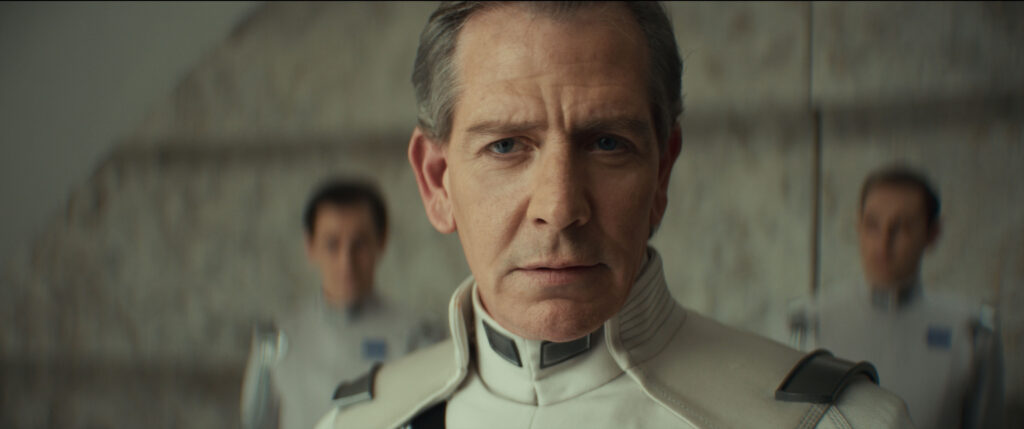
Until now, Star Wars projects have navigated in the shallows of the Nazi analogy. Andor Season 2 boldly dives into the deepest waters through the Empire’s plans for Ghorman, a planet along the galaxy’s Rimma Trade Route. The first nine episodes of Season 2 bring to live-action one of the most despicable acts the Empire ever perpetrated in Star Wars canon and does so while creating a direct parallel to Nazi genocide and the Holocaust. Led by Ben Mendelsohn‘s Orson Krennic, select members of the Empire meet secretly at The Maltheen Divide and hatch a sinister plan to strip mine Ghorman. Anticipating resistance from a people who have already lost hundreds in a savage act perpetrated by Tarkin, the cabal’s debate over how to move forward reveals the Empire’s disdain for its populace: the people of Ghorman aren’t people at all, only pests in the way of the Empire. Straight from the Nazi playbook, the Empire’s propaganda arm, The Ministry of Enlightenment, sows the seeds of hatred and prejudice of the Ghor, weaponizing galactic opinion and marginalizing them so that the Empire may take what it wants and look like heroes in doing so. The secret meeting, the realization of the plan and the events that unfold in the season’s eighth episode leave the viewer feeling hollowed out and establish the Empire as an evil that extends well beyond its Emperor.
Structurally, the first nine episodes steer Andor to what feels like a fitting conclusion to the plot threads spun in Season 1. Luthen Rael’s Rebellion struggles to organize against the Empire with its disparate factions unable to trust one another, Mon Mothma continues to struggle to navigate an increasingly complex and sheepish polticial landscape in the Senate and Andor continues to question his place in the galaxy and whether or not he’s prepared to lose everything for the greater good. Drowning in dysfunction, the Rebellion simply is not ready to exist; however, the Ghorman Massacre makes it clear that the galaxy cannot wait until it is.
Suddenly the Rebellion is real for you? Some of us live it. I’ve been in this fight since I was six years old! You’re not the only one who lost everything. Some of us just decided to do something about it.
-Cassian Andor
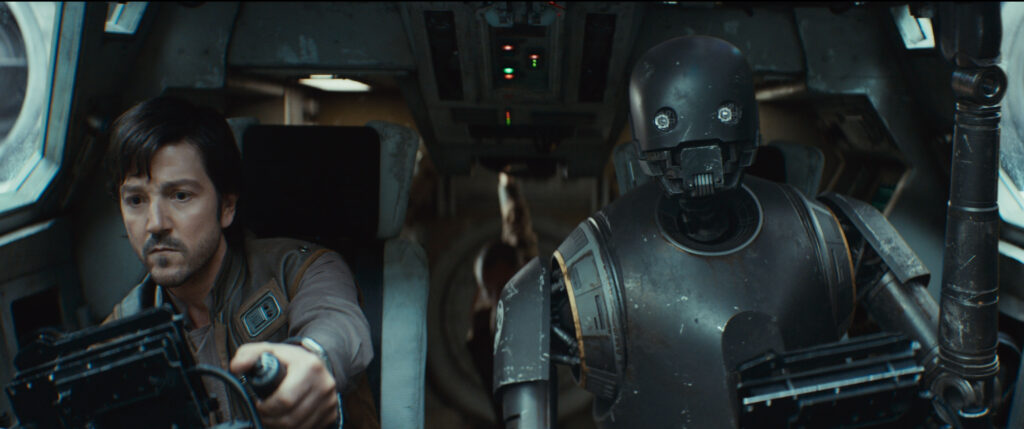
If the first nine episodes bring Andor to a conclusion, the final three, set one year before the Battle of Yavin, serve as a prologue to Rogue One, teeing up the events of the film while truly carving out Cassian’s legacy as THE rogue one. Only in the final pod of episodes can the full weight of what Andor truly is be felt: it is the most important project in the overall mythos of the Star Wars universe. Cassian Andor, a Kenari orphan, emerged as the connective tissue of the Rebellion. And Kleya Marki stands as one of the most important characters in the history of the galaxy far, far away…but are you sure you even know who she is without a Google?
Tony Gilroy unquestionably created something singular and exceptional in Andor. Crafting a project worth watching when its audience already knew how it had to end seemed so impossible that the necessity of the existence of Andor was questioned before it ever hit Disney+. However, Gilroy delivered an epic masterpiece and never relied on Jedi mind tricks and flashy cameos in order to do so. Even as the series entered more well-tread territory, Gilroy’s series never abandoned its characters, allowing them to leave their marks on the vast narrative tapestry of the Star Wars galaxy.
Everything I did, I did for the Rebellion. And every time I walked away from something I wanted to forget, I told myself it was for a cause I believed in. A cause that was worth it. Without that, we’re lost. Everything we’ve done would have been for nothing. I couldn’t face myself if I gave up now.
-Cassian Andor
Having grown up when Star Wars: Episode IV-A New Hope was simply called Star Wars and having watched projects in the order they’ve been released might lessen some of the dramatic tension of a project like Andor; however, Star Wars is forever and as first timers work their way through projects in chronological order without the benefit of knowing what comes next, they will be captivated by Andor. Captivated by its thematic resonance, its ambition in building the unseen corners of the Rebellion and the Empire and its wire-to-wire intensity. They’ll be sure they’ve never seen anything quite like it…and neither have you.

Leave a Reply