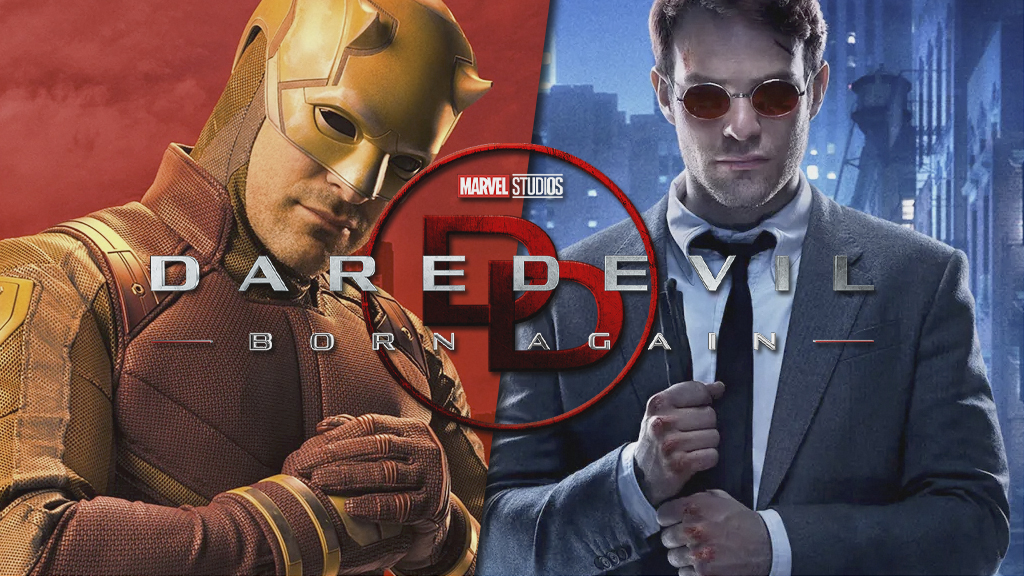
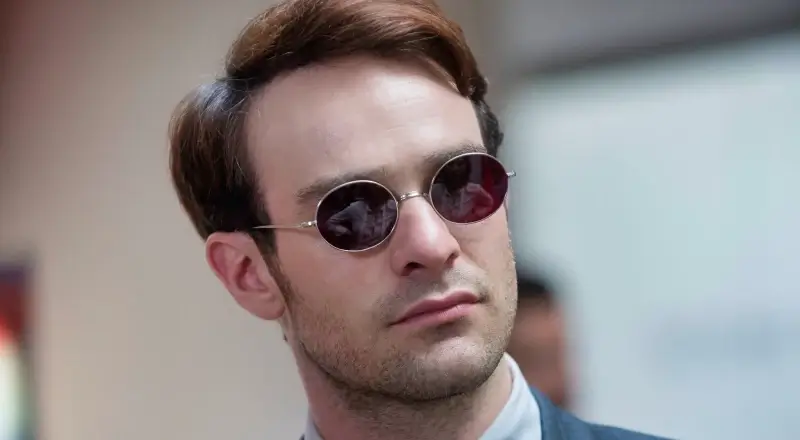
After recent photos and videos from the New York City set of Daredevil: Born Again revealed the first look at costumes for Wilson Bethel’s Bullseye and Charlie Cox’s Daredevil, fans have been in an uproar as the scene in question may have featured some significant spoilers. A day later, filming in NYC proved to be the gift that keeps on giving as new BTS pics taken during daylight hours have provided the best look yet at the bright red suit Cox was sporting in those scenes.
The new suit is certainly far brighter than any of the suits seen during the three seasons of Marvel Television’s Daredevil. While the cowl and belt seem fairly similar to the one seen during his appearance on She-Hulk, it’s clear the chest and abdominal areas are brand new. Of interest are the blue dots on DD’s arms, stomach and back. Given he’s been in a fight with Bullseye, it’s very possible these are spots where either wounds or even knives (Bullseye was carrying a significant number of throwing knives on his gear in the set photos) will be added during post-production.
It’s also of note that while some of Daredevil: Born Again will be set during the MCU’s present day, the scenes captured around Josie’s bar may be set at some point in the MCU’s past. There’s been plenty of rumor and speculation that Matt will have “retired” from being Daredevil following some traumatic events. It’s very possible those events may have unfolded right before everyone’s eyes on the streets of NYC with Bullseye taking out a close friend of two of Matt’s.
We’ll all have a while to wait before finding out as the first part of Daredevil: Born Again isn’t expected to stream until 2025.
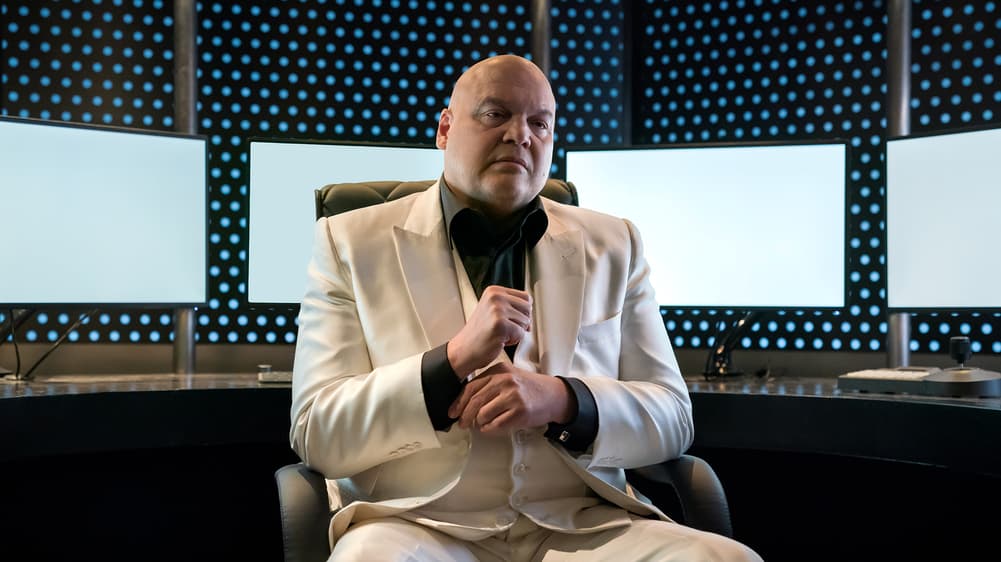
Wilson Fisk Kingpin Profile: Hell’s Kitchen Mastermind
As the brooding underbelly of Hell’s Kitchen unfolds in Daredevil, one name rises above the cacophony of crime – Wilson Fisk. Portrayed with unparalleled depth by Vincent D’Onofrio, Fisk becomes the linchpin of an intricate narrative that explores the relentless pursuit of justice and the emergence of a formidable adversary. This character profile delves into the nuances of Wilson Fisk, the Kingpin of Crime, unraveling his key plot points, the intricacies of his personality, and the web of relationships that shape his journey.
**This is not intended to be a comprehensive summary of all of Wilson Fisk’s appearances. It is simply a character profile of Wilson Fisk based on the first three seasons of Daredevil.***
The Rise of the Kingpin
Wilson Fisk’s journey is a tapestry woven with strategic brilliance and calculated moves. Beginning as a shadowy figure in the criminal underworld, Fisk’s rise to infamy is methodical. The season unveils his orchestration of criminal enterprises, pulling strings from the shadows while presenting a philanthropic façade to the public. His ambitions extend beyond monetary gain; Fisk seeks to reshape Hell’s Kitchen into a utopia, albeit through morally ambiguous means.
His calculated moves create a web of crime, leading to confrontations with Daredevil, the masked vigilante challenging his reign. Fisk’s arrest marks a turning point in Season 1, setting the stage for a power vacuum and the evolution of his character.
A Dance with Daredevil
Central to Fisk’s narrative is his dynamic with Daredevil, the masked vigilante played by Charlie Cox. Their confrontations become a psychological chess match, with Fisk viewing Daredevil as both a threat and a kindred spirit seeking to cleanse Hell’s Kitchen. The ebb and flow of power between the two creates a gripping narrative tension that elevates the season’s stakes.
As the series progresses, the psychological intricacies of Fisk and Daredevil’s relationship deepen, transcending the traditional hero-villain dynamic. Fisk perceives Daredevil not merely as a nemesis but as a reflection of his own desire for order. The masked vigilante becomes an unintended confidante, a symbol of Fisk’s belief that Hell’s Kitchen requires a force willing to embrace darkness for the sake of salvation. Simultaneously, Daredevil, while resisting Fisk’s influence, is entangled in the Kingpin’s intricate web. The psychological chess match intensifies as both men grapple with the blurred lines between right and wrong. Fisk’s calculated moves to manipulate Daredevil’s moral compass create an atmosphere of perpetual tension, where the quest for justice becomes a morally ambiguous journey. The evolving psychological complexity of their relationship becomes a narrative focal point, enriching the storytelling tapestry of Daredevil and ensuring that the clash between these two formidable forces transcends mere physical confrontation.
Love and Vulnerability
Fisk’s vulnerability is unveiled through his relationships. His affection for art reveals a softer side, a yearning for beauty in a city defined by chaos. The introduction of Vanessa Marianna (Ayelet Zurer) as a love interest adds a layer of complexity to Fisk’s character. The romance not only humanizes the Kingpin but also exposes the lengths to which he will go to protect those he cares about.
Vanessa is not just a love interest; she is Fisk’s anchor, grounding him amidst the chaos of his criminal empire. Their connection is a dichotomy of tenderness and danger, as Vanessa becomes the one person who can unravel the layers of the enigmatic Kingpin. Fisk’s vulnerability is laid bare in Vanessa’s presence, exposing a man who craves acceptance and understanding. Her involvement in Fisk’s life, particularly as he navigates the treacherous world he commands, adds depth to his character. Vanessa not only witnesses the ruthless exterior but also embraces the complexities within, creating a dynamic where love and crime intertwine. As their relationship unfolds, it becomes a narrative linchpin, shaping Fisk’s decisions and motivations in ways that transcend the traditional roles of hero and villain, casting a poignant light on the man behind the Kingpin.
Beneath the Surface
Wilson Fisk’s outward brutality conceals a complex persona. His imposing figure belies a man driven by a twisted sense of altruism; Fisk believes that his violent actions serve a greater purpose. His charisma, tempered by a volatile temper, makes him both a captivating leader and a dangerously unpredictable adversary. D’Onofrio‘s portrayal captures the intricacies of Fisk’s personality, navigating the thin line between ruthless criminal and wounded soul.
Wilson Fisk’s notorious temper is a force that reverberates throughout Daredevil, and its origins lie in a traumatic and brutal childhood. The murder of his father, Bill Fisk, becomes a pivotal event that scars young Wilson permanently. Witnessing his father’s violent end at the hands of criminal associates becomes a catalyst for Fisk’s internal rage, shaping the very core of his explosive temper. This traumatic episode becomes a haunting specter, fueling Fisk’s relentless pursuit of control and order in Hell’s Kitchen. His temper is not just a display of brute force; it is a manifestation of the deep-seated pain and unresolved trauma stemming from the loss of his father. This psychological scar becomes a driving force, intertwining with Fisk’s rise to power and his ruthless approach to maintaining dominance. The murder of his father serves as a pivotal lens through which we understand the roots of Fisk’s volatile nature, providing crucial insight into the complex psychology of the man who would become the formidable Kingpin.
The Twisted Altruist
Fisk’s actions are fueled by a twisted sense of altruism. In his mind, the chaos he orchestrates serves as a catalyst for societal change. His vision for a better Hell’s Kitchen is warped by his traumatic childhood experiences, driving him to reshape the city through any means necessary. Fisk’s moral ambiguity adds layers to his character, blurring the lines between hero and villain.
Wilson Fisk’s twisted sense of altruism emerges as a defining and paradoxical aspect of his character in Daredevil. Fueled by a desire to transform Hell’s Kitchen into a utopia, Fisk envisions a city cleansed of corruption and chaos. However, his altruistic aspirations take on a dark and morally ambiguous hue. Fisk believes that, in orchestrating chaos and imposing his version of order, he can bring about a greater good for the city. This warped sense of benevolence adds layers to the complexity of the Kingpin, blurring the lines between hero and villain. Fisk’s altruistic motives, driven by a traumatic childhood and a distorted perception of justice, become a driving force behind his criminal empire. It’s this very dichotomy – the man who seeks to rebuild a city through nefarious means – that makes Fisk’s character a compelling exploration of the blurred morality at the heart of Daredevil.
Artistic Affection
Fisk’s love for art becomes a poignant aspect of his character. The juxtaposition of his brutality with a genuine appreciation for beauty underscores the dichotomy within him. The scenes where Fisk interacts with art serve as windows into his soul, revealing a man grappling with the duality of his nature.
Wilson Fisk’s love for art extends beyond a mere appreciation; it becomes a defining element of his character. One painting that holds particular significance is “Rabbit,” an iconic work by Jeff Koons. “Rabbit” symbolizes Fisk’s desire for perfection and a utopian Hell’s Kitchen. The stainless-steel bunny reflects a blend of modernity and meticulous craftsmanship, mirroring Fisk’s own aspirations for the city. The choice of “Rabbit” is deliberate; its reflective surface challenges observers to confront their own reflections, mirroring Fisk’s own introspective journey. The painting becomes a metaphor for Fisk’s vision – an idealized Hell’s Kitchen where every piece falls into place with calculated precision, much like the flawless surface of Koons’ masterpiece. This artistic affection becomes a poignant thread, weaving the complexities of Fisk’s character into the visual tapestry of Daredevil, providing a window into the soul of the Kingpin.
Key Relationships
Family Dynamics
Bill Fisk-Father
Wilson’s relationship with his father, Bill Fisk, serves as a poignant and formative aspect of his character in Daredevil. Bill, portrayed by Domenick Lombardozzi, stands as a powerful and abusive figure, leaving an enduring impact on Fisk’s development. The brutality and violence inflicted by Bill shape the Kingpin’s own ruthless demeanor as he ascends to power. The traumatic experiences with his father become a catalyst for Fisk’s insatiable desire for control and order, reflecting a distorted vision of protection.
The memory of Bill Fisk looms large in Wilson’s psyche, and his father’s actions fuel a complex mix of emotions within him. Notably, Bill met a tragic end at the hands of young Wilson, who, in an act of self-defense against his abusive father, struck him with a hammer. This defining moment, the circumstances of Bill’s death, becomes a pivotal element in understanding the intricate layers of the Kingpin’s character, showcasing how familial trauma and the consequences of that fateful night shape the criminal empire he constructs in the gritty landscape of Daredevil.
Marlene Vistain-Mother
Fisk’s complicated relationship with his overbearing mother, Marlene Vistain, shapes his emotional landscape. Childhood trauma becomes a driving force, influencing Fisk’s adult relationships and criminal endeavors.
Vanessa Marianna
Vanessa Marianna, Fisk’s love interest, becomes a central figure in his life. Their romance exposes Fisk’s vulnerabilities and motivates critical decisions, showcasing the emotional complexity beneath the Kingpin’s exterior.
Allies and Confidantes
James Wesley
James Wesley, Fisk’s loyal right-hand man, plays a pivotal role in his rise to power. Wesley’s strategic acumen and unwavering commitment add a layer of trust to Fisk’s inner circle. Wilson Fisk’s dynamic with James Wesley in Daredevil is a testament to the Kingpin’s ability to inspire unwavering loyalty. James Wesley, portrayed by Toby Leonard Moore, serves as Fisk’s right-hand man and confidante. Their relationship is marked by trust and strategic collaboration. However, this bond takes a tragic turn when Wesley meets his demise at the hands of Karen Page. In a pivotal moment during Season 1, Episode 9 (“Speak of the Devil”), Wesley’s unwavering loyalty to Fisk ultimately leads to his tragic end, as Karen Page shoots him in an act of self-defense. Wesley’s death serves as a significant turning point, showcasing the high stakes and complex interplay of loyalty and betrayal within the intricate narrative of Daredevil.
Leland Owlsley
Leland Owlsley, portrayed by Bob Gunton, assumes a pivotal role as Wilson Fisk’s financial advisor in “Daredevil.” Initially, Owlsley’s financial acumen and pragmatic approach make him a trusted confidante within Fisk’s criminal empire. However, as conflicts over power and control escalate, their alliance unravels, leading to betrayals and tensions. Owlsley’s fate takes a dramatic turn when, in Season 1, his ambition to cut ties with Fisk and take control of the criminal operation results in a fatal confrontation. This clash culminates in Owlsley’s accidental fall from a building, orchestrated by Fisk to eliminate the threat. Owlsley’s demise becomes a stark illustration of the cutthroat nature of Fisk’s world and the ruthless measures undertaken to maintain control within the morally ambiguous realm of Daredevil.
Anatoly and Vladimir Ranskahov
Anatoly and Vladimir Ranskahov, portrayed by Gideon Emery and , respectively, are Russian brothers whose alliance with Wilson Fisk forms a crucial plotline in Daredevil Season 1. The Ranskahov brothers’ trafficking ring becomes a central element, highlighting the pervasive corruption and brutality that Fisk navigates in his pursuit of control over Hell’s Kitchen. Initially working together to control Hell’s Kitchen’s criminal activities, tensions escalate within their trafficking ring, leading to a violent fallout. Fisk, recognizing their disloyalty and seeing an opportunity to consolidate power, orchestrates a brutal confrontation. Fisk brutally beats Anatoly to death in a display of dominance, solidifying his control over the criminal underworld. This merciless act serves as a stark example of the harsh consequences within Fisk’s empire and emphasizes the intricate web of alliances and betrayals that define the gritty narrative of Daredevil.
Vladimir becomes desperate and seeks revenge indirectly by attempting to expose Fisk’s criminal activities. He allies himself with Matt Murdock/Daredevil and attempts to gather evidence against Fisk, hoping to bring him down through legal means. Before his death, Vladimir directs Daredevil to investigate Leland Owlsley.
Madame Gao
A mysterious and powerful criminal figure with ties to the mystical organization known as The Hand, Madame Gao establishes an alliance with Fisk. She becomes a valuable ally in certain endeavors, contributing to the multifaceted nature of Fisk’s criminal network.
Madame Gao, portrayed by Wai Ching Ho, plays a mysterious and influential role in Wilson Fisk’s criminal network throughout Daredevil. Gao’s relationship with Fisk is characterized by mutual respect and shared interests, particularly in the realm of organized crime. Operating with a degree of secrecy, Gao becomes a key ally in Fisk’s pursuit of control over Hell’s Kitchen. Her involvement in the heroin trade and her ties to the mystical organization known as The Hand add an extra layer of complexity to their alliance. However, Gao remains enigmatic, often staying one step ahead of Fisk and maintaining an air of autonomy. This dynamic adds intrigue to their association, highlighting the intricate alliances and power plays within the gritty and morally ambiguous landscape of Daredevil.
Benjamin Poindexter
While initially introduced as an FBI agent tasked with taking down Fisk, Poindexter (Wilson Bethel) becomes a pawn in Fisk’s intricate schemes. Fisk manipulates Poindexter’s mental instability, turning him into a lethal weapon and a confidante in his own right. Their relationship takes a dark turn as Fisk recognizes Poindexter’s exceptional skills, particularly as an expert marksman.
Fisk becomes a mentor and puppet master, pulling Poindexter’s strings to serve his own interests. Poindexter’s transformation into Bullseye, a formidable adversary with a personal vendetta against Daredevil, cements his role as a confidante and weapon in Fisk’s intricate schemes. Their relationship becomes a focal point, showcasing Fisk’s ability to exploit the weaknesses of those around him to further his own agenda
Arch-Nemeses
Matt Murdock/Daredevil
The dynamic between Wilson Fisk and Matt Murdock, also known as Daredevil, is a central and complex element of Daredevil. Initially adversaries, their relationship evolves into a nuanced psychological chess match. Fisk sees Daredevil not only as a threat but also as a kindred spirit, someone who shares his desire for order in Hell’s Kitchen, albeit through radically different means. The ebb and flow of power between them creates a gripping narrative tension, with each attempting to outmaneuver the other both physically and mentally.
Fisk’s fascination with Daredevil goes beyond a typical hero-villain dichotomy. He recognizes Murdock’s commitment to justice and seeks to exploit his moral code. This becomes evident as Fisk orchestrates situations that force Daredevil to question the righteousness of his actions. In turn, Murdock’s unwavering pursuit of justice becomes a persistent thorn in Fisk’s side, challenging the Kingpin’s control over Hell’s Kitchen.
As the series progresses, the psychological dimensions of their relationship deepen. Fisk views Daredevil as a mirror reflecting his own desire for order and control, while Murdock struggles with the moral compromises he faces in combating Fisk’s criminal empire. Their encounters become intense battles not just of strength but of ideology, exploring the blurred lines between heroism and villainy in the gritty world of Daredevil.
Frank Castle/The Punisher
Frank Castle’s relentless pursuit of justice challenges Fisk’s criminal empire in Season 2. Castle’s brutal methods and personal vendetta test the Kingpin’s ability to navigate an ever-evolving criminal landscape. The relationship between Wilson Fisk andCastle is characterized by a clash of ideologies and a brutal confrontation in Daredevil.
Castle, driven by a relentless pursuit of justice and vengeance for the murder of his family, becomes a formidable adversary for Fisk. Fisk, recognizing Castle’s brutal methods and personal vendetta, sees an opportunity to manipulate the vigilante for his own ends. Their interactions highlight the complex interplay of morality within the series. Fisk, ever the strategist, attempts to harness Castle’s destructive force to eliminate common enemies. However, Castle’s unwavering commitment to his own sense of justice proves to be a formidable challenge, and their eventual violent confrontation becomes a pivotal moment in Daredevil Season 2.
Ray Nadeem
Ray Nadeem, portrayed by Jay Ali, undergoes a complex and evolving relationship with Wilson Fisk in Season 3. Initially an FBI agent with a commitment to justice, Nadeem becomes entangled in Fisk’s manipulative schemes. Fisk exploits Nadeem’s financial troubles and uses him as a pawn to advance his own agenda within the FBI. As Nadeem becomes unwittingly complicit in Fisk’s criminal activities, a strained dynamic develops. However, as Nadeem uncovers the extent of Fisk’s deceptions, the relationship takes a dramatic turn. Nadeem grapples with guilt and seeks redemption, ultimately becoming an unexpected adversary for Fisk. This complex interplay of trust, manipulation, and redemption adds depth to Nadeem’s character.
Wilson Fisk’s story continues in Marvel Studios Hawkeye and Echo and another chapter will be added in 2025 when Daredevil: Born Again streams on Disney Plus.
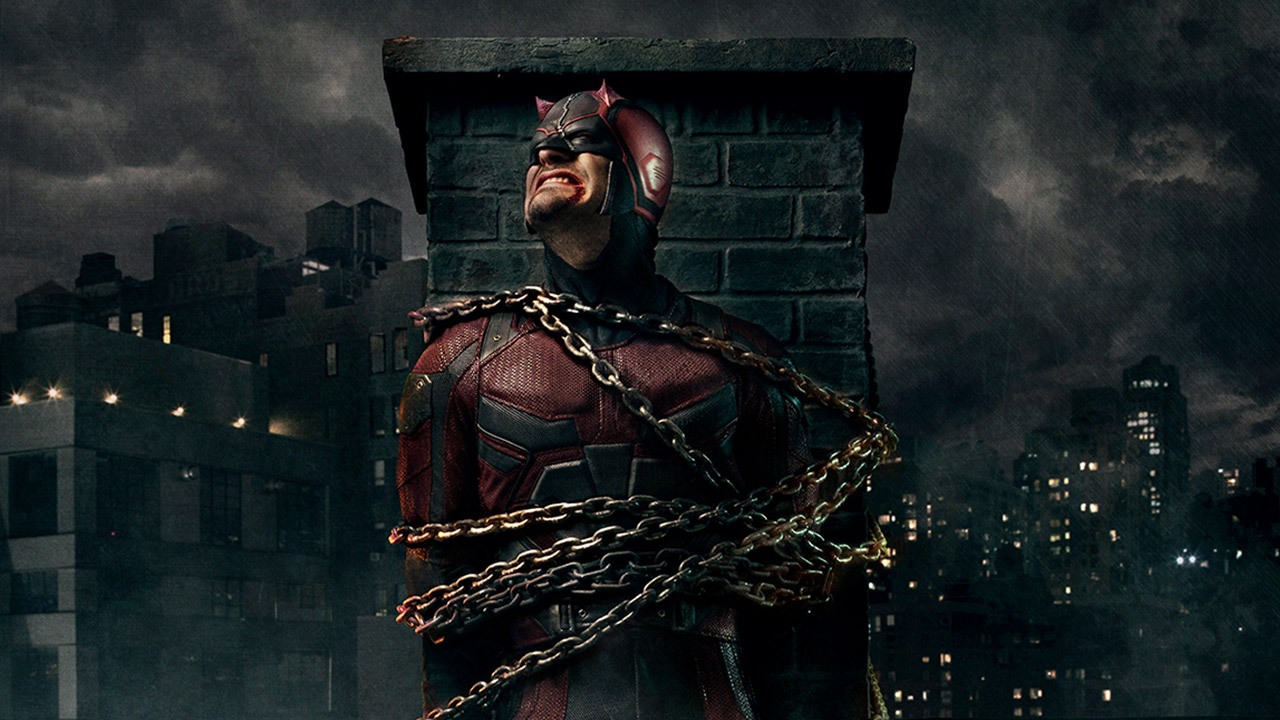
Daredevil Season 2 delves deeper into the gritty underworld of Hell’s Kitchen, introducing new players, escalating conflicts, and questioning the fine line between justice and vengeance. In this expansive narrative, Matt Murdock (Charlie Cox) faces not only external threats but also the internal turmoil of his own convictions. As the city grapples with rising chaos, Season 2 unfolds as a captivating exploration of heroism, morality, and the consequences of vigilantism.
The aftermath of Wilson Fisk’s (Vincent D’Onofrio) downfall continues to shape Hell’s Kitchen. Season 2 builds upon the foundation laid in the first season, exploring the power vacuum left by Fisk’s imprisonment and the emergence of new criminal forces vying for control. The consequences of Fisk’s actions linger, contributing to the evolving landscape of the city.
The Arrival of The Punisher
The season kicks off with the introduction of Frank Castle (Jon Bernthal), a former Marine turned merciless vigilante known as The Punisher. Castle’s brutal methods and uncompromising quest for vengeance put him on a collision course with Daredevil. The series explores the morality of their respective approaches to crime-fighting, setting the stage for a complex and visceral showdown between the two vigilantes. The Punisher, is a central and compelling character in Season 2 portrayed beautifully and disturbingly by Bernthal. Castle’s role adds a layer of complexity to the series, exploring themes of justice, morality, and the consequences of vigilantism.
Castle is introduced as a highly skilled and ruthless vigilante driven by a relentless quest for vengeance. His motivation stems from the tragic loss of his family, who were killed in a violent encounter with criminals. Castle’s introduction immediately sets the tone for a character deeply entrenched in grief and consumed by a desire for retribution. Throughout the season, flashbacks provide insight into Castle’s origin story, revealing the events that led to the loss of his family and his transformation into The Punisher. These flashbacks add emotional depth to Castle’s character, depicting the human side of a man driven to the edge by tragedy. Castle’s interactions with other characters, including Karen Page, add layers to his persona. His connection with Karen, in particular, humanizes him and showcases the internal struggle between the man he once was and the relentless Punisher he has become.
Elektra Natchios and Matt’s Past
Matt’s life takes an unexpected turn with the reemergence of Elektra Natchios (Elodie Yung), a mysterious and enigmatic woman from his past. Elektra’s arrival not only rekindles old flames but also draws Matt into a web of intrigue involving the ancient and secretive organization known as the Hand. As their paths intertwine, Elektra’s presence becomes a catalyst for both personal and city-wide upheaval.
Elektra is portrayed as a highly skilled and deadly assassin with exceptional martial arts abilities. Her combat prowess and agility make her a formidable force in the world of Daredevil, adding an element of danger to both the streets of Hell’s Kitchen and the personal dynamics with Matt. Elektra’s storyline becomes intricately tied to the ancient and mysterious organization known as the Hand. As the season progresses, viewers learn about Elektra’s involvement with the Hand and the implications of their presence in Hell’s Kitchen. The Hand’s dark agenda adds a supernatural and mystical element to Elektra’s character arc.
Elektra’s allegiances are a source of constant ambiguity. Her ties to both Matt Murdock/Daredevil and the Hand create a moral dilemma, as her actions oscillate between heroism and potential antagonism. This moral ambiguity adds layers to Elektra’s character, keeping both the audience and other characters in suspense about her true intentions. Elektra grapples with issues of identity throughout the season. Her internal conflicts, shaped by her past and her association with the Hand, contribute to a sense of vulnerability beneath her exterior of strength and prowess. This struggle with identity becomes a central theme in her character development.
Elektra becomes entangled in the conflict between Daredevil and Castle. Her alliances and interactions with The Punisher add another layer of complexity to the season’s overarching themes of justice and vigilantism. Elektra’s character arc reaches a poignant resolution in the latter part of the season. Her fate and the consequences of her choices have a lasting impact on the narrative, influencing the dynamics of Hell’s Kitchen and leaving a significant imprint on Matt Murdock’s journey.
The Punisher’s War on Crime
Frank Castle’s war on crime unfolds as a relentless and morally ambiguous crusade. The series delves into Castle’s tragic backstory, unraveling the events that transformed him into The Punisher. As Daredevil grapples with his own principles, the narrative raises thought-provoking questions about the nature of justice and the thin line that separates heroism from vigilantism.
Castle wages a one-man war on crime in Hell’s Kitchen, utilizing extreme and lethal methods to eliminate those he deems responsible for the city’s corruption. His methods starkly contrast with Daredevil’s, sparking a moral debate about the appropriate means of achieving justice. One of the defining aspects of Castle’s character is his moral ambiguity. While his actions are undeniably brutal, the series delves into the reasons behind his uncompromising approach. Viewers are prompted to question whether Castle is a villain or a misguided antihero, challenging traditional notions of right and wrong.
Castle’s journey takes a legal turn as he becomes the subject of a high-profile trial. The courtroom drama explores the ethics of Castle’s actions and the legal system’s ability to address the complexities of vigilantism. The trial serves as a pivotal moment for Castle’s character development and the overarching themes of the season. As the season progresses, Castle’s legacy extends beyond the immediate conflicts. His impact on Hell’s Kitchen and the ongoing discussions about the morality of vigilantism resonate throughout the series, leaving a lasting imprint on the narrative.
Castle’s story in Season 2 set the stage for his future appearances in the Defenders-verse and, ultimately, the Marvel Cinematic Universe. The character’s popularity in Daredevil led to the development of his standalone series, allowing for a deeper exploration of his complex persona. The Punisher added depth to the exploration of justice and morality, making him a memorable and impactful presence in the ongoing Daredevil story.
The Hand and a Rising Threat
The enigmatic Hand emerges as a formidable adversary, with ties to Elektra and a hidden agenda that threatens to plunge Hell’s Kitchen into darkness. The Hand is introduced as an ancient and secretive organization with roots dating back centuries. Its origins are steeped in mysticism and martial arts, making it a formidable force with a hidden agenda. The Hand’s mysterious leader adds an additional layer of intrigue, setting the stage for a larger conflict that transcends the immediate battles between Daredevil, Punisher, and Elektra.
The Hand’s role becomes intricately tied to Elektra, who is revealed to have a history with the organization. Elektra’s connection to the Hand adds a personal and complex layer to the overarching narrative, drawing her deeper into a world of ancient conspiracies. Elektra’s connection to the Hand unravels the organization’s agenda in Hell’s Kitchen. The Hand’s involvement in criminal activities and their quest for a mysterious substance known as “Black Sky” become central plot points, with Elektra serving as a key player in these unfolding events.
The Hand is depicted as a highly skilled and deadly group of ninja warriors. Their mastery of martial arts, stealth, and combat tactics makes them formidable adversaries for Daredevil and other characters in the series. As the season progresses, the Hand infiltrates Hell’s Kitchen, using both covert and overt methods to further its goals. The criminal activities orchestrated by the Hand contribute to the rising tensions and conflicts in the city, amplifying the challenges faced by Daredevil and other defenders of justice. Daredevil’s conflict with the Hand intensifies as he discovers the organization’s involvement in criminal activities and its connection to Elektra. The Hand’s mystical and martial prowess creates a unique and challenging adversary for Daredevil, pushing him to his limits both physically and emotionally.
The Hand is led by a group of powerful leaders known as the Five Fingers. Each Finger has a specific role and influence within the organization. Their individual agendas contribute to the complexity of the Hand’s overarching plan, with the Fingers operating in the shadows. The Hand’s mystical practices include the ability to resurrect the dead. This element becomes crucial to the narrative, introducing themes of immortality and the consequences of tampering with the natural order. The Hand’s pursuit of immortality plays a significant role in the season’s unfolding events.
Elektra’s conflicted allegiance and Daredevil’s determination to stop the Hand create a dramatic collision between the two sides. The Hand’s involvement with Elektra and their pursuit of Black Sky result in intense confrontations and a high-stakes battle for the fate of Hell’s Kitchen. The Hand’s role in Season 2 contributes to the series’ exploration of ancient conspiracies, supernatural elements, and the collision between traditional crime and mystical forces.
Foggy, Karen, and the Legal Front
Amidst the chaos, Foggy Nelson (Elden Henson) and Karen Page (Deborah Ann Woll) continue their roles as anchors in Matt’s life. The legal drama escalates as Nelson and Murdock find themselves entangled in the repercussions of the escalating crime war. Their characters undergo significant development, navigating the moral complexities of the choices made by their masked ally and friend.
Foggy and Matt face new legal challenges as Nelson and Murdock take on an array of cases. The fallout from the events of Season 1 and the changing landscape of Hell’s Kitchen creates a turbulent environment for the law firm, testing Foggy’s legal skills and resilience. The strains on Foggy and Matt’s friendship become more apparent as they grapple with the consequences of Matt’s double life as Daredevil. Foggy’s concerns about Matt’s actions as a vigilante and the impact on their legal practice contribute to personal and professional tensions between the two friends.
Foggy plays a crucial role in the legal drama surrounding the trial of Frank Castle. His legal expertise is put to the test as he defends Castle, raising questions about vigilantism, justice, and the moral complexities of Hell’s Kitchen. Foggy faces moral dilemmas and ethical challenges in the legal cases he handles. The complexities of defending clients like The Punisher force Foggy to confront his own beliefs about justice and the limits of legal representation.
Foggy grapples with the revelation of Matt’s secret life as Daredevil. The knowledge of Matt’s nighttime activities puts a strain on their friendship, and Foggy must come to terms with the implications of Matt’s choices and the impact on their professional partnership. The tensions between Foggy and Matt escalate, putting their friendship to the test. Foggy’s concerns about Matt’s safety and the ethical implications of his actions create a rift between the two friends, adding an emotional layer to Foggy’s character development. Foggy forms an alliance with Karen as they navigate the legal and moral complexities of the cases they handle. Their collaboration adds depth to the series, highlighting the bond between the characters and their shared commitment to justice.
Karen’s role at Nelson and Murdock evolves as the law firm takes on new cases and grapples with the changing dynamics of Hell’s Kitchen. Her legal prowess and determination to seek justice contribute to the firm’s mission to help the underserved and navigate the challenges presented by the city’s criminal underbelly. Karen’s relationship with Matt becomes more complex as their personal and professional lives intertwine. The secrets surrounding Matt’s double life as Daredevil create tension and challenges in their connection, testing the boundaries of trust and understanding.
Karen becomes deeply involved in the high-profile trial of Castle. Her dedication to uncovering the truth and seeking justice puts her at the center of the legal drama, raising questions about the morality of vigilantism and the nuances of the criminal justice system. Karen’s interactions with The Punisher go beyond the courtroom. She forms a unique alliance with Castle, delving into his past and motivations. This dynamic adds layers to Karen’s character, as her empathy and desire for justice lead her to understand the complexities of Castle’s quest for vengeance.
Karen’s journalistic instincts come to the forefront as she delves into investigations that go beyond the legal realm. Her pursuit of truth extends beyond the courtroom, leading to discoveries that have far-reaching consequences for Hell’s Kitchen and its vigilantes. Karen’s character is explored on a more personal level, revealing vulnerabilities and struggles from her past. As she becomes more deeply entwined in the dangerous world of vigilantism and crime, Karen confronts her own demons, adding emotional depth to her character.
Karen’s journalistic endeavors lead her to investigate the mysterious and ancient organization known as the Hand. Her pursuit of the truth regarding the Hand’s activities adds an investigative and suspenseful element to the season, showcasing Karen’s determination to expose the hidden threats facing Hell’s Kitchen. Karen’s resilience is put to the test as she faces personal and professional dangers. Her willingness to confront powerful adversaries and navigate the complexities of the criminal underworld highlights her strength and determination to make a difference in a city rife with corruption.
Echoes of Fisk’s Legacy
Despite being incarcerated, Kingpin’s influence continues to cast a shadow over Hell’s Kitchen, impacting both the criminal underworld and the lives of key characters. At the start of Season 2, Kingpin is behind bars, serving time for his crimes. His imprisonment creates a power vacuum in the criminal underworld of Hell’s Kitchen, setting the stage for the rise of new threats and challenges. Kingpin’s manipulative influence reaches beyond the prison walls. Through strategic moves and clandestine dealings, he continues to exert control over criminal elements, leaving a lasting impact on the power dynamics of Hell’s Kitchen.
Kingpin’s influence becomes intertwined with the emergence of The Punisher, whose actions and motivations are indirectly linked to the power struggles initiated by Kingpin’s incarceration, adding a layer of complexity to the season’s narrative. Characters reference the aftermath of Kingpin’s reign and the impact of his criminal empire on the city. The consequences of his actions continue to reverberate, shaping the challenges faced by Daredevil and others.
Fisk also experiences elements of a potential redemption arc. As aspects of his past are explored, viewers are given glimpses into Fisk’s vulnerabilities and complexities, raising questions about the nature of his ambitions and the possibility of redemption. This aspect aided in making Fisk one of the most popular villains in Marvel’s stable.
Shadows Unveiled: Season 2’s Climactic Reckoning
As the season comes to a close, the shadows of Hell’s Kitchen reveal their deepest secrets and darkest threats. As the intricate web of vigilantes, criminals, and ancient organizations converges, a climactic reckoning unfolds, leaving the city forever changed.
In the penultimate episode titled “A Cold Day in Hell’s Kitchen”, Elektra is killed by Nobu Yoshioka, a high-ranking member of the Hand. In a dramatic and emotionally charged confrontation, Elektra faces off against Nobu, and tragically, she meets her demise at his hands. This event sets off a series of significant consequences and shapes the trajectory of the season’s concluding episodes.
Daredevil grapples with the aftermath of his encounters with The Punisher and Elektra, questioning the thin line between justice and vengeance. The emergence of the Hand, plunges Hell’s Kitchen into a supernatural battleground. Elektra’s tragic destiny and her connection to the Hand add emotional weight to the unfolding drama. In a riveting series of confrontations, Daredevil faces off against the Hand, leading to a pulse-pounding showdown that will define the future of Hell’s Kitchen.
Elektra is revealed to be the Black Sky. Initially presented as a mysterious and powerful weapon sought after by the Hand, the true nature of Black Sky is disclosed as the season progresses. Elektra Natchios is resurrected by the Hand and manipulated into fulfilling the role of the Black Sky, a powerful and deadly force with a destiny tied to the organization’s ancient and mystical plans. Daredevil faces the Hand in an epic battle. As the Hand attempts to carry out its ominous plans for Black Sky, Daredevil confronts the organization, leading to intense and high-stakes combat that culminates in the revelation of the Hand’s mystical practices and their leader’s identity. While Daredevil plays a pivotal role in confronting the Hand and thwarting some of their plans, the conflict is not completely resolved by the end of the season. The narrative leaves certain elements open-ended, ensuring that the struggle between Daredevil and the Hand will continue to unfold in the evolving story of Hell’s Kitchen.
The Punisher undergoes a transformative arc. After a tense trial, he is incarcerated, but his actions as a vigilante lead to a more complex understanding of justice. While the season doesn’t conclude Castle’s story definitively, it sets the stage for the character to continue his journey in subsequent series, particularly in his own standalone series, The Punisher.
Setting the Stage for Season 3 and Beyond
Daredevil Season 2 masterfully lays the groundwork for both its own third season and the ensemble series, The Defenders. The season’s conclusion sees Matt Murdock embracing his dual identity as Daredevil, acknowledging the thin line between justice and vigilantism. The unresolved conflicts with the Hand, particularly the mysterious resurrection practices and their enigmatic leader tease a continuation of Daredevil’s battle against supernatural threats in Season 3.
Daredevil Season 2 stands as a testament to the series’ ability to blend intense action, complex character dynamics, and thought-provoking moral dilemmas. The collision of The Punisher’s brutal pursuit of justice, Elektra’s enigmatic past, and Daredevil’s unwavering commitment to his ideals creates a narrative tapestry that captivates audiences. As the shadows of justice and vengeance loom large over Hell’s Kitchen, Season 2 leaves viewers eagerly anticipating the next chapter in Matt Murdock’s relentless quest for justice.
All 3 seasons of Marvel Television’s Daredevil are now available to stream on Disney Plus.
In 2015, Netflix’s Daredevil emerged as a beacon of gritty storytelling, leaving an indelible mark on the superhero genre. Marvel Studios’ Daredevil: Born Again will take viewers back to the hallowed streets of Hell’s Kitchen when it hits Disney Plus in 2025 but the recent decision to retcon Marvel Television’s Daredevil into the MCU means new viewers would have over 34 hours worth of catching up to do. While that’s certainly one option, it’s likely not necessary to know every detail of the Netflix series in order to enjoy the new series. With that in mind, we’ve decided to put together some short recaps of each season that should catch you up on the best bits.
Season 1
Season 1 of Daredevil not only introduced viewers to the complex character of Matt Murdock but also set the stage for a narrative filled with raw emotion, moral dilemmas, and heart-pounding action. In this comprehensive recap, we’ll delve into the key moments, characters, and overarching themes that made Season 1 a landmark in the realm of superhero television.
Daredevil Season 1 is celebrated for its visceral and realistic fight sequences. Choreographed with meticulous detail, the series showcases Daredevil’s unique fighting style, emphasizing the physical toll his vigilantism takes on both body and soul. These action scenes set a new standard for superhero television, earning praise for their authenticity.
The Origins of Daredevil: Matt Murdock’s Journey into Darkness
Charlie Cox‘s portrayal of Matt Murdock stands out as a tour de force in Season 1. The series skillfully explores the impact of a childhood accident that robbed Murdock of his sight but gifted him with heightened senses. Murdock’s journey from a blind lawyer to the masked vigilante known as Daredevil is portrayed with nuance, showcasing the internal struggles and conflicts that shape his sense of justice.
Matt Murdock is introduced as a blind lawyer who, after a childhood accident, gains enhanced senses that allow him to perceive the world in extraordinary ways. By day, he practices law alongside his best friend Foggy Nelson at Nelson and Murdock. By night, he becomes Daredevil, patrolling Hell’s Kitchen to combat crime and corruption. Matt’s dual life as a lawyer and a vigilante presents him with moral dilemmas. He grapples with the limitations of the legal system in combating the deep-rooted corruption in Hell’s Kitchen, leading him to take matters into his own hands as Daredevil. Matt’s heightened senses, a result of the accident that blinded him, play a crucial role in his crime-fighting abilities. His training in martial arts further enhances his combat skills, making Daredevil a formidable force against criminals.
Despite his physical prowess, Matt faces moments of vulnerability and personal struggles. His commitment to justice comes at a personal cost, and the season delves into the emotional toll his vigilantism takes on his relationships and well-being. Season 1 establishes the character as a complex and morally driven hero, grappling with the challenges of justice in a city consumed by corruption
Wilson Fisk: A Villain with Depth and Complexity
Vincent D’Onofrio‘s Wilson Fisk, aka Kingpin, became a fan favorite as a memorable villain who ultimately made his way into the MCU in Hawkeye. A powerful and enigmatic crime lord seeking to reshape Hell’s Kitchen, Fisk’s ruthless methods and complex motivations make him a compelling adversary. As he rises in influence, Daredevil emerges as the lone force standing against his vision for the city. Season 1 meticulously crafts Fisk’s ascent to power, revealing the man behind the crime lord. Fisk’s complex emotions, driven by a tragic past and a desire to reshape Hell’s Kitchen, make him a formidable and empathetic antagonist.
Flashbacks provide a glimpse into Fisk’s troubled past, unraveling the traumas that shaped him into the formidable antagonist he has become. These nuanced insights into Fisk’s character add depth to the narrative. Throughout the season, Matt Murdock discovers the extent of Kingpin’s criminal empire and the corruption he has spread throughout Hell’s Kitchen. As Daredevil interferes with Fisk’s operations, the tension between the two escalates.
Nelson and Murdock: The Heart of Hell’s Kitchen
Elden Henson‘s Foggy Nelson and Deborah Ann Woll‘s Karen Page contribute significantly to the series’ heart. Their camaraderie adds depth to the narrative, grounding the series in the reality of Hell’s Kitchen. After having reportedly been left out of Daredevil: Born Again, Henson and Woll were added to the cast following the creative overhaul of the project. The season explores the dynamics of the Nelson and Murdock law firm, highlighting the close friendship between Matt, Foggy, and Karen. The trio faces moral dilemmas and legal challenges as they navigate the complexities of Hell’s Kitchen’s criminal underbelly. Murdock, driven by a sense of justice and a commitment to protecting Hell’s Kitchen, takes on the mantle of Daredevil to challenge Kingpin’s reign. His personal connection to the city, combined with a deep-seated desire to thwart Fisk’s plans, propels him into a direct confrontation with the powerful crime lord.
As Matt Murdock’s best friend and law partner, Foggy contributes to the series not only as a source of humor but also as a moral anchor and a key player in the legal drama that unfolds in Hell’s Kitchen. The dynamic between Foggy and Matt forms a core element of the series, showcasing their deep friendship and camaraderie. Nelson and Murdock take on cases that often involve the underprivileged and marginalized members of Hell’s Kitchen. Foggy, driven by a strong sense of justice and idealism, works alongside Matt to make a positive impact through their legal practice. Foggy learns about Matt’s abilities, including his heightened senses. Initially surprised and taken aback, Foggy eventually becomes a confidante, supporting Matt in his nighttime activities as Daredevil.
Foggy faces moral dilemmas and legal challenges as Nelson and Murdock become embroiled in cases that expose the corruption in Hell’s Kitchen. His unwavering commitment to justice often puts him at odds with the powerful and corrupt forces they confront. As the season progresses, Foggy’s friendship with Matt is tested, particularly as he discovers more about Matt’s nocturnal activities as Daredevil. The revelation of Matt’s double life introduces tensions and challenges their professional and personal relationship. Ultimately, Foggy takes a stand against the corruption in Hell’s Kitchen, aligning himself with the pursuit of justice even when faced with personal and professional risks. His resilience and determination make him a crucial player in the battle against the criminal elements in the city.
Karen Page plays a pivotal and multifaceted role in Season 1. Her character undergoes significant development, navigating the complex and dangerous landscape of Hell’s Kitchen while forming close connections with Matt and Foggy. Karen begins the season in legal trouble, having been accused of a crime she vehemently denies. Matt and Foggy take on her case, setting the stage for her involvement in the series. As Karen works closely with Nelson and Murdock, she forms strong bonds with both Matt and Foggy. Her character provides a relatable and empathetic perspective as she becomes an integral part of their legal practice and personal lives.
Karen’s journey takes a dark turn as she becomes embroiled in uncovering corruption within Hell’s Kitchen. Her investigations lead her to dangerous revelations about the criminal elements plaguing the city, setting the stage for larger conflicts. Season 1 explores romantic tensions between Karen and Foggy Nelson. Their evolving relationship adds a personal dimension to the series and creates moments of both warmth and conflict within the close-knit group at Nelson and Murdock. Karen’s friendship with Matt Murdock deepens as the season progresses. She becomes a confidante for Matt, and their connection goes beyond the professional realm, delving into personal and emotional territory.
Revealed to have a troubled past, Karen and her personal trauma becomes a driving force in her pursuit of justice. As her backstory unfolds, it becomes clear that she is determined to confront corruption and make a difference in Hell’s Kitchen. Karen’s initial legal troubles are linked to the Union Allied conspiracy, a storyline that unravels throughout the season. Her role in exposing and confronting this conspiracy showcases her resilience and determination. Karen becomes a target for those who wish to keep the city’s secrets hidden. Her involvement in uncovering corruption makes her susceptible to threats and danger, adding a layer of suspense to her character’s arc. Karen’s presence has a significant impact on the dynamics of Nelson and Murdock. Her character adds emotional depth and complexity to the law firm, shaping the relationships and decisions made by Matt and Foggy. Karen’s role in Season 1 contributes to the series’ exploration of justice, corruption, and personal sacrifice.
The Kingpin’s Romance
Vanessa Marianna (Ayelet Zurer) is introduced as the owner of an art gallery in Hell’s Kitchen. Her character is initially presented as a sophisticated and cultured woman, seemingly detached from the criminal underworld. Vanessa’s life takes a dramatic turn when she meets Wilson Fisk. The two develop a romantic connection that becomes a central element of Fisk’s character development. Vanessa’s presence humanizes Fisk, revealing a more vulnerable and emotional side to the powerful crime lord. As Vanessa becomes romantically involved with Fisk, she becomes entangled in his world of crime and corruption. Her character’s journey reflects the impact of Fisk’s choices on those close to him.
Over the course of the season, Vanessa gradually uncovers the darker aspects of Fisk’s life and the extent of his criminal activities. This revelation adds complexity to her character, as she must navigate the moral implications of her association with Fisk. Vanessa is portrayed as a resilient and strong-willed character. Despite the dangers and challenges she faces, she remains steadfast in her relationship with Fisk and doesn’t shy away from confronting the realities of his actions. Vanessa becomes a significant emotional anchor for Fisk, offering him solace and understanding in a world fraught with violence and betrayal. Her character serves as a key influence on Fisk’s motivations and decisions throughout the season.
Vanessa becomes a target for those who wish to exploit Fisk’s vulnerabilities. Her safety is jeopardized, adding a layer of suspense to the narrative as Fisk endeavors to protect her from the dangers surrounding him. As Vanessa learns more about Fisk’s criminal empire, she must come to terms with the reality of the man she loves. Her acceptance of Fisk’s true nature sets the stage for the moral complexities explored in the series. Vanessa’s role has a profound impact on Fisk’s character arc. Her influence shapes Fisk’s motivations and decisions, revealing a more nuanced and human side to the antagonist. The season explores the duality of Fisk’s character through his relationship with Vanessa.
Enter Claire Temple
Claire Temple, portrayed by Rosario Dawson, plays a crucial and impactful role in Season 1. As a dedicated nurse, Claire becomes entangled in the world of Matt Murdock and his vigilantism, providing both medical aid and emotional support to the conflicted hero.
Claire is introduced early in the season when she finds Matt Murdock injured and unconscious in a dumpster. A nurse, she takes him in and tends to his wounds, unknowingly becoming involved with the masked vigilante. Claire discovers Matt’s double life as Daredevil. Despite the danger involved, she chooses to assist him by providing medical help and helping him recuperate from injuries sustained during his nighttime exploits.
Claire becomes a confidante for Matt, offering emotional support and a listening ear as he grapples with the moral complexities of his vigilantism. Her presence provides a humanizing element to Daredevil’s character, showcasing the toll his actions take on both his body and psyche. Claire becomes increasingly involved in the conflicts and corruption plaguing Hell’s Kitchen. Her dedication to helping those in need draws her deeper into the world of masked heroes and crime fighting. The bond between Claire and Matt deepens over the course of the season. Their connection goes beyond the typical nurse-patient relationship, evolving into a romantic subplot that adds a personal dimension to Matt Murdock’s life.
Claire’s involvement with Matt puts her in direct conflict with Wilson Fisk’s criminal empire. She becomes a target for Fisk’s henchmen, leading to intense and suspenseful scenes as she navigates the dangers of being associated with Daredevil. Claire serves as a moral compass for Matt, urging him to consider the consequences of his actions and find alternative solutions to the problems facing Hell’s Kitchen. Her role highlights the ethical dilemmas faced by the characters in their pursuit of justice. Claire Temple’s presence has a lasting impact on Daredevil’s journey. Her character contributes to the development of Matt Murdock’s humanity, emphasizing the importance of compassion and connection in the midst of a dark and tumultuous world.
Ben Urich’s Investigation
Journalist Ben Urich (Vondie Curtis-Hall) plays a crucial role as he investigates Fisk’s criminal empire. Urich is established as a seasoned and principled journalist working for the New York Bulletin. His commitment to journalistic integrity becomes a driving force in his pursuit of truth, even in the face of danger. Urich becomes entangled in the web of corruption that plagues Hell’s Kitchen, uncovering the hidden machinations of powerful criminal forces. As Urich delves deeper into his investigation, he discovers the existence of Daredevil, the masked vigilante operating in Hell’s Kitchen. Daredevil’s activities become intertwined with Urich’s journalistic pursuits, leading to a complex relationship between the two.
His efforts to expose corruption force him to make difficult choices, weighing the potential impact on both the city and his own life. Urich’s investigation leads him to connections with Wilson Fisk’s love interest, Vanessa. The complexities of Fisk’s personal life add layers to Urich’s understanding of the man behind the criminal empire. Urich forms an alliance with Karen Page, who is also digging into the dark secrets of Hell’s Kitchen. Their collaboration adds depth to the investigative aspects of the series, showcasing the synergy between journalism and legal pursuits. Urich’s pursuit of justice comes with tragic consequences, highlighting the harsh realities of exposing corruption in a city where powerful figures are willing to go to extreme lengths to protect their interests. Despite the challenges and personal costs, Urich leaves a lasting impact on the narrative. His journalistic legacy and the information he uncovers become pivotal elements that influence the course of events in Hell’s Kitchen.
Showdown with Kingpin
The season builds towards a climactic showdown between Daredevil and Kingpin, culminating in a battle that transcends physical combat. Murdock seeks justice for Hell’s Kitchen, aiming to dismantle Fisk’s criminal empire and bring him to justice.
The climactic showdown between Daredevil and Wilson Fisk at the end of Season 1 is a pivotal moment that encapsulates the intense and complex dynamic between the two characters. This confrontation spread across the final episodes of the season, serves as a culmination of the season-long narrative, bringing the conflict between the two to a head.
The fight between Daredevil and Kingpin is both physically brutal and emotionally charged. Daredevil, known for his acrobatic and martial arts skills, faces the formidable strength of Kingpin. The clash of their contrasting styles is visually striking, and the fight scenes are choreographed with intensity and realism.
Daredevil’s brutal victory over Kingpin has far-reaching consequences, undermining his carefully constructed public image and signaling a major blow to his criminal enterprise. While Daredevil succeeds in disrupting Kingpin’s plans and dismantling parts of his empire, the victory is more moral than absolute. The consequences of their conflict echo throughout the city, setting the stage for future developments and illustrating the ongoing struggle between the two characters.
The aftermath of the showdown sees Fisk arrested and Daredevil, battered and bruised, emerging as a symbol of hope for Hell’s Kitchen. However, the victory is bittersweet, as both characters grapple with the consequences of their actions and the impact on the city they call home.
The Daredevil vs. Kingpin confrontation in Season 1 is a defining moment in the series, showcasing not only the physical prowess of the titular hero but also the emotional complexity of the characters involved. It sets the tone for the evolving narrative and establishes Daredevil as a force to be reckoned with in the gritty landscape of Hell’s Kitchen.
Setting the Stage for the Future
Season 1 concludes with the city changed, and Daredevil emerging as a symbol of hope. It sets the stage for future storylines, hinting at the emergence of new threats and the continuing evolution of Hell’s Kitchen.
Netflix’s Daredevil Season 1 remains a standout achievement in the superhero genre, weaving a tapestry of complex characters, gripping narratives, and groundbreaking action. From Matt Murdock’s evolution into Daredevil to the rise of Kingpin and the authentic portrayal of Hell’s Kitchen, the season masterfully blends realism with comic book storytelling.
Following what was described in the trades as a creative overhaul on the project, Daredevil: Born Again recently restarted production in New York City. With the additions of Wilson Bethel, Elden Henson and Deborah Ann Woll to the cast, many had begun to question just how much of the original story–and cast–for the new series made the cut after Dario Scardapane took over as showrunner. As the days have gone by, it’s starting to seem as though the initial wave of changes aren’t overwhelming and now another actress whose role in the series had been in question has been seen on set.
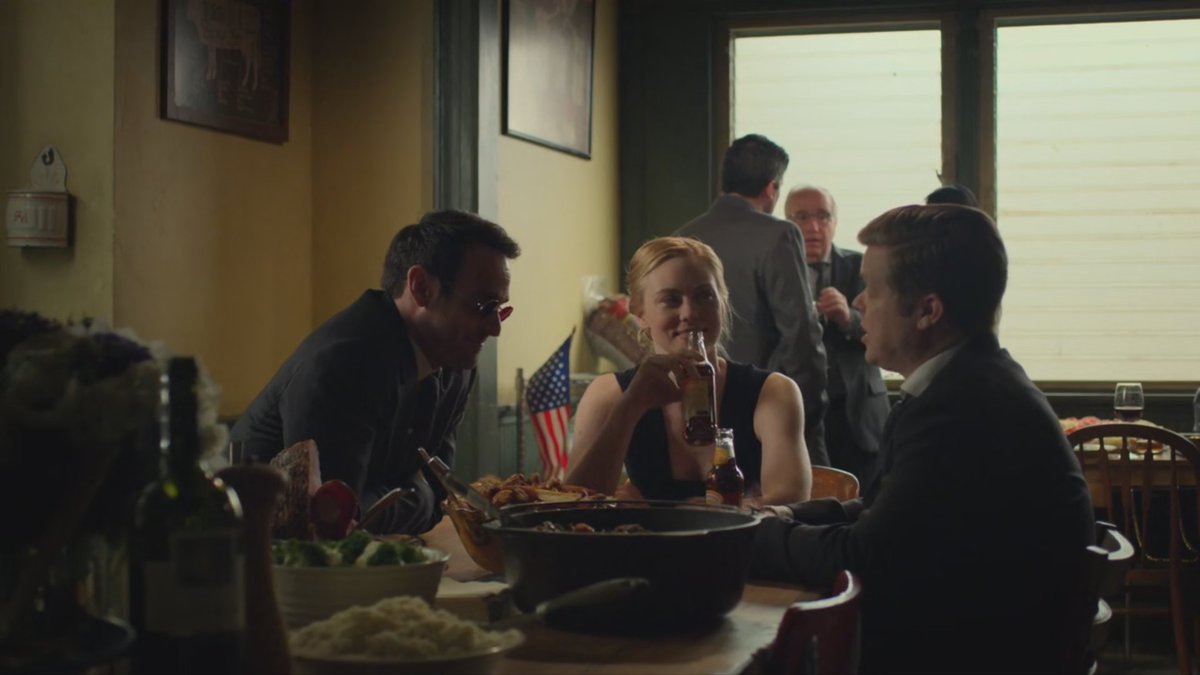
Following a daytime shoot where Charlie Cox and Vincent D’Onofrio shared a table at the Square Diner, Cox was captured during an evening shoot with actress Margarita Levieva.
Levieva joined the cast of Daredevil: Born Again in December 2022, ahead of the initial round of production that took place before the WGA and SAG strikes shut it down. The actress, who is set to play Heather Glenn–one of Matt’s many flings from the comics–had been seen on set before but with Woll’s return, many expected her character’s role to be cut or reduced to make way for Karen Page and Matt to rekindle an old flame. While the set photos do show some kindling, Woll was nowhere to be found during yesterday’s filming.
Reports indicate that 3 new episodes of Daredevil: Born Again are set to be filmed in New York City in the immediate future. Those 3, along with the footage that was shot before the strikes, are said to compose the first part of the series which is expected to hit Disney Plus in 2025.
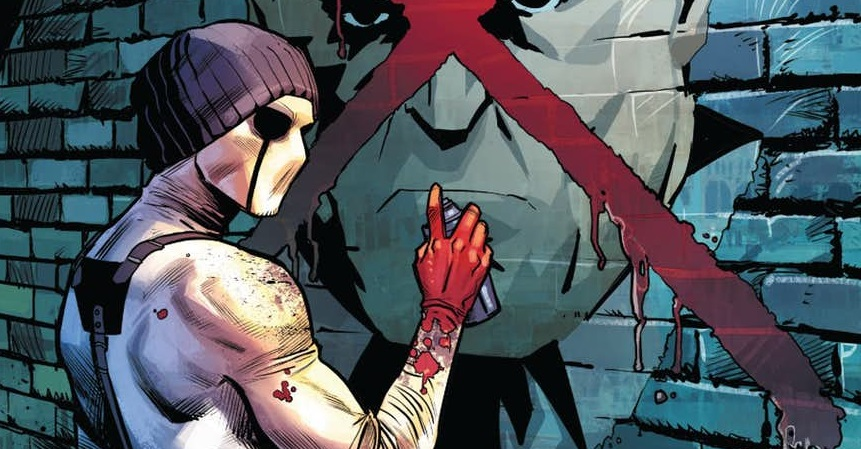
As production on Daredevil: Born Again resumed last week in New York City, set photos flooded social media. While some were more spoilery than others (and other were more spoilery than you know), they combined to give fans a first look at the newly retooled series. One of the more interesting and revelatory BTS pictures confirmed that one of Daredevil’s most psychotic rogues, the deranged serial killer Muse, would indeed be part of the series.
Though the set photo showed some of Muse’s signed street art depicting Wilson Fisk’s Kingpin, some fans weren’t convinced that the psycho killer would show up. However, a set video from X user Finn erases any doubt.
Here’s the last daredevil thing I recorded. I think it’s supposed to be muse drawing the kingpin graffiti but the actor is a body double from what I can tell. Then they shot a bunch of background characters doing things pic.twitter.com/sRVLBTOT9u
The description of the scene matches a casting call that circulated ahead of filming which called for an experienced graffiti artist to serve as a body double. If some informed speculation is true and the cast hasn’t changed since December 2022, the person in question would be doubling for actor Colin Woodell, who joined the cast in an unknown role ahead of the initial round of production.
While Wilson Fisk is a big enough threat to Daredevil and his allies, Muse throws an entirely different type of threat entirely. A serial killer who uses his victims’ blood and body parts to create art, Muse was first introduced in Charles Soule’s run on Daredevil, which is believed to be one source of inspiration for Daredevil: Born Again. It remains to be seen just how much of a role Muse will play but it’s now clear he’ll be on the streets causing chaos when the series hits Disney Plus in 2025.
As one might expect, filming a highly anticipated Marvel Studios streaming series on the streets of New York City can draw quite a bit of attention. As was the case when Hailee Steinfeld was first spotted on the NYC set of Hawkeye in NYC in December 2020, production on Daredevil: Born Again has borne significant set photo fruit. Already, fans got a peek at a Kingpin mural signed by psycho killer Muse and their first look at what’s almost certainly costumed vigilante White Tiger. Now, fans of Marvel Television’s Daredevil got their money shot…
A BTS video of an early evening shoot in New York City revealed the first look at star Charlie Cox reuniting on set with Elden Henson and Deborah Ann Woll. After originally being either left out or appearing in a greatly reduced role in the series, Henson and Woll were brought back as Foggy Nelson and Karen Page, respectively, after a creative retooling on the series.
Charlie Cox, Elden Henson, and Deborah Ann Woll behind the scenes of ‘DAREDEVIL: BORN AGAIN’ pic.twitter.com/kOkE8Hcc32
The video shows the trio walking out of the law office of Nelson, Murdock and Page, the firm the first named on a napkin in the Daredevil series finale.
A recent rumor indicated that Woll’s role in the series would be limited to a 3-episode arc. With baddies like Muse and Bullseye on the prowl, it’ll be interesting to see if either of them is behind her character’s short stint in the series.
Some episodes of Daredevil: Born Again are expected to stream on Disney Plus in 2025.
It has long been rumored that Daredevil: Born Again would feature another costumed vigilante and a new video from the New York City set of the Disney Plus series may have given fans thier first look… though it may not be exactly what rumors led many to believe.
POTENTIAL SPOILERS AHEAD
The video, shared by X user @porgomomics shows a costumed character standing just inside an NYC store. Dressed in white with black stripes all over the suit and helmet, it’s very possible this is the first look at White Tiger.
While.its hard to make you anything for certain, it does appear as though it may be a male inside the suit which would lead to the assumption that Daredevil: Born Again will feature Hector Ayala, the first character to take on the mantle of White Tiger in the comics.
Rumors that White Tiger would appear in Daredevil: Born Again date back to November 2022, though those rumors often proposed that a female had been cast in the role, leading fans to expect an appearance by Ava Ayala, Hector’s niece in the comics. Another rumor that surfaces recently indicated that the series was set to adapt the Marvel Comics The Trial of the Century arc in which Matt Murdock represented Hector Ayala who was on trial as White Tiger for murder. This, of course, lines up neatly both with what little is seen in the set video/photo and with Wilson Fisk’s anit-vigilante platform in hisayoral campaign.
Once production got back underway in New York, it didn’t take long for photos from the set of Daredevil: Born Again to make their way online. A fresh batch of set photos from X user Finn seemed to confirm that the deranged serial killer Muse–long rumored to be part of the series–will appear. A closer look at those same set photos may reveal even more information about the D+ series.
On a wall near Muse’s graffiti mural of Kingpin, posters for real life NYC venues Baby’s All Right and Bowery Ballroom can be seen. While posters like these are located all over the Big Apple, these are indeed part of the set for Daredevil: Born Again.
The Bowery Ballroom poster indicates that someone named Spencer Giles will be at the venue on Friday, March 12th which could be let in determining when this portion of the series is set. While there are certainly continuity problems within any shared universe as large as the MCU, Marvel Studios does its best to keep things tight which means if we accept that they’re working off a real world calendar where March 12th is a Friday, this portion of the series is either set in 2021 or 2027.
Either choice is interesting but each for its own reason. Should the series be set in 2021, it would be during the Blip and set roughly at the same time as Clint Barton’s exploits as Ronin as seen in detail in Hawkeye. At that point in time, Wilson Fisk was shown to be out of prison and in charge of the Tracksuit Mafia. Should the series be set in 2027, it would be set beyond the events of Secret Invasion which are, to date, the farthest out into the MCU’s “present day.”
Daredevil: Born Again underwent a significant creative overhaul that saw Elden Henson, Deborah Ann Woll and Wilson Bethel–all of whom starred in Marvel Television’s Daredevil–added to the cast. However, as production resumed in New York City, a new set photo confirms that one villain, long rumored to be part of the series, remained in the plans.
A photo taken in the area of W50th to W52nd Street between 9th and 11th Avenues and shared by X user Finn, confirms that the serial killer Muse will indeed be involved in the events of Daredevil: Born Again. The set photo shows a graffitied mural of Wilson Fisk’s Kingpin and is clearly signed by Muse.
Long rumored to be part of the Disney Plus series, Muse is a serial killer who uses his victims’ blood and body parts to create art. The character was first introduced in Charles Soule’s run on Daredevil, which is believed to be one source of inspiration for Daredevil: Born Again. In December 2022, actor Colin Woodell joined the cast of the show and it was widely speculated that he might be taking up the part of the deranged artist.
In addition to confirming Muse’s presence in the project, other set photos shared by Finn show a Nelson, Murdock and Page sign hanging above what will clearly be the office space shared by the 3 in Daredevil: Born Again. The new firm was first drawn up by Foggy in Daredevil 3.13, “A New Napkin.”
We use cookies to improve your experience on our site. By using our site, you consent to cookies.
This website uses cookies
Websites store cookies to enhance functionality and personalise your experience. You can manage your preferences, but blocking some cookies may impact site performance and services.
Essential cookies enable basic functions and are necessary for the proper function of the website.
Name
Description
Duration
Cookie Preferences
This cookie is used to store the user's cookie consent preferences.
30 days
These cookies are needed for adding comments on this website.
Name
Description
Duration
comment_author_email
Used to track the user across multiple sessions.
Session
comment_author_url
Used to track the user across multiple sessions.
Session
comment_author
Used to track the user across multiple sessions.
Session
Statistics cookies collect information anonymously. This information helps us understand how visitors use our website.
Google Analytics is a powerful tool that tracks and analyzes website traffic for informed marketing decisions.
Contains information related to marketing campaigns of the user. These are shared with Google AdWords / Google Ads when the Google Ads and Google Analytics accounts are linked together.
90 days
__utma
ID used to identify users and sessions
2 years after last activity
__utmt
Used to monitor number of Google Analytics server requests
10 minutes
__utmb
Used to distinguish new sessions and visits. This cookie is set when the GA.js javascript library is loaded and there is no existing __utmb cookie. The cookie is updated every time data is sent to the Google Analytics server.
30 minutes after last activity
__utmc
Used only with old Urchin versions of Google Analytics and not with GA.js. Was used to distinguish between new sessions and visits at the end of a session.
End of session (browser)
__utmz
Contains information about the traffic source or campaign that directed user to the website. The cookie is set when the GA.js javascript is loaded and updated when data is sent to the Google Anaytics server
6 months after last activity
__utmv
Contains custom information set by the web developer via the _setCustomVar method in Google Analytics. This cookie is updated every time new data is sent to the Google Analytics server.
2 years after last activity
__utmx
Used to determine whether a user is included in an A / B or Multivariate test.
18 months
_ga
ID used to identify users
2 years
_gali
Used by Google Analytics to determine which links on a page are being clicked
30 seconds
_ga_
ID used to identify users
2 years
_gid
ID used to identify users for 24 hours after last activity
24 hours
_gat
Used to monitor number of Google Analytics server requests when using Google Tag Manager
1 minute
Marketing cookies are used to follow visitors to websites. The intention is to show ads that are relevant and engaging to the individual user.
Pinterest Tag is a web analytics service that tracks and reports website traffic.