As recently as 2018, MCU fans could look forward to two trips to the theater every year to catch the latest installments of their favorite franchise. Now, with Marvel Studios developing streaming series in addition to upping the number of films per year, fans can look forward to near year-round content.
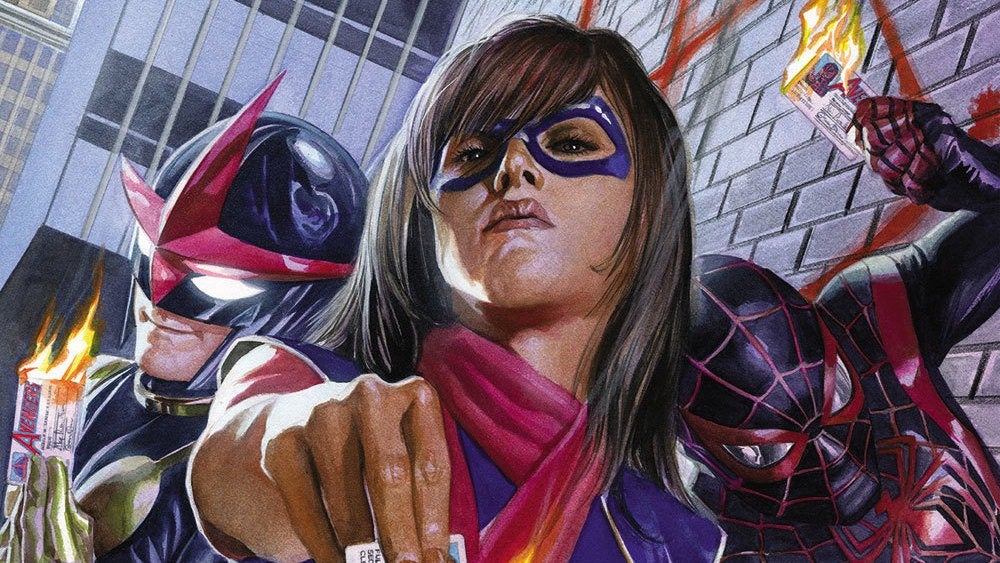
Ms. Marvel is the latest project to bring an incredibly popular character from the pages of Marvel Comics to the screen. The character debuted in 2014 and has become one of Marvel’s most popular, leading several volumes of her own series, joining the Avengers and serving as one of the main characters in The Avengers video game. Even though she’s a relatively new character compared to the long history of the comics, she’s certainly been at the forefront for the better part of her time, so getting her introduced into the MCU has been a priority for Marvel Studios for some time.
While Ms. Marvel streams, the studio is developing no fewer than two dozen other properties that will introduce dozens of new characters to the MCU, causing some to wonder if they are doing too much, too fast. In an interview with Ms. Marvel co-creator Sana Amanat, Charles Villanueva asked if the MCU is expanding TOO fast and if the studio might run out of marquee characters, like Ms. Marvel, to adapt.
I don’t know. I don’t think I’m too worried about that cause I feel like there’s so many different kinds of stories. I mean Marvel, let’s see, has been around for over 80 years and there’s so many different kinds of characters-I think we’re at like 7,500 characters-so I feel pretty confident that we’ll be ok. Not to say we’re going to be doing all of those characters, but there’s a lot of different kinds of stories that you can tell and, also, ways to kind of retell them. So I’m not too worried about it. I think it’s really just gonna be about playing with different-what we’re doing right now-which is playing with genre and playing with, sort of different kinds of characters and bringing new perspectives on them.
Sana Amanat
With Marvel putting so many productions into motion at once, it’s good to hear from Amanat that they’re continuing to work on finding the best way to represent the heart of each one in the MCU.
The newest installment of the Marvel Cinematic Universe, Ms. Marvel, has made its debut on Disney+. While there is plenty to unpack about the first episode, the charming opening scene brought back questions that have been on the minds of MCU fans since 2019. What do the ordinary people of Earth know about the events of Avengers: Infinity War and Avengers: Endgame? It is something that has never been directly dealt with, and we have received bits and pieces about it since Spider-Man: Far From Home. But the first episode of Ms. Marvel gave viewers a few more answers.
The animated opening montage features Kamala Khan’s own reenactment of the final battle of Endgame, apparently termed the “Battle of Earth.” So clearly, the citizens know a good amount about what transpired there—the Avengers fought Thanos, who was trying to use the stones. Even the detail as to Captain Marvel coming in last minute and punching Thanos in the face is common knowledge. How did people even come to learn those kinds of details?
Far From Home offers one answer to that question. From glimpses of airplane movie options, there were documentaries about “The Snap” floating around. So the Avengers must have made some of their knowledge of the Battle for Earth available to the public. It also stands to reason that those who did survive the Blip would have been given some sort of explanation as to why half of Earth’s population disappeared all at once. So half of the planet post-Endgame likely already had information about Thanos and the stones for years.
The Battle of Earth took place without warning and out of the public eye, so it did not seem observable. It is possible that there could have been satellite imagery or that Stark Tech could have recorded parts of the battle, which would make the most sense in terms of the public knowing precise details of the battle, as noted in WandaVision. But Kamala revealed that Scott Lang, aka Ant-Man, is a frequent guest on podcasts where he would be interviewed about the battle. So, details about who did what during the fight may make their way to the public from things like that as well. Still, if Scott Lang is a major source of what the public knows, it might make us question the accuracy or version of the main version story circulating.
So there are some obvious ways that citizens of Earth came to learn some of the information, but just how much do they know? This might be a little trickier, because they certainly do not know every detail of Infinity War and Endgame, and there are good reasons for that. On one hand, they clearly seem to know about Thanos and the Infinity Stones, so information on basic Infinity Gauntlet assembly is probably out there. The public deserved an explanation of what had happened, so this makes sense.
But they probably were not told in detail about how there are universal threats that could annihilate them at any moment. Do they know what happened to the Stones after the Battle of Earth? This is unclear. Considering it would be worrying to think that the Stones were all still floating around, the public was probably told they were destroyed. But past that, it would be surprising if they knew much more.
For them to know that the Stones were returned to their original timelines, ordinary citizens would have to know that the Avengers invented and used time travel, which is knowledge they almost certainly do NOT possess. If time travel was common knowledge, there would surely be more interest in it. And if they knew about it, they would have to completely understand the mechanics of it for there not to be a segment of the population demanding it be used to fix certain events, like the Blip. Plus, it was not fully understood by the Avengers themselves, and a true understanding of it would lead to discussions of the multiverse. Peter Parker, who surely has a bit more information about how the Blip was reversed than others, was shocked that the multiverse was real in Spider-Man: No Way Home.
The public knows that Natasha Romanoff and Tony Stark sacrificed themselves, but questions would seem to linger about the fate of Steve Rogers. No one seems to believe he is dead, and Sam Wilson was asked in The Falcon and the Winter Soldier if the rumors of Rogers living on the moon were real. Ordinary citizens likely do not know that he aged dramatically, either, as it has never been mentioned and that would potentially require them to know about the time travel.
Lastly, will the public learn more as time goes on? The easy answer is yes, as naturally more information comes out over time. But will anything major or of consequence be revealed within the MCU to ordinary people? Probably not, with the exception of Steve Rogers. The MCU does not seem to be wrestling with the concept of keeping certain things from the public. But considering the viewers have yet to find out what happened to Rogers after Endgame, it is possible that the greater reveal (if ever) of that could be simultaneous to the real world and MCU people. For example, if we find out he died or has been dead, we might learn because the public learns and mourns. However, if we find out he has been a secret moon agent, that might remain a secret.
You can watch Kamala’s reenactment of the Battle of Earth in the first episode of Ms. Marvel, now streaming exclusively on Disney+.
Ms. Marvel is now streaming on Disney Plus, but prior to Hollywood shutting down due to COVID in 2020 and the fallout that followed, it was once intended to debut in late 2021, ahead of Hawkeye. While the full story of just how much COVID impacted Marvel Studios’ productions may never come to light, it’s clear that it was enormous.
Streaming series WandaVision and The Falcon and The Winter Soldier had to shut down mid-production while other shows, like Ms. Marvel, found themselves pushed back as part of a domino effect. Before all those delays, however, I heard and interesting rumor that would tie two of those shows together: Kamala Khan was set to make her MCU debut in a short cameo that would take place in the aftermath of the events of The Falcon and The WinterSoldier. Once the COVID delays hit, we were told the idea was scrapped as the focus shifted to finding a way to safely finish the show.
Charles Villanueva had a chance to talk with Ms. Marvel producer Sana Amanat recently and asked about the rumor and if she was always intended to debut in her own show. As many of the best answers are, Amanat’s was short and to the point saying, “Yes. As far as I know. [Ms. Marvel] was always going to be her first appearance.”
Ms. Marvel was first announced to be in development by Marvel Studios in August of 2019 during the D23 celebration. At that time, production on The Falcon and The Winter Soldier was just about to kick-off andthe studio had just begun their search for the actress to play Kamala Khan. As we know, COVID shut down that search and it wasn’t until September 2020 that Iman Vellani was cast in the role. By that time, production on The Falcon and The WinterSoldier had moved to the Czech Republic and was nearing completion.
With all that in play, getting Kamala into a cameo for The Falcon and The Winter Soldier would seem all but impossible. More than that, a cameo appearance wouldn’t do serve the character’s story in the way that her brilliant introduction in her own show has.
The first episode of Ms. Marvel has been released, ushering in the seventh Marvel Cinematic Universe Disney+ series. Whether you like them or not, the first episode brought with it a post-credits scene that teased an interesting development for a so-far minor MCU organization. While the role of the Department of Damage Control has not been well-defined since its introduction, the Ms. Marvel post-credits scene teased an expanded—and darker—role for the group that may be a lasting consequence of Captain America: Civil War.
Damage Control was first mentioned in Iron Man, where Phil Coulson explained to Tony Stark that the S.H.I.E.L.D. team controls messes like the one left behind at the end of the film’s final battle. Following the events of The Avengers, Damage Control became a department of the United States government in a joint venture with Stark Industries, as learned in Spider-Man: Homecoming.
While the DODC does clean up super messes like the Battle of New York, it also has quite a collection of technology and other items beyond the normalcy of ordinary society. Peter Parker gets stuck in the Damage Control Deep Storage Vault in Homecoming, where the department has everything from Chitauri technology to the black hole grenades from Thor: The Dark World.
While Damage Control has been a background entity at best in the MCU, Spider-Man: No Way Home saw a new focus for the organization, and Ms. Marvel looks like it is going to dive deeper into that aspect of it. In No Way Home, Agent P. Cleary arrests and interrogates Parker over the death of Mysterio. The change to investigating and arresting superpowered or otherwise extraordinary individuals was new. But Ms. Marvel’s first episode post-credit scene makes it seem as though the new show will build heavily upon that new Damage Control reality.
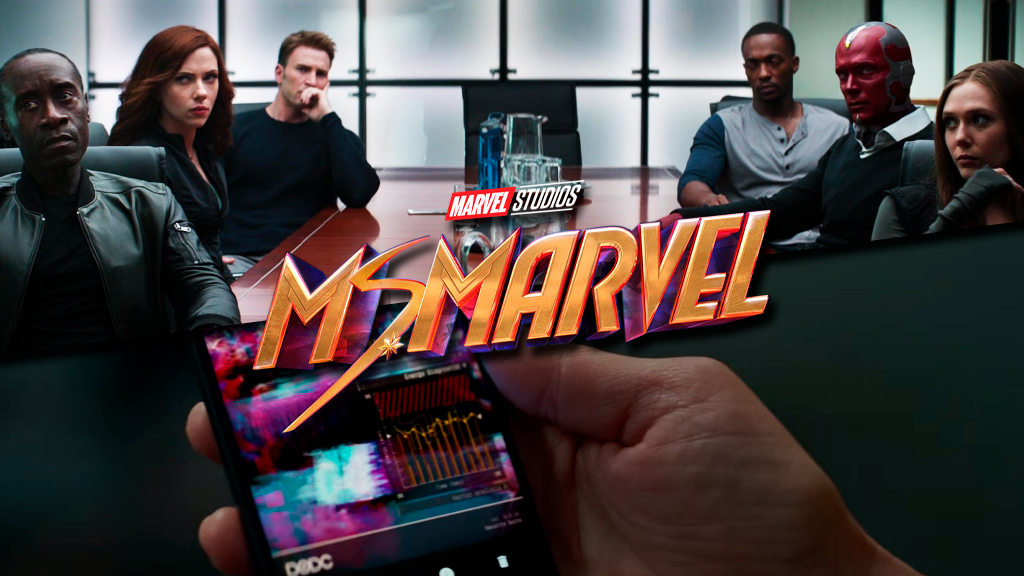
In the brief scene, we see Agent Cleary along with Alysia Reiner’s Agent Deever. Deever shows Cleary a video of Kamala at AvengerCon using her new powers, and he says, “Ok, let’s bring her in.” So at least part of the agency is now dedicated to tracking down those with super-abilities and bringing them into custody. So far, the DODC certainly feels like an MCU-ified U.S. Homeland Security. But the agents apparently did not decide to find Kamala because of the damage she caused, but purely because she had powers. So how did Damage Control get here?
Several things have happened since we saw Damage Control in Homecoming. The Blip is the most obvious example, and it makes sense that governments would be a bit more alert to powerful beings wandering around unchecked. But something happened just before Homecoming that is almost certainly behind this. The Sokovia Accords became international law in Civil War, and they essentially outlawed superhero/superpower-related behavior if not explicitly allowed by the government. Because Avengers: Infinity War was so soon after Civil War, Phase 3 never really dealt with much of the specific aftermath of the Accords.
It looks like Ms. Marvel might be the first MCU project that actually does just that. While No Way Home definitely demonstrated that even superheroes could be held legally accountable, there was no evidence that the DODC was rounding up individuals at that point. Here, that clearly seems to be the case. The Accords have not been mentioned, but it was confirmed that they are still in effect in WandaVision. Considering Stark was on the government’s side in Civil War, the fact that Damage Control became a Stark Industries joint venture for the purpose of enforcing those laws makes sense.
In any event, the DODC so far seems to be an adversary to Kamala rather than anything helpful. In just a short scene, the two agents we see are portrayed fairly menacingly—it certainly brings to mind the very negative views on certain governmental agencies that target immigrants or people of other cultures. Kamala could be the first hero we’ve seen who has to overcome this darker Damage Control, the Sokovia Accords, and the legacy of Civil War.
The first episode of Ms. Marvel is now streaming exclusively on Disney+.
As Marvel Studios’ newest project, Ms. Marvel, debuted its first episode, fans can now officially experience the first chapter in Kamala Khan’s Marvel Cinematic Universe journey. The new hero is also relatively new to Marvel comics, but the charismatic character has a strong following among fans. Fans are excited for Kamala to join the MCU, but one major change to the character has been hotly debated: her live-action character has significantly different powers than she has in the comics. While even star Iman Vellani, creators of the Ms. Marvel comics, and Marvel Studios President Kevin Feige have all expressed their support for the changes, some remain unconvinced. Now that the Disney+ series has formally introduced those powers, let’s dissect the differences between the comics and live-action powers and the debate surrounding them.
In the Ms. Marvel comics, Kamala’s Inhuman lineage is activated by the Terrigen Bomb. When she was exposed to the Terrigen Mist, she became able to stretch her body in pretty much any manner. Not only can she extend limbs, but she can grow or shrink, as well as shapeshift. These same abilities allow her to rapidly heal from injuries and effectively grant her super strength and speed. Kamala refers to her powers, particularly when she enlarges herself or parts of her body (such as her fist), as “embiggening.” Interestingly, it was later revealed that she is able to do this by time-traveling on a molecular level, meaning she is borrowing or giving her cells to past or future versions of herself in order to add or lose mass which allows her to embiggen or shapeshift.
MarvelMarvel
While we will learn more about her live-action powers over the course of all six episodes of Ms. Marvel, there is no doubt that Kamala’s powers in the MCU are substantially different. First, the MCU has not officially introduced Inhumans to the live-action Earth-616, so no connections between the Inhumans and Kamala can currently be made. Instead, the bangle gifted by her grandmother unlocks powers that we can infer are related to her family history and lineage, at least in some way.
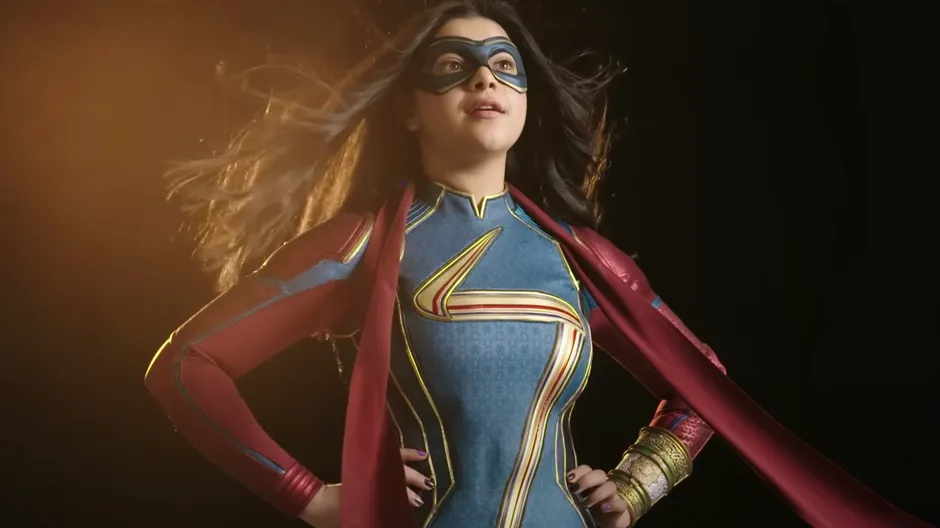
In terms of her actual powers, she seems to be able to project crystal-like light structures that are solid yet breakable. From what we saw at AvengerCon, she can shoot the projections away from her, suspend them in the air, or even use them as extensions of herself. Many have pointed out that these powers seem similar to the DC comics hero Green Lantern. The shot where she projects an extended arm and large fist to catch Zoe is clearly an homage to her comics abilities.
Marvel StudiosMarvel Studios
The debate goes beyond general disappointment that Ms. Marvel’s powers have been changed. On one hand, her embiggening powers are just cool. They look extraordinary on the page, and while shapeshifting and elongating are not exclusive to Kamala’s character in Marvel comics, something about the way Ms. Marvel uses her abilities always feels unique. Some fans have expressed disappointment purely on this front, but many also speculate that the MCU did not want her to have similar powers to the someday-introduced (to Earth-616) Reed Richards, aka Mr. Fantastic. Others guess that the budget for a Disney+ series may not have allowed for her comics powers to translate well to the screen. Both may be true (or false), but the main factor cited by the series’ creators is that her new powers are better suited to connect Kamala to Monica Rambeau and Captain Marvel in The Marvels.
In addition, plenty of fans are upset that Kamala does not seem to be Inhuman. As noted, though, establishing her as an Inhuman is not particularly practical in the current MCU. Even if Marvel Studios wanted to introduce the group through Ms. Marvel—which does not make the most sense—Kamala’s connection to them would not carry much weight. But the fact that her powers seem to still be linked to her own genes and family lineage is functionally similar to her Inhuman origins in the comics, even though it may not connect her to a larger superhuman group like it did in the comics. Still, it has yet to be seen if or how the ultimate source of her powers may relate to the greater MCU.
However, the biggest debate centers on how integral Kamala’s shapeshifting powers are to her story in the comics. Much of Kamala’s journey as a Pakistani teenager in Jersey City in the age of superheroes centers around her self-identity. Early on, after she discovered she had powers, she shapeshifted to look like Carol Danvers in the retired Ms. Marvel costume, because she struggled to reconcile how she viewed herself with what she thought superheroes looked like or should look like. Kamala’s story resonates with many, and her powers were the perfect conduit for her self-expression as well as an easy metaphor for self-consciousness. When she was afraid, embarrassed, or felt defeated, she could shrink to hide; when she felt confident, she could embiggen. Many fans are concerned that without her comics powers, that aspect of her and her story will be diluted. However, many people who worked on the series have openly given reassurances to fans that those worries are unnecessary and that Ms. Marvel does justice to Kamala Khan’s character.
Fans can judge Kamala’s new powers for themselves, as Ms. Marvel‘s first episode is now streaming on Disney+.
As the 7th Marvel Studios Disney+ series and 14th project of the Marvel Cinematic Universe’s Phase 4, Ms. Marvel’s first episode manages to shine as the beginning of an origin story that, so far, feels distinct from the constant influx of MCU content throughout the past couple of years. In other words, Ms. Marvel stands out, and it does so despite not teasing fans that the series will be a game-changer for the franchise. The character of Kamala Khan makes a triumphant leap from comics to screen, and the way the episode is shot, edited, and visualized gives the start of Ms. Marvel a texture that makes it arguably the most unique-feeling project of the MCU in years.
Of course, at the heart of the first episode and series is Iman Vellani’s Kamala Khan. Kamala is a Muslim American-Pakistani teenager from Jersey City who is obsessed with the Avengers. The character has been a comics favorite for nearly a decade, so Ms. Marvel exceeds in Vellani’s seemingly flawless portrayal of Kamala. The first episode treats Kamala’s family and cultural background like any other; for the casual viewer, Episode 1 does not subtitle basic phrases spoken in Urdu and does not baby the audience or other the Khans by explaining every detail of Pakistani- or Islamic-influenced element in Kamala’s life. She is noticeably different in terms of her background from the heroes and characters of the MCU thus far, but her culture is not treated as something mysterious or otherworldly—Kamala Khan is Kamala Khan. And her inclusion into the MCU makes Earth-616 a bit more real and a bit richer.
Speaking of richness, the mechanics of this episode are mesmerizing. The inclusion of animation, the fast-paced editing, and the quirky shots give Ms. Marvel a visual but intangible texture that genuinely feels unique in the MCU. To achieve this, it does not have to be on the same terrain as Guardians of the Galaxy or Thor: Ragnarok. The subtlety itself is brilliant, as it feels like the viewer is in a new world without having to leave the old one.
Plenty of fair concern was levied against Ms. Marvel in advance due to the fact that the series changed her power set from the comics. What we see in Episode 1 is not enough to begin to truly decide whether the changes are a true downgrade. But an undoubted positive to the change is that now her powers and their origins are a mystery. In that way, the series moves into uncharted waters—even the viewer doesn’t know where the journey will ultimately take Kamala and how she could connect to the greater MCU.
Fans have also never truly seen the MCU from the angle Ms. Marvel has created. Kamala is all of us—obsessing over the Avengers, wishing she had superpowers, and living in an age of heroes. This “regular citizen” angle has never been explored before and Kamala’s coming-of-age and coming-of-superhero story takes place in a world fully aware and mindful of most of the events of the MCU. So seeing how Kamala works her way into the overarching MCU will surely be something special.
The premiere episode of Ms. Marvel achieved something miraculous—standing out while fitting in. Vellani is a perfect casting and driving force for Kamala charm, and the series’ placement in the MCU feels natural. Still, between the charisma of Kamala herself and the texture of the episode, Episode 1 feels uniquely Ms. Marvel, and so far Ms. Marvel has built a world for itself that can’t help but make the future of the rest of the MCU look brighter.
The Marvel Cinematic Universe’s newest hero Kamala Khan has arrived in Ms. Marvel. There has been plenty of discussion about the changes made to the character’s origins and powers from the comics. But one of the positive outcomes of the changes so far is that they allow for a mystery to play out in the Disney+ series.
It’s already been pointed out that her bangle that seems to have activated Kamala’s powers may actually be similar to the Quantum Bands from the comics. Using evidence from Episode 1, we can theorize about her powers and their implications in the MCU even more. Of course, in the comics, Quantum Bands derive energy from the Quantum Zone—MCU fans would recognize its live-action parallel, the Quantum Realm. Established in the Ant-Man franchise, the Quantum Realm was the key to time travel as seen in Avengers: Endgame. But other than the Quantum Bands theory, what evidence is there that Kamala Khan has anything to do with the Quantum Realm or time-travel in the MCU?
In the comics, Ms. Marvel’s powers function because her molecules time travel when she embiggens and shapeshiftes. Ms. Marvel comics revealed that Kamala has access to some sort of temporal vortex that allows her to borrow and lend her atoms across time. While her MCU powers in Ms. Marvel are significantly different, there’s no reason that this connection to time travel would need to be removed from Kamala’s powers’ characteristics. Considering she projects some sort of crystallized light from nowhere, a similar explanation could easily work for her new powers.
An important moment in Episode 1 occurs when her bangle appears to activate when she first puts it on at AvengerCon. After she is surrounded by some glowy energy field, her eyes change color and there is a cool shot where she seems to fall backward in a circle through a strange purple-hued environment. There are human-like figures there, though they appear to have large glowing eyes and it is difficult to make anything out. This could have been some type of vision, but it also could have been Ms. Marvel’s first trip through time.
Considering her family history is at play, it could have been a very stylized depiction of an event her ancestors went through. Considering her Pakistani heritage and the fact that the scene looked like a large group of people traveling in one direction, Partition in 1947 may have been a major event that affected her family. Perhaps an ancestor with a connection to Kamala’s powers is trying to pull her back for some reason or the connection itself is doing so. A further stretch could be that she passed through the Quantum Realm itself, and the reason the figures looked odd is that they were not human. If you want to stretch it even further, the purple is reminiscent of the iconic color of Kang the Conqueror. The future Ant-Man and the Wasp: Quantumania villain is a time-traveler and some fans believe he may rule a city in the Quantum Realm called Chronopolis.
To be fair, the fact that no one around her experienced that wild moment suggests that the easy explanation is that it was a vision or hallucination. But, considering the fact the Kamala in the comics was always connected to a temporal vortex and constantly time-traveled without even trying, a connection to the Quantum Realm or quantum energy could allow for her to look like she had not left AvengerCon. As Scott Lang himself said, “time works differently in the Quantum Realm”. Or, more simply, she could have essentially been in two places at once. While some of these thoughts are bit more technical and complex than Kamala or Ms. Marvel seems so far, it is worth noting that the Disney+ series hired a theoretical physicist who worked on Endgame’s time-travel elements.
The first episode of Ms. Marvel is now streaming on Disney+.
Episode 1 of Ms. Marvel, “Generation Why”, came complete with some of the most inventive and impressive visual flair we’ve seen in an MCU production. The creative team behind the show seemed to work hard to give the audience the same kind of experience a comic reader might have, filling the screen with fun add-ons and images that really click and bring the dialogue to life.
With so much to look at on-screen, however, one might be forgiven for missing a thing or two, especially during your first viewing, including, possibly, a very well-planted neon sign that could serve either as an Easter egg or as foreshadowing that one of Kamala Khan’s most unique villains could appear down the road.
While Kamala and Bruno are talking atop a building with the Jersey skyline behind them, a sign for Edison Electric can be seen directly behind them. It might be easy to overlook, especially with everything else to see and the fact that, from the viewer’s perspective, it’s backward, but it’s there and this might not be the only time we see it.
First appearing in 2014’s Ms. Marvel #7, the Edison Electric building served as the lair of The Inventor, Ms. Marvel’s first supervillain and the first of many incredibly strange adversaries she’d come across. The Inventor-part cockatiel, part Thomas Edison-is the result of a cloning experiment gone wrong and was part of a 7-issue arc that saw Kamala clash with bionic alligators and a couple of teenage henchmen before finally taking The Inventor out.
Kamala came across The Inventor in her earliest days as a hero and their feud in the comics was intertwined with Kamala coming to understand her Inhuman heritage and the powers it gave her. The issues featured pretty heavy cameos from members of the Inhuman Royal Family, including Medusa, and Kamala got to hang out quite a bit with Lockjaw during them. Early rumors surrounding Ms. Marvel indicated that The Inventor and the Inhuman Royal Family would appear in the series, though there’s been no recent buzz around the appearance of those characters (other than Vellani indicating she tried to sneak a Lockjaw Easter egg into the show).
For the time being, it doesn’t seem likely that Kamala is going to run around New Jersey with Lockjaw, but having the Edison Electric building front and center gives leaves the door open for The Inventor to appear, whether in this season or down the road. For the moment, it certainly appears that Kamran, played by Rish Shah and a family known in the comics as the Clan Destine are going to carry the bulk of the load as villains in Season 1, but with producer Sana Amanat saying she’d love to see the Inventor in Season 2, there’s hope that Ms. Marvel can cross paths with the crazy birdman some day! If not, it’s still an impressive bit of world-building that could pay off at any time.
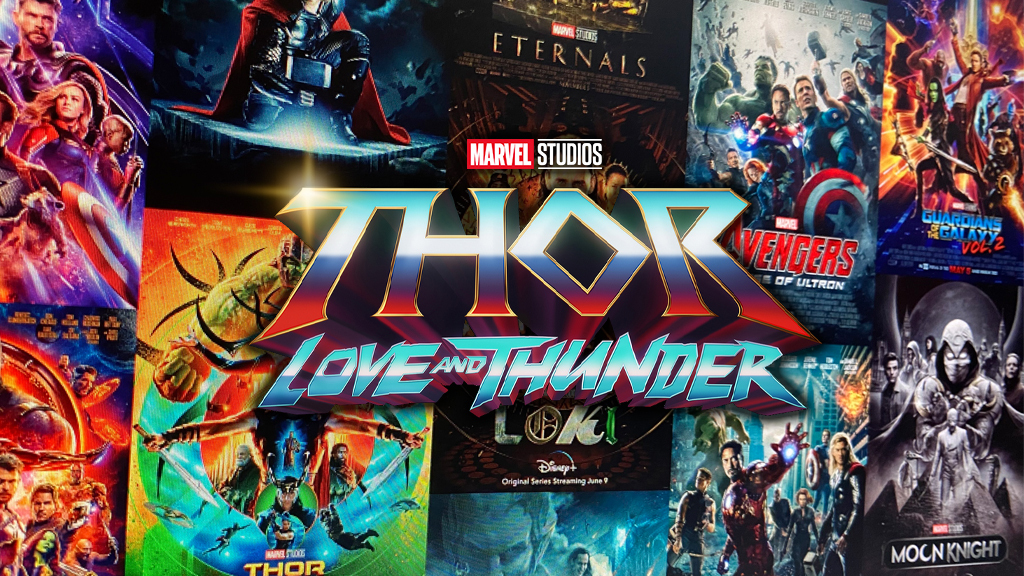
Chris Hemsworth is returning as the titular superhero, Natalie Portman will reprise her role as Jane Foster after almost ten years, Tessa Thompson is King Valkyrie this time around, and Christian Bale will make his MCU debut as the villainous Gorr the God Butcher. Members of the Guardians of the Galaxy will also have a role in Love and Thunder. It has been described as both a romance and a “midlife crisis”, so it will definitely be an interesting addition to the MCU.
There are 17 total recommendations, and they are listed by likely importance. First, there are projects that are essential to watch before the fourth Thor solo film. Second, there are projects that we would strongly encourage you to watch but likely are not strictly necessary. Third, there are extra stories that could heighten your Love and Thunder experience but may ultimately have very little impact on the film itself. You have until the film releases on July 8, 2022, to get prepared. Let the god butchering begin.
Essential
There are seven films that will undoubtedly be directly important to Love and Thunder: Thor; Thor: The Dark World; Thor: Ragnarok; Avengers: Infinity War; Avengers: Endgame; Guardians of the Galaxy; and Guardians of the Galaxy Vol. 2. But some are likely much more important than others—below is the list of these in essential films in order of how important they will be to understanding and enjoying Love and Thunder.
1. Thor: Ragnarok
Marvel Studios’ ‘Thor: Ragnarok’
The third installment of the Thor solo franchise tops the list of what you should watch before Love and Thunder for several reasons. Probably most influential is the fact that Thor: Ragnarok is the first and only other MCU film to be directed by Love and Thunder director Taika Waititi. His eclectic, colorful, visually stunning, and humorous style is unmatched in the God of Thunder’s franchise in the MCU as a whole. There is very little question about which MCU film will be most related to Love and Thunder for that reason. Many important Thor 4 characters were also introduced in Ragnarok: Tessa Thompson’s Valkyrie, Waititi’s Korg, and Korg’s best bud Miek. This film also explains why New Asgard exists on Earth, Thor’s loss of his father and homeworld, and the destruction of Mjolnir.
2. Thor
Marvel Studios’ ‘Thor’
Considering Love and Thunder is the latest installment in the character’s solo franchise, taking it back to the beginning is always important. Thor, of course, introduces the superhero to the MCU and explains his origins, Mjolnir, and generally lays the foundation for all things Thor-related—Asgard, Loki, Odin, Frigga, Heimdall, you name it. To be fair, all of those are dead now. But it also introduces Natalie Portman’s future Mighty Thor, Jane Foster. Most of what we know about Jane in the MCU comes from this movie, as the sequel does not expand on her personal story or background all that much. Of course, their romantic relationship begins in Thor as well.
3. Avengers: Infinity War
Marvel Studios’ ‘Avengers: Infinity War’
Avengers: Endgame is arguably more important than Avengers: Infinity War, but in terms of watching order, it makes the most sense to watch the third Avengers before the fourth. Infinity War shows the immediate aftermath of Ragnarok and Thor’s grief stemming from those events. As was made obvious in Endgame, this emotional journey was pivotal for the character. Stormbreaker was forged here, and this is where he first met the Guardians of the Galaxy. Lastly, absolutely vital to any enjoyment of Love and Thunder is Infinity War’s explanation as to why Thor no longer has an eyepatch after Ragnarok.
4. Avengers: Endgame
Marvel Studios’ ‘Avengers: Endgame’
We last saw Thor in Avengers: Endgame, and Thor’s whereabouts, physical state, and mental state in Love and Thunder are coming directly from the end of Endgame. The Love and Thunder trailer showcased the notorious “Fat Thor” working out before we see a return of Thor’s more traditional physique. The character’s interest in settling down we see in the trailer is also likely a result of his processing of the events beginning in Ragnarok and continuing through Endgame. The fourth Avengers film also introduces New Asgard, Valkyrie as the new King of New Asgard, and ends with Thor going off with the Guardians of the Galaxy. Essentially, Endgame is the immediate predecessor for Love and Thunder, even if Thor is not the main character.
5. Guardians of the Galaxy Vol. 2
Marvel Studios’ ‘Guardians of the Galaxy Vol. 2’
While it is unclear how much of a role the Guardians of the Galaxy will play in Love and Thunder, Guardians of the Galaxy Vol. 2 is the last outing of the team other than Infinity War and Endgame. It also introduces Pom Klementieff’s Mantis who we see in the Thor 4 trailer. In general, it highlights the most recent roster of the Guardians, including some work with developing Karen Gillan’s Nebula. The Guardians’ journey will undoubtedly be explored more in next year’s Vol. 3, but it is safe to assume Vol. 2’s team is the best foundation for what to expect of them in Love and Thunder.
6. Thor: The Dark World
Marvel Studios’ ‘Thor: The Dark World’
If you have ever existed, you probably already know that Thor: The Dark World, the follow-up to Thor, is one of the least-loved films in the MCU. Nevertheless, it is a Thor film, and watching it will round out your Thor franchise viewing ahead of Love and Thunder. It is also the last time we see Jane Foster, so The Dark World is pretty significant to her character considering she was only in two movies about a decade ago. It shows the death of his mother, which is significant to his character and I suppose could be referenced in the upcoming movie. But needless to say, if you skip any Thor movie, this one is a good choice.
7. Guardians of the Galaxy
Marvel Studios’ ‘Guardians of the Galaxy
Since the Guardians likely may not have a huge role in Love and Thunder, getting acquainted with their first outing is not as vital as the other films. Still, they will be there and Guardiansof the Galaxy introduces most of the main players and is fundamental to who they are in the MCU. It also is a great survey of some cosmic MCU elements that have otherwise not been explored extensively, even by the Thor franchise. Judging by the Love and Thunder trailer, the cosmos will get some more attention soon.
Encouraged
These next five projects have a strong chance of being directly relevant to Love and Thunder. But even if you are not familiar with them, their potential influence on the Thor outing should not be so important that you would be missing something. Still, if you have the time and you want to be totally prepared, these encouraging films and series are great additions to your watchlist.
8. Black Panther
Marvel Studios’ ‘Black Panther’
While the bulk of Black Panther might not be all that helpful to the Love and Thunder experience, the film lands at the top of this section because there seems to be one specific connection. The Goddess Bast had been rumored to be part of the movie and looks to have been spotted in an official still from the film. According to Wakandan legend in the MCU, Bast led Bashenga to the Heart-Shaped Herb, granting him the power to become the king and the first Black Panther. Outside of the MCU’s current lore, Bast or Bastet is a member of the ancient Egyptian pantheon, which is explored a bit further in Moon Knight.
9. Moon Knight
Marvel Studios’ ‘Moon Knight’
Much of the rest of this watchlist centers around Love and Thunder‘s villain, Christian Bale’s Gorr the God Butcher. As his title would suggest, he probably likes to kill gods. Thor 4 is set to introduce more MCU gods than we currently know, but we did recently meet a whole gaggle of new ones. The Disney+ series Moon Knight introduced ancient Egyptian gods to the MCU, including Khonshu, Ammit, Osiris, and Taweret. There is plenty of room for Gorr to butcher some of these or related gods without it having a major effect on the MCU or even any potential Moon Knight follow-up, but it would allow Love and Thunder to give Gorr some credits to his God Butcher name.
10. Eternals
Marvel Studios’ ‘Eternals’
This one is a little trickier, but the Celestials introduced in Eternals could be relevant to Gorr’s journey. Celestials are sometimes known as “space gods”, but they are not the traditional types of gods as we are used to—Asgardian, Egyptian, Greek, etc. One major fan theory floating around believes that Gorr may have killed the Celestial whose head is now known as Knowhere (as seen in Guardians of the Galaxy). So if Celestials (or even the Eternals) could be “gods” to Gorr, there’s no reason why he could not target them at some point in Love and Thunder.
11. Avengers: Age of Ultron
Marvel Studios’ ‘Avengers: Age of Ultron’
If you want to get the full scope of live-action Thor, you will need to watch or rewatch the first two Avengers films as well. While neither seems like they will be overly relevant, Avengers: Age of Ultron is a bit more important because Mjolnir gets a little time to shine. When the Avengers try to lift the hammer and when Vision actually does, there is some focus on what makes someone “worthy”. This is a concept that will presumably play into Jane Foster’s Mighty Thor and her use of the repaired Mjolnir.
12. Avengers
Marvel Studios’ ‘Avengers’
There is not much for Avengers to add to the rest of the list other than that is part of Thor’s story and journey in the MCU. If you’ve watched everything else so far, watching Avengers will finish up your viewing of all things (live-action) Thor. Although, if you do plan to watch these all, doing it in chronological release order is probably the way to go.
13. Loki
Marvel Studios’ ‘Loki’
Loki is somewhat like Eternals in the sense that it could be relevant. Unlike Eternals, though, the Tom Hiddleston-led series does not have any obvious gods for Gorr to butcher. But the reason it is on the list is that the introduction of Jonathan Majors’ Kang the Conqueror Variant likely sets up one of the MCU’s next big bads. While Love and Thunder does not have any known major multiverse connections, it cannot be completely ruled out in the Phase Four project. Also, if Gorr the God Butcher is roaming the universe killing gods, it is not too wild to think that he could come across another villain that is acting as a universal conqueror. If Marvel is going to build Kang up more ahead of his lead role in Ant-Man and the Wasp: Quantumania, he could have a brief appearance in Love and Thunder or even in a post-credits scene. In any event, Loki obviously showcases Loki, Brother of Thor, even if he is no longer on the same timeline as Thor.
Extra
These last few recommendations really speak for themselves. With the exception of What If.. ? they are not even related to the MCU, but they’re a love letter to the Love and Thunder experience and are perfect to get into if you still can’t get enough prep for the fourth Thor.
14. What If… ?
Marvel Studios’ ‘What If… ?’
If you want to make sure you have seen every single appearance of Thor in the MCU in its entirety, you’ll need to check out What If… ? “Party Thor” makes an appearance in Episodes 7-9, which includes his own episode (with Jane Foster) and the final two episodes of the season.
15. Hercules (1997)
Disney’s ‘Hercules’ (1997)
Hear me out. We know Love and Thunder will feature the Olympians, and we got a hint of Russell Crowe’s Zeus in the teaser trailer. There is no MCU foundation for this group of gods yet, so if you’re already watching all your Thor content on Disney+, you only have to scroll a bit to find the ’90s animated classic, Hercules. You will get some sort of survey of Greek gods including Zeus and Hercules, and Love and Thunder might hit harder if you feel like it’s some sweet singing cartoons that Gorr is butchering.
16. The Dark Knight Trilogy
Warner Bros.’ ‘The Dark Knight Rises’
Speaking of making Love and Thunder hit harder based on unrelated films, get your Christian Bale fix and get the ability to picture Batman the God Butcher if you’re so inclined by revisiting Christopher Nolan’sDark Knight trilogy.
17. Titanic
Paramount’s ‘Titanic’
Director Taika Waititi has described Love and Thunder as a full-blown romance film. It is hard to picture an MCU movie featuring a “God Butcher” as a true love story, but maybe that’s the point. Waititi has the skill the bring a completely unexpected film to the table, and he has several times teased the “love” in Love in Thunder. If you think you might have trouble getting into the mindset for a romance, watching the most financially-successful romance movie of all time could help you out.
Thor: Love and Thunder hits theaters on July 8, 2022.
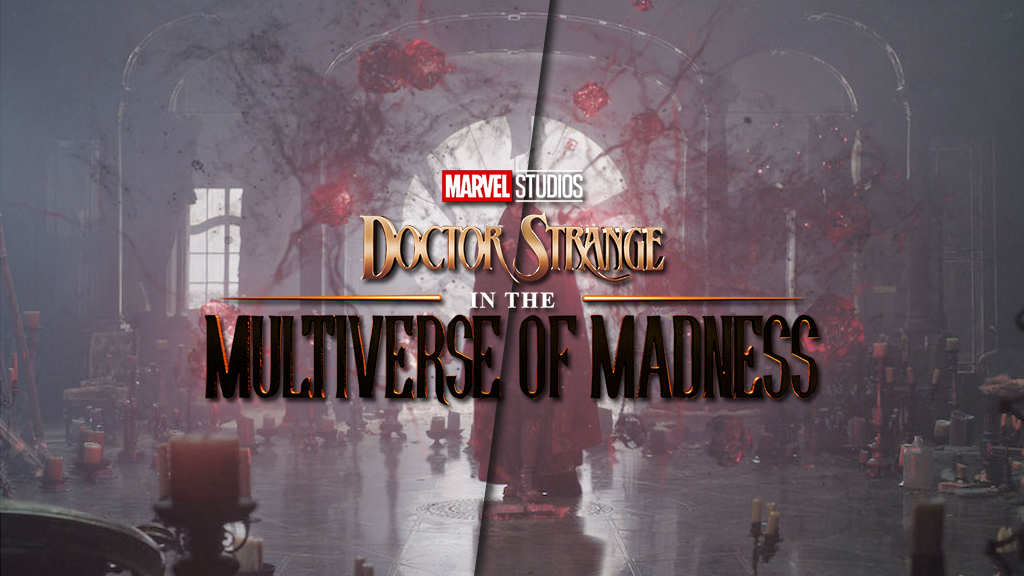
As Doctor Strange in the Multiverse of Madness continues its theatrical run, Disney has confirmed when audiences will be able to catch it on their streaming service. In an official press release, Disney has revealed that the film will debut on Disney Plus on June 22nd.
Disney+ announced today that Marvel Studios’ “Doctor Strange in the Multiverse of Madness” will begin streaming exclusively on Disney+ June 22. Watch the new online spot to see a special “fan thank you” from Benedict Cumberbatch, Elizabeth Olsen, Benedict Wong and Xochitl Gomez.
In Marvel Studios’ “Doctor Strange in the Multiverse of Madness,” the MCU unlocks the Multiverse and pushes its boundaries further than ever before. Journey into the unknown with Doctor Strange, who, with the help of mystical allies both old and new, traverses the mind-bending and dangerous alternate realities of the Multiverse to confront a mysterious new adversary.
The film has demonstrated staying power at the box office following a very strong opening weekend of over $187M and has become the top domestic earner of 2022. It’s currently on track to pull in over $400M domestically and is approaching $900M worldwide.
Cookie Consent
We use cookies to improve your experience on our site. By using our site, you consent to cookies.
This website uses cookies
Websites store cookies to enhance functionality and personalise your experience. You can manage your preferences, but blocking some cookies may impact site performance and services.
Essential cookies enable basic functions and are necessary for the proper function of the website.
Name
Description
Duration
Cookie Preferences
This cookie is used to store the user's cookie consent preferences.
30 days
These cookies are needed for adding comments on this website.
Name
Description
Duration
comment_author_email
Used to track the user across multiple sessions.
Session
comment_author_url
Used to track the user across multiple sessions.
Session
comment_author
Used to track the user across multiple sessions.
Session
Statistics cookies collect information anonymously. This information helps us understand how visitors use our website.
Google Analytics is a powerful tool that tracks and analyzes website traffic for informed marketing decisions.
Contains information related to marketing campaigns of the user. These are shared with Google AdWords / Google Ads when the Google Ads and Google Analytics accounts are linked together.
90 days
__utma
ID used to identify users and sessions
2 years after last activity
__utmt
Used to monitor number of Google Analytics server requests
10 minutes
__utmb
Used to distinguish new sessions and visits. This cookie is set when the GA.js javascript library is loaded and there is no existing __utmb cookie. The cookie is updated every time data is sent to the Google Analytics server.
30 minutes after last activity
__utmc
Used only with old Urchin versions of Google Analytics and not with GA.js. Was used to distinguish between new sessions and visits at the end of a session.
End of session (browser)
__utmz
Contains information about the traffic source or campaign that directed user to the website. The cookie is set when the GA.js javascript is loaded and updated when data is sent to the Google Anaytics server
6 months after last activity
__utmv
Contains custom information set by the web developer via the _setCustomVar method in Google Analytics. This cookie is updated every time new data is sent to the Google Analytics server.
2 years after last activity
__utmx
Used to determine whether a user is included in an A / B or Multivariate test.
18 months
_ga
ID used to identify users
2 years
_gali
Used by Google Analytics to determine which links on a page are being clicked
30 seconds
_ga_
ID used to identify users
2 years
_gid
ID used to identify users for 24 hours after last activity
24 hours
_gat
Used to monitor number of Google Analytics server requests when using Google Tag Manager
1 minute
Marketing cookies are used to follow visitors to websites. The intention is to show ads that are relevant and engaging to the individual user.
Pinterest Tag is a web analytics service that tracks and reports website traffic.