Tag: Marvel Studios

  • REVIEW: ‘Moon Knight’ Episode 5

    REVIEW: ‘Moon Knight’ Episode 5

    After the hard twist at the end of the previous episode, Moon Knight managed to channel the momentum into arguably one of the best episodes of Marvel or Marvel Cinematic Universe television to date. It does so by leaning almost exclusively into the emotional and mental health elements of the character rather than the superhero aspect. Such an angle will always be divisive among fans of the superhero-based franchise, but when the series handles the character work of a complex character this well there really is no loss. In the short term, Episode 5 is simply an excellent episode and piece of Moon Knight. In the long term, it serves as a brilliant and colorful foundation for the hero that is mostly unrivaled in the MCU.

    While Episode 5 certainly feels fresh, it is reminiscent of WandaVision’s penultimate episode in terms of plot advancement and structure. The bulk of Episode 5 involves Marc Spector and Steven Grant working through Marc’s memories—in the form of rooms in a mentally-projected psych ward—that reveal the bigger picture of who Marc Spector is and how he ended up in the position we see him in in Moon Knight. It is confirmed that Marc’s background as a mercenary and his original connection to Khonshu is virtually the same as his comic book origin. Khonshu asked him to be his avatar while Marc was dying at the foot of the god’s statute after his ex-partner (and classic nemesis) Bushman massacred a team of archaeologists, including Layla’s father, in a raid. Even this memory and revelation is somewhat rushed, making room for a much more human perspective.

    Meanwhile, an indulgent and high-stakes plot plays out throughout Episode 5, yet it does not steal the show still. We learn early on that Marc and Steven are supposedly on a journey to the Egyptian afterlife, traveling on a dramatic ship while trying to balance their hearts on the scales of justice in order to be admitted into paradise rather than succumb to the sands of the Underworld. As Marc revealed more of his past to Steven, he presumably makes himself more complete and more favorable on the scales. Still somewhat confusingly, the scales only balance once Steven sacrifices himself overboard to save Marc from the sandy unbalanced soul monsters. Up until that point, the fact that the scales were imbalanced seemed like a clear indication that the third alter (presumably Jake Lockley) would need to be revealed. So, Marc’s entrance into the Field of Reeds raises a lot of questions. Is Marc “whole” because his alter “died”? If so, considering all the evidence points to a third alter existing, why is their absence not preventing the hearts from balancing? Otherwise, is it just an unfortunate timing issue or the work of an outside influence? It is highly doubtful that this is where the main characters remain through the end of the series, so those questions will likely get answered soon.

    But the lingering contents of Episode 5 that exist beyond the more pressing plot are surely Marc’s childhood memories. It is revealed that his dissociative identity disorder developed from the loss of his little brother and ensuing trauma. In a nutshell, Marc’s little brother drowned while the two were on a playful adventure—one in which Marc roleplays as Dr. Steven Grant from the VHS movie we saw last episode. After the death of the brother, Marc’s mother blames him and harbors extreme anger and resentment towards the young child. She screams at him when he tries to attend the funeral, refuses to acknowledge him, and actively accuses him of purposefully killing his little brother for years. Ultimately, it is revealed that Steven’s personality was developed in an episode where he was beaten (presumably not for the first time) by his mother as a means of escape. 

    His story is absolutely heartbreaking and arguably one of the darkest and saddest backstories in the MCU that we’ve seen play out. The way it is presented in this episode adds to the inherently sorrowful nature of the story and makes the cut so much deeper. For example, the highly stressful and desperate moments where Steven is in the flooding cave trying to save the children is on another level. There is something so much more brutal, heartbreaking, and gut-wrenching about childhood loss and abuse, particularly when it is not as filtered as much as a similar project with such wide appeal might be expected to. Marc’s story is obviously not the first of its kind both in general and in the MCU, but it is showcased in a way in Moon Knight that hits harder than the target audience is likely used to. While superhero origins and later stories often involve themes of escape, the typical picture is the hero prevailing over the adversary and the suffering—here, Marc was in such anguish in a situation he could not escape that his mind created a separate person to try and do so.

    What is framed as a major revelation is likely not a shock to many viewers. Marc Spector, not Steven Grant, is the original personality and Steven Grant is the alter. Despite a straightforward approach, the psychological torment it puts Steven through, and the mental warfare on the part of Ethan Hawke’s excellent performance as Dr. Arthur Harrow, allows for the episode to substantially develop not one but two personalities at the same time. We do learn specifically about Marc’s violent past. Interestingly, his time as a mercenary is not what haunts him here. Instead, it is the people he killed during his work as Moon Knight under Khonshu’s guidance. Themes regarding rebirth are present in a number of ways, but Marc’s obvious discomfort with his past work as a “superhero” seems to be signaling a changing of ways—at least on Marc’s part.

    Oscar Isaac remains supreme in terms of his MCU performance. Despite the fact that the final product had to constantly handle two of him on screen at the same time, it felt seamless and almost natural. Not only does Isaac have to play two separate physical entities that exist and interact with each other, he plays two unique people as well that come with specific accents and affects. The way Episode 5 captures Marc and Steven’s dynamic would have been extremely impressive if it involved two separate actors for two characters. Obviously, Isaac’s solo performance goes far beyond even that in this episode and in the series as a whole.

    The penultimate episode of Moon Knight is an emotional punch to the face in the best way. It manages to succeed on delivering that aspect in a way that most stories, MCU or not, cannot quite reach. The series’ arc has blossomed into a rather beautiful story and introduction to the titular character. Moon Knight as a costumed persona happens to be part of it, and that phrase “happens to be” is bound to lose a few fans. However, Episode 5 demonstrated more than anything that the series is creating its own origin story for the MCU’s Fist of Vengeance that may define the character more than any other character in the universe that we have so far seen. One of the biggest and routine questions remains, perhaps with even more on the line, of whether the series can stick the landing. The progression of episodes has the right momentum, but there are so many potential threads, twists, and writing choices that make the fact that there remains only a single episode a bit daunting. 
  • ‘Moon Knight’ Episode 5 Primer

    ‘Moon Knight’ Episode 5 Primer

    Episode 4 of Moon Knight, “The Tomb”, was illuminating to say the least. We learned so much, Including the fact that Ammut was trapped in Alexander The Great’s tomb, and Alexander once served as his avatar! Arthur really did a number on Marc, first revealing to Layla the Marc knew how her father died and then shooting Marc, which is when things REALLY got nuts. The last part of the episode took place inside a mental hospital where Marc and Steven were patients and Arthur was their…doctor? The big question in this episode is, is the hospital where Marc is taken in the afterlife or is this whole thing in Marc’s head? Like is he dead or did he make up all these scenarios?

    In the hospital, we all the characters from the series return in different roles and more Easter eggs than we could count. There is also more evidence, maybe the best yet, of there being a third personality, when Marc gets Steven out of a tomb and then another tomb is seen, shaking as if someone on the inside is wanting to get out. Finally, the madness ends when Marc and Steven casually bump into a talking hippo. Not only does everything happening in the asylum causes Marc to call into question whether or not the events he’s experienced are real, but they also cause the audience to wonder the same thing.
    Arlyn’s Assumptions

    Moon Knight Season 1 Episode 5 Release Date: Inside Steven/Marc's Mind Or  The Othervoid? - OtakuKart

    In the next episode I think that they will dive deeper into the whole hospital situation. There is still two episodes left so Marc can’t be dead…again…just yet! But without the help of Khonshu, how will Marc and Steven escape wherever it is they are? And even if they do, will it be in enough time to stop Harrow from freeing Ammut?

    The next episode comes tomorrow!

  • ‘Moon Knight’ From Page to Screen: Episode 4

    ‘Moon Knight’ From Page to Screen: Episode 4

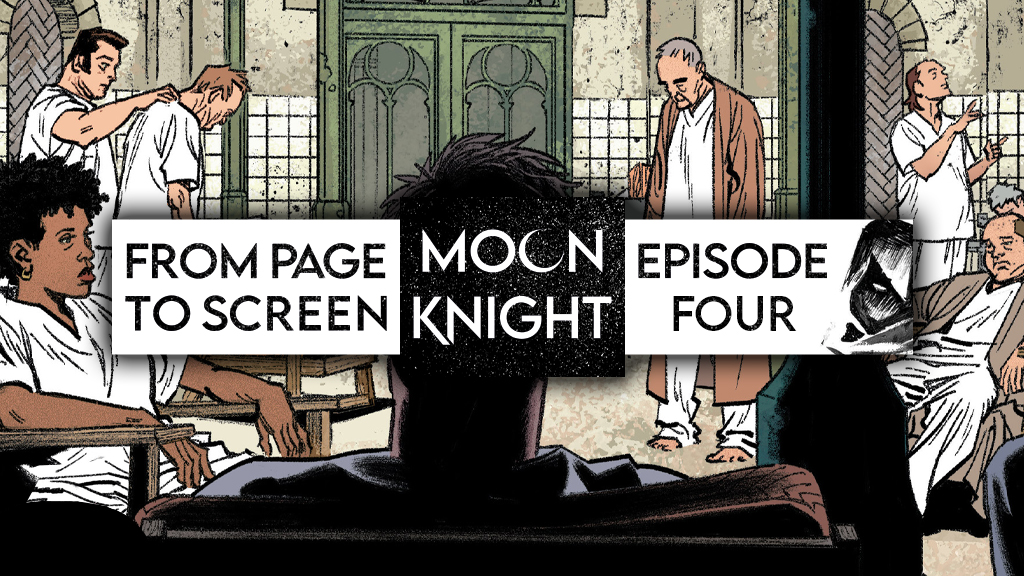
    Marvel Studios’ Moon Knight continues to bring us an original story in which similarities to a few of its more recent comic runs are always naturally found. Following Episode 1, we looked at how the show explored Marc Spector’s dissociative identity disorder compared to the comics. In Episode 2 Mr. Knight was introduced through a rather different take than in the comics and in Episode 3 Layla’s backstory, along with her dad’s, was approached and so we delved deep into how those same events were presented in both the original Moon Knight comic run and the more recent Lemire/Smallwood one. All things considered, and even though the series has shown us that it has taken inspiration from more than just one pivotal comic run, the aforementioned Lemire/Smallwood seems to be the Moon Knight volume we keep going back to. And the end of episode 4 was no exception.

    Marvel Studios’ Moon Knight Episode 4
    Marvel Studios’ Moon Knight Episode 4
    Marvel Studios’ Moon Knight Episode 4
    Marvel Studios’ Moon Knight Episode 4

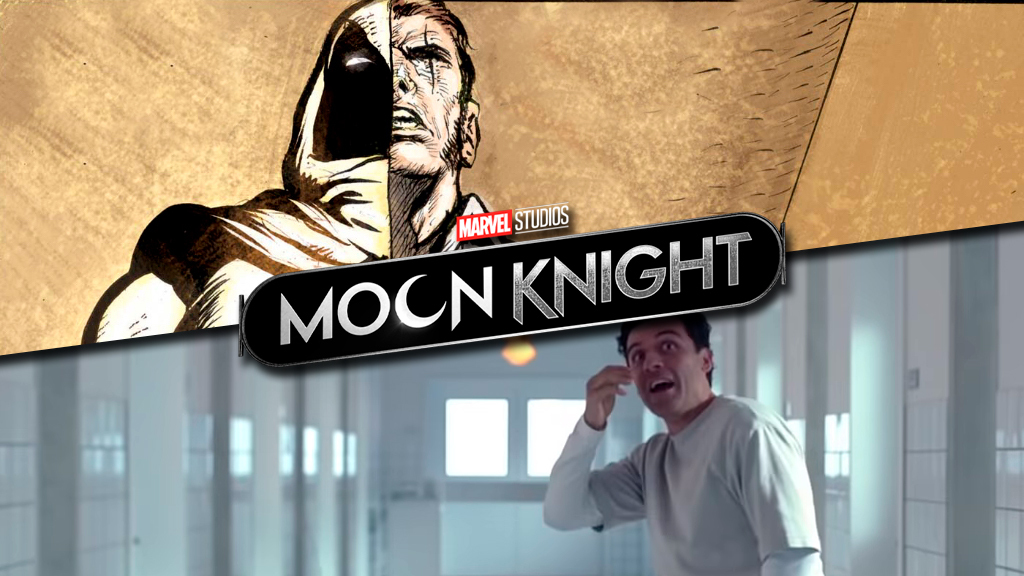
    There, we find Marc and Steven, waking up in a psych ward filled with characters and objects that have found themselves referenced throughout the entire show. From Marc’s wife Layla to other less relevant characters, from Khonshu references to paintings depicting an Austrian village in the Alps, everyone and everything that played a part in the story so far seemed to be there in one way or another. This all worked as an incredible twist since the sequence was designed to present itself after the viewer was already invested in the story through prior events and to set up the third act of the show (the final two episodes) unlike what we get in the comics. There, the same idea (introducing the reader to Marc being stuck in a mental institution) was used to set up the story itself, since it came right at the start of the run. The references were still all there: CrowleyBobby & BillyMarlene/Layla, and Dr. Emmet/Harrow but were presented in a way where who they were and what they represented was still something to be figured out. In magic terminology, while in the comics this sequence was the setup as the beginning of The Pledge, in the series it was presented as The Turn, ahead of the upcoming third act, The Prestige.

    Moon Knight #1 (2016)
    Moon Knight #1 (2016)
    Moon Knight #1 (2016)

    Another big difference from the comics is that in the show Marc and Steven get to the psych ward at a time when Khonshu is already imprisoned in an ushabti leaving Spector and Grant’s body without both its powers and its guidance. Here they seemingly can only count on themselves to figure out what exactly are their surroundings (and if they are, in fact, real or not) and how to escape them. As for the Lemire/Smallwood run, Marc is awoken in the ward by Khonshu himself. He’s the one who tells Marc what to do and when to do it to free himself and, in Khonshu’s words “Rise.”

    Moon Knight #1 (2016)

    And this brings us to a similarity between the show and the comics that might get even clearer in Episode 5, but that is already heavily hinted at by the end of episode 4. As Marc escapes the psych ward’s rec room things get a bit.. off. This gives us signs of how fabricated the reality seems to be. In the show, this is where he and Steven find a couple of sarcophagi and come face to face with the goddess Taweret making it obvious that this was no ordinary Mental Hospital. Something that will surely be confirmed in this week’s episode 5. Similarly, in the comics, it’s when Marc finally decides to follow Khonshu’s will and prepare to escape that he sees the orderlies’ true faces as Death Dogs, Egyptian jackals, something that helps him feel validated in his eerie feelings towards the place.

    Moon Knight #1 (2016)
    Moon Knight #1 (2016)

    Then, as he finds his way through the building looking for a way out, he reaches the roof, where we are presented with one of the most ominous spreads of the entire run: New York City having been invaded by Seth, the Egyptian god of war, chaos, and storms.

    Moon Knight #1 (2016)

    If Marc and Steven end up finding something similar as they break free from what seems to be an intricate illusion we will surely see it in Episode 5. At the same time, and marking yet another way in which the series and the comic run differ from each other, it’s perhaps fair to say that while in the comics we were presented with a distorted vision of reality, the series will go beyond that and make, what seems to be the awakening following an extremely vivid dream, the dream itself.

    Marvel Studios’ Moon Knight Episode 4
    Marvel Studios’ Moon Knight Episode 4

    Marvel Studios’ Moon Knight is streaming exclusively on Disney+ with episode 5 premiering this upcoming Wednesday, ahead of the series finale on May 4.

  • ‘Moon Knight’ is Teasing Marc Spector’s Second Resurrection

    ‘Moon Knight’ is Teasing Marc Spector’s Second Resurrection

    Much of the conversation surrounding Moon Knight Episode 4 is no doubt focused on that twist ending. But the moments before Marc Spector wakes up in what looks like a psych ward may have been inspired by the events of Marc Spector: Moon Knight #27 and #28, which have surprising parallels to Marc’s death by Arthur Harrow in the live-action series. There is a chance Moon Knight could show a resurrection of Marc Spector that involves a new understanding and acceptance of his role as the Fist of Khonshu. In essence, even though we have not witnessed the actual origin of the character in the series, Episode 4 could have just set up Moon Knight’s “true” origin in the MCU.

    ‘Marc Spector: Moon Knight’

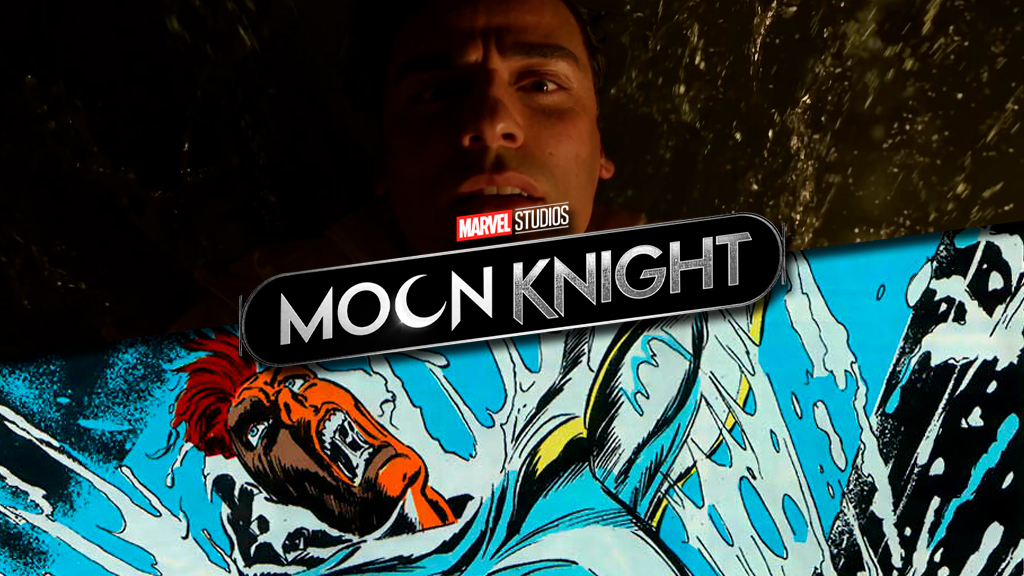
    Towards the end of Episode 4, Arthur Harrow shoots and presumably kills Marc Spector, who floats down through water in the tomb for quite some time. Eventually, we see a light ahead of him and he wakes up in the psych ward. While the mental hospital aspect shows a lot of similarities to the Lemire-Smallwood run in the comics, the moments before are suspiciously reminiscent of the Scarlet Redemption arc in Marc Spector: Moon Knight. In it, Moon Knight is fatally stabbed, and he falls into some water. His body spends virtually the entirety of the next issue sinking deeper into the water in a visual that has undeniable comparisons to Episode 4.

    Marvel Studios’ ‘Moon Knight’
    ‘Marc Spector: Moon Knight’

    In Marc Spector: Moon Knight #28, an explicitly-dead Marc Spector sinks down through waters while passing through memories that seem to haunt him, including his past as a murdering mercenary. That’s not all, as also present are visions of his father. He was a rabbi, and Marc thinks through his relationship to the values of his youth and how he strayed from them. He ultimately realizes that his father’s teaching of goodness, love, and redemption were things he should not have completely turned against.

    By the end of the issue, Moon Knight comes to “understand” that Khonshu wanted him as his Fist of Vengeance for more than just his violent skills from his life as a mercenary. He believes that he also chose him for the influence his father had on him and what mental lessons he took away from being the son of a rabbi.

    It is one of the first major moments in Moon Knight’s comic history that emphasizes and explores Marc Spector’s heritage, as well as his connection to Judaism. Whether Moon Knight goes into this more in the next few episodes is yet to be seen, but Marc Spector’s personal epiphany in this issue of the comics may be absolutely crucial to understanding what comes next in the live-action series.

    Marc Spector, of course, was first resurrected by Khonshu in a tomb when Marc was killed by Bushman—his traditional origin story. In Marc Spector: Moon Knight #28, Khonshu resurrects Marc Spector a second time, and Moon Knight is very much reborn. He emerges from the water sure of his newly realized role as more than a fist of vengeance—he is also a beacon of hope.

    ‘Marc Spector: Moon Knight’

    While the psych ward arc in Moon Knight will surely play out in its own unique way, it is very possible it could include a look back on Marc or Steven’s lives before they took on the mantle. It might end up with all personalities embracing, accepting, and redefining the Moon Knight mantle. In that way, the Disney+ series could be seen as a traditional origin story in and of itself. While the first “origin” may have been in the past, the series may have built itself around this second resurrection which could serve—for all intents and purposes—as the origin of the Moon Knight we come to know in the MCU.

  • UPDATED: ‘Moon Knight’ Head Writer Says “Marlene Was Never Part of Our Show”

    UPDATED: ‘Moon Knight’ Head Writer Says “Marlene Was Never Part of Our Show”

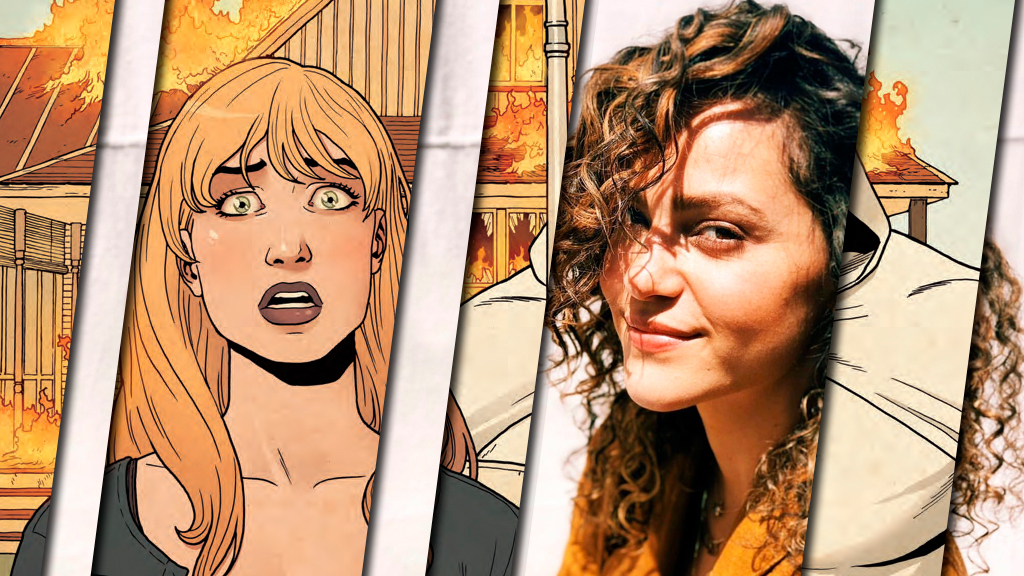
    UPDATED: It looks like Moon Knight’s head writer has taken to Twitter to clarify that “Marlene was never part of our show.” While Layla’s character so far seems to have virtually the same background as the classic love interest from the comics, Jeremy Slater emphasized that the character (though not originally named Layla El-Faouly) was created in the first week of writing and it seems as though he is implying that the written character was never Marlene due to the team wanting a more diverse character. Previous reports (and May Calamwy’s interview) have said that the character was intially written as white, but perhaps there was some confusion as to whether they were referring to the comcis character being white.

    Either way, the way Layla has been written clearly conjures up Marlene given both their fathers being archaelogists and killed in the process. At the same time, both are Marc Spector’s (and his alter’s) primary love interests from all we have seen so far. Slater seems to want readers to understand that the long-running comics character in her exactness was not intended for Moon Knight. You can read Slater’s statement in its entirity below:

    Source: Twitter, ELLE

    While Moon Knight is being led by Oscar Isaac’s phenomenal performances, an undeniable breakout character is May Calamawy’s Layla El-Faouly. Layla is a character not found in Moon Knight comics, but her role has always been reminescent of comic book Marc Spector’s classic love interest, Marlene Alraune. Calamawy’s character is also arguably a much-improved version of the traditional character in a lot of ways.

    Now, the actress confirmed in an interview with ELLE that the original script was in fact written to include Marlene prior to Calamawy being cast opposite Isaac. In particular, she described how the series creators and Marvel Studios president Kevin Feige worked to transform the original character into an Egyptian heroine:

    It started even on the page as a white woman and when we came on board, me and [Moon Knight writer Sarah Gohar], she was then changed into half Egyptian and we pushed it. Let’s make it into an Egyptian character and they welcomed that.

    May Calamawy

    Calamawy praised Moon Knight writers, director Mohamed Diab, and Feige for working to rewrite the character in order to avoid stereotypes and create an authentic take on the Eyptian actress’s Layla:

    Anytime I felt uncomfortable, I would go talk to [Diab] and his wife and I love how Kevin Feige gave us the freedom to share that, let people know, ‘This is not what it’s like, if we do that it’s gonna be a stereotype.’ I realized quite early on this is a space where my voice was going to be heard and that’s the best feeling.

    May Calamawy

    Also important to the actress was for Layla to stand apart from other similar and well-known female characters of the past. Calamawy noted how important the “soft strength” of Middle Eastern women is to the character:
    I was careful not to draw inspiration from someone in the West because they want me to bring my side. In the Middle East, I find women have such a soft strength to them. And I was like, ‘How can I bring this to her? Why should I sit and copy what I think Angelina Jolie would do?’ Every woman I know is a bunch of dichotomies, and I wanted to bring that.

    May Calamawy

    The series’ decision to cast Calamawy and rewrite Marlene’s character into Layla is surely one of Moon Knight’s strongest decisions. While it is unknown just how Marc Spector’s love interest was originally written, it is undeniable that Layla’s presence is a far cry from the fairly bland and often outdated damsel in distress in the comics. The fact that the series originally intended to feature another classic character from the comics, though, begs the question as to whether it has bigger plans for the iconic Moon Knight characters we have seen in cameos going forward in the Marvel Cinematic Universe.

    The first four episodes of Moon Knight are now streaming exclusively on Disney+.

    Source: ELLE

  • ‘Moon Knight’ Includes Evidence That Either Steven or Marc Could Be the Original Personality

    ‘Moon Knight’ Includes Evidence That Either Steven or Marc Could Be the Original Personality

    Moon Knight has certainly put the spotlight on Steven Grant and Marc Spector as two different personalities. While Episode 1 opened the series from the perspective of Steven Grant, Marc Spector is the one originally connected to Khonshu and the titular Moon Knight. While Marc is the original personality in the comics, the Disney+ series has been purposefully ambiguous when it comes to suggesting which personality is the original.

    While it would be a bold departure from the comics to have anyone other than Marc be the original identity, the series has not been shy to depart from the comics. Below we’ve compiled some of the strongest evidence that Moon Knight has presented that either Steven or Marc is the original.

    Steven Grant

    1. One of the biggest flags for Steven’s character is that he is supposedly in frequent contact with his mother. While there are plenty of reasons to be skeptical about the postcards he received from her and the fact that we’ve never heard her speak back to him on the phone, if he does have a relationship with his mother that would suggest she knew him as a child and that he was very often in control of the body.
    2. Moon Knight as a show officially adopts Steven as its protagonist. Not only is he who we follow for nearly the entirety of Episode 1, but the actual synopsis for the series only mentions Steven.
    3. Speaking of control, from what we know, Steven has been in primary control for at least several months. Spector seems to be able to take control when Steven falls asleep, but clearly he has had a difficult time manifesting his personality.
    4. When Marc did take control at the end of Episode 2, Steven was extremely uncomfortable being “in the mirror”. Marc had clearly gotten used to it, but Steven acted like he had never been there before and was totally unfamiliar with the feeling.
    5. Steven seems to have a life with a foundation. It is nothing overly intricate, but he does have his own flat and job, and it seems as though the people he works with have known him for some time.
    6. He also has quite a wealth of knowledge on all things Ancient Egypt. That would take some time to acquire, which suggests a significant amount of time in control. Marc does not have any of this knowledge, and the depth of his intelligence suggests it is definitely something Steven must have studied for years.

    Marc Spector

    1. The easiest and strongest evidence that Marc is the original is that, in the comics, he is. There is nothing stopping Moon Knight from twisting that, but it is a strong bet that the original character would remain the same.
    2. Marc is also the personality that had the connection to Khonshu and Moon Knight. His alter obviously meets Khonshu in the series, but even in suit form he is Mr. Knight, not Moon Knight. It would only make sense that Moon Knight is the original personality in Moon Knight.
    3. There’s also plenty of evidence that Marc had periods of time where he was in consistent control. He is married, and although it might be ending and we don’t know how long it lasted, presumably that relationship took some time. And, as we learned in Episode 3, Layla had no idea that Steven existed.
    4. Marc also told Layla in that same conversation that he “had it under control until recently”. That suggests that Steven’s time in control could be recent and unprecedented.
    5. One thing that raises more questions than answers is that Marc was aware of Steven while Steven was not aware of Marc. This could suggest that Marc knew because Marc was the original, but there are no obvious reasons why Steven would have absolutely no clue about Marc’s existence.

    Moon Knight might very well not never resolve the question of who is the original, just to keep the ambiguity and mystery alive. Or, in the next couple of episodes, we learned more about our characters and their pasts. This could be a confirmation of Marc as the original, or a dramatic reveal that it is Steven instead. Or, who knows, another personality altogether could be revealed and take on that role.

  • ‘Multiverse of Madness’, ‘Love and Thunder’ Top Fandango’s Most Anticipated List

    ‘Multiverse of Madness’, ‘Love and Thunder’ Top Fandango’s Most Anticipated List

    While Summer isn’t exactly just around the corner, the Summer movie season is and 2022 is shaping up to be quite the season. The long-awaited sequel to 1986’s Top Gun, another Jurassic Park film and the Buzz Lightyear origin story you didn’t know you needed are among the choices audiences will have this Summer, but according to a poll by Fandango, it’s a pair of Marvel Studios’ films that have audiences most excited.

    Doctor Strange in the Multiverse of Madness (May 6th) and Thor: Love and Thunder (July 8th) were the top two choices in a poll that was voted on by over 6,000 moviegoers. Jurassic Park: Dominion and Top Gun: Maverick were right behind, followed by two animated films in Pixar’s Lightyear and Dreamworks’ Minions: The Rise of Gru. Elvis, Jordan Peele’s Nope, Bullet Train and Downton Abbey: A New Era rounded out the top 10, all of which should be incredibly successful at the box office.

    Even in a Summer where Tom Cruise’s return as Maverick is in the cards, it’s not surprising to see two Marvel Studios’ projects top the list. The Doctor Strange sequel’s perceived connection to the story of the wildly successful Spider-Man: No Way Home has driven advance ticket sales; meanwhile, the mystery surrounding the fourth Thor film hasn’t taken away interest. Even as critics continue to pump out think pieces about superhero fatigue, superhero films still top the list for audiences.

  • THEORY THURSDAY: Khonshu is ‘Moon Knight’s’ Big Bad

    THEORY THURSDAY: Khonshu is ‘Moon Knight’s’ Big Bad

    With the big twist at the end of Moon Knight Episode 4, the series is telling us to question everything we thought we knew. While Steven and Marc’s mental health certainly will come into play, it’s worth noting that the door is open for certain elements of the show to be drastically different from what we thought up until now. My guess is that the villain Moon Knight has set up so far, Arthur Harrow, is actually a red herring for the Big Bad of the series—Khonshu.

    It would be pretty bold to throw a villain twist in after the “what is reality?” twist we just got, but it could be fantastic. For one, it could easily work with what looks like a Lemire-Smallwood comics-run-inspired psych ward twist. But Khonshu as the series’ ultimate villain has a strong foundation in the comics, and it would improve upon the still vague and generic-feeling Arthur Harrow.

    Marvel Studios’ ‘Moon Knight’

    So first, why would Khonshu be the villain? As you know from Moon Knight, the lunar god isn’t exactly warm and fuzzy. He was banished and is now imprisoned by the other Egyptian gods of the Ennead. While his imprisonment was framed as a situation where Khonshu tried to do the right things while the others just ignored what needed to be done, perhaps there is much more going on. Weirdly, Harrow told the Ennead that Khonshu was actually the one who had him start looking for Ammit. Accusing Khonshu of now working due to jealousy and paranoia towards stopping him.

    While Harrow is obviously not looking like a good guy, he is a big advocate of honesty. Either way, the fact that we still know little to nothing about the Khonshu-Harrow relationship is suspicious. There is a very good chance whatever that Ammit-related history between the two is, it could fundamentally change how we look at Harrow’s mission and Khonshu’s interest in stopping him.

    So, yes, there are some shady open questions. But Khonshu has been helping Marc and Steven this whole time, right? From what we’ve seen, the god has not acted against either personality, but we know that Khonshu is actively interested in Layla as his next avatar. In that way, he does not seem overly enthused or pleased with Marc. I think that Moon Knight can and will reveal that Khonshu’s motives are similar to the god’s in the Lemire-Smallwood comics run—the same run that clearly inspired the end of Episode 4.

    Long story short, Khonshu puts Marc through psychological warfare because he wants to break Marc’s mind completely in order to take complete control of his body so that he would essentially have a direct presence on Earth. Moon Knight actually already teased this idea if we look back at what the series has told us so far.

    After Khonshu was banished, Harrow gives a dramatic speech to Khonshu’s stone statue. He specifically says to Khonshu, “if you hadn’t broken me completely, I never would have learned the value of healing.” So, the concept of Khonshu breaking his avatar “completely” has already been introduced. During the “trial” in the Pyramid of Giza, Harrow also suggested that Khonshu is taking advantage of Marc, who is clearly suffering from a dissociative identity disorder. That tracks with the theory that Khonshu, like in the comics, chose Marc because he knew his mind was “weak”, so he knew he had a better chance of breaking or controlling him.

    ‘Moon Knight’ (2016)

    Basically, Khonshu could be revealed as the ultimate or final villain in the next two episodes. It would be another dramatic twist, and it would make a more interesting story than Arthur Harrow. Don’t get me wrong, Ethan Hawke puts in a phenomenal performance, but Harrow and his motivation are unfortunately a bit generic. While that could just be something the rest of the series has to develop, it also would make Harrow a perfect red herring. Considering he has been killing people because a cane told him to, it’s less likely that he will be a surprisingly good guy.

    His goals and actions might just take a backseat to whatever Khonshu is up to—as noted above, there is something missing regarding the Ammit plot. We have not seen any version, memory, or depiction of Ammit. Harrow is a devout follower despite not being her avatar and never communicating with her considering she has been imprisoned for thousands of years. Khonshu is apparently the one who set Harrow on his Ammit-obsessed path in the first place. Whatever Khonshu’s interest in Ammit is, he might want control over Marc’s human body to carry out his own plans.

    The biggest issue with this theory, in my mind, is that Khonshu is currently imprisoned. It is not exactly clear who would set him free—my guess is Layla—but presumably, the god might be needed to resurrect Marc from the water he died in before the Episode 4 twist. The water resurrection is a whole theory of its own, but it assumes that everything that happened before the psych ward was not simply imagined and that Marc will come back to that “reality” eventually. If Khonshu does resurrect Marc, though, doesn’t that seem like he is friendly? Not necessarily if he still wants to use Marc as a seemingly “weak” mind to break—especially after Marc might go through the psych ward twist.

    ‘Moon Knight’ (2016)

    This theory also matches up with a common theme in Moon Knight comics. Often, Marc is at odds with Khonshu and his influence. He alongside Moon Knight (to the extent they can) leave Khonshu behind. The human and god are so connected that Khonshu always comes back again, but Marc frequently recognizes how toxic his guardian can be and tries to better his life by leaving him behind. In doing so, he continues to be Moon Knight. At a certain point, the hero/fighter/vigilante is in his personality, and he always wants to continue it. He just wants to do it on his own terms. That could be a perfect jumping-off point for MCU Moon Knight—Marc/Moon Knight saying goodbye to Khonshu to become the hero they actually want to be.

    ‘Moon Knight’ (2016)

    The first four episodes of Moon Knight are now streaming on Disney+.

  • ‘Moon Knight’ Episode 4 Nearly Confirms Jake Lockley Exists in the Disney+ Series

    ‘Moon Knight’ Episode 4 Nearly Confirms Jake Lockley Exists in the Disney+ Series

    The search for Marc Spector’s third classic comics personality Jake Lockley continues through Moon Knight‘s wild fourth episode. Clues and evidence in Episode 1Episode 2, and Episode 3 honestly feel like enough of a confirmation that a third personality is coming. But we still have yet to be formally introduced. There may be fewer clues in Episode 4, but one in particular almost cannot be interpreted in any other way than… that’s Jake. While everyone knows that nothing is confirmed until it is confirmed, let’s take a look at perhaps the most unambiguous and in-your-face clue of the entire series.

    The Extra Sarcophagus

    When Marc wakes up in some sort of mental institution or psych ward-looking place, he eventually escapes the room where the now Dr. Arthur Harrow appeared to be his psychologist. On his run through the halls of the institution, he comes upon a room with a lone sarcophagus. Someone inside was screaming for help and shaking it, trying to get out. Turns out Steven was trapped in there, and he and Marc hug when they reunite–it’s very sweet.

    Flash forward about one minute, and they pass a room that has a very similar sarcophagus. They do not seem to notice it, but it is also moving as if someone was trapped inside. Considering Marc and Steven now both have bodies, it is easy to say that whatever place this institution is, it is not “real.” So, if Marc’s other personality Steven sort of manifested as being trapped in a sarcophagus in a room here, what other conclusion is there to draw from the fact that there was another? It is the least ambiguous hint Moon Knight has provided and the most psychologically symbolic as well that a third personality does in fact exist in this series.

    Marvel Studios’ ‘Moon Knight’
    Marvel Studios’ ‘Moon Knight’

    While Moon Knight arguably “confirms” here that Marc and Steven are not the only personalities, it still is yet to be seen whether a third will actually make an appearance in the series. Hopefully Jake has some grand entrance, but it could be the series’ way of acknowledging the comics’ history and being coy with it, while maybe waiting to introduce Jake in another project considering Moon Knight already has many demanding moving parts to balance. Still, there have been so many hints over these four episodes, that it would definitely feel like a letdown if they did not lead to an actual appearance by the end of the series.

    Only time will tell. But the first four episodes of Moon Knight are not streaming on Disney+.

  • ‘Moon Knight’: Marc and Steven are Traveling to the Afterlife.

    ‘Moon Knight’: Marc and Steven are Traveling to the Afterlife.

    The final few minutes of Moon Knight’s episode four gave audiences something to think about and figure out ahead of the final two episodes of the series. At first glance, it seems like the old “it was all a dream” sort of twist, where the character, in this case, Marc Spector, kept bringing real-life characters and details into a self-fabricated world. This would obviously deprive the events experienced until now of most of their meaning due to a lack of actual real-world impact, something that feels extremely dated. But in fact, Marvel should instead be using that classic trope to lead fans astray as what Marc wakes up to should actually be the dream itself.

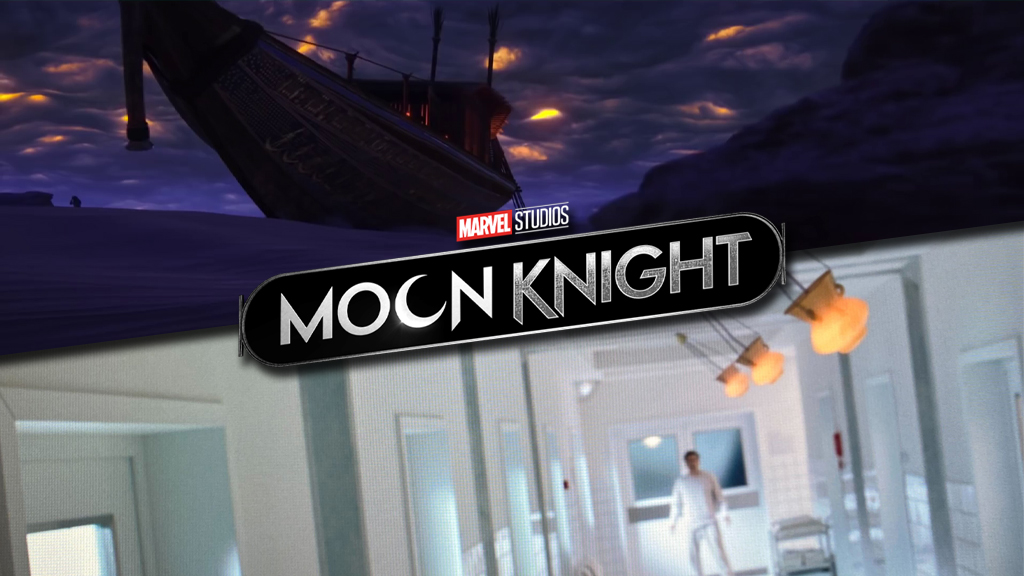
    Following Harrow shooting Marc at Alexander the Great’s tomb, he wakes up in an institution, very similar to the one we see in the Lemire-Smallwood comic run. There, while trying to escape Harrow’s office, he comes to a long corridor that seems to tilt like it was on a moving vehicle, with the lamps and the medical carts moving accordingly. This should be enough to make us doubt the veracity of the reality presented to us. But it’s not until going back to some promotional footage that, not only does it become clear why the halls seem unstable but we also understand where Marc really is. 

    Marvel Studios’ Moon Knight

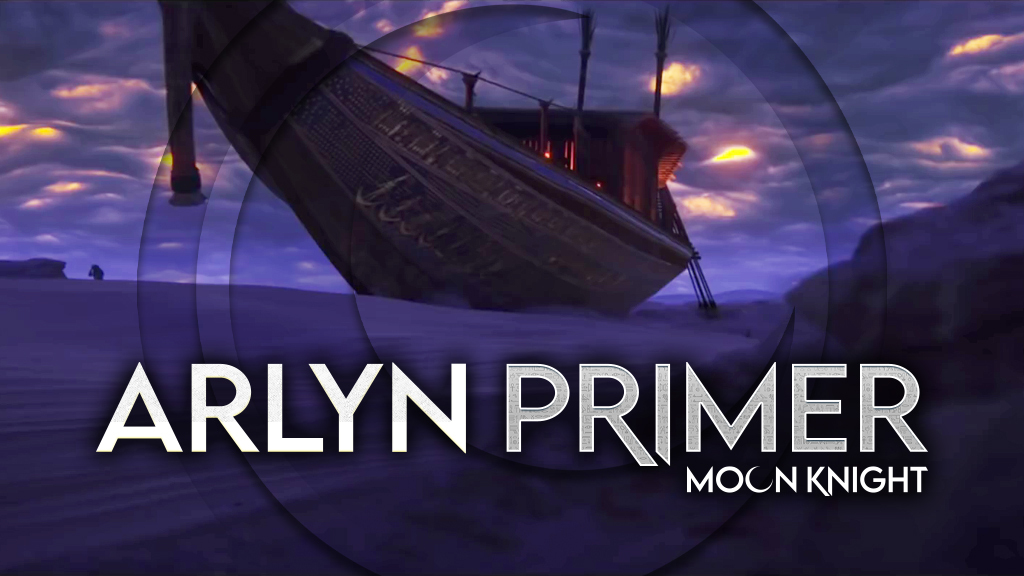
    This shot in one of the promotional videos seemingly shows us a large funerary boat traveling through the desert. And this is where we will likely find Marc, even if all he sees around him, maybe as a coping mechanism, is a mental institution filled with details from his life. This fits the Egyptian mythology the show has been exploring as boats played a big role in ancient Egyptian funerary practices. Funerary boats were often used to deliver the deceased to the afterlife, with Anubis, the god of death, the afterlife, cemeteries, tombs, and the Underworld, having his own ship that traveled between the world of the living and that of the dead. It was while doing so that it would weigh the hearts of the deceased on Maat’s scales of truth and justice, hence judging the individual’s actions in life. If the heart was found to be heavy it was fed to Ammit, with the soul cast into darkness. On the other hand, if the scales were balanced, the deceased would be taken before Osiris who would welcome them into the afterlife.

    Marvel Studios’ Moon Knight

    All of this, besides feeling terribly consistent with what the show has shown us so far, might clearly hint at all past events being what is real, with the dreamlike state being what we see as the mental institution at the end of episode four. Marc and Steven (and Jake?) will eventually be judged in order for their spirit to move on, either to damnation or the afterlife. With Khonshu out of the picture, it seems unlikely that they will manage to come back from the dead, again. Or does it?

    The first four episodes of Marvel Studios’ Moon Knight are now streaming only on Disney+.