Tag: Movie Features

  • The 5 Best Villains in the Marvel Cinematic Universe

    The 5 Best Villains in the Marvel Cinematic Universe

    Chris Hemsworth and the cast of the film have been ever busy with promoting Marvel Studios’ latest project, Thor: Love and Thunder. In that process, Hemsworth has described Christian Bale’s Gorr the God Butcher as his “favorite villain” to work against in the Marvel Cinematic Universe. 

    This quote from the lead actor has stirred me into thinking who would qualify as my personal favorite villain within the history of the Marvel Cinematic Universe. With this being a truly daunting task, I’ve thought up a list of my five favorite villains from the MCU. Before getting into this specific list, I want to make it specifically clear that this is a list of my favorite villains and not necessarily the best villains (in whatever metric you may qualify that to be). These are five characters whose film appearances resonated the most with me for a plethora of reasons, and I encourage the notion of thinking up which five would be your favorites.

    Willem Dafoe as Norman Osborn / Green Goblin

    5) Norman Osborn / Green Goblin (Earth-96283) – Spider-Man: No Way Home

    The argument could be made that Willem Dafoe’s portrayal of the classic villain is technically an MCU villain due to him coming from the universe of the Sam Raimi-directed Spider-Man films, but Green Goblin’s now intrinsic ties to the life of Tom Holland’s Peter Parker should qualify him as a definitive MCU antagonist. Having grown up with said Raimi-directed films, the absurdist camp of Dafoe chewing scenery in his descent into madness left a large imprint on myself and specific turns of phrase were in my lexicon well before Spider-Man: No Way Home. Though with the news of his return into this role in the 2021 blockbuster, I held some reservations that he (and the other returning characters) would feel too incongruous with the more slightly subtle tones of what the Marvel Cinematic Universe had done with Spider-Man. Though fortunately, not only did this version of Norman Osborn fit in extremely well with Holland, I’d argue the campiness of the character enhanced the performance. Willem Dafoe adeptly balanced both sides of the sympathetic figure of a man trapped by a demon inside of him and the sinister villain who killed this universe’s Aunt May and drove Peter into nearly becoming a killer. He was the perfect type of villain to help transition Holland’s Spider-Man into the seemingly more adult version that will continue into the future.

    Daniel Bruhl as Helmut Zemo

    4) Helmut Zemo – Captain America: Civil War

    What makes Daniel Brühl‘s portrayal of Helmut Zemo such a memorable villain for me in the history of the MCU is the distinct lack of physical action we see him undertake. Whereas essentially every other villain from the Marvel Cinematic Universe made their claim for power through overt action, Zemo got what he wanted through acting in the shadows and through the power of words. This Machiavellian approach felt extremely fresh at the time of Captain America: Civil War’s release and he still remains one of the most unique villains from the franchise. And then of course, there’s the worthwhile discourse that Zemo is arguably the most effective villain in the MCU thanks to being the catalyst of the Avengers disassembling through only a few distinct actions. 
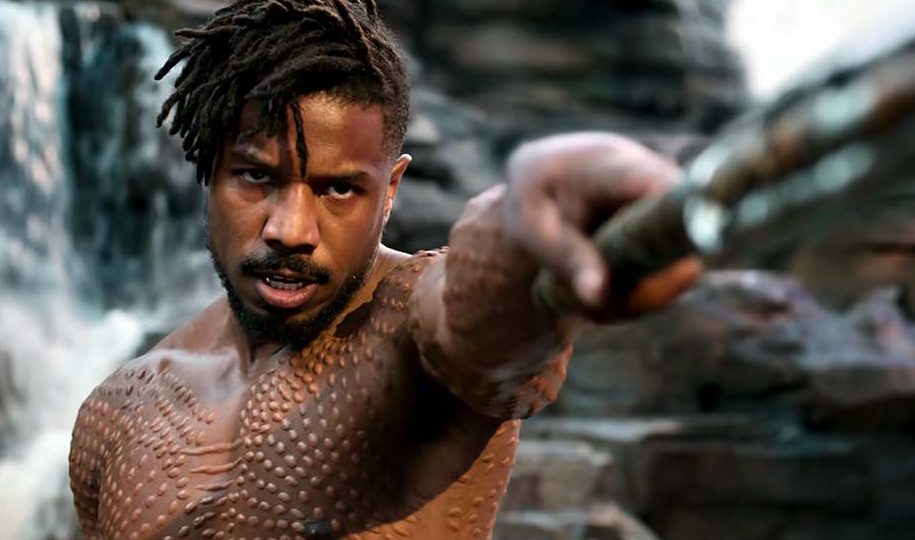
    Michael B. Jordan as Killmonger

    3) N’Jadaka / Erik Stevens / Killmonger – Black Panther

    For a film like Black Panther, its primary villain is what moves the film from a really strong entry into the Marvel Cinematic Universe to an all-time classic. The strong working relationship between director Ryan Coogler and actor Michael B. Jordan is ever present in how much the movie is carried by the actions and motivations of Killmonger (though I certainly don’t mean that as a slight on anyone else involved in the strong ensemble cast). For me, watching Killmonger throughout Black Panther is akin to watching a Shakespearean performance of King Richard III in his titular play or Iago in Othello. There will always be something exciting and intriguing seeing a villain being able to strategically navigate the world around him and end up in ultimate power, only to have a dramatic fall by the end of their story. And what especially makes Killmonger a majorly compelling character is having justifiable motivations for his actions in the world around that has genuinely unfairly wronged him. Some of the most interesting villains to watch are those that have the right moral justifications, but carry them out immorally.

    Josh Brolin as Thanos

    2) Thanos – Avengers: Infinity War

    While Thanos serves as the main antagonist for both Infinity War and Endgame, I particularly want to focus on why the former portrayal of the character is especially one of my favorite MCU villains. The level of nuance that Thanos brings to the table on his quest for all six Infinity Stones was a pleasant surprise for some audience members (including myself). This was a character that very easily could’ve been portrayed as an ultimate “man in the chair” that orchestrates his villainous scheme from a distance while focusing on the large Avengers roster before a large final battle. However, Infinity War gives Josh Brolin some substantial material to work with in terms of character development by making him essentially the protagonist of one of the highest anticipated major blockbuster films. When Marvel Studios could have simply made Thanos the personification of pure evil, they instead made him a complicated figure that truly believes he is acting for the good of the universe (even though his actions clearly show that he isn’t). It was a genuinely risky decision by Marvel Studios, and I greatly appreciate that risk and how well it ended up playing out for them. And on the point of risky decisions, the most critical component for making him one of my favorite cinematic villains is him ultimately being successful in his resoundly defeating Earth’s mightiest heroes destroying half of the universe’s life. While it was obvious in the moment that the killed heroes would rise again by Endgame the following year, it still remains one of the most bold endings to a major studio film and solidified this film as the Star Wars: Empire Strikes Back of this generation. And Avengers: Infinity War would certainly have not reached that status without the all-time great portrayal of Thanos.

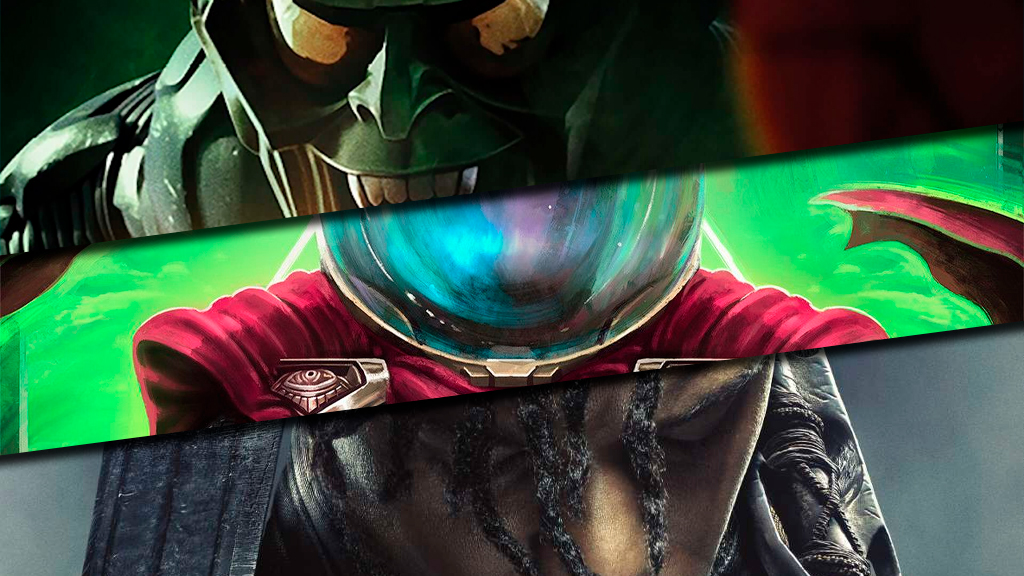
    Jake Gyllenhaal as Mysterio

    1) Quentin Beck / Mysterio – Spider-Man: Far From Home

    While generally well received by audiences as an enjoyable villain, I certainly expect this to be considered to be an at least unconventional #1 pick for favorite Marvel Cinematic Universe villain. However, Jake Gyllenhaal gives an all-time great and multi-layered performance as Mysterio that consistently rings in my mind a favorite character from this decade-plus long cinematic saga. While I certainly feel strongly about nuanced characters with complex motivations (as seen in my entries of Zemo, Killmonger, and Thanos), I can find equally great enjoyment out of a villain who has essentially no real redeeming qualities. Quentin Beck is simply an absolute irredeemable villain in his vain attempt to enter the world of celebrity and total willingness to outright murder a teenager. Plus his showmanship is extremely memorable, between his iconic revealing monologue and multi-layered illusion on Spider-Man in Berlin. What I find most interesting with Mysterio is Gyllenhaal’s master-class in acting with this role. Quentin Beck is played as a fairly wooden and generic superhero for the first half Far From Home, and it reaches the point that one could think it’s just an outright bad performance on a first viewing. However, the turn at the midpoint of the film is both extremely fun to watch and recontextualizes his entire role in the film as part of his master scheme (which makes this film extremely rewatchable in my book). Jake Gyllenhaal looks like he’s having the time of his life as an unhinged, vapid Hollywood-esque, mustache-twirling lunatic. And of course Mysterio is responsible for providing this version of Spider-Man with my favorite live-action action scenes with the character throughout the third act. Then of course comes the notion that Mysterio is the catalyst for the status-quo breaking events for Peter Parker, which places him in my pantheon of enjoyable villains that at least semi-successfully achieve their goals.

    Of course, this whole thought experiment is ultimately subjective, and I’m very certain any reader of this will have their own variations on a “Top Five Favorite Marvel Cinematic Universe Villain” list. That in itself has been critical in making Marvel Studios as successful as it has been. And hopefully we will be able to see new villains that could be included on these types of lists in the near future as Phase Four continues.
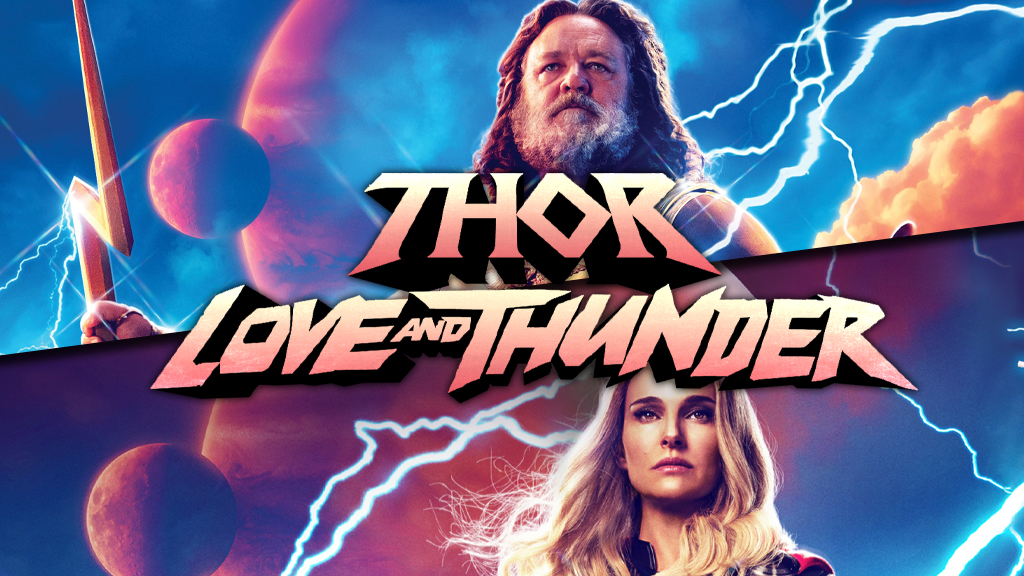
  • ‘Thor: Love and Thunder’: Post-Credits Scenes Explained

    ‘Thor: Love and Thunder’: Post-Credits Scenes Explained

    Marvel Studios has returned with another movie, which means another round of exciting post-credits scenes that fans can theorize on for years to come. Thor: Love and Thunder, like many of the Marvel Cinematic Universe films before it, features two extra tags at the end of it’s runtime. The first of these teases continues the tradition of introducing surprising new characters after the credits roll, while the second brings back a familiar face to put a nice little bow on the fourth Thor story. As always, there’s quite a bit to break down, so sit back and relax your brain while we do the work and explain what exactly is going on in those signature Marvel stingers.

    Enter: Hercules

    Well, if you’ve made it this far, you probably already know that Brett Goldstein is Marvel’s Hercules. About halfway through Love and Thunder‘s credits, the Ted Lasso star pops up as the Greek Prince of Power in a surprise reveal. The scene acts as a continuation of an earlier sequence in the movie where Chris Hemsworth‘s Thor confronts Russell Crowe‘s Zeus for refusing to act on the rise of Gorr the God Butcher, a conversation that would ultimately result in Zeus’ very public humiliation in Omnipotence City. After the chat between both Thunder Gods turns sour, a physical conflict begins, and Thor’s best buddy Korg is seemingly struck down by Zeus’ powerful lightning bolt. Korg turns out to be alive, but that doesn’t stop an enraged Thor from catching Zeus’ next bolt and chucking it right back to where it came from. The bolt goes through Zeus’ chest, and the renowned leader topples silently from his regal perch.
    The mid-credits scene lets the audience know that Zeus is not dead, but is instead plotting his revenge on Thor while recovering from his wound. To do this, he enlists the aid of his son, Hercules. Following a dramatic monologue in which Zeus laments the lack of fear modern mortals have for gods, he asks Hercules to find Thor and prove that the gods are still a force to be reckoned with. The camera then cuts to Goldstein standing up in full comic book Hercules attire, complete with flowing chest hair and his fun little club weapon.

    The character has long been rumored to be making his MCU debut in Phase Four, and Love and Thunder was such a perfect place for the entrance to happen it’s almost shocking it didn’t occur in the main story. In the comics, Hercules has encountered Thor many times, at first as an enemy but eventually as a longtime friend. When the two first meet, Thor is searching for Olympus alongside his brother Loki on a mission of peace, but Hercules’ natural desire to prove his strength leads to initial conflict. In fact, the concept of Herc and Thor duking it out to prove who is stronger would become a recurring thread in their relationship. Despite actually becoming quick pals, a friendly rivalry would remain for the rest of their days. As Herc himself would eventually say in Tony Isabella‘s Champions #1; “Whatever Thor canst do – Hercules can accomplish more mightily!

    The MCU’s introduction of the character implies a potential Thor 5 plot might revolve around Hercules and the Greek gods clashing with Thor and his Asgardian comrades. However, as previously mentioned, these two entities are often more in line with each other than they are in opposition. Not long after Hercules meets Thor, the former is tricked by the Enchantress into visiting Earth and attacking the Avengers. He’s swiftly snapped out of it, but his actions anger Zeus and, like Thor before him, he’s banished from his home on Olympus and forced to live among the mortals. Hercules then becomes an on-and-off member of the Avengers, later co-founding his own team called the Champions, and creating a new life for himself on Earth and pulling away from the Hercules known in Greek mythology.

    Perhaps the post-movie setup is actually for a future team-up where Hercules attacks Earth’s Mightiest Heroes before having a change of heart, ultimately being banished by Zeus for not fulfilling his mission and becoming a regular mainstay of the MCU Avengers. Or, maybe, his assault on Thor will only last briefly, before the two partner up to take on a bigger threat. The duo have confronted massive villains like the Chaos King Amatsu-Mikaboshi and Herc’s Uncle Pluto together in the past. There’s a good chance one of those baddies lines up against the “God Squad” of Herc and Thor in another solo adventure down the line.

    Valkyrie: Jane Foster

    Once the credits have been completed, fans are treated to a short scene that could serve to either wrap up Dr. Jane Foster’s MCU story or open the door to an entirely new chapter. In Love and Thunder‘s final moments, Jane uses a crumbling Mjolnir to entrap the blade of Gorr’s God-slaying sword and destroy it for good. This effectively defeats the God Butcher and saves the lives of all gods, but it also robs Foster of the only thing keeping her alive. After her sacrifice, Jane dies contently in the arms of Thor, knowing the universe has been made a better place for everyone. The post-credits reveal that Jane, having died an Asgardian hero, has been granted access to an afterlife in Valhalla.

    She’s welcomed to life-after-death by Idris Elba’s Heimdall, who previously perished in battle against Thanos and the Black Order. He’s happy to see Jane, who saved the life of his son after he was kidnapped by Gorr, and welcomes her to a post-mortem existence as both a warrior and a friend. The pair walk off together, gladly embracing whatever Valhalla may have in store for them. If Marvel so chooses, this could be the perfect ending to the tale of Jane Foster, especially if actress Natalie Portman decides she’s done with the superhero gig forever. However, it could also be teeing up an adaptation of a very recent comic run from legendary Thor scribe Jason Aaron.

    Still ongoing at the time of this publication, Valkyrie: Jane Foster tells the story of Foster after she loses the power of The Mighty Thor. Forced to sacrifice a crumbling Mjolnir in a last-ditch effort to save the universe, Jane is blessed with the powers of a Valkyrie and becomes the first in a new generation of Asgard’s most elite group. She then accepts help from a recently deceased Heimdall, ultimately using her newfound abilities to aid a grieving Thor and take Heimdall’s spirit on one last adventure through the multiversal afterlife. Sound familiar? Love and Thunder establishes a close friendship, and possible romance, between Foster and Tessa Thompson’s Valkyrie. It’s not far-fetched to think Val might find a way to bless Jane with Valkrior power in a future MCU project, and the post-credits scene perfectly sets up the new friendship between Foster and Heimdall. If Portman and Elba are both down for another outing, this story could be adapted as a sub-plot in Thor 5 or as a Valkyrie spin-off series on Disney+. After all, Kevin Feige and company really do love their series spin-offs these days.

    Source: Marvel

  • ‘Ms. Marvel’ and ‘Shang-Chi’ May Have Introduced Phase 4’s Infinity Stones

    ‘Ms. Marvel’ and ‘Shang-Chi’ May Have Introduced Phase 4’s Infinity Stones

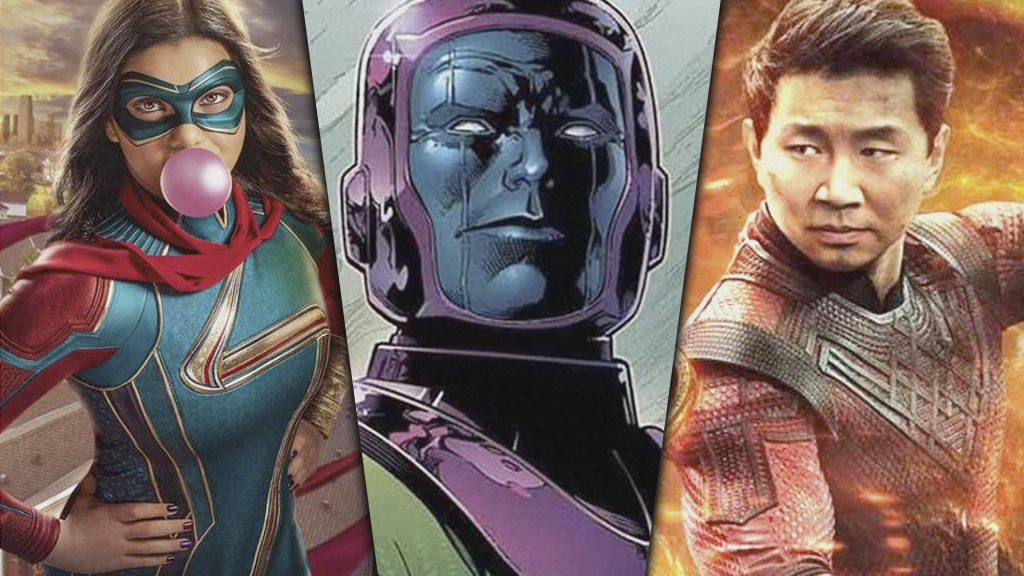
    There have been many comments on a lack of connection between the various projects of the Marvel Cinematic Universe’s elusive Phase 4. While it’s echoing the days of when the MCU was in its infancy, long before anyone made heads or tails about Thanos’ brief grin at the tail end of Avengers, there has been a running theme going throughout the season. Many of the stories explored here are about identity and uncovering what we are capable of. There’s also the mystery set out in Shang-Chi and the Legend of the Ten Rings, as mysterious tools are appearing with uncertain origins. The same goes for the recent Disney+ series Ms. Marvel, where she uses bangles that are a mystery to even the Clandestine seeking them.

    Yet, the latest episode introduced a surprising twist to a familiar aspect of Kamala Kan’s power. In the comics, she doesn’t actually shapeshift but rather borrows mass from herself throughout time. In the series, she actually gains the literal ability to travel through time and ends up during the Partition to help her own family’s history come true. It’s a rather surprising twist that not only gave us time to explore an important part of history but also continue to evolve Kamala’s power set. This does lead to more questions regarding the mysterious origins and how they might tie to the Kree, given it was on a blue arm and the Ten Rings logo.

    Once I started thinking about the time travel implications in this series, the more I started to think about the loose connection at play here. We did have an entire scene where no one could connect the origins of the Ten Rings, a weapon that’s been part of MCU’s history long before we even witnessed it ourselves. How would technology that advanced find its way into the hands of Wenwu that not only give him seemingly eternal life but also the power to take down an entire army and how would it connect to the mysterious bangles passed down in the Khan family? The Disney+ series producers did hint that they adapted them for a bigger story, and perhaps they weren’t hinting at just The Marvels but even beyond that.

    Well, there is actually one connective tissue that would tie it together. It’s not stated outright but I believe these two mysterious items are linked. In a way, they likely have a similar origin and that is one that doesn’t lie in the past. In Loki, we’ve met a Variant of the man that would be known as Kang the Conqueror to many. Time travel and dimensional travel have been at the forefront for most of the season, as the MCU cleverly tied these elements together to avoid having to explain two distinct sci-fi concepts.

    Fittingly, both elements come together in this season of Ms. Marvel. Similar to the dimension introduced in Shang-Chi, the Clandestine are actually from another dimension they refer to as Noor and have been on Earth for a long time. Both projects feature a mysterious object that gives its wielder mysterious powers of an unknown origin that could potentially open up the MCU’s mythos in new ways. Perhaps these objects have these powers because they aren’t from any past civilization but rather originate from the future.

    Kang the Conqueror has that name for a reason. With an arsenal unlike any other at his hand, it wouldn’t be too surprising that he’d also find a way to echo the words of Thor’s explanation of how Asgardians combine magic and technology. He’s found a way to harness exactly that to create an arsenal of weapons he used for his own conquering throughout history only to leave them behind when he made his jump. Moon Knight almost featured the man that was a pharao in another timeline, which further pushes a connection.

    Perhaps Doctor Strange in the Multiverse of Madness introduced the only weapon that would be able to take him down, someone who can literally bend reality to her knees. Wanda may be the piece of the puzzle that won’t become apparent until much later. In a way, the unnamed bangles and Shang-Chi‘s Ten Rings are actually Phase 4’s new Infinity Stones. Instead of literal embodiments of powers, they are objects all hinting at one major threat and the power he truly holds. Kang the Conqueror doesn’t need to collect any stones to accomplish his goals, he already has done so in another time. Yet, his arrogance of leaving these objects in the past may also become his undoing.

  • Murphy’s Team-Up Volume 21: Dream Director for Marvel Studios ‘Fantastic Four’

    Murphy’s Team-Up Volume 21: Dream Director for Marvel Studios ‘Fantastic Four’

    Nicole Sobon on Deborah Chow

    My pick to helm Marvel Studios’ Fantastic Four film would be Deborah Chow. While someone like Peyton Reed, who has expressed his interest in helming a Fantastic Four film, would seem like a more ideal choice, Chow’s star has rightfully been on the rise in recent years. The director earned her first credit thanks to a short titled Daypass in 2002. She then followed it up with a short titled The Hill in 2004, followed by her first feature with 2010’s The High Cost of Living. It wasn’t until she stepped in to direct an episode of Copper that Chow truly launched her career in television. Like most, she built her resume by directing episodes of multiple CW shows, but once she stepped into the Marvel universe – courtesy of Netflix – Chow really proved that she had the ability to deliver something impressive. One has to imagine it was her work on shows like Jessica Jones and Iron Fist that ultimately led to her being hired to helm episodes on The Mandalorian before landing Obi-Wan Kenobi. Giving Chow the chance to shine on a big feature film such as Fantastic Four would be a pretty fantastic move. Obi-Wan proved Chow has the chops to play in a larger playground, it’s just a matter of giving her the chance to shine on a big-budget feature.  

    Jared Kirschenbaum on Justin Lin

    The Fantastic Four can be defined by a single word: family. And if anyone is qualified for the task of ushering Marvel’s first family into the MCU, it’s Justin Lin – the director who made The Fast and the Furious into the massive franchise it is today. Lin helmed 5 Fast and Furious films (The Fast and the Furious: Tokyo Drift, Fast and Furious, Fast Five, Fast and Furious 6, and F9: The Fast Saga), so he knows his way around a big-studio blockbuster. However, it was Lin’s vision for the Fast and Furious films that transformed them from a streetcar racing movie series to a high-stakes global adventure series centered on a multicultural found family. Additionally, if a director’s time on the show Community is any indication of how well they’d do in the MCU, then Justin Lin should have no trouble directing Fantastic Four. Like the Russo Brothers, who are responsible for some of the all time greatest MCU films, Lin found great success on Community. Lin directed 3 episodes of the show, including the first paintball-centric episode “Modern Warfare”, one of the show’s best. With all of that, combined with his work on Star Trek Beyond, which had a vast ensemble acting as a surrogate family and reintroduced the series to its 60’s sci-fi roots of exploration and adventure, Justin Lin almost seems tailor-made to direct Fantastic Four.

    Hunter Radesi on The Daniels

    The Fantastic Four aren’t your average superheroes, and they deserve a pair of directors who aren’t so average either. The Daniels shocked the world this year with the release of their hit film Everything, Everywhere All at Once, crafting an incredibly entertaining tale about a family surviving their way through the unpredictable unknown. This is more or less exactly what a good Fantastic Four adaptation needs to be. Previous attempts at bringing Marvel’s First Family to life have failed in understanding the group thrives more on adventure than they do super heroics. The best tales typically involve Reed, Sue, Ben, and Johnny exploring the far reaches of space and time on some sort of wacky mission, not fighting thugs on the streets of New York. Kevin Feige and company would be smart to hedge their bets on an indie duo with a mastery in mixing outright weird with downright emotional.

    João Pinto on Alex Garland

    The upcoming Fantastic Four feature film will undoubtedly shape the Marvel Cinematic Universe (MCU) for years to come. Marvel Studios seems to be taking its time when it comes to the introduction of Marvel’s First Family and that alone shows us just how pivotal the project is set to become. Another aspect differentiating this project from most other recent MCU offerings is that the director’s chair is likely to be given to a more established director within the industry.

    With the sheer volume of MCU projects that Marvel Studios is putting out each year, it comes with little surprise how Kevin Feige doesn’t want to have to oversee a shoot of this magnitude himself, thus allowing him to pay more attention to several other, smaller scale, projects.

    This shortens the list of possible directors, as many big names might not want to focus their energies on a sci-fi franchise, and those who would might not be the most accomplished of the bunch. One name that does come to mind, with an impeccable track record both in terms of writing and directing as well as being immensely versed in high-concept sci-fi, is that of British writer and filmmaker Alex Garland.

    Garland, known for his work in Ex-Machina, Annihilation, and the fantastic miniseries Devs (as well as his contributions to 28 Days Later, 28 Weeks Later, Sunshine and Dredd) would surely bring the inventiveness of his approach to science fiction into the MCU, something a Fantastic Four feature film feels like the perfect vehicle for. He has the track record within the industry to be able to lead such a project and the creative freedom Feige is willing to give whoever ends up with the job could perhaps sit well with Garland, that is known to enjoy being in almost complete creative control of his directorial endeavors as he has written all five of them.

    Charles Murphy on Steven Spielberg

    As they’ve expanded from 3 movies per year to 4 movies and 3-4 streaming projects per year, Marvel Studios has had to learn on the fly. As it should be, learning is continuous and one lesson learned by Kevin Feige over the last year is that unlike Evelyn Quan Wang (now you see why this one falls in line after Hunter’s!), he cannot be EVERYWHERE all at once. Feige learned that lesson by finding someone he felt comfortable relinquishing some day-to-day control to on set in Sam Raimi. And that discovery has emboldened Feige to shoot for the stars as he looks to replace Jon Watts on Fantastic Four. If Feige is looking for a seasoned, successful person to usher the First Family into the MCU, he need look no further than Steven Spielberg. Spielberg can wear all the hats required to keep a production up and running, has proven his mastery of the sci-fi, action and humanistic genres and is comfortable working with any mix of practical effects and CGI.

    Spielberg is a big fan of superhero films, with Marvel Studios Guardians of the Galaxy apparently at the top of of list (at least at one time). He was keen on working with DC on an adaptation of Blackhawk, but while the project is reportedly still alive, Spielberg’s attachment to it is now unclear. Imagine a high-concept sci-fi film (Minority Report) that captures a sense of adventure (Raiders of the Lost Ark) and explores the unknown (Close Encoutners of the Third Kind) while keeping the focus on family (The Goonies) and you have what a true Fantastic Four film should be. And if you don’t think big name actors won’t be lining up to work with Spielberg on a Marvel Studios project, you aren’t paying attention.

    MTF III on Rian Johnson

    In Rian Johnson, Marvel wouldn’t just be getting a director with an art house sensibility who has experience within a mega-franchise, were they to choose him for Fantastic Four. The Star Wars: The Last Jedi director has demonstrated both the sci-fi bona fides (see Looper) and the ability to juggle a large ensemble with a wide range of character types (see Knives Out and its forthcoming sequel). And while we don’t know yet who will be cast to play Reed Richards, Johnson’s previous work with Joseph Gordon-Levitt (one of my top choices) shows that he can offer audiences a more cerebral protagonist than the standard wise-cracking square-jawed lead.

    His Fantastic Four would have a smart, brisk script, visual flourishes (who could forget the Holdo Maneuver shot or the salt planet battle in The Last Jedi), and emotional depth, while still slipping in physical and situational humor. Admittedly, it wouldn’t be saccharine and sweet, as Johnson is always aware of and in dialogue with the genres he employs. He wouldn’t replicate the 1960’s-style exploratory science fiction of a Lost in Space or Doctor Who without also infusing it with self-awareness and recognition of how their familiar tropes have been employed, so that he can subvert them. And in my opinion, the key to a truly great Fantastic Four project in the 2020s will be a willingness to interrogate and subvert well-worn and traditional archetypes, so that modern audiences can engage with them on a deeper level. Johnson has shown the ability to do that, all while still making crowd-pleasing blockbusters.

    Torbjorn Frazier on Peyton Reed

    Something to consider for the Marvel Cinematic Universe’s Fantastic Four is that Kevin Feige and co. may want to play it safe with what could become the MCU’s flagship franchise and go with a more conventional take on the team for the first film. And with that in mind, Peyton Reed would be a logical choice to direct. First and foremost, it is known that Reed was involved with the creation of a Fantastic Four film in the early 2000s that never made it past development hell, so he at minimum has some sort of vision for these characters. Before discussing his involvement with Marvel Studios already, Reed’s direction of the season two finale of The Mandalorian showed that he has the ability to showcase characters and moments with great pathos that resonates greatly with audiences. And when it comes to the Ant-Man films, Reed has shown the ability to create relatable family dynamics that rank among the best in the MCU. Above everything else, Fantastic Four needs to establish the team as Marvel’s First Family, and I fully trust Peyton Reed to do that. And with Ant-Man and The Wasp: Quantumania releasing in less than a year, we will finally get to see what Reed can do in a high-scope and high-concept project that could be critical for the future of the MCU. While not the most appealing to fans at first blush, I truly believe that Peyton Reed would be a serviceable pick for the first Marvel Studios-produced Fantastic Four film.

  • Frankensteining the Ultimate MCU Villain

    Frankensteining the Ultimate MCU Villain

    There was a time when one of the top criticisms the Marvel Cinematic Universe faced was that the films had a “villain problem.” This wasn’t entirely inaccurate, because unlike with well-known heroes like Batman and Spider-Man, the earliest MCU films were about establishing who our long-term protagonists would be, more than establishing who would be their foils.

    But as the quality of the offerings have improved, so too has Marvel’s ability to introduce heroes and progress their stories in the projects of others, leaving the films with more real estate to give their antagonists room to flourish. Add in the way that some villains’ stories intertwined with those of the heroes, and that has provided the ingredients for the introduction of villains who leave an impression on audiences even after they’re vanquished. And in a storytelling form that thrives on characters returning and resurfacing, that has been invaluable.

    But what if someone were to scour the first 4 phases of the MCU and create a new and formidable villain, stitched together from antagonists past? From which five villains would you take component parts for this unholy union, and which parts would you use? This piece purports to answer that question. Behold, our Villain Frankenstein!

    The Commitment of Thanos

    For most fans, Thanos is either #1 or #1A on their list of favorite MCU villains. And why wouldn’t he? In Avengers: Infinity War he defeated the Avengers handily while throwing timeless verbal barbs in their direction — not to mention fragments of nearby moons. He humbled the Hulk, victimized the Vision, and laid waste to worlds, all in the name of balancing the universe through the eradication of half its sentient life. So thorough was his victory, and so committed was he to achieve that victory, that audiences couldn’t help but begrudgingly give him respect.

    But beyond the respect for how formidable he was, audiences also considered, because of Thanos’ commitment to his vision for the universe, and his willingness to sacrifice and risk everything for it, the possibility that just maybe he had a point. Does the world warrant a biblical-style purge? Indeed, sometimes it feels like it does. Can the idea of killing half of everyone indiscriminately and leaving survivors to make a better universe in its aftermath seem oddly plausible? Yes! So we can understand a villain who takes years, stretched across multiple films, acquiring the MacGuffins and putting the pieces into place, doing so in service of a victory of that scale. That his Snap was ultimately reversed is immaterial; his impact is still being felt. Thanos showed that it was possible for the villain to win, and because it took five years for that win to be overcome, the MCU, and its audience, was forced to marinate in his message.

    The Righteousness of Killmonger

    Before “Thanos Was Right,” it was Erik “Killmonger” Stevens in Black Panther who articulated a worldview that resonated with audiences, despite being ultimately villainous. Colonization and oppression, particularly at the hands of Europeans, have ravaged the Global Majority, marginalizing them, and creating an underclass throughout the world who need to rise up and achieve liberation by striking back. And in the utopian nation of Wakanda reside the tools that could make this global revolution possible. By sitting back and letting all the horrors be visited on people of color throughout the world by imperial powers, Wakanda abdicated a responsibility that should have been a moral imperative. And if Killmonger led them, the formerly powerless would rise up worldwide and become a new power, a new empire, that would strike fear in the hearts of any that opposed them.

    Yes, of course, that goes too far. But up until the point that it goes too far, we find ourselves nodding our heads in condemnation for the “comfortable” who sit idly by while others are oppressed. We admire the fact that a young boy left orphaned in an Oakland housing project was able to mold himself into a fierce fighter, a tactical genius, and an engineering wunderkind, with nary a Bat insignia to speak of. Instead, he wears on his body the scars of all the killing he had to do to put himself on the Wakandan throne — even the killing of his own people. And he scoffs at the fact that Wakandans debate intervention while innocents suffer and die in the imperial yoke. It’s a message that continues to resonate today, as the masses cry out for someone who will do whatever is necessary to defeat tyranny, including getting their hands dirty.

    In our hearts, we know that Erik honed himself into something sharp and hard because his world wouldn’t let him be anything different, and when he does die in Black Panther, it’s tragic. But we also know that there are billions subjected to that same world, many making similar choices, because sharp and hard is what makes survival more likely than not. So villain or no, there’s something to the idea of the Wakandan spear that strikes at the heart of the powers that be in order to liberate the powerless. At times, we wanted to believe Killmonger could be that spear of righteousness, and it’s an epic villain whose cause is so sympathetic that you almost want to take it up alongside them.

    The Resources of Wenwu

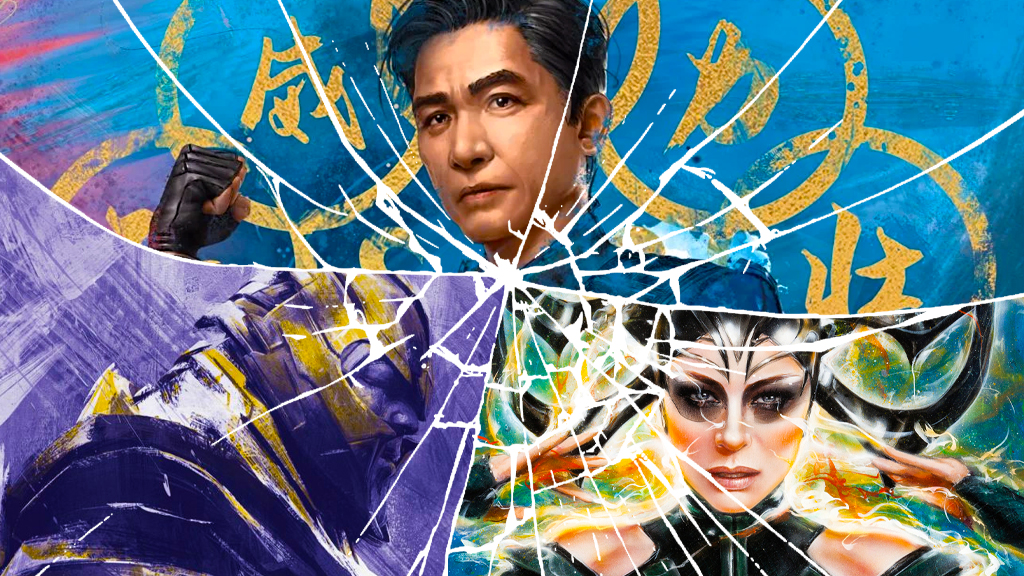
    The Ten Rings organization was introduced to fans in the very first MCU movie, Iron Man as a shadowy terrorist network, yet we learn years later in Shang-Chi and The Legend of The Ten Rings that their roots stretch back millennia, and their origins lie in ten mystical artifacts of immense power, wielded by Xu Wenwu. With these Rings, Wenwu is able to take down kingdoms and annihilate armies singlehandedly and is granted near-immortality, inspiring the devoted and fanatical following which provides the foundation for his international criminal empire.

    In the Ten Rings, Wenwu established a clandestine organization with the resources to rival Hydra, which for the most part had been able to prosper despite the existence of S.H.I.E.L.D., the emergence of the Avengers, and the rampage of the Ronin. And his identity as the head of the organization was secret enough that an actor could be installed as a figurehead with no one in law enforcement having a clue.

    Although by the end of Shang-Chi, leadership of the Ten Rings organization has passed from Wenwu to his daughter Xu Xialing, and custody of the Rings themselves has passed to his son Shang-Chi, it should not be forgotten that for thousands of years, this martial arts master and criminal mastermind possessed ten of Earth’s most powerful weapons, and had an army of operatives at his disposal all over the world. It’s certainly disappointing that we mostly got to see the fall of Wenwu, rather than his rise and reign. But the glimpses we did see were of a formidable man who built an empire that was not to be trifled with. And there is a certain irony to the fact that his other defining characteristic, family man — exemplified by his desire to see his children extend his legacy — ended up being fulfilled in his death. He was a cruel and overbearing dad, and yet, he still managed to get his way. How villainous is that?

    The Sex Appeal of Hela

    Does a great villain have to be sexy? Of course not. However, great villains are often charismatic, confident, graceful, and lithe, and there’s something sensually appealing about a character who is uninhibited and unabashedly bad. From the moment she first steps out of the portal in Thor: Ragnarok like some kind of goth goddess, Hela was capable of stealing the spotlight from both the hunky and handsome Thor and the devilishly charming Loki, chewing scenery, smashing Mjolnir, and establishing her dominance. She laid waste to Asgard and looked fabulous doing it. Whether you’re male or female, a villain who can make you swoon, despite knowing that their intentions are far from pure…well, let’s just say that Tumblr exists for a reason.

    The MCU was reluctant to have female villains for a long time, and I suspect part of the issue was presenting an antagonist who could convincingly present a physical threat to male heroes. Well in the Goddess of Death, Taika Waititi was able to give us all of that, as Hela stepped on the necks of every male character and dared them to beg for more. When she instructs them to take to their knees and submit to her will, we as an audience are kind of hoping she gets to do her worst. Every moment she strokes her hair, tilts her head back, and unleashes her thorny antlers becomes instantly iconic because she’s about to do Very Bad Things that we can’t wait to see.

    There have been a lot of formidable villains in the MCU, but none other than Hela have served such looks while also serving up so much death and destruction. This goddess deserves her spot in the pantheon.

    The Gravitas of the Kingpin

    Wilson Fisk’s physical stature certainly looms large, and so does his influence. Whether he’s the Big Bad of Daredevil willing to bash a head in for embarrassing him in front of Vanessa, or on Hawkeye tearing a car door off the hinges, the unbridled rage of the Kingpin is intimidating. However, even more intimidating is his soft-spoken, measured approach to getting his point across the other 90% of the time. As portrayed by Vincent D’Onofrio, Wilson Fisk is a man capable of conveying menace in an anecdote, inspiring fear in even the pauses between his words. You cross him at your peril, and Fisk speaks like a man who knows that, and most importantly, knows that you know it.

    Kingpin is a villain that commands both our attention and our respect, even though he isn’t the most charismatic in his oratory. He isn’t going to drop a smooth one-liner or dazzle us with his charm. He is, however, going to be riveting in his determined and deliberate delivery of a dramatic monologue. And monologues are a great villain’s stock in trade.

    Villainy is a complex stew. There’s not an exact formula that can be relied upon to create a timeless villain. But if you were trying to create a blueprint, so that you could build an elite supervillain in a lab, this would be a great starting point. We’ve got some great villains coming down the pipeline in the months and years ahead. Let’s see how they measure up.

  • The 5 Most (and Least) Rewatchable MCU Films

    The 5 Most (and Least) Rewatchable MCU Films

    With Doctor Strange in the Multiverse of Madness now streaming on Disney Plus, MCU fans have the opportunity to rewatch the film-or at least certain parts of it at their leisure. And, according to some recent data, it looks like fans have turned it on more than either of the other two MCU films that also only had a 45-day theatrical window, Shang-Chi, and Eternals. The film is, for the most part, a fast-paced, wild ride through the multiverse, chocked full of crazy cameos and some of Marvel Studios’ most terrifying content to date. But will it, ultimately, be the kind of film fans go back to over and over again? Time will tell, but for now, let’s look at which films already do fit that category…and which don’t.

    The 5 Most Rewatchable MCU Films

    Ant-Man (2015)

    Everyone loves Paul Rudd and his energy makes 2015’s Ant-Man one of the MCU’s funniest films. Of course, Rudd’s not alone in bringing the laughs as he’s joined by Michael Peña’s Luis, whose attention to all the wrong details in his stories makes for laughs every time. Finally, the father-daughter relationship between Rudd’s Scott Lang and his daughter, Cassie, hits home and adds a layer of sweetness to the film.

    Avengers: Infinity War (2018)

    While Avengers: Endgame was received better critically, Infinity War provides fans with a steady flow of rewatchable moments that make it the perfect MCU film to have on in the background. From Cap’s catch of Proxima’s weapon to Thor’s arrival on Earth to the many highlights of the Battles of Wakanda and Titan, Infinity War acts as a highlight reel for the shared cinematic universe.

    Captain America: The Winter Soldier (2015)

    From start to finish, Captain America: The Winter Soldier puts out a steady flow of some of the best action in any MCU film to date. Beginning with the raid of the Lemurian Star, continuing to the best car chase the MCU has seen and the beautifully shot battle in the streets between Cap and the Winter Solider and finishing up with the emotional battle in the Hellicarrier, the Russo brothers, with the help of a fantastic score, made fans FEEL the action. While the MCU has had some pretty successful action scenes since this film still feels like it’s the best of the best in that regard.

    Guardians of the Galaxy (2015)

    James Gunn changed an awful lot from the way these characters were depicted in the source material and one of them cements this film as one of the most rewatchable MCU films. By giving Peter Quill a Walkman, Gunn found an organic way to incorporate music into the film and from the moment fans saw the first teaser footage, it was the music that drew them in. It doesn’t hurt that Gunn’s strength as a director is dealing with interpersonal dynamics-and he certainly had a lot of fun with that here-but every time fans see Star-Lord dancing on Morag, the good feelings come rushing back.

    Thor: Ragnarok (2015)

    The most dumb fun ever put into one MCU film. Ragnarok began the process of making Thor a lot less Shakespearian and a lot more fun. Director Taika Waititi figuratively and, in one scene, literally, deconstructed everything fans thought they knew about Thor and Asgard, allowing for the Odinson to be reborn-though he certainly had to suffer before he got there. Between the comedy and the fun action, Ragnarok is rewatchable from beginning to end and stands at or near the top of the list.

    The 5 Least Rewatchable MCU Films

    Captain Marvel (2019)

    A less than marvelous plot, run-of-the-mill action, and some really dull and poorly written characters combine to make this one tough to get through more than once. Sure, Ben Mendelsohn‘s Talos is pretty great, but for a film starring Brie Larson, Lee Pace, Samuel L. Jackson, and Jude Law, it really misses the mark. Like many MCU first films, this one does a lot of foundational work that will likely allow for a stronger sequel, but even there the film falls short by failing to really dive into the Kree-Skrull War, one of the comic’s longest-standing feuds, and making the Skrulls pretty boring.

    Eternals (2021)

    For a film based on one of Jack Kirby’s wildest ideas, very little is wild here and very little is Kirby here. Wooden and sleepy performances are everywhere in Eternals, with only Kumail Nanjiani and Don Lee escaping that trap. It also may have been a mismatch to put director Chloe Zhao, who works only with natural light, in charge of this group who, in the comics, are as bright and bold as any. Finally, the decision-making around how to adapt the Deviants to the MCU is as baffling as any, giving the name to some incredibly boring and very non-Kirby creatures. A missed opportunity for sure.

    Guardians of the Galaxy Vol. 2 (2017)

    As fantastically rewatchable as the first one is, the sequel never really comes near to that. While not necessarily a bad movie, outside of the big opening action sequence, it doesn’t recapture the charm of the first film, and parts of the second act can induce one to wonder what’s happening online rather than dig back in.

    The Incredible Hulk (2008)

    Other than introducing Banner and Thunderbolt Ross, this film has really had no reason for existing. Sure, we’re getting more of Abomination/Blonsky now, but adding cool characters to the shared universe doesn’t do enough save this one. As Captain Marvel, this film is full of talented names who fell victim to a story that was simply not that interesting. It’s probably for the best that it’s not available on Disney Plus, though it’s so unwatchable that it’s possible not many people even know it’s not there.

    Spider-Man: Far From Home (2019)

    Of all the films on this list, this is the hardest one to explain away. It has some of the MCU’s most memorable and creative action sequences, Jake Gyllenhall is a fantastic Mysterio and everyone loves Tom Holland; however, nothing about it screams “watch me again!”. Interestingly enough, the events of it are rendered completely meaningless by the end of No Way Home, so if you find yourself forgetting the big reveal at the end, you’ll be in the same boat as the in-universe population of the MCU.

    What 5 are you taking with you for a weekend retreat? What 5 are you retreating from? Let us know in the comments.

  • What to Expect from Marvel Studios at SDCC ’22

    What to Expect from Marvel Studios at SDCC ’22

    Marvel Studios has confirmed it will have a presence in Hall H for the first time since 2019. Kevin Feige once said the studio wouldn’t go to SDCC if they couldn’t over-deliver, so fans must be in for a bit of a treat this July. What can fans expect? What should they not expect? Let’s think it through…

    A Major She-Hulk Presence

    The surest of sure things is that Marvel Studios’ presentation will have a heavy dose of their next big thing: the Disney Plus streaming series She-Hulk: Attorney At Law. By the time SDCC rolls around, it’ll have been about 2 months since the first full-length trailer for the series dropped, so a fresh trailer certainly makes sense given the series will begin streaming four weeks after SDCC. Marvel Studios always likes to have cast members on stage for SDCC presentations, so don’t be too surprised if star Tatiana Maslany shows up and, if they really want to blow the roof off of Hall H, Charlie Cox.

    First Look at Black Panther: Wakanda Forever

    black panther tenoch huerta

    The next surest thing for Hall H is that a good chunk of time will be devoted to Black Panther: Wakanda Forever, Marvel Studios’ final film of 2022. SDCC is just a month away and not so much as a teaser for the film has been released yet. That may change over the next couple of weeks as Marvel Studios could choose to release something online that would also play in front of Thor: Love and Thunder, or they could simply choose to wait and make waves at SDCC. It also seems likely that the cast of the film could be on stage, as was the case with Eternals in 2019, and Marvel Studios could finally acknowledge that Tenoch Huerta will be the MCU’s Namor, in addition to revealing some other cast members who will still be a surprise to general audiences who don’t follow things too closely.

    Disney Plus Updates

    Marvel Studios has a second season of What If…? that should be ready to go at some point in 2022, 3 live-action projects that have completed principal photography (Secret Invasion, Werewolf By Night and The Guardians of the Galaxy Holiday Special) and 3 others that are in production now (Echo, Loki Season 2 and Ironheart). Should fans expect major news about every one of those projects? Absolutely not, but some cast reveals and some first look footage would go a long way for pretty much any of them because nothing official from Marvel Studios has been revealed about any of them save Echo.

    It’s All About Phasing

    Marvel Studios’ fans sure seem to love big timeline photos even though the reality is that they’re subject to change. There’s been a lot of Phase 4/Phase 5 talk lately and Feige recently said he’d be showing fans a “tiny, tiny, tiny bit more of the roadmap” in the coming months. So will there be a full Phase 5 reveal? Unlikely. But could Feige give fans a cool looking timeline for the rest of 2022 and for 2023? Sure.

    The Over-Deliver

    So far, nothing listed above would be either surprising or all that exciting for fans who are always starving for more. In 2019, the “over-deliver” was certainly the reveal that Mahershala Ali would be leading the Blade reboot. So what’s in store for 2022? The 2023 slate is 75% known and it’s widely believed that Blade will take the other spot. There are four dates blocked off for 2024, though no films have been assigned to them at the time this article is written. However, it’s expected that Fantastic Four and Thunderbolts are going to be two of them, so any news about another 2024 film would be pretty major. If he really wants to make a big enough bang that will carry over until D23, he could announce anything mutant-related or reveal whatever they’re calling the Secret Wars adaptation that fans are all expecting to be the Endgame of this new saga. There’s no way for us to know exactly what Feige will do, but the safe bet is that he’ll drop something major at SDCC, but keep many more big reveals in the bag for D23, which we continue to hear is going to be an absolute blast.

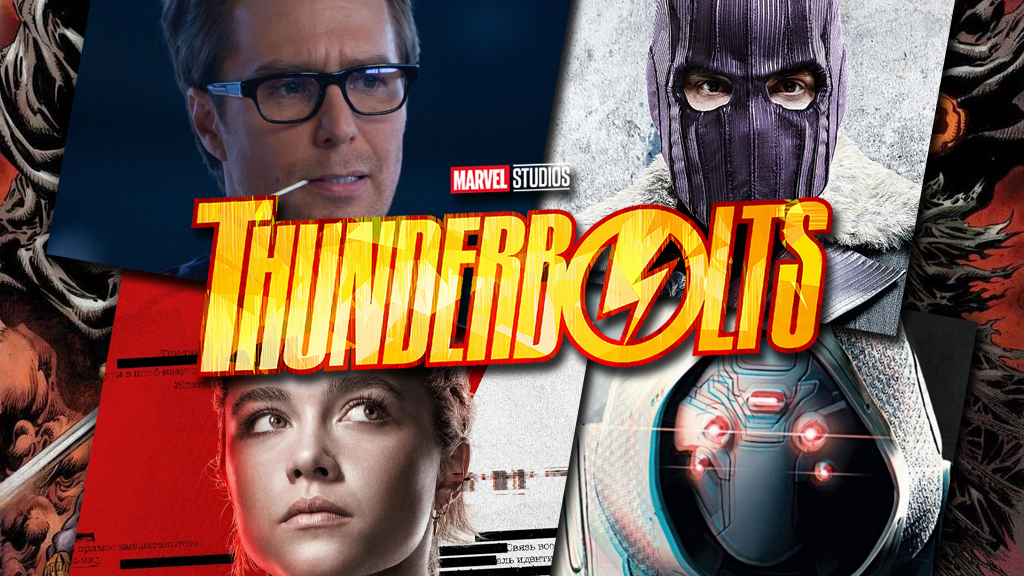
  • A Caper With Actual Capes: How ‘Thunderbolts’ Can Be More Than the MCU’s Suicide Squad

    A Caper With Actual Capes: How ‘Thunderbolts’ Can Be More Than the MCU’s Suicide Squad

    From the moment Helmut Zemo made his debut in the Marvel Cinematic Universe, comic book film fans have looked forward to the possibility of seeing his signature team, the Thunderbolts, enter the narrative. And recently, it became (semi) official, as it was reported in the industry trades that the long-rumored project was in active development, with a writer and director attached, and an expected filming schedule of Summer 2023. And with speculation season now in full swing, now’s a great time to look at what the MCU’s version of the Thunderbolts could entail, and what form the project could (and should) look like.

    The Thunderbolts is a group that has had several incarnations in the comics, but is best understood to be former villains assuming heroic roles, either at their own behest or at the behest of the government. At first measure, then, it’s easy to understand why one would think of the Thunderbolts as Marvel’s answer to the Suicide Squad. And with two somewhat successful cinematic forays into presenting that kind of team to audiences, it wouldn’t be completely surprising if Feige & Co. decided to go that route. But the original premise for the Thunderbolts, back in 1997 in a story written by Kurt Busiek, was much more groundbreaking, because readers were led to believe that they were in fact new heroes who had stepped up to fill the void in a world without an Avengers team. That is, until the rug was pulled out from under the audience, and the Thunderbolts were revealed to be an elaborate ruse to earn the world’s trust while covering for their villainy. It is that idea that can truly distinguish the T’bolts from the Suicide Squad, because it’s essentially a con job. And a movie based around a con job can allow the MCU to do a full-blown crime caper…with actual capes.

    The heist movie is a familiar genre, and in the Ant-Man films, as well as Avengers: Endgame, we’ve definitely seen nods made to those types of films. But a crime caper where all the characters are criminals is far more intriguing, because there is more potential for shifting loyalties and double-crosses, as everyone’s morality is a little more murky. Captain America isn’t really going to abandon the Time Heist for Peggy Carter, for instance. But if one of the characters in a crime caper gets the opportunity to go for dolo and turn on their teammates, that character just might. And that adds another layer of uncertainty to the stakes.

    Thinking about the film like a con/crime caper also helps us outline how the story might play out, as well as who the best fit for the Thunderbolts lineup would be, both in terms of MCU characters we’ve seen before, and who we might realistically see introduced in the film. Consider this as a loose blueprint for the Thunderbolts film.

    The Con


    In a world where the Avengers are currently disassembled, various players have a stake in getting a piece of The Next Big Thing in superheroics. With the Sokovia Accords still in effect, but public support for them somewhat on the wane, there is significant interest by the US government in having high profile superhero operatives who can do the PR work while also following deployment and stand down orders with minimal pushback.

    Enter Project Thunderbolt. A fully government-sponsored team led by the decorated (but disgraced) super soldier John Walker, the US Agent, and assisted by a cadre of colorful new heroes, recruited through various means by Valentina Allegra de Fontaine, a private off-the-books contractor with ties to several intelligence agencies. The Thunderbolts are provided with enough tech and logistical support to become America’s premier superhero team.

    But in fact, the Thunderbolts are actually a plan by Helmut Zemo to use the government’s desire for an Avengers replacement to engineer his release, gain the public’s trust, and procure access to the Mother Lode, a top secret storage facility that contains the most advanced and powerful confiscated tech in the world, including a working copy of the Ultron AI.

    The Characters


    The Mastermind (Helmut Zemo aka Z) We’ve already seen his penchant for playing the long game in The Falcon and the Winter Soldier. His disdain for superheroes, specifically powered individuals, is well-documented, as is his belief that the people are gullible and easily fooled. So would it be terribly shocking if he played up his Batmanesque penchant for contingencies in order to cook up a caper worthy of the prep time?

    In the comics, Zemo chose “Citizen V,” a star-spangled fighter of fascists, as his cover identity, but that would be redundant with US Agent at the forefront of this Thunderbolts team. The Z persona, then, would be something slightly different, a swashbuckling international man of mystery who would evoke both Bond and Zorro, and allow him to get his Errol Flynn on.

    But how would he get himself freed from international custody? Enter…

    The Partner In Crime (Conrad Mack aka Smiling Tiger – new character): Every Danny Ocean needs a Rusty. DiCaprio in Inception needed a Joseph Gordon-Levitt. The Mastermind typically needs a swiss army knife, a character with all the skills to be the #1, but who is content to be the #2. But currently, there aren’t too many folks in the MCU who’d fit the bill. However, the aforementioned Disney Plus series introduced us to an associate of Zemo’s who is well-known in the Madripoor underworld scene, a flashy dresser, and somewhat resembles Sam Wilson, but little else beyond that. This provides a somewhat blank canvas for introducing a backstory, motivations, and the skill set the stories required.

    A Black man with a cat motif is going to invite Black Panther comparisons, and I think that’s worth leaning into. He should absolutely pretend to be Wakandan, and interactions around that ruse could easily be played for comedic effect. However, none of that should undercut his core competency and ability to excel in a variety of situations. He pitches Zemo as the asset that Project Thunderbolt needs, because of his contacts and vast knowledge of the inner workings of Hydra and other networks.

    The Antagonist (Henry Gyrich – new character): To be clear, Zemo’s scheme is nefarious. But one reason we might be willing to root for him is that it provides an opportunity to defeat an far less likable character. This is who Gyrich is, the government bureaucrat who loves the power that having a fiefdom affords him. And having superheroes that answer to him makes him even more loathsome. With Project Thunderbolt as his crowning achievement, Gyrich’s eventual discovery of its subversion by Zemo should be positioned as an tremendous humiliation for Gyrich, a takedown that the audience should absolutely be rooting for.

    The Benefactor/Backer (Valentina Allegra De Fontaine): So far, we’ve been her as the go-between for her unnamed backers and both John Walker and Yelena Belova (more on them later). Her comics counterpart is an espionage operative on par with Nick Fury, so we can expect this character to have her finger in a lot of pies. And she’s more likable and charming than Gyrich. So far, Val seems unlikely to freelance, as opposed to standing in for the interests she represents. But that situation could change, and she, like a lot of spies, would ultimately serve her own interests. Val, then, wouldn’t be an antagonist per se, but she wouldn’t be a full ally either.

    The Tech Specialist (Justin Hammer aka “HQ”): Be it a hacker, gadget guy, or man in the chair, every heist needs someone who can make the impossible possible through technological shenanigans, and Sam Rockwell’s Hammer stole scenes in Iron Man 2 with his charismatic performance. When we last saw him, he was in custody, but a role in the Thunderbolts as both their “Q” and their man in the chair (and occasionally, quasi-mission participant via remote piloted armor) can afford him the opportunity to secure his release and step into the “superhero mogul” void that Tony Stark left.

    In reality, however, Hammer has been co-opted, and the tech he supplies to the T-Bolts has all been equipped with overrides controlled by Zemo, based on the promise of not only a substantial cut of their score, but access to the Ultron AI, which he believes he can improve upon, and one up Stark for all time.

    The Femme Fatale (Yelena Belova aka “the White Widow”): Trained as a Black Widow assassin, Yelena not only has top notch skills in infiltration and diversion, but a master of weaponry and fight skills. And as the sister of a beloved Avenger, she has a built-in avenue to garner sympathy with the public, as the same “red in her ledger” narrative carries over.

    But despite her ruthlessness, we’ve seen Yelena’s reluctance to behave strictly as a weapon. This would position her as a possible “change of heart” candidate, someone who could actually grow to enjoy the trappings of being a hero, despite her more cynical exchange with Natasha in Black Widow about not wanting to be celebrated as a killer. She’d be most likely to experience misgivings about her role in the con.

    The Thief (Ava Starr, Ghost AKA “Silver Phantom”): On a team with multiple spies, Ghost might seem somewhat redundant, but being able to phase and become invisible makes her uniquely suited to perform side heists while the team is on a mission, as well as be the contingency plan if things go sideways. And her history of being a former SHIELD/Hydra operative means that her orientation tilts towards the morally grey.

    Ava’s constant need for quantum energy made her somewhat easy for Smiling Tiger to co-opt, but it’s more so that she’s pretty cynical about who gets to be viewed as a hero, and who gets to be redeemed. The Silver Phantom persona allows her to reinvent herself as someone not cursed by her abilities, but gifted with them.

    The Muscle (Emil Blonsky AKA “Agent Gamma” ): Formerly the Abomination, this super soldier turned Hulk nemesis has all the strength one would want. He’s morally compromised, yes, but he’d be willing to work with the government in exchange for some degree of freedom, even if his gamma issues make full freedom unlikely. Wearing a helmet that conceals his identity and outfitted with experimental tech that allows him to siphon off the gamma radiation coursing through him, Blonsky can temporarily maintain a more humanoid form (or even full human) before he goes full Code Green. The Agent Gamma persona gives him a heroic rebrand, and affords him the opportunity to capitalize on some of the goodwill Hulk and She-Hulk have been able to garner.

    However, this guy doesn’t want to play nice with authority. Being locked up has embittered him, and as soon as he can get the opportunity to break bad, he will. Zemo has promised him the means to get completely free and start a new life somewhere he can’t be extradited from.

    The Fixer (Toni Masters, Taskmaster AKA “Winter Soldier II” ): The cover story for Antonia Dreykov is that she was part of the Red Room’s continuation of the Winter Soldier project as Taskmaster, and after being freed by Yelena Belova, now she wants to do good in the world. The truth is actually more complicated. After being freed from her father’s control, Toni abandoned her surname and decided that she’d become the “Master” of her fate, choosing to live a hedonistic lifestyle funded by her ability to replicate any skill she sees, and sell her services to the highest bidder.

    The role Taskmaster should play in the caper is the ability to mimic anyone’s mannerisms or skill set, and with her natural androgyny combined with potential false face tech, she should be able to step into anyone’s identity if need be. As for her susceptibility to fall in with Zemo’s scheme, she absolutely should be willing to go along with the con in service of a bigger payday.

    The Inside Man (Rick Mason): A former SHIELD operative turned contractor, he has shown a propensity for acquiring whatever needs being acquired. So while he may not be an official member of the Thunderbolts, he would be an asset to the team.

    Mason’s association with Natasha in defiance of The Sokovia Accords put him in a tough spot, as his business ventures were squeezed by the government in an attempt to draw her out. So really, he is working with the Thunderbolts because he has no choice, and if Zemo can promise him a better deal, he might just take it.

    The Patsy (John Walker AKA the USAgent): For this con to work, Zemo needs to employ an unwitting ally, someone who is meant to be out in front, loud and flashy, to take attention from, while being oblivious to, the caper happening around him. And John Walker fits the bill. He’s a hothead, but he really wants to do good. He’s not averse to taking extreme measures, but he can still find righteousness in the cause. And so, given the opportunity to show that he can be just as inspiring a leader as Steve Rogers, he can be manipulated into thinking he’s modeling for his teammates a course towards redemption, and that he’s keeping Zemo on a short leash.

    In reality, of course, Zemo is running Walker. His compliance tech, already subverted by Zemo. His leadership tactics, anticipated and steered towards Zemo’s contingency plans. His inspiration of his teammates, a way for those teammates to get close enough to gauge his suspicion, and relay what they find to Zemo. And when the day comes for the Big Job, there’s enough doctored evidence secretly planted to make it look like Walker was in on it all along.

    THE COMPLICATION(S)


    The Thunderbolts actually start to make a difference, saving lives and protecting the innocent, and that leads to each of them having misgivings about going through with the Big Job. Walker, as we all know, does want to redeem himself and for the most part wants to see these former villains redeem themselves as well. For Yelena in particular, she begins to understand better what her sister’s legacy was, and that it is a noble pursuit. For Ghost, having people actually see her, as well as look up to her, starts to gnaw at her conscience as well. Other characters have similar existential crises and conflicts.

    Additionally, Val begins to suspect that something is afoot, and starts looking into things in order to report her findings to Gyrich. But thankfully, she and he aren’t 100% on the same page, and when it comes down to it, if she won’t benefit from exposing the con, she just might see how things play out.

    THE CONCLUSION


    I mean, it’s a con job, and it’s a superhero film. Some things go wrong when it’s time for our (anti)heroes to pull off the Big Job. There’s infighting and a betrayal or two. Ultron kind of gets rebooted, and they have to put their differences aside to save the world. The (anti)heroes win, and the heist is ultimately aborted it. Or is it?

    Ultimately, the setup laid out above would make for an innovative and effective introduction of the Thunderbolts concept to a mass audience, while also providing a distinct enough throughline to stave off the Suicide Squad comparisons. The MCU loves to put its own spin on concepts from the comics, and I think that letting the audience know from the outset that there is a caper afoot still pays homage to Busiek’s original story, but sets up new trajectories for the characters involved that would be tremendously intriguing going forward.

  • Exploring ‘Avatar: The Last Airbender’s Potential Film Trilogy

    Exploring ‘Avatar: The Last Airbender’s Potential Film Trilogy

    What started as a cult success on children’s television has grown into one of pop culture’s most exciting new franchises. When Avatar: The Last Airbender debuted in 2005, it was chock full of potential. While that series focused on the adventures of one Avatar, in particular, it also set up an entire universe to play in. Not only is the future of the timeline unknown and full of possibility, but a long history of characters and eras exists for creatives to explore in any way they choose. The latest storytelling avenue was just revealed by Paramount and Nickelodeon Animation to be a theatrically released animated film trilogy.

    Lauren Montgomery, who worked on multiple episodes of the original series, is set to direct the first entry in what could be the next major chapter in the story of the Avatar cycle. Yet, there is no word on what this new journey might entail. Rumors have circulated in the past about the potential plotlines of a film series, but nothing has been confirmed one way or the other. With so many canon incarnations of the Avatar, and a world full of intriguing side characters and environments, it’s awfully difficult to narrow down all the options. So, to help everyone out, we at Murphy’s Multiverse have strung together a list of plausible storylines that could end up being the focus of Avatar‘s return to the big screen.

    The Kyoshi Trilogy

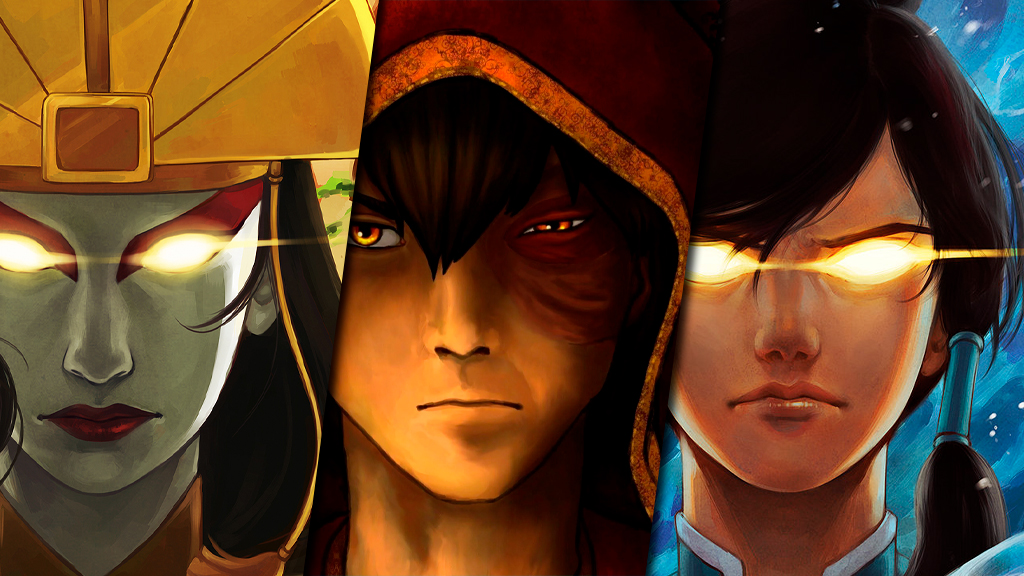
    Avatar Kyoshi

    The produced animated series set in the universe of Avatar have mostly focused on the last two Avatars to inhabit the original life cycle, Airbender Aang and Waterbender Korra. However, significant chunks of each show, including full episodes, have been dedicated to uncovering the events surrounding former incarnations.

    One of the most popular, and most frequently mentioned, is Kyoshi, the Earthbending Avatar who existed two lifetimes before audiences met Aang in The Last Airbender‘s pilot. She is renowned for her lethal tactics and strong personality, never backing down from her opinions or a fight. Her legacy even includes a group of the world’s most elite warriors, named for her and donning her signature makeup and apparel.

    While The Last Airbender only gave fans a glimpse into the later life of Kyoshi, a duology of novels from author F.C. Yee took a dive into her troubled past. The Rise of Kyoshi and The Shadow of Kyoshi explores the titular character’s earliest days as the Avatar, starting with the discovery of her abilities and ending with the moment she discovered who she really wanted to be. The books are brilliant, and while they have yet to receive their own third entry, they could be the basis for a trilogy of films adapting Kyoshi’s origin to animation.

    Some of the aforementioned rumors have hinted at the first film is a prequel to the original series, but the Avatar preceding Aang already had most of his story told by the time of that show’s finale. It would make sense for Paramount to go back one Avatar further, and bring to life a series of books that deserve more recognition than they get.

    A New Cycle Begins

    Avatar Korra’s Past Lives

    Perhaps the biggest universal development to come out of The Legend of Korra was the ending of the original Avatar cycle. After learning of its origins with Avatar Wan, a dastardly plot by cultist Unalaq and the powerful spirit Vaatu permanently cuts off Korra’s connection to her past lives and forces her to start the cycle anew. When the show ends, Korra is still very much in her youth, and the world has a long way to go before another Avatar takes center stage. A handful of comics have continued Korra’s adventures with her trusted companions, but they haven’t done much in the way of establishing what the distant future may hold for the Four Nations or the Spirit World.

    If the new film trilogy wanted to be completely different from anything else in the Last Airbender franchise, it could tell the story of whoever comes after Avatar Korra. The culture, and society, established in the series are shown to be evolving quickly, much in the same way the real world began to develop after the Industrial Revolution. Where previous Avatars operated out of a planet that looked a lot like ancient Eastern civilization, Korra was forced to deal with problems in landscapes that looked more like major Western cities from the turn of the century.

    At that rate, it’s likely the Avatar after her would be facing off against computers in a universe with vengeful spirits and people who can manipulate the natural elements. If that wasn’t enough, they’d be doing it with only a single previous life to guide them. What would that even look like? Maybe Lauren Montgomery intends to find out.

    A Non-Avatar Story

    Prince Zuko

    Essentially all of the major projects in the Last Airbender franchise have been centered around the Avatar of their era and for good reason. The struggle of balancing duty with personal life, the mystique of communing with the Spirit World, and the pure coolness factor of bending all four elements is a hard subject to resist. However, if the stories told in animation and writing have proven anything, it’s that sometimes the supporting characters can be just as interesting.

    Every Avatar has their team of friends and family ready to lay it all down for what they believe in, and those lovable sidekicks have a tendency to develop their own fanbase outside of their respective protagonists. If the creatives behind this new series of films wanted to expand this universe from a different angle, they could use the trilogy to tell tales of important figures who changed the world without being the Avatar.

    There have been hints of a Zuko solo project in the past, which could end up being part of Montgomery’s new project. The character has a devoted online following and can certainly draw a crowd. He’s also among the best characters ever created for Last Airbender or its many spin-offs and sequels, so Paramount could do much worse than to tell a tale of the legendary Firebender. Although, if this doesn’t turn out to be the case, there are plenty of others who also deserve a chance.

    In fact, the films could even create a new lead with no relation to their era’s Avatar. Imagine a movie that tells the story of someone with undervalued abilities, rising to the occasion and saving their people as the Avatar deals with a separate danger in the background. It’s a concept that major franchises should explore more often, and something that worked wonders for Lucasfilm in Star Wars projects like Rogue One and The Clone Wars.

  • A Musical ‘is a Brilliant Choice for the Sequel to ‘Joker’

    A Musical ‘is a Brilliant Choice for the Sequel to ‘Joker’

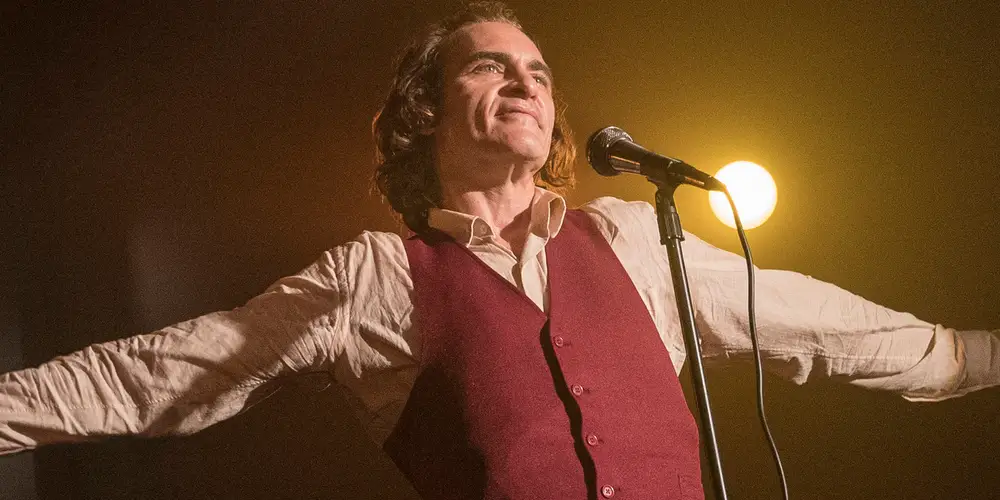
    Nobody ever thought the Joker, of all characters, would be getting his own solo film, but here we are, over a billion dollars and a few Academy Awards later. Joaquin Phoenix and Todd Phillips proved everyone wrong. No matter what you think about the film, it was a unique project set within a sea of other comic book media that has flooded the mainstream and become a staple in pop culture. Arthur Fleck’s story seemingly ended, so the thought that a sequel could exist much less should exist, seemed crazy. However, that’s what’s happening and the latest word on the project could turn out to be the best possible situation for a sequel.

    The most important part of a sequel to Joker, a rather complete, and self-contained film, is that it really needs something to set it apart from anything that has come before it. Phillips and DC have to make this special and something super aberrant; to do so, they have to go out of the box. This makes a musical the absolute best path for the sequel; it’s something entirely unexpected and puts the project on a whole new playing field. The first film was a deep character study into who Arthur Fleck was, and what led him down this path to becoming the man who toppled a city in mere few hours. A musical is the opportunity to explore who this new Arthur Fleck is, presumably becoming, solely, the Joker from now on.

    There were brief moments where we’d seen Arthur break out into random spurts of dance, experiencing moments of freedom for himself, after feeling so contained and restrained his entire life. The musical numbers could act as true expressions of who he is and who he has become; it’s an idea that is so far out of the box that could allow Phoenix to kick his performance into the next gear, and bring out some of that musical talent that we saw in Walk The Line.

    Perhaps the most interesting avenue that this musical concept could tackle is the romance between Joker and Harley Quinn. The news that Lady Gaga is in talks to potentially portray Harley Quinn in the film, a character who has risen to even higher levels of popularity via Margot Robbie’s portrayal, was as surprising as the news that the sequel was in development. The film could tackle the relationship between the characters that the DCEU had only scratched. The sequel could explore the blossoming relationship between Joker and Harley Quinn, the early moments where their love seemed so perfect. Their relationship, of course, is one of the most toxic and abusive in the DC Universe, but the film can actually focus on the romanticization of the situation between the two by tackling that early love through Joker’s manipulation of Quinzel in helping him escape, and him turning her into Harley Quinn. Imagine it as something akin to the “Diamonds Are A Girls Best Friend” number from Birds of Prey, where Harley imagines her interrogation as a dance number, just on a larger scale throughout the sequel. It can be a play on the classic rom-com, a massive course change from the first film, portraying a “perfect romance” which in reality is just as awful as expected.

    Developing Joker: Folie À Deux as a musical is a creative and brilliant pivot from the first film, moving it into a completely new atmosphere and ensuring it doesn’t have to worry too much about riding the tails of the first film. It’s a fun idea that if executed well could be yet another unique, and fresh entry into the ever-expanding world of comic book media.