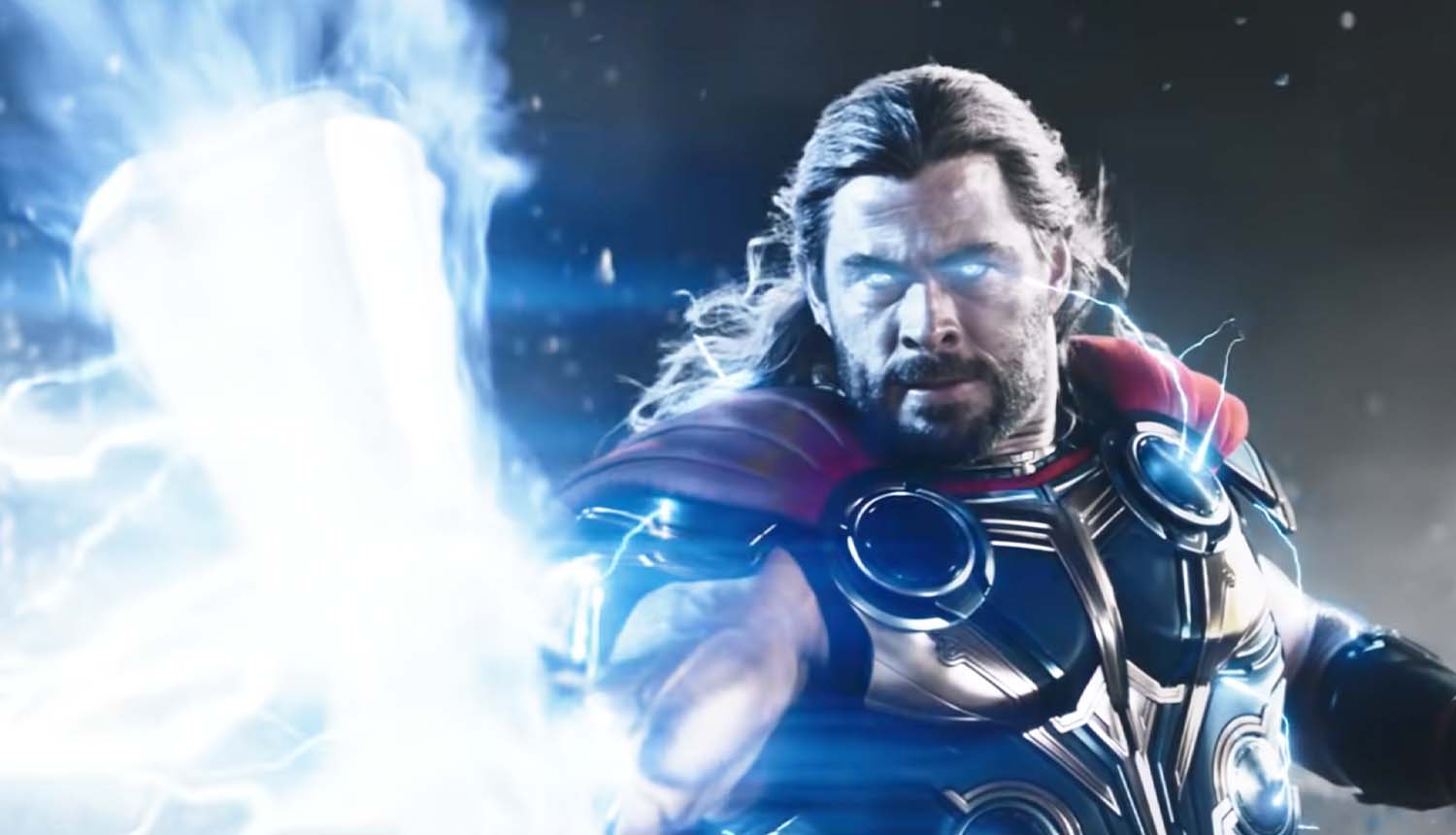
The fourquel, which is seeing mixed reviews from critics, is still expected to top the box office in its second outing. However, as is the case with most blockbusters that are frontloaded, Love and Thunder is estimated to see a 65% decline for a $50 million second weekend. With yesterday’s $13.6 million haul, the film is just shy of $170 million stateside, which is actually ahead of Doctor Strange in the Multiverse of Madness’ first Tuesday, which only pulled in $12.6 million.
As for its second weekend decline, while it is a steep one, the projected decline is in line with the declines of Spider-Man: No Way Home (67%), Doctor Strange in the Multiverse of Madness (67%) and Eternals (62%).
Love and Thunder won’t have much competition at the box office this weekend. Paramount and Nickelodeon are releasing the animated film, Paws of Fury: The Legend of Hank, while Sony/Hello Sunshine are releasing the adaptation of Where the Crawdads Sing. Both are smaller budgeted films that are not expected to pose much of a threat. Although, Paws of Fury could see Minions: The Rise of Gru fall a notch or two this weekend with the films catering to the same market. The only true competition for Love and Thunder is Top Gun: Maverick, which doesn’t show any signs of slowing down at the box office now that is has crossed $600 million stateside.
As of Tuesday evening, Top Gun: Maverick has passed $600 million at the domestic box office. The film is currently sitting at $601.9 million domestically and $595.6 million internationally. That brings the film to a stunning total of $1.2 billion globally.
Reaching $600 million at the domestic box office is an impressive feat, even without an ongoing pandemic. As it stands, Top Gun: Maverick ranks as the 12th in all-time North American ticket sales, behind Incredibles 2 ($608 million) and Star Wars: The Last Jedi ($620 million). It’s more than likely the film will surpass Incredibles 2 shortly, as the film continues to perform well for Paramount despite its competition at the box office. It is also entirely possibly the film will surpass Star Wars: The Last Jedi and The Avengers ($623 million) when all is said and done.
Along with crossing $600 million, Top Gun: Maverick has become Paramount’s highest earner at the North American box office to date, surpassing Titanic’s $600.7 million domestic haul – that total, of course, does not include the money earned from the film’s various re-releases, which have since brought it to $659 million.
“For 110 years, Paramount Pictures has produced and distributed some of the most iconic films in Hollywood history, including the all-time classic ‘Titanic,’ which marks its 25th anniversary this year,” Brian Robbins, Paramount’s president and CEO said in a statement to the press. “‘Top Gun: Maverick’ is a phenomenal motion picture, and we take deep pride in celebrating this tremendous achievement alongside Tom Cruise, our filmmakers and cast, our marketing and distribution teams, and, of course, all the new and original ‘Top Gun’ fans, without whom this wouldn’t have been possible.”
Top Gun: Maverick has become a box office phenomenon since its release over Memorial Day weekend. Even now, nearly two months after release, the Tom Cruise-led flick remains in the top three releases, having pulled in another $15.5 million from this past weekend. With no signs of stopping, Maverick seems likely to continue smashing records before its run is complete.
Kamala Khan’s bangle has been front and center over the course of all six episodes of Ms. Marvel, but even after the series wrapped, the bangle’s story seemingly just got a lot more interesting. The shocking post-credit scene sees Kamala’s bangle take on a life of its own, apparently energizing on its own before mysteriously sucking Kamala away and leaving Carol Danvers in her place. While it all seems pretty confusing, turning to the comics can provide some understanding.
As seen in the opening moment of Episode 3, “Destined”, the bangle worn by Kamala was originally taken from the arm of a blue being and is one of a pair of bands. Following Episode 3, it seemed pretty clear that the bangles were probably either the Quantum Bands or Nega-Bands from the pages of Marvel Comics. The events of the post-credit scene all but confirm that speculation as they showcase one of the capabilities associated with the Nega-Bands: the ability for the wearers to trade places with one another.
In the comics the Nega-Bands were created by the Kree as replicas of the Quantum Bands and while they share similar powers, they aren’t exactly the same. Most importantly, the Quantum Bands draw their power from the Quantum Zone while the Nega-Bands draw their power from the Negative Zone. It seems incredibly likely that the MCU’s version of the bands are an amalgamation of the two. Able to create energy constructs like the Quantum Bands, they are also now capable of allowing people to swap places with one another, like the Nega-Bands, as seen in the post-credit scene.
The swap seems to have been ripped straight from the pages of Marvel Comics where Kree hero Mar-Vell used the Nega-Bands to swap places with super-normie Rick Jones. Of interest to the process was that the swap always left one or the other of Mar-Vell or Jones trapped in the Negative Zone. Applying that comic book lesson to the events of the Ms. Marvel post-credit scene, it would appear that Carol makes the jump from either the already-established Quantum Realm or the soon-to-be-established-in-The-Marvels-Negative Zone. Whichever of those two places Marvel Studios chooses to call it, the implications are clear: when Carol jumped into Kamala’s room, Kamala jumped to wherever it was Carol was.
It’s unclear if Carol was wearing what might have been the other band on her wrist (in the comics they haven’t always looked the same and have been reshaped over time), but it is clear that the bands will play a large role in the plot of next summer’s Captain Marvel sequel, The Marvels. Also of interest is how Kamala’s mutant genetics allow her access to the powers of the band. In the comics, the latent X-gene was implanted into early man’s DNA by Celestials, allowing for the possibility of super-powered evolution should they ever be activated. Given the alien nature of the bands, it’s possible they were created by the Celestials, or other Cosmic beings, and simply ended up on the arm of the deceased Kree seen in Episode 3.
Whatever the nature and origin of the bands, they’ve changed Kamala Khan’s life forever and, much like the ten rings did to Shang-Chi, pushed her into a larger universe. It’s reasonable to assume that some of the first act of The Marvels will explain much more about the bands while resolving the issue of Kamala being trapped in another dimension. Fans will have to wait just over a year to find out more as The Marvels is currently set to hit theaters on July 28th, 2023.
Dormammu may have been defeated by the end of Doctor Strange, but his presence is still looming large over the Marvel Cinematic Universe. The feared ruler of the Dark Dimension did not appear in this year’s magic sequel, Doctor Strange in the Multiverse of Madness, but the film’s mid-credits scene included the surprise reveal that his niece, Charlize Theron‘s Clea, would play a big role in the future of the franchise. Not to be outdone by the many wacky elements in the film, Clea makes her grand debut memorable by popping up out of nowhere in quite the extravagant ensemble.
During a recent interview with Comic Book’s Phase Zero podcast, Marvel Studios costume designer Graham Churchyard explained that, despite his absence from the movie, Clea’s dread uncle was actually a huge inspiration behind her over-the-top look. After all, the two are related, and if her backstory is anything like the comics, most of her fashion sense comes from a lifetime in the murky depths of the multiverse’s spookiest dimension. Yet, according to Churchyard, the original designs for Clea had her fitted in less aggressive attire:
Well, that was Ian Joyner and John Staub and all those amazing guys at Vis Dev, with all those illustrations. And we made that whole costume in London, but we never met her, so that was quite traumatic in itself. And then I sent that out to LA and did a couple of Zoom fittings with her and then resolved a few things with the whole amazing costume team at the Marvel warehouse, and then two or three fittings later, that was it. She was on set. But the inspiration, oh my God, that would take another whole interview by itself because that went from someone who was sort of a gardener in the dream scape in the multiverse, to then this sort of warrior, a warrior from another dimension. And she is Dormammu’s kind of daughter, niece from the Dark Dimension. So all of those things were immensely inspiring to her costume.
Graham Churchyard
It’s interesting to hear Churchyard mention the word “gardener”. Clea has always been more of a warrior than anything, but the fact Marvel toyed with giving her a more pacifist design could be an indicator of the plans they have for her in future projects. Either way, it’s good to hear that the studio kept her classic familial relations in mind when coming up with her vibe. It’s probably a good sign fans will get to see Theron face down the Sorcerer Supreme’s greatest foe somewhere down the line.
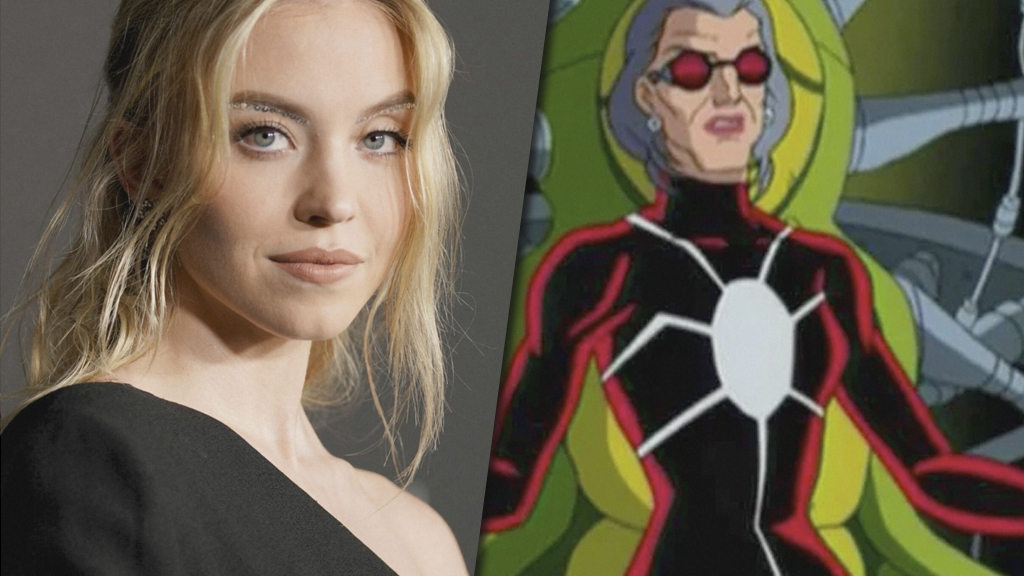
Many are still scratching their head on what exactly a Madame Web film would be about. While the character is a mainstay in the Marvel universe, or rather the Spider-Verse, it does seem strange to focus a story on a character that was mainly there for exposition. Either way, Sony is in full force on the project and according to actress Sydney Sweeney, they may have already started production.
In an interview with Variety, the actress shared that she has already started working on Madame Web alongside her co-stars, which consists of quite the stack cast. Dakota Johnson will play the titular role, and they are joined by Isabel Merced, Emma Roberts, Tahar Rahim, Celeste O’Connor, just recently Mike Epps, and more.
Currently I’m filming Madame Web. And I can’t really say anything about my character, but I’m very excited. My first Marvel movie. So it’s been a lot of fun, a lot of training and just prep work to get into it.
Syney Sweeney
With even hints that Madame Web may even have Marvel Studios backing it, the project could potentially tie into the multiverse storyline currently being told. It would be quite fun if they end up connecting this to whatever the studio currently has planned, and use it as a gateway to introduce characters they’d otherwise never get around to. Of course, we can only speculate but with Sony’s habits, you never know what a new Spider-Man universe entry might mean moving forward.
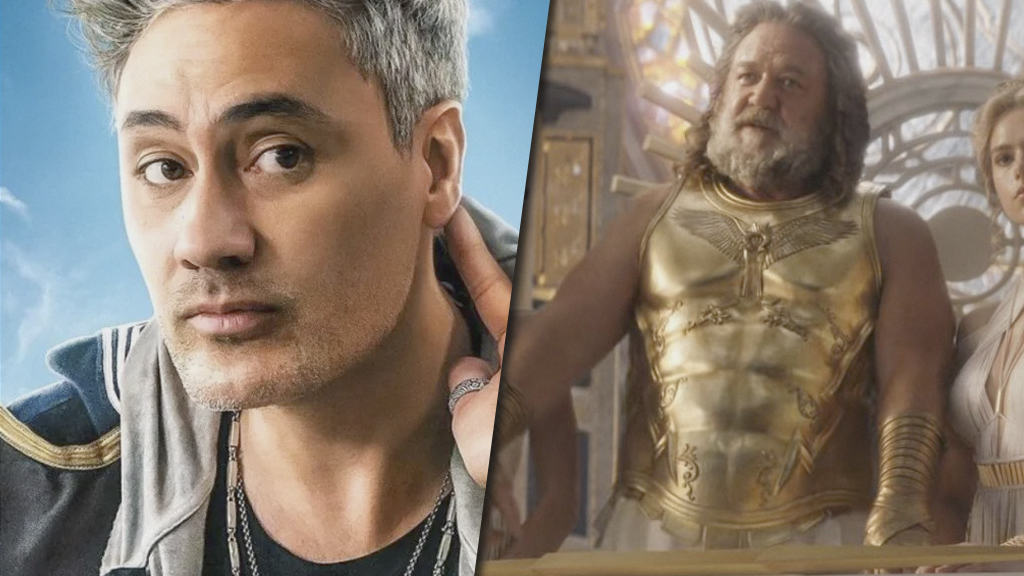
There are many standout elements in the story of Thor: Love and Thunder, but Russell Crowe‘s Zeus was definitely a fun addition. As a member of the city of Gods, he puts on a great show and we even uncover that Thor looks up to the fellow god of lightning. One of the fun aspects of his character was that Crowe was pulling off a fun Greek accent, but according to director Taika Waititi he couldn’t quite decide on which accent to go with. So, he just had the actor play each scene with both.
No. You would love to think that, I would love to think that. We actually talked at length about the accent. We wondered if someone did a Greek accent of a Greek god, is it going to be a farce? Will it be too silly? And Russell was very much wanting it to be Greek. But I wasn’t sure, so we ended up doing two versions of every take with Russell. One in a Greek accent and then another in a British accent. Because I felt people would think Zeus would sound British like Laurence Olivier in “Clash of the Titans.
Taika Waititi
He did highlight that the Greek accent was welcomed with open arms by the test audience, and it also worked out much better. His worry about offending Greeks has seemingly been solved and Crowe‘s gut instinct was on the money.
But then I realized in post that it’s actually more offensive to the Greeks to have Zeus sound like he’s British. And test audiences loved the Greek accent. I’m really happy with it. But, yeah, he had to do every take once in the Greek accent and once with a British accent because I couldn’t make up my mind. But Russell was right all along.
Taika Waititi
It definitely is interesting to see how these ideas come together. What stands out however is that he went through the trouble of shooting both versions, which may have put a lot of weight on various parts of the production crew, especially if he couldn’t decide even going into the test screenings. Perhaps we’ll get the British Zeus with the digital and physical release.
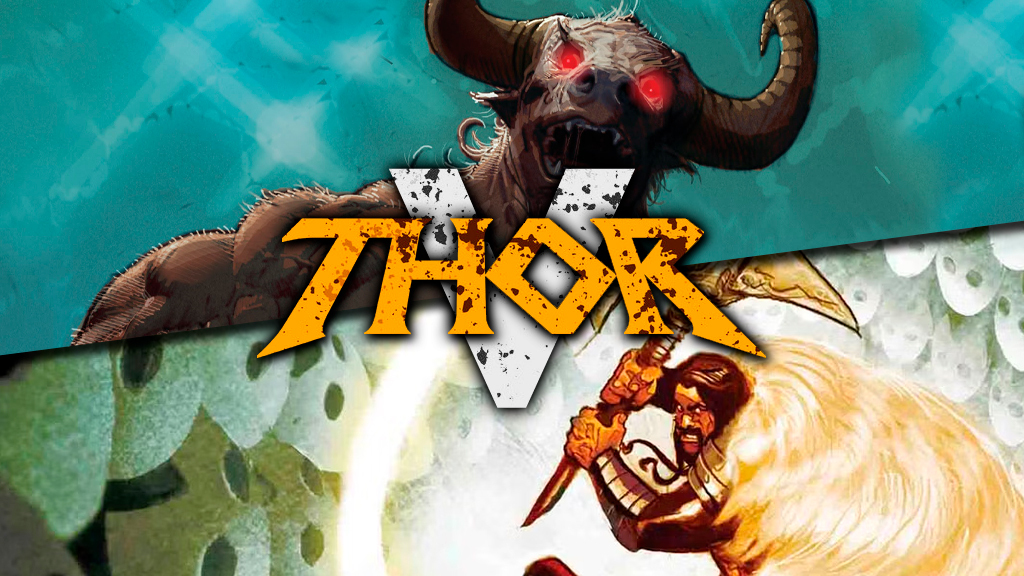
Thor: Love and Thunder certainly set the table for a fifth film in the Thor franchise with a mid-credit stinger which revealed that the Olympian Prince of Power has been assigned with taking the Odinson down a peg or two. Given Zeus’ command that Hercules knock Thor from the sky and humiliate him, the fifth film has to at least BEGIN on Earth with the two titans trying to prove superiority. However, if you think the whole film is going to be Thor vs. Herc, you’re probably mistaken. The two are more likely to go the Brennan and Dale route from Stepbrothers and, by the end of the first act, realize that they are best friends who need to go on adventures together. With that in mind, here are five potential stories that could be adapted for Thor 5.
Thor: Fear Itself
In classic Marvel Studios fashion, Thor: Fear Itself would have very little in common with the comic event other than borrowing the name, which is damn catchy, and the main antagonist. Family dynamics have often been at the center of the best Thor stories in the comics and in the MCU. Thor: Love and Thunder took a bit of a break from that, but Thor: Fear Itself could return to that winning formula by introducing a pair of terrifying family members: Thor’s uncle Cul Borson and The Midgard Serpent, Jormungand, Thor’s…nephew?
Thor: Ragnarok introduced the idea of Odin keeping some pretty major secrets from everyone, an idea that could come back to haunt Thor and New Asgard. In the comics, Odin imprisoned his brother and Jormungand deep in the oceans of Earth. Having Cul, who becomes known in the comics as “The Serpent” team up with Jormungand, an actual serpent, and do battle with Thor and Herc would allow for some spectacular battle scenes fully in line with two-time director Taika Waititi’s heavy metal sensibilities. Having a long-lost uncle come into play would also give Waititi plenty of room to mess around with some comedy before an absolutely insane third act.
Thor: Journey Into Mystery
One of the greatest characters of Thor’s supporting cast that has yet to hit the MCU is Karnilla, the Queen of Norns. A part of Marvel Comics’ take on Norse Mythology since 1964, Karnilla’s alliances have shifted multiple times over the years, siding with many of Asgard’s enemies, but occasionally siding with Asgard when is served her. Karnilla was always a powerful sorceress and her connection to the Three Norns, the goddesses of fate, and their shared past with both the Asgardian and Greek pantheons could make her the perfect antagonist for Thor: Journey Into Mystery.
Pulling Karnilla into the fifth film could allow for some flashbacks to Asgard, the location of Karnilla’s home, the Nornkeep, during Thor’s younger days and MAYBE allow for Marvel Studios to FINALLY bring another major supporting character off the bench: Balder the Brave, Thor’s brother and Karnilla’s great love. As it turns out, the world of Nornheim already exists in the MCU and was visited by Thor and Loki in their younger days. Given that their trip their was only mentioned in passing during Thor, that trip to Nornheim could become whatever the writer and director of the film want it to be, including a convenient way to introduce a “dead” Balder by adapting a recent series of events from the comics that found him in Niffleheim as the ruler of Hel. With MCU’s Hel needing a new ruler in the absence of Hela, putting Balder on the throne and finding a way to make Thor and Herc end up there as part of a first act “destiny” plot wouldn’t be too hard to pull off.
It would be very Greek of Marvel Studios, and maybe pretty Norse as well, to have Thor and Herc’s partnership fated for them, even against the will of Zeus. Avengers: Age of Ultron teased the Norns a bit with the Water of Sight, so the studio has clearly considered using them, and by proxy their Queen. Given the right touch, Karnilla could be both one of Thor’s greatest villains to date and one whose true intentions the audience is never sure of.
Thor: The Last Days of Midgard
Another Earth-bound adventure worthy of the two heroes teaming up can be found in the same place from which Waititi was inspired to make Thor: Love and Thunder. Jason Aaron’s epic run on Thor introduced not only Jane Foster’s Mighty Thor and Gorr the God Butcher, but also the terrifying CEO of Roxxon oil, Dario Agger. Agger, of course, was gifted (or cursed, depending on your point of view) with the ability to transform into the mythological Greek Minotaur. You can do the calculus for yourself here: angered by Herc’s friendship with Thor, Zeus turns Agger into the Minotaur.
During Aaron’s run, Agger often teamed up with one of Thor’s oldest foes that has yet to make his way to the big screen, Ulik the Troll. In those comics, Thor teamed up with Jane’s Mighty Thor to take on these villains and he’s definitely going to need some help if the two team up to terrorize the MCU. Agger’s ties to Greece and Greek mythology make him the perfect baddie to follow up Zeus’ appearance in the MCU and square off against Hercules in Thor: The Last Days of Midgard. And Agger’s position as the head of Roxxon would also open the door for Waititi, should he return to direct the film, to use the film to bring environmental issues and the climate crisis to light, topics he’s been very vocal on in the past, making The Last Days of Midgard a haunting and appropriate subtitle.
Thor: When Meet the Immortals
Clearly any and all Marvel Studios adaptation of Marvel Comics are growing incredibly loose and this would be no different. Thor: When Meet the Immortals would take inspiration from an arc by Stan Lee and Jack Kirby that began when Thor and Hercules first met in Journey Into Mystery Annual #1 and continued as Journey Into Mystery became retitled as Thor. For the fifth entry into the Thor franchise, Waititi could work to adapt a 7-issue arc that ended with Thor #130.
This arc provides the best opportunity for Waititi to tap into the Stepbrothers-style relationship between Thor and Hercules while also giving them the type of near impossible challenge both have always thrived on in mythology and in the Marvel Comics. After being sent to Earth to humiliate Thor, The Lion of Olympus not only becomes best buds with Odinson but also falls in love with being a superhero. Enraged, Zeus enlists the help another of his offspring, the bloodthirsty Ares. Meanwhile, seeing his brother’s weakness exposed by Thor, Pluto/Hades plots against Zeus and looks to take over Olympus. Alliances change, and Thor saves the day in the third act by defeating Pluto in the “Netherworld.” An adaptation of this old arc allows for some serious god-on-god violence and provides a more appropriate place for Waititi’s trademark humor than Love and Thunder provided.
Thor: Now Ends the Universe
A common complaint about Thor: Love and Thunder was that when it was all said and done, the stakes seemed relatively low. What better way to counter that than to have the greatest stakes imaginable: the end of the universe? And what better way to spite Zeus than to have his son, who he sent to humiliate Thor, work alongside the God of Thunder as a superhero that saves the universe? And what better threat for them to take on than The Hatred Who Walks, Mangog.
While at face value the Mangog might seem like a redundant villain following Gorr the God Butcher, the character actually provides a path to redemption for the franchise following the luke warm reception to the antagonist of Love and Thunder. Just when Thor thinks he can turn the corner and look the the future, the past of his father (and, for the sake of the MCU, Herc’s father, too) comes back to haunt him in the shape of Mangog. In the comics, Mangog, the last of his race, is imprisoned by Odin after the King of Asgard slaughtered his people. We know from Ragnarok that Odin was quite the conqueror with quite few skeletons in the closet. Mangog, who is powered by the hatred of the billion billion beings slaughtered by Odin, would be quite the skeleton.
For the sake of the MCU, it would easy enough to have a cold open that showed Zeus teaming up with Odin to imprison Mangog a thousand years ago or so. Whether it be the destruction of Asgard that set the monster free or perhaps Zeus being weakened after Thor’s attack at Omnipotence City, the end result is that Mangog is free and on the hunt for the film’s MacGuffin: the Odinsword, which has the power to destroy the universe. Mangog’s sheer power makes him more than a match for Thor and Hercules and his absolutely wild appearance would make him an unforgettable antagonist. He seems perfect for Waititi and it’s surprising he’s somehow never made it to the MCU yet.
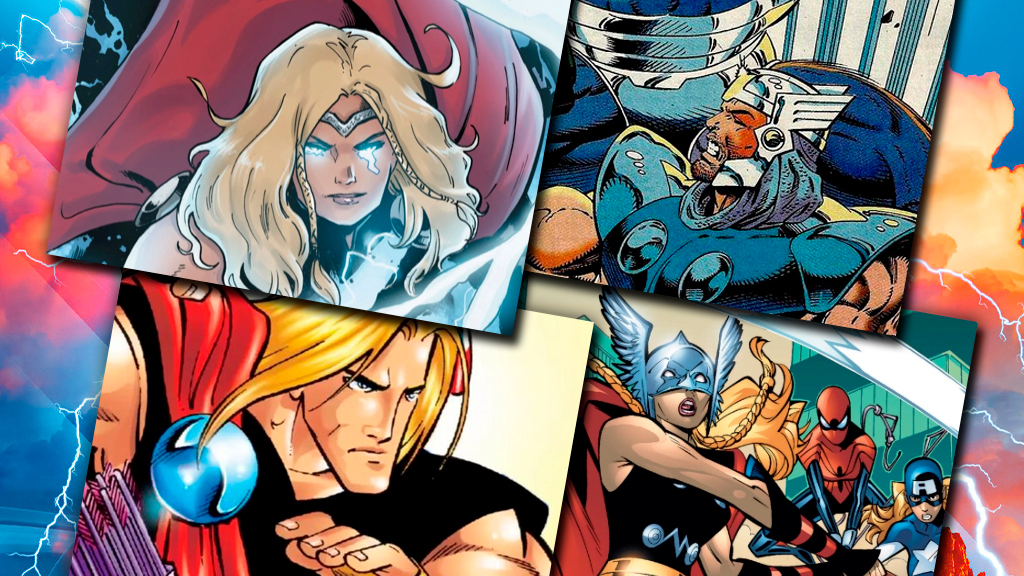
Anyone who’s seen a Thor movie knows Chris Hemsworth is a daddy, but only those who’ve seen Thor: Love and Thunder know his character is now too. The latest installment in the Marvel Cinematic Universe ended with the God of Thunder taking on a little more responsibility than he’s used to, adopting the daughter of his deceased foe Gorr the God Butcher and stepping into the role of father. While this might have been a shocking turn of events for global audiences, it’s actually not the first time Thor has been depicted raising a child. In fact, it’s happened a few times in the comics, and the concept has even made it to animation in the past. Follow along as we at Murphy’s Multiverse take you on a trip down memory lane, discussing every time the Odinson has ever been a Thorfather.
Torunn Thorsdóttir (Earth-555326)
When Next Avengers: Heroes of Tomorrow went directly to home video in 2008, a lot of fans missed out on a pretty charming-and creative-animated adventure. Set in a future where Ultron has slaughtered Earth’s Mightiest Heroes and taken over the planet, Next Avengers follows the teenage children of the original team as they emerge from hiding and go on a journey to save the world. Among them is Torunn, voiced by Brenna O’Brien, the daughter of Thor and his wife, Lady Sif.
In this timeline, Thor is actually one of the very few Avengers to have survived Ultron’s vicious attack. Unfortunately, he couldn’t stick around to keep helping Earth, as the sudden death of Odin forces him back to Asgard to replace his father as King. With duty calling, he chose to leave Torunn behind, hoping a childhood among mortals would teach her the same lessons of humility he had once learned in his own banishment. His plan works, and dodgy parenting tactics aside, Torunn grows to become a humble warrior who protects Midgard in the way her father did before her.
Created by Christopher Yost, Greg Johnson, and Craig Kyle, this version of the Thorsdóttir possesses all the same abilities as her pops, but wields a giant enchanted longsword into battle as opposed to a hammer. She is also every bit as fierce and brash as Thor once was, always acting quickly to defend those she loves. A few alternate Torunns have popped up in the comics as well, but typically only as background characters on different Earths related to Next Avengers.
Thena Thorsdóttir (Earth-982)
Before Marvel came up with the Ultimate line of comics, there was another attempt made to reboot the mainstream continuity in an accessible way for new readers. Far less successful and not as well-remembered, stories told in the “MC2” timeline are set in a present where the first Marvel heroes have mostly aged out of costumed activity. In their stead are a new generation of Avengers and superpowered do-gooders, and while it took her a while to show up, another version of Thor’s daughter did eventually make her way to the universe.
Created by Tom DeFalco, the same guy who launched the “MC2” brand with 1998’s Spider-Girl, and Ron Lim, Thena Thorsdóttir made her comic book debut in 2006’s Avengers Next #1. There, it’s revealed that Asgard has been destroyed by a very hungry Galactus, and that Thor and Loki’s children, Thena and Sylene, are among those who escaped the disaster. Unfortunately, Sylene disappeared in the chaos, and somebody has to go find her.
In her brief arc, Thena is sent to Earth by her father and uncle with two goals in mind – find her lost cousin, and restore Thunderstrike’s powers so he can continue to guard Earth in the Asgardians’ absence. Initially believed to be an enemy, Thena fights the new Avengers and loses her magic hammer in the process. Of course, she later makes amends with the team and joins them to battle Ultron, and later Sylene, when she turns out to be the real threat (it is Loki’s kid, after all). If you’re worried about the lost hammer, don’t fret. Thena gets a fancy new titanium weapon designed by Jarvis for all her troubles.
Brigid Thorsdóttir (Earth-20368)
The most recent addition on this list, Brigid Thorsdóttir has only been around since Captain Marvel (Vol. 10) #23 released in 2020. Hailing from an alternate future where a lethal cataclysm scorched Earth and left it bathing in leftover radiation, Brigid stays in New York City working as a blacksmith to aid other survivors. She is initially unworthy of lifting her father’s hammer Mjolnir, which has been dormant since Thor lost his life in the world-ending blast, and is unable to use it until a time-traveling Carol Danvers arrives in 2052 A.D.. Pulled into conflict alongside Captain Marvel, Brigid finds herself able to summon Mjolnir just before she’s killed by the forces of the Enchantress. It’s implied that, even after Carol leaves her timeline, the Thorsdóttir will use the hammer to continue protecting what’s left of humanity.
Brigid was created by Kelly Thompson and Lee Garbett, and unlike the previous Thorsdóttirs, whose time in the spotlight has pretty much ended, we may see more of her in the future. Fun fact: Brigid’s name comes from the Irish Goddess of Smithing, in reference to her unique skillset, and is not Norse at all. Nothing is known officially about her parentage, but it’s entirely possible Thor fell for a red-headed lass in this universe before things went south.
Magni & Modi Thorson (Earth-616)
The only known time Thor has had children in the main Earth-616 continuity. In accordance with Norse mythology, it’s revealed way back in 1980’s Thor #293 that the God of Thunder had two sons before the previous end of the Ragnarök cycle wiped them from existence. A story from Roy Thomas and Keith Pollard explains that Magni and Modi Thorson, based on the actual Norse deities, sacrificed themselves to bring back Odin so he could rebuild Asgard, father Thor once more, and start the Ragnarök cycle anew. Not much else is known about the brothers aside from this, but it can be assumed most of their whole deal would be the same as it was in actual mythology. If that’s the case, then their mother would be a giantess named Jarnsaxa.
Woden Thorson (Earth-691)
The Guardians of the Galaxy may be household names today, but in 1993, they were still just little-known characters living in an alternate 31st Century timeline. In that universe, Thor and Sif had a son named Woden, who was created by Michael Gallagher and Dale Eaglesham for an appearance in Guardians of the Galaxy #42. Described as a brooding bully, Woden grew up mostly without a father figure, as Thor found himself unable to give up a life of adventure for the role of dad. As a result, Woden had a troubled upbringing, with only his mother Sif around to help where she could. Eventually, Thor would be made to stay in Asgard by Odin, but his resentment of the situation would lead to his becoming an alcoholic and Woden leaving home as a bitter soul.
Years later, Woden would return to action in order to stop his uncle Loki and an army of Inhumans from tearing Asgard to the ground. With a bloated Thor now unworthy to wield Mjolnir, a disgruntled but worthy Woden would pick up the hammer and team with the Guardians and his grandfather Odin to end Loki’s latest assault on the Gods. Following the battle, Woden takes up his father’s once-righteous quest to protect Asgard as it’s golden son, even teaming with Heimdall later on to fend off a dangerous creature on the Bifrost Bridge.
Magni Thorson (Earth-3515)
Originating in a short arc titled Thor: The Reigning (which plays out in Thor (Vol. 2) #67-69), this reality continues the trend of Thor being a shockingly bad dad. In a story created by Dan Jurgens and Scot Eaton, the Odinson makes the decision to merge Asgard with New York City, creating a version of New Asgard that an organization called the Consortium of Nations deemed too dangerous to stick around. Their dramatic assault on New Asgard results in Thor slaughtering what’s left of his humanity and using his God power to forcibly take control of Earth, establishing his reign as “Lord Thor” and eventually crafting a variable paradise on Midgard. Two decades later, he would have a son with Amora, the Enchantress, and name him Magni.
Magni is raised as the beloved and loyaly crown prince of New Asgard, adventuring throughout the Eight Realms and conquering enemies in the same way his father had done in his youth. However, once he reached adulthood, the Son of Thor would come to resent the brutal way in which the Asgardians treated humanity. A relationship with a mortal woman named Jordahl pushes him over the edge, and Magni ends up leading the charge against his father to restore decency to Asgard’s legacy. This act enables the Thorson to wield Mjolnir, an ability his pops lost after murdering innocents. After a bunch of violent shenanigans, Thor realizes the error of his ways and relents, fixing his own timeline and collaterally erasing Magni from ever being born.
Modi Thorson (Earth-1610)
Thor may not have done too much papa-ing in the mainstream Marvel universe, but he did have a rather unfortunate brush with fatherhood in the Ultimate timeline. Jeph Loeb and Frank Cho‘s Ultimate New Ultimates #5 introduces readers to Modi Thorson, the God of Thunder’s child born out of, well, nothing comfortable. In this reality, Thor makes his way to Valhalla to retrieve the lost soul of his lover Valkyrie, only to come face-to-face with the Goddess of Death, Hela. The villain cuts a deal with the Odinson – he can have Valkyrie back, but first he must bare Hela a child. Yeah, as previously stated, nothing comfortable.
That child would quickly be discovered by his uncle (and sort of grandfather, but maybe don’t think about that too much) Loki, who brings Modi back to Asgard and reunites him with his father. Unfortunately, an unexpected assault on the realm causes Thor to lock Modi in “The Room Without Doors”, where he ages years in a matter of days, develops a hatred for his old man, and begins to resemble his uncle (grandfather). Upon escaping the room, Modi heads to Midgard and attempts to usher in a second American Civil War, partnering with Hydra to enact his complicated plan. Chronically terrible father Thor consequentially teams with Steve Rogers, who is President of the United States in this universe, to smite his own child and put an end to the chaos. The Ultimate timeline was messy, to say the least.
Balder Blake (Earth-9811)
What If…? #114, by Jay Faerber and Gregg Schigiel, explored a world where the heroes of Battleworld were never allowed to leave. There, they were forced to settle down and continue living their lives with whoever else had been unwillingly transported to the alternate dimension on which they defeated Doom and the Beyonder. Thor ended up pairing with the Enchantress, and together the two had a son named after Thor’s brother Balder. Each year on his birthday, Balder would attempt to life his father’s hammer Mjolnir, but consistently found himself to be unworthy.
Though he would never be shown to pick up the weapon, an encounter with the villain Malefactor (son of Victor von Doom) revealed his friend Sarah Rogers could, and together they would stop the threat and return peace to their universe. After a time, the heroes of Earth-9811 found an opening to make their return to their original homeworld, but instead are stranded in a new timeline ruled by an army of Sentinels. True to his parentage, Balder commits to making the world his next home, and helps form a new team of Avengers alongside Sarah and the other superheroic teens from Battleworld.
Woden Thorson/The Goddesses of Thunder (Earth-14412)
This child of Thor is at the bottom of the list because, frankly, we know almost nothing about him. Conceived by the maestro Jason Aaron and Esad Ribic for their run on Thor: God of Thunder, a second variant of Woden Thorson has been mentioned more than once but never shown. In this universe, Thor would eventually become King of Asgard and the All-Father, living a complex life that would see him spend time as both a Living Planet and an enforcer for Omnipotence City’s Ministry of Inter-Deity Justice. Along the way, the God of Thunder fathers a child with a Frost Giant general called She-Blizzard (which is awesome). Their half-Asgardian, half-Frost Giant son would apparently grow up to have three children of his own – daughters Frigg, Atli, and Ellisiv.
While Woden never actually shows his face in the comics, his daughters do. The grandchildren of Thor aid him and his past selves in the fight against Gorr the God Butcher. Each of the trio are taken as slaves by Gorr and forced to help him build his Godbomb contraption, until they are rescued by their grandfather’s younger self and freed to do some damage of their own. Following the Gorr conflict, all three Wodendóttirs return to Asgard and help Thor fend off Galactus and a variety of other threats to their kingdom. The Goddesses of Thunder would ultimately become players in 2015’s Secret Wars, before they form a new team of Avengers on their version of Midgard.
There’s a lot of riding on Thor: Love and Thunder as the Marvel Cinematic Universe’s first fourth outing of a solo franchise. As successful as the MCU is, the Thor films have always struggled to reach the same acclaim as their counterparts. While Captain America saw a complete reinvention by the second film, it took Thor a third film for the character to get a proper second wind. And in a metaseries that’s keener on introducing new franchises and ending legacy ones, it’s a blessing to get a fourth chance at continued redemption. Sadly, even this late into the series, Love and Thunder fumbles more than it scores thanks to director Taika Waititi’s impulsive comedic habits and narrative ideas that furiously clash with one another. The result is a film with an unbalanced dose of good, bad, and ugly.
THE GOOD
For all of his blindspots crafting this film,Waititi once more illustrates his impressive grasp on characters. Love and Thunder has its fair share of endearing goofballs, hopeless romantics, and tragic sinners. Even as the story fails to sustain Waititi’s wacky instincts, his characters cut through the noise. Christian Bale’s Gorr, the latest addition to the Thor mythos, is a zealot devoted to ending the reign of the gods. Bale carries the entirety of Gorr’s arc on his shoulders even as his scattershot presence in the film disservices the character’s arc. A performance epitomized in the character’s redemptive moments in the film’s climax. Gorr doesn’t quite reach the tension and dread wrought by his counterpart on the pages of Jason Aaron’s comic but it’s a role that salvages a fledgling film.
Like Ragnarok before it, Love and Thunder also has the privilege of being a film populated by bizarre visuals. From the opening planet with the Guardians and the muppet-looking Mad Max bandits to the monochromatic battle with Gorr, there’s a lot of eye candy in the film. Not the least of which are the array of costumes the film showcases. Thor alone has multiple wardrobe changes spanning eras of comic book runs. That Taika Waititi has him wear the maximalist gold helmet from the 90s and the Thunderstrike outfit in a single movie shows a commitment to making Thor the most stylish Avenger yet.
Powers in the MCU are often ill-defined and the full range of Thor’s abilities are no exception. So in a surprising turn during the film’s third act, Thor bestows a portion of his presumed Odinforce powers to a battalion of children. The result is a roaring, somewhat cheesy yet fist-pumping set piece that sees Gorr’s shadow monsters decimated by children. In a film that desperately needed a pick-me-up from the film’s trudging plot, a sequence like this is a win for the film.
THE BAD
Love and Thunder‘s fall from grace stems from a haphazard narrative where character development is abridged, pieces of the story are omitted, and the overall plot is contrived. For example, a B-plot about kidnapped Asgardian children takes place in order for the film to have a ticking clock with some semblance of stakes. It may pay off nicely in the end but the story that gets to it is messy.
Waititi eschews much of Aaron’s iron-clad blueprint for Gorr, a killer hellbent on personally slaying gods across eons, to service a father simply seeking Eternity to wish them away in a bloodless solution. A huge swing by any Marvel metric but one that spirals outward to an array of contrivances which includes a wasted set in Omnipotence City, home to all the gods. This bloodless endgame for a villain is a unique one but for a character whose moniker is the God Butcher, it’s a regretful choice considering how there’s minimal god butchering in the film. Furthermore, an argument can be made that the Eternity subplot and the Omnipotence City set piece overlap have overlapped. Imagine a sequence where Gorr destroys Omnipotence City and its gods in an attempt to find Eternity’s door.
There’s also an issue with its runtime. A handful of minutes are devoted to inane comedic sequences that overstay their welcome. A dull rehash of Thor: Ragnarok’s theater gag goes on for nearly 3 minutes. Russell Crowe’s scenes as Zeus is a distended mess of a comedy routine. It certainly doesn’t help that most of the jokes don’t land. An egregious example is a dying Sif being the butt of a joke about Valhalla. Meanwhile, Jane Foster’s battle with cancer is barely explored and her crucial transformation into Thor is kept off-screen. The same can be said for Gorr’s actions as the God Butcher; the movie keeps insisting that he slays gods but never shows it. Runtime should never preemptively define a film’s quality but a post-mortem of Love and Thunder shows how much extra screen time it could have used.
THE UGLY
Jane Foster can’t seem to catch a break even as she achieves godhood. Love and Thunder may be a well-meaning attempt to rectify the first two Thor films’ crime of demoting Oscar-winner Natalie Portman into a soulless love interest but it goes through the same pitfalls as its predecessors. Whereas Aaron’s comic proved Foster worthy of Mjolnir’s might by virtue of her own will and bravery in fighting cancer, in Love and Thunder, Jane is deemed worthy thanks to… Thor’s love for her. Even as she becomes the epicenter of the film’s best action sequences, the script doesn’t give the character the space to reckon with her newfound purpose. The worst comes when she succumbs to her cancer in order for Thor to have his climactic epiphany on life. Foster’s arc is indebted to Thor and her conclusion is to service Thor.
Gorr is similar to Thanos in a lot of ways. Both are victims of circumstances beyond their control. Both have villainous duties they deem as righteous. Both have a sliver of humanity beneath all their menace. Yet what separates Thanos from Gorr is that Thanos’ essence is aptly examined in Infinity War while Love and Thunder does the minimum effort in reckoning with Gorr’s agenda. For all the gods and divine characters that appear, Waititi never examines the themes most relevant and obvious to his story: godhood, prayer, faith, devotion, and worthiness. The apathy to such touchstones is what ultimately robs the film from having a lasting weight that the MCU has had in strides. Most of the gods in the film are presented as one-dimensional jackasses, signifying Waititi’s indifference in engaging with their POV and mostly proving Gorr’s point. And because the film doesn’t do anything to thematically challenge Gorr until the very end, the core of the film feels weightless.
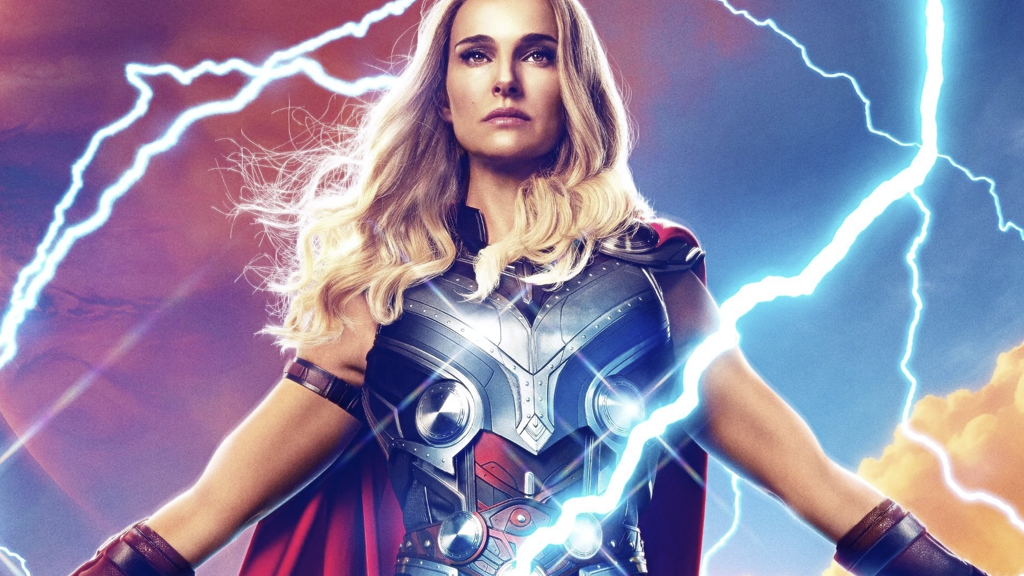
Most discussions surrounding Marvel Studio’s films have been seemingly hyperfocused on CG ignoring most of the other work that goes into these projects. If you paid close attention, you’ll notice that Natalie Portman has grown a bit whenever she transforms into Mighty Thor. Well, it turns out that they used some movie magic to make her taller. In an interview with Insider, Taika Waititi revealed just how they accomplished that very feat.
As it turns out, all they had to do was build a small deck for her to stand on. So, while everyone else is walking, she’s walking alongside them on a deck of some kind. It seems the challenge they faced was that Chris Hemsworth and Tessa Thompson had to walk alongside him. So, it seemingly brought a few challenges of its own.
We built a whole bunch of decking around the set. First we would block out the scene — mark out where the actors have to go so the crew knows the whole layout — and once we did that we build an elevated platform that was 4 feet high from the floor that she would walk on. But we also had to leave room so Chris and Tessa could walk around at regular height. It was a weird maze. But it worked.
Taika Waititi
It’s always fun to get a little look behind the scenes and hints at how exactly they accomplish these things. Robert Downey Jr. also used to wear higher heels in his shoes to seem taller on camera. So, it’s not the first time they pulled off something like this. It’s also great that they added this detail to highlight how she changes through the powers of Thor granted to her through Mjolnir. Sometimes it’s the small details that add that extra attention from the production team.
We use cookies to improve your experience on our site. By using our site, you consent to cookies.
This website uses cookies
Websites store cookies to enhance functionality and personalise your experience. You can manage your preferences, but blocking some cookies may impact site performance and services.
Essential cookies enable basic functions and are necessary for the proper function of the website.
Name
Description
Duration
Cookie Preferences
This cookie is used to store the user's cookie consent preferences.
30 days
These cookies are needed for adding comments on this website.
Name
Description
Duration
comment_author_email
Used to track the user across multiple sessions.
Session
comment_author_url
Used to track the user across multiple sessions.
Session
comment_author
Used to track the user across multiple sessions.
Session
Statistics cookies collect information anonymously. This information helps us understand how visitors use our website.
Google Analytics is a powerful tool that tracks and analyzes website traffic for informed marketing decisions.
Contains information related to marketing campaigns of the user. These are shared with Google AdWords / Google Ads when the Google Ads and Google Analytics accounts are linked together.
90 days
__utma
ID used to identify users and sessions
2 years after last activity
__utmt
Used to monitor number of Google Analytics server requests
10 minutes
__utmb
Used to distinguish new sessions and visits. This cookie is set when the GA.js javascript library is loaded and there is no existing __utmb cookie. The cookie is updated every time data is sent to the Google Analytics server.
30 minutes after last activity
__utmc
Used only with old Urchin versions of Google Analytics and not with GA.js. Was used to distinguish between new sessions and visits at the end of a session.
End of session (browser)
__utmz
Contains information about the traffic source or campaign that directed user to the website. The cookie is set when the GA.js javascript is loaded and updated when data is sent to the Google Anaytics server
6 months after last activity
__utmv
Contains custom information set by the web developer via the _setCustomVar method in Google Analytics. This cookie is updated every time new data is sent to the Google Analytics server.
2 years after last activity
__utmx
Used to determine whether a user is included in an A / B or Multivariate test.
18 months
_ga
ID used to identify users
2 years
_gali
Used by Google Analytics to determine which links on a page are being clicked
30 seconds
_ga_
ID used to identify users
2 years
_gid
ID used to identify users for 24 hours after last activity
24 hours
_gat
Used to monitor number of Google Analytics server requests when using Google Tag Manager
1 minute
Marketing cookies are used to follow visitors to websites. The intention is to show ads that are relevant and engaging to the individual user.
Pinterest Tag is a web analytics service that tracks and reports website traffic.