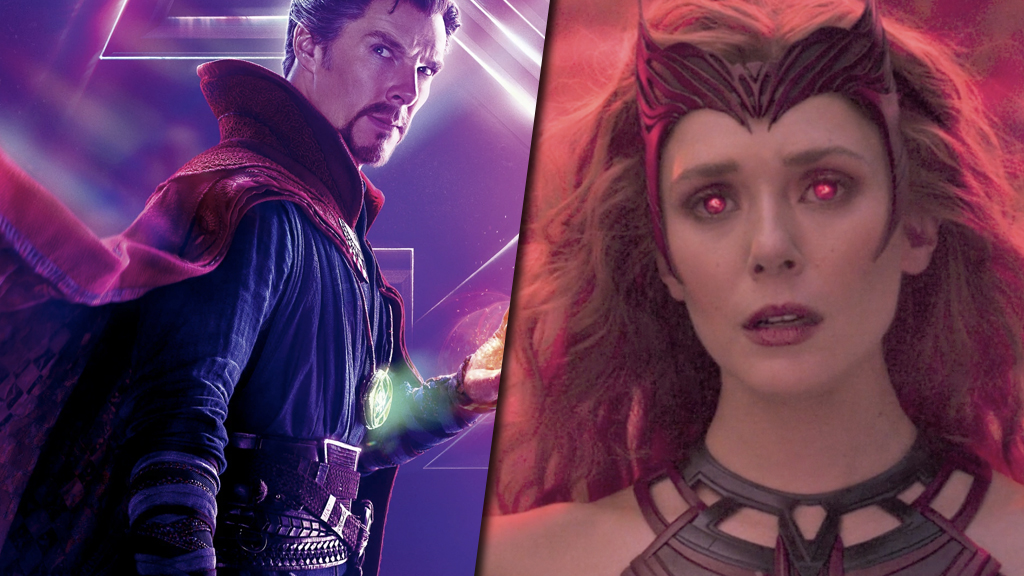
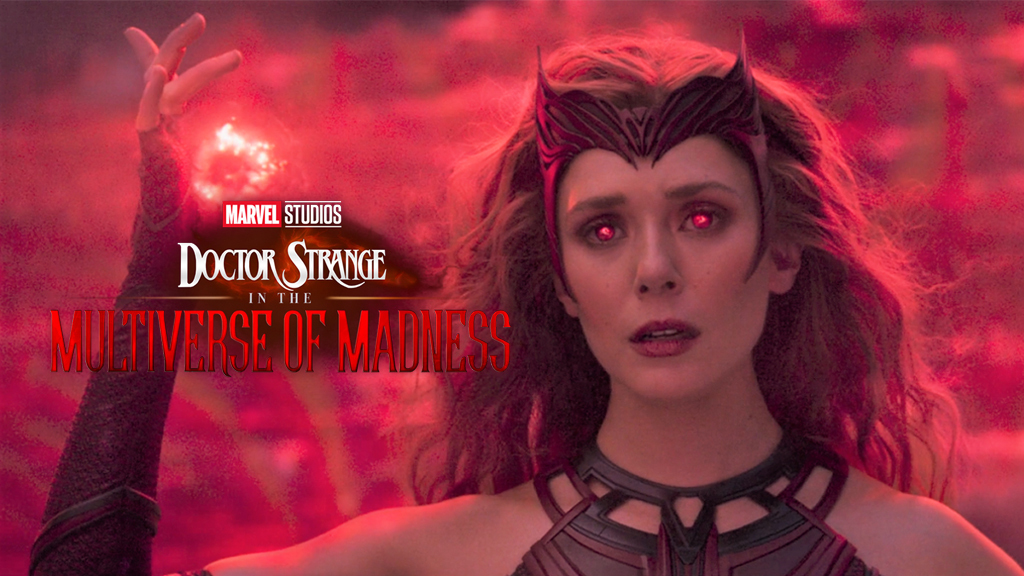
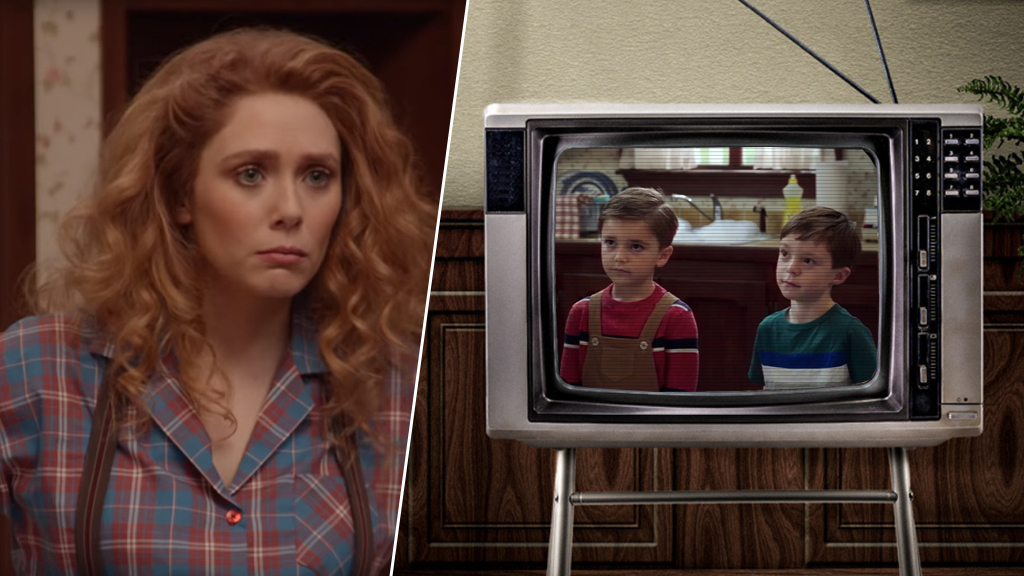
For years, fans have been clamoring for a solo Scarlet Witch project, and while WandaVision might’ve served as just that, it appears Wanda’s story is far from over. During an interview to promote Doctor Strange in the Multiverse of Madness, Scarlet Witch actress Elizabeth Olsen was asked about potentially starring in a Scarlet Witch movie. Although one has yet to be announced, the actress is ready to sign on with one minor caveat.
When asked when fans can expect Scarlet Witch to get her own movie, Olsen seemed more than ready to star in her own film. “Oh, I don’t know, but if they have a good story to tell, I’ll be there.”
When is Wanda getting her own [#ScarletWitch] movie?
“Oh I don’t know, but if they have a good story to tell I’ll be there.” — Elizabeth Olsen pic.twitter.com/guGRQYBcGk
Olsen has, of course, been very vocal in wanting to star in a solo Scarlet Witch film. She has previously expressed interest in wanting to adapt House of M in the Marvel Cinematic Universe and has shown interest in wanting to continue Wanda’s story so long as there’s something worth telling.
It remains to be seen whether or not a solo Scarlet Witch project is announced. As it stands, WandaVision will not be receiving a second season, which does leave Olsen’s character open for a possible film. For now, though, fans can see again Scarlet Witch when Doctor Strange in the Multiverse of Madness hits theaters this Friday.
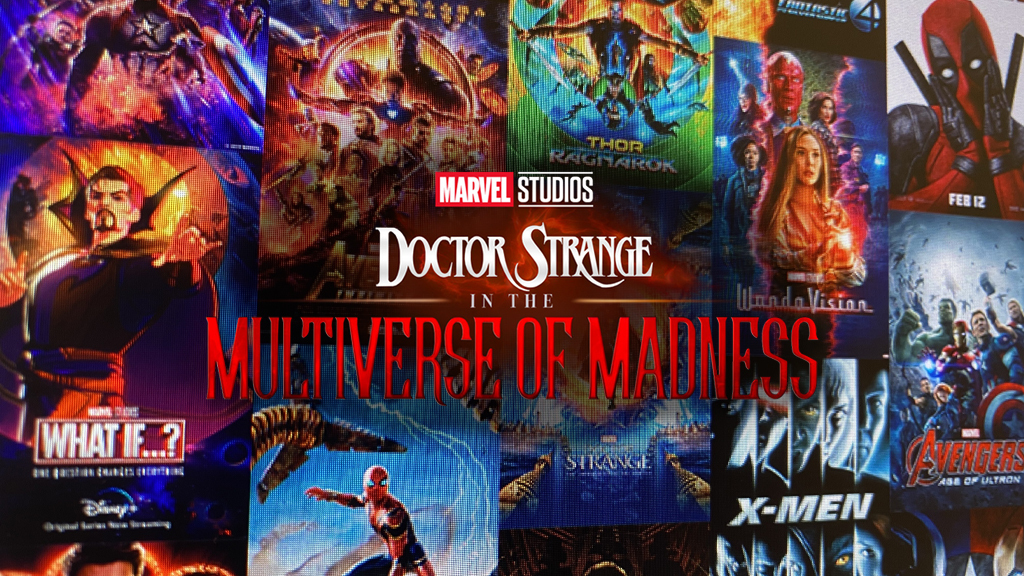
So, you are excited for Doctor Strange in the Multiverse of Madness. The sure-to-be memorable film is coming up quickly, and anyone who wants to prepare for it should probably start thinking about it soon. While most sequels only rely on the first film in terms of backstory, the Marvel Cinematic Universe’s 28th movie is a bit more complicated than that. This article is a comprehensive list of every movie or series you should — or might — want to watch in preparation for Multiverse of Madness. Because of the nature of this movie, the list has a four-tiered system. First, there are projects that are essential to watch before the Doctor Strange sequel. Second, there are projects that we would strongly encourage you to watch but likely are not strictly necessary. Third, there are extra stories that will no doubt heighten your Multiverse of Madness experience but may ultimately have very little impact on the film. Fourth, we list some of the Marvel properties relevant to the most rampant unconfirmed cameo/character appearance rumors.
Essential
The six projects — listed in order of importance — you should absolutely watch or rewatch before Multiverse of Madness are Doctor Strange, WandaVision, Spider-Man: No Way Home, the final episode of Loki, What If… ? Episode 4, and Avengers: Infinity War.
1. Doctor Strange
It should need little to no explanation why Doctor Strange is essential viewing for its sequel.
Doctor Strange
2. WandaVision
WandaVision marked the first time Wanda Maximoff truly got the spotlight. Not only did it expand upon and reveal the origins of her powers, but it also spent its 9-episode run on Disney+ giving her one of the most in-depth character development arcs of the MCU. Of course, WandaVision also debuted Wanda’s Scarlet Witch persona, and the end of the series revealed her connections to the Darkhold. Considering all of that plus the fact that Doctor Strange himself was originally meant to make a cameo, it is safe to say the events of WandaVision lead directly to Multiverse of Madness.
WandaVision
3. Spider-Man: No Way Home
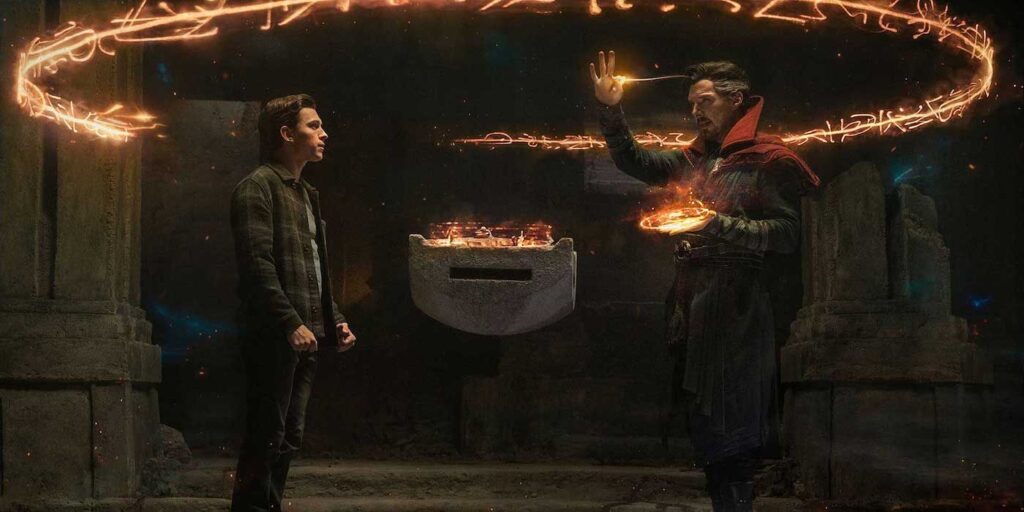
No Way Home has the most recent appearance of Doctor Strange in the MCU, and it also showcased the first major live-action multiverse storyline. The disruption of the multiverse was caused by the spell that Doctor Strange cast, so it is more than likely his activities in No Way Home will at least be a starting point in Multiverse of Madness.
Spider-Man: No Way Home
4. Loki Episode 6
The finale of the Disney+ series Loki was notable and memorable in a lot of ways. Important here, of course, is the fact that the multiverse was essentially created in this episode. It almost serves as an origin story for the MCU’s multiverse, and it has the best explanation of it yet, though Multiverse of Madness will surely dive deeper into multiversal lore.
‘Loki’ Episode 6
5. What If… ? Episode 4
If you are wondering why a What If… ? episode is so high on this list–you haven’t seen this episode. The fourth episode of the anthology series features a variant of Doctor Strange (Doctor Strange Supreme) who takes a darker path than our main Doctor Strange. This episode will feature so many similar themes to Multiverse of Madness, and Doctor Strange Supreme might even make an appearance. The film creators have even cited Episode 4 as inspiration for the live-action story. And, quite frankly, this is hands-down the best Doctor Strange story the MCU has given us.
‘What If… ?’ Episode 4
6. Avengers: Infinity War
Infinity War really toes the line between “essential” and “encouraged,” but overall there’s enough important content to call it essential. Doctor Strange is a major part of the plot due to his connection with the Time Stone. His character seemed to develop significantly between Doctor Strange and this movie. It also features his most intricate and visually-stunning fight scenes, showcasing how strong his sorcery can be. Infinity War also contributes to Wanda’s character development, serving as the bedrock for her grief in WandaVision. It also hints at how powerful she is, as she has the power to destroy the Mind Stone.
Avengers: Infinity War
Encouraged
If you are familiar with Doctor Strange’s and the Scarlet Witch’s major appearances and story arcs, you should be prepared enough to watch Multiverse of Madness without a problem. Still, there are several more major MCU outings that could enhance your understanding of the film’s main characters, major MCU events, and even just multiversal themes and mechanics. So, these five viewings are highly encouraged but likely not necessary.
Avengers: EndgameAvengers: Age of UltronCaptain America: Civil WarWhat If… ? Episode 8Shang-Chi and the Legend of the Ten Rings
1. Avengers: Endgame
Neither Doctor Strange nor Wanda Maximoff have much screentime or development in Endgame, because they were both snapped out of existence at the end of Infinity War. Still, it just seems odd not to recommend Endgame for any Phase Four MCU project–the events are just too significant. Plus, the Avengers’ time travel hints at the concept of alternate universes, and Steve Rogers’ ending certainly suggests that, even without the events of Loki, at least one other universe could have been created.
2. Avengers: Age of Ultron
Age of Ultron comes before Doctor Strange’s appearance in the MCU, but it is the first appearance of Wanda Maximoff, which is obviously significant. The Multiverse of Madness trailer also featured what looks like Ultron Sentinels, so that connection may be of some value as well.
3. Captain America: Civil War
The Scarlet Witch’s level of power will no doubt play a major role in the events of Multiverse of Madness. Civil War was really the first time her ability to control them was called into question, though WandaVision did later expand on that idea. The film also is part of Wanda’s on-screen character development in the MCU and hints even more at her growing relationship with Vision.
4. What If… ? Episodes 8 and 9
If Multiverse of Madness does anything, it will take our characters on quite the trip through the multiverse. The final two episodes of Disney+’s What If… ? heavily feature that concept. The visuals from the Watcher’s universe-shattering fight with Infinity Ultron might be the standard to look out for in live-action. Plus, these episodes brought the Guardians of the Multiverse, which in a sense was a glorified grouping of variant cameos. Audiences should certainly be prepared for some glorified cameos from MCU variants in Multiverse of Madness.
5. Shang-Chi and the Legend of the Ten Rings
Shang-Chi is another tricky one. While it is not particularly highlighted, the film definitely suggests that Ta Lo is an alternate universe, so the mechanics of traveling to and from it certainly implicate interesting multiverse questions. The film is also the most recent appearance of Wong (other than his three-second cameo in No Way Home). The post-credits scene with the Ten Rings beacon likely is not connected to Multiverse of Madness, but you never know.
Extra
At this point, if you have watched everything above, you almost certainly know everything that Multiverse of Madness wants or expects you to know going in. If you want to keep going, here are some extra suggestions that will likely add to your experience, but are not overly important.
Since Patrick Stewart is actually confirmed to be Charles Xavier in Multiverse of Madness, it does mean that viewers will get something out of being familiar with the character’s past in the general Marvel film universe. How much is hard to say–he could be a four-second cameo for all we know, and the variant might be nothing like the Professor X from the X-Men movies. Considering the wealth of cameo possibilities as well, maybe familiarity with other characters in the franchise will come in handy.
2. Thor: Ragnarok
Ragnarok features the final (in terms of this list) live-action Doctor Strange appearance in the MCU. So, if you are looking to check off all of those boxes, you should give this one a watch. His role is very minor and is more of a fun cameo, but still.
3. What If… ? Episode 5
Yes, there is yet another What If… ? suggestion. The Multiverse of Madness trailer features what looks like a zombie Doctor Strange, so this might be a fun one to be able to reference. It is also a pretty enjoyable episode, so there are not many drawbacks to adding this to your list.
4. The Rest of What If… ?
Multiverse of Madness is going to explore the multiverse. The only other MCU property to truly do that is What If… ?. It almost certainly will serve as a primer of some sort for the Doctor Strange sequel, but no particular plotline (other than Episode 4, as noted above) will likely have much influence on the events of the film. Captain Carter from Episode 1 is, however, very heavily and convincingly rumored to make an appearance in Multiverse of Madness. If you enjoyed the specific episodes higher up on this list, you might as well give the rest of the short series a shot.
Easter Egg Hunting
There is a certain point with Multiverse of Madness where the watchlist recommendations get overly complicated. Of course, the movie is rumored to have an inordinately large amount of cameos from across literally all of Marvel’s properties. If you want to be prepared for any possible cameo, you practically have to watch every Marvel (MCU and non-MCU) movie and series to date. Still, here’s a quick list of some films to watch based on some of the bigger and more popular (and unconfirmed) rumors that would not necessarily already be included in the films or series listed above:
Captain Marvel
Fantastic Four (2004)
Deadpool
X-Men Prequel Films
Inhumans
Daredevil (2015 series and/or 2003 movie)
Ghost Rider
Captain MarvelFantastic Four (2005)DeadpoolX-Me: First ClassInhumansDardevil (2015)Ghost RiderDaredevil (2003)
Doctor Strange in the Multiverse of Madness hits theaters on May 6, 2022.
One could argue that few characters have had a more difficult and emotionally scaring tale told in the MCU than Wanda Maximoff. To date, Wanda’s story has been heavily shaped by loss: her brother, her love and, most recently, her twin sons. Despite the loss, Wanda has perseverated, however, and after 4 major film appearances and the Disney Plus series WandaVision, she’s only just starting to truly understand who she is.
First introduced in a post-credit scene to Captain America: The Winter Soldier, Wanda’s origins were explained briefly in Avengers: Age of Ultron where it was explained that she, and her twin brother, Pietro, were given powers as a result of experimentation with the Mind Stone at the hands of Baron Strucker. In true comic book fashion, that origin was heavily retconned in WandaVision when it was revealed to Wanda that she had always possessed the ability to wield Chaos Magic-an ability that was simply enhanced by the Mind Stone-as she was the embodiment of the mythological Scarlet Witch, a being capable of spontaneous creation. Already incredibly powerful, Wanda began her studies of the Darkhold, a book which not only prophesied her ascension to a level of power great than that of the Sorcerer Supreme, but also her destruction of the world. This is the Wanda fans will next see in Doctor Strange in the Multiverse of Madness and she’s a far cry from the orphan first introduced in 2015.
Unsurprisingly, her path in the MCU is deeply-rooted in Marvel Comics. While she was once the mutant daughter of one of Marvel’s most powerful villains, modern day Wanda’s comic book story, like her MCU counterpart, has been heavily retconned. No longer a mutant, Wanda is a born witch whose powers were amplified by scientific experimentation, though in the comics it was the High Evolutionary who did the work. Her powers were inherited from her mother, the previous holder of the title “Scarlet Witch” and her maternal grandfather, the “Scarlet Warlock.” This “new” family history was explored in James Robinson’sScarlet Witch solo series, which ran for 15 issues from December 2015 through February 2017, a series which fans of the character may wish to explore, or reexplore, as they prepare for the character’s post-MOM chapter.
While we haven’t seen her character arc in Multiverse of Madness unfold just yet, the trailers and plot rumors have given us a good sense of what to expect in the film: Wanda’s continuous studies of the Darkhold, where she seeks for an answer of how to get her sons back, have corrupted her and, in combination with her incredible powers, made her a threat to anyone who might stand in her way. Without delving too deeply into spoilers, it’s safe to say from the trailers that she’s not necessarily there to support Stephen Strange. Skipping through that heavy spoiler territory, recent rumors have her surviving the film and appearing in a pair of projects over the next several years. The firsts of those projects, a solo Scarlet Witch project, is rumored to go into production at some point in 2023 and could well be an adaptation of Robinson’s Marvel Comics’ series.
Such a story would certainly further into her past, only briefly glimpsed in flashbacks in WandaVision, and potentially involve the return of Kathryn Hahn’s Agatha Harkness, a witch whose long life-span would make her perfectly suited to lead Wanda through further explanation of her true nature: after all, fans only know that Wanda IS the Scarlet Witch, but not what the really means about her outside of being extraordinarily powerful. In the comics, Wanda’s journey lead her to the Witches’ Road, an alternate plane of existence accessible only to powerful mages, where she faced numerous dangers and discovered the true nature of Chaos magic and witchcraft.
Robinson’s solo series is a wonderful character study that is ripe for adaptation in the MCU. It would allow for all sorts of interesting characters to be introduced and all sorts of wild visuals and explorations. It could also, if done correctly, lead Wanda down one very specific road that leads to another incredibly powerful magic user…but that’s a story for another day, or for the adaptation of The Children’s Crusade.
The upcoming new entry in the ever-expanding multiverse storyline of the Marvel Cinematic Multiverse is only a few more months away. Doctor Strange in the Multiverse of Madness will further expand our understanding of Marvel Studios’ venture that started in Loki, and we’ll see quite a few familiar faces returning. It’ll also act as a sequel to WandaVision, which introduced the world to Wanda’s transformation into the Scarlet Witch. While we got a good look at her costume in the series, the first merchandise has arrived that offers a glimpse at some of the tweaks and changes that were made to her design for the upcoming sequel.
NEW Scarlet Witch merch is now available on Amazon. 🛍
We’ve gotten quite a lot out of this merchandise dump, such as a closer look at Gargantos’ design, who may be one of the film’s main antagonists. Wanda is getting quite the focus in the merchandise, which may highlight just how large her role is. We don’t know yet how the post-credit sequence leads into the film, as the teaser did hint that it was Strange that recruited her. There’ll be a lot of moving pictures in the film and it’s exciting to see how it may turn out.
Just a few days ago, a Doctor Strange in the Multiverse of Madness LEGO set has found its way online featuring a first look at Gargantos. It gave us a small glimpse at the packaging with a closer look at Xochitl Gomez as Miss America. Well, it seems that the box set has found its way online in higher quality thanks to @RPK_NEWS1, which also gives us a closer look at Scarlet Witch’s design for the upcoming film, as she stands alongside America, Strange, and Wong even as she was missing in the LEGO Set.
It looks like her design has remained mostly the same from when we saw her in WandaVision. Perhaps it highlights how the various Disney+ shows also help prepare costumes and designs ahead of their appearance in other projects. Adds a nice level of synergy, such as Abomination having a role in Shang-Chi ahead of his return in the She-Hulk series. Of course, there’s a chance they did make a few small changes, but we’ll only find out once we get a closer look at the full design.
With principal photography for Doctor Strange in the Multiverse of Madness approaching its end and a near-perfect “no-leak” track record, fans are pretty much going blind into the highly anticipated sequel. With a stellar character lineup up like Doctor Strange, Baron Mordo, Wong, Christine Palmer, America Chavez, and more, we can certainly expect to be in for a spectacle the likes we may have not yet seen in the MCU. However, there is one character that fans are excited to make a return to the big screen following her Disney+ series, Wanda Maximoff the Scarlet Witch.
The story will continue where WandaVision left off. How exactly it ties in from the post-credit scene remains a mystery. We are also unaware of what she’s been doing for the past year since the events of WestView, which took place just weeks after Avengers: Endgame. The Doctor Strange sequel will take place in 2024. Our first clue at her role stems from Agatha Harkness’ Darkhold prophecy:
The Scarlet Witch is not born, she is forged. She has no coven, no need for incantation. Your power exceeds that of the Sorcerer Supreme. It’s your destiny to destroy the world.
There is a good chance that the prophecy may take place in the upcoming Doctor Strange sequel. Wanda could end manipulated by whomever the real villain in this story is and put in a position where she sacrifices the world to save her children. We got the hint at their existence in WandaVision‘spost-credit scene. There’s also one other question that has everyone’s attention. What happens to Wanda’s story as the film concludes? Does her story conclude along with it? If she truly is meant to destroy the world, how will Doctor Strange handle her? Will he be forced to break his oath as a doctor and take life to guarantee the safety of the multiverse?
A Scarlet Case of Amnesia
It may sound tragic, but it could potentially be the most humane way of saving both Wanda Maximoff and the world. This theory is actually not far off from the comics. After the events of House of M, the world went back to normal, and Wanda Maximoff disappeared from the face of the Earth. Even Doctor Strange couldn’t find her. She eventually reappeared in New Avengers #26, where Wanda was found in a village, with no memories of her time as an Avenger or as the Scarlet Witch. She even didn’t believe in magic when we see her again. I suspect that Marvel Studios could potentially adopt a version of this plot device for the film.
Doctor Strange has one truly defining trait in comparison to others. He lives by the Hippocratic Oath. This oath is taken by physicians worldwide where they promise to bring no harm to another human. It was first acknowledged in the first Doctor Strange film, right after he took the life of one of Kaecilius’ acolytes, promising that he wouldn’t do that ever again. He became a doctor to “save lives, not take them.” There’s also a second medical element that Dr. Strange uses later on in Avengers: Infinity War, which is known as “triage.”
It is how he prioritizes tasks, such as prioritizing the Time Stone over Tony and Peter’s lives because “the universe” depended on it. It will be interesting to see if the film will bring Doctor Strange’s moral system into question by making him decide what’s more important: saving the multiverse or the life of one singular being out of pity. By erasing her mind, it allows Strange to do both as he would technically “erase” Scarlet Witch while still saving Wanda Maximoff and ensures that the dimensional rifts don’t destroy the multiverse.
After taking a break from the inner workings of Westview to explore the goings-on outside the town, WandaVision picked up right where it left off in sitcom history and tackled the 1980’s “On a Very Special Episode…”.
I discussed at length in my “Now in Color” analysis about how the time period of the 1970s is incongruent with the episode’s pregnancy and childbirth storyline. People were still giving birth in that era, obviously, it just wasn’t as common a trope seen in sitcoms as the decades before and after it. Fortunately, this episode’s 1980’s theme works very well with the plot it plays backdrop to, and goes beyond period-accurate clothing, a Growing Pains living room replica, and a nice homage to the classic intro of that show and other 80’s sitcoms like Family Ties and Full House. This is the part of WandaVision I’d been looking forward to the most; the sitcom is in full swing but now we have the MCU mystery to juxtapose it against. The choices made in emulating and subverting tropes often seen in 80’s media are a key part of the story; they’re less fluffy and more meaty than some of the antics seen in earlier episodes.
Kids Grow Up So Fast
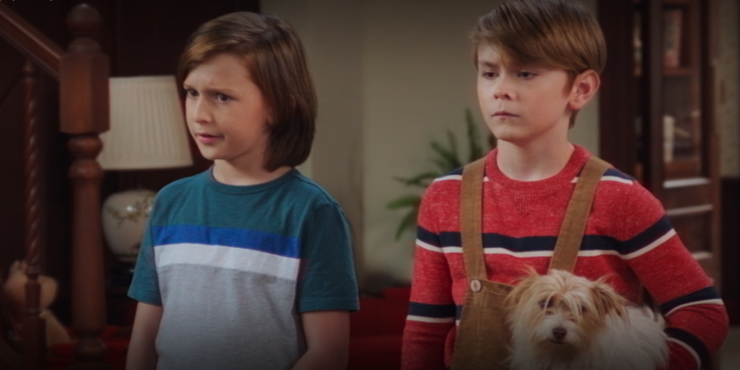
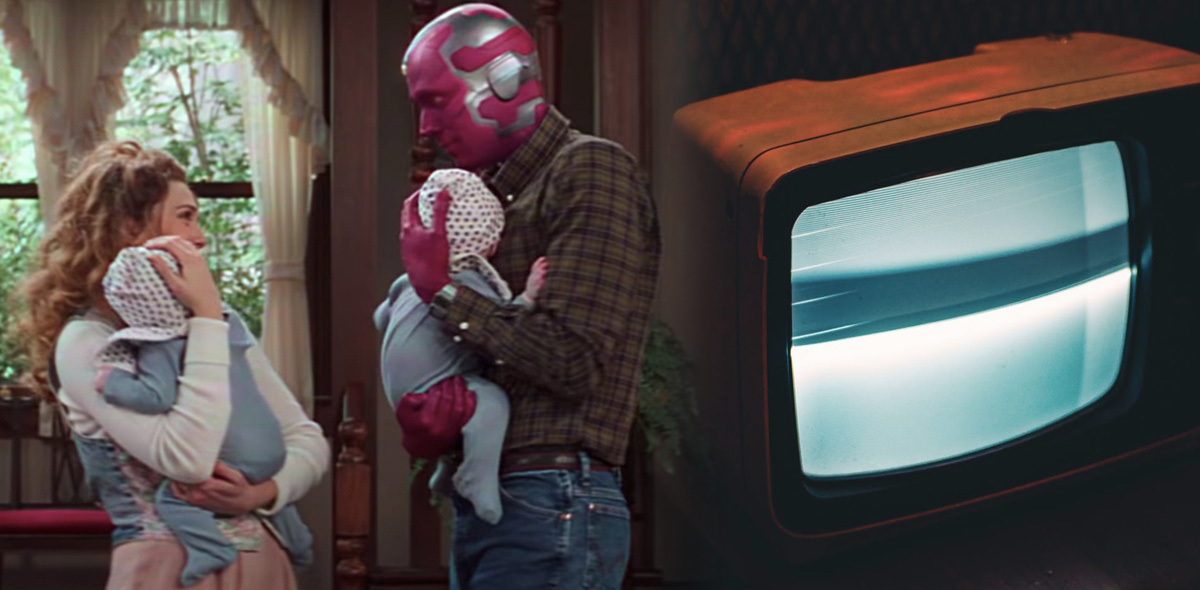
To start off, we get to see Billy and Tommy at three different ages in this episode: babies, young children, and 10-year-olds. The babies suddenly advancing a few years in age during the show’s cold open is a nod to how many old sitcoms would introduce a new baby to the central family unit only to age them up a few years the next season, but it’s also a key part of the plot, as is the inclusion of the “can we keep him?” trope with the dog. Hopefully, this episode made a lot of viewers understand why Marvel chose to go all-out on the sitcom stuff and that it’s more than just a stylistic choice.
The twins are 10 years old for most of the episode, which is just the right age for them to learn one of the cheesy life lessons that were a hallmark of 80’s family media, complete with some gentle, sappy music to underscore it. But of course, despite being the one to deliver said lesson to her children, it’s Wanda who is having the most trouble applying it to her life. While Westview is supposed to be an idyllic and quaint town, there are some sad things that can’t be fixed even there. But Wanda knows there’s a world outside of Westview, and things are a lot more complicated outside her self-imposed bubble. She says one thing to the boys about not being able to revive the dead, while simultaneously doing the opposite of what she’s preaching with Vision.
The Bubble is Ready to Pop
Wanda obviously wants everyone in town – especially her family – to live in ignorant bliss, but the façade is starting to crack. The S.W.O.R.D. team is figuring out increasingly effective ways to break in (this week they sent in what they wanted using technology from Westview’s current era so it wouldn’t be altered upon entry) and Vision is catching on to what Wanda is doing. The biggest subversion of an 80’s trope in this episode comes when Wanda rolls the credits on Vision’s concerns about their life but he continues his confrontation anyway, and eventually, the credits stop. Sitcoms may be known for their ability to resolve any problem in half an hour, but this scene makes it clear that those days are over in Westview.
In discussing the episode’s presentation of how sitcom tropes aren’t really true-to-life I have to mention everyone’s favorite neighbor, Agnes. Her frequent and well-timed stops by Wanda and Vision’s home are still humorous, but Vision’s comments about how she shows up with exactly what the family needs, exactly when they need it point to something being up with her. We see early on in this episode that she definitely knows what’s up to a degree, but it seems like she’s more attuned to Wanda and her family more than everyone else in Westview and Vision pointing out how odd her convenient behavior is means we’re going to find out more about her down the line.
WandaVision only has two more decades to cover (well maybe three if the 2000’s and 2010’s are combined). If these kinds of parallels between the era and the situation continue, the cynicism of the 1990’s and beyond is going to play a role in these next episodes and things are going to break down even further.
This week’s installment of WandaVision took us to another decade as the story was set in the fully-colored sitcom world of the 1970s. The transition from the black-and-white palette of the two premiere day episodes to this comparative rainbow of an aesthetic was far from the only change in the manner the decade of choice’s sitcom elements played into, though, so let’s take a look at how WandaVision tackled the era of the Third Great Awakening.
Now in Color
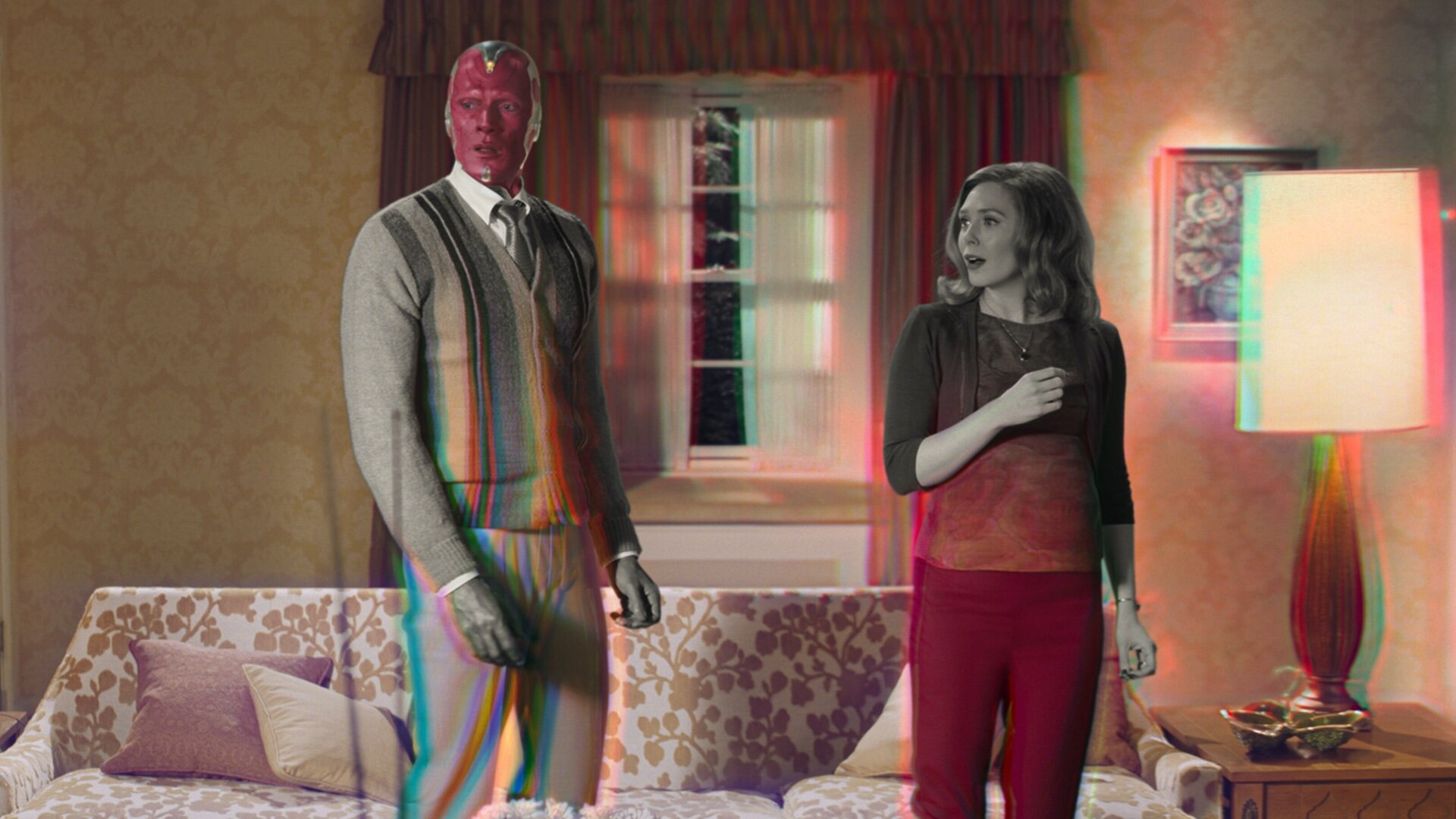
I’ve already mentioned how this episode was the first time during the series in which we saw color other than the credits and ending of Episode 2. I appreciated that the palette of the 1970s was different from the one for the scene we saw at the end of the 1960s. That one was more muted with lots of neutrals like white, beige, and plenty of shades of brown, with only the colors seen on the characters and their clothing really popping out (most notably, the purple of Vision skin and the red of Wanda’s lips and clothing).
Conversely, the 1970s is full of bright hues from Wanda’s multicolored striped number to many of the walls in the house. However, what I appreciated about this was that the designers went with colors that were particularly big in that decade, with plenty of yellows and oranges abound, as well as some darker greens and lighter blues. Here’s hoping that now that the show is in color, these deliberate palette decisions will continue every week to match the era.
A Less Derivative Approach
Aesthetically, the episode does a bang-up job at capturing the 1970s, especially the hairstyles and aforementioned color choices. When it comes to the area of sitcom-specific material, though, the episode is pretty light on that compared to the first two. A lot of Marvel fans have been waiting for more emphasis on the action and mystery elements of WandaVision, and while we got that this week the majority of the show was still rooted in the sitcom antics but didn’t feel like it was supposed to be paying homage to other shows for the most part.
There are only two very obvious references to specific shows here: the house inspired by The Brady Bunch (which isn’t quite an exact recreation but it’s clear that an homage to the show is what they’re going for) and the theme song similar to The Partridge Family’s “Come on Get Happy”, which can actually be heard in Marvel’s own Ant-Man and the Wasp. Unlike the previous two episodes it’s mostly just the music that’s similar; since the entire Partridge Family opening sequence consists of animation and stylized photos the only specific visual emulated in this opener is The Mary Tyler Moore Show’s sprawl of colored copies of the program’s name before transitioning into live-action footage.
Unlike the first two decades, there’s no specific episode of a classic 70’s series like The Brady Bunch or The Jeffersons I could point to as the inspiration for this episode’s storyline. It seems like it’s almost supposed to be an homage to pregnancy and childbirth storylines, which have been present on sitcoms ever since their inception (though this episode is far enough along into the decades to allow the characters to acknowledge the pregnancy directly without having to dance around it with terms like “expecting” like they did back in the 1950s). I think this is actually a better method as it allows WandaVision to carve out its own identity rather than present itself as simply a tribute to old shows, but to do this after two episodes with more specific references makes this one feel as if there’s just a little something missing and I wish they would have just gone their own way a bit more from the get-go.
The Dilemma of The Decade
As I said, I appreciate the show going its own way with this episode but I think part of the way the sitcom elements contribute to the overall story is each potentially highlighting or offsetting a certain mood or attitude present in its episode. Ideally, this wouldn’t be directly lifting a story from a sitcom episode from that era, more like how the “wholesome” 1950s showcased Wanda and Vision’s innocence to the whole situation, and the changing attitudes of the 1960s taking the episode from silly fun to giving us (and the characters) a bit more of a hint as to the overall plot; the beds moving together and color being added to this world is intercut with clues as to what might really be going on.
This sort of thing isn’t really present in the 70’s episode, but the creators were probably in a tough spot here. The sitcom eras naturally have to go in order (at least for now, since it appears Wanda will discover the ability to mix them up at some point as showcased by some of the trailers) so the birth of the babies had to happen now. But unlike the decades before and after it, the 1970s didn’t really have a lot of iconic sitcoms with babies in them, even ones focusing on family dynamics like the aforementioned Brady Bunch and Partridge Family.
Women had also gained many opportunities in the working world by this point (which was nodded to in this week’s WandaVision via Geraldine telling a story about her job promotion) and things like divorce and single-parenthood were much less taboo. Therefore, a lot of the most popular shows of the era were workplace sitcoms like The Mary Tyler Moore Show, politically charged ones like All in the Family and Maude, or shows featuring non-nuclear family living situations like Diff’rent Strokes, Three’s Company, or The Odd Couple. So it’s understandable why the episode’s storyline doesn’t utilize a lot of 70s-based tropes, as they didn’t really fit with the whole childbirth plot.
Hopefully, WandaVision will be able to find a nice balance between paying homage to shows of the past, telling its own story, and including more creepy and mysterious elements in its remaining three sitcom era-based episodes.
WandaVision has finally premiered on Disney+, which means we’ve finally got our first real showcase of the way the cast and crew incorporated various sitcoms into the story. Each of the first two episodes was not only rooted in a different decade, but a specific show from that decade…well, sort of.
The 1950s
Episode 1 begins the series in the era which marked the dawn of television sitcoms: the 1950s. I was expecting a lot more imagery and references to the most iconic of 1950’s sitcoms, I Love Lucy, and that it would be the main inspiration behind the episode, but that show has been parodied and referenced so much that it seems almost like a cliche at this point and to do too much of that would have probably felt cartoonish.
So I was totally game to see different way of taking on the era. But it was odd that the main overall inspiration for the 1950’s set episode is clearly The Dick Van Dyke Show…which first aired in 1961.
Thankfully, the clothing, manner of speech, and music (“Yakety Yak” came out in 1959) are all grounded in the intended decade. The main things inspired from The Dick Van Dyke Show are the house set and the episode’s plot. While the storyline isn’t directly lifted from the series, the very first episode of Dick Van Dyke sees the show’s central couple attend a dinner party in order to impress the main character’s boss and being coerced into entertaining the guests at the event.
The other element of the episode that is reminiscent Dick Van Dyke’s is the theme song, from the similar music and tune to the imagery, specifically the moment with Vision trying to carry Wanda into the house bridal-style but dropping her as he walks through the door without opening it. (On Dick Van Dyke the bridal carrying is ruined by tripping upon entering the house).
The 1960s
The creators of WandaVision probably elected to pass off The Dick Van Dyke Show as a 1950’s series so they could reserve the 1960’s episode for the show most obviously suited to a show about Scarlet Witch, Bewitched.
The references to Bewitched in this episode are similar to that of The Dick Van Dyke Show in the previous one. The set is very similar to the one seen on the classic sitcom, and the theme song for this era of WandaVision is mostly instrumental and the video for it is entirely animated. While Bewitched is the show most famous for this theme song format, several others of this era used it as well, including I Dream of Jeannie and Angel.
Like the first, this episode’s plot also takes inspiration from the show it’s emulating; the Bewitched episode “It’s Magic” sees Samantha, the “witch” referenced in the show’s title, subbing in for a magician’s assistant at a charity show and secretly using magic in order to help him perform successfully despite his drunkenness.
Another aspect of this episode’s storyline that also references Bewitched (and many other shows that were produced during the 1960s) is the change from black-and-white to color; Bewitched similarly began its run in black-and-white, but switched to color a few seasons into its run in 1966.
Not a Crutch, But a Tool
What I’m finding interesting about the sitcom elements of WandaVision is that some of the more minor references aren’t necessarily from shows that were on the air during the episode’s set time period. At one point in the first episode, Agnes brings a pineapple over for Wanda to use in the dinner party’s dessert, which some have speculated to be a reference to “The Pineapple Incident” on How I Met Your Mother (2005-2014). Later in the episode, a lobster appears as a door-knocker (which was not on the door when it was opened earlier in the show) which could be a reference to the famous lobster/soulmate comparison on Friends (1994-2004).
So far it appears that WandaVision isn’t necessarily trying to make a lot of specific references to a bunch of famous sitcoms (other than the one inspiring the episode’s overall aesthetic and tone) but incorporating various tropes and using the style of the genre to tell its own story, which is ultimately the wisest decision for a show that will ultimately help propel the MCU forward.
WandaVision’s marketing is a little different than it probably would have been had the show been released at a time when there wasn’t a pandemic going on. But the core stuff – namely, trailers and TV spots – has been rolled out in a pretty typical manner (based on the admittedly few precedents we have from Disney+ headlining shows, at least). We won’t know how well it’s working until the show actually premieres, but there’s a lot to look over in the meantime.
WandaVision was shot mainly on soundstages and it has been said that Marvel Studios is even more invested than usual in preventing spoilers about it from getting out. And that sentiment has carried over to the trailers; unlike most MCU projects, WandaVision’s trailer isn’t really providing any plot details. Fans who have been following the development of the series have been able to understand what’s going on in most of the scenes that have been shown (the sitcom eras changing, S.W.O.R.D. trying to infiltrate, etc.) but for the general public seeing these ads during football or on Facebook, I have to imagine all of this is pretty confusing.
Most of the marketing materials for WandaVision have focused on the changing eras of the sitcom world and songs that evoke feelings of nostalgia for many people but also may add to the sense of unease and mystery when played over some of the clips where things feel a bit…off, which seems to fit the tone of the project perfectly. There’s been a little bit of action and references to other Marvel projects teased, but not much. This has most likely been done not only to avoid spoilers, but also to prepare viewers for the difference in tone and style for much of the series. Those who have already seen the show’s first three episodes have commented that they firmly focus on the sitcom aspect rather than the fast-paced action typical of an MCU project. We’ve been told that’s coming as well, and the trailers have shown a little bit of it, but it’s definitely not something that’s going to be part of every episode.
Marvel has put out a new TV spot or clip reel for WandaVision seemingly every day for the past month or so, but a lot of them are recycled footage of the same few clips. That’s admittedly pretty typical for marketing, but the trouble may come with the mix of showcasing a whole new style without telling viewers much about the story to hook them in. We’ve mostly just been shown bits of footage that show off Wanda and Vision in their outfits through the various decades with the same few vague audio clips.
If this was an Avengers movie they could probably get away with this method no problem because the name alone creates massive hype. But this is a show about two previously side-characters in a style that may be jarring to a lot of Marvel fans. Those who follow Marvel updates know that all of this is going to lead into future projects like Doctor Strange in the Multiverse of Madness, but a lot of the general audience does not. If they could find a way to hint at this being big for the direction of the MCU while still preparing audiences for a new sort of setting with the sitcom stuff, that would have probably been the ideal way to go about it. But perhaps those on the fence about WandaVision will be more likely to give this series the benefit of the doubt considering there hasn’t been any new MCU content at all in the past year and a half. We’ll see how audiences respond to WandaVision when new episodes stream Fridays on Disney+ starting January 15.
Cookie Consent
We use cookies to improve your experience on our site. By using our site, you consent to cookies.
This website uses cookies
Websites store cookies to enhance functionality and personalise your experience. You can manage your preferences, but blocking some cookies may impact site performance and services.
Essential cookies enable basic functions and are necessary for the proper function of the website.
Name
Description
Duration
Cookie Preferences
This cookie is used to store the user's cookie consent preferences.
30 days
These cookies are needed for adding comments on this website.
Name
Description
Duration
comment_author_email
Used to track the user across multiple sessions.
Session
comment_author_url
Used to track the user across multiple sessions.
Session
comment_author
Used to track the user across multiple sessions.
Session
Statistics cookies collect information anonymously. This information helps us understand how visitors use our website.
Google Analytics is a powerful tool that tracks and analyzes website traffic for informed marketing decisions.
Contains information related to marketing campaigns of the user. These are shared with Google AdWords / Google Ads when the Google Ads and Google Analytics accounts are linked together.
90 days
__utma
ID used to identify users and sessions
2 years after last activity
__utmt
Used to monitor number of Google Analytics server requests
10 minutes
__utmb
Used to distinguish new sessions and visits. This cookie is set when the GA.js javascript library is loaded and there is no existing __utmb cookie. The cookie is updated every time data is sent to the Google Analytics server.
30 minutes after last activity
__utmc
Used only with old Urchin versions of Google Analytics and not with GA.js. Was used to distinguish between new sessions and visits at the end of a session.
End of session (browser)
__utmz
Contains information about the traffic source or campaign that directed user to the website. The cookie is set when the GA.js javascript is loaded and updated when data is sent to the Google Anaytics server
6 months after last activity
__utmv
Contains custom information set by the web developer via the _setCustomVar method in Google Analytics. This cookie is updated every time new data is sent to the Google Analytics server.
2 years after last activity
__utmx
Used to determine whether a user is included in an A / B or Multivariate test.
18 months
_ga
ID used to identify users
2 years
_gali
Used by Google Analytics to determine which links on a page are being clicked
30 seconds
_ga_
ID used to identify users
2 years
_gid
ID used to identify users for 24 hours after last activity
24 hours
_gat
Used to monitor number of Google Analytics server requests when using Google Tag Manager
1 minute
Marketing cookies are used to follow visitors to websites. The intention is to show ads that are relevant and engaging to the individual user.
Pinterest Tag is a web analytics service that tracks and reports website traffic.