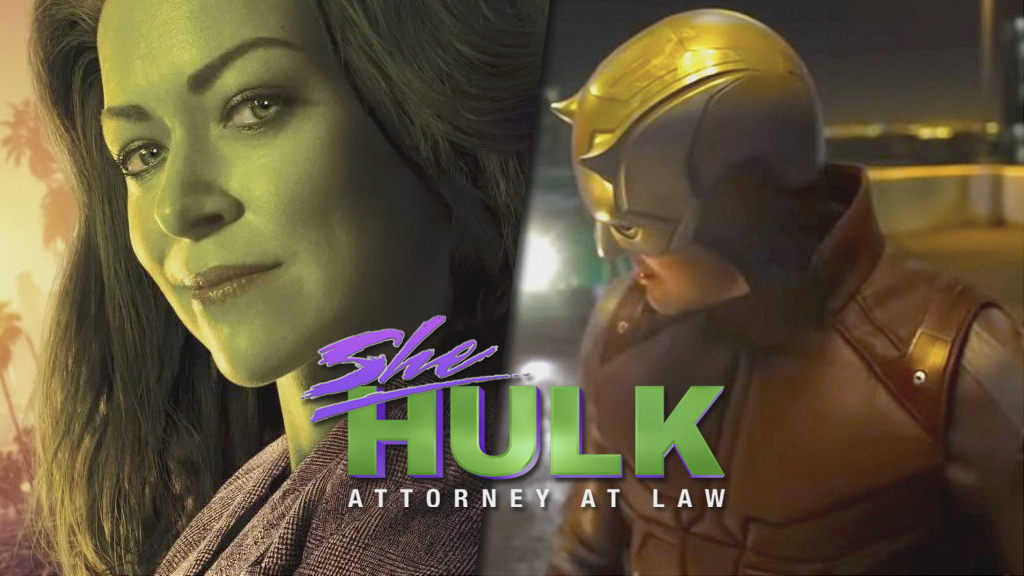
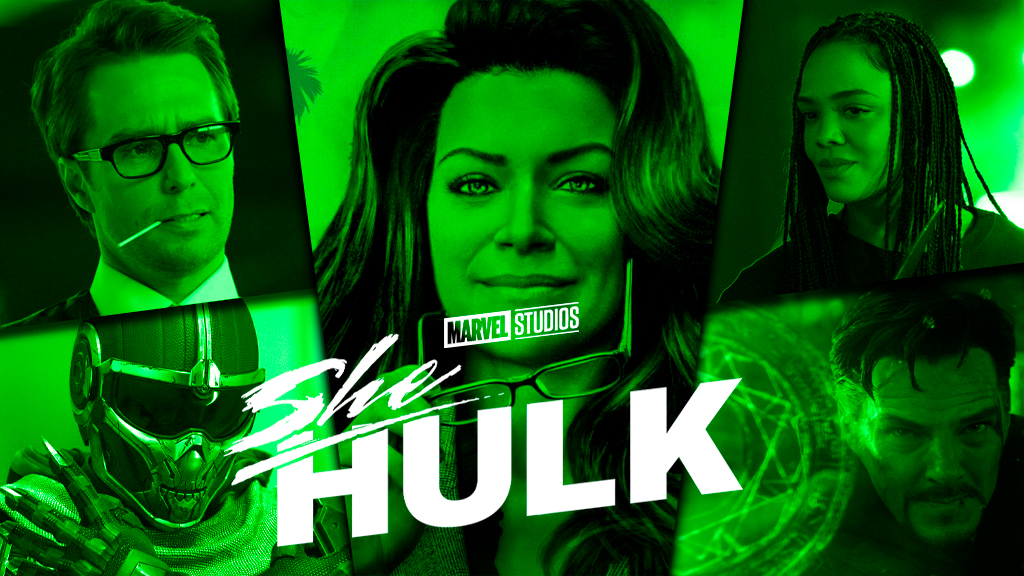
We’ve known since the second trailer that Charlie Cox will once again wear the iconic outfit from the Netflix series with some yellow additions in She-Hulk: Attorney at Law. Yet, it hasn’t been made clear just how he might factor into the story. There’s a chance that he and Walters are going after the same case, which leads to their superhero alter-egos also getting into contact. Now, a new trailer has been spotted with new footage making the rounds.
While the actual trailer hasn’t been released yet, it does seem to include the various quotes from the quite positive reviews for the Disney+ series. That’s not all, as it even includes a new bit of footage that teases that after meeting each other, daredevil and She-Hulk are very likely going to team up. The funny aspect is that the word “Comedy” is pulling a Mike Wazowksi on Daredevil, as most of him are covered by it.
There’s a bit of funny irony that after many worried Daredevil wouldn’t be serious enough, the latest ad just hides him behind the word “comedy.” Of course, the first episode confirmed that while it has a comedic take, it still will have its serious and more sincere moments. Plus, Cox is no stranger to making the funny or off-hand remarks as Matt Murdock. So, here’s hoping the wait isn’t too long until he shows up.
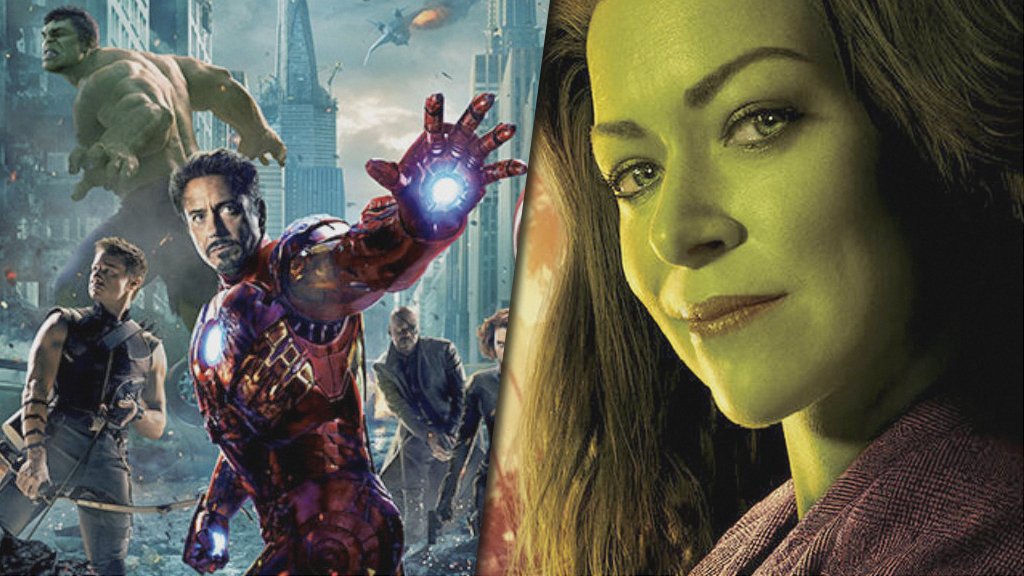
With the debut of She-Hulk: Attorney at Law, the Marvel Cinematic Universe’s newest superhero has been introduced into the franchise. As the final Disney+ series of the MCU’s Phase 4, plenty of fans are curious where Jennifer Walters could be headed in Marvel Studios’ explosive Phases 5 and 6.
I would be shocked if they didn’t start putting her in the movies, especially the group team-up movies.
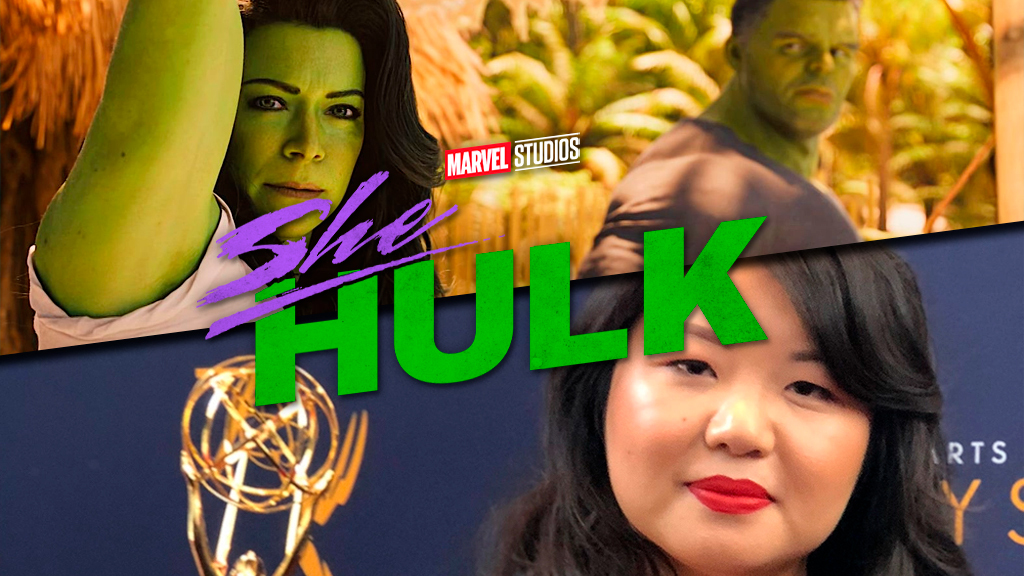
Jessica Gao
Of course, even the series’ head writer’s comments are no guarantee of She-Hulk’s future in the MCU, as creators are notoriously kept in the dark about the future of their characters beyond the current project. Gao explained her approach to making one season of a show while knowing that the superhero may have a larger future down the road:
Coming from television, you can never guarantee that you’re going to get another season with a first season show. So it’s kind of been trained into my head that, on a first-season show, you really have to tell a complete story that you’d be satisfied with if this is only a one-and-done. Just because there’s never a guarantee, you just never know if you’re going to get another season, so you can’t really hold back and just leave things open-ended. You do have to tell some sort of satisfying arc in one season just in case, and then of course you leave the door open for possibilities for a second, third, and fourth season. So that was kind of my mental approach to it.
Jessica Gao
The first episode of She-Hulk: Attorney at Law is now streaming on Disney+.
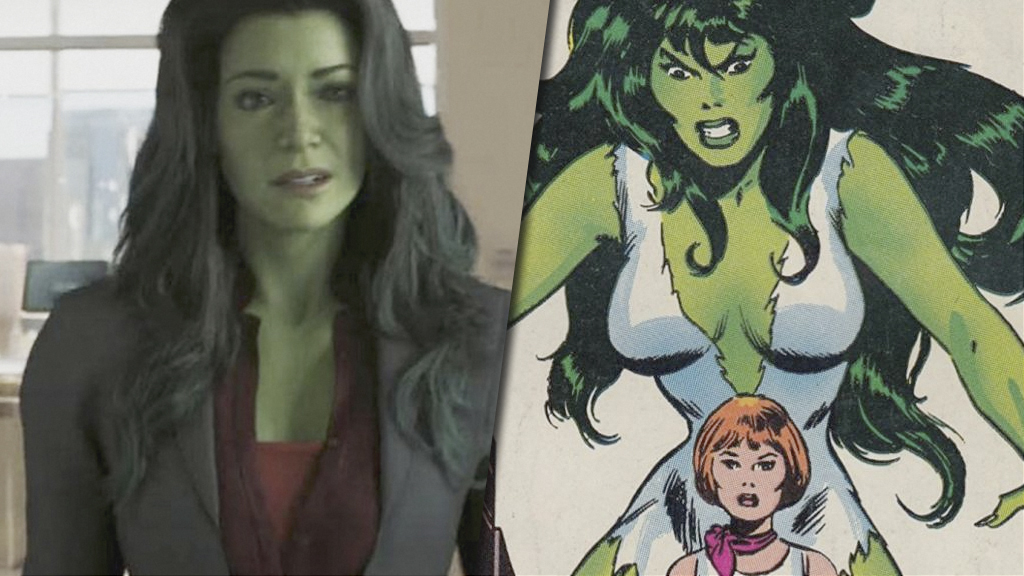
Marvel Studios’ latest series, She-Hulk: Attorney at Law, recently premiered to critical acclaim and positive reception from fans. The series explores Jennifer Walters, a lawyer who becomes a Hulk after being exposed to the gamma radiation-infected blood of her cousin, Bruce Banner. In She-Hulk, Jen ends up gaining her powers due to accidental blood contamination after she and bruce were in a car accident.
Those familiar to She-Hulk’s origin in comics noticed that this scene plays out differently in the source material. In Marvel comics, Jen’s life is put in serious jeopardy after members of a mob she was prosecuting attempt to murder her. In order to save her life, Bruce decides to give her an transfusion of his blood. After Bruce’s Hulk blood is in her system, Jen begins to transform into the She-Hulk.
In an interview with Gizmodo, the show’s head writer Jessica Gao commented on why the show settled on the car crash and a large mysterious spaceship as the catalyst for Jennifer’s origin instead of a mob hit:
Well, there are several factors. First, the head honchos at Marvel specifically didn’t want it to be the mob hit… it just didn’t feel like it fit with everything. But for me, having watched this Bruce Banner, this Hulk, through all the years and all the different MCU movies, it just felt like we saw him be really tortured by this. This was not a gift. He really saw it as a curse. It forced him to not have any relationships. He spent several years, like really, really tortured by it and not viewing it as a good thing. And it took him that long to get to a place where he can just accept it and learn to live with it. So to me, it didn’t make sense for that guy to then willingly give this curse to somebody that he cares about. His cousin, who he really loves. It just didn’t seem right and true to the character and it didn’t make sense to me. So I didn’t want to do that.
Jessica Gao
Omitting the backstory of a mob hit also allowed She-Hulk to essentially start from scratch and avoid unnecessary backstory. Removing the blood transfusion element also impacted Bruce’s character after Jen turns into a Hulk. Gao explains these practical reasons the origin was changed for the live-action series:
From a practical angle, we just needed to be able to start the origin story very quickly… I didn’t want to have to spend half an hour setting something up…If you do a mob hit, it’s like, ‘Well, then why? What happened?’ Let’s just get to the meat of everything. And also the nature of making it an accident takes a lot of the pressure off of the guilt that Bruce would feel having given this to Jennifer because, in the show, we really see how she struggles with it and how she also, like him, doesn’t really view it as a gift at first. So I think that would really change their dynamic if he was completely responsible and that he made the choice for her.
The first episode of She-Hulk: Attorney at Law is not streaming on Disney+.
In an interview with Lifehacker, She-Hulk: Attorney at Law‘s head writer Jessica Gao got a chance to share her excitement about bringing Daredevil back into the Marvel Cinematic Universe. While Charlie Cox had a brief appearance in Spider-Man: No Way Home, he’ll finally don his iconic suit in the upcoming Disney+ series. As it turns out, however, she shares that she had a lot of freedom in how to include the character with one exception.
Usually how they do it is they kind of let us propose what we want to do rather than give us guidelines. When they first told us that [Daredevil] was a possibility we just couldn’t believe it. And as we were coming up with story and what we wanted him to do, the fact that they kept not saying no was shocking to us.
Jessica Gao
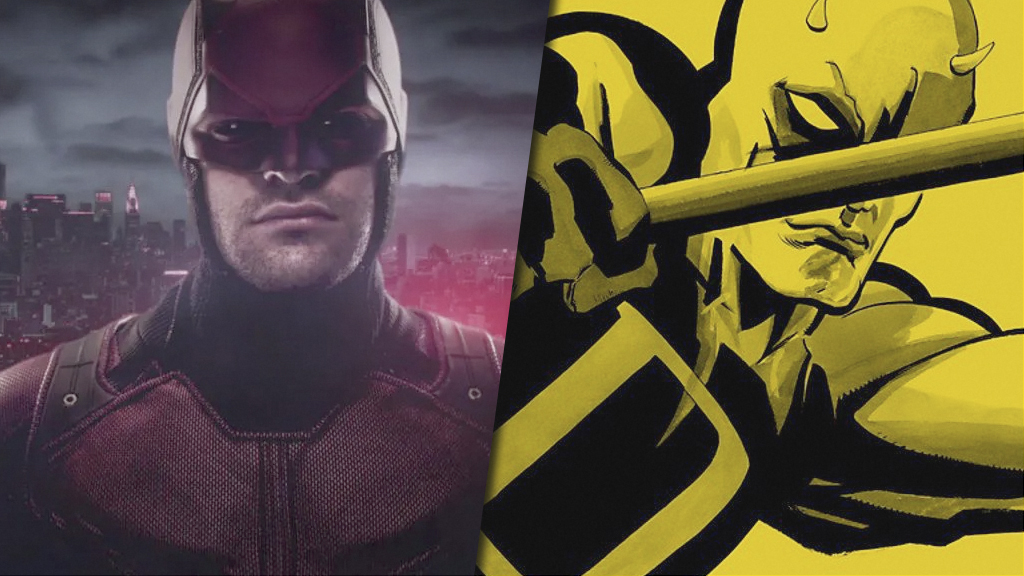
She goes on to highlight though that there was one thing she had no control over and that was the way he was going to look in the series. The trailers revealed he had his Netflix red suit but with a new touch of yellow that pays tribute to his original design. It seems that was Marvel Studios’ idea.
The one thing that I didn’t have control of was the suit. They knew exactly what they wanted the suit to look like.
Jessica Gao
Most of Marvel Studios’ team are comic nerds and it does seem like the chance of introducing the character in a more comedic light was the perfect way to also bring in some of the goofier aspects of his character. We’ll likely see his classic colors return in the near future, but it is great that they are combining these two worlds. Here’s hoping the wait for our first full look at him in action isn’t too far away. Now we only need to see the D on his chest.
She-Hulk: Attorney at Law is about to be one of your new favorite Marvel Cinematic Universe projects. While much of the first episode was dedicated to establishing Jennifer Walters as an All-New, All-Different Hulk, all the elements are in place for a wildly delightful half-hour comedy series. She-Hulk takes the MCU to a place it honestly has not touched before now, which is somehow both smaller in scale yet feels like an A-list production in terms of its enjoyability and presence in the wider universe. The Marvel Studios universe has now expanded to a place where stories that seemed far-fetched a few years ago have a comfortable place in the MCU, and She-Hulk is opening the door for all of them.
As the “origin” episode, the premiere is not particularly representative of the rest of the series in terms of its structure. She-Hulk is, ultimately, an episodic show that focuses on week-by-week or case-by-case stories involving Jen’s legal career. Still, the amount of time spent on her origin and development as a Hulk with Bruce Banner manages to be thorough enough to connect Jen to a specific, growing section of the MCU and explain enough to allow the show to proceed without too many questions about who or what she is as distractions. In fact, the early fourth wall break serves to precisely lay out the intent of the episode yet still center everything within Jen’s non-superhero life.
The cast in the first episode is limited, but there is no question that Tatiana Maslany is an absolute star in the role. Criticism about She-Hulk’s CGI will not go away even with the final product, but any inability to accept it and move on is only to the detriment of the viewer. The visual effects take nothing away from Maslany’s performance, She-Hulk’s general character, or the ability to enjoy She-Hulk. Mark Ruffalo, who practically shares the episode with Maslany, is similarly phenomenal in his role here. In fact, it is arguably Ruffalo’s best portrayal of Bruce Banner in the MCU.
Because of how She-Hulk nestles itself within the MCU in such a specific casual-yet-important way, its uniqueness cannot be overstated. Quite frankly, after this series, the MCU can never go back to the all-encompassing tone it has had in the past. The show is the perfect final series of Phase Four, which generally felt like an experimental phase to diversify the types and styles of MCU projects. She-Hulk captures the self-awareness of the MCU alongside its tone of focusing on the more day-to-day reality of the universe. If any project has ever invoked feeling “comic book-y,” it is hands-down this one. The post-credits scene is perhaps a perfect example of the ground-level, casual-framing nature of this series. Gossip about Captain America’s virginity, or lack thereof, is now canon to the MCU, whereas before it mostly existed on Twitter.
She-Hulk has a comedic tone that isn’t slapstick or cheap. It feels more mature, real, and grounded in both reality and the universe it exists in. Billed as a half-hour comedy, it feels far from simply being a goofy and empty attempt at laughs. But the superhero elements in this episode do tip the scales a bit further away from truly feeling like an episodic comedy. A challenge going forward for the show will be allowing it to have its own comedic personality that rises above what it seeks to accomplish in terms of any larger MCU plot. For example, hints of a building Hulk universe are obvious in this episode. There are no indications yet that it cannot remain relatively self-isolated, and viewers should be prepared for the end of the “superhero origin” part of She-Hulk’s story early in the series, and perhaps this first episode served to cover and complete it.
It should also be recognized that even with only one episode as a reference, She-Hulk so far seems to be the MCU’s most successful attempt at a woman-led project. Maslany’s performance combined with the script itself is reminiscent of contemporary, quality non-comic book female-driven TV. Jen’s character has so much more texture as it is being written by women seemingly without any hesitation to be unceremoniously honest and genuine as to what Jen’s life (Hulk for or not) would look and feel like. Ms. Marvel also did a phenomenal job with Kamala Khan, but writing and portraying an adult woman with more mature themes feels incredibly fresh in the MCU, even if overdue.
In sum, She-Hulk’s premiere episode has every indication that the series will be a hit. The tone of the show is one that is designed to be simply fun, enjoyable, and even pander to fan service. Not every show or style of humor works for every person, but it is difficult to imagine any major widespread criticism (aside from the CGI) that is not based, in part, on some people’s unfounded discomfort with female superheroes or straight-up misogyny. The toxic “M-She-U” crowd will surely keep yelling into oblivion. But if She-Hulk exemplifies the “M-She-U”, it only proves that that universe is an excellent place to be.
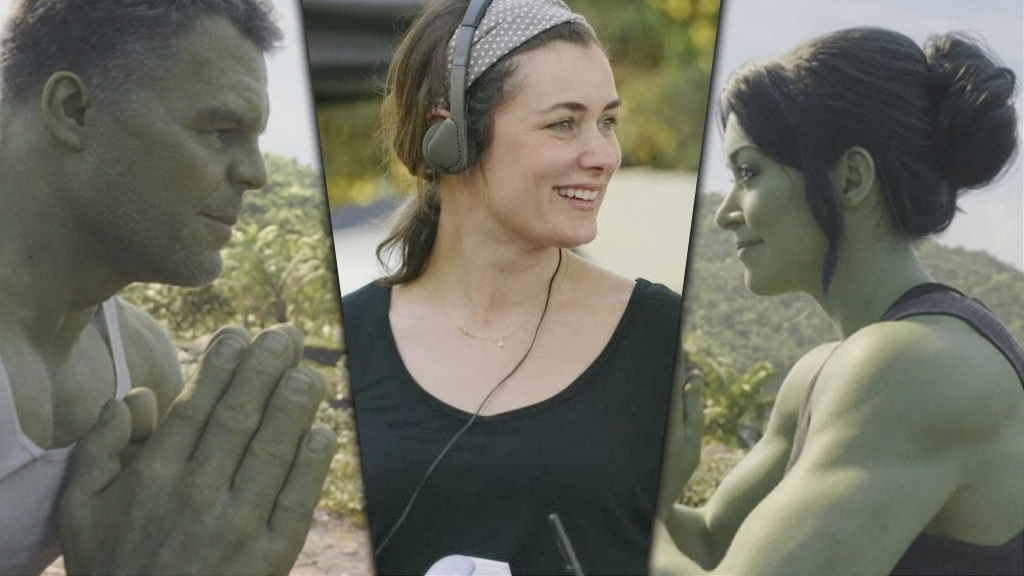
She-Hulk: Attorney at Law has finally found its way to Disney+, offering Marvel Studios’ first comedy. The big challenge is seemingly creating a classic comedy concept with fully CG characters. Director Kat Coiro points out that same challenge in an interview with Variety, as they had to find a way to make the series stand out visually with the rest of the Marvel Cinematic Universe, while still playing in a comedic world.
It’s really about pinpointing those comedic scenes that are about rhythm and banter and dialogue, and allowing those to be shot in the way that traditional comedies are — often cross shooting and allowing actors to improvise. Now, you add to that CG characters, and it’s a whole ‘nother level of complex. When you watch the first episode, you see that Mark [Ruffalo] and Tatiana [Maslany] are bantering.
Kat Coiro
She highlights how they found a balance with the VFX, especially in how important it was to be “really prepared” to ensure that they could also have fun with the concept.
There’s a comedic point of view there. They’re also two CGI characters who require incredible amounts of VFX passes. So it was about being really prepared, knowing exactly how we were going into it, so that we could then allow them space to have fun. That really is the challenge. You have to have fun. To have a comedy, there has to be a sense of playfulness. There has to be a sense of trust that you can improvise and go off script and explore things.
Kat Coiro
It definitely sounds like a challenge to go off script with a CG character, especially with the work required to make these characters stand out as realistic as possible. Still, it’s important for a comedy to allow its actors to breathe with the moment-to-moment comedy to add something special to the series. So, it seems they tried their best to have a balance of both.
Marvel Studios’ fourth Phase has been full of exciting new characters making their live-action debut, and tomorrow, Tatiana Maslany will join their ranks as the title character in She-Hulk: Attorney at Law. The Disney+ series marks a milestone in the 42-year history of Jennifer Walters, but it’s far from the first time a studio has tried to bring the Jade Giantess to life. From the very first time she tore through the page in 1980’s The Savage She-Hulk #1 – Stan Lee‘s last major contribution to the Marvel universe – it was clear Jen had the potential to be every bit as popular as her incredible cousin. Hollywood took note, and the first attempt at putting She-Hulk on camera came within a decade of her conception. Before fans sit down to watch Attorney at Law, it may be worth taking a journey back through time to discover how the series came to be.
The Death of the Incredible Hulk
From 1977 to 1982, the Columbia Broadcasting System (or CBS, to be less dramatic) aired a full 80 episodes of The Incredible Hulk. A dramatic interpretation of the Hulk story, the series starred Bill Bixby as Dr. David Banner, a lonely physician on the run after exposure to Gamma radiation curses him with turning into a giant green rage monster whenever agitated. With very limited digital effects to rely on, bodybuilder Lou Ferrigno famously stepped in for Bixby whenever he transformed, and the overwhelming popularity of the duo is arguably responsible for the Hulk’s lasting influence on mainstream culture.
Following the end of the series, Bixby maintained his interest in playing Banner and pitched an exciting new concept to Columbia – a made-for-television sequel film that paired his character with Nicholas Hammond‘s Spider-Man, who previously headlined his own less-successful show from 1977 to 1979. The idea fell through pretty quickly, despite interest from all parties involved, and Bixby remained determined to make a live-action Marvel crossover happen. Years later, in 1988, this would result in The Incredible Hulk Returns, which paired Banner with Eric Allen Kramer‘s Thor. In concept, the film would act as a backdoor pilot for a Thor show on rival network NBC, although this never happened. Instead, another sequel movie would be made, titled The Trial of the Incredible Hulk, that featured the big muscle-bound meanie teaming with Daredevil, played by Rex Smith. Again, this was intended as a backdoor pilot, and again, it led to nothing but another Hulk film.
On the third try, according to Starlog Communications’ Comics Scene magazine, the writers intended to introduce a newer Marvel character to help carry the franchise forward. As of 1989, Bixby‘s last telefilm was planned to feature She-Hulk in all her green-skinned glory. Oddly enough, when it was ultimately released as The Death of the Incredible Hulk in 1990, there was no sign of Jennifer Walters to be found anywhere. It’s still unknown exactly why the heroine was booted from the production. Some reports, including another from Comics Scene, claim that Jen was abandoned in favor of a Black Widow team-up. Though Natasha Romanoff does not appear in Death, there is a Russian spy character named Jasmine (portrayed by Elizabeth Gracen) who plays a large role in the plot. There was a brief rumor that She-Hulk would be utilized in a possible fourth film, tentatively titled The Revenge of the Incredible Hulk, but production on that project stalled, and Bixby passed away tragically before it could be made. However, it wouldn’t be long before She-Hulk’s name was once again being batted around for television contention.
She-Hulk: Metamorphosis (ABC)
Only a year after she failed to debut in The Death of the Incredible Hulk, ABC reportedly began development on a stand-alone live-action series for She-Hulk. Nothing is really concretely known about the project, aside from the fact it was briefly publicized in 1990 as an upcoming venture from Marvel and New World Pictures. Unsubstantiated internet rumors suggested it may have been intended as a spin-off of CBS’ The Incredible Hulk, with Ferrigno and Bixby returning once more as supporting characters. Producer Jill Sherman Donner, who had worked extensively on the original show as a screenwriter, was attached to make the series happen. Gabrielle Reece, a volleyball player and fashion model, is rumored to have been cast as She-Hulk, while Baywatch actress Mitzi Kapture was supposedly on board as Jennifer Walters.
If the legend is true, ABC’s She-Hulk made it all the way to filming a pilot in 1991. The premiere episode is said to have revolved around Jen as an assistant district attorney, who is still haunted by the murder of her parents when she was a child. Hellbent on exposing a well-respected businessman as a secret criminal mastermind, presumably the one responsible for her family’s death, Walters is sent on a forced vacation to the Caribbean, where she bumps into Bixby‘s former physician. In this world, Jen and Dr. Banner are supposedly not related, and a romance is hinted at early on. Before anything can flourish between the two, however, a hitman shoots Jen for going after his businessman boss, and Banner makes the hard decision to give Walters some of his blood so she may survive. This results in Walters’ transformation into the Savage She-Hulk, who would not be as intelligent as her comic book counterpart. Instead, Reece‘s She-Hulk was rumored to be a lumbering monster much like Ferrigno.
Much of this was actually somewhat confirmed in the 2011 book You Wouldn’t Like Me When I’m Angry: A Hulk Companion, by Patrick A. Jankiewicz.* In his coverage of the Hulk’s history, Jankiewicz interviewed She-Hulk‘s Sherman Donner about the aforementioned pilot – which she had apparently titled “Metamorphosis.” The creative relayed much of the same information, and even revealed her version of She-Hulk was going to look radically different than the traditional design. Instead of being entirely green like her predecessor, Jen would have had golden skin with bright red hair and green eyes. Why? Sherman Donner explained:
I made her golden instead of green because green isn’t pretty. Changing her skin color made her seem more feminine, prettier and different than just making her green.
Jill Sherman Donner
It’s not known exactly why the pilot was canned before it aired, but the same sources that spread the plot claim there was concern over the lead actress’s ability to hold her own series. ABC is said to have wanted the more well-known Melissa Gilbert for the part and cancelled the entire production when Kapture couldn’t be replaced. Another potential reasoning behind the show’s end was the lack of interest in more Hulk content after the last telefilm flopped in the ratings. That, combined with Bixby‘s eventual passing, ended up derailing all plans for the jolly giant at the time, and if ABC’s She-Hulk was truly supposed to be connected to Bixby‘s world, it could have simply been an unfortunate casualty of the franchise’s untimely demise. Of course, that is mostly conjecture, but the timing does help the theory make sense.
*Disclaimer: Information regarding You Wouldn’t Like Me When I’m Angry: A Hulk Companion came from secondhand sources (cited below) and was included for the sake of providing as much information as possible. The author has not read this book personally.
She-Hulk: The Movie
Once it became clear She-Hulk wasn’t going to appear on television anytime soon, New World Pictures decided to shift gears and begin development on a film adaptation instead. Much like the previous live-action attempt, most of the details surrounding the ill-fated production are a little fuzzy. Different sources have claimed a variety of details, most of which will at least be mentioned here, but there are only a few solid truths that are known to be 100% accurate. Firstly, most everyone can agree that B-movie director Larry Cohen was hired to helm the project sometime in the early-to-mid-1990’s. Some outlets have said that Cohen also wrote the script, while others say screenwriter Carl Gottlieb was commissioned in his place. Either way, the project never made it to filming, and nothing much is known about the hypothetical plot.
What is known for certain, and what is perhaps the most famous aspect of this doomed idea, is that actress Brigitte Nielsen was cast in the title role. Now-infamous publicity photos made their way online some time ago, originating from an article in an issue of Wizard Magazine, showing Nielsen as both Jennifer Walters and the mighty She-Hulk. At that point in the 90’s, the former Red Sonja star had made a name for herself as an action franchise lead. It’s been claimed in the past that the studio wasn’t confident She-Hulk would actually make it off the ground and hoped a photoshoot with someone of Nielsen‘s caliber would interest investors and get the project moving. Alas, the financial failures of the era’s other low-budget Marvel flicks (i.e. Captain America, The Punisher, and Howard the Duck) proved to be too damning and killed the film before lift-off.
She-Hulk: Attorney at Law
Oddly enough, Larry Cohen‘s failed blockbuster would be the last major attempt at bringing She-Hulk to life until Marvel Studios announced it would make a Disney+ series – previously mentioned as being titled She-Hulk: Attorney at Law – in 2020. This was likely, in large part, due to Universal’s acquisition of the Hulk’s film distribution rights in the late 1990s, and their subsequent determination to focus on getting a Hulk movie correct for over a decade. With all eyes on Bruce Banner, it doesn’t seem Universal had much interest in Jen Walters.
Even when Marvel Studios were able to get its hands on the Hulk, it was for crossover films only, preventing the studio from developing a full-blown solo franchise for the character that could have resulted in She-Hulk making her MCU debut years earlier. Luckily, after a lengthy and mysterious behind-the-scenes battle, it would seem Marvel Studios was at least able to come away with the ability to produce a streaming series, and now fans all over the world will finally get to see Jen Walters hulk-out in live-action. With any luck, there won’t be a problem bringing her to the big screen going forward.
Marvel Studios’ She-Hulk: Attorney at Law is set to premiere this Thursday, and as evidenced in the trailers, Jen’s fourth wall breaking will be a big part of the series. Jessica Gao, who serves as the head writer on the show, previously discussed the importance of including fourth wall breaking in the series, stating it was one of the most essential factors from the comics she ensured carried over into the series. However, it looks like it took a bit for the creatives to decide how to work it into the show.
During the virtual press conference last week, Gao was asked how She-Hulk breaks the fourth wall in a way unique to her character. According to Gao, it was a bit of an evolutionary process to decide how the titular hero would use the fourth wall breaks within the series. “I mean, we really talked. It went through a lot of evolutionary steps. A long journey of, like, how much should she talk to camera? Is she talking directly to the audience? Is there another meta element? Is she talking to somebody else, like, that’s more behind the scenes?”
Early scripts had the series using text boxes with editor’s notes instead of having Jennifer Walters talking directly to the camera. Gao took inspiration from the comics and how editor’s notes were added in text boxes. “At one point, there was an iteration in the scripts where, instead of really talking directly to the camera, there were, kind of text boxes that were editor’s notes, like the comic books, how there were editor’s notes in comics.”
Had the series decided to keep the text boxes, Walters would’ve interacted with them on screen, but it was ultimately scrapped. “And she was actually interacting with the editor’s notes that would be onscreen. I mean, we did eventually scrap that idea. But I mean, we went through a lot of different versions of how she would do it.”
While it would’ve been fun to see Tatiana Maslany‘s Walters interact with editor’s notes on the screen, the creatives seem to have made the right decision by choosing to have her speak directly to the camera.
She-Hulk: Attorney at Law premieres on Thursday, August 18th.
She-Hulk: Attorney at Law is set to be the Marvel Cinematic Universe’s first foray into legal comedy. And in typical procedural fashion, there will most likely be a new court case every episode or two. With that being said, here are 5 potential court cases that Jennifer Walters, a.k.a. She-Hulk, could litigate in her Disney+ series or any of her future appearances in the MCU. Dun-Dun!
Case #1: Rhodes v. Hammer
This is something that’s been done in the comics, but it could be a lot of fun in the MCU. Especially because, while they constantly like to hint at its existence, they’ve never really explored in-universe superhero merchandising to its fullest potential. In the comics, Kingpin owns the merchandising rights to Spider-Man. While Kingpin and Spider-Man wouldn’t be the right characters to do this with here, there is a different hero that’s been on the Avengers, whose enemy could realistically take over their merchandising rights. Honestly, it could actually be really fun to have Justin Hammer purchase the merchandising rights for War Machine.
There could be a Stark Industries fire-sale where Justin Hammer manages to scrounge together some money to secure the rights to sell merchandise based on the War Machine. Hammer can go all out on running the property into the ground, all the while making a huge profit. Rhodes can reach out to She-Hulk for help going up against Hammer in court, suing to get the War Machine merchandising rights back. However, Hammer can retort, claiming that it was he who created the War Machine to begin with. Most of the design choices of the War Machine suit were his, as Rhodes and Stark were using a plain old Iron Man suit. Therefore, they would not be selling War Machine merchandise without Hammer in the first place. It could be a lot of fun.
Case #2: The Innocent Bystander
Remember in Doctor Strange when, after discovering that the Hong Kong Sanctum had fallen, Strange uses the Time Stone to reverse time? Well, it could be funny to see a civilian who was brought back to life after being killed in the Hong Kong Sanctum attack try to collect his own life insurance, since he technically died. Now, this guy can be well-meaning and have good intentions. Maybe he is down on his luck and needs some money. So, he goes to She-Hulk with a brilliant idea: he is going to sue his insurance company, making the case that even though he is alive now, he did die, so they should give him his life insurance money. It’s something that could even be further examined with those that disappeared as part of the snap, only to come back and find their lives had forever changed.
Case #3: Crimes of the Widows
A black widow needs to prove that she was under mind-control when she committed a murder. Mind-control has been a fixture of the MCU since Phase 1, with characters such as Bucky Barnes and Hawkeye being forced to carry out horrible acts while under another’s command. This could be a great opportunity to examine whether or not someone should be held responsible for crimes they’ve committed while under mind-control; something the MCU has never fully acknowledged. While this could also work with Bucky, it would probably be best suited for a black widow, since there’s not really a lot of record of what they’ve done, making it easier for different crimes and assassinations to be pinned on them.
One black widow could be forced to stand trial for a murder they committed while under mind-control, and She-Hulk would have to come up with a way to prove this to the jury, as well as convince them that she should not be held responsible. Bucky could be brought in to testify as a character witness, explaining how mind-control works. She-Hulk could even mind-control an unconvinced member of the jury; a fun way to persuade them that mind-control is real.
Case #4: What Makes a God?
After an Asgardian breaks a local law, She-Hulk could defend them on the basis that you cannot sue a “god.” This would be a great opportunity to explore the nature of “godhood” in the MCU, especially after Thor: Love and Thunder failed to really examine what makes an Asgardian – or any other “deity” in the MCU for that matter – a “god.” Maybe the Asgardians can be a little more sympathetic in this situation. Perhaps the Roxxon Energy Corporation wants to force the Asgardians off of New Asgard so they can dig for oil. She-Hulk can defend the Asgardians and their land, claiming that wherever they are currently is technically sacred ground because they are all “gods” of a religion that did use to exist. There is plenty of room for them to play around with this concept.
Case #5: Hammer v. Stern
Justin Hammer sues to get out of jail, making the case that he was manipulated by Hydra member Senator Stern. There should be more Justin Hammer in the MCU, so why not throw him into She-Hulk: Attorney at Law? And this one’s interesting because Hammer was working with Senator Stern, played by Garry Shandling in Iron Man 2. They were on the same side and the Senator seemed to be propping Hammer up. And it turns out that the Senator was working for Hydra. Now, it’s unclear if everyone working for Stern was part of Hydra, how many people knew about this, or if Hammer even knew about this at the time. However, Hammer can use this as an opportunity to get the charges on him dropped in the process, putting what remains as one of the MCU’s biggest unanswered questions to rest.
Justin Hammer can say that Stern, being a member of Hydra, tricked him into unwillingly participating in Hydra activity, by convincing him that stopping Tony Stark was the right thing to do for the country. Hammer can claim that he didn’t know Stern was a secret evil Hydra Nazi, but ultimately, he was using this as the grounds for why he should be released from jail. Hammer is able to BS his way through the legal system, but She-Hulk can advise that part of the condition of his release be that there needs to be an Avenger looking after him. She appoints Rhodey as his custodian, which could perfectly set up Justin Hammer’s return and play out in Armor Wars.
She-Hulk: Attorney at Law premieres on Disney+ August 18, 2022.
Any project goes through various drafts before the camera ever start rollinig. Sometimes things come together as the original pitch is being reworked or when other writers offer input to further develop these projects. She-Hulk: Attorney at Law‘s head writer, Jessica Gao, reveals that she always had planned to include Emili Blonsky in some form, but reveals he originally had a bigger role early on.
My pitch for the show is pretty close to the show that you’re watching. All the kind of key foundational elements were there: Emil Blonsky/Abomination was always in the pitch. Bruce was always in the pitch. I didn’t know if I could use them. I didn’t know what their relationship was to Abomination anymore. But I thought, you know what? This is what I want — so I’ll just pitch it. Thankfully, they liked all of it.
Jessica Gao
It does seem like not too much changed from the original pitch, yet she goes on to highlight that Blonsky’s trial was changed the most, as it originally was going to take part across multiple episodes before they realized the difficulty of keeping a trial interesting for that long.
When I went in, it definitely skewed a lot more heavily towards Blonsky’s trial. In my original pitch, it was an actual trial and it spanned multiple episodes. When we got into the writers’ room, inevitably things change as you’re developing the show and as you start writing. And one thing that we all realized very slowly was none of us are that adept at writing, you know, rousing trial scenes.
Jessica Gao
Now, there’s already a reaction to this honesty from Gao downplaying the value they brought to creating a law comedy. She’s not saying they couldn’t bring together a lawyer show but rather that they were likely struggling to keep the Abomination trial interesting across multiple episodes. Poor wording does make it look rather negative which is easy bait for the usual online discourse.
Plus, it would’ve restricted them in a corner so they rather focused on their strengths, a show that’s more about a persona balancing their life who happens to be a superhero and lawyer. An important lesson here: always play to your strengths rather than forcing something.
We use cookies to improve your experience on our site. By using our site, you consent to cookies.
This website uses cookies
Websites store cookies to enhance functionality and personalise your experience. You can manage your preferences, but blocking some cookies may impact site performance and services.
Essential cookies enable basic functions and are necessary for the proper function of the website.
Name
Description
Duration
Cookie Preferences
This cookie is used to store the user's cookie consent preferences.
30 days
These cookies are needed for adding comments on this website.
Name
Description
Duration
comment_author_email
Used to track the user across multiple sessions.
Session
comment_author_url
Used to track the user across multiple sessions.
Session
comment_author
Used to track the user across multiple sessions.
Session
Statistics cookies collect information anonymously. This information helps us understand how visitors use our website.
Google Analytics is a powerful tool that tracks and analyzes website traffic for informed marketing decisions.
Contains information related to marketing campaigns of the user. These are shared with Google AdWords / Google Ads when the Google Ads and Google Analytics accounts are linked together.
90 days
__utma
ID used to identify users and sessions
2 years after last activity
__utmt
Used to monitor number of Google Analytics server requests
10 minutes
__utmb
Used to distinguish new sessions and visits. This cookie is set when the GA.js javascript library is loaded and there is no existing __utmb cookie. The cookie is updated every time data is sent to the Google Analytics server.
30 minutes after last activity
__utmc
Used only with old Urchin versions of Google Analytics and not with GA.js. Was used to distinguish between new sessions and visits at the end of a session.
End of session (browser)
__utmz
Contains information about the traffic source or campaign that directed user to the website. The cookie is set when the GA.js javascript is loaded and updated when data is sent to the Google Anaytics server
6 months after last activity
__utmv
Contains custom information set by the web developer via the _setCustomVar method in Google Analytics. This cookie is updated every time new data is sent to the Google Analytics server.
2 years after last activity
__utmx
Used to determine whether a user is included in an A / B or Multivariate test.
18 months
_ga
ID used to identify users
2 years
_gali
Used by Google Analytics to determine which links on a page are being clicked
30 seconds
_ga_
ID used to identify users
2 years
_gid
ID used to identify users for 24 hours after last activity
24 hours
_gat
Used to monitor number of Google Analytics server requests when using Google Tag Manager
1 minute
Marketing cookies are used to follow visitors to websites. The intention is to show ads that are relevant and engaging to the individual user.
Pinterest Tag is a web analytics service that tracks and reports website traffic.