Tag: TV Features

  • Ranking Marvel Studios’ ‘What If…?’ Episodes

    Ranking Marvel Studios’ ‘What If…?’ Episodes

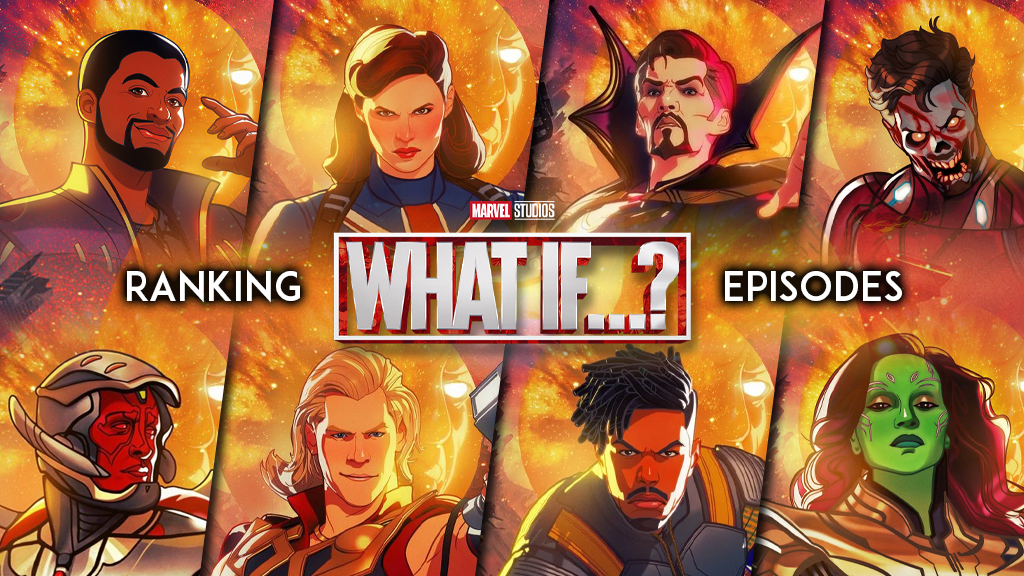
    With Season 1 of What If… ? in the rearview mirror, it’s clear that the series certainly proved that it had more up its sleeve and more to offer its own multiverse than it seemed to early on. Marvel Studios’ first animated and anthology series was an unlikely candidate to be the first to truly delve into the newly opened multiverse, but What If… ? was specifically engineered to do just that. The episodes are a mixed bag, both because the series intended for them to be and because some fell short while others exceeded expectations. With that in mind, we rank all 9 episodes of What If… ? below:


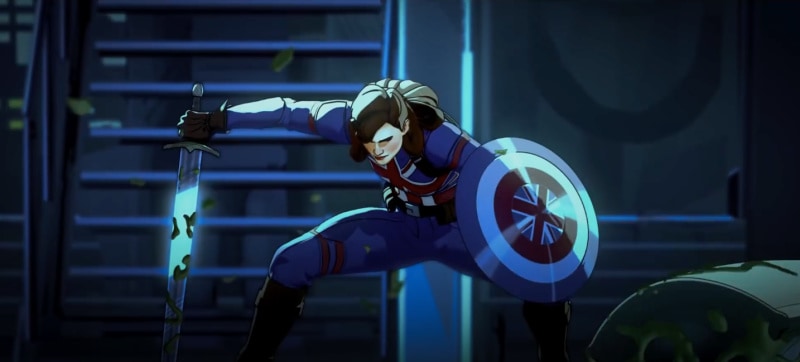
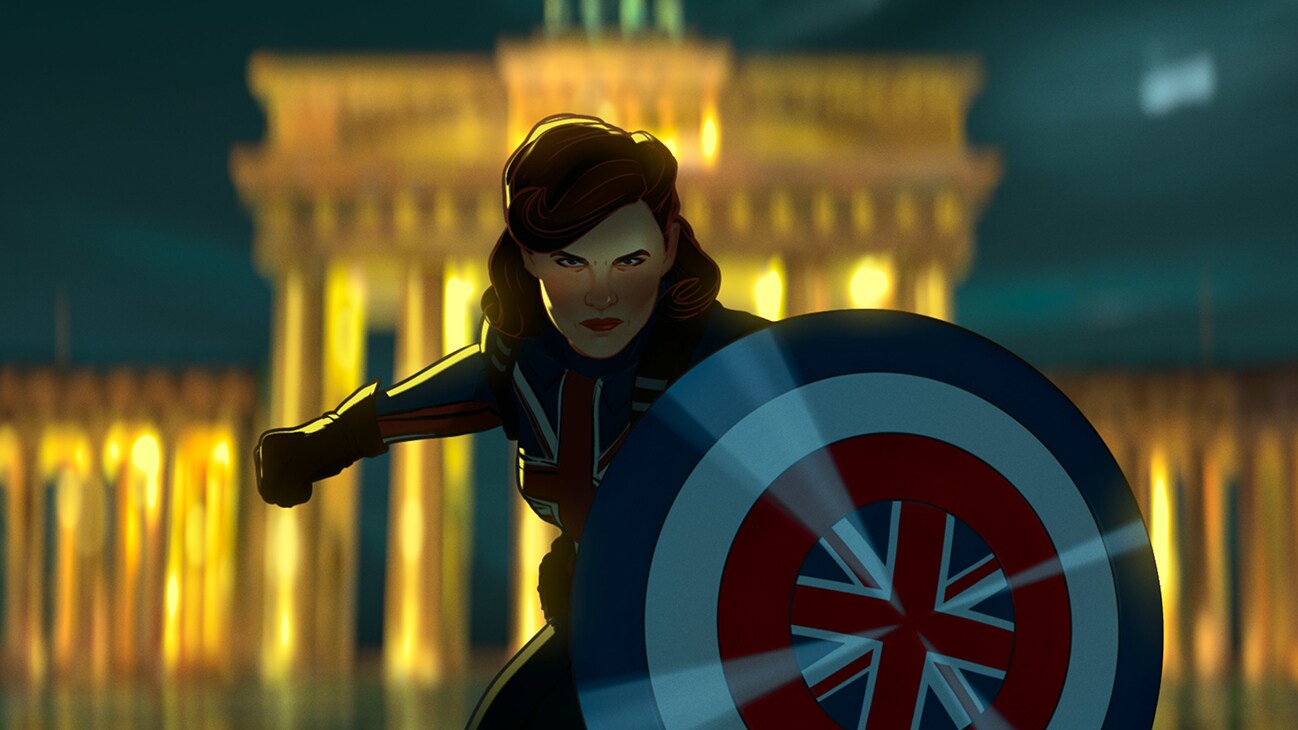
    9. What If… Captain Carter Were the First Avenger?

    At the end of the day, What If… ?’s leading episode is the plainest and least interesting of all. The premise was simply the whole plot of Captain America: The First Avenger, and virtually the only change was Peggy and Steve switching places, more or less. While arguably it was designed well to introduce viewers to the concept of the series, the story itself was bland and a three-minute version probably would have had the same effect overall. 


    8. What If… Killmonger Rescued Tony Stark?

    If Killmonger wasn’t such a great character and if Michael B. Jordan wasn’t Michael B. Jordan, this episode would have felt like a complete flop. Even though the premises are substantially altered, the episode somehow strongly embraces the restrictive concept of sticking closely to the Sacred Timeline source. In this case, it is both Iron Man and Black Panther, but it feels like the Captain Carter episode in terms of watching a condensed version of stories we already know. Killmonger’s deception and manipulation felt one-note pretty quickly, and the episode ends in a place that neither feels like a resolution nor a cliffhanger—it just sort of feels like it was cut off in the middle. 


    7. What If… the World Lost Its Mightiest Heroes?

    Nick Fury’s Big Week is where we first were introduced to the idea of What If… ? routinely killing off major characters in order to make things feel different and add some sort of stakes to the plots that are so easily cast-off as hypotheticals. The theme of this episode is that there is always hope, and there will always be heroes willing to rise to the occasion. Samuel L. Jackson’s Nick Fury gets a much-appreciated spotlight, but otherwise, the story plays out so flat that the death of five Avengers doesn’t come across as upsetting. The elements of a solid murder mystery are present, but it just doesn’t execute in terms of delivering something deeper than a surface-level concept.


    6. What If… Thor Were an Only Child?

    The Party Thor episode is a great example of an episode that everyone can both completely agree and disagree on. There is no doubt that this episode was fun with its countless easter eggs, seemingly infinite cameos, and silly let’s-have-a-good-time energy. Whether or not that makes for a satisfying episode up for debate. While there’s nothing particularly wrong with the episode, there’s nothing particularly worthwhile either. At the end of the day, it feels more like empty fan service than anything else. To be fair, that’s what a lot of people wanted from the series.


    5. What If… T’Challa Became a Star-Lord?

    T’Challa’s episode is genuinely delightful on multiple levels. There is a certain warmth that comes from Chadwick Boseman’s leading voice performance, and his own energy and presence matches well with the episode’s point that T’Challa would have made the universe a much better place than it is. This competes with the zombies episode for the funniest episode, but it is undeniably the most comforting heartwarming episode the series put out. Its themes of family and belonging hit the right notes, and something about T’Challa reconnecting with Wakanda just makes this episode feel fulfilling. 


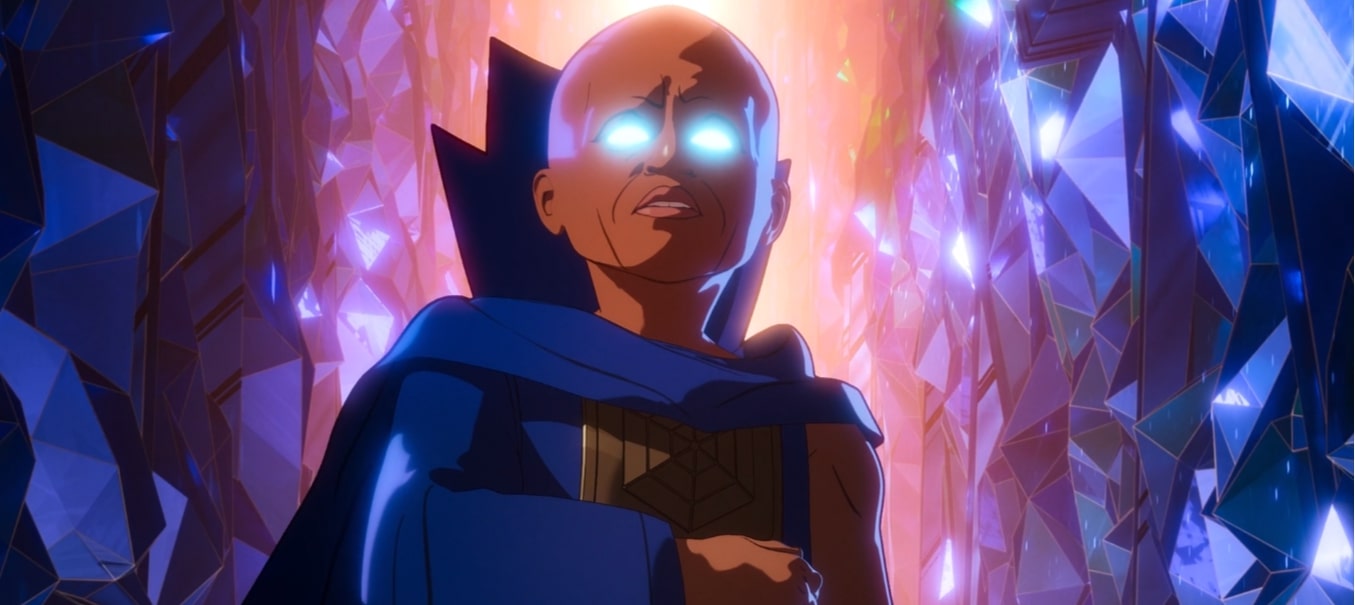
    4. What If… the Watcher Broke His Oath?

    The finale did deliver a sense of resolution to the series and the Ultron arc that began last episode. While it was exciting to see pieces and characters of the multiverse come together in such a direct and desired way, the episode unfortunately felt shallow by completely ignoring the implications the series—and the multiverse as a whole—have on the main MCU timeline. The character team-up is gratifying, and the rag-tag group of multiversal heroes has a solid dynamic. There was a significant amount of humor that keeps the episode on a level apart from the previous episode, What If… Ultron Won?. Ultimately, while it is exciting, fast-paced, and delivered an epic showdown, the victory feels a bit cheap and the overall effect and punch of the episode did not quite meet its predecessor.


    3. What If… Zombies?!

    This episode was just great. We had a huge array of characters, and most of the ones that are not mindless zombies are characters often not given as much attention. Hudson Thanes’ Peter Parker was center stage and delivered on both humor and emotionality. So much of the episode, by nature, is violent and gruesome—it’s the closest thing the MCU has to horror at this point. Yet amongst the apocalyptic survival, the episode is also hilarious. As a result, it’s probably the most enjoyable to watch. It’s a great example of how the series can succeed by generally ignoring what the movies have done. 


    2. What If… Ultron Won?

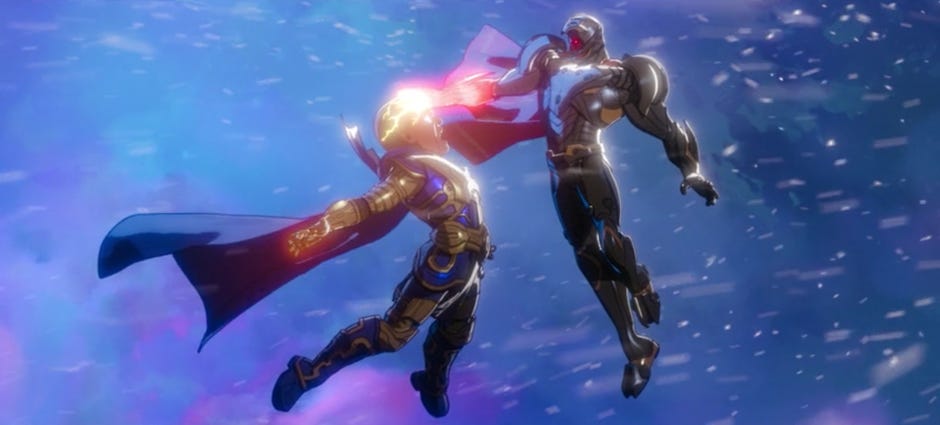
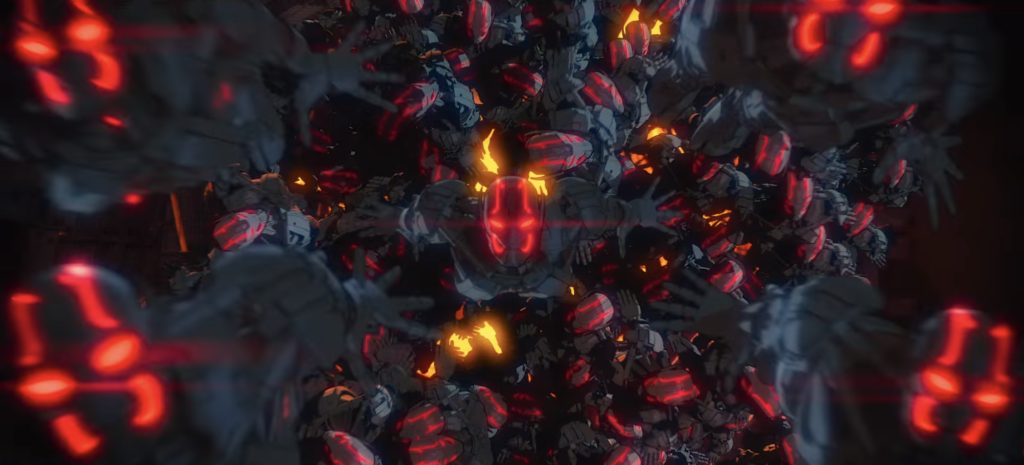
    The penultimate episode finally gave us something that made it feel like What If… ? has a point and can provide the type of storytelling that fits within the MCU rather than just having one-off mini-stories over and over again. The concept of the multiverse actually comes into play here for the first time, and the Watcher comes alive. Ultron is portrayed as the most powerful villain of the MCU, and it fits. The Ultron versus Watcher showdown is not only great because of the strength of the two characters, but it is visually and conceptually stunning as they punch their way through the multiverse. It also features some very human moments, but the real triumph of this episode is that we finally have the multiverse as an overarching concept to play with. 


    1. What If… Doctor Strange Lost His Heart Instead of His Hands?

    The Doctor Strange episode was the first time the series felt like it had something particularly meaningful to offer. While still heavily anchored by the general events of Doctor Strange, it moves past this to intimately explore a dramatic reimagining of a character. The character-driven piece was shrouded by extremely compelling dark themes that are absent from the MCU at large. It was the definition of a tragedy drowning in grief, desperation, and defeat that resonated in the empty void that Doctor Strange left himself in at the end. Combine all of this with a mystical twist that Doctor Strange had been time-split in half, this episode was truly phenomenal. 

  • REVIEW: ‘What If… The Watcher Broke His Oath?’ – Episode 9

    REVIEW: ‘What If… The Watcher Broke His Oath?’ – Episode 9

    The finale of the experimental first season of What If… ? delivered a sense of resolution to the series and the Ultron arc that began last episode. While it was exciting to see pieces and characters of the multiverse come together in such a direct and desired way, the episode, unfortunately, felt shallow by completely ignoring the Sacred Timeline implications the series—and the multiverse as a whole—have on the main MCU timeline. 

    The collection of the Guardians of the Multiverse is obviously the stand-out aspect of the episode. While the episode title implies that the Watcher really gets involved, he actually just, essentially, forces certain hand-selected heroes to fight Ultron for him. It’s unclear where the battle-involved Watcher of the previous episode went, but it was a noticeable absence. 

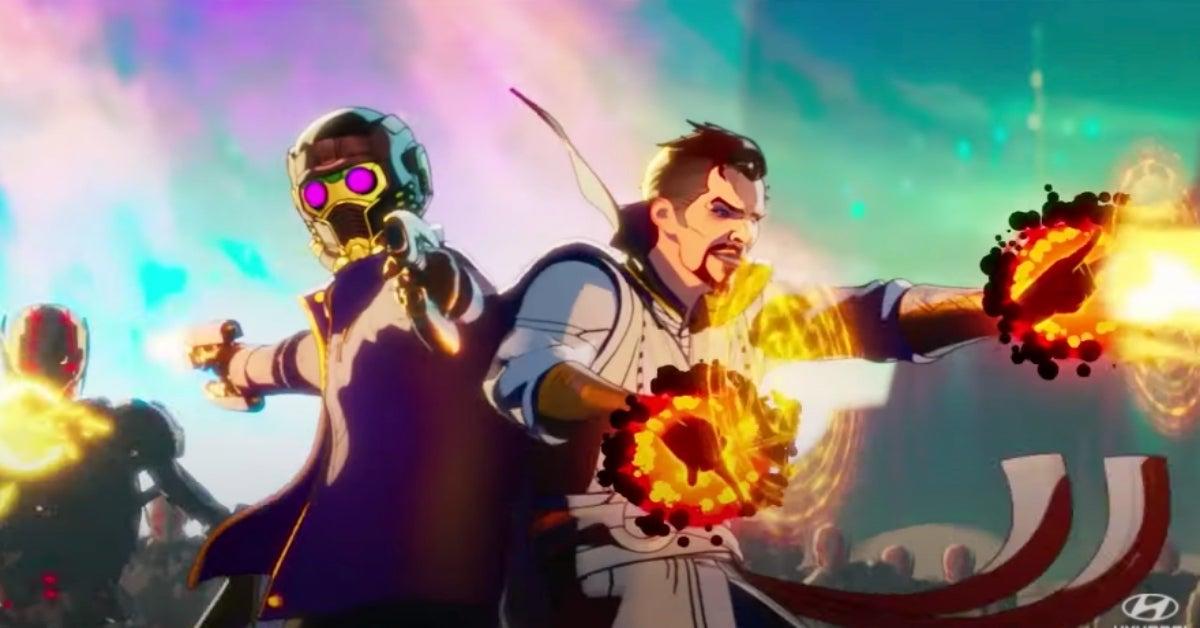
    Included in the Guardians of the Multiverse, of course, are characters highlighted throughout the season. Captain Carter, Party Thor, Strange Supreme, Star-Lord T’Challa, and Killmonger all are selected by the Watcher. The newly-introduced Gamora, Destroyer of Thanos, is also part of the squad and lone survivor Natasha from Ultron’s original universe eventually joins the fight. Killmonger’s inclusion realistically makes little sense other than to set up a double-cross and make him a villain once more, which is exactly what happens.

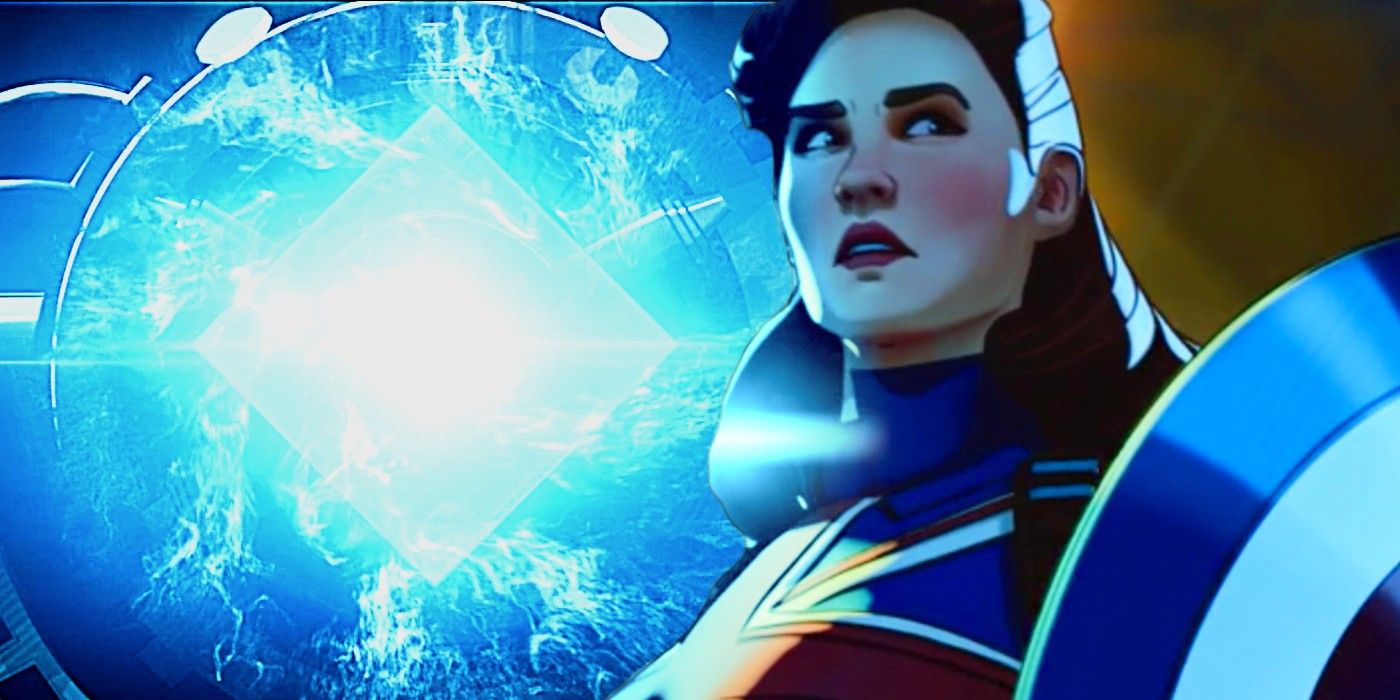
    It is fair to say that Captain Carter was immensely more enjoyable in the finale than she was in the premiere episode. Whether it was her modernization into the Winter Soldier era or the watering down of the corny perfect soldier theme from her solo episode, she’s more down-to-Earth and more energizing and compelling as a character. Her return to future seasons of What If.. ? or live-action films feels more organic now. The episode also gives the character space to explore her relationship with her own Natasha and a set-up for her future stories via Steve’s return in the post-credits scene.

    Strange Supreme essentially felt like the Hulk of the team considering he was vastly more powerful than everyone around him.  He protected everyone from crazy-powerful Ultron while landing some of the biggest blows against the villain, including multiplying Mjolnir and going wild with that. He also purposefully turns himself into some of the monsters he consumed in his episode, which is in a move so unfamiliar with respect to our regular Doctor Strange. 

    Episode 8 Natasha also received special treatment from the episode and the Watcher specifically. In maybe his most uncharacteristic move of the series, he allows her to enter the universe where nearly all of the original Avengers were killed, rather than return to her own barren wasteland. 

    The episode was definitely one of the best—competing only with its immediate predecessor—when it comes to action, big superhero battle battles, having meaningful stakes, and embracing the full series. The Guardians of the Multiverse debut is a fun companion to Avengers: Infinity War or Endgame, and the Ultron battle is first-class. We even see the zombie universe pour in, with a brief dramatic zombie Scarlett Witch set-up for fight.

    The battle was massive, explosive, and probably worthy of a live-action battle—it certainly puts Avengers: Age of Ultron to shame there. It was exciting, and it definitely felt like this is what we’ve been waiting for from What If… ?. It almost felt like the excitement of Phase One where the various pieces are finally brought together for one epic story. All of this is great until Ultron is cheaply defeated by the unrealistic simple answer of an Arnim Zola virus corrupting the multiverse’s most powerful and intelligent being.

    This episode could have so benefitted so much from an extended runtime. There’s not too much of a problem with rushing through the character introductions—it’s not clear how much we would have gained from that—but the battle could have been much more exciting and entertaining if it wasn’t so condensed. The frantic pace is both a blessing to the episode by bestowing upon it a certain amount of intense energy, but it is also a curse in that it didn’t allow great moments to fully shine.

    The end of the series very much had a Nick Fury end-of-Avengers speech vibe. All of our heroes go back to their own lives, but there’s a strong sense that they will come back together when the multiverse needs them to. 

    The only major lingering situation is Strange Supreme having guardianship over the pocket dimension he created that trapped Zola Ultron and Killmonger in the midst of their fight over the infinity stones. While this also seems like a rushed and unearned resolution, the prospect of dark and internally-tortured Strange obsessing over this potentially catastrophic mini-universe while in his own void pocket dimension is intriguing. It leaves the door open for those two villains to return, though they aren’t that exciting compared to the Ultron we just lost. It also implies that Strange Supreme might have a continuing role and presence, and it could be deadly. He seems to possess a dry sense of humor and a more peaceful acquiescence of his situation than he did in his own episode, but there is still something menacing about how he looks at his pocket universe of power. 

    There is, honestly, a pretty solid amount of humor in this episode given the high stakes and dark intensity of the mission. Party Thor no doubt had a major hand in it, but quite frankly Strange Supreme in his dark broodiness deliverers well in this department too with some signature Strange dry humor. This aspect of the episode strongly distinguishes it in a positive way from the tone of the previous Ultron episode.

    Unfortunately, the episode fell short in terms of meeting expectations and hopes that the finale and the season would connect in some way at some point to the Sacred Timeline, or even provide greater answers to the multiverse conundrum. Knowing that Captain Carter is likely going to make a live-action debut in the future and that Spider-Man: No Way Home and Doctor Strange in the Multiverse of Madness are set to heavily feature the multiverse, it would have been awe-inspiring to see some of those connections teased. While the series was not necessarily created with the sole purpose to connect heavily to our familiar universe, it still would have made sense—and would have been extremely exciting—if something related to the Sacred Timeline made any appearance or was acknowledged at all. 

    So while ultimately the finale was rewarding in the sense that the character team-up felt long-awaited and tied the series together in a fairly smooth way, it was also disappointing that we did not get more of how this series will impact our main MCU. It really lost an opportunity for an explosive ending. Still, the Guardians of the Multiverse are the animated versions of strong competitors for best team-up, best battle, and best villain in the MCU at large. The episode was exciting and pulled together the entire season in a very satisfying way. We’ll see soon enough how Season 2 will build on what this first season has accomplished.

  • How the MCU Is Using the Multiverse To Explore Themes

    How the MCU Is Using the Multiverse To Explore Themes

    The multiverse is an unwieldy storytelling device with potential positive and negative impacts. For example, meeting alternate variations of favorite characters has the potential to undermine earlier stories. However, it could also potentially provide emotional flourish to stories that haven’t been possible previously. Some fans of the Marvel Cinematic Universe’s consistency are concerned about how the multiverse could fray the cohesion of the MCU. The multiversal elements of Loki and What If…? have shown us hints of how the multiverse stories we might be seeing in Spider-Man: No Way Home and Doctor Strange in the Multiverse of Madness can be kept tight and concise.

    Loki’s head writer Michael Waldron and director Kate Herron have both spoken in multiple interviews about the themes of their series. Loki spends much of the season up against the bureaucratic order of the TVA. He also finds himself grappling with his identity in the face of Loki variants from alternative universes. Order versus chaos. Self versus selves. The structure of these debates brought up in the show also show another theme Waldron and Herron have spoken about, in the gray space between villainy and heroism. It’s clear that these themes are present even without confirmation from interviews because of how tightly woven into the narrative action they are. 

    On the surface, an anthology show like What If…? shouldn’t necessarily have a narrative or thematic coherence between episodes. Yet we have seen enough to know we are getting a conclusion to some of the previous episodes in the finale. In this context, should there be a thematic reverberation between the heroes of each episode? It’s not easy to point one out. Loki’s themes are much tighter as almost every scene has a thematic resonance. An anthology show doesn’t need coherent themes but where there is a continuing story, What If…? is perhaps missing something thematic to bring the season together. 

    So perhaps if Spider-Man: No Way Home can use the multiverse to weave themes tightly, it can produce an impactful story regardless of multiversal incursions. Much of the trailer is connected to Spidey’s identity as Peter Parker. The public release of that information and Peter’s going to Doctor Strange to have it erased from public consciousness. It’s clear that they “tampered with the stability of [the] space-time” continuum when performing the spell. The full impact remains to be seen but it is easy to see how themes of identity, responsibility, and fate can be tied to this spell gone wrong and possible multiversal variants. It remains to be seen how tightly woven those themes might be into the story. 

    wandavision doctor strange

    So can we spot the themes for  Doctor Strange in the Multiverse of Madness as clearly and easily? Given Wanda Maximoff was last seen studying The Darkhold, also known as The Book of the Damned, it stands that she might face some corrupting forces. To some extent, this is a theme that can be extended from Doctor Strange as Kaecilius became corrupted by Dormammu. Corruption, alongside the fraying of the multiverse which Strange admits he knows “frighteningly little” in the No Way Home trailer, can also point in the direction of balance as a theme. How will Strange weigh up the dilemmas of the incursive multiverse? In a meta-sense, if the film can get that thematic balance right, then the rumoured cameos won’t seem as uncoordinated as some fans fear they might be. 

    jonathan majors kang

    Parenthood and family are themes that  Ant-Man and the Wasp: Quantumania could manifest. With Kathryn Newton taking on the role as Cassie Lang it seems as though she might play more of a role with the heroes, with Scott, Hope, Janet, and Hank having to figure out parental decisions related to that. It’s not immediately obvious how Jonathan Majors’ Kang will connect to that, though being a citizen of the future, it’s possible an ancestor of his might be involved in the story. How they will connect the multiversal elements to the existing Ant-Man themes will be the test for how tight of a story we’ll be getting. 

    Beyond the second seasons of Loki and What If…? there are no major clues about what other Marvel Studios projects the multiverse incur upon. It will be interesting to see whether Loki can keep up its thematic resonance during its sophomore season. Similarly What If…? could either fully embrace the anthology format or increase the thematic and narrative continuity between the episodes. The multiverse certainly won’t be vanishing so other characters like Doctor Strange, Wanda Maximoff, and Ant-Man might still have to contend with it. Wherever it does emerge though, using the multiverse concisely and closely connected to the themes of the project seems like it will be a successful approach.

    Sources: ETOnline, Grazia.

  • Murphy’s Team-Up: ‘What If…?’ Finale Wish List

    Murphy’s Team-Up: ‘What If…?’ Finale Wish List

    Murphy’s Team-Up brings the team together every Sunday to give their hot takes on a hot topic. This week: the finale of Marvel Studios first animated series, What If…?. Take a look at what the members of the team hope to see in the finale.

    Anthony Canton III

    What If…? episode 8 recap: Ultron brings Infinity Stone-empowered Marvel  chaos - CNET

    I want to see what actually defeats this Ultron. In a lot of these scenarios normally you can appeal to the villains humanity but that doesn’t apply here. As far as the Watcher, what will be the price of his interference and the additional interference? I want to see that story be told. Finally, will Supreme Strange have a connection to Multiverse of Madness? He’s seemed like the most important character in these stories.

    Charles Murphy

    WHAT IF...?' Marvel Legends Arrive, Hint at a Live-Action Captain Carter -  Murphy's Multiverse

    At this point I’m eager for the series to come to an end. I haven’t loved too many episodes and I feel like in most episodes they’ve made some really weak choices with how they’ve dealt with what could be a really freeing premise. So for me, I’m hoping that as the first season of the series comes to an end, we see some of the heroes step through a portal and morph into the live-action versions of their characters that we are rumored to see in upcoming films. I’m also hoping that once this is over, we get our first trailer for Doctor Strange in the Multiverse of Madness.

    Mary Maerz

    What If...?' episode 8 review: There are no strings on me | Hypable

    I would like to see Ultron upgrade himself one final time, and that upgrade just so happens to be voiced by James Spader. The series did very well with dark themes and stories without happy endings—so I’m rooting for Ultron. I’d love to watch him take down the array of multiverse Avengers/Guardians we’ll get and be established as an ongoing and genuine threat for the series and maybe even the MCU at large. I would also be a bit disappointed if we didn’t get some sort of tease of how What If… ? can or will connect to the Sacred Timeline.

    Nathan Miller

    Marvel's What If Assembles the Guardians of the Multiverse for New Hyundai  Ad

    I hope to see some thematic cohesion between the characters brought together in the What If…? finale. The somewhat abrupt ends of some episodes alongside an unresolved confrontation from What If… Ultron Won? suggest The Watcher will bring together a team to resolve those loose ends. When the Avengers came together they were all lost despite being powerful enough to be Earth’s mightiest heroes. They each found some sort of purpose they had been individually lacking in becoming a team. Whatever team might form in the finale of What If…? does seem like it has a couple of members that are lost like Captain Carter and Supreme Strange. Potential members T’Challa Star Lord, Party Thor and Killmonger each seem content in their universes so it will be interesting to see what the thematic thread between them is that pushes them to join a multiversal team.

    Hunter Radesi

    Marvel Retconned MCU Time Travel Rules For The 4th Time

    If there’s one thing Marvel’s What If…? is lacking, it’s long term consequence. The show has thus far utilized immediate, dramatic effect to highlight it’s differences in universes, but this takes away from the subtle charm that always drew people to the comics. There, a story would often start with an obvious change and end with some unexpected butterfly effect far down the Marvel timeline. If the finale of the show’s first season finds time to revisit any of the worlds it set up in prior episodes, it would do well to show the audience how the likes of Captain Carter’s existence ended up changing the modern MCU time period as well.

    Dalbin Osorio

    What If Episode 8 Ending, Explained: Is Clint Dead or Alive?

    For me, I want to see what comes out of the finale. During Endgame, time-travel was explained to us, but it wasn’t until Loki that we found out that this was just how the Avengers understood time-travel. In Loki, we figured “ok, this is the accepted framework for time.” What If has played in that sandbox, with variants and what have you, but there’s still a little bit that is unclear. Namely, is the Watcher pulling all the Guardians from different universes, or do some of these stories overlap? If so, what does that mean for the overarching MCU story that’s going on right now? I hope What If…? begins to clarify the rules because time is a confusing plot device as is, but it can cave on to itself if it isn’t explained correctly. I expect What If…? to do just that.

    John Sabato

    Chadwick Boseman loved What If...? and reimagining Black Panther's T'Challa  - Polygon

    I hope to see the finale episode of What If…? really set the stage for what’s to come. The series has yet to really wow me and I hope they can do that here. I think I’m mostly looking forward to to seeing what could be Chadwick Boseman’s final performance.

    The finale of Marvel Studios What If…? streams this Wednesday on Disney Plus.

  • Marvel Studios ‘Echo’ Simply Cannot Be ‘Daredevil’ Season 4

    Marvel Studios ‘Echo’ Simply Cannot Be ‘Daredevil’ Season 4

    Daredevil is trending following a rumor that the Marvel Studios Disney Plus streaming series Echo will see much of the cast of Netflix’s Daredevil return and “serve as sort of Daredevil Season 4.” While there’s been some clarification about exactly what the rumored returns would entail, the series is still rumored to heavily feature those characters. That’s a big problem for Disney and Marvel Studios, should they chose to do it.

    Charlie Cox is set to suit up as Matt Murdock in Spider-Man: No Way Home and rumored to suit up as Daredevil in She-Hulk. Vincent D’Onofrio is rumored to be returning as a beefed up Kingpin in Hawkeye. These are great actors whose portrayals of their respective characters were so beloved by fans that they became synonymous enough with the roles to survive and make the jump to the MCU’s Sacred Timeline. Both of these characters have rich comic book histories with Maya Lopez, aka Echo, and should rightly be a part of her story. However, giving one or both of them the spotlight in Echo while also using it as an opportunity to bring some of the rest of the Netflix cast to the MCU would only serve to undo some of the great strides Marvel Studios has made in their efforts to make the recent entries into their cinematic universe more representative of the real world.

    All signs point to newcomer Alaqua Cox having made quite an impression in her role as Lopez in Hawkeye. Cox came in and stood out in a series with returning MCU star Jeremy Renner and multitalented megastar Hailee Steinfeld; stood out so well, in fact, that they made the decision early on to spin her off into her own series. And that series stands to be nothing short of groundbreaking…but not if they decide to go the rumored route detailed above. Echo will feature Cox, a deaf, female, Native American amputee in the lead. The writers’ room is expected to include Native American staff, potentially including Bobby Wilson, who has worked on Reservation Dogs and Rutherford Falls. These moves by Marvel Studios are truly unprecedented in the superhero/CBM genre. Making Echo the answer to #SaveDaredevil’s prayers would undo all the good will and great strides they’re making.

    With Cox and D’Onofrio reprising their roles, the rest of the “main cast” of Daredevil is comprised of mostly white actors and actresses who, in comparison to Cox and D’Onofrio, just didn’t bring the same sort of unforgettable gravitas to their roles. But to be completely honest and fair, the talent of those actors isn’t really the issue. Surrounding Alaqua Cox, in her own series, by a primarily white cast who don’t look like her would be nothing short of insulting and undermine having made her the star to begin with. Making Murdock and Fisk big parts of the series would steal the spotlight from Maya Lopez’s story. Marvel Studios has the chance to do something special with Echo and making it Daredevil Season 4 is simply not it. Nobody is going to say no to a Marvel Studios Daredevil series, but let that be its own entity. Failing to give Echo the spotlight in her own series would be a giant leap in the wrong direction.

  • Taking a Closer Look at ‘Squid Games’ Manga Inspirations

    Taking a Closer Look at ‘Squid Games’ Manga Inspirations

    Netflix may have found its next big hit, as the South Korean drama known as Squid Game introduces us to a rather dark and twisted look at classic children’s games. Whoever wins six games will garner the massive cash price to pay off their debt. Yet, it makes you question how much worth your life truly has in such a dark and twisted game. Its unique visuals and dark twist on childhood games put it on the map. As it’s Netflix’s new rising star, it’s the perfect time to explore the stories that inspired it.

    Squid Game": Neue Netflix-Serie schreckt vor keiner Grausamkeit zurück |  STERN.de

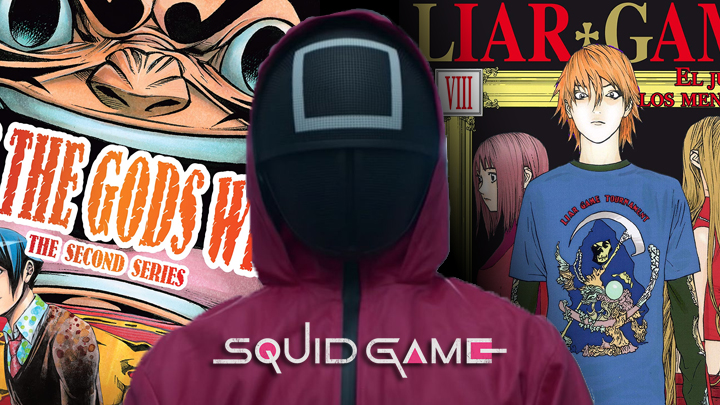
    The script by Hwang Dong-hyu was first written back in 2008 before he scrapped it for some time. He shared that he was inspired by the mangas Liar Game by Shinobu Kaitani, and Nobuyuki Fukumoto‘s Gambling Apocalypse: Kaiji (Tobaku Mokushiroku Kaiji). They center around a similar storyline where unsuspecting people are brought into dangerous games to pay their debts. The former even got a South Korean TV series back in 2014. Kaiji was so popular it expanded into five additional series that offers a dark glimpse into the world of gambling.

    While the name and games are inspired by the Korean children’s game by the same name, there was some controversy due to the similarity to one rather specific manga by Muneyuki Kaneshiro titled As the Gods Will (Kami-sama no Iu Tōri). In this series, high schools are suddenly infiltrated by Daruma dolls that force students to play the game. If they fail to stay by the rules, they end up dying. The worst part, it isn’t just one game. In 2014, it was adapted into a live-action film, which has been brought up in comparison by critics.

    AS THE GODS WILL ENDING EXPLAINED IN HINDI - YouTube

    Yes, the concept of a children’s game leading to death is quite similar but the basis is different. As the Gods Will doesn’t give its players anything to win, they are simply unwilling pawns in a game of death. In reality, all these series have one shared origin in the Japanese novel Battle Royale by author Koushin Takami. It explores a fictional world where high schoolers are forced to kill each other on an island for the amusement of a fascist government. It famously got adapted into a film in 2000 that inspired many similar stories. Dong-hyu‘s tale of desperation isn’t a new concept but builds upon almost two decades of storytelling while adding a unique twist on the concept.

    Source: Chosun, Insight

  • How ‘What If… ?’ Season 2 Can Fix the Series’ Biggest Flaw

    How ‘What If… ?’ Season 2 Can Fix the Series’ Biggest Flaw

    With What If… ?’s season finale just around the corner, it’s a good time to look at the future of the series and where it can go from here. While the show has certainly given us what it promised – and arguably even more in cases like the Doctor Strange episode and the recent penultimate Ultron episode – but What If… ? hasn’t always stuck the landing. A leading cause for this is the restraints the series has received, whether by design or for practical reasons. Breaking free of these would take What If… ?‘s second season to another level. 

    What If...? | Disney+ Originals

    What If… ? is a unique venture for Marvel Studios, so it certainly comes across at times as though the writers and producers were testing the waters rather than jumping straight into its full potential. Part of why they may have felt so restricted is the uncertainty around the debut of their first animated series that’s also their first exploration of the multiverse, and, on top of all of it, being canon to the rest of the MCU.

    The creators likely did not have the full green light to go wild with the series from the start, as that arguably could have lost too many casual viewers. Those fans who are not particularly invested or knowledgeable in every facet of the universe could have felt lost or left out fairly easily. By easing us into familiar stories and using them as strong baselines for virtually every episode, it’s more accessible. 

    Trailer der neuen Marvel Serie: „What if…?“ | Stevinho.de - Ein  ausgezeichneter Blog!

    But these restraints can make it feel stale, too familiar, and not the greatest use of what the What If… ? concept has to offer. As always, “there was an idea” to explore universes beyond our own and expose us to theoretically unlimited situations. Situations that could not only provide meaningful additions to the MCU. Not just that, but also entertain viewers with new ways that characters and stories could be used to show off Marvel’s painstakingly-grown universe and honestly throw out some fan fiction-type bait. Hopefully, the series can grow into a much more complex set of storylines and themes apart from what can come across to some with Season 1 as sort of the bare minimum. There are obvious ways that What If… ?’s Season 2 can grow and evolve from the series’ debut.

    The creators should move on from testing the waters and dive right into the deep end. With the multiverse at play, there is literally nothing stopping writers from going wherever they want. It doesn’t matter if it’s recognizable or entirely new. They can do away with their reliance on existing MCU movies as starting points, and simply start stories from scratch. Being able to tell stories beyond an audience’s wildest dreams is precisely the power the series can wield, particularly given its canonicity. It absolutely can be a franchise of its strength, but it needs to own it and strut it.

    RECAP: WHAT IF...? S1E4 — “What If...Doctor Strange Lost His Heart Instead  of His Hands?” - The Beat

    Season 1 held viewers’ hands through the concept and lightly introduced everyone to arguably one of Marvel Studios’ most ambitious and risky entries to date. We respect and thank you for that, What If… ? but even some of the more beginner viewers already now have a strong taste for what the series is giving them and what the series could be giving them. We’re ready to take off the training wheels and take a much more exhilarating ride with the series. 

    Lastly, What If… ? can distance itself from some of its technical or practical constraints and crutches. While this certainly falls into the categories above, it’s worth a mention. For starters, the half-hour runtime truly crams what essentially is a remix of two-hour films into thirty minutes. The episodes can undoubtedly feel rushed, and there can be wasted opportunities to dive into some interesting aspects in each universe that are often alluded to or just plain curious. The T’Challa Star-Lord episode benefited the most from being completely disconnected from any existing property outside of its initial pitch.

    What If...? : Tony Stark assassiné dans un nouvel extrait de la série ? |  melty

    Moreover, it is unclear how important having the original live-action voices are to the making of the show. While it certainly helped with the training wheels, it arguably sacrifices the quality of the storylines and sub-plots when certain characters seem to be reintroduced in ways that don’t make the most sense within the context they are added to. Yet, there’s undoubtedly a “cool” aspect to bringing back well-known and even minor characters with the original actors in an animated adaptation. To be fair, it also adds to the series’ current overall practice of mixing and matching familiar elements into new(ish) stories. Still, breaking free from any dependence or preference on that to put the focus entirely on the stories themselves could prove valuable.

    What If… ? has delivered a solid series thus far. While plenty of the episodes suffer from some of the restraints noted above, there were undoubtedly standout episodes that hinted at the series’ future ability and intention to go bigger and bolder. If Season 2, off the heels of what looks to be a promising Season 1 finale, can look to the vast open space of the multiverse and its endless possibilities as the future, while looking at its reliance on the pre-existing MCU as the past, the future of What If… ? could be breathtaking, wild, weird, and a blast. 

  • Meet the Skrulls: An Unlikely Family Dramedy in the MCU

    Meet the Skrulls: An Unlikely Family Dramedy in the MCU

    The upcoming Secret Invasion series on Disney+ will explore the invasion by the Skrulls. We got our first introduction to the alien species during Captain Marvel, and they’ll take center stage once more in the upcoming Secret Invasion series. We’ve recently shared details that Ben Mendelsohn‘s Talos won’t be the only Skrull, and some don’t share his more peaceful mindset. So, we’re going to witness an invasion by the shape-shifting aliens soon, and potentially even beyond the Disney+ series. As such, it opens up the path to explore the life of Skrulls hiding amongst modern suburbia. So, the perfect sequel series would be an adaptation of the 2019 Meet the Skrulls.

    The comic series explored the life of the Warner family. They’ve lived a suburban life on Earth. Well, if you ignore the fact that they are Skrulls preparing Earth for an invasion. Robbie Thompson and Niko Henrichon brought a simple concept to life that took a look at aliens trying to fit in with humanity while keeping to accomplish their mission. Marvel Studios is no stranger to exploring a strange suburbia life with their first Disney+ venture of WandaVision. Yet, it explored a sitcom version of that kind of life, and now it’s time for Marvel Studios to embrace it.

    Meet the Skrulls #1 - Stories For Nerds

    Skrulls living in the suburbs while following their mission might seem simple, but it could also help flesh out the MCU. Why not have the parents work at Stark Industries or the WHIH news. That way, we can see the world that the bigger projects don’t normally share with us. This Disney+ series isn’t like Solar Opposites, where they are living as aliens in plain sight, but rather a group of Skrulls, who are paranoid of getting caught. It opens up to some comedic moments of them misunderstanding things, trying too hard to hide, or even letting loose at a party. Especially giving us insight into teenage Skrulls adjusting to life could bring out some dangerous situations.

    Of course, there’s also the drama of it taking place post-Secret Invasion. The world is aware of their presence and is on the hunt for the last splinter cells. So, the build-up to seeing what S.H.I.E.L.D.’s existence means to them. At one point, they are uncovered and have to survive an infiltration of their home. In a way humanizing the alien species that simply believed in their mission was for a good cause. Not only would we get a look from a more grounded perspective in the MCU, but also fully understand the motivation of the aliens. Perhaps they didn’t know they were just pawns but believing in something to keep their race alive. Can you truly trust everything you see and know?

  • Ranking ‘STAR WARS: VISIONS’ Episodes

    Ranking ‘STAR WARS: VISIONS’ Episodes

    The anime anthology series ‘Star Wars: Visions’ premiered earlier this week to generally favorable reviews (you can read ours here). With seven studios developing nine shorts between them, audiences were due for lots of variety in what concerns to tone, animation style, and overall feel for each of the episodes. Even the two repeating studios (Studio Trigger and Science SARU) managed to deliver immensely different projects, making this first batch of Visions (hopefully) feel fresh with every page turn.

    With each short being its own thing some clearly stand out, and even though ranking art of any sort sometimes feels a bit wrong, here is a ranking of our most enjoyable episodes:


    8 – 9

    With Star Wars being all about family, both the one you are born into and the one you find along the way, both The Village Bride and Lop & Ochō offer us different perspectives on such matters. Ultimately doing right by what you believe in, and not complacently accepting the ground rules you are presented with. Even if that means fighting your family or meddling in issues not your own. What both these episodes seem to lack is a sense of wonder, which makes you want to know more about the characters and locations we are shown.


    7

    The mystery ambiance is quick to grab the attention of the viewer, as we are left to wonder what sort of evil might be around the corner for the Jedi protagonists. The action set pieces aren’t all that inspired and thematically we left with the exploration of what the Prequels expanded upon, the smugness and lack of vision the Jedi demonstrated, something that allowed for a long-lost evil to resurface. It’s a pretty straightforward episode, one that doesn’t seem to lead anywhere, past its ending.


    6

    Feeling like a snapshot taken from a crazy Dragon Ball Z episode, The Twins gives us God-like force powers in Karre and Am (the Twins), where one can split an entire Star Destroyer using just a lightsaber. The entire episode is focused on their battle and how absolute power corrupts absolutely. Sadly, a lot of the emotional heft gets lost in the crazy spectacle which makes this episode feel a bit less special than the rest.


    5

    What’s not to like about a Jedi that decides to go into hiding only to try and turn himself into the biggest rockstar the galaxy has ever seen? Keeping in mind the tradition that all anime series should come with a kickass opening track, we are presented to a musical act hardly ever seen in the Star Wars universe. With special appearances by both Jabba The Hut and Boba Fett, we realize that music can ultimately save the galaxy. It may not be the best episode of the season but inarguably is the best representation of what Visions could be, unique perspectives and all.

    4

    One of the darker Star Wars: Visions shorts, Akakiri takes inspiration from Kurosawa‘s The Hidden Fortress, something Lucas also did in the late 70s when developing the first chapter of the Skywalker Saga. The ominous (but brilliant) soundtrack and animation style help to present the viewer an epic tragedy that echoes Anakin Skywalker’s fall from grace, with a likewise heartbreaking end.


    3

    In terms of visuals alone, this was the most intense episode, with its charcoal drawing look, that managed to bring to life the franchise’s Kurosawa DNA in an extraordinary way. This combined with the hints of brights lights and the dynamics of lightsaber fighting made for what is surely the poster child of the entire project. The story behind the main character only referred to as Ronin, can be further explored this October in its own novel written by Emma Mieko Candon.


    2

    Star Wars isn’t just the cool lightsaber fights, the technology, and aliens. While most of this is present in T0-B1, the feeling of pure happiness, the sense of wonder, hopefulness, and discovery, all distinctive Star Wars features, is what makes this particular episode stand out. Astro Boy and Le Petit Prince are both very much present in the exploration of the Star Wars universe we are taken on, personified in the title character.


    1

    Turning lightsabers into mood rings has never seemed like a better idea. Sure, it’s not exactly how we’ve learned lightsabers to work but the way it allows for a wonderful narrative to develop is not something to sneeze at. One of the biggest tells this was my favorite episode is that it’s, of all 9 of them, the one I wished could be continued in some shape or form.

  • Theory Thursday: Ultron Wants to Replace the Watcher in ‘What If…?’

    Theory Thursday: Ultron Wants to Replace the Watcher in ‘What If…?’

    The latest episode of What If…? finally unveiled the overarching plot that the series is building towards. After Thor made plans for a date, he and the Watcher were surprised by the welcoming of Ultron bots. From a mysterious portal, Ultron appeared in the body of Vision clad in the armor of his former shell. At that moment, the episode ends as even the all-knowing Watcher is confused that a once happy ending would get abrupted by tragedy once again. We, as viewers, are left wondering what his arrival means for the multiverse.

    There are a few things we can take away from his sudden introduction. Ultron managed to achieve his goal from Avengers: Age of Ultron by adding his consciousness into the new body. We still have no confirmation if James Spader is returning to voice the character, but he didn’t return to voice the character in Avengers: Damage Control VR and might have moved on from the franchise. Still, there’s some hope they convinced him to return while he is busy filming The Blacklist.

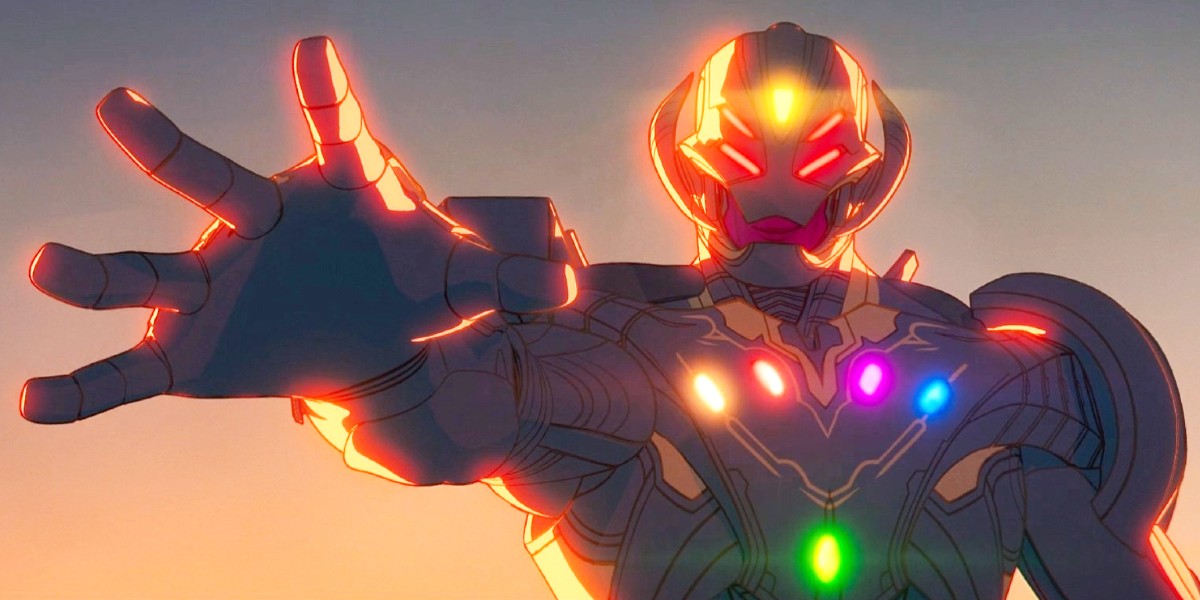
    He also is wielding all six Infinity Stones on his body, which he shouldn’t feel any side effects from due to his body not being organic. It also implies that this version of the character most likely succeeded in dropping Sokovia and wiping out Earth. We learn in the Age of Ultron that his primary goal is to create an empire of dust where only metal survives. If he achieved his goal on Earth, there’s the chance Thanos came after him due to possessing the Mind Stone. Once he fuses with the stone, he’ll felt the others and reunite them. It makes him one of the most formidable enemies within the multiverse.

    Marvel's WHAT IF...? Assembles the Guardians of the Multiverse for New  Hyundai Ad — GeekTyrant

    They might be taking inspiration from the time when Ultron became the leader of the Phalanx during Annihilation: Conquest and with the complete domination of the galaxy, he sets his eyes on the multiverse. Yet, not to annihilate organic life but to rule over them in the mightiest position there is. He’s the worst aspect of Tony Stark and believes he can control the future. The best way to do so would be to replace the Watcher.

    The reason for this theory is due to one single image potentially teasing his end goal. We see Vision in his Ultron armor floating above a scene. There’s a chance that the next episode ends with Ultron taking the Watcher’s position and narrating the final episode as the now fallen god-like entity summons together with the strongest warriors from across the multiverse. The consequences of him gaining the watchful eye of the entire multiverse but with the desire of intervention. Who knows what he would unleash if he obtained that power. If he wins, no place in the vast multiverse would be safe.

    Source: SuperHeroHype