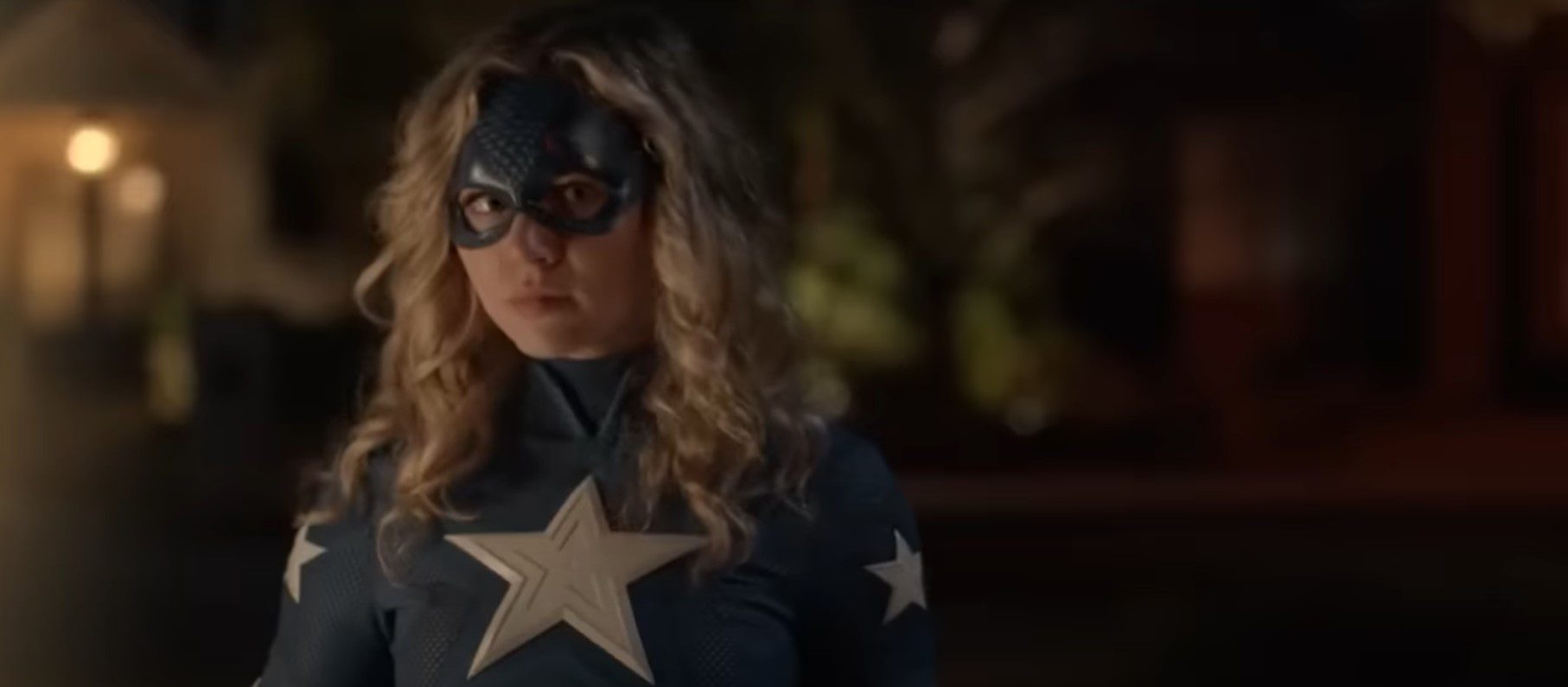
A period of change can be incredibly stressful for any person, whether you’re trying to find a new job or if you’re uprooting your entire life. You never know where it might lead you. Yet, what happens when that big period of change is being buried alive? Well, Sylvester Pemberton is living that very nightmare and Stargirl has certainly flipped the veteran hero’s life upside down.
The episode dives deeper into the suspects on the board that was set in the last episode. This time around it shifts its focus onto the Crock’s, as the team finds out that they’d been blackmailed by the Gambler for months. A little more of the Crocks is never a bad thing though, one of the best choices they could’ve made was bringing back Neil Hopkins and Joy Osmanski for season 3. The two just have great chemistry together as they somehow have this perfect harmony when interacting with each other.
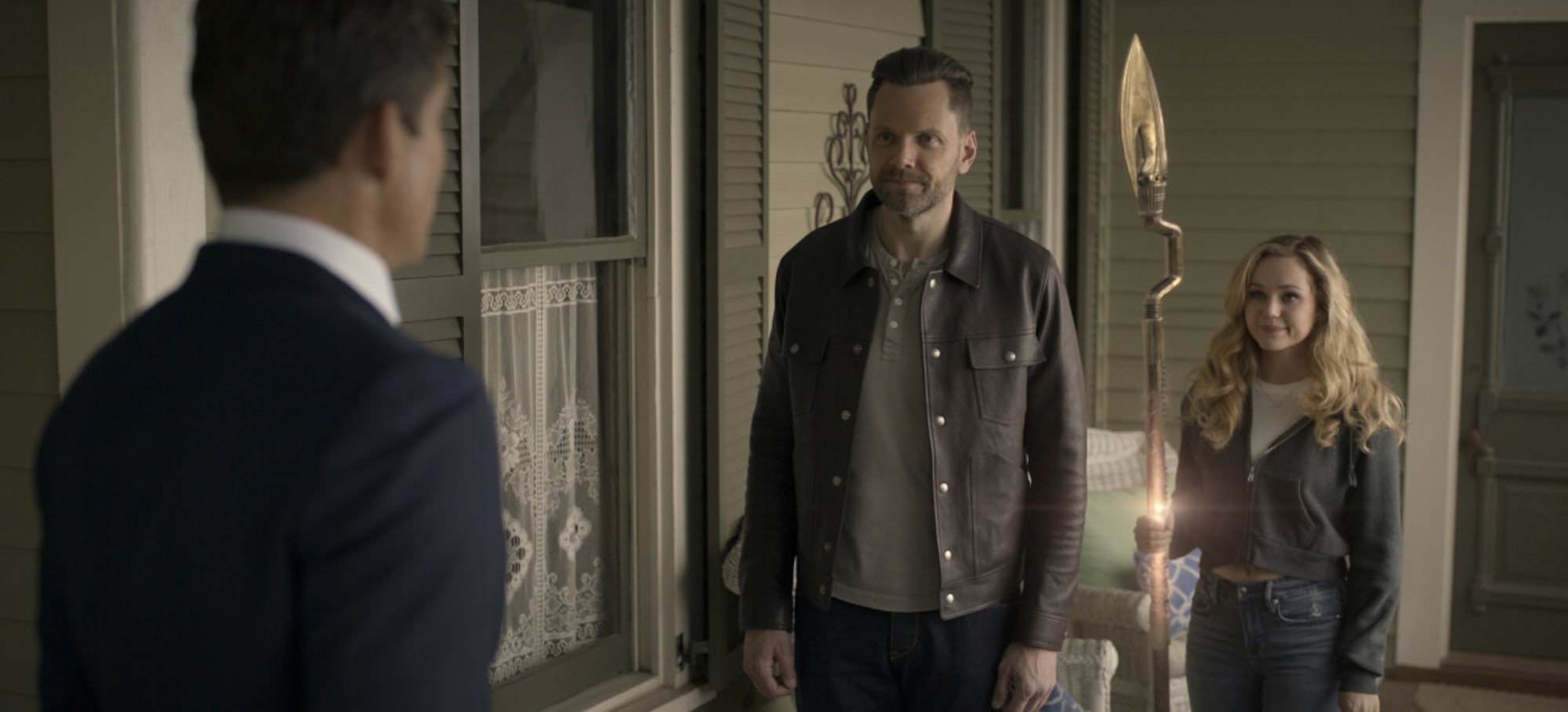
The reintroduction of Starman has been a surprisingly classic fish out of water story. Joel McHale works incredibly well as an out-of-touch, grizzled hero who just doesn’t know what his place in the world is anymore. The parallels between him and Courtney, as well as how they choose to act with the power of the Cosmic Staff gives the show an interesting balance.
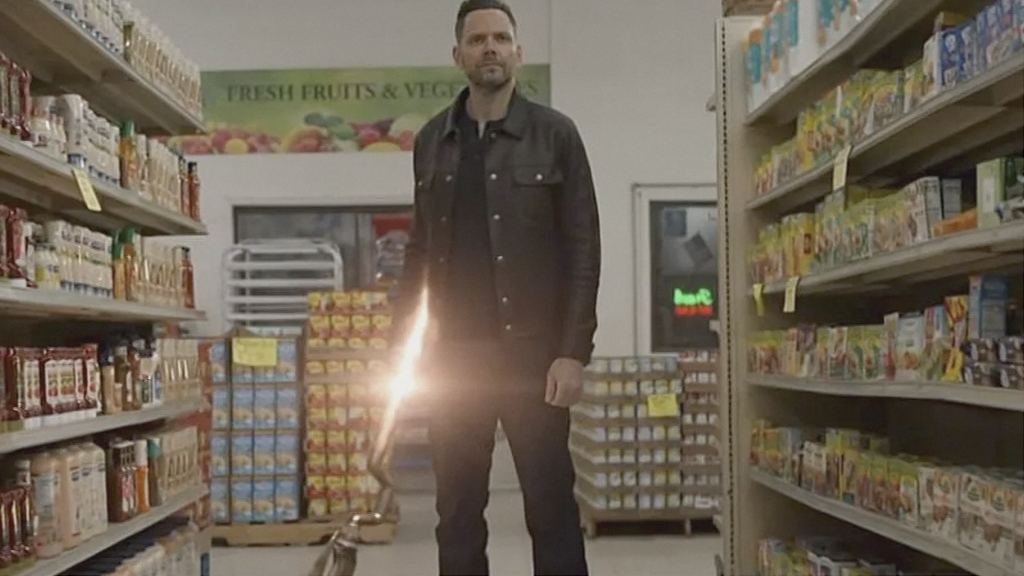
Fans will also find some enjoyment in a perfectly choreographed fight sequence within a grocery store. With that worryingly impulsive nature, Starman takes things into his own hands to confront the Crocks, leading to an dynamic and incredibly pleasing scuffle between him and the duo of Sportsmaster and Tigress.
The stunt team for this series deserves some insane recognition for what they managed to put together. It’s one of the best aspects of the show that they continously improve upon and push the limits of whats possible for these characters. The dual style that Sportsmaster and Tigress have mastered truly makes this sequence pop the way it does.
The best way to watch this season is to get into the mindset as if you’re watching an experiment unfold, seeing how these characters continue to coexist as if they’re reactive materials that could easily lead to an explosion at any time. In a way, it feels like a whole new way to enjoy the veteran show on CW.
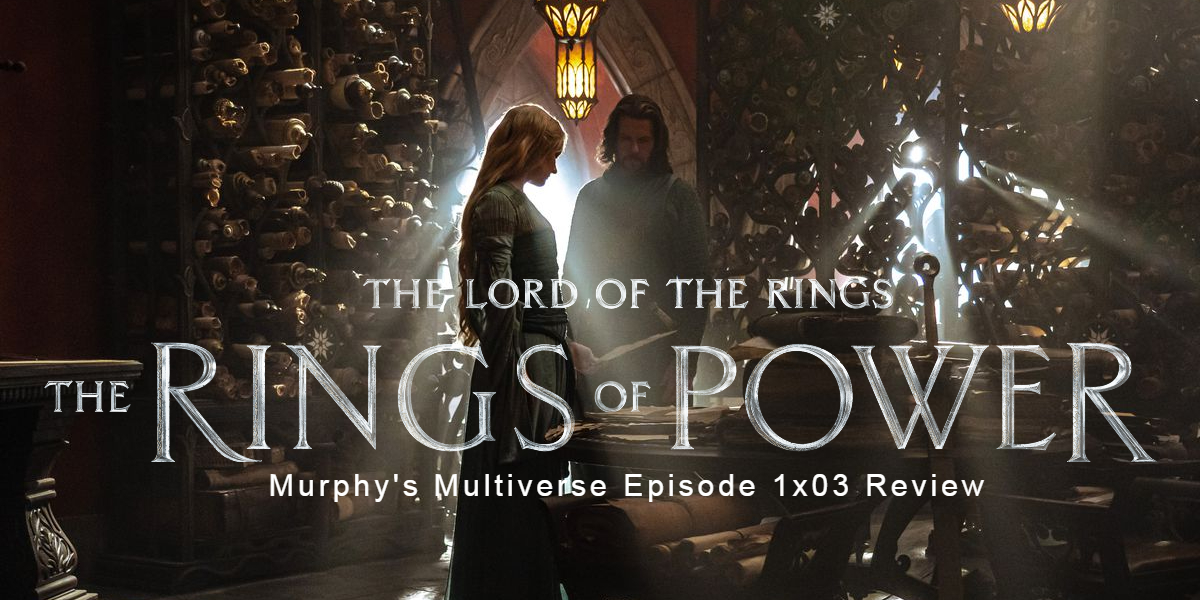
The Rings of Power is really just great, gosh-darn television. With its third episode, titled Adar after the mysterious nasty fellow, Amazon’s The Lord of the Rings series has managed to grow beyond the awe-inspiring visuals of its dual premiere. It’s not simply the visuals, however, that put it above what fans have already seen. While the latest episodic entry is, in fact, quite gorgeous, what makes Adar so much better than A Shadow of the Past and Adrift is the way it doubles down on something perhaps far more important to a show than beauty. This week, The Rings of Power doses itself with intrigue, and the series as a whole has instantly become better for it.
Aside from one major exclusion, Adar takes the plotlines set up in the show’s premiere episodes and sprints full speed ahead with them. Seeking to gain the upper hand on Sauron and his army, Galadriel finds herself captive in the Kingdom of Men alongside a charming stranger. With the Harfoots set to begin another migration, Nori learns the hard way that she is not the only one who must face the consequences of her actions. Now a prisoner of the orcs, Arondir and his Elven compatriots devise a plan to escape and warn Middle-earth of the coming dangers. Every storyline is as engaging as the last, which is an accomplishment not many series achieve on a weekly basis. The Rings of Power had some slow moments out of the gate, made bearable by the splendor of everything around them. This no longer seems to be the case.
The common theme of Adar is imprisonment, in both a literal and metaphorical sense. All three plots deal with the concept in some way, and in expert fashion, they all bleed into each other thematically to keep the big picture a cohesive one. In Númenor, Galadriel pleads desperately to be let go and for help against Middle-earth’s greatest threat. Having lived for much longer than most, she is aware of how evil adapts so that it may survive. She knows that, even if Sauron has truly gone, there must be something growing in his wake. Men, on the other hand, refuse to change. They keep Galadriel prisoner without realizing they’ve imprisoned themselves in a cage of their own making. Through her experiences and that of Halbrand, it’s shown that man is unwilling to change in the same way as it’s hidden enemy, and therefore, is likely headed toward its downfall.
This sentiment is echoed in the events surrounding the Harfoots. The merry band of travelers, led by Lenny Henry‘s Sadoc Burrows, spend much of the episode restating their methods of survival and long history of sacrifice. Sadoc sits in front of his people and lists the names of those left behind due to injury or tragic circumstance, with the underlying intention of scaring the Harfoots into obeying their own laws. Like the men, prisoners of their way of life. However, when Nori’s secret is revealed and Daniel Weyman‘s nameless giant emerges from the dark, her family is not left to rot as the men might have done. Instead, they are given a chance, and ultimately, further deviate from their traditions by including the giant on their journey, if only as a means of staying alive. In direct opposition to the previous plot, the Harfoots show that change is vital for growth.
Arondir does not need to learn about change in Adar, but rather exists to demonstrate the severity of Middle-earth’s new big bad. Where the other plot lines comment on the nature of growth and self-imprisonment, this one puts an emphasis on why the men and Harfoots should be adapting in the first place. Orcs are always fun to watch, with their grimy faces and menacing growls, but this episode might have been the most fun they’ve been in a long time. Ismael Cruz Córdova gets to show off his action chops in an impressive escape sequence that also highlights the death and destruction that will soon be wrought upon the land. The baddies have not come to play, and they even brought a really cool monster dog to prove it.
As any third episode should, Adar leaves audiences with more questions than answers. A brilliant, thought-provoking installment in the Lord of the Rings franchise, that ticks off every box of classic television storytelling on a budget of $1 billion. Next week promises to be another good outing, with plenty of teases left hanging in the air for Tolkien fanatics to pick apart for days on end. The biggest of which is probably the identity of the titular villain, whose blurred face seemed to resemble that of SirChristopher Lee‘s Saruman the White. Until then, viewers can think on the one word they heard more than any other – Adar.
Blue Valley is that perfect little slice of America, a town that seems as if it’s a glimpse back into the ’50s with such a vintage feel, what could ever go wrong? Ever since the Injustice Society rolled into town on Stargirl? Well, it would seem a whole lot. Since Season 1, we’ve seen the town shaken with mind-control and even a chaos demon, but this time around, a murder has hit Blue Valley, and it has taken Steven Sharpe, aka The Gambler, with it.
When we traveled back to Blue Valley in the season premiere, tensions were already high. This was due in part to the Justice Society’s bubbling leader, Courtney, working to make the transition period between the team’s oldest members more comfortable with the welcoming of Cindy Burman, looking to turn a new leaf. However, this dynamic isn’t exclusive to just the kids, as the people all around town are looking for a fresh chance. The Shade, Tigress, and Sportsmaster are all villains who have returned to Blue Valley with better intentions but, in the end, it just results in them all being considered suspects in the murder of The Gambler.
Burman, of course, is the team’s biggest suspect, and it could not have come at a worse time as she continues to find her spot amongst the Justice Society. Half of the team lacks trust, and it is understandable as to why. Not even Courtney’s optimistic outlook and Beth’s voice of reason can help her find a way out of the hot seat.
While we know that there are larger plans at play, it would be a bit more beneficial to the story if they could touch on it a bit more. It’s good to let the tensions amongst the characters develop a bit more as the mystery continues, but it feels like the antagonist could be a bit stronger if he was more of a present threat. As of right now, we can only presume that Mr. Bones and Helix are the ones surveying Blue Valley through the strange network of cameras planted about town. It feels like our characters’ growing agitations and feelings towards each other will pay off much better if the upcoming villains just felt a bit more like puppet masters in an “experiment” that currently doesn’t feel like a very controlled one as much as it was led on to be.
With Courtney, of course, already appropriately being the shining star of the series, the growing mentor and mentee relationship between her and Sylvester is still one of the series’ most interesting. It’s exciting to watch as they find this middle ground in whose turn it is to be the red, white, and blue staff wielder, and how Courtney can grow alongside Sylvester. It is even more interesting to see how Sylvester reacts to a world that he left ten years ago, to see how it has changed, how he is still caught in 2010, and that person who voted to kill Bruce Gordon still finds his way out occasionally. In a way, Courtney is teaching Sylvester just as much as he is her, sharing her compassion and softhearted nature with him to eventually lead to both being the best versions of themselves.
With Stargirl Season 3, Episode 2, fans are quickly going to realize this is a very different season than either that have come before. It is a much more character-oriented season. So far, Season 3 looks to be testing character limits by making them question who they let into their lives and if they can be genuinely rehabilitated in order to let go of their past villainous actions.
The Cars franchise has varied in quality throughout its three cinematic releases, but there’s always been something quite charming about the friendship between Owen Wilson‘s Lightning McQueen and Larry the Cable Guy’s Mater. Pixar knew what the film’s strengths were and with each project kept that at the base of its hard; no matter where the story leads it. That very same thing can be said with Pixar’s true first animated series, Cars on the Road.
Across the various episodes, the duo is on the road for a few days to take part in the wedding of Mater’s sister. Besides the surprise revelation of Mater’s family background–which has quite a fun twist that doesn’t overstay its welcome–and some more fun between the leading pair, there’s something quite special with the Pixar series. Each episode is its own little storyline that offers something quite fun and a great time.
Steve Purcell and his team tried to offer something fun with each episode, such as playing around with different genres, film tributes, and generally just taking these iconic characters and putting them into surprising scenarios. While one episode explores the pre-historic history of the Cars universe with a Ray Harryhausen animation twist, another will give us The Shining with a vehicular twist.
The series doesn’t revolutionize anything and there’s no real need for it to do so. From the opening, the show knows exactly what it’s about and doesn’t try to be anything else. What helps with that aspect is that these episodes are pretty digestible. You’ll get through an episode in just around seven to eight minutes, which includes credits and it helps give each episode a quick pace.
The show goes by fast and still has its memorable moments. McQueen goes through quite a bit of hell this time around, as the poor guy has to live through a haunted mansion and even face his fear of clowns; a highlight of the season. Mater is as enjoyable as he’s always been and the show doesn’t change their characters much; mostly just sees how their personalities would work or even clash depending on the situation.
We also get some new additions this season with characters like Quinta Bruson‘s Ivy and Dana Powell‘s Mato. They are fun additions but don’t really take much of the focus away from our leading duo. There is a point in the story where they make it seem like they’ll have someone joining them for the road but that storyline is swiftly scrapped. In a way, it did make you wonder why they included it besides for a few gags and it was a shame not to explore how their dynamic would change with a new friend tagging along.
The animation is great and everyone looks the way you’d expect them to. As stated earlier, there is an episode that pays tribute to claymation that highlights the attention to detail. A lot of this series feels like a love letter to the many genres and films where the franchise started. There aren’t any major twists and turns but a simple joyful ride with two close friends.
Cars on the Road is just a great time and has something for everyone. Kids will just have a blast with Mater and McQueen’s usual dynamic while also enjoying how these two play off of each other. In the meantime, adults will get a blast out of Easter eggs from Mad Max, The Shining, and more sprinkled throughout the series. In a way, it could be the perfect jumping-off point for anyone wanting to spark their kid’s curiosities about some classic films when they start asking why a bunch of cars are driving through the desert challenging strangers to survive the Thundercone.
Cobra Kai has always had a sense of ridiculousness to it, but Season 5 takes it up a notch in the best way possible.
Most shows tend to falter as seasons go on. For some, it is in their sophomore seasons that they fall apart, while others begin to falter in latter seasons, seemingly struggling to maintain quality over the years. Cobra Kai, thankfully, managed to avoid the sophomore season curse and has only continued to become better with each new installment. Five seasons in, the Karate Kid spinoff appears to have more steam now than ever. The series understands what it wants to be and is willing to take risks. So, by the time the final episode of Cobra Kai‘s fifth season ends, viewers will find themselves desperately seeking Season 6 — which is currently thought to be the show’s final season.
Season 5 of Cobra Kai picks up shortly after where Season 4 ends. Miguel has headed to Mexico in search of his biological father, Cobra Kai is riding high from winning the All Valley, and Johnny is still trying to mend his relationship with his son. But given that this is Cobra Kai, things don’t necessarily go as planned. Cobra Kai is still causing trouble – both the students and the senseis – and there will be repercussions felt throughout the entire season because of their actions. While prior seasons have focused on the relationship between Daniel LaRusso and Johnny Lawrence, Season 5 has put the focus on family and how our choices impact those around us. What we get to finally see is the weight of their choices. Both men are still incredibly, incredibly stubborn, but this season sees them move beyond being karate obsessed.
This season puts a ton of focus on character growth. Season 5 of Cobra Kai takes its main cast and puts them into uncomfortable positions, forcing them to learn from their mistakes along the way. Surprisingly, while Johnny and Daniel do grow plenty, it’s the kids this go around that show the most growth. Which is a nice change. We’re so used to the story being centered around the adults, but Season 5 puts the kids in the spotlight. They’re reckless, they’re frustrating, but at the end of the day, they’re a lot different by season’s end. The most notable character arc this season belongs to Peyton List‘s Tory Nichols who has arguably the best (and most emotional) storyline this season. List leaves everything on the mat this season and deserves all of the praise she’s sure to receive.
The season isn’t without its faults, of course. There are moments that do drag on seemingly more than necessary, and the things Silver manages to get away with can be quite frustrating. But the stumbles are minor, and the season always manages to recover from the tiny blows.
As for the fight scenes this season, they’re not as great as they have been in the past. That isn’t to say there aren’t some highlights, though. After all, this is Cobra Kai and there will always be at least one insane fight included. Some of the fights are goofy, of course, but the hard-hitting fights are memorable – especially the big battle we see near the end. It’s the first time in the show’s history that audiences will find themselves unsure of the safety of some of their favorite characters. It’s both well-executed and well-cut. It’s a hell of a way to end what is easily the most ridiculous and yet fantastic season of Cobra Kai to date.
Honestly, looking at where Cobra Kai is now, it’s easy to forget that the series started out as a YouTube original. It’s easily one of the best shows on television because it knows what it wants to be and doesn’t take itself too seriously. This is a karate series with great characters. The dojos and karate used to be the main selling point of the series, however, Season 5 does a hell of a job making it about the characters. The series has grown over the years into a far more confident version of itself and it shows.
Overall, Season 5 of Cobra Kai is one of the best seasons to date. While the fight scenes aren’t the best, the season excels in its character work. It’s hard to believe a story about two warring dojos has managed to shine in its storytelling five seasons in, and yet, Cobra Kai has done so with ease. While the plan might’ve been for six seasons, Season 5 proves there is still plenty of story left to tell if the creatives are up for it. For now, fans can relax knowing their favorite karate series is back bigger and better than ever.
Deep in the Sundering Seas, a ship sails toward peace and freedom. All onboard are merry, as they know what bountiful future awaits them, save for one soul. Galadriel, a young Elven warrior, is not content. She looks around with concern and restlessness as her companions begin to sing a holy song in unison. Her brethren embrace what they understand to be a blessing, yet Galadriel is unable to wrap her mind around the same joy. The boat rolls onward, but her true journey lies somewhere behind it. This scenario, which plays out near the end of The Rings of Power‘s first episode, is how many may have felt when The Lord of the Rings films first premiered two decades ago.
Universally loved by fans and critics alike, it quickly became heresy to suggest the original live-action trilogy wasn’t for everyone. While all manner of brethren sang it’s praises like a holy verse, some simply couldn’t bring themselves to join in. Their journey lay elsewhere, in the gutters of other fantasy deemed “less-than” by those who could more naturally comprehend the great works of J.R.R. Tolkien. To be fair, these high-ground thoughts were never entirely misplaced. Peter Jackson‘s movies are indeed a generational achievement, and the novels they’re based on are undoubtedly a cornerstone to which all subsequent entries of the genre owe their existence. Nevertheless, The Lord of the Rings was never an easy story for the average viewer to sink their teeth into.
Filled with intense exposition and expansive world-building, it could often feel like there was homework required to fully appreciate the cinematic experience. Beautiful, awe-inspiring filmmaking, for sure, but also perhaps too much for some to take in at once. On the other hand, Jackson‘s Hobbit prequels were derided for leaning too far in the other direction. Too much explosive action, not enough thoughtful commentary. The Rings of Power, a new prequel series from Amazon set a full Age before the events of Tolkien‘s seminal masterpiece, feels special for at least one major reason – it works in a way where viewers are granted both pace and spectacle. The series’ pilot and its follow-up, each directed by J.A. Bayona, are chock full of the gorgeous visuals and thrilling set pieces one has come to expect from adventures set on Middle-earth, but pull them off while maintaining the intellectual integrity of the franchise.
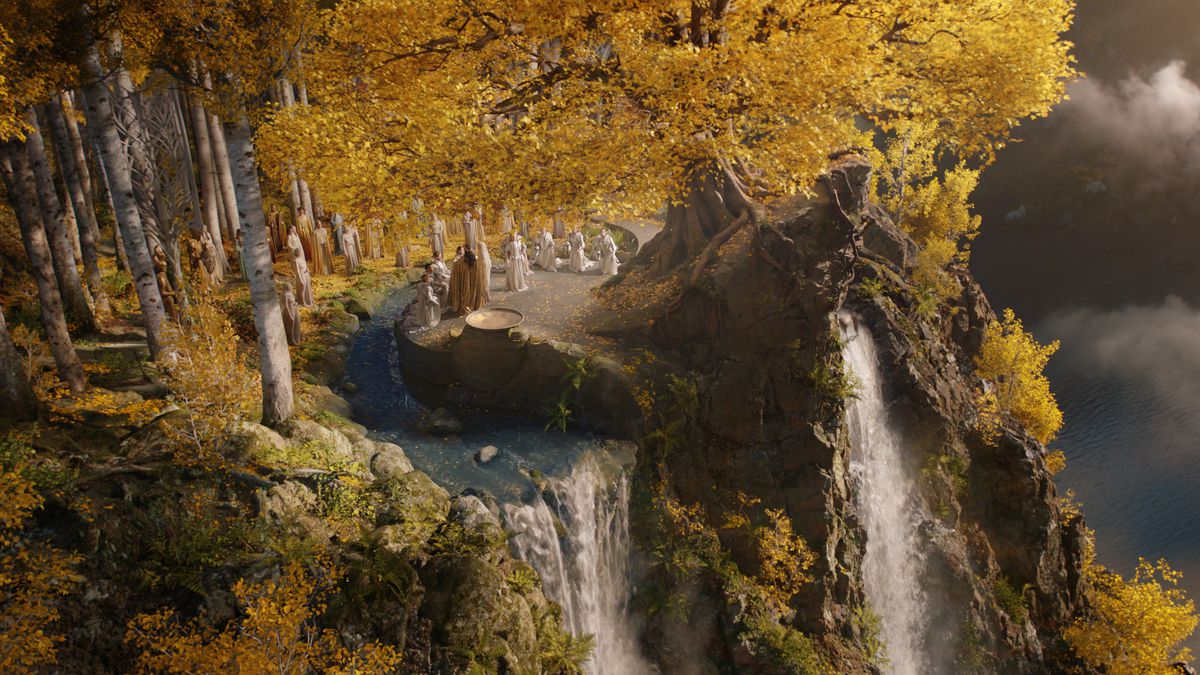
Anyone who might have been worried about the show not living up to the iconic aesthetic of the films can rest well knowing this is not the case. It’s very clear that The Rings of Power is the most expensive television series ever created. From the very beginning, it looks absolutely unreal. This is the same Middle-earth fans have spent years obsessing over, only it feels quite a bit younger. Not only are several of the protagonists in the ensemble cast literally younger versions of established Tolkien characters, like Morfydd Clark‘s aforementioned Galadriel or Robert Aramayo‘s gleaming Elrond, but much of the landscape gives off the essence of a used car restored to its former glory. The grime of Sauron has yet to truly taint the world, even if his dark presence is ever looming.
As a result, the premiere episodes exude a fairly fresh aura to potential new fans of the franchise. This is not a project anyone has to rewatch older films to enjoy. It’s amicable for those who have loved what’s come before and welcoming to those who’d finally like to try giving Middle-earth a shot. There is some of that familiar exposition, yes, but the show’s episodic format allows for it to be delivered in smaller, separate doses as opposed to all-at-once. Interspersed between are countless moments of shock and amazement that will leave audiences pondering on how a television series could pull all of it off. There are grand scenes of war, charming competitions of friendship, slaughtering at the hands of a lumbering troll, and a horrific game of hide-and-seek played with a skull-fit orc.
It’s impressive how effortlessly The Rings of Power shifts between these many masks in its attempt to weave an epic tale. The characters, too, are plenty of fun to spend time with. New light is shed on well-known names, enough to make them – possibly – even more likable, and enthralling introductions are made for the latest faces to join the universe. Viewers are reminded exactly why they fell for the varying species of Middle-earth, especially the Hobbits and the Dwarves. Any time spent with Harfoots (Harfeet?) or the cave-dwelling Khazâd is an automatic highlight of the episode.
Best of all, the premiere episodes leave fans with more questions than they do answers. Without spoiling anything, there’s much to dissect in the coming season. Despite a runtime of over two hours and a lot to establish, A Shadow of the Past and Adrift do a fantastic job of keeping the audience entertained and engaged while setting up plotlines that will last for a long time to come. With an agreeable approach and a stunning coat of paint, The Rings of Power might just be the first Lord of the Rings entry that everyone can fall in love with.
Editor’s Note: This review is based on episodes 1-7. The eighth and final episode was not provided for review. Please keep that in mind while reading.
Netflix’s The Devil in Ohio is about a young girl who escapes a cult and finds herself wanting to stay with her rescuer and her family. It’s a simple premise, but it’s also so much more than that, really. The Devil in Ohio is an adaptation of the novel of the same name by Daria Polatin and is said to be based on a true story. It’s a story about corrupt religion, family, and the lengths people will go to in order to get what they want.
The series begins with Mae (Madeleine Arthur) on the run. At the time, it’s unclear what she is running from or why, but the answers are hinted at relatively quickly. She’s in danger and needs to get away for her own safety. Enter Suzanne Mathis (Emily Deschanel), a psychiatrist eager to protect the girl and anyone else that might need her help. From the moment Mae enters Suzanne’s life, things begin to erupt into chaos. Those familiar with Deschanel solely through her work on FOX’s Bones will be delighted to see the actress have the chance to play with more emotional complexities here. Suzanne is a flawed character. She acts on emotion rather than logic. Her choices are often questionable, and her dedication to Mae sometimes borders on obsessive. While the character means well, she’s not necessarily well-written, although Deschanel does her best with what she’s given.
Arthur, who starred in the small screen adaptation of Snowpiercer, proves to be a standout here. She perfectly captures a sense of creepiness and childlike wonder with Mae. Viewers will often find themselves questioning whether or not she’s trustworthy and if she’s worth protecting. There’s so much mystery that surrounds her character. Even by episode seven, it’s hard to imagine the Mae’s story will be successfully concluded with one final 45-minute-long episode; while we do learn a fair amount about Mae by the end of Episode 7, she hasn’t truly developed a personality of her own just yet. She’s still figuring herself out, and it’s hard to get a true feel for her character. If there’s one thing The Devil in Ohio could’ve benefited from, it would’ve been two additional episodes. Two more hours could’ve given the series time to breathe and focus on Mae and her story a bit more.
That isn’t to say The Devil in Ohio is bad. It’s not. At times, it is downright frightening. While during others, it can be quite the snooze fest. The slow moments are hard to get through, and sometimes, the writing isn’t that strong. What will keep viewers watching are the performances by the cast and the creepy atmosphere that is highlighted on screen. Unfortunately, though, The Devil in Ohio falters in trying to tell a cohesive story. With so many secrets, it often feels like writers weren’t even sure how to go about answering them, which is frustrating. All the more frustrating is the series managed to get Tahmoh Penikett and failed to truly make use of him.
Penikett is a stellar actor who has such limited screen time in The Devil in Ohio. It’s rather unfortunate, too, because his scenes in this series feel rushed and lacking any importance despite playing such a vital role. It’s almost as frustrating as waiting until the end to finally up the ante. Still, for what it is, The Devil in Ohio is worthy of a watch. Despite its overall flaws, the limited series managed to be fascinating enough that viewers will be drawn into the story of Mae and her life before she was saved.
A psychological thriller about corruption in religion and the willingness to fight back? The Devil in Ohio has all of the right components to be a stellar series. It just needed more time to tell its story.
The eight-episode limited series is now streaming on Netflix.
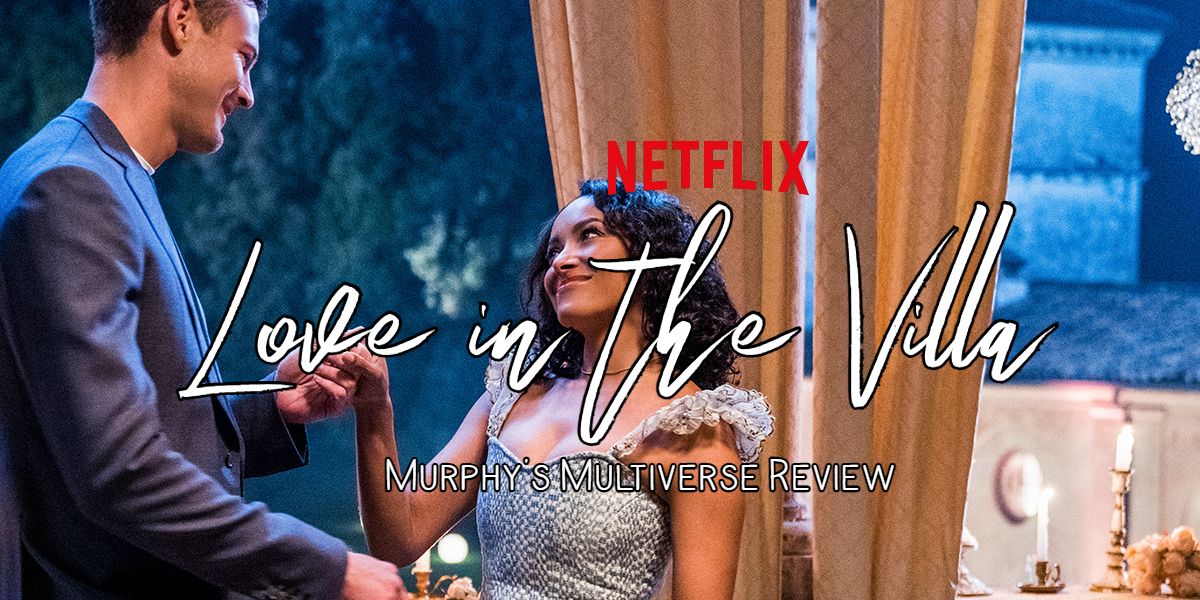
When most people think of quirky romance films, they’d rightfully think of either Lifetime or Hallmark, two networks known for their made-for-television romance titles. However, it looks like both networks will soon face competition from none other than Netflix. Having already staked its claim in cheesy holiday films, Netflix is adding to its list of titles with the addition of charming love stories featuring the enemies-to-lovers trope. Enter Love in the Villa, a cheesy Italian-set romance sure to delight.
Love in the Villa stars The Vampire Diaries actress Kat Graham and The Umbrella Academy‘s Tom Hopper as Julie and Charlie, respectively. Graham’s Julie is finally going on a trip to Verona – a trip she has planned for years – and she’s thrilled to be spending it with someone who means so much to her. She has meticulously planned every moment of the trip, including scheduling lunches and dinners for their entire vacation. Unfortunately, as she soon learns, things don’t always go to plan. And she soon finds herself alone in Verona, or so she thinks. The villa she’d rented for her romantic getaway is occupied by another guy and he has no intention of leaving. What ensues is a surprisingly rich romance story about finding yourself and letting go.
There’s nothing outright special about Love in the Villa. The plot is simple and ultimately predictable… but there’s something charming about this little film. It’s light-hearted and never tries to take itself too seriously. More importantly, though, there’s a chemistry between the leads that is hard to deny. It makes some of the more cheesier moments all the easier to sell. Graham and Hopper are magnetic. The way they play off of one another is key to the film’s success.
That’s also one of the best things about Love in the Villa. The characters are great – even the secondary ones. Uberto is a character with limited screen time, but he’s sure to become a fan-favorite. The little time he does have on screen is memorable despite very few lines. There are a few other characters that would be spoilers to note, but they help to carry the second half of the film and their presence is delightful. For a movie with such a simple concept, the character work is pretty impressive overall. Writer and director Mark Steven Johnson might have some misfires in his credits – Daredevil, Jack Frost, Ghost Rider – but Love in the Villa is proof he’s capable of crafting a strong romantic comedy.
Those eager for an enjoyable romantic comedy? Love in the Villa is definitely worth a watch. It’s easy to get lost in this love story and there are plenty of jokes to keep viewers laughing throughout. More importantly, though, it’s a nice showcase of the cast and their talents, especially when it comes to Graham, who hasn’t gotten the chance to show what she’s truly capable of just yet. Is it something that’ll bring upon numerous re-watches? Doubtful, but for the hour+ viewers will spend with this story, it’s a mini vacation that they won’t regret taking.
Blue Valleys’ resident superhero is back! The third season of Stargirl is setting up what looks to be a much more character-focused, slow burn compared to previous seasons. The Frenemies theme teased towards the end of the second season makes things feel a whole lot more personal this season and the dynamics that it brings into this chapter could be the most enticing aspect of the season, as it feels like it’s the only thing really going on.
Season 3 brings quite a few familiar faces back into the spotlight, with characters such as Sportsmaster, Tigress, Gambler, and the long-awaited arrival of Joel McHale as Sylvester Pemberton, who returned at the tail end of Season 2 after being teased over the course of the past two seasons. Pemberton’s return brings the dynamic between him and Courtney into focus, bringing up the question as to how the two would be able to co-exist as the only two who’ve ever been able to wield the cosmic staff. Courtney is obviously a bit hesitant but eager to learn more about the cosmic staff from the old hero.
Courtney has gone on to make a life in Blue Valley as Stargirl with the support of both her family and her friends; Sylvester never properly gave up the mantle and of course, his first notion would be to find the staff as its really all he ever knew, he lived and breathed those cosmic rays until he was put six feet under by Icicle. The whole mystery behind his return is still a bit murky, with Sylvester speculating that the staff may have made him almost immortal with the energy it radiates.
Courtney has always been the show’s strongest character, which is a good thing when she is your title character, and the hatchet burying this season really allows room to explore the heights and limits of her heroic nature. We get to see these limits put to the test as she must juggle working alongside Cindy Burman after facing the consequences of releasing Eclipso. Courtney works as the glue, the optimist amongst the few who don’t trust as easily as she does. Cindy’s inclusion in the Justice Society obviously leaves some members feeling a bit uneasy about the situation, as they believe she doesn’t deserve redemption.
The end of the episode provides quite the revelation. The Gambler’s return is quickly shuttered, as the retired Injustice Society member is cut down by a mysterious assailant, just after discovering a system of cameras had been setup around Blue Valley. These cameras are likely monitoring the town for what could only be the experiment teased by Mister Bones at the end of season 2.
3 years of no Westeros coverage came and went in the blink of an eye. Even with how the last couple of seasons ended, The House of the Dragon was appointment television, and will continue to be throughout the duration of the show.
ONE BIG FLASHBACK
If you somehow stumbled upon the Season 1 Primer, you’re likely a little confused and that’s ok. It was expected that the series might start closer to the actual Dance of Dragons, which is around 129 AC. This entire episode, save the Great Council of Harrenhall at the very beginning, was in 109 AC, so the show is sowing seeds even earlier and deeper than expected, which is fantastic news considering the rush of Game of Thrones. It seems now that this series is going to be jumping back and forth. We should still expect to see a lot more of young Rhaenyra and Alicent to set up the conflicts and series. Slow burning plots are good news!
We saw the *arguably* greatest King in Targaryen history, Jaehaerys, during the opening scene, where the Great Council sided with Viserys, the male heir and the current king, over Rhaenys, the female with the better claim, and Corlys’ wife. This will set a precedent for the next 200 years in Westeros.
The creatives really nailed Viserys and his uneasiness over conflict. When the Hand of the King, Otto Hightower verbally sparred with Corlys and Daemon, they had slick camera work showing how it affected Viserys. He just wants everyone to get along and drink and party.
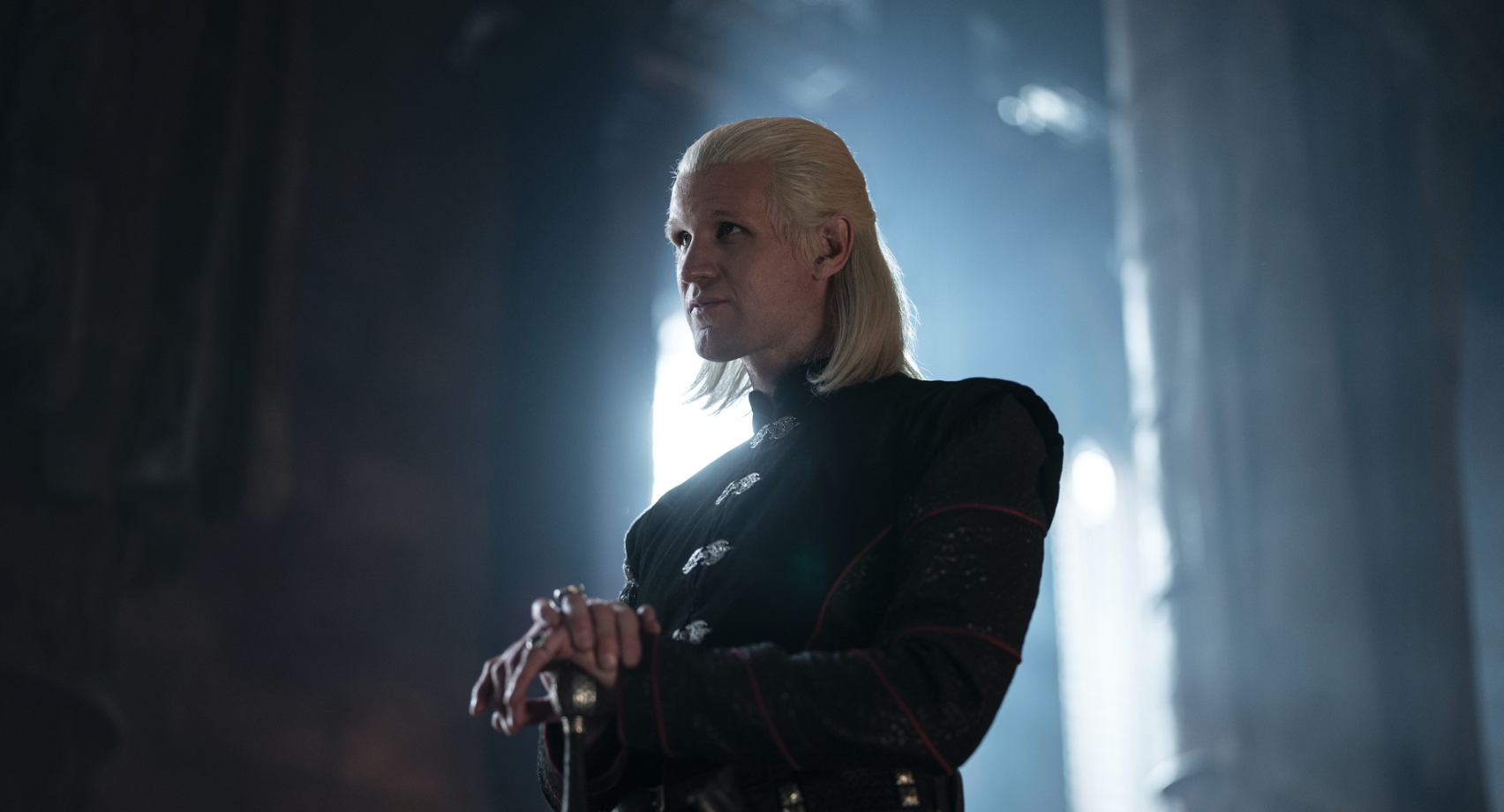
Young Rhaenyra is a bit of a mix of Arya and Daenerys. Willful and disobedient, she doesn’t really pay much attention to the gender norms of Westeros. Alicent is the Sansa of the duo, very proper and wary of toeing out of line. Daemon the Rogue Prince (Matt Smith) was every bit the violent, irrational character from the novel who always speaks before he thinks.
And we got Dragons! They seem to be a lot more colorful this time around, and they have some distinct individual features. Daemon’s dragon Caraxes has wings on its feet and a longer neck. Truly peak dragonshit.
Changes from Fire and Blood
House of the Dragon is adapted from a book the author George R.R. Martin wrote about the history of the Targaryen Dynasty. It’s pretty broad, so it’s up to the show to fill in the details between events. Below are changes that the show has made from the text.
Corlys Velaryon is black – This one sparked some controversy when the initial cast news came out. The Velaryons and Targaryens are both ancient Valyrian houses, obsessed with blood purity. It would make sense for them both to have the pale skin, platinum silver hair and violet eyes, but in the show only the platinum hair is shared between the two families. This will come into play later in the show, but for now it’s a detail that only will piss off the worst kind of people.
Rhaenyra and Alicent are the same age – In the book these two did not grow up as friends within King’s Landing. Alicent was 9 years older, and they weren’t as close as in the show. I like the change in the show, especially as these two drift apart trying to play the game of thrones.
Very small changes, and on the whole, this was as faithful an adaptation as the first few seasons of GoT.
Aegon’s Dream
When Viserys named Rhaenyra heir to the Iron Throne, he talked about the dream that Aegon had that motivated him to take the Seven Kingdoms: the long night and the White Walkers descending onto the continent, and how only the Targaryens could defeat it. This dream has been passed down from king to heir since Aegon, but it curiously does not reappear until Rhaegar (Dany’s brother and Jon Snow’s father) rediscovers it before getting his chest caved in by Bobby B. Does this dream never get passed down after the Dance? Makes you wonder.
Other Foreshadowings
Alicent and Viserys – Alicent was prodded by her father to put on a dress and “console” Viserys after his wife and son have died. This is hinting towards her father Otto from overreaching in the kingdom, as well as hinting towards their marriage.
Rhaenyra and Criston Cole – In the novel, Rhaenyra develops a massive crush on the newest Kingsguard, Criston Cole. He becomes her personal shield and bodyguard. It will be interesting to see how the showrunners handle this.
Corlys’s warning about the Stepstones – The Stepstones are the islands between Westeros and Essos, which is what Corlys warned the small council about – particularly the “Triarchy.” While nobody is worried about that right now, both Corlys and Daemon will team up to try and handle these islands.
All in all, it’s fantastic to be back in Westeros, and this is a great start to a series.
Cookie Consent
We use cookies to improve your experience on our site. By using our site, you consent to cookies.
This website uses cookies
Websites store cookies to enhance functionality and personalise your experience. You can manage your preferences, but blocking some cookies may impact site performance and services.
Essential cookies enable basic functions and are necessary for the proper function of the website.
Name
Description
Duration
Cookie Preferences
This cookie is used to store the user's cookie consent preferences.
30 days
These cookies are needed for adding comments on this website.
Name
Description
Duration
comment_author_email
Used to track the user across multiple sessions.
Session
comment_author_url
Used to track the user across multiple sessions.
Session
comment_author
Used to track the user across multiple sessions.
Session
Statistics cookies collect information anonymously. This information helps us understand how visitors use our website.
Google Analytics is a powerful tool that tracks and analyzes website traffic for informed marketing decisions.
Contains information related to marketing campaigns of the user. These are shared with Google AdWords / Google Ads when the Google Ads and Google Analytics accounts are linked together.
90 days
__utma
ID used to identify users and sessions
2 years after last activity
__utmt
Used to monitor number of Google Analytics server requests
10 minutes
__utmb
Used to distinguish new sessions and visits. This cookie is set when the GA.js javascript library is loaded and there is no existing __utmb cookie. The cookie is updated every time data is sent to the Google Analytics server.
30 minutes after last activity
__utmc
Used only with old Urchin versions of Google Analytics and not with GA.js. Was used to distinguish between new sessions and visits at the end of a session.
End of session (browser)
__utmz
Contains information about the traffic source or campaign that directed user to the website. The cookie is set when the GA.js javascript is loaded and updated when data is sent to the Google Anaytics server
6 months after last activity
__utmv
Contains custom information set by the web developer via the _setCustomVar method in Google Analytics. This cookie is updated every time new data is sent to the Google Analytics server.
2 years after last activity
__utmx
Used to determine whether a user is included in an A / B or Multivariate test.
18 months
_ga
ID used to identify users
2 years
_gali
Used by Google Analytics to determine which links on a page are being clicked
30 seconds
_ga_
ID used to identify users
2 years
_gid
ID used to identify users for 24 hours after last activity
24 hours
_gat
Used to monitor number of Google Analytics server requests when using Google Tag Manager
1 minute
Marketing cookies are used to follow visitors to websites. The intention is to show ads that are relevant and engaging to the individual user.
Pinterest Tag is a web analytics service that tracks and reports website traffic.