Tag: TV Reviews

  • REVIEW: ‘Echoes’ is a Misfire

    REVIEW: ‘Echoes’ is a Misfire

    Note: This review contains mild spoilers.

    Netflix’s Echoes has all the ingredients for a compelling drama, but none of them ever come together to make for anything satisfying.

    Echoes tells the story of identical twins, Leni and Gina, both played by Michelle Monaghan. The twins have secretly spent their lives switching places since they were children, sharing everything – resulting in double lives as adults. However, after one of the sisters goes missing, the sisters soon find their lives both uprooted as secrets begin to surface that’ll change their lives forever.

    It’s hard to properly explain just how terrible Echoes is because there are elements that are great. Monaghan is one of them. She’s electric on screen and her scenes with Matt Bomer are fantastic. Unfortunately, though, neither Bomer nor Monaghan could carry this mess of a series. It’s as if the writers didn’t know where they wanted to take the story, so they continued to add drama for the sake of it. Both Leni and Gina are terrible characters, and while it might be a bit harsh, neither character is worthy of redemption. By the end, it’s unlikely viewers will like either Leni or Gina.

    The entire concept of switching lives every year without those closest to them knowing is a touchy-subject, especially as these characters shared everything – including their partners who hadn’t a clue. Even worse, the women somehow managed to get away with numerous crimes because their choice to switch made it difficult for law enforcement to determine who was responsible for what. It’s incredibly frustrating. They ruined so many lives and were never truly held accountable for their actions. Yes, the finale suggests that might finally change in a second season, but it’s frustrating just how easily some of these folks forgive the sisters.

    And then there’s the Dylan storyline – a plotline that quickly appears and then nearly forgotten soon after. Given what happens to Dylan and the sisters, this should’ve been something handled across multiple episodes and with more care. Especially when it comes to the lives lost. It is one of the many instances that felt as though it was written in just for dramatic effect, but with no proper plan on how to properly handle it.

    The most frustrating part of Echoes, though, is that it does a pretty bad job at fleshing out its characters. While Monaghan gives both roles everything she has, the writing doesn’t do enough to really showcase a difference between Leni and Gina. That’s something that is pretty important given that the two are supposed to be very, very different. One is supposed to be more dominant, while the other is supposed to blindly follow along. Outside of some slight mannerism changes by Monaghan, it just doesn’t feel as though enough effort was made in developing their characterizations. It’s something that ruins the ending.

    After everything these two have done – the fire, what happened to Claudia, switching lives – it’s frustrating that we never truly get to know Leni and Gina individually. Yes, the series is about them becoming one another and switching places every year, but there should still be some indicators of individuality. Something.

    For a series that only consists of seven episodes, Echoes feels so much longer. It drags, constantly being pulled down by useless plotlines that make little sense.

    Echoes is streaming now on Netflix.
  • REVIEW: ‘She-Hulk: Attorney at Law’ Episode 1

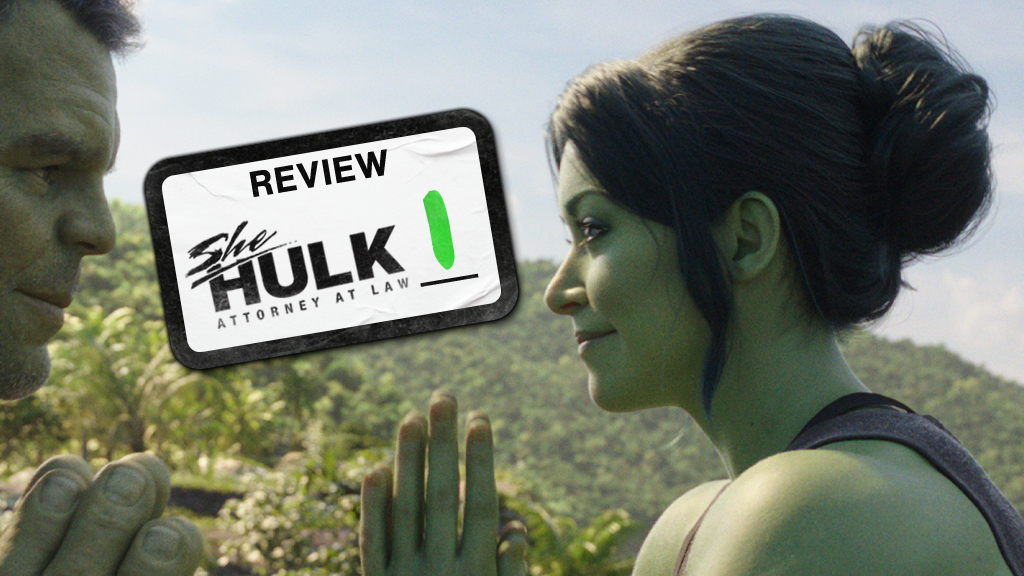
    REVIEW: ‘She-Hulk: Attorney at Law’ Episode 1

    She-Hulk: Attorney at Law is about to be one of your new favorite Marvel Cinematic Universe projects. While much of the first episode was dedicated to establishing Jennifer Walters as an All-New, All-Different Hulk, all the elements are in place for a wildly delightful half-hour comedy series. She-Hulk takes the MCU to a place it honestly has not touched before now, which is somehow both smaller in scale yet feels like an A-list production in terms of its enjoyability and presence in the wider universe. The Marvel Studios universe has now expanded to a place where stories that seemed far-fetched a few years ago have a comfortable place in the MCU, and She-Hulk is opening the door for all of them.

    As the “origin” episode, the premiere is not particularly representative of the rest of the series in terms of its structure. She-Hulk is, ultimately, an episodic show that focuses on week-by-week or case-by-case stories involving Jen’s legal career. Still, the amount of time spent on her origin and development as a Hulk with Bruce Banner manages to be thorough enough to connect Jen to a specific, growing section of the MCU and explain enough to allow the show to proceed without too many questions about who or what she is as distractions. In fact, the early fourth wall break serves to precisely lay out the intent of the episode yet still center everything within Jen’s non-superhero life.

    The cast in the first episode is limited, but there is no question that Tatiana Maslany is an absolute star in the role. Criticism about She-Hulk’s CGI will not go away even with the final product, but any inability to accept it and move on is only to the detriment of the viewer. The visual effects take nothing away from Maslany’s performance, She-Hulk’s general character, or the ability to enjoy She-Hulk. Mark Ruffalo, who practically shares the episode with Maslany, is similarly phenomenal in his role here. In fact, it is arguably Ruffalo’s best portrayal of Bruce Banner in the MCU.

    Because of how She-Hulk nestles itself within the MCU in such a specific casual-yet-important way, its uniqueness cannot be overstated. Quite frankly, after this series, the MCU can never go back to the all-encompassing tone it has had in the past. The show is the perfect final series of Phase Four, which generally felt like an experimental phase to diversify the types and styles of MCU projects. She-Hulk captures the self-awareness of the MCU alongside its tone of focusing on the more day-to-day reality of the universe. If any project has ever invoked feeling “comic book-y,” it is hands-down this one. The post-credits scene is perhaps a perfect example of the ground-level, casual-framing nature of this series. Gossip about Captain America’s virginity, or lack thereof, is now canon to the MCU, whereas before it mostly existed on Twitter.

    She-Hulk has a comedic tone that isn’t slapstick or cheap. It feels more mature, real, and grounded in both reality and the universe it exists in. Billed as a half-hour comedy, it feels far from simply being a goofy and empty attempt at laughs. But the superhero elements in this episode do tip the scales a bit further away from truly feeling like an episodic comedy. A challenge going forward for the show will be allowing it to have its own comedic personality that rises above what it seeks to accomplish in terms of any larger MCU plot. For example, hints of a building Hulk universe are obvious in this episode. There are no indications yet that it cannot remain relatively self-isolated, and viewers should be prepared for the end of the “superhero origin” part of She-Hulk’s story early in the series, and perhaps this first episode served to cover and complete it. 

    It should also be recognized that even with only one episode as a reference, She-Hulk so far seems to be the MCU’s most successful attempt at a woman-led project. Maslany’s performance combined with the script itself is reminiscent of contemporary, quality non-comic book female-driven TV. Jen’s character has so much more texture as it is being written by women seemingly without any hesitation to be unceremoniously honest and genuine as to what Jen’s life (Hulk for or not) would look and feel like. Ms. Marvel also did a phenomenal job with Kamala Khan, but writing and portraying an adult woman with more mature themes feels incredibly fresh in the MCU, even if overdue.

    In sum, She-Hulk’s premiere episode has every indication that the series will be a hit. The tone of the show is one that is designed to be simply fun, enjoyable, and even pander to fan service. Not every show or style of humor works for every person, but it is difficult to imagine any major widespread criticism (aside from the CGI) that is not based, in part, on some people’s unfounded discomfort with female superheroes or straight-up misogyny. The toxic “M-She-U” crowd will surely keep yelling into oblivion. But if She-Hulk exemplifies the “M-She-U”, it only proves that that universe is an excellent place to be.

  • REVIEW [Translated]: ‘I Am Groot’ is Just the Cutest

    REVIEW [Translated]: ‘I Am Groot’ is Just the Cutest

    *For an original, untranslated version of this review – click here*

    The first-ever Guardians of the Galaxy spin-off has arrived, and it’s just about the cutest thing ever. I Am Groot, also the first starring vehicle for Vin Diesel in the Marvel Cinematic Universe, is a CG-animated mini-show from the minds of Ryan Little and Kirsten Lepore. It’s first season consists of five short episodes, each only a few minutes long, that mostly feature Baby Groot stumbling his way through an adorable series of shenanigans across the galaxy. While the project is technically canon to the wider MCU, it more or less functions as entirely it’s own affair. There is no prerequisite viewing, aside from maybe the aforementioned Guardians films, and there is no pressure to understand anything important. It’s really just Baby Groot being Baby Groot for a solid 20 minutes.

    Obviously, this is not a serious show made for grown-up adults. That doesn’t mean an adult can’t love it, because this series is the definition of lovable, but nobody should go into I Am Groot expecting a deep dive into the character’s origin or personal beliefs. Instead, one should anticipate hearty laughter and a little bit of water to come out of their leaky eyes. It’s essentially the opening dance sequence from Guardians of the Galaxy Vol. 2 stretched out long enough to give it its own title. Anyone with a child who loves Groot will want to turn this on immediately because it will likely become that kid’s new favorite show. Diesel‘s endearing, pocket-sized hero pulls out all of his signature moves. From antagonizing equally delightful intergalactic creatures to performing the most destructive arts-and-crafts time ever, Groot does it all with the sweetest, most amusing big eyes and tiny smile the universe has ever seen.

    That being said, these shorts are genuinely worth the watch for parents and children alike. I Am Groot can be viewed as an entertaining, educational project designed for toddlers, using Baby Groot and the problems he runs into as great examples of overcoming adversity. Granted, Groot is not a well-behaved baby. He is, however, wildly entertaining and sure to give kids a good chuckle. On the parental, or adult-who-doesn’t-have-kids-but-likes-Marvel-a-lot, side of things, I Am Groot is an undeniably charming look into a corner of the Marvel Universe that, frankly, nobody ever thought they would see. The only other Marvel character to make an appearance is Groot’s best friend and father figure, Rocket Raccoon, voiced again by Academy Award nominee Bradley Cooper. Isolating Groot from his peers allows viewers to take a rather interesting peak at what sort of chaos the little tree can cause when left completely unattended.

    Although nothing too special, I Am Groot does earn it’s place as part of the Disney+ catalogue, and will probably leave young ones wanting more. The shorts have the potential to be a blink-and-you’ll-miss-it chapter for the MCU, and may be the sort of thing people forget about after a single viewing, but it will ultimately be the response from the target audience that determines it’s longevity. More episodes have been confirmed to be on the way, so perhaps this is just the beginning of many Groot solo adventures down the line. Either way, it’s not anything worth stressing about. Just sit back, relax, and enjoy Baby Groot in all his precious glory.

  • REVIEW [Untranslated]: ‘I Am Groot’ I Am Groot

    REVIEW [Untranslated]: ‘I Am Groot’ I Am Groot

    *For a translated version of this review – click here*

    I am Groot I Am Groot, I am Groot. I Am Groot, I am Groot I am Groot, I am Groot I am Groot I am Groot. I am Groot I am Groot, I am Groot, I am Groot I am Groot. I am Groot I am Groot I am Groot, I am Groot I am Groot, I am Groot I am Groot I am Groot. I am Groot, I am Groot I am Groot. I am Groot, I am Groot I Am Groot, I am Groot I am Groot I am Groot. I am Groot I am Groot I am Groot.

    I am Groot, I am Groot I am Groot. I am Groot I am Groot, I am Groot I am Groot, I am Groot I Am Groot I am Groot. I am Groot I am Groot I am Groot. I am Groot I am Groot I Am Groot I am Groot I am Groot. I am Groot I am Groot, I am Groot I am Groot. I am Groot, I am Groot I am Groot. I am Groot I am Groot I am Groot, I am Groot, I am Groot I am Groot I am Groot.

    I am Groot, I am Groot I am Groot. I Am Groot I am Groot I am Groot, I am Groot, I am Groot I am Groot. I am Groot, I am Groot. I am Groot, I am Groot, I am Groot I am Groot. I am Groot, I-am-Groot-I-am-Groot, I am Groot, I Am Groot I am Groot I am Groot, I am Groot, I am Groot. I am Groot I am Groot, I am Groot, I am Groot. I am Groot I am Groot I am Groot.

    I am Groot I am Groot, I Am Groot I am Groot I Am Groot+, I am Groot. I am Groot I-am-Groot I am Groot, I am Groot, I am Groot I am Groot. I am Groot, I am Groot I am Groot. I am Groot, I am Groot. I am Groot, I am Groot, I am Groot I am Groot.

  • REVIEW: Prime Video’s ‘Paper Girls’ Doesn’t Deliver

    REVIEW: Prime Video’s ‘Paper Girls’ Doesn’t Deliver

    Over the past few years, there have been enough comic book adaptations for audiences to understand that the medium can either work tremendously well when made into a live-action TV series or turn into a failure of epic proportions. From the incredible Deadly Class, the long-running The Walking Dead, and the utter disgrace that was Jupiter’s Legacy, comic book TV adaptations come in all shapes and sizes. In most cases, not even being extremely faithful to the source material proves to be a guaranteed winning formula making it easy to accept when certain changes are made to make the show work better through a different medium. But in other cases, such as with Prime Video’s Paper Girls, some of the charm, scope, and even ambition that the original comic series displayed, which to a point were at the very heart of it, seems to have been lost along the way making the show worse for it.

    Brian K. Vaughan and Cliff Chiang‘s Paper Girls, published by Image Comics, began its run on October 7, 2015, and ended on July 31, 2019 with its 30th issue. It won the Eisner for Best New Series in 2016 with its creative team winning multiple awards throughout its run. For several years it remained as one of the best-regarded series being published thus making a TV adaptation being greenlit in 2020 a not-so-surprising validation of the broader appeal of the source material.

    Prime Video’s Paper Girls

    As for the show, when the story begins, much like in the comic series, four Paper Girls cross paths on November 1st, 1988, Hell Day. They are soon brought into a timestream conflict between The Old Watch (similar to the Marvel Cinematic Universes’ Time Variance Authority) and the STF Underground. Following a random encounter with two STF time-travelers, they find themselves in 2019 where they learn a bit more about what is really at stake. Initially wanting no part in the war, wishing only to get back home to their 1988’s Stony Stream, they soon realize where their loyalty should reside as new friends, and older versions of themselves find themselves targeted by the Old Watch with the four girls needing to play a big part in the fight in order for the war not to be lost.

    The heart of the series is, obviously, in its four leads: Erin, Mac, Tiffany, and KJ (played by Riley Lai NeletSofia RosinskyCamryn Jones, and Fina Strazza). It is through their eyes that the story beings to unfold, and it is their fears and expectations that move the story along. But albeit the portrayal of all four girls is on point with the source material, the way audiences are expected to get to know them and, from there, connect with their personal journeys is somewhat sabotaged by the pacing in which the story is being told.

    Prime Video’s Paper Girls

    For context, the first episode, Growing Pains, manages to fit the entirety of the first arc of the comics. Such a breakneck pace doesn’t leave enough room for audiences to breathe. Events just happen without being fully explored, both in their meaning and in the way the girls are experiencing them. Several whoa moments from the comic series are left out making the story feel flatter and more generic than the source material deserved it to be treated. The pace throughout the rest of the season is staggering, to a fault. Some moments are borderline boring and should probably have been a bit more dynamic and fast-paced. Had the show been able to maintain a constant rhythm the entire season, taking a bit more time with the setup but not letting go once all the plot pieces were set in place, the benefits would likely be enormous. 

    The slow pace is also made worse by the choice to have the girls time travel to relatively similar periods. Unlike the comics, where there they either go to or reference the year 20000 and 11706 BCE, in the show we see them go from 1988 to 2019, to 1999, and eventually to somewhere in the late 50s or 60s. This dramatically reduces the impact of the possibilities presented to the girls through time travel and just how big of a scope the story is missing out on. We still get the mech robots, the pterodactyls, and the giant steampunk blimp, but all that craziness seems more like an exception rather than the norm that Paper Girls deserved.

    Prime Video’s Paper Girls

    What still manages to be present in the show, albeit in a not very focused way, is how it manages to capture both sides of expectation management towards the future. And the past. Paper Girls is all about how the envisioned future always seems to find a way not to present itself, and just how much that sometimes has to deal with the inability people have to move and work towards it. But that can be okay, sometimes life happens and people just have to manage to do the best they can with the cards they are dealt with. Other times, we find the best versions of ourselves in unexpected places, even if somehow we should have really seen it coming a mile away. The perfect future isn’t always the right one, and the possibilities ahead are always more important than the ones left behind. And in that regard, Paper Girls might still also have the time to make better choices in its own future.

    All in all, Prime Video’s Paper Girls is overall a letdown when regarding expectations that a fan from the comic series would naturally have ahead of the show. But even with all its troubles in terms of pacing, the diminished scope that takes away from the epicness of the plot, and even some issues when it comes to sound mixing, shot composition, and editing, this might not be it for the show. Both the season finale and the main cast, which will continue to grow and perhaps lift the entire show to new heights, could still help turn things around in season two, which has already been greenlit. That display of confidence ahead of the series premiere is something not to be taken lightly, and the fact that there is still much to improve should be an opportunity to bring the series one step closer to the unforgettable nature of the source material.

    Paper Girls season one is now streaming, in its entirety, only on Amazon Prime Video.

  • REVIEW: ‘Boo, Bitch’

    REVIEW: ‘Boo, Bitch’

    When it comes to life, there’s only one certainty: death. It’s a subject we often see in mainstream media, however, that doesn’t necessarily mean it is handled all that well all of the time. In fact, death is often used as a ploy to elicit sadness and then all but ignored in most instances. Netflix’s limited-series Boo, Bitch takes a much different approach. It tackles death head on and brings its characters through the grieving process, all while reminding its audience to stop fearing life until death becomes a possibility. The name of the series could be off-putting for some – although it totally works for the show — but Boo, Bitch is easily one of the best young adult shows to debut in some time.

    Lana Condor received her big break courtesy of Netflix’s adaptations of the To All the Boys I’ve Loved… books by Jenny Han. So, it’s not entirely surprising that the actress opted to reteam for the streamer for her next project – in which she also serves as an executive producer. That series proved she was able to headline a project and Boo, Bitch only reaffirms as much. Condor stars alongside Zoe Margaret Colletti (Scary Stories to Tell in the Dark) who holds her own against the actress. Both Condor and Colletti are fantastic and easily outshine most of the supporting cast. They manage to sell the emotional moments just as well as they sell the humorous moments, which isn’t always an easy task to do. One could only hope that their performances in Boo, Bitch will continue to open doors for them going forward as Condor and Colletti prove they’re both leading ladies with Boo, Bitch.

    Boo, Bitch tells the story of two best friends in their senior year of high school as they try to make it a year to remember. Having spent most of their high school lives on the sidelines, Erika Vu (Condor) and Gia (Colletti) are eager to leave a legacy at their school and finally be “seen” by their fellow seniors. It’s a simple enough concept, except that things don’t necessarily go as planned. As the trailer teases, one of the girls ends up dying and becoming a ghost, and they’ll both seek to live their best lives before it becomes too late. It’s during this journey to live that Boo, Bitch excels in its storytelling. Sure, there are moments that are ridiculous – the shorthand used between the girls can become too much at times – but the moments are few and far between, thankfully.

    One of the most satisfying bits of Boo, Bitch is that it takes on the usual stereotypes we’ve come to know in high school and somehow manages to make them work within its own story. The high-school’s resident bitch is there and incredibly important to the story, as is the school’s dreamboat. While those characters are woven into the story wonderfully, Boo, Bitch does stumble in its tackling of bullying – in that it feels like the bullying subplot is there merely to move the story along. It doesn’t really offer any true substance to the story. Even with that in mind, Boo, Bitch proves to be an exciting young adult series worthy of a watch.

    Most limited-series will initially sell themselves as limited, only to leave things open for the hopes of another season. Boo, Bitch is very much a limited series with a complete storyline. Sure, if the creators wanted to, they could continue the story, but there’s no need to because the ending is satisfying. It’s a nice change of pace to have a limited series truly present itself as limited with a story that provides a true beginning, middle and end.

    Given the twists and turns that take place in Boo, Bitch, this is a series it’s best to go in with little to no knowledge. The element of surprise only helps to sell the emotional aspect of the story. Overall, Boo, Bitch is a joy to watch. It’s a heartwarming dramedy sure to make us question what we’re afraid of in life and what we’re willing to do to be happy.

  • REVIEW: ‘Stranger Things 4’ Final Episode Were Worth The Wait

    REVIEW: ‘Stranger Things 4’ Final Episode Were Worth The Wait

    Finally, after a prolonged wait, we got our hands on the final two episodes of Stranger Things‘ fourth season. After ending its first part on quite the high note, we’ve only had two more episodes left that would wrap up the storyline around the latest threat to Hawkins in the form of Vecna, or the originator of eleven’s powers as we’ve gone on to learn. Could the final episodes provide that send-off ahead of the final season that we’ve been waiting for?

    As I pointed out in my review of the first part, there’s a lot the first part did right but it also suffered ab it from juggling way too many subplots throughout the season. It mostly was the result of scattering its cast across the United States and Russia, but it still offered some memorable set pieces and moments throughout; there’s a reason Running Up That Hill is back in the charts. The highs were definitely high but it still stumbled at times. In a way, the final two episodes continue that trend but pull it all together with a strong emotional finale.

    Vecna once again proves why he is the threat that he is, as the team tries to put together a plan to take him down before he can enact his plan. There are times when we’re playing catch up with the big reveal of what he’s up to, everyone preparing for thSurprisingly,fore we head into the Upside Down. It’s surprising they didn’t set up the final episode as its second part as a movie finale, a lot is going on in its two-hour-plus run time. Still, there’s a lot going on with many of the subplots “kind” of coming together.

    The time spent in Russia with Hopper, Joyce, and Murray still feels disconnected from the rest. Though it ends up with one of the most visually stunning moments in the finale as Hoppeets that moment. So, it definitely delivers in the ways that you want it to. Also, Hopper and Joyce getting the moment everyone has been waiting for was the tip of the iceberg to make you forget that it’s just very loosely connected to the overarching storyline. Who knows if it feeds into the finale more. But I also won’t complain about more Brett Gelman‘s Murray in the Netflix series.

    Millie Bobbie Brown once again gives it her all as Eleven, as she not only has to find a way to help her friends but also faces the consciences of her own actions. The biggest selling point of this season was the connection between her past and the events that continue to unfold throughout Hawkins. Vecna has a personal grudge after the reveal we got last time, and she gets her moments to shine. I still think her character going back a few steps to move forward was a bit of a shame.

    Also, it should be once again highlighted how Jamie Campbell Bower continues to be a great antagonist in the series. The reveal from the last “finale” was a powerful one but I do continue to feel that the character is still a bit too “human” to compete with some of the iconic monsters that we’ve seen throughout past seasons. There’s an additional reveal in these moments that could’ve easily been kept in the actual reveal of this season, but I hope it gets further explored due to the implications for the final season moving forward.

    There are a lot of standouts in this season, but Joseph Quinn‘s Eddie Munson swiftly became a fan favorite for a reason this season. Probably the fastest turnover for a character in the show with a beautiful arc that came together nicely towards the end. His rock-out moment that was teased in trailers made for a memorable moment and wished there was more of it. The same goes for Eduardo Franco‘s Argyle who probably had some of the funniest moments throughout.

    Though, the season continues to belong to Sadie Sink and Natalia Dyer‘s Nancy Wheeler, who continue to pull some powerful performances. The latter gets a truly badass time to shine while Sink‘s Max Mayfield offers that emotional gut punch we got from her earlier in the season. It’s hard not to talk about who gives some of the strongest performances throughout without giving anything away, but the final moments definitely hit the right notes.

    Overall, the season has been strong but with some bumps along the way. In a way, the same is true for the final two episodes. Its emotional moments are the ones that truly hit strong and will play with your heart. Parts of it definitely bank on the Netflix show’s strengths and also let the series breathe where it needs to. We’re definitely entering the final part of this journey and if this season is anything to go by, we’ll likely be fighting back tears as the final moments wrap up over an upside-down Hawkins. I for one cannot wait to see how they wrap up this story.

  • Arlyn Reviews ‘BAYMAX!’

    Arlyn Reviews ‘BAYMAX!’

    I always am so excited when Disney releases a new project because they never fail to entertain me. Their latest project, BAYMAX! has done just that. In 2014 (when I was 6), Disney released Big Hero 6, a movie about a robot named Baymax and a group of heroes saving their city, San Fransokyo. Baymax started out as a personal healthcare companion and was designed to help people in need; however, he ended up being a superhero. BAYMAX! returns the character to his intended purpose and the result is one of the year’s best feel-good projects.

    This show isn’t only hilarious it’s also very heartwarming which is one of the many aspects I like about it. Baymax is loveable here not only because he helps random people but also because he is very funny. As runs around San Fransokyo helping everyone, he heals not only their injuries but also helps them face their fears. And when Baymax finds himself in need of a helping hand, the show reminds us just how important good deeds can be.

    Almost everything Disney produces seeks to teach a life lesson to the audience. This show is no different in that regard. At the forefront is the fact that if you are kind to others, others will be just as kind to you. Baymax helps all these people without them asking, and then they all help Baymax.

    The series really shows who Baymax really is and it also shows us all who we could be if only we all had someone there for us like Baymax. It’s definitely the kind of show that needs to be out in the world and remind us all how important it is to be kind.

  • REVIEW: ‘Ms. Marvel’ Episode 4—”Seeing Red”

    REVIEW: ‘Ms. Marvel’ Episode 4—”Seeing Red”

    While Ms. Marvel still has to stick the landing in its final two episodes—something that Marvel Cinematic Universe shows tend to struggle with—its Episode 4 was yet another triumph for Kamala Khan’s series. In fact, it manages to follow the MCU series template for four episodes, but yet surpasses all expectations set by previous Disney+ installments. Ultimately, the conclusion, so far, on Ms. Marvel is that from inception to execution it is the highest quality MCU series to date. And it is not particularly close.

    While the mystery of Kamala’s origin continues in Episode 4, it is still developing in more interesting ways in each episode. Quickly, we learn that there is much more depth and nuance to the “Djinn” classification we were introduced to in the previous episode, and we get a hint that the Noor connection may have stronger connections to the more traditional super-aspects of the MCU. What that connection actually is remains the driving energy of the series, and Ms. Marvel expertly stretches the reveal out much like Kamala can stretch out her own hard light energy.

    But one of the most delightfully perplexing aspects of Ms. Marvel is uncovering why exactly this is so well played out. While many substantive aspects of Ms. Marvel are certainly unique from other MCU entries, the actual structure of the series is not. For example, virtually every MCU series has a major cliff-hanging plot twist-type ending to its fourth episode. In WandavIsion’s  Episode 4, Wanda’s sentience in the Hex is formally revealed. In Loki, the titular character wakes up to different variants of himself at the end of time. In Moon Knight, Marc Spector is killed and is awakened in what appears to be a mental asylum. Here, in Ms. Marvel, Kamala seems to have been somewhat transported to the past, as she finds herself engulfed in the scene of the last train to Karachi the night her great-grandmother Aisha disappeared.

    So while this sort of ending was not a true surprise—and the structure of the penultimate episode can likely similarly be guessed to an extent—Ms. Marvel executes it on an absurdly impressive level. The final shots are breathtaking and rely mostly on a realistic reimagining of the past rather than supernatural, magical, or fantastical elements. While the knowledge of Partition and Kamala’s family history has been known to this extent since the second episode, Episode 4 fully opened the door for what Kamala’s very human origin means to the character, and frankly, the world at large. Even Kamala is completely at a loss for words at the tragedy, suffering, and pain she sees around her. 

    Much of the beauty of the series’ focus on Kamala’s mysterious origin is the fact that, as emphasized and written in stone in this episode, Kamala’s origin is as much intertwined with traditional reality as it is with whatever inter-dimensional tie-in is. All superheroes carry the weight and strengths of their non-super past, but Ms. Marvel is unique in truly expressing that Kamala’s foundation is in her family and its history. The bangle is certainly the most important force in her superpowers, but it is every bit as important to Kamala’s character as is her relationship with her mother, her mother’s relationship with her mother, and whatever happened to Aisha during Partition. 

    In the midst of the incredibly rich storyline, even the action sequences of Episode 4 stand out. In particular, the extended chase scene could without a doubt be plopped into a feature film as is and no one would question it. While often in MCU series, even Ms. Marvel, action is rushed and sparing, this scene proved that that is a choice and not a necessity for these shows. 

    So, to go back to the earlier question of why Ms. Marvel seems to be ahead of the curve, there are numerous unique things that the show brings to the table. But it would not be fair to say that the series radically upended the Disney+ MCU model. Not everyone will personally prefer the series over all others, and no one has to. But at the end of the day, in all truthfulness, Ms. Marvel has been written and executed with such quality that it truly stands out. On no level is that an attack on other MCU shows, either—Ms. Marvel is simply that good.

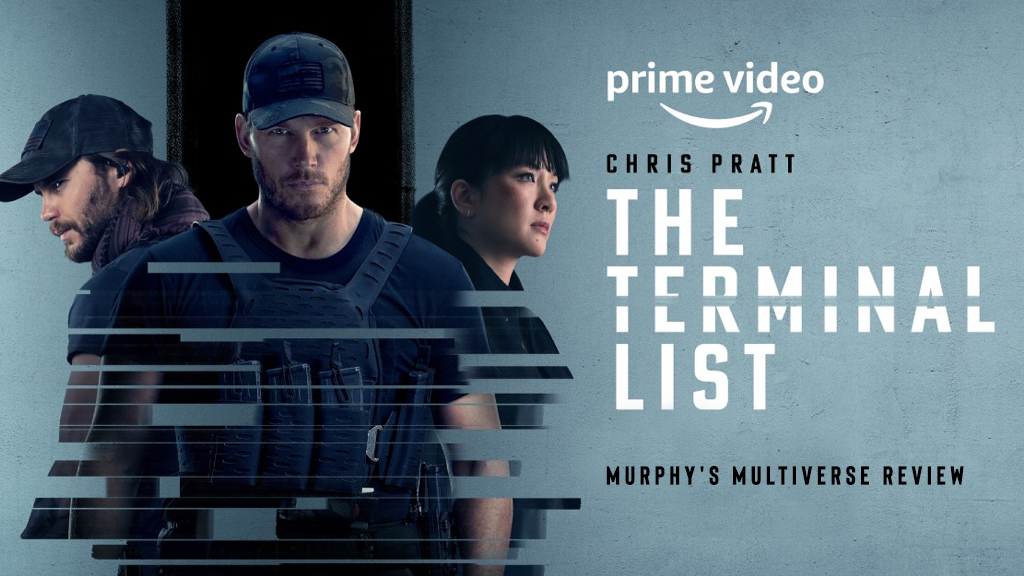
  • REVIEW: ‘The Terminal List’ Feels Like Chris Pratt’s Attempt at His ‘Breaking Bad’

    REVIEW: ‘The Terminal List’ Feels Like Chris Pratt’s Attempt at His ‘Breaking Bad’

    Amazon Prime Video has been building quite the rapport with Chris Pratt. Not only did he bring in quite the success during the pandemic with The Tomorrow War, but he’s now also working on a series adapting the novel by Jack Carr, The Terminal List. The series follows the story of James Reece, who after facing the loss of his entire Navy SEALs platoon starts to question his own memories and loses grip with reality as the story around him starts to unravel, which may endanger the ones he loves. Can the premise also deliver with this new series?

    One thing is for sure, the base premise is quite a promising one. Especially in the first two episodes it starts to play with the viewer’s understanding of what is and isn’t true. Audio clips and flashbacks start to intertwine in ways that make you wonder what exactly is real or isn’t. Pratt sells the performance as Reece, and it does push you to question what exactly is going on. The dramatic turn of these earlier episodes also adds some weight and further solidifies the difficulty of discussing topics like posttraumatic stress disorder in combat veterans.

    Yet, the series slowly devolves into a rather simplistic plot of vengeance with some political turmoil. There are some interesting ideas at play, but it does continue to throw in new characters and unravels the “bigger picture” at the expense of what was the initial personal drama that gave the series an amazing hook. It’s not bad mind you, but it does feel like a missed opportunity as its strongest moments still remain with elements from that core concept that help develop Reece as a character.

    There’s a lot of gray in this series, and no person is truly good. Some are definitely more corrupt than others, but it does become a boiling point where if you can’t go with Reece’s vengeance, you may lose interest in the series as that’s the main driving force. Chris Pratt gives a great performance and it is always strange to see comedic actors take on some rather dark roles. In a way, this is Pratt‘s Breaking Bad in a way, as he tackles a complex and broken character. It simply hinges on if you are going to join his journey or not to truly invest in this eight-episode series.

    There is a strong supporting cast here,e especially Taylor Kitsch’s Ben Edwards who plays a vital role in supporting Reece throughout his journey. Though Constance Wu may be a personal standout in this series as journalist Katie Buranek alongside Jeanne Tripplehorn‘s Lorraine Hartley. Though, I can’t help but highlight the hilarious twist on casting Jai Courtney as a war-loving multi-billionaire CEO given his perchance of action roles. The way they play with his character was probably the one thing I least expected from the series and it worked in its favor.

    The series is, at its core, a military conspiracy drama and works quite well as such. When they pull out their action sequences, they are great and you can see the influence of director Antoine Fuqua‘s experience with Training Day and Equalizer at play here. Though Ellen Kuras also offers some strong work here, especially echoing her work on projects like Ozark and The Umbrella Academy. Action is tight and purposefully dramatic when it needs to be, even if it does pull its inspirations from various military and gun-focused projects.

    You can tell this was a passion project for Pratt, who also was an executive producer on the series. The series hits its stride when it comes to emotional moments, as Reece is pushed further and further throughout the story, especially as he starts to have a hard time connecting what is and isn’t real. And, as a personal taste in what could’ve been shouldn’t overshadow what the series is going for, it should be praised for what it delivers. There’s an interesting intrigue at play that caught me off-guard even by the end, as sometimes the camera would play with us on where certain characters stand.

    There’s a middle section where the series seemingly takes a brief detour to introduce new characters that don’t have a stronger play into the overarching story. It was interesting as it added a new perspective on some characters, but it felt like the aspect of this story could’ve easily been tightened for the adaptation, as it pretty much feels like a brief detour in the middle of the story.

    I repeatedly caught myself wondering if that was the end until realizing I was only halfway through the series. It does come at the expense of dragging at times and making me wonder if they may have had to pad out the eight-hour run, but it was still interesting to see how the series continues to just escalate. It also has something to say about PTSD and how strongly it affects soldiers. It doesn’t paint a pretty picture of the military; not even a little bit. It doesn’t indulge in the violence but adds a visceral aspect that forces you to keep watching.

    For what the series is, The Terminal List pulls off what it’s trying to be. While I still wished it played a bit more with its audience, there’s something genuine at play here and it could’ve played a bit more morally grey on some character decisions. Yet, your enjoyment of the story strongly depends on how you feel about Pratt‘s character and his emotional journey throughout. There’s a strong supporting cast and while it has some moments where it could’ve tightened the plot, the series still has something to say that was worth telling.