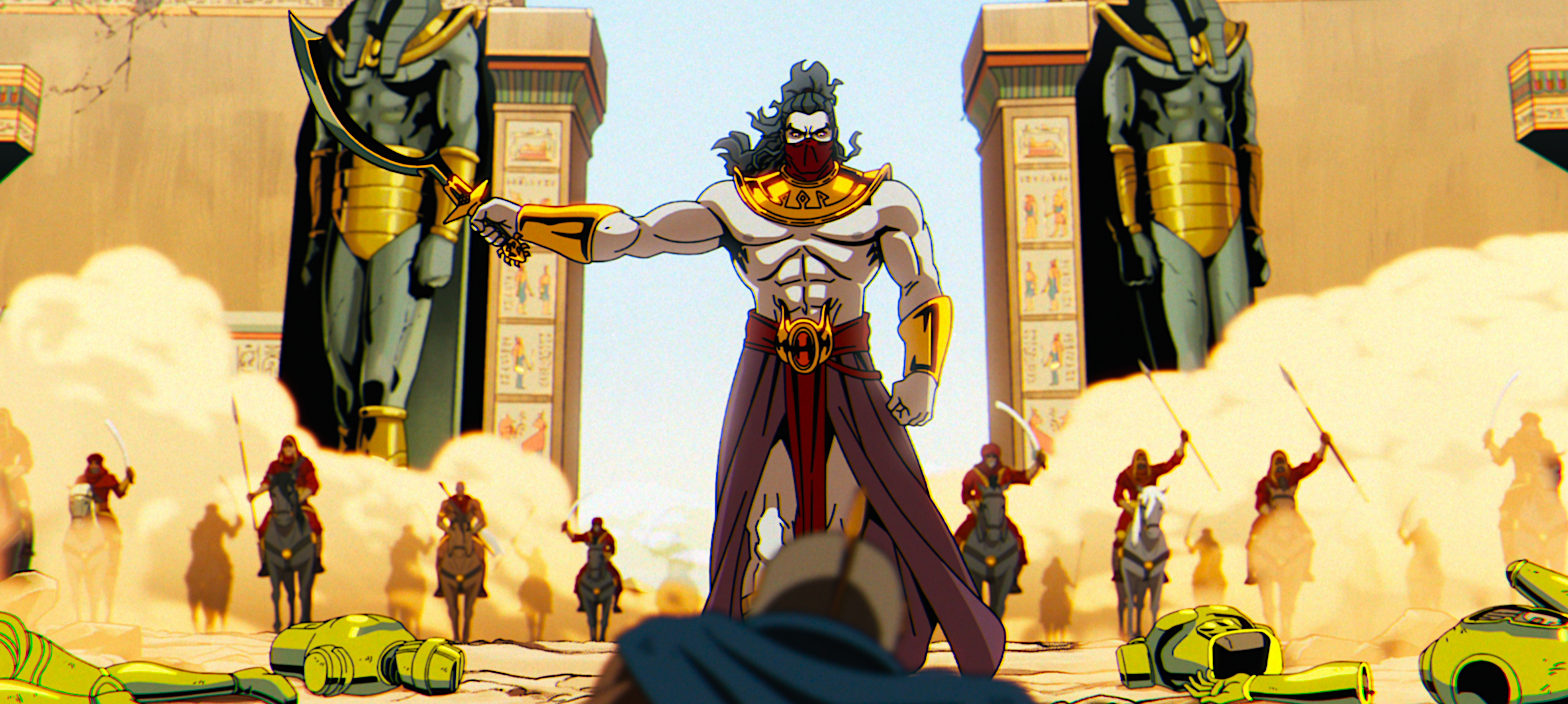
The brilliance of X-Men ’97 lives in its memory. It refuses to treat massive narrative events as isolated, episodic blockbusters. Instead, the Season 2 premiere meticulously connects its time-spanning narrative straight back to the psychological trauma of Genosha and the final, haunting warnings of the Season 1 finale.
Throughout the first three episodes, the writers introduce a brilliant, unifying motif in the Eternal Shore speech. Originally delivered as a booming, grandiose declaration of survival-of-the-fittest dominance by Apocalypse in the classic ’90s animated series, the speech is re-framed here as an ancient, multi-century prophecy.
We hear it echoed by Mother Askani’s cultists in the far future, whispered by historical records in the present, and muttered by a young, conflicted En Sabah Nur in ancient Egypt. By turning a villain’s boastful monologue into an immutable law of cosmic gravity that spans thousands of years, the show highlights that no matter what the X-Men do to rewrite time, Apocalypse is…inevitable.
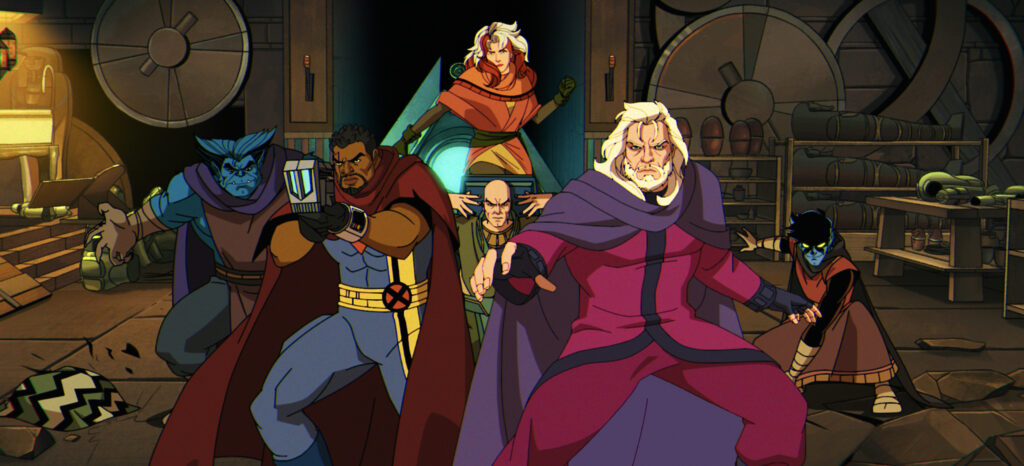
The thematic genius of shifting Charles Xavier and Magneto back to 3000 B.C. is that it forces them to confront the monster before he put on the armor. The En Sabah Nur we meet in Episode 3 isn’t a god; he is an outcast mutant navigating a brutal, unforgiving ancient world that fears and hates him just as much as the world of the 1990s does.
This creates an agonizing ideological conflict between the stranded X-Men founders. Charles naturally views the young mutant through a lens of empathy and education, believing they can guide him down a path of coexistence and prevent his descent into tyrannical madness. Fresh off the genocide of Genosha, Magneto looks at Nur and sees the absolute, terrifying logical extreme of his own philosophy. He understands exactly how a lifetime of systematic persecution can turn an outcast into a monster that wants to burn the world to ashes.
The tragedy of the premiere block is that the X-Men’s very attempt to alter the timeline is what ultimately triggers the threat. The intervention of Rama-Tut and the ensuing time-travel chaos shatter the young Egyptian’s faith in ordinary humanity, setting his transformation into motion.
As the spirit of a defeated, future Apocalypse flees backward into the 1990s to target the remaining mutants at their most vulnerable, X-Men ’97 pulls off a flawless narrative loop. They didn’t just kick off a fun, sci-fi adventure—they proved that the fight for the future isn’t about lasers or giant robots; it’s a permanent, psychological war for the soul of the people we choose to become when the world gives us every reason to break.

Leave a Reply